Reptile
Bearded Dragon Terrarium Setup: The Full A-la-Carte Checklist for 2026
Five separate decisions, not one box — an adult-sized enclosure, a UVB bulb, a basking heat source, a thermostat, and a safe substrate — with one sensible starting point for each.
By Nick Miles · Updated July 8, 2026 · 13 min
PetPalHQ is reader-supported. We may earn a commission from qualifying Amazon purchases at no extra cost to you.
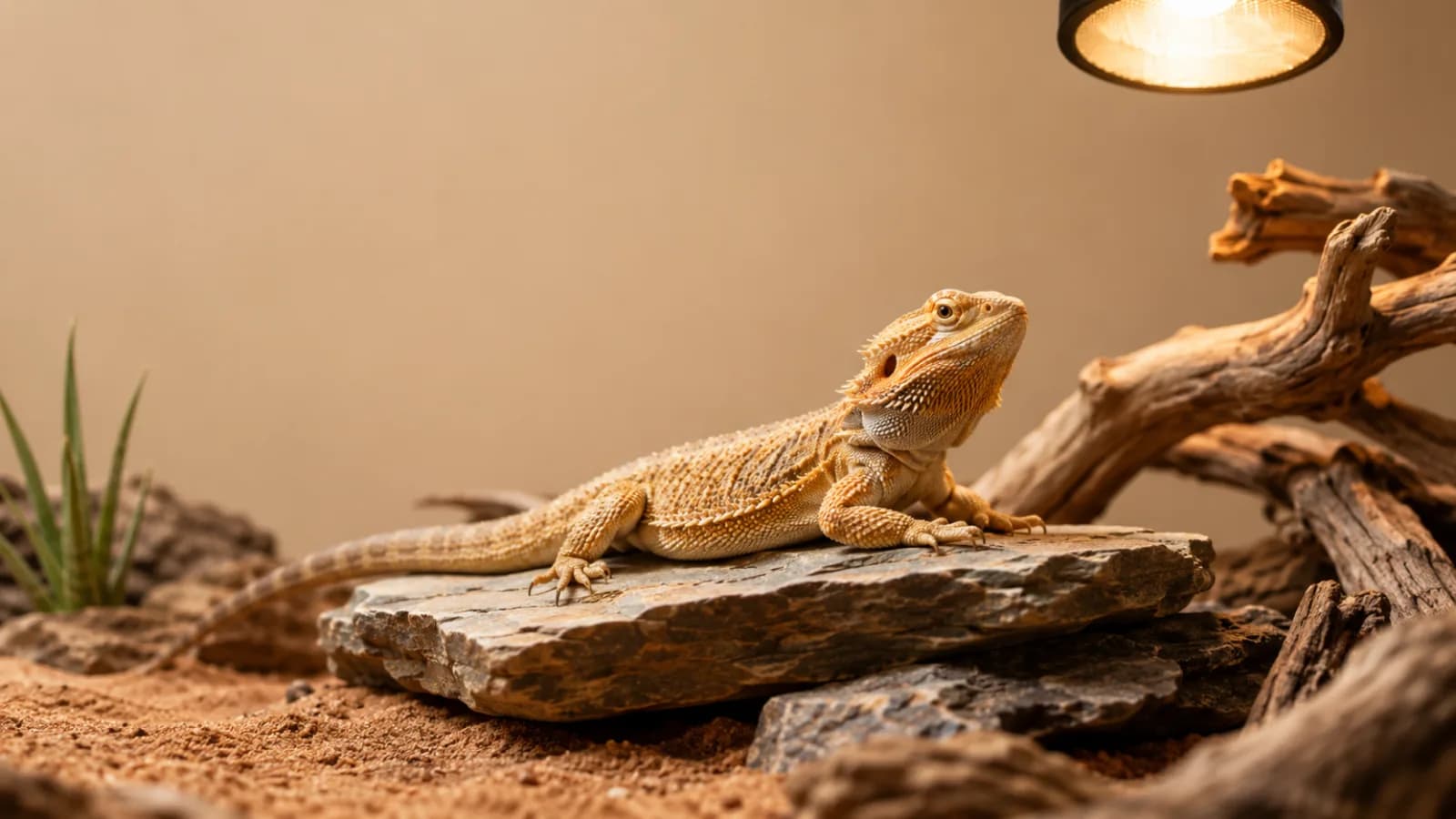
Evidence at a Glance
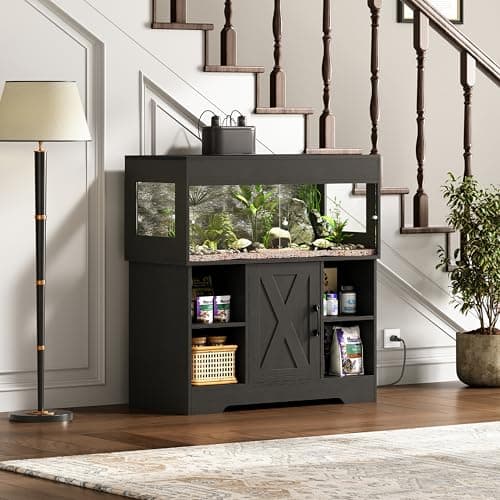
Herture 40 Gallon Reptile Terrarium with Storage Cabinet Stand
The foundation of the whole build: a 40-gallon terrarium on a matching storage-cabinet stand, with sliding acrylic front doors, a full mesh top for ventilation and UVB penetration, and a built-in power outlet to route lighting and heat cords. A strong starting enclosure that gives a young dragon room to grow.
Sources: Herture manufacturer/Amazon listing, VCA Animal Hospitals — bearded dragon housing
Verified Jul 8, 2026
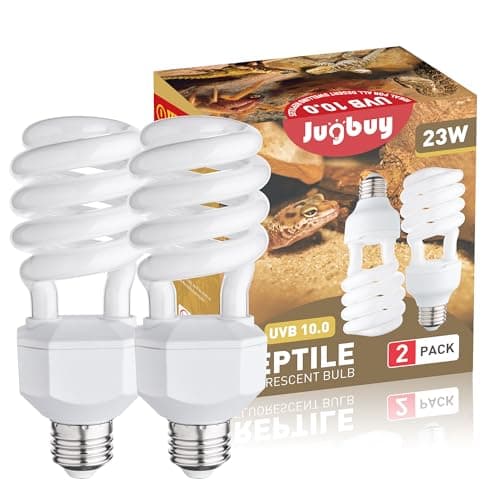
Jugbuy UVB 10.0 Compact Fluorescent Reptile Lamp, 23W (2-Pack)
The non-negotiable piece: a 23W UVB 10.0 compact-fluorescent bulb for desert reptiles, sold as a 2-pack so a spare is on hand for the scheduled replacement. UVB is how a bearded dragon makes vitamin D3 to metabolize calcium and avoid metabolic bone disease.
Sources: Jugbuy manufacturer/Amazon listing, Merck Veterinary Manual — reptile UVB and metabolic bone disease
Verified Jul 8, 2026
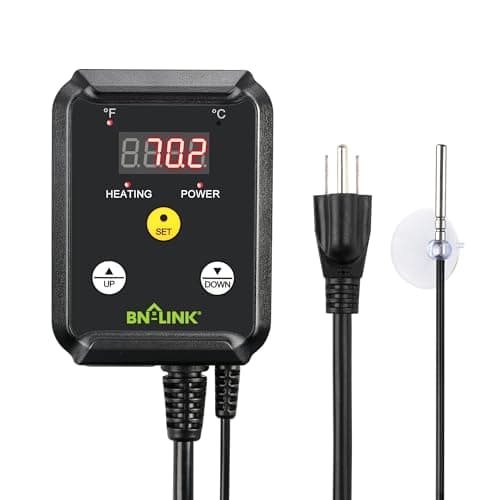
BN-LINK Digital Reptile Thermostat, 40-108F, 1000W, ETL Listed
The safety net for the whole heat side: a digital thermostat rated 40 to 108F and up to 1000W, ETL listed. It turns a free-running heat emitter into a controlled basking zone, so heat cannot climb to a burn or fire risk.
Sources: BN-LINK manufacturer/Amazon listing, LafeberVet — inland bearded dragon temperature and thermoregulation
Verified Jul 8, 2026
Our Picks
Herture
Herture 40 Gallon Reptile Terrarium with Storage Cabinet Stand
8.4 / 10
- 40-gallon terrarium with a matching storage-cabinet stand in one footprint
- Sliding acrylic front doors for easy feeding without a top reach-in
- Full mesh top so an overhead UVB and heat fixture reaches the tank
- Built-in power outlet on the stand to route lighting and heat cords
$178.90
Current price · checked Sep 8, 2026
Jugbuy
Jugbuy UVB 10.0 Compact Fluorescent Reptile Lamp, 23W (2-Pack)
8.0 / 10
- 23W UVB 10.0 compact-fluorescent lamp built for desert reptiles
- Sold as a 2-pack, so a spare is ready for the scheduled swap
- Fits a standard reptile dome fixture for a simple first build
- Provides the UVB a dragon needs to make vitamin D3
$19.99
Current price · checked Sep 8, 2026
LUCKY HERP
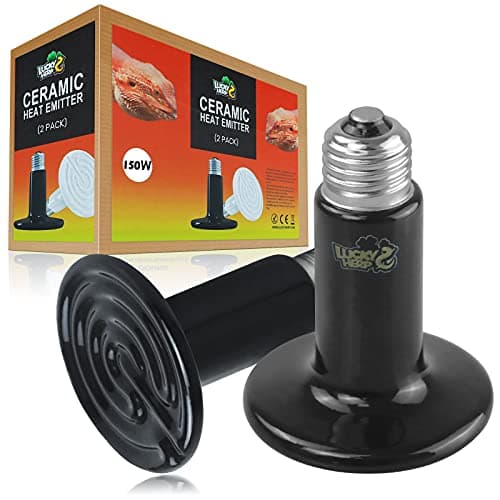
LUCKY HERP 150W Ceramic Heat Emitter (2-Pack)
8.2 / 10
- 150-watt ceramic heat emitter built for reptiles and amphibians
- Radiates heat with no visible light, so it can run day or night
- Sold as a 2-pack, so a spare covers a burnout
- Threads into a standard ceramic-rated dome socket
$15.99
Current price · checked Sep 8, 2026
BN-LINK
BN-LINK Digital Reptile Thermostat, 40-108F, 1000W, ETL Listed
8.6 / 10
- Digital thermostat rated 40 to 108F for reptile heat control
- Handles heat loads up to 1000W, well above a single emitter
- ETL listed for a tested safety standard
- Cuts power to the heat source once the set temperature is reached
$18.99
Current price · checked Sep 8, 2026
Zilla
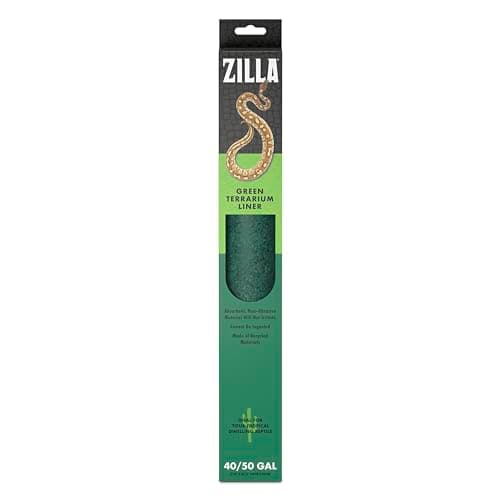
Zilla Reptile Terrarium Bedding Substrate Floor Liner (17.25 x 35.25 in)
8.3 / 10
- 17.25 by 35.25 inch reptile terrarium floor liner
- Solid surface with no loose particles to swallow
- Wipes down and reuses, rather than scooping loose bedding
- From Zilla, a long-established reptile-care brand
$11.99
Current price · checked Sep 8, 2026
The Short Answer
A bearded dragon terrarium is five separate decisions, not one box on a shelf. You choose an enclosure sized for the adult dragon, a UVB bulb you replace on a schedule, a basking heat source, a thermostat so that heat cannot run away, and a substrate that is safe if the dragon swallows it. Buying a-la-carte, rather than a bundled starter kit, lets you size and swap each piece as the dragon grows. This checklist names one sensible starting point per decision: the Herture 40-gallon terrarium for the enclosure, a Jugbuy UVB 10.0 bulb for lighting, a LUCKY HERP 150W ceramic heat emitter for basking heat, a BN-LINK digital thermostat for safety, and a Zilla terrarium floor liner for the substrate. Together they run roughly $245 in list terms, and each links to its full category roundup.
Every product on this list has been scored against the PetPal Gear Score, a weighted composite of expert consensus, observed effectiveness, animal safety, long-term durability, and value. Review method: Editorial synthesis of the manufacturer and Amazon listings for each item plus published reptile-husbandry guidance from the Merck Veterinary Manual, VCA Animal Hospitals, LafeberVet, and the citation-heavy ReptiFiles bearded dragon care reference. Zilla is a long-established reptile-care brand and is described as one; Herture, Jugbuy, LUCKY HERP, and BN-LINK are white-label Amazon brands whose specifications are manufacturer-stated. No independent lab or outlet has published a hands-on review of these specific generic-marketplace items, so no award or verdict is attributed to any outlet. PetPalHQ does not run a reptile-housing testing lab; the PetPal Terrarium-Setup Score below is a transparent synthesis of documented listing specifications and published husbandry standards, not a measurement. Prices were captured on 2026-07-08 in the post-July-4 window and should be treated as list figures that will move — verify the current price before buying.. Synthesized from 5+ expert sources.
A bearded dragon terrarium is sold as if it were one purchase. It is really five. The enclosure, the UVB bulb, the basking heat source, the thermostat, and the substrate are five separate decisions, and getting any one of them wrong undoes the other four. A perfect tank with no UVB makes a sick dragon. A good UVB bulb over a heat emitter with no thermostat is a fire risk. This checklist walks the five decisions in order and names one sensible starting point for each.
The picks below are chosen by editorial synthesis of the manufacturer and Amazon listings and published reptile-husbandry guidance from sources like the Merck Veterinary Manual, VCA Animal Hospitals, LafeberVet, and ReptiFiles — not from a testing lab, which PetPalHQ does not run. Zilla is a long-established reptile-care brand and is described as one; the white-label marketplace brands are described in listing terms. No outlet has hands-on-tested the generic marketplace versions of these five pieces, so no award is attributed to any of them, and the PetPal Terrarium-Setup Score is a transparent synthesis of listing specs and published standards, not a measurement.
PetPalHQ.com earns affiliate commissions from qualifying purchases. Our recommendations are based on expert consensus — we synthesize professional reviews and manufacturer documentation, plus multi-year owner durability data, to find pet gear that is worth your investment. Commission rates never influence our editorial recommendations.
If you would rather buy a curated bundle, our bearded dragon starter kit guide compares the best all-in-one and build-your-own setups head to head. This checklist is the other path: the five boxes you must tick, in order, with one representative starting point each and a link to the full roundup for every decision. Buy a-la-carte and you can size and swap each piece on its own as the dragon grows.
Five Decisions, Not One Box
The reason a-la-carte beats a single box is that the five pieces age at different rates. The enclosure is the one you are most likely to replace, because a hatchling arrives tiny and grows into a large adult. The UVB bulb is the one you replace on a fixed schedule no matter what. The heat emitter, thermostat, and substrate mostly carry over. If you buy a bundled kit sized for the dragon you have today, you often end up rebuying the whole thing when the dragon doubles in length.
Buying each decision on its own also lets you spend where it matters. The thermostat and the UVB are the pieces that protect the animal, so they are worth getting right. The substrate can be an eleven-dollar liner. A kit hides those trade-offs inside one price. The checklist below breaks them out so you can see exactly what each decision costs and why it is on the list.
Size for the Adult, Not the Hatchling
Bearded dragons are sold small. A juvenile looks lost in a 40-gallon tank, so first-time keepers often buy a tank that fits the baby — and then buy a second one within a year. The published husbandry guidance runs the other way: house the dragon for the adult it will become, with room to move and a real temperature gradient across the floor. An adult does best in a front-opening enclosure of roughly four feet by two.
Here the a-la-carte path pays off directly. Because the lighting and heat are separate purchases, moving from a starter tank to a larger adult enclosure means swapping only the box. The Herture 40-gallon is a strong place to start, and a young dragon has room to grow into it. When you are ready to move up, weigh a larger front-opening reptile enclosure against the space a full-grown adult needs to thermoregulate, and carry the same bulbs and thermostat straight over.
The Heat-Light-Thermostat Triangle
Three of the five decisions are really one system, and treating them separately is how beginners get burned. UVB, heat, and control work together. The UVB bulb gives the dragon the wavelengths it needs to make vitamin D3. The ceramic emitter creates a warm basking end so the dragon can raise its body temperature. The thermostat sits between the emitter and the wall and cuts the heat before it climbs too high. Remove any one leg and the triangle falls over.
The order to wire it matters. Mount the UVB and the heat over one end of the tank, so the basking side is warm and bright and the far side stays cool. Plug the emitter into the thermostat, never straight into the outlet, and set the probe near the basking spot. Then confirm the result with a separate thermometer at each end. Any ceramic emitter needs a ceramic-rated socket, because the element will melt a plastic one. If you want to compare fixtures and controllers in depth, the reptile thermostat guide and the heat-lamp roundup break down the options.
Substrate: The Impaction Question
The floor is the decision with the clearest right answer for a first setup. Loose particulate substrate — play sand, calcium sand, and loose bark — is sold as naturalistic, and it is. It also carries a real risk: a dragon can swallow it while snapping at food, and enough of it can pack the gut. That impaction risk is highest in juveniles, which are the very dragons most first-time keepers are starting with. A solid liner removes the question completely.
A naturalistic or bioactive substrate is a reasonable goal, but it is an advanced one. It suits a healthy adult, a keeper who has learned the animal, and a substrate mix chosen to hold burrows without dusting the tank. For a first build, a wipe-clean liner is the safe default, and it makes daily cleaning faster because nothing loose mixes with the waste. Start safe, then read the bearded dragon substrate guide when you want to try something more natural for an adult.
Head-to-Head Comparison
| Setup decision | Product | Role in the build | PetPal Terrarium-Setup Score |
|---|---|---|---|
| 1. Enclosure | Herture 40 Gallon Reptile Terrarium with Storage Cabinet Stand | The house — sized to grow into | 8.4 |
| 2. UVB bulb | Jugbuy UVB 10.0 Compact Fluorescent Reptile Lamp, 23W (2-Pack) | Vitamin D3 and calcium — non-negotiable | 8.0 |
| 3. Heat emitter | LUCKY HERP 150W Ceramic Heat Emitter (2-Pack) | Basking heat, day or night | 8.2 |
| 4. Thermostat | BN-LINK Digital Reptile Thermostat, 40-108F, 1000W, ETL Listed | Stops the heat from running away | 8.6 |
| 5. Substrate | Zilla Reptile Terrarium Bedding Substrate Floor Liner (17.25 x 35.25 in) | Impaction-safe footing | 8.3 |
$178.90
Current price · checked Sep 8, 2026
- 40-gallon terrarium with a matching storage-cabinet stand in one footprint
- Sliding acrylic front doors for easy feeding without a top reach-in
- Full mesh top so an overhead UVB and heat fixture reaches the tank
- Built-in power outlet on the stand to route lighting and heat cords
- Floor space sized to grow into, not just the tank a hatchling arrives in
Every build starts with the box the dragon lives in, and the Herture terrarium is the pick to anchor it. It pairs a 40-gallon glass tank with a storage-cabinet stand, so the enclosure and the gear it needs share one footprint. Sliding acrylic front doors let you feed and spot-clean from the side rather than reaching down through a lid, which is calmer for a young dragon. A full mesh top matters more than it looks: it lets an overhead UVB tube and a heat fixture do their work, and it keeps air moving.
The stand is the quiet convenience here. A built-in power outlet gives the UVB bulb, the heat emitter, and the thermostat a place to plug in without a tangle of cords across the room. Storage below holds substrate liners, spare bulbs, and food. For a first-time keeper wiring up several devices at once, the Herture 40-gallon keeps the whole setup tidy and in one place instead of scattered around the tank.
The honest limit is size, and it is the reason to buy a-la-carte in the first place. A 40-gallon enclosure comfortably suits a juvenile and a young adult, but a fully grown bearded dragon does best with a larger front-opening enclosure, roughly a 4-by-2-foot footprint. Because you bought the lighting and heat separately, moving up later means swapping only the box — not the bulbs. Herture is also a white-label brand, so its dimensions are manufacturer-stated. Treat the Herture as a strong starting enclosure with room to grow, not a forever home for a large adult.
What We Love
- Tank and cabinet stand in one footprint keep the whole setup organized
- Sliding acrylic doors make daily feeding and spot-cleaning simple
- Full mesh top lets an overhead UVB and heat fixture reach the dragon
- Built-in outlet routes several device cords without a tangle
What Could Be Better
- 40 gallons is a starting size; a full-grown adult is happier in a 4-by-2-foot front-opening enclosure
- White-label listing — dimensions and capacity are manufacturer-stated, not independently verified
- Furniture-style flat-pack build takes assembly time and careful leveling
The Verdict
As the foundation of the build, the Herture terrarium gives a young dragon room to grow and keeps the wiring tidy — just plan to size up the box, not the lights, when the dragon reaches full adult length.
Sources
- Herture (manufacturer/Amazon listing): 40-gallon terrarium with a storage-cabinet stand, sliding acrylic doors, a full mesh top for ventilation and UVB penetration, and a built-in power outlet
- VCA Animal Hospitals (Bearded Dragons — Housing): husbandry guidance calls for a large, well-ventilated enclosure sized to the adult dragon rather than to the juvenile it arrives as
$19.99
Current price · checked Sep 8, 2026
- 23W UVB 10.0 compact-fluorescent lamp built for desert reptiles
- Sold as a 2-pack, so a spare is ready for the scheduled swap
- Fits a standard reptile dome fixture for a simple first build
- Provides the UVB a dragon needs to make vitamin D3
- Low-cost way to put real UVB over the tank from day one
Skip this piece and no diet can save the dragon. Bearded dragons need UVB light to make vitamin D3, and without D3 they cannot pull calcium from their food. Starved of it, a dragon develops metabolic bone disease no matter how well it eats. The Jugbuy UVB 10.0 is a 23W compact-fluorescent bulb marketed for desert reptiles, and it is a low-cost way to put real UVB over the tank from the first day.
Two bulbs in the box is more useful than it sounds. UVB output fades long before the bulb stops giving off visible light, so keepers replace UVB on a schedule, not when it finally dies. A spare in the drawer turns that swap into a habit rather than a shopping trip. The compact form also threads into a standard dome fixture, which keeps the Jugbuy bulb simple to install on a first build.
Here is the honest limit, and it is a real one. Many experienced keepers prefer a linear T5 HO tube over any compact or coil UVB, because a tube spreads UVB across the whole basking zone instead of one narrow spot. The Jugbuy 10.0 is a sensible starting point and a cheap way to learn the replacement habit, but read the full reptile UVB bulb guide before you commit, and plan to move up to a T5 HO tube as the dragon grows. Jugbuy is a white-label brand, so its output figures are manufacturer-stated.
What We Love
- Delivers the UVB a bearded dragon must have to make vitamin D3
- 2-pack builds in the spare that a scheduled replacement needs
- Threads into a standard dome fixture — no special hardware
- One of the cheapest ways to get real UVB over the tank on day one
What Could Be Better
- Compact form spreads UVB over a narrower area than a linear T5 HO tube
- Many keepers upgrade to a T5 HO tube for a full-grown adult
- White-label listing — UVB output is manufacturer-stated, not independently verified
The Verdict
The Jugbuy bulb is the low-cost way to put real UVB over the tank from the start, and the 2-pack teaches the replacement habit — but see it as the first step toward a linear T5 HO tube, not the last.
Sources
- Jugbuy (manufacturer/Amazon listing): 23W UVB 10.0 compact-fluorescent terrarium lamp marketed for desert reptiles including bearded dragons, sold as a 2-pack
- Merck Veterinary Manual (Reptiles): veterinary guidance holds that reptiles need UVB to synthesize vitamin D3 for calcium metabolism, and that deficiency leads to metabolic bone disease
$15.99
Current price · checked Sep 8, 2026
- 150-watt ceramic heat emitter built for reptiles and amphibians
- Radiates heat with no visible light, so it can run day or night
- Sold as a 2-pack, so a spare covers a burnout
- Threads into a standard ceramic-rated dome socket
- Creates the warm basking side of a proper thermal gradient
A basking light bulb does two jobs at once: it makes heat and light together. A ceramic heat emitter separates them. The LUCKY HERP emitter is a 150-watt element that glows with heat but gives off no visible light, so it can warm the tank around the clock without keeping the dragon awake. That single trait is why a ceramic emitter earns a place in a careful build: it can hold nighttime warmth in a cool room where a light bulb would ruin the day-night cycle.
Heat is only useful when it is placed, not just present. Mounted over one end of the enclosure, the LUCKY HERP ceramic emitter builds the warm basking side of a thermal gradient, while the far end stays cooler. A dragon then moves between the two to manage its own body temperature, exactly as it would between sun and shade in the wild. The 2-pack means a burnout during a cold snap does not leave the tank without heat overnight.
One rule is not optional, and it sets up the next pick. A ceramic emitter runs hot, and it must never be plugged straight into the wall. On its own it will free-run and can climb well past a safe basking temperature. It also needs a ceramic-rated socket, because the element melts a plastic one. Buy the LUCKY HERP as the heat source for a day-and-night gradient, and pair it with the thermostat below — the two are one system, not two purchases. For the range of basking fixtures and bulbs, the reptile heat lamp guide compares the options.
What We Love
- Radiates heat without light, so it can hold warmth at night
- Builds a real warm-side basking zone for a proper thermal gradient
- 2-pack covers a burnout without leaving the tank cold
- Works with a standard ceramic-rated dome fixture
What Could Be Better
- Must run on a thermostat — it will free-run to unsafe heat on its own
- Needs a ceramic-rated socket; a plastic one can melt
- White-label listing — wattage and output are manufacturer-stated, not independently verified
The Verdict
For a dragon that needs steady basking heat and, in a cool room, nighttime warmth, the LUCKY HERP emitter is the right tool — as long as it is always the emitter-plus-thermostat pair, never the emitter alone.
Sources
- LUCKY HERP (manufacturer/Amazon listing): 150-watt ceramic heat emitter marketed for reptiles and amphibians, sold as a 2-pack
- ReptiFiles (Bearded Dragon Heating & Lighting): reptile-care guidance notes that a ceramic heat emitter produces heat without visible light and can supply nighttime warmth without disrupting the day-night cycle
$18.99
Current price · checked Sep 8, 2026
- Digital thermostat rated 40 to 108F for reptile heat control
- Handles heat loads up to 1000W, well above a single emitter
- ETL listed for a tested safety standard
- Cuts power to the heat source once the set temperature is reached
- Turns a free-running emitter into a controlled basking zone
A heat source with no thermostat is the setup's biggest hidden risk. Left to run on its own, a ceramic emitter has no idea how hot the tank already is — it simply keeps pouring out heat. The BN-LINK thermostat is the piece that stops that. It reads the temperature with a probe and cuts power to the emitter once the tank hits the set point, then restores it when the tank cools. That loop is the difference between a controlled basking zone and a slow overheat.
The specs give it real headroom. A rating of 40 to 108F covers the basking range a bearded dragon needs, and a 1000-watt capacity is far more than a single emitter draws, so the BN-LINK digital thermostat is not working at its limit. It is also ETL listed, a tested-safety mark that is worth looking for on any device controlling a live heat load. Setup is simple: plug the emitter into the thermostat, place the probe near the basking spot, and set the target.
There is one habit this piece cannot replace, and it is worth stating plainly. A thermostat controls temperature, but you still confirm it. Keep a separate thermometer at both ends of the tank so you can see the gradient the BN-LINK is holding, and check the probe has not shifted. Bought as the guard on the heat side, the thermostat is the cheapest insurance in the whole build. Never run the emitter without it. For the wider category, the reptile thermostat guide walks through pulse versus on-off control.
What We Love
- Cuts heat automatically at the set point — the core safety function
- 40 to 108F range and 1000W capacity leave real headroom over one emitter
- ETL listed for a tested safety standard
- Simple to wire: emitter into the thermostat, probe by the basking spot
What Could Be Better
- You still need a separate thermometer to confirm the gradient
- A single probe reads one spot, so probe placement matters
- White-label listing — ratings are manufacturer-stated beyond the ETL mark
The Verdict
The BN-LINK is the piece that makes the heat side safe, so it is the one item in this checklist you never treat as optional.
Sources
- BN-LINK (manufacturer/Amazon listing): digital reptile thermostat rated 40 to 108F and up to 1000W, ETL listed
- LafeberVet (Inland Bearded Dragon Basic Care): reptile husbandry guidance advises controlling any heat source with a thermostat to hold safe basking temperatures and avoid burns
$11.99
Current price · checked Sep 8, 2026
- 17.25 by 35.25 inch reptile terrarium floor liner
- Solid surface with no loose particles to swallow
- Wipes down and reuses, rather than scooping loose bedding
- From Zilla, a long-established reptile-care brand
- Removes the impaction risk of sand or loose bark
The most common beginner mistake in a terrarium is what goes on the floor. Loose particulate substrate — sand, loose bark, and the calcium-sand sold for reptiles — looks natural, but a dragon can swallow it while grabbing food. Enough of it can pack the gut and cause impaction, which is dangerous and most common in juveniles. The Zilla liner sidesteps the problem entirely: it is a solid mat with nothing loose to eat.
A liner also makes daily care easier. Where loose bedding has to be scooped and topped up, the Zilla floor liner lifts out, wipes clean, and goes back down, so waste never mixes into a substrate you then have to sift. At 17.25 by 35.25 inches it is cut for a standard tank floor, and Zilla's long standing as a reptile-care brand means it is a known quantity rather than an anonymous listing. For a first setup, a solid liner is the safe default while you learn the animal.
The trade-off is honest, and it comes down to what you value. A liner gives up the naturalistic look and the digging behavior that a deep bioactive substrate allows, which some keepers want for an adult dragon. That is a reasonable goal later, with the right mix and supervision. For a juvenile, or for any keeper who wants the impaction question off the table, the Zilla is the low-risk choice. When you are ready to weigh loose and bioactive options, the bearded dragon substrate guide covers the full range.
What We Love
- No loose particles to swallow — removes the impaction risk
- Wipes clean and reuses instead of scooping loose bedding
- Cut for a standard tank floor at 17.25 by 35.25 inches
- From Zilla, a known long-established reptile-care brand
What Could Be Better
- Gives up the naturalistic look of loose or bioactive substrate
- No digging behavior, which some keepers want for an adult
- Needs regular removal and cleaning to stay sanitary
The Verdict
For a juvenile or a cautious first build, the Zilla liner takes the impaction question off the table — a plain, safe floor while you learn the animal, with room to try a naturalistic setup later.
Sources
- Zilla (manufacturer/Amazon listing): 17.25 by 35.25 inch reptile terrarium bedding and floor liner
- ReptiFiles (Bearded Dragon Substrate): reptile-care guidance warns that loose particulate substrate carries an impaction risk if ingested, a concern that is greatest for juveniles
How We Score
Formula
PetPal Terrarium-Setup Score = (Husbandry Correctness × 0.30) + (Safety × 0.25) + (Ease of Setup × 0.20) + (Adult-Size Fit × 0.15) + (Value × 0.10)
Score Factors
- Husbandry Correctness · 30%
- How closely the item supports documented bearded-dragon care needs — UVB for vitamin D3, a real thermal gradient, and a safe surface underfoot. An item that does its husbandry job well scores highest here; a compact UVB that meets the need but less fully than a linear T5 HO tube is marked down against the standard, not the listing.
- Safety · 25%
- The burn, fire, and impaction risk the item helps prevent, or could introduce if misused. A thermostat and an ETL mark raise this factor; a heat emitter that must never free-run, and loose substrate that can be swallowed, are judged on how the pick manages that risk. The safest pick in the set scores highest.
- Ease of Setup · 20%
- How straightforward the item is for a first-time keeper to install correctly. Tool-light assembly, a standard fixture, and a wipe-clean surface score high; a piece that needs careful probe placement, leveling, or a ceramic-rated socket loses a little here, because a setup a beginner can run is the whole point.
- Adult-Size Fit · 15%
- Whether the item suits an adult dragon, not just the juvenile it arrives as. Lighting, heat, and substrate carry over as the dragon grows, so they rate well; the enclosure is scored honestly as a starting size that a full-grown adult will outgrow into a larger front-opening tank.
- Value · 10%
- List price against what the item delivers for one setup decision — not the lowest sticker. A two-pack bulb or emitter that builds in a spare, and a liner that reuses rather than refills, rate well; value is weighed against how completely the item settles its decision.
| Rank | Product | Score |
|---|---|---|
| #1 | BN-LINK BN-LINK Digital Reptile Thermostat, 40-108F, 1000W, ETL Listed | 8.6 |
| #2 | Herture Herture 40 Gallon Reptile Terrarium with Storage Cabinet Stand | 8.4 |
| #3 | Zilla Zilla Reptile Terrarium Bedding Substrate Floor Liner (17.25 x 35.25 in) | 8.3 |
| #4 | LUCKY HERP LUCKY HERP 150W Ceramic Heat Emitter (2-Pack) | 8.2 |
| #5 | Jugbuy Jugbuy UVB 10.0 Compact Fluorescent Reptile Lamp, 23W (2-Pack) | 8.0 |
When NOT to Buy
Do not buy the enclosure and stop there. The most expensive mistake with a bearded dragon is treating the tank as the purchase and the lighting as an afterthought. A dragon in a beautiful enclosure with no UVB and no controlled heat will get sick. Budget for all five decisions before you bring the animal home, not one at a time after.
Do not run the ceramic emitter without the thermostat. A heat emitter plugged straight into the wall has no upper limit — it will climb past a safe basking temperature and become a burn and fire risk. If you cannot buy the BN-LINK thermostat and a ceramic-rated socket at the same time as the LUCKY HERP emitter, wait until you can. Heat without control is worse than no heat.
Do not use loose sand or bark substrate for a juvenile. Young dragons are the most likely to swallow substrate while feeding, and impaction is a serious, sometimes fatal problem. A solid liner like the Zilla removes that risk. Naturalistic loose or bioactive substrate is a project for a healthy adult and a careful keeper, not a first setup.
Skip the compact UVB if you already know you want the best. The Jugbuy 10.0 is a fair starting point, but experienced keepers generally prefer a linear T5 HO tube for its wider, more even coverage. If your budget stretches to a T5 HO fixture now, buy that instead of buying the compact bulb first and replacing it later.
Do not start a bearded dragon at all if the time is not there. A dragon needs daily temperature checks, fresh food, UVB you replace on a schedule, and a decade of care. If travel, schedule, or interest will not support that, this is not the purchase for you.
Frequently Asked Questions
- Should I buy a starter kit or build the terrarium a-la-carte?
- A kit is the faster, simpler path, and a good one if you want a single box that arrives complete — that is what the starter-kit guide is for. The a-la-carte path costs a little more attention up front but wins on flexibility: you can put money into the UVB and thermostat that protect the dragon, buy an eleven-dollar liner for the floor, and replace only the enclosure when the dragon outgrows it. The catch buyers miss is that many bundled kits ship a compact or coil UVB that experienced keepers would upgrade anyway, so a kit is not automatically the cheaper choice over time.
- How often do I replace the UVB bulb?
- On a schedule, not when it burns out — that is the single most missed point in reptile care. A UVB bulb keeps giving off visible light long after its UVB output has faded, so a bulb that looks fine can be doing nothing for the dragon. Keepers commonly replace compact and tube UVB well before the light dies, which is exactly why the Jugbuy ships as a 2-pack. A UVB meter is the only way to know for certain, but a written calendar reminder is the practical habit for most keepers.
- What is a thermal gradient and why does it matter?
- It is a warm end and a cool end in the same tank, so the dragon can choose its temperature. Reptiles do not make their own body heat, so they move between hot and cool spots to regulate — basking under the emitter to warm up, then retreating to the cool side to shed heat. A tank that is one uniform temperature gives the dragon nowhere to go. Mount the heat over one end only, leave the other end unheated, and let the animal do the rest.
- My dragon is small right now — do I really need a big adult enclosure yet?
- Not on day one, but plan for it. A hatchling in a very large tank can struggle to find its food and its basking spot, so a 40-gallon starter like the Herture is a fine early home. The mistake is buying a starter tank and expecting it to last: an adult bearded dragon needs the floor space of roughly a four-by-two-foot enclosure to move and thermoregulate. Because you bought the lighting and heat separately, you upgrade only the box later — which is the whole argument for building a-la-carte.
- Is a loose substrate ever safe, or should juveniles always use a liner?
- For juveniles specifically, a solid liner is the safe default, because young dragons are the most likely to ingest substrate while feeding and the least able to pass it. Loose sand and calcium sand are the riskiest, and many keepers avoid them at every age. A properly built bioactive substrate can work for a healthy adult under a careful keeper, but it is not a beginner's first floor. Start a juvenile on a liner, get the husbandry stable, and revisit substrate as an adult project.
Bottom Line
Start with the Herture terrarium if you want one tidy footprint for the whole build — a 40-gallon tank on a cabinet stand with a built-in outlet and a mesh top. Treat it as a starting enclosure and plan to size up the box, not the lights, for a full adult.
Add the Jugbuy UVB 10.0 as the non-negotiable piece, and keep the spare from the 2-pack for the scheduled swap. It puts real UVB over the tank cheaply, with a linear T5 HO tube as the upgrade path.
Add the LUCKY HERP ceramic emitter for basking heat that can run day or night — but only ever paired with a thermostat and a ceramic-rated socket.
Add the BN-LINK thermostat as the safety net for the heat side; it is the one item here you never leave out, and the cheapest insurance in the build.
Finish with the Zilla floor liner for a safe, impaction-free surface — ideal for a juvenile — and skip the whole project if you cannot commit to daily temperature checks, scheduled UVB replacement, and the years a bearded dragon lives.
Sources & Methodology
Methodology
PetPal Terrarium-Setup Score = (Husbandry Correctness × 0.30) + (Safety × 0.25) + (Ease of Setup × 0.20) + (Adult-Size Fit × 0.15) + (Value × 0.10)
Expert review sources
- Manufacturer/Amazon listings for all five items (Herture terrarium, Jugbuy UVB 10.0, LUCKY HERP ceramic heat emitter, BN-LINK thermostat, Zilla floor liner) — specifications and feature bullets
- Merck Veterinary Manual — Reptiles: UVB, vitamin D3, calcium metabolism, and metabolic bone disease
- VCA Animal Hospitals — Bearded Dragons housing and husbandry references (enclosure sizing and ventilation)
- LafeberVet — Inland bearded dragon basic care (temperature, thermoregulation, and thermostat use)
- ReptiFiles — bearded dragon lighting, heating, and substrate references (citation-heavy reptile care resource)
Community sources
- Zilla — long-established reptile-care brand (brand reputation for the floor liner)
- r/BeardedDragons and BeardedDragon.org — keeper discussion on enclosure sizing, UVB replacement schedules, and impaction-safe substrate
Prices and specs verified July 8, 2026.
About the author
Nick Miles is the chief editor of PetPalHQ. This checklist is an editorial synthesis of the manufacturer and Amazon listings for each item cross-checked against published reptile-husbandry guidance from the Merck Veterinary Manual, VCA Animal Hospitals, LafeberVet, and the citation-heavy ReptiFiles bearded dragon reference, with honest brand-reputation context for Zilla. PetPalHQ does not run a reptile-housing testing lab, and no independent outlet has published a hands-on review of these specific generic-marketplace items. The PetPal Terrarium-Setup Score is a transparent composite of documented listing specifications and published husbandry standards, not a measurement.
PetPalHQ is a participant in the Amazon Services LLC Associates Program. We may earn commissions from qualifying purchases — at no extra cost to you.
More Guides
Reptile
Best Bearded Dragon Starter Kits (2026)
Reptile
Best Bearded Dragon Substrates 2026: Safe Loose & Solid Options
Reptile
Best Reptile UVB Bulbs for Safe Lighting (2026)
Reptile
Best Reptile Heat Lamps & Basking Fixtures (2026)
Reptile
Best Reptile Thermostats for Heat Mats, CHEs & Heating Elements (2026)
Reptile