Reptile
Best Bearded Dragon Substrates 2026: Safe Loose & Solid Options
The loose and sculptable substrates that match current expert guidance for adult bearded dragons — and the calcium sands and walnut shells every source warns against.
By Nick Miles · Updated August 21, 2026 · 11 min
PetPalHQ is reader-supported. We may earn a commission from qualifying Amazon purchases at no extra cost to you.
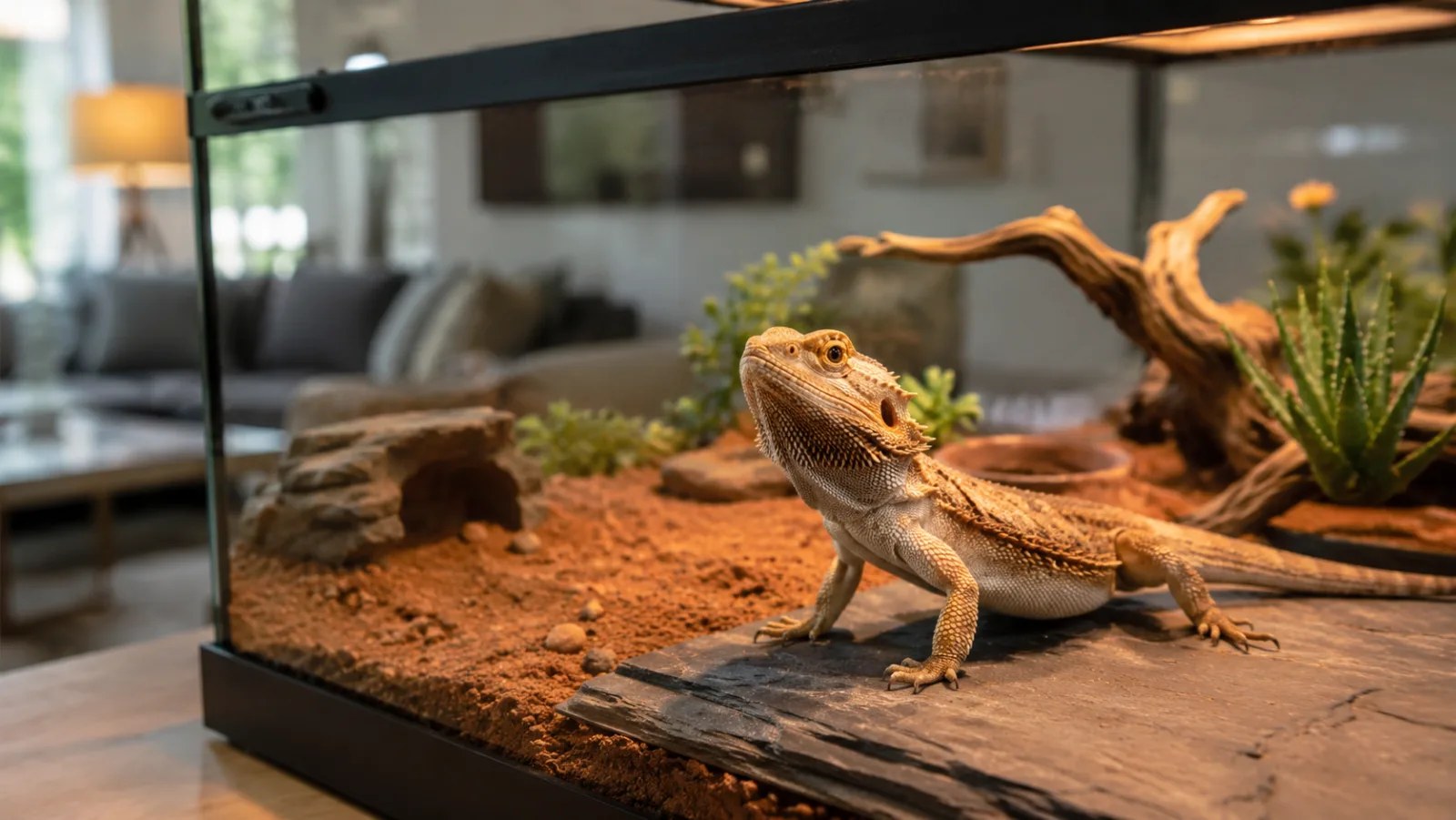
Evidence at a Glance
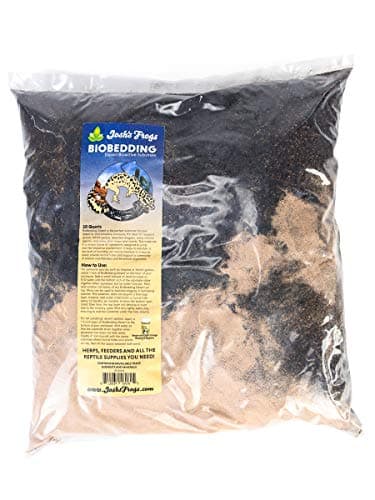
Josh's Frogs BioBedding Desert Bioactive Substrate (10 Quart)
Pre-mixed arid sand-and-soil bioactive substrate formulated to support an isopod-and-springtail cleanup crew while keeping surface humidity low for desert species. The commercial equivalent of the sand-plus-soil blend experts recommend mixing yourself, with an unusually strong specialist-retail signal: both Zen Habitats and ReptiFiles' own shop carry it.
Sources: Josh's Frogs manufacturer documentation, ReptiFiles substrate guidance, Zen Habitats Complete Substrate Guide
Verified Jun 10, 2026
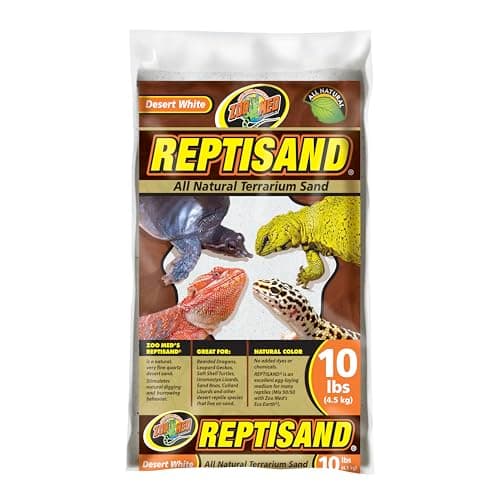
Zoo Med ReptiSand, 10 Pounds, Desert White
Fine natural quartz desert sand with no added dyes or chemicals, marketed to stimulate natural digging and burrowing behavior. The fine particle size matches the 'very fine sand' that experts specify as the 50 percent base of a safe loose mix — making it the value anchor of a DIY naturalistic floor rather than a complete substrate on its own.
Sources: Zoo Med manufacturer documentation, ReptiFiles substrate guidance, Zen Habitats Complete Substrate Guide
Verified Jun 10, 2026
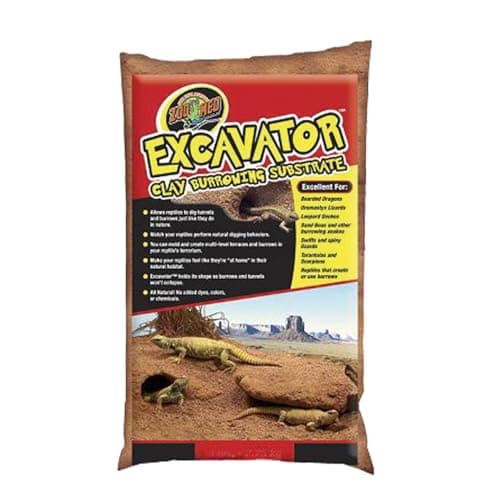
Zoo Med Excavator Clay Burrowing Substrate, 10 Pounds
Moldable burrowing clay — mix with water, sculpt tunnels and terraces, and it hardens holding its shape. The named 20 percent component of ReptiFiles' recommended 50/30/20 bearded dragon mix, and the cheapest path to a floor that holds dug burrows without collapsing once cured.
Sources: ReptiFiles substrate guidance, Zen Habitats Complete Substrate Guide, BeardedDragon.org owner threads
Verified Jun 10, 2026
Our Picks
Josh's Frogs
Josh's Frogs BioBedding Desert Bioactive Substrate (10 Quart)
8.7 / 10
- Pre-mixed arid sand-and-soil bioactive blend in a 10-quart bag
- Formulated to support an isopod-and-springtail cleanup crew while keeping surface humidity low
- Manufacturer documents it as suitable for bearded dragons among other desert species
- Carried by both Zen Habitats and ReptiFiles' own shop — a strong specialist-retail endorsement signal
$41.99
Zoo Med
Zoo Med ReptiSand, 10 Pounds, Desert White
8.1 / 10
- 10-pound bag of fine natural quartz desert sand
- No added dyes or chemicals per manufacturer specification
- Fine particle size matches the 'very fine sand' experts specify as the base of a safe loose mix
- Marketed to stimulate natural digging and burrowing behavior in desert species
$12.99
Zoo Med
Zoo Med Excavator Clay Burrowing Substrate, 10 Pounds
7.9 / 10
- 10-pound bag of moldable burrowing clay — mix with water, sculpt, and it hardens holding its shape
- The named 20 percent component of ReptiFiles' recommended 50/30/20 bearded dragon mix
- Holds dug burrows without collapsing once cured
- Sculpt tunnels, terraces, and raised basking platforms before curing
$13.99
Amazon's price may vary; check the current price.
Last Amazon read 2026-08-21
Exo Terra
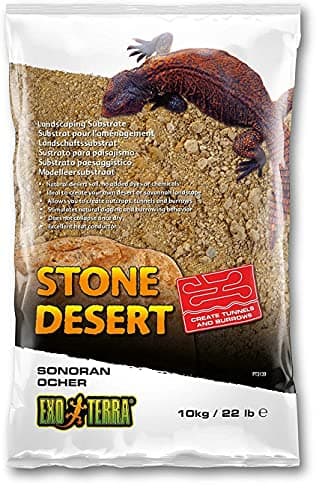
Exo Terra Stone Desert Substrate, Sonoran Ocher
8.4 / 10
- Blend of sand, decomposed granite, and clay engineered to mimic natural arid soils
- Sculptable when wet — build cool-humid burrows and raised basking areas, then it holds shape when dry
- Remains diggable after curing, so burrowing behavior continues on the finished terrain
- Sold in 5, 10, and 20 kilogram sizes and three colorways (Outback Red, Sonoran Ocher, Bahariya Black)
$49.99
The Short Answer
For most adult bearded dragons the target is a sand-plus-soil floor, and the route this page can point you at today is the built one. ReptiFiles publishes a 50/30/20 recipe of very fine sand, organic topsoil, and a clay binder, with Zoo Med ReptiSand at $12.99 as the fine-sand base and Zoo Med Excavator Clay at $13.99 as the named binder. Budget the full dig layer rather than one bag — a 4-to-6-inch layer in a 4-by-2-foot enclosure takes roughly 80 to 120 quarts. Exo Terra Stone Desert at $49.99 is the sculptable specialist for keepers who want carved burrows that stay diggable after curing. One rule holds across every source we read. Hatchlings under roughly six months, and any dragon with existing health problems, belong on solid substrate such as slate tile or paper towel — not loose.
Every product on this list has been scored against the PetPal Gear Score, a weighted composite of expert consensus, observed effectiveness, animal safety, long-term durability, and value. Review method: Editorial synthesis of ReptiFiles bearded dragon substrate guidance and its published review of impaction case evidence. The Zen Habitats Complete Substrate Guide anchored the safe-versus-unsafe material lists. Additional husbandry references came from Chewy Education, Swell Reptiles, and Reptile Networks UK. Manufacturer documentation was reviewed from Josh's Frogs, Zoo Med, and Exo Terra. Owner maintenance and durability reports were drawn from BeardedDragon.org forum threads, r/BeardedDragons, and r/reptiles. PetPalHQ does not run a reptile husbandry lab. The Desert Floor Score is a composite of documented expert consensus, not a measurement.. Synthesized from 8+ expert sources.
Bearded dragon substrate is the most argued-about purchase in reptile keeping, and most of the argument is a decade out of date. We read 8 expert sources for this guide, and the modern consensus has moved: loose substrate alone does not cause impaction in healthy adult dragons — the documented cases trace to parasites, metabolic bone disease, dehydration, and low basking temperatures. PetPalHQ.com earns affiliate commissions from qualifying purchases. Our recommendations are based on expert consensus — we synthesize professional reviews and keeper-community data, not hands-on testing — and commission rates never influence our editorial picks.
What the sources actually disagree about is material, not looseness. ReptiFiles publishes a specific recipe for an adult bearded dragon floor — 50 percent very fine sand, 30 percent organic topsoil, 20 percent excavator clay — and the Zen Habitats Complete Substrate Guide independently recommends fine quartz sand, excavator clay, and commercial sand-and-soil mixes while warning against calcium sands, ground walnut shell, and reptile carpet. The picks here map onto that guidance directly: ReptiSand is the named fine-sand component for building the recipe yourself, Excavator Clay is the named clay binder that holds a burrow, and Stone Desert is the sculptable premium hardscape for display builds.
This guide is for keepers of healthy adult bearded dragons (Pogona vitticeps) with verified basking temperatures and a real enclosure — a 4-by-2-foot floor or larger. Substrate is one layer of a working desert setup, and it interacts with everything above it: keepers planning a full naturalistic build should read our bioactive PVC enclosure guide alongside this one, because drainage, plant zones, and cleanup crews change which substrate makes sense.
Substrate Safety: What the Impaction Evidence Actually Says
Impaction is the safety debate that defines this category, and the current evidence sorts substrates into safe-with-conditions and never-use far more cleanly than the old loose-versus-solid argument did.
The never-use list is material-specific and absolute. Calcium-fortified sands clump in the gut and can neutralize stomach acid, disrupting digestion — and the added calcium can encourage a dragon to deliberately lick and ingest its own floor. Ground walnut shell is dusty, sharp-edged, and indigestible. Wood mulch and shavings carry the same indigestibility problem, reptile carpet harbors bacteria and snags claws, and many linoleum and shelf-liner products off-gas volatile compounds. No pick in this guide uses any of these materials, and the two products we rejected by name below failed on exactly these grounds.
Safe-with-conditions describes everything else, and the conditions are husbandry. A dragon digests incidental substrate ingestion only when its basking surface is hot enough to power digestion, which is why a verified basking temperature — held by a proper controller, covered in our reptile thermostat guide — is a prerequisite for any loose floor. Hydration matters for the same reason. Feeding from a dish or a flat tile cuts the main ingestion route, because sand clings to feeder insects far more readily than it tempts a healthy dragon directly.
The sculptable substrates add one more condition: the cure. Stone Desert and any clay-bound mix must be fully dry before the animal returns — under-watered mixes leave ingestible crumbles, and the drying period spikes enclosure humidity well above desert range. Track the spike with a proper sensor — our reptile hygrometer guide covers the options — and keep the dragon in a holding setup until the terrain is cured and the air is back to arid.
What We Passed On
Zoo Med Vita-Sand (Sonoran White) is live on Amazon at $13.29 and looks like a value alternative to ReptiSand, but it is the one substrate nearly every expert source flags by name. Zen Habitats warns that calcium and vitamin sands are dusty enough to irritate eyes and pose a genuine impaction risk: the calcium carbonate clumps in the gut and can neutralize stomach acid, disrupting digestion — and the calcium content itself can encourage deliberate licking and ingestion. A substrate that invites the animal to eat it fails our animal-safety pillar outright, so it never reached a tier slot.
Zilla Ground English Walnut Shell failed for the same structural reason. Ground nut shells appear on Zen Habitats' do-not-use list as dusty, sharp-edged, indigestible particles that risk impaction when swallowed with feeders — and no expert source we consulted recommends walnut shell for bearded dragons at all. A cheap loose substrate with zero expert endorsement and a mechanical injury profile is an easy exclusion.
$41.99
- Pre-mixed arid sand-and-soil bioactive blend in a 10-quart bag
- Formulated to support an isopod-and-springtail cleanup crew while keeping surface humidity low
- Manufacturer documents it as suitable for bearded dragons among other desert species
- Carried by both Zen Habitats and ReptiFiles' own shop — a strong specialist-retail endorsement signal
- Closest off-the-shelf equivalent of the DIY sand-plus-soil mix experts recommend
BioBedding Desert is the closest thing this category has to an expert-default answer. ReptiFiles' published recommendation for adult bearded dragons is a DIY blend of 50 percent fine sand, 30 percent organic topsoil, and 20 percent excavator clay. This Josh's Frogs mix is the nearest off-the-shelf equivalent of that sand-plus-soil recipe. The retail endorsements are unusually strong for a substrate. ReptiFiles' own shop sells this exact product. Zen Habitats both retails it and lists commercial sand-and-soil mixes among its recommended loose options for bearded dragons. Josh's Frogs documents the blend as designed to jump-start a bioactive environment, and lists the bearded dragon among the species it is built for.
The bioactive design is the real differentiator. The blend is formulated to support a cleanup crew of isopods and springtails that processes waste in place, while keeping surface humidity low enough for an arid-zone lizard. A working bioactive floor stretches replacement intervals far beyond clay substrates that need full tear-outs, which partially offsets the price over a multi-year horizon.
Here's the honest trade-off: per quart, this is the most expensive routine option on the page, and the coverage math is sobering. ReptiFiles' depth guidance calls for a 4-to-6-inch dig layer, which works out to roughly 80 to 120 quarts in a standard 4-by-2-foot enclosure. A single 10-quart bag covers a small fraction of that, so a full build runs eight to twelve bags. The Josh's Frogs BioBedding blend also only earns its bioactive label with support. It needs the cleanup crew, drainage-aware layering, and live-plant or misted dig zones to function as designed. Used dry out of the bag, it is just a pricey sand-and-soil mix.
Setup care matters too. One Petco reviewer reported the sand component irritating a gecko's eyes when the substrate was layered incorrectly, so follow the layering instructions rather than improvising. And the category-wide caveat applies to BioBedding Desert as much as any loose option: hatchlings under roughly six months and dragons with existing health issues should stay on solid substrate until they are robust.
What We Love
- Pre-mixed equivalent of the sand-plus-soil blend ReptiFiles recommends building yourself
- Sold by both ReptiFiles' shop and Zen Habitats — rare double endorsement from specialist retailers
- Supports a waste-processing cleanup crew while holding surface humidity low for desert species
- Manufacturer-documented as an arid bioactive blend with the bearded dragon among its listed species
- Bioactive maintenance model stretches replacement intervals once established
What Could Be Better
- Most expensive routine option per quart — a full 4-to-6-inch dig layer takes eight to twelve bags
- Needs a cleanup crew, drainage-aware layering, and misted dig zones to actually function as bioactive
- Incorrect layering has produced at least one reported eye-irritation incident with the sand component
- Still a loose substrate — not appropriate for hatchlings or health-compromised dragons
The Verdict
If you want the substrate that current expert guidance points to most directly and you accept the bag count a real dig layer requires, BioBedding Desert is the editorial default. Budget the full build, not one bag.
Sources
- Josh's Frogs (manufacturer): blend is designed to jump-start a bioactive environment, maintaining a low humidity level while retaining enough moisture to provide humid hides and support a community of cleaner invertebrates; bearded dragons listed among the suitable species
- ReptiFiles: recommends a DIY naturalistic mix of 50% fine sand, 30% organic topsoil, 20% excavator clay — BioBedding Desert is the closest off-the-shelf sand/soil equivalent, and ReptiFiles' own shop sells this exact product
- Zen Habitats Complete Substrate Guide: lists 'commercially available sand and soil mixes' and 'bioactive mixes' among the recommended loose substrates for bearded dragons; Zen Habitats also retails BioBedding Desert
- ReptiFiles ('Does Loose Substrate Cause Impaction?'): loose substrate alone does not cause impaction — documented cases are typically attributed to parasite infestation, metabolic bone disease, dehydration, and low basking temperatures
$12.99
- 10-pound bag of fine natural quartz desert sand
- No added dyes or chemicals per manufacturer specification
- Fine particle size matches the 'very fine sand' experts specify as the base of a safe loose mix
- Marketed to stimulate natural digging and burrowing behavior in desert species
- Also available in a Natural Red colorway
ReptiSand is the value anchor of this guide, and the reason is its particle spec rather than its price tag. ReptiFiles' recommended bearded dragon floor is 50 percent very fine sand by volume, and fine quartz sand like this is exactly what that base calls for. Zen Habitats' Complete Substrate Guide independently lists super fine quartz sand among its recommended loose options for the species. At $12.99 for 10 pounds with no added dyes or chemicals, Zoo Med ReptiSand is the cheapest way to buy the largest single component of an expert-aligned mix.
The impaction question hangs over every sand product, so it is worth stating what the evidence shows. ReptiFiles' review of case evidence found that very few patients kept on loose substrate were impacted. The documented impactions were typically attributed to parasites and metabolic bone disease rather than to the substrate itself. Fine, clean quartz sand under a healthy adult dragon with correct basking temperatures carries a very different risk profile from the calcium-fortified sands this guide rejects outright.
Here's the honest trade-off: pure sand alone does not hold burrow shapes. A dragon can dig in it, but tunnels collapse behind the dig. That is why experts recommend mixing sand with organic topsoil and a clay binder rather than running it solo. Treat ReptiSand as a component, not a complete floor. Practical annoyances follow the same theme. Loose sand scatters and tracks out of low-walled enclosures, and it clings to feeder insects — the main route incidental ingestion happens. Feeding from a dish or a flat tile largely closes that route.
The coverage math applies here too. A 10-pound bag is nowhere near a full 4-to-6-inch dig layer for a 4-by-2 enclosure, so plan on multiple bags even inside a mix. And the standing age rule is unchanged: loose sand of any kind is widely advised against for hatchlings under roughly six months and for dragons with health problems.
What We Love
- Matches the 'very fine sand' particle spec at the base of ReptiFiles' recommended mix
- No added dyes or chemicals per Zoo Med's specification
- Cheapest per-pound route to the largest component of an expert-aligned floor
- Independently listed by Zen Habitats among recommended loose options for bearded dragons
What Could Be Better
- Does not hold burrow shapes on its own — needs topsoil and clay mixed in
- Scatters, tracks out of low-walled enclosures, and clings to feeder insects
- Multiple bags required for any real dig depth in a 4-foot enclosure
- Not appropriate for hatchlings under roughly six months or health-compromised dragons
The Verdict
Buy ReptiSand as the 50 percent base of a DIY naturalistic mix, not as a standalone floor. It is the best-value component in the category as long as you respect what sand alone cannot do.
Sources
- Zoo Med (manufacturer): natural sand colors with no added dyes or chemicals; stimulates natural digging and burrowing; listed as suitable for bearded dragons, sand boas, and soft-shell turtles
- ReptiFiles: specifies 'very fine' sand as the 50% base of its recommended DIY bearded dragon mix — fine quartz sand like ReptiSand fits that spec
- Zen Habitats Complete Substrate Guide: lists 'super fine quartz sand' among the recommended loose substrate options for bearded dragons
- ReptiFiles ('Does Loose Substrate Cause Impaction?'): in a 2017 review of cases, very few patients on loose substrate were impacted, and impactions were typically attributed to parasites and metabolic bone disease rather than the substrate itself
$13.99
Amazon's price may vary; check the current price.
Last Amazon read 2026-08-21
- 10-pound bag of moldable burrowing clay — mix with water, sculpt, and it hardens holding its shape
- The named 20 percent component of ReptiFiles' recommended 50/30/20 bearded dragon mix
- Holds dug burrows without collapsing once cured
- Sculpt tunnels, terraces, and raised basking platforms before curing
- Natural clay product with no dyes or plastics
Excavator Clay is the only product on this page that an expert source names outright as a recipe ingredient. ReptiFiles specifies Zoo Med Excavator Clay as the 20 percent binder in its 50 percent fine sand, 30 percent organic topsoil, 20 percent excavator clay naturalistic mix. The binder is what lets a dug burrow keep its shape instead of collapsing. Zen Habitats lists excavator clay among its recommended loose options as well. At $13.99 for 10 pounds, it is the cheapest path to a floor that actually holds tunnels.
Used straight rather than in a mix, the clay becomes a sculpting medium. Mix it with water, shape tunnels, terraces, and raised basking platforms, and it hardens into terrain the dragon can still excavate. Owners on BeardedDragon.org report that when mixed with adequate water it lays flat and holds shape well. The failure mode is real, though. Under-watered batches dry into crumbles a dragon can ingest, while badly mixed batches dry rock-hard like cement and crumble into dust when pressed. The water ratio is the whole game with this product.
Here's the honest trade-off: Excavator Clay trades money for labor and a maintenance clock. The clay is porous, so it absorbs urine and feces, stains, and can harbor bacteria. That is why owners who run it as a primary substrate report full replacement roughly every three months rather than spot-cleaning. Budget about $15 per 10-pound bag and multiple bags per redo in a 4-foot enclosure. The cure itself is slow. Sculpted terrain takes a long drying time, and enclosure humidity spikes while it dries. Owner threads describe resorting to dehumidifiers or blow dryers to finish the job before the dragon can go back in.
For keepers who enjoy the build and accept the quarterly tear-out, the burrow function is genuinely the best at this price. For keepers who want lower upkeep, the same clay does quieter work as the 20 percent binder inside a sand-and-soil mix.
What We Love
- Named by ReptiFiles as the specific binder in its recommended bearded dragon mix
- Holds dug burrows and sculpted tunnels without collapsing once properly cured
- Cheapest route to genuine burrow-holding terrain at $13.99 per bag
- Doubles as the binder component of a DIY naturalistic mix
What Could Be Better
- Mixing errors are punishing — under-watered batches crumble into ingestible dust, badly mixed patches dry rock-hard
- Porous surface absorbs urine and feces and can harbor bacteria, forcing full replacement every few months
- Long drying time with an in-enclosure humidity spike during the cure
- Recurring cost compounds — multiple bags per redo, roughly every three months as a primary substrate
The Verdict
Excavator Clay is the burrow specialist for hands-on keepers who will respect the water ratio and the quarterly replacement cycle. Everyone else should use it as the 20 percent binder in a mix.
Sources
- ReptiFiles: names Zoo Med Excavator Clay specifically as the 20% binder in its recommended 50% fine sand / 30% organic topsoil / 20% excavator clay naturalistic mix
- Zen Habitats Complete Substrate Guide: lists 'excavator clay' among the recommended loose substrate options for bearded dragons
- BeardedDragon.org forum (owner threads): when mixed with adequate water it lays flat and holds shape well; under-watered mixes leave ingestible crumbles
- BeardedDragon.org forum (owner threads): owners using it as a primary substrate report replacing it roughly every 3 months at about $15 per 10 lb bag
$49.99
- Blend of sand, decomposed granite, and clay engineered to mimic natural arid soils
- Sculptable when wet — build cool-humid burrows and raised basking areas, then it holds shape when dry
- Remains diggable after curing, so burrowing behavior continues on the finished terrain
- Sold in 5, 10, and 20 kilogram sizes and three colorways (Outback Red, Sonoran Ocher, Bahariya Black)
- Exo Terra features the bearded dragon as an example species for this substrate
Stone Desert is the premium sculpting substrate, and it scores second only to our best-overall pick despite sitting in the specialist slot. The ordering is deliberate: the slot reflects its price and its narrower use case, not its quality. The blend of sand, decomposed granite, and clay is engineered to mimic natural arid soils, and Exo Terra features the bearded dragon as an example species for it. The functional pitch is thermoregulation. Exo Terra's documentation notes that cool, humid burrows matter for temperature regulation and hydration in desert species. This is a floor a dragon can actually carve one into.
The advantage over a straight clay build is what happens after the cure. Stone Desert remains diggable once dry, so the terrain you sculpt is a starting point the animal keeps modifying rather than a fixed casting. Sand-and-clay sculptable substrates of this type fall within Zen Habitats' recommended loose options — the opposite end of the category from the carpet and calcium-sand products it warns against. A burrowable, Australia-like setup is exactly what ReptiFiles' impaction-evidence article supports for healthy adults.
Here's the honest trade-off: at $49.99 this is the priciest pick in the guide. The Stone Desert line ships in 5, 10, and 20 kilogram sizes, so confirm which size you are ordering before checkout. The workflow tax is the same as any clay-bound substrate. Expect a wet-sculpt-then-cure ritual with days of drying time and an in-enclosure humidity spike before the dragon can return. Maintenance follows the clay pattern too. The material absorbs waste, so soiled sections need to be dug out and replaced rather than simply spot-cleaned. The bags are also heavy to ship and handle compared with quart-bagged mixes.
For keepers building a naturalistic display enclosure who want carved, durable, still-diggable terrain, the Exo Terra Stone Desert line is the strongest hardscape option in the category.
What We Love
- Sand, decomposed granite, and clay blend engineered to mimic natural arid soils
- Remains diggable after curing — sculpted terrain stays interactive for the dragon
- Supports cool-humid burrows that Exo Terra documentation ties to thermoregulation and hydration
- Bearded dragon is a manufacturer-listed example species
- Three colorways and three bag sizes across the product line
What Could Be Better
- Priciest pick at $49.99 — sold in 5, 10, and 20 kg sizes, so confirm which size you are ordering
- Days of drying time and a humidity spike before the enclosure is animal-ready
- Soiled sections must be dug out and replaced — no simple spot-cleaning
- Heavy to ship and handle compared with quart-bagged mixes
The Verdict
Stone Desert is the pick for naturalistic display builds where carved, still-diggable terrain justifies the premium. Verify the bag size on the listing before you order.
Sources
- Exo Terra (manufacturer): composition is sand + decomposed granite + clay; cool-humid burrows are important for thermoregulation and hydration in desert species; bearded dragon listed as a suitable species
- Zen Habitats Complete Substrate Guide: sand-and-clay style sculptable substrates fall within its recommended loose options, in contrast to the carpet/calcium-sand products it warns against
- ReptiFiles ('Does Loose Substrate Cause Impaction?'): clay-bound naturalistic substrates align with the burrowable, Australia-like setup the impaction-myth article supports for healthy adults
How We Score
Formula
Desert Floor Score = (Expert Consensus × 0.30) + (Animal Safety × 0.25) + (Burrow & Dig Function × 0.25) + (Upkeep & Value × 0.20)
Score Factors
- Expert Consensus · 30%
- How strongly current specialist sources recommend the substrate for adult bearded dragons. Products named inside ReptiFiles' recommended mix or listed in the Zen Habitats Complete Substrate Guide score highest. ReptiSand is the fine-quartz-sand component of ReptiFiles' 50/30/20 blend, which is the strongest form of endorsement available in this category. Materials those same sources warn against by name, such as calcium-fortified sand and crushed walnut shell, are disqualified before scoring begins rather than ranked low.
- Animal Safety · 25%
- The impaction-risk profile of the material itself, plus age suitability. The case evidence ReptiFiles reviewed attributes most impactions to parasites, metabolic bone disease, dehydration, and low basking temperatures rather than to loose substrate alone. Particle type therefore matters more than the old loose-versus-solid debate. Fine, dye-free, chemically inert particles score well. Materials that clump in the gut, neutralize stomach acid, or shed sharp indigestible fragments are disqualified entirely. Cure-stage hazards, like the ingestible crumbles an under-watered clay mix leaves behind, are scored here too.
- Burrow & Dig Function · 25%
- How well the substrate supports the digging and burrowing behavior bearded dragons display in the wild. Pure fine sand invites digging but collapses behind the dig, so it scores mid-tier alone. Clay-bound materials hold sculpted tunnels and terraces once cured, which earns top marks. Stone Desert scores highest because the finished terrain remains diggable rather than setting into a fixed casting. A floor that holds a burrow gives the dragon a cool, humid retreat for thermoregulation and hydration.
- Upkeep & Value · 20%
- What the substrate costs across a year of ownership, not per bag. Coverage is the hidden variable: a 4-by-2-foot enclosure needs roughly 80 to 120 quarts for the 4-to-6-inch dig layer ReptiFiles describes, so per-quart pricing compounds quickly. Replacement cadence counts against clay, since owners report redoing clay floors roughly every three months as the porous material absorbs waste. An established bioactive floor processes waste through its cleanup crew and stretches the interval between rebuilds.
| Rank | Product | Score |
|---|---|---|
| #1 | Josh's Frogs Josh's Frogs BioBedding Desert Bioactive Substrate (10 Quart) | 8.7 |
| #2 | Exo Terra Exo Terra Stone Desert Substrate, Sonoran Ocher | 8.4 |
| #3 | Zoo Med Zoo Med ReptiSand, 10 Pounds, Desert White | 8.1 |
| #4 | Zoo Med Zoo Med Excavator Clay Burrowing Substrate, 10 Pounds | 7.9 |
When NOT to Buy
Skip every loose and sculptable substrate on this page if your dragon is a hatchling. The consistent guidance across the sources we read is that dragons under roughly six months belong on solid substrate — slate tile or paper towel — until they are larger and feeding reliably. The same applies to any dragon with existing health problems, since the impaction case evidence points to underlying illness rather than substrate as the usual driver.
Skip loose substrate until the husbandry behind it is correct. ReptiFiles' review of impaction cases attributes most documented impactions to parasite infestation, metabolic bone disease, dehydration, and low basking temperatures. Those conditions stop a dragon from digesting the incidental substrate it swallows with food. If the basking surface is not verified at temperature and the animal is not hydrated, fixing that comes before any bag of sand.
Skip the sculptable substrates if you cannot tolerate downtime. Stone Desert and any clay-bound build require a wet-sculpt-then-cure workflow with days of drying time and a humidity spike inside the enclosure before the animal can return. A keeper without a second enclosure or a holding tub should not start a clay build on a whim.
Skip the whole loose category if you cannot buy enough of it. A 4-by-2-foot enclosure needs roughly 80 to 120 quarts of material for the 4-to-6-inch dig layer that makes loose substrate worth running. A thin scattering of sand over glass delivers the tracking mess and the cleanup burden without the burrowing benefit that justifies the category.
Frequently Asked Questions
- Does loose sand cause impaction in bearded dragons?
- Not by itself, according to the current evidence. ReptiFiles reviewed impaction case reports and found that very few patients kept on loose substrate were impacted. The documented cases were typically attributed to parasite infestation, metabolic bone disease, dehydration, and low basking temperatures rather than to the substrate. A healthy, hydrated adult with a verified basking surface digests the incidental sand it swallows with food. The material exceptions are real, though. Calcium-fortified sands and sharp indigestible particles like walnut shell carry risks that fine quartz sand does not, and hatchlings remain a separate case entirely.
- Is calcium sand safe for bearded dragons?
- No. Calcium-fortified sand is the one product class nearly every source we read condemns by name. The calcium carbonate clumps when swallowed and can neutralize stomach acid, which disrupts the digestion a dragon needs to pass substrate safely. That is the opposite of what the digestible-calcium marketing implies. Zen Habitats also flags these sands as dusty eye irritants, and notes the calcium content can encourage a dragon to deliberately lick and eat its floor. That is why Vita-Sand sits in our passed-on list rather than the value slot, despite costing about the same as plain ReptiSand.
- What substrate should I use for a baby bearded dragon?
- Solid, not loose. The consistent guidance across our sources covers hatchlings under roughly six months and any dragon with existing health problems. Both should stay on solid substrate such as slate tile or paper towel until they are robust. Young dragons feed aggressively and clumsily, which raises ingestion volume, and their smaller bodies handle it worse. Paper towel also makes health monitoring easier, since stool changes are visible immediately. Move to a loose or sculptable floor once the dragon is past the six-month mark, feeding reliably, and living over a verified basking temperature.
- How deep should bearded dragon substrate be for digging?
- The depth guidance from ReptiFiles works out to a 4-to-6-inch layer, which is the figure that makes the coverage math matter. In a standard 4-by-2-foot enclosure, that layer takes roughly 80 to 120 quarts of material. That is eight to twelve 10-quart bags of any bagged mix, or the equivalent volume of sand, topsoil, and clay if you blend it yourself. Depth is what separates a functional dig layer from decoration. A thin scattering cannot hold a burrow, so the dragon gets the tracking mess without the thermoregulation retreat that justifies loose substrate in the first place.
- Can I mix my own substrate instead of buying a pre-made blend?
- Yes — the DIY route is the published expert recommendation, not a workaround. ReptiFiles' recipe for adult bearded dragons is 50 percent very fine sand, 30 percent organic topsoil, and 20 percent excavator clay. ReptiSand is this guide's pick for the fine-quartz base; organic topsoil and excavator clay are garden-center and reptile-store staples you can source anywhere. A pre-mixed bagged blend is the alternative, trading a higher per-quart price for skipping the sourcing and mixing work. Either path lands on the same sand-plus-soil floor the expert sources describe.
- How often should I replace loose or clay substrate?
- It depends on the maintenance model. Porous clay floors absorb urine and feces, stain, and can harbor bacteria. Owners running a clay floor as their primary substrate report full replacement roughly every three months — spot-cleaning does not reach what soaks in. Stone Desert follows the same pattern, with soiled sections dug out and replaced rather than scooped. A sand-and-soil mix like a ReptiSand build is spot-cleaned, with deeper refreshes as odor or staining dictates. An established bioactive floor stretches the intervals furthest, because the isopod-and-springtail cleanup crew processes waste in place.
Bottom Line
Build the floor around ReptiSand at $12.99 as the 50 percent fine-sand base. ReptiFiles' published recipe finishes the blend with 30 percent organic topsoil and 20 percent excavator clay, both widely sold at garden and reptile retailers. Budget the full 4-to-6-inch dig layer, roughly 80 to 120 quarts in a 4-by-2-foot enclosure, not one bag.
Pick Exo Terra Stone Desert at $49.99 if burrow-holding terrain is the goal. It is the sculptable option here, and unlike a cured clay casting it stays diggable after it dries, so the animal keeps reworking the terrain you shape.
Pick Exo Terra Stone Desert for premium naturalistic builds — it is the strongest hardscape here and stays diggable after curing. Confirm which bag size you are ordering before checkout.
Skip loose substrate entirely for hatchlings under roughly six months and for any dragon with health problems. Slate tile or paper towel until the animal is robust, with correct basking temperatures and hydration before any loose floor goes in.
Sources & Methodology
Methodology
Desert Floor Score = (Expert Consensus × 0.30) + (Animal Safety × 0.25) + (Burrow & Dig Function × 0.25) + (Upkeep & Value × 0.20)
Expert review sources
- ReptiFiles — Bearded Dragon Substrate Guidance and 'Does Loose Substrate Cause Impaction?' case-evidence review
- Zen Habitats — Complete Substrate Guide for Bearded Dragons
- Chewy Education — Reptile & Amphibian Substrate Material
- Swell Reptiles — Bearded Dragon Husbandry References
- Reptile Networks UK — Substrate and Enclosure Care Guidance
- Josh's Frogs — BioBedding Desert Manufacturer Documentation
- Zoo Med — ReptiSand Manufacturer Documentation
- Exo Terra — Stone Desert Manufacturer Documentation
Community sources
- r/BeardedDragons and r/reptiles community discussion on loose substrate, bioactive setups, and feeding-dish practice
Prices and specs verified June 10, 2026.
About the author
Nick Miles is the chief editor of PetPalHQ. The picks above are editorial synthesis of herpetological care guidance, manufacturer specifications, and verified keeper-community sentiment. PetPalHQ does not run a reptile husbandry lab. The Desert Floor Score is a composite of expert opinion and documented design factors, not a measurement.
PetPalHQ is a participant in the Amazon Services LLC Associates Program. We may earn commissions from qualifying purchases — at no extra cost to you.
More Guides
Reptile
Best PVC Reptile Enclosures for Bioactive Setups (2026)
Reptile
Best Reptile Thermostats for Heat Mats, CHEs & Heating Elements (2026)
Reptile
Best Reptile UVB Bulbs for Safe Lighting (2026)
Reptile
Best Reptile Hygrometers & Thermometers 2026: Accurate Terrarium Monitoring
Reptile