Aquarium
Why Is My Aquarium Water Cloudy? How to Diagnose and Fix It in 2026
White haze, green tint, or brown murk? Diagnose cloudy aquarium water by color first, then fix the cause — not just the symptom.
By Nick Miles · Updated July 8, 2026 · 13 min
PetPalHQ is reader-supported. We may earn a commission from qualifying Amazon purchases at no extra cost to you.
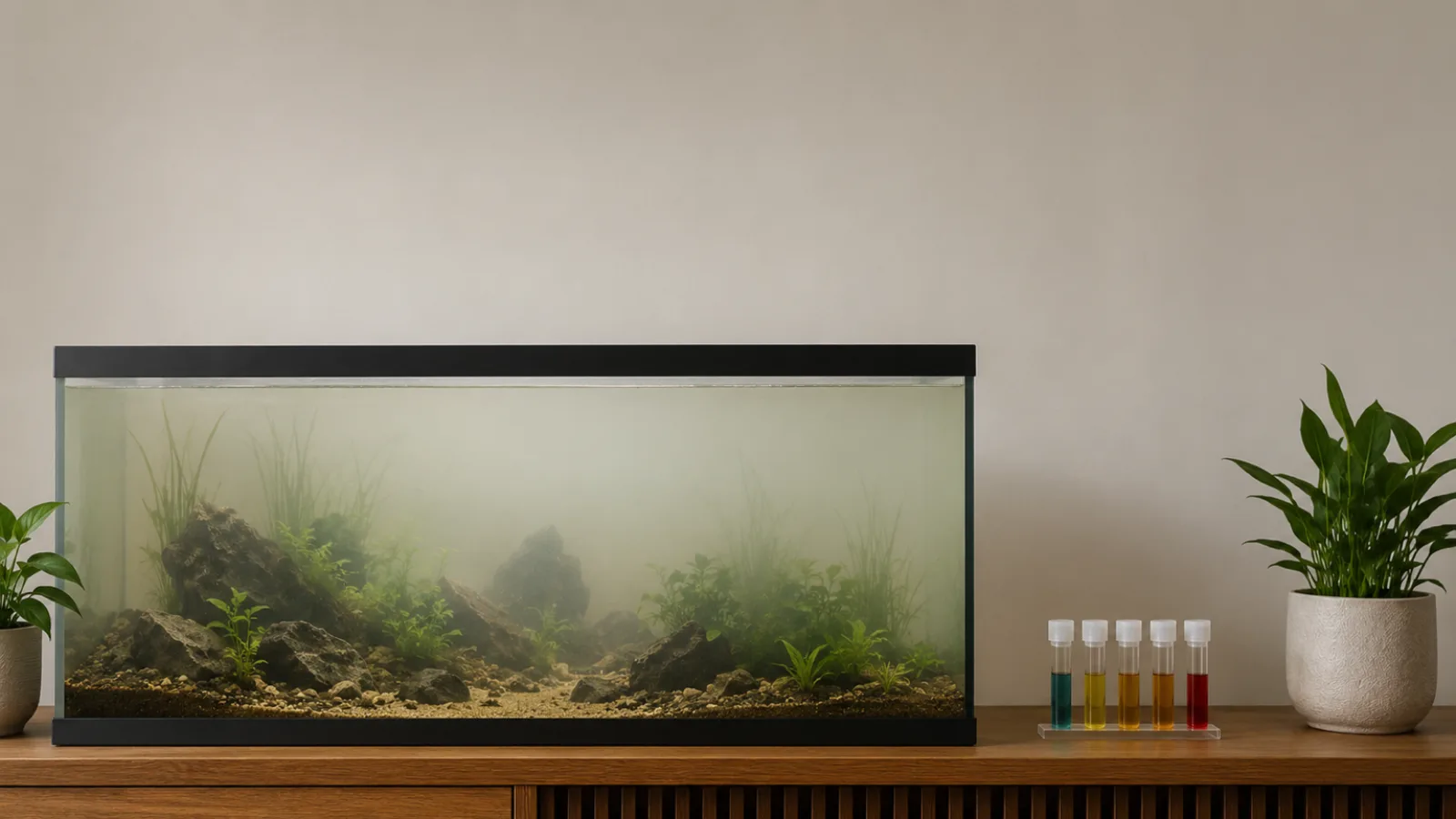
Evidence at a Glance
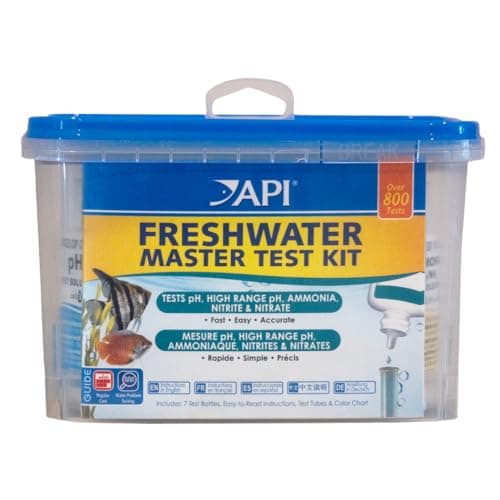
API Freshwater Master Test Kit (approx. 800 tests)
The diagnosis before any cure: a liquid freshwater master kit rated for roughly 800 tests that reads pH, ammonia, nitrite, and nitrate. Those four numbers are how a keeper tells a harmless new-tank bacterial bloom — cycle running, ammonia being processed — from a dangerous stall that needs action.
Sources: API manufacturer/Amazon listing, Ornamental Aquatic Trade Association (OATA) — water-quality guidance
Verified Jul 8, 2026
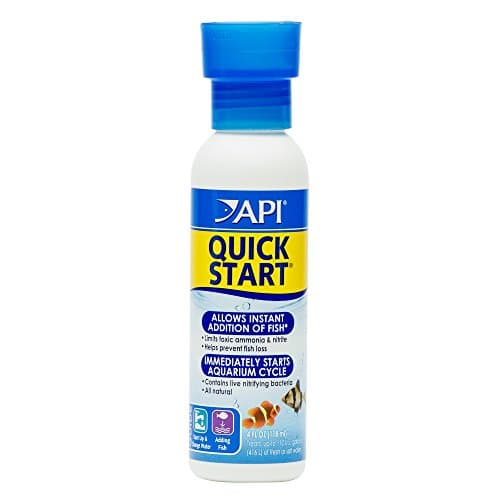
API Quick Start Nitrifying Bacteria, 4 oz
The root fix for the white new-tank haze: a bottle of live nitrifying bacteria for freshwater and saltwater that seeds the biological filter the bloom is waiting on. Paired with light feeding and patience, it addresses the cause of New Tank Syndrome — the one thing no clarifier can do.
Sources: API manufacturer/Amazon listing, University of Florida IFAS Extension — the aquarium nitrogen cycle
Verified Jul 8, 2026
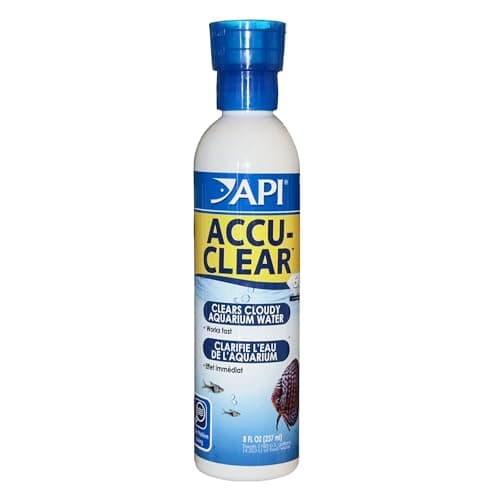
API Accu-Clear Freshwater Aquarium Water Clarifier, 8 oz
The speed tool for mechanical clouds: a freshwater clarifier that clumps fine suspended particles — gravel dust, stirred debris — into flakes big enough for the filter to catch. Honest limit: it treats visible particles only, so it speeds a debris cloud and does nothing for the cause of a bacterial bloom.
Sources: API manufacturer/Amazon listing, Oklahoma State University Extension — filtration in aquaria
Verified Jul 8, 2026
Our Picks
API
API Freshwater Master Test Kit (approx. 800 tests)
8.7 / 10
- Liquid freshwater master test kit rated for roughly 800 tests
- Reads the four numbers that identify a cloud's cause: pH, ammonia, nitrite, and nitrate
- Tells a harmless bacterial bloom (cycle running) from a dangerous stall (ammonia climbing)
- One kit covers the entire cloudy-water episode and years of routine testing after it
$41.99
Current price · checked Sep 8, 2026
API
API Quick Start Nitrifying Bacteria, 4 oz
8.5 / 10
- Live nitrifying bacteria for freshwater and saltwater in a 4-ounce bottle
- Seeds the biological filter that a white new-tank haze is waiting on
- Supports the nitrogen cycle — the actual cause-level fix for New Tank Syndrome
- Pairs with the test kit so a keeper can watch the cycle establish instead of guessing
$8.68
Current price · checked Sep 8, 2026
API
API Accu-Clear Freshwater Aquarium Water Clarifier, 8 oz
7.7 / 10
- Freshwater water clarifier in an 8-ounce bottle
- A flocculant: clumps fine suspended particles into flakes the filter can trap
- The right tool for gravel dust, stirred substrate, and post-rescape debris clouds
- Fastest visible result on this list — for the clouds it is designed for
$9.48
Current price · checked Sep 8, 2026
Aquatic Experts
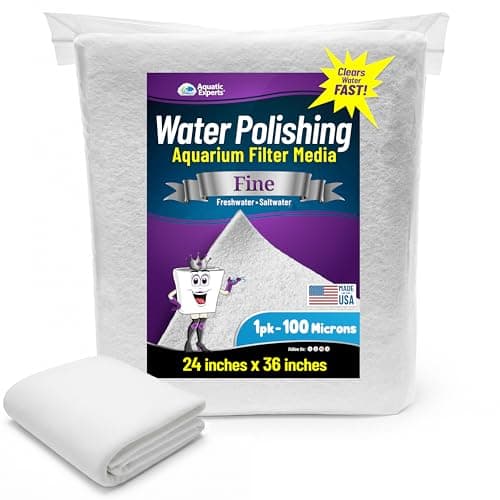
Aquatic Experts Aquarium Polishing Filter Pad, 100 Micron, 24 x 36 in
7.9 / 10
- 100-micron polishing pad that traps the fine particles standard media misses
- Large 24 x 36 inch sheet cuts to fit almost any hang-on-back, canister, or sump
- The capture half of the clarifier strategy — clumped particles need fine media to catch them
- One sheet yields many cut-to-size inserts, so the price spreads across months of use
$15.99
Current price · checked Sep 8, 2026
Laifoo
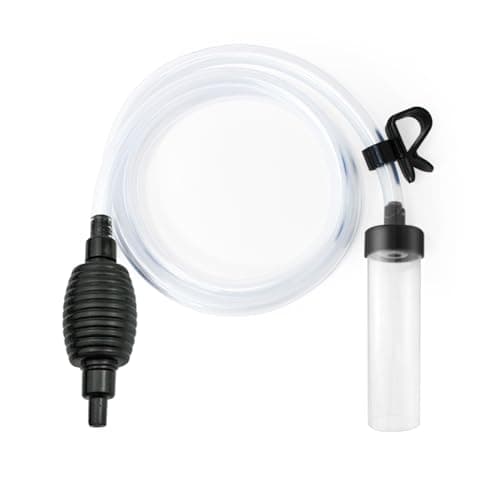
Laifoo 5 ft Aquarium Siphon Gravel Vacuum Cleaner
8.2 / 10
- Siphon-driven gravel vacuum with a 5-foot hose for cleaning gravel and sand
- Pulls decaying food and waste out of the substrate — the organic load that feeds a cloud
- Does a partial water change and a substrate clean in the same pass
- No motor or electricity; gravity and a bucket do the work
$12.90
Current price · checked Sep 8, 2026
API
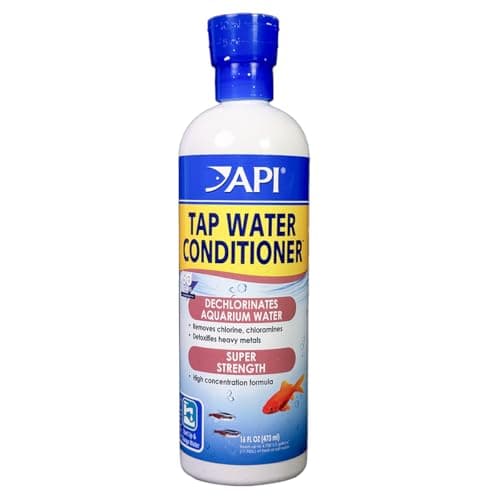
API Tap Water Conditioner, 16 oz
8.0 / 10
- 16-ounce tap water conditioner that neutralizes chlorine and chloramine
- Makes replacement water safe for fish and for the bacteria clearing the bloom
- Guards every partial water change in the cloudy-water recovery routine
- A small dose treats a large volume, so one bottle lasts a small tank a long time
$8.48
Current price · checked Sep 8, 2026
The Short Answer
Look at the color before you spend a dollar. A white or grey haze in a tank set up within the last month is almost always a bacterial bloom — New Tank Syndrome — and it clears with time and a maturing nitrogen cycle, not with chemicals. Green water is algae feeding on light and nutrients. Brown is usually tannins from wood or stirred-up debris. Confirm the stage with the API Freshwater Master Test Kit (about $36 list), seed a new-tank haze with API Quick Start bacteria (about $9 list), and save the API Accu-Clear clarifier (under $10 list) for mechanical particle clouds it can actually clump. The full six-item kit runs roughly $88 in list terms, and most cloudy tanks need only one or two pieces of it.
Every product on this list has been scored against the PetPal Gear Score, a weighted composite of expert consensus, observed effectiveness, animal safety, long-term durability, and value. Review method: Editorial synthesis of the manufacturer and Amazon listings for each product plus published freshwater-aquarium water-quality guidance from University of Florida IFAS Extension, the Merck Veterinary Manual, Oklahoma State University Extension, the Ornamental Aquatic Trade Association (OATA), and the U.S. Environmental Protection Agency. API and Aquatic Experts are long-established aquarium brands with real editorial and community coverage, so honest brand-reputation language is used; Laifoo is a value marketplace brand described in listing terms. No independent lab or outlet has published a hands-on review of these particular products, so no award or verdict is attributed to any outlet. PetPalHQ does not run an aquarium testing lab; the PetPal Water-Clarity Fix Score below is a transparent synthesis of documented listing specifications and published aquarium-keeping standards, not a measurement. Prices were captured on 2026-07-08 in the post-July-4 window and should be treated as list figures that will move — verify the current price before buying.. Synthesized from 6+ expert sources.
Your aquarium water went cloudy, and the tank looks like someone poured milk into it — or pea soup, or weak tea. Before treating it, read it: cloudy water is a symptom whose fix depends on its color. A white or grey haze in a recently set-up tank points to a bacterial bloom that clears with time and a working nitrogen cycle. Green means algae. Brown means tannins or stirred-up debris. Each cloud has a different cause, each cause has a different fix, and the most expensive mistake a keeper can make is treating one cloud with another cloud's cure.
This guide matches each color to its fix using six products, chosen by editorial synthesis of their manufacturer and Amazon listings and published aquarium guidance from sources like University of Florida IFAS Extension, the Merck Veterinary Manual, and the Ornamental Aquatic Trade Association. PetPalHQ does not run a testing lab, and no outlet has hands-on reviewed these six products. API and Aquatic Experts are long-established aquarium brands and are described as such; Laifoo is a value marketplace brand described in listing terms. The PetPal Water-Clarity Fix Score that ranks them is a transparent synthesis of listing specs and published standards, not a measurement, and it deliberately rewards fixing a cloud's cause over masking its look.
PetPalHQ.com earns affiliate commissions from qualifying purchases. Our recommendations are based on expert consensus — we synthesize professional reviews and manufacturer documentation, plus multi-year owner durability data, to find pet gear that is worth your investment. Commission rates never influence our editorial recommendations.
One more thing before the diagnosis: if your cloudy tank is also your first tank, this page pairs with two companions. The first-tank starter checklist covers what a new setup needs from day one, and the water quality and cycling primer explains the chemistry behind everything below. The full six-item fix kit here runs roughly $88 in list terms — and most cloudy tanks only need the piece that matches their color.
Read the Color: What Your Cloud Is Telling You
Start with white or grey, because it is the cloud most beginners meet first. A milky haze that appears days or weeks after a tank is set up is almost always a bacterial bloom. Free-floating microbes are multiplying in the water column while the tank's biological filter is still establishing. Aquarists call the wider event New Tank Syndrome. It looks alarming and it is usually the opposite: visible proof that the tank is coming alive. The same haze in a mature tank usually traces to a heavy hand with food or a big cleaning that disturbed the filter's colony.
Green water is a different organism entirely — suspended single-celled algae, blooming on the two things algae loves: light and nutrients. A tank near a sunny window, lights running twelve hours a day, or water rich with waste will grow it reliably. Brown comes in two forms worth telling apart. Tea-colored but transparent water means tannins steeping out of driftwood, which is harmless. Genuinely murky brown means stirred-up sediment or dirt from an unrinsed substrate.
Whatever the color, the first move is the same: test before you treat. A liquid test kit like the API Freshwater Master Test Kit, reading ammonia, nitrite, nitrate, and pH, tells you whether the cloud is riding on a young, working cycle or an actual water-quality problem — and that answer decides everything you do next.
The New-Tank White Haze (and Why Patience Beats Products)
Here is what is actually happening in that milky week-old tank. Fish waste and food scraps release ammonia, and the bacteria that consume it are still scarce. So a boom generation multiplies in the open water, faster than the filter surfaces can host it. The water turns hazy because it is full of microbes doing exactly the job you want done. As the colony establishes in the filter media, the free-floating population loses the food race and the water clears on its own. Dumping a chemical into that process treats the most reassuring sign the tank will ever give you as an enemy.
What helps is quiet: feed lightly so less ammonia enters the water, seed the filter with bottled nitrifying bacteria such as API Quick Start to shorten the wait, and test every day or two to watch ammonia and nitrite rise and then fall toward zero. Rising readings with a haze mean the cycle is mid-build. Readings that keep climbing while fish gasp or sulk mean the tank is overloaded, and the response is partial water changes and less food — still not clarifier. The full chemistry, stage by stage, lives in the cycling primer.
Particle and Debris Clouds: The Mechanical Fix
When the test kit says the water is chemically fine but it still looks foggy, you are in mechanical territory — inert particles too fine for the filter to grab. The classic culprits are an unrinsed bag of gravel, a rescape that stirred old silt, a digging fish, or months of overfeeding ground into dust. This is the one category where the right products earn their keep, and the sequence matters more than the spending. Vacuum first: a gravel siphon pulls out the settled muck that re-clouds the water every time it is disturbed, and does a partial water change in the same pass.
Then reshape what is left. A dose of water clarifier like API Accu-Clear clumps the remaining fine particles into flakes big enough to trap, and a fine Aquatic Experts polishing pad cut into the filter catches them on the way through — coarse stock media will just recirculate them. Keepers who want to upgrade that capture stage permanently can compare options in the filters and media guide, and the cleaning tools roundup covers the maintenance kit that keeps debris clouds from returning. Give the filter a day or two of hard running between steps; mechanical clearing is fast, but it is not instant.
What NOT to Do When the Tank Goes Cloudy
The damage in most cloudy-water stories comes from the response, not the cloud. Do not drain the tank and start over — a huge water change strips away stability, shocks fish, and invites the bloom back thicker. Do not replace every piece of filter media at once, because the beneficial colony lives in that media and binning it restarts the cycle from zero. Do not stack chemicals, dosing a second product because the first "didn't work." If a clarifier failed, the cloud was biological, and more bottles will not change its mind. And do not stop feeding entirely out of panic; fish need less food during a bloom, not none. Calm, small moves win: test, match the fix to the color, and give the tank days rather than hours to respond.
Head-to-Head Comparison
| Cloud type | Product | Cause or symptom? | PetPal Water-Clarity Fix Score |
|---|---|---|---|
| Any cloud — diagnose first | API Freshwater Master Test Kit (approx. 800 tests) | Finds the cause | 8.7 |
| White/grey new-tank haze | API Quick Start Nitrifying Bacteria, 4 oz | Fixes the cause (with time) | 8.5 |
| Debris and dust clouds | API Accu-Clear Freshwater Aquarium Water Clarifier, 8 oz | Clears the symptom, fast | 7.7 |
| Fine haze the filter misses | Aquatic Experts Aquarium Polishing Filter Pad, 100 Micron, 24 x 36 in | Captures the symptom | 7.9 |
| Recurring, waste-fed clouds | Laifoo 5 ft Aquarium Siphon Gravel Vacuum Cleaner | Removes the cause | 8.2 |
| Every water change | API Tap Water Conditioner, 16 oz | Protects the fix | 8.0 |
$41.99
Current price · checked Sep 8, 2026
- Liquid freshwater master test kit rated for roughly 800 tests
- Reads the four numbers that identify a cloud's cause: pH, ammonia, nitrite, and nitrate
- Tells a harmless bacterial bloom (cycle running) from a dangerous stall (ammonia climbing)
- One kit covers the entire cloudy-water episode and years of routine testing after it
- API is a long-established aquarium water-care brand with real hobby coverage
Which cloud is it? That is the only question that matters on day one, and the API Freshwater Master Test Kit is the tool that answers it. A white haze looks identical whether the tank is running a healthy bacterial bloom or sliding toward an ammonia emergency. The water cannot tell you which, but the numbers can. This liquid kit reads pH, ammonia, nitrite, and nitrate, and those four readings turn a panicked guess into a diagnosis. Ammonia or nitrite in a young tank means the cycle is mid-build and the haze is its visible side effect. Zeros across the board in a cloudy older tank point away from biology and toward stirred debris or overfeeding.
The reason a liquid kit earns the top slot over cheaper strips is precision at exactly the moment it matters. Reading drops against a color chart takes a few minutes, but it produces numbers a stressed beginner can act on and track from one day to the next. Watching ammonia rise, peak, and fall is literally watching the bloom resolve itself — and that trend line is what stops a keeper from dumping chemicals into a tank that is already fixing itself. The kit's roughly 800-test capacity means the whole episode, and years of routine checks after it, come out of one box at about $36 list.
The honest note is that this pick clears nothing. The water will look exactly as milky after a test as before it, and a keeper who wants a visible result today will find that unsatisfying. It ranks first anyway because every wrong move in the cloudy-water playbook — the panic water change, the chemical stack, the fish returned to the store — starts with not knowing what the cloud is. For the keeper staring at a hazy week-old tank and wondering whether to act or wait, this is the purchase that makes every other purchase on this list optional.
What We Love
- Turns an ambiguous haze into a diagnosis: bloom in progress, stall, or non-biological cloud
- Liquid reagents give more precise readings than dip strips during a cycle
- Tracks the bloom day over day, which is what makes patience possible
- Roughly 800 tests from one purchase — pennies per reading across the episode
What Could Be Better
- Fixes nothing by itself — the water looks the same after every test
- Drop-counting and color-matching take minutes and decent light, not seconds
- Reagents age out, so an old kit inherited with a used tank should be replaced
The Verdict
The API master kit is the first buy for any cloudy tank because it identifies which cloud you have — and a correct diagnosis is the cheapest fix on this list.
Sources
- API (manufacturer/Amazon listing): liquid freshwater master test kit rated for roughly 800 tests, measuring pH, ammonia, nitrite, and nitrate
- Ornamental Aquatic Trade Association (OATA — water-quality guidance): aquatic-trade guidance identifies ammonia and nitrite as acutely toxic to fish and recommends regular testing while a new aquarium matures
$8.68
Current price · checked Sep 8, 2026
- Live nitrifying bacteria for freshwater and saltwater in a 4-ounce bottle
- Seeds the biological filter that a white new-tank haze is waiting on
- Supports the nitrogen cycle — the actual cause-level fix for New Tank Syndrome
- Pairs with the test kit so a keeper can watch the cycle establish instead of guessing
- API is a long-established aquarium water-care brand with real hobby coverage
A white haze in a young tank is not dirt — it is a population explosion. The tank's first bacteria multiply faster in the open water than on surfaces, and the milky look is millions of them suspended in the column while the biological filter is still under construction. API Quick Start attacks that cause directly. It is a bottle of live nitrifying bacteria that seeds the filter with the exact microbes the tank is slowly growing on its own, aiming to shorten the vulnerable stretch when ammonia has nowhere to go. Of everything on this list, it is the only bottle that treats what a new-tank bloom actually is.
Using it well is a routine, not a rescue. Dose the bacteria, feed the fish lightly so less waste enters the water, and watch ammonia and nitrite on the API kit fall toward zero as the colony takes hold in the filter media. The bloom fades as the water-borne bacteria lose the food race to the established colony — which is why the fix reads as anticlimax. Nothing dramatic happens; the water simply gets a little clearer each day until one morning it is just clear.
The candid limit belongs in the same breath as the recommendation: bottled bacteria are a head start, not a shortcut. Freshness and storage affect how much of a head start a given bottle delivers, and no product removes the need to let the biofilter mature before the tank carries a full load of fish. What a keeper buys for about $9 list is a shove in the right direction — the cycle still runs on its own clock, and the real active ingredient is the patience to let it finish.
What We Love
- Treats the cause of a new-tank white haze instead of masking the symptom
- Seeds the filter with the nitrifying colony the cycle depends on
- Cheap insurance during the most dangerous weeks a tank will ever have
- Works hand in hand with the test kit to make the recovery visible
What Could Be Better
- A head start only — the cycle still takes weeks to finish maturing
- Potency varies with the bottle's freshness and how it was stored in transit
- Does nothing for green algae water or stirred-debris clouds, which have different causes
The Verdict
For the classic white new-tank haze, Quick Start plus light feeding and time is the honest cure — everything else on this list just manages the wait.
Sources
- API (manufacturer/Amazon listing): 4-ounce bottle of live nitrifying bacteria for freshwater and saltwater aquariums to help establish the nitrogen cycle
- University of Florida IFAS Extension (The aquarium nitrogen cycle): extension guidance describes nitrification as a bacterial process that converts toxic ammonia to nitrite and then to less harmful nitrate, and notes that establishing those bacteria takes time in a new system
$9.48
Current price · checked Sep 8, 2026
- Freshwater water clarifier in an 8-ounce bottle
- A flocculant: clumps fine suspended particles into flakes the filter can trap
- The right tool for gravel dust, stirred substrate, and post-rescape debris clouds
- Fastest visible result on this list — for the clouds it is designed for
- Freshwater-only formulation from an established water-care brand
Honesty first, because this is the bottle most keepers reach for and the one most often reached for wrongly. API Accu-Clear does exactly one job: it is a flocculant, which means it makes fine suspended particles stick together into clumps heavy and large enough for the filter to catch. Gravel dust from an unrinsed bag of substrate, silt kicked up by a rescape, the fog after a digging cichlid remodels the tank floor — these are inert-particle clouds, and on them a clarifier is the fastest fix in this guide.
Its speed is real, and so is its dependency. A flocculant does not remove anything from the water; it only reshapes the problem so the mechanical filter can remove it. That makes the surrounding setup matter. A filter running coarse media will let the fresh clumps ride straight through and back into the tank, which is why the polishing pad below is this pick's natural partner. Dose to the label, run the filter hard, and rinse or swap the media as it loads up with what used to be the cloud.
Where Accu-Clear earns its modest Water-Clarity Fix Score is the case it cannot solve. A bacterial bloom is alive — clump some of it and the survivors keep multiplying, so the haze shrugs off the dose and returns. Green algae water behaves the same way for the same reason. Where Quick Start is the bottle for a week-one white haze, Accu-Clear is the bottle for the afternoon you rearranged the rocks: right tool, different cloud, and knowing which is which is the whole game.
What We Love
- Visibly fastest option here for mechanical particle clouds
- Turns a days-long debris fog into a filtration job the tank can finish
- Simple dose-to-label use at under $10 list
- Pairs naturally with a fine polishing pad to actually capture the clumps
What Could Be Better
- Treats visible particles only — it cannot fix the cause of a bacterial bloom or algae water
- Depends entirely on the filter: coarse media lets the clumped particles recirculate
- Freshwater-only, and overdosing instead of following the label helps nothing
The Verdict
Accu-Clear is the speed tool, not the cure — buy it for debris and dust clouds, and skip it for the white new-tank haze that time and bacteria have to fix.
Sources
- API (manufacturer/Amazon listing): 8-ounce freshwater aquarium water clarifier that clumps fine suspended particles so the filter can remove them
- Merck Veterinary Manual (Aquarium fishes): veterinary aquarium guidance treats water quality and husbandry — feeding, stocking, and water maintenance — as the foundation of fish health rather than chemical additives
$15.99
Current price · checked Sep 8, 2026
- 100-micron polishing pad that traps the fine particles standard media misses
- Large 24 x 36 inch sheet cuts to fit almost any hang-on-back, canister, or sump
- The capture half of the clarifier strategy — clumped particles need fine media to catch them
- One sheet yields many cut-to-size inserts, so the price spreads across months of use
- Aquatic Experts is a real, established filter-media brand
Most filters are blind to a haze. The sponges and cartridges that ship with typical hang-on-back units are built to grab visible debris, and the fine particles that make water look dull or foggy slide through them on every pass. The Aquatic Experts polishing pad closes that gap: a 100-micron sheet of dense media that a keeper cuts with scissors to fit whatever filter the tank already runs. Water goes in hazy on one side and comes out polished on the other — no new hardware, no new plumbing, just a smarter last stage in the filter that is already there.
As a system, this pad and the Accu-Clear above are two halves of one fix. The clarifier turns a fog of particles too fine to catch into clumps; the pad is what actually catches them. It works alone too — plenty of mild dullness clears with nothing more than fine media and a few days of normal flow. The 24 x 36 inch sheet is the quiet value here, since one purchase at about $16 list yields a long stack of cut-to-size inserts.
Two honest boundaries. A pad this fine loads up fast when the water is dirty, and a loaded pad chokes flow. It needs checking and swapping while a cloud is being cleared, and a keeper who sets it and forgets it will slow the filter down. And like the clarifier it partners with, it captures what is in the water without fixing what put it there; a tank that re-clouds every week has a feeding, stocking, or substrate problem the next pick addresses. Still, it is the cheapest route from water that is technically clean to glass that actually looks clear.
What We Love
- Catches the fine suspended particles that stock filter media passes through
- Cuts to fit the filter already on the tank — no new equipment needed
- Completes the clarifier's job by capturing the clumped particles
- One large sheet supplies months of replacement inserts
What Could Be Better
- Fine media clogs quickly during an active cloud and needs regular swapping
- A loaded pad restricts filter flow if neglected
- Captures particles only — it cannot correct the cause of a recurring cloud
The Verdict
The polishing pad is the finishing tool: for hazy-but-healthy water, or as the capture stage after a clarifier dose, it turns an ordinary filter into the thing that finally clears the tank.
Sources
- Aquatic Experts (manufacturer/Amazon listing): 100-micron polishing filter pad, 24 x 36 inches, cut to fit a filter to trap fine particles for water polishing
- Oklahoma State University Extension (Filtration in aquaria): extension guidance describes mechanical filtration as removing suspended particles by passing water through media, with finer media trapping finer material
$12.90
Current price · checked Sep 8, 2026
- Siphon-driven gravel vacuum with a 5-foot hose for cleaning gravel and sand
- Pulls decaying food and waste out of the substrate — the organic load that feeds a cloud
- Does a partial water change and a substrate clean in the same pass
- No motor or electricity; gravity and a bucket do the work
- Listing-verified basics from a value marketplace brand
The cloud that keeps coming back is being fed from the bottom of the tank. Uneaten food, fish waste, and plant debris settle into the gravel and decay there, and that rotting layer is a buffet. It feeds bacterial blooms, fuels algae, and turns into silt that clouds the water every time something stirs it. The Laifoo siphon gravel vacuum is how a keeper removes that buffet. Sink the intake into the substrate, start the siphon, and the gravel churns in the tube while the lighter muck lifts away into a bucket, leaving the stones behind.
This is also the pick that makes the whole recovery routine practical, because a gravel vacuum performs the partial water change and the substrate clean as one job. The 5-foot hose in the listing name is the working detail. It reaches from the tank rim down to a bucket on the floor, so draining a quarter of the water means standing there holding a tube, not hauling and dipping. During a cloudy spell, a weekly pass like this removes both the suspended particles and the decaying material producing them.
On brand honesty: Laifoo is a value marketplace brand, so this write-up sticks to what the listing states — a siphon vacuum with a 5 ft hose for cleaning gravel and sand — with no reliability lore attached. The physics need no brand behind them anyway; a siphon is a siphon. What matters is what this tool does that nothing else here can. Every bottle on this list either measures the water, seeds it, or reshapes particles in it; the vacuum is the only pick that takes the cause of the cloud out of the tank for good. That is the durable fix.
What We Love
- Removes the decaying organic load that feeds blooms and recurring clouds
- Combines the water change and substrate clean into one weekly pass
- Hose length makes a floor-bucket drain a one-person job
- No batteries, motor, or moving parts to fail — about $10 list
What Could Be Better
- Value marketplace brand, so build quality is listing-stated rather than reputation-backed
- Starting and controlling a siphon takes a little practice, and the first tries can be messy
- Too strong a pull on fine sand can swallow substrate along with the muck until the angle is learned
The Verdict
The Laifoo vacuum is the durable fix on this list — it removes the organic cause a bottle can only race against.
Sources
- Laifoo (manufacturer/Amazon listing): 5-foot aquarium siphon gravel vacuum for cleaning gravel and sand during water changes
- University of Florida IFAS Extension (Home aquarium care): extension guidance identifies uneaten feed and accumulating organic waste as drivers of poor water quality and recommends routine partial water changes and substrate maintenance
$8.48
Current price · checked Sep 8, 2026
- 16-ounce tap water conditioner that neutralizes chlorine and chloramine
- Makes replacement water safe for fish and for the bacteria clearing the bloom
- Guards every partial water change in the cloudy-water recovery routine
- A small dose treats a large volume, so one bottle lasts a small tank a long time
- API is a long-established aquarium water-care brand with real hobby coverage
None of the fixes above survive an unconditioned water change. Municipal tap water carries chlorine or chloramine on purpose, disinfectants meant to kill bacteria in the pipes. On arrival in an aquarium, they kill the nitrifying colony that Quick Start seeded and the maturing biofilter that is quietly ending the bloom. Pour untreated tap water into a recovering tank and the keeper personally restarts the problem being fixed. The API Tap Water Conditioner is the guardrail: a dechlorinator that neutralizes both disinfectants as the new water goes in.
Its place in this guide is tied to the routine the other picks create. Diagnosing, seeding, clarifying, and vacuuming all lean on partial water changes, which means fresh tap water enters the tank again and again across a recovery — and each refill is a chance to set the cycle back. Dosed to the label, the conditioner removes that risk for pennies per change, and because a little treats a lot, the 16-ounce bottle outlasts the episode by months.
What it will not do is touch the cloud itself. Conditioned water is not clearer water; it is safer water, and a keeper should expect zero visible change from this bottle. The trade is invisible protection for the modest discipline of never skipping it. About $8.50 list makes sure the water changes that cure a cloudy tank never become the reason the cloud came back. Chloramine is the detail that makes it non-negotiable — unlike old-fashioned chlorine, it does not gas off overnight, so letting a bucket sit does not make tap water safe.
What We Love
- Protects the bacterial colony that is actually resolving a new-tank bloom
- Makes every partial water change in the recovery routine safe by default
- Handles chloramine, which does not dissipate by letting water stand
- Trivial cost per change from one long-lasting bottle
What Could Be Better
- Produces no visible clearing on its own — it is protection, not treatment
- Must be dosed to actual water volume, which means measuring rather than splashing
- Neutralizes disinfectants only; it does not remove ammonia already in the tank
The Verdict
The conditioner is the fix that protects the fix — cheap, invisible, and the difference between water changes that heal a cloudy tank and water changes that reset it.
Sources
- API (manufacturer/Amazon listing): 16-ounce tap water conditioner that neutralizes chlorine and chloramine so replacement water is safe for aquarium fish
- U.S. Environmental Protection Agency (Chloramines in drinking water): the EPA documents that many utilities disinfect drinking water with chloramine, which is more persistent than free chlorine and does not readily dissipate on standing
How We Score
Formula
PetPal Water-Clarity Fix Score = (Root-Cause Fix × 0.30) + (Speed to Clear × 0.25) + (Safety for Fish & Cycle × 0.20) + (Ease × 0.15) + (Value × 0.10)
Score Factors
- Root-Cause Fix · 30%
- Does the item fix the cause of the cloud, or only mask the symptom? The heaviest weight in the score, on purpose. The test kit and the bacteria score highest because diagnosis and a maturing cycle end a bloom for good; the gravel vacuum scores well for removing the organic load outright; the clarifier and polishing pad score lowest here because they handle what is visible without touching what produced it.
- Speed to Clear · 25%
- How quickly the item improves visible clarity once used correctly for the cloud it suits. The clarifier and pad lead this factor for mechanical clouds; bacteria and testing trail it honestly, because the biological route trades speed for permanence. Speed is scored against the right use case — no item gets credit for being fast at a job it cannot do.
- Safety for Fish & Cycle · 20%
- How gentle the item is on fish and on the beneficial bacteria doing the real work. Seeding bacteria and conditioning water actively protect the cycle; testing is inert; the mechanical tools are safe when used to their labels and instructions. Anything that could set the biofilter back if misused is scored on how easy it is to use safely.
- Ease · 15%
- How simple the item is for a stressed beginner to apply without making the situation worse. Dose-to-label bottles rate highest; cutting a pad to fit and learning to control a siphon involve small learning curves; liquid testing asks for a few careful minutes per reading.
- Value · 10%
- List price against the clarity problem the item solves and how long it keeps solving it. Multi-year items like the test kit, the pad sheet, and the conditioner bottle rate strongly; single-purpose speed tools are judged on cost per episode.
| Rank | Product | Score |
|---|---|---|
| #1 | API API Freshwater Master Test Kit (approx. 800 tests) | 8.7 |
| #2 | API API Quick Start Nitrifying Bacteria, 4 oz | 8.5 |
| #3 | Laifoo Laifoo 5 ft Aquarium Siphon Gravel Vacuum Cleaner | 8.2 |
| #4 | API API Tap Water Conditioner, 16 oz | 8.0 |
| #5 | Aquatic Experts Aquatic Experts Aquarium Polishing Filter Pad, 100 Micron, 24 x 36 in | 7.9 |
| #6 | API API Accu-Clear Freshwater Aquarium Water Clarifier, 8 oz | 7.7 |
When NOT to Buy
Do not buy anything for a white haze in a tank under a month old before testing the water. That haze is almost always New Tank Syndrome — a bacterial bloom that resolves as the nitrogen cycle establishes — and the fix is time, light feeding, and seeded bacteria, not a shopping cart. If ammonia and nitrite are behaving the way a young cycle should, the cloud is a phase, not a problem.
Do not buy a clarifier expecting it to cure a bacterial bloom. A flocculant clumps inert particles; it cannot stop living bacteria from multiplying, so the haze returns after the dose and the keeper concludes, wrongly, that a stronger chemical is needed. That road ends with a stressed tank and the same cloud.
Do not respond to cloudiness with a total teardown. A 100 percent water change, a scrubbed-sterile tank, or a full set of new filter cartridges all destroy the bacterial colony mid-build. That restarts the bloom from zero and can put fish into ammonia danger the original haze never posed. Partial changes and rinsed (not replaced) media preserve the progress.
Skip the spend entirely when the cloud is brown and the tank holds new driftwood. Tannins tint water the color of weak tea but leave it transparent — that is steeping, not clouding. It is harmless, many fish appreciate it, and it fades with routine water changes; a keeper who dislikes the look needs patience or carbon, not this list.
Frequently Asked Questions
- How long does the white haze in a new tank usually last?
- Most bacterial blooms fade over several days, and a stubborn one can linger a couple of weeks while the cycle matures — the trend matters more than the date. One edge case surprises people: a bloom that clears and then reappears right after new fish are added is not a relapse. The bacterial colony is growing to match the bigger waste load, and that second haze usually passes faster than the first. A haze still thickening after a few weeks with ammonia climbing points to overfeeding or overstocking, and the answer is reducing the load, not waiting longer.
- Why is a 100% water change the wrong fix for cloudy water?
- Because it resets the process that was ending the cloud. A full drain replaces stable, biologically active water with raw new water, shocks fish with sudden shifts in temperature and chemistry, and commonly triggers a rebound bloom thicker than the original. Partial changes of about a quarter of the volume remove nutrients while preserving stability. The same logic protects the filter: rinse media gently in the water you removed rather than under the tap, because untreated tap water kills the colony living in it.
- My water is green, not white — does the same fix apply?
- No, and this is where the color rule earns its keep. Green water is live, free-floating algae, and it runs on light and nutrients rather than on a maturing cycle. The fix is starving it: cut the light period back to six or so hours, get the tank out of direct sunlight, feed less, and keep up partial water changes. The edge case is placement — a tank near a bright window will out-grow every in-tank remedy until the sunlight itself is blocked, which is why green water so often "resists treatment."
- Is cloudy water itself dangerous to my fish?
- The haze is mostly harmless; the danger travels alongside it. During a new-tank bloom, the same immature cycle that causes the cloud can let ammonia and nitrite rise, and those are what hurt fish. Clear water with bad numbers is far more dangerous than milky water with good ones. The exception worth knowing: a very heavy bacterial bloom can pull dissolved oxygen down, so fish hanging at the surface and gasping is the real emergency signal. If that appears, increase surface agitation immediately and test the water — the fix is oxygen and water quality, not clarity.
- I used a clarifier and the water is still cloudy — what went wrong?
- Usually the cloud type. A flocculant clumps inert particles, so it cannot stop a living bacterial bloom or green algae from multiplying right back — the dose works for a day and the haze returns. Two other failure modes are worth checking. If the filter runs only coarse media, the clumped particles recirculate instead of being captured, and a fine polishing insert fixes that. And if the source is still producing — new gravel that was never rinsed, a digging fish, heavy feeding — the water re-clouds no matter how well the last dose worked. Address the source and the capture stage before repeating any dose.
Bottom Line
Diagnose by color before buying anything: white or grey haze in a young tank is a bacterial bloom that time and the nitrogen cycle will clear, green is algae driven by light and nutrients, and brown is tannins or stirred debris.
For the classic new-tank white haze, the honest fix is the API Freshwater Master Test Kit to confirm the cycle is running plus API Quick Start bacteria to seed it — then light feeding and patience, not chemicals.
Save the API Accu-Clear clarifier for mechanical clouds — gravel dust, rescape silt, stirred debris — and pair it with the Aquatic Experts polishing pad so the filter can actually capture what it clumps.
A recurring cloud is a maintenance signal: the Laifoo gravel vacuum removes the decaying organic load feeding it, and the API Tap Water Conditioner keeps every water change from killing the bacteria doing the repair.
The full six-item kit runs roughly $88 in list terms, but most cloudy tanks need only the piece that matches their color — the test kit is the one purchase that applies to every case.
Sources & Methodology
Methodology
PetPal Water-Clarity Fix Score = (Root-Cause Fix × 0.30) + (Speed to Clear × 0.25) + (Safety for Fish & Cycle × 0.20) + (Ease × 0.15) + (Value × 0.10)
Expert review sources
- Manufacturer/Amazon listings for all six products (API Freshwater Master Test Kit, API Quick Start, API Accu-Clear, Aquatic Experts Polishing Filter Pad, Laifoo 5 ft Siphon Gravel Vacuum, API Tap Water Conditioner) — specifications and feature listings
- University of Florida IFAS Extension — the aquarium nitrogen cycle and home aquarium care (nitrification, organic waste, and partial water changes)
- Merck Veterinary Manual — Aquarium fishes (water quality and husbandry as the foundation of fish health)
- Oklahoma State University Extension — filtration in aquaria (mechanical and biological filtration)
- Ornamental Aquatic Trade Association (OATA) — water-quality guidance (ammonia and nitrite toxicity, testing new tanks)
- U.S. Environmental Protection Agency — Chloramines in drinking water (municipal disinfection of tap water)
Community sources
- Established freshwater-aquarium publications and hobby forums — New Tank Syndrome, bacterial bloom, and cloudy-water troubleshooting discussion
- API and Aquatic Experts — long-established aquarium water-care and filter-media brands (brand reputation context)
Prices and specs verified July 8, 2026.
About the author
Nick Miles is the chief editor of PetPalHQ. This troubleshooting guide is an editorial synthesis of the manufacturer and Amazon listings for each product cross-checked against published freshwater water-quality guidance from University of Florida IFAS Extension, the Merck Veterinary Manual, Oklahoma State University Extension, the Ornamental Aquatic Trade Association, and the U.S. EPA, with honest brand-reputation context for API and Aquatic Experts and listing-language-only treatment of the value brand Laifoo. PetPalHQ does not run an aquarium testing lab, and no independent outlet has published a hands-on review of these exact products. The PetPal Water-Clarity Fix Score is a transparent composite of documented listing specifications and published aquarium-keeping standards, not a measurement.
PetPalHQ is a participant in the Amazon Services LLC Associates Program. We may earn commissions from qualifying purchases — at no extra cost to you.
More Guides
Aquarium
New Aquarium Starter Checklist: Everything a First Tank Needs in 2026
Aquarium
Aquarium Water Quality, Cycling and Testing for Beginners (2026 Guide)
Aquarium
Best Aquarium Bacteria Starters for New Freshwater Tanks (2026)
Aquarium
Best Aquarium Water Test Kits for Freshwater Fish Tanks (2026)
Aquarium
Best Aquarium Cleaning Tools for Better Water Quality (2026)
Aquarium