Aquarium
New Aquarium Starter Checklist: Everything a First Tank Needs in 2026
A first aquarium fails on water chemistry, not the tank. Buy the water-quality trio first — filter, test kit, dechlorinator plus bacteria — then the tank and heater. One starting product per stage.
By Nick Miles · Updated September 7, 2026 · 14 min
PetPalHQ is reader-supported. We may earn a commission from qualifying Amazon purchases at no extra cost to you.
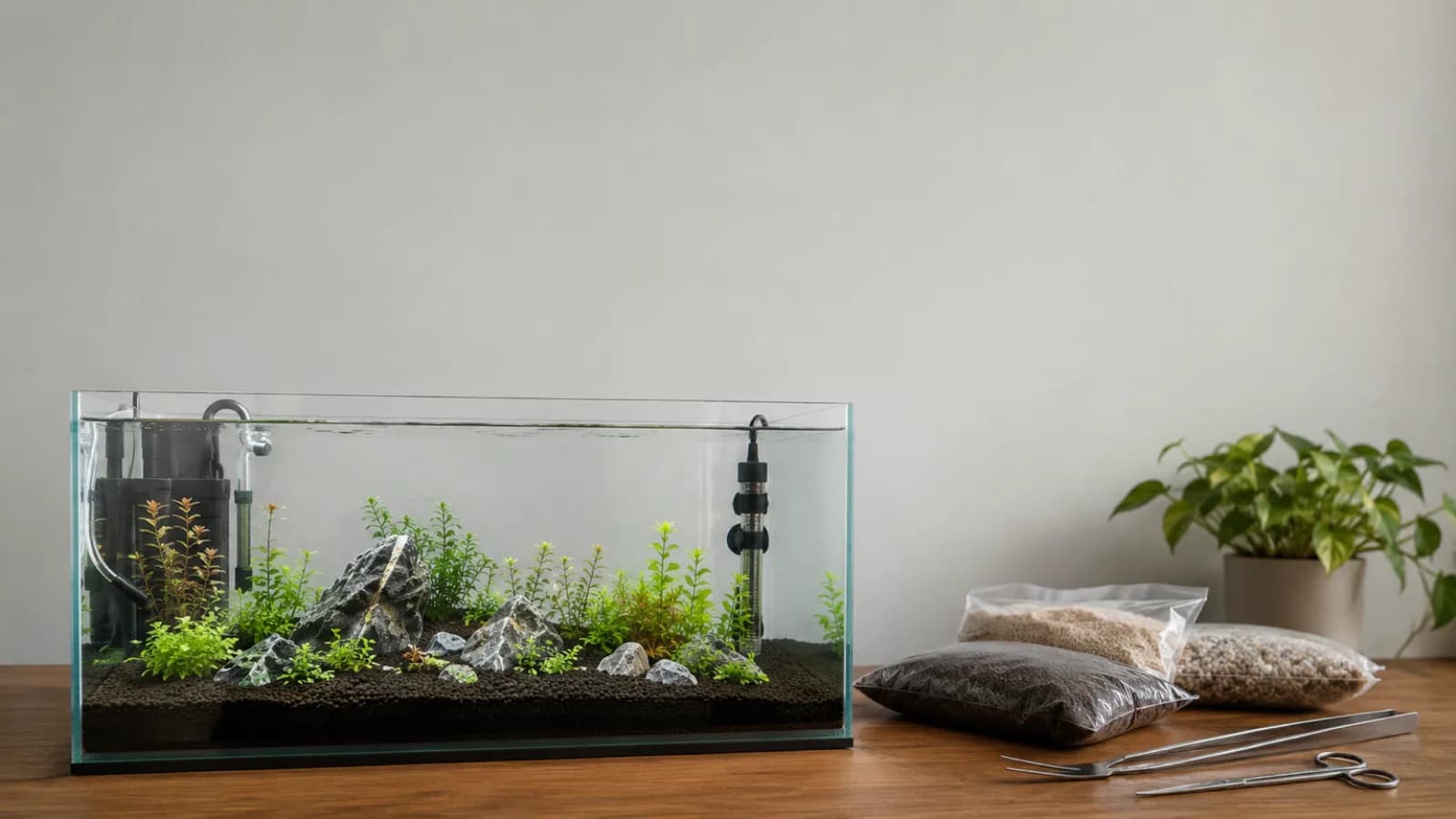
Evidence at a Glance
MarineLand Penguin 200 GPH Bio-Wheel Hang-On-Back Aquarium Filter (up to 40 gal)
The real MVP of the whole checklist: a 200 GPH hang-on-back power filter with multi-stage filtration and a Bio-Wheel, rated by the manufacturer for aquariums up to 40 gallons. Running it on a 20-gallon starter tank oversizes the filter on purpose, which is the single best way to buy biological-filtration margin for a beginner.
Sources: MarineLand manufacturer/Amazon listing, Oklahoma State University Extension — biological filtration in aquaria
Verified Jul 8, 2026
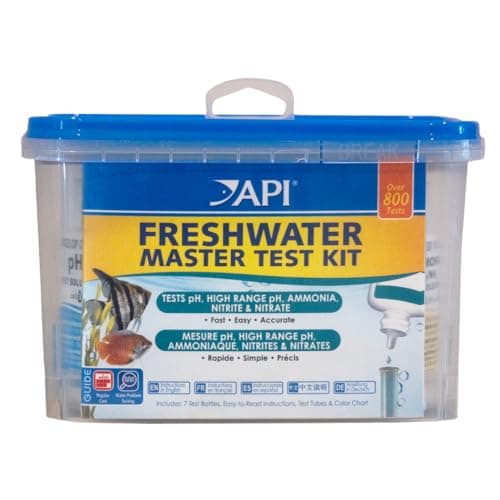
API Freshwater Master Test Kit (approx. 800 tests)
The instrument that makes the invisible visible: a liquid freshwater master kit rated for roughly 800 tests that reads pH, ammonia, nitrite, and nitrate. Ammonia and nitrite are colorless and lethal, so a test kit is the only way a first-time keeper can actually see the nitrogen cycle happening before it harms fish.
Sources: API manufacturer/Amazon listing, Ornamental Aquatic Trade Association (OATA) — water-quality guidance
Verified Jul 8, 2026
Tetra 20 Gallon Complete Aquarium Kit with LED Lighting and Decor
The forgiving vessel: a 20-gallon freshwater tank sold as a complete kit with LED lighting and starter decor. Twenty gallons is a beginner-friendly first size because more water dilutes mistakes than a bowl or a nano tank, and Tetra is a long-established aquarium brand with real community coverage.
Sources: Tetra manufacturer/Amazon listing, University of Florida IFAS Extension — home aquarium basics
Verified Jul 8, 2026
Our Picks
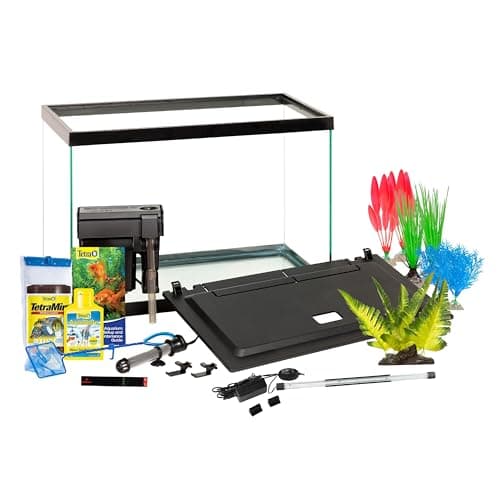
Tetra
Tetra 20 Gallon Complete Aquarium Kit with LED Lighting and Decor
8.3 / 10
- 20-gallon freshwater tank sold as a complete kit with LED lighting and starter decor
- Twenty gallons is a forgiving first size — more water dilutes beginner mistakes than a bowl or nano tank
- One-box starting point: glass, hood, light, and decor together for a first-time keeper
- Tetra is a long-established aquarium brand with real community and editorial presence
$119.14
Current price · checked Sep 8, 2026
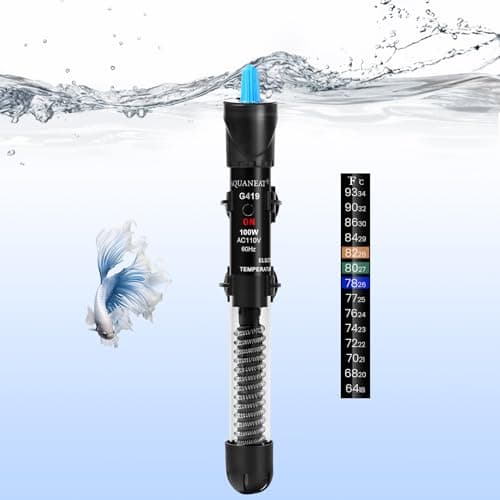
AQUANEAT
AQUANEAT 100W Adjustable Submersible Aquarium Heater with Thermometer
7.9 / 10
- 100-watt fully submersible heater with an adjustable thermostat and an included thermometer
- Adjustable dial lets a beginner set a target temperature rather than guess
- Separate thermometer means the set temperature can be checked against the real water temperature
- 100 watts suits a small starter tank around 20 gallons in a normal room
$13.88
Current price · checked Sep 8, 2026
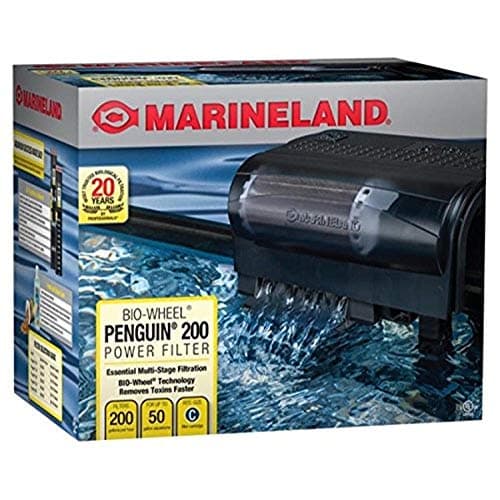
MarineLand
MarineLand Penguin 200 GPH Bio-Wheel Hang-On-Back Aquarium Filter (up to 40 gal)
8.7 / 10
- 200 GPH hang-on-back power filter with multi-stage filtration and a Bio-Wheel
- Manufacturer-rated for aquariums up to 40 gallons — oversized on purpose for a 20-gallon tank
- The Bio-Wheel gives beneficial bacteria a large, constantly wetted surface to colonize
- Hang-on-back design mounts on the rim without plumbing, which suits a first setup
$41.43
Current price · checked Sep 8, 2026
API
API Freshwater Master Test Kit (approx. 800 tests)
8.6 / 10
- Liquid freshwater master test kit rated for roughly 800 tests
- Measures the four numbers that matter most: pH, ammonia, nitrite, and nitrate
- Liquid reagents are generally more precise than dip strips for reading a cycle
- One kit lasts a long time — 800 tests covers years of a single small tank
$41.99
Current price · checked Sep 8, 2026
API
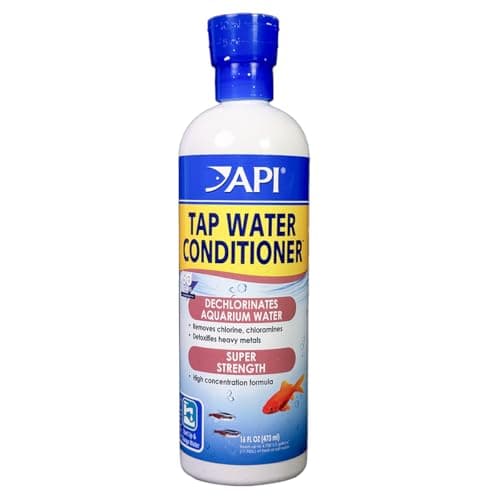
API Tap Water Conditioner, 16 oz
8.4 / 10
- 16-ounce tap water conditioner that neutralizes chlorine and chloramine
- Makes municipal tap water safe for fish and for the tank's beneficial bacteria
- A per-water-change staple, not a one-time setup item
- A little treats a lot, so a 16-ounce bottle lasts a small tank a long time
$8.48
Current price · checked Sep 8, 2026
API
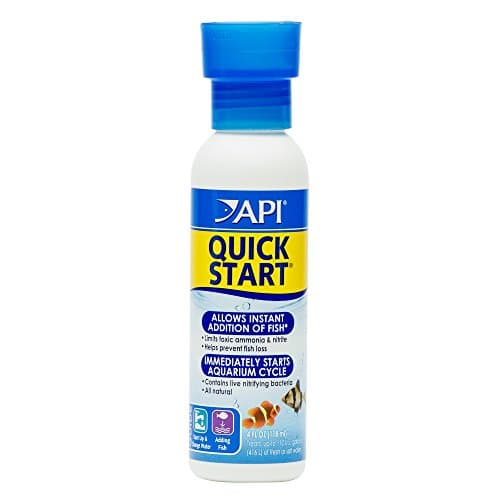
API Quick Start Nitrifying Bacteria, 4 oz
8.2 / 10
- 4-ounce bottle of live nitrifying bacteria for freshwater and saltwater
- Seeds the tank with the microbes that start the nitrogen cycle
- Aims to shorten the wait before the biological filter can process ammonia
- The direct lever on New Tank Syndrome, the bacterial bloom that clouds a new tank
$8.68
Current price · checked Sep 8, 2026
The Short Answer
A first aquarium almost never fails because of the tank — it fails because of the water. So the smartest money goes to the boring water-quality trio before the pretty glass box. The single most important buy is a filter sized above the tank, like the MarineLand Penguin 200 rated to 40 gallons (about $37 list). Pair it with the API Freshwater Master Test Kit (about $36 list) and the API Tap Water Conditioner and Quick Start bacteria (about $8 to $9 each), which make tap water safe and start the nitrogen cycle. The Tetra 20 Gallon Complete Kit (about $119 list) is the forgiving vessel, and an AQUANEAT 100-watt heater (about $10 list) holds a steady temperature. Buy the chemistry first and the tank last; the whole 20-gallon checklist runs roughly $220 in list terms.
Every product on this list has been scored against the PetPal Gear Score, a weighted composite of expert consensus, observed effectiveness, animal safety, long-term durability, and value. Review method: Editorial synthesis of the manufacturer and Amazon listings for each product plus published freshwater-aquarium setup and cycling guidance from University of Florida IFAS Extension, the Merck Veterinary Manual, Oklahoma State University Extension, the Ornamental Aquatic Trade Association (OATA), and the U.S. Environmental Protection Agency. Tetra, MarineLand, and API are long-established aquarium brands with real editorial and community coverage, so honest brand-reputation language is used; AQUANEAT is a value marketplace brand described in listing terms. No independent lab or outlet has published a hands-on review of these exact models, so no award or verdict is attributed to any outlet. PetPalHQ does not run an aquarium testing lab; the PetPal First-Tank Readiness Score below is a transparent synthesis of documented listing specifications and published aquarium-keeping standards, not a measurement. Prices were captured on 2026-07-08 in the post-July-4 window and should be treated as list figures that will move — verify the current price before buying.. Synthesized from 6+ expert sources.
The mistake that sinks most first aquariums is spending the money in the wrong order. A beginner walks in for a tank and walks out with a tank, some gravel, and a bag of fish. Three weeks later the fish are dying and nobody can see why. Here is the rule that should govern the whole purchase: a first aquarium fails on water chemistry, not on the tank. The most important buy is not the prettiest kit but the boring trio that keeps water alive — a filter sized above the tank, a test kit to see what the fish cannot tell you, and the dechlorinator and bacteria that make tap water safe and start the nitrogen cycle. This checklist buys the water-quality gear first in importance and the tank last, and links each item to its full roundup.
This is a planning hub, not a head-to-head roundup. Each of the six products below is one sensible starting point for a stage of a first setup. The picks come from editorial synthesis of the manufacturer and Amazon listings plus published aquarium-keeping guidance from sources like University of Florida IFAS Extension, the Merck Veterinary Manual, and the Ornamental Aquatic Trade Association — not from a testing lab, which PetPalHQ does not run. Tetra, MarineLand, and API are long-established aquarium brands and are described as such; AQUANEAT is a value marketplace brand described in listing terms. Each pick links to the full category roundup for deeper comparison, and the PetPal First-Tank Readiness Score is a transparent synthesis of listing specs and published standards, not a measurement.
PetPalHQ.com earns affiliate commissions from qualifying purchases. Our recommendations are based on expert consensus — we synthesize professional reviews and manufacturer documentation, plus multi-year owner durability data, to find pet gear that is worth your investment. Commission rates never influence our editorial recommendations.
Read start to finish, this guide walks the whole first-tank sequence. If you already have a tank and only need to understand the chemistry, the companion aquarium water quality and cycling primer covers the numbers in depth. A complete 20-gallon starter checklist — tank, heater, filter, test kit, conditioner, and bacteria — runs roughly $220 in list terms, and the cheapest items on it carry the highest stakes.
Why Water Chemistry, Not the Tank, Decides a First Tank
The tank is a glass box, and a glass box does not keep a fish alive — the water inside it does. That is the whole reframe a beginner needs. Fish constantly excrete ammonia, which is toxic even at low levels. The only thing that keeps that ammonia from poisoning them is a living colony of bacteria in the filter, converting it to nitrite and then to far less harmful nitrate. A brand-new tank has none of that colony yet. That is why the water, not the vessel, is where every dollar of attention should go. Spend on the hang-on-back filter that houses those bacteria before you spend on anything decorative.
This is also why the price tags on this checklist run backwards from intuition. The tank is the biggest single cost and matters least to survival; the conditioner and bacteria are nearly afterthoughts in price and are essential. A first-timer who takes that inversion to heart — chemistry first, glass last — has already avoided the failure that claims most beginner fish. The rest of the checklist simply puts that principle into an order.
The Setup Order That Actually Works
Buy and set up in a sequence, because each stage sets up the next. The tank and its water come first, treated so it is safe. Fill the vessel, then condition the water with a dechlorinator so incoming chlorine and chloramine do not kill the bacteria before they even establish. For tropical fish, set the heater next and let the temperature stabilize, using the included thermometer to confirm the dial. If you are still choosing the vessel itself, weigh the options in the nano and starter aquarium kit roundup, and match the heater to the volume with the aquarium heater guide.
Then comes the part beginners rush and should not: cycling. Run the filter, seed the tank with nitrifying bacteria, and test the water until ammonia and nitrite both read zero and nitrate appears. That is the chemical signature of a cycled tank ready for fish. Only then do fish go in — slowly, a few at a time, so the bacterial colony can grow to match the load. The full water conditioner roundup compares dechlorinators if you want options, and dosing the conditioner and the bacteria together at setup is the safest start. Build in that order — vessel, safe water, stable heat, cycle, then fish — and the tank mostly looks after itself.
The Nitrogen Cycle in Plain Terms
The nitrogen cycle sounds like chemistry class, but the plain-English version is simple, and it is the one idea that decides everything. Fish produce ammonia. One group of bacteria eats ammonia and produces nitrite, which is also toxic. A second group eats nitrite and produces nitrate, which is far milder at the levels a small tank reaches, and routine water changes remove it. When both groups are established and ammonia and nitrite hold at zero, the tank is "cycled" — a self-sustaining little sewage-treatment plant. Getting there naturally takes weeks, and a water test kit is the only way to watch it happen.
Two levers speed the safe path through that wait. Seeding the tank with bottled nitrifying bacteria gives the colony a head start. Oversizing the filter gives that colony more room to grow than the tank strictly needs — margin a beginner will be grateful for the first time a water change slips. What you cannot do is skip the cycle. Add a full stock of fish to a sterile tank and the ammonia climbs faster than any bacteria can handle. That is New Tank Syndrome by its proper name. The test kit and the bacteria are the two picks that get a tank through it.
What to Skip at First
A first setup is easy to overspend on, so a few things are worth leaving off the day-one list. Skip the elaborate CO2 systems, protein skimmers, and planted-tank lighting rigs. Those solve problems a beginner does not have yet, and a simple filtered, cycled freshwater tank is the right first project. Skip live plants until the tank is stable if they feel like one more variable, though hardy species are forgiving. And skip the temptation to buy fish on the same trip as the tank — the classic first mistake. A new tank is not cloudy because it is dirty but because it is finding its balance, and that balance takes time, not livestock.
Skip the dip strips, too, in favor of a proper liquid master test kit. The pennies saved on strips buy vague readings during exactly the phase precision matters most. The honest through-line is restraint: a beginner's best equipment is patience plus the water-quality trio, not a cart full of gadgets. Buy the boring gear that keeps water alive, wait out the cycle, and let the interesting parts of the hobby come later, once the fundamentals hold steady.
Head-to-Head Comparison
| Feature | Tetra 20 Gallon Complete Aquarium Kit with LED Lighting and Decor | AQUANEAT 100W Adjustable Submersible Aquarium Heater with Thermometer | MarineLand Penguin 200 GPH Bio-Wheel Hang-On-Back Aquarium Filter (up to 40 gal) | API Freshwater Master Test Kit (approx. 800 tests) | API Tap Water Conditioner, 16 oz | API Quick Start Nitrifying Bacteria, 4 oz |
|---|---|---|---|---|---|---|
| Checklist stage | 1. The tank | 2. Heater | 3. Filter | 4. Test kit | 5. Conditioner | 6. Bacteria |
| Role in the setup | The forgiving vessel | Stable tropical temperature | Houses bacteria — the real MVP | See the invisible chemistry | Safe tap water, every change | Start the nitrogen cycle |
| PetPal First-Tank Readiness Score | 8.3 | 7.9 | 8.7 | 8.6 | 8.4 | 8.2 |
| Check price | Amazon | Amazon | Amazon | Amazon | Amazon | Amazon |
$119.14
Current price · checked Sep 8, 2026
- 20-gallon freshwater tank sold as a complete kit with LED lighting and starter decor
- Twenty gallons is a forgiving first size — more water dilutes beginner mistakes than a bowl or nano tank
- One-box starting point: glass, hood, light, and decor together for a first-time keeper
- Tetra is a long-established aquarium brand with real community and editorial presence
- The tank is the vessel — the water-quality gear on this list is what keeps fish alive in it
The tank is where every beginner starts, and the Tetra 20 Gallon Complete Aquarium Kit is a sensible choice. Just remember it is the vessel, not the reason a tank succeeds. The kit ships with LED lighting and starter decor, so a beginner gets the glass, the hood, the light, and the first scenery in one box. That spares the headache of piecing a tank together from a dozen separate parts. Tetra is a long-established aquarium brand with a real presence in the hobby, so the shell is a known quantity rather than a marketplace gamble.
The size is the quietly important part. Twenty gallons is a forgiving first volume. More water dilutes the ammonia spikes, temperature swings, and overfeeding that swamp a one-gallon bowl or a tiny nano tank within days. A new keeper makes mistakes, and 20 gallons leaves room to catch and fix them before the fish pay. The included LED and decor handle the looks out of the box, so attention can go where it belongs — to the water.
Here is the honesty this whole checklist is built on. A complete kit is the shell, not the life-support system. The small filter and heater that ship in many starter kits are sized to the bare minimum. So treat the Tetra kit as the tank and lighting, and pair it with the oversized filter and the water-quality gear below. Bought that way — as the forgiving 20-gallon vessel, not a finished aquarium — it is an excellent foundation. Its roughly $119 list price is the biggest single line on the checklist, yet the item matters least to whether the fish thrive. That inversion is the whole point of buying in this order.
What We Love
- Complete kit — tank, LED lighting, and starter decor in one purchase for a first-timer
- Twenty gallons is a genuinely forgiving beginner size that dilutes early mistakes
- Tetra brand reputation gives the shell a known-quantity build rather than an anonymous no-name tank
- Handles the aesthetic setup out of the box so attention can go to water quality
What Could Be Better
- The bundled filter and heater in many starter kits are minimally sized — plan to upgrade the filter
- It is the vessel only; nothing in the box starts or protects the nitrogen cycle
- The largest single cost on the checklist for the item that least determines whether fish live
The Verdict
The Tetra 20 Gallon kit is a forgiving, brand-backed foundation for the rest of the checklist. Buy it for the tank and the light, not as a finished aquarium, and spend the real attention on the water-quality gear.
Sources
- Tetra (manufacturer/Amazon listing): 20-gallon freshwater aquarium sold as a complete kit with LED lighting and starter decor from a long-established aquarium brand
- University of Florida IFAS Extension (Home aquarium basics): extension aquarium guidance notes that larger water volumes are more chemically stable and more forgiving of stocking and feeding errors than very small tanks or bowls
$13.88
Current price · checked Sep 8, 2026
- 100-watt fully submersible heater with an adjustable thermostat and an included thermometer
- Adjustable dial lets a beginner set a target temperature rather than guess
- Separate thermometer means the set temperature can be checked against the real water temperature
- 100 watts suits a small starter tank around 20 gallons in a normal room
- Tropical fish are cold-blooded, so a steady temperature matters as much as a clean one
Tropical fish are cold-blooded, so the water temperature is their body temperature. A tank that swings warm by day and cold by night stresses fish long before it visibly harms them. The AQUANEAT 100W Adjustable Submersible Aquarium Heater is the inexpensive answer for a starter tank. It is fully submersible and runs off an adjustable thermostat, so a keeper sets a target rather than hoping. It also ships with a thermometer, and that turns out to be the part that matters most. An adjustable dial only helps if there is an independent reading to check it against.
For a first 20-gallon setup in a normal indoor room, 100 watts is a reasonable output — enough to hold a stable tropical range without cooking a small volume. The thermometer earns its place because heater dials are notoriously approximate. Watching the real water temperature against the dial is how a beginner catches a heater that is drifting or has quietly stuck on. That failure is one of the more common ways a starter tank loses fish to a preventable cause.
The honest framing is about the brand, not the physics. AQUANEAT is a value, white-label marketplace brand, so its specifications are manufacturer-stated rather than independently verified. Inexpensive heaters as a class are also the component most worth watching over time. Check the reading daily and replace the heater at the first sign of erratic behavior. At roughly $10 list it is an inexpensive item on the checklist, and for a beginner who needs stable warmth in a small tank, the value is hard to argue with. Just do not treat any budget heater as set-and-forget; the thermometer is on the list for exactly that reason.
What We Love
- Adjustable thermostat lets a beginner set a real target temperature, not a guess
- Included thermometer provides the independent reading a dial alone cannot
- 100 watts is a sensible output for a small starter tank in a normal room
- An inexpensive item on the checklist at about $10 list
What Could Be Better
- White-label listing — the wattage and thermostat accuracy are manufacturer-stated, not independently verified
- Inexpensive heaters are the class most worth watching for drift or a stuck-on failure
- Coldwater species such as goldfish do not need a heater at all, so this item is species-dependent
The Verdict
For a beginner keeping tropical fish in a small tank, the AQUANEAT heater delivers stable warmth and its own thermometer for pocket change. Just watch any budget heater rather than trusting it blind.
Sources
- AQUANEAT (manufacturer/Amazon listing): 100-watt fully submersible aquarium heater with an adjustable thermostat and an included thermometer
- Merck Veterinary Manual (Aquarium fishes): veterinary aquarium guidance stresses that fish are ectothermic and that sudden or wide temperature fluctuations are a significant source of stress and disease susceptibility
$41.43
Current price · checked Sep 8, 2026
- 200 GPH hang-on-back power filter with multi-stage filtration and a Bio-Wheel
- Manufacturer-rated for aquariums up to 40 gallons — oversized on purpose for a 20-gallon tank
- The Bio-Wheel gives beneficial bacteria a large, constantly wetted surface to colonize
- Hang-on-back design mounts on the rim without plumbing, which suits a first setup
- MarineLand is a long-established aquarium brand with real hobby and editorial coverage
If one purchase decides whether a first tank lives or crashes, it is the filter. That is why the MarineLand Penguin 200 earns the MVP label on this checklist. A filter does two jobs. It clears debris from the water, and — far more importantly — it houses the colony of beneficial bacteria that turn the invisible poisons fish produce into far less harmful nitrate. The Penguin 200 is a 200 GPH hang-on-back power filter with multi-stage filtration and a Bio-Wheel. MarineLand is a long-established aquarium brand, and its filters have a genuine track record in the hobby rather than an anonymous listing history.
The deliberate move here is the sizing. This filter is rated for aquariums up to 40 gallons, and it is on this list for a 20-gallon starter tank. Running a 40-gallon-rated filter on a 20-gallon tank is oversizing on purpose. That margin is the most beginner-friendly decision a keeper can make. A bigger filter turns the water over more often, and it hosts more nitrifying bacteria than the tank strictly needs. That buffer absorbs the ammonia spikes that follow a missed water change or an overfed weekend. The Bio-Wheel adds to it by giving the bacteria a large, always-wetted surface to grow on as it rotates through the air.
The honest note is a small one for a change. There is no real downside to oversizing a hang-on-back filter beyond a stronger current, which timid or long-finned fish may dislike. A baffle, or aiming the outflow at the glass, tames it easily. As a hang-on-back unit it mounts on the rim without plumbing, so a beginner is not wrestling a canister. Compared with the underpowered filter in many starter kits, stepping up to the oversized Penguin 200 is the highest-leverage upgrade on the entire checklist. It is the difference between a tank that forgives a beginner and one that punishes every slip.
What We Love
- Houses the beneficial bacteria that keep water safe — the job that actually protects fish
- Rated up to 40 gallons, so it is deliberately oversized on a 20-gallon starter tank
- Bio-Wheel adds a large, constantly wetted surface for nitrifying bacteria to colonize
- Hang-on-back design mounts without plumbing, which suits a first setup
- MarineLand brand reputation gives it a real track record in the hobby
What Could Be Better
- Oversizing creates a stronger current that timid or long-finned fish may need baffled
- Cartridge-style media invites replacing the whole cartridge, which can discard bacteria — rinse and reuse where possible
- The Bio-Wheel and impeller need occasional cleaning to keep flow and biological capacity up
The Verdict
The MarineLand Penguin 200 is the highest-leverage buy on the checklist. A properly oversized, bacteria-hosting filter turns a fragile first tank into a forgiving one — the one place a beginner should not cut costs.
Sources
- MarineLand (manufacturer/Amazon listing): 200 GPH hang-on-back power filter with multi-stage filtration and a Bio-Wheel, rated by the manufacturer for aquariums up to 40 gallons
- Oklahoma State University Extension (Biological filtration in aquaria): extension guidance describes biological filtration as the core of a healthy aquarium and notes that greater filter and media capacity supports a larger, more stable population of nitrifying bacteria
$41.99
Current price · checked Sep 8, 2026
- Liquid freshwater master test kit rated for roughly 800 tests
- Measures the four numbers that matter most: pH, ammonia, nitrite, and nitrate
- Liquid reagents are generally more precise than dip strips for reading a cycle
- One kit lasts a long time — 800 tests covers years of a single small tank
- API is a long-established aquarium water-care brand with real hobby coverage
The two things that kill new fish are invisible. Ammonia and nitrite are colorless and odorless, and they build silently as a new tank starts up. By the time a fish looks distressed, the damage is often done. The API Freshwater Master Test Kit makes that invisible chemistry visible, and it is the second half of the water-quality trio at the heart of this checklist. It is a liquid kit rated for roughly 800 tests, and it reads the four numbers a beginner actually needs — pH, ammonia, nitrite, and nitrate. Together those four tell the whole story of whether a tank is cycling, cycled, or in trouble.
Liquid reagents are the right call for a first-timer learning the ropes. They are generally more precise than paper dip strips, and reading a color against a chart forces a keeper to actually look at the water's chemistry. The 800-test rating makes the kit a multi-year purchase for a single small tank. That works out to pennies per reading from a roughly $36 list price — cheap insurance against the failure that claims the most beginner fish.
The candid limits are about the ritual, not the product. Liquid testing takes a few minutes and some care: counting drops, timing the color, and reading the chart in good light. A keeper who wants a ten-second answer will find it more involved than a strip. The reagents also do not last forever, so a bottle bought years ago should be replaced rather than trusted. None of that changes the recommendation. Without a test kit, a beginner flies blind through exactly the phase where the tank is most dangerous. This is the pick that pairs with the bacteria below to get a new tank safely through its cycle.
What We Love
- Reveals ammonia and nitrite — the invisible, lethal parameters that harm new fish
- Reads all four core numbers: pH, ammonia, nitrite, and nitrate
- Liquid reagents are more precise than dip strips for tracking a cycle
- Roughly 800 tests make it a multi-year buy at pennies per reading
What Could Be Better
- Liquid testing takes a few minutes of drop-counting and timing, unlike a quick strip
- Reagents expire, so an old kit should be replaced rather than trusted
- Reading colors against the chart takes practice and good light for a true match
The Verdict
The API Freshwater Master Test Kit is non-negotiable for a first tank. It turns the invisible, fish-killing chemistry of a new aquarium into four numbers a beginner can watch and act on.
Sources
- API (manufacturer/Amazon listing): liquid freshwater master test kit rated for roughly 800 tests that measures pH, ammonia, nitrite, and nitrate
- Ornamental Aquatic Trade Association (OATA — water-quality guidance): aquatic-trade water-quality guidance identifies ammonia and nitrite as acutely toxic to fish and recommends regular testing, especially while a new aquarium is maturing
$8.48
Current price · checked Sep 8, 2026
- 16-ounce tap water conditioner that neutralizes chlorine and chloramine
- Makes municipal tap water safe for fish and for the tank's beneficial bacteria
- A per-water-change staple, not a one-time setup item
- A little treats a lot, so a 16-ounce bottle lasts a small tank a long time
- API is a long-established aquarium water-care brand with real hobby coverage
Straight from the tap, the water most people would pour into a new aquarium is treated to be safe for humans and hostile to fish. U.S. municipal water carries chlorine or chloramine to kill bacteria in the pipes. Those same disinfectants damage fish gills, and they kill the beneficial bacteria a tank depends on. The API Tap Water Conditioner closes that gap: a 16-ounce dechlorinator that neutralizes chlorine and chloramine so tap water becomes tank water. It rounds out the water-quality trio, and at roughly $8 list it costs almost nothing for something genuinely essential.
The point most beginners miss is that this is not a one-time setup item. Every water change brings in fresh tap water, and that water has to be conditioned before or as it goes in. Otherwise the incoming chlorine sets back the very bacteria the filter worked to grow. So a conditioner is a staple that lives next to the tank and gets used on a schedule, not a bottle bought once and forgotten. A small dose treats a large volume, so a single 16-ounce bottle lasts a small tank a long time and the ongoing cost stays trivial.
There is little to warn about beyond dosing to the label — more is not better, and the instructions match water volume. Chloramine is the reason a dedicated conditioner matters. Unlike plain chlorine, it does not simply gas off if water sits overnight, so the old advice to "let the water stand" fails against the chloramine most utilities now use. Buy the conditioner as the permanent staple it is and keep it on the schedule. It quietly protects both the fish and the bacterial colony every time fresh water enters the tank.
What We Love
- Neutralizes chlorine and chloramine so tap water is safe for fish and bacteria
- Protects the beneficial colony the filter builds every time fresh water goes in
- A 16-ounce bottle lasts a small tank a long time at trivial per-change cost
- Essential for every water change, not just the initial fill
What Could Be Better
- It is an ongoing staple, so it must be restocked and used on every water change
- Dosing must follow the label to water volume — guessing wastes product or underdoses
- White-label parity aside, no conditioner removes ammonia already present — it only handles chlorine and chloramine
The Verdict
The API Tap Water Conditioner is cheap, essential, and permanent. It is the per-water-change staple that makes tap water safe and shields the tank's bacteria for the life of the aquarium.
Sources
- API (manufacturer/Amazon listing): 16-ounce tap water conditioner that neutralizes chlorine and chloramine to make tap water safe for aquarium fish
- U.S. Environmental Protection Agency (Chloramines in drinking water): the EPA documents that many utilities disinfect tap water with chloramine and notes that chloramine, unlike free chlorine, is persistent and does not readily dissipate on standing
$8.68
Current price · checked Sep 8, 2026
- 4-ounce bottle of live nitrifying bacteria for freshwater and saltwater
- Seeds the tank with the microbes that start the nitrogen cycle
- Aims to shorten the wait before the biological filter can process ammonia
- The direct lever on New Tank Syndrome, the bacterial bloom that clouds a new tank
- API is a long-established aquarium water-care brand with real hobby coverage
A brand-new tank is sterile, and that is the beginner's biggest hidden problem. There is no bacterial colony yet to process the ammonia fish start producing on day one. Building that colony from scratch — the nitrogen cycle — naturally takes weeks, and the wait is where New Tank Syndrome does its damage. The API Quick Start Nitrifying Bacteria is the final item on the checklist because it is the direct lever on that wait. The 4-ounce bottle holds live nitrifying bacteria for freshwater and saltwater. It seeds the tank with the exact microbes the filter needs to grow, aiming to shorten the gap before the biofilter can keep up with the fish.
Pairing it with the test kit is the whole strategy. Dose the bacteria, then watch ammonia and nitrite on the API kit to see the cycle actually establish. The bacteria give the colony a head start; the test kit confirms it is working. This is also the natural bridge to the most common first-week panic. A new tank that suddenly turns cloudy is almost always a harmless bacterial bloom — the visible sign of the cycle finding its footing. Bottled bacteria plus patience is the standard response, not a dose of chemicals.
The candid caveat: bottled bacteria are a head start, not a shortcut around the cycle. Their effectiveness varies with freshness and handling. No bottle replaces the need to let the biofilter mature and to test the water before trusting it with a full stock of fish. Used as intended — a seed alongside patience and regular testing — it is a low-cost way to give a first tank the best possible start. Skip it and the cycle still happens; it just takes longer and asks more restraint, which is exactly the virtue a nervous beginner has least of.
What We Love
- Seeds the tank with the nitrifying bacteria the nitrogen cycle depends on
- Aims to shorten the vulnerable wait before the biofilter can process ammonia
- Pairs directly with the test kit to confirm the cycle is establishing
- The standard, low-cost response to a cloudy new tank instead of harsh chemicals
What Could Be Better
- Bottled bacteria are a head start, not a substitute for letting the cycle mature
- Effectiveness varies with the bottle's freshness and how it was stored and shipped
- No bacteria product removes the need to test the water before adding a full stock of fish
The Verdict
API Quick Start is the cheapest way to give a sterile new tank a running start on its cycle. Treat it as a seed to pair with the test kit and patience, not a license to skip the wait.
Sources
- API (manufacturer/Amazon listing): 4-ounce bottle of live nitrifying bacteria for freshwater and saltwater aquariums to help start the nitrogen cycle
- University of Florida IFAS Extension (The aquarium nitrogen cycle): extension guidance describes nitrification as a bacterial process that converts toxic ammonia to nitrite and then to far less harmful nitrate, and notes that establishing that bacteria takes time in a new system
How We Score
Formula
PetPal First-Tank Readiness Score = (Beginner Ease × 0.25) + (Cycle & Water-Quality Support × 0.25) + (Reliability × 0.20) + (Tank-Size Fit × 0.15) + (Value × 0.15)
Score Factors
- Beginner Ease · 25%
- How forgiving the item is for a first-time keeper to set up and run correctly. A complete kit, a mount-and-go hang-on-back filter, and a dose-to-label conditioner score highest; anything that demands a learned ritual — reading liquid reagents against a chart, watching a budget heater for drift — loses a little here, because the whole point of this checklist is a setup a beginner can actually run.
- Cycle & Water-Quality Support · 25%
- How directly the item protects water chemistry and the nitrogen cycle — the thing that actually kills first tanks. The filter, test kit, conditioner, and bacteria score highest because each is a lever on the cycle; the tank and heater score lower here not because they are unimportant but because they are the vessel and its temperature, not the chemistry. This factor is deliberately weighted to reward the water-quality gear the checklist buys first.
- Reliability · 20%
- Build quality and consistency for daily unattended operation, judged on brand track record and product class. Long-established brands like MarineLand, API, and Tetra rate above value marketplace hardware; the class of item matters too, since a budget heater is inherently more worth watching than a bottle of conditioner.
- Tank-Size Fit · 15%
- Suitability for a starter tank around 20 gallons, with headroom rather than a bare minimum. A filter rated to 40 gallons on a 20-gallon tank scores well for its deliberate margin; a heater sized to the room and a 20-gallon vessel score on being right for the beginner band rather than under- or over-built.
- Value · 15%
- List price against what the item delivers for a first setup — not the lowest sticker. An 800-test kit and a long-lasting conditioner rate highly for cost-per-use, while the tank is judged on being the largest line item for the component that least determines whether fish live. Value is measured against the item's real role in keeping a first tank alive.
| Rank | Product | Score |
|---|---|---|
| #1 | MarineLand MarineLand Penguin 200 GPH Bio-Wheel Hang-On-Back Aquarium Filter (up to 40 gal) | 8.7 |
| #2 | API API Freshwater Master Test Kit (approx. 800 tests) | 8.6 |
| #3 | API API Tap Water Conditioner, 16 oz | 8.4 |
| #4 | Tetra Tetra 20 Gallon Complete Aquarium Kit with LED Lighting and Decor | 8.3 |
| #5 | API API Quick Start Nitrifying Bacteria, 4 oz | 8.2 |
| #6 | AQUANEAT AQUANEAT 100W Adjustable Submersible Aquarium Heater with Thermometer | 7.9 |
When NOT to Buy
Do not buy fish the same day you buy the tank. This is the single most important warning on the checklist. A new aquarium has no bacterial colony yet, so it cannot process the ammonia fish start producing immediately. Stocking a tank before it is cycled is how most first fish die. Set up the tank, run the filter, condition the water, seed the bacteria, and test until ammonia and nitrite read zero — then add fish slowly. The tank is ready when the numbers say so, not when the water looks clear.
Do not treat a complete kit as a complete life-support system. A starter kit like the Tetra gives you the vessel and the light. But the small filter that ships in many kits is minimally sized, and nothing in the box tests the water or starts the cycle. Budget for the properly oversized filter and the water-quality trio as the real spend, and treat the kit as the shell it is.
Do not skip the conditioner or the test kit to save a few dollars. They are the two cheapest items with the highest stakes. Unconditioned tap water damages fish and bacteria, and an untested tank hides the exact chemistry that is killing fish. Cutting these is a false economy that costs livestock.
Do not buy a heater for coldwater fish that do not need one, and do not trust any budget heater blindly. Goldfish and other coldwater species are kept at room temperature and need no heater at all, so match the gear to the species. For tropical fish, use the included thermometer to watch the heater rather than assuming an inexpensive unit holds its setting forever.
Skip a bowl or a tiny nano tank as a first home. Small water volumes swing in temperature and chemistry far faster than a beginner can correct. That is why this checklist is built around a forgiving 20-gallon setup. If the space or budget only allows a bowl, the honest answer is to wait until a real tank is possible rather than starting a fish in a container that works against you.
Frequently Asked Questions
- What is the difference between fishless cycling and fish-in cycling, and which should a beginner do?
- Fishless cycling means establishing the bacterial colony before any fish go in. You add bottled bacteria plus a trace ammonia source, then wait until the water processes it to zero, so no living animal is exposed to the toxic build-up. Fish-in cycling puts hardy fish in first and relies on frequent water changes to keep ammonia survivable while the colony catches up. That route is more stressful for the fish and less forgiving of mistakes. For a first tank, fishless cycling is the kinder and safer path — and it is exactly why the bacteria and test kit are on this checklist.
- How long after setting up the tank can I actually add fish?
- Plan for weeks, not days. A new biofilter commonly needs several weeks to build enough bacteria to hold ammonia and nitrite at zero, and seeding with bottled bacteria shortens that wait without eliminating it. The honest rule is to test, not to count days. The tank is ready when ammonia and nitrite both read zero and nitrate has appeared, whenever that happens to be. Add fish gradually after that point rather than all at once — a full stock added on day one overwhelms even a freshly cycled colony.
- Do I actually need a heater, or can I skip it?
- It depends entirely on the fish. Tropical species — the most common beginner choice, like tetras and bettas — need a heater to hold a steady warm temperature. A swing between a warm day and a cold night stresses them badly. Coldwater fish such as goldfish are kept at room temperature and need no heater at all, so buying one for them is wasted money and can even overheat them. Match the heater to the species. If you do run one, watch it with a separate thermometer rather than trusting the dial.
- Why not just start with a fishbowl or a small nano tank to keep it cheap?
- Because small water volumes are the opposite of forgiving. A bowl or a one-gallon tank swings in temperature and chemistry within hours, and ammonia concentrates fast in a tiny volume. The exact mistakes a beginner is likely to make hit hardest in the smallest containers. A larger tank around 20 gallons dilutes those errors and buys time to correct them. That is why it is the beginner-friendly starting point despite the higher upfront cost. If the budget only allows a bowl today, the kinder choice is to wait for a real tank rather than start a fish at a disadvantage.
- My brand-new tank turned cloudy in the first week — did I do something wrong?
- Almost certainly not. A cloudy new tank is usually a bacterial bloom — the visible sign that the nitrogen cycle is establishing itself, not a sign the water is dirty. The wrong response is to panic, dump in chemicals, or do a massive water change that sets the cycle back. The right response is patience, light feeding, and continued testing while the colony finds its balance; it typically clears on its own within days to a couple of weeks. If cloudiness persists or comes with an ammonia spike, that points to overfeeding or overstocking rather than a normal bloom. The fix is to ease the load, not to add more product.
Bottom Line
Start with the water-quality trio, not the tank: the MarineLand Penguin 200 filter is the highest-leverage buy on the whole checklist, because oversizing the filter on a 20-gallon tank is what makes a first setup forgiving instead of fragile.
Add the API Freshwater Master Test Kit next — ammonia and nitrite are invisible and lethal, and this liquid kit is the only way a beginner can watch the nitrogen cycle happen before it harms fish.
Add the API Tap Water Conditioner and API Quick Start bacteria together: the conditioner makes tap water safe on every water change, and the bacteria seed the cycle so a new tank clears faster and safer.
Buy the Tetra 20 Gallon kit as the forgiving vessel and, for tropical fish, the AQUANEAT 100W heater for stable warmth — the tank and heater are the shell and its temperature, not the chemistry that decides the outcome.
Skip the whole project if you want an instant, decoration-first tank: an aquarium is a slow biological system, so if you cannot wait out a cycle, test the water, and keep up water changes, this is not a same-day hobby — start with the sizing and cycling basics first.
All articles in this guide
Sources & Methodology
Methodology
PetPal First-Tank Readiness Score = (Beginner Ease × 0.25) + (Cycle & Water-Quality Support × 0.25) + (Reliability × 0.20) + (Tank-Size Fit × 0.15) + (Value × 0.15)
Expert review sources
- Manufacturer/Amazon listings for all six products (Tetra 20 Gallon kit, AQUANEAT 100W heater, MarineLand Penguin 200 filter, API Freshwater Master Test Kit, API Tap Water Conditioner, API Quick Start bacteria) — specifications and feature listings
- University of Florida IFAS Extension — home aquarium basics and the aquarium nitrogen cycle (water volume stability and nitrification)
- Merck Veterinary Manual — Aquarium fishes (temperature stability and fish husbandry)
- Oklahoma State University Extension — biological filtration in aquaria (filter and media capacity)
- Ornamental Aquatic Trade Association (OATA) — aquatic water-quality guidance (ammonia and nitrite toxicity, testing)
- U.S. Environmental Protection Agency — Chloramines in drinking water (municipal disinfection of tap water)
Community sources
- Established freshwater-aquarium keeping publications and hobby forums — beginner cycling, New Tank Syndrome, and stocking-order discussion
- Tetra, MarineLand, and API — long-established aquarium brands (brand reputation for the tank, filter, and water-care products)
Prices and specs verified July 8, 2026.
About the author
Nick Miles is the chief editor of PetPalHQ. This starter checklist is an editorial synthesis of the manufacturer and Amazon listings for each product cross-checked against published freshwater-aquarium setup and cycling guidance from University of Florida IFAS Extension, the Merck Veterinary Manual, Oklahoma State University Extension, the Ornamental Aquatic Trade Association, and the U.S. EPA, with honest brand-reputation context for Tetra, MarineLand, and API. PetPalHQ does not run an aquarium testing lab, and no independent outlet has published a hands-on review of these particular products. The PetPal First-Tank Readiness Score is a transparent composite of documented listing specifications and published aquarium-keeping standards, not a measurement.
PetPalHQ is a participant in the Amazon Services LLC Associates Program. We may earn commissions from qualifying purchases — at no extra cost to you.
More Guides
Aquarium
Why Is My Aquarium Water Cloudy? How to Diagnose and Fix It in 2026
Aquarium
Best Nano & Betta Aquarium Kits 2026: 5-Gallon All-in-One Tanks Compared
Aquarium
Best Aquarium Heaters 2026: Reliable Picks That Won't Cook Your Tank
Aquarium
Best Aquarium Hang-on-Back (HOB) Filters (2026)
Aquarium
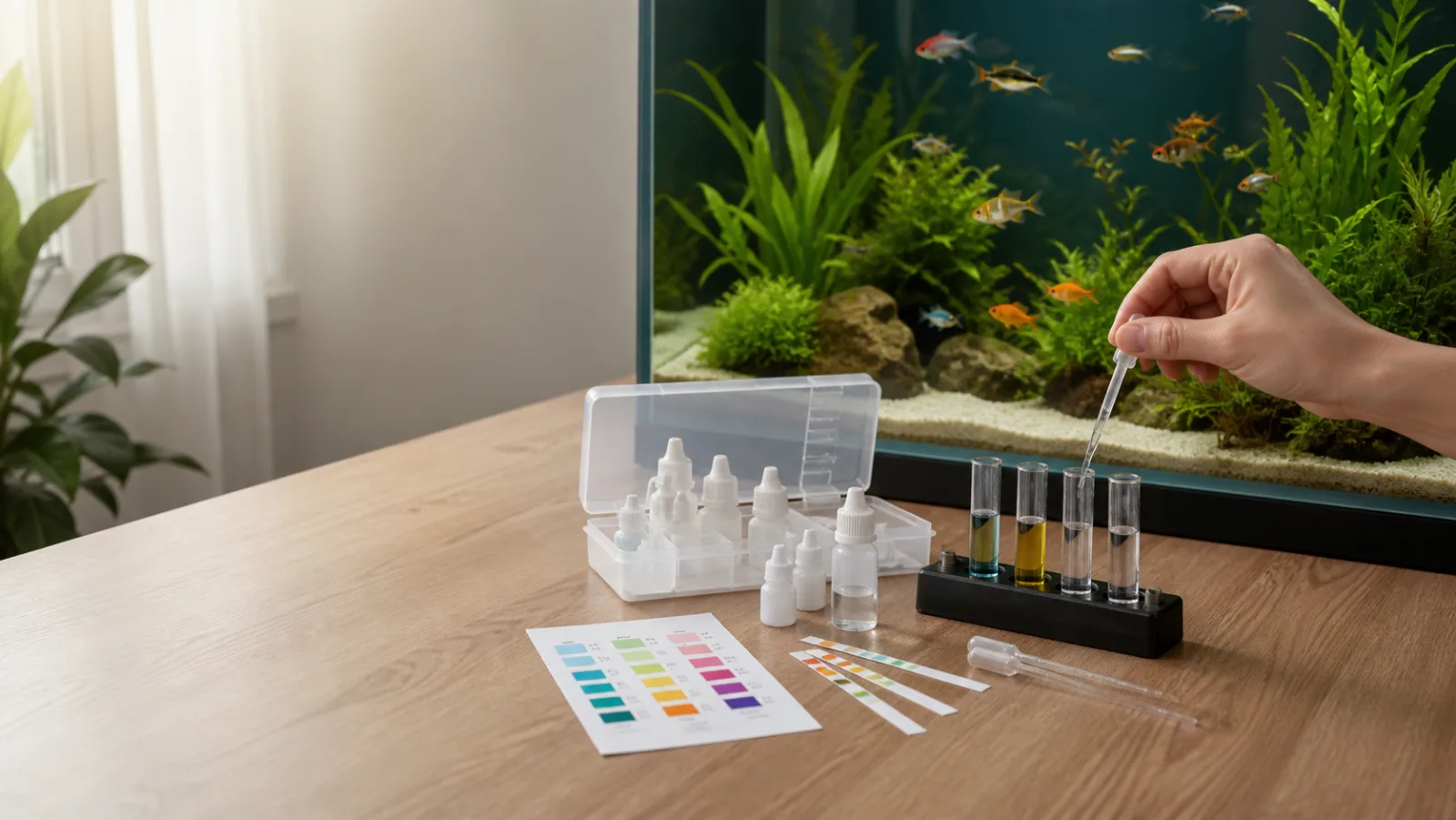
Best Aquarium Water Test Kits for Freshwater Fish Tanks (2026)
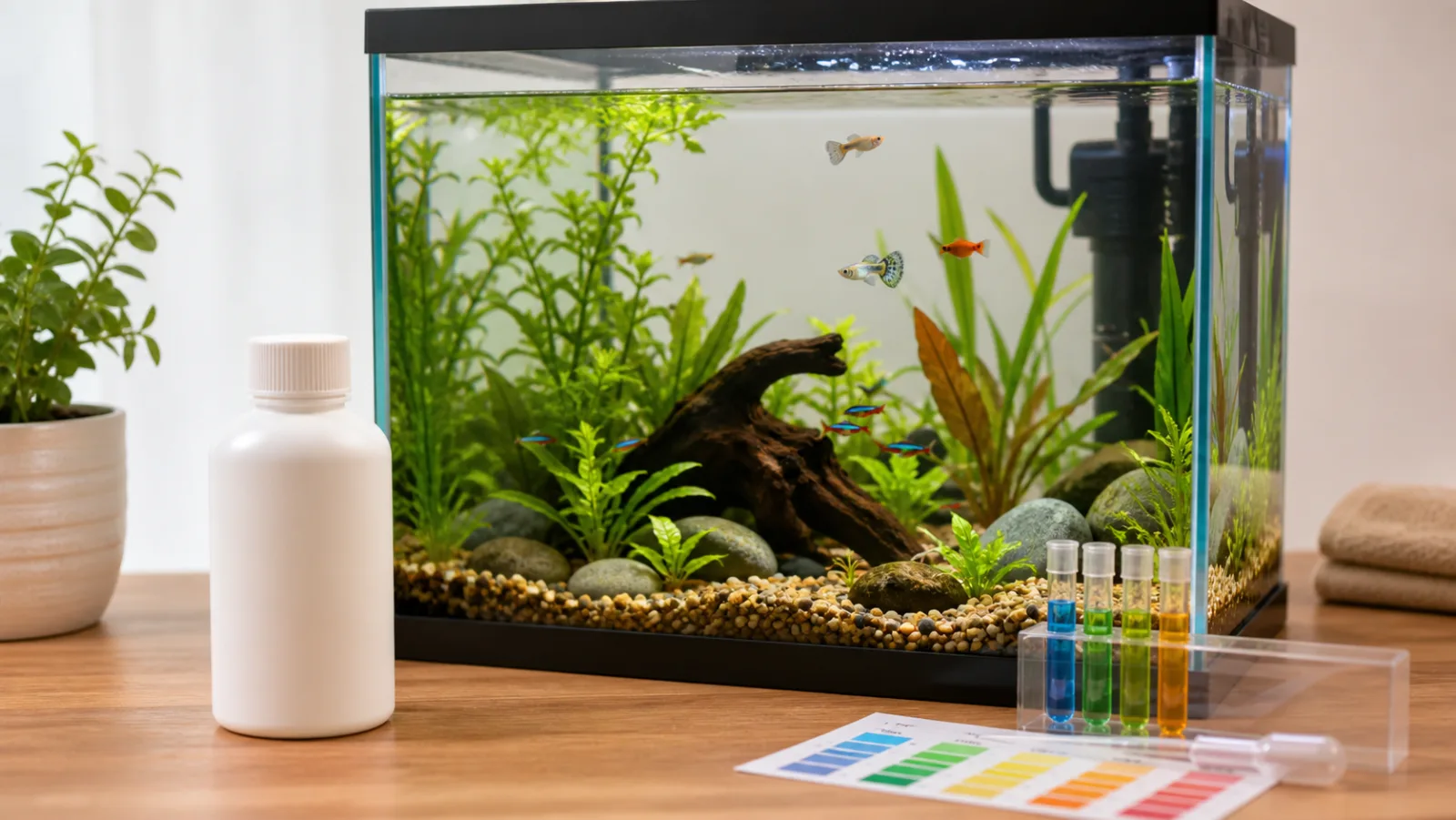
Aquarium