Playground
Modern Hamster Habitat Setup: Why Bigger Is Better
This is not a cage ranking — it is a provisioning setup for a first hamster, built on the modern welfare standard that inverted the old pet-store picture: floor space, deep bedding, and a wheel the spine fits are the baseline, not luxuries. Six picks in the order you need them, with the honest warning that a Syrian hamster must live alone and the right first habitat costs more than the box on the shelf.
By Nick Miles · Updated September 30, 2026 · 12 min read
PetPalHQ is reader-supported. We may earn a commission from qualifying Amazon purchases at no extra cost to you.
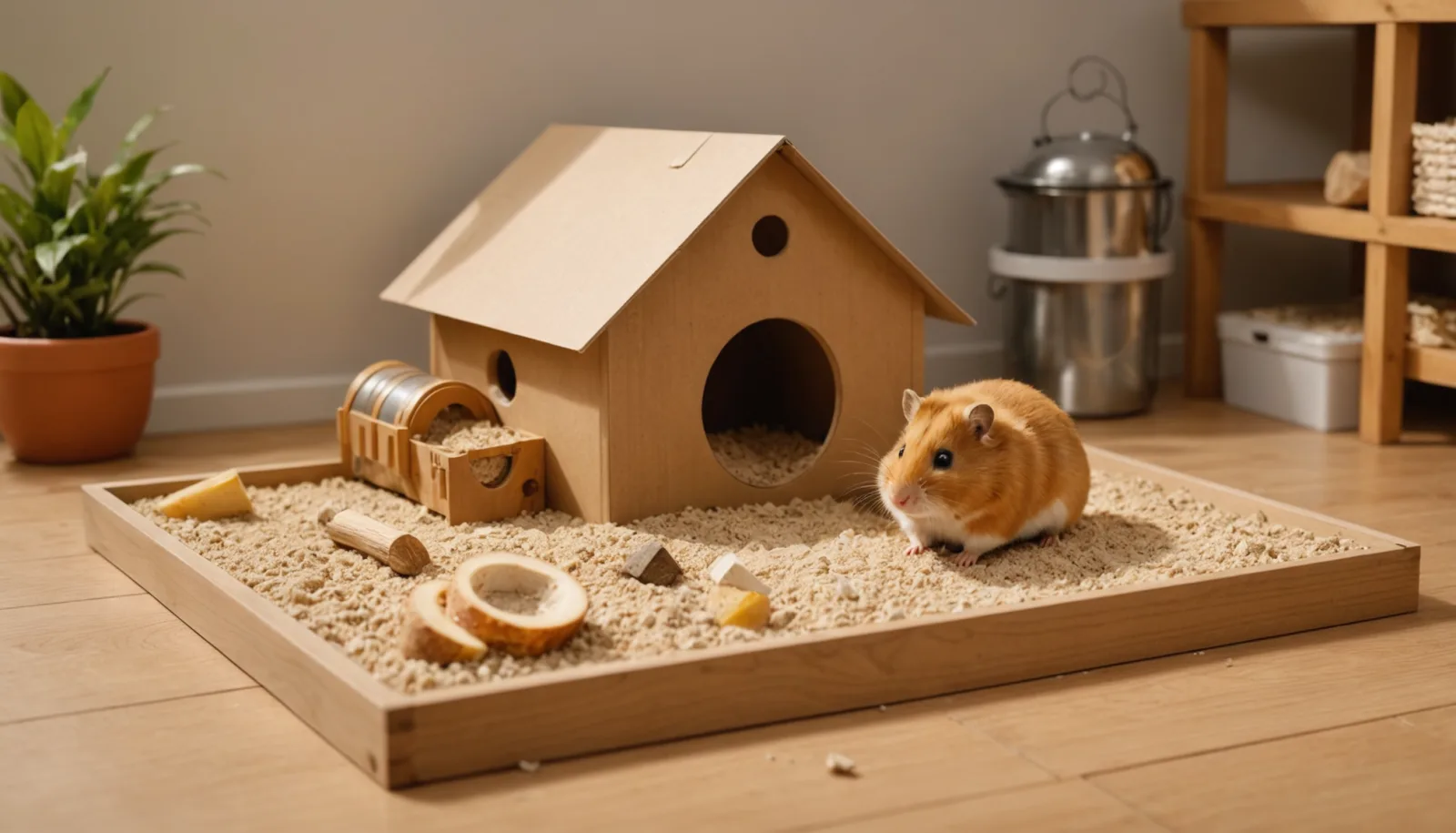
Evidence at a Glance
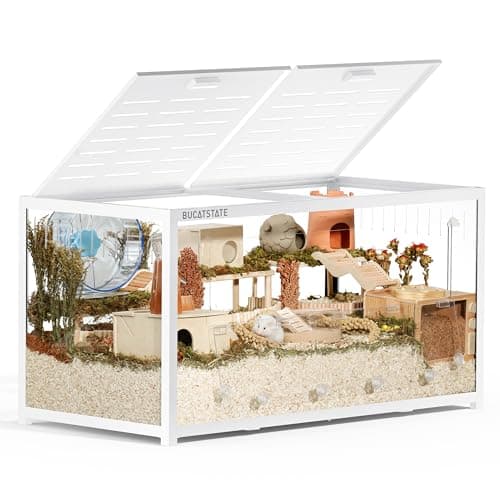
BUCATSTATE Hamster Cage 3.0 Metal Large Stackable
The floor plan — roughly 7.8 square feet of continuous, unbroken floor and a base deep enough for real burrowing, the single number the modern welfare standard cares about most, in a chew-proof metal-and-acrylic frame.
Sources: BUCATSTATE Amazon listing specifications, The hamster-welfare community's current housing standards on floor space
Verified Jul 16, 2026
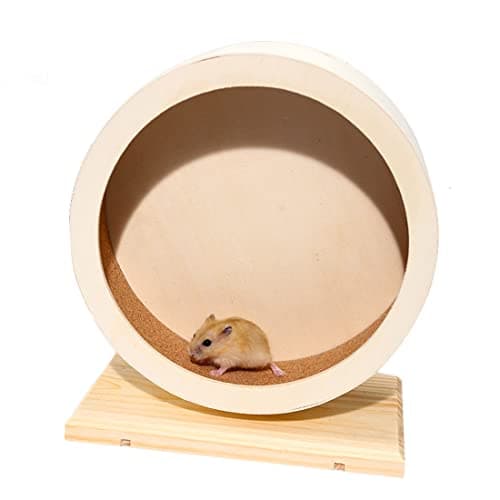
antiai Hamster Wooden Silent Wheel, 12 Inch (XL)
The wheel the spine fits — a solid wooden running surface in the extra-large size class, letting a Syrian run with a flat back rather than an arched one, because wheel size is a welfare spec, not a preference.
Sources: antiai Amazon listing specifications, The hamster-welfare community's current housing standards on wheel sizing
Verified Jul 16, 2026
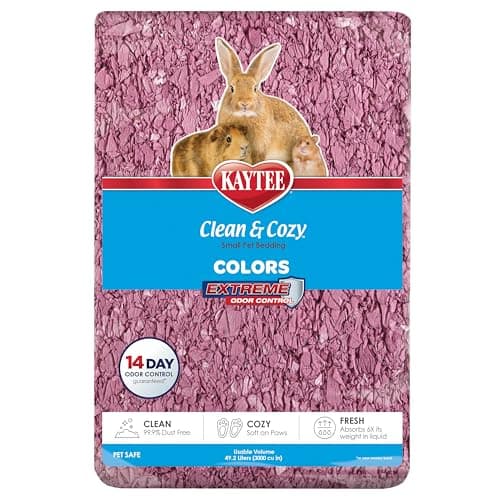
Kaytee Clean & Cozy Small Animal Bedding, 49.2 L
The deep layer — a dust-free, fragrance-free paper bedding that packs into the tunnels a burrower digs, the substrate depth the modern standard treats as enrichment rather than décor.
Sources: Kaytee Amazon listing specifications, The hamster-welfare community's current housing standards on bedding depth
Verified Jul 16, 2026
Our Picks
BUCATSTATE
BUCATSTATE Hamster Cage 3.0 Metal Large Stackable
8.6 / 10
- 47 x 23.6 x 25.5 inches, about 7.8 square feet of continuous floor per BUCATSTATE
- Deep base holds up to 11 inches of bedding for genuine burrowing
- Chew-proof metal frame with clear acrylic panels and view windows
- Three doors, including a front door with switch clasps for secure access
$279.99
Current price · checked Sep 8, 2026
antiai
antiai Hamster Wooden Silent Wheel, 12 Inch (XL)
8.5 / 10
- Extra-large, about 12.3 x 7.8 x 11.4 inches (31 x 20 x 29 cm) per the listing
- Solid wooden running surface with a flat back and no rungs
- Silent spinner bearing suits a nocturnal runner in a quiet room
- Sized for the class a Syrian needs to run flat-backed
$32.99
Current price · checked Sep 8, 2026
Kaytee
Kaytee Clean & Cozy Small Animal Bedding, 49.2 L
8.4 / 10
- 99.9% dust-free and fragrance-free per Kaytee, which spares small airways
- Absorbs up to 6x its weight in liquid for the cage floor
- 14-day odor control helps neutralize ammonia odors
- A 49.2-liter bag as the starting layer for a large habitat
$23.84
Current price · checked Sep 3, 2026
Niteangel
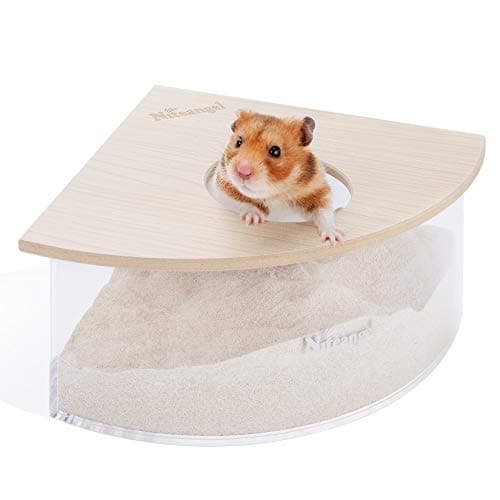
Niteangel Animal Sand-Bath Box (Acrylic, Triangle)
8.3 / 10
- Fan-shaped box, 7.4 by 7.4 inches and 4 inches tall per Niteangel
- A 2.7-inch lid entrance that keeps flung sand mostly contained
- Clear acrylic build that tucks into a cage corner
- A dedicated bathing spot separate from the deep bedding
$25.99
Current price · checked Sep 8, 2026
Cyirexylcc
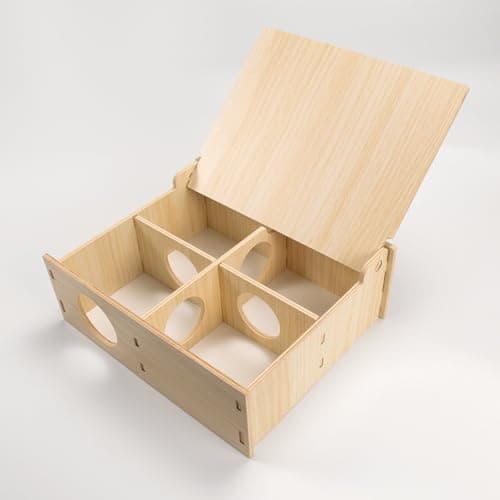
Multi-Chamber Wooden Hamster Hideout & Tunnel
8.2 / 10
- Interconnected tunnels and several nesting chambers per the listing
- Solid poplar wood with sanded-smooth edges
- Dark enclosed spaces suit how a hamster naturally nests
- Sits on the bedding so burrows form underneath it
$11.49
Current price · checked Sep 8, 2026

Sukh
Sukh Natural Organic Apple Sticks, 250 g
8.1 / 10
- Sticks about 4.5 inches long and under half an inch thick per Sukh
- A 250-gram pack of natural apple wood
- A hard gnawing surface for continuously growing incisors
- A consumable restocked as the sticks are worn down
$6.99
Current price · checked Sep 8, 2026
The Short Answer
The modern hamster setup starts from a hard truth: the old pet-store starter cage is the most common welfare mistake. A hamster needs unbroken floor space, deep bedding to tunnel into, and a wheel its spine actually fits. The BUCATSTATE 3.0 anchors this setup with the largest continuous floor here and a base built for real burrowing. A wooden silent wheel lets a Syrian run with a flat back, because the wrong size arches the spine. One large bag of dust-free Kaytee bedding starts the deep layer a burrower needs. A corner sand bath keeps the coat clean, since hamsters wash in fine sand and never in water. A multi-chamber wooden hide gives dark nesting tunnels, and apple-wood chews wear down teeth that never stop growing. House a Syrian alone, always, and most dwarfs too. Buy bigger than the pet store suggests — that first larger purchase is the honest one.
Every product on this list has been scored against the PetPal Gear Score, a weighted composite of expert consensus, observed effectiveness, animal safety, long-term durability, and value. Review method: Editorial synthesis of the hamster-welfare community's current housing standards on floor space, bedding depth, wheel sizing, sand bathing, and solitary housing, plus first-party manufacturer and Amazon-listing specifications from BUCATSTATE, antiai, Kaytee, Niteangel, Cyirexylcc (sold via the CozyCritter storefront), and Sukh. Community consensus is included as consensus, not quotation. No first-hand product testing — PetPalHQ does not run a testing lab.. Synthesized from 6+ expert sources.
A modern hamster setup goes wrong at the pet store, before any bedding is bought. A first-time owner sees a bright plastic cage with tubes and buys it in good faith, picturing a happy pet in a colorful playground. What a hamster actually needs is the opposite of that module tower. The hamster-welfare community's current housing standards inverted the old pet-store picture entirely: a habitat is floor space, deep bedding, and a wheel the spine fits, not a stack of small compartments. Bigger is not a luxury position here. It is the baseline the r/hamsters-class community now treats as the welfare floor, and this guide is built on it.
Two ideas carry the whole setup. The first is continuous floor. A hamster is a ground-dwelling burrower that roams, forages, and digs, so unbroken floor area matters far more than tiers or tube height. The second is depth. Bedding deep enough to tunnel into is enrichment a hamster cannot live well without. The tube-and-module cages sold as starters fail on both counts, and on airflow besides, which is why the community stopped recommending them.
Two more choices are welfare decisions, not preferences. A wheel is sized right only when the hamster runs with a flat back; the wrong size curves the spine every night. And hamsters clean their coats in fine sand, never in water, which strips their oils and chills a small animal fast. The picks below provision that setup in the order you need it — the habitat first, then the wheel, the deep bedding, the sand bath, the hide, and the chews. Where a claim rests on a maker's listing or community consensus, that is named rather than asserted, because PetPalHQ does not run a testing lab.
One rule sits above the gear and never bends. Syrian hamsters live alone, always, and most dwarfs do too, because cage-mates fight, sometimes to the death. No amount of floor space makes cohabitation safe for a Syrian. This guide's honest job is to stop the wrong first purchase before it happens, and the wrong purchase is almost always the small pet-store starter cage. The right first habitat is bigger than the shelf suggests and costs more, and that is the truth a new owner deserves before the money is spent, not after.
Head-to-Head Comparison
| Feature | BUCATSTATE Hamster Cage 3.0 Metal Large Stackable | antiai Hamster Wooden Silent Wheel, 12 Inch (XL) | Kaytee Clean & Cozy Small Animal Bedding, 49.2 L | Niteangel Animal Sand-Bath Box (Acrylic, Triangle) | Multi-Chamber Wooden Hamster Hideout & Tunnel | Sukh Natural Organic Apple Sticks, 250 g |
|---|---|---|---|---|---|---|
| Item in the setup | Large habitat | Wooden silent wheel | Deep bedding | Sand bath | Multi-chamber hide | Apple-wood chews |
| What it provides | Continuous floor to roam and burrow | A flat-back running surface | The packable depth to tunnel into | Dry, coat-cleaning sand | Dark connected nesting chambers | A hard surface for growing teeth |
| PetPal Hamster-Welfare Score | 8.6 | 8.5 | 8.4 | 8.3 | 8.2 | 8.1 |
| Consumable? | No — the foundation | No — replace when worn | Yes — refill and replace | Sand refilled as fouled | Cleaned, replaced over time | Yes — restocked as gnawed |
| Set up when | First, before the hamster | Seated on the floor | Mounded into the deep base | Tucked into a corner | Set on the bedding | Scattered in and refreshed |
| Check price | Amazon | Amazon | Amazon | Amazon | Amazon | Amazon |
$279.99
Current price · checked Sep 8, 2026
- 47 x 23.6 x 25.5 inches, about 7.8 square feet of continuous floor per BUCATSTATE
- Deep base holds up to 11 inches of bedding for genuine burrowing
- Chew-proof metal frame with clear acrylic panels and view windows
- Three doors, including a front door with switch clasps for secure access
- The largest single item and the foundation of the whole setup
The habitat is the foundation, and the rule is floor space above all. This BUCATSTATE cage earns the first slot because it clears the modern welfare standard by the widest margin. BUCATSTATE documents a cage measuring 47 by 23.6 by 25.5 inches, with about 7.8 square feet of continuous floor and a base that holds up to 11 inches of bedding. A hamster is a ground-dwelling burrower. It roams, forages, and digs, so unbroken floor matters far more than tiers or tube height. The community housing standard treats continuous floor as the number that decides a safe cage, and this one is built around it.
Where it fits the setup: this is bought first, set up and furnished before the hamster comes home. The deep base is filled with the packable bedding that comes next, and the wheel, hide, and sand bath are laid out on top so the animal can roam, dig, and rest across one open floor. A metal-and-acrylic frame keeps a determined chewer in, and multiple doors make daily spot-cleaning and full cleanouts easy. If you want to weigh this cage against value-tier and glass-sided options, our full roundup of the best hamster habitats and cages ranks the cages that clear the floor-space standard and names the ones that fall short.
The honest trade-offs are footprint and weight. This is a wide cage that needs a dedicated table or a long floor run, and it is heavy to move once loaded with deep bedding. Confirm the current price before buying. None of that changes the verdict — for the owner with the room, this is the habitat a hamster will never outgrow.
What We Love
- Largest continuous floor here, well past the modern welfare target
- Deep base holds up to 11 inches of bedding for real tunneling
- Chew-proof metal-and-acrylic build with clear view windows
- Three doors make daily care and full cleanouts easy
What Could Be Better
- Widest footprint here — needs a dedicated table or floor run
- Heavy to move once filled with deep bedding
- It is the priciest pick in this setup
The Verdict
Buy the habitat first and buy it for floor space, because continuous unbroken floor is what a burrowing animal needs most. Place it stable and out of daytime noise, then furnish the deep base fully — the cage is the foundation of the setup, not the finished home.
Sources
- BUCATSTATE (Amazon product listing, Hamster Cage 3.0): measures 47 x 23.6 x 25.5 in with a floor space of about 7.8 sq ft, a base rated to support up to 66 lb and hold up to 11 in of bedding, chew-proof metal frame with clear acrylic panels, three doors, and stackable assembly
- The hamster-welfare community's current housing standards on floor space: the community floor is a 100cm-class, 40-gallon-plus footprint of unbroken floor, because tube-and-module cages fail on floor area, airflow, and burrowing depth, and more continuous floor is observed to reduce stereotypic bar-biting and monkey-barring
$32.99
Current price · checked Sep 8, 2026
- Extra-large, about 12.3 x 7.8 x 11.4 inches (31 x 20 x 29 cm) per the listing
- Solid wooden running surface with a flat back and no rungs
- Silent spinner bearing suits a nocturnal runner in a quiet room
- Sized for the class a Syrian needs to run flat-backed
The wheel is a welfare spec, not a preference. This antiai wheel earns the second slot because it runs in the extra-large size class a Syrian needs. antiai documents an X-Large wheel at about 12.3 by 7.8 by 11.4 inches, a wooden silent spinner. Here is the honest sizing rule the community follows: a wheel fits when the hamster runs with a flat back. Undersizing forces the spine into a curve, night after night, while oversizing costs nothing. So the larger class is the safe default for a Syrian.
Where it fits the setup: this stands on the open floor, and a solid wooden surface protects the feet that a barred or rung wheel can catch. One point of honesty on the listing — antiai markets this wheel for dwarfs and other similar-sized pets. Read that as a floor, not a ceiling. A dwarf can run smaller, but the size that suits a Syrian suits a dwarf too, and the flat-back test decides it for either animal. A silent bearing matters because a hamster runs at night, and a squeaky wheel wakes the household.
The honest trade-offs are marketing, cleaning, and stability. Because the listing names dwarfs, a Syrian owner confirms the running diameter against the flat-back test rather than the label. A wooden surface needs spot-cleaning and occasional replacement as it wears. And a free-standing wheel can be pushed around a bare floor, so it is seated against a wall or into the bedding so it stays put. Chosen for the flat-back class and seated securely, it gives an athletic nocturnal animal the safe running it needs.
What We Love
- Solid wooden surface with a flat back and no rungs to catch a foot
- Extra-large class lets a Syrian run flat-backed
- Silent bearing suits a nocturnal runner in the home
- Oversizing is safe, so the larger class is the honest default
What Could Be Better
- Marketed for dwarfs, so a Syrian owner confirms it against the flat-back test
- Wooden surface needs spot-cleaning and eventual replacement
- Free-standing, so it must be seated so it cannot be pushed around
The Verdict
Size the wheel to the spine, not to the label: a hamster should run with a flat back, and the larger class is the safe default because oversizing harms nothing. Seat it against a wall or into the bedding so it stays put, spot-clean the wood, and treat wheel size as the safety decision it is.
Sources
- antiai (Amazon product listing, antiai Wooden Silent Wheel XL): X-Large size, about 12.3x7.8x11.4in (31x20x29 cm), a wooden silent spinner wheel
- The hamster-welfare community's current housing standards on wheel sizing: a wheel is sized right when the hamster runs with a flat back, so Syrians need the eleven-to-twelve-inch class and dwarfs can use smaller, and oversizing harms nothing while undersizing arches the spine
$23.84
Current price · checked Sep 3, 2026
- 99.9% dust-free and fragrance-free per Kaytee, which spares small airways
- Absorbs up to 6x its weight in liquid for the cage floor
- 14-day odor control helps neutralize ammonia odors
- A 49.2-liter bag as the starting layer for a large habitat
Deep bedding is enrichment, not décor, and it is a consumable you will rebuy. This Kaytee bedding earns the third slot because it packs into tunnels and stays low on dust. Kaytee documents a bedding that is 99.9 percent dust-free and fragrance-free, absorbs up to six times its weight in liquid, and carries 14-day odor control against ammonia. The community depth standard is six inches or more of packable substrate, because a hamster tunnels rather than skates across a shallow tray, and a thin scatter layer wastes the deep base the cage was chosen for.
Where it fits the setup: this goes into the deep base before anything else is arranged, mounded high enough to hold a tunnel shape. Dust-free matters because a hamster lives with its nose in the substrate, and fragrance-free matters because scented bedding masks the ammonia smell that actually warns you a cleanout is due. Paper bedding packs and holds a burrow better than loose scatter, and the hide sits on top so tunnels can form beneath it. One bag is where a large cage starts, not where it ends.
The honest trade-offs are volume, cost, and honesty about quantity. A 49.2-liter bag sounds enormous, but a standard-clearing cage swallows it as a starting layer rather than a stockpile — expect to add bags to reach real depth. Bedding is an ongoing cost, refreshed at spot-cleans and replaced at full cleanouts. And no bedding removes the need to clean; odor control buys time, it does not replace the routine. Confirm the current price before buying. Used as the packable depth a burrower needs, it turns an open floor into a genuine home.
What We Love
- Low dust and fragrance-free, which suits an animal that burrows nose-down
- Packs and holds a tunnel shape better than loose scatter
- Strong liquid absorption and odor control between cleanouts
- A sensible starting layer for a large, deep-based cage
What Could Be Better
- One bag is a starting layer, not full depth for a large cage
- A consumable that is refreshed and replaced on a routine
- Odor control buys time but never replaces cleaning
The Verdict
Mound the bedding deep enough to hold a tunnel, because depth is the enrichment a burrower most needs and a thin layer wastes the cage. Choose it dust-free and fragrance-free, plan to add bags to reach real depth, and keep the cleaning routine — odor control extends it, it does not end it.
Sources
- Kaytee (Amazon product listing, Clean & Cozy 49.2 L): 99.9% dust-free, fragrance-free bedding that absorbs up to 6x its weight in liquid, with 14-day odor control that helps neutralize ammonia odors, 49.2 liters
- The hamster-welfare community's current housing standards on bedding depth: six inches or more of packable bedding is the depth standard because hamsters are burrowers, a thin scatter layer defeats the deep base, and one large bag is a starting layer for a big cage rather than a stockpile
$25.99
Current price · checked Sep 8, 2026
- Fan-shaped box, 7.4 by 7.4 inches and 4 inches tall per Niteangel
- A 2.7-inch lid entrance that keeps flung sand mostly contained
- Clear acrylic build that tucks into a cage corner
- A dedicated bathing spot separate from the deep bedding
A sand bath is how a hamster keeps its coat clean, and it replaces something you must never do — a water bath. This Niteangel box earns the fourth slot for its corner-fitting shape and contained entrance. Niteangel documents a fan-shaped acrylic box at 7.4 by 7.4 inches and 4 inches tall, with a 2.7-inch lid entrance. The welfare framing is simple: hamsters wash in fine sand, and water strips the oils that keep their coats healthy and chills a small animal fast. So the bath is sand, always, never water.
Where it fits the setup: this tucks into a cage corner, filled with fine bathing sand, kept separate from the deep sleeping bedding. The corner shape saves open floor, and the lidded entrance keeps most of the flung sand inside rather than across the cage. A hamster uses it on its own schedule, rolling and digging to clean its coat, so it is left in place as a standing feature rather than offered and removed. Reptile sand or dust-free chinchilla-class sand is the right fill.
The honest trade-offs are the fill, the dust, and the mess. The box is only as safe as the sand in it, so dusty bathing powder is skipped in favor of a low-dust, fine sand. Even a lidded box scatters some sand, so it sits where a little spillover is easy to sweep back. And it is spot-cleaned like a litter area, since a hamster will sometimes toilet in the sand. Filled with fine dust-free sand and left in a corner, it covers coat care the honest way — with sand, not water.
What We Love
- Corner shape saves open floor in the cage
- Lidded entrance keeps most flung sand contained
- Replaces the water bath a hamster must never have
- A standing feature a hamster uses on its own schedule
What Could Be Better
- Only as safe as the fill — dusty bathing powder is skipped
- Some sand still scatters and needs sweeping back
- Spot-cleaned like a litter area when used as a toilet
The Verdict
Give a sand bath, never a water bath, because water strips a hamster's coat oils and chills it. Fill it with a fine, dust-free sand rather than dusty powder, tuck it into a corner to save floor, and spot-clean it like a litter area — coat care here is sand and only sand.
Sources
- Niteangel (Amazon product listing, Sand-Bath Box): Fan-Shaped, 7.4-inch L x 7.4-inch W, Height 4-inch, with the diameter of the entrance on the lid at 2.7-inch, in acrylic
- The hamster-welfare community's current housing standards on sand bathing: hamsters clean their coats in fine sand and never in water, because water strips the coat's oils and chills them, and reptile or dust-free chinchilla-class sand works while dusty bathing powder is skipped
$11.49
Current price · checked Sep 8, 2026
- Interconnected tunnels and several nesting chambers per the listing
- Solid poplar wood with sanded-smooth edges
- Dark enclosed spaces suit how a hamster naturally nests
- Sits on the bedding so burrows form underneath it
A hide gives a hamster the dark, enclosed space it rests in, and more chambers suit it better than one bare box. This multi-chamber hide earns the fifth slot for its connected chambers and honest materials. Its Amazon listing documents a hideout whose interconnected tunnels promote natural exploration and provide secure nesting spots, in solid poplar wood with sanded-smooth edges. A hamster is a burrower that nests in the dark, so several linked chambers match how it actually settles far better than a single open shelter.
Where it fits the setup: this sits on top of the deep bedding, not buried in it, so the hamster can dig its own tunnels beneath while using the chambers above as ready-made rooms. Wood breathes and absorbs better than plastic for a nesting spot, and sanded edges matter because a hamster crawls through the openings constantly. Placed near a quiet corner rather than under the wheel, it becomes the animal's home base — where it sleeps out the day and stashes food.
The honest trade-offs are cleaning, chewing, and placement. Wood soaks up urine and food stashes, so it is checked and cleaned at cleanouts, and a well-used hide is eventually replaced. A hamster will gnaw the wood, which is fine and expected, but it means the hide wears. And it works best on the bedding rather than pressed into a wall, so tunnels can form underneath. Set on the deep layer in a quiet corner, it gives a burrower the dark, multi-room refuge it rests in.
What We Love
- Several connected chambers suit how a hamster nests
- Solid wood breathes better than a plastic shelter
- Sanded edges suit an animal always crawling through openings
- Sits on bedding so the hamster tunnels beneath it
What Could Be Better
- Wood absorbs urine and stashes, so it needs regular cleaning
- A hamster gnaws it, so a well-used hide is replaced over time
- Works best on the bedding, not pressed against a wall
The Verdict
Give a multi-chamber wooden hide and set it on the deep bedding so the hamster can tunnel underneath and nest above. Choose sanded, solid wood over plastic, place it in a quiet corner away from the wheel, and clean or replace it as it absorbs and wears — this is the animal's home base.
Sources
- Amazon product listing (Cyirexylcc Multi-Chamber Wooden Hideout, CozyCritter storefront): interconnected tunnels promotes natural exploration behavior and provides secure nesting spots, in solid poplar wood with sanded-smooth edges
- The hamster-welfare community's current housing standards on hides: burrowers rest in dark multi-chamber spaces, so a hide with several connected chambers suits how a hamster nests, and it is placed on the bedding so tunnels form beneath it
$6.99
Current price · checked Sep 8, 2026
- Sticks about 4.5 inches long and under half an inch thick per Sukh
- A 250-gram pack of natural apple wood
- A hard gnawing surface for continuously growing incisors
- A consumable restocked as the sticks are worn down
Chews are dental maintenance, because a hamster's front teeth never stop growing. These Sukh apple sticks earn the last slot as a cheap, natural way to give a hamster something hard to gnaw. Sukh documents sticks about 4.5 inches long and under half an inch thick, in a 250-gram pack of natural apple wood. Rodent incisors grow continuously, so a hard surface to wear them against is a lifelong need, not a novelty. Framed plainly: this is upkeep for the teeth, and no medical claim is made beyond that.
Where it fits the setup: a few sticks are scattered into the cage and refreshed as they are gnawed down. Apple wood is a safe, familiar chew, and natural sticks give the varied surfaces a hamster works its teeth against. They double as light enrichment, since a hamster will drag and rearrange them, but their real job is the gnawing. Left in the cage as a standing supply, they keep a hard surface always within reach.
The honest trade-offs are variety, freshness, and that chews are not a fix-all. Wood chews help with wear, but a vet, not a stick, addresses genuine dental problems like overgrowth or misalignment. Natural sticks vary in size and can arrive dusty, so they are given a shake before going in. And they are a consumable, restocked as they wear. Kept in steady supply, they cover the one need every hamster has for its whole life — a hard surface to gnaw.
What We Love
- A hard gnawing surface for teeth that never stop growing
- Natural apple wood in a simple, inexpensive pack
- Doubles as light enrichment a hamster drags and rearranges
- Cheap enough to keep a standing supply in the cage
What Could Be Better
- Natural sticks vary in size and can arrive dusty
- A consumable that is restocked as it wears down
- Wear only — real dental problems need a vet, not a stick
The Verdict
Keep chew sticks in the cage as steady dental upkeep, because a hamster's incisors grow for life and need a hard surface to wear against. Choose safe natural apple wood, shake off any dust before use, and remember chews maintain healthy teeth — genuine dental trouble is a vet's job, not a stick's.
Sources
- Sukh (Amazon product listing, Natural Organic Apple Sticks 250 g): each stick having a length of about 4.5 inches and a diameter no more than half an inch, a 250 g pack of natural apple wood
- The hamster-welfare community's current housing standards on dental wear: rodent incisors grow continuously, so wood chews are dental maintenance rather than toys, and a hamster needs a hard surface to gnaw against throughout its life
How We Score
Formula
PetPal Hamster-Welfare Score = (Expert Consensus × 0.35) + (Welfare-Standard Fit × 0.25) + (Enrichment & Burrow Design × 0.20) + (Value × 0.20)
Score Factors
- Expert Consensus · 35%
- Synthesized from the hamster-welfare community's current housing standards on floor space, bedding depth, wheel sizing, sand bathing, and solitary housing, plus manufacturer and Amazon-listing specifications. The PetPal Hamster-Welfare Score is a composite of expert opinion — PetPalHQ does not run a testing lab.
- Welfare-Standard Fit · 25%
- How directly the item meets the modern welfare baseline — continuous floor space, six-inch-plus packable bedding, a flat-back wheel, a sand bath rather than water, and dark nesting — rather than how it performs as a standalone product ranked against rivals.
- Enrichment & Burrow Design · 20%
- How well the item supports natural hamster behavior: roaming and digging on unbroken floor, tunneling through deep substrate, nesting in dark chambers, and gnawing on a hard surface for continuously growing teeth.
- Value · 20%
- Cost relative to the item's role in the setup, including ongoing costs like refill bedding, replacement sand, and restocked chews. This setup is the equipment cost, not the years of daily care a hamster needs.
| Rank | Product | Score |
|---|---|---|
| #1 | BUCATSTATE BUCATSTATE Hamster Cage 3.0 Metal Large Stackable | 8.6 |
| #2 | antiai antiai Hamster Wooden Silent Wheel, 12 Inch (XL) | 8.5 |
| #3 | Kaytee Kaytee Clean & Cozy Small Animal Bedding, 49.2 L | 8.4 |
| #4 | Niteangel Niteangel Animal Sand-Bath Box (Acrylic, Triangle) | 8.3 |
| #5 | Cyirexylcc Multi-Chamber Wooden Hamster Hideout & Tunnel | 8.2 |
| #6 | Sukh Sukh Natural Organic Apple Sticks, 250 g | 8.1 |
When NOT to Buy
This setup is wrong for anyone who wants a low-effort, hands-off pet. Hamsters are crepuscular and largely nocturnal, so they wake and run at night. A wheel and a burrow in a bedroom will keep a light sleeper awake, night after night. They are also solitary, so a child hoping for a bonded pair to watch together will be disappointed — housing two Syrians in one cage ends in injury, not company. And the honest budget note is plain: the right habitat costs more than the pet-store box, and it needs a dedicated table or floor run.
It is also the wrong buy when the space is not there. A standard-clearing habitat is wide and heavy once filled with deep bedding, and there is no shrinking that footprint without shrinking the animal's welfare. If a smaller cage is genuinely the only option, size the cage down honestly rather than pretending the animal needs less — the full habitat roster lays out which cages clear the floor-space standard and which fall short of it. Confirm the current price before buying, since sellers move over time.
Frequently Asked Questions
- Why is the pet-store starter cage such a common mistake?
- Because it fails on the one measure that matters most — continuous floor space — and it fails quietly. The bright plastic cages with tubes and levels look like a playground, but the actual floor is small and broken up by ramps and modules, so a hamster cannot roam or burrow properly. Owners rarely see the harm directly, which is what makes it common. The signs show up as stress behaviors instead: bar-biting, monkey-barring across the roof, and repetitive pacing, which the community reads as a cage that is too small. The tubes also trap stale air and cannot hold deep bedding. A habitat built on unbroken floor and a deep base prevents the problem the starter cage creates.
- What size wheel does a Syrian hamster actually need?
- Big enough that the hamster runs with a flat back, which for a Syrian means the eleven- to twelve-inch class. The test is the posture, not the label on the box. If the hamster's back arches upward as it runs, the wheel is too small and its spine is being curved every night. The safe move is to go larger, because an oversized wheel causes no harm at all while an undersized one does. Ignore listings that market a wheel for dwarfs and stop there — a size that suits a Syrian suits a dwarf too. Watch the animal run for a few seconds and let its back, flat or arched, make the decision for you.
- Can two hamsters live together?
- For Syrians, no — never, in any cage at any size. Syrians are solitary and territorial, and two housed together will fight, sometimes fatally, no matter how much floor space they have. Most dwarf species should also be kept alone; the occasional exceptions demand deep experience, huge space, and a fast plan to separate them, which puts them well outside a first setup. The dangerous trap is seeing babies housed together at the store and assuming it lasts — young siblings tolerate each other briefly, then turn on each other as they mature. The safe rule for a first-time owner is simple and firm: one hamster, one cage, every time.
- How deep should the bedding be, and what kind?
- Six inches or more of packable, dust-free paper bedding is the depth the community treats as the standard. Depth is the point, because a hamster burrows and needs substrate it can dig real tunnels through rather than skate across. Paper bedding packs and holds a tunnel shape, so it beats loose scatter for a burrow. It has to be dust-free, because a hamster lives with its nose in it, and fragrance-free, because scent masks the ammonia smell that tells you a cleanout is due. Spot-clean soiled patches between full changes rather than stripping the whole burrow each time. One large bag is where the deep layer starts for a big cage, not where it ends.
- Do hamsters need a water bath?
- No — a water bath is actively harmful, and a hamster should never be given one. Water strips the natural oils that keep a hamster's coat healthy and chills a small animal dangerously fast. Hamsters clean themselves in fine, dry sand instead, rolling and digging to work it through the coat, so a sand bath is the correct tool. Use a fine, low-dust sand — reptile sand or a dust-free chinchilla-grade sand works well — and skip dusty "bathing powder," which can irritate the airways. Offer the sand in a shallow box and leave it in the cage, since a hamster will use it on its own schedule. If a hamster gets something sticky on its coat, spot-clean the patch by hand rather than bathing the whole animal.
Bottom Line
Buy the habitat first, and buy it for floor space. The BUCATSTATE 3.0 anchors this setup with continuous unbroken floor and a base deep enough to burrow, because a ground-dwelling animal needs room to roam far more than it needs tiers or tubes.
Size the wheel to the spine, not the label. A hamster should run with a flat back, so the larger class is the safe default — oversizing harms nothing while undersizing arches the spine night after night.
Mound the bedding deep. One large dust-free bag starts the packable layer a burrower tunnels into, and you add bags to reach real depth, because a thin scatter wastes the deep base the cage was chosen for.
Cover the coat, the nest, and the teeth. A sand bath cleans the coat the honest way, never water; a multi-chamber wooden hide gives dark nesting rooms; and apple-wood chews wear down teeth that never stop growing.
House them alone and buy bigger than the shelf suggests. A Syrian lives alone, always, and most dwarfs too — the pet-store starter cage is the most common welfare mistake, and the right first habitat costs more for a reason.
Sources & Methodology
Methodology
PetPal Hamster-Welfare Score = (Expert Consensus × 0.35) + (Welfare-Standard Fit × 0.25) + (Enrichment & Burrow Design × 0.20) + (Value × 0.20)
Expert review sources
- The hamster-welfare community's current housing standards on continuous floor space
- Community housing guidance on bedding depth, wheel sizing, and sand bathing
- Community consensus on solitary housing for Syrians and most dwarfs
- BUCATSTATE — Hamster Cage 3.0 product documentation
- antiai, Kaytee, and Niteangel product documentation
- Cyirexylcc and Sukh product documentation
Community sources
- Hamster-keeping community consensus on the floor-space and deep-bedding standard
- Community consensus on flat-back wheel sizing and sand-not-water coat care
Prices and specs verified July 16, 2026.
About the author
Nick Miles is the chief editor of PetPalHQ. This modern hamster habitat setup and its picks are editorial synthesis of the hamster-welfare community's current housing standards and manufacturer documentation — PetPalHQ does not run a testing lab. The PetPal Hamster-Welfare Score is a composite of expert opinion, not a measurement. Solitary-housing and coat-care points are described as community welfare consensus, not clinical claims. Sources are cited by name throughout.
PetPalHQ is a participant in the Amazon Services LLC Associates Program. We may earn commissions from qualifying purchases — at no extra cost to you.
More Guides
Playground
Best Hamster Habitats & Cages 2026: Large Cages That Meet the Floor-Space Standard
Playground
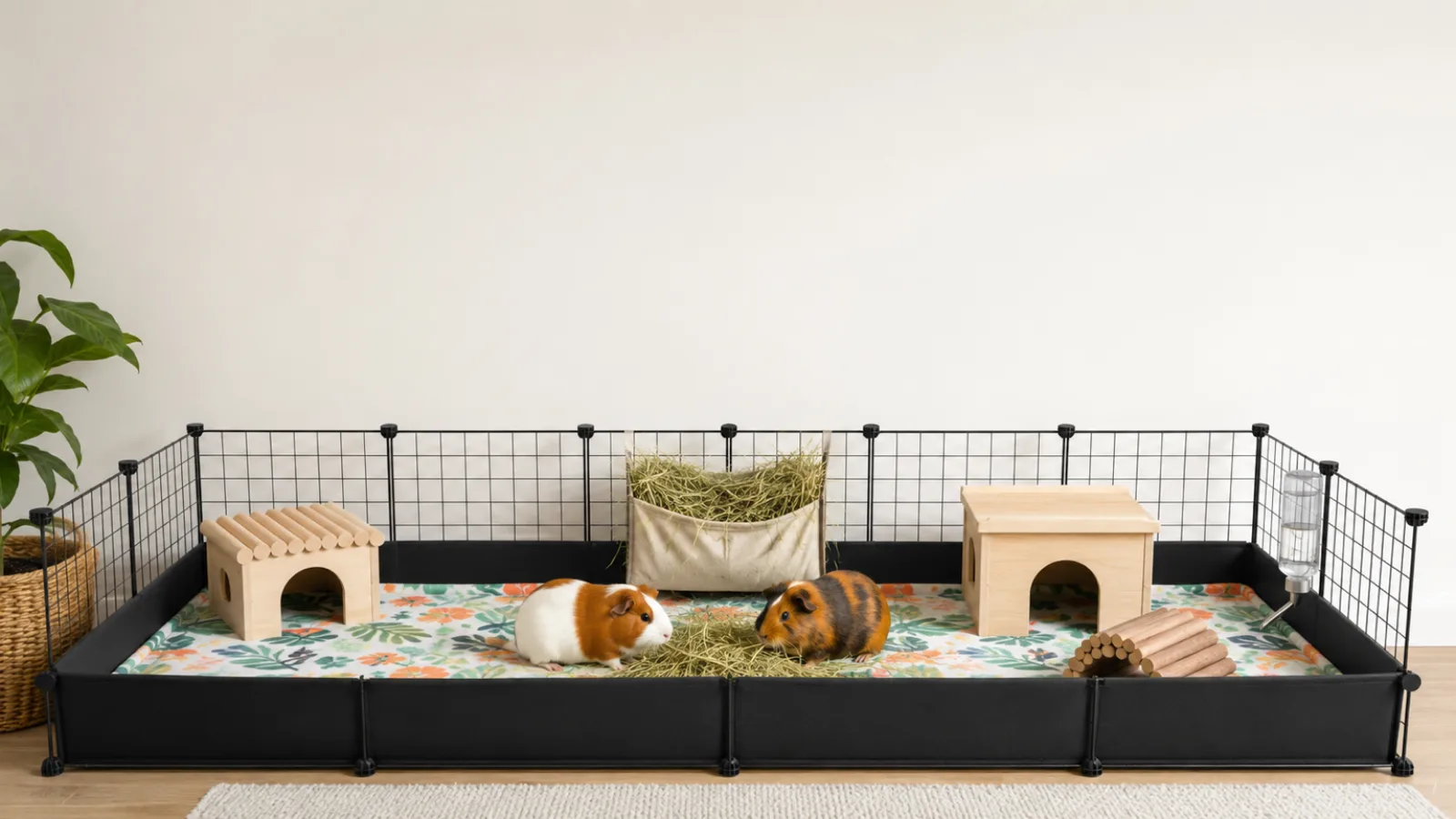
New Guinea Pig Starter Setup: The Bring-Home Checklist (2026)
Playground
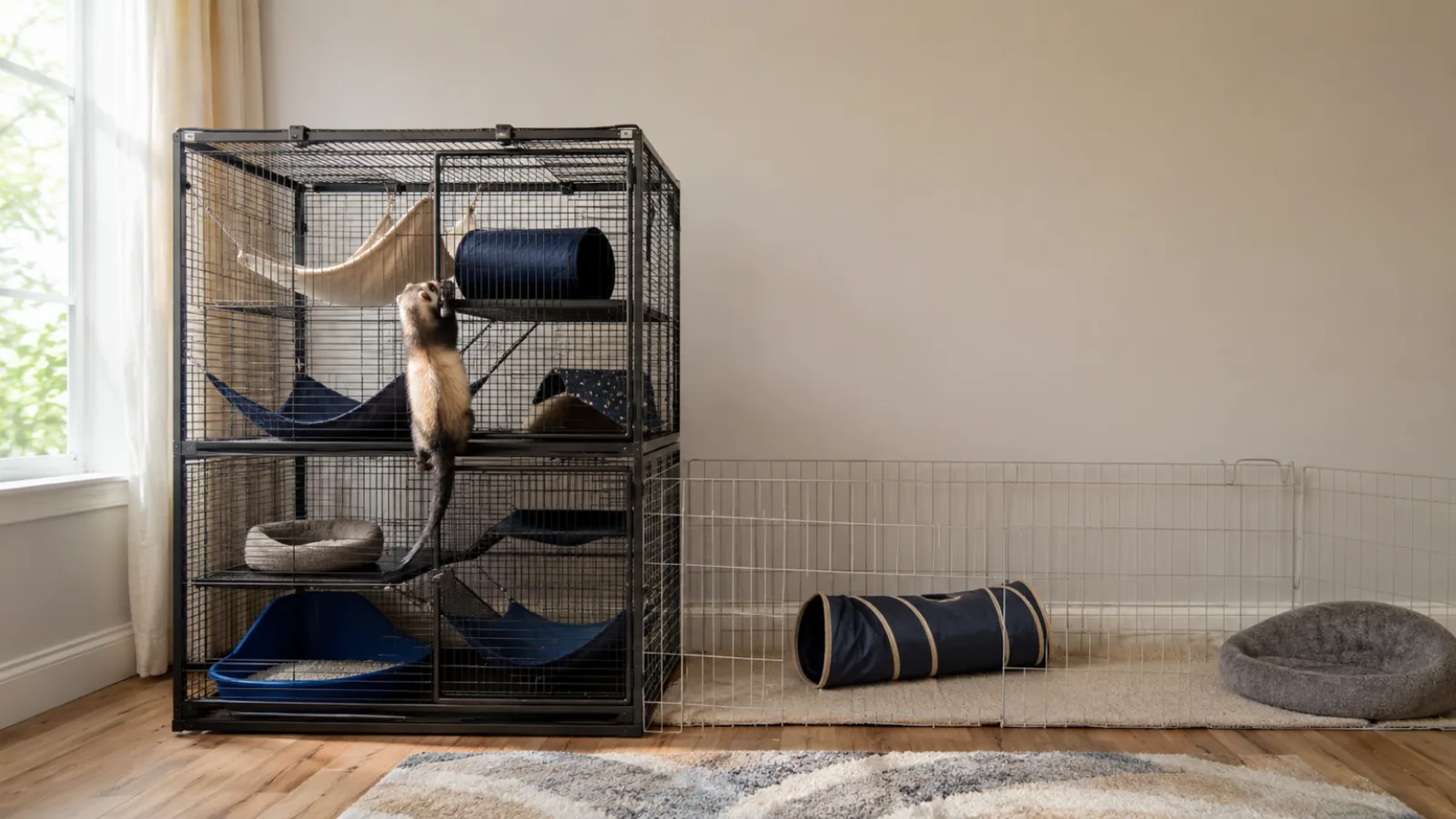
New Ferret Starter Setup Checklist (2026)
Playground
New Sugar Glider Starter Checklist: A Provisioning Kit for a First Colony (2026)
Playground
Best Guinea Pig Cages & Habitats 2026: The C&C Size Debate, and How Much Space Your Cavies Really Need
Playground