Playground
Best Guinea Pig Cages & Habitats 2026: The C&C Size Debate, and How Much Space Your Cavies Really Need
The guinea pig habitats worth buying, ranked by usable floor space against the real welfare standard — plus the honest tradeoff between a C&C cage and a commercial habitat.
By Nick Miles · Updated August 12, 2026 · 12 min
PetPalHQ is reader-supported. We may earn a commission from qualifying Amazon purchases at no extra cost to you.
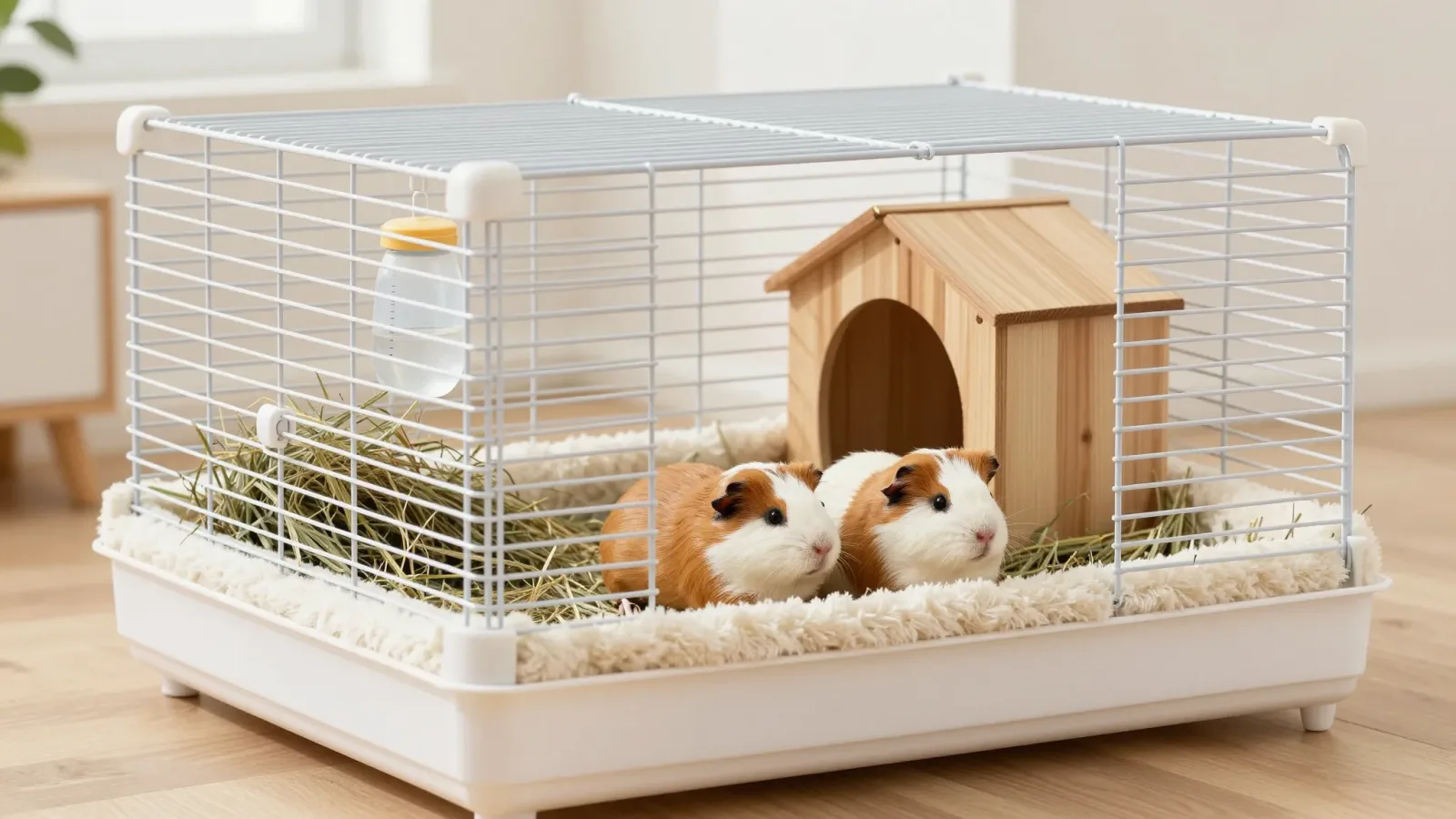
Evidence at a Glance
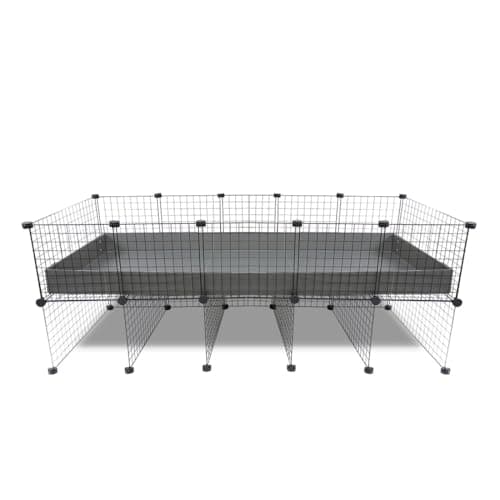
GuineaDad Piggy Condo Premium C&C Cage (2x5)
The only habitat here that clears the recommended pair size: a 2x5 C&C cage with roughly 13 square feet of interior floor (27 by 71 inches), built-in support pillars, a coroplast base, and a choice of grid or acrylic panels. It is expandable to 2x4 or 2x6 and is the closest thing to a rescue-standard C&C cage you can buy ready-made — at a premium price.
Sources: GuineaDad Amazon listing (verified specs), Humane Society — guinea pig housing requirements, guinea pig rescue C&C size guidance
Verified Jul 5, 2026
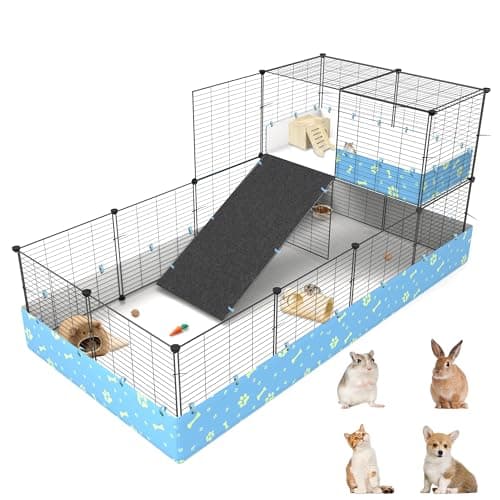
MODESLAB 2-Story Guinea Pig C&C Cage with Tarp
The best space-per-dollar C&C option: a 48-by-24-inch footprint (about 8 square feet) with a second-story loft, a waterproof PVC liner with a 5-inch baffle to contain bedding, and about $85 all in. Real C&C space and a loft, expandable with extra panels when the herd grows.
Sources: MODESLAB Amazon listing (verified specs), Humane Society — guinea pig housing requirements
Verified Jul 5, 2026
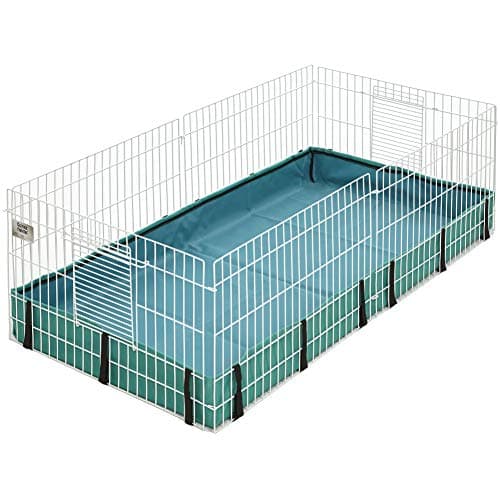
MidWest Homes Guinea Habitat Cage (171GH)
The best value commercial cage: a stated 8 square feet (47 by 24 inches) with a washable leak-proof PVC-lined canvas bottom that is gentle on guinea pig feet, 14-inch sides, tool-free setup, and modular expandability, for about $63. A contained, sturdy cage that meets the single-pig standard out of the box.
Sources: MidWest Amazon listing (verified specs), Humane Society — guinea pig housing requirements
Verified Jul 5, 2026
Our Picks
GuineaDad
GuineaDad Piggy Condo Premium C&C Cage with Pillars, 2x5 XL
9.0 / 10
- 2x5 configuration: 29 x 73.5 x 28.5 inches exterior, 27 x 71 inches interior — roughly 13 square feet of floor
- Built-in support pillars add structural strength versus a plain grid-and-connector build
- Coroplast base, compatible with GuineaDad waterproof liners (sold separately)
- Choice of breathable C&C grid panels or clear acrylic panels
MODESLAB
MODESLAB 2-Story Guinea Pig C&C Cage with Tarp, 25 Panels
8.5 / 10
- 48 x 24 x 32 inches with a second-story loft — about 8 square feet on the ground floor plus a loft
- 25 panels (21 at 16x12 inches, 4 at 12x12 inches) with about 0.7-inch grid spacing
- Waterproof PVC Oxford bottom liner with a 5-inch baffle to keep bedding and hay contained
- Non-slip mat on the ramp so pigs do not slip climbing to the loft
$85.49
Current price · checked Sep 8, 2026
MidWest Homes for Pets
MidWest Homes for Pets Guinea Habitat Cage, 171GH, Washable PVC Bottom
8.3 / 10
- 47 x 24 x 14 inches with a stated 8 square feet of floor
- Leak-proof PVC-lined canvas bottom that is hand-washable, removable, and gentle on feet
- 14-inch-high sides to keep pigs contained while staying easy to reach into
- Tool-free setup designed for first-time owners
$62.99
Current price · checked Sep 8, 2026
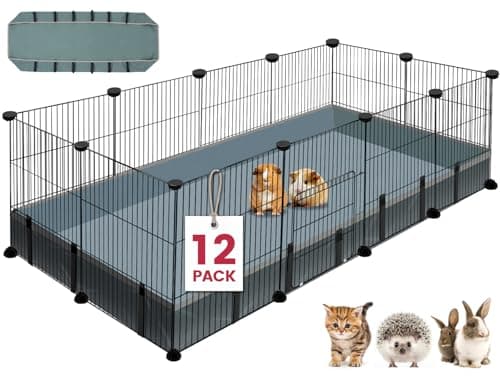
VISCOO
VISCOO 12-Panel Small Animal Playpen with Waterproof Mat, 48 x 24 x 16 inches
8.0 / 10
- Assembles to 48 x 24 x 16 inches — about 8 square feet of floor for around $30
- Coated-steel panels with about 0.5-inch mesh spacing, plus a built-in door panel
- Includes a 24 x 48-inch 600D Oxford waterproof floor mat with 4.7-inch raised sides
- 12 reconfigurable panels you can shape into different footprints
$31.99
Current price · checked Sep 8, 2026
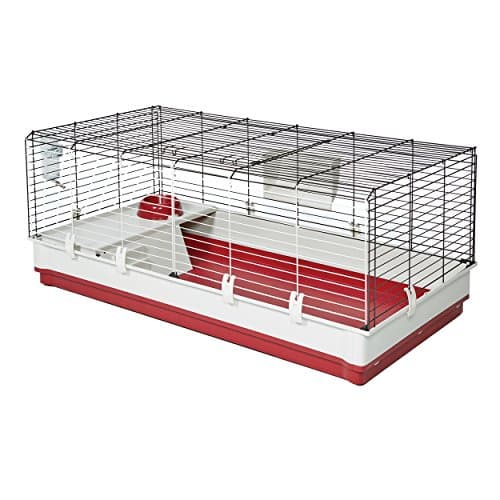
MidWest Homes for Pets
MidWest Homes for Pets Deluxe Rabbit & Guinea Pig Cage, X-Large
7.8 / 10
- 47.16 x 23.62 x 19.68 inches — about 7.7 square feet of floor
- 5.5-inch deep base to contain litter and bedding
- Ships with a hay feeder, water bottle, feeding bowl, and an elevated feeding area
- Top and side door access; no tools required for setup
$104.99
Current price · checked Sep 8, 2026
The Short Answer
The number that decides everything: guinea pigs need at least 7.5 square feet of floor for one, and welfare guidance recommends about 10.5 square feet (a 2x4 C&C cage) for a pair — and most pet-store cages fail that badly. None of these habitats reaches the recommended pair size as shipped, so buy the most floor you can and plan the expansion at the same time. The MODESLAB 2-story C&C cage (about $85) is the best of them: roughly 8 square feet on the ground floor plus a loft, a waterproof liner with a baffle that keeps bedding in, and extra panels available when you add a pig. The MidWest Guinea Habitat (about $63) is the best value commercial cage at a stated 8 square feet, with a soft washable floor that is kind to guinea pig feet and a second unit you can connect for a pair. The MidWest Deluxe X-Large (about $105) is the starter cage that arrives complete with a hay feeder, bottle, and bowl at about 7.7 square feet, and it takes wire or wood-hutch extensions. And remember: guinea pigs are social herd animals — plan for a pair, which means planning for space.
Every product on this list has been scored against the PetPal Gear Score, a weighted composite of expert consensus, observed effectiveness, animal safety, long-term durability, and value. Review method: Editorial synthesis of guinea pig welfare guidance and manufacturer listing specifications. Cage-size and housing standards are drawn from the Humane Society's guinea pig housing requirements and the widely cited C&C (cubes and coroplast) cage-size guidance from guinea pig rescues, plus social-housing guidance from the Animal Humane Society and cage-size framing from Kavee. Per-product specifications come from each maker's verified Amazon listing (MODESLAB, MidWest Homes for Pets), confirmed through Amazon's Creators API on 2026-07-05. PetPalHQ does not run a testing lab; the scores below are a synthesis of welfare guidance and documented specifications, not a measurement.. Synthesized from 6+ expert sources.
Almost every guinea pig cage sold in a pet store is too small, and that single fact should shape how you shop. Guinea pigs are bigger, more active, and far more social than their tiny reputation suggests, and the enclosures marketed to first-time owners routinely give them a fraction of the room they need. The good news is that the fix is not complicated and does not have to be expensive — it just requires ignoring the pet-store shelf and buying to a real number. This guide is built around that number.
We read 6 sources for this guide: the Humane Society's guinea pig housing requirements, the widely cited C&C cage-size standard used by guinea pig rescues, social-housing guidance from the Animal Humane Society, cage-size framing from Kavee and The Spruce Pets, and the verified manufacturer specifications for all five habitats, confirmed through Amazon's Creators API on 2026-07-05. PetPalHQ does not run a testing lab; the scores here are a synthesis of welfare guidance and documented specs, not a measurement.
PetPalHQ.com earns affiliate commissions from qualifying purchases. Our recommendations are based on expert consensus — we synthesize professional reviews and manufacturer documentation, plus multi-year owner durability data, to find pet gear that is worth your investment. Commission rates never influence our editorial recommendations.
The number to memorize is this: 7.5 square feet of floor for one guinea pig, and about 10.5 square feet — a 2x4 C&C cage, roughly 30 by 50 inches — for a pair, with bigger always better and sides at least 12 inches high. Hold every cage up against that standard and the shopping gets simple. None of the picks here clears the recommended pair size on its own: each meets the single-pig minimum, and a pair wants an expansion on top — extra C&C panels, a second connected habitat, or a hutch extension. None of them is a tiny pet-store box, which is the whole point, but none is a finished home for two pigs either.
The C&C Size Debate: How Much Space a Guinea Pig Really Needs
"C&C" stands for cubes and coroplast — a cage built from wire grid cubes and a corrugated-plastic base — and it became the guinea pig community's standard for one reason: it is the cheapest way to hit the space numbers that welfare guidance demands. The Humane Society sets 7.5 square feet as the bare minimum for a single pig and recommends about 10.5 square feet for a pair, with the explicit note that bigger is always better. Guinea pig rescues put the same idea in grid terms: a 2x3 cage is the absolute minimum, a 2x4 is preferred for two pigs, and three or more pigs need more still.
Why so much room for such a small animal? Guinea pigs express their health and happiness through movement — they "popcorn," zoom, and forage — and a cramped cage shuts all of that down, leading to obesity, boredom, and stress. Floor space specifically matters more than height or levels, because guinea pigs do not climb the way rats or ferrets do; they need a long, open run at ground level, not a tall cage with shelves. That is why our scoring weights usable floor space above everything else, and why a loft is a nice bonus rather than a substitute for ground area.
The practical takeaway is to buy to the number for the herd you will actually keep. If you have one pig, 7.5 square feet is the floor, not the goal — aim higher if you can. If you have or plan a pair, target the recommended 10.5 square feet from the start, which in this roundup means expanding one of the 8-square-foot cages with extra panels or an extension unit — none of these habitats gets there out of the box. Under-housing is the most common welfare mistake guinea pig owners make; buying to the number is how you avoid it.
Guinea Pigs Are Social: Why Two Pigs Changes Your Cage Math
Here is the fact that turns a cage decision into a bigger one: guinea pigs are social herd animals, and they do best in same-sex pairs or groups. A lone guinea pig is not a happy default — it needs far more human interaction to stay well, and many welfare organizations advise against keeping a single pig at all. In some countries it is even illegal to keep just one. If you are getting guinea pigs, the strong recommendation is to get two.
That recommendation has a direct consequence for what you buy, because a pair needs about 10.5 square feet, not 7.5. Sizing your cage for one pig and then adopting a companion later is how owners end up cramped, so the honest move is to plan for a pair from the start even if you begin with one. In this guide, that pushes you toward the expandable MODESLAB and MidWest cages, which grow with extra panels or extension units, and away from treating any single unit as finished. A hidey house for each pig and enough space to get away from each other keep a bonded pair harmonious — space is not just about exercise, it is about letting two social animals share a home without friction.
C&C or Commercial Cage: Which Type Is Right for You
The picks here split into two types, and choosing the type is half the decision. A C&C cage like the MODESLAB gives the most usable space per dollar and is the format guinea pig rescues recommend, because grid panels are the cheapest square footage on the market and the cage grows whenever you buy more of them — the trade-offs are assembly time and a finished cage that is less rigid than a molded one. A commercial cage like the MidWest Guinea Habitat or the Deluxe is the grab-and-go option: sturdy, contained, tool-free, sometimes shipped with accessories, at the cost of a fixed size that lands at the welfare minimum rather than the generous end.
Match the type to your situation. If you want the best space per dollar and do not mind an hour with zip ties, the C&C cage is the sweet spot. If you want convenience and a contained, foot-friendly cage you can set up in ten minutes, the commercial cage is worth its premium. Both can be done well — the failure mode is not the type, it is buying either of them too small and never expanding it.
What We Passed On
We kept the roster to one clear representative of each format rather than a shelf of near-duplicates, and left off a few common choices on purpose.
We passed on the small pet-store guinea pig cages — the roughly 3-to-4-square-foot molded plastic-base cages sold under familiar brand names. They are the default first purchase for many owners and they are simply too small under every welfare standard we consulted. Recommending one would contradict the entire premise of this guide, so we excluded the category rather than rank the "least bad" tiny cage.
We passed on aquarium-style glass tanks and tall multi-level "critter" cages built for rats or ferrets. Glass tanks trap heat and ammonia and ventilate poorly, and tall climbing cages waste their space on levels guinea pigs cannot safely use — pigs need open floor, not vertical shelves. Neither format fits how a guinea pig actually lives.
We also passed on padding the list with more MidWest or C&C variants. Once we had a value C&C cage, a value commercial cage, and a fully-equipped starter cage, additional near-duplicates would have added price points without adding a genuinely different choice. We picked the clearest representative of each type and stopped there.
Head-to-Head Comparison
| Product | Usable floor | Type | PetPal Habitat Score |
|---|---|---|---|
| GuineaDad Piggy Condo Premium C&C Cage with Pillars, 2x5 XL | ~13 sq ft | Premium C&C | 9.0 |
| MODESLAB 2-Story Guinea Pig C&C Cage with Tarp, 25 Panels | ~8 sq ft + loft | C&C kit | 8.5 |
| MidWest Homes for Pets Guinea Habitat Cage, 171GH, Washable PVC Bottom | 8 sq ft (stated) | Commercial cage | 8.3 |
| VISCOO 12-Panel Small Animal Playpen with Waterproof Mat, 48 x 24 x 16 inches | ~8 sq ft floor | Open playpen | 8.0 |
| MidWest Homes for Pets Deluxe Rabbit & Guinea Pig Cage, X-Large | ~7.7 sq ft | Starter cage | 7.8 |
- 2x5 configuration: 29 x 73.5 x 28.5 inches exterior, 27 x 71 inches interior — roughly 13 square feet of floor
- Built-in support pillars add structural strength versus a plain grid-and-connector build
- Coroplast base, compatible with GuineaDad waterproof liners (sold separately)
- Choice of breathable C&C grid panels or clear acrylic panels
- Expandable and reconfigurable to 2x4 or 2x6 as your herd or space changes
The GuineaDad Piggy Condo is the top pick for one decisive reason: it is the only habitat in this guide that clears the size welfare guidance actually recommends for a pair. At a 2x5 configuration it delivers roughly 13 square feet of interior floor — comfortably past the 10.5-square-foot recommended pair standard, and enough for two or three pigs to have real running room rather than a shuffle. That space is the whole point of a cavy habitat, and nothing else here comes close. If you want to weigh the different sizes and finishes, you can compare GuineaDad and other C&C guinea pig cages on Amazon before deciding on a configuration.
The build justifies its premium in ways the assembly-required C&C kits do not. Built-in support pillars add rigidity that a plain grid-and-connector cage lacks, so the walls stay square and stable instead of bowing over time. The coroplast base contains bedding and liquid, it works with GuineaDad's own waterproof liners for fast cleanup, and you can choose breathable grid panels or clear acrylic depending on whether you want maximum airflow or a cleaner view of your pigs. Best of all, it is modular: start at 2x4 and expand to 2x6 if you add pigs or gain space.
The honest trade-off is money and footprint. At about $225 the Piggy Condo costs roughly triple the MODESLAB C&C cage and is the most expensive habitat here by a wide margin, and 13 square feet needs real floor space in your home — this is not a small-apartment-corner cage. The waterproof liners that make cleanup easy are also sold separately, so budget for those on top. If you have two or three pigs, the room to house them properly, and the budget, it is the best habitat on this list; if you have one pig or tight space, you are paying for capacity you may not need.
What We Love
- Roughly 13 square feet — the only pick here that clears the recommended pair size
- Built-in support pillars keep the walls square and stable over time
- Modular and expandable from 2x4 to 2x6 as your needs change
- Choice of breathable grid or clear acrylic panels, with a coroplast base
What Could Be Better
- By far the most expensive habitat here at about $225
- Roughly 13 square feet demands real floor space in your home
- Matching waterproof liners are sold separately
- Overkill for a single pig in a small space
The Verdict
If you have a pair or trio of guinea pigs and the room and budget, the GuineaDad Piggy Condo is the best habitat here — the only one that meets the recommended space standard with a genuinely sturdy build. For one pig or a tight space, a smaller pick makes more sense.
Sources
- GuineaDad (Amazon listing, verified specs): 2x5 configuration measures 29 x 73.5 x 28.5 inches exterior and 27 x 71 inches interior (~13 sq ft), with built-in support pillars, a coroplast base, a choice of C&C grid or acrylic panels, and expandability to 2x4 or 2x6
- Humane Society (guinea pig housing requirements): recommends 7.5 sq ft as the bare minimum for one guinea pig and about 10.5 sq ft (a 2x4 grid cage) for a pair, with C&C cages recommended by many rescues
$85.49
Current price · checked Sep 8, 2026
- 48 x 24 x 32 inches with a second-story loft — about 8 square feet on the ground floor plus a loft
- 25 panels (21 at 16x12 inches, 4 at 12x12 inches) with about 0.7-inch grid spacing
- Waterproof PVC Oxford bottom liner with a 5-inch baffle to keep bedding and hay contained
- Non-slip mat on the ramp so pigs do not slip climbing to the loft
- Connector-and-zip-tie C&C assembly
The MODESLAB is the value way into a real C&C cage. For about $85 you get roughly 8 square feet on the ground floor — enough to meet the single-pig standard with room to spare and to reach the bare pair minimum — plus a second-story loft that adds usable area and a bit of enrichment without enlarging the footprint. That is a lot of guinea pig cage for the money, and the C&C format means it is airy, easy to see into, and expandable if you buy more panels. It is worth looking at two-story C&C guinea pig cages to see how much less floor most rivals give at this price.
The cleanup design is genuinely thought through. The waterproof PVC Oxford liner has a 5-inch baffle that blocks bedding, hay, and litter from spilling over the edge — a real nuisance-saver compared with the flat mats on cheaper cages. The ramp gets a non-slip mat so climbing to the loft is safe.
Two honest caveats. First, it is assembly-required: you connect the panels and zip-tie them for rigidity, which takes patience and makes the finished cage less solid than a molded commercial cage. Second, the roughly 0.7-inch grid spacing is fine for adult pigs but is wide enough that a young or very small guinea pig could push its head through, so supervise babies until they have grown. And while 8 square feet is good, it is still under the recommended 10.5 for a pair — expand it with extra panels if you house two pigs long-term. As a value C&C cage, though, the MODESLAB is the smart-money pick.
What We Love
- About 8 square feet plus a loft for around $85 — excellent space per dollar
- Waterproof liner with a 5-inch baffle keeps bedding and hay contained
- Airy C&C format that expands with extra panels
- Non-slip ramp mat for safe loft access
What Could Be Better
- Assembly-required and less rigid than a pillar-reinforced cage
- About 0.7-inch grid spacing can let a young pig push its head through — supervise babies
- 8 square feet is under the recommended 10.5 for a pair; expand for two pigs
- Liner will need periodic replacement with heavy use
The Verdict
For a real C&C cage on a budget, the MODESLAB is the pick — genuine space, a useful loft, and smart cleanup design for about $85. Expand it with extra panels if you keep a pair long-term.
Sources
- MODESLAB (Amazon listing, verified specs): 48 x 24 x 32 inches with a two-story loft, 25 panels (21 at 16x12 inches and 4 at 12x12 inches) at about 0.7-inch grid spacing, a waterproof PVC Oxford liner with a 5-inch baffle, and a non-slip ramp mat
- Humane Society (guinea pig housing requirements): sets 7.5 sq ft as the minimum for one pig and 10.5 sq ft as the recommended size for a pair, with sides at least 12 inches high
$62.99
Current price · checked Sep 8, 2026
- 47 x 24 x 14 inches with a stated 8 square feet of floor
- Leak-proof PVC-lined canvas bottom that is hand-washable, removable, and gentle on feet
- 14-inch-high sides to keep pigs contained while staying easy to reach into
- Tool-free setup designed for first-time owners
- Modular: connect multiple habitats, and lock-in doors double as ramps
The MidWest Guinea Habitat is the best value commercial cage — the pick for someone who wants a sturdy, contained, ready-to-use habitat without assembling a C&C grid. Its stated 8 square feet (47 by 24 inches) meets the single-pig welfare standard out of the box and reaches the bare minimum for a pair, and the whole thing sets up in minutes with no tools, which is exactly what a first-time owner wants. It is the sensible default when a playpen feels too flimsy and a full C&C cage feels like too much project; you can browse commercial guinea pig habitat cages to see how its footprint compares to pricier options.
The standout feature is the floor. The leak-proof PVC-lined canvas bottom is removable and hand-washable, and — crucially — it is soft and gentle on guinea pig feet, which matters because wire or hard-mesh floors cause the painful foot condition pododermatitis (bumblefoot) over time. A soft, cleanable floor is a genuine health feature, not a convenience. The 14-inch sides keep pigs safely contained while still letting you reach in easily, and because the habitat is modular, you can connect a second unit to grow the space.
The honest limits are about size and durability. That stated 8 square feet is fine for one pig but only the bare minimum for two, so if you keep a pair, plan to connect a second habitat rather than treating one as enough. The soft canvas-and-mesh construction is also less rugged than a rigid C&C cage — it is built for indoor calm, not rough handling — and the canvas bottom will eventually need replacing with heavy use. For a value contained cage that treats your pig's feet right, though, the 171GH is hard to beat.
What We Love
- Stated 8 square feet meets the single-pig standard for about $63
- Soft, washable PVC-lined canvas floor is gentle on feet and helps prevent bumblefoot
- Tool-free setup in minutes, ideal for first-time owners
- Modular — connect a second habitat to expand for a pair
What Could Be Better
- 8 square feet is only the bare minimum for two pigs — plan to expand for a pair
- Soft canvas-and-mesh build is less rugged than a rigid C&C cage
- Canvas bottom will need replacing with heavy long-term use
- Low 14-inch sides suit calm pigs; very active ones may need more
The Verdict
For a value commercial cage that is easy to set up and kind to your pig's feet, the MidWest Guinea Habitat is the pick. Connect a second unit if you keep a pair, since one is only the bare minimum for two.
Sources
- MidWest Homes for Pets (Amazon listing, verified specs): 47 x 24 x 14 inches with a stated 8 square feet, a leak-proof hand-washable PVC-lined canvas bottom that protects feet, 14-inch sides, tool-free setup, and modular expandability with doors that double as ramps
- Humane Society (guinea pig housing requirements): requires a floor gentle on a guinea pig's delicate feet and good ventilation, with 7.5 sq ft the minimum for one pig
$31.99
Current price · checked Sep 8, 2026
- Assembles to 48 x 24 x 16 inches — about 8 square feet of floor for around $30
- Coated-steel panels with about 0.5-inch mesh spacing, plus a built-in door panel
- Includes a 24 x 48-inch 600D Oxford waterproof floor mat with 4.7-inch raised sides
- 12 reconfigurable panels you can shape into different footprints
- Zip-tie reinforcement for a sturdier connection
The VISCOO playpen is the cheapest way to give guinea pigs a genuinely adequate floor. For about $30 it assembles into an 8-square-foot enclosure — the same floor area as cages costing twice as much — and it comes with a fitted 600D Oxford waterproof mat with 4.7-inch raised sides to protect your floor and contain some bedding. The tight roughly 0.5-inch mesh spacing is actually safer than the MODESLAB's wider grid for small pigs, and because the 12 panels reconfigure freely, you can shape the pen to fit an odd corner or expand it later. For a budget or first-time setup, it is remarkable value; compare it against other guinea pig playpens and small-animal pens to see how much cage the money usually buys.
Flexibility is its real strength. A playpen is not locked to one shape, so you can open it up for floor time, close it down for containment, or join it to another pen for more room. That adaptability makes it useful even if you own a regular cage, as a run for supervised exercise.
The honest trade-offs come from what a pen is not. It is open-topped, so it does not protect pigs from cats or dogs in the home — the Humane Society allows an open top only if other pets cannot reach the enclosure — and it has no built-in shelter, hideaway, or loft, so you will need to add a hidey house yourself. The panels are also lighter and less rigid than a proper cage, which is why the zip-tie reinforcement matters; without it, a determined pig can nose a weak joint loose. As a budget primary cage or a flexible exercise pen, though, the VISCOO delivers the one thing that matters most — floor space — for the least money.
What We Love
- About 8 square feet of floor for roughly $30 — the best floor-per-dollar here
- Tight 0.5-inch mesh is safer for small pigs than wider grids
- Includes a fitted waterproof mat with raised sides
- 12 reconfigurable panels double as a flexible exercise pen
What Could Be Better
- Open-topped — no protection from cats or dogs in the home
- No built-in shelter, hideaway, or loft; you must add one
- Lighter, less rigid panels need zip-tie reinforcement to stay secure
- Basic mat contains less mess than a baffled liner
The Verdict
For the most floor space at the lowest price, the VISCOO playpen is the pick — as long as no cat or dog can reach it and you add a hidey house. It also doubles as a flexible exercise pen alongside a regular cage.
Sources
- VISCOO (Amazon listing, verified specs): assembles to 48 x 24 x 16 inches (about 8 square feet) from 12 coated-steel panels at about 0.5-inch mesh spacing, includes a 24 x 48-inch 600D Oxford waterproof mat with 4.7-inch raised sides, and reinforces with zip ties
- Humane Society (guinea pig housing requirements): states the top of a guinea pig enclosure may be open only so long as other household pets cannot access it
$104.99
Current price · checked Sep 8, 2026
- 47.16 x 23.62 x 19.68 inches — about 7.7 square feet of floor
- 5.5-inch deep base to contain litter and bedding
- Ships with a hay feeder, water bottle, feeding bowl, and an elevated feeding area
- Top and side door access; no tools required for setup
- Compatible with wire (158WEX) or wood-hutch (158HEX) extensions
The MidWest Deluxe X-Large is the ready-to-go starter cage — the one that arrives with the accessories a new owner would otherwise buy piecemeal. It ships with a hay feeder, a water bottle, a feeding bowl, and an elevated feeding area, so you can set it up and move pigs in the same day without a second shopping trip. The 5.5-inch deep base does a good job containing litter and bedding, the top and side doors make both cleaning and pig-handling easy, and it assembles without tools. For a first-time owner who wants a complete, sturdy package, it is a genuinely convenient choice; it is worth checking guinea pig starter cages with accessories to compare what is included.
The extension system is a real advantage over a fixed cage. Because the Deluxe accepts both wire and wood-hutch extensions, you can grow it into a larger connected habitat as your setup matures, which is the right way to answer its main limitation.
That limitation is size, and it is why this pick sits last despite its convenience. At about 7.7 square feet, the Deluxe meets the minimum for one pig but comes in under the recommended pair size — and its rabbit-and-guinea-pig framing means it is not laser-focused on cavy needs. If you keep a pair, treat the base cage as a starting point and plan to add an extension, not as a finished home. There is also the usual note for any cage with a hard base: keep the floor well bedded so your pigs are always standing on a soft surface. As a convenient, expandable starter that comes with the extras, though, the Deluxe earns its spot.
What We Love
- Ships complete with hay feeder, water bottle, bowl, and elevated feeding area
- Deep 5.5-inch base contains litter and bedding well
- Top and side doors make cleaning and handling easy
- Expandable with wire or wood-hutch extensions
What Could Be Better
- About 7.7 square feet — under the recommended pair size
- Rabbit-and-guinea-pig framing rather than a cavy-specific design
- Most expensive of the non-premium picks at about $105
- Hard base needs generous bedding to stay foot-friendly
The Verdict
For a convenient, expandable starter cage that arrives with the accessories, the MidWest Deluxe is a solid pick. Its size makes it a starting point for a pair, not a finished home — plan on an extension if you keep two pigs.
Sources
- MidWest Homes for Pets (Amazon listing, verified specs): 47.16 x 23.62 x 19.68 inches (about 7.7 square feet) with a 5.5-inch deep base, an included hay feeder, water bottle, feeding bowl, and elevated feeding area, tool-free setup, and compatibility with wire (158WEX) or wood-hutch (158HEX) extensions
- Humane Society (guinea pig housing requirements): recommends about 10.5 sq ft for a pair, noting bigger is always better and that cages should be easy to clean
How We Score
Formula
PetPal Habitat Score = (Usable Floor Space × 0.30) + (Safety & Build Quality × 0.20) + (Cleaning & Maintenance × 0.20) + (Expandability & Flexibility × 0.15) + (Value × 0.15)
Score Factors
- Usable Floor Space · 30%
- The single most important factor, weighted highest because floor space is what guinea pig welfare hinges on. The standard is 7.5 square feet for one pig and about 10.5 square feet for a pair, and this factor grades each habitat against those numbers. No habitat here clears the recommended pair size as shipped, so the 8-square-foot cages — the MODESLAB and the MidWest Guinea Habitat — score highest for clearing the single-pig standard with room to spare and reaching the bare pair minimum; the 7.7-square-foot Deluxe sits just under them. Lofts add usable area but count less than ground-floor space, because guinea pigs do most of their living at floor level.
- Safety & Build Quality · 20%
- How safe and sturdy the habitat is in daily use — floor gentleness, grid spacing, rigidity, and top protection. A foot-gentle floor scores well because wire or hard floors cause pododermatitis (bumblefoot); the MidWest canvas floor leads here. Grid spacing matters for small pigs: the MODESLAB's roughly 0.7-inch spacing is wide enough for a young pig to push its head through, so it loses ground until the pigs are grown. Rigidity counts too — a molded, tool-free cage holds its shape, where a zip-tied grid build is only as square as the person who assembled it.
- Cleaning & Maintenance · 20%
- How easy the habitat is to keep clean, because guinea pigs are messy and a clean cage is central to their health. Removable washable liners and floors, baffles that contain bedding, deep bases, and accessible doors all score here. The MODESLAB's baffled waterproof liner, the MidWest's washable canvas bottom, and the Deluxe's deep base rate highly; a basic flat mat that lets bedding spill scores lower.
- Expandability & Flexibility · 15%
- How well the habitat grows or adapts as your herd or space changes, because guinea pigs are social and many owners add a second pig. Every pick here scores at least adequately: the MODESLAB takes extra C&C panels, the MidWest Guinea Habitat connects to a second unit, and the Deluxe accepts wire (158WEX) or wood-hutch (158HEX) extensions. The modular C&C format leads, because panels are the cheapest square footage you can add. A fixed, non-expandable cage would score lowest, though none here is fully fixed.
- Value · 15%
- Price relative to usable space and features, judged within the buyer's need rather than as the lowest number. The MidWest Guinea Habitat scores highest on raw floor-per-dollar — 8 square feet for about $63. The MODESLAB asks about $85 and returns the same ground-floor area plus a loft and a baffled liner, which is the best true-cage value. The Deluxe costs the most at about $105 and buys convenience and included accessories rather than floor, so it scores lowest here. Value always assumes the habitat is paired with proper bedding, a hidey house, and an expansion if you keep a pair.
| Rank | Product | Score |
|---|---|---|
| #1 | GuineaDad GuineaDad Piggy Condo Premium C&C Cage with Pillars, 2x5 XL | 9.0 |
| #2 | MODESLAB MODESLAB 2-Story Guinea Pig C&C Cage with Tarp, 25 Panels | 8.5 |
| #3 | MidWest Homes for Pets MidWest Homes for Pets Guinea Habitat Cage, 171GH, Washable PVC Bottom | 8.3 |
| #4 | VISCOO VISCOO 12-Panel Small Animal Playpen with Waterproof Mat, 48 x 24 x 16 inches | 8.0 |
| #5 | MidWest Homes for Pets MidWest Homes for Pets Deluxe Rabbit & Guinea Pig Cage, X-Large | 7.8 |
When NOT to Buy
Do not buy any guinea pig cage under about 7.5 square feet of floor. That is the minimum welfare standard for a single pig, and a pair is recommended to have about 10.5 square feet. The small pet-store cages sold as "guinea pig cages" routinely fall far below this, and under-housing is the single most common mistake new owners make. If a cage does not state its dimensions or works out under 7.5 square feet, do not buy it — measure before you spend.
Do not plan to keep a single guinea pig unless you can offer a lot of company. Guinea pigs are social herd animals that do best in same-sex pairs or groups; a lone pig needs far more human interaction to stay well, and many welfare bodies advise against keeping them singly at all. If you cannot house and care for a pair, reconsider whether guinea pigs are the right pet for you — and if you do keep a pair, size the cage for two from the start.
Do not use a cage with a bare wire or hard-mesh floor without full, deep bedding. Wire and hard floors cause pododermatitis (bumblefoot), a painful and potentially serious foot condition. A guinea pig should always stand on a soft, well-bedded surface — the MidWest canvas floor is gentle by design, but any hard-based cage needs generous bedding kept clean and dry.
Do not use an open-topped playpen where cats or dogs can reach it. An open top is acceptable only if other household pets cannot access the enclosure. If you have a cat or dog with run of the house, choose a cage with secure sides tall enough to keep pigs in and predators out, or place the pen somewhere the other pets cannot go.
Do not forget the running costs. Guinea pigs need constant hay, fresh vegetables, vitamin C, regular bedding changes, and a hidey house in every cage. The cage is the start of the commitment, not the whole of it — if the ongoing cost and cleaning are more than you can take on, this is the moment to find out, before you buy.
Frequently Asked Questions
- How big should a guinea pig cage be?
- At least 7.5 square feet of floor for a single guinea pig, and about 10.5 square feet — a 2x4 C&C cage, roughly 30 by 50 inches — for a pair, with bigger always better and sides at least 12 inches high. Floor space matters far more than height, because guinea pigs run and forage at ground level rather than climbing. Most pet-store cages fall well below these numbers, so measure any cage before you buy and ignore the marketing label.
- Can I keep just one guinea pig?
- It is strongly discouraged. Guinea pigs are social herd animals that do best in same-sex pairs or groups, and a lone pig needs a great deal more human interaction to stay mentally well — some welfare bodies advise against keeping one singly at all. If you are getting guinea pigs, plan for a pair, and size the cage for two (about 10.5 square feet) from the start so you are not forced to upgrade later.
- What is a C&C cage, and is it better than a store-bought cage?
- A C&C cage is built from wire grid cubes and a coroplast (corrugated plastic) base, and it is the format guinea pig rescues recommend because it delivers the most floor space for the money and expands easily. It is generally better than a small molded pet-store cage on the metric that matters most — space — but it usually requires assembly and, in budget kits, benefits from zip-tie reinforcement for rigidity. A well-built commercial cage that hits the size numbers, like the MidWest Guinea Habitat, is also a fine choice; the key is the square footage, not the format.
- Why can't guinea pigs live on a wire floor?
- Wire and hard-mesh floors cause pododermatitis, commonly called bumblefoot — a painful inflammation of the footpads that can become a serious infection. Guinea pigs should always stand on a soft, well-bedded surface. Cages with a gentle solid floor, like the MidWest's washable PVC-lined canvas bottom, are kind to feet by design; any cage with a hard base needs a generous, clean layer of bedding kept dry at all times.
- Do I need to cover the top of the cage?
- Only if other household pets can reach it. An open-topped enclosure is perfectly acceptable so long as no cat or dog can get to the guinea pigs — the open top actually improves ventilation and access, which is why so many owners run an uncovered cage or pen. But if you have a cat or dog with run of the house, either choose a cage with secure sides and place it out of their reach, or add a secure top, because a curious cat is a real danger to a guinea pig.
Bottom Line
Buy the MODESLAB 2-story C&C cage for the best habitat here — about 8 square feet plus a loft and a smart baffled liner for around $85, in the format guinea pig rescues recommend. Expand it with extra panels if you keep a pair long-term.
Buy the MidWest Guinea Habitat if you want a value commercial cage that is easy to set up and gentle on your pig's feet. Its 8 square feet suits one pig for about $63; connect a second unit for a pair.
Buy the MidWest Deluxe X-Large if you want a first cage that arrives complete — hay feeder, water bottle, bowl, and elevated feeding area for about $105. At roughly 7.7 square feet it is a starting point, so plan on a wire or wood-hutch extension if you keep two pigs.
Size for the pair before you buy. Nothing here reaches the recommended 10.5 square feet as it ships, so the honest budget for two pigs is a cage plus its expansion, bought together rather than a year apart.
Skip any pet-store cage under about 7.5 square feet, and skip the idea of keeping a single guinea pig in a tiny box. Guinea pigs are social herd animals that do best in pairs, and a pair needs real space — under-housing is the most common welfare mistake owners make.
Sources & Methodology
Methodology
PetPal Habitat Score = (Usable Floor Space × 0.30) + (Safety & Build Quality × 0.20) + (Cleaning & Maintenance × 0.20) + (Expandability & Flexibility × 0.15) + (Value × 0.15)
Expert review sources
- Humane Society (humaneworld.org) — Guinea pig housing requirements (7.5 sq ft minimum for one, ~10.5 sq ft recommended for a pair, 12-inch sides, foot-gentle floor, C&C recommended)
- Animal Humane Society — Guinea pig bonding basics (guinea pigs are social herd animals that do best in pairs or groups)
- guinea pig rescue C&C (cubes and coroplast) cage-size guidance — the widely cited 2x3-minimum / 2x4-preferred standard
- Kavee — guinea pig cage size guide (most commercial pet-store cages are too small)
- The Spruce Pets — guinea pig housing buying considerations
- Manufacturer Amazon listings (MODESLAB, MidWest Homes for Pets) — feature specifications verified via Amazon Creators API, 2026-07-05
Community sources
- guineapigcages.com forums — long-running owner discussion on C&C sizing and builds
- r/guineapigs — owner reports on cage sizes, liners, and pet-store cage inadequacy
- Kavee community blog — owner-sourced guidance on real-world cage sizing
Prices and specs verified July 5, 2026.
About the author
Nick Miles is the chief editor of PetPalHQ. These picks are an editorial synthesis of guinea pig welfare guidance from the Humane Society and rescue C&C standards, social-housing guidance from the Animal Humane Society, and first-party manufacturer specifications verified on Amazon. PetPalHQ does not run a testing lab. The PetPal Habitat Score is a composite of welfare guidance and documented design factors, not a measurement.
PetPalHQ is a participant in the Amazon Services LLC Associates Program. We may earn commissions from qualifying purchases — at no extra cost to you.