Playground
New Rabbit Starter Setup: The First-Week Checklist (2026)
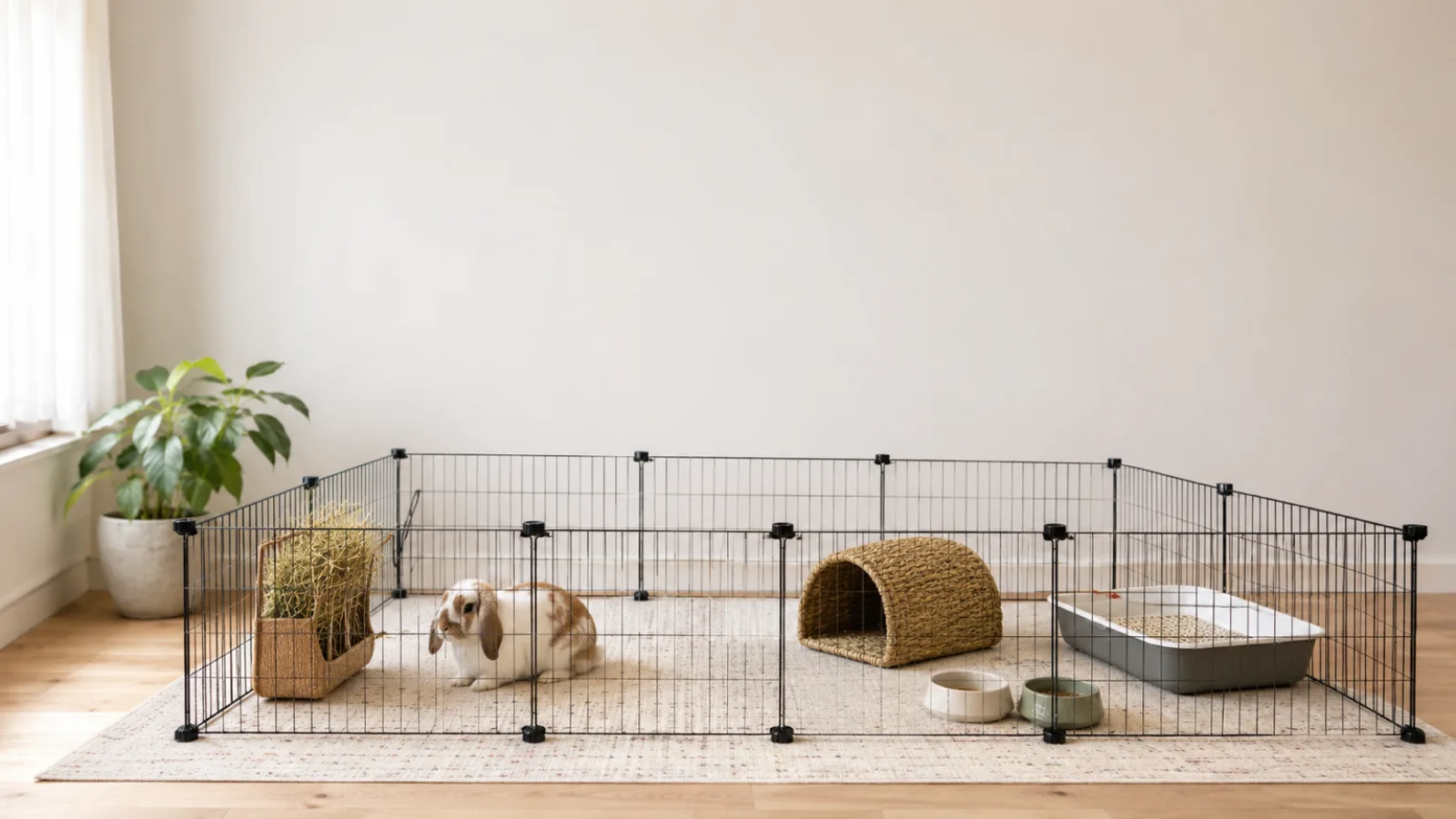
This is not a head-to-head cage ranking — it is a setup plan. A rabbit is an eight-to-twelve-year commitment, and the cage is the smallest part of it: what keeps a rabbit healthy is unlimited grass hay, hours of daily exercise outside the enclosure, a litter habit, and a place to hide. The picks below are the first-week kit — a roomy home base, the hay that is roughly 80% of the diet, a feeder rack, water offered two ways, a corner litter pan, an exercise pen for daily floor time, and a wooden hideout — not seven cages ranked against each other. If you are buying on impulse for a small child, cannot give daily floor time, or expect a cage to be enough on its own, read the caveats before you buy anything.
By Nick Miles · Updated September 9, 2026 · 12 min read
PetPalHQ is reader-supported. We may earn a commission from qualifying Amazon purchases at no extra cost to you.
Evidence at a Glance
Ferplast Krolik XXL Rabbit Cage
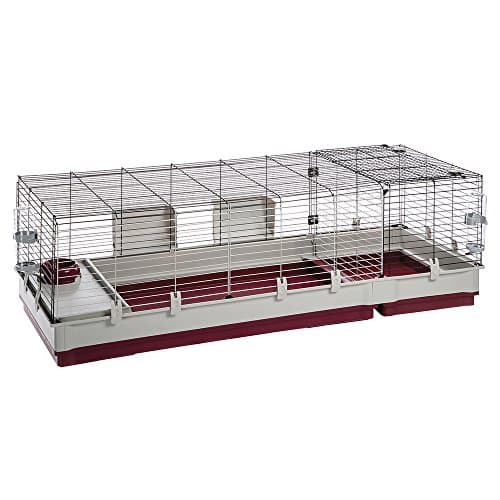
The home base — a 63.8-inch-long cage with a separate wire extension, a 5.5-inch-deep base that contains litter, a fully detachable base for cleaning, and a starter set of two water bottles, two hay feeders, and a bowl per Ferplast; it is where the rabbit sleeps and retreats, not where it spends its life.
Sources: Ferplast product documentation, House Rabbit Society welfare consensus, r/Rabbits community consensus
Verified Jul 12, 2026
Small Pet Select 1st Cut Timothy Hay
The diet core — 100% US-grown 1st cut Timothy hay with higher fiber and more stem content to wear down constantly growing teeth per Small Pet Select; unlimited grass hay is roughly 80% of a healthy rabbit's diet, which makes this the single most important item in the kit.
Sources: Small Pet Select product documentation, Rabbit-savvy veterinary husbandry consensus, House Rabbit Society welfare consensus
Verified Jul 12, 2026
RAYFARMO Rabbit Hay Feeder (2-Pack)
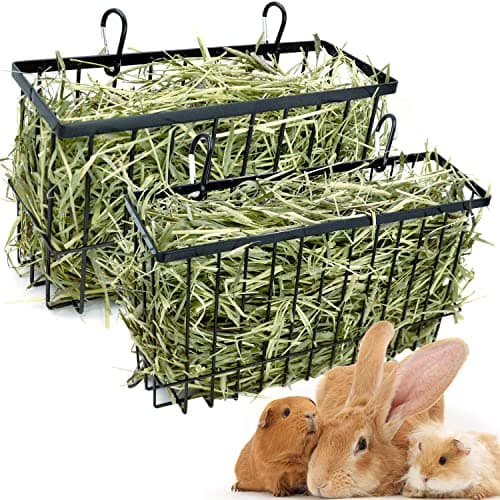
Hay where they eat — a heavy-duty metal-frame rack that installs without tools and holds hay off the cage floor per RAYFARMO, keeping it clean and away from the litter so the rabbit can graze all day the way its gut needs.
Sources: RAYFARMO product documentation, House Rabbit Society welfare consensus, Rabbit-savvy veterinary husbandry consensus
Verified Jul 12, 2026
Our Picks
Ferplast
Ferplast Krolik XXL Rabbit Cage w/ Wire Extension
8.3 / 10
- Measures 63.8L x 23.62W x 19.68H inches, with a separate wire extension for nesting per Ferplast
- 5.5-inch-deep base contains litter and scattered hay
- Entire base detaches for cleaning and dumping litter
- Multiple doors give quick access for spot-cleaning and lifting the rabbit
$199.99
Current price · checked Sep 8, 2026

Small Pet Select
Small Pet Select 1st Cut Timothy Hay
8.7 / 10
- 100% US-grown 1st cut Timothy hay, hand-packed in a 10 lb box per Small Pet Select
- Higher fiber and stem content than later cuttings, to wear down teeth
- Shipped uncompressed to protect stem and leaf integrity
- Doubles as safe bedding and forage for other small pets per the listing
$34.99
Current price · checked Sep 8, 2026
RAYFARMO
RAYFARMO Rabbit Hay Feeder (2-Pack)
8.0 / 10
- Heavy-duty metal frame built to take daily use per RAYFARMO
- Installs anywhere in the cage without tools
- Rounded edges and a smooth surface to prevent injury during feeding
- Two feeders per pack, so a bonded pair each get their own
$18.99
Current price · checked Sep 8, 2026
Lixit
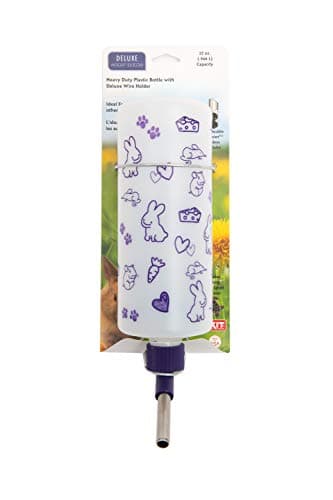
Lixit 32oz Weather Resistant Water Bottle
7.8 / 10
- 32-ounce capacity, sized for rabbits and other small animals per Lixit
- Heavy-duty hanger provides a secure mount to the cage
- Weather-resistant bottle rated for outdoor as well as indoor use
- Vacuum seal holds water in; a little dripping until the seal forms is normal
$7.99
Current price · checked Sep 8, 2026

Lixit
Lixit Corner Litter Pan
7.9 / 10
- Triangle shape fits into a cage corner where a rabbit already toilets per Lixit
- Measures 14 x 11 x 6 inches
- Made of durable non-toxic plastic, easy to dump and rinse
- Fill with paper litter and hay, not clumping cat litter
$12.99
Current price · checked Sep 8, 2026

FDW
FDW 24 Inch 8-Panel Pet Playpen
8.1 / 10
- Eight panels that configure into a square, rectangle, or octagon per FDW
- 24-inch height, one of several sizes offered
- Anti-rust epoxy-coated metal for indoor or outdoor use
- No-tools assembly; folds flat for storage
$29.88
Current price · checked Sep 8, 2026
BWOGUE
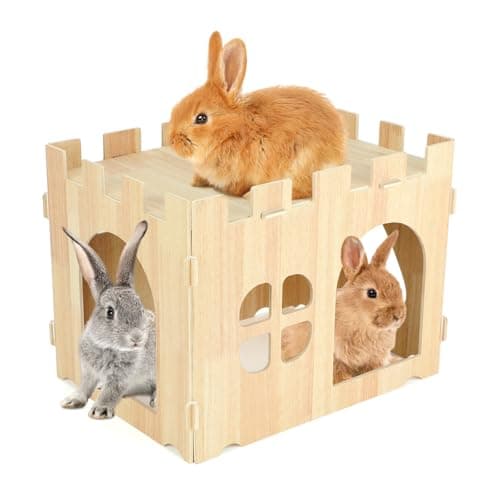
BWOGUE Large Wooden Rabbit House
7.7 / 10
- Measures 15.8 x 11.2 x 11.8 inches, sized for an adult rabbit per BWOGUE
- High-quality plywood with no nails or glue, held together by rubber-band-locked slots
- Rounded corners and a smooth surface to protect sensitive feet
- Two-door, two-story design with a hideout below and a rooftop perch
$18.99
Current price · checked Sep 8, 2026
The Short Answer
Set the home up before the rabbit comes home, and treat the diet as the core, not the cage. Start with a roomy base: the Ferplast Krolik XXL is the home the rabbit sleeps and hides in, but it is a home base, not a life — a cage alone is never enough. The single most important buy is hay. Small Pet Select 1st Cut Timothy Hay is the unlimited grass hay that makes up roughly 80% of a healthy rabbit's diet, and a RAYFARMO metal feeder rack keeps that hay clean and off the litter so the rabbit grazes all day. Offer water two ways — a Lixit 32oz bottle as the spill-proof backstop, plus a heavy bowl, because many rabbits drink more from a bowl. Litter-train from day one with a Lixit Corner Pan filled with paper litter and hay, never clumping cat litter. Then the non-negotiable: daily floor time. An FDW 8-panel exercise pen gives hours of run time outside the cage, and a BWOGUE wooden hideout gives this prey animal a place to hide. Bunny-proof every cord before the first floor session. A rabbit is a social, eight-to-twelve-year animal, not a starter pet for a small child.
Every product on this list has been scored against the PetPal Gear Score, a weighted composite of expert consensus, observed effectiveness, animal safety, long-term durability, and value. Review method: Editorial synthesis of rabbit-welfare and husbandry guidance — House Rabbit Society welfare consensus, rabbit-savvy veterinary husbandry consensus on diet and housing, and r/Rabbits community consensus as consensus rather than quotation. Manufacturer documentation from Ferplast, Small Pet Select, RAYFARMO, Lixit, FDW, and BWOGUE was reviewed, with prices captured on 2026-07-12. No first-hand product testing — PetPalHQ does not run a testing lab. The PetPal Rabbit-Readiness Score is a composite of expert opinion, not a measurement.. Synthesized from 3+ expert sources.
A new rabbit goes wrong, in this guide's editorial judgment, for one reason more than any other: the cage is treated as the whole answer. A first-time owner buys a hutch, puts the rabbit in it, adds a bowl of pellets, and assumes the job is done. It is not. The cage is a home base — a place to sleep and retreat — but a rabbit kept in one all day is a bored, unhealthy animal. What actually keeps a rabbit well is a hay-first diet, hours of daily exercise outside the cage, a litter habit, water it will actually drink, and a place to hide. The gear is only the frame around those habits.
Start with the diet, because it is the thing most new owners get wrong. A rabbit is a grazing animal built to eat grass all day, and unlimited hay is roughly 80% of a healthy diet — not pellets, which are a small measured supplement, and not an endless supply of veggies. Hay keeps a rabbit's sensitive gut moving and grinds down teeth that never stop growing. Any change in food has to happen slowly, over days, because a sudden switch can make a rabbit dangerously ill. If you take one thing from this guide, take this: keep grass hay in front of the rabbit at all times, and treat everything else as secondary.
Then build the home outward from the cage. The home base gives the rabbit somewhere secure to sleep and be shut in when you are out. A hay rack keeps the forage clean over a litter pan, which is how litter training clicks. Water goes in two vessels — a spill-proof bottle and an open bowl — because many rabbits drink more freely from a bowl. An exercise pen provides the daily run time that a cage cannot, and a wooden hideout gives a prey animal the retreat it needs to relax. The picks below are that kit, in setup order, not seven cages ranked against each other. Where a claim rests on a maker's listing or on welfare consensus, that source is named, because PetPalHQ does not run a testing lab.
One principle sits above the whole setup and never bends. A cage is a home base, not a life. A rabbit needs several hours of supervised floor time every single day, in a pen or a rabbit-proofed room, and that time is only safe once you have bunny-proofed the cords and hazards a rabbit will chew. Rabbits are social, eight-to-twelve-year prey animals, best kept spayed or neutered and in a bonded pair — not a low-effort starter pet, and never an Easter impulse. Set the home up around those truths before the rabbit comes home, and the first week starts the way it should.
Head-to-Head Comparison
| Feature | Ferplast Krolik XXL Rabbit Cage w/ Wire Extension | Small Pet Select 1st Cut Timothy Hay | RAYFARMO Rabbit Hay Feeder (2-Pack) | Lixit 32oz Weather Resistant Water Bottle | Lixit Corner Litter Pan | FDW 24 Inch 8-Panel Pet Playpen | BWOGUE Large Wooden Rabbit House |
|---|---|---|---|---|---|---|---|
| Role in the setup | Home base | Diet core | Hay delivery | Water backstop | Litter habit | Daily exercise | Safe retreat |
| Where it goes | Sited in a room, cleaned daily | In the feeder rack, always available | Clipped over the litter pan | Hung on the cage, plus a bowl | The rabbit's chosen corner | Attached to the cage or in a room | In the cage or the pen |
| Buy before day one? | Yes — the base | Yes — the most important buy | Yes — pairs with hay | Yes — with a bowl | Yes — train from day one | Yes — floor time is required | Yes — lowers first-week stress |
| Welfare job it does | A secure place to sleep and retreat | Fiber and tooth wear — ~80% of the diet | Keeps forage clean for all-day grazing | Makes drinking plenty easy | Clean home and house-training | Room to run and binky every day | A hiding spot for a prey animal |
| Check price | Amazon | Amazon | Amazon | Amazon | Amazon | Amazon | Amazon |
$199.99
Current price · checked Sep 8, 2026
- Measures 63.8L x 23.62W x 19.68H inches, with a separate wire extension for nesting per Ferplast
- 5.5-inch-deep base contains litter and scattered hay
- Entire base detaches for cleaning and dumping litter
- Multiple doors give quick access for spot-cleaning and lifting the rabbit
- Ships with 2 water bottles, 2 hay feeders, a bowl, and an elevated feeding area
A rabbit needs a home base — a defined space it sleeps in, eats in, and retreats to — and this is the piece that provides it. Ferplast documents the Krolik XXL as a 63.8-inch-long cage with a separate wire extension for nesting, a 5.5-inch-deep base that holds litter and scattered hay, and a base that fully detaches so the whole floor can be lifted out and cleaned. It ships with two water bottles, two hay feeders, a bowl, and an elevated feeding area, so several of this kit's other jobs have a starting point built in.
Where it fits the setup: think of this as the bedroom, not the house. Even at extra-large size, a cage is a home base, not a life — the welfare rule that runs through this whole guide is that a rabbit must spend hours every day outside the enclosure, in the exercise pen further down this list or a rabbit-proofed room. Used that way, a roomy cage is exactly right: somewhere secure to shut the rabbit in overnight or while you are out, with the litter pan in one corner and the hay feeder beside it. Households that want the rabbit to live outdoors instead should not treat an indoor cage as the answer — outdoor housing is a different, harder problem of predators and weather, and our guide to outdoor rabbit hutches and runs covers why a store-bought hutch is a shelter attached to a much larger run, never a home on its own.
The honest caveats are about space and expectations. No single cage meets a rabbit's full space needs on its own, which is the entire reason daily floor time is non-negotiable rather than optional. The wire floor and extension suit a litter-trained rabbit with soft resting spots added, so plan to give a solid mat or the hideout below for its feet. And this is a large, heavy item to assemble and clean, so confirm current price, dimensions, and availability before buying, since big-item listings and bundle contents shift over time. Bought as the base of a much larger daily routine, it is a solid, roomy starting point.
What We Love
- Extra-large 63.8-inch footprint gives a generous home base for one or two rabbits
- Detachable base and 5.5-inch depth make daily cleaning and litter changes easy
- Ships with bottles, feeders, and a bowl, covering several starter needs at once
- Multiple doors ease spot-cleaning and lifting a rabbit in and out
What Could Be Better
- No cage alone meets a rabbit's space needs — daily out-of-cage time is required
- Wire floor needs a solid mat or resting spot added for comfort
- Large, heavy item to build, clean, and find room for
- Confirm current price and bundle contents, which shift on big-item listings
The Verdict
A roomy, easy-to-clean home base — as long as everyone understands it is the bedroom, not the house. Pair it with daily floor time in the pen below, add a soft resting spot for the wire floor, and treat the cage as the place the rabbit returns to, never the place it lives all day.
Sources
- Ferplast (Amazon product listing, Krolik XXL Rabbit Cage): rabbit cage measures 63.8L x 23.62W x 19.68H inches with a separate wire extension, a 5.5-inch deep base to contain litter, a fully detachable base for cleaning, and a starter set of 2 water bottles, 2 hay feeders, and a feeding bowl
- Rabbit welfare and housing consensus: a cage is a home base a rabbit returns to for sleep, food, and shelter, not the whole of its world, so a house rabbit needs several hours of daily exercise in a pen or a rabbit-proofed room
$34.99
Current price · checked Sep 8, 2026
- 100% US-grown 1st cut Timothy hay, hand-packed in a 10 lb box per Small Pet Select
- Higher fiber and stem content than later cuttings, to wear down teeth
- Shipped uncompressed to protect stem and leaf integrity
- Doubles as safe bedding and forage for other small pets per the listing
- The single most important item in a healthy rabbit's daily routine
If you buy one thing on this page, buy hay. Unlimited grass hay is the foundation of a rabbit's health, and Small Pet Select 1st Cut Timothy is the diet core of this kit. The maker documents 100% US-grown 1st cut Timothy hay, hand-packed in a 10-pound box and shipped uncompressed to keep the stems and leaves intact. First cut carries more fiber and more stem than later cuttings — the listing frames that as helping wear down overgrown teeth and supporting the digestive system, which is exactly the job hay does for a rabbit.
Where it fits the setup: this is not a snack or a supplement, it is roughly 80% of what a healthy adult rabbit eats. Rabbit-savvy veterinary and welfare consensus is consistent on this — a rabbit should have grass hay in front of it at all times, because the constant grazing keeps its gut moving and grinds its continuously growing teeth down. Pellets are a small, measured daily amount, and fresh leafy greens round the diet out, but hay is the core. The RAYFARMO rack below is how you keep this hay clean and available, and pairing the two is what turns "there is hay somewhere in the cage" into "the rabbit grazes all day."
The honest caveats are about diet change and freshness. A rabbit's gut is sensitive, and sudden diet changes can cause real harm, so introduce any new hay or food gradually rather than all at once. Baby rabbits are usually raised on alfalfa and transition to grass hay as adults, so match the hay to the rabbit's life stage and your vet's guidance. Hay quality also varies batch to batch, and rabbits can be picky, so store it dry and confirm current price and availability before buying. As the center of the whole diet, though, unlimited fresh grass hay is the highest-value item in this setup by a wide margin.
What We Love
- Unlimited grass hay is roughly 80% of a healthy rabbit's diet — the core buy
- First cut's higher fiber and stem content supports teeth and digestion
- Shipped uncompressed, which protects the stems rabbits actually want
- 10 lb box lasts a single rabbit a meaningful stretch
What Could Be Better
- Hay quality varies batch to batch, and rabbits can be picky eaters
- Sudden diet changes can harm a rabbit — introduce new hay gradually
- Adult grass hay is not right for very young rabbits on alfalfa
- Needs dry storage to stay fresh; confirm current price before buying
The Verdict
The most important item in the kit, full stop. Keep grass hay in front of the rabbit at all times, treat pellets and greens as the smaller part of the diet, and change any food gradually to protect a sensitive gut — this single habit does more for a rabbit's health than any piece of gear.
Sources
- Small Pet Select (Amazon product listing, 1st Cut Timothy Hay, 10 LB): 100% US-grown 1st cut Timothy hay in a 10 lb box, with higher fiber and stem content than later cuttings to wear down overgrown teeth and support the digestive system, shipped uncompressed to protect stem and leaf integrity
- Rabbit-savvy veterinary and welfare diet consensus: unlimited grass hay such as Timothy makes up roughly 80% of a healthy adult rabbit's diet, providing the fiber that keeps the gut moving and the wear that keeps continuously growing teeth in check, with pellets a small measured supplement rather than the main food
$18.99
Current price · checked Sep 8, 2026
- Heavy-duty metal frame built to take daily use per RAYFARMO
- Installs anywhere in the cage without tools
- Rounded edges and a smooth surface to prevent injury during feeding
- Two feeders per pack, so a bonded pair each get their own
- Wipes clean to keep the feeding area hygienic
Loose hay on a cage floor gets soiled fast and stops being food. A rack fixes that, and the RAYFARMO feeder is the "hay where they eat" piece of this kit. RAYFARMO documents a heavy-duty metal-frame rack, sold two to a pack, that clips anywhere in the cage without tools, with rounded edges and a smooth surface meant to avoid injury while the rabbit pulls hay through it. It wipes clean, which matters for something a rabbit uses every hour of the day.
Where it fits the setup: this is the delivery system for the diet core above. A raised rack keeps the Small Pet Select hay clean and up off the litter pan, so the rabbit is always pulling from fresh forage rather than picking through bedding. That separation is what makes all-day grazing actually happen — welfare and husbandry consensus is that hay kept clean and constantly available is what keeps a rabbit eating the way its gut needs. A common, effective layout is to place the rack right over the litter pan, so the rabbit eats hay and uses the box at the same time, which also reinforces litter habits. Two feeders in the pack means a bonded pair can each have one, cutting competition over a single spot.
The honest caveats are small but real. A metal rack has to be mounted securely so it cannot be knocked loose onto the rabbit, and the edges should be checked for any rough spots despite the smooth-surface claim. It holds a working amount of hay, not a day's supply, so refilling is part of the daily routine, not a set-and-forget. And no rack replaces the habit of topping hay up often and clearing what gets soiled. Confirm current price and availability before buying. As the piece that keeps the most important food clean and reachable, it earns its small place in the kit.
What We Love
- Keeps hay clean and off the floor, so the rabbit grazes from fresh forage
- Tool-free install lets you position it right over the litter pan
- Two feeders per pack suit a bonded pair or a backup
- Metal frame and smooth edges are built for constant daily use
What Could Be Better
- Must be mounted securely so it cannot be knocked onto the rabbit
- Holds a working amount of hay, not a full day's supply
- Metal edges should still be checked for rough spots
The Verdict
A cheap, sensible way to keep the most important food clean and constantly available. Mount it firmly over the litter pan so the rabbit eats and toilets in one spot, refill it often, and treat it as the delivery system for the hay that anchors the whole diet.
Sources
- RAYFARMO (Amazon product listing, 2PCS Rabbit Hay Feeder): heavy-duty metal-frame hay feeder rack, sold as a 2-pack, that installs anywhere in the cage without tools and is built with rounded edges and a smooth surface to prevent injury during feeding
- Rabbit welfare and husbandry consensus: keeping hay in a raised rack rather than loose on the cage floor keeps it clean and separate from droppings and urine, which encourages the constant grazing a rabbit's gut and teeth depend on
$7.99
Current price · checked Sep 8, 2026
- 32-ounce capacity, sized for rabbits and other small animals per Lixit
- Heavy-duty hanger provides a secure mount to the cage
- Weather-resistant bottle rated for outdoor as well as indoor use
- Vacuum seal holds water in; a little dripping until the seal forms is normal
- Made in the USA per the listing
Fresh water has to be available all the time, and the honest position on how to serve it is: offer both a bottle and a bowl. The Lixit 32oz bottle is the spill-proof backstop half of that pair. Lixit documents a 32-ounce weather-resistant bottle with a heavy-duty hanger for a secure cage mount and a vacuum seal that holds the water in, noting that a little dripping is normal until that seal forms. It is a simple, durable way to keep water in the cage that the rabbit cannot tip over.
Where it fits the setup: a bottle will not spill, foul with hay and droppings, or get knocked across the cage, which is exactly why it belongs in the home base. But here is the part many starter kits leave out — a lot of rabbits actually drink more, and more naturally, from an open bowl than from a bottle's small spout. The welfare-minded setup is to offer both: hang this bottle as the reliable, spill-proof source, and also put down a heavy ceramic bowl the rabbit can lap from freely. Water intake matters for a rabbit's gut and urinary health, so making it easy to drink plenty is worth the small extra effort of two vessels.
The honest caveats are about how bottles fail. A ball-valve spout can clog or stick without an obvious sign, so it needs a daily check that water actually flows, not just that the bottle is full. Bottles are also harder to clean thoroughly than a bowl and can grow film inside, so scrub it regularly. And in freezing conditions any water source can ice up, which is one more reason outdoor-only housing is hard. Confirm current price and availability before buying. As the spill-proof half of a two-source water plan, it is a cheap, sturdy piece — just do not let it be the only way the rabbit can drink.
What We Love
- Spill-proof and secure, so water stays clean and in place in the cage
- Large 32-ounce capacity means fewer refills
- Heavy-duty hanger and weather-resistant build are durable
- Inexpensive backstop to pair with an open bowl
What Could Be Better
- Many rabbits drink more freely from a bowl — offer both, not just this
- Ball-valve spout can clog or stick; needs a daily flow check
- Harder to clean thoroughly than an open dish
- Can freeze in cold conditions like any water source
The Verdict
A cheap, spill-proof water source — but not the whole answer. Offer this bottle and a heavy bowl together, check daily that the spout actually flows, and clean it often; the goal is a rabbit that drinks plenty, and two vessels get you there better than one.
$12.99
Current price · checked Sep 8, 2026
- Triangle shape fits into a cage corner where a rabbit already toilets per Lixit
- Measures 14 x 11 x 6 inches
- Made of durable non-toxic plastic, easy to dump and rinse
- Fill with paper litter and hay, not clumping cat litter
- Suits all life stages per the listing
Rabbits litter-train more readily than most new owners expect, and setting the box up from day one is how you get a clean home and a house-trained rabbit. The Lixit Corner Pan is the litter piece of this kit. Lixit documents a triangle-shaped pan that tucks into a cage corner, measuring 14 by 11 by 6 inches, made of durable non-toxic plastic that dumps and rinses easily. The corner shape matters because rabbits naturally pick one corner to toilet in, so the box goes where the habit already is.
Where it fits the setup: place the pan in the corner the rabbit chooses, and put the hay feeder right above it. Rabbits like to eat and toilet at the same time, so hay over the box is what makes litter training click — the rabbit grazes, uses the pan, and the two habits reinforce each other. Fill the box the right way: a layer of paper-based litter on the bottom and a generous handful of hay on top. What you must never use is clumping cat litter, which can cause a fatal blockage if eaten, or softwood shavings like pine and cedar, which are linked to respiratory and liver problems. Paper litter plus hay is the safe, standard fill.
The honest caveats are about training and cleaning. Litter training is fastest in a spayed or neutered rabbit — intact rabbits mark territory and are far harder to train, which is one of several reasons the welfare gold standard is a spayed or neutered rabbit, ideally in a bonded pair. Accidents happen early on, so expect to move the box to wherever the rabbit actually goes rather than forcing your preferred corner. And the pan needs daily emptying, because a rabbit will stop using a dirty box. Confirm current price and availability before buying. Set up correctly on day one, it turns litter habits from a battle into a routine.
What We Love
- Corner shape sits where a rabbit already chooses to toilet
- Pairs with a hay rack above it to make litter training click
- Durable non-toxic plastic dumps and rinses in seconds
- Inexpensive and available in several colors
What Could Be Better
- Only fill with paper litter and hay — never clumping cat litter or softwood shavings
- Intact rabbits mark and train poorly; spay or neuter helps enormously
- Needs daily emptying or the rabbit stops using it
- May need repositioning to the corner the rabbit actually prefers
The Verdict
The piece that makes an indoor rabbit livable — set it up on day one in the rabbit's chosen corner with the hay rack above it. Fill it with paper litter and hay only, empty it daily, and pair training with a spay or neuter for the fastest, most reliable results.
$29.88
Current price · checked Sep 8, 2026
- Eight panels that configure into a square, rectangle, or octagon per FDW
- 24-inch height, one of several sizes offered
- Anti-rust epoxy-coated metal for indoor or outdoor use
- No-tools assembly; folds flat for storage
- Listed as suitable for rabbits and other small animals
This is the welfare pick — the item that turns a caged rabbit into a rabbit with a life. The FDW 8-panel playpen gives the daily run time that a cage cannot. FDW documents an eight-panel metal pen that folds into a square, rectangle, or octagon, with an anti-rust epoxy coating for indoor or outdoor use, no-tools assembly, and a flat-folding design for storage. It is listed as suitable for rabbits along with other small animals, and it is the piece that provides the hours outside the cage that this whole guide insists on.
Where it fits the setup: a rabbit needs several hours of exercise every single day, and this pen is the safe, contained way to provide it. Attach it to the front of the cage or set it up as a standalone playground in a room, and the rabbit gets space to run, dig, and do the joyful mid-air twists — the binkies — that a cage floor never allows. This is not an optional accessory. A cage is a home base, not a life, and the pen is where the "life" part actually happens. For a rabbit that gets a properly rabbit-proofed room to roam, the pen also works as a barrier to keep it out of trouble spots while it explores.
The honest caveats are about height and supervision. At 24 inches, this pen suits many rabbits, but an athletic bunny can clear a low pen, so watch how high yours jumps and size up if needed. A pen is also not a substitute for supervision on floor time — the single most important safety step before any out-of-cage session is to bunny-proof the area, especially electrical cords, which rabbits chew and which can injure or kill them. Cover or block every cord, move houseplants and baseboards out of reach, and stay nearby. Confirm current price and availability before buying. As the daily-exercise piece, it is the difference between a rabbit that merely survives and one that thrives.
What We Love
- Provides the daily out-of-cage exercise a rabbit's welfare depends on
- Reconfigures into several shapes to fit a room or attach to the cage
- No-tools setup and flat folding make daily use practical
- Anti-rust coating and metal build hold up to chewing better than fabric
What Could Be Better
- At 24 inches, an athletic rabbit may jump a low pen — size up if needed
- Not a substitute for supervision or for bunny-proofing cords first
- Doorless smaller sizes mean lifting the rabbit in and out
- Confirm current price and the exact height before buying
The Verdict
The welfare pick of the kit: hours of daily run time are non-negotiable, and this pen is the safe way to give them. Bunny-proof every cord before the first session, watch that your rabbit cannot jump the 24-inch height, and treat floor time as a daily requirement, not a treat.
$18.99
Current price · checked Sep 8, 2026
- Measures 15.8 x 11.2 x 11.8 inches, sized for an adult rabbit per BWOGUE
- High-quality plywood with no nails or glue, held together by rubber-band-locked slots
- Rounded corners and a smooth surface to protect sensitive feet
- Two-door, two-story design with a hideout below and a rooftop perch
- Tool-free assembly that disassembles for cleaning
Rabbits are prey animals, and a prey animal without a place to hide is a stressed animal. The BWOGUE wooden house closes the kit by giving the rabbit somewhere to retreat. BWOGUE documents a plywood house measuring 15.8 by 11.2 by 11.8 inches, built with no nails or glue — the slots lock together with rubber bands — with rounded corners and a smooth surface meant to protect a rabbit's sensitive feet. It is a two-door, two-story design with an enclosed hideout below and a rooftop the rabbit can climb onto.
Where it fits the setup: a hideout is not decoration, it is a stress-management tool. Rabbits are crepuscular prey animals, most active at dawn and dusk, and they feel safe only when they have a dark, enclosed spot to bolt into when startled. Placed in the cage or in the exercise pen, this house gives the rabbit that retreat, and the two doors matter — a hideout with a second exit means the rabbit never feels cornered, which is exactly what a prey animal needs to actually relax in it. The rooftop perch adds a little enrichment, giving the rabbit a raised spot to survey from, which many rabbits enjoy.
The honest caveats are about chewing and cleaning. Rabbits gnaw wood, and that is partly the point — a safe wooden chew is good for their teeth — but it also means a wooden house is a consumable that will be nibbled down and eventually need replacing. Untreated plywood is generally considered safe to chew, but watch for any coatings or splintering. Wood also absorbs urine and is harder to sanitize than plastic, so keep it out of the litter corner and clean it regularly. Confirm current price and availability before buying. As the "place to hide" piece, it is a small spend that meaningfully lowers a new rabbit's stress in an unfamiliar home.
What We Love
- Gives a prey animal the enclosed retreat it needs to feel safe
- Two doors mean the rabbit is never cornered inside it
- Safe wooden surface doubles as a tooth-friendly chew
- Rooftop perch adds a bit of enrichment and height
What Could Be Better
- Wood gets chewed down over time and is a consumable to replace
- Absorbs urine and is harder to sanitize than plastic — keep it out of the litter corner
- Assembly is held by rubber bands, so it is less rigid than a fixed build
- Confirm the current price before buying
The Verdict
A small but genuine welfare piece: a prey animal needs a place to hide, and a two-door wooden house gives it one while doubling as a safe chew. Expect to replace it as the rabbit gnaws it down, keep it away from the litter corner, and place it where the rabbit can bolt in and out freely.
How We Score
Formula
PetPal Rabbit-Readiness Score = (Expert Consensus × 0.35) + (Setup Fit × 0.25) + (Safety / Welfare Design × 0.20) + (Value × 0.20)
Score Factors
- Expert Consensus · 35%
- Synthesized from House Rabbit Society welfare guidance, rabbit-savvy veterinary husbandry consensus on diet and housing, r/Rabbits community consensus, and manufacturer documentation. The PetPal Rabbit-Readiness Score is a composite of expert opinion — PetPalHQ does not run a testing lab.
- Setup Fit · 25%
- How directly the item advances a complete first-week rabbit setup — home base, unlimited hay, clean hay delivery, water, litter habits, daily exercise, and a hideout — rather than how it performs as a standalone product ranked against rivals.
- Safety / Welfare Design · 20%
- Alignment with rabbit-welfare principles — a hay-first diet, hours of daily exercise outside the cage, safe litter and materials, water offered two ways, a place to hide, and bunny-proofing before floor time.
- Value · 20%
- Cost relative to the item's role in the setup, including durability with a chewing animal and how much of the healthy-and-enriched outcome the item is responsible for.
| Rank | Product | Score |
|---|---|---|
| #1 | Small Pet Select Small Pet Select 1st Cut Timothy Hay | 8.7 |
| #2 | Ferplast Ferplast Krolik XXL Rabbit Cage w/ Wire Extension | 8.3 |
| #3 | FDW FDW 24 Inch 8-Panel Pet Playpen | 8.1 |
| #4 | RAYFARMO RAYFARMO Rabbit Hay Feeder (2-Pack) | 8.0 |
| #5 | Lixit Lixit Corner Litter Pan | 7.9 |
| #6 | Lixit Lixit 32oz Weather Resistant Water Bottle | 7.8 |
| #7 | BWOGUE BWOGUE Large Wooden Rabbit House | 7.7 |
When NOT to Buy
A rabbit is not a starter pet for a small child, and it is not an impulse buy. Rabbits live eight to twelve years, are social animals that do best in a bonded pair, and are delicate prey animals that dislike being picked up — which makes them a poor match for young children who want a cuddly pet. The saddest version of this is the Easter or holiday impulse purchase, where a rabbit is bought on a whim and given up months later once the work becomes clear. If you are buying because a rabbit is cute and available this weekend, wait. This is a decade-long commitment to a demanding animal, not a seasonal gift.
If you cannot give daily floor time, do not get a rabbit. The single non-negotiable running through this whole guide is that a cage is a home base, not a life — a rabbit needs several hours every day of supervised exercise in a pen or a rabbit-proofed room, and a rabbit kept in a cage around the clock will suffer physically and behaviorally. That time also has to be safe, which means bunny-proofing electrical cords and hazards before every session, because rabbits chew cords and can be badly hurt. A home without room for daily out-of-cage time, or without anyone home to supervise it, is not a home for a rabbit. Households set on keeping a rabbit outside instead should understand that outdoor housing is a harder, riskier proposition of predators and weather, where a store-bought hutch is only ever a shelter attached to a much larger, secured run.
Finally, budget for the animal, not just the gear. The kit on this page is the setup cost, but the real expense of a rabbit is the years that follow — unlimited hay every week, fresh greens, a spay or neuter (which is the welfare standard and also makes litter training work), and a rabbit-savvy exotic vet, who is rarer and costs more than a cat-and-dog clinic. If a surprise vet bill or a decade of weekly hay is out of reach, this is not the moment. Confirm current price, dimensions, and availability on every item before buying, since listings and bundle contents change over time.
Frequently Asked Questions
- What do I actually need to buy before bringing a rabbit home?
- Set up six things before the rabbit arrives, and think of them as habits with gear attached rather than a shopping list. First, a home base cage roomy enough to sleep, eat, and retreat in, understood as the bedroom rather than the whole house. Second, and most important, a large supply of grass hay such as Timothy, because unlimited hay is roughly 80% of a healthy rabbit's diet. Third, a hay feeder rack to keep that hay clean and off the floor. Fourth, water offered two ways — a spill-proof bottle plus a heavy bowl, since many rabbits drink more from a bowl. Fifth, a corner litter pan filled with paper litter and hay so you can litter-train from day one. Sixth, an exercise pen for the hours of daily floor time a cage cannot provide, and a hideout so a prey animal has somewhere to feel safe. Having all of this ready before the rabbit comes home makes the first week far calmer for both of you.
- Is a cage enough, or does my rabbit really need time outside it?
- A cage is never enough on its own, and this is the point new owners most often miss. A cage is a home base — a secure place to sleep and be shut in while you are out — but a rabbit kept in one around the clock becomes bored, unhealthy, and unhappy. Rabbits need several hours of exercise every single day, outside the cage, in a pen or a rabbit-proofed room, where they can run, dig, stretch out, and do the happy mid-air twists called binkies. This daily floor time is not an optional extra or a reward; it is a basic welfare requirement, as fundamental as food and water. If your home or schedule cannot make room for daily out-of-cage time, a rabbit is not the right pet. Before every session, bunny-proof the space by covering or blocking electrical cords, which rabbits chew and which can seriously injure them.
- What should a rabbit eat?
- The core of a rabbit's diet is unlimited grass hay, such as Timothy, which should make up roughly 80% of what it eats and be available at all times. Hay provides the fiber that keeps a rabbit's gut moving and the constant chewing that wears down teeth which never stop growing, so it does far more than fill the stomach. Around that core, a rabbit gets a small measured daily portion of pellets and a serving of fresh leafy greens, but these are the supporting cast, not the main meal — too many pellets or treats and too little hay is a common and harmful mistake. Fresh water must always be available. One rule matters as much as the ingredients: change any food gradually over several days, because a rabbit's digestive system is sensitive and a sudden switch can cause serious illness. Young rabbits are usually raised on alfalfa and move to grass hay as adults, so match the diet to the rabbit's age and your vet's advice.
- How do I litter-train a rabbit, and what litter is safe?
- Rabbits litter-train more easily than most people expect, because they naturally choose one corner to toilet in. Put a corner litter pan in the spot the rabbit picks, and place a hay feeder directly above it — rabbits like to eat and toilet at the same time, so hay over the box makes training click quickly. Fill the pan correctly: a layer of paper-based litter on the bottom with a generous handful of hay on top. What you must never use is clumping cat litter, which can cause a fatal internal blockage if eaten, or softwood shavings like pine and cedar, which are linked to respiratory and liver problems. Expect a few early accidents and be willing to move the box to wherever the rabbit actually goes. Training is fastest and most reliable in a spayed or neutered rabbit, since intact rabbits mark territory, and the box needs emptying daily or the rabbit will stop using it.
- Are rabbits good pets for young children?
- Rabbits are often marketed as easy children's pets, but they are usually a poor fit for young kids, and it is worth being honest about that before buying. Rabbits are delicate prey animals that generally dislike being picked up and can be injured by rough or well-meaning handling, so they rarely become the cuddly lap pet a child imagines. They are also a serious long-term commitment — they live eight to twelve years, are social animals that do best in a bonded pair, need daily exercise and specialized care, and require a rabbit-savvy exotic vet who is rarer and costlier than a typical clinic. The impulse holiday purchase, especially around Easter, is how many rabbits end up surrendered once the reality sets in. A rabbit can be a wonderful family pet when an adult takes primary responsibility and children are taught calm, ground-level interaction, but it should never be bought on a whim as a low-effort starter animal.
Bottom Line
Set the home up before the rabbit arrives, and treat the cage as the smallest part of it. The Ferplast Krolik XXL is a roomy, easy-to-clean home base — but it is the bedroom, not the house, and no cage alone meets a rabbit's needs.
Hay is the whole diet, not a snack. Unlimited grass hay like Small Pet Select 1st Cut Timothy is roughly 80% of what a healthy rabbit eats, kept clean and always available in a rack like the RAYFARMO feeder over the litter pan. Change any food gradually.
Cover water and litter the honest way. Offer both a Lixit bottle and a heavy bowl, because many rabbits drink more from a bowl, and litter-train from day one with a corner pan filled with paper litter and hay — never clumping cat litter or softwood shavings.
Daily floor time is the rule that never bends. The FDW exercise pen gives the hours of run time a cage cannot, and a BWOGUE wooden hideout gives this prey animal a place to bolt into. Bunny-proof every cord before the first session.
A rabbit is a social, eight-to-twelve-year animal, not a starter pet for a small child or an Easter impulse buy. Spaying or neutering and a bonded pair are the welfare standard, and a rabbit-savvy exotic vet is part of the real, long-term cost.
Sources & Methodology
Methodology
PetPal Rabbit-Readiness Score = (Expert Consensus × 0.35) + (Setup Fit × 0.25) + (Safety / Welfare Design × 0.20) + (Value × 0.20)
Expert review sources
- House Rabbit Society — housing, diet, and welfare guidance
- Rabbit-savvy veterinary husbandry consensus — hay-first diet, exercise, and spay/neuter
- Ferplast — Krolik XXL Rabbit Cage product documentation
- Small Pet Select — 1st Cut Timothy Hay product documentation
- RAYFARMO — Rabbit Hay Feeder product documentation
- Lixit — Water Bottle and Corner Litter Pan product documentation
- FDW — 8-Panel Pet Playpen product documentation
- BWOGUE — Large Wooden Rabbit House product documentation
Community sources
- r/Rabbits — new-owner setup, hay-first diet, and litter-training consensus
- r/RabbitCare — housing, exercise, and bunny-proofing consensus
Prices and specs verified July 12, 2026.
About the author
Nick Miles is the chief editor of PetPalHQ. This new-rabbit setup plan and its kit are editorial synthesis of House Rabbit Society welfare guidance, rabbit-savvy veterinary husbandry consensus, r/Rabbits community consensus, and manufacturer documentation — PetPalHQ does not run a testing lab. The PetPal Rabbit-Readiness Score is a composite of expert opinion, not a measurement. Sources are cited by name throughout.
PetPalHQ is a participant in the Amazon Services LLC Associates Program. We may earn commissions from qualifying purchases — at no extra cost to you.
More Guides
Playground
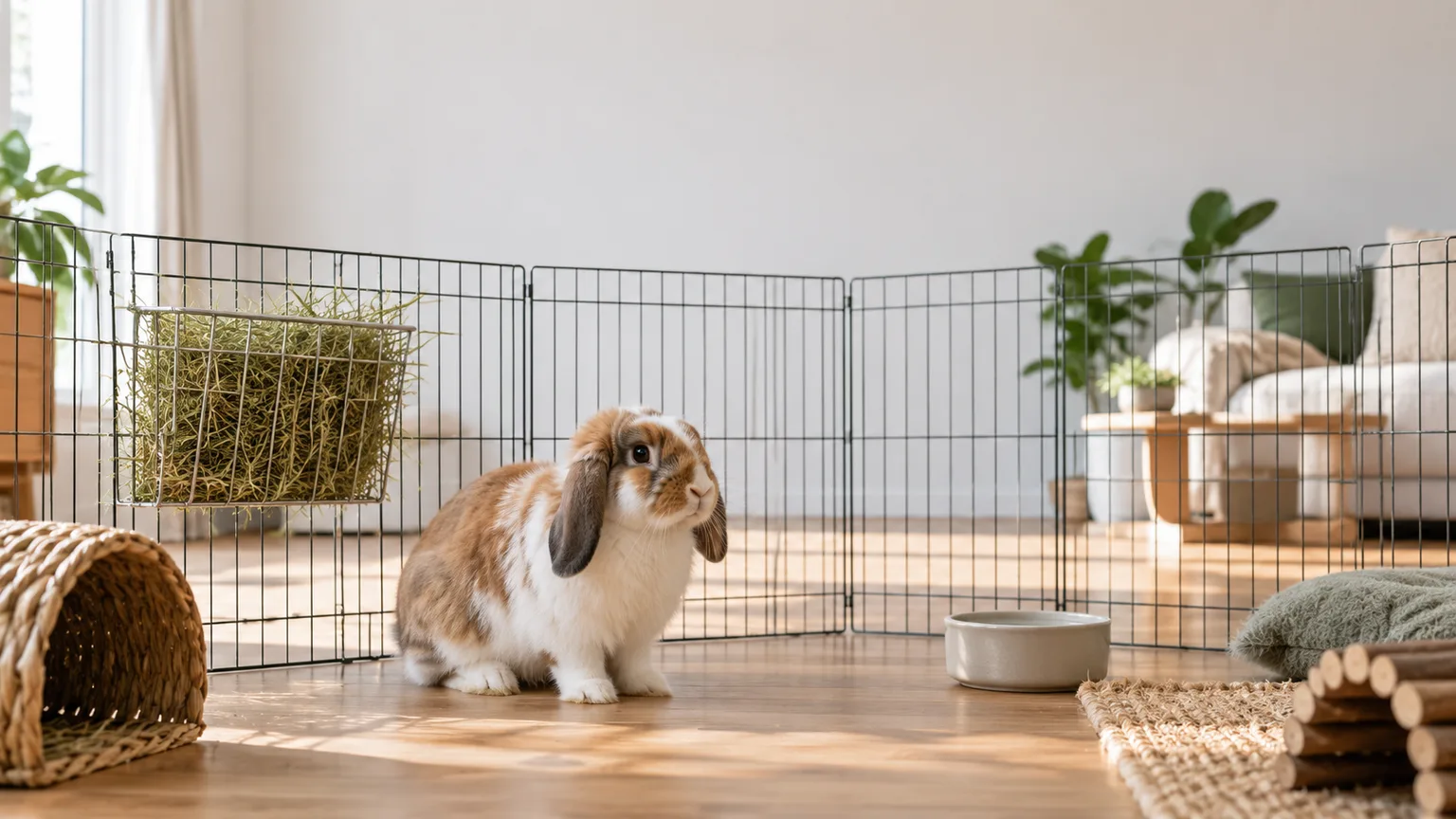
Best Indoor Rabbit Cages & Pens (2026)
Playground
Best Outdoor Rabbit Hutches & Runs 2026: Predator-Proofing, Weatherproofing, and How Much Space a Rabbit Really Needs
Playground
Best Guinea Pig Cages & Habitats 2026: The C&C Size Debate, and How Much Space Your Cavies Really Need
Cats & Dogs
Best Freestanding Pet Gates 2026: No-Drill Barriers Ranked for Stability and Real Containment
Cats & Dogs
Best Heavy-Duty Dog Exercise Pens & Playpens 2026: Portable Panel Pens That Actually Hold Your Dog
Playground