Birds
How to Set Up a Large Parrot Flight Cage (2026)
This is not a head-to-head cage ranking — it is a setup sequence. A flight cage is only the shell, and the shell is one line item: what actually keeps a parrot sound in body and mind is the perches, foraging, diet, and daily out-of-cage time you build around it. The picks below are that kit, in setup order — a horizontal-room flight cage, varied natural perches, shredding foraging toys, a formulated pellet base, secure feeding stations, an out-of-cage play stand, and a seed-catching skirt. One safety spec is load-bearing and honest: the anchor cage has 1/2-inch bar spacing for small-to-medium parrots such as conures and cockatiels, not for macaws, greys, or cockatoos, which need wider bars and a much larger footprint — read the sizing note before you buy.
By Nick Miles · Updated July 12, 2026 · 12 min read
PetPalHQ is reader-supported. We may earn a commission from qualifying Amazon purchases at no extra cost to you.
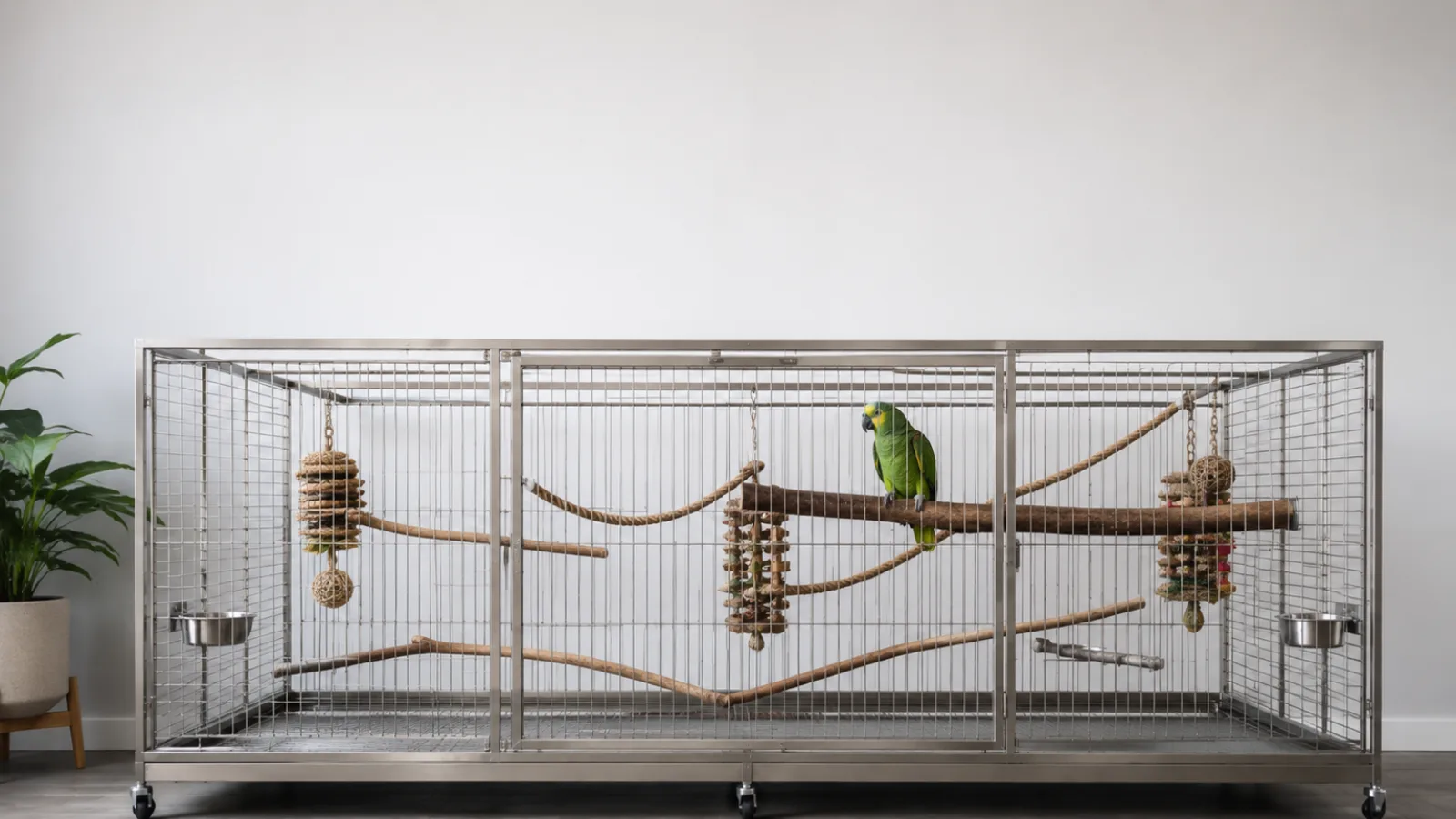
Evidence at a Glance
Prevue Hendryx Wrought Iron Flight Cage (X-Large)
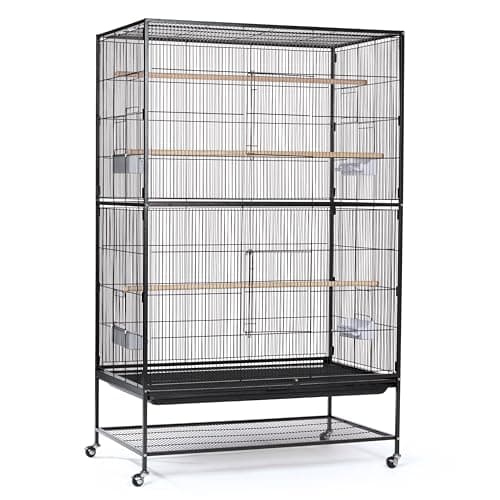
The horizontal-room shell — an extra-large steel flight cage measuring 37" x 23" x 60" with three wooden perches, double front doors, six side doors, a pull-out grille and tray, and locking caster wheels per Prevue; its 1/2-inch bar spacing is sized for small-to-medium parrots, not for macaws, greys, or cockatoos.
Sources: Prevue Pet Products manufacturer documentation, Association of Avian Veterinarians and VCA avian-housing guidance, Avian welfare and enrichment consensus
Verified Jul 12, 2026
Manoai Natural Apple Wood Bird Perch Set (5 Pcs)
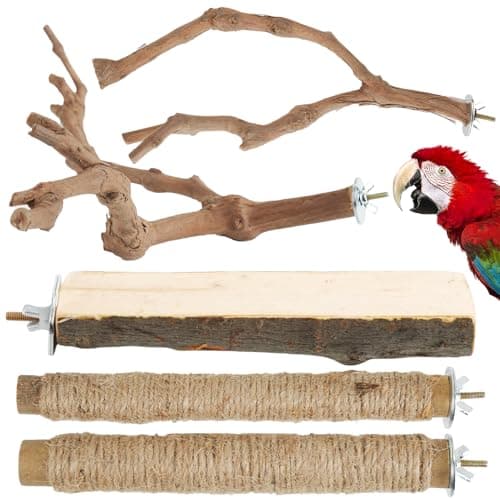
The footholds that make the shell livable — a five-piece 100% natural apple wood set of Y-shaped grapevine perches, rope-wrapped stands, and a platform per Manoai, whose varied diameters exercise a bird's feet and help prevent the pressure sores that uniform dowels cause.
Sources: Manoai manufacturer documentation, Avian veterinary perching guidance, Avian welfare and enrichment consensus
Verified Jul 12, 2026
lovyoCoCo Bird Shredding Foraging Toys
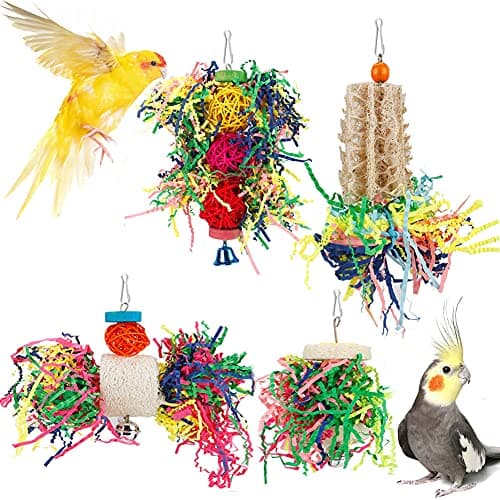
The work for the beak — natural loofah, rattan, and wood stuffed with crinkly paper and safe to chew, with hidden-treat pockets for foraging per lovyoCoCo, turning idle cage hours into the shredding and searching a parrot is built to do.
Sources: lovyoCoCo manufacturer documentation, Avian enrichment consensus, Association of Avian Veterinarians and VCA avian-housing guidance
Verified Jul 12, 2026
Our Picks
Prevue Pet Products
Prevue Hendryx Wrought Iron Flight Cage (X-Large)
8.7 / 10
- Extra-large flight cage sized for multiple small birds to fly and climb, per Prevue
- Three solid wooden perches plus a bottom shelf stand
- Double front doors and six side doors at bottom, mid, and top for feeding, water, toys, and handling
- Pull-out bottom grille and tray for cleaning; wheels with locking casters
$299.99
Current price · checked Sep 8, 2026
Manoai
Manoai Natural Apple Wood Bird Perch Set (5 Pcs)
8.4 / 10
- 100% natural apple wood with coarse branches for foot exercise and claw sharpening, per Manoai
- Five pieces: two 9.8" Y-shaped grapevine perches, two 8.3" rope-wrapped stands, one 6"x4" platform
- Metal wing-nut and bolt mounts install inside or outside the cage with no tools
- Irregular shapes support beak conditioning, foot exercise, and mental stimulation
$22.79
Current price · checked Sep 8, 2026
lovyoCoCo
lovyoCoCo Bird Shredding Foraging Toys
8.3 / 10
- Natural loofah, rattan balls, and wood, safe to chew, per lovyoCoCo
- Stuffed with crinkly paper and pockets to hide treats for foraging
- Includes a soft multi-colored cotton rope perch
- Chewing and shredding channel natural behavior for physical and emotional health
$7.99
Current price · checked Sep 8, 2026
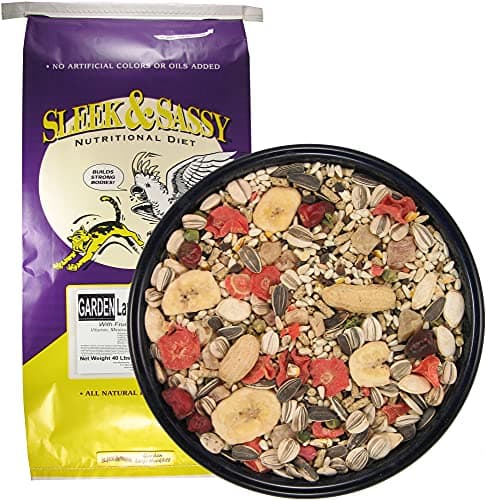
SLEEK & SASSY
Sleek & Sassy Garden Large Hookbill Parrot Food (40 lb)
8.1 / 10
- Formulated for large conures, amazons, African greys, cockatoos, pionus, and small macaws, per Sleek & Sassy
- Family-owned Oregon company since 1983
- All-natural ingredients, blended with human-grade fruits and vegetables
- Vitamin, mineral, and amino-acid enriched
$148.44
Current price · checked Sep 8, 2026
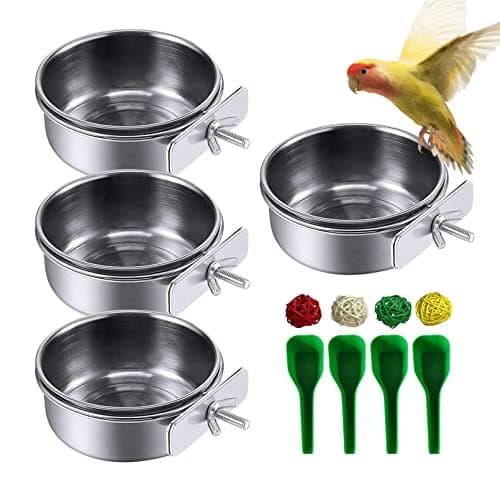
kathson
kathson Stainless Steel Bird Bowls (4 Pcs)
8.0 / 10
- Four rugged stainless steel dish cups, sold as a set
- Clamp holders lock the bowls to the cage bars so birds can't tip them
- Stainless is durable and dishwasher-friendly for real hygiene
- 3.9" diameter x 1.6" height per cup
$16.59
Current price · checked Sep 8, 2026
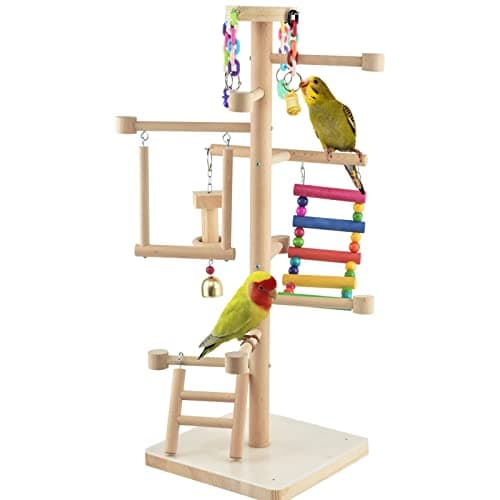
GUANLANT
GUANLANT Bird Playground Tabletop Play Stand
7.9 / 10
- Natural beech wood on a base with an acrylic cover for easy cleaning, per GUANLANT
- Multiple ladders and perches, swings, chewing toys, and platforms
- 12.6"L x 10.63"W x 21.26"H and portable — cage top, tabletop, floor, or desk
- Gives exercise and a place to perch, climb, and swing outside the cage
$38.95
Current price · checked Sep 8, 2026
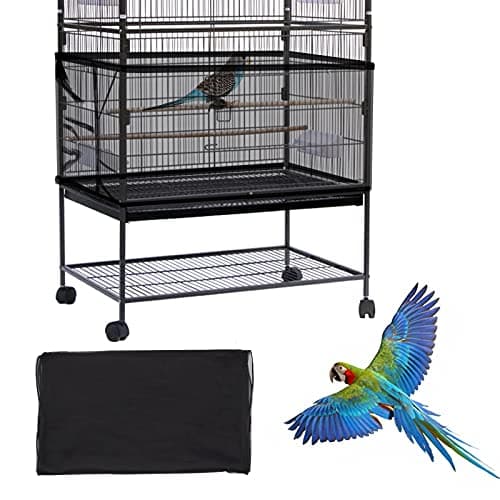
Daoeny
Daoeny Bird Cage Seed Catcher Skirt
7.7 / 10
- Premium encrypted nylon mesh — soft, airy, and dust-resistant, per Daoeny
- Adjustable elastic band, roughly 118" circumference x 15.75" width
- Drawstring plus lock buckles at top and bottom to stay put
- Catches scattered seed and feathers to keep floors clean
$9.99
Current price · checked Sep 8, 2026
The Short Answer
Treat the flight cage as a setup sequence, not a single purchase. Start with the shell: the Prevue Hendryx Wrought Iron Flight Cage gives horizontal room to fly and climb, but read its spec honestly — its 1/2-inch bar spacing and 37" x 23" x 60" footprint suit small-to-medium parrots such as conures, cockatiels, and quakers, not macaws, greys, or cockatoos, which need wider bars and a far larger cage. Then provision the shell so it is enrichment, not storage. Give the feet varied natural footholds with the Manoai Apple Wood Perch Set. Give the beak work with lovyoCoCo Shredding Foraging Toys. Feed a formulated base rather than all seed with Sleek & Sassy Garden Hookbill Food. Mount secure, tip-proof feeding stations with the kathson Stainless Steel Bowls. Cover the daily out-of-cage requirement with the GUANLANT Tabletop Play Stand. And control the inevitable mess with the Daoeny Seed Catcher Skirt. The welfare core is constant throughout: correct bar spacing and cage size for the actual bird, room to fly, foraging and chewing outlets, a formulated diet, and hours of supervised time outside the bars every day. A cage is not a substitute for attention — a single under-stimulated caged parrot is a welfare problem, not a low-maintenance pet.
Every product on this list has been scored against the PetPal Gear Score, a weighted composite of expert consensus, observed effectiveness, animal safety, long-term durability, and value. Review method: Editorial synthesis of avian housing and welfare guidance — the Association of Avian Veterinarians and VCA guidance on parrot cage size and bar spacing, and avian-welfare enrichment consensus on foraging, perching, and out-of-cage needs. Manufacturer documentation from Prevue Pet Products, Manoai, lovyoCoCo, Sleek & Sassy Garden, kathson, GUANLANT, and Daoeny was reviewed. Community consensus from r/parrots was included as consensus, not quotation. No first-hand product testing — PetPalHQ does not run a testing lab.. Synthesized from 3+ expert sources.
A parrot setup goes wrong, in this guide's editorial judgment, for one reason more than any other: the cage is treated as the whole answer instead of the first line of a longer list. An owner buys a roomy cage, sets the bird inside, adds the perches it came with, and cannot understand why the parrot screams, plucks, or paces. The cage was never the hard part. Whether the bars are spaced right for the bird, whether the feet have varied footholds, whether the beak has work to do, what goes in the food bowl, and how many hours the bird spends outside the bars — that is the setup. The cage is one line item in a much longer commitment.
Start with the single spec that is not negotiable: bar spacing and size, matched to the actual bird. This is a safety number, not a style choice. Bars spaced too wide let a small parrot push its head through and get trapped; a cage too small denies the horizontal room a bird needs to move and stay sound. The flight cage anchoring this guide has 1/2-inch bar spacing and a 37" x 23" x 60" footprint, which fits small-to-medium parrots — conures, cockatiels, quakers, lovebirds, parrotlets, caiques. It is the wrong cage for a macaw, grey, amazon, or cockatoo, and this guide says so plainly rather than pretending one cage fits every parrot.
Then build outward from the shell, in order. Give the feet varied natural perches so a single dowel does not wear them down. Give the beak foraging and shredding so a mind built for problem-solving has work. Fix the diet with a formulated base instead of all-seed. Mount secure feeding stations, cover the daily out-of-cage time every parrot needs, and control the mess a bird makes. The picks below are that kit, in setup order — not seven cages ranked against each other. Each earns its place by doing a job the finished setup needs done, and where a claim rests on a source or a maker's documentation, that is named rather than asserted, because PetPalHQ does not run a testing lab.
One principle sits above the whole build and never bends. A parrot is a loud, messy, intensely social animal that lives for decades, and its welfare depends on far more than a cage: correct bar spacing and size for the bird, room to fly, foraging and chewing outlets, a formulated diet, and hours of supervised social time outside the bars every day. A single under-stimulated caged bird is a welfare problem, not a low-maintenance pet. Treat the flight cage as the first step of a years-long commitment, and it becomes what a captive parrot deserves — a base, not a life sentence.
Head-to-Head Comparison
| Feature | Prevue Hendryx Wrought Iron Flight Cage (X-Large) | Manoai Natural Apple Wood Bird Perch Set (5 Pcs) | lovyoCoCo Bird Shredding Foraging Toys | Sleek & Sassy Garden Large Hookbill Parrot Food (40 lb) | kathson Stainless Steel Bird Bowls (4 Pcs) | GUANLANT Bird Playground Tabletop Play Stand | Daoeny Bird Cage Seed Catcher Skirt |
|---|---|---|---|---|---|---|---|
| Role in the setup | Foundation flight cage | Foot health and footing | Beak work and foraging | Diet foundation | Feeding stations | Out-of-cage base | Mess control |
| Where it goes | Sited in a bright, social room | Mounted across the bars | Hung from the bars by hook | Served in the feeding bowls | Clamped to the cage bars | Cage top, table, floor, or desk | Wrapped around the lower cage |
| Setup stage | Stage 1 — the shell | Stage 2 — outfit inside | Stage 3 — enrichment | Stage 4 — diet | Stage 5 — feeding | Stage 6 — outside the bars | Stage 7 — living with it |
| Bird size suited | Small-to-medium (1/2" bars) | Small-to-medium parrots | Small-to-medium birds | Large hookbills (size up) | Small-to-medium parrots | Small-to-medium birds | Round or square cages |
| Check price | Amazon | Amazon | Amazon | Amazon | Amazon | Amazon | Amazon |
$299.99
Current price · checked Sep 8, 2026
- Extra-large flight cage sized for multiple small birds to fly and climb, per Prevue
- Three solid wooden perches plus a bottom shelf stand
- Double front doors and six side doors at bottom, mid, and top for feeding, water, toys, and handling
- Pull-out bottom grille and tray for cleaning; wheels with locking casters
- Steel, 37"L x 23"W x 60"H, with 1/2-inch wire spacing for small-to-medium birds
A flight cage is not a finished habitat — it is the shell of a setup, and the shell is one line item; what keeps a parrot sound is the perches, foraging, diet, and out-of-cage time you build around it. The Prevue Hendryx Wrought Iron Flight Cage earns the foundation slot because it prioritizes the thing a parrot needs most and gets least: horizontal room to move. Prevue documents an extra-large steel cage measuring 37" x 23" x 60", with three solid wooden perches, a bottom shelf stand, double front doors and six side access doors, a pull-out grille and tray, and locking caster wheels. Prevue Pet Products has built cages in Chicago since 1869.
Where it fits the setup: this is the base every other pick attaches to. The six side doors are what make it a real setup rather than a box — they let you mount feeding stations at different levels, swap foraging toys without a wrestling match, and reach in to handle the bird calmly. The wide footprint gives the perches somewhere to span and the foraging toys somewhere to hang, and the locking wheels let you roll the whole shell to a bright, social room and back. One spec is load-bearing and honest, though: the 1/2-inch bar spacing and this footprint suit small-to-medium parrots — green-cheek conures, cockatiels, quakers, lovebirds, parrotlets, caiques — and not the big hookbills. Owners of an African grey, an amazon, a cockatoo, or a macaw need wider bars and far more room, and should size up using our full ranking of large parrot flight cages before buying anything here.
The honest caveats are about the spec and the space. Bar spacing is a safety number, not a style choice: bars too wide for a small parrot invite head entrapment, and this cage's 1/2-inch spacing is the reason it is a small-to-medium cage rather than a universal one. Even for the right-sized bird, a cage is a base and not the whole day — no parrot thrives locked in one full-time, however roomy. And a steel flight cage is a large, heavy item to assemble and place, so confirm current price, dimensions, and availability before buying, since large-item listings shift. Matched to the right bird and treated as a shell to provision, it is the strongest horizontal-room starting point in this setup.
What We Love
- Prioritizes horizontal flight room, the thing caged parrots most often lack
- Six side doors make it the connectable core of a real setup, not a plain box
- Locking casters let you roll the shell to a bright, social room
- Pull-out grille and tray make daily cleaning far less of a fight
What Could Be Better
- 1/2-inch bar spacing and footprint suit small-to-medium parrots only, not macaws, greys, or cockatoos
- Large, heavy steel item — real assembly and a permanent floor spot
- A cage is a base, not the whole day; daily out-of-cage time is still required
- Big-item listings shift, so price and dimensions need confirming before buying
The Verdict
Buy this as the shell for a small-to-medium parrot, not as a one-size cage. Its horizontal room and six access doors are what let you add perches, foraging, and feeding stations around it — but if your bird is a grey, amazon, cockatoo, or macaw, this cage is undersized and the wrong bar spacing, and you should size up first.
Sources
- Prevue Pet Products (Amazon product listing, Wrought Iron Flight Cage X-Large): extra-large steel flight cage measuring 37"L x 23"W x 60"H with 1/2-inch wire spacing for small-to-medium birds, three solid wooden perches, double front doors plus six side doors, a pull-out bottom grille and tray, and wheels with locking casters
- Avian housing and welfare consensus: cage bar spacing and footprint are safety specifications, not preferences — spacing too wide for the bird risks head entrapment, and a cage too small denies the horizontal room a parrot needs to fly and stay sound
$22.79
Current price · checked Sep 8, 2026
- 100% natural apple wood with coarse branches for foot exercise and claw sharpening, per Manoai
- Five pieces: two 9.8" Y-shaped grapevine perches, two 8.3" rope-wrapped stands, one 6"x4" platform
- Metal wing-nut and bolt mounts install inside or outside the cage with no tools
- Irregular shapes support beak conditioning, foot exercise, and mental stimulation
- Non-slip natural texture; sized for cockatiels, parakeets, budgies, conures, and lovebirds
The perches a cage ships with are rarely the perches a bird needs, because a foot gripping the same smooth diameter all day slowly breaks down. The Manoai Natural Apple Wood Perch Set fixes that. Manoai documents a five-piece set of 100% natural apple wood — two 9.8" Y-shaped grapevine perches, two 8.3" rope-wrapped stands, and a 6" x 4" platform — with coarse, irregular branches, non-slip texture, and metal wing-nut bolts that mount inside or outside the cage without tools. The varying diameters are the point.
Where it fits the setup: the Prevue shell gives three starter perches, and this set is what turns those into a proper landscape. Varied natural diameters make the foot work — closing wider on a thick branch, tighter on a thin one — which is how a captive bird keeps its feet strong and avoids the pressure sores a single dowel causes. Placing perches at different heights and angles also builds the short climb-and-hop routes that make a cage feel like territory rather than a perch and a floor. The platform gives a flat resting and foraging surface, and the coarse wood doubles as a claw and beak conditioner, folding a second need into the same install.
The honest caveats are about wood and fit. Natural branches are exactly that — natural — so diameters and shapes vary piece to piece, which is a welfare feature but means you place them by eye rather than to a plan. Wood in a bird cage takes chewing and soiling and needs periodic cleaning and eventual replacement; it is not a permanent fixture. And this set is sized for small-to-medium parrots, matching the anchor cage, so a large hookbill would overpower it. Confirm current price and availability before buying. As the foothold layer, it is a small spend that directly protects the feet a caged parrot stands on all day.
What We Love
- Varied natural diameters exercise the feet and help prevent pressure sores
- Five pieces build height, angle, and a flat platform into the cage
- Coarse wood doubles as a claw and beak conditioner
- No-tools wing-nut mounts install inside or outside the bars
What Could Be Better
- Natural branches vary in size and shape, so placement is by eye
- Wood soils and gets chewed; it needs cleaning and eventual replacement
- Sized for small-to-medium parrots, not large hookbills
The Verdict
The cheapest upgrade that most protects a caged bird's long-term health, because feet standing on one smooth dowel all day break down. Just treat the wood as consumable — clean it, watch for chew damage, and replace it as needed.
Sources
- Manoai (Amazon product listing, Natural Apple Wood Bird Perch Set): five-piece 100% natural apple wood set — two 9.8-inch Y-shaped grapevine perches, two 8.3-inch rope-wrapped stands, and a 6-by-4-inch platform, mounted with metal wing-nut bolts inside or outside the cage, sized for small-to-medium parrots
- Avian veterinary perching consensus: perches of varied natural diameter exercise a bird's feet and help prevent the pressure sores and foot problems that uniform smooth dowels cause over time
$7.99
Current price · checked Sep 8, 2026
- Natural loofah, rattan balls, and wood, safe to chew, per lovyoCoCo
- Stuffed with crinkly paper and pockets to hide treats for foraging
- Includes a soft multi-colored cotton rope perch
- Chewing and shredding channel natural behavior for physical and emotional health
- Hook installation; sized for small-to-medium birds
A parrot in the wild spends much of its day searching for and working on food, and a cage removes that job unless you put it back. The lovyoCoCo Shredding Foraging Toys put it back. lovyoCoCo documents a set of natural loofah, rattan balls, and wood stuffed with crinkly paper and safe to chew, with pockets to hide treats so the bird has to forage, plus an included soft cotton rope perch, all hung by hook. The shredding is the feature, not a side effect.
Where it fits the setup: the roomy Prevue shell and the varied perches give a bird space and footing, but space alone does not occupy a mind built for problem-solving. Hiding a favorite treat inside the loofah and rattan turns a snack into a task, and the shredding itself burns the nervous energy that otherwise turns into screaming or feather-damaging behavior. This is the difference between a cage a bird endures and one it works in. For owners who want to rotate a deeper toy library — foraging boxes, shreddables, and puzzle feeders swapped to keep novelty high — our roundup of the best large parrot toys and foraging enrichment covers building a rotation rather than buying one toy and stopping.
The honest caveats are about supervision and turnover. Shreddable toys are meant to be destroyed, so they are consumable by design and need replacing as the bird dismantles them — that is the toy working, not failing. Any hanging toy should be checked so a bird cannot get a toe or beak caught in a frayed rope or loose part, and cotton rope in particular wants trimming as it frets. And enrichment only works if it changes; the same toy left up for months stops being interesting. Confirm current price and availability before buying. As the busy-beak layer, it is a few dollars that does more for a bird's mind than almost anything else in the cage.
What We Love
- Turns feeding into foraging, restoring a core natural behavior
- Shredding burns the energy that otherwise fuels screaming and plucking
- Natural loofah, rattan, and wood, with a cotton rope perch included
- Low cost, so a rotation is affordable to keep novelty high
What Could Be Better
- Shreddables are consumable by design and need regular replacing
- Hanging toys and cotton rope need checking for caught toes and fraying
- Left up too long, any single toy stops being enriching
The Verdict
For a few dollars, this restores the foraging and chewing a cage strips away, which is the single biggest lever on a parrot's mental health. Just treat it as consumable and rotate it — enrichment only works when it keeps changing.
Sources
- lovyoCoCo (Amazon product listing, Bird Shredding Foraging Toys): natural loofah, rattan balls, and wood stuffed with crinkly paper and safe to chew, with pockets to hide treats for foraging and an included soft cotton rope perch, installed by hook
- Avian enrichment consensus: foraging and shredding are core natural parrot behaviors, and a bird given work for its beak is less prone to the boredom that drives feather-plucking, screaming, and stereotypy
$148.44
Current price · checked Sep 8, 2026
- Formulated for large conures, amazons, African greys, cockatoos, pionus, and small macaws, per Sleek & Sassy
- Family-owned Oregon company since 1983
- All-natural ingredients, blended with human-grade fruits and vegetables
- Vitamin, mineral, and amino-acid enriched
- No artificial colors or sulfites
The most common welfare mistake in parrot keeping is not the cage — it is the food bowl, because an all-seed diet is high in fat and short on the nutrients a parrot needs. A formulated base is the fix, and the Sleek & Sassy Garden Hookbill Food is a formulated base. Sleek & Sassy documents an all-natural blend enriched with vitamins, minerals, and amino acids, blended with human-grade fruits and vegetables, with no artificial colors or sulfites, from a family-owned Oregon company operating since 1983. It is formulated for large hookbills — conures through small macaws.
Where it fits the setup: this is the diet layer the whole build rests on, because no amount of foraging or flight room offsets a poor diet. A pelleted or formulated blend is the avian-welfare answer to seed-only feeding — it delivers balanced nutrition in every bite rather than letting a bird pick out its favorite fatty seeds and leave the rest. Note the framing honestly, though: this SKU is sized and formulated for large hookbills, which is another reminder that a genuinely large parrot is a different animal from the small-to-medium birds this flight cage suits. A large-bird staple like this belongs with a large-bird cage.
The honest caveats are about the bag and the transition. Forty pounds is a bulk staple, so the owner of a single small parrot may prefer a smaller bag that gets used before it loses freshness — a huge bag stored too long is false economy. Birds are also notoriously resistant to diet change, and switching from seed to pellets is a gradual, sometimes slow process best done with a veterinarian's guidance, not overnight. And a formulated base is a base, not the whole diet; fresh vegetables and appropriate variety still belong alongside it. Confirm current price and availability before buying. As the diet foundation, moving a bird off all-seed and onto a formulated blend is one of the highest-value changes an owner can make.
What We Love
- A formulated blend beats an all-seed diet on balanced nutrition
- Human-grade fruits and vegetables, vitamin and mineral enriched
- No artificial colors or sulfites, from a long-established maker
- Bulk sizing is economical for a household feeding a big or multiple birds
What Could Be Better
- 40 lb can lose freshness before one small parrot finishes it
- Switching a bird from seed to pellets is gradual and best vet-guided
- Formulated for large hookbills, not the small-to-medium birds this cage suits
- A base, not the whole diet — fresh vegetables still belong alongside it
The Verdict
The diet layer the whole build rests on: a formulated blend instead of all-seed is one of the highest-value welfare changes an owner can make. Just size the bag to the bird, transition slowly with vet guidance, and keep fresh vegetables in the rotation.
$16.59
Current price · checked Sep 8, 2026
- Four rugged stainless steel dish cups, sold as a set
- Clamp holders lock the bowls to the cage bars so birds can't tip them
- Stainless is durable and dishwasher-friendly for real hygiene
- 3.9" diameter x 1.6" height per cup
- Sized for small-to-medium parrots
A parrot will flip, fling, and foul its food bowls, and a tipped bowl is both a mess and a hygiene problem. The kathson Stainless Steel Bird Bowls answer both. kathson documents a four-pack of rugged stainless steel cups, each 3.9" across and 1.6" deep, with clamp holders that lock the bowls to the cage bars so a bird cannot tip them, in a material that is durable and dishwasher-friendly. Four bowls is the useful number here, not a coincidence.
Where it fits the setup: the Prevue shell's six side doors make it easy to mount several stations, and four locking bowls let you separate resources the way good husbandry wants them separated — dry food in one, fresh water in another, fresh vegetables in a third, with a spare for foraging or rotation. Spreading stations around the cage also encourages movement between them and keeps one bird from guarding a single spot. Stainless is the material argument: it takes real cleaning without scratching into a bacteria-friendly surface the way plastic does, which matters more with wet food and water than almost anywhere else in the cage.
The honest caveats are about placement and upkeep. A bowl mounted directly under a perch collects droppings, so position each station off to the side rather than beneath a favorite roost. Water still fouls and needs changing at least daily — more in heat — because clean water is a daily job, not a set-and-forget fixture, and a bowl is not a circulating fountain. And stainless, while tough, still needs regular washing to earn its hygiene advantage. Confirm current price and availability before buying. As the feeding layer, secure stainless stations are the durable, sanitary way to serve a bird that treats its bowls as toys.
What We Love
- Clamp holders lock bowls to the bars against tipping and flinging
- Four stations let you separate food, water, and fresh vegetables
- Stainless cleans up without scratching into a bacteria-friendly surface
- Dishwasher-friendly, so the daily hygiene job is quick
What Could Be Better
- Mounted under a perch, any bowl collects droppings — placement matters
- Water still needs changing at least daily, more in heat
- A bowl is not a fountain — no circulation or filtration
The Verdict
Use case: any parrot that tips and flings its bowls, which is most of them. Locking stainless stations keep food and water in place and sanitary — just position them clear of perches and treat fresh water as a daily task.
$38.95
Current price · checked Sep 8, 2026
- Natural beech wood on a base with an acrylic cover for easy cleaning, per GUANLANT
- Multiple ladders and perches, swings, chewing toys, and platforms
- 12.6"L x 10.63"W x 21.26"H and portable — cage top, tabletop, floor, or desk
- Gives exercise and a place to perch, climb, and swing outside the cage
- Toy hooks let you swap enrichment on the stand
A cage is where a parrot sleeps and eats; it is not where a parrot should spend its whole life, and daily supervised time outside the bars is an avian-welfare requirement, not a luxury. The GUANLANT Tabletop Play Stand gives that time a safe home base. GUANLANT documents a natural beech wood playground with multiple ladders, perches, swings, chewing toys, and platforms, on a base with an acrylic cover for easy cleaning, measuring 12.6" x 10.63" x 21.26" and light enough to move to a cage top, tabletop, floor, or desk.
Where it fits the setup: out-of-cage time is the piece the cage cannot provide, and a loose bird needs a destination or it simply wanders into trouble. A play stand becomes that destination — a defined perch-climb-and-swing station where the bird can stretch, exercise, and stay near its people during the day. Its portability is the practical win: it moves to wherever the family is, so out-of-cage time is spent together rather than in an empty room. The toy hooks let you carry the same rotation logic onto the stand, so the foraging and shredding toys that keep a bird busy in the cage keep it busy out of it too.
The honest caveats are about supervision and safety. A play stand is an open perch, not an enclosure, so out-of-cage time on it is supervised time — a room made bird-safe against windows, other pets, ceiling fans, and toxic hazards, never a bird left alone loose. The acrylic cover eases cleaning, but a stand still collects mess and needs regular wiping. And at tabletop size it suits the small-to-medium birds this setup is built around, matching the cage. Confirm current price and availability before buying. As the out-of-cage layer, it turns a daily welfare requirement into an easy, portable habit.
What We Love
- Gives daily out-of-cage time a safe, defined home base
- Portable, so the bird stays near its people through the day
- Ladders, swings, and toy hooks add exercise and enrichment off the cage
- Acrylic-covered base makes the inevitable mess easy to clean
What Could Be Better
- An open stand, not an enclosure — out-of-cage time must be supervised
- The room itself needs bird-proofing against windows, pets, and fans
- Tabletop size suits small-to-medium birds, not large hookbills
The Verdict
The piece that meets a requirement the cage cannot: daily supervised time outside the bars. A portable stand makes that a habit rather than a chore — just keep the time supervised and the room bird-safe, because an open stand is not an enclosure.
$9.99
Current price · checked Sep 8, 2026
- Premium encrypted nylon mesh — soft, airy, and dust-resistant, per Daoeny
- Adjustable elastic band, roughly 118" circumference x 15.75" width
- Drawstring plus lock buckles at top and bottom to stay put
- Catches scattered seed and feathers to keep floors clean
- Hand or machine washable; fits round and square parrot cages
New parrot owners are almost always surprised by the mess, because a bird scatters seed, husks, and feathers well past the base of its cage. The Daoeny Seed Catcher Skirt contains it. Daoeny documents a soft, airy nylon mesh skirt — roughly 118" around and 15.75" wide — with an adjustable elastic band, a drawstring, and lock buckles top and bottom to hold it in place, that catches scattered debris to keep floors clean and washes by hand or machine. It fits round and square cages alike.
Where it fits the setup: this is the least glamorous pick and one of the most quietly useful, because the mess is real and constant, and a skirt is the difference between sweeping a wide radius daily and shaking out one washable band. It wraps the lower cage, catching the seed hulls, dropped food, and down that a foraging, shredding, preening bird throws every day — exactly the debris the foraging toys and feeding stations above generate. The breathable mesh means it contains mess without trapping damp against the cage, and it washes clean rather than staining.
The honest caveats are about scope and fit. A skirt catches what falls at the sides; it does not stop a determined bird from flinging food outward or replace regular cage-bottom cleaning underneath the grille. Fit depends on the cage shape, so the adjustable band and buckles matter — check the dimensions against your cage before buying. And mesh near a heavy chewer can itself become a chew target, so it wants an occasional look for damage. Confirm current price and availability before buying. As the mess-control layer, it is a few dollars that makes living with a messy species genuinely more livable, which is part of committing to one honestly.
What We Love
- Catches the seed, husks, and feathers a parrot scatters daily
- Breathable mesh contains mess without trapping damp
- Buckles and drawstring hold it on round or square cages
- Washable, so cleanup is a shake-and-launder, not a sweep
What Could Be Better
- Catches side spill only — it does not stop outward flinging
- Fit depends on cage shape; dimensions need checking first
- Mesh can become a chew target for a determined bird
The Verdict
A few dollars against the mess every parrot owner underestimates. It will not end cage cleaning, but it turns a daily floor sweep into a shake-and-wash — just check the fit to your cage and watch it for chew damage.
How We Score
Formula
PetPal Flight-Cage Setup Score = (Expert Consensus × 0.35) + (Setup Fit × 0.25) + (Safety / Welfare Design × 0.20) + (Value × 0.20)
Score Factors
- Expert Consensus · 35%
- Synthesized from Association of Avian Veterinarians and VCA guidance on parrot cage size and bar spacing, avian-welfare enrichment consensus on foraging and perching, r/parrots community consensus, and manufacturer documentation. The PetPal Flight-Cage Setup Score is a composite of expert opinion — PetPalHQ does not run a testing lab.
- Setup Fit · 25%
- How directly the item advances a complete flight-cage setup — the horizontal-room shell, varied perches, foraging, a formulated diet, feeding stations, out-of-cage space, and mess control — rather than how it performs as a standalone product ranked against rivals.
- Safety / Welfare Design · 20%
- Alignment with avian housing and welfare principles — correct bar spacing and cage size for the actual bird, room to fly, foraging and chewing outlets, a formulated diet over all-seed, secure feeding, and daily supervised out-of-cage time.
- Value · 20%
- Cost relative to the item's role in the setup, including durability with a chewing bird and how much of the sound-in-body-and-mind outcome the item is responsible for.
| Rank | Product | Score |
|---|---|---|
| #1 | Prevue Pet Products Prevue Hendryx Wrought Iron Flight Cage (X-Large) | 8.7 |
| #2 | Manoai Manoai Natural Apple Wood Bird Perch Set (5 Pcs) | 8.4 |
| #3 | lovyoCoCo lovyoCoCo Bird Shredding Foraging Toys | 8.3 |
| #4 | SLEEK & SASSY Sleek & Sassy Garden Large Hookbill Parrot Food (40 lb) | 8.1 |
| #5 | kathson kathson Stainless Steel Bird Bowls (4 Pcs) | 8.0 |
| #6 | GUANLANT GUANLANT Bird Playground Tabletop Play Stand | 7.9 |
| #7 | Daoeny Daoeny Bird Cage Seed Catcher Skirt | 7.7 |
When NOT to Buy
A flight cage is not a light purchase to talk anyone out of, but some households should not buy this one, and some should not buy a parrot at all. The clearest limit is size and species. This cage's 1/2-inch bar spacing and 37" x 23" x 60" footprint are built for small-to-medium parrots — conures, cockatiels, quakers, lovebirds, parrotlets, caiques. It is genuinely undersized and the wrong bar spacing for an African grey, an amazon, a cockatoo, or a macaw, where bars too narrow-set still trap a bigger head and the floor space is far too small. Bar spacing is a safety spec, not a preference: get it wrong and you risk escape or head entrapment. Owners of those larger birds should not adapt this cage — they should size up to a true large-parrot flight cage built for the bigger classes.
The harder limit is time, not money. Parrots are loud, messy, and long-lived — many outlive dogs and cats several times over — and they are intensely social animals that suffer without daily interaction and hours outside the cage. A single parrot left alone in a cage, however well provisioned, is an under-stimulated animal, and under-stimulation in parrots shows up as feather-plucking, screaming, and self-harm. Do not buy the cage before you can honestly commit the daily hours: supervised out-of-cage time, foraging that gets refreshed, a diet transitioned off all-seed, and real social contact. The cage is the easy part; the decade-plus of attention is the actual commitment.
Finally, the honest budget and scope caveat: a flight-cage setup is a sequence and a cost, not a single item. The cage is one line; the perches, foraging, formulated diet, feeding stations, out-of-cage stand, and mess control are the rest, and the noise and cleaning are daily. If you cannot commit to the full setup and the years of care behind it, the answer is not a cheaper cage — it is to wait until you can. Confirm current price, dimensions, and availability on every item before buying, since large-item listings and bulk food sizes shift over time.
Frequently Asked Questions
- Can this flight cage house a macaw, African grey, or cockatoo?
- No, and this is the most important thing to get right. The anchor cage in this guide has 1/2-inch bar spacing and a 37-by-23-by-60-inch footprint, which is built for small-to-medium parrots such as conures, cockatiels, quakers, lovebirds, parrotlets, and caiques. Large parrots like African greys, amazons, cockatoos, and macaws need wider bar spacing, roughly three-quarters of an inch to over an inch, and a much larger cage overall. Bar spacing is a safety specification, not a preference: bars set wrong for the bird can lead to escape or, worse, head entrapment, and too small a cage denies a large bird the room it needs. If your bird is one of the larger species, do not adapt a small-to-medium cage. Size up to a cage designed for the bigger classes, and choose the bar spacing to match the bird you actually have.
- What is the setup order for a parrot flight cage?
- Work outward from the shell in stages so nothing important gets skipped. First choose the cage itself, matched to the bird's size and bar-spacing needs, and site it in a bright, social room. Second, outfit the inside with varied natural perches so the feet have different diameters to grip. Third, add foraging and shredding toys so the beak and mind have work. Fourth, set the diet with a formulated blend rather than all seed. Fifth, mount secure feeding stations for food, water, and fresh vegetables. Sixth, set up an out-of-cage play stand for the daily supervised time outside the bars that welfare requires. Seventh, add mess control, because a parrot scatters far more than new owners expect. Taken in that order, each layer builds on the one before it rather than being an afterthought.
- Why does a parrot need foraging toys and out-of-cage time — isn't a big cage enough?
- A big cage is necessary but not sufficient, because parrots are highly intelligent, social animals that in the wild spend much of the day flying, foraging, and interacting. A cage removes those jobs unless you deliberately put them back. Foraging toys restore the searching and problem-solving that feeding from an open bowl skips, and shredding channels natural chewing behavior. Daily supervised time outside the cage gives the exercise, novelty, and social contact that no enclosure can provide on its own. Without these, a parrot becomes under-stimulated, and that boredom commonly shows up as feather-plucking, screaming, and other self-directed behaviors. Enrichment is not a luxury layered on top of good housing; it is part of what makes the housing humane in the first place.
- Are pellets really better than a seed diet for parrots?
- A formulated pellet or blended diet is widely favored over an all-seed diet because seeds alone are high in fat and short on the balanced nutrition a parrot needs. Left to a seed mix, many birds pick out their favorite fatty pieces and leave the rest, which skews the diet further. A formulated base delivers balanced nutrition in every bite, which is why it is a core avian-welfare recommendation. That said, two honesty points matter. First, birds are strongly resistant to diet change, so switching from seed to pellets is a gradual process best done with veterinary guidance rather than overnight. Second, a formulated base is a foundation, not the entire diet — appropriate fresh vegetables and variety still belong alongside it. Moving a bird off all-seed is one of the highest-value changes an owner can make, done patiently.
- Are parrots really that messy and loud, or is that exaggerated?
- It is not exaggerated, and taking it seriously is part of committing to a bird honestly. Parrots scatter seed hulls, dropped food, feathers, and shredded toy debris well beyond the base of the cage, which is why a seed-catching skirt and daily cleaning are part of the setup rather than optional extras. They are also genuinely loud — natural vocalizing, calls, and in many species screaming are normal behaviors, not signs of a defective bird, and no cage or product silences them. On top of that, parrots are long-lived, with many species outliving dogs and cats by decades, and they need daily social interaction to stay well. None of this should talk the right person out of a parrot, but all of it should be understood before buying, because the noise, mess, and years of care are the real commitment behind the cage.
Bottom Line
Match the cage to the bird before anything else. This flight cage's 1/2-inch bar spacing and 37" x 23" x 60" footprint suit small-to-medium parrots such as conures and cockatiels — macaws, greys, and cockatoos need wider bars and a much larger cage, so size up if that is your bird. Bar spacing is a safety spec, not a preference.
Build the shell out in setup order. The Prevue flight cage is the horizontal-room base; the Manoai apple wood perches protect the feet; the lovyoCoCo foraging toys give the beak work — space, footing, and something to do, in that sequence.
Fix the diet and the feeding. A formulated blend like Sleek & Sassy Garden beats an all-seed diet on balanced nutrition, and locking stainless kathson stations keep food and water in place and sanitary — two of the highest-value, least-glamorous upgrades in the kit.
The cage is not the whole life. The GUANLANT play stand covers the daily supervised out-of-cage time that avian welfare requires, and the Daoeny seed skirt makes living with a messy species genuinely manageable — plan for both from day one.
The welfare core never changes: correct bar spacing and size for the actual bird, room to fly, foraging and chewing outlets, a formulated diet, and hours of social, out-of-cage time every day. A parrot is a decades-long commitment, and a single under-stimulated caged bird is a welfare problem — buy the cage only when you can commit the time.
Sources & Methodology
Methodology
PetPal Flight-Cage Setup Score = (Expert Consensus × 0.35) + (Setup Fit × 0.25) + (Safety / Welfare Design × 0.20) + (Value × 0.20)
Expert review sources
- Association of Avian Veterinarians — parrot cage size and bar spacing guidance
- VCA Animal Hospitals — pet bird housing and environmental needs guidance
- Avian welfare and enrichment consensus — foraging, perching, and out-of-cage needs
- Prevue Pet Products — Wrought Iron Flight Cage product documentation
- Manoai — Natural Apple Wood Bird Perch Set product documentation
- lovyoCoCo — Bird Shredding Foraging Toys product documentation
- Sleek & Sassy Garden — Large Hookbill Parrot Food product documentation
- kathson — Stainless Steel Bird Bowls product documentation
- GUANLANT — Bird Playground Tabletop Play Stand product documentation
- Daoeny — Bird Cage Seed Catcher Skirt product documentation
Community sources
- r/parrots — cage sizing, bar-spacing safety, and enrichment consensus
- r/parrots — out-of-cage time and diet-transition consensus
Prices and specs verified July 12, 2026.
About the author
Nick Miles is the chief editor of PetPalHQ. This flight-cage setup plan and its kit are editorial synthesis of Association of Avian Veterinarians and VCA avian-housing guidance, avian-welfare enrichment consensus, r/parrots community consensus, and manufacturer documentation — PetPalHQ does not run a testing lab. The PetPal Flight-Cage Setup Score is a composite of expert opinion, not a measurement. Sources are cited by name throughout.
PetPalHQ is a participant in the Amazon Services LLC Associates Program. We may earn commissions from qualifying purchases — at no extra cost to you.
More Guides
Birds
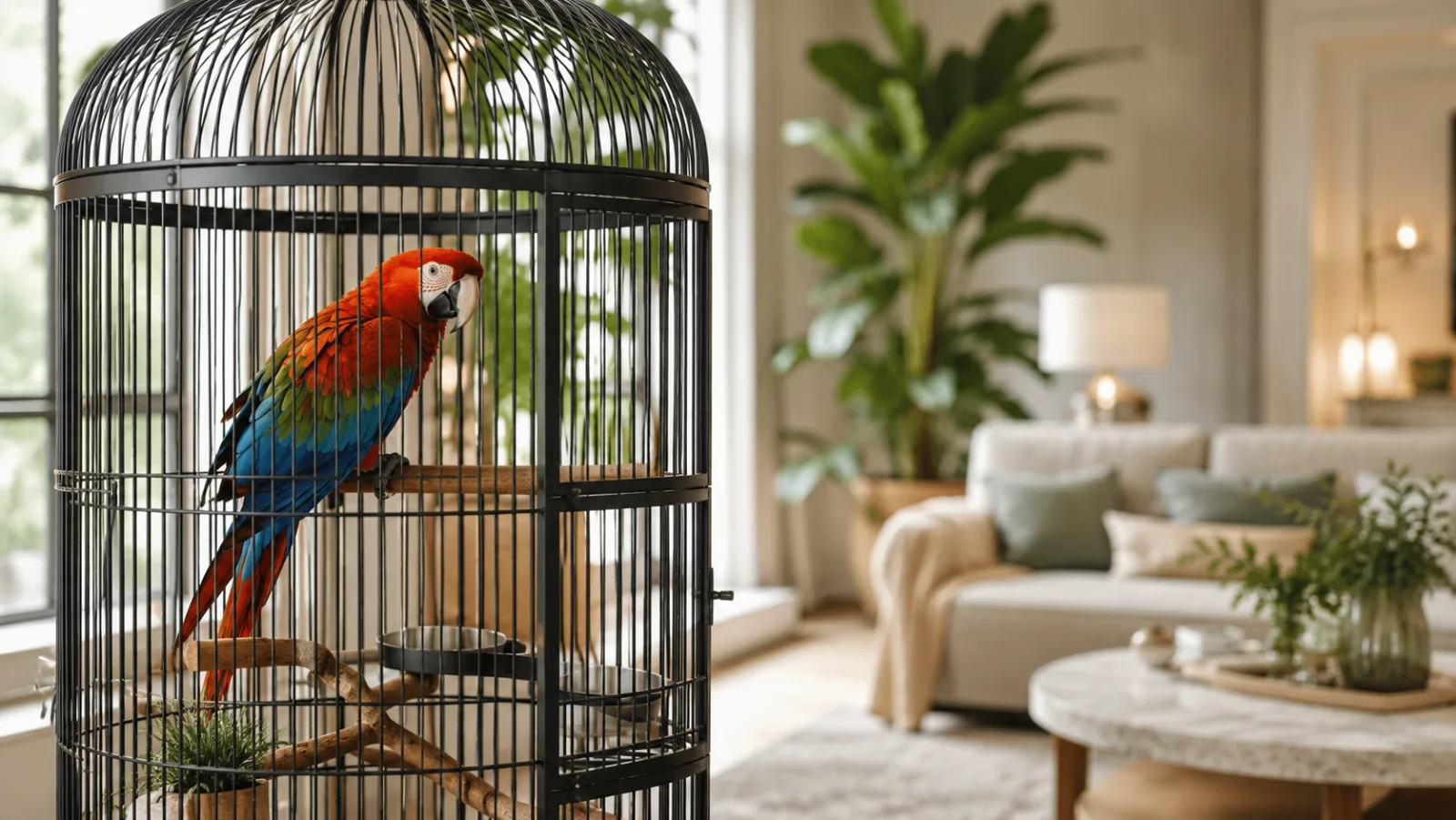
Best Large Parrot & Macaw Flight Cages (2026)
Birds
Best Large Parrot Toys & Foraging Enrichment 2026: Bird-Safe Chew and Foraging Toys for Macaws, Cockatoos & African Greys
Birds
Best Parakeet, Budgie, and Cockatiel Cages 2026: A Size Ladder From Starter to Bird Room
Birds
Best Bird Houses & Nesting Boxes 2026: Correctly-Sized Cedar Boxes for Wild Songbirds
Birds
Best Smart Bird Feeders for U.S. Backyards (2026)
Birds