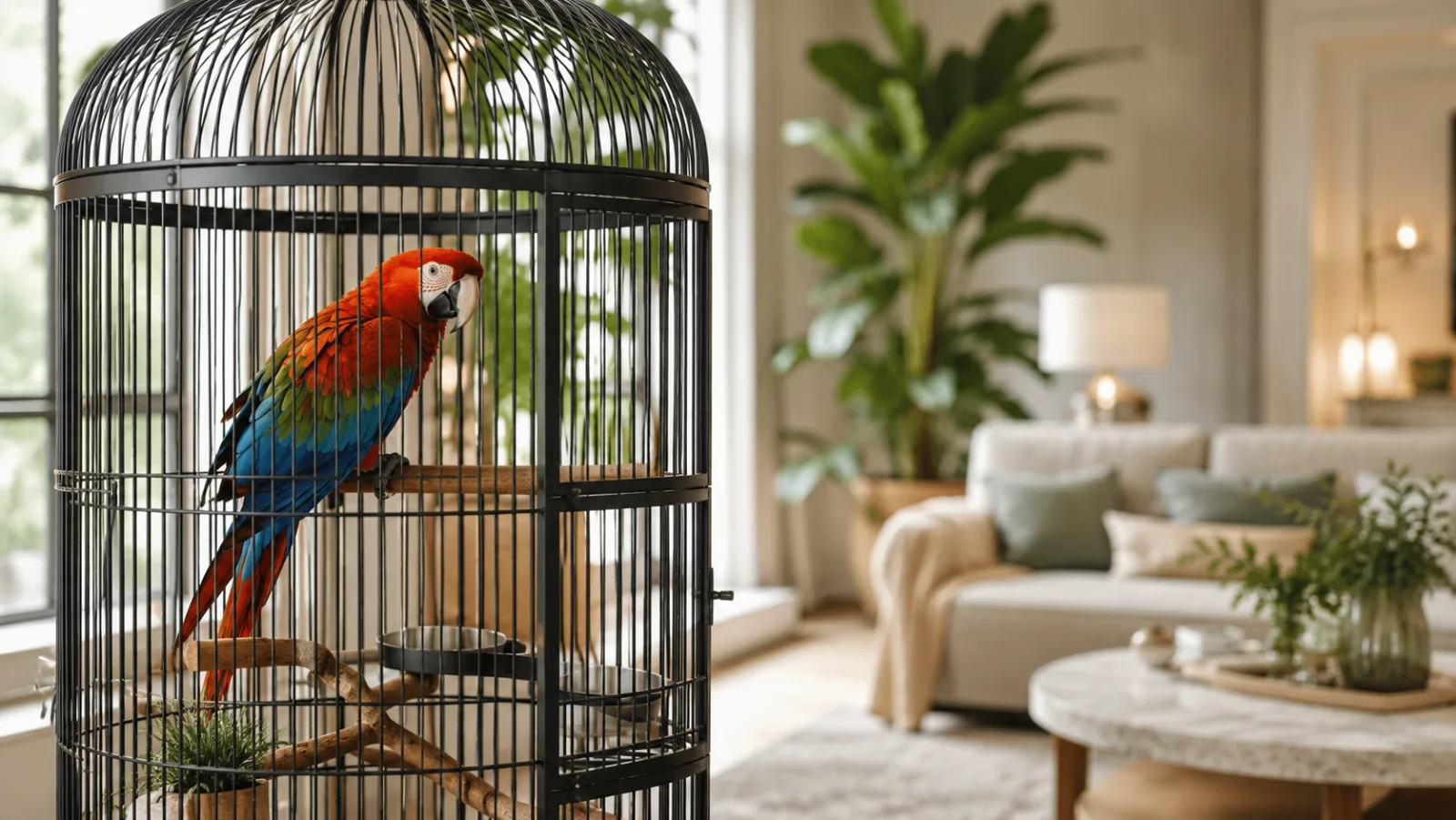
Birds
Best Large Parrot Toys & Foraging Enrichment 2026: Bird-Safe Chew and Foraging Toys for Macaws, Cockatoos & African Greys
Bird-safe chew and foraging toys for macaws, cockatoos, and African greys — ranked on mental challenge, material safety, and beak-size durability, with honest guidance on why foraging fights feather-plucking.
By Nick Miles · Updated September 8, 2026 · 12 min
PetPalHQ is reader-supported. We may earn a commission from qualifying Amazon purchases at no extra cost to you.
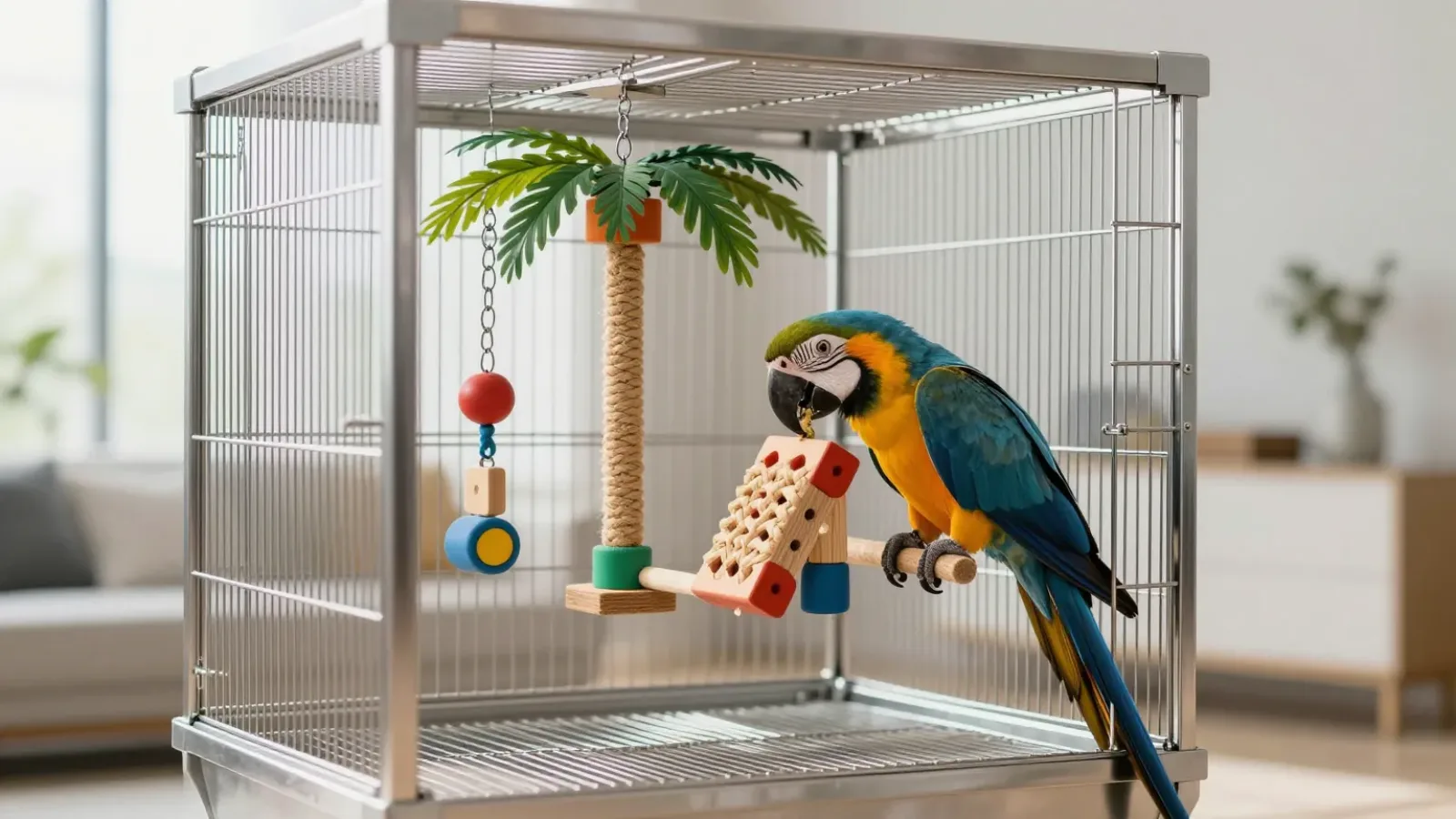
Evidence at a Glance
LUCKITTY 35in Extra Large Parrot Chewable Foraging Toys
The best overall foraging pick: a 35-inch extra-large chewable foraging toy sized for big parrots, built to be shredded and worked at so your bird has to forage for the reward rather than just chew idly. The size and destructibility are matched to macaw and cockatoo beaks.
Sources: LUCKITTY manufacturer/Amazon listing specifications, World Parrot Trust — foraging enrichment guidance
Verified Jul 6, 2026
MEWTOGO Extra Large Natural Wood Bird Toys
The best natural-chew pick: extra-large natural-wood toys aimed at macaws and African greys, giving a big, satisfying chew from natural material rather than plastic. Chewing is a normal beak-maintenance behavior, and natural wood gives a destructible outlet for it.
Sources: MEWTOGO manufacturer/Amazon listing specifications, Lafeber Company — avian enrichment guidance
Verified Jul 6, 2026
HZDZ LCPAW Extra Large Bird Toys for Macaws and Cockatoos
The best value pick: extra-large bird toys sized for macaws and cockatoos at a price low enough to build a rotation of several at once. Rotation is what keeps enrichment novel, and an affordable large toy makes a deep toy box practical.
Sources: HZDZ LCPAW manufacturer/Amazon listing specifications, The Spruce Pets — parrot toy safety guidance
Verified Jul 6, 2026
Our Picks
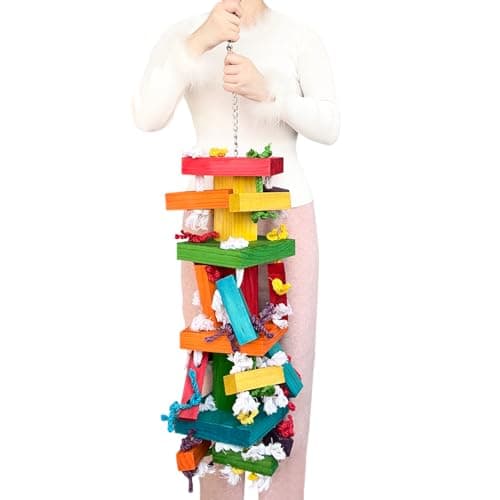
LUCKITTY
LUCKITTY 35in Extra Large Parrot Chewable Foraging Toys for Macaws, Cockatoos & Large Birds
8.6 / 10
- 35-inch extra-large foraging toy sized for macaws, cockatoos, and large parrots
- Chewable, destructible design so the bird works for the reward
- Foraging format targets boredom directly, not just idle chewing
- Large hanging setup gives one focal enrichment piece in a big cage
$49.99
Current price · checked Sep 8, 2026
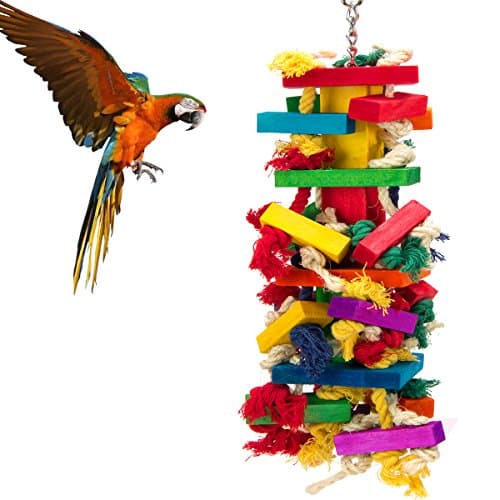
MEWTOGO
MEWTOGO Extra Large Natural Wood Bird Toys for Macaws and African Greys
8.3 / 10
- Extra-large natural-wood toy aimed at macaws and African greys
- Natural material gives a satisfying, destructible chew outlet
- Chewing is normal beak-maintenance behavior for large parrots
- Sized for big beaks rather than scaled down from a small-bird toy
$23.99
Current price · checked Sep 8, 2026
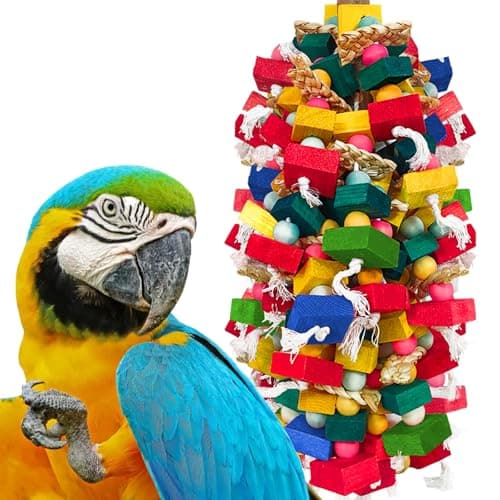
HZDZ LCPAW
HZDZ LCPAW Extra Large Bird Toys for Macaws and Cockatoos
8.1 / 10
- Extra-large bird toy sized for macaws and cockatoos
- Priced low enough to buy several and build a rotation
- Large scale suited to big beaks and big cages
- A destructible enrichment piece for large parrots
$21.99
Current price · checked Sep 8, 2026
Planet Pleasures
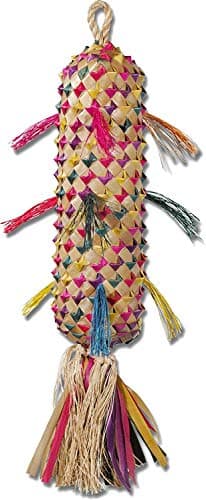
Planet Pleasures Spiked Pinata Natural Bird Toy, X-Large (17 in)
7.9 / 10
- All-natural palm leaves woven into a 17-inch spiked pinata
- Stuffed with more shreddable natural palm for foraging inside it
- Handmade in the Philippines from renewable and recycled materials
- X-Large sizing for macaws, cockatoos, and other big beaks
$19.56
Current price · checked Sep 25, 2026
Super Bird Creations
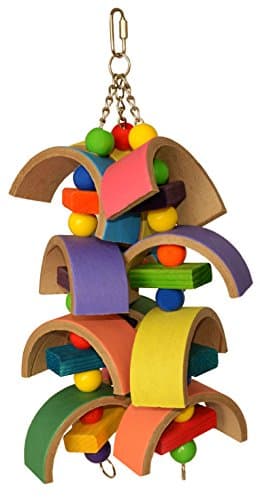
Super Bird Creations SB970 Humdinger Bird Toy (18 x 8 in)
7.7 / 10
- 18 x 8 inches, built by the maker for large to XL birds — amazons, macaws, cockatoos
- Tightly wound cardboard 'bagels', wooden blocks, and acrylic beads
- Mixed textures aimed at heavy chewers rather than a single material
- Bird-safe materials, assembled in the USA since 1992
$42.99
Current price · checked Sep 25, 2026
The Short Answer
The best large parrot toy is a bird-safe foraging toy that makes your bird work for a reward, because a big parrot's biggest enemy is boredom and foraging is the proven antidote to the screaming and feather-plucking that boredom causes. Our best overall is the LUCKITTY 35-inch extra-large chewable foraging toy (about $49.99), a big, destructible foraging setup sized for macaws and cockatoos. The MEWTOGO extra-large natural-wood toy (about $23.99) is the best natural-chew pick for African greys and macaws, and the HZDZ LCPAW extra-large bird toy (about $21.99) is the best value for building a rotation cheaply. The core rule: buy for the beak, buy bird-safe, and rotate. Match the toy's size and toughness to your species, avoid zinc, lead, and treated or toxic woods, and swap toys in and out every week or two so novelty — the thing that actually relieves boredom — never runs out.
Every product on this list has been scored against the PetPal Gear Score, a weighted composite of expert consensus, observed effectiveness, animal safety, long-term durability, and value. Review method: Editorial synthesis of manufacturer and Amazon product listings for each toy plus established avian-welfare guidance from the World Parrot Trust, the Lafeber Company's avian education, and The Spruce Pets on foraging enrichment and bird-safe materials. No independent lab or outlet has published a hands-on review of these specific generic-marketplace toys, so we do not attribute any award or verdict to an outlet, and we prioritize material safety and foraging value over listing hype. PetPalHQ does not run an avian-products testing lab; the PetPal Parrot-Enrichment Score below is a transparent synthesis of documented listing specifications and published welfare standards, not a measurement. Prices were captured on 2026-07-06 and should be treated as list/listing figures that will move.. Synthesized from 4+ expert sources.
Large parrot toys are sold on how they look on the shelf, but the thing that actually matters is invisible in a photo: whether the toy gives a big, intelligent bird something to do. A macaw, cockatoo, or African grey in the wild spends much of its day foraging — searching, manipulating, and working for food. A bird denied that mental work gets bored. A bored parrot screams, and a chronically bored one starts pulling out its own feathers. So before any single pick, here is the rule that should govern your whole purchase: buy for the beak, buy bird-safe, and rotate. Match the toy's size and toughness to your species, insist on safe materials, and keep the toy box changing so novelty never runs out.
We read 6 sources for this guide: the manufacturer and Amazon listings for each toy, plus established avian-welfare guidance from the World Parrot Trust, the Lafeber Company, and The Spruce Pets on foraging and bird-safe materials. We want to be upfront about two things. These are generic-marketplace toys, and no independent lab or major outlet has published a hands-on review of any of them — so we do not claim anyone "named" a pick best. And rather than repeat listing hype, we put two things first: material safety, because a big parrot ingests fragments of what it destroys, and foraging value, because mental challenge is what enrichment is actually for. The specs come from the listings; the welfare standards come from the avian sources; the PetPal Parrot-Enrichment Score is our transparent synthesis of the two.
PetPalHQ.com earns affiliate commissions from qualifying purchases. Our recommendations are based on expert consensus — we synthesize professional reviews and manufacturer documentation, plus multi-year owner durability data, to find pet gear that is worth your investment. Commission rates never influence our editorial recommendations.
Toys are only one layer of a big parrot's world, and they work best inside the right housing. A foraging toy needs room to hang and swing, which is why the cage itself matters as much as what goes in it; if your bird is outgrowing its space, our guide to large parrot flight cages covers sizing a cage that gives toys — and wings — room to work. Get the housing and the enrichment right together and most boredom problems never take hold.
Why Foraging Beats a Plain Toy
The difference between a toy your bird chews and a toy your bird forages is the difference between occupying a beak and occupying a mind. Chewing is genuinely valuable — it is normal beak maintenance and a natural outlet — but foraging asks more: the bird has to investigate, manipulate, and problem-solve to reach a reward, which mirrors the hours a wild parrot spends finding food. That mental work is the proven antidote to the boredom behind screaming and feather-plucking, which is why a structured foraging toy earns our top spot and the largest weight in our score.
You do not have to choose only one, and the best toy box has both. Give your bird a demanding foraging piece to work at and a satisfying natural chew to destroy, and you cover both needs. The one thing that undermines either is leaving it up too long: a foraging toy your bird has already solved is just an ornament. Rotate, refresh, and hide small food rewards inside foraging toys to keep the challenge alive. If your parrot spends real time outdoors, the same foraging instinct carries into a planted aviary, and our large outdoor aviaries guide covers building a space where natural foraging can happen on a bigger scale.
Bird-Safe Materials: What to Avoid
Because a large parrot destroys and mouths its toys, materials are a safety issue, not a preference. The two metals to avoid are zinc and lead. They turn up on cheap clips, quick-links, chains, and hardware, and they are a real poisoning risk when a bird gnaws them, so look for stainless steel or verified bird-safe metal on any hardware. On the wood side, avoid pressure-treated, painted, or stained lumber and any wood from a toxic species. Be cautious with dyed parts too, unless the dye is confirmed non-toxic and food-grade. "Natural" is a good sign but not a guarantee, so still confirm the specific material.
Inspection is the habit that makes all of this work. Check any new large parrot toy before it goes in the cage — feel for sharp edges, tug on hardware, and make sure there is nothing your bird could get a foot or head trapped in — and keep checking as the toy is worked down, since a partly destroyed toy can expose unsafe cores or create tangles. Supervise the first few sessions with anything new. None of this is difficult, but it is the step that separates safe enrichment from a hazard, and it matters most on the budget toys where you cannot take the materials on faith.
Sizing and Rotating for Your Species
"Large parrot" covers a lot of birds, so read a toy's size against your specific one. A macaw's beak is a different tool from an African grey's, and a cockatoo brings its own strength and cleverness; a toy that is right for one may be under- or over-built for another. The goal is a toy substantial enough that your bird gets real, safe engagement — not one shredded to swallow-sized fragments in minutes, and not one so hard it gives up. When a listing names your species, that is a good sign it is built to the right scale, but always sanity-check the dimensions against your bird rather than trusting "extra large" alone.
Rotation is the other half of getting your money's worth. Buy a few toys rather than one, keep some in reserve, and cycle them in and out every week or two so the cage always has something novel; this is why an affordable toy you can buy several of often delivers more real enrichment than a single expensive one left up for months. Treat good toys as consumables — they are meant to be destroyed, and a worked-down toy is a toy that did its job. Keep a small stock of fresh parrot foraging toys on hand so swapping in something new is easy, and boredom rarely gets a foothold.
Head-to-Head Comparison
| Product | Type | Best for | PetPal Parrot-Enrichment Score |
|---|---|---|---|
| LUCKITTY 35in Extra Large Parrot Chewable Foraging Toys for Macaws, Cockatoos & Large Birds | Foraging toy | Direct mental challenge | 8.6 |
| MEWTOGO Extra Large Natural Wood Bird Toys for Macaws and African Greys | Natural-wood chew | Big natural chew outlet | 8.3 |
| HZDZ LCPAW Extra Large Bird Toys for Macaws and Cockatoos | Large chew toy | Building a rotation cheaply | 8.1 |
| Planet Pleasures Spiked Pinata Natural Bird Toy, X-Large (17 in) | Natural foraging | Specialist foraging brand | 7.9 |
| Super Bird Creations SB970 Humdinger Bird Toy (18 x 8 in) | Chew / activity | Textured variety from a known brand | 7.7 |
LUCKITTY LUCKITTY 35in Extra Large Parrot Chewable Foraging Toys for Macaws, Cockatoos & Large Birds
$49.99
Current price · checked Sep 8, 2026
- 35-inch extra-large foraging toy sized for macaws, cockatoos, and large parrots
- Chewable, destructible design so the bird works for the reward
- Foraging format targets boredom directly, not just idle chewing
- Large hanging setup gives one focal enrichment piece in a big cage
- Built to be taken apart, which is the point — expect it to be destroyed
The LUCKITTY 35-inch is the pick we would hang first in a big parrot's cage, because it does the one thing that matters most for a large bird's mental health: it makes the bird forage. A foraging toy is not just something to chew — it is a puzzle the bird has to manipulate, shred, and work at to get a reward, and that work is the closest thing captivity offers to the hours a wild parrot spends finding food. At 35 inches, it is genuinely sized for the macaws and cockatoos it names, not a small-bird toy stretched to fit, and the scale gives you one substantial focal piece in a large cage.
What earns it best overall is that it is built to be destroyed, and that is a feature, not a flaw. A big parrot's beak is a tool for taking things apart, and a toy that survives untouched is a toy the bird has already given up on. The LUCKITTY is meant to be shredded over time as your bird forages through it, which is exactly the engagement you want. Because it is a large, destructible piece, treat it as a consumable — plan to replace it when it is worked down, and rotate it with other toys so it stays novel rather than becoming background furniture.
Here is the honesty this guide runs on. We are describing the listing and general foraging-enrichment principles, not a hands-on test — PetPalHQ has not run these toys past a real macaw on a bench, and no outlet has published a hands-on review of this exact toy, so we do not claim anyone "named" it best. As with any bird toy, inspect it for your bird's safety before and during use, and supervise the first few sessions.
What We Love
- Genuinely large 35-inch scale sized for macaws and cockatoos, not a stretched small-bird toy
- Foraging format engages the mind, not just the beak — the best defense against boredom
- Destructible by design, which is exactly what a big parrot wants to do
- One substantial focal piece that fills a large cage well
What Could Be Better
- A consumable — a strong parrot will work it down and it will need replacing
- Priced above the value picks, so building a rotation of these costs more
- One big focal piece rather than the varied textures a mixed rotation gives
The Verdict
For a large parrot that needs mental work, the LUCKITTY 35-inch is the editorial default: a genuinely big, destructible foraging toy that targets boredom directly. Treat it as a consumable, rotate it with other toys, and inspect it regularly for safety.
Sources
- LUCKITTY (manufacturer/Amazon listing): 35-inch extra-large chewable foraging toy for macaws, cockatoos, and large parrots, built to be shredded and worked at so the bird forages for the reward
- World Parrot Trust (Foraging and Enrichment): identifies foraging as a core natural behavior and a primary tool against boredom-related problems in captive parrots
$23.99
Current price · checked Sep 8, 2026
- Extra-large natural-wood toy aimed at macaws and African greys
- Natural material gives a satisfying, destructible chew outlet
- Chewing is normal beak-maintenance behavior for large parrots
- Sized for big beaks rather than scaled down from a small-bird toy
- A natural-material alternative to plastic-heavy enrichment
The MEWTOGO extra-large natural-wood toy is the pick when you want a big, honest chew from natural material. Chewing is not destructive misbehavior in a parrot — it is normal beak maintenance and a deeply natural behavior, and a bird denied a chew outlet will often find a worse one, up to and including its own feathers. Natural wood gives your bird something appropriate to demolish, and MEWTOGO sizes this one for the macaws and African greys it names, so the pieces are substantial enough for a big beak to get real satisfaction from.
What makes natural wood a good default is that it is meant to be consumed. A toy your bird can actually break down holds its interest, whereas an indestructible one gets abandoned fast. Because the material is natural, it also sidesteps a lot of the safety questions that hang over dyed or plastic components — though "natural" is not a free pass, and you should still confirm the wood used is a bird-safe species and free of toxic treatments. Expect the toy to be reduced over time; that is the toy working, and it means you rotate and replace rather than expecting one piece to last forever.
The honesty here matches the rest of the roster. This is an editorial description from the listing and general avian-enrichment knowledge, not a tested result, and no outlet has hands-on-reviewed this specific toy, so we attribute no award to it. The one thing we cannot verify from a listing is the exact wood species and any coloring, so treat the "bird-safe" claim as something to confirm — inspect the toy, check for loose parts or sharp edges, and supervise early sessions. Within that ordinary caution, a big natural-wood chew is one of the most reliably useful things you can give a large parrot.
What We Love
- Natural-material chew sidesteps many of the safety questions around plastic and dyes
- Sized for macaws and African greys, so big beaks get real satisfaction
- Destructible by design, which holds a parrot's interest better than a hard toy
- Supports normal beak-maintenance chewing behavior
What Could Be Better
- 'Natural' still requires confirming a bird-safe wood species and no toxic treatment
- A strong parrot will consume it, so it is a recurring replacement, not a one-time buy
- Chew-only — it engages the beak more than it challenges the mind like a foraging toy
The Verdict
If you want a big, natural chew outlet, the MEWTOGO is the natural-wood pick — satisfying for macaws and African greys and free of much plastic-toy risk. Confirm the wood is bird-safe, inspect it in use, and rotate it as it gets worked down.
Sources
- MEWTOGO (manufacturer/Amazon listing): extra-large natural-wood bird toy for macaws and African greys, giving a destructible natural-material chew outlet sized for large beaks
- Lafeber Company (Parrot Enrichment and Chewing): describes chewing and destroying toys as normal, healthy parrot behavior that enrichment should channel
$21.99
Current price · checked Sep 8, 2026
- Extra-large bird toy sized for macaws and cockatoos
- Priced low enough to buy several and build a rotation
- Large scale suited to big beaks and big cages
- A destructible enrichment piece for large parrots
- Affordable way to keep a deep, changing toy box
The HZDZ LCPAW extra-large toy is the pick for building a rotation without spending a fortune, and rotation is quietly the most important habit in parrot enrichment. A single toy, no matter how good, becomes invisible furniture once a bird has explored it; novelty is what actually relieves boredom, and novelty means having several toys you cycle in and out every week or two. An affordable large toy like this one makes a deep toy box practical, so you can keep three or four in reserve and swap them rather than leaving the same piece up for months.
At its price, the value is in quantity and coverage rather than any single premium feature. It is sized for the macaws and cockatoos it names, so it is a real large-bird toy rather than a small one stretched to fit, and it gives a big parrot something substantial to work on. Buy a couple, rotate them, and you get more genuine enrichment out of the spend than you would from one expensive toy left up permanently. As with any budget toy, inspect it carefully — cheaper construction is where you most want to check for loose parts, hardware, and safe materials before you trust it with a powerful beak.
The honesty is consistent across the guide. We are describing the listing and general enrichment principles, not a hands-on test, and no outlet has reviewed this exact toy, so we claim no award for it. The material and hardware quality on budget toys is exactly what we cannot confirm from a listing, so the safety inspection matters most on a pick like this one: check for zinc or unsafe metal on any clips and quick-links, look for sharp edges or swallow-sized parts, and supervise the first sessions. Cleared that way, it is an excellent, affordable rotation-builder.
What We Love
- Cheap enough to buy several and build a proper rotating toy box
- Genuinely sized for macaws and cockatoos, not a stretched small-bird toy
- Rotation of affordable toys delivers more real enrichment than one pricey piece
What Could Be Better
- Budget construction is where material and hardware safety most needs checking
- Confirm any clips or quick-links are bird-safe metal, not zinc-plated hardware
- Less of a structured foraging challenge than the top pick — more a chew-and-explore toy
The Verdict
If you want to build a rotation affordably, the HZDZ LCPAW is the value pick — a real large-bird toy cheap enough to keep several. Inspect the hardware and materials carefully, then rotate a few in and out to keep enrichment novel.
Sources
- HZDZ LCPAW (manufacturer/Amazon listing): extra-large bird toy for macaws and cockatoos, sized for large beaks and priced for buying several to build a rotation
- The Spruce Pets (Parrot Toy Safety): advises checking toy hardware and materials for bird-safe metals and avoiding zinc and lead
$19.56
Current price · checked Sep 25, 2026
- All-natural palm leaves woven into a 17-inch spiked pinata
- Stuffed with more shreddable natural palm for foraging inside it
- Handmade in the Philippines from renewable and recycled materials
- X-Large sizing for macaws, cockatoos, and other big beaks
- Fully destructible — the point is that the bird takes it apart
Planet Pleasures is the specialist name in natural-material foraging, and the X-Large spiked pinata is the version sized for a genuinely big bird. It is woven from natural palm leaves and stuffed with more loose palm, which is the whole design: the bird shreds through the outer weave to get at the material packed inside, and the reward for the work is more shredding. At 17 inches it gives a macaw or cockatoo something proportionate to chew on rather than a toy it dismantles in a minute out of boredom.
Natural palm is the right material for this job for a reason. It tears in long fibrous strips the way foraging substrate does in the wild, so a bird can work at it with the same beak and foot motions it would use on bark and seed pods — which is what makes shredding satisfying rather than merely destructive. Planet Pleasures hand-weaves these in the Philippines from renewable and recycled materials, so there is no dyed plastic or treated hardwood involved, and the toy is safe to actually consume small amounts of in the way birds inevitably do while shredding.
Understand what you are buying: a consumable. A determined large parrot will reduce this to a pile of palm fibre, and that is a success, not a failure — the enrichment is the destruction. Budget for replacement on a rotation rather than expecting a toy that survives, and keep two or three different textures in circulation so no single item goes stale. As with any natural product, inspect it on arrival for loose fibres long enough to tangle a foot, and hang it where you can see the bird working it.
What We Love
- Specialist foraging brand recognized among large-parrot keepers
- All-natural woven palm, stuffed with more palm — ideal shreddable foraging material
- 17-inch X-Large sizing suits macaws and cockatoos rather than mid-size birds
- Handmade from renewable and recycled materials, with no dyes or plastics to worry about
What Could Be Better
- Fully consumable — a big parrot will destroy it, so budget for replacement
- About $19.56 for a toy with a deliberately short life
- Inspect for long loose fibres that could tangle a foot before hanging it
The Verdict
If you want the specialist natural-foraging brand, the Planet Pleasures X-Large spiked pinata at about $19.56 is the pick — 17 inches of woven palm stuffed with more palm. It is a consumable, so buy it on a rotation.
Sources
- Planet Pleasures (manufacturer Amazon listing): all natural palm leaves, woven into an enticing pinata that's stuffed full of more natural, shreddable stuffing; handmade in the Philippines of all natural materials; utilizing only renewable and recycled materials; X-Large/17
$42.99
Current price · checked Sep 25, 2026
- 18 x 8 inches, built by the maker for large to XL birds — amazons, macaws, cockatoos
- Tightly wound cardboard 'bagels', wooden blocks, and acrylic beads
- Mixed textures aimed at heavy chewers rather than a single material
- Bird-safe materials, assembled in the USA since 1992
- A durable chew-and-activity alternative to foraging-only toys
Super Bird Creations is the recognized US parrot-toy maker with the deepest large-bird range, and the Humdinger is its heavy-chewer piece. At 18 by 8 inches it is built for amazons, macaws, and cockatoos, and the construction is the point: tightly wound cardboard "bagels" stacked with wooden blocks and acrylic beads, so a bird meets several different resistances in one toy rather than one texture repeated down a chain.
That mix is what separates a chew toy from a foraging toy, and why it earns a place alongside the Planet Pleasures palm above rather than instead of it. Wound cardboard gives satisfying shredding; hardwood blocks give something to actually bite down on and splinter; acrylic beads give a hard, noisy, indestructible element that keeps the toy interesting once the soft parts are gone. A bird that has demolished the cardboard still has reason to come back. Super Bird has been assembling these in the USA since 1992 and builds them from materials avian professionals accept as bird-safe.
Two practical notes. At about $42.99 it is second only to the LUCKITTY foraging toy on price here, and the case for it rests on longevity — the acrylic and hardwood outlast the shreddable parts, so it stays in rotation longer than a pure-palm toy. And it is genuinely large: check your cage has 18 inches of clear vertical hang plus room for the bird to work it without the toy swinging into a perch or a food bowl. Rotate it with the softer foraging toys rather than leaving it hanging permanently, or a smart bird will stop noticing it.
What We Love
- Mixed cardboard, hardwood, and acrylic textures keep a heavy chewer engaged
- Built and sized specifically for large to XL birds at 18 x 8 inches
- Hard components outlast the shreddable parts, so it stays in rotation longer
- US-assembled since 1992 from materials avian professionals accept as bird-safe
What Could Be Better
- About $42.99 — only the LUCKITTY foraging toy costs more here
- Needs 18 inches of clear hang space plus swing room in the cage
- The cardboard elements still go first, so it is only partly durable
The Verdict
If you want the heavy-duty chew brand, the Super Bird Creations Humdinger at about $42.99 is the pick — cardboard, hardwood, and acrylic in one 18-inch toy for a big beak. Measure your cage before ordering.
Sources
- Super Bird Creations (manufacturer Amazon listing): specifically crafted for big-sized birds like Amazons, Macaws and Cockatoos, sized at 18" x 8"; robust construction featuring tightly wound cardboard bagels, wooden blocks, and vibrant acrylic beads, creating an irresistible combination for heavy chewers; trusted by avian professionals worldwide; proudly assembled in the USA since 1992
How We Score
Formula
PetPal Parrot-Enrichment Score = (Foraging / Mental Challenge × 0.30) + (Chew Safety: bird-safe materials × 0.25) + (Beak-Size Durability × 0.20) + (Variety / Rotation Value × 0.15) + (Value × 0.10)
Score Factors
- Foraging / Mental Challenge · 30%
- How much the toy makes the bird think and work rather than just chew idly. Foraging — manipulating, shredding, and problem-solving to reach a reward — is the single most effective defense against the boredom that drives screaming and feather-plucking, so structured foraging toys like the LUCKITTY rate highest. Pure chew toys score adequately because chewing is valuable too, but a toy that engages the mind earns more here than one that only occupies the beak.
- Chew Safety: bird-safe materials · 25%
- Whether the materials and hardware are safe for a bird that will destroy and mouth them: bird-safe woods, no toxic dyes or treatments, and no zinc or lead on clips and quick-links. This is weighted heavily because a big parrot ingests fragments of what it destroys, and unsafe metal or treated wood is a genuine poisoning risk. Natural-material toys have an edge, but every toy is scored on the owner's ability to confirm and inspect safe components.
- Beak-Size Durability · 20%
- Whether the toy is genuinely sized and built for the species' beak — a real macaw or cockatoo toy, not a small-bird toy stretched to fit. This is not about being indestructible, since a good toy is meant to be worked down, but about being substantial enough to give a big beak real, safe engagement rather than being shredded to unsafe fragments in minutes. Toys that name and size for large parrots rate highest.
- Variety / Rotation Value · 15%
- How well the toy supports a rotating toy box, since novelty is what actually relieves boredom. Affordable toys you can buy several of, and brands with varied textures and difficulty levels, rate well here because they let you cycle enrichment in and out every week or two. A single toy left up permanently loses its value no matter how good it is, so rotation potential is scored on its own.
- Value · 10%
- Price relative to enrichment delivered and how long the toy meaningfully lasts, not the lowest sticker. Because good parrot toys are consumables, value is judged on cost per genuine engagement: an affordable toy you rotate can beat a pricey one left up too long. The budget picks score highest on raw value, while premium foraging toys earn their price through the depth of challenge they provide.
| Rank | Product | Score |
|---|---|---|
| #1 | LUCKITTY LUCKITTY 35in Extra Large Parrot Chewable Foraging Toys for Macaws, Cockatoos & Large Birds | 8.6 |
| #2 | MEWTOGO MEWTOGO Extra Large Natural Wood Bird Toys for Macaws and African Greys | 8.3 |
| #3 | HZDZ LCPAW HZDZ LCPAW Extra Large Bird Toys for Macaws and Cockatoos | 8.1 |
| #4 | Planet Pleasures Planet Pleasures Spiked Pinata Natural Bird Toy, X-Large (17 in) | 7.9 |
| #5 | Super Bird Creations Super Bird Creations SB970 Humdinger Bird Toy (18 x 8 in) | 7.7 |
When NOT to Buy
Do not buy a toy whose materials you cannot confirm are bird-safe. This is the most important warning in the guide, because a large parrot does not just play with a toy — it destroys and mouths it, ingesting fragments as it goes. Zinc and lead on clips, quick-links, and chains are a genuine heavy-metal poisoning risk, and treated, painted, or toxic-species wood can be dangerous too. If you cannot verify that a toy uses bird-safe metal and safe, untreated wood with non-toxic dyes, do not give it to your bird. Safe materials come before every other feature.
Do not buy a small-bird toy and expect it to serve a macaw or cockatoo. A big parrot's beak will reduce an undersized toy to swallow-sized fragments in minutes, which is both a waste and a choking or ingestion hazard. Buy toys genuinely sized and built for your species, and match the toughness to the beak. An African grey, a macaw, and a cockatoo are all "large," but they are not identical, so read the size against your specific bird rather than trusting "extra large" alone.
Do not rely on a single toy, however good, to solve boredom. Enrichment works through novelty, and a toy left up for months becomes invisible furniture the bird ignores. If you buy only one toy and never rotate it, you have not really enriched anything. Plan a small rotation you cycle in and out every week or two, and treat good toys as consumables to be worked down and replaced, not permanent fixtures.
Skip toys as a substitute for time, space, and attention. Parrots are intensely social, intelligent animals, and no toy replaces daily interaction, out-of-cage time, and a properly sized cage. If a bird is screaming or plucking, toys are part of the answer but not the whole of it — diet, sleep, social contact, and cage size all matter, and persistent feather-plucking warrants an avian-vet visit to rule out medical causes. A toy box cannot fix a life that is otherwise under-stimulated.
Do not leave a destructible toy unsupervised until you trust it. New toys, and especially budget ones, should be watched during the first sessions to confirm your bird cannot get a foot, beak, or head caught, cannot free unsafe hardware, and is not swallowing large fragments. Once a toy has proven safe with your particular bird you can relax, but the first few interactions with anything new deserve your eyes on the cage.
Frequently Asked Questions
- Why does foraging matter so much for a large parrot?
- Because foraging is how parrots are wired to spend their time. In the wild, a macaw or cockatoo works for hours to find and handle food, and captivity removes that job unless you replace it. Foraging toys give the mind something to do — investigating, manipulating, and problem-solving for a reward — and that mental work is the most effective defense against the boredom that leads to screaming and feather-plucking. A bird with real foraging enrichment is far less likely to develop those problems than one with only a food bowl and a perch.
- Which materials are bird-safe, and which should I avoid?
- Avoid zinc and lead, which show up on cheap clips, quick-links, and chains and are a genuine poisoning risk when a bird gnaws them; look for stainless steel or verified bird-safe metal instead. On wood, avoid pressure-treated, painted, or stained lumber and any toxic-species wood, and be cautious with dyed parts unless the dye is confirmed non-toxic. Because a large parrot ingests fragments of what it destroys, material safety is not a preference but a health issue, so confirm and inspect before trusting any toy.
- How often should I rotate my parrot's toys?
- Every week or two is a good rhythm for most birds. Novelty is what actually relieves boredom, and a toy left up permanently becomes invisible furniture the bird stops engaging with. Keep several toys and cycle a few in and out on a schedule, rather than leaving the same pieces up for months. This is also why buying a couple of affordable toys often beats buying one expensive toy — a changing rotation delivers more genuine enrichment than any single piece, no matter how good it is.
- How do I size a toy to a macaw versus an African grey?
- Read the toy's dimensions against your specific bird rather than trusting a label like "extra large." A macaw has a much larger, more powerful beak than an African grey and needs a bigger, tougher toy; a grey needs something substantial but not macaw-scale. The goal is a toy big enough that your bird gets real, safe engagement without reducing it to swallow-sized fragments in minutes, and not so hard it is ignored. When a listing names your species, that is a helpful signal, but always sanity-check the actual size.
- Can I make foraging toys at home instead of buying them?
- Yes, and mixing DIY with store-bought is a great way to keep a rotation fresh cheaply. Simple ideas include wrapping a treat in plain paper for the bird to unwrap, hiding food in a clean cardboard tube, or threading bird-safe wood pieces the bird has to work past. The same safety rules apply: use only bird-safe, untreated materials and non-toxic paper, skip anything with glue, staples, or unsafe ink, and supervise until you know your bird handles it safely. DIY foraging plus a few durable bought toys covers most birds well.
Bottom Line
Buy the LUCKITTY 35-inch if you want the best foraging challenge — a genuinely large, destructible foraging toy that targets boredom directly for macaws and cockatoos. Treat it as a consumable and rotate it to keep it novel.
Buy the MEWTOGO natural-wood toy if you want a big, satisfying natural chew for a macaw or African grey. Confirm the wood is bird-safe, inspect it in use, and replace it as your bird works it down.
Buy the HZDZ LCPAW if you want to build a rotation affordably — a real large-bird toy cheap enough to keep several. Inspect the hardware for bird-safe metal, then cycle a few in and out.
Skip any toy you cannot confirm is bird-safe, and never leave the same toy up for months. Zinc, lead, and treated or toxic wood are real poisoning risks to a bird that eats what it destroys, and a stale toy box is how boredom and feather-plucking start in the first place.
Sources & Methodology
Methodology
PetPal Parrot-Enrichment Score = (Foraging / Mental Challenge × 0.30) + (Chew Safety: bird-safe materials × 0.25) + (Beak-Size Durability × 0.20) + (Variety / Rotation Value × 0.15) + (Value × 0.10)
Expert review sources
- World Parrot Trust — Foraging for Parrots (foraging as a core natural behavior and boredom defense)
- Lafeber Company — Parrot Enrichment (chewing and destroying toys as normal healthy behavior)
- The Spruce Pets — Safe and Unsafe Bird Toys (bird-safe materials, avoiding zinc and lead)
- LUCKITTY, MEWTOGO, and HZDZ LCPAW — manufacturer/Amazon listing specifications (large-parrot toys)
Community sources
- r/parrots and large-parrot keeper forums — owner discussion on foraging, toy safety, rotation, and feather-plucking
Prices and specs verified July 6, 2026.
About the author
Nick Miles is the chief editor of PetPalHQ. The picks above are an editorial synthesis of manufacturer and Amazon listing specifications cross-checked against established avian-welfare guidance from the World Parrot Trust, the Lafeber Company, and The Spruce Pets. PetPalHQ does not run an avian-products testing lab, and no independent outlet has published a hands-on review of these specific generic-marketplace toys. We put material safety and foraging value ahead of listing hype, and we treat persistent feather-plucking as a medical question for an avian vet, not something a toy alone fixes. The PetPal Parrot-Enrichment Score is a transparent composite of documented listing specifications and published welfare standards, not a measurement.
PetPalHQ is a participant in the Amazon Services LLC Associates Program. We may earn commissions from qualifying purchases — at no extra cost to you.