Reptile
How to Set Up an Aquatic Turtle Tank: A Build Sequence for a Slider, Painted, or Cooter (2026)
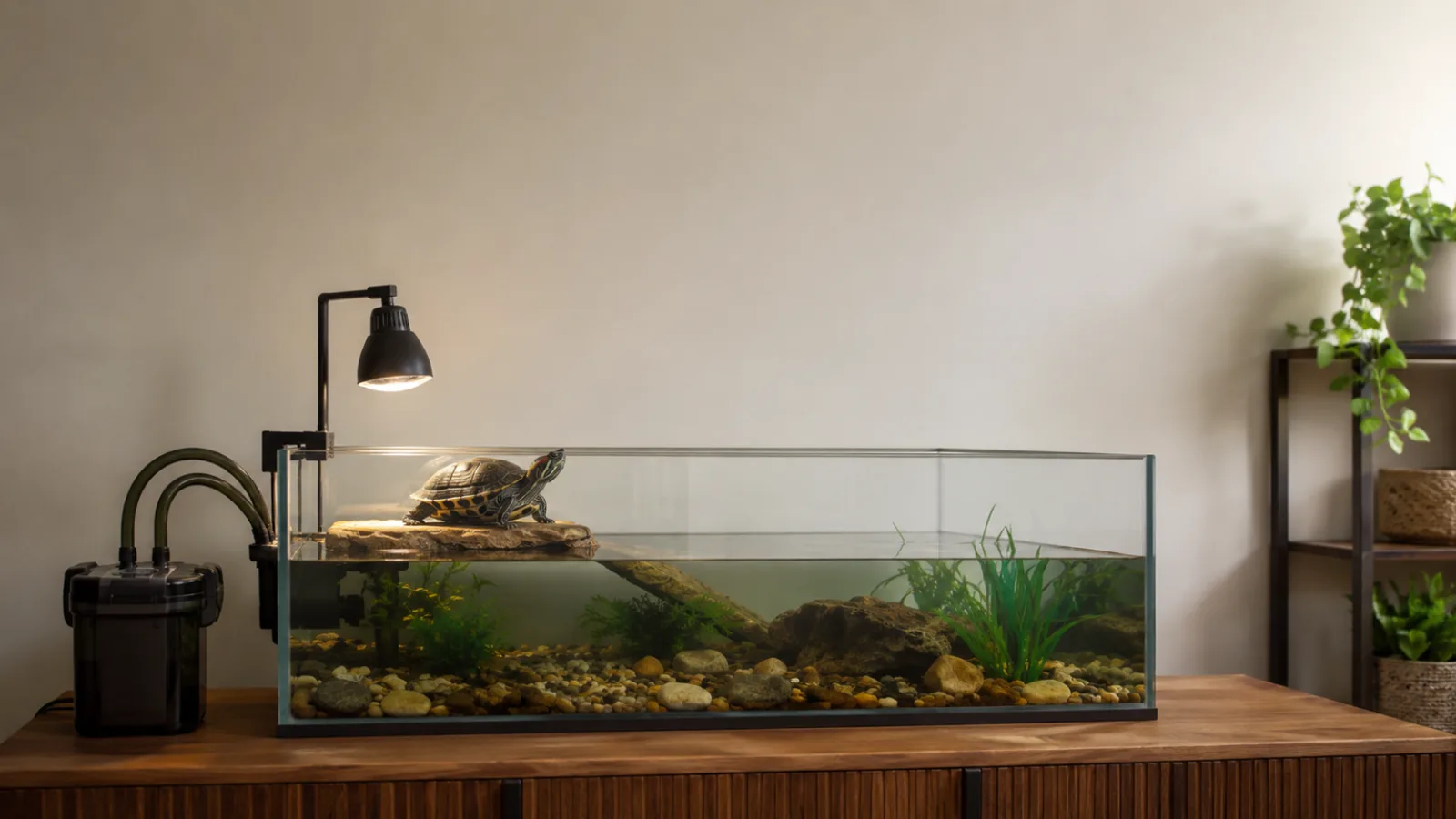
This is not a head-to-head turtle-gear ranking — it is a build order for the two-environment tank an aquatic turtle actually needs. A slider, painted, or cooter lives in water but breathes air and basks dry, so the setup is really two habitats in one: a large, heavily filtered body of water and a warm, UVB-lit dock above it. The picks below are that kit in sequence — the tank that holds real swimming volume, the canister that over-filters a messy turtle's waste, an above-tank basking platform that frees the water, a basking heat lamp, a water heater, and a conditioner — not seven products ranked against each other. If you will not over-filter the water, light the basking dock with both heat and UVB, and commit to the water changes a turtle demands, read the caveats before you buy anything, because a cute hatchling grows into a messy, long-lived, dinner-plate-sized animal.
By Nick Miles · Updated August 12, 2026 · 12 min read
PetPalHQ is reader-supported. We may earn a commission from qualifying Amazon purchases at no extra cost to you.
Evidence at a Glance
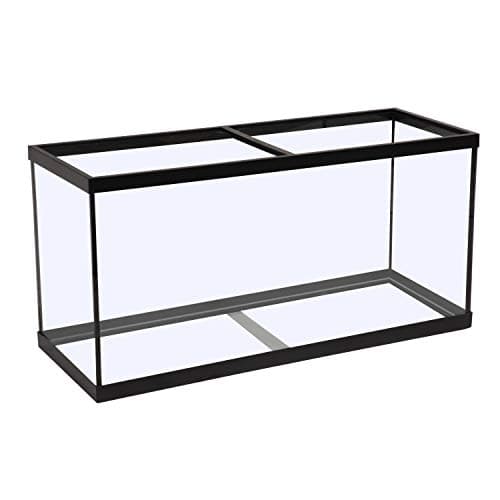
Tetra 55-Gallon Glass Aquarium
The water body — a 55-gallon rectangular glass tank measuring 48 by 13 by 20 inches, giving an adult aquatic turtle the swimming length and depth its long life demands, rather than the shallow starter tank a hatchling outgrows in a year.
Sources: Tetra manufacturer documentation, Aquatic-turtle keeper community consensus on water volume, Published reptile-welfare guidance on turtle enclosure size
Verified Jul 12, 2026
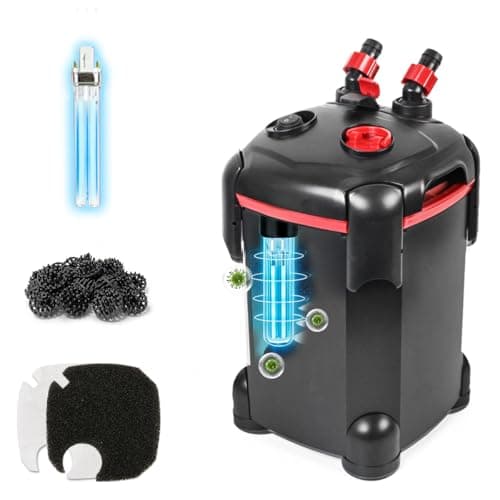
PONDFORSE Canister Filter
The filtration engine — an external canister filter with multi-layer media and an adjustable flow valve, sized to over-filter the heavy waste load an aquatic turtle produces, which a small in-tank or hang-on filter cannot keep up with.
Sources: PONDFORSE manufacturer documentation, Aquatic-turtle keeper consensus on over-filtering, Published guidance on turtle water quality
Verified Jul 12, 2026
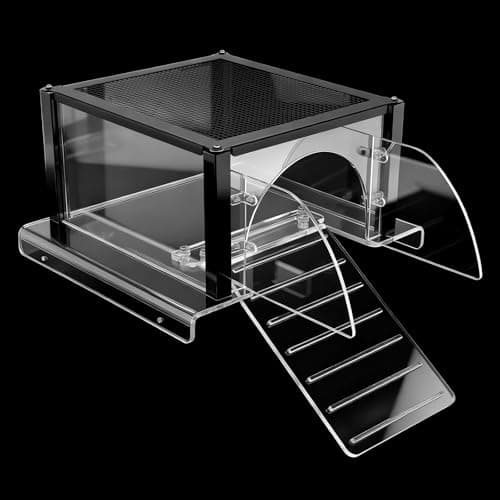
LYL Turtle Topper Above-Tank Basking Platform
The dry dock — an above-tank basking platform with a stepped ramp and escape-proof side barriers that mounts on the rim, giving the turtle a warm, dry place to haul out while leaving the entire water column free to swim.
Sources: LYL LEYOULAND manufacturer documentation, Aquatic-turtle keeper consensus on basking area, Published reptile-welfare guidance on haul-out and drying
Verified Jul 12, 2026
Our Picks
Tetra
Tetra 55-Gallon Glass Aquarium
8.7 / 10
- 55 gallons at 48 by 13 by 20 inches per Tetra
- Rectangular footprint gives real horizontal swimming length
- Glass walls take a mounted basking platform and lights
- Sized for an adult turtle, not a hatchling that will outgrow it
$299.99
Current price · checked Oct 3, 2026
PONDFORSE
PONDFORSE Canister Filter
8.6 / 10
- Multi-layer media removes particles and impurities per PONDFORSE
- Adjustable flow-rate valve suits a range of tank sizes
- External canister keeps bulky media out of the swimming space
- Quiet brushless motor for continuous running
$69.99
Current price · checked Sep 8, 2026
LYL LEYOULAND
LYL Turtle Topper Above-Tank Basking Platform
8.4 / 10
- Mounts above the tank rim on 10-to-55-gallon tanks per LYL
- Stepped ramp lets the turtle climb out of the water
- Escape-proof side barriers keep a climbing turtle contained
- Frees the whole water column below for swimming
$62.99
Current price · checked Sep 8, 2026
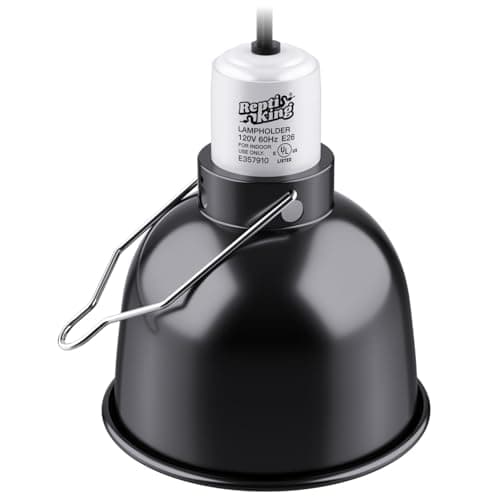
ReptiKing
ReptiKing 5.5-Inch Reptile Dome Light Fixture
8.2 / 10
- Heat-resistant ceramic socket rated to 150 watts per ReptiKing
- Deep aluminum reflector concentrates heat onto the dock
- Holds a basking bulb, heat lamp, or ceramic heat emitter
- On/off switch on a six-foot cord for daily control
$18.89
Current price · checked Sep 8, 2026
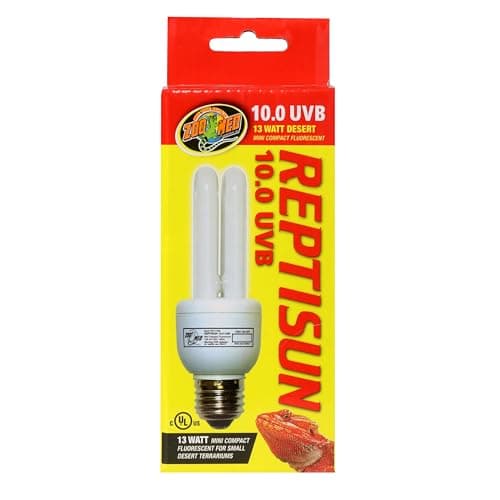
Zoo Med
Zoo Med ReptiSun 10.0 Mini Compact Fluorescent UVB Lamp
8.1 / 10
- 10 percent UVB and 30 percent UVA output per Zoo Med
- Quartz glass built for maximum UVB penetration
- Mounts over the basking dock, separate from the heat lamp
- Orientable vertically or horizontally to fit the fixture
$16.80
Current price · checked Sep 8, 2026
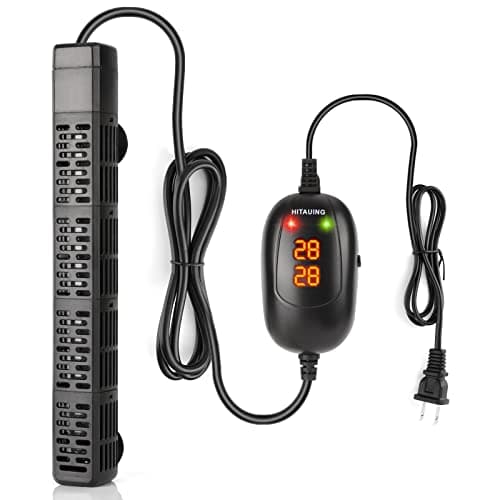
HiTauing
HiTauing Submersible Aquarium Heater
8.0 / 10
- 300-watt model rated for 40-to-75-gallon tanks per HiTauing
- External digital display shows the water temperature
- Over-temperature protection and auto power-off out of water
- Explosion-proof quartz glass construction
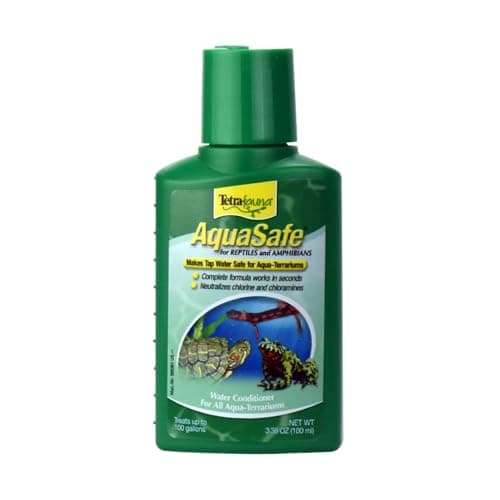
TetraFauna
TetraFauna AquaSafe Water Conditioner for Reptiles
7.9 / 10
- Neutralizes chlorine, chloramine, ammonia, and heavy metals per TetraFauna
- Works in seconds on each batch of new water
- Colloids help protect turtle skin and shell
- Used on both fill water and every water change
$5.52
Current price · checked Sep 8, 2026
The Short Answer
Set up an aquatic turtle tank as two habitats in one and stock it last. Start with water volume: the Tetra 55-gallon glass aquarium gives an adult slider, painted turtle, or cooter room to swim rather than the shallow bowl a hatchling gets sold in. Then over-filter it, because turtles are far messier than fish — a PONDFORSE canister filter rated well beyond the water volume handles the heavy bioload that a small hang-on filter cannot. Build the dry half next: an LYL Turtle Topper basking platform mounts above the tank and frees the whole water column for swimming, and over that dock go two separate lights a turtle cannot live without — a ReptiKing dome holding a basking heat lamp to drive the warm, dry basking spot, and a dedicated UVB bulb, bought separately, so the turtle can process calcium and avoid shell disease. A HiTauing submersible heater holds the water at a stable temperature, and TetraFauna AquaSafe makes tap water safe before the turtle ever touches it. The core truth never changes: an aquatic turtle needs deep clean water, a hot dry basking spot, and UVB all at once, plus water changes for life — so build and cycle the tank empty first, then add the turtle.
Every product on this list has been scored against the PetPal Gear Score, a weighted composite of expert consensus, observed effectiveness, animal safety, long-term durability, and value. Review method: Editorial synthesis of aquatic-turtle setup guidance — aquatic-turtle and chelonian keeper community consensus, published reptile-welfare and husbandry guidance on water volume, filtration, basking heat, and UVB, and manufacturer documentation from Tetra, PONDFORSE, LYL LEYOULAND, ReptiKing, HiTauing, and TetraFauna. Community consensus from turtle-keeping forums was included as consensus, not quotation. No first-hand product testing — PetPalHQ does not run a testing lab.. Synthesized from 6+ expert sources.
An aquatic turtle tank goes wrong, in this guide's editorial judgment, for one reason more than any other: it is set up like a fish tank with a turtle in it, instead of two habitats in one — a large, heavily filtered body of water and a warm, UVB-lit dry dock above it. A beginner buys the coin-sized hatchling and the small kit it is sold with, drops it in a shallow tank with a little filter and a light, and a year later has a fouling tank, a soft-shelled turtle, and an animal that has already outgrown its home. The tank was never sized for the animal the turtle becomes, and it was never built to do the two jobs an aquatic turtle needs done at once.
Start with the water body, because everything else is fitted to it. A large tank sets the swimming volume for the adult — roughly ten gallons per inch of shell is the honest rule — and its rim is what the basking dock and lights mount to. But a turtle is messy in a way fish are not, so the very next stage over-filters the water with a canister rated well beyond the volume, because the standard small filter cannot keep turtle water clean. None of that is optional, and none of it is the part beginners skimp on by accident — it is the part the starter kit quietly leaves out.
Then the dry half makes the tank a turtle habitat rather than a fish tank. An above-tank basking dock gives the turtle a place to climb out and dry off without stealing swimming volume, and over that dock go two separate lights doing two different jobs — a basking lamp for the warm, dry spot a turtle thermoregulates on, and a UVB bulb for the wavelength that builds shell and bone. A water heater holds the warm end of the gradient, and a conditioner makes tap water safe on every change. The picks below are that kit, in build order, not seven products ranked against each other, and where a claim rests on a maker's documentation or keeper consensus, that is named rather than asserted, because PetPalHQ does not run a testing lab.
One principle sits above the whole build and never bends. An aquatic turtle needs deep clean water, a hot dry basking spot, and UVB all at the same time, plus water changes for as long as it lives — so the tank is built, lit, heated, and cycled empty first, and the turtle is stocked last. The canister, the dock, the two lights, and the heater are not upgrades to add over time; they are the minimum a turtle needs from day one. An aquatic turtle rewards the keeper who sizes the tank to the adult, over-filters the water, dries and lights the dock properly, and only then adds the animal — and it punishes the one who buys the hatchling first and builds the tank around a living, growing turtle.
Head-to-Head Comparison
| Feature | Tetra 55-Gallon Glass Aquarium | PONDFORSE Canister Filter | LYL Turtle Topper Above-Tank Basking Platform | ReptiKing 5.5-Inch Reptile Dome Light Fixture | Zoo Med ReptiSun 10.0 Mini Compact Fluorescent UVB Lamp | HiTauing Submersible Aquarium Heater | TetraFauna AquaSafe Water Conditioner for Reptiles |
|---|---|---|---|---|---|---|---|
| Stage in the setup | Size the water body | Over-filter the water | Build the dry dock | Drive the basking spot | Add UVB | Warm the water | Condition the water |
| When it comes into play | Before anything else | Before stocking, running to cycle | Before the lights | Over the dock | Over the dock | Before stocking | At fill and every change |
| What it does | Sets swimming volume | Handles the heavy bioload | Dry haul-out above water | Warm, dry basking spot | Builds shell and bone | Stable warm water | Neutralizes tap chemicals |
| PetPal Turtle-Readiness Score | 8.7 | 8.6 | 8.4 | 8.2 | 8.1 | 8.0 | 7.9 |
| Ongoing cost after purchase | Stand and water | Media and cleaning | Occasional replacement | Basking bulbs | UVB bulb every 6-12 mo | Electricity | Refilled regularly |
| Check price | Amazon | Amazon | Amazon | Amazon | Amazon | Amazon | Amazon |
$299.99
Current price · checked Oct 3, 2026
- 55 gallons at 48 by 13 by 20 inches per Tetra
- Rectangular footprint gives real horizontal swimming length
- Glass walls take a mounted basking platform and lights
- Sized for an adult turtle, not a hatchling that will outgrow it
- Built to add separate filtration, heating, and lighting
An aquatic turtle spends most of its life in water, and the water body is the decision the whole build hangs on. The Tetra 55-gallon glass aquarium earns the first slot because it sets the swimming volume, the footprint, and the rim every later stage mounts to. Tetra documents a rectangular 55-gallon glass tank measuring 48 inches wide by 13 inches deep by 20 inches high, built to be customized with separate filtration, lighting, and water care. That horizontal length matters more than height for a swimmer — a turtle needs room to move across the tank, not just deep water — and the glass rim is what a basking platform and lights later clamp onto.
Where it fits the setup: this is the shell of the wet half, and it is sized for the animal the turtle becomes, not the one you buy. A hatchling slider is the size of a cookie, but a female can reach dinner-plate size, and the honest keeper rule of thumb is roughly ten gallons of water per inch of shell — which is why a full-grown turtle needs a large tank measured in dozens of gallons, not the tiny starter kit hatchlings are so often sold in. Buying the big tank first is cheaper than buying a small one twice, and it means the filter, heater, and basking dock you add are all matched to the adult from the start.
The honest caveats are about weight, water depth, and what the tank does not include. A 55-gallon tank full of water weighs several hundred pounds and needs a stand rated to hold it on a level, load-bearing floor — this is not a shelf-top setup. Water depth should let the turtle fully submerge and right itself if it flips, but the tank must never be filled so high that the turtle can climb out over the rim. And a bare tank is only the water body: it has no filtration, no basking dock, no heat, and no UVB, which is the entire reason the stages below exist. Confirm current price and availability before buying. Bought as the adult's home rather than the hatchling's, it is the one part of the build you should never have to buy twice.
What We Love
- Real swimming length for an adult turtle, not a hatchling bowl
- Glass rim accepts a mounted basking platform and lights
- Large volume dilutes waste and stabilizes water temperature
- A single purchase sized to the turtle's full-grown size
What Could Be Better
- A filled 55-gallon tank needs a stand rated for several hundred pounds
- Ships bare — no filter, dock, heat, or UVB included
- Large footprint demands real floor space and a level surface
The Verdict
Start here, and size to the adult turtle rather than the hatchling. Set it on a stand rated for the filled weight on a level, load-bearing floor, keep the water deep enough to submerge but never high enough to climb out, and treat this as the empty water body the filter, heat, and basking dock all attach to.
Sources
- Tetra (Amazon product listing, 55 Gallon Glass Aquarium NV52018): a rectangular glass aquarium of 55 gallons measuring 48 inches wide by 13 inches deep by 20 inches high, built to be customized with separate filtration, lighting, and water-care accessories
- Aquatic-turtle keeper community consensus on water volume: keepers size an aquatic turtle tank to the adult, not the hatchling, and the common rule of thumb is roughly ten gallons of water per inch of shell, so an adult slider needs a large tank measured in the dozens of gallons rather than the small kit a baby turtle is often sold in
$69.99
Current price · checked Sep 8, 2026
- Multi-layer media removes particles and impurities per PONDFORSE
- Adjustable flow-rate valve suits a range of tank sizes
- External canister keeps bulky media out of the swimming space
- Quiet brushless motor for continuous running
- Sized to over-filter a turtle's heavy bioload
The second stage is the one that keeps the water fit to live in, and it is where beginners most underspend. The PONDFORSE canister filter sits outside the tank and pushes the water through several layers of media. PONDFORSE documents an external canister filter that uses multiple filtration layers to remove particles and impurities, with an adjustable flow-rate valve and a quiet brushless motor. The reason a canister rather than a small in-tank filter is that turtles are messy in a way fish are not — they eat large meals, produce heavy waste, and foul water quickly, so the standard turtle rule is to over-filter, choosing a filter rated well beyond the actual water volume.
Where it fits the setup: this is the life-support of the wet half, installed and running before the turtle goes in so the tank is biologically cycled first. An external canister does two things a hang-on filter struggles with — it holds far more media, which is where the beneficial bacteria that process turtle waste actually live, and it keeps that bulky media out of the tank so the whole water column stays open for swimming. If you are matching a filter to your specific tank size and turtle, or comparing canister models and turtle-rated options, a dedicated roundup is the place to size it properly; our roundup of the best turtle and aquatic-reptile filtration lays out how to over-filter for the bioload rather than guessing.
The honest caveats are about maintenance, flow, and that filtration is not a substitute for water changes. A canister holds a lot of media but still needs periodic cleaning, and a neglected canister becomes a waste reservoir rather than a filter. Turtles are weak swimmers compared with fish, so the return flow must be baffled or angled so it does not push a basking turtle around the tank. And no filter, however oversized, replaces routine partial water changes and a siphon of the debris on the bottom — filtration reduces how often and how much, but a turtle tank still needs hands-on water maintenance for life. Confirm current price and availability before buying. Chosen to over-filter rather than to just barely cope, it is what stands between a clear tank and a green, smelling one.
What We Love
- External canister holds the media a turtle's bioload needs
- Keeps bulky filtration out of the swimming space
- Adjustable flow lets you baffle the current for a weak swimmer
- Over-filtering buys margin a small hang-on filter never has
What Could Be Better
- Needs periodic media cleaning or it becomes a waste reservoir
- Return flow must be baffled so it does not push the turtle around
- Does not replace routine partial water changes and siphoning
The Verdict
Over-filter deliberately — pick a canister rated well beyond the water volume, because a turtle fouls water far faster than fish do. Baffle the return so a weak swimmer is not shoved around, clean the media on a schedule, and treat it as a reducer of water changes, not a replacement for them.
Sources
- PONDFORSE (Amazon product listing, Canister Filter): an external canister filter that uses multiple layers of filtration media to remove particles and impurities, with a flow-rate control valve compatible with a wide range of aquarium sizes and a quiet brushless motor
- Aquatic-turtle keeper consensus on over-filtering: turtles produce far more waste than fish of the same tank size, so keepers deliberately over-filter, choosing a filter rated for two to three times the actual water volume, because an underpowered in-tank or hang-on filter cannot keep turtle water clean and the tank fouls fast
$62.99
Current price · checked Sep 8, 2026
- Mounts above the tank rim on 10-to-55-gallon tanks per LYL
- Stepped ramp lets the turtle climb out of the water
- Escape-proof side barriers keep a climbing turtle contained
- Frees the whole water column below for swimming
- Transparent deck lets basking light reach the platform
The third stage builds the dry half of a two-part habitat. The LYL Turtle Topper is an above-tank basking platform that mounts on the rim and gives the turtle somewhere to haul out. LYL documents a turtle topper that mounts above a 10-to-55-gallon tank with a stepped climbing ramp, a transparent acrylic and metal deck, and escape-proof side barriers. An aquatic turtle is not a fish — it must be able to leave the water entirely and dry off completely under heat and UVB, and a turtle that cannot dry out develops shell rot and skin infection, so the dry dock is not optional furniture.
Where it fits the setup: this is the basking stage, and mounting it above the tank rather than inside is the deliberate choice. An in-tank ramp or floating dock works, but it eats into the swimming volume you paid for with a big tank; an above-tank topper adds a whole basking level on top while leaving the water column open below. The stepped ramp is what lets a turtle actually climb out — a dock a turtle cannot reach is a dock it will not use — and the side barriers matter because aquatic turtles are surprisingly determined climbers that will otherwise haul themselves right out of the tank. The two basking lights mount over this deck, which is why it goes in before them.
The honest caveats are about fit, drying, and the climb. An above-tank platform has to match your tank's rim and width, so confirm the fit before buying, and a heavily stocked or very large adult may need more haul-out room than one dock provides. The whole point of the dock is complete drying, so the basking lights above it must be warm enough that the turtle actually dries out rather than sitting damp, or the dock does no welfare work. And no dock is truly escape-proof if the tank water is filled too high or the lights are hot enough to drive a turtle to bolt, so water level and basking temperature are part of making the dock safe. Confirm current price and availability before buying. Mounted above the water as a proper dry deck rather than crammed inside the tank, it gives the turtle its second habitat without costing it the first.
What We Love
- Adds a full basking level without stealing swimming volume
- Stepped ramp gives the turtle a real way to climb out
- Side barriers contain a determined climbing turtle
- Transparent deck lets heat and UVB reach the basking spot
What Could Be Better
- Must match the tank's rim and width — confirm fit first
- A very large adult may need more haul-out room than one dock
- Only works if the basking lights above dry the turtle fully
The Verdict
Give the turtle a dry dock it can actually reach and cannot escape, and mount it above the tank so basking room does not cost swimming room. Match it to your rim, keep the water level safe below it, and remember the dock only earns its place if the lights above dry the turtle completely.
Sources
- LYL LEYOULAND (Amazon product listing, Turtle Topper Basking Platform): an above-tank basking platform that mounts on the rim of a 10-to-55-gallon tank with a stepped climbing ramp, a transparent acrylic and metal deck, and escape-proof side barriers, giving turtles a place to dry off and warm up above the water
- Aquatic-turtle keeper consensus on basking area: aquatic turtles must be able to leave the water and dry out completely under heat and UVB, so keepers give every turtle a dry basking dock, and an above-tank platform is favored because it adds basking room without stealing swimming volume from the water below
$18.89
Current price · checked Sep 8, 2026
- Heat-resistant ceramic socket rated to 150 watts per ReptiKing
- Deep aluminum reflector concentrates heat onto the dock
- Holds a basking bulb, heat lamp, or ceramic heat emitter
- On/off switch on a six-foot cord for daily control
- Aimed at the basking platform to make a warm dry spot
The fourth stage supplies the heat that makes the dock work. The ReptiKing dome is the fixture that holds a basking bulb over the platform. ReptiKing documents a 5.5-inch light dome with a heat-resistant ceramic socket rated to 150 watts and a deep aluminum reflector, made to hold a basking bulb, heat lamp, or ceramic heat emitter. The dome is the reusable half of the basking heat — you keep the fixture and swap bulbs as they burn out or as you tune the temperature — and its reflector concentrates the heat down onto the dry dock where the turtle hauls out.
Where it fits the setup: this is the heat source for the dry half, aimed at the basking platform to create a warm spot distinctly hotter than the water. A turtle thermoregulates by moving between cool water and a hot dock, so the setup needs that gradient — warm water below, a hot dry basking spot above — and the dome delivers the top end of it. The dome itself does not include the bulb, and choosing the right basking bulb and wattage for your dock height and room temperature is its own decision; our roundup of the best reptile heat lamps and basking fixtures is where to size the bulb to your basking spot rather than guessing at wattage.
The honest caveats are about heat safety, distance, and the water below. A basking lamp runs hot, so the dome must be mounted on a stable stand or a screen top clear of anything flammable, with the cord routed away from water and beak, and never rested directly on an acrylic dock. Basking temperature is set by the bulb's wattage and its distance from the dock, so it is measured and adjusted with a thermometer, not guessed — too cool and the turtle never dries or warms, too hot and it will not bask at all. And because this is a heat lamp over an open water tank, the fixture and cord placement must account for splashing and humidity. Confirm current price and availability before buying. Set up as the reusable fixture for a measured, dock-aimed basking spot, it is half of the two-light system a turtle cannot do without.
What We Love
- Reusable fixture you keep while swapping bulbs
- Deep reflector concentrates heat onto the dry dock
- Rated to 150 watts for a range of basking bulbs
- On/off switch makes daily light cycling simple
What Could Be Better
- Ships without a bulb — the basking bulb is a separate choice
- Runs hot and must be mounted clear of anything flammable
- Basking temperature must be measured and tuned, not assumed
The Verdict
Treat this as the reusable heat fixture and match the bulb to your dock. Mount it stably over the basking platform clear of anything flammable, set the basking temperature with a thermometer rather than by guessing, and remember it is one of two lights the dock needs — heat from this fixture, and a dedicated UVB bulb over the same deck.
Sources
- ReptiKing (Amazon product listing, 5.5-Inch Reptile Light Dome): a 5.5-inch reptile light dome with a heat-resistant ceramic socket rated to 150 watts and a deep aluminum reflector, made to hold a basking bulb, heat lamp, or ceramic heat emitter over an enclosure
- Aquatic-turtle keeper consensus on basking heat: a turtle basks to raise its body temperature and dry its shell, so keepers aim a basking bulb at the dock to create a warm dry spot noticeably hotter than the water, mounted in a heat-rated dome fixture positioned over the platform
$16.80
Current price · checked Sep 8, 2026
- 10 percent UVB and 30 percent UVA output per Zoo Med
- Quartz glass built for maximum UVB penetration
- Mounts over the basking dock, separate from the heat lamp
- Orientable vertically or horizontally to fit the fixture
- Replaced on schedule as UVB output fades over months
The fifth stage is the light a turtle cannot be healthy without, and the one beginners most often skip. The Zoo Med ReptiSun 10.0 is a UVB bulb mounted over the basking dock. Zoo Med documents a 13-watt mini compact fluorescent lamp delivering 10 percent UVB and 30 percent UVA through UVB-transmitting quartz glass, orientable vertically or horizontally. UVB is not warmth and it is not visible brightness — it is the wavelength a turtle uses to make vitamin D3 and metabolize calcium, and a turtle kept without it develops a soft, deformed shell and metabolic bone disease, slowly and then permanently.
Where it fits the setup: this is the second of the two basking lights, mounted over the same dry dock as the heat lamp but doing a completely different job. Heat dries and warms; UVB builds bone — and because they are different jobs, they are two separate bulbs, not one. The UVB source goes above the basking spot where the turtle hauls out, close enough that meaningful UVB reaches the shell, and critically it must not shine only through glass or water, both of which filter UVB out. If you are matching UVB strength to your dock height and species, or comparing tube and compact options, a dedicated roundup lays out the choices; our roundup of the best reptile UVB bulbs is the honest place to match output to the basking distance.
The honest caveats are about fading, distance, and glass. A UVB bulb keeps producing visible light long after its UVB output has faded below a useful level, so it is replaced on a schedule — often every six to twelve months — not when it stops lighting up. Distance matters as much as the bulb: UVB weakens fast with distance, so a bulb mounted too high does little, and one behind glass or a plastic cover may do nothing, because ordinary glass and plastic block UVB. And UVB is not a substitute for a proper diet with calcium — the two work together, and neither alone prevents shell disease. Confirm current price and availability before buying. Fitted as a dedicated, correctly-placed, regularly-replaced UVB source, it is the invisible half of a basking spot that keeps a turtle's shell and bones sound.
What We Love
- Delivers the UVB a turtle needs to build shell and bone
- Compact bulb fits a standard dome over the dock
- Orientable to aim UVB down onto the basking spot
- Inexpensive relative to the shell disease it prevents
What Could Be Better
- UVB output fades before the light does — replace on schedule
- UVB is blocked by glass and plastic and weakens fast with distance
- Works with dietary calcium, not as a replacement for it
The Verdict
Fit a dedicated UVB bulb over the dock as the second basking light, never as an afterthought. Mount it close enough and with no glass or plastic between bulb and turtle, replace it on a six-to-twelve-month schedule as its output fades, and pair it with dietary calcium — UVB and diet prevent shell disease together.
Sources
- Zoo Med (Amazon product listing, ReptiSun 10.0 Mini Compact Fluorescent): a 13-watt mini compact fluorescent UVB lamp for basking reptiles delivering 10 percent UVB and 30 percent UVA output through UVB-transmitting quartz glass, orientable vertically or horizontally
- Aquatic-turtle keeper consensus on UVB: turtles need UVB light to make vitamin D3 and metabolize calcium, without which they develop soft shells and metabolic bone disease, so keepers mount a dedicated UVB source over the basking dock separate from the heat lamp and replace it on schedule as its output fades
- 300-watt model rated for 40-to-75-gallon tanks per HiTauing
- External digital display shows the water temperature
- Over-temperature protection and auto power-off out of water
- Explosion-proof quartz glass construction
- Holds a stable water temperature against room swings
The next stage holds the water at a steady temperature. The HiTauing submersible heater warms the tank and keeps it stable. HiTauing documents a submersible heater in wattages from 50 to 500 watts, with a 300-watt model rated for 40-to-75-gallon tanks, an external digital display, over-temperature protection, and automatic power-off when lifted from the water. A turtle is cold-blooded, so its water needs to sit in a stable, species-appropriate range rather than drifting up and down with the room — cold water suppresses appetite and immunity, and a wildly swinging temperature is a stressor of its own.
Where it fits the setup: this is the climate control of the wet half, sized to the tank volume so it can actually hold temperature in a large body of water. It works together with the basking heat above the dock to make the thermal gradient a turtle needs — warm water to swim in and a hotter dry dock to bask on — so the two heat sources are set to different targets on purpose. The auto power-off when the heater leaves the water is a genuinely useful safety feature during water changes, when a heater left running in air can crack or overheat. If you are matching heater wattage to your tank size, a dedicated roundup lays out the sizing; our roundup of the best aquarium heaters is where to match wattage to volume rather than under-sizing it.
The honest caveats are about breakage, guarding, and placement. A turtle is far heavier-bodied than a fish and can bump, climb, or crack an unguarded glass heater, so many keepers use a heater guard or choose a sturdier build and position it where the turtle is less likely to lever against it. A heater must be fully submerged to its marked line to work safely, and it should be placed in good flow — near the filter return — so it heats evenly rather than making a hot pocket. And like any powered device over water, the cord needs a drip loop and a protected circuit. Confirm current price and availability before buying. Sized to the volume and guarded against a heavy turtle, it holds the warm half of the gradient a cold-blooded animal depends on.
What We Love
- Sized to hold temperature in a large turtle tank
- Auto power-off out of water adds safety at change time
- External display makes the water temperature easy to read
- Works with the basking lamp to build the thermal gradient
What Could Be Better
- A heavy turtle can crack an unguarded glass heater
- Must stay fully submerged to the marked line to run safely
- Needs good flow placement to avoid a hot pocket
The Verdict
Hold the water in a stable range with a heater sized to the volume, and guard it against a turtle that can crack glass. Set it to a different, lower target than the basking spot so the two build a proper gradient, keep it submerged to its line in good flow, and use the drip loop and protected circuit any powered device over water needs.
Sources
- HiTauing (Amazon product listing, Submersible Aquarium Heater): a submersible aquarium heater available in wattages from 50 to 500 watts with a 300-watt model rated for 40-to-75-gallon tanks, an external digital temperature display, over-temperature protection, and automatic power-off when lifted from the water
- Aquatic-turtle keeper consensus on water temperature: aquatic turtles are cold-blooded and need their water held in a stable, species-appropriate range rather than left to swing with the room, so keepers use a thermostatically controlled submersible heater sized to the tank volume and guard it against a turtle that may bump or crack it
$5.52
Current price · checked Sep 8, 2026
- Neutralizes chlorine, chloramine, ammonia, and heavy metals per TetraFauna
- Works in seconds on each batch of new water
- Colloids help protect turtle skin and shell
- Used on both fill water and every water change
- Protects the filter's beneficial bacteria from chlorine
The final stage makes the water itself safe, and it is the cheapest insurance in the build. TetraFauna AquaSafe conditions tap water before it touches the turtle. TetraFauna documents a conditioner that instantly neutralizes chlorine, chloramines, ammonia, and heavy metals and adds colloids to protect turtle skin. Municipal tap water is treated with chlorine or chloramine to be safe for people, but those same chemicals irritate a turtle's skin and eyes and kill the beneficial bacteria your filter depends on, which is why raw tap water goes through a conditioner first.
Where it fits the setup: this is the routine that never ends, used both to fill the tank at setup and on every partial water change for the life of the turtle. It is last in the sequence only because it is the step you repeat rather than install — the tank, filter, dock, lights, and heater are built once, but conditioning water is part of every change from now on. Dosing is by the volume of new water added, so a turtle keeper measures rather than eyeballs, and treats the water before or as it goes in so the filter bacteria are never hit with raw chlorine. It is a small bottle that quietly protects both the animal and the biological filter you built.
The honest caveats are about scope and habit. A conditioner neutralizes chlorine and the like, but it does not clean the water, remove waste, or reduce the need for filtration and water changes — it is one step in water maintenance, not a shortcut around it. Dosing must match the new water volume, since under-dosing leaves chlorine and over-dosing wastes product. And it treats tap water chemistry, not the biological load a turtle produces, so it sits alongside the canister and the water changes rather than replacing either. Confirm current price and availability before buying. Kept on hand and used on every batch of water, it is the quiet, ongoing step that protects the turtle's skin and the filter's bacteria at once.
What We Love
- Neutralizes chlorine and chloramine that harm turtle and filter
- Works instantly on each batch of new water
- Protects skin and the filter's beneficial bacteria
- Inexpensive insurance used on every water change
What Could Be Better
- Conditions chemistry only — it does not clean the water
- Must be dosed to the new water volume, not eyeballed
- No substitute for filtration and routine water changes
The Verdict
Condition every batch of water, at setup and on every change for life. Dose it to the volume of new water so chlorine and chloramine are neutralized before they reach the turtle or the filter bacteria, and treat it as one ongoing step in water maintenance rather than a shortcut around filtration and water changes.
Sources
- TetraFauna (Amazon product listing, AquaSafe for Reptiles and Amphibians): a water conditioner for reptiles and amphibians that instantly neutralizes chlorine, chloramines, ammonia, and heavy metals in tap water and adds colloids to protect the skin of turtles and other species
- Aquatic-turtle keeper consensus on tap water: tap water carries chlorine and chloramine that irritate a turtle and harm the beneficial bacteria in the filter, so keepers condition every batch of new and replacement water before it goes in, treating it as a routine part of the water changes a turtle tank needs for life
How We Score
Formula
PetPal Turtle-Readiness Score = (Expert Consensus × 0.35) + (Setup-Sequence Fit × 0.25) + (Turtle Health / Welfare Design × 0.20) + (Value × 0.20)
Score Factors
- Expert Consensus · 35%
- Synthesized from aquatic-turtle and chelonian keeper community consensus, published reptile-welfare and husbandry guidance on water volume, filtration, basking heat, UVB, and water temperature, and manufacturer documentation. The PetPal Turtle-Readiness Score is a composite of expert opinion — PetPalHQ does not run a testing lab.
- Setup-Sequence Fit · 25%
- How directly the item advances a correct aquatic-turtle build in order — sizing the water body, over-filtering the bioload, building a dry basking dock, driving the basking heat, adding UVB, warming the water, and conditioning it — rather than how it performs as a standalone product ranked against rivals.
- Turtle Health / Welfare Design · 20%
- Alignment with aquatic-turtle welfare principles — deep clean water sized to the adult, heavy filtration, a dry basking dock the turtle can reach and not escape, a warm basking spot, dedicated UVB, a stable water temperature gradient, and conditioned water. The turtle is stocked only after the tank is built and cycled.
- Value · 20%
- Cost relative to the item's role in the sequence, including ongoing costs like replacement UVB and basking bulbs, filter media, electricity, and conditioner, and how much of the healthy-turtle outcome the item is responsible for. This kit is the equipment cost, not the ongoing cost of keeping an aquatic turtle.
| Rank | Product | Score |
|---|---|---|
| #1 | Tetra Tetra 55-Gallon Glass Aquarium | 8.7 |
| #2 | PONDFORSE PONDFORSE Canister Filter | 8.6 |
| #3 | LYL LEYOULAND LYL Turtle Topper Above-Tank Basking Platform | 8.4 |
| #4 | ReptiKing ReptiKing 5.5-Inch Reptile Dome Light Fixture | 8.2 |
| #5 | Zoo Med Zoo Med ReptiSun 10.0 Mini Compact Fluorescent UVB Lamp | 8.1 |
| #6 | HiTauing HiTauing Submersible Aquarium Heater | 8.0 |
| #7 | TetraFauna TetraFauna AquaSafe Water Conditioner for Reptiles | 7.9 |
When NOT to Buy
An aquatic turtle is a long-lived, messy, dinner-plate-sized animal sold as a coin-sized hatchling, and that gap is where most turtle keeping goes wrong. A slider can live for decades and outgrow the cute starter kit within a year, and it needs deep clean water, heavy filtration, a hot dry basking dock, and UVB — all at once, and all before it is stocked. If you want a low-effort, low-cost, short-commitment pet, an aquatic turtle is the wrong choice, because the water changes, the growing tank size, the replacement bulbs, and the sheer lifespan do not stop. The turtle goes in last, only after the tank is set up, heated, lit with both basking heat and UVB, and biologically cycled.
The build also rules out the usual shortcuts. A turtle is not a fish, so a small hang-on filter and a light are not enough — it needs a canister sized to over-filter, a basking dock it can climb onto and dry off completely, and two separate lights doing two different jobs. Skipping UVB, or running it behind glass where it does nothing, is the quiet mistake that ends in a soft, deformed shell; skipping the dry dock ends in shell rot. This guide is also written for an aquatic turtle specifically — a slider, painted turtle, or cooter that swims — and it is the wrong build for a land tortoise, which needs a dry enclosure and no swimming water at all, or for a desert lizard. If your instinct is to buy the hatchling first and sort the tank out later, that instinct is the warning sign.
Finally, the honest budget note: this kit is the equipment, not the cost of keeping a turtle. Replacement UVB and basking bulbs, filter media, electricity to run heat and a heater year-round, conditioner for every water change, a larger tank as the turtle grows, and veterinary care are the ongoing bill, and it lasts as long as the turtle does. There is also work the kit assumes but does not supply — cycling the tank before stocking, setting the basking and water temperatures with a thermometer, and doing the water changes for life. If you are still choosing filtration or a stand rated for a filled tank, our roundup of the best aquarium canister filters and our roundup of the best aquarium stands and cabinets are the honest places to size those before you commit. Confirm current price and availability on every item before buying, since prices and sellers move over time.
Frequently Asked Questions
- How big a tank does an aquatic turtle really need?
- Bigger than almost any starter kit provides, and sized to the adult rather than the hatchling. The common keeper rule of thumb is roughly ten gallons of water per inch of the turtle's shell length, which means a full-grown slider or cooter — which can reach dinner-plate size — needs a large tank measured in dozens of gallons, not the small kit a coin-sized baby is usually sold with. A hatchling looks lost in a big tank, but it grows fast and outgrows a small one within a year, so buying the large tank first is cheaper than buying a small one and then replacing it. Beyond raw volume, aquatic turtles are swimmers that use horizontal length, so a longer tank beats a tall narrow one, and the water should be deep enough for the turtle to fully submerge and right itself if it flips, while never so high that it can climb out over the rim. Size to the animal the turtle becomes, and the filter, heater, and basking dock you add are all matched to the adult from the start.
- Why do I need a canister filter — isn't the filter in the kit enough?
- Almost never, because a turtle is far messier than the fish those filters are designed for. Turtles eat large meals, produce heavy waste, and foul water quickly, so the standard turtle approach is to deliberately over-filter — choosing a filter rated for two to three times the actual water volume rather than just matched to it. A small in-tank or hang-on filter that would be fine for a tank of fish simply cannot keep up with a turtle's bioload, and the tank goes green and smelling fast. A canister filter helps on two fronts: it holds far more filter media, which is where the beneficial bacteria that break down turtle waste actually live, and it keeps that bulky media outside the tank so the whole water column stays open for swimming. The one caveat is flow — turtles are weak swimmers, so the canister's return should be baffled or angled so it does not push the turtle around — and the one thing no filter replaces is routine partial water changes and siphoning the debris off the bottom. Over-filter, keep the media clean, and still change water regularly.
- Do aquatic turtles need UVB if they have a heat lamp?
- Yes, and this is the single most common and most damaging mistake in turtle keeping. Heat and UVB are two completely different things: the basking lamp provides warmth so the turtle can raise its body temperature and dry off, while UVB is an invisible wavelength the turtle uses to make vitamin D3 and metabolize calcium. A turtle with a warm basking spot but no UVB slowly develops a soft, deformed shell and metabolic bone disease — the heat lamp does nothing to prevent it. So the basking dock needs two separate bulbs, a heat source and a dedicated UVB source, mounted over the same haul-out spot. Two further points matter as much as having the bulb: UVB is blocked by ordinary glass and plastic, so the bulb must shine directly onto the turtle with nothing between them, and UVB output fades over months while the bulb still lights up normally, so it has to be replaced on a schedule of roughly every six to twelve months rather than when it burns out. UVB also works together with dietary calcium — the two prevent shell disease as a pair, and neither alone is enough.
- What temperatures should the water and the basking spot be?
- The setup deliberately runs two different temperatures, because a turtle thermoregulates by moving between them. The water is held warm and stable by a submersible heater sized to the tank, while the basking spot above the dock is driven distinctly hotter by the basking lamp, so the turtle can warm up out of the water and cool down by swimming. The exact targets depend on the species and its age, so the honest approach is to research your specific turtle's recommended water and basking ranges and then set both with thermometers rather than guessing — basking temperature in particular is set by the bulb's wattage and its distance from the dock, so it is measured and adjusted, not assumed. What matters structurally is that the two are different: a warm water body and a hotter dry basking spot create the gradient a cold-blooded animal depends on. Water that is too cold suppresses appetite and immunity, a basking spot that is too cool means the turtle never dries or warms, and one that is too hot means it will not bask at all — so both are dialed in with a thermometer and checked, not left to chance.
- How much ongoing work is an aquatic turtle tank?
- More than a fish tank and far more than the hatchling suggests, and it lasts for decades. The routine work is water maintenance: even with an oversized canister filter, an aquatic turtle tank needs regular partial water changes and siphoning of waste off the bottom, and every batch of new water is conditioned to neutralize chlorine before it goes in. On top of that are the periodic jobs — cleaning the filter media before it becomes a waste reservoir, replacing the UVB bulb every six to twelve months as its output fades, replacing basking bulbs as they burn out, and moving the turtle to a larger tank as it grows. There is also the running cost of heat and a water heater on year-round, and the veterinary care any long-lived animal needs. None of this stops, because a slider or cooter can live for decades — so an aquatic turtle is a genuine long-term commitment, not a low-effort starter pet, and the keepers who do well are the ones who set up the whole system before stocking and then keep up the water changes for the life of the animal.
Bottom Line
Build the tank before the turtle, and size it to the adult. Start with the Tetra 55-gallon glass tank on a stand rated for its filled weight, because an aquatic turtle needs real swimming volume and outgrows a hatchling kit within a year — roughly ten gallons per inch of shell is the honest rule.
Over-filter the water, because a turtle is far messier than fish. A PONDFORSE canister rated well beyond the water volume handles the bioload a small hang-on filter cannot, but it reduces water changes rather than replacing them — the tank still needs hands-on maintenance for life.
Give the turtle a dry dock and light it twice. An LYL above-tank basking platform frees the swimming space while adding haul-out room, and over it go two separate lights — a ReptiKing dome for basking heat and a dedicated UVB bulb beside it — because heat dries and warms while UVB builds shell and bone.
Hold the water warm and safe. A HiTauing submersible heater sized to the volume keeps the water in a stable range and builds the gradient with the hotter basking spot, and TetraFauna AquaSafe neutralizes the chlorine in tap water on every fill and change so it harms neither the turtle nor the filter bacteria.
Match the whole build to an aquatic turtle and cycle it first. Replace UVB on schedule as its output fades, set basking and water temperatures with a thermometer, and budget for replacement bulbs, media, and a growing tank — an aquatic turtle is a decades-long commitment, not a starter pet.
Sources & Methodology
Methodology
PetPal Turtle-Readiness Score = (Expert Consensus × 0.35) + (Setup-Sequence Fit × 0.25) + (Turtle Health / Welfare Design × 0.20) + (Value × 0.20)
Expert review sources
- Aquatic-turtle and chelonian keeper community consensus on water volume and over-filtering
- Published reptile-welfare guidance on basking heat, UVB, and water temperature
- Husbandry consensus on the dry basking dock and shell health
- Tetra — 55 Gallon Glass Aquarium product documentation
- PONDFORSE — Canister Filter product documentation
- LYL LEYOULAND, ReptiKing, HiTauing, and TetraFauna product documentation
Community sources
- Aquatic-turtle keeping forums — tank sizing, filtration, and basking consensus
- Chelonian community consensus on UVB, basking, and water maintenance
Prices and specs verified July 12, 2026.
About the author
Nick Miles is the chief editor of PetPalHQ. This beginner aquatic-turtle setup sequence and its kit are editorial synthesis of aquatic-turtle and chelonian keeper community consensus, published reptile-welfare and husbandry guidance, and manufacturer documentation — PetPalHQ does not run a testing lab. The PetPal Turtle-Readiness Score is a composite of expert opinion, not a measurement. Sources are cited by name throughout.
PetPalHQ is a participant in the Amazon Services LLC Associates Program. We may earn commissions from qualifying purchases — at no extra cost to you.
More Guides
Reptile
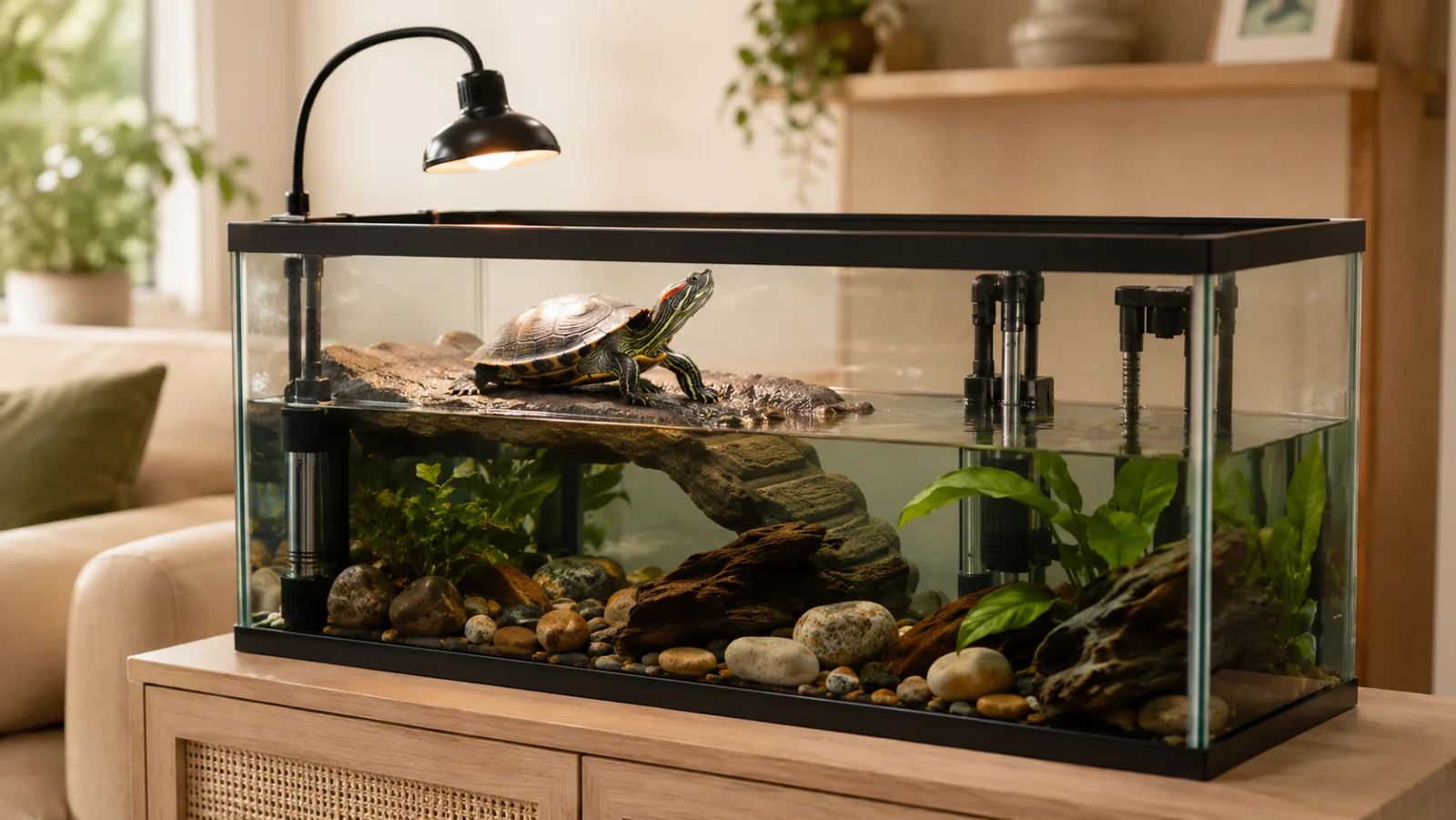
Best Turtle & Aquatic-Reptile Tank Filters (2026)
Reptile
Best Reptile Heat Lamps & Basking Fixtures (2026)
Reptile
Best Reptile UVB Bulbs for Safe Lighting (2026)
Aquarium
Best Aquarium Heaters 2026: Reliable Picks That Won't Cook Your Tank
Aquarium
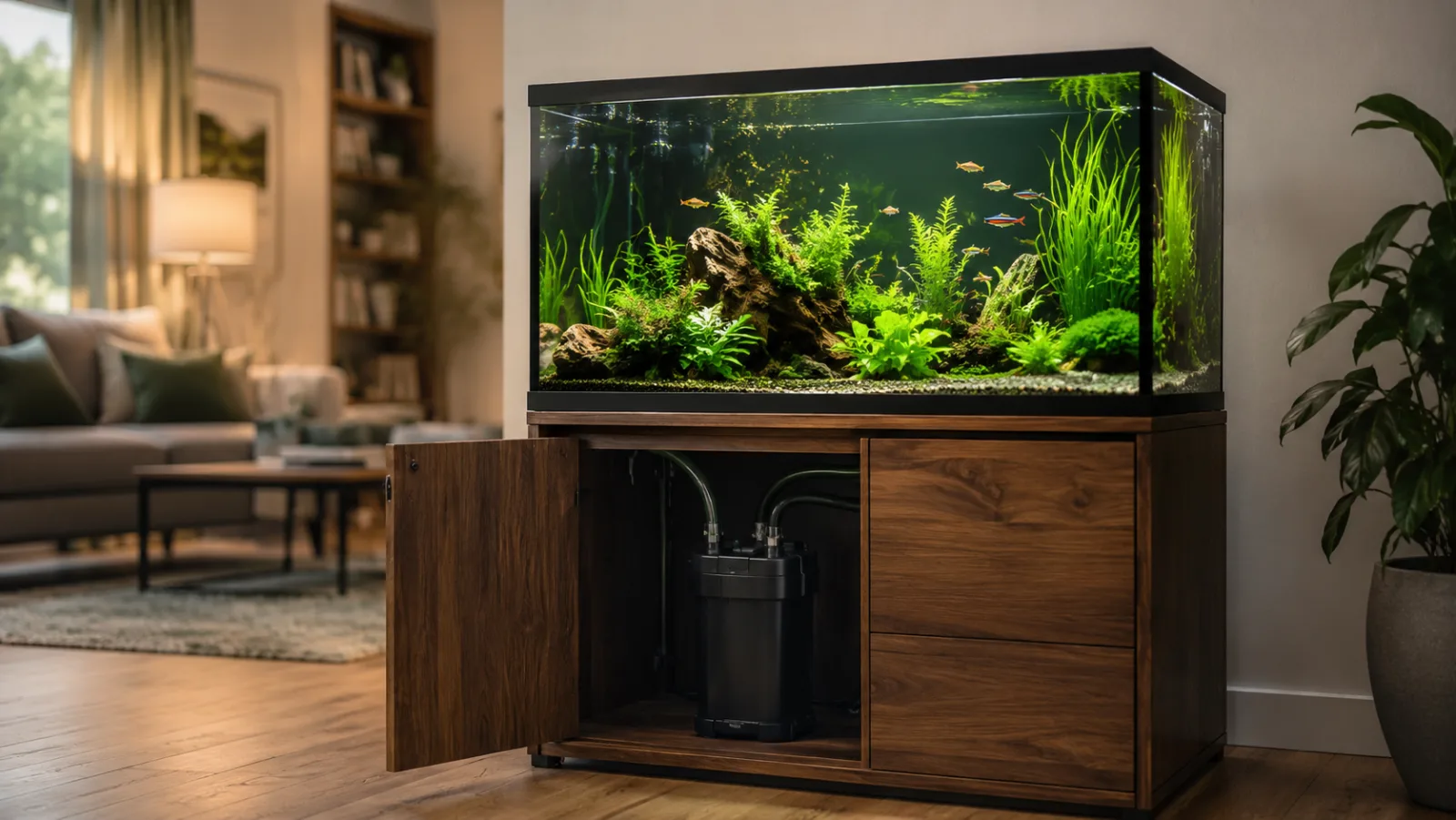
Best Aquarium Canister Filters (2026)
Aquarium