Cats & Dogs
What Your Cat's Litter Box Can Catch Early: Smart Litter Health Monitoring (2026)
Cats hide illness, and the litter box is usually where a change shows up first — a run of extra trips can flag a urinary problem, bigger urine volumes can be early kidney disease, and a straining male cat producing little urine is an emergency. You do not need a $700 box to notice: start free by watching frequency, volume, and weight, add a $21 color-change litter as a passive screen, slide a subscription-free Purina Petivity under the box you already own, or climb to an AI-camera or full smart-box tier where the useful trend graph is often rented. Whatever the tool says, it is screening, not a diagnosis — bring the trend to your vet.
By Nick Miles · Updated September 30, 2026 · 12 min read
PetPalHQ is reader-supported. We may earn a commission from qualifying Amazon purchases at no extra cost to you.
Evidence at a Glance
Purina Tidy Cats Tidy Care Alert Cat Health Monitoring Litter
The cheapest rung — a roughly $21 non-clumping crystal litter that changes color to flag urinary indicators, so a passive screen sits in the box with no app and no account. A color change is a reason to call the vet, not a diagnosis, but at this price it is the near-free first move.
Sources: Purina Tidy Cats (Amazon product listing), Cornell Feline Health Center — Feline Lower Urinary Tract Disease
Verified Jul 16, 2026
Purina Petivity Smart Litter Box Monitor
The value pick on the health axis — a $99.97 scale that sits under the cat's existing box and logs weight and urination and defecation events with no subscription: app, alerts, and monthly reports are all included. Voted 2025 Product of the Year in the cat-care category. Screening-grade, never diagnostic.
Sources: Nestlé Purina News Center — Petivity Product of the Year 2025, 2021 AAHA/AAFP Feline Life Stage Guidelines
Verified Jul 16, 2026
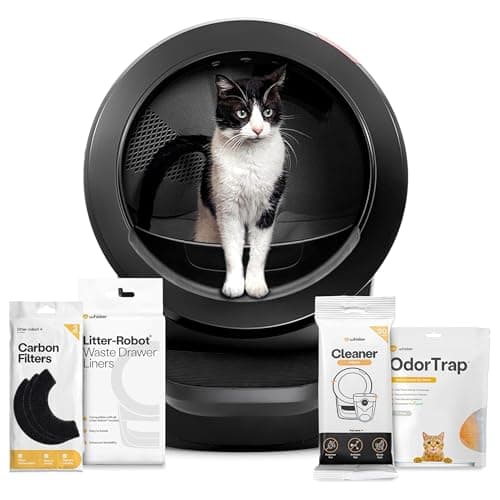
Whisker Litter-Robot 4 Supply Bundle
The top rung and high-AOV anchor — a $749 self-cleaning box whose Whisker app surfaces usage history, weight estimation per visit, and multi-cat identification. It is a signal layer, not a diagnostic device: the box scoops free, but the 2-year trend graph a vet finds most useful is rented through Whisker+.
Sources: Whisker+ membership page + Litter-Robot 4 FAQ, TruthfulPaws — Dr. Jamie Whittenburg, DVM
Verified Jul 16, 2026
Our Picks
Purina Tidy Cats
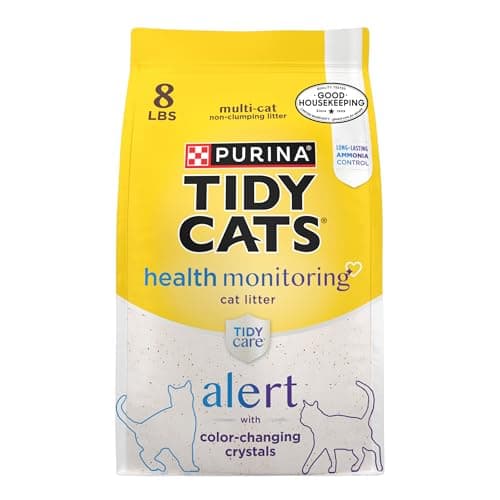
Purina Tidy Cats Tidy Care Alert Cat Health Monitoring Non-Clumping Litter
8.0 / 10
- Non-clumping crystal litter that changes color to flag urinary indicators, per Purina
- Lists at $27.98, currently $20.99 — confirm the live price and strike-through
- No app and no account — the color change is the whole product
- Zero ongoing cost; nothing to rent and nothing to charge
$16.79
Current price · checked Sep 8, 2026

PrettyLitter
PrettyLitter Health Monitoring Cat Litter (Unscented, Non-Clumping)
8.1 / 10
- Color-changing crystal litter on the same screening principle as the budget rung
- Sold one-time on Amazon at $27.99 — no subscription required to try it
- A roughly one-month supply per cat, unscented and low-tracking
- The recognizable name for readers who want the famous version
$27.99
Current price · checked Sep 8, 2026
Purina Petivity
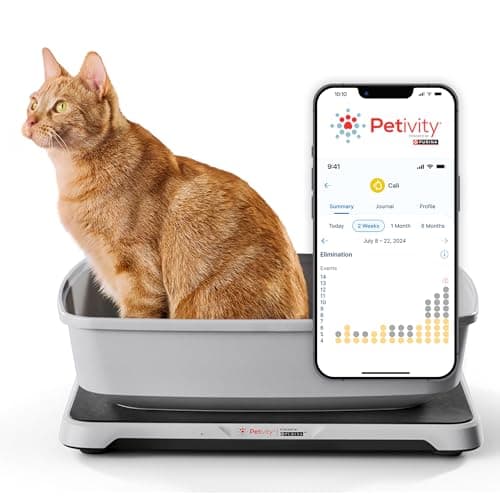
Purina Petivity Smart Litter Box Monitor — Cat Weight Scale & Health Tracker
8.9 / 10
- A scale that sits under the cat's existing box — no new box required
- Logs weight and urination and defecation events per visit, per Purina
- Subscription-free: app, AI alerts, and monthly reports all included
- Builds a profile per cat, so multi-cat homes need no collars or chips
$79.89
Current price · checked Sep 8, 2026
PETLIBRO
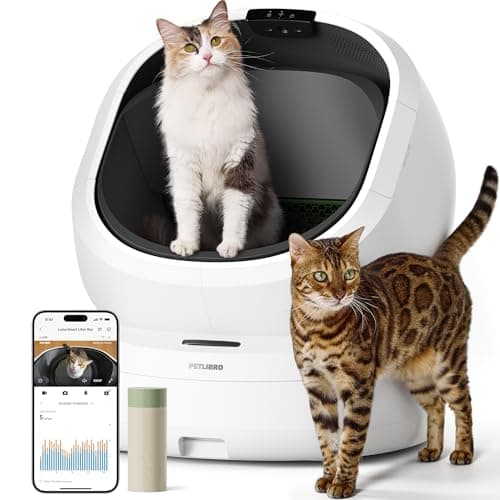
PETLIBRO Automatic Litter Box with AI-Camera Waste Analysis (Luma)
8.2 / 10
- Self-cleaning box with an AI camera that analyzes waste, per PETLIBRO
- Lists at $599.99, currently $519.99 on Amazon as of September 3, 2026 — confirm list vs. live price
- Free without a plan: visit log, per-visit time and duration, 24h-inactivity alerts, livestreaming
- Paywalled: the AI waste analysis, per-visit recordings, and loose-poop alerts
$569.99
Current price · checked Sep 8, 2026
Whisker
Whisker Litter-Robot 4 Supply Bundle, Black
8.4 / 10
- Self-cleaning box with in-app usage history and weight estimation per visit
- Multi-cat identification via SmartScale and in-app patterns, per Whisker
- Bundle adds OdorTrap refills, liners, cleaner wipes, and carbon filters
- Free tier: SmartScale ID, weight tracking, and a 7-day view
$749.00
Current price · checked Sep 8, 2026
The Short Answer
You don't need an expensive box to catch this. The Purina Petivity monitor slides under the box you already own, logs weight and every bathroom visit, and charges no subscription — that trend line is what you bring to your vet. One exception: a male cat straining and passing little urine is an emergency now.
Every product on this list has been scored against the PetPal Gear Score, a weighted composite of expert consensus, observed effectiveness, animal safety, long-term durability, and value. Review method: Editorial synthesis of veterinary authorities and manufacturer documentation. Every clinical claim is attributed: the urinary and emergency signs to the Cornell Feline Health Center's Feline Lower Urinary Tract Disease topic, the early-kidney-disease and polyuria signals to Cornell's Chronic Kidney Disease topic, and the change-in-litter-box-use-warrants-evaluation premise to the 2021 AAHA/AAFP Feline Life Stage Guidelines. The vet-on-the-technology bridge quote is Dr. Jamie Whittenburg, DVM, as reported by TruthfulPaws. Subscription and paywall figures come from each maker's own membership page; product specifications come from each item's Amazon listing. No first-hand product testing — PetPalHQ does not run a testing lab, and every tool here is described as screening-grade, never diagnostic.. Synthesized from 6+ expert sources.
A cat is built to hide illness, and the litter box is the one place that instinct fails it. Whatever a cat conceals in its posture and appetite, it still has to use the box — and when it does, it leaves a record: how often, how much, and, on the right surface, what its urine chemistry looks like. That is the governing idea of this guide. The litter box is the earliest health-signal surface a cat owner actually owns, and the job of every tool below is to make that record legible. Read it; do not diagnose with it.
That distinction is the whole discipline here, so it is worth stating plainly before any product. Consumer litter tools are screening-grade, never diagnostic. A color-change litter, a weight scale, an AI camera — each can flag that something shifted, and none can tell you what shifted or why. The action a signal calls for is always the same: bring the trend to your vet. This guide leans on named clinical authorities for what the signals can mean — the Cornell Feline Health Center for the urinary and kidney signs, and the 2021 AAHA/AAFP Feline Life Stage Guidelines for the premise that a change in a senior cat's box habits warrants a visit — rather than on any device maker's marketing.
So this is deliberately a ladder, not a shopping list, and you climb it only as far as your cat's situation and your appetite for data justify. The rungs go in order of how much they surface: watch the box for free, add a passive color-change litter, slide a subscription-free monitor under the box you own, or climb to an AI-camera or full smart-box tier where — this is the axis the roster is really sorted on — the most useful data is often the part you rent. One signal, though, does not belong on any ladder at all: a male cat straining and producing little or no urine may have a urethral obstruction, which Cornell calls an absolute emergency, and that is a drive to the vet now, not an app notification to watch. PetPalHQ does not run a testing lab; the PetPal Litter-Signal Confidence Score below is a transparent synthesis of documented specifications and published veterinary guidance, not a measurement.
Head-to-Head Comparison
| Feature | Purina Tidy Cats Tidy Care Alert Cat Health Monitoring Non-Clumping Litter | PrettyLitter Health Monitoring Cat Litter (Unscented, Non-Clumping) | Purina Petivity Smart Litter Box Monitor — Cat Weight Scale & Health Tracker | PETLIBRO Automatic Litter Box with AI-Camera Waste Analysis (Luma) | Whisker Litter-Robot 4 Supply Bundle, Black |
|---|---|---|---|---|---|
| Ladder rung | Indicator litter — budget | Indicator litter — the DTC name | Under-box monitor | AI-camera box | Full smart-box ecosystem |
| What it measures | Urine-chemistry color change | Urine-chemistry color change | Weight + urination/defecation events | Camera waste analysis + per-visit log | Usage history + weight estimation per visit |
| Multi-cat truthfulness | N/A — a shared box screen | N/A — a shared box screen | Weight-based ID; blurs similar-weight cats | Camera recognizes up to 10 cats — best here | SmartScale weight-based ID; blurs similar-weight cats |
| Fit label | Passive-Screen Fit | Passive-Screen Fit | No-Subscription Fit | AI-Camera Fit | Signal-Layer Fit |
| PetPal Litter-Signal Confidence Score | 8.0 | 8.1 | 8.9 | 8.2 | 8.4 |
| Check price | Amazon | Amazon | Amazon | Amazon | Amazon |
$16.79
Current price · checked Sep 8, 2026
- Non-clumping crystal litter that changes color to flag urinary indicators, per Purina
- Lists at $27.98, currently $20.99 — confirm the live price and strike-through
- No app and no account — the color change is the whole product
- Zero ongoing cost; nothing to rent and nothing to charge
- A color change is a reason to call the vet, not a diagnosis
The cheapest possible rung is also the one that asks the least of you: a litter that screens on its own while it sits in the box. Purina documents a non-clumping silica-crystal litter with pH-detection technology that changes color to help monitor cat health — you scoop as usual, and an off-color patch is the cue to look closer. There is no app to open, no account to make, and no subscription to forget about, which is exactly why it suits the reader who wants a passive watch without buying any hardware. It lists at $27.98 and currently runs $20.99, so treat the strike-through as a list-versus-live figure and confirm both before you buy.
Where it sits on the ladder: this is the entry screen, the move for a household that just wants a low-effort early flag. The reason a urine-chemistry change is worth flagging at all is clinical, not marketing — the Cornell Feline Health Center lists "increased frequency of urination" and "blood in the urine" among the most common signs of lower urinary tract disease, and a color-change litter is a passive proxy for exactly that kind of shift. What it cannot do is name the cause, which is the honest limit that governs this whole guide.
So the framing has to stay strict. This litter screens; it does not diagnose. A color change means call the vet and, if warranted, bring a sample — it never means "your cat has a UTI," because a UTI is confirmed by a vet with a urinalysis, not by a tint in the crystals. It also gives you a single moment-in-time read rather than a trend, so it will not tell you that trips have been creeping up all week the way an under-box monitor does. Buy it as the near-free first screen, and step up a rung only when you want the pattern, not just the snapshot.
What We Love
- Near-free passive screen with no app, account, or subscription
- Flags the urine-chemistry change Cornell ties to common LUTD signs
- Nothing to charge, wire, or maintain — it just sits in the box
- Pairs narratively with the Purina Petivity monitor a rung up
What Could Be Better
- Screening only — a color change is a vet-call trigger, not a diagnosis
- Gives a snapshot, not the week-over-week trend a monitor logs
- Deal price carries a strike-through — confirm list vs. live before buying
The Verdict
Start here if you want the cheapest honest early flag a cat owner can own — a color-change litter that screens passively for about $21 with no app and nothing to rent. Read a color shift as a reason to call the vet, never as a diagnosis, and move up a rung when you want the trend rather than the single snapshot.
Sources
- Purina Tidy Cats (Amazon product listing, Tidy Care Alert Health Monitoring Litter): non-clumping silica-crystal litter with pH-detection technology that changes color to help monitor cat health; lists at $27.98, currently $20.99
- Cornell Feline Health Center (Feline Lower Urinary Tract Disease): the most common signs of lower urinary tract disease include increased frequency of urination and blood in the urine
$27.99
Current price · checked Sep 8, 2026
- Color-changing crystal litter on the same screening principle as the budget rung
- Sold one-time on Amazon at $27.99 — no subscription required to try it
- A roughly one-month supply per cat, unscented and low-tracking
- The recognizable name for readers who want the famous version
- Still a visual screen — a prompt to call the vet, not a detector
Most people who have heard of health-monitoring litter have heard of this one, which is the reason it earns a rung of its own. PrettyLitter is the category-defining color-change crystal litter, and it works on the same principle as the budget pick: the crystals shift color in response to abnormal urine chemistry, giving you a passive read every time the cat pees. On Amazon it is a straightforward one-time buy at $33.98 — roughly a month's supply for one cat — sold as a New-condition buy-box listing.
Here is the note the brand will not lead with. PrettyLitter is famous as a direct-to-consumer monthly-delivery subscription, and that is how PrettyLitter.com sells it — but the "subscription" is auto-delivery, not a data paywall, and the litter behaves identically however you buy it. Buy it one-time on Amazon and you get the same screening product without signing up for anything. That is the honesty this guide can add that the marketing does not: the recurring plan is a convenience, not a requirement.
The clinical framing is deliberately modest. A color change is a screen, not a diagnosis, and this guide does not repeat any brand detection statistic, because a visual crystal read is not an independently verified detection instrument — treat it as a reason to call the vet. Where it genuinely helps is the case Cornell describes for kidney disease: "in the early stages of CKD it is very common for cats to show no obvious clinical signs," so a passive screen that catches an off-color result before anything looks wrong buys you a reason to book a visit. It still needs the vet to interpret it.
What We Love
- Sold one-time on Amazon — skip the DTC subscription entirely
- The recognizable name on the same passive color-change principle
- Roughly a month per cat, unscented and low-tracking
- No data paywall — the litter works the same however you buy it
What Could Be Better
- Screening only — a color change prompts a vet call, it does not diagnose
- Pricier than the budget indicator litter for the same principle
- Third-party seller; brand detection claims are not independently verified
The Verdict
Choose PrettyLitter when you want the recognizable name and do not mind paying a little more than the budget rung for the same passive screen. The honest tip: buy it one-time on Amazon and skip the subscription — the recurring plan is auto-delivery, not a data lock. Read a color change as a reason to call the vet, never as a detector.
Sources
- PrettyLitter (Amazon product listing, Health Monitoring Cat Litter): color-changing silica-gel crystal litter sold one-time on Amazon at $27.99; a roughly one-month supply per cat; New-condition buy-box
- Cornell Feline Health Center (Chronic Kidney Disease): in the early stages of CKD it is very common for cats to show no obvious clinical signs, which is why a home screen has any value at all
$79.89
Current price · checked Sep 8, 2026
- A scale that sits under the cat's existing box — no new box required
- Logs weight and urination and defecation events per visit, per Purina
- Subscription-free: app, AI alerts, and monthly reports all included
- Builds a profile per cat, so multi-cat homes need no collars or chips
- 2025 Product of the Year, cat-care category (40,000-consumer Kantar vote)
If the budget rungs give you a snapshot, this is the first tool that gives you the trend — and it does it without renting the data back to you. The Purina Petivity is a scale and monitor that sits under the litter box the cat already uses, so nothing about the cat's routine changes. Purina documents that it tracks weight and urination and defecation events each time the cat uses the box and flags "subtle but meaningful behavioral changes that may indicate a health issue requiring a veterinary diagnosis." Note the maker's own wording — "requiring a veterinary diagnosis" — because it draws the honesty line for you: the device surfaces the pattern, the vet names the cause.
Where it sits on the ladder is the pivot of the whole guide. This is the rung for the reader who wants the health data but not the $550 box, and its defining feature is what it does not cost: the app, the AI alerts, the monthly email reports, and the per-cat profiles are all included with the purchase, with no subscription. On the health axis that makes it the strongest value here — you own the trend graph outright, which is exactly the part a vet finds most useful. The AAHA/AAFP Feline Life Stage Guidelines make the case for tracking it: "changes in litter box usage" in senior cats "should always be evaluated for an underlying medical problem," and a monitor that logs those changes is how you notice them in time to act.
The honest limits are the ones every scale shares. Weight-based identification can blur two cats of similar weight, so multi-cat attribution is good but not perfect — know that before you lean on per-cat numbers in a same-size household. And it is still a screen: it makes patterns visible and pings you when something drifts, but it does not diagnose, and it is no substitute for the vet when a cat is symptomatic now. Whatever it shows, the action is the same — bring the trend graph to your appointment.
What We Love
- Full health monitoring with no subscription — you own the data
- Slides under the box you already own; no new hardware for the cat
- Logs weight plus bathroom events and alerts you when a pattern drifts
- 2025 Product of the Year with per-cat profiles for multi-cat homes
What Could Be Better
- Weight-based multi-cat ID can blur cats of similar weight
- Screening-grade — surfaces patterns, does not diagnose disease
- Not for the symptomatic-now cat; that is a vet visit, not a monitor
The Verdict
This is the honest middle of the ladder and the value pick on the health axis: full weight and bathroom-event tracking that slides under the box you own, for $99.97 with nothing to rent. You keep the trend graph a vet actually wants. Its real limit is imperfect multi-cat attribution and the fact that it screens rather than diagnoses — bring what it shows to your vet.
Sources
- Nestlé Purina News Center (Petivity Smart Litter Box Monitor Voted Product of the Year 2025): tracks weight, urination and defecation events each time the cat uses the box and identifies subtle but meaningful behavioral changes that may indicate a health issue requiring a veterinary diagnosis; 2025 Product of the Year, cat-care category
- 2021 AAHA/AAFP Feline Life Stage Guidelines (open-access, PMC): senior and geriatric cats exhibiting behavioral changes, including changes in litter box usage, should always be evaluated for an underlying medical problem
$569.99
Current price · checked Sep 8, 2026
- Self-cleaning box with an AI camera that analyzes waste, per PETLIBRO
- Lists at $599.99, currently $519.99 on Amazon as of September 3, 2026 — confirm list vs. live price
- Free without a plan: visit log, per-visit time and duration, 24h-inactivity alerts, livestreaming
- Paywalled: the AI waste analysis, per-visit recordings, and loose-poop alerts
- Recognizes up to 10 cats — the strongest multi-cat ID in this roster
The tier where the marketing and the invoice can drift apart, so read this one carefully before you spend. PETLIBRO's Luma is a self-cleaning box built around an AI camera that, the listing says, monitors waste for consistency and frequency and can recognize up to 10 cats from any angle — genuinely the best multi-cat identification in this roster, because a camera disambiguates where a scale cannot. It lists at $599.99 and currently runs $519.99 on Amazon as of September 3, 2026, so treat the strike-through as a list-versus-live figure. Worth knowing before you spend that much: a plain pet camera pointed at an ordinary box does none of the waste analysis, but it does tell you who is visiting and how often, and at the budget end of that roundup the camera costs under a tenth of this box's $519.99.
Here is the paywall in plain terms, because it is the whole reason to read the fine print. The feature the box is marketed on — the AI waste analysis, the per-visit recordings and photos, the daily AI highlight reels, and the loose-poop smart alerts — sits behind PETLIBRO's Video Cloud AI subscription, which runs $119.99 to $199.99 per year after a 7-day trial, a floor of about $0.33 a day, and SD cards are not supported as a workaround. What you get free is still useful: a complete visit log with the exact time and duration of each trip, an immediate alert if the box goes 24 hours with no activity, and free livestreaming. On the screening side, that free visit log is real signal — Cornell notes that cats with lower urinary tract disease "make frequent attempts to urinate," so a per-visit count and duration is a legitimate early surface — but it is a screen, not a diagnosis.
So the honest posture is: buy it for the box and the multi-cat recognition, and budget for the subscription only if the AI is genuinely why you want it. Do not assume the headline "AI waste analysis" is included, because it is not. And as with every rung here, none of it replaces the vet — a pattern the camera flags is a reason to book an appointment and bring what it recorded, not a verdict.
What We Love
- Best multi-cat identification here — a camera recognizes up to 10 cats
- Free tier is real: visit log, per-visit time and duration, inactivity alerts
- Self-cleaning box with livestreaming included at no extra cost
- Per-visit frequency data is a legitimate screening surface (Cornell)
What Could Be Better
- The marketed AI waste analysis is paywalled at $119.99-$199.99/yr
- Per-visit recordings need the plan; SD cards are not supported
- Screening only, and a premium price before the subscription is added
The Verdict
Step up to the Luma for the self-cleaning box and the best multi-cat recognition in this roster — a camera beats a scale at telling cats apart. Go in clear-eyed on the paywall: the AI waste analysis the box is sold on costs $120-$200 a year on top of the $560 device. The free visit log is honest screening; the diagnosis is still the vet's.
Sources
- PETLIBRO (Amazon product listing, Luma AI-Camera Litter Box): self-cleaning box with an AI camera for waste analysis and up-to-10-cat recognition; lists at $599.99, currently $519.99; AI analysis and video recording require a subscription and SD cards are not supported, while livestreaming is free
- Cornell Feline Health Center (Feline Lower Urinary Tract Disease): cats with lower urinary tract disease make frequent attempts to urinate, so a per-visit log of time and duration is a screening surface, not a diagnostic one
$749.00
Current price · checked Sep 8, 2026
- Self-cleaning box with in-app usage history and weight estimation per visit
- Multi-cat identification via SmartScale and in-app patterns, per Whisker
- Bundle adds OdorTrap refills, liners, cleaner wipes, and carbon filters
- Free tier: SmartScale ID, weight tracking, and a 7-day view
- Whisker+ ($7.99/mo, $79.90/yr) rents the 2-year trend a vet finds useful
The top rung is the high-AOV anchor, and it keeps the exact framing its sibling page uses: the Litter-Robot 4 belongs here as a signal layer, not a diagnostic device. It is a self-cleaning automatic box whose Whisker app surfaces usage history, weight estimation per visit, and multi-cat identification — the same claims the household-monitoring guide makes, no more. The rostered pick is the $749 Supply Bundle, which adds OdorTrap refills, liners, cleaner wipes, and carbon filters; if you do not want the consumables, the box alone runs about $50 less, but this guide keeps the bundle so the framing stays consistent across both pages.
Where the money actually goes is the part to understand before you buy. The box scoops for free and shows recent data free — SmartScale identification, weight tracking, and a 7-day view are all included — but the long trend is rented. Whisker+ runs $7.99 a month or $79.90 a year after a 30-day trial, and it is what unlocks historical duration and frequency tracking and up to 2 years of activity history. That two-year graph is precisely the part a vet finds most useful, so the honest summary is blunt: the scooping is free, the health archive is a subscription. On the value of that archive, the review this guide draws on is measured rather than promotional — Dr. Jamie Whittenburg, DVM, tells TruthfulPaws that "the tracking data in the application can actually support early detection of illness" and that "often, a change in litter box habits may be the first clue," while adding that "no device replaces regular veterinary visits."
Two more honest notes. That same review carries owner anecdotes — a cat whose app flagged an unusual spike in brief, frequent trips before any visible distress, and another whose frequent usage preceded an early kidney-disease finding — but those are individual accounts, not proof the device works, and this guide treats them as anecdotes rather than a detection rate. The review also reports hardware-reliability variability, its own figure of roughly 15-20% of units hitting sensor or motor failures in the first 18 months; that is one review's number, cited as a caveat, not a validated rate. Buy it for the convenience and the app trend if you want them, treat the monitoring as the bonus rather than the justification, and read every pattern it shows as a reason to see the vet.
What We Love
- Free tier keeps SmartScale ID, weight tracking, and a 7-day view
- Surfaces usage history and per-visit weight in the Whisker app
- Self-cleaning convenience with the consumables bundled in
- A measured vet quote backs the early-signal value, honestly framed
What Could Be Better
- The 2-year trend graph a vet wants is rented via Whisker+ ($7.99/mo)
- Signal layer, not a diagnostic device — patterns still need a vet
- One review reports notable first-18-month hardware failure rates
The Verdict
The Litter-Robot 4 lands the $550-class buyer honestly at the top rung: a self-cleaning box whose app surfaces usage and weight as a signal layer, not a diagnostic device. Know what is rented — the box scoops free, but the 2-year trend graph most useful to a vet lives behind Whisker+. For box-vs-box depth, hand off to the litter-cluster roundups; for health, bring the trend to your vet.
Sources
- Whisker+ membership page + Litter-Robot 4 FAQ: free tier keeps SmartScale identification and weight tracking plus a 7-day view; Whisker+ ($7.99/mo or $79.90/yr, 30-day trial) unlocks historical duration and frequency tracking and up to 2 years of activity history
- TruthfulPaws (Litter-Robot 4 review; Dr. Jamie Whittenburg, DVM, Kingsgate Animal Hospital): the tracking data in the application can actually support early detection of illness, and often a change in litter box habits may be the first clue, while no device replaces regular veterinary visits
How We Score
Formula
PetPal Litter-Signal Confidence Score = (Signal-to-Vet Actionability × 0.35) + (Screening Honesty × 0.25) + (No Paywall on Core Data × 0.20) + (Multi-Cat Truthfulness × 0.20)
Score Factors
- Signal-to-Vet Actionability · 35%
- Fit label: Trend a Vet Can Use. Does the tool surface the right signal — frequency, a volume proxy, weight — in a form you can hand to a vet? This carries the most weight because the entire value here is an earlier vet visit, not gadgetry. A single-moment color screen (the litters) scores lower than a logged trend (Petivity, the smart boxes) on this axis, since a vet can act on a graph but not on a memory of a tint.
- Screening Honesty · 25%
- Fit label: Screen, Not Diagnosis. Does the tool — and this guide's framing of it — stay screening-grade and route emergencies to the vet? A tool that over-claims scores down. Even Purina's own copy describes Petivity as flagging changes 'requiring a veterinary diagnosis,' which is the honest register: these tools make patterns visible; a vet interprets them. A straining male cat producing little urine is the one signal that skips the app entirely and goes straight to emergency care.
- No Paywall on Core Data · 20%
- Fit label: Data You Own. Is the health data free, or is the useful part rented? Petivity scores highest because the app, alerts, and reports are included; PETLIBRO's AI waste analysis and the Litter-Robot's 2-year trend graph both score lower here, because the part a vet finds most useful sits behind a subscription. The score does not judge whether a paywall is unfair — only whether you own the data or rent it.
- Multi-Cat Truthfulness · 20%
- Fit label: Multi-Cat Fit. How honestly does the tool disambiguate cats? Weight-based identification (Petivity and the Litter-Robot's SmartScale) can confuse cats of similar weight, so it is scored as good-not-perfect; camera-based recognition (PETLIBRO) is better at telling cats apart but pushes its analysis behind the paywall. The litters are not scored on this axis because they screen a shared box, not an individual cat. PetPalHQ does not run a testing lab; these scores are a transparent composite of manufacturer documentation and veterinary-authority framing, not a measurement.
| Rank | Product | Score |
|---|---|---|
| #1 | Purina Petivity Purina Petivity Smart Litter Box Monitor — Cat Weight Scale & Health Tracker | 8.9 |
| #2 | Whisker Whisker Litter-Robot 4 Supply Bundle, Black | 8.4 |
| #3 | PETLIBRO PETLIBRO Automatic Litter Box with AI-Camera Waste Analysis (Luma) | 8.2 |
| #4 | PrettyLitter PrettyLitter Health Monitoring Cat Litter (Unscented, Non-Clumping) | 8.1 |
| #5 | Purina Tidy Cats Purina Tidy Cats Tidy Care Alert Cat Health Monitoring Non-Clumping Litter | 8.0 |
When NOT to Buy
A single, healthy, young cat with stable habits does not need a monitor. If nothing has changed, a $99-to-$749 device is a nicety, not a necessity — plain observation (watch frequency, volume, and weight) plus the annual wellness visits the AAHA/AAFP guidelines call for is enough. This guide will not upsell a box to a household that a $0 habit and a yearly checkup already serve well.
Owners who will not actually open the app should stop at a passive screen. Every logging tool here only helps if a person reads the trend and acts on it. If the app will go unopened, an honest color-change litter (the Tidy Care or PrettyLitter rung) or plain observation is the better spend — a monitor that no one checks is a self-cleaning box with an unused feature, not health insurance.
Nobody should treat any of these as a substitute for a vet. Every tool here is screening-grade — as Dr. Whittenburg puts it, "no device replaces regular veterinary visits." If a cat is symptomatic now, the answer is the vet, not a gadget. And the loudest version of that rule bears repeating: a male cat straining, making frequent trips, and producing little or no urine may have a urethral obstruction, which the Cornell Feline Health Center calls an absolute emergency — that cat goes to the vet now, not tomorrow, and no litter or app changes that.
Multi-cat homes expecting perfect per-cat attribution should know the limit first. Weight-based identification on the Petivity and the Litter-Robot's SmartScale can confuse cats of similar weight; the PETLIBRO camera is better at telling cats apart, but its analysis is paywalled. If precise per-cat data is essential and your cats are close in weight, buy with that limit in view rather than discovering it later.
Budget-constrained households should remember that the health signal is nearly free. Observation costs nothing, and a color-change litter costs about $21; a $560-to-$749 box is a convenience purchase that also happens to monitor. Buy the expensive box for the self-cleaning convenience if you want it, and treat the monitoring as the bonus — not the justification for the price.
Frequently Asked Questions
- Can a litter box actually detect a UTI?
- No — it can screen, which is not the same thing. A smart monitor or a color-change litter can flag a change, such as more frequent trips or blood-tinged urine chemistry, that is a common sign of lower urinary tract disease — the Cornell Feline Health Center lists "increased frequency of urination" and "blood in the urine" among the most common LUTD signs. But a urinary tract infection is diagnosed by a vet with a urinalysis, not by a litter box. As Dr. Jamie Whittenburg, DVM, tells TruthfulPaws, the tracking data "can actually support early detection of illness," and "often, a change in litter box habits may be the first clue," while "no device replaces regular veterinary visits." The honest read: a flag is a reason to call, not an answer.
- My male cat keeps going to the box but barely produces anything — is that an emergency?
- Yes — go to the vet now. A cat that strains, makes frequent attempts, and produces "little, if any, urine" may have a urethral obstruction, which the Cornell Feline Health Center says "is an absolute emergency, requiring immediate veterinary treatment." Cornell adds that "male and neutered male cats are at greater risk for obstruction than females because their urethra is longer and narrower." No litter, app, or smart box substitutes for emergency care here, and none of the monitoring tools in this guide should slow you down for even an afternoon of "watching the app." This is the one signal that skips every rung of the ladder and becomes an immediate drive to the clinic.
- Does the Litter-Robot charge for the health history?
- The box scoops and shows recent data for free, but the long trend is paywalled. On the free tier you keep SmartScale identification, weight tracking, and a 7-day view of activity. Whisker+ — $7.99 a month or $79.90 a year after a 30-day trial — is what unlocks historical duration and frequency tracking and up to 2 years of activity history. That longer archive is the part a vet finds most useful, which makes the honest summary blunt: the scooping is free, the health history is a subscription. If you want the two-year graph, budget the membership rather than assuming it comes with the $749 box.
- What's the difference between the Petivity and the Litter-Robot's monitoring?
- The Petivity is a scale that sits under the box you already own — $99.97, with no subscription, and weight tracking, bathroom-event logging, alerts, and monthly reports all included. The Litter-Robot is a full self-cleaning box at $749 whose Whisker app adds usage history and per-visit weight, but locks the 2-year trend behind Whisker+. So the trade is straightforward: the Petivity gives you the health data without a new box or a subscription, while the Litter-Robot adds self-cleaning convenience but rents the most useful part of the data. On the health axis alone, the Petivity is the stronger value; the Litter-Robot earns its price on convenience, with monitoring as a bonus.
- Is PrettyLitter a subscription?
- It is sold as a monthly-delivery subscription on PrettyLitter.com, but you do not have to buy it that way. On Amazon it is a one-time purchase at $27.99 — a New-condition listing you can try without signing up for anything. The recurring plan is auto-delivery, a convenience, not a data paywall; the litter behaves identically however you buy it. Either way, it is a color-change screen, which means an off-color result is a reason to call the vet, not a diagnosis — and this guide does not repeat any brand detection statistic, because a visual crystal read is not an independently verified detection instrument.
- Can these tools tell if my cat has kidney disease?
- No — they can surface an early pattern that is worth a vet visit. The Cornell Feline Health Center notes that "in the early stages of CKD, it is very common for cats to show no obvious clinical signs," and that as the kidneys decline, cats "may begin to urinate greater volumes and drink more water." A rising urine volume or a climbing visit count is exactly the kind of trend a monitor can catch before anything looks wrong — and Cornell notes "the earlier CKD is diagnosed and treatment initiated, the better the outcome." One caution on framing: weight loss is a later CKD sign, not an early one, so treat a falling weight as a general trend worth tracking rather than an early kidney flag. Diagnosis still needs bloodwork and a urinalysis. If a urinary or kidney concern has you thinking about your cat's water intake, that is a hydration question for your vet, and a cat water fountain is the practical home step — your vet prescribes any therapeutic diet, which is a separate matter.
- Do I need the AI subscription on the PETLIBRO box?
- For the basics, no. The visit log, the exact time and duration of each trip, an alert if the box sees no activity for 24 hours, and livestreaming are all free. But the feature the Luma is marketed on — the AI waste analysis, the per-visit recordings and photos, and the loose-poop smart alerts — requires the Video Cloud AI plan, which runs $119.99 to $199.99 a year after a 7-day trial, and SD cards are not supported as a workaround. So budget for it if the AI is genuinely why you are buying the box; if you mainly want a self-cleaning box with strong multi-cat recognition and a free visit log, you can skip the plan and still get real screening value.
Bottom Line
Start with the Tidy Care Alert litter if you want the cheapest honest early flag — a color-change screen for about $21 with no app and nothing to rent. Read a color shift as a reason to call the vet, not a diagnosis.
Pick PrettyLitter if you want the recognizable name on the same passive principle, and buy it one-time on Amazon to skip the subscription — the recurring plan is auto-delivery, not a data lock.
Buy the Purina Petivity for the best value on the health axis: full weight and bathroom-event tracking under the box you already own, $99.97, no subscription, and you keep the trend graph a vet wants.
Step up to the PETLIBRO Luma for a self-cleaning box with the best multi-cat recognition — just budget the $119.99-$199.99/yr AI subscription, because the waste analysis it is marketed on is a paid add-on.
Choose the Litter-Robot 4 as the top rung and high-AOV anchor: a signal layer, not a diagnostic device, whose box scoops free while the 2-year trend graph is rented through Whisker+ at $7.99/mo.
Skip a monitor entirely for a healthy young single cat with stable habits, and never watch the app during an emergency — a straining male cat producing little urine goes to the vet now, not into a trend graph.
Sources & Methodology
Methodology
PetPal Litter-Signal Confidence Score = (Signal-to-Vet Actionability × 0.35) + (Screening Honesty × 0.25) + (No Paywall on Core Data × 0.20) + (Multi-Cat Truthfulness × 0.20)
Expert review sources
- Cornell Feline Health Center — Feline Lower Urinary Tract Disease (the frequency, straining, and blood-in-urine signs; the male-cat urethral obstruction emergency)
- Cornell Feline Health Center — Chronic Kidney Disease (early CKD commonly shows no signs; polyuria and increased drinking as the early renal signal; weight loss as a later sign)
- 2021 AAHA/AAFP Feline Life Stage Guidelines (change in a senior cat's litter box usage should always be evaluated; regular weight assessment)
- Nestlé Purina News Center — Petivity Smart Litter Box Monitor Voted Product of the Year 2025 (weight and event tracking; 'requiring a veterinary diagnosis' honesty framing)
- Whisker+ membership page and Litter-Robot 4 FAQ (free 7-day view vs. the 2-year history and frequency trends unlocked by Whisker+)
- TruthfulPaws — Litter-Robot 4 review, quoting Dr. Jamie Whittenburg, DVM (tracking data can support early detection; no device replaces vet visits; hardware-reliability caveat)
Community sources
- Owner anecdotes reported by the TruthfulPaws review — an app-flagged spike in brief, frequent trips and a frequent-usage case preceding an early kidney-disease finding — treated as individual accounts, not proof of efficacy
Prices and specs verified July 16, 2026.
About the author
Nick Miles is the chief editor of PetPalHQ. This litter-box early-warning protocol and its five-rung decision ladder are an editorial synthesis of veterinary authorities — the Cornell Feline Health Center and the 2021 AAHA/AAFP Feline Life Stage Guidelines — plus a DVM-reviewed hands-on report from TruthfulPaws, with product specifications and subscription figures drawn from each maker's own listings and membership pages. PetPalHQ does not run a testing lab, and the PetPal Litter-Signal Confidence Score is a transparent composite of that documentation and authority framing, not a measurement. Every tool here is described as screening-grade, never diagnostic; the standing instruction is to bring the trend to your vet, and a straining male cat producing little urine goes to the vet now.
PetPalHQ is a participant in the Amazon Services LLC Associates Program. We may earn commissions from qualifying purchases — at no extra cost to you.
More Guides
Cats & Dogs
At-Home Pet Health Monitoring Tools (2026): Smart Scales, Activity Trackers, and Smart Litter for Senior Pets
Cats & Dogs
Litter-Robot 5 vs Litter-Robot 4 (2026), and the Amazon Alternatives
Cats & Dogs
Best Automatic Litter Boxes for Cats (2026)
Cats & Dogs
Are Automatic Litter Boxes Worth It? (2026)
Cats & Dogs
Best Self-Cleaning Litter Boxes for Large and Multi-Cat Homes (2026)
Cats & Dogs