Birds
Best Bird Houses & Nesting Boxes 2026: Correctly-Sized Cedar Boxes for Wild Songbirds
Correctly-sized cedar boxes for wild songbirds — ranked on entry-hole sizing, ventilation and drainage, weather durability, and cleanout access, with Cornell NestWatch guidance on matching the hole to the species.
By Nick Miles · Updated September 25, 2026 · 13 min
PetPalHQ is reader-supported. We may earn a commission from qualifying Amazon purchases at no extra cost to you.
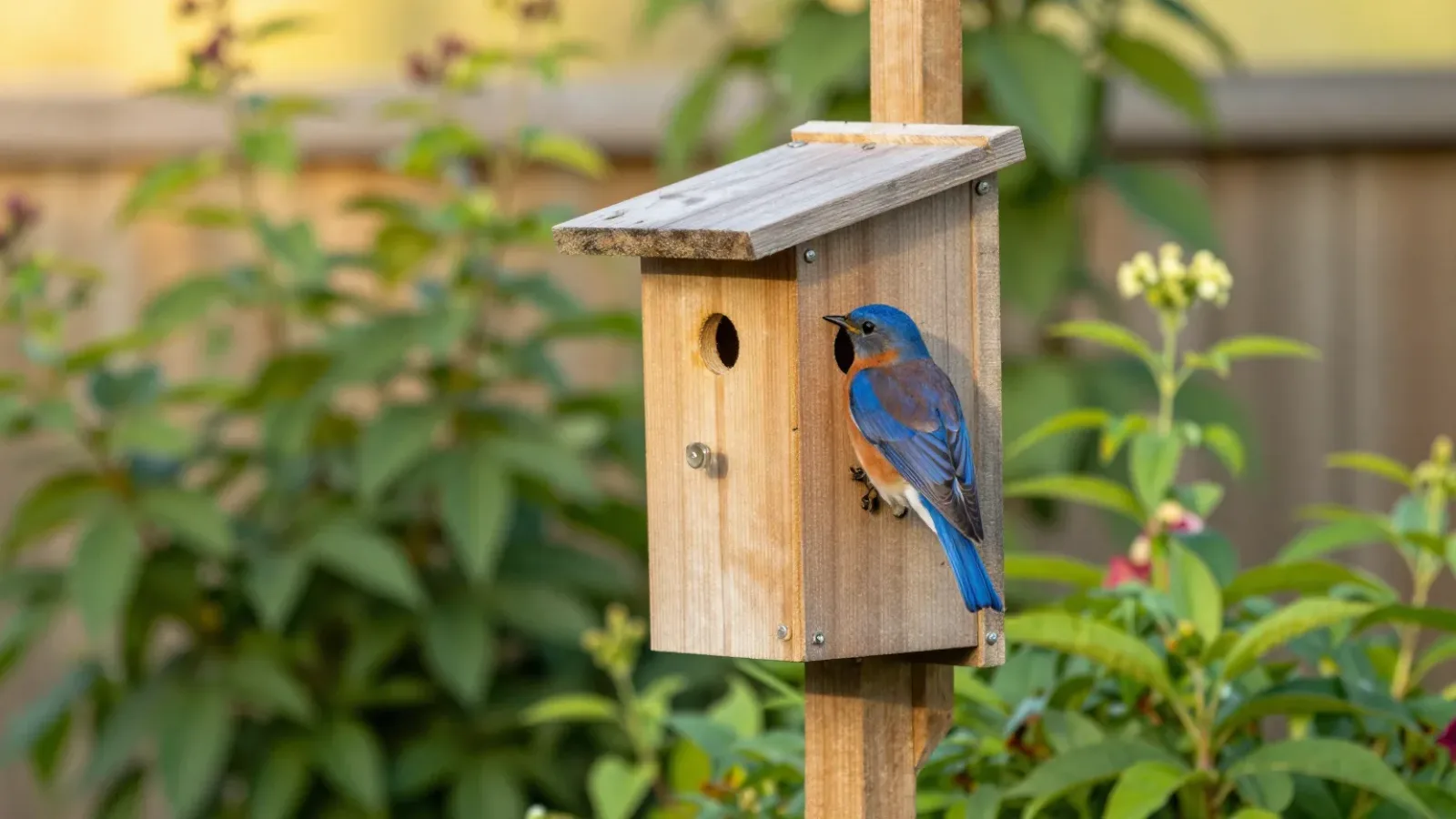
Evidence at a Glance
Nature's Way Cedar Bluebird House
The best overall pick: a cedar bluebird box from a trusted maker, built to the standard bluebird entry-hole specification so it fits the species it names and excludes larger birds. Cedar resists rot and insects, and a proper box adds ventilation, drainage, and a cleanout door for the seasonal cleaning nesting birds need.
Sources: Nature's Way manufacturer/Amazon listing specifications, Cornell Lab NestWatch — entry-hole sizing guidance
Verified Jul 6, 2026
Oltara Cedar Mourning Dove Nesting Box
The best species-specific pick for doves: a cedar nesting box designed for mourning doves, which naturally nest on open platforms rather than in tight enclosed cavities, so a dove box is an open, sheltered shelf rather than a small-holed cavity box. Cedar handles the weather it will sit out in.
Sources: Oltara manufacturer/Amazon listing specifications, National Audubon Society — nest structure guidance
Verified Jul 6, 2026
SISTERBIRD 2-Pack Outdoor Bird Houses
The best value pick: two outdoor bird houses in one purchase, so you can site a pair around the yard for the price of a single premium box. Two boxes spread out reduce competition between nesting pairs and raise the odds one gets occupied.
Sources: SISTERBIRD manufacturer/Amazon listing specifications, Cornell Lab NestWatch — nest box placement guidance
Verified Jul 6, 2026
Our Picks
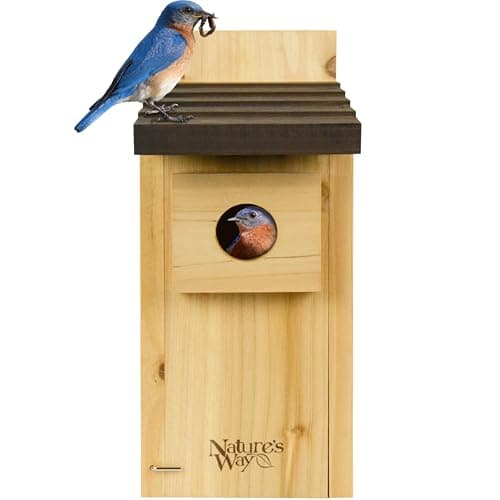
Nature's Way
Nature's Way Cedar Bluebird House with Ventilation, Drainage & Cleanout Access
8.6 / 10
- Cedar bluebird box from a trusted wild-bird-products brand
- Built to the standard bluebird entry-hole specification (about 1.5 in per NestWatch)
- Cedar naturally resists rot and insects for outdoor durability
- Nest-box essentials: ventilation, drainage, and a cleanout door
$21.99
Current price · checked Sep 8, 2026
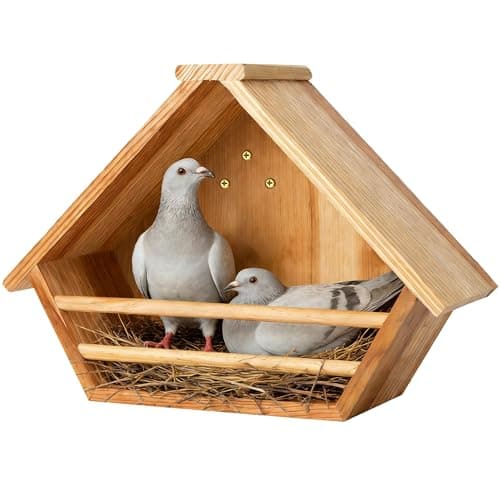
Oltara
Oltara Cedar Mourning Dove Nesting Box, Open-Platform Shelter for Doves
8.3 / 10
- Cedar nesting box designed specifically for mourning doves
- Doves nest on open platforms, so a dove box is an open, sheltered shelf
- Cedar resists rot and insects for season-after-season outdoor use
- Species-matched design rather than a generic small-holed cavity box
$34.98
Current price · checked Sep 27, 2026
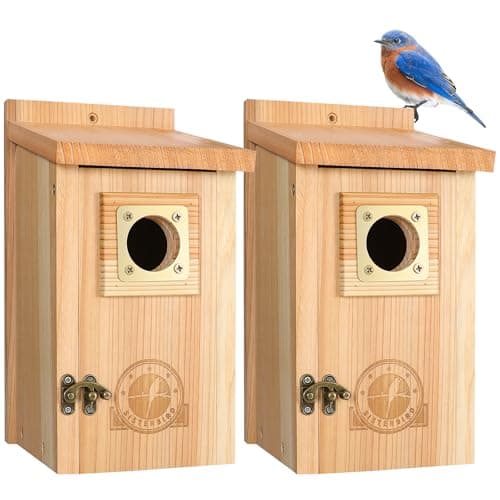
SISTERBIRD
SISTERBIRD 2-Pack Outdoor Bird Houses for Wild Songbirds
8.0 / 10
- Two outdoor bird houses in a single purchase
- Lets you site a pair around the yard affordably
- Spacing two boxes reduces competition between nesting pairs
- A budget way to start attracting cavity-nesting songbirds
$28.20
Current price · checked Sep 8, 2026
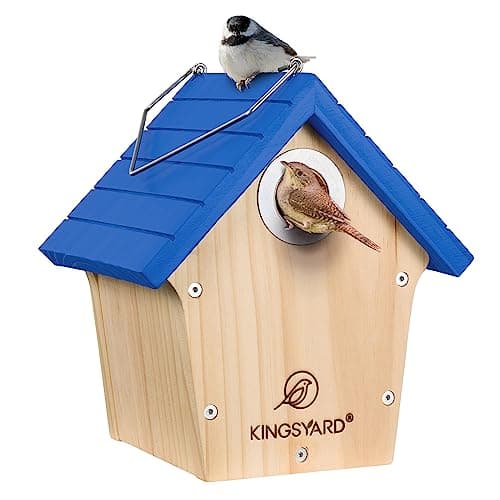
Kingsyard
Kingsyard Cedar Hanging Bird House with Metal Predator Guard (Wren, 1-Inch Hole)
7.9 / 10
- 1-inch entrance hole sized for house wrens and other small cavity nesters
- Reinforced metal plate around the entrance to hold the hole at its intended size
- Solid cedar construction with corner ventilation holes in the bottom panel
- Removable roof with a metal handle for seasonal cleanout
$19.99
Current price · checked Sep 25, 2026
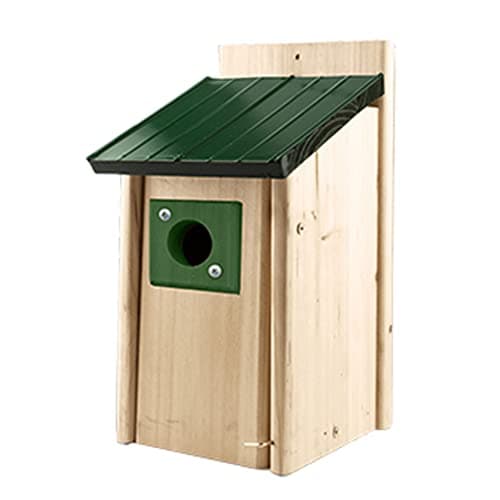
Woodlink
Woodlink Natural Cedar Bluebird Nesting Box with Predator Guard and Metal Roof
7.7 / 10
- Weather-resistant natural cedar construction
- Predator guard at the entrance to protect nesting birds
- Easy-open latch for convenient seasonal cleaning
- Metal roof for extra durability against sun and rain
$36.99
Current price · checked Sep 25, 2026
The Short Answer
The best bird house for wild songbirds is the one whose entry-hole diameter matches the species you actually want, because a hole a fraction too big invites the aggressive birds that evict your target species. Our best overall is the Nature's Way Cedar Bluebird House (about $21.99), a trusted-brand cedar box built to the well-published bluebird specification, with the ventilation, drainage, and cleanout access a nest box needs. The Oltara Cedar Mourning Dove Nesting Box (about $34.98) is the species-specific pick for doves, which prefer an open platform to a tight cavity, and the SISTERBIRD 2-Pack (about $28.20, or roughly $14.10 a box) is the cheapest way to put up two boxes at once. The core rules: match the hole to the bird per Cornell NestWatch, choose cedar for rot resistance, and insist on ventilation, drainage, a cleanout door, and no perch — a perch only helps predators. These are homes for wild songbirds, a completely different job from a chicken or poultry nesting box.
Every product on this list has been scored against the PetPal Gear Score, a weighted composite of expert consensus, observed effectiveness, animal safety, long-term durability, and value. Review method: Editorial synthesis of manufacturer and Amazon product listings for each box plus established wild-bird nest-box guidance from the Cornell Lab of Ornithology's NestWatch program and the National Audubon Society on entry-hole sizing, ventilation, drainage, and predator protection. No independent lab or outlet has published a hands-on review of these specific generic-marketplace boxes, so we do not attribute any award or verdict to an outlet, and we match every pick to the species its hole size actually fits rather than repeating a generic 'attracts birds' claim. PetPalHQ does not run a nest-box testing lab; the PetPal Birdhouse Score below is a transparent synthesis of documented listing specifications and published ornithology guidance, not a measurement. Prices were captured on 2026-07-06 and should be treated as list/listing figures that will move.. Synthesized from 5+ expert sources.
Bird houses are sold as decorations, but a nest box is a piece of habitat, and the difference is decided by one number most listings barely mention: the entry-hole diameter. Get it right and the bird you want moves in; get it wrong and you either attract nothing or invite the larger, aggressive species that evict smaller songbirds. So before any single pick, here is the rule that should govern your whole purchase. Match the hole to the species per Cornell NestWatch: roughly 1.5 inches for bluebirds, about 1.25 inches for many wrens and chickadees. Then insist on cedar, ventilation, drainage, a cleanout door, and no perch. Everything else is styling.
We read 5 sources for this guide: the manufacturer and Amazon listings for each box, plus established wild-bird nest-box guidance from the Cornell Lab of Ornithology's NestWatch program and the National Audubon Society on hole sizing, ventilation, drainage, and predator protection. We want to be upfront about two things. These are generic-marketplace boxes, and no independent lab or major outlet has published a hands-on review of any of them — so we do not claim anyone "named" a pick best. And rather than repeat a maker's "attracts birds" claim, we match each box to the species its hole size actually fits and tell you when a box is the wrong tool for the bird you want. The specs come from the listings; the sizing standards come from the ornithology sources; the PetPal Birdhouse Score is our transparent synthesis of the two.
PetPalHQ.com earns affiliate commissions from qualifying purchases. Our recommendations are based on expert consensus — we synthesize professional reviews and manufacturer documentation, plus multi-year owner durability data, to find pet gear that is worth your investment. Commission rates never influence our editorial recommendations.
One clarification before the details, because it trips people up: these are homes for wild songbirds you do not own, a completely different product from a chicken or poultry nesting box, which is an interior fixture for hens you keep. If your interest is backyard poultry, that is a separate purchase entirely. A nest box also pairs naturally with the rest of a bird-friendly yard — feeders and water bring birds in, boxes give them a place to raise young — so if you are building out the whole setup, our guide to smart bird feeders covers the feeding side of the same yard.
Match the Hole to the Bird
The entry-hole diameter is the most important spec on any nest box, and it is not a rough guideline — it is a precise filter. A hole sized to about 1.5 inches admits a bluebird while keeping larger birds out. A hole around 1.25 inches suits many wrens and chickadees. And a hole even a little too big undoes the whole purpose: it lets in bigger, aggressive species that commandeer or destroy the nest. Cornell's NestWatch program publishes hole sizes species by species, precisely because this one number decides who can move in. That is why our score weights correct sizing above everything else.
This is why "attracts all birds" is a warning sign rather than a selling point on a birdhouse listing. A box built for a specific bird is a box that works; a box built to look nice and attract "birds" in general is a box that often attracts the wrong ones. Decide which species your region and yard can realistically host, look up its published hole size, and then confirm a nesting box listing's own dimensions match before you buy. A dove is a special case — doves nest on open platforms rather than in cavities, so for them the right structure is an open shelf, not a small-holed box at all.
The Features That Make a Box Functional
Beyond the hole, a working nest box needs four unglamorous things, and most decorative houses skip at least one. Ventilation gaps near the top let heat escape so a nest does not cook on a hot afternoon. Drainage holes in the floor let rain escape so a brood is not chilled or drowned in a puddle. A cleanout door — a hinged side or front — lets you clear the old nest between broods. This matters because parasites and packed-down material build up fast and harm the next clutch. And the box should have no exterior perch. Cavity nesters do not need one, and a perch only gives predators and competitors a foothold.
Cedar ties these together as the material of choice. It naturally resists rot and insects without paint or chemical treatment, which matters twice over: it lasts for years outdoors, and it avoids the treated or painted surfaces that can be unsafe next to a nest. When you are comparing boxes, look past the styling for these five signals — right hole, ventilation, drainage, cleanout, no perch, in durable cedar — and you will separate the real nest boxes from the yard ornaments. A pretty box missing them is not just less good; it can actively harm the birds it lures in, so treat a functional bird house as the baseline rather than an upgrade.
Placing and Maintaining Your Nest Box
Even a perfect box fails in the wrong spot, so placement is half the job. Mount the box at the correct height and orientation for your target species — NestWatch publishes these too — generally facing away from prevailing wind and driving rain and out of the harshest all-day sun. Put it on a smooth pole rather than a tree when you can, and add a predator baffle below it. Climbing predators like raccoons, cats, and snakes are the leading cause of nest failure, and a baffle on the pole is the most effective single defense you can add. A box on an unbaffled post is an easy target, no matter how good the box itself is.
Maintenance is the other ongoing part, and it is light but real. Clean the box out between broods and again at the end of the season through the cleanout door, removing the old nest and any debris so the next occupants start fresh and parasite-free. Check the box before each nesting season for damage, secure mounting, and a clear drainage and ventilation path. If you enjoy the birds enough to want to go further, water is the next addition that makes a yard genuinely bird-friendly, and our bird baths and solar fountains guide covers that side. A little placement care and seasonal cleaning turns a good box into one that fledges young year after year.
Head-to-Head Comparison
| Product | Best-fit species | Type | PetPal Birdhouse Score |
|---|---|---|---|
| Nature's Way Cedar Bluebird House with Ventilation, Drainage & Cleanout Access | Bluebirds (~1.5 in hole) | Cavity box | 8.6 |
| Oltara Cedar Mourning Dove Nesting Box, Open-Platform Shelter for Doves | Mourning doves | Open platform | 8.3 |
| SISTERBIRD 2-Pack Outdoor Bird Houses for Wild Songbirds | Small cavity nesters (verify hole) | Cavity box (pair) | 8.0 |
| Kingsyard Cedar Hanging Bird House with Metal Predator Guard (Wren, 1-Inch Hole) | House wrens / small cavity nesters (1 in hole) | Cavity box | 7.9 |
| Woodlink Natural Cedar Bluebird Nesting Box with Predator Guard and Metal Roof | Bluebirds | Cavity box | 7.7 |
$21.99
Current price · checked Sep 8, 2026
- Cedar bluebird box from a trusted wild-bird-products brand
- Built to the standard bluebird entry-hole specification (about 1.5 in per NestWatch)
- Cedar naturally resists rot and insects for outdoor durability
- Nest-box essentials: ventilation, drainage, and a cleanout door
- Sized as a cavity box for bluebirds, not a generic decorative house
The Nature's Way cedar bluebird house is the pick we would mount first, because it gets the one thing right that decides whether a nest box works: the entry hole is sized for the species it names. Bluebirds need an entry hole of roughly 1.5 inches, and that number is not arbitrary. It is the well-published Cornell NestWatch standard that lets a bluebird in while keeping larger, aggressive birds out. A box built to the right specification is the difference between attracting the bird you want and hosting the ones that evict it. Nature's Way is a trusted name in wild-bird products, which is why this is our default rather than a generic decorative "birdhouse."
The rest of the design covers what a working nest box actually needs, and most cheap decorative houses skip. Cedar is the right material — it naturally resists rot and insects, so the box survives seasons of weather without paint or treatment. A proper box also ventilates so the nest does not overheat, drains so rain does not pool inside, and opens for cleanout so you can clear the old nest between broods, which matters because parasites and old material build up fast. Those unglamorous features are exactly what separates a home birds will use and fledge young from a yard ornament that cooks or floods a nest.
Here is the honesty this whole guide is built on. We are describing the listing and the well-published nest-box standards, not a hands-on test — PetPalHQ has not mounted these boxes and monitored nesting, and no outlet has published a hands-on review of this exact box, so we do not claim anyone "named" it best. Where we cite a hole diameter, that is the general species standard from NestWatch, not a caliper measurement of this specific unit, so confirm the listing's own dimensions match your target species before mounting. And to be clear about scope: this is a home for wild songbirds, an entirely different job from the chicken and poultry nesting boxes we cover separately.
What We Love
- Entry hole sized to the standard bluebird specification excludes larger, aggressive birds
- Trusted wild-bird brand rather than a generic decorative maker
- Cedar resists rot and insects without paint or chemical treatment
- Includes the ventilation, drainage, and cleanout access a working box needs
- Purpose-built as a bluebird cavity box, not a stretched ornamental house
What Could Be Better
- Species-specific by design — a bluebird box is not a wren or chickadee box
- Confirm the listing's own hole dimension matches your target species before mounting
- Still needs correct placement, a predator baffle, and seasonal cleaning from you
The Verdict
For most yards, the Nature's Way cedar bluebird house is the editorial default: correctly sized, cedar-built, and equipped with the ventilation, drainage, and cleanout a real nest box needs. Confirm it matches your target species, mount it right, and add a baffle against predators.
Sources
- Nature's Way (manufacturer/Amazon listing): cedar bluebird nesting box with a species-appropriate entry hole, ventilation, drainage, and a cleanout door, built from rot- and insect-resistant cedar
- Cornell Lab NestWatch (Right Bird, Right House): specifies about a 1.5-inch entry hole for Eastern bluebirds and warns that hole size determines which species can use a box
$34.98
Current price · checked Sep 27, 2026
- Cedar nesting box designed specifically for mourning doves
- Doves nest on open platforms, so a dove box is an open, sheltered shelf
- Cedar resists rot and insects for season-after-season outdoor use
- Species-matched design rather than a generic small-holed cavity box
- Aimed at attracting doves rather than cavity-nesting songbirds
The Oltara cedar mourning dove box is the pick when doves are the birds you actually want, and it works because it respects how doves nest. Mourning doves are not cavity nesters — in the wild they build flimsy nests on open branches and ledges, so a proper dove "box" is really an open, sheltered platform or shelf rather than an enclosed cavity with a small round hole. Trying to attract doves with a tight-holed songbird box misunderstands the species; the Oltara is built for the open-nesting behavior doves actually have, which is why it earns the species-specific spot.
As a piece of hardware, it covers the durability basics. Cedar is again the right call, resisting rot and insects so the platform holds up to the weather it will sit out in season after season without treatment. Because it is an open design, ventilation and pooling are less of a concern than in an enclosed box, but placement matters more — an open platform needs a sheltered, somewhat protected spot to give a nest any wind and predator protection, since it lacks the walls of a cavity box. Mount it thoughtfully and you give doves a sturdier, more sheltered version of the open ledge they already favor.
The honesty is the same as the rest of the guide. We are describing the listing and the general nesting behavior of mourning doves, not a hands-on test, and no outlet has reviewed this exact box, so we attribute no award to it. Doves can be selective about adopting any structure, so treat it as an invitation, not a guarantee, and site it well to improve the odds. And, as everywhere here, this is habitat for a wild species — you are offering doves a better platform, not keeping a pet, and success depends as much on placement and patience as on the box itself.
What We Love
- Designed for how doves actually nest — an open platform, not a tight cavity
- Cedar construction resists rot and insects for durable outdoor use
- Species-matched rather than a generic box mislabeled for doves
What Could Be Better
- Open design needs a well-sheltered, protected placement to shield a nest
- Doves can be selective — adoption is never guaranteed with any structure
- Not a cavity box, so it will not serve bluebirds, wrens, or chickadees
The Verdict
If doves are the birds you want, the Oltara is the species-specific pick — an open cedar platform matched to how doves really nest. Site it in a sheltered spot for wind and predator protection, and treat adoption as an invitation, not a certainty.
Sources
- Oltara (manufacturer/Amazon listing): cedar mourning dove nesting box built as an open, sheltered platform matched to the open-nesting behavior of doves, from rot- and insect-resistant cedar
- National Audubon Society (Nest Structures and Placement): notes different species nest differently — open-cup and platform nesters versus cavity nesters — and need structures matched to their behavior
$28.20
Current price · checked Sep 8, 2026
- Two outdoor bird houses in a single purchase
- Lets you site a pair around the yard affordably
- Spacing two boxes reduces competition between nesting pairs
- A budget way to start attracting cavity-nesting songbirds
- Two chances at occupancy instead of one
The SISTERBIRD 2-pack is the value pick, and the value is not just the low per-box price — it is that two boxes genuinely work better than one. Many cavity-nesting songbirds are territorial, so a single box in a yard is one gamble, while a pair spaced well apart both reduces competition between nesting pairs and doubles your odds that at least one gets occupied. At about $28.20 for the pair, roughly $14.10 a box, it is the cheapest per-box entry here — a sensible, low-risk way for a first-time buyer to test whether their yard attracts birds at all.
What you should do with the value is spend the difference on getting the details right, because a budget box makes the fundamentals your responsibility. Confirm the entry-hole size on the listing matches the species you are hoping for, and if you want a specific bird, verify the hole against the NestWatch standard rather than trusting a generic "attracts birds" claim. Check that each box has real ventilation and drainage, plan to add a predator baffle on the mounting pole, and make sure you can open it for seasonal cleaning. Two well-sited, correctly-matched boxes will out-perform one expensive box in the wrong spot every time.
The honesty here matches the roster. This is an editorial description from the listing and general nest-box principles, not a hands-on test, and no outlet has reviewed this specific product, so we claim no award for it. Budget multi-packs are exactly where box quality and hole sizing most need checking, so treat the safety and species-match verification as your job on this pick: confirm the hole diameter, the ventilation, the drainage, and the cleanout access before you commit birds' nests to it. Cleared that way, a value 2-pack is a smart, practical start.
What We Love
- About $14.10 a box — the cheapest per-box entry here
- A spaced pair reduces territorial competition and raises occupancy odds
- Low-risk way for a first-timer to test whether their yard attracts nesters
What Could Be Better
- Verify each box's entry-hole size matches your target species before mounting
- Budget construction means checking ventilation, drainage, and cleanout yourself
- Generic 'bird house' framing is less species-precise than a purpose-built box
The Verdict
If you want to start affordably, the SISTERBIRD 2-pack is the value pick — two boxes that out-perform one when sited well. Confirm the hole size matches your target species, check the ventilation and drainage, and add a baffle before you rely on them.
Sources
- SISTERBIRD (manufacturer/Amazon listing): two-pack of outdoor wild-bird houses, letting the owner site a spaced pair around the yard in a single purchase
- Cornell Lab NestWatch (Where to Place a Nest Box): advises spacing boxes appropriately for the species and matching the box and hole to the intended bird
$19.99
Current price · checked Sep 25, 2026
- 1-inch entrance hole sized for house wrens and other small cavity nesters
- Reinforced metal plate around the entrance to hold the hole at its intended size
- Solid cedar construction with corner ventilation holes in the bottom panel
- Removable roof with a metal handle for seasonal cleanout
- Hanging design for branches, hooks, or garden structures
Kingsyard is the pick for a buyer who wants a good-looking cedar box that still functions as a real nest box, and this hanging wren house is the model in its lineup that stays with actual cedar rather than the recycled poly lumber the brand uses elsewhere. Cedar does the weather work — it resists rot and insects outdoors without paint or treatment — and the corner ventilation holes in the bottom panel handle the airflow and drainage that decide whether a box stays habitable through a wet spring.
The entrance is the detail to understand before you buy. It is a 1-inch hole, which is house-wren sizing: right for wrens, chickadees, and other small cavity nesters, and deliberately too small for house sparrows and starlings. It is not a bluebird box — bluebirds need about 1.5 inches, so if bluebirds are the goal, buy the cedar bluebird box ranked first in this guide instead. The reinforced metal plate around the opening is doing real work rather than decoration: squirrels and woodpeckers enlarge wooden entrance holes, and once a hole is chewed wider the box stops excluding the birds it was sized to exclude. The metal plate is what keeps that from happening.
The rest is straightforward. A metal handle holds the roof on and lifts off for cleanout, so clearing last year's nest material at the end of the season is a two-second job rather than an unscrewing exercise — and Cornell's NestWatch lists cleanout access alongside ventilation, drainage, and a species-appropriate hole as the features that make a box functional rather than ornamental. This one has all four. Hang it from a branch, a hook, or a shepherd's crook, and understand that a hanging box swings; some cavity nesters accept that and some prefer a fixed mount, so if your yard has a post available, a mounted box is the surer bet.
What We Love
- Solid cedar with bottom-panel ventilation holes, not a decorative box pretending to be one
- Metal entrance plate keeps the 1-inch hole from being chewed wider
- Removable roof on a metal handle makes seasonal cleanout easy
- Around $19.99 for a real cedar box from a recognized wild-bird brand
What Could Be Better
- 1-inch hole is wren sizing — not a bluebird box, which needs about 1.5 inches
- Hanging mount swings; some cavity nesters prefer a fixed post or wall mount
- Most of Kingsyard's other houses are recycled poly lumber, so confirm you are on the cedar listing
The Verdict
If you want a cedar box that looks good and still works, the Kingsyard hanging wren house at about $19.99 is the pick — cedar, ventilated, cleanout roof, and a metal-guarded 1-inch hole. Buy it for wrens and chickadees, not bluebirds.
Sources
- Kingsyard (manufacturer Amazon listing): 1-inch entrance hole designed for House Wrens and other small birds; reinforced metal plate around the entrance helps maintain the intended entrance size; solid cedar wood with corner ventilation holes in the bottom panel; removable roof with metal handle for cleaning
- Cornell Lab NestWatch (Features of a Good Birdhouse): lists ventilation, drainage, cleanout access, and a species-appropriate hole as the features of a functional box
$36.99
Current price · checked Sep 25, 2026
- Weather-resistant natural cedar construction
- Predator guard at the entrance to protect nesting birds
- Easy-open latch for convenient seasonal cleaning
- Metal roof for extra durability against sun and rain
- Sized and intended for attracting bluebirds
Woodlink is the pick for a traditional, function-first cedar box from a long-established maker, and this bluebird box is the plainest expression of that. There is no decorative flourish here: weather-resistant natural cedar, a predator guard at the entrance, a latch that opens for cleaning, and a metal roof over the top. Every one of those is a working feature rather than a styling choice, which is what separates a nest box from a birdhouse ornament.
The metal roof is the part worth paying for. Cedar handles weather well, but the roof is the surface that takes the worst of the sun and the rain, and a wooden roof is where these boxes usually fail first — warping, splitting, then leaking onto a nest. Capping it in metal moves the wear to the one component that does not care. The predator guard at the entrance does the same job as the metal plate on the Kingsyard above: it holds the hole at its intended diameter against squirrels and woodpeckers that would otherwise widen it, and it puts distance between a raccoon's reach and the nest cup.
Cleanout is the third leg. The easy-open latch means you clear out last season's material without tools, which Cornell's NestWatch and Audubon both treat as a requirement rather than a nicety — an uncleaned box accumulates parasites and old nesting material until birds stop using it. As with every box in this guide, confirm the entrance diameter suits the bird you are actually trying to attract before you buy: this one is built and sold as a bluebird box, so it is the right choice for bluebirds and the wrong one for wrens, which want the smaller hole on the Kingsyard ranked above.
What We Love
- Metal roof protects the surface that fails first on a wooden nest box
- Predator guard holds the entrance at its intended diameter
- Easy-open latch means tool-free seasonal cleanout
- Weather-resistant natural cedar from a long-established bird-products maker
What Could Be Better
- About $36.99
- Bluebird sizing, so it is the wrong box for wrens and chickadees
- No-frills styling — chosen for function, not looks
The Verdict
If you want a traditional, function-first box from an established name, the Woodlink cedar bluebird box at about $36.99 is the pick — metal roof, predator guard, and a tool-free cleanout latch. Buy it for bluebirds specifically.
Sources
- Woodlink (manufacturer Amazon listing): Constructed of weather-resistant natural cedar; Equipped with a predator guard to protect nesting birds; Easy-open latch allows for convenient cleaning; Metal roof provides extra durability and protection from the elements; Ideal for attracting bluebirds
- National Audubon Society (Nest Boxes): recommends functional nest boxes with proper ventilation, drainage, and cleanout, matched to the intended species
How We Score
Formula
PetPal Birdhouse Score = (Correct Entry-Hole & Cavity Sizing × 0.30) + (Ventilation & Drainage × 0.25) + (Weather Durability: cedar × 0.20) + (Predator Guard & Cleanout Access × 0.15) + (Value × 0.10)
Score Factors
- Correct Entry-Hole & Cavity Sizing · 30%
- Whether the box's entry hole and interior are sized to a specific species per published NestWatch standards — the single factor that most determines whether the right bird uses it. A hole even slightly too large lets in larger, aggressive species that evict the target bird, so a box that names and sizes for a species rates highest, and a generic 'attracts all birds' box rates lower. Where we cite a hole diameter, it is the published species standard, not a measurement of the specific unit, so buyers must confirm the listing's own dimensions.
- Ventilation & Drainage · 25%
- Whether the box vents heat so a nest does not overheat and drains so rain does not pool inside and chill or drown a brood. These unglamorous features separate a functional nest box from a decorative one, and they are weighted heavily because a box that cooks or floods a nest fails at its only real job regardless of how it looks. Ventilation gaps near the top and drainage holes in the floor are the marks of a working box.
- Weather Durability: cedar · 20%
- How well the box survives seasons outdoors, with cedar as the benchmark because it naturally resists rot and insects without paint or chemical treatment — treatments that can themselves be unsafe near a nest. Untreated cedar rates highest; painted or treated wood and thin, flimsy construction rate lower. Durability matters because a nest box is a multi-year fixture exposed to sun, rain, and freeze.
- Predator Guard & Cleanout Access · 15%
- Whether the design supports predator protection and seasonal cleaning: crucially, no exterior perch — a perch gives predators and competitors a foothold and is unnecessary for cavity nesters — plus a hinged panel or removable front for clearing the old nest between broods. Boxes without a perch and with real cleanout access rate highest, since a box that cannot be cleaned accumulates parasites and old material that harm the next brood.
- Value · 10%
- Price relative to correct sizing, durable materials, and functional features — not the lowest sticker. A multi-pack that lets you site two correctly-sized boxes can score well on value, while a decorative box that skimps on ventilation or the right hole size is not a bargain at any price. Value is judged on functional nest boxes birds will actually use, because an unused ornament is a total loss however cheap.
| Rank | Product | Score |
|---|---|---|
| #1 | Nature's Way Nature's Way Cedar Bluebird House with Ventilation, Drainage & Cleanout Access | 8.6 |
| #2 | Oltara Oltara Cedar Mourning Dove Nesting Box, Open-Platform Shelter for Doves | 8.3 |
| #3 | SISTERBIRD SISTERBIRD 2-Pack Outdoor Bird Houses for Wild Songbirds | 8.0 |
| #4 | Kingsyard Kingsyard Cedar Hanging Bird House with Metal Predator Guard (Wren, 1-Inch Hole) | 7.9 |
| #5 | Woodlink Woodlink Natural Cedar Bluebird Nesting Box with Predator Guard and Metal Roof | 7.7 |
When NOT to Buy
Do not buy a box without matching the entry-hole diameter to the species you want. This is the single most important decision in the whole category, because the hole size determines which birds can use the box. Roughly 1.5 inches suits bluebirds; about 1.25 inches suits many wrens and chickadees; and a hole too large lets in bigger, aggressive species that will take over or destroy the nest of the bird you were hoping for. Confirm the listing's hole dimension against the published NestWatch standard for your target species before you buy, and treat a generic "attracts all birds" claim as a warning sign, not a feature.
Do not buy a box with an exterior perch. It looks charming and it is exactly wrong: cavity-nesting songbirds do not need a perch to enter, and a perch gives predators and aggressive competitor birds a convenient foothold to reach in or harass the nest. The best nest boxes deliberately omit a perch. If a box has one, the honest recommendation is to remove it, and if you cannot, choose a different box.
Do not skip ventilation, drainage, and a cleanout door. A box with no ventilation can overheat a nest on a hot day, a box with no floor drainage can pool rain and chill or drown a brood, and a box you cannot open cannot be cleaned between broods — so parasites and old nesting material accumulate. These unglamorous features are what make a nest box functional rather than decorative. A pretty box that lacks them is a hazard to the birds it attracts, not a home.
Do not confuse a wild-songbird nest box with a chicken or poultry nesting box. They are entirely different products for entirely different birds: a songbird box is a small, species-sized cavity mounted outdoors for wild birds you do not own, while a poultry nesting box is a large interior fixture inside a coop for hens you keep. Buying one expecting the other will disappoint you. If you keep backyard poultry, that is a separate guide and a separate purchase; this one is strictly about habitat for wild songbirds.
Skip putting up a box you cannot place and maintain responsibly. A nest box needs correct mounting height and a sheltered orientation for its species, a predator baffle on the pole against climbing predators, and seasonal cleaning between and after nesting. Mounted carelessly — too low, in blazing sun, on an unbaffled pole — a box can do more harm than good by luring birds into a nest site that fails. If you cannot site and maintain it properly, it is kinder not to put one up at all.
Frequently Asked Questions
- How do I match the entry-hole size to the bird I want?
- Look up the published hole size for your target species — Cornell's NestWatch program lists them — and confirm the box's listed hole diameter matches before you buy. Roughly 1.5 inches suits bluebirds, and about 1.25 inches suits many wrens and chickadees, while a hole even slightly too large lets in bigger, aggressive birds that evict smaller songbirds. The hole is the single most important spec on the box, so treat a vague "attracts all birds" claim with suspicion and choose a box built and sized for a specific species.
- Why should a nest box not have a perch?
- Because cavity-nesting songbirds do not need one to get in, and a perch only helps the wrong visitors. An exterior perch gives predators and aggressive competitor birds a foothold to reach into or harass the nest, so the best nest boxes deliberately leave it off. A perch on a birdhouse is usually a sign it was designed to look charming rather than to function. If a box you like has one, remove it if you can, and if you cannot, choose a different box.
- Where and how high should I mount a nest box?
- Follow the published guidance for your species on height and orientation, generally facing the entrance away from prevailing wind and driving rain and out of harsh all-day sun. Mount it on a smooth pole rather than a tree trunk when possible, and add a predator baffle below the box, since climbing predators are the top cause of nest failure and a baffle is the most effective defense you can add. Correct placement matters as much as the box itself — a good box in a bad spot still fails.
- How do I clean a nest box between broods?
- Use the cleanout door — a hinged side or front — to open the box and remove the old nest and any debris after a brood has fledged, then again at the end of the season. Clearing old material keeps parasites and packed-down nesting matter from harming the next clutch, which is exactly why a box you cannot open is a poor choice. A box without cleanout access accumulates problems over time, so the ability to open and empty it is a core feature, not a nicety.
- Is cedar really better than painted or treated wood?
- For a nest box, yes. Cedar naturally resists rot and insects without paint or chemical treatment, so it lasts for years outdoors and avoids putting treated or painted surfaces next to a nest, where chemicals could be a concern. Painted and pressure-treated woods may look nice or promise durability, but untreated cedar gives you the weather resistance you want without that trade-off. If you do choose a finished box, keep any paint or sealant to the exterior only and never inside the cavity or around the entrance.
Bottom Line
Buy the Nature's Way cedar bluebird house if you want the best overall box — correctly sized to the bluebird standard, cedar-built, and equipped with ventilation, drainage, and cleanout access. Confirm it matches your target species and add a predator baffle.
Buy the Oltara dove box if doves are the birds you want — an open cedar platform matched to how doves actually nest, not a tight cavity box. Site it in a sheltered spot and treat adoption as an invitation, not a guarantee.
Buy the SISTERBIRD 2-pack if you want to start affordably — two boxes out-perform one when sited well. Verify each box's hole size matches your target species and check the ventilation and drainage before mounting.
Match the hole to the bird, mount it right, and skip the perch. A perch only helps predators, the wrong hole size invites the wrong birds, and — to be clear — these are homes for wild songbirds, a completely different job from the chicken or poultry nesting boxes we cover separately.
Sources & Methodology
Methodology
PetPal Birdhouse Score = (Correct Entry-Hole & Cavity Sizing × 0.30) + (Ventilation & Drainage × 0.25) + (Weather Durability: cedar × 0.20) + (Predator Guard & Cleanout Access × 0.15) + (Value × 0.10)
Expert review sources
- Cornell Lab of Ornithology, NestWatch — Features of a Good Birdhouse and Right Bird, Right House (entry-hole sizing, ventilation, drainage)
- Cornell Lab NestWatch — Mounting Your Nest Box (placement, height, spacing, predator guards)
- National Audubon Society — bird-friendly yards and nest structures (species-matched nesting, functional boxes)
- Nature's Way and Oltara — manufacturer/Amazon listing specifications (bluebird and dove boxes)
- SISTERBIRD — manufacturer/Amazon listing specifications (2-pack outdoor bird houses)
Community sources
- NestWatch participant community and backyard-birding forums — owner discussion on occupancy, predator baffles, and cleaning between broods
Prices and specs verified July 6, 2026.
About the author
Nick Miles is the chief editor of PetPalHQ. The picks above are an editorial synthesis of manufacturer and Amazon listing specifications cross-checked against established wild-bird nest-box guidance from the Cornell Lab of Ornithology's NestWatch program and the National Audubon Society. PetPalHQ does not run a nest-box testing lab, and no independent outlet has published a hands-on review of these specific generic-marketplace boxes. We match every pick to the species its hole size actually fits rather than repeating a generic 'attracts birds' claim, and we are explicit that these are homes for wild songbirds, not chicken or poultry nesting boxes. The PetPal Birdhouse Score is a transparent composite of documented listing specifications and published ornithology standards, not a measurement.
PetPalHQ is a participant in the Amazon Services LLC Associates Program. We may earn commissions from qualifying purchases — at no extra cost to you.
More Guides
Birds
Best Smart Bird Feeders for U.S. Backyards (2026)
Birds
Best Bird Feeder Pole Systems and Squirrel Baffles for a Raid-Proof Station (2026)
Birds
Best Squirrel-Proof Bird Feeders That Actually Hold the Line (2026)
Birds
Best Bird Baths and Solar Fountains for Backyard Birding (2026)
Birds