Birds
Best Parakeet, Budgie, and Cockatiel Cages 2026: A Size Ladder From Starter to Bird Room
There is no single best parakeet cage — there is a size ladder. Five picks from a compact stackable starter to a walk-in-adjacent flight cage, scored on the PetPal Caged-Bird Fit Score.
By Nick Miles · Updated July 8, 2026 · 12 min
PetPalHQ is reader-supported. We may earn a commission from qualifying Amazon purchases at no extra cost to you.

Evidence at a Glance
VEVOR 30" Stackable Flight Cage with Slide-Out Tray and Handle
The compact starter rung for a single budgie or parakeet in an apartment. A 30-inch stackable frame with a slide-out cleaning tray and a carry handle, it fits where floor space is limited and stacks for a second bird later. Marketplace listing, so the specs are manufacturer-stated — but for a first small-bird setup it covers the fundamentals at the lowest list price here.
Sources: Amazon listing
Verified Jul 8, 2026
VIVOHOME 54" Wrought Iron Flight Cage with Rolling Stand
The mid-ladder all-rounder and the cage most parakeet keepers should default to. A 54-inch wrought-iron flight cage on a rolling stand gives a small bird real room to move, and the wheels make daily cleaning and moving it toward a window genuinely easy. From VIVOHOME, an established pet-product brand with a real owner community.
Sources: Amazon listing, VIVOHOME (established pet-product brand)
Verified Jul 8, 2026
Yaheetech 63" Wrought Iron Rolling Large Bird Cage
The step-up rung for a cockatiel or a bonded pair. At 63 inches on a rolling base, it delivers the wingspan-clearance floor space a larger bird or two budgies need, in a durable wrought-iron build. From Yaheetech, an established pet-product brand — the honest choice when a starter cage is simply too small for the bird.
Sources: Amazon listing, Yaheetech (established pet-product brand)
Verified Jul 8, 2026
Our Picks
VEVOR
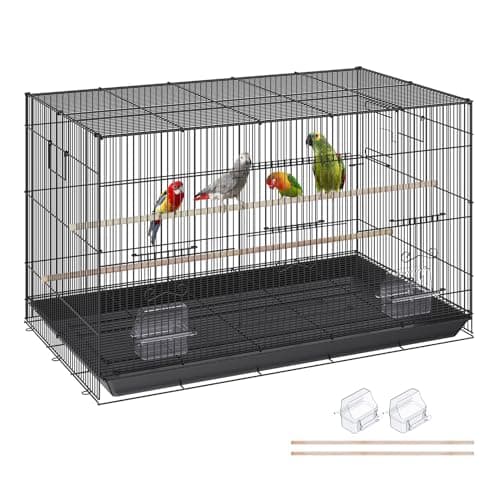
VEVOR 30" Stackable Flight Cage with Slide-Out Tray and Handle
8.6 / 10
- 30-inch stackable flight cage sized for a single budgie or parakeet
- Slide-out tray for quick daily cleaning
- Carry handle to lift and reposition it
- Stackable frame saves floor space in an apartment
$42.90
Current price · checked Sep 8, 2026
Generic
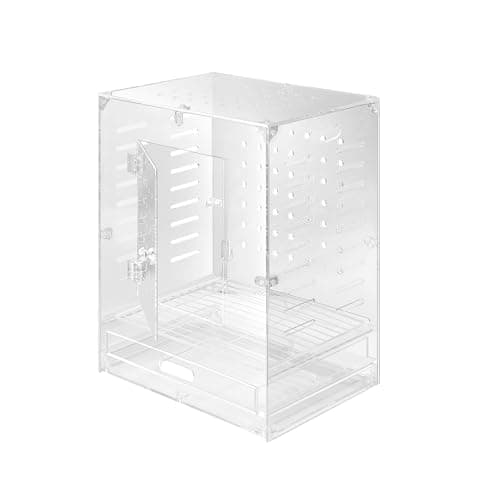
Clear Acrylic Bird Cage for Small Birds, 9x12x15 in
7.8 / 10
- 9 x 12 x 15 in transparent acrylic habitat marketed for canaries and parakeets
- Unobstructed view from every side
- Solid walls contain seed scatter better than open bars
- Compact display footprint for a shelf or side table
$65.00
Current price · checked Sep 8, 2026
VIVOHOME
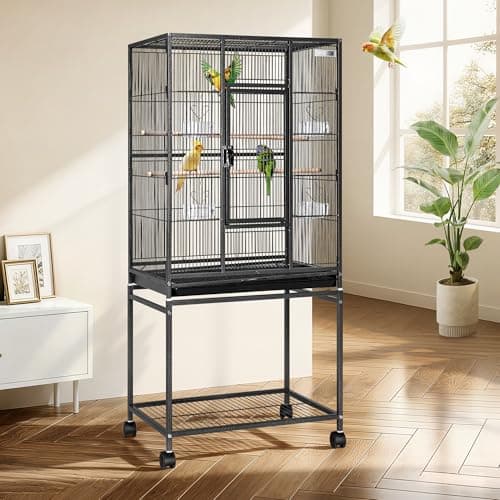
VIVOHOME 54" Wrought Iron Flight Cage with Rolling Stand
9.0 / 10
- 54-inch wrought-iron flight cage with real vertical and horizontal room
- Rolling stand for easy cleaning and repositioning
- Wrought-iron build is sturdier than lighter starter cages
- From VIVOHOME, an established pet-product brand
$121.99
Current price · checked Sep 8, 2026
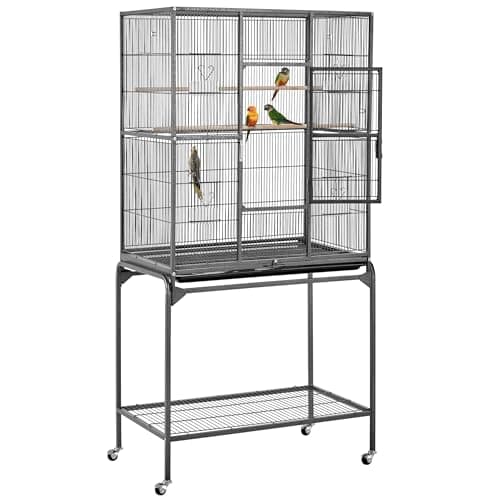
Yaheetech
Yaheetech 63" Wrought Iron Rolling Large Bird Cage
9.1 / 10
- 63-inch wrought-iron cage sized for a cockatiel or a bonded pair
- Rolling base for cleaning access and moving toward daylight
- Durable wrought-iron construction
- From Yaheetech, an established pet-product brand
$145.99
Current price · checked Sep 8, 2026
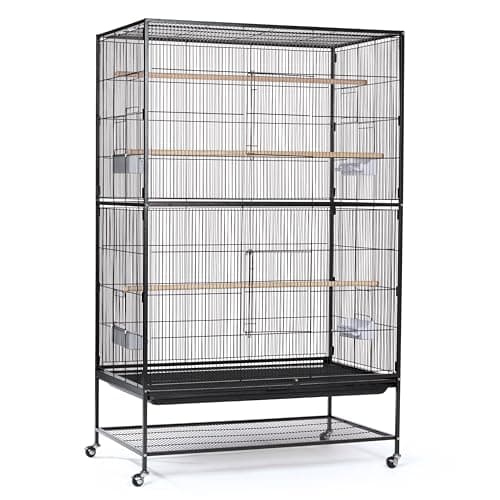
Prevue Hendryx
Prevue Hendryx Wrought Iron Flight Cage, Big Rolling
8.8 / 10
- Large wrought-iron flight cage on a rolling base
- Walk-in-adjacent scale for a dedicated bird room
- Room for multiple birds or genuine flight
- From Prevue Hendryx, a long-established bird-cage manufacturer
$299.99
Current price · checked Sep 8, 2026
The Short Answer
There is no single best parakeet cage, because there is no single caged-bird household — the right enclosure is a rung on a size ladder, not the cheapest box on the page. For one budgie in an apartment, the VEVOR 30-inch stackable flight cage is the sensible compact starter: a slide-out tray, a carry handle, and a footprint that stacks where floor space is tight. If the cage doubles as a display piece in a sunny room, the clear acrylic 9x12x15-inch habitat gives an unobstructed view, though its small footprint suits a single small bird only. Most keepers who want a parakeet to actually stretch and fly should look at the VIVOHOME 54-inch wrought-iron flight cage on a rolling stand, the mid-ladder all-rounder. Step up to a cockatiel or a bonded pair and the Yaheetech 63-inch rolling cage buys the extra floor space their wingspan needs. At the top sits the Prevue Hendryx wrought-iron flight cage, a walk-in-adjacent enclosure for a dedicated bird room or a multi-bird household. Every figure here was captured in a post-holiday window, so read the prices as list prices and confirm the current cost before buying. Match the cage to the bird and the room first, and the right rung — and the right price — follows from that.
Every product on this list has been scored against the PetPal Gear Score, a weighted composite of expert consensus, observed effectiveness, animal safety, long-term durability, and value. Review method: Editorial synthesis of each product's Amazon listing (title specifications and feature bullets), read against the well-documented caged-bird housing consensus — bar spacing must be narrow enough a small bird's head cannot pass, horizontal bars support the climbing parakeets and budgies actually do, and a rolling stand or slide-out tray decides whether daily cleaning is realistic. VIVOHOME, Yaheetech, and Prevue Hendryx are treated as established bird-cage and pet-product brands with honest reputations; the VEVOR stackable cage and the clear acrylic habitat are marketplace listings whose specifications are manufacturer-stated. PetPalHQ does not run a testing lab; the PetPal Caged-Bird Fit Score is a transparent synthesis of listing specifications against published housing standards — size-to-bird fit, cleaning ease, durability, mobility, and value — not a measurement.. Synthesized from 5+ expert sources.
Ask five parakeet owners what cage to buy and you will get five different right answers, because they are keeping different birds in different rooms. One has a single budgie in a studio apartment; another wants a display piece for a sunny windowsill; a third is building a bird room for a bonded pair of cockatiels. The mistake this guide exists to prevent is treating all of them as the same shopper hunting for the cheapest box. There is no single best parakeet cage — there is a ladder of cage sizes, and the job is to find the rung that matches your bird and your space.
The five cages below span that ladder honestly, from a compact stackable starter at the bottom to a walk-in-adjacent flight cage at the top, and they sort by one question: how much bird, in how much room? Every price here was captured in a quiet post-holiday window, so read each figure as a list price and confirm the current cost before buying — the ranking is built on size-to-bird fit, build, and cleaning access, not on today's number. Where a cage comes from a marketplace listing rather than an established maker, we say so plainly.
PetPalHQ.com earns affiliate commissions from qualifying purchases. Our recommendations are based on expert consensus — we synthesize professional reviews and manufacturer documentation, plus multi-year owner durability reports, to find pet gear that is worth your investment. Commission rates never influence our editorial recommendations.
The specifications in this guide are grounded in each product's Amazon listing, read against the well-documented caged-bird housing consensus about bar spacing, climbing behavior, floor space, and cleaning access. PetPalHQ does not run a testing lab; the PetPal Caged-Bird Fit Score below is a transparent synthesis of listing specifications against published housing standards — size-to-bird fit, cleaning ease, durability, mobility, and value — not a measurement.
Why the Right Cage Is a Size Question, Not a Budget One
The temptation with a first bird is to sort parakeet cages by price and buy near the bottom. It is the wrong sort. A caged bird spends nearly its whole life inside the enclosure you choose, and the single spec that decides its welfare is size relative to the bird — a cage that is too small drives feather plucking, pacing, and stress no toy can undo. Brand and features come after that. The cheapest cage that fits the bird beats an expensive one that does not, and an expensive one bought for a bird that needs half the space is money spent on the wrong problem.
So think in rungs. A compact stackable cage like the VEVOR 30-inch suits one budgie where floor space is scarce. A transparent acrylic habitat is a specialized display home for a single small bird in a bright room. A mid-size flight cage such as the VIVOHOME 54-inch gives a parakeet real room to fly and is where most keepers should land. Step up to a cockatiel or a pair and the Yaheetech 63-inch buys the floor space they need, and at the ceiling the Prevue Hendryx is aviary-scale for a dedicated bird room. Bar spacing threads through every rung: it must be narrow enough that the bird's head cannot pass, and a budgie needs tighter spacing than a cockatiel.
Matching Cage to Bird and Room
Once you know the rung, the choice gets simple. Count the birds, measure the room, and be honest about how the cage will be cleaned. A single small bird in an apartment is served by a compact or display-scale cage; a parakeet you want to see actually fly needs the mid-ladder flight cage; a cockatiel or a bonded pair needs the step up in floor space; a bird room or a multi-bird household needs the top rung. Reading the specs of a few wrought iron flight cages side by side is the fastest way to see where your bird lands.
Cleaning access is the spec buyers underweight and regret. A slide-out tray turns daily maintenance into a two-minute job, and on any cage bigger than a starter box a rolling bird cage stand is what makes cleaning under and around the enclosure realistic — and lets you roll the cage toward a window for daylight and away from a draft at night. A cage that is a chore to clean gets cleaned too rarely, and that is a welfare problem dressed up as a convenience one. Horizontal bars matter too: parakeets and budgies climb them as natural behavior, which is one reason a barred flight cage suits an active bird better than a smooth-walled box.
How We Score: The PetPal Caged-Bird Fit Score
The PetPal Caged-Bird Fit Score weights the five things that decide whether a cage actually suits the bird living in it, rather than which listing shouts loudest. Size-to-Bird Fit carries the most weight at 30 percent, rewarding cages that pair the right footprint with a clearly defined buyer — which is why the mid-size and cockatiel-scale flight cages score at the top and the small acrylic habitat is capped by its single-small-bird ceiling. Cleaning Ease follows at 25 percent, crediting slide-out trays and rolling stands, because a cage that is hard to clean stays dirty.
The remaining weight covers build and practicality. Durability at 20 percent favors wrought-iron construction and established makers over lighter marketplace materials, where Prevue Hendryx and the two flight cages lead. Assembly and Mobility at 15 percent rewards a carry handle, a stackable frame, or wheels, balanced against the reality that the biggest cages are heavier to build and move. Value rounds it out at 10 percent, measuring list price against the space and features each rung delivers. The acrylic habitat lands lowest not because it is a bad product but because its narrow use case and manufacturer-stated specs cost it on the two heaviest factors.
What We Passed On
We kept the roster to five cages that each own a distinct rung of the ladder, and a couple of deliberate exclusions are worth naming.
We passed on the wall of near-identical marketplace flight cages that clone the VIVOHOME and Yaheetech shapes under a dozen unfamiliar brand names. Many resolve to the same underlying product, and listing three interchangeable look-alikes as three "picks" would be padding that sends buyers in circles. We kept one cage per meaningful rung instead, named the marketplace-listing caveat plainly, and gave you the standard to judge any look-alike you find against it.
We also declined to fold in poultry housing or backyard bird-feeder gear, even though they share the Birds category. A brooder or a feeder answers a different question than a companion-bird cage, and mixing them would blur the one thing this guide is built to do — walk a caged-bird keeper up a size ladder to the rung that fits their parakeet, budgie, or cockatiel. For bigger birds and their enrichment, the related guides below pick up where this ladder ends.
Head-to-Head Comparison
| Product | Best for | Standout spec | PetPal Caged-Bird Fit Score |
|---|---|---|---|
| VEVOR 30" Stackable Flight Cage with Slide-Out Tray and Handle | Single budgie, apartment starter | 30 in stackable; slide-out tray + handle | 8.6 |
| Clear Acrylic Bird Cage for Small Birds, 9x12x15 in | One small bird, display piece | Transparent acrylic; low-scatter walls | 7.8 |
| VIVOHOME 54" Wrought Iron Flight Cage with Rolling Stand | Most parakeet keepers | 54 in wrought iron; rolling stand | 9.0 |
| Yaheetech 63" Wrought Iron Rolling Large Bird Cage | Cockatiel or bonded pair | 63 in wrought iron; rolling base | 9.1 |
| Prevue Hendryx Wrought Iron Flight Cage, Big Rolling | Bird room / multiple birds | Walk-in-adjacent; rolling base | 8.8 |
$42.90
Current price · checked Sep 8, 2026
- 30-inch stackable flight cage sized for a single budgie or parakeet
- Slide-out tray for quick daily cleaning
- Carry handle to lift and reposition it
- Stackable frame saves floor space in an apartment
- Lowest list price in this guide
Start here if the household is one budgie and the floor space is a corner of a small apartment. The VEVOR cage is the bottom rung of the ladder on purpose: a 30-inch stackable flight cage with a slide-out tray and a carry handle, built to cover a first small-bird setup without asking for a dedicated bird room. The slide-out tray is the feature that matters most day to day, because the honest test of any cage is whether cleaning it is a two-minute job or a chore you put off — pull the tray, tip the debris, slide it back.
The stackable design is the quiet argument for this pick. A keeper who starts with one budgie and later adds a second bird can stack a matching cage rather than rearranging the room, and the carry handle means the whole thing lifts to a table for a deep clean or moves toward a window for morning light. None of that is glamorous, but it is exactly the right feature set for someone buying their first cage and unsure how far the hobby will go.
Be clear-eyed about what the compact size does and does not do. Thirty inches suits one small bird with room to hop and short-hop between perches; it is not the wingspan-clearance flight room a cockatiel or a bonded pair needs, and sizing up later is common. VEVOR is a marketplace brand, so the listing's specifications are manufacturer-stated rather than independently verified — buy from a returnable listing, and confirm the bar spacing is narrow enough that your bird's head cannot pass through before you trust it. There is no rolling stand at this rung either; you lift the cage rather than wheel it.
For a single budgie in a starter setup where floor space is the binding constraint, the VEVOR cage is the sensible, low-cost way onto the ladder — just plan to climb it if the flock grows.
What We Love
- 30-inch stackable frame fits apartments and starter setups
- Slide-out tray makes daily cleaning fast
- Carry handle to lift and reposition the cage
- Stackable design saves floor space and scales to a second bird
- Lowest list price in this guide
What Could Be Better
- Compact footprint suits one small bird, not a cockatiel or a pair
- Marketplace brand — specs are listing-stated, not independently verified
- No rolling stand; you lift the cage rather than wheel it
The Verdict
For a single budgie in an apartment starter setup, the VEVOR cage covers the fundamentals at the lowest price on the ladder.
Sources
- Amazon listing: listing specifies a 30-inch stackable flight cage with a slide-out cleaning tray and a carry handle
$65.00
Current price · checked Sep 8, 2026
- 9 x 12 x 15 in transparent acrylic habitat marketed for canaries and parakeets
- Unobstructed view from every side
- Solid walls contain seed scatter better than open bars
- Compact display footprint for a shelf or side table
- Marketed as easy to clean and assemble
Not everyone wants a wire cage in the living room, and the acrylic habitat is the answer for the keeper who wants the enclosure to look like furniture. It is a 9-by-12-by-15-inch transparent box marketed for canaries and parakeets, and the appeal is entirely the view: clear panels on every side turn a small bird into a display piece in a sunny room, with none of the visual clutter of bars. The solid walls have a practical upside too, since they trap the seed hulls and feather down that an open cage scatters across the floor.
Where this rung sits on the ladder is narrow and worth stating plainly. The footprint is small — the smallest here — so it suits one small bird kept as much for looking at as for anything else. Acrylic is also its own trade-off material: it scratches over time, and a fully enclosed box needs deliberate ventilation so it does not trap humidity and odor, so an owner should confirm the airflow is adequate before committing a bird to it. Because the walls are smooth rather than barred, the cage does not offer the horizontal climbing surfaces parakeets and budgies naturally clamber across, which is a genuine behavioral cost rather than a cosmetic one.
This is a Generic marketplace listing, so its specifications are the seller's own with no independent verification behind them — the same caution that applies to any unbranded enclosure. The honest way to read it is as a specialized display habitat, not a primary flight cage: a lovely, low-scatter home for a single small bird in a bright room, chosen with eyes open about airflow and the missing climbing surfaces.
Buy the acrylic habitat if a clean, furniture-grade look for one small bird matters more than climbing room and cage-scale ventilation — and skip it if the bird needs space to truly move.
What We Love
- Fully transparent panels give an unobstructed view
- Marketed for canaries and parakeets, easy to clean and assemble
- Solid walls contain seed scatter better than an open cage
- Compact, furniture-grade footprint for a shelf or table
- Distinctive display look for a sunny room
What Could Be Better
- Small 9x12x15 footprint suits a single small bird only
- Acrylic scratches and can trap humidity and odor without good airflow — confirm ventilation
- Smooth walls lack the horizontal climbing surfaces parakeets use
- Generic marketplace listing — specifications are manufacturer-stated only
The Verdict
If a furniture-grade look for one small bird matters more than climbing room, the acrylic habitat is the display pick — just confirm the ventilation.
Sources
- Amazon listing: listing specifies a 9 x 12 x 15 in transparent acrylic habitat marketed for canaries and parakeets, described as easy to clean and assemble
$121.99
Current price · checked Sep 8, 2026
- 54-inch wrought-iron flight cage with real vertical and horizontal room
- Rolling stand for easy cleaning and repositioning
- Wrought-iron build is sturdier than lighter starter cages
- From VIVOHOME, an established pet-product brand
- Mid-ladder price for the space it delivers
If one cage deserves to be the default recommendation, it is this one. The VIVOHOME 54-inch flight cage is the middle of the ladder, and the middle is where most parakeet keepers actually belong: enough wrought-iron height and width for a small bird to open its wings and cross the cage in real flight, mounted on a rolling stand that makes the daily reality of ownership manageable. A cage a bird can fly in is not a luxury — movement is how a caged bird stays fit and sane — and 54 inches clears the bar where a compact starter cage cannot.
The rolling stand earns its place as much as the cage does. Wheels turn cleaning from a wrestling match into a task you can do without lifting anything, and they let a keeper roll the whole enclosure toward a window for daylight in the morning and back out of a draft at night. That mobility matters more than new owners expect, and it is the practical line that separates a mid-ladder cage from a starter box you have to reach around. VIVOHOME is an established pet-product brand with a genuine owner community, so the listing specs come with real-world reputation behind them rather than anonymous marketplace claims.
The trade-offs are the ones that come with more cage, not flaws. A 54-inch flight cage needs dedicated floor space, so it is a poor fit for a cramped apartment corner, and wrought-iron assembly takes longer out of the box than snapping together a small starter cage. As with any enclosure, confirm the bar spacing suits your specific bird before buying — a budgie needs narrower spacing than a cockatiel, and the head-cannot-pass rule is non-negotiable.
For the keeper who wants one cage that gives a parakeet room to actually fly and makes cleaning painless, the VIVOHOME is the rung to buy first.
What We Love
- 54-inch wrought-iron frame gives real flight room
- Rolling stand makes cleaning and repositioning near a window easy
- Sturdier wrought-iron build than lighter starter cages
- From VIVOHOME, an established pet-product brand with an owner community
- Mid-ladder price for the space you get
What Could Be Better
- Larger footprint needs dedicated floor space
- Wrought-iron assembly takes longer than a compact starter cage
- Confirm the bar spacing suits your specific bird before buying
The Verdict
For most parakeet keepers who want real flight room and painless cleaning, the VIVOHOME is the mid-ladder cage to buy first.
Sources
- Amazon listing: listing specifies a 54-inch wrought-iron flight cage on a rolling stand
$145.99
Current price · checked Sep 8, 2026
- 63-inch wrought-iron cage sized for a cockatiel or a bonded pair
- Rolling base for cleaning access and moving toward daylight
- Durable wrought-iron construction
- From Yaheetech, an established pet-product brand
- More floor space than the mid-size flight cage
A cockatiel is not a budgie with a crest, and a bonded pair is not one bird plus one — both need meaningfully more room than a single small bird, and that is the whole reason this rung exists. At 63 inches on a rolling base, the Yaheetech cage steps the ladder up to the wingspan-clearance floor space a larger bird or two budgies actually use. The extra height and footprint over a mid-size flight cage is not vanity; a cramped bird plucks, paces, and frets, while a bird with room settles.
What keeps this from being merely "the bigger cage" is that Yaheetech pairs the size with the same practical mobility that made the mid-ladder pick work. The rolling base means a taller, heavier cage still cleans easily and still moves to catch the morning sun, and the wrought-iron build is made to take the wear a more active pair puts on an enclosure over years. Yaheetech is an established pet-product brand with real community presence, so a buyer is not gambling on an anonymous listing at a price where the stakes are higher.
Weigh the size honestly before committing. A 63-inch cage is a piece of furniture that will dominate a room, it is heavier to assemble and to move than anything lower on the ladder, and it is genuine overkill for a single budgie that would be just as content in the VIVOHOME. Bar spacing still deserves a check against the specific bird — a cockatiel tolerates wider spacing than a budgie, so a pair of mixed sizes should be matched to the narrower requirement.
Set beside the mid-size VIVOHOME, the Yaheetech trades a larger footprint and a higher price for the floor space a cockatiel or a pair genuinely needs — and for those birds, that trade is the right one.
What We Love
- 63-inch height suits a cockatiel or a bonded pair
- Rolling base for cleaning access and moving to daylight
- Durable wrought-iron construction
- From Yaheetech, an established pet-product brand with real community presence
- More wingspan-clearance floor space than the mid-size cage
What Could Be Better
- Tall footprint dominates a room and needs the space
- Heavier to assemble and move than smaller cages
- Genuine overkill for a single budgie
The Verdict
When the bird is a cockatiel or a bonded pair, the Yaheetech's 63-inch footprint delivers the floor space the smaller cages can't.
Sources
- Amazon listing: listing specifies a 63-inch wrought-iron rolling large bird cage
$299.99
Current price · checked Sep 8, 2026
- Large wrought-iron flight cage on a rolling base
- Walk-in-adjacent scale for a dedicated bird room
- Room for multiple birds or genuine flight
- From Prevue Hendryx, a long-established bird-cage manufacturer
- Top of the size ladder
At the top of the ladder is a different kind of buyer entirely. The Prevue Hendryx flight cage is a large wrought-iron enclosure on a rolling base, built at walk-in-adjacent scale for a household that keeps multiple birds or wants a single bird to have room that reads as an aviary rather than a cage. This is not a starter purchase and does not pretend to be; it is the ceiling of the size ladder, and the person shopping here already knows a small cage will not do.
Prevue Hendryx is the one long-established, well-known bird-cage manufacturer in this roundup, and at the top of the ladder that pedigree is worth paying for. A cage this large lives in a home for years and takes daily use from active birds, so build quality stops being a nicety and becomes the point — and Prevue's reputation is built on exactly these big flight cages. The rolling base is a real feat at this size, because a cage this large would be immovable dead weight without it, and being able to roll it for cleaning is what keeps an aviary-scale enclosure from becoming an aviary-scale mess.
The honest caveats are all about scale and cost. This is the highest list price in the guide by a wide margin, it demands substantial dedicated floor space that rules out apartments outright, and assembling or relocating it is a two-person job rather than a solo afternoon. Buying this to house one budgie would be spending aviary money on a single small bird — the wrong rung for that buyer.
For the keeper building a real bird room, or giving several birds genuine flight space, the Prevue Hendryx is the top rung — bought by people who need the room, not by anyone chasing a bargain.
What We Love
- Large walk-in-adjacent flight cage for a dedicated bird room
- Rolling base despite the aviary scale
- From Prevue Hendryx, a long-established bird-cage manufacturer
- Genuine flight room for multiple birds
- Top-of-ladder wrought-iron durability
What Could Be Better
- Highest list price in the guide by a wide margin
- Needs substantial dedicated floor space — not for apartments
- Assembly and relocation are a two-person job
The Verdict
For a real bird room or several birds that need flight space, the Prevue Hendryx is the top rung — for buyers who need the room, not a bargain.
Sources
- Amazon listing: listing specifies a large wrought-iron flight cage on a rolling base from Prevue Hendryx
How We Score
Formula
PetPal Caged-Bird Fit Score = Size-to-Bird Fit × 30% + Cleaning Ease × 25% + Durability × 20% + Assembly/Mobility × 15% + Value × 10%
Score Factors
- Size-to-Bird Fit · 30%
- How well the cage's footprint matches its rung of the ladder — a single small bird, a cockatiel or a pair, or a dedicated bird-room setup. The Yaheetech and VIVOHOME score high for pairing real flight room with a defined buyer; the acrylic habitat fits only a single small bird, which caps its score here.
- Cleaning Ease · 25%
- Slide-out trays, tray access, and rolling stands that make daily cleaning realistic rather than a chore to avoid. The VEVOR's slide-out tray and the rolling stands on the VIVOHOME, Yaheetech, and Prevue cages all earn their weight; a cage you dread cleaning is a cage that gets cleaned too rarely.
- Durability · 20%
- Wrought-iron construction and long-term build quality against lighter or marketplace materials. Prevue Hendryx and the two wrought-iron flight cages lead here; the acrylic habitat and the marketplace-brand starter cage carry the manufacturer-stated-spec caveat.
- Assembly/Mobility · 15%
- Ease of assembly and whether the cage can be moved or repositioned. The VEVOR's carry handle and stackable frame and the rolling stands elsewhere all score, balanced against the reality that the biggest cages are heavier to build and move.
- Value · 10%
- List price against the size and features delivered at that rung. The VEVOR leads on raw affordability; the mid-ladder cages offer the most space per dollar; the Prevue is priced for the buyer who needs aviary scale, not a bargain.
| Rank | Product | Score |
|---|---|---|
| #1 | Yaheetech Yaheetech 63" Wrought Iron Rolling Large Bird Cage | 9.1 |
| #2 | VIVOHOME VIVOHOME 54" Wrought Iron Flight Cage with Rolling Stand | 9.0 |
| #3 | Prevue Hendryx Prevue Hendryx Wrought Iron Flight Cage, Big Rolling | 8.8 |
| #4 | VEVOR VEVOR 30" Stackable Flight Cage with Slide-Out Tray and Handle | 8.6 |
| #5 | Generic Clear Acrylic Bird Cage for Small Birds, 9x12x15 in | 7.8 |
When NOT to Buy
Do not buy up or down the ladder from your actual bird. A 30-inch starter cage cramps a cockatiel, and a 63-inch aviary is money wasted on a single budgie that would be just as content in a mid-size flight cage. The rung matters more than the brand, so size the cage to the bird and the room before you compare prices.
Do not ignore bar spacing to chase a size or a price. The head-cannot-pass rule is non-negotiable: a budgie needs narrower spacing than a cockatiel, and a bird that can force its head between the bars can be injured or killed. Confirm the listing's stated bar spacing suits your specific species before you buy, and match a mixed pair to the narrower requirement.
Do not put a bird that needs to climb into a smooth-walled acrylic box without thinking it through. Parakeets and budgies clamber across horizontal bars as natural behavior, and a fully enclosed habitat trades that climbing surface — and easy airflow — for a clean look. It suits a display bird in a bright room; it is a poor primary cage for an active climber.
Do not overlook the rolling stand on a large cage. A big flight cage without wheels becomes a fixed object you clean around rather than under, and hygiene slips. The rolling bases on the VIVOHOME, Yaheetech, and Prevue cages are not a frill; on an enclosure this size they are what makes daily cleaning and daylight repositioning actually happen.
Treat marketplace listings with appropriate caution. The VEVOR starter cage and the Generic acrylic habitat carry manufacturer-stated specifications with no independent verification behind them. Buy from a returnable listing, confirm the bar spacing and build in person, and do not assume a stated dimension or material claim is guaranteed.
Do not buy a cage you cannot give the floor space or the setup time. The mid-size and larger flight cages need dedicated room and a longer wrought-iron assembly than a compact starter cage, and the biggest is a two-person job to build and move. If the space or the patience is not there, drop to a lower rung rather than crowding an oversized cage into a corner.
Frequently Asked Questions
- What bar spacing do I need for a budgie versus a cockatiel?
- Narrow enough that the bird's head cannot pass through the bars, and that threshold is tighter for a budgie than for a cockatiel. A budgie is small enough to force its head between bars spaced for a larger parrot and get injured or stuck, so a budgie cage needs closer spacing than a cockatiel cage tolerates. The listings here state their specifications rather than guaranteeing a spacing for your bird, so confirm the stated bar spacing suits your species before buying — and if you keep a mixed pair, match the cage to the smaller bird's requirement.
- How much bigger does a cage need to be for a pair instead of one bird?
- More than most first-time buyers guess, because the useful measure is not headcount but wingspan-clearance floor space. Two budgies need room to sit, turn, and fly without constantly crowding each other, and a bonded pair that squabbles in a cramped cage will pluck and fret. That is the reason the ladder steps up from a mid-size flight cage to the 63-inch Yaheetech for a pair or a cockatiel: not a small bump, but a genuine jump in floor area. When in doubt for two birds, size up a rung rather than betting on the minimum.
- Is a stackable starter cage or a full flight cage the better first buy?
- It depends on your space and how far you expect the hobby to go. A stackable compact cage like the VEVOR wins on apartment footprint and lets you add a second cage later without rearranging the room, but it trades away the flight room a bird gets in a mid-size cage. A full flight cage gives that room immediately but demands dedicated floor space and a longer assembly. If space is the binding constraint and you have one budgie, start compact; if you have the room and want the bird to fly, buy the flight cage first rather than replacing a starter in a few months.
- Why does a rolling stand matter so much on a bird cage?
- Because a large cage without wheels becomes a fixed object you clean around instead of under, and hygiene quietly slips. A rolling base lets you move the whole enclosure to reach every surface at cleaning time, and just as importantly lets you roll the cage toward a window for morning daylight and away from a cold draft at night. On a compact starter cage a carry handle covers the same need, but on anything cockatiel-scale or larger the wheels are the difference between a cage that gets cleaned properly and one that does not.
- When should I size up from the cage I have?
- When the bird's needs outgrow the rung, not on a schedule. Add a bird and a single-budgie cage is suddenly undersized; the clearest warning signs are a bird that paces the bars, plucks its feathers, or can no longer stretch and flap without hitting the sides. A cockatiel bought into a budgie-scale cage needs the step up right away, and a display-scale acrylic habitat is a signal to reconsider if the bird is climbing constantly and finding no surface. If you are watching for the day you will size up, buy the larger rung now and skip the intermediate purchase.
Bottom Line
Buy the VEVOR 30-inch stackable cage if you have one budgie and a tight apartment. It is the lowest-cost way onto the ladder, with a slide-out tray and a stackable frame — just accept the marketplace-brand caveat and plan to size up if the flock grows.
Buy the clear acrylic habitat if you want a furniture-grade display piece for a single small bird. The unobstructed view and low seed scatter are the draw — confirm the ventilation and accept that smooth walls give no climbing surface.
Buy the VIVOHOME 54-inch flight cage if you want the sensible default: real flight room for a parakeet, a rolling stand that makes cleaning painless, and an established brand at a mid-ladder price.
Buy the Yaheetech 63-inch cage if your bird is a cockatiel or a bonded pair. Its extra floor space is the point, and the rolling base keeps a big cage manageable — it is genuine overkill for a single budgie.
Buy the Prevue Hendryx flight cage if you are building a real bird room or giving several birds flight space. It is the top rung from a long-established maker, priced and sized for buyers who need the room.
Skip a cage — any cage on this ladder — if it is the wrong rung for your bird: a starter box for a cockatiel, an aviary for one budgie, or an unventilated acrylic box for a bird that needs to climb and move. The right cage is the one that matches the bird and the room, not the cheapest or the biggest.
Sources & Methodology
Methodology
PetPal Caged-Bird Fit Score = Size-to-Bird Fit × 30% + Cleaning Ease × 25% + Durability × 20% + Assembly/Mobility × 15% + Value × 10%
Expert review sources
- Amazon listing — VEVOR 30" Stackable Flight Cage with Slide-Out Tray and Handle (title specifications and feature bullets)
- Amazon listing — Clear Acrylic Bird Cage for Small Birds, 9x12x15 in (title specifications and feature bullets)
- Amazon listing — VIVOHOME 54" Wrought Iron Flight Cage with Rolling Stand (title specifications and feature bullets)
- Amazon listing — Yaheetech 63" Wrought Iron Rolling Large Bird Cage (title specifications and feature bullets)
- Amazon listing — Prevue Hendryx Wrought Iron Flight Cage, Big Rolling (title specifications and feature bullets)
Community sources
- Prevue Hendryx — long-established bird-cage manufacturer with real editorial and community coverage (brand reputation)
- VIVOHOME and Yaheetech — established pet-product marketplace brands with real owner communities (brand reputation)
- General caged-bird housing consensus: bar spacing must be narrow enough a small bird's head cannot pass, horizontal bars support the climbing parakeets and budgies do, a cockatiel or pair needs meaningfully more floor space than a single small bird, and a rolling stand or slide-out tray is what makes daily cleaning realistic
Prices and specs verified July 8, 2026.
About the author
Nick Miles is the chief editor of PetPalHQ. The picks above are an editorial synthesis of each product's Amazon listing and the well-documented caged-bird housing consensus, with honest brand-reputation context for Prevue Hendryx, VIVOHOME, and Yaheetech and a marketplace-listing caveat for the VEVOR and acrylic cages. PetPalHQ does not run a cage-testing lab. The PetPal Caged-Bird Fit Score is a transparent composite of listing specifications read against published housing standards — size-to-bird fit, cleaning ease, durability, mobility, and value — not a measurement.
PetPalHQ is a participant in the Amazon Services LLC Associates Program. We may earn commissions from qualifying purchases — at no extra cost to you.