Aquarium
Best Automatic & Vacation Fish Feeders 2026: Portion-Controlled Auto-Feeders vs. Dissolving Vacation Blocks
Programmable auto-feeders vs. dissolving vacation blocks — ranked on dosing accuracy, jam resistance, and humidity protection, with honest guidance on how long fish can really go unfed.
By Nick Miles · Updated September 8, 2026 · 12 min
PetPalHQ is reader-supported. We may earn a commission from qualifying Amazon purchases at no extra cost to you.
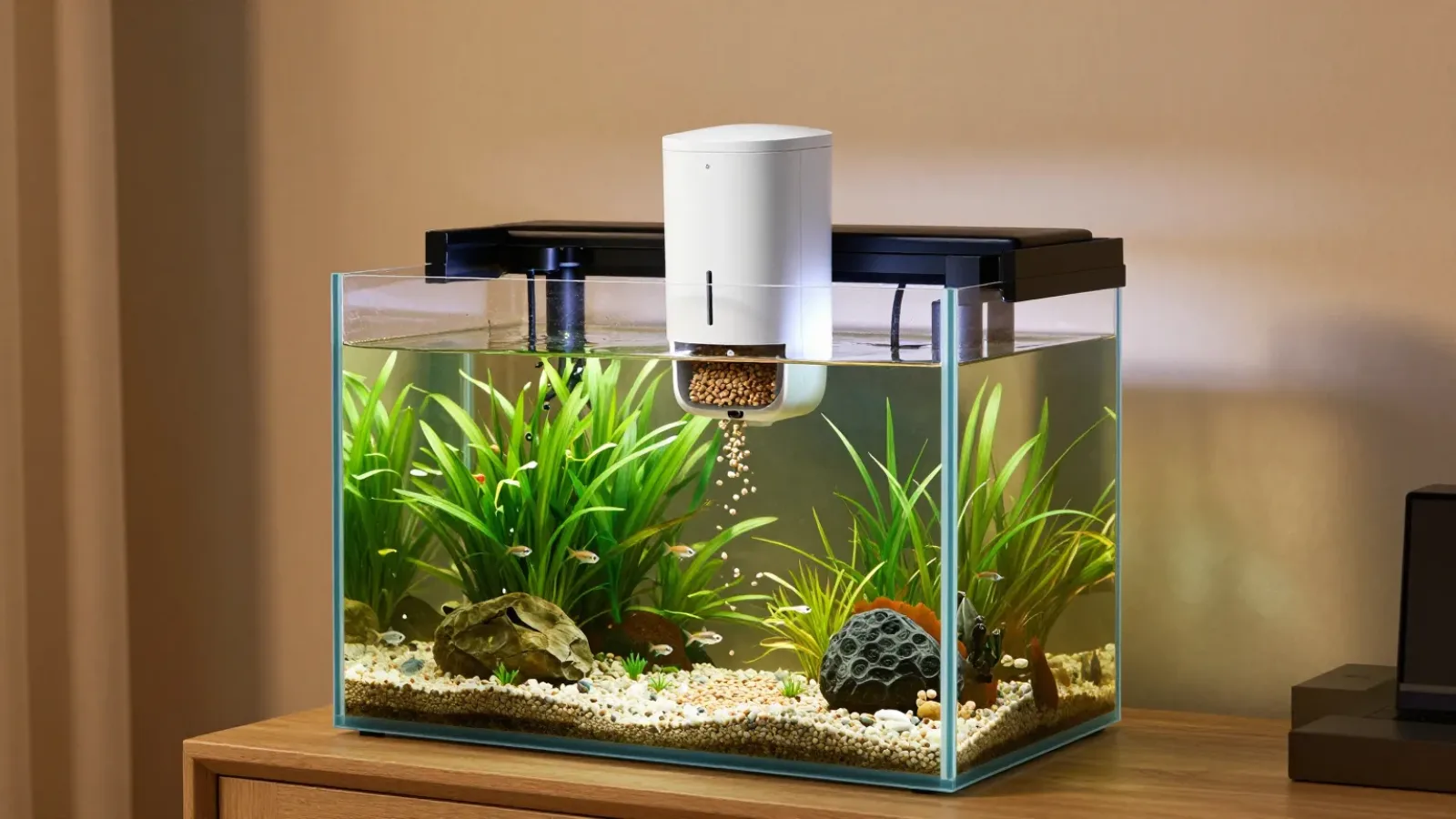
Evidence at a Glance
Eheim Feed-Air Everyday Fish Feeder
The best overall vacation feeder: a battery-operated programmable feeder from a long-established German aquatics brand, with an adjustable dosing opening for portion control and a ventilation design that keeps dry food from clumping in tank humidity. It mounts above the water line and dispenses on a set daily schedule.
Sources: Eheim manufacturer/Amazon listing specifications, Aquarium Co-Op — feeding and vacation care guidance
Verified Jul 6, 2026
DXOPHIEX WiFi Automatic Fish Feeder
The best smart pick: app-controlled over WiFi so you can set feeding schedules and trigger a manual feed remotely, with adjustable portion sizing. Useful when a trip runs long or you want to confirm the tank is being fed while you are away.
Sources: DXOPHIEX manufacturer/Amazon listing specifications, The Spruce Pets — automatic fish feeder guidance
Verified Jul 6, 2026
Aoyar 200ml Automatic Fish Feeder Dispenser
The honest budget timer: a large 200ml food hopper on a programmable timer for short trips, at a price low enough to keep one as a spare. Simple, no app, and fine for a long weekend if you dial in a small portion first.
Sources: Aoyar manufacturer/Amazon listing specifications, Tetra — fish feeding frequency guidance
Verified Jul 6, 2026
Our Picks
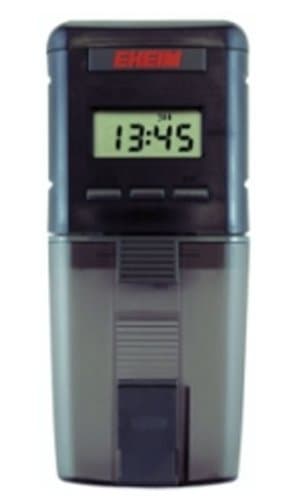
Eheim
Eheim Feed-Air Everyday Programmable Automatic Fish Feeder with Humidity Ventilation
8.6 / 10
- Battery-operated programmable feeder from a long-established German aquatics brand
- Adjustable dosing opening to set the portion size for your tank
- Ventilation design keeps dry flake and pellet food from clumping in humidity
- Mounts above the water line and dispenses on a set daily schedule
$72.00
Current price · checked Sep 8, 2026
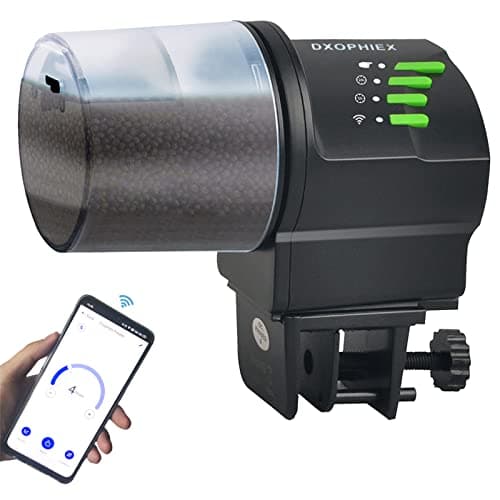
DXOPHIEX
DXOPHIEX WiFi Automatic Fish Feeder with App Scheduling and Adjustable Portions
8.3 / 10
- WiFi app control to set schedules and trigger a manual feed remotely
- Adjustable portion sizing so you can dial the dose to your tank
- Programmable daily feeding times through the phone app
- Useful when a trip runs long and you want to confirm the tank was fed
$35.98
Current price · checked Sep 8, 2026
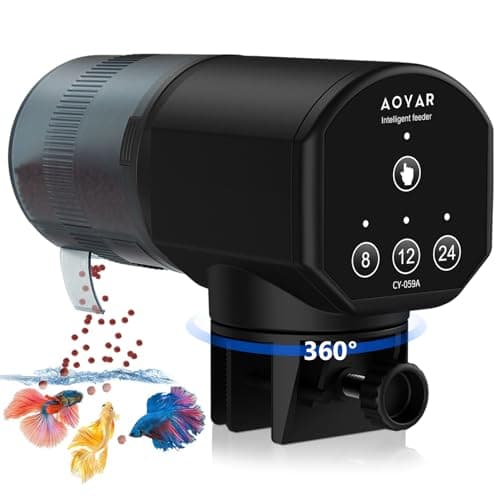
Aoyar
Aoyar 200ml Automatic Fish Feeder Dispenser with Large Hopper and Programmable Timer
8.1 / 10
- Large 200ml food hopper holds plenty of dry food for a trip
- Programmable timer sets automatic feeding times
- Low enough in price to keep a spare on hand
- Uses your own flake or pellet food
$15.99
Current price · checked Sep 8, 2026
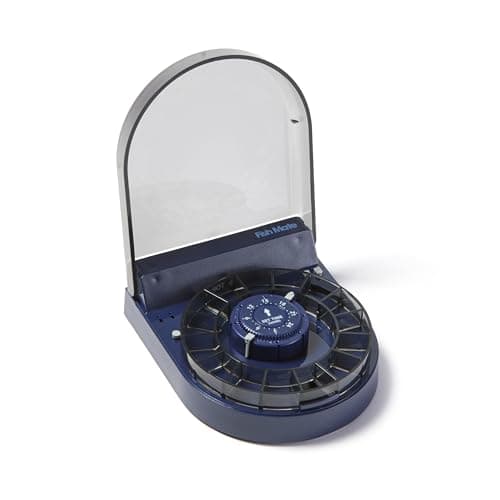
Fish Mate
Fish Mate F14 Aquarium Fish Feeder
7.9 / 10
- Rotating drum with capacity for up to 14 individual pre-loaded portions
- Delivers 1 to 4 timed meals per day
- Dispenses gradually over several hours to reduce overfeeding
- Handles flakes, pellets, and sticks
$19.99
Current price · checked Sep 25, 2026
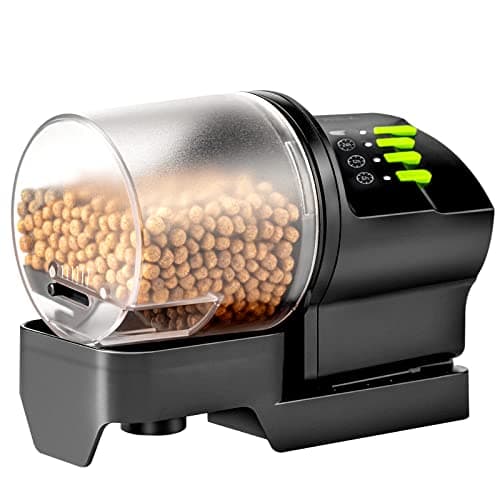
DXOPHIEX
DXOPHIEX Automatic Fish Feeder, Battery and USB Dual Power
7.7 / 10
- Runs on two AA batteries, a 6.6 ft USB cable, or both at once
- Both power sources can be connected together as outage insurance
- Feeds every 8, 12, or 24 hours, or manually on a button press
- Two containers supplied, 100 ml and 200 ml, plus a 4-inch feeding ring
$22.98
Current price · checked Sep 25, 2026
The Short Answer
The best vacation fish feeder is a programmable auto-feeder that dispenses a measured portion of your own dry food on a timer — not a dissolving block that clouds the tank. The DXOPHIEX WiFi feeder is the one to buy (about $35.98): adjustable portions on a programmed daily schedule, plus an app that lets you confirm a feed — or trigger one — if the trip runs a day long. The Aoyar 200ml (about $15.99) is the honest budget timer for short trips, with a hopper big enough that capacity is never the limit — dial the portion down and it does the one job that matters. The core rule: underfeed rather than overfeed. Uneaten food fouls the water faster than a fish starves, and many adult community fish are perfectly healthy two to three days with no feeder at all. Set the smallest reliable portion, test the feeder for a few days before you leave, and skip the vacation blocks unless nothing else fits.
Every product on this list has been scored against the PetPal Gear Score, a weighted composite of expert consensus, observed effectiveness, animal safety, long-term durability, and value. Review method: Editorial synthesis of manufacturer and Amazon product listings for each feeder plus established fishkeeping husbandry guidance from Aquarium Co-Op, The Spruce Pets, and Tetra's fish-care education on feeding frequency and vacation care. No independent lab or outlet has published a hands-on review of these specific generic-marketplace feeders, so we do not attribute any award or verdict to an outlet, and we distinguish programmable auto-feeders from dissolving vacation blocks rather than treating them as equivalent. PetPalHQ does not run an aquarium testing lab; the PetPal Fish-Feeder Score below is a transparent synthesis of documented listing specifications and published husbandry standards, not a measurement. Prices were captured on 2026-07-06 and should be treated as list/listing figures that will move.. Synthesized from 4+ expert sources.
Automatic fish feeders are sold on one promise — feed the tank while you are away — but the listings blur the two very different products that promise covers. On one side are programmable auto-feeders that drop a measured portion of your own dry food on a timer; on the other are dissolving "vacation blocks" that slowly release food as they break down in the water. They are not equivalent, and the difference matters for your tank's health. So before any single pick, here is the rule that should govern your whole purchase: underfeed rather than overfeed, because uneaten food fouls the water faster than a fish goes hungry, and many adult community fish are fine two to three days with no feeder at all.
We read four sources for this guide: the manufacturer and Amazon listings for each feeder, plus established fishkeeping guidance from Aquarium Co-Op, The Spruce Pets, and Tetra on feeding frequency and vacation care. We want to be upfront about two things. These are generic-marketplace feeders, and no independent lab or major outlet has published a hands-on review of any of them — so we do not claim anyone "named" a pick best. And rather than treat every "vacation feeder" as the same thing, we separate the reliable programmable auto-feeders from the convenient-but-messier dissolving blocks and tell you honestly which trips need no feeder at all. The specs come from the listings; the feeding standards come from the husbandry sources; the PetPal Fish-Feeder Score is our transparent synthesis of the two.
PetPalHQ.com earns affiliate commissions from qualifying purchases. Our recommendations are based on expert consensus — we synthesize professional reviews and manufacturer documentation, plus multi-year owner durability data, to find pet gear that is worth your investment. Commission rates never influence our editorial recommendations.
A feeder is only one part of leaving an aquarium unattended, so think of it inside the whole "leaving town" kit: a feeder handles food, but evaporation and top-off are their own problem, which is why our guide to automatic aquarium ATO systems covers keeping the water level stable while you are gone. Get food and water level both handled and a healthy tank rides out a week comfortably.
Auto-Feeder or Vacation Block? The Honest Distinction
The two formats solve the problem in opposite ways, and knowing which you are buying prevents most disappointment. A programmable auto-feeder — the DXOPHIEX and the Aoyar here — dispenses a set portion of your own dry food at scheduled times, so the fish eat their normal diet in normal amounts and nothing extra enters the water. A dissolving vacation block instead sits in the tank and releases food as it slowly breaks down, which is genuinely convenient for a pinch but has a real cost: as the block dissolves it can cloud the water and raise ammonia, especially in a small or lightly filtered tank, and because the release is not portioned, fish tend to either ignore it or overeat.
For anything beyond a couple of days, the programmable feeder is the better tool, and it is the format we have ranked here. Blocks earn their place only as a last resort — a weekend when you have no feeder and no sitter — and even then you should size the block conservatively for your tank and watch your water parameters when you return. If you are setting up a small tank specifically to be low-maintenance, the same logic that favors a good feeder favors starting with the right hardware, which is why our nano aquarium kits guide leans toward well-filtered, stable little systems that tolerate a short absence in the first place.
How Long Can Fish Really Go Without Food?
The honest answer surprises new keepers: often longer than you would guess. A healthy, established adult community fish — think tetras, barbs, danios, most livebearers — can commonly go two to three days with no food and be perfectly fine, and many aquarists routinely leave a well-kept tank over a long weekend with nothing at all. Fasting is normal in the wild, and an empty tank cannot be overfed, which is why "no feeder" is genuinely the safest option for a short trip. Do a water change before you leave, skip the last-minute heavy feeding, and let the tank coast.
Where that changes is trip length and tank type. Past about three days, a feeder starts to earn its keep, and past a week a reliable one becomes important. Fry and baby fish need frequent tiny feedings no timer handles well; fish on live or frozen diets are poorly served by a dry-food dispenser; and heavily stocked or delicate tanks have less margin for a missed or botched feeding. Match the solution to the trip: nothing for a couple of days, a tested automatic fish feeder for a week, and a knowledgeable sitter for anything longer or more specialized. The feeder is a tool for the middle case, not a cure-all.
Setting a Feeder Up So It Does Not Fail
Two habits prevent almost every feeder disaster, and neither is on the box. The first is the test run: load the feeder with your actual food, program it, and watch it work for three or four days at home before you rely on it. Humidity clumping — dry food caking into a bridge over the outlet — is the top failure mode, and it only reveals itself after a day or two, so a feeder you have not watched run is a gamble with the whole tank. Confirm the portion is small and correct, the food is dropping cleanly, and, on a WiFi model, that your network actually reaches the tank.
The second habit is deliberate underfeeding. Set the smallest portion that keeps your fish healthy, then err smaller for the trip, because a slightly hungry tank recovers instantly while an overfed one can crash. Keep the food dry going in — better feeders vent the hopper for exactly this reason — and consider a fresh, unopened batch of flake for the trip so it flows well. If you want to build out the rest of an unattended tank properly, a stable heater and clean water matter as much as food; browse a reliable aquarium heater and test your parameters before you go, so the feeder is the only variable you are trusting.
Head-to-Head Comparison
| Product | Type | Best for | PetPal Fish-Feeder Score |
|---|---|---|---|
| Eheim Feed-Air Everyday Programmable Automatic Fish Feeder with Humidity Ventilation | Programmable auto-feeder | Regular travel, trusted brand | 8.6 |
| DXOPHIEX WiFi Automatic Fish Feeder with App Scheduling and Adjustable Portions | WiFi app feeder | Checking in from your phone | 8.3 |
| Aoyar 200ml Automatic Fish Feeder Dispenser with Large Hopper and Programmable Timer | Budget timer | Short trips, spare feeder | 8.1 |
| Fish Mate F14 Aquarium Fish Feeder | Pre-portioned drum | Distrust of hopper feeders | 7.9 |
| DXOPHIEX Automatic Fish Feeder, Battery and USB Dual Power | Battery + USB timer | Backup / power-outage insurance | 7.7 |
$72.00
Current price · checked Sep 8, 2026
- Battery-operated programmable feeder from a long-established German aquatics brand
- Adjustable dosing opening to set the portion size for your tank
- Ventilation design keeps dry flake and pellet food from clumping in humidity
- Mounts above the water line and dispenses on a set daily schedule
- Uses your own food, so diet stays consistent while you are away
The Eheim Feed-Air is the feeder we would trust to run a tank unattended for a week, and the reason is simple: Eheim is a decades-old German aquatics brand whose gear has a long reputation for lasting, and an unattended feeder is exactly the product where that reputation matters most. A cheap feeder that jams on day three of a seven-day trip is worse than no feeder, because you come home to a starved tank or a fouled one. The Eheim uses your own flake or pellet food, so your fish eat the same diet on schedule whether you are home or not.
Two design details make it a vacation feeder rather than a gimmick. The dosing opening is adjustable, so you set the portion down to the small amount a tank actually needs rather than dumping a fixed scoop, and the "Feed-Air" ventilation is built to keep dry food from absorbing tank humidity and clumping into a clog — the single most common failure mode of aquarium feeders. It mounts above the water line and dispenses on a programmed daily schedule. As with any feeder, run it for several days before you leave and watch that the portion is right and the food is dropping cleanly.
Here is the honesty this guide is built on. We are describing what the listing and the feeder's design tell us, not a lab test — PetPalHQ has not run these feeders on a bench for a week, and no outlet has published a hands-on review of this exact model, so we do not claim anyone "named" it best. What we can say is that a trusted brand plus real humidity protection plus adjustable portioning is the right combination for unattended feeding, and the Eheim has all three. It costs more than the budget picks, and for a one-weekend trip that premium is optional; for regular travel or a tank you cannot afford to lose, it is money well spent.
What We Love
- Long-established aquatics brand with a strong durability reputation for unattended use
- Adjustable dosing opening lets you set a genuinely small, tank-appropriate portion
- Ventilation design fights the humidity clumping that clogs cheaper feeders
- Uses your own food, keeping the diet consistent while you travel
- Mounts cleanly above the water line on a programmable daily schedule
What Could Be Better
- The most expensive pick here — overkill for a single long weekend
- No WiFi or app, so you cannot check or adjust it remotely once you leave
- Like all dry-food feeders, still needs a test run to confirm portion and flow
The Verdict
For regular travel or a tank you cannot risk, the Eheim Feed-Air is the editorial default: a trusted brand with real humidity protection and adjustable portioning. Test it for a few days before any trip, set the smallest portion that works, and it will keep a tank fed reliably.
Sources
- Eheim (manufacturer/Amazon listing): battery-operated programmable everyday fish feeder with an adjustable dosing opening for portion control and a ventilation design to keep dry food dry, mounted above the water line on a daily schedule
- Aquarium Co-Op (Feeding and Vacation Care): recommends underfeeding over overfeeding and notes many established adult fish tolerate short periods without food
$35.98
Current price · checked Sep 8, 2026
- WiFi app control to set schedules and trigger a manual feed remotely
- Adjustable portion sizing so you can dial the dose to your tank
- Programmable daily feeding times through the phone app
- Useful when a trip runs long and you want to confirm the tank was fed
- Uses your own dry flake or pellet food
The DXOPHIEX WiFi feeder is the pick when you want eyes on the tank from your phone. Its whole advantage over a plain timer is connectivity: you set the feeding schedule in the app, and if a trip stretches an extra day or you simply want reassurance, you can trigger a manual feed remotely. For anyone whose travel plans shift, or who worries about a tank the whole time they are gone, that remote control is genuinely calming rather than a spec-sheet frill.
The fundamentals are sound underneath the connectivity. Portions are adjustable, so you can set a small, tank-appropriate dose rather than a fixed dump, and it runs your own dry food on a programmed daily schedule. At $35.98 it costs a little over twice the budget timer below, which is the right premium for app scheduling and a remote feed. As always, the app is only as good as your setup: run it at home for several days, confirm the food drops cleanly, and make sure your WiFi reaches the tank reliably, because a smart feeder off the network is just a feeder you cannot see.
The honest caveats are the ones that come with any connected budget device. We are going on the listing and general knowledge of how these feeders work, not a durability test — no outlet has bench-reviewed this exact unit, so we attribute no award to it. App-dependent feeders can be fussy to pair, firmware and app support on generic brands is unpredictable, and WiFi feeders still clog with humid food if you skip the test run. Treat the remote feed as a backup for confirmation, not a license to over-portion, and it is an excellent smart choice for a traveler who wants to check in.
What We Love
- WiFi app lets you schedule and trigger a manual feed from anywhere
- Reassuring for trips that might run long or shift unexpectedly
- Adjustable portions and your own food keep the diet consistent
- Costs a little over twice the budget timer, and buys scheduling and a remote feed for it
What Could Be Better
- App pairing and firmware support on generic smart brands can be inconsistent
- Useless if your WiFi does not reach the tank reliably while you are away
- Still clogs with humid food if you skip the pre-trip test run
The Verdict
If you want to watch and feed the tank from your phone, the DXOPHIEX is the smart pick — schedule it, test it at home, and confirm your WiFi reaches the tank. Use the remote feed to check in, not to overfeed, and it earns its place.
Sources
- DXOPHIEX (manufacturer/Amazon listing): WiFi automatic fish feeder with app-based scheduling, remote manual feeding, and adjustable portion sizing, running the owner's own dry flake or pellet food
- The Spruce Pets (Automatic Fish Feeders): advises testing any automatic feeder at home before relying on it and setting conservative portions
$15.99
Current price · checked Sep 8, 2026
- Large 200ml food hopper holds plenty of dry food for a trip
- Programmable timer sets automatic feeding times
- Low enough in price to keep a spare on hand
- Uses your own flake or pellet food
- Simple, no-app operation for short trips
The Aoyar 200ml is the honest budget entry point, and for a long weekend it is often all you need. Its headline feature is right there in the name — a large 200ml hopper — which means capacity is not the limiting factor even on a longer trip. It runs on a straightforward programmable timer with no app to pair or network to worry about, and at its price you can keep a second one as a backup, which is not a bad idea with any unattended feeder.
What you are trading for the low price is polish, not core function. A simple timer feeder like the Aoyar does the one job that matters — dropping a portion of your own food on schedule — and does it without the remote control of the DXOPHIEX. That makes it a great fit for occasional short trips and a sensible starter feeder, and a weaker choice for someone who travels constantly or runs a tank they cannot afford to lose. Dial the portion small, because a big hopper makes it easy to over-dispense.
The honesty here is the same as the rest of the roster. We are describing the listing and the general behavior of budget timer feeders, not a tested result, and no outlet has hands-on-reviewed this specific model, so we claim no award for it. Budget feeders are the most prone to humidity clumping and to portion drift, so the pre-trip test run matters most on a pick like this one: load it, run it for three or four days at home, and confirm the food is dropping in the right amount before you rely on it. Do that, and the Aoyar is genuinely good value for what it is.
What We Love
- Lowest price here — the value entry point and a cheap spare
- Large 200ml hopper means capacity is never the constraint
- Simple timer operation with nothing to pair or update
- Uses your own food on a programmable schedule
What Could Be Better
- No app or remote control — you cannot check or adjust it once you leave
- Budget build is the most prone to humidity clumping without a test run
- Large hopper makes it easy to over-dispense if you do not set a small portion
The Verdict
If you take occasional short trips, the Aoyar 200ml is the value pick — a simple, large-hopper timer that does the core job cheaply. Set a small portion, run it at home for a few days first, and it will cover a long weekend well.
Sources
- Aoyar (manufacturer/Amazon listing): automatic fish feeder dispenser with a 200ml food hopper and a programmable timer for scheduled feeding, using the owner's own dry food
- Tetra (How Often to Feed Fish): advises feeding only what fish consume in a few minutes and warns overfeeding fouls water
$19.99
Current price · checked Sep 25, 2026
- Rotating drum with capacity for up to 14 individual pre-loaded portions
- Delivers 1 to 4 timed meals per day
- Dispenses gradually over several hours to reduce overfeeding
- Handles flakes, pellets, and sticks
- Mounts to a hood, condensation tray, or glass edge with the included brackets
- Runs over a year on a single AA battery; 5.47 x 4.65 x 1.54 inches
The Fish Mate F14 is the answer to the single failure mode that makes people distrust automatic feeders: the hopper clog. Instead of one reservoir metered out by a gate that humidity can cake shut, the F14 is a rotating drum divided into fourteen separate compartments, each loaded by hand before you leave. The drum turns, one compartment empties, and nothing about the next one depends on the last one having behaved. Over-dispensing is not a risk you are managing — it is structurally impossible, because there is only ever one portion in play.
That structure sets the rest of the design. Fish Mate rates it for 1 to 4 timed meals a day, which with fourteen compartments means anywhere from a fortnight of once-daily feeding down to three and a half days of four-times-daily. It dispenses gradually over several hours rather than dumping, which matters in a planted or community tank where fish feed at different rates. It handles flakes, pellets, and sticks, mounts to a hood, a condensation tray, or a bare glass edge with the brackets in the box, and runs for over a year on one AA — so it is not something you have to remember to charge before a trip.
The trade-offs are the flip side of the same design. Per-feeding capacity is fixed by the compartment size, so you cannot dial a portion up for a heavily stocked tank the way a hopper feeder lets you; you load what fits. And while the compartment design resists the clumping that jams hopper gates, very fine or oily foods can still stick to a compartment wall, so run a test load for a couple of days before you rely on it for a real absence. At about $19.99 only the Aoyar budget timer costs less here, which makes the peace of mind unusually easy to buy.
What We Love
- Pre-portioned drum eliminates the single-hopper clog risk entirely
- Fourteen sealed compartments make over-dispensing structurally impossible
- Over a year of runtime on one AA — nothing to charge before a trip
- About $19.99 — only the Aoyar budget timer costs less here
What Could Be Better
- Per-feeding capacity is fixed by compartment size, limiting portion flexibility
- Fourteen compartments caps an absence at 14 days even at one meal a day
- Very fine or oily foods can still stick, so a test load is still needed
The Verdict
If hopper feeders make you nervous, the Fish Mate F14 at about $19.99 is the pick — fourteen hand-loaded compartments, so a clog cannot cascade. Test-load it before a real trip.
Sources
- Fish Mate (manufacturer Amazon listing): UP TO 14 SCHEDULED MEALS: delivers 1 to 4 timed meals per day with capacity for up to 14 individual portions; gradually dispenses food over several hours to help reduce overfeeding; designed to dispense flakes, pellets, and sticks; securely attaches to aquarium hood, condensation tray, or glass edge using included mounting brackets; measures 5.47 in L x 4.65 in W x 1.54 in H and operates for over 1 year on a single AA battery
$22.98
Current price · checked Sep 25, 2026
- Runs on two AA batteries, a 6.6 ft USB cable, or both at once
- Both power sources can be connected together as outage insurance
- Feeds every 8, 12, or 24 hours, or manually on a button press
- Two containers supplied, 100 ml and 200 ml, plus a 4-inch feeding ring
- Mounts on a bare tank edge with a stent, or on a hood with a funnel base
- Adjustable feeding-volume cap; suits flakes, crisps, pellets, and granules
This DXOPHIEX auto feeder is the pick for a cheap backup whose whole value is not going dark when something else does. It takes two AA batteries or a 6.6-foot USB cable — and, critically, both at the same time. The maker is explicit that you can run the two supplies together specifically to cover a power outage: mains USB does the day-to-day work, and the batteries sit there doing nothing until the moment they are the only thing feeding your tank. For an unattended aquarium that is the difference between a blown fuse being an inconvenience and being a fish kill.
The rest is deliberately simple. One button sets an 8-, 12-, or 24-hour interval, or feeds manually when you are home; there is no app, no pairing, and nothing to go stale when a phone updates. A sliding cap adjusts the feeding volume for flakes, crisps, pellets, or granules, and two containers ship in the box — 100 ml and 200 ml — so you can match the reservoir to the length of the trip rather than leaving food sitting for weeks. Mounting is covered both ways: a stent clips it to a bare tank edge, and a funnel base sets it on a hood.
What you give up at this tier is refinement. The portioning is a manual cap rather than a measured dose, so you calibrate it by watching a couple of feeds before you leave, and the build is budget-grade rather than something to run a prized tank on for a fortnight. Note too that a 4-inch feeding ring is included, which is worth using — it keeps floating food in one spot so you can actually see whether the portion was right. At about $22.98 this is sensible insurance behind a better primary feeder, which is exactly the job it is ranked for.
What We Love
- Battery and USB can run simultaneously — genuine power-outage insurance
- No app or pairing; one button sets an 8-, 12-, or 24-hour interval
- Two reservoir sizes and a feeding ring included in the box
- Mounts on either a bare tank edge or a hood
What Could Be Better
- Volume is set by a manual cap, so you must calibrate it before you leave
- Budget build — better as a backup than as a prized tank's only feeder
- Fixed 8/12/24-hour intervals give less scheduling freedom than a programmable feeder
The Verdict
If you want cheap insurance behind a better feeder, this DXOPHIEX at about $22.98 is the pick — batteries and USB can run at once, so an outage does not stop feeding. Calibrate the portion before you travel.
Sources
- DXOPHIEX (manufacturer Amazon listing): powered by two AA batteries or use USB cable to connect home electricity, the 6.6 feet USB cable is included; also you can use two power supply at same time in case of emergency such as power outages; feed every 8hours, 12hours or 24hours automatically or feed any time manually; two size containers are supplied, one 100ml and the other is 200ml, also a 4inch*4inch feeding ring is attached; pushing the feeding adjusting cap to increase or decrease the feeding volume
How We Score
Formula
PetPal Fish-Feeder Score = (Dosing Accuracy & Portion Control × 0.30) + (Reliability / Jam Resistance × 0.25) + (Programmability: WiFi/timer × 0.20) + (Humidity Protection × 0.15) + (Value × 0.10)
Score Factors
- Dosing Accuracy & Portion Control · 30%
- How finely you can set the portion and how consistently the feeder delivers it. Because overfeeding fouls water faster than underfeeding harms fish, the ability to dial a genuinely small, repeatable dose is the most important thing a vacation feeder does. Adjustable portioning, like the DXOPHIEX's, rates highest; large single hoppers that make over-dispensing easy — the Aoyar's 200ml among them — rate lower unless the owner sets a conservative portion.
- Reliability / Jam Resistance · 25%
- Whether the feeder keeps working for the length of a trip without clogging or stalling — the failure that turns an unattended feeder into a liability. Mechanical design and brand track record both count here, and it is where this page's picks are weakest: these are generic-marketplace feeders with no durability record we can point you at, which is exactly why the pre-trip test run is not optional. A feeder that jams on day three is scored down regardless of its features.
- Programmability: WiFi/timer · 20%
- The flexibility and control of the scheduling: a plain daily timer versus app-based schedules and remote manual feeding. WiFi feeders like the DXOPHIEX earn the most here for letting you adjust and confirm feeding from afar, which matters most when a trip runs long. Simple timers score adequately because a reliable daily drop is often all a tank needs.
- Humidity Protection · 15%
- How well the feeder keeps dry flake and pellet food from absorbing tank moisture and clumping into a clog — the single most common cause of feeder failure. No pick here documents a vented or sealed hopper, so every one of them loses points for it. This is weighted because no amount of programmability helps if the food has caked into a bridge over the outlet — load fresh, dry food as late as you can, and test before you go.
- Value · 10%
- Price relative to reliability and control, not the lowest sticker. The budget Aoyar scores highest on raw value for covering the core job cheaply, while the DXOPHIEX earns its higher price through app scheduling and a remote feed you can trigger from the road. Value is judged against how much you are risking: for a prized tank on a long trip, the cheapest feeder is rarely the best value.
| Rank | Product | Score |
|---|---|---|
| #1 | Eheim Eheim Feed-Air Everyday Programmable Automatic Fish Feeder with Humidity Ventilation | 8.6 |
| #2 | DXOPHIEX DXOPHIEX WiFi Automatic Fish Feeder with App Scheduling and Adjustable Portions | 8.3 |
| #3 | Aoyar Aoyar 200ml Automatic Fish Feeder Dispenser with Large Hopper and Programmable Timer | 8.1 |
| #4 | Fish Mate Fish Mate F14 Aquarium Fish Feeder | 7.9 |
| #5 | DXOPHIEX DXOPHIEX Automatic Fish Feeder, Battery and USB Dual Power | 7.7 |
When NOT to Buy
Do not buy a feeder for a trip your fish can simply sleep through. This is the most useful thing we can tell you: many established adult community fish are perfectly healthy two to three days with no food, and a healthy, well-fed tank can often be left over a long weekend with nothing at all. Fasting is a normal part of how fish live in the wild, and an empty feeder can never overfeed a tank. If you are gone two or three days, the safest and cheapest choice is often no feeder — just do a water change before you leave and skip the risk.
Do not rely on dissolving vacation "feeder blocks" as your default. These gel or plaster blocks that slowly release food are convenient and have their place for a pinch, but they carry two real downsides: they can cloud and pollute the water as they dissolve, raising ammonia in a small or unfiltered tank, and fish often ignore or overeat them because the release is not portioned. If nothing else fits, use a block sized conservatively for your tank and species, but a programmable auto-feeder that drops your own food is the better tool for anything beyond a couple of days.
Do not put an untested feeder on a tank and leave town. Every feeder here — the connected one included — needs a real test run: load it, program it, and watch it for three or four days at home to confirm the portion is right and the food is dropping cleanly without clumping. Humidity clumping is the top failure mode, and it only shows up after a day or two. A feeder you have not watched work is a gamble with the whole tank.
Skip an automatic feeder for fry, fussy eaters, or specialized diets. Baby fish need frequent, tiny feedings a timed feeder cannot manage well, and fish on live, frozen, or highly specialized foods are poorly served by a dry-flake dispenser. For these tanks, arrange a knowledgeable fish-sitter with written instructions rather than a machine, because the wrong food on a schedule is not better than a careful human.
Do not use a feeder to justify overstocking or skipping water changes. A feeder solves the "who feeds them" problem, not the "is this tank healthy" problem. Overfeeding, poor filtration, and a crowded tank cause more losses during an owner's absence than hunger does. Get the tank stable, lightly stocked, and freshly maintained before a trip, and let the feeder do only the small job it is good at.
Frequently Asked Questions
- What is the difference between an automatic feeder and a vacation feeder block?
- An automatic feeder dispenses a measured portion of your own dry food on a programmed schedule, so your fish eat their normal diet in normal amounts. A vacation block is a gel or plaster mass that sits in the tank and releases food as it slowly dissolves. The feeder is more reliable and cleaner; the block is convenient for a pinch but can cloud the water, raise ammonia, and either be ignored or overeaten because the release is not portioned. For anything beyond a couple of days, choose a programmable feeder and keep blocks as a last resort.
- How many days can I leave my fish with a feeder?
- A reliable, well-tested programmable feeder can comfortably cover a week or more for a healthy, established tank. For trips longer than that, or for delicate or heavily stocked tanks, arrange a knowledgeable fish-sitter as well, because more can go wrong the longer you are gone. The feeder handles food, but nobody is there to catch a heater failure, a clog, or a sick fish. Match the length of the trip to how much you are willing to leave unattended.
- Will an automatic feeder overfeed and pollute my tank?
- It can if you set the portion too large, which is the most common mistake. The safe approach is to dial the smallest portion that keeps your fish healthy and then err even smaller for a trip, since overfeeding fouls water far faster than a brief fast harms fish. Feeders with fine adjustment or pre-portioned compartments make this easier. Always run the feeder at home for a few days first to confirm exactly how much it is dropping before you rely on it.
- Do adult fish really need to be fed every day?
- No. Many established adult community fish are perfectly healthy skipping a day or going two to three days without food, and a regular fasting day is even considered good practice by many keepers. Daily feeding is a convenience and a habit, not a strict biological requirement for hardy adult fish. This is why a short weekend trip often needs no feeder at all — just a water change before you go and a light hand on the last feeding.
- How do I keep the food from clumping in tank humidity?
- Start with fresh, dry food and a feeder that either vents the hopper or seals the food into pre-portioned compartments. Load the feeder just before your trip so the food sits inside for as little time as possible, avoid very fine or oily foods that bridge easily, and do a multi-day test run at home to catch clumping before it matters. Humidity caking over the outlet is the number-one cause of feeder failure, so treating the food as carefully as the machine is what keeps it working.
Bottom Line
Buy the DXOPHIEX WiFi if you want to schedule and check feeding from your phone. Confirm your WiFi reaches the tank, use the remote feed to reassure yourself rather than to overfeed, and it is the best smart pick here.
Buy the Aoyar 200ml if you take occasional short trips or want a cheap spare — a simple large-hopper timer that does the core job well. Set a small portion, because the big hopper makes over-dispensing easy.
Skip a feeder entirely for a short trip with hardy adult fish. Many established community fish are fine two to three days with no food, and no feeder at all beats a cheap one you did not test — a dead feeder or an overfed tank is worse than a brief fast.
Sources & Methodology
Methodology
PetPal Fish-Feeder Score = (Dosing Accuracy & Portion Control × 0.30) + (Reliability / Jam Resistance × 0.25) + (Programmability: WiFi/timer × 0.20) + (Humidity Protection × 0.15) + (Value × 0.10)
Expert review sources
- Aquarium Co-Op — How to Feed Fish While on Vacation (feeding frequency and vacation care)
- The Spruce Pets — Automatic Fish Feeders (testing, portioning, and feeder types)
- Tetra — How Often Should I Feed My Fish (feeding frequency and overfeeding risk)
- DXOPHIEX and Aoyar — manufacturer/Amazon listing specifications (WiFi and timer feeders)
Community sources
- r/Aquariums and fishkeeping forums — owner discussion on real-world feeder reliability, vacation blocks, and how long fish can go unfed
Prices and specs verified July 6, 2026.
About the author
Nick Miles is the chief editor of PetPalHQ. The picks above are an editorial synthesis of manufacturer and Amazon listing specifications cross-checked against established fishkeeping husbandry guidance from Aquarium Co-Op, The Spruce Pets, and Tetra. PetPalHQ does not run an aquarium testing lab, and no independent outlet has published a hands-on review of these specific generic-marketplace feeders. We distinguish programmable auto-feeders from dissolving vacation blocks rather than treating them as equal, and we tell you when your fish need no feeder at all. The PetPal Fish-Feeder Score is a transparent composite of documented listing specifications and published husbandry standards, not a measurement.
PetPalHQ is a participant in the Amazon Services LLC Associates Program. We may earn commissions from qualifying purchases — at no extra cost to you.
More Guides
Aquarium
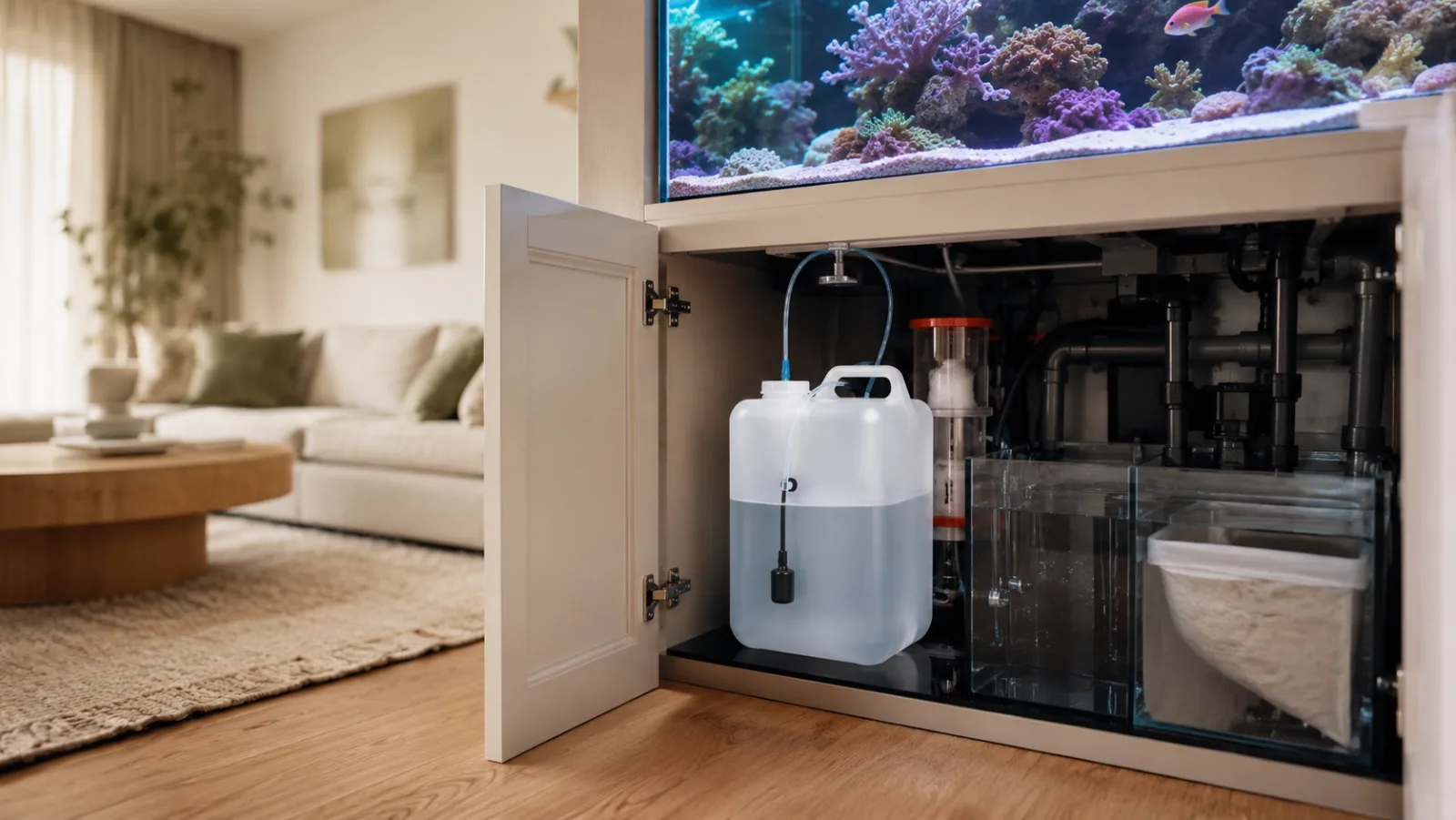
Best Automatic Top-Off (ATO) Systems for Reef Tanks (2026)
Aquarium
Best Aquarium Heaters 2026: Reliable Picks That Won't Cook Your Tank
Aquarium
Best Nano & Betta Aquarium Kits 2026: 5-Gallon All-in-One Tanks Compared
Aquarium
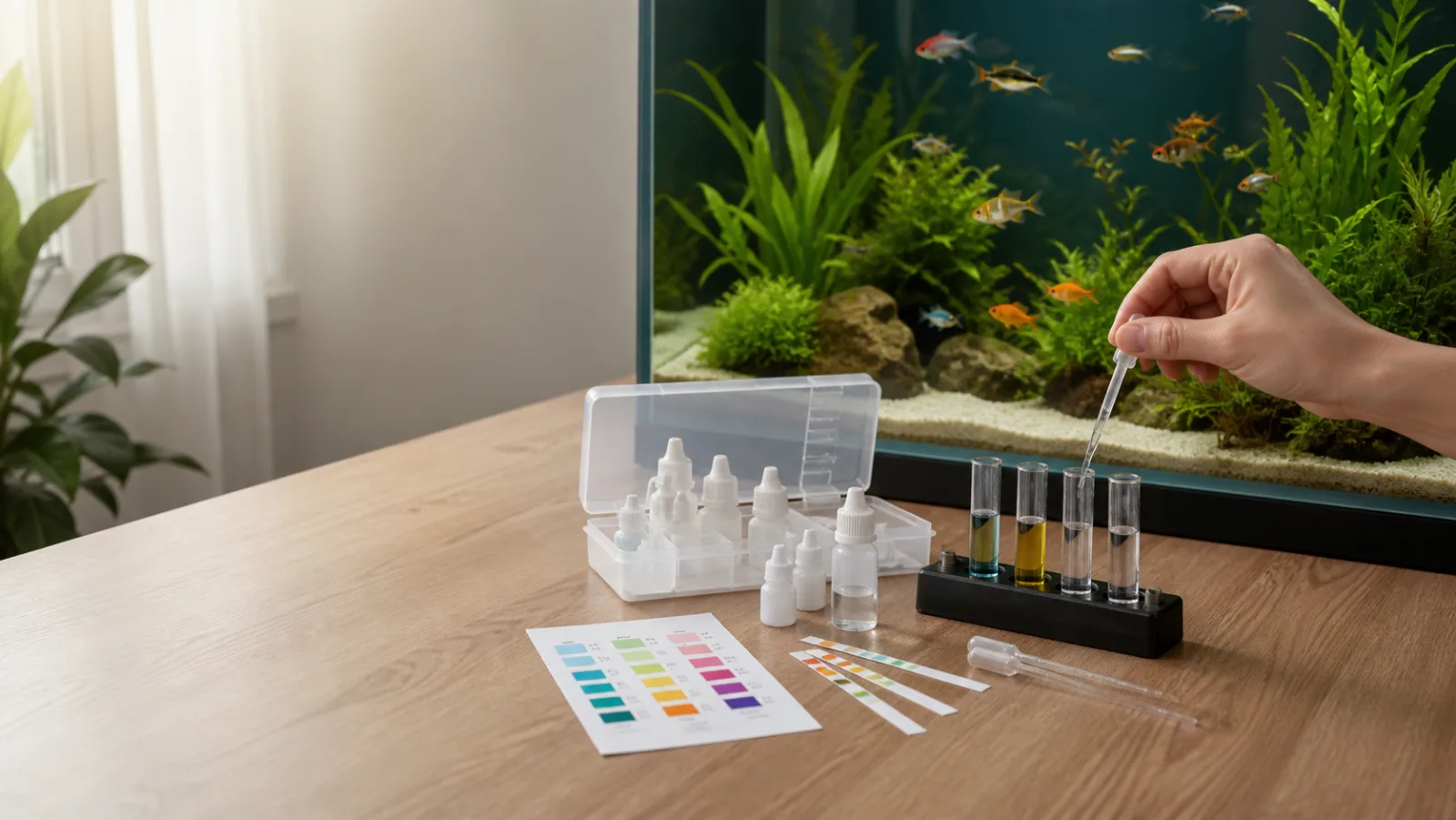
Best Aquarium Water Test Kits for Freshwater Fish Tanks (2026)
Cats & Dogs