Cats & Dogs
Best Robot Vacuums for Pet Hair and Litter (2026)
Robot vacuums judged on pet duty alone: what resists a long coat, what keeps up with a shedding household, and what actually happens when one meets an accident.
By Nick Miles · Updated September 13, 2026 · 14 min
PetPalHQ is reader-supported. We may earn a commission from qualifying Amazon purchases at no extra cost to you.
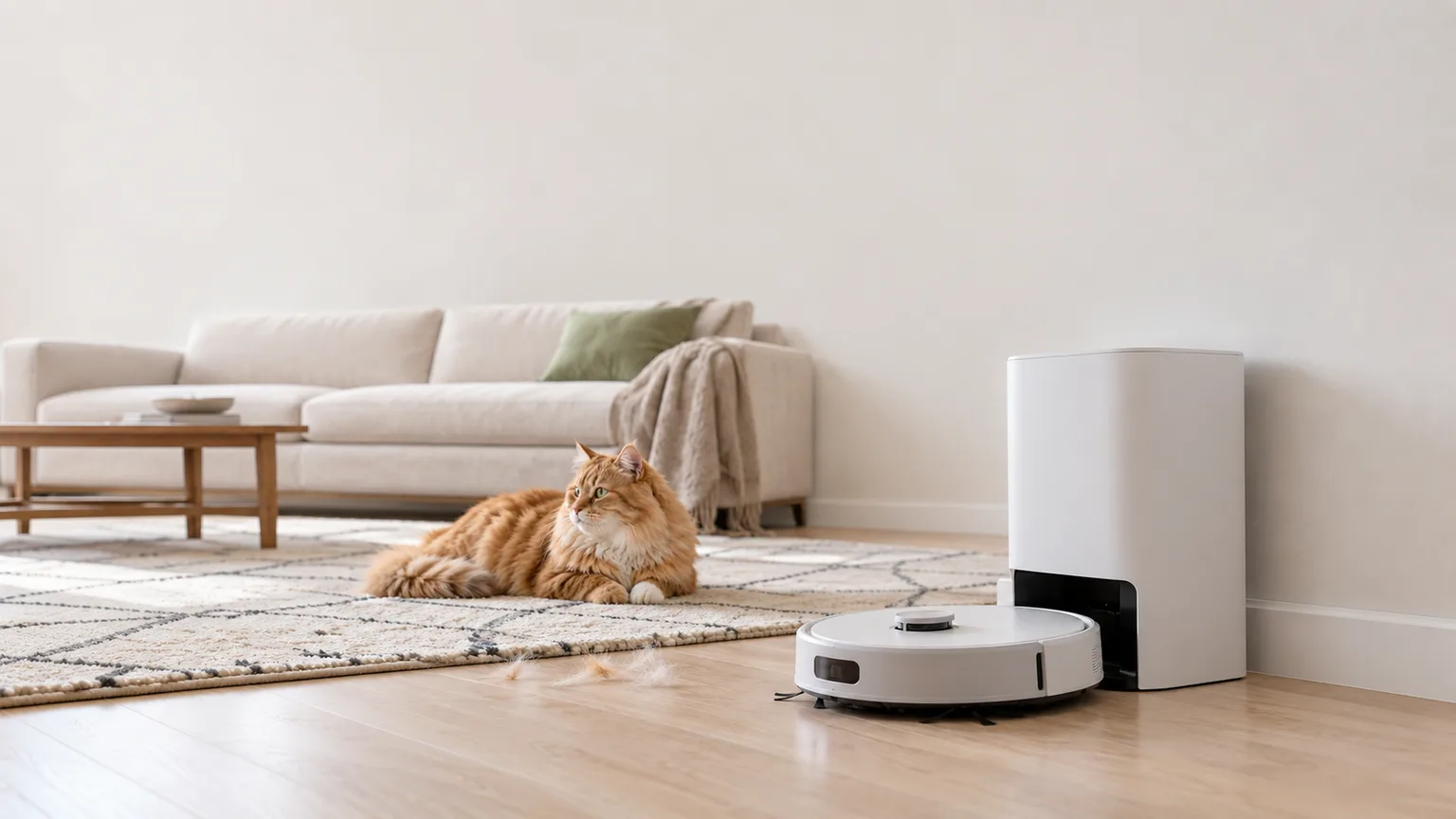
Evidence at a Glance
iRobot Roomba Max 715 Pet Robot Vacuum
The only pick whose own obstacle list names pet waste. PrecisionVision AI is described as responding to pet bowls, toys, pet waste, cords, socks and shoes; paired rubber anti-tangle brushes sit in the top mechanism band for hair; and the AutoEmpty dock runs up to 90 days into odor-control AllergenLock bags.
Sources: iRobot P.O.O.P. Promise documentation, Vacuum Wars 2026 obstacle-avoidance failure modes, U.S. EPA indoor particulate and vacuum filtration guidance
Verified Sep 13, 2026
eufy Omni S2 Robot Vacuum and Mop Combo
The best obstacle-avoidance result in Vacuum Wars current test set at 24 of 24, paired with a DuoSpiral brush eufy's listing claims is TÜV SÜD certified at 0% hair tangling, 30,000 Pa of stated suction, and a station that auto-empties for up to 68 days while washing and drying the roller mop after every run.
Sources: Vacuum Wars 2026 obstacle-avoidance testing, Allergy Standards Robotic Vacuum Cleaner Standard ASP:03-09/101, eufy product documentation for the Omni S2
Verified Sep 13, 2026
ECOVACS DEEBOT T90 PRO Omni Robot Vacuum and Mop
Second place in the same independent obstacle test at 23 of 24, at a small fraction of the eufy's price. ZeroTangle 4.0 uses airflow to steer hair into suction, and Carpets First mode vacuums carpet with a dry roller before mopping hard floors — the right sequence for a litter room.
Sources: Vacuum Wars 2026 obstacle-avoidance testing, Allergy Standards Robotic Vacuum Cleaner Standard ASP:03-09/101, AAAAI pet allergy guidance
Verified Sep 13, 2026
Our Picks
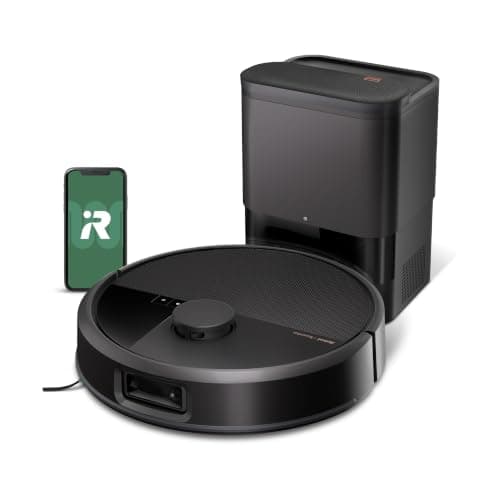
iRobot
iRobot Roomba Max 715 Pet Robot Vacuum
9.0 / 10
- PrecisionVision AI is described as responding to pet bowls, toys, pet waste, cords, socks and shoes
- Dual rubber anti-tangle brushes plus an anti-tangle edge-sweeping brush
- 30,000 Pa stated suction with automatic Carpet Boost on rugs and carpet
- AutoEmpty dock runs up to 90 days into odor-control AllergenLock bags — roughly four bag changes a year
$599.99
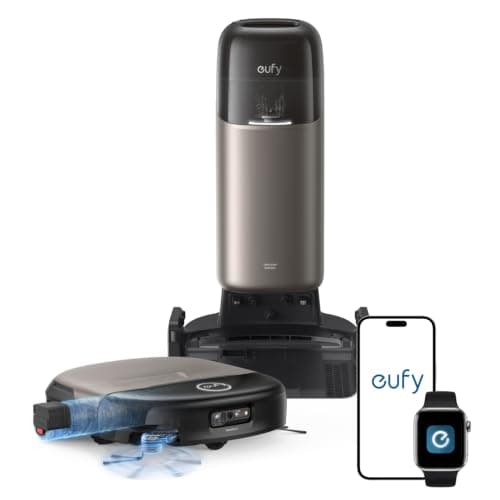
eufy
eufy Omni S2 Robot Vacuum and Mop Combo
8.9 / 10
- 24 of 24 in Vacuum Wars 2026 obstacle-avoidance test — the best score in that set
- DuoSpiral main brush and anti-tangle side brushes, which eufy's listing claims are TÜV SÜD certified at 0% hair tangling
- 30,000 Pa AeroTurbo 2.0 with 100 AW airflow, rated to reach 3 cm into carpet pile
- Station auto-empties for up to 68 days and washes the roller mop at 140°F after every run
$1,599.99
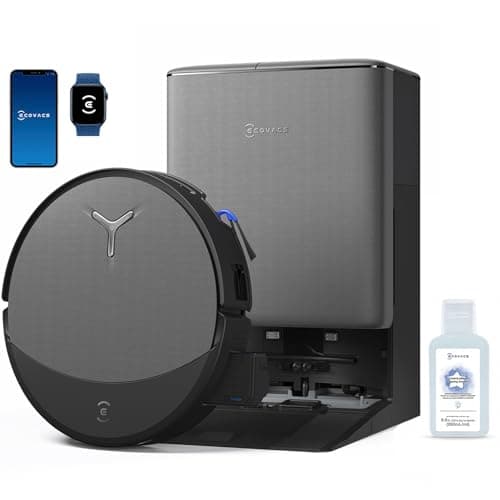
ECOVACS
ECOVACS DEEBOT T90 PRO Omni Robot Vacuum and Mop
8.7 / 10
- 23 of 24 in Vacuum Wars 2026 obstacle-avoidance test, second only to the eufy Omni S2
- ZeroTangle 4.0 uses BLAST airflow to steer hair into the suction path instead of onto the roller
- Carpets First mode vacuums carpet with a dry roller, then mops hard floors — the right order in a litter room
- TruEdge 3.0 extends the roller 0.6 in past the body to reach baseboards where hair and granules collect
$598.99
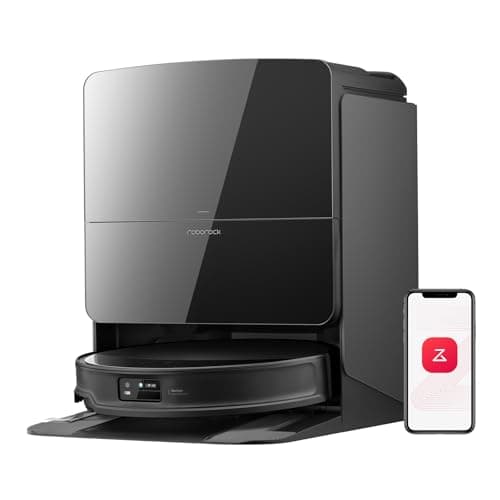
roborock
roborock Saros 10R Robot Vacuum and Mop
8.6 / 10
- 3.14 in profile with no raised LiDAR turret, so it clears low beds, sofas and cabinets
- Zero-Tangling DuoDivide main brush with FlexiArm Riser side brush and anti-tangle wheels
- 22,000 Pa HyperForce suction with AdaptiLift chassis clearing 4 cm obstacles
- Dock handles 60-day dust collection, 176°F mop washing and 131°F drying
$1,299.99
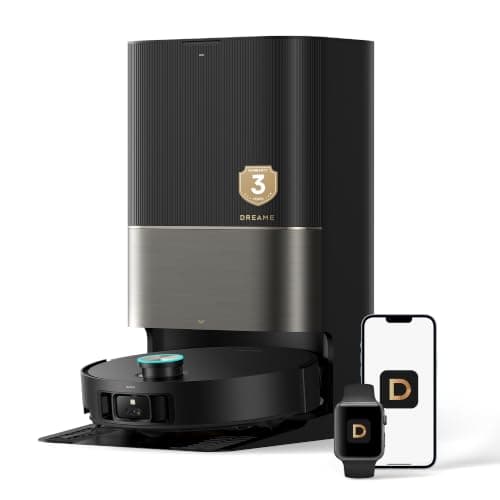
dreame
dreame X50 Ultra Robot Vacuum and Mop
8.3 / 10
- Retractable legs clear door tracks and thresholds up to 2.36 in
- VersaLift navigation drops the body to 3.5 in to get under furniture
- DuoBrush system manages hair up to 11.8 in long with an air duct that flings hair into suction
- 20,000 Pa Vormax suction, with cat litter named explicitly in the pickup claim
$999.99
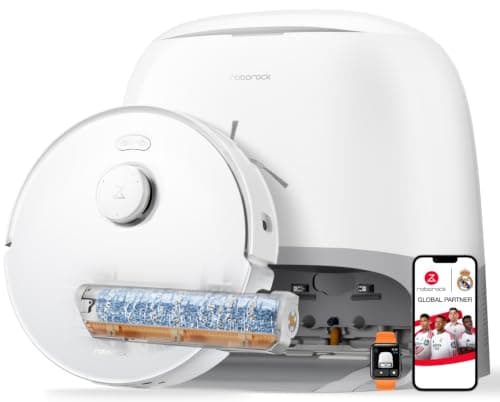
roborock
roborock Qrevo Curv 2 Flow Robot Vacuum and Mop
8.2 / 10
- SpiraFlow roller mop with eight hydration points and a scraper that refreshes the mop in real time
- Dual Zero-Tangle system, stated as certified by SGS at a 0% hair entanglement rate
- 20,000 Pa suction with DirTect sensing that switches to mop-only mode for liquid spills
- Carpet mode lifts the mop up to 15 mm and deploys a Roller Shield to separate wet and dry zones
$999.99
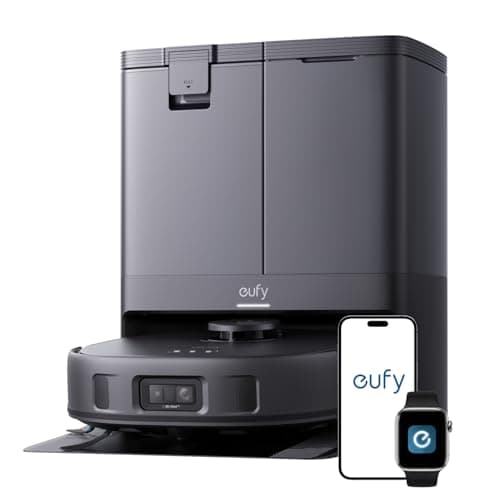
eufy
eufy X10 Pro Omni Robot Vacuum and Mop Combo
7.6 / 10
- Full self-empty and self-wash Omni station at under $500
- 2.5 L dust bag rated for replacement about every two months
- Dual mops with 12 mm auto-lift and 45°C heated-air drying
- Pro-Detangling self-cleaning roller brush aimed at pet hair
$479.99
roborock
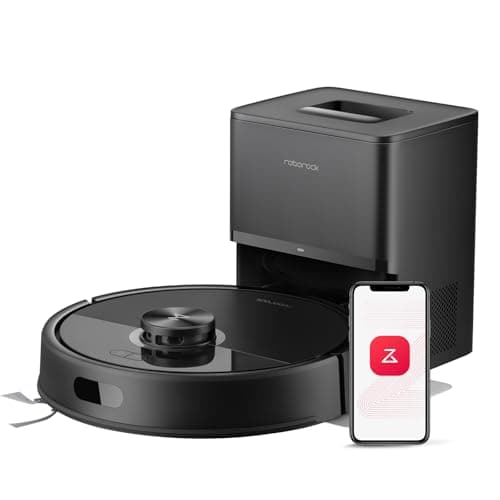
roborock Q7 M5+ Robot Vacuum and Mop
7.0 / 10
- 2.7 L sealed dust bag in the RockDock Plus, rated at 7 to 9 weeks between changes
- JawScrapers main brush plus a 0% hair-tangling side brush
- 10,000 Pa HyperForce suction
- PreciSense LiDAR mapping with real-time route planning
$299.99
The Short Answer
The iRobot Roomba Max 715 Pet is the pick for most pet households at $599.99: paired rubber anti-tangle brushes, an obstacle list that names pet waste, and a 90-day odor-control bag take the brush, dock and containment factors that carry 57% of our score. Pay up for the eufy Omni S2 at $1,599.99 only if accidents are the fear keeping you out of the category — it holds the best obstacle-avoidance score in the independent test set we checked. The Ecovacs DEEBOT T90 PRO Omni comes within one point of that score for far less money. None of these replaces an upright for embedded hair in carpet.
Every product on this list has been scored against the PetPal Gear Score, a weighted composite of expert consensus, observed effectiveness, animal safety, long-term durability, and value. Review method: Editorial synthesis of ten fetch-verified expert and institutional sources: the U.S. EPA on biological indoor particulate and vacuum filtration, the AAAAI pet-allergy guidance, Allergy Standards Ltd. general vacuum certification criteria, the Allergy Standards Robotic Vacuum Cleaner Standard ASP:03-09/101 and its live certified-product registry, ASPCA cat and dog grooming guidance on shedding at the source, Roborock and iRobot manufacturer documentation for brush mechanism and guarantee terms, and Vacuum Wars 2026 obstacle-avoidance testing including its documented failure modes. Every product specification quoted here comes from the live Amazon listing for the exact model linked. PetPalHQ does not run a robot vacuum testing lab.. Synthesized from 10+ expert sources.
A robot vacuum earns its place in a pet household on a narrow set of jobs: sweeping up the hair that falls every single day, catching litter granules before they migrate room to room, and doing it without anyone thinking about it. The eight machines below were ranked on those jobs and nothing else — how well the brush survives a long undercoat, how many days the base runs before it needs you, how much litter each one lifts off hard floor versus carpet, and how reliably it steers around an accident. Prices run from $299.99 to $1,599.99, and most of what separates the ends is obstacle avoidance, dock automation, and whether an independent test result exists at all.
PetPalHQ.com earns affiliate commissions from qualifying purchases. Our recommendations are based on expert consensus — we synthesize independent testing, published certification standards, institutional health guidance, and manufacturer documentation to find pet gear that is worth your investment. Commission rates never influence our editorial picks.
We read ten sources for this guide, from the EPA and the AAAAI on dander behavior to the Allergy Standards robotic-vacuum standard and Vacuum Wars 2026 obstacle-avoidance testing. Eight machines earned a slot: the Roomba Max 715 Pet leads on the jobs that recur daily — rubber anti-tangle brushes and a 90-day odor-control bag — the eufy Omni S2 holds the only perfect obstacle-avoidance score in the independent set we checked, and the Ecovacs DEEBOT T90 PRO Omni comes within one point of that result for hundreds of dollars less. Three flagships follow for specific floor plans, and two budget picks close it out. One finding shaped the whole guide and is worth stating up front: not one of these robots is certified under the single third-party allergen standard that exists for this category, so every filtration percentage you read on a box here is the manufacturer's own.
Why Doesn't a Robot Vacuum Replace Your Upright?
Because the job is not the same job. A robot makes shallow, frequent passes with a small motor, a small bin, and no ability to lean into a carpet. Hair that has been walked into pile for weeks needs sustained airflow and a brush bar with weight behind it, and no machine on this page delivers that. What a robot does instead is remove the loose surface load every single day, which is what actually keeps a shedding house from feeling out of control. The two tools do different halves of one problem.
Treat them as a pair and both work better. The robot handles the daily hair and litter migration; a proper upright or canister handles the monthly deep pass, the stairs, the upholstery, and the embedded coat in carpet — the machines in Best Vacuums for Pet Hair in a Real Shedding Household (2026) are the companion side of this purchase, not a competing one. If liquid accidents are the recurring problem rather than hair, neither category is the answer; a carpet extractor for pet urine stains is a different machine for a different failure.
What Actually Stops Pet Hair From Wrapping the Brush?
A brush roll tangles for a simple mechanical reason: a smooth spinning shaft gives long hair something to wind around, and every pass pulls the wrap tighter until the roller loses contact with the floor. Anti-tangle designs do not make hair less sticky. They change where the hair goes. Roborock's documentation describes the DuoDivide brush as transporting collected hair to a dustbin inlet at the center, where it is stripped off the brush and suctioned away. Ecovacs takes a different route with ZeroTangle 4.0, using the machine's own airflow to steer hair into the suction path before it reaches the roller at all. iRobot uses paired flexible rubber rollers that give hair far less to grip than bristles do.
One caution worth holding onto: every zero-tangle figure in this category is manufacturer-reported. Two listings here name an outside body — eufy claims TÜV SÜD certification for 0% hair tangles, Roborock cites an SGS certificate for the same figure — but both certificates are reported by the maker, and neither is the same as an independent reviewer measuring it. Judge the mechanism, which is verifiable from the design, more than the percentage. The other half of the equation never appears on a spec sheet: the ASPCA's guidance is that regular brushing is what actually reduces the hair reaching your floors, and a grooming vacuum kit that captures coat at the animal cuts the load every machine downstream has to handle.
Will a Robot Vacuum Really Dodge a Dog Accident?
Usually, and not always, and the difference is worth being honest about. Vacuum Wars puts it plainly in its 2026 testing: no robot vacuum is perfect at obstacle avoidance, and that may be the most important thing a shopper can know right now. The best score in its current set is 24 of 24, held by the eufy Omni S2, with the Ecovacs T90 Pro Omni one point behind at 23 of 24. Those are controlled-test numbers, not a promise about your hallway at two in the morning.
The failure modes are specific and predictable. Thin, flexible, low-profile objects are the hardest category — charging cables, drawstrings, socks — and a small solid accident sits in exactly that profile band. Camera-based systems get less reliable in very low light, which matters if your robot runs overnight. And top-mounted LiDAR often cannot detect low-profile items, which is why the Q7 M5+ in this guide is the one pick with the thinnest defense here. Manufacturer guarantees do not close that gap either: iRobot's P.O.O.P. Promise is real, but it names the j7+ specifically, runs one year, covers solid cat or dog waste only, and its remedy is a replacement robot. A guarantee is compensation for a bad outcome, not prevention of one. If accidents are a live possibility in your home, run the robot while you are there to supervise it.
Does the Self-Empty Base Keep Up With a Shedding Household?
Not for as long as the box says, and manufacturers largely admit it. Stated intervals — up to 90 days on the Roomba Max 715 Pet, 68 days on the Omni S2, seven to nine weeks on the Q7 M5+ — are measured under generic conditions, and iRobot's own language concedes that results vary with floor surface and whether you have pets. A two-dog household on carpet should mentally halve any figure in this guide and be pleasantly surprised if it does better.
Capacity is only half of it; how the base holds what it collects matters just as much. A sealed bag keeps the collected hair and dander contained from dock to trash, while an open bin re-releases a share of it the moment you tip it out. Three picks here use bag systems rather than open bins: the Roomba's odor-control AllergenLock bag, the Q7 M5+ sealed 2.7 L bag, and the X10 Pro Omni 2.5 L bag. The practical read is that three docks in this guide state no interval at all — the Ecovacs, the Dreame and the Qrevo — which is its own answer. If the maker will not publish a number, do not plan around one.
Litter Tracking Is a Hard-Floor Win and a Carpet Compromise
Litter is the mess a robot is genuinely good at, provided the floor cooperates. Granules that scatter from a box onto tile or laminate get swept up within hours on a daily schedule, long before anyone grinds them underfoot into a different room. On carpet the same granules behave completely differently, working down into pile where surface passes cannot reach them.
That gap is not marketing pessimism; it is written into the certification standard itself. The Allergy Standards robotic-vacuum standard requires at least 90% allergen removal on hard floors but only at least 80% on carpet, because fiber traps particulate far more effectively than a robot extracts it. The design response worth paying for is sequencing: the Ecovacs Carpets First mode vacuums carpet with a dry roller before mopping hard floors, and a roller lift keeps the wet pass off carpet entirely. That order matters with litter specifically, because a damp pad dragged across clay dust makes a film instead of removing it. For everything that follows a litter-box miss rather than a spill, the chemistry side of the job lives with an enzyme odor remover.
Can a Robot Vacuum Help With Pet Dander and Allergies?
It helps at the margins, and the honest framing matters more than the filter spec. The AAAAI describes dander as remaining in the air, on furniture and on clothing all at once — it settles heavily onto floors and soft surfaces, then becomes airborne again whenever something disturbs it, including foot traffic and a passing vacuum's own airflow. A robot running daily while nobody is in the room is a real advantage on that second half: it removes settled dander frequently, and it does it when the person who reacts to it is not standing there.
Where the category falls down is proof. As of this guide's research, exactly one robot vacuum appears on the certified registry for the Allergy Standards robotic-vacuum program: the Robot Vacuum Omni E35 by eufy. It is not a pick here for a plain reason — we could not obtain a verified Amazon listing for that exact model, and a lookup returned the eufy Omni C20 instead. So every capture percentage in this guide is the manufacturer's own testing, not certified performance. HEPA on a box is a filter-media spec, not evidence of a sealed path. The EPA's guidance is still worth following where you can verify it: a vacuum with HEPA filtration helps keep collected dust from escaping back into room air, and a sealed bag does that job better than a bin you tip out. For an allergy household, the robot is one layer of a system — the full protocol, including purifiers and HVAC filtration, is laid out in our guide to reducing pet allergies and dander at home, and the airborne fraction specifically belongs to an air purifier built for pet dander.
Head-to-Head Comparison
| Feature | iRobot Roomba Max 715 Pet Robot Vacuum | eufy Omni S2 Robot Vacuum and Mop Combo | ECOVACS DEEBOT T90 PRO Omni Robot Vacuum and Mop | roborock Saros 10R Robot Vacuum and Mop | dreame X50 Ultra Robot Vacuum and Mop | roborock Qrevo Curv 2 Flow Robot Vacuum and Mop | eufy X10 Pro Omni Robot Vacuum and Mop Combo | roborock Q7 M5+ Robot Vacuum and Mop |
|---|---|---|---|---|---|---|---|---|
| Price | $599.99 | $1,599.99 | $598.99 | $1,299.99 | $999.99 | $999.99 | $479.99 | $299.99 |
| Stated suction | 30,000 Pa | 30,000 Pa | 30,000 Pa | 22,000 Pa | 20,000 Pa | 20,000 Pa | 8,000 Pa | 10,000 Pa |
| Self-empty interval | Up to 90 days (stated) | Up to 68 days (stated) | Not stated | 60 days (stated) | Not stated | Not stated | 2.5 L bag, about 2 months (stated) | 2.7 L bag, 7 to 9 weeks (stated) |
| Brush type | Dual rubber anti-tangle + edge brush | DuoSpiral main + anti-tangle side | ZeroTangle 4.0 with airflow routing | DuoDivide zero-tangle + FlexiArm side | DuoBrush dual-brush, hair to 11.8 in | Dual short rollers, SGS 0% entanglement | Pro-Detangling self-cleaning roller | JawScrapers main + 0% tangle side |
| Independent obstacle score | None published | 24 of 24 (Vacuum Wars 2026) | 23 of 24 (Vacuum Wars 2026) | None published | None published | None published | None published | None published |
| Pet-duty differentiator | Only listing that names pet waste in its obstacle set | Best independent obstacle score in the set we checked | Tested 23 of 24 plus Carpets First dry-then-wet order | 3.14 in body reaches hair under beds and sofas | Climbs 2.36 in thresholds; names cat litter in its pickup claim | Self-refreshing roller mop for litter film on hard floors | Full Omni dock automation under $500 | Sealed self-empty dock at the lowest price; no camera avoidance |
| Check price | Amazon | Amazon | Amazon | Amazon | Amazon | Amazon | Amazon | Amazon |
$599.99
- PrecisionVision AI is described as responding to pet bowls, toys, pet waste, cords, socks and shoes
- Dual rubber anti-tangle brushes plus an anti-tangle edge-sweeping brush
- 30,000 Pa stated suction with automatic Carpet Boost on rugs and carpet
- AutoEmpty dock runs up to 90 days into odor-control AllergenLock bags — roughly four bag changes a year
- Advanced Dirt Detect runs extra passes where mess concentrates, including pet areas and entryways
Only one machine in this guide names pet waste in its own obstacle list. iRobot describes PrecisionVision AI as identifying and responding to pet bowls, toys, pet waste, cords, socks and shoes, and the rest of the Roomba Max 715 Pet is built around the same pet-first idea: patented dual rubber brushes that flex to stay in contact with the floor, an anti-tangle edge brush for the baseboards where hair collects, Carpet Boost that raises suction automatically on rugs, and Advanced Dirt Detect that adds passes in the places messes actually pile up.
Rubber brushes matter more than the marketing suggests, and they are why this machine leads the guide. A bristle roller gives long hair a smooth shaft to wrap; paired flexible rubber rollers keep contact with the floor while giving hair far less to wind onto. Tangle Resistance is the heaviest factor in our score at 25%, and paired rubber rollers sit in its top band beside roborock's centre-inlet brush and the Ecovacs airflow route. Add the longest stated dock interval here and the only bag described as odor-controlling, and three factors worth 57% of the weight land on the cheaper machine.
Containment is the other quiet strength. The AutoEmpty dock stores debris in odor-control AllergenLock bags and iRobot rates it at up to 90 days, about four bag changes a year — the longest stated hands-free interval in this guide. That design detail matters more than its convenience framing suggests: the EPA's own guidance on indoor particulate is that vacuumed dust escaping back into room air is a real exposure route, which is exactly what a closed bag system is for, and what dumping a bin is not.
Two things to be clear about before you buy. First, iRobot's pet-waste replacement guarantee, the P.O.O.P. Promise, names the Roomba j7+ specifically. It does not cover this model, it runs one year, it is solid waste only, and the remedy is a replacement robot rather than a cleaning service. Do not buy the 715 expecting that safety net. Second, this is a vacuum only — its listing describes no mopping function — so litter dust and paw prints on hard floors still need a wet pass from something else. And no independent obstacle score exists for it in the set we checked, while camera-based vision is a known weak point in dim rooms. If that scenario is your reason for buying, the eufy below has the test result and this machine does not.
What We Love
- The only pick whose manufacturer obstacle list explicitly includes pet waste and pet bowls
- Dual rubber anti-tangle brushes plus an anti-tangle edge brush target the two places hair actually wraps
- Longest stated hands-free interval in this guide at up to 90 days, into odor-control AllergenLock bags
- Advanced Dirt Detect concentrates extra passes on pet areas rather than cleaning everything evenly
- At $599.99 it costs well under half the eufy flagship while keeping the 30,000 Pa suction figure
What Could Be Better
- iRobot's pet-waste replacement guarantee names the j7+ only, runs one year, covers solid waste only, and does not apply to this model
- Vacuum-only — the listing describes no mopping function, so litter dust and paw prints need a separate wet pass
- No independent obstacle-avoidance score exists for this exact model in the test set we checked, and camera systems lose reliability in very low light
- The 90-day interval assumes generic conditions, and AllergenLock bags are a recurring consumable cost in a shedding home
The Verdict
For most pet households this is the buy. The Roomba Max 715 Pet is the most honest match between the hardware and the job — rubber rollers where hair actually wraps, a 90-day odor-control bag where dander actually escapes — and it takes the brush, dock and containment factors — 57% of our score by weight — from machines costing far more. Buy it for the brushes and the bag, not for a guarantee that covers a different robot, and step up to the eufy Omni S2 instead if a tested obstacle score is what you are really shopping for.
Sources
- iRobot (manufacturer, P.O.O.P. Promise terms): the pet-waste replacement guarantee names the Roomba j7+ specifically, is valid for one year from purchase, covers replacement product only, and applies to solid cat or dog waste only — it does not extend across the rest of the range
- Vacuum Wars: reports that camera-based obstacle systems can be less reliable in very low light, and that thin or low-profile items such as cords, drawstrings and socks remain the hardest objects for any robot to see
- U.S. Environmental Protection Agency: classifies pet dander as a biological indoor contaminant and advises a vacuum with a HEPA filter to keep vacuumed dust from escaping back into room air
$1,599.99
- 24 of 24 in Vacuum Wars 2026 obstacle-avoidance test — the best score in that set
- DuoSpiral main brush and anti-tangle side brushes, which eufy's listing claims are TÜV SÜD certified at 0% hair tangling
- 30,000 Pa AeroTurbo 2.0 with 100 AW airflow, rated to reach 3 cm into carpet pile
- Station auto-empties for up to 68 days and washes the roller mop at 140°F after every run
- 3D MatrixEye 2.0 recognizes 200-plus obstacle types and avoids objects as small as 0.4 in
Vacuum Wars put the eufy Omni S2 at the top of its current obstacle-avoidance test set with a perfect 24 out of 24, the best result any robot vacuum has posted there. In a pet household that is not a spec-sheet curiosity. The failure mode that ruins a robot vacuum is almost never weak suction. It is a machine that finds a fresh accident at two in the afternoon and tracks it through three rooms before anyone gets home. On the one independent test we could verify, the Omni S2 is the best current defense against that outcome.
Hair handling is where the flagship gives ground. eufy's listing claims TÜV SÜD certification for 0% hair tangling and describes the DuoSpiral main brush and anti-tangle side brushes as letting pet hair, long hair and fine strands pass through without wrapping. That is pass-through geometry rather than a mechanism that strips hair off the roller or steers it into suction before it lands, so on the heaviest factor in our score it sits a band below the Roomba, the Ecovacs and the Saros — and the certificate does not lift it, because like every zero-tangle figure in this category it is reported by the maker rather than measured by an independent reviewer. AeroTurbo 2.0 is rated at 30,000 Pa with 100 AW of airflow and is claimed to reach 1.18 in into carpet, lifting 95% of dust mites, dander and allergens. Read those as the manufacturer's own numbers too. Suction figures are not standardized across brands, so they tell you a direction rather than a ranking.
The station is the part a shedding household feels every week. It empties itself for up to 68 days by eufy's count, washes the roller mop with 140°F water and dries it with 131°F air after each session, and an optional plumbing kit takes water refills and dirty-water disposal off your hands entirely. The mop lifts on carpet, the chassis rises for rugs up to 2 in, and tasseled rug edges are avoided — all useful where a litter mat sits on a rug and you want the dry pass kept separate from the wet one.
Here is the honest trade-off. At $1,599.99 this is the most expensive machine in the guide by $300, and several of the features carrying that price solve a floor-hygiene problem rather than a pet problem: electrolyzed water, 99.99% germ removal, sprayed fragrance. The 68-day interval is a generic-conditions figure, and a two-dog household will hit the bag long before day 68. And the 99.99% filtration claim is eufy's own testing. No pick in this guide, including this one, appears on the certified registry for the one third-party robot-vacuum allergen standard that exists.
What We Love
- Best obstacle-avoidance score in the Vacuum Wars set we checked, at a perfect 24 of 24
- DuoSpiral brush and anti-tangle side brushes carry a TÜV SÜD 0% tangle claim on the listing
- Most complete dock automation here — auto-empty, hot-water mop wash, hot-air dry, optional plumbing
- Recognizes 200-plus obstacle types and avoids objects down to 0.4 in, the class most relevant to toys and waste
- Chassis and mop lift for rugs and carpet, keeping the wet pass off carpeted litter areas
What Could Be Better
- At $1,599.99 it is the priciest pick here by $300 and more than five times the entry machine
- Electrolyzed water, 99.99% germ removal and sprayed fragrance are hygiene-marketing features that do nothing for pet hair
- The 68-day empty interval and the 95% carpet-allergen figure are eufy's own generic-conditions numbers; a heavy multi-pet home should plan on far shorter intervals
- Not listed on the certified registry for the one third-party robot-vacuum allergen standard, so its filtration claim rests entirely on manufacturer testing
The Verdict
If the accident scenario is the thing stopping you from buying a robot at all, the Omni S2 is the one with an independent test result behind it, and the eufy flagship's dock is the least demanding of your attention. It does not take the top spot because three factors carrying 57% of the score — brush mechanism, dock capacity and containment — all go to the far cheaper Roomba above it. Buy this one for the 24 of 24, or do not buy it.
Sources
- Vacuum Wars: scored the eufy Omni S2 at 24 out of 24 — the single best obstacle-avoidance result in its current 2026 test set
- Vacuum Wars: cautions that no robot vacuum is perfect at obstacle avoidance, and that thin, flexible or very low-profile objects remain the hardest category for every unit tested
- Allergy Standards Ltd. (Robotic Vacuum Cleaner Standard ASP:03-09/101): sets the only third-party numeric bar for robot vacuums we could verify — at least 90% allergen removal on hard floors and at least 80% on carpet, with airborne particle and cat allergen ceilings held during operation and receptacle emptying
$598.99
- 23 of 24 in Vacuum Wars 2026 obstacle-avoidance test, second only to the eufy Omni S2
- ZeroTangle 4.0 uses BLAST airflow to steer hair into the suction path instead of onto the roller
- Carpets First mode vacuums carpet with a dry roller, then mops hard floors — the right order in a litter room
- TruEdge 3.0 extends the roller 0.6 in past the body to reach baseboards where hair and granules collect
- OMNI station washes at up to 167°F, dries at 145°F, and flushes its own dirty-water system
Second place in the same independent test belongs here, on much cheaper hardware. Vacuum Wars scored the DEEBOT T90 PRO Omni at 23 of 24 on obstacle avoidance, a single point behind the eufy flagship and hundreds of dollars below it. For a buyer whose main worry is the robot meeting something it should have driven around, that is the most efficient money in this guide.
The hair strategy is different from everyone else's and worth understanding. Rather than relying on brush geometry alone, ZeroTangle 4.0 uses the machine's own BLAST airflow to guide hair directly into the suction path, so less of it ever reaches the roller to wrap around. TruEdge 3.0 pushes the roller 0.6 in beyond the body to scrub along baseboards, which is where shed hair and stray litter granules migrate and where side brushes normally just flick debris around.
Litter rooms are where this machine earns its rank rather than its score. Carpets First mode vacuums carpet with a dry roller before mopping hard floors, and a 0.6 in roller lift keeps carpet out of the wet pass entirely. That sequence matters because litter dust turns to grit the moment a damp pad drags it across tile. The OMNI station then washes the roller at up to 167°F, dries it at 145°F, and periodically flushes residue out of its own dirty-water system, which is the part that starts to smell in cheaper docks.
The reservations are real. The 30,000 Pa headline is Ecovacs' own measurement with no independent standard behind it, and it is not comparable to another brand's number. The AGENT YIKO voice agent is a novelty rather than a reason to buy. The built-in RGB camera supports two-way calls and pet snapshots, which some owners love and others will not want driving around the house. And the station lists no stated empty interval at all, so plan on checking it yourself rather than trusting a number.
What We Love
- 23 of 24 in the same independent obstacle test as the eufy flagship, for hundreds of dollars less
- Airflow-based hair routing keeps material off the roller instead of only resisting wrap once it lands
- Carpets First and the 0.6 in roller lift keep the wet pass off carpet, which suits litter-area floors
- TruEdge roller extension scrubs baseboards where hair and granules collect
- Station self-flushes its dirty-water system, the usual source of dock odor
What Could Be Better
- The 30,000 Pa figure is Ecovacs' own spec with no independent standard behind it and is not comparable across brands
- No stated self-empty interval in the listing, so the maintenance rhythm is unknown until you live with it
- The built-in RGB camera with two-way calling puts a networked camera on your floor, which not every household wants
- The roller mop and dirty-water system add cleaning surfaces that a vacuum-only robot simply does not have
The Verdict
The Ecovacs is the value answer to the question that actually matters in a pet home — will it drive around the mess. Take it over the Roomba if you also want mopping and edge scrubbing; take the Roomba if you want the 90-day odor-control bag and the simpler machine.
Sources
- Vacuum Wars: scored the Ecovacs T90 Pro Omni at 23 out of 24 in its current 2026 obstacle-avoidance test, one point behind the best result in the set
- Allergy Standards Ltd. (Robotic Vacuum Cleaner Standard ASP:03-09/101): sets a lower allergen-removal bar for carpet than for hard floor — at least 80% versus at least 90% — reflecting how much harder carpet fiber is to extract particulate from
- AAAAI (American Academy of Allergy, Asthma and Immunology): describes pet dander as remaining in the air, on furniture and on clothing, which is why a vacuum's own airflow can re-disturb settled dander during a pass
$1,299.99
- 3.14 in profile with no raised LiDAR turret, so it clears low beds, sofas and cabinets
- Zero-Tangling DuoDivide main brush with FlexiArm Riser side brush and anti-tangle wheels
- 22,000 Pa HyperForce suction with AdaptiLift chassis clearing 4 cm obstacles
- Dock handles 60-day dust collection, 176°F mop washing and 131°F drying
- RGB camera with two-way video and one-click pet search for checking on animals
Shed hair does not stay in the open. It drifts to the places you cannot reach without moving furniture: under the bed, beneath the sofa, along the back of a cabinet run. The roborock Saros 10R is built for exactly that geography. StarSight Autonomous System 2.0 uses 3D sensing rather than a spinning turret, which lets the body sit at 3.14 in and slide under furniture that stops every other machine in this guide at the skirt.
That design choice has a second benefit worth naming. Vacuum Wars points out that top-mounted LiDAR often cannot detect low-profile objects — cords, socks, small toys — because the sensor sits above them. Removing the turret removes that limitation by construction. The listing pairs it with VertiBeam lateral obstacle avoidance for cables and 108 recognized obstacle types.
On hair, Roborock's own documentation — published on its page for the sibling Saros 10 — describes the DuoDivide brush as channeling collected hair toward a central dustbin inlet, where it is stripped off the brush and suctioned away rather than left to wrap. That is a manufacturer mechanism description, not an independent test result, and it should be read that way. The FlexiArm Riser side brush extends into corners, the AdaptiLift chassis climbs 4 cm thresholds, and the dock runs 60 days of dust collection with 176°F mop washing. The pet camera with one-click pet search is a genuinely pet-specific extra rather than a repurposed security feature.
The case against it is mostly about price and evidence. $1,299.99 buys no independent obstacle-avoidance result at all, while the much cheaper Ecovacs below it has a tested 23 of 24. Its 108 recognized obstacle types trail the 200-plus claimed by the Qrevo Curv 2 Flow at $999.99 and by the eufy flagship above it. The extending arm and riser chassis are additional moving parts on a machine that lives on the floor with pets. And as with the Ecovacs, an always-connected RGB camera is not a neutral addition to a household.
What We Love
- Slimmest body here at 3.14 in, reaching under beds and sofas where shed hair actually accumulates
- No raised LiDAR turret, removing the structural blind spot for low-profile objects
- DuoDivide brush is described as stripping hair off the roller into the bin rather than resisting wrap passively
- Climbs 4 cm thresholds and lifts the mop for carpet, so one machine covers a multi-surface floor plan
- One-click pet search and two-way video are aimed at pet owners rather than bolted on from a security product
What Could Be Better
- $1,299.99 with no independent obstacle-avoidance score, while the much cheaper Ecovacs here has a tested 23 of 24
- 108 recognized obstacle types trails the 200-plus claimed by the $999.99 Qrevo Curv 2 Flow and by the $1,599.99 eufy flagship
- FlexiArm and AdaptiLift add moving parts that live at floor level around pets
- The RGB camera is always in the home, which is a privacy decision rather than a feature for some buyers
The Verdict
Buy the Saros if low furniture is where your hair problem hides and you want one machine that also mops and climbs thresholds. If obstacle avoidance is your reason for buying, the tested picks above cost less and have the evidence.
Sources
- Roborock (manufacturer, Saros 10 product documentation — sibling model): describes the DuoDivide anti-tangle brush as transporting collected hair to a dustbin inlet at the center, where the hair is stripped off and suctioned into the bin; this mechanism description is published on Roborock's page for the sibling Saros 10, and the Saros 10R listing names the same Zero-Tangling DuoDivide brush
- Vacuum Wars: notes that top-mounted LiDAR often cannot detect low-profile items such as cords, socks or small toys, which is the design constraint the Saros 10R removes by dropping the raised turret
$999.99
- Retractable legs clear door tracks and thresholds up to 2.36 in
- VersaLift navigation drops the body to 3.5 in to get under furniture
- DuoBrush system manages hair up to 11.8 in long with an air duct that flings hair into suction
- 20,000 Pa Vormax suction, with cat litter named explicitly in the pickup claim
- Five carpet modes including mop removal, carpet avoidance and suction boost
Of the eight listings behind this guide, exactly one names cat litter in its pickup claim. dreame states that the X50 Ultra's 20,000 Pa Vormax suction delivers large pickup including cat litter and crumbs, which is a small thing to hang a rank on and also the only direct litter claim anyone here makes. It fits the rest of the machine's character, which is about getting to the mess rather than overwhelming it.
Getting there is the headline. Robotic retractable legs let it climb door tracks and thresholds up to 2.36 in, the highest figure in this guide, and VersaLift lowers the body to 3.5 in to slip under furniture. A house with raised transitions between a tiled litter room and carpeted living space is exactly where cheaper robots strand themselves, and that is the scenario this one is engineered for.
Long coats get their own answer. The DuoBrush system splits the work across two brushes and uses an air duct that flings hair up into the suction path, and dreame rates it for hair up to 11.8 in, which covers most double-coated and long-haired breeds. dreame also builds the noise case more explicitly than anyone else here, citing shock absorbers and a fluid-dynamic design intended to keep the machine quiet — relevant if a nervous cat shares the floor plan, though no decibel figure is published in the listing.
What holds it back is evidence and headroom. The dreame X50 Ultra's 20,000 Pa figure sits below the 30,000 Pa claimed by three other picks, and while those numbers are not comparable across brands, they are comparable within a buyer's expectations. No independent obstacle-avoidance test result exists for it in the set we checked. The listing states no self-empty interval, so the bag rhythm is a guess. And the retractable legs, like any lifting mechanism, are a moving assembly working near pet hair all day.
What We Love
- Climbs 2.36 in thresholds, the highest figure here, for homes with raised transitions
- The only listing in this guide that names cat litter in its pickup claim
- DuoBrush handles hair up to 11.8 in, covering long and double-coated breeds
- Explicit noise engineering — shock absorbers and fluid-dynamic design — for households with skittish animals
- Five carpet modes let you set different behavior for the litter room and the living room
What Could Be Better
- 20,000 Pa sits below the 30,000 Pa claimed by three picks here, including two that cost far less
- No independent obstacle-avoidance result in the test set we checked, at a $999.99 price
- The listing states no self-empty interval, so you cannot plan the bag rhythm before buying
- Retractable legs and VersaLift add lifting mechanisms that operate in a hair-rich environment every day
- USA-only unit on 2.4 GHz Wi-Fi, so it will not travel with an international move
The Verdict
The Dreame is the pick for a floor plan with steps, tracks and low furniture, and the only one whose maker puts litter in writing. If your floors are flat and open, the cheaper tested picks give you more certainty per dollar.
Sources
- Allergy Standards Ltd. (Robotic Vacuum Cleaner Standard ASP:03-09/101): notes that allergens and particles can become airborne during vacuuming and receptacle emptying, and sets suction-retention and emptying limits accordingly
$999.99
- SpiraFlow roller mop with eight hydration points and a scraper that refreshes the mop in real time
- Dual Zero-Tangle system, stated as certified by SGS at a 0% hair entanglement rate
- 20,000 Pa suction with DirTect sensing that switches to mop-only mode for liquid spills
- Carpet mode lifts the mop up to 15 mm and deploys a Roller Shield to separate wet and dry zones
- Recognizes over 200 object types day or night using structured light plus PreciSense LiDAR
Litter dust is the mess most robot vacuums half-solve. Granules get swept up; the fine clay film they leave behind gets smeared by a damp pad and dries into a haze. The Qrevo Curv 2 Flow attacks that specific problem with a mop that cleans itself while it works — eight hydration points feed clean water across the roller while a built-in scraper strips dirty water off it in real time, at 15 N of pressure and 220 rpm.
Hair is handled by a dual short-roller design that Roborock states is certified by SGS at a 0% entanglement rate, paired with an upgraded long-bristle side brush. Two listings here name an outside testing body in their anti-tangle claim — this one cites SGS, and the eufy Omni S2 cites TÜV SÜD — and in both cases the certificate is reported by the manufacturer rather than by an independent reviewer who measured it.
A few behaviors read as genuinely pet-aware. DirTect sensing identifies mess type and switches to mop-only for liquid spills, lifting the brushes so a puddle is absorbed rather than flung across the floor — which is the correct instinct near a water bowl. Carpet mode raises the mop up to 15 mm and deploys a Roller Shield that keeps the wet and dry zones apart, and structured-light sensing works in the dark, so an overnight run is not a downgrade the way a camera-only system would be.
The reservations start with the price tag beside it. At $999.99 the Curv 2 Flow costs the same as the Dreame while publishing no threshold-climbing figure at all against the Dreame's stated 2.36 in, and lifting no legs; the same money buys neither an independent obstacle score nor a stated self-empty interval. Its listing also badges it as a 2026 release, which makes it one of the newest SKUs here and gives it a thin track record for how the roller assembly and dock hold up after a year of pet hair. Roller mops are also more maintenance than pads — more surfaces to rinse, more places for hair to collect.
What We Love
- Roller mop refreshes itself continuously, which suits the fine clay film litter leaves on hard floors
- Anti-tangle claim cites an SGS certificate rather than in-house testing alone
- DirTect switches to mop-only for liquid spills and lifts the brushes, so puddles are absorbed not spread
- Structured light plus LiDAR sees over 200 object types in the dark, so overnight runs are not degraded
- Roller Shield and a 15 mm mop lift keep the wet pass off carpet
What Could Be Better
- Costs the same $999.99 as the Dreame while publishing no threshold-climbing figure at all against the Dreame's stated 2.36 in
- No independent obstacle-avoidance result and no stated self-empty interval at a four-figure price
- One of the newest SKUs here, with a thin long-term record for roller and dock durability under pet hair
- A roller mop is more maintenance than a pad — additional surfaces to rinse and to pick hair out of
The Verdict
Choose the Qrevo if hard floors and litter film are your daily problem and you want the most capable self-cleaning mop here. If you need the robot to climb into a raised litter room, the Dreame at the same price is the better machine.
Sources
- Allergy Standards Ltd. (Robotic Vacuum Cleaner Standard ASP:03-09/101): requires certified robot vacuums to hold suction reduction to 10% or less after five passes, the measure that separates sustained cleaning from a machine that clogs mid-run
$479.99
- Full self-empty and self-wash Omni station at under $500
- 2.5 L dust bag rated for replacement about every two months
- Dual mops with 12 mm auto-lift and 45°C heated-air drying
- Pro-Detangling self-cleaning roller brush aimed at pet hair
- 8,000 Pa suction with AI obstacle detection for over 100 object types
Most of what a pet household wants from a robot is automation, and automation is what usually disappears first when the budget drops. The eufy X10 Pro Omni keeps it. Under $500 buys a genuine Omni station that empties the robot into a 2.5 L bag rated for roughly two months, washes the mop pads with fresh water, and dries them with 45°C air so they do not sour between runs. The 3 L clean-water tank covers up to 2,000 sq ft of mopping.
The pet hardware is present rather than best in class. eufy calls the roller a Pro-Detangling brush and describes it as self-cleaning for pet hair, the dual mops auto-lift 12 mm over carpet, and AI.See detects more than 100 object types including wires and toys. iPath laser navigation plans the route and no-go zones let you fence off a litter box or a feeding station.
Where the savings show up is suction and evidence. 8,000 Pa is the lowest figure in this guide and roughly a quarter of what three picks above claim, and single-pass carpet pickup on heavy litter tracking is where that gap becomes visible. Obstacle recognition at 100-plus types trails the 200-plus of the tested machines, and there is no independent obstacle score for it at all.
One practical note on buying: at our September 13, 2026 check this listing was live but flagged as limited stock rather than freely available, so the price and the offer may move before you get there. Confirm both on the listing rather than trusting the figure above.
What We Love
- Real self-empty and self-wash Omni station for under $500
- Two-month bag interval and a 3 L water tank keep hands-off time high for the price
- Dual mops auto-lift 12 mm so carpet and rugs stay dry
- Heated-air pad drying prevents the sour-mop smell that plagues cheap docks
- No-go zones let you fence off a litter box or feeding station
What Could Be Better
- 8,000 Pa is roughly a quarter of the figure claimed by three picks above, and carpet litter pickup is where that shows
- Stock was limited rather than freely available at our September 13, 2026 check, so price and offer may shift
- Detects 100-plus object types against the 200-plus of the tested machines, with no independent obstacle score of its own
- 45°C pad drying is cooler than the 131°F to 145°F hot-air systems on the picks above, and there is no hot-water mop wash
The Verdict
The X10 is the cheapest way to get real dock automation, and for a single-pet home on mostly hard floors that is enough. Heavy shedders on carpet should step up to the Ecovacs, where the suction and the obstacle evidence both improve for one step up in price.
$299.99
- 2.7 L sealed dust bag in the RockDock Plus, rated at 7 to 9 weeks between changes
- JawScrapers main brush plus a 0% hair-tangling side brush
- 10,000 Pa HyperForce suction
- PreciSense LiDAR mapping with real-time route planning
- Mopping with three adjustable water-flow settings
Three hundred dollars buys one thing here that matters more than anything else at this price: a sealed self-emptying base. The roborock Q7 M5+ ships with the RockDock Plus, which takes a 2.7 L bag Roborock rates at seven to nine weeks of collection — a stated interval whose top end reaches the 60 days claimed by the $1,299.99 Saros 10R. In a shedding household, the dock is what turns a robot from a chore into an appliance, and this is the cheapest honest version of it.
The brush hardware is more serious than the price suggests. The JawScrapers main brush and a side brush rated at 0% hair tangling are aimed squarely at long-haired breeds, and 10,000 Pa is a real working figure for daily hard-floor and low-pile maintenance. PreciSense LiDAR maps the house properly, so you get room-by-room scheduling and no-go zones around a litter box rather than a random bounce pattern.
Now the limitation that decides whether this machine belongs in your house. Its listing describes LiDAR navigation with no camera-based obstacle recognition, and top-mounted LiDAR often cannot detect low-profile objects — cords, socks, small toys, and by the same reasoning a small solid accident on the floor. This is the one pick in the guide with the thinnest defense against the pet-waste scenario. If you have a puppy in training, an elderly dog, or a cat with litter-box lapses, do not buy it. If your animals are reliably house-trained adults, that risk is one you can reasonably accept for $299.99.
The rest of the compromises are ordinary. 10,000 Pa is a third of the top claims and will not deep-clean carpet. Mopping is a basic pad drag with adjustable water flow rather than a scrubbing roller, and the dock does not wash or dry the pad, so that stays your job.
What We Love
- Sealed 2.7 L bag whose stated 7 to 9 week interval tops out at the 60 days the $1,299.99 Saros 10R claims
- JawScrapers brush and 0% hair-tangling side brush are genuine anti-tangle hardware at this price
- Proper LiDAR mapping enables room scheduling and no-go zones around litter areas
- At $299.99 it is a fifth of the flagship and the lowest barrier to dock automation here
- Adjustable water flow gives some mopping capability rather than none
What Could Be Better
- No camera-based obstacle recognition, and top-mounted LiDAR often cannot detect low-profile objects — the weakest pet-waste defense in this guide
- 10,000 Pa is a third of the top claims and will not deep-clean carpet
- The mop is a pad drag, and the dock neither washes nor dries it, so that maintenance stays manual
- No hot-water or hot-air dock functions at all, so pad odor is managed by hand
The Verdict
The Q7 is the right buy for a house of reliably house-trained adult animals on mostly hard floors, where the sealed dock does the real work. Any household with accident risk should spend up to a camera-equipped pick instead — that is the one gap money genuinely closes.
How We Score
Formula
PetPal Pet-Duty Score = (Tangle Resistance × 0.25) + (Pet-Waste and Obstacle Avoidance × 0.20) + (Base Capacity vs Shedding Volume × 0.20) + (Litter and Surface Pickup × 0.15) + (Filtration and Emptying Containment × 0.12) + (Noise and Household Tolerance × 0.08)
Score Factors
- Tangle Resistance · 25%
- Whether the brush architecture moves hair off the roller or merely resists wrap. Designs that strip hair into the bin during operation, or route it into the suction path with airflow before it reaches the roller, score highest — the roborock DuoDivide center-inlet mechanism, the Ecovacs BLAST airflow routing, the dreame DuoBrush air duct and iRobot's paired rubber rollers all qualify. Passive tangle-free geometry — a brush described as letting hair pass through without wrapping, such as the eufy DuoSpiral and the X10 Pro-Detangling roller — scores a band lower. Every zero-tangle figure quoted in this guide is manufacturer-reported, including the TÜV SÜD certificate eufy cites and the SGS certificate Roborock cites, so neither certificate lifts a pick out of its mechanism band and this factor weighs mechanism as heavily as claimed numbers.
- Pet-Waste and Obstacle Avoidance · 20%
- The catastrophic failure mode of a robot vacuum in a pet home, scored on independent evidence first. Vacuum Wars 2026 obstacle-avoidance results carry the most weight — 24 of 24 for the eufy Omni S2 and 23 of 24 for the Ecovacs T90 Pro Omni. Machines with camera or structured-light sensing but no published score sit in the middle. Units relying on top-mounted LiDAR alone score lowest, because that sensor placement often cannot detect low-profile objects. Manufacturer guarantees are not credited unless they cover the exact model being ranked.
- Base Capacity vs Shedding Volume · 20%
- How long the dock runs before a multi-pet household has to intervene, measured against a shedding load rather than a generic one. Stated intervals — up to 90 days on the Roomba, 68 days on the Omni S2, 60 days on the Saros 10R, 7 to 9 weeks on the Q7 M5+ — are discounted because manufacturers measure them under generic conditions and say so. Sealed bag systems score above open bins, and any listing that states no interval at all is scored down for leaving the buyer unable to plan.
- Litter and Surface Pickup · 15%
- Granule and fine-clay handling across hard floor and carpet. The Allergy Standards robotic-vacuum standard sets a lower bar for carpet than for hard floor, at 80% versus 90% removal, which is the same physics that makes tracked litter in carpet pile harder to lift than litter on tile. Machines that vacuum carpet dry before mopping hard floors, lift the mop over carpet, and extend a roller or brush to baseboards score highest here.
- Filtration and Emptying Containment · 12%
- Whether captured dander stays captured, weighted against the fact that no pick in this guide appears on the certified registry of the one third-party robot-vacuum allergen standard we could verify. Sealed, odor-controlled bag systems score above open bins because the EPA identifies vacuumed dust escaping back into room air as a real exposure route, and the Allergy Standards program treats receptacle emptying as its own tested failure point. Manufacturer capture percentages are noted but not treated as certified performance.
- Noise and Household Tolerance · 8%
- How tolerable the machine is to a skittish cat or an anxious dog. This is the weakest-evidence factor in the model and is weighted accordingly: none of the eight listings publishes a decibel figure, so scoring rests on stated noise engineering such as dreame's shock absorbers and fluid-dynamic design, or roborock's raised-brush quiet return. Where a maker says nothing about noise, this factor scores neutral rather than poorly.
| Rank | Product | Score |
|---|---|---|
| #1 | iRobot iRobot Roomba Max 715 Pet Robot Vacuum | 9.0 |
| #2 | eufy eufy Omni S2 Robot Vacuum and Mop Combo | 8.9 |
| #3 | ECOVACS ECOVACS DEEBOT T90 PRO Omni Robot Vacuum and Mop | 8.7 |
| #4 | roborock roborock Saros 10R Robot Vacuum and Mop | 8.6 |
| #5 | dreame dreame X50 Ultra Robot Vacuum and Mop | 8.3 |
| #6 | roborock roborock Qrevo Curv 2 Flow Robot Vacuum and Mop | 8.2 |
| #7 | eufy eufy X10 Pro Omni Robot Vacuum and Mop Combo | 7.6 |
| #8 | roborock roborock Q7 M5+ Robot Vacuum and Mop | 7.0 |
When NOT to Buy
Do not buy a robot vacuum to solve embedded pet hair in carpet. That is the single most common disappointment in this category and it is a physics problem, not a model-selection problem. A robot makes shallow, frequent passes with a small motor and a small bin; lifting hair that has been ground into pile takes sustained airflow and a beater bar you can lean on. A robot plus a good upright is the working combination. A robot alone is a daily tidy that slowly loses ground on carpet.
Do not buy one at all if you have active house-training in progress. The honest read of the independent testing is that no robot is perfect at obstacle avoidance, and even the best-scoring machine here was tested in a controlled set rather than in your hallway at night. A puppy in training, an elderly dog with accidents, or a cat with litter-box lapses turns a scheduled run into a risk you cannot supervise. Run the robot manually while you are home, or wait.
Skip the four-figure tier if your floors are flat, open and mostly hard. The premium above $999 in this guide buys under-furniture clearance, threshold climbing, plumbed docks and mop automation. If your house has none of those problems, that money buys you very little extra pet-hair performance — and the cheapest machine here with an independent obstacle score at all, the Ecovacs, sits a single point behind the $1,599.99 flagship.
Skip the budget floor if anyone in your home has a real pet allergy. Not one machine in this guide is listed on the certified registry for the only third-party robot-vacuum allergen standard we could verify, so every filtration figure quoted here is the manufacturer's own. The one model that does carry the certification, eufy's Robot Vacuum Omni E35, is not a pick here because we could not verify an Amazon listing for that exact model. Given that, the containment features that are verifiable — a bag system rather than an open bin, hot-air pad drying rather than none — are worth paying for, and an allergy household should be layering a purifier and a grooming routine on top regardless.
Frequently Asked Questions
- Will a robot vacuum pick up cat litter tracked out of the box?
- On hard floors, yes, and that is one of the things robots do best — a daily schedule catches scattered granules before anyone walks them into another room. On carpet the answer is partial. Granules work down into pile, and the Allergy Standards robotic-vacuum standard reflects that physics directly by setting a lower removal bar for carpet than for hard floor, 80% against 90%. The practical setup is a mat under the box on a hard-floor surface, a daily robot run, and a deep-clean pass from an upright on any carpet near the litter area. Of the eight listings behind this guide, only the dreame X50 Ultra names cat litter in its own pickup claim.
- Do robot vacuums really avoid dog and cat accidents?
- The best ones usually do, and none of them always do. Vacuum Wars 2026 testing is direct about it: no robot vacuum is perfect at obstacle avoidance. The top score in its current set is 24 of 24, held by the eufy Omni S2, with the Ecovacs T90 Pro Omni at 23 of 24. Thin and low-profile objects are the hardest category for every unit tested, cameras lose reliability in very low light, and top-mounted LiDAR often cannot detect low-profile items. iRobot's P.O.O.P. Promise is a real guarantee but a narrow one — it names the Roomba j7+, runs one year, covers solid waste only, and pays out as a replacement robot. If your household has accident risk, supervise the runs.
- Are any of these robot vacuums certified for allergy households?
- No, and that is worth knowing before you pay for a filtration claim. Only one robot vacuum appears on the certified registry for the Allergy Standards asthma and allergy friendly robotic-vacuum program — the Robot Vacuum Omni E35 by eufy — and it is not one of the eight picks here, because we could not verify an Amazon listing for that exact model (a lookup returned the eufy Omni C20 instead). If certification is what decides it for your household, that is the model to hunt for. Every capture percentage quoted on these listings, including figures as high as 99.99%, is manufacturer testing rather than certified performance. What you can still act on is containment design: the EPA advises a vacuum with HEPA filtration to keep collected dust from escaping back into room air, and a sealed bag system does that more reliably than an open bin you tip into a trash can.
- How often will I actually have to empty the base in a shedding home?
- Sooner than the stated interval, usually much sooner. Those numbers — up to 90 days on the Roomba Max 715 Pet, 68 days on the eufy Omni S2, seven to nine weeks on the roborock Q7 M5+ — are measured under generic conditions, and iRobot's own wording concedes results vary depending on floor surface and whether you have pets. A reasonable planning assumption for a two-pet carpeted home is roughly half the advertised figure. Note also that three docks in this guide publish no interval at all — the Ecovacs, the Dreame and the Qrevo — which tells you to check those manually rather than trust a schedule.
- Are robot vacuums quiet enough for a nervous cat?
- It depends more on the cat than the machine, and the specifications will not settle it for you. None of the eight listings behind this guide publishes a decibel figure, so noise here is scored on stated engineering rather than measurement: dreame cites shock absorbers and a fluid-dynamic design aimed at quieter operation, and roborock raises its brushes on the return trip for the same reason. The reliable approach is behavioral. Run the first few sessions while you are home, start on a low-suction mode, keep a room the cat can retreat to closed off from the schedule, and give a skittish animal a couple of weeks before you move to unattended overnight runs.
- Does a higher Pa number mean better pet-hair pickup?
- Not across brands, no. Suction figures in this category are manufacturer-measured and there is no shared standard behind them, so a 30,000 Pa claim from one maker and a 20,000 Pa claim from another are not directly comparable numbers. Within a shedding household the brush architecture matters more than the headline figure anyway, because a roller wrapped in hair loses contact with the floor no matter how much airflow sits behind it. Read Pa as a rough tier indicator, then judge the machine on its brush design, its dock, and whether independent obstacle testing exists for it.
- Do I still need a regular vacuum if I buy a robot?
- Yes. This is the most important expectation to set before spending four figures. A robot removes the loose surface layer of hair and litter every day, which is exactly the work that keeps a shedding home livable. It does not lift hair that has been ground into carpet pile, it does not do stairs, and it does not do upholstery or a car interior. Budget for both, and the two together will cost less frustration than a single premium robot bought on the assumption it replaces everything. Regular brushing sits upstream of both machines — the ASPCA's position is that grooming your pet regularly is what actually reduces the hair reaching your floors.
Bottom Line
Buy the iRobot Roomba Max 715 Pet at $599.99 for the most straightforwardly pet-engineered machine on the page: dual rubber anti-tangle brushes, an obstacle set that names pet waste, and a 90-day odor-control bag. It wins the brush, dock and containment factors, which carry 57% of our score between them. Just do not expect the j7-only replacement guarantee to apply.
Step up to the eufy Omni S2 only if the accident scenario is what has kept you out of this category. It holds the best obstacle-avoidance score in the independent test set we checked, plus the most complete dock automation here — and you pay $1,599.99 for that certainty.
Buy the ECOVACS DEEBOT T90 PRO Omni if you want tested obstacle avoidance and mopping in one machine. Its 23 of 24 score is one point off the eufy for hundreds of dollars less, and Carpets First keeps the wet pass off carpeted litter areas.
Step up to the roborock Saros 10R only if under-furniture hair is your specific problem — its 3.14 in body reaches what nothing else here can. The dreame X50 Ultra is the answer for raised thresholds, and the Qrevo Curv 2 Flow for litter film on hard floors.
At the bottom, the eufy X10 Pro Omni buys real dock automation under $500 and the roborock Q7 M5+ buys a sealed self-empty base for $299.99. Neither has camera-grade waste avoidance, so both are for households without accident risk.
Whatever you buy, keep the upright. Every machine here is a maintenance tool for daily surface hair, not a replacement for a deep-clean pass on carpet.
Sources & Methodology
Methodology
PetPal Pet-Duty Score = (Tangle Resistance × 0.25) + (Pet-Waste and Obstacle Avoidance × 0.20) + (Base Capacity vs Shedding Volume × 0.20) + (Litter and Surface Pickup × 0.15) + (Filtration and Emptying Containment × 0.12) + (Noise and Household Tolerance × 0.08)
Expert review sources
- U.S. Environmental Protection Agency — biological indoor particulate and HEPA vacuum filtration guidance
- AAAAI (American Academy of Allergy, Asthma and Immunology) — pet allergy guidance on dander in air, on furniture and on clothing
- Allergy Standards Ltd. — asthma and allergy friendly vacuum cleaner certification criteria
- Allergy Standards Ltd. — Robotic Vacuum Cleaner Standard ASP:03-09/101 numeric performance bar
- asthma and allergy friendly certified product registry — Robot Vacuum Cleaners category listing
- ASPCA — cat grooming guidance on managing shedding at the source
- ASPCA — dog grooming guidance on reducing shed hair through regular brushing
- Roborock — manufacturer documentation of the DuoDivide anti-tangle brush mechanism
- iRobot — P.O.O.P. Promise terms and model coverage
- Vacuum Wars — 2026 robot vacuum obstacle-avoidance testing and documented failure modes
Community sources
- Amazon verified-owner sentiment on dock emptying frequency in multi-pet homes
- Owner reporting on brush maintenance intervals for long-coated breeds
Prices and specs verified September 13, 2026.
About the author
Nick Miles is the chief editor of PetPalHQ. The picks above are an editorial synthesis of independent obstacle-avoidance testing, institutional allergen guidance, published certification standards, and the manufacturer documentation for each exact model linked. PetPalHQ does not run a robot vacuum testing lab. The PetPal Pet-Duty Score is a weighted composite of documented design factors and third-party test results, not a measurement of our own.
PetPalHQ is a participant in the Amazon Services LLC Associates Program. We may earn commissions from qualifying purchases — at no extra cost to you.
More Guides
Cats & Dogs
Best Vacuums for Pet Hair in a Real Shedding Household (2026)
Cats & Dogs
Reducing Pet Allergies and Dander at Home (2026)
Cats & Dogs
Best Air Purifiers for Pet Hair and Dander in a Shedding Household (2026)
Cats & Dogs
Best Pet Odor Removers and Enzyme Cleaners (2026)
Cats & Dogs
Best Carpet Extractors for Pet Urine and Stains (2026)
Cats & Dogs