Cats & Dogs
Reducing Pet Allergies and Dander at Home (2026)
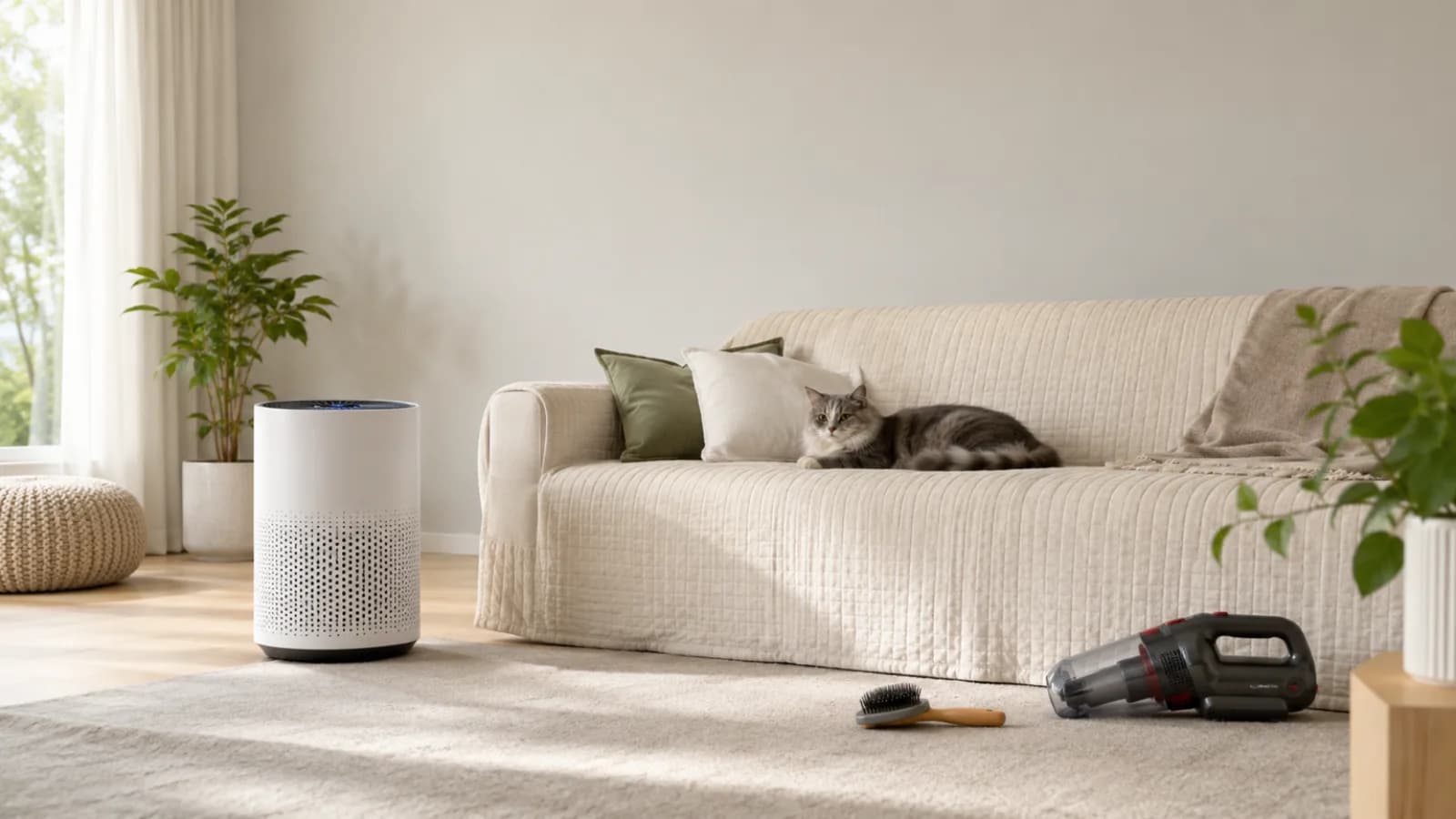
This is not another air-purifier ranking. Pet dander is produced continuously, so no single device fixes pet allergies — relief comes from stacking source, surface, and air controls, and an air purifier bought alone is the most common half-measure. The picks below are a layered system: cut the dander at its source with grooming, pull it off surfaces with a sealed-HEPA vacuum, capture what goes airborne with a whole-room HEPA unit, and catch the rest at your furnace. For the allergy symptoms themselves — the sneezing, the wheeze, the itch — your own physician or allergist is the authority, not a shopping page. Some people stay allergic no matter how clean the air is; this guide lowers the household allergen load, and it says plainly when the honest answer is a doctor rather than a device.
By Nick Miles · Updated September 26, 2026 · 12 min read
PetPalHQ is reader-supported. We may earn a commission from qualifying Amazon purchases at no extra cost to you.
Evidence at a Glance
Winix 5530 Air Purifier
The air layer done properly: a True HEPA purifier for the room you actually spend time in, which Winix rates to clean spaces up to 1,882 sq ft in an hour and to capture 99.99% of airborne allergens including pet dander — with an added carbon filter for the odors that ride alongside dander.
Sources: Winix product documentation (Amazon listing), US EPA — HEPA filter definition, General allergy and veterinary consensus on pet dander
Verified Jul 11, 2026
Shark Navigator Lift-Away Pet (NV352)
The surface layer: settled dander in carpet, upholstery, and floors is the biggest home reservoir, and this upright pairs strong pet-hair suction with a sealed HEPA filter and Anti-Allergen Complete Seal so what it captures stays captured rather than blowing back into the room.
Sources: Shark product documentation (Amazon listing), American College of Allergy, Asthma & Immunology — pet allergy guidance, General allergy and veterinary consensus on pet dander
Verified Jul 11, 2026
FURminator Medium Dog deShedding Tool
The source layer, and the highest-leverage one: its stainless deShedding edge reaches through the topcoat to pull loose, dander-carrying undercoat before it sheds into the house — cutting the allergen load upstream of every filter and vacuum on this page.
Sources: FURminator product documentation (Amazon listing), Asthma and Allergy Foundation of America — pet allergen guidance, General allergy and veterinary consensus on pet dander
Verified Jul 11, 2026
Our Picks
Winix
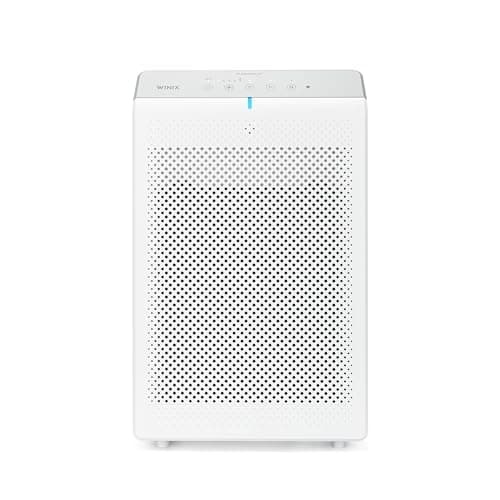
Winix 5530 Air Purifier (True HEPA + carbon)
8.8 / 10
- True HEPA captures 99.99% of airborne allergens including pet dander per Winix
- Rated to clean rooms up to 1,882 sq ft in 1 hour per the listing
- Advanced carbon filter reduces the odors that travel with dander
- Washable fine-mesh pre-filter and an air-quality indicator per Winix
$219.99
Current price · checked Sep 26, 2026
FURminator
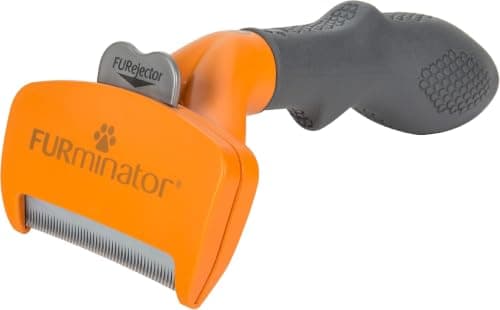
FURminator Medium Dog Undercoat deShedding Tool (Short Hair)
8.5 / 10
- Stainless deShedding edge reaches through the topcoat per FURminator
- Removes loose undercoat without cutting skin or topcoat per the maker
- FURejector button releases collected hair for quick cleanup
- Sized for medium dogs 25 to 50 lb — check the size for your pet
$33.57
Current price · checked Sep 8, 2026
Shark
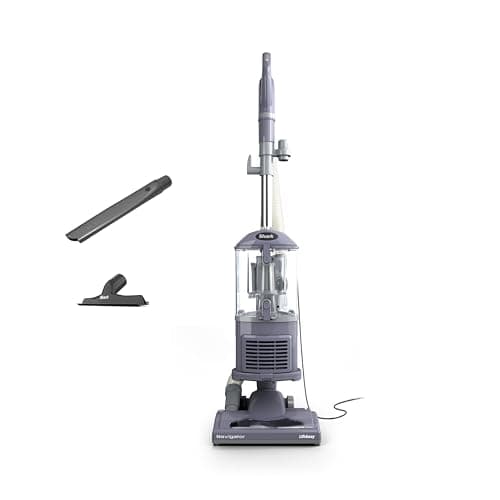
Shark Navigator Lift-Away Pet Upright (NV352)
8.6 / 10
- Sealed HEPA filter with Anti-Allergen Complete Seal per Shark
- Lift-Away pod detaches for stairs, furniture, and upholstery
- Strong pet-hair suction across carpet and hard floors
- 1.04 L dust cup and washable HEPA filter per the listing
$159.99
Current price · checked Sep 8, 2026
Allerpet
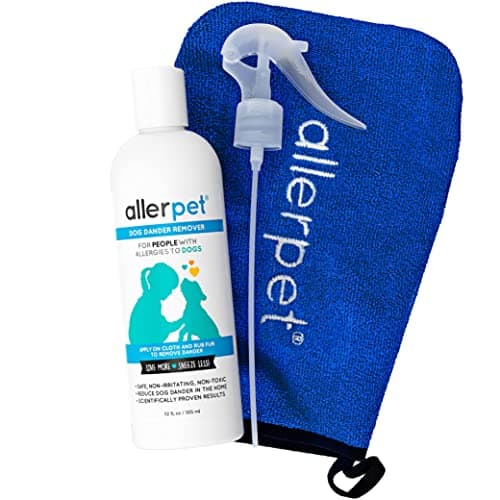
Allerpet Dog Dander Remover (with mitt & sprayer)
8.0 / 10
- Topical wipe-down applied between baths, no rinsing required per Allerpet
- Fragrance-free, non-oily solution positioned as safe and non-toxic
- Applied with an included mitt or sprayer for low-stress use
- Manufacturer positions it for weekly use to reduce dog dander
$26.99
Current price · checked Sep 8, 2026
Allerpet
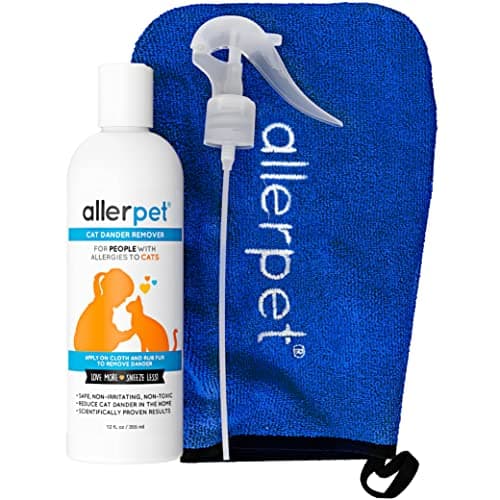
Allerpet Cat Dander Remover (aloe-vera-free)
8.0 / 10
- No-rinse wipe-down for cats between infrequent baths per Allerpet
- Aloe-vera-free, fragrance-free formula for sensitive cats
- Applied with a mitt or sprayer to lift loose dander
- Targets the saliva-spread allergen cats leave grooming themselves
$26.99
Current price · checked Sep 8, 2026
Burt's Bees for Pets
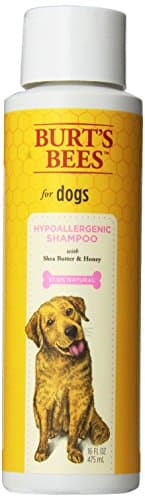
Burt's Bees for Pets Hypoallergenic Dog Shampoo (shea butter & honey)
7.9 / 10
- Fragrance-free, hypoallergenic formula for sensitive dogs per Burt's Bees
- 95% natural-origin, made without sulfates, parabens, or added dyes
- Shea butter and honey to condition rather than strip the coat
- Low-lather, pH-balanced wash for routine dog bathing
$8.92
Current price · checked Sep 8, 2026
Filtrete
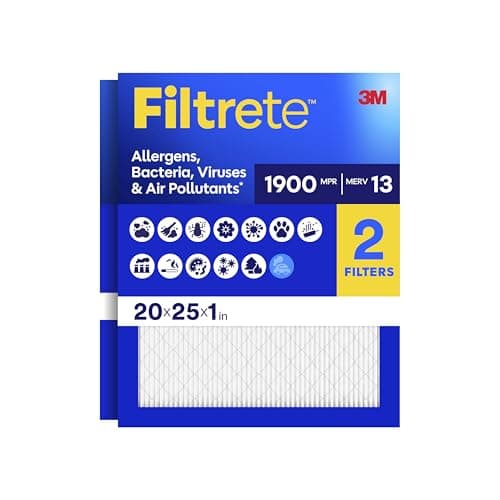
Filtrete 20x25x1 MERV 13 / MPR 1900 Allergen Filter
8.2 / 10
- MERV 13 / MPR 1900 captures fine allergen particles per Filtrete
- Certified asthma & allergy friendly, captures dust and allergens per the listing
- Whole-home capture every time the HVAC system runs
- 20x25x1 is one common size — you must match your return grille
$36.99
Current price · checked Sep 8, 2026
The Short Answer
Treat pet allergies at home as a layered reduction system, not a single purchase. Cut dander at the source first: brush the pet regularly (the FURminator deShedding tool) — ideally outdoors and ideally done by a non-allergic household member — because removing loose, dander-laden hair before it spreads does more than any downstream filter. Then control surfaces, where the largest reservoir of settled dander lives: a sealed-HEPA vacuum (the Shark Navigator Lift-Away) on floors and upholstery, plus washing pet bedding hot and keeping the pet out of the bedroom. Only then treat the air: a whole-room True HEPA purifier (the Winix 5530) in the room you use most, and a MERV 13 furnace filter (Filtrete 20x25x1) so your HVAC captures dander every time the system runs. At the animal, between baths, a wipe-down dander remover (Allerpet Dog or Cat) can knock down loose dander, and an occasional gentle, fragrance-light bath (Burt's Bees hypoallergenic shampoo) helps — though over-bathing dries the skin and can increase dander, so keep it infrequent. The major cat and dog allergen proteins are carried on dander and saliva, and they are produced constantly, which is why one device is never enough. Crucially, this whole page reduces the allergen load in your home. It does not treat allergy symptoms. If you are symptomatic, see a physician or allergist first — some people remain allergic no matter how clean the environment gets.
Every product on this list has been scored against the PetPal Gear Score, a weighted composite of expert consensus, observed effectiveness, animal safety, long-term durability, and value. Review method: Editorial synthesis of general allergy and veterinary consensus on pet allergens (dander, saliva, and the major cat and dog allergen proteins), the HEPA filtration standard, and MERV filter ratings, combined with manufacturer documentation from Winix, FURminator, Shark, Allerpet, Burt's Bees for Pets, and Filtrete. Product spec claims are drawn from current Amazon product listings. No first-hand product testing and no allergy-symptom testing — PetPalHQ does not run a lab, and only a physician or allergist can address allergy symptoms.. Synthesized from 5+ expert sources.
If you are allergic to your pet and you are keeping them anyway, this guide is written for you — and it starts with a single governing idea that the rest of the page follows. No single device fixes pet allergies: dander is produced continuously, so relief comes from stacking source, surface, and air controls, and an air purifier bought alone is the most common half-measure. That is the thesis, and it is the reason this is not another air-purifier ranking. A purifier is one layer. The dander sitting in your carpet, the dander still on the animal, and the dander your pet will shed an hour from now are three other problems a purifier never touches.
So the picks below are organized as a system, not a leaderboard. Cut the dander at its source with a FURminator deshedding routine. Pull the settled reservoir off surfaces with a sealed-HEPA vacuum like the Shark Navigator. Capture what goes airborne with a whole-room unit like the Winix 5530, and catch the rest at your furnace with a MERV 13 Filtrete filter. Between the big moves, wipe the animal down and bathe periodically — carefully, because over-bathing dries the skin and makes more dander. Each layer does a specific job the others cannot, which is exactly why owners who buy only one of them stay frustrated.
A word on the biology, kept simple and attributed to general allergy and veterinary consensus: the major cat and dog allergens — the proteins Fel d 1 and Can f 1 — are carried on dander (dead skin flakes) and saliva, not on the fur itself. That is why removing loose, dander-laden hair matters, why saliva makes cats a distinct problem from dogs, and why "hypoallergenic" breeds are not allergen-free — every dog and cat produces the protein. It is also why the two cheapest moves in this whole guide are free: keep the pet out of the bedroom, and clean more often.
One boundary sits above everything here, and it is not a hedge — it is the honest center of the guide. Everything on this page reduces the allergen load in your home. Nothing on this page treats allergy symptoms. If you are reacting — sneezing, wheezing, itching, congested — the authority is your own physician or allergist, who can tell you what you react to and offer treatments no device can replace. Some people stay allergic no matter how clean the air gets. This system makes a home more livable; it does not make a diagnosis, and it never substitutes for one.
Head-to-Head Comparison
| Feature | Winix 5530 Air Purifier (True HEPA + carbon) | FURminator Medium Dog Undercoat deShedding Tool (Short Hair) | Shark Navigator Lift-Away Pet Upright (NV352) | Allerpet Dog Dander Remover (with mitt & sprayer) | Allerpet Cat Dander Remover (aloe-vera-free) | Burt's Bees for Pets Hypoallergenic Dog Shampoo (shea butter & honey) | Filtrete 20x25x1 MERV 13 / MPR 1900 Allergen Filter |
|---|---|---|---|---|---|---|---|
| Layer in the system | Air | Source | Surface | At-animal (dog) | At-animal (cat) | Bath | HVAC / whole-home |
| What it acts on | Airborne dander in one room | Dander before it sheds | Settled dander reservoir | Loose coat dander | Saliva-borne coat allergen | Accumulated coat allergen | Dander in circulating air |
| How often to use | Run continuously | On a grooming schedule | Vacuum frequently | Weekly wipe-down | As the cat tolerates | Periodically, not often | Change on schedule |
| Can it fix allergy symptoms? | No — allergist first | No — allergist first | No — allergist first | No — allergist first | No — allergist first | No — allergist first | No — allergist first |
| Check price | Amazon | Amazon | Amazon | Amazon | Amazon | Amazon | Amazon |
$219.99
Current price · checked Sep 26, 2026
- True HEPA captures 99.99% of airborne allergens including pet dander per Winix
- Rated to clean rooms up to 1,882 sq ft in 1 hour per the listing
- Advanced carbon filter reduces the odors that travel with dander
- Washable fine-mesh pre-filter and an air-quality indicator per Winix
The air layer is the one owners buy first and lean on hardest, and it is also the one most likely to become a half-measure if it stands alone. The Winix 5530 is the right tool for the layer, used honestly. Winix documents a True HEPA filter that captures 99.99% of airborne allergens including pet dander as small as 0.01 microns, AHAM Verifide performance at 392 square feet, a one-hour clean rate for rooms up to 1,882 square feet, and an advanced carbon filter that reduces household odors. A purifier does one specific thing well: it removes allergen particles already suspended in the air of the room it sits in. That is genuinely useful — airborne dander is real, and a well-sized HEPA unit lowers it — but it does nothing for the dander settled in the carpet, the load still on the animal, or the fresh dander produced a minute from now.
Where it fits the system: put the purifier in the room where you and the pet spend the most time, size it to that room, and run it continuously rather than in bursts. Its carbon stage is a bonus for households fighting odor and dander together — the same pet that sheds dander often leaves lingering smells, and if you are also chasing set-in pet smells, pair the air layer with the permanent urine-odor removal protocol rather than expecting a purifier to solve odor at its source. The HEPA standard itself — at least 99.97% of particles at 0.3 microns, per the US EPA — is why a genuine HEPA unit outperforms a cheap "HEPA-type" filter; buy the real thing.
The honest caveats are about placement and expectation. A purifier only cleans the air of the room it is in, so one unit will not treat a whole house, and closing doors matters more than owners think. Filters are a recurring cost, and a unit run on its quietest setting moves far less air than its rating implies. Most important, an air purifier cannot lower the dander your pet is still producing or the reservoir already ground into soft surfaces — which is exactly why it is one layer here, not the answer.
What We Love
- Genuine True HEPA capture of airborne dander per Winix documentation
- Sized for a large main room and rated to cycle air quickly
- Carbon stage helps with the odors that accompany pet dander
- Air-quality indicator makes it easy to run continuously and correctly
What Could Be Better
- Only cleans the air of the single room it occupies
- Does nothing for settled dander or dander still on the animal
- Ongoing filter-replacement cost, and quiet mode moves little air
- Bought alone, it is the classic half-measure against pet allergies
The Verdict
The best-in-class version of the layer owners over-rely on. Size it to your main room and run it continuously — but treat it as the air stage of a system, not the fix. On its own it cleans a room's air while the dander source, the surface reservoir, and your HVAC go untouched.
Sources
- Winix (Amazon product listing, 5530): True HEPA captures 99.99% of airborne allergens including pollen, dust, smoke, and pet dander as small as 0.01 microns; AHAM Verifide at 392 sq ft, cleans rooms up to 1,882 sq ft in 1 hour, with an advanced odor-control carbon filter
- US EPA (What is a HEPA filter?): a true HEPA filter can remove at least 99.97% of airborne particles 0.3 microns in diameter — the standard used for high-efficiency air filtration
$33.57
Current price · checked Sep 8, 2026
- Stainless deShedding edge reaches through the topcoat per FURminator
- Removes loose undercoat without cutting skin or topcoat per the maker
- FURejector button releases collected hair for quick cleanup
- Sized for medium dogs 25 to 50 lb — check the size for your pet
Source control is the least glamorous layer and the one with the highest leverage, because every flake of dander you capture on the brush is a flake that never reaches the air, the carpet, or your airways. The Asthma and Allergy Foundation of America is clear that pet allergens come from dander, saliva, and urine rather than from hair itself — the fur is mostly a carrier. Loose, shedding undercoat is dense with that dander, so pulling it off the animal on a schedule attacks the problem upstream of every filter downstream. The FURminator's stainless deShedding edge is built to reach through the topcoat and lift that loose undercoat without cutting the coat or the skin, and the FURejector button clears the collected hair between passes.
Where it fits the system: make deshedding a routine, not an occasional cleanup. Two habits matter more than the tool itself. First, groom outdoors or in a well-ventilated space, never in the bedroom or a closed room, so the dander you dislodge leaves the house instead of resettling in it. Second, if anyone in the household is not allergic, that person should do the brushing — the act of deshedding briefly concentrates airborne dander right around the person doing it, which is the worst possible exposure for the allergic owner.
The honest caveats keep this in proportion. The tool is coat-specific: this medium, short-hair version suits dogs roughly 25 to 50 pounds, and the wrong size or coat match reduces its effect — cats and long-coated breeds need different tools entirely. Over-brushing can irritate skin, so follow the maker's cadence rather than going daily out of zeal. And deshedding reduces the dander an animal sheds; it does not stop dander production, which is continuous. It is the foundation of the system precisely because it is the cheapest, most upstream lever — not because it finishes the job.
What We Love
- Attacks the allergen at its source, upstream of every filter
- Reaches loose dander-laden undercoat per FURminator's design
- Cheap, durable, and the highest-leverage habit on this page
- FURejector button makes the routine fast enough to actually keep
What Could Be Better
- Coat- and size-specific — this version is for medium short-haired dogs
- Grooming briefly spikes airborne dander around the groomer
- Over-brushing can irritate skin if done too aggressively
- Reduces shed dander but cannot stop continuous dander production
The Verdict
The most underrated layer in the system and the one to start with. Brush on a schedule, do it outdoors, and hand the tool to a non-allergic household member if you have one. Match the version to your pet's size and coat — this one is for medium short-haired dogs, not cats or long coats.
Sources
- FURminator (Amazon product listing, Medium Short Hair): stainless steel deShedding edge reaches through the topcoat to remove loose hair and undercoat without damaging the topcoat or cutting skin; sized for medium dogs 25 to 50 pounds
- Asthma and Allergy Foundation of America (Pet Allergy): pet allergens come from an animal's dander (dead skin flakes), saliva, and urine — not from the fur itself, which is why removing loose dander-laden hair reduces the allergen shed into the home
$159.99
Current price · checked Sep 8, 2026
- Sealed HEPA filter with Anti-Allergen Complete Seal per Shark
- Lift-Away pod detaches for stairs, furniture, and upholstery
- Strong pet-hair suction across carpet and hard floors
- 1.04 L dust cup and washable HEPA filter per the listing
Surfaces hold the largest hidden reservoir of dander in most homes, and the air layer never touches it. Carpet, rugs, upholstery, and pet beds accumulate settled dander that re-suspends into the air every time someone walks across the room or the dog jumps on the couch — which is why the American College of Allergy, Asthma & Immunology pairs frequent cleaning with a HEPA-filtered vacuum in its pet-allergy guidance. The Shark Navigator Lift-Away pairs strong multi-surface suction with a HEPA filter and what Shark calls an Anti-Allergen Complete Seal, so the fine dander it lifts stays trapped inside the machine rather than blowing out the exhaust — the single most important feature in an allergy vacuum. Its Lift-Away pod detaches to reach the stairs, sofa cushions, and pet beds where dander concentrates.
Where it fits the system: vacuum on a real schedule — soft surfaces and pet zones first, and slowly, because dander sits deeper than surface hair and a fast pass leaves most of it behind. The sealed HEPA path is what separates an allergy vacuum from an ordinary one; a vacuum without a good seal can measurably worsen airborne allergen by aerosolizing what it disturbs. Because dander and pet odor collect in the same soft surfaces, this is also the natural place to layer in odor work — the settled reservoir this vacuum clears is the same one behind lingering pet smell. Households weighing extraction power, sealed filtration, and price across the category can compare more options in the best pet hair vacuums before committing.
The honest caveats are about effort and limits. A vacuum only helps as often as you run it, and allergen reduction on surfaces is a maintenance habit, not a one-time clean. The washable HEPA filter needs regular rinsing and full drying, or performance and seal integrity fall off. Hard floors trap less dander than carpet but still need frequent passes. And no vacuum reaches airborne dander in real time or the dander still on the animal — it clears the reservoir the other layers keep refilling.
What We Love
- Sealed HEPA path keeps captured dander inside the machine per Shark
- Lift-Away pod reaches upholstery, stairs, and pet beds
- Strong pet-hair pickup across carpet and hard floors
- Washable HEPA filter and a large dust cup for long sessions
What Could Be Better
- Only reduces allergen as often as you actually vacuum
- Washable filter must be fully dried or the seal underperforms
- Corded upright is heavier to maneuver than a stick vacuum
- Clears the settled reservoir but not airborne or on-animal dander
The Verdict
The surface layer done right: a sealed HEPA path is what makes an allergy vacuum worth owning, and this one has it at a fair price. Vacuum soft surfaces and pet zones slowly and often — a fast pass leaves the deep dander behind. It clears the reservoir the other layers keep refilling.
Sources
- Shark (Amazon product listing, Navigator Lift-Away NV352): HEPA filter with Anti-Allergen Complete Seal traps dust and allergens inside the vacuum; Lift-Away pod detaches for stairs, furniture, and upholstery; 1.04 L dust cup
- American College of Allergy, Asthma & Immunology (Pet Allergy): allergists advise cleaning frequently and using a vacuum with a HEPA filter, since pet allergens settle in carpets, upholstery, and bedding and re-suspend into the air with activity
$26.99
Current price · checked Sep 8, 2026
- Topical wipe-down applied between baths, no rinsing required per Allerpet
- Fragrance-free, non-oily solution positioned as safe and non-toxic
- Applied with an included mitt or sprayer for low-stress use
- Manufacturer positions it for weekly use to reduce dog dander
Between the source layer (brushing) and the bath layer sits a gentler, more frequent option: wiping the animal down to lift loose dander without water. Allerpet Dog is a topical, no-rinse solution the manufacturer positions to bind and remove loose dander and "hitchhiking" allergens like pollen from a dog's coat between baths, applied with an included mitt or sprayer. The appeal is cadence — you can use it far more often than you would bathe a dog, and it is fragrance-free and non-oily by the maker's description, so it fits into a weekly routine without drying the coat the way frequent shampooing can.
Where it fits the system: treat it as the in-between-baths maintenance step for the animal itself, layered on top of regular deshedding, not as a replacement for either brushing or cleaning the home. Apply it with the mitt for a calm, back-rub-style routine — spray onto the mitt first, per Allerpet, never directly onto the dog — and pay attention to the areas the maker flags. Like the FURminator, it is best handled by a non-allergic household member when one is available, since working close to the coat raises exposure briefly.
The honest caveats matter, and this is where allergist-first honesty is essential. This is a manufacturer-positioned dander wipe, and PetPalHQ does not make efficacy claims for it — it can help lift loose dander from the coat, but it is one maintenance step in a system, not a treatment for your allergy. Response varies, some dogs dislike being wiped down, and any product applied to the coat should be introduced cautiously on a dog with sensitive or broken skin. Most important, no at-the-animal product reduces your symptoms; if you are reacting, that is a conversation with your physician or allergist, not a bottle. Used as a frequent, gentle maintenance layer, it earns a modest place — no more.
What We Love
- Usable far more often than bathing, so dander stays knocked down
- Fragrance-free, no-rinse application fits a weekly routine
- Mitt makes it a low-stress, back-rub-style habit for most dogs
- Complements brushing rather than replacing it
What Could Be Better
- Manufacturer-positioned dander wipe — not a proven allergy treatment
- Response varies and some dogs resist being wiped down
- Applying it briefly raises the groomer's dander exposure
- Introduce cautiously on dogs with sensitive or broken skin
The Verdict
A reasonable between-baths maintenance layer for the animal, used weekly and honestly. It can lift loose dander from the coat, but it is not a treatment and it does not touch your symptoms — hand it to a non-allergic household member if you can, and keep your expectations at 'one small step.'
$26.99
Current price · checked Sep 8, 2026
- No-rinse wipe-down for cats between infrequent baths per Allerpet
- Aloe-vera-free, fragrance-free formula for sensitive cats
- Applied with a mitt or sprayer to lift loose dander
- Targets the saliva-spread allergen cats leave grooming themselves
Cats are a distinct allergen problem from dogs, and the difference is saliva. A cat grooms itself constantly, spreading saliva-borne allergen across its coat, and the major cat allergen protein, Fel d 1 — per the allergy and veterinary consensus — is carried on that saliva and the dander it dries onto. Cats also bathe far less often than dogs and tolerate water poorly, which removes the shampoo layer for most households. That leaves the no-rinse wipe-down as one of the few at-the-animal tools available. Allerpet Cat is an aloe-vera-free, fragrance-free version positioned to lift loose dander and hitchhiking allergens from the coat, applied with a mitt or sprayer without the stress of a bath.
Where it fits the system: for a cat, this often does the job the bath layer does for a dog, since a full feline bath is rarely practical or welcome. Use the mitt for a calm, grooming-style application on a tolerant cat, spraying onto the mitt rather than the animal, and layer it on top of the home controls — vacuuming, air, and bedroom exclusion — that do the heavier lifting for cat allergen. As with the dog version, a non-allergic household member is the better applicator.
The honest caveats are the same and then some. This is a manufacturer-positioned wipe, not an allergy treatment, and PetPalHQ makes no efficacy claim for it — cat allergen is famously persistent and clings to walls, fabric, and surfaces long after the cat leaves a room, so at-the-animal wiping is a modest contribution to a much larger cleaning effort. Many cats simply will not tolerate being wiped down, and forcing it trades a little dander for a lot of stress. And nothing applied to the cat treats your reaction. For a cooperative cat in a household doing the surface and air work, it is a sensible small layer; for a cat that hates it, skip it and lean harder on the home controls.
What We Love
- One of the few practical at-the-animal tools for cats
- No-rinse, fragrance-free application avoids the stress of a bath
- Targets saliva-spread coat allergen that cats constantly renew
- Layers onto the home controls that do most of the work
What Could Be Better
- Manufacturer-positioned wipe — not a proven allergy treatment
- Many cats will not tolerate being wiped down at all
- Cat allergen is persistent and clings to surfaces regardless
- Does nothing for your symptoms — home controls carry more weight
The Verdict
The cat equivalent of the bath layer, since bathing a cat is rarely realistic. Use it on a tolerant cat as a small maintenance step and put your real effort into vacuuming, air control, and keeping the cat out of the bedroom. If the cat hates it, don't fight — lean on the home controls instead.
$8.92
Current price · checked Sep 8, 2026
- Fragrance-free, hypoallergenic formula for sensitive dogs per Burt's Bees
- 95% natural-origin, made without sulfates, parabens, or added dyes
- Shea butter and honey to condition rather than strip the coat
- Low-lather, pH-balanced wash for routine dog bathing
A periodic bath rinses loose dander and allergen off the coat directly, and for dogs it is a genuine layer — but it is also the layer most easily overdone, and the caveat is as important as the product. Burt's Bees for Pets Hypoallergenic is a fragrance-free, 95% natural-origin shampoo formulated without sulfates, parabens, or added dyes, with shea butter and honey to condition rather than strip. The fragrance-light, gentle formulation is the point for an allergy household: heavily scented shampoos add irritants, and harsh detergents dry the skin — and dry skin is exactly what produces more dander.
Where it fits the system: bathe periodically, not frequently, and choose gentleness over strength. A wash every few weeks can rinse away accumulated coat allergen, and pairing it with regular deshedding keeps the coat's dander load down between baths. Because the aim here is a skin-friendly, low-irritant wash rather than a specialty medicated treatment, this sits alongside other gentle options — owners managing genuinely sensitive or itchy skin can compare formulations in hypoallergenic and sensitive-skin shampoos before settling on one.
The honest caveat is the load-bearing one: over-bathing is counterproductive and can make pet allergies at home worse, not better. Washing a dog too often strips the skin's natural oils, dries it out, and increases dander production — the precise opposite of the goal. Frequency, not shampoo choice, is where most owners go wrong. This is also a dog product; do not use it to bathe a cat, whose skin chemistry and bathing needs differ entirely. And a bath is a periodic reset, not a continuous control — dander returns as the coat renews, which is why the bath supports the everyday layers rather than replacing them.
What We Love
- Fragrance-light, low-irritant formula suits an allergy household
- Conditioning ingredients help avoid the dry skin that drives dander
- Inexpensive and gentle enough for routine, careful use
- Rinses accumulated coat allergen off directly when used periodically
What Could Be Better
- Over-bathing dries the skin and can increase dander — a real risk
- A dog product — not for bathing cats
- A periodic reset only; dander returns as the coat renews
- Does not address settled home dander or your allergy symptoms
The Verdict
A gentle, cheap bath layer that works only if you resist overdoing it — wash periodically, not weekly, because frequent bathing dries the skin and makes dander worse. Keep it to dogs, pair it with deshedding, and treat the bath as a reset, not a routine.
$36.99
Current price · checked Sep 8, 2026
- MERV 13 / MPR 1900 captures fine allergen particles per Filtrete
- Certified asthma & allergy friendly, captures dust and allergens per the listing
- Whole-home capture every time the HVAC system runs
- 20x25x1 is one common size — you must match your return grille
The layer owners forget is the one already running in their walls. Every time a forced-air HVAC system cycles, it pulls household air — and the dander suspended in it — through a filter, which makes the filter a whole-home allergen-capture opportunity that costs nothing extra to run. A standard cheap filter is built mainly to protect the equipment and catches little fine dander. The Filtrete 20x25x1 MERV 13 (MPR 1900) is rated to capture finer particles, including allergens, and the listing notes it is certified asthma and allergy friendly. Where a room purifier cleans one room, the HVAC filter works on the whole house whenever the system runs — a genuinely complementary layer rather than a competing one.
Where it fits the system: upgrade the furnace filter to a higher-MERV allergen filter and, critically, change it on schedule — Filtrete's 90-day guidance is a ceiling, and a pet household with heavy dander often needs to change it sooner as it loads up. Run the system's fan periodically even when not heating or cooling, so the filter keeps working between cycles. This is the quiet backbone under the room-by-room air layer.
The honest caveats are practical and non-negotiable. First, size: 20x25x1 is one common size, but filters are not universal — you must match the exact dimensions of your own return grille or furnace, or the filter will not seal and will leak unfiltered air around the edges. Check before buying. Second, airflow: a higher-MERV filter is denser, and higher MERV can strain some older or lower-powered HVAC blowers, reducing airflow and efficiency. Check your system's rating and manufacturer guidance before jumping to MERV 13 — if your blower cannot handle it, a slightly lower MERV that your system tolerates beats a high-MERV filter that chokes it. Used within your system's limits and changed often, it is the cheapest whole-home layer here.
What We Love
- Captures fine allergen particles a basic filter misses per Filtrete
- Whole-home capture every time the HVAC runs — no extra running cost
- Certified asthma & allergy friendly per the listing
- Complements, rather than duplicates, the room purifier
What Could Be Better
- You must match your grille's exact size — 20x25x1 is not universal
- Higher MERV can strain older or weaker HVAC blowers
- Needs changing more often than 90 days in a heavy-dander home
- Only works while the system's fan is actually running
The Verdict
The cheap whole-home layer most owners overlook — a higher-MERV filter turns your existing HVAC into an allergen catcher. Two honest checks first: match your grille's exact size, and confirm your system can handle MERV 13 before you jump. Change it often; a pet home loads a filter fast.
How We Score
Formula
PetPal Gear Score = (Expert Consensus × 0.35) + (Allergen-Reduction Fit × 0.25) + (Safety / Everyday Practicality × 0.20) + (Value × 0.20)
Score Factors
- Expert Consensus · 35%
- Synthesized from general allergy and veterinary consensus on pet allergens, the HEPA filtration standard, MERV filter ratings, and manufacturer documentation. The PetPal Gear Score is a composite of expert opinion and product specification — PetPalHQ does not run a lab, and this score reflects allergen-load reduction at home, never allergy-symptom relief.
- Allergen-Reduction Fit · 25%
- How well the item advances one clear layer of the source-to-air system — cutting dander at the source, clearing the settled reservoir, capturing airborne particles, or filtering circulating air — rather than how it performs as a standalone gadget.
- Safety / Everyday Practicality · 20%
- Whether the item is safe and gentle for the pet, honest about its limits (over-bathing, filter sizing, HVAC strain), and realistic to use often enough to matter — a control only works if the household actually keeps it up.
- Value · 20%
- Cost relative to the layer's contribution, including consumables (filters, shampoo, dander solution) weighed against how much of the household allergen load the item actually removes.
| Rank | Product | Score |
|---|---|---|
| #1 | Winix Winix 5530 Air Purifier (True HEPA + carbon) | 8.8 |
| #2 | Shark Shark Navigator Lift-Away Pet Upright (NV352) | 8.6 |
| #3 | FURminator FURminator Medium Dog Undercoat deShedding Tool (Short Hair) | 8.5 |
| #4 | Filtrete Filtrete 20x25x1 MERV 13 / MPR 1900 Allergen Filter | 8.2 |
| #5 | Allerpet Allerpet Dog Dander Remover (with mitt & sprayer) | 8.0 |
| #6 | Allerpet Allerpet Cat Dander Remover (aloe-vera-free) | 8.0 |
| #7 | Burt's Bees for Pets Burt's Bees for Pets Hypoallergenic Dog Shampoo (shea butter & honey) | 7.9 |
When NOT to Buy
Before you buy a single item on this page, be honest about what it can and cannot do. This whole toolkit reduces the allergen load in your home. It does not treat allergy symptoms. If you are sneezing, wheezing, congested, itchy-eyed, or short of breath around your pet, that is a medical question, and your physician or allergist is the authority — not a shopping list. See an allergist for symptoms first; they can confirm what you actually react to, and offer treatments (medication, immunotherapy) that no device on this page can substitute for. Cleaning the air and the surfaces makes a home more livable, but it is not a diagnosis and it is not a treatment.
Accept, too, that a severe allergy may not be solvable by load reduction alone. For some people the reaction is strong enough that even a diligently maintained, low-dander home is not enough — and the major cat and dog allergen proteins are persistent, clinging to walls, fabric, and surfaces long after cleaning. If your symptoms stay serious despite doing everything here, that is important information to bring to your allergist, not a reason to keep buying more gadgets. "Hypoallergenic" breeds are not allergen-free either; the consensus is that no breed reliably avoids producing the allergen, so do not treat a breed choice as a solution.
And do not buy gadgets before trying the free moves. The two highest-leverage steps cost nothing: exclude the pet from the bedroom so you get eight allergen-reduced hours a night, and clean more — vacuum soft surfaces often and wash pet bedding in hot water. Start there. If you still need to layer in equipment after that, this system tells you which layer does what — and confirm current price and availability before buying any item here, since listings and bundles move over time.
Frequently Asked Questions
- Are hypoallergenic dog and cat breeds actually safe for allergic owners?
- Not reliably, no. The consensus among allergy and veterinary sources is that no breed is truly allergen-free, because the allergen is a protein in dander and saliva that every dog and cat produces — it is not about hair length or shedding. Some breeds may shed less loose hair, which can mean less dander distributed around the house, and an individual allergic person might tolerate one animal better than another. But "hypoallergenic" is a marketing comfort, not a guarantee, and people have reacted strongly to so-called hypoallergenic breeds. If you are considering a specific animal, the honest test is to spend meaningful time around that individual pet before committing, and to talk to your allergist — not to trust the label.
- What is the single most effective thing I can do, and does it cost anything?
- Two free moves outrank any purchase: exclude the pet from the bedroom, and clean more. You spend roughly a third of your life asleep, so making the bedroom a lower-allergen zone — pet kept out, door closed, bedding washed regularly — buys you eight recovered hours a night, which owners consistently report as the biggest single change. Paired with frequent vacuuming of soft surfaces and hot-washing pet bedding, that costs nothing and attacks the reservoir directly. Only after those habits are in place does equipment earn its keep. If you are about to spend money before trying bedroom exclusion and a real cleaning routine, spend the effort first — it is cheaper and often more effective than the gear.
- How often should I deshed and bathe without making things worse?
- Deshed on a regular schedule — many dogs do well with a few sessions a week during heavy shedding, following FURminator's guidance for the coat and size, and always in a ventilated space or outdoors. Bathing is the opposite: less is more. Over-bathing strips the skin's natural oils, dries it out, and increases dander production, which defeats the purpose — so keep baths periodic (often every few weeks at most for dogs) rather than frequent, and use a gentle, fragrance-light shampoo. Cats are a separate case: most should not be bathed routinely at all, so lean on wipe-downs and home cleaning for them instead. The rule of thumb: brush often, bathe seldom, and let a non-allergic household member handle the grooming when you have one.
- Should I wash pet bedding, and does the water temperature matter?
- Yes, and yes. Pet beds, blankets, and any washable covers are dense allergen reservoirs that re-suspend dander every time the animal settles in. Washing them regularly is one of the higher-value cleaning habits, and hot water is more effective than cold at removing allergen from fabric — the same reasoning allergists apply to washing human bedding in a dust-mite-sensitive household. Follow each item's care label so you do not ruin it, but default to the hottest wash the fabric safely allows and wash on a routine, not just when it looks dirty. The same logic extends to your own bedding if the pet has ever slept on it, which is another argument for keeping them off the bed entirely.
- When do I stop buying equipment and see an allergist instead?
- Sooner than most people do. If you have symptoms — not just a dusty house, but actual sneezing, congestion, itchy or watering eyes, wheezing, or shortness of breath around your pet — an allergist should be part of the plan from the start, not a last resort after the gadgets fail. The equipment on this page reduces how much allergen is in your home, which genuinely helps, but it cannot diagnose what you react to and cannot treat the reaction. An allergist can confirm the trigger and offer medication or immunotherapy that no filter can replace. And if you are doing everything here diligently and still struggling, that is a clear signal to stop adding devices and get medical guidance — a severe allergy may simply not be solvable by home load reduction alone.
Bottom Line
No single device fixes pet allergies. Dander is produced continuously, so buy the layers as a system — source, surface, air, and HVAC — and understand that an air purifier bought alone is the most common and most disappointing half-measure.
Start upstream and cheap. Deshedding with the FURminator (outdoors, ideally by a non-allergic person) cuts dander before it spreads, and it beats any downstream filter for leverage. Then clear the settled reservoir with the sealed-HEPA Shark vacuum, run slowly and often.
Treat the air on two scales: a whole-room Winix True HEPA unit in the room you use most, and a MERV 13 Filtrete filter so your HVAC captures dander whenever it runs — but match your grille size and confirm your system can handle MERV 13 first.
At the animal, Allerpet wipe-downs (dog or cat) and an occasional gentle Burt's Bees bath help between the bigger controls — but never over-bathe, since dry skin makes more dander, and none of these are treatments for your symptoms.
This page lowers the allergen load in your home; it does not treat allergies. See an allergist for symptoms, try bedroom exclusion and more cleaning before spending, and remember some people stay allergic no matter how clean the air gets.
Sources & Methodology
Methodology
PetPal Gear Score = (Expert Consensus × 0.35) + (Allergen-Reduction Fit × 0.25) + (Safety / Everyday Practicality × 0.20) + (Value × 0.20)
Expert review sources
- General allergy and veterinary consensus on pet allergens — dander, saliva, and the major cat (Fel d 1) and dog (Can f 1) allergen proteins
- US Environmental Protection Agency — What is a HEPA filter? (HEPA standard: ≥99.97% of 0.3-micron particles)
- Asthma and Allergy Foundation of America — Pet (Dog and Cat) Allergies
- American College of Allergy, Asthma & Immunology — Pet Allergy guidance
- MERV filtration standard and manufacturer HVAC guidance on filter ratings and airflow
- Manufacturer documentation — Winix, FURminator, Shark, Allerpet, Burt's Bees for Pets, and Filtrete product listings
Community sources
- Pet-owner and allergy-community consensus on bedroom exclusion, hot-washing pet bedding, and frequent HEPA vacuuming as first moves
Prices and specs verified July 11, 2026.
About the author
Nick Miles is the chief editor of PetPalHQ. This allergen-reduction protocol and its toolkit are editorial synthesis of general allergy and veterinary consensus on pet dander, the HEPA and MERV filtration standards, and manufacturer documentation — PetPalHQ does not run a lab and does not test for allergy relief. The PetPal Gear Score reflects household allergen-load reduction, not symptom relief, which is a matter for your physician or allergist. Product spec claims are drawn from current retail listings and cited throughout.
PetPalHQ is a participant in the Amazon Services LLC Associates Program. We may earn commissions from qualifying purchases — at no extra cost to you.
More Guides
Cats & Dogs
How to Get Rid of Dog & Cat Urine Smell Permanently (2026)
Cats & Dogs
Best Vacuums for Pet Hair in a Real Shedding Household (2026)
Cats & Dogs
Best Hypoallergenic & Sensitive-Skin Shampoos for Dogs and Cats (2026)
Cats & Dogs
Best Pet Grooming Vacuum Kits 2026: Deshed and Clip Without the Fur Cloud
Cats & Dogs
Best Pet Odor Removers and Enzyme Cleaners (2026)
Cats & Dogs