Cats & Dogs
How to Get Rid of Dog & Cat Urine Smell Permanently (2026)
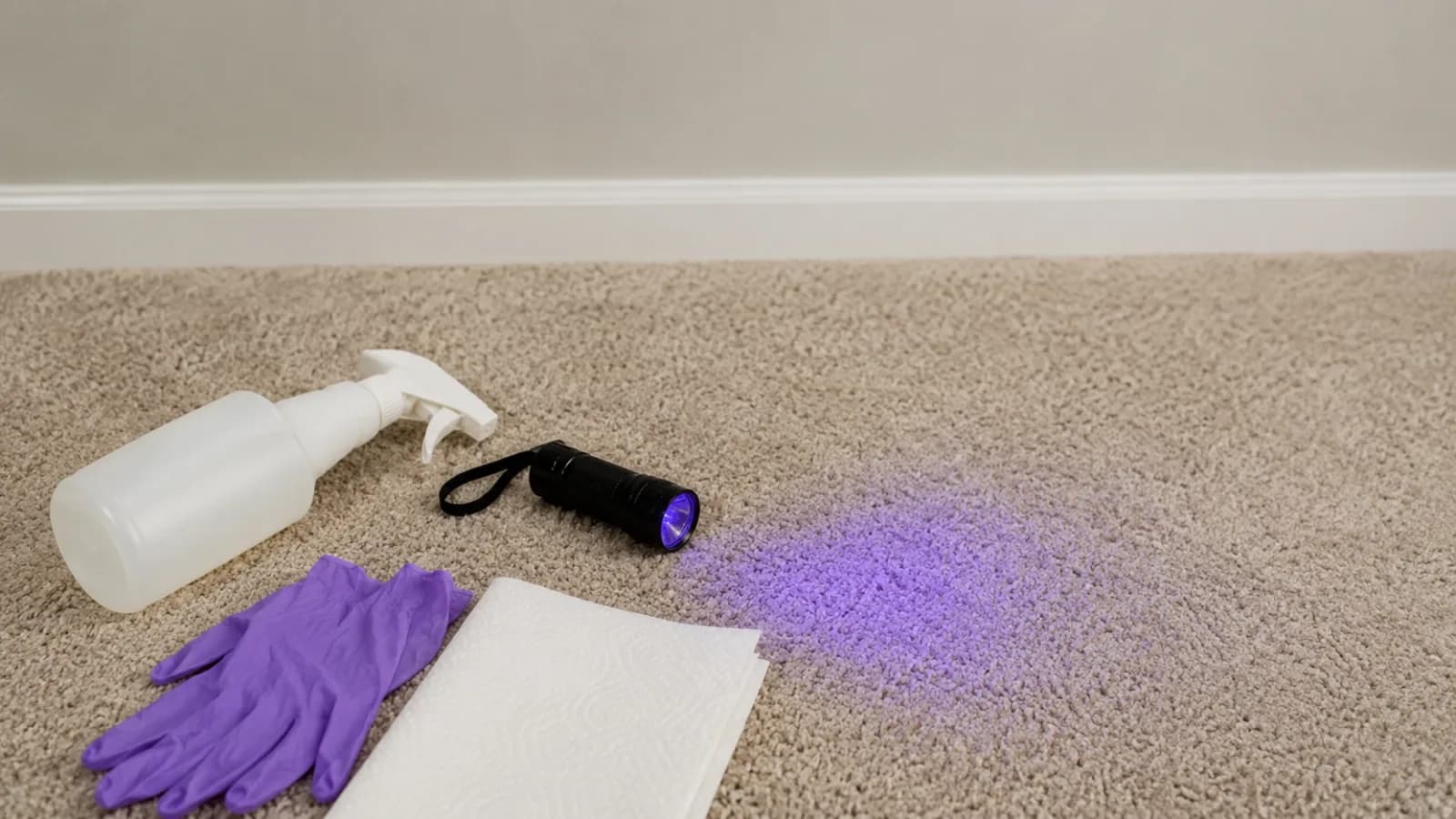
This is not a product roundup — it is the removal protocol. Odor that keeps coming back was never fully removed: ordinary soaps lift the visible mess but leave the uric acid crystals a cat's or dog's nose still reads as a bathroom. Permanent removal means finding every deposit under a UV light, breaking down the uric acid with enzymes at each site, extracting what soaked into carpet and pad, and only then layering scent. If the soiling is sudden or spreading, stop cleaning and call your veterinarian — ASPCA, Cornell, and the Merck Veterinary Manual all treat house-soiling as a medical workup first.
By Nick Miles · Updated August 7, 2026 · 13 min read
PetPalHQ is reader-supported. We may earn a commission from qualifying Amazon purchases at no extra cost to you.
Evidence at a Glance
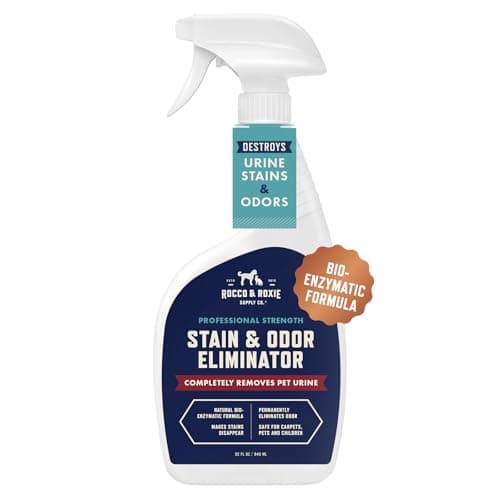
Rocco & Roxie Supply Co. Stain & Odor Eliminator
The enzyme workhorse of the protocol — an enzymatic cleaner that digests the urine proteins and uric acid crystals ordinary soaps leave behind, usable on carpets, floors, furniture, and litter boxes, and certified safe for all carpets by the Carpet and Rug Institute per the listing.
Sources: Rocco & Roxie Supply Co. manufacturer documentation, ASPCA house-soiling and stain-removal guidance, Cornell Feline Health Center
Verified Jul 11, 2026
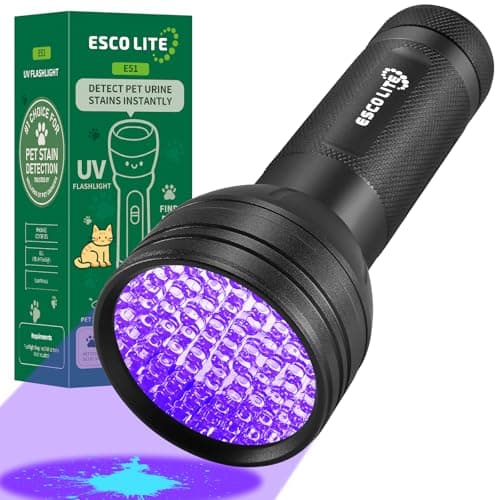
ESCO LITE UV Flashlight 395nm
The step almost everyone skips — a 395nm blacklight that makes dried urine salts fluoresce in a dark room, so you neutralize every deposit instead of the few you can see. You cannot break down a stain you never found.
Sources: ESCO LITE manufacturer documentation, ASPCA house-soiling guidance, cleaning-science consensus
Verified Jul 11, 2026
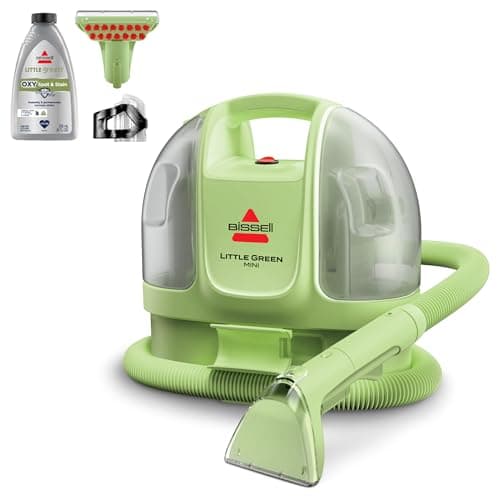
BISSELL Little Green Mini Portable Deep Cleaner
For urine that soaked into carpet and pad, extraction beats any spray — spray, scrub, and suction pulls the softened deposit out rather than driving it deeper, which is what set-in odor needs after the enzyme.
Sources: Bissell manufacturer documentation, ASPCA stain-removal guidance, Merck Veterinary Manual
Verified Jul 11, 2026
Our Picks
Rocco & Roxie Supply Co.
Rocco & Roxie Supply Co. Stain & Odor Eliminator 32 oz
8.9 / 10
- Enzymatic formula digests urine proteins and residue, not just the visible stain
- Rated for carpets, floors, furniture, clothing, litter boxes, and kennels per the listing
- Chlorine-free and color-safe, with a Carpet and Rug Institute Seal of Approval per Rocco & Roxie
- 32 oz sprayer sized for whole-room, repeat cleanups
$23.92
Current price · checked Sep 8, 2026
Nature's Miracle
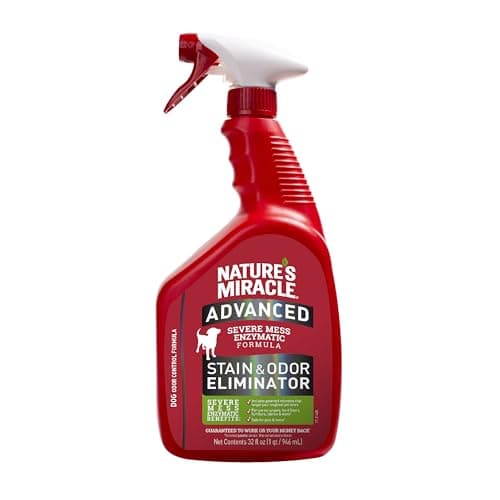
Nature's Miracle Advanced Stain & Odor Eliminator Dog 32 oz
8.4 / 10
- Severe-mess enzymatic formula aimed at the toughest dog urine, diarrhea, and vomit per the listing
- Documented to keep working as long as bio-based mess remains
- Light fresh scent to leave the treated area smelling clean
- Positioned to discourage resoiling by removing the odor that draws a dog back
$13.57
Current price · checked Sep 8, 2026
ESCO LITE
ESCO LITE UV Flashlight Black Light 51 LED (395nm)
8.6 / 10
- 395nm UV-A blacklight makes dried urine salts fluoresce per the listing
- 51-LED beam covers a wide area to sweep a room efficiently
- Effective on dry urine — the deposits an owner cannot see or smell in daylight
- Pocket-sized aluminum body; runs on 3 AA batteries per the listing
$12.99
Current price · checked Sep 8, 2026
Bissell
BISSELL Little Green Mini Portable Carpet & Upholstery Deep Cleaner
8.5 / 10
- Spray, scrub, and suction pulls softened deposits out of carpet and upholstery
- Handles car interiors, pet beds, and furniture, not just floors, per the listing
- Compact and cabinet-storable for repeat spot treatment
- Includes a tough-stain tool and self-cleaning hose tool per Bissell
$88.99
Current price · checked Sep 8, 2026
ANGRY ORANGE
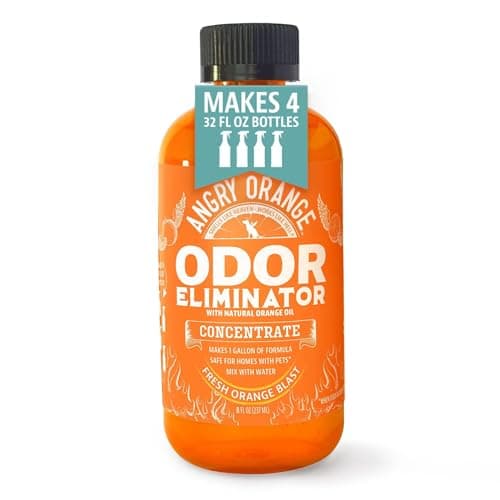
Angry Orange Pet Odor Eliminator 8 oz Concentrate
7.8 / 10
- Citrus concentrate — 8 oz makes roughly a gallon of finished spray per the listing
- Multi-surface on carpet, tile, upholstery, and car interiors
- Leaves a lingering citrus scent as a finishing layer
- Directions call for removing pets and cleaning the mess first, per the listing
$24.89
Current price · checked Sep 8, 2026
SafeRest
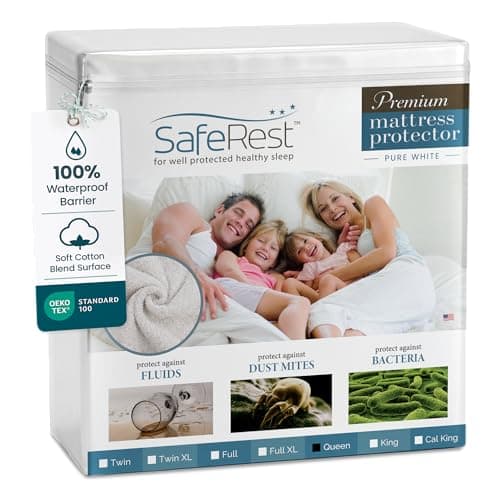
SafeRest Waterproof Queen Mattress Protector
8.2 / 10
- Waterproof barrier that blocks urine and fluids from reaching the mattress per the listing
- Cotton-blend top described as quiet and breathable for comfortable sleep
- Fitted with stretchable pockets to stay put on the mattress
- Machine washable for repeat cleanup during retraining
$39.99
Current price · checked Sep 8, 2026
Levoit
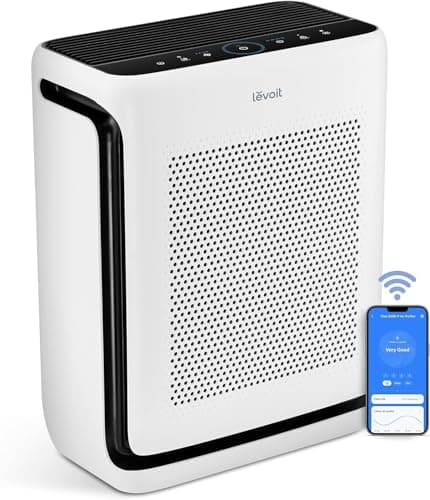
LEVOIT Vital 200S Air Purifier
8.3 / 10
- Rated for large rooms up to 1875 ft² per the listing
- Washable pre-filter traps airborne pet hair and larger particles
- HEPA-grade filtration for fine dander and particulates per Levoit
- AHAM Verifide with an air-quality monitor and auto mode
$169.95
Current price · checked Sep 26, 2026
The Short Answer
Permanent removal is a sequence, not a single spray. First find every deposit: dried urine salts fluoresce under a 395nm UV blacklight in a dark room, so an ESCO LITE UV flashlight turns invisible history into a map before you clean anything. Then break down the uric acid at each site — enzymatic cleaners digest the urine proteins and crystals that ordinary soaps and ammonia-based cleaners leave behind, so a workhorse enzyme like Rocco & Roxie handles most surfaces and a severe-mess formula like Nature's Miracle Advanced Dog carries the worst dog accidents. Saturate as deeply as the urine went, and let it dwell. For urine that soaked into carpet and pad, extraction matters more than any spray: a BISSELL Little Green Mini flushes and pulls the deposit out instead of driving it deeper. Only after the enzyme has done its work do you add a citrus scent layer like Angry Orange — as a finish and a deterrent, never as the fix. Protect the bed during retraining with a SafeRest waterproof protector, and clear the airborne layer with a LEVOIT Vital 200S. One rule sits above all of it: sudden or spreading house-soiling is a medical question first. ASPCA, the Cornell Feline Health Center, and the Merck Veterinary Manual all treat house-soiling as a medical and behavioral workup before a cleaning decision, and no cleaner rescues a subfloor the urine has already soaked through.
Every product on this list has been scored against the PetPal Gear Score, a weighted composite of expert consensus, observed effectiveness, animal safety, long-term durability, and value. Review method: Editorial synthesis of veterinary and welfare guidance — ASPCA house-soiling and stain-removal guidance, the Cornell Feline Health Center, and the Merck Veterinary Manual — alongside manufacturer documentation from Rocco & Roxie Supply Co., Nature's Miracle, ESCO LITE, Bissell, Angry Orange, SafeRest, and Levoit. Community consensus from cleaning and pet-owner forums was treated as consensus, not quotation. No first-hand product testing — PetPalHQ does not run a testing lab.. Synthesized from 4+ expert sources.
Pet urine odor that "keeps coming back" was, in this guide's editorial judgment, never fully removed in the first place. That is the single thesis under everything below: permanent removal means breaking down the uric acid at every site, not masking the smell above it. When an owner cleans a spot, walks away satisfied, and smells it again a few humid days later, the deposit did not return — it never left. Ordinary soaps and ammonia-based cleaners lift the visible stain and the surface moisture, but they leave behind the uric acid crystals and urine proteins that a dog's or cat's nose reads as a marked bathroom. Ammonia is worse than neutral here: it smells urine-like to the animal, which can actively invite a repeat at the very spot you just "cleaned."
Because the deposit is the problem, the cure is a sequence, not a spray. It starts with finding what you cannot see. Dried urine salts fluoresce under a 395nm UV blacklight, so the first move — before any cleaner comes out — is to darken the room and sweep for the deposits an owner otherwise treats blind, marking each glowing spot. Then comes the chemistry that actually removes odor: an enzymatic cleaner like Rocco & Roxie or Nature's Miracle, saturated as deeply as the urine soaked and given real dwell time, digests the proteins and crystals the smell lives in. Where urine went past the carpet face into the backing and pad, extraction pulls the softened deposit out instead of a paper towel smearing it around. Only after the deposit is gone does scent have any honest role — as a finishing layer and a mild deterrent, never as a cover.
The picks on this page are that kit, arranged as a protocol rather than a ranking of interchangeable sprays: a UV locator, a workhorse enzyme and a dog-specific severe-mess enzyme, a portable extractor for set-in carpet, a citrus finish, a mattress protector for the surface you cannot deep-clean, and an air purifier for the airborne layer. Each earns its place by the job it does in the sequence, and each is described with its limits stated plainly. Everything here is editorial synthesis of veterinary and welfare guidance and manufacturer documentation — PetPalHQ does not run a testing lab, and where a source points one way, it is named rather than asserted.
One rule sits above the whole method. Sudden or spreading house-soiling in a previously reliable pet is a medical signal first. The ASPCA, the Cornell Feline Health Center, and the Merck Veterinary Manual all treat inappropriate elimination as a medical and behavioral workup before a cleaning decision — it can point to urinary tract disease, cystitis, diabetes, kidney disease, or pain in an older animal. A perfect cleanup does not diagnose any of that. If the soiling is new, start with the veterinarian, then come back and remove what is already there.
Head-to-Head Comparison
| Feature | Rocco & Roxie Supply Co. Stain & Odor Eliminator 32 oz | Nature's Miracle Advanced Stain & Odor Eliminator Dog 32 oz | ESCO LITE UV Flashlight Black Light 51 LED (395nm) | BISSELL Little Green Mini Portable Carpet & Upholstery Deep Cleaner | Angry Orange Pet Odor Eliminator 8 oz Concentrate | SafeRest Waterproof Queen Mattress Protector | LEVOIT Vital 200S Air Purifier |
|---|---|---|---|---|---|---|---|
| Role in removal | Enzyme workhorse | Dog severe-mess enzyme | Find every spot | Set-in extraction | Scent layer, not the fix | Protect the bed | Airborne finish |
| When to use it | After UV, on every spot | Big or soaked dog messes | First, before cleaning | After enzyme, if soaked in | Last, over cleaned spots | Before an accident, preventively | Last, running continuously |
| Breaks down uric acid? | Yes — enzymatic | Yes — enzymatic | No — locator only | Extracts; pair with enzyme | No — masks and deters | No — barrier | No — filters air |
| Can it fix a medical cause of soiling? | No — vet first | No — vet first | No — vet first | No — vet first | No — vet first | No — vet first | No — vet first |
| Check price | Amazon | Amazon | Amazon | Amazon | Amazon | Amazon | Amazon |
$23.92
Current price · checked Sep 8, 2026
- Enzymatic formula digests urine proteins and residue, not just the visible stain
- Rated for carpets, floors, furniture, clothing, litter boxes, and kennels per the listing
- Chlorine-free and color-safe, with a Carpet and Rug Institute Seal of Approval per Rocco & Roxie
- 32 oz sprayer sized for whole-room, repeat cleanups
The center of permanent removal is an enzyme, and Rocco & Roxie is the bottle that does the most work across the most surfaces. Its listing documents an enzymatic formula built for cat and dog urine on carpets, floors, furniture, and litter boxes, certified safe for all carpets by the Carpet and Rug Institute. The enzymatic part is the entire reason it earns the top slot: enzymes break down the urine proteins and the uric acid the smell actually lives in, where ordinary soaps and ammonia-based cleaners lift the surface mess and leave the crystals behind. That residue is why an owner cleans a spot, walks away satisfied, and smells it again three humid days later.
Where it fits the protocol: this is the tool you reach for after the UV pass has mapped the deposits and before any scent layer goes down. Technique decides the outcome more than the brand does. Urine spreads wider and deeper than the visible mark, so the working rule is to saturate as far as the urine traveled — not a polite mist — and to let the product dwell long enough to digest the deposit rather than blotting it away in a minute. On a fresh accident that is often enough on its own. Owners who want to see how this bottle ranks head-to-head against every other formula can read our full ranking of pet odor removers, which scores products against each other; this page is the method that tells you where and how to use one.
The honest limits are real. An enzyme treats the deposit, not the cause — if the same corner keeps getting hit, the problem is behavioral or medical, and per ASPCA and the Cornell Feline Health Center that is a workup, not a refill. Enzymes also need dwell time and sometimes a second pass on set-in stains, and they are chemistry, not magic: urine that soaked through carpet into the pad and subfloor is often past what any topical spray can reach.
What We Love
- Enzymatic action targets the uric acid crystals ordinary cleaners leave behind
- One bottle covers most household surfaces, from carpet to litter boxes
- Carpet and Rug Institute Seal of Approval per the listing
- Widely stocked and inexpensive for repeat use
What Could Be Better
- Needs full saturation and dwell time — a light spray under-treats the deposit
- Set-in stains can require a second pass and still not reach a soaked pad
- Treats the deposit, not a medical or behavioral cause of repeat soiling
The Verdict
The trade-off is effort for permanence: use it right — saturate deep, let it dwell, treat every mapped spot — and it removes odor at the source instead of masking it. Use it as a quick wipe and you will be smelling the same corner next week.
Sources
- Rocco & Roxie Supply Co. (Amazon product listing): enzyme cleaner for cat and dog urine on carpets, floors, furniture, and litter boxes; certified safe for all carpets with a Carpet and Rug Institute Seal of Approval
- ASPCA (house-soiling and stain-removal guidance): animals are drawn to re-soil spots that still smell of urine, so soiled areas must be thoroughly cleaned and deodorized rather than merely wiped
$13.57
Current price · checked Sep 8, 2026
- Severe-mess enzymatic formula aimed at the toughest dog urine, diarrhea, and vomit per the listing
- Documented to keep working as long as bio-based mess remains
- Light fresh scent to leave the treated area smelling clean
- Positioned to discourage resoiling by removing the odor that draws a dog back
Big dogs make big messes, and a full-bladder accident on carpet is a different job than a cat's tablespoon. Nature's Miracle Advanced Dog is the heavier-duty enzyme for exactly that case: its listing describes a severe-mess enzymatic formula for the toughest dog urine, diarrhea, and vomit, one built to keep working as long as bio-based mess is present and to discourage resoiling. It is the same enzymatic principle as the workhorse bottle, tuned for volume — which is why it lives here as the dog-specific option rather than as a competitor to the general cleaner.
Where it fits the protocol: match the tool to the accident. For a large, soaked deposit, saturate to the full depth the urine reached and let the enzyme run its course, because a formula that keeps digesting while mess remains is only as good as the contact time you give it. The "discourages resoiling" claim is the behavioral payoff of the whole method — a dog returns to a spot because it still smells like a marked one, so removing the odor is also removing the invitation. That is the same logic that makes UV mapping worthwhile: an unfound deposit is an untreated one, and an untreated one keeps pulling the dog back.
The honest limits sit close to the surface. A fresh-scent additive is pleasant but it is not the mechanism, and no owner should mistake the smell for proof the deposit is gone. Enzymes need dwell time and sometimes a repeat pass on set-in messes. And the manual is blunt on the ceiling of any cleaner: per the Merck Veterinary Manual, sudden or repeated house-soiling is a medical evaluation first — a dog that has started urinating indoors after a clean history may have a urinary or systemic problem that no bottle addresses.
What We Love
- Tuned for the volume and severity of dog accidents
- Keeps digesting while bio-based mess remains, per the listing
- Inexpensive enough to keep multiple bottles on hand
- Fresh scent leaves the treated area smelling clean after the work is done
What Could Be Better
- Fresh scent can be mistaken for proof the deposit is fully gone
- Large soaked messes may need a second pass and still not reach the pad
- Cannot address a medical cause behind sudden indoor urination
The Verdict
Use case: the big-dog household and the worst accidents, where a severe-mess enzyme carries what a general cleaner strains against. Keep it for volume, keep the workhorse for everyday spots, and keep the vet's number for a dog whose accidents are suddenly new.
Sources
- Nature's Miracle (Amazon product listing, Advanced Dog Severe Mess): severe-mess enzymatic formula that eliminates tough stains and odors from dog urine and continues working as long as any bio-based mess is present; discourages resoiling
- Merck Veterinary Manual (house-soiling guidance): sudden or repeated inappropriate elimination warrants a medical evaluation before it is treated as a cleaning or training problem
$12.99
Current price · checked Sep 8, 2026
- 395nm UV-A blacklight makes dried urine salts fluoresce per the listing
- 51-LED beam covers a wide area to sweep a room efficiently
- Effective on dry urine — the deposits an owner cannot see or smell in daylight
- Pocket-sized aluminum body; runs on 3 AA batteries per the listing
This is the pick that separates a real removal from a hopeful one, and it is the step almost every owner skips. The ESCO LITE is a 395nm UV blacklight; its listing documents that it reveals dried pet urine on rugs, carpets, and floors, effective specifically on dry urine. The physics is the whole point: the salts in dried urine fluoresce under UV-A, so deposits that are invisible and often unsmellable in daylight glow when you sweep a dark room. Without this, an owner treats the two spots they can find and leaves four they cannot — and those four are why the smell "keeps coming back."
Where it fits the protocol: this comes first, before a single spray. Work at night or with the blinds drawn, sweep low and slow across carpet, baseboards, furniture skirts, and the vertical faces a male dog or a marking cat hits, and mark each glowing spot with painter's tape. Only then do you bring in the enzyme, so every deposit gets neutralized rather than the obvious few. Doing it in this order is the difference between chasing an odor for months and ending it in an afternoon — the map has to exist before the cleaning can be complete.
The honest limits keep expectations calibrated. UV finds dry urine, not fresh, so a just-happened accident may not light up the way an old deposit does. Optical brighteners in many carpets, plus lint, some foods, and cleaning residues, also fluoresce, so not every glow is urine — confirm with your nose up close before you treat. And a light only finds the problem; it does not fix it. Its entire value is making the enzyme step complete instead of partial, which is exactly where most permanent-removal attempts quietly fail.
What We Love
- Turns invisible dried deposits into a map you can actually treat
- Makes the enzyme step complete instead of hitting only visible spots
- Inexpensive relative to the cleanup it saves you from repeating
- Wide 51-LED beam sweeps a room quickly
What Could Be Better
- Only detects dry urine — fresh accidents may not fluoresce clearly
- Carpet brighteners, lint, and some foods also glow, causing false positives
- Locates the problem but does nothing to remove it
The Verdict
Flat verdict: buy it, use it first, and stop guessing. At this price the UV pass is the cheapest and highest-leverage move in the entire protocol — it is the reason your enzyme lands on every deposit instead of the handful you happened to see.
Sources
- ESCO LITE (Amazon product listing, 395nm UV pet urine detector): 395nm UV blacklight reveals dried pet urine and food stains on rugs, carpets, and floors; effective only in detecting dry urine
- ASPCA (Litter Box Problems guidance): animals are drawn back to spots that still carry the scent of urine, so every soiled site must be found and thoroughly cleaned
$88.99
Current price · checked Sep 8, 2026
- Spray, scrub, and suction pulls softened deposits out of carpet and upholstery
- Handles car interiors, pet beds, and furniture, not just floors, per the listing
- Compact and cabinet-storable for repeat spot treatment
- Includes a tough-stain tool and self-cleaning hose tool per Bissell
When urine has soaked past the carpet face into the backing and pad, a spray-and-blot approach hits a wall: you can wet the deposit, but you cannot lift it back out with a paper towel, and whatever you leave behind re-wicks to the surface as it dries. Extraction is the answer, and the BISSELL Little Green Mini is the accessible tool for it. Its listing documents a spray, scrub, and suction cycle that pulls embedded dirt and stains out of carpet and upholstery, sized to store in a cabinet and reach the car and pet beds too.
Where it fits the protocol: pair it with the enzyme rather than treating it as a rival. The sequence that actually clears set-in odor is find (UV), digest (enzyme, given real dwell time), then extract — flush the loosened deposit with the machine and pull the dirty solution out, repeating until what comes up runs clear. Extraction without the enzyme just moves diluted urine around; the enzyme without extraction leaves digested residue in the pad. Together they reach depths a spray alone cannot. Households dealing with the pet hair that rides alongside these messes can pair this with the best pet hair vacuums, which is a different job from urine extraction and wants a different machine.
The honest limits are important, because this is where owners over-promise to themselves. A portable extractor reaches carpet and pad; it does not reach a subfloor that urine has soaked into and it will not rescue a delaminated pad. Past a certain saturation the only real fix is pulling and replacing the pad, and sometimes sealing the subfloor — no machine changes that. It is also a manual, small-tank tool: effective for spots and one messy room, tedious for whole-house work, and only as good as the number of passes you are willing to run.
What We Love
- Extraction reaches urine that soaked past the carpet face, unlike blotting
- Multi-surface — carpet, upholstery, car, and pet beds per the listing
- Compact and storable for repeat spot treatment
- Amplifies the enzyme step by flushing the digested deposit out
What Could Be Better
- Cannot reach or rescue a soaked pad or subfloor — replacement is the real fix there
- Small tank makes whole-house cleaning slow and repetitive
- A manual tool whose results depend on how many passes you run
The Verdict
Compared with any spray, extraction is what set-in carpet actually needs — but it is a partner to the enzyme, not a substitute, and it stops at the pad. If the UV map glows through the subfloor, this machine has met its limit and the pad has to come out.
$24.89
Current price · checked Sep 8, 2026
- Citrus concentrate — 8 oz makes roughly a gallon of finished spray per the listing
- Multi-surface on carpet, tile, upholstery, and car interiors
- Leaves a lingering citrus scent as a finishing layer
- Directions call for removing pets and cleaning the mess first, per the listing
Angry Orange belongs in this kit, but only if it is understood for what it is and is not. It is an industrial-strength citrus deodorizer — its own listing tells you to remove pets, clean the mess, and then apply — and it is emphatically not an enzyme. It does not break down uric acid. Placed honestly, that makes it the finishing step: the scent layer you add after the enzyme has removed the deposit, plus a citrus note many dogs dislike enough to steer away from a re-treated spot. Placed dishonestly — sprayed over an untreated accident to cover the smell — it is exactly the masking this whole protocol exists to reject, and the odor will be back the moment the citrus fades.
Where it fits the protocol: last. Find with UV, digest with the enzyme, extract if it soaked in, and only then finish with a diluted citrus layer over a spot you have already truly cleaned. Used that way it does two useful jobs — it leaves the room smelling clean instead of merely neutral, and its scent can act as a mild deterrent during retraining. Used as a shortcut it does real harm, because a masked spot reads as handled and the deposit underneath keeps drawing the animal back.
The honest limits are the reason it ranks below every enzyme here. Fragrance is not removal, and a strong citrus cover can even hide whether the enzyme step actually worked. It is a concentrate that has to be diluted correctly or it is wasteful and overpowering. And a small number of pets are irritated by citrus rather than deterred by it, so the deterrent effect is not universal. As the closing coat over cleaned surfaces it is worth keeping; as a fix it is a trap.
What We Love
- A genuine finishing scent layer over already-cleaned surfaces
- Concentrate stretches to about a gallon, so cost-per-use is low
- Citrus can act as a mild deterrent during retraining
- Works across carpet, tile, upholstery, and cars per the listing
What Could Be Better
- Not an enzyme — masks odor rather than breaking down uric acid
- Sprayed over an untreated spot, it hides a deposit that will return
- Concentrate must be diluted correctly, and some pets are irritated by citrus
The Verdict
Use case: the last coat, not the cure. After the enzyme has removed the deposit, a citrus finish leaves the room genuinely clean-smelling and nudges a retraining dog away — but reach for it before the enzyme and you have only postponed the problem.
$39.99
Current price · checked Sep 8, 2026
- Waterproof barrier that blocks urine and fluids from reaching the mattress per the listing
- Cotton-blend top described as quiet and breathable for comfortable sleep
- Fitted with stretchable pockets to stay put on the mattress
- Machine washable for repeat cleanup during retraining
A mattress is the one surface in the house you effectively cannot deep-clean or extract, which makes it the surface most worth protecting before an accident ever reaches it. A dog or cat mid-retraining that targets the bed can soak urine into foam that no enzyme sprayer and no portable extractor will ever fully reach — at which point the honest options narrow to living with it or replacing the mattress. The SafeRest waterproof protector is the cheap insurance against that dead end: its listing documents a waterproof layer that keeps fluids and urine off the mattress, on a quiet, breathable cotton-blend top that stays fitted with stretchable pockets.
Where it fits the protocol: prevention, not cleanup. During any retraining window — a new puppy, a marking cat, a senior with slipping control — the bed is a high-value target and an unrecoverable one, so the protector goes on before there is a problem to solve. When an accident does land, a waterproof barrier turns a mattress catastrophe into a laundry load: strip it, wash it, treat the bedding on top with the enzyme, and the mattress underneath is untouched. That is the whole value — it keeps urine out of the one place your other tools cannot follow it.
The honest limits are narrow but worth stating. A protector guards the mattress; it does nothing for the sheets, duvet, or pillows above it, which still need the enzyme and the wash. Cheap waterproof covers can sleep hot or crinkle, and while this one is described as breathable, any membrane changes the surface feel somewhat. And it only helps if it is actually on the bed before the accident — bought after the fact, it protects nothing that already happened.
What We Love
- Blocks urine from the one surface you cannot extract or deep-clean
- Turns a ruined-mattress risk into a simple laundry job
- Quiet, breathable cotton-blend top per the listing
- Machine washable for the repeat accidents retraining can bring
What Could Be Better
- Protects only the mattress — bedding above it still needs treating
- Any waterproof membrane can sleep slightly warmer than bare mattress
- Useless retroactively — it has to be on before the accident
The Verdict
The trade-off is a small comfort change for a large, unrecoverable risk removed. During retraining the bed is the one target your enzyme and extractor cannot rescue after the fact, so protect it first and let an accident become laundry instead of a new mattress.
$169.95
Current price · checked Sep 26, 2026
- Rated for large rooms up to 1875 ft² per the listing
- Washable pre-filter traps airborne pet hair and larger particles
- HEPA-grade filtration for fine dander and particulates per Levoit
- AHAM Verifide with an air-quality monitor and auto mode
Once the deposits are gone, there is still an airborne layer to the "pet smell" in a home — dander, hair, and the diffuse odor that clings to a lived-in room — and that is the last piece a full cleanup addresses. The LEVOIT Vital 200S is the air-side tool here: its listing documents coverage for large rooms up to 1875 ft², a washable pre-filter that traps airborne pet hair, and HEPA-grade filtration for fine dander, carrying an AHAM Verifide seal and an air-quality monitor. It does not touch the carpet deposits — that is the enzyme's job — but it works the volume of air those deposits and the animals themselves keep loading.
Where it fits the protocol: the finish line, running continuously after the surfaces are handled. Source removal always comes first; an air purifier chasing a room while an untreated deposit keeps off-gassing is a fan fighting a leak. With the deposits neutralized, though, a purifier keeps the background clean — pulling settling dander and residual odor out of circulation so the room stays fresh rather than slowly reloading. For allergy-sensitive households this is also where urine cleanup meets air quality, and the fuller approach lives in the whole-home dander and allergen protocol, a companion guide to this one.
The honest limits keep it in its lane. An air purifier filters air; it does nothing for a deposit in the carpet, so buying one to solve a urine smell is solving the wrong problem in the wrong order. Its rated coverage assumes an open room, and real walls, doorways, and furniture cut effective throughput, so a whole-floor claim rarely matches a real floor plan. And it carries an ongoing filter cost — the washable pre-filter helps, but the HEPA media is a consumable, not a one-time buy.
What We Love
- Clears the airborne dander and residual odor surface cleaning leaves behind
- Large rated coverage and HEPA-grade filtration per the listing
- Washable pre-filter reduces how fast the main filter loads
- AHAM Verifide with auto mode and an air-quality monitor
What Could Be Better
- Does nothing for deposits in carpet — it is the last step, not the fix
- Rated coverage assumes an open room; walls and doors cut real throughput
- Ongoing HEPA filter replacement is a recurring cost
The Verdict
Comparison: against every other pick here this is the only one that never touches a deposit — and that is the point. It is the airborne finish after source removal, not the answer to a urine smell, and bought first it just filters air around a problem still sitting in the floor.
How We Score
Formula
PetPal Gear Score = (Expert Consensus × 0.35) + (Removal Efficacy × 0.25) + (Safety / Household Fit × 0.20) + (Value × 0.20)
Score Factors
- Expert Consensus · 35%
- Synthesized from ASPCA house-soiling and stain-removal guidance, the Cornell Feline Health Center, the Merck Veterinary Manual, and manufacturer documentation. The PetPal Gear Score is a composite of expert opinion and documented specifications — PetPalHQ does not run a testing lab.
- Removal Efficacy · 25%
- How directly the item advances permanent removal — locating deposits, breaking down uric acid, extracting set-in urine, or finishing the job — rather than how strong it smells or how well it masks.
- Safety / Household Fit · 20%
- Alignment with documented safe use around pets and children, surface compatibility, and honest fit to the room and mess it is meant for.
- Value · 20%
- Cost relative to the item's role in the sequence, including consumables — refills, filters, disposable tools — weighed against how much of the odor problem it actually removes.
| Rank | Product | Score |
|---|---|---|
| #1 | Rocco & Roxie Supply Co. Rocco & Roxie Supply Co. Stain & Odor Eliminator 32 oz | 8.9 |
| #2 | ESCO LITE ESCO LITE UV Flashlight Black Light 51 LED (395nm) | 8.6 |
| #3 | Bissell BISSELL Little Green Mini Portable Carpet & Upholstery Deep Cleaner | 8.5 |
| #4 | Nature's Miracle Nature's Miracle Advanced Stain & Odor Eliminator Dog 32 oz | 8.4 |
| #5 | Levoit LEVOIT Vital 200S Air Purifier | 8.3 |
| #6 | SafeRest SafeRest Waterproof Queen Mattress Protector | 8.2 |
| #7 | ANGRY ORANGE Angry Orange Pet Odor Eliminator 8 oz Concentrate | 7.8 |
When NOT to Buy
Before you buy anything on this page, rule out medicine. If a house-trained dog or cat suddenly starts soiling indoors, is straining, is passing small amounts frequently, or began after a stressful change, this is not a cleaning problem and no product here fixes it. Call your veterinarian first. The ASPCA, the Cornell Feline Health Center, and the Merck Veterinary Manual all treat sudden house-soiling as a medical and behavioral workup — it can signal urinary tract disease, feline idiopathic cystitis, diabetes, kidney disease, or pain in an aging animal. Cleaning a spot perfectly while the cause goes untreated only produces a cleaner spot to re-soil tomorrow.
There is also a point where cleaning simply cannot win, and honesty about it saves money. Urine that has soaked through carpet and pad into the subfloor is past what any spray or portable extractor can reach; at that saturation the real fix is pulling and replacing the pad, and sometimes sealing the subfloor, before new flooring goes down. No enzyme rescues a soaked subfloor — if the UV map still glows after a thorough enzyme-and-extraction pass, that is the deposit talking, not a reason to buy a stronger bottle. And none of these tools resolves ongoing, untreated marking behavior: an intact animal marking territory, or a cat marking from unresolved stress or conflict, will keep re-soiling faster than you can clean, so the behavior has to be addressed with your veterinarian or a behaviorist alongside the cleanup. Confirm current price and availability before buying any item here; listings, sizes, and bundles move over time.
Frequently Asked Questions
- Why does the smell come back on concrete floors and in the subfloor, even after I clean the carpet?
- Because urine does not stop at the carpet — it wicks down into the pad and, on a bad or repeated accident, into the subfloor or bare concrete beneath it. Porous concrete is especially unforgiving: it absorbs urine deep into the slab, and a surface enzyme treatment only reaches the top layer, so the deposit below keeps off-gassing as humidity rises. On sealed concrete you can often flood the area with an enzyme, let it dwell far longer than you would on carpet, and repeat several times. On raw, deeply saturated concrete or a soaked subfloor, topical cleaning has a ceiling, and the honest fixes are mechanical: replace the carpet pad, and if the slab itself is saturated, an odor-sealing primer after a thorough enzyme treatment is sometimes the only thing that ends it.
- I can't smell it anymore — does that mean it's gone?
- Not reliably, and this is one of the most common traps. Humans go "nose blind" to a persistent smell surprisingly fast; your brain filters out a constant odor, so you can stop noticing a deposit your pet still smells clearly. That is exactly why a blacklight like the ESCO LITE matters more than your nose — dried urine salts fluoresce whether or not you can smell them, so the UV pass tells you what your acclimated nose no longer will. A useful check is to leave the room for a while and come back, or ask someone who does not live there, but the deposit map under UV is the objective answer. If it still glows after cleaning, it is not gone, no matter how neutral the room smells to you.
- Is there a real difference between cleaning up after a cat versus a dog?
- Yes, in both chemistry and behavior. Cat urine is famously more concentrated and pungent, and a marking cat often deposits small amounts on vertical surfaces — walls, furniture legs, door frames — so you have to scan low and high with the UV light, not just the floor. Dogs tend toward larger, floor-level volume, which soaks deeper and calls for a heavier severe-mess enzyme and often extraction. The enzyme principle is identical for both, but the search pattern and the volume differ. Marking, in either species, is also more likely to be behavioral or territorial than a housetraining lapse, which means cleaning alone rarely stops it — the marking cause has to be addressed alongside the cleanup.
- When do I have to give up and replace the carpet pad instead of cleaning?
- When the deposit has clearly soaked through into the pad and the odor returns after a proper find-digest-extract pass — UV map, enzyme dwell, then a BISSELL-style extraction — replacement is the honest answer rather than a stronger bottle. Signs you are past cleaning: a stain that reappears at the surface days after you extracted it, a spot that still glows brightly under UV after thorough enzyme treatment, or a large, repeated accident on the same area over time. At that point the pad is acting as a reservoir that keeps re-wicking urine up into fresh carpet, and no topical product reaches it fully. Cutting out and replacing the affected pad — and treating the subfloor beneath while it is exposed — costs less than repeatedly cleaning a spot that will never actually come clean.
- Why do people say never to use ammonia or bleach-based cleaners on pet urine?
- Because ammonia is a component of urine odor, so an ammonia-based cleaner can smell like urine to your pet and effectively flag the spot as a place to go again — the opposite of what you want. It also does nothing to break down the uric acid crystals, so it masks while leaving the actual deposit intact. Bleach and other harsh cleaners carry a separate hazard: never mix them with urine or with ammonia products, because the combination can release dangerous gases. The safe, effective path is an enzymatic cleaner that digests the deposit, applied to a spot you have already located and, if it soaked in, extracted. Reach for chemistry that removes the uric acid, not chemistry that competes with your pet's own scent markers.
Bottom Line
Odor that keeps coming back was never fully removed. Ordinary soaps and ammonia-based cleaners lift the visible mess and leave the uric acid crystals a pet's nose still reads as a bathroom — and ammonia can even smell urine-like to the animal, inviting a repeat. Permanent removal means breaking down the deposit at every site, not covering the smell above it.
Work in order: find, digest, extract, then finish. Sweep for dried deposits with the ESCO LITE UV light first, break them down with an enzyme — Rocco & Roxie for everyday spots, Nature's Miracle Advanced Dog for severe messes — and extract set-in carpet with the BISSELL Little Green Mini. Skipping the UV step is why most cleanups stay partial.
Scent comes last and never substitutes. Angry Orange is a citrus finish and a mild deterrent over surfaces you have already cleaned, not a fix for an untreated deposit. Protect the unrecoverable surfaces — a SafeRest cover keeps urine out of the mattress you cannot extract — and clear the airborne layer with a LEVOIT Vital 200S once the deposits are gone.
Know the limits. A soaked pad or subfloor is past cleaning and needs replacement, and no bottle rescues it. Say so before you spend on a stronger spray.
None of it overrides a vet. Sudden or spreading house-soiling is a medical question first — ASPCA, Cornell, and the Merck Veterinary Manual all agree the workup comes before the cleaning, and untreated marking behavior needs behavioral help, not another bottle.
Sources & Methodology
Methodology
PetPal Gear Score = (Expert Consensus × 0.35) + (Removal Efficacy × 0.25) + (Safety / Household Fit × 0.20) + (Value × 0.20)
Expert review sources
- ASPCA — Litter Box Problems and house-soiling / stain-removal guidance
- Cornell Feline Health Center — Feline Behavior Problems: House Soiling
- Merck Veterinary Manual — Behavior Problems and inappropriate elimination
- Manufacturer documentation — Rocco & Roxie Supply Co., Nature's Miracle, ESCO LITE, Bissell, Angry Orange, SafeRest, and Levoit product listings
Community sources
- Cleaning and pet-owner forum consensus on enzyme saturation, dwell time, and UV mapping — treated as consensus, not quotation
Prices and specs verified July 11, 2026.
About the author
Nick Miles is the chief editor of PetPalHQ. This removal protocol and its cleanup kit are editorial synthesis of ASPCA house-soiling and stain-removal guidance, the Cornell Feline Health Center, the Merck Veterinary Manual, and manufacturer documentation — PetPalHQ does not run a testing lab. The PetPal Gear Score is a composite of expert opinion and documented specifications, not a measurement. The enzyme-versus-ammonia mechanism reflects manufacturer documentation and veterinary-behavior consensus, and sources are cited by name throughout.
PetPalHQ is a participant in the Amazon Services LLC Associates Program. We may earn commissions from qualifying purchases — at no extra cost to you.
More Guides
Cats & Dogs
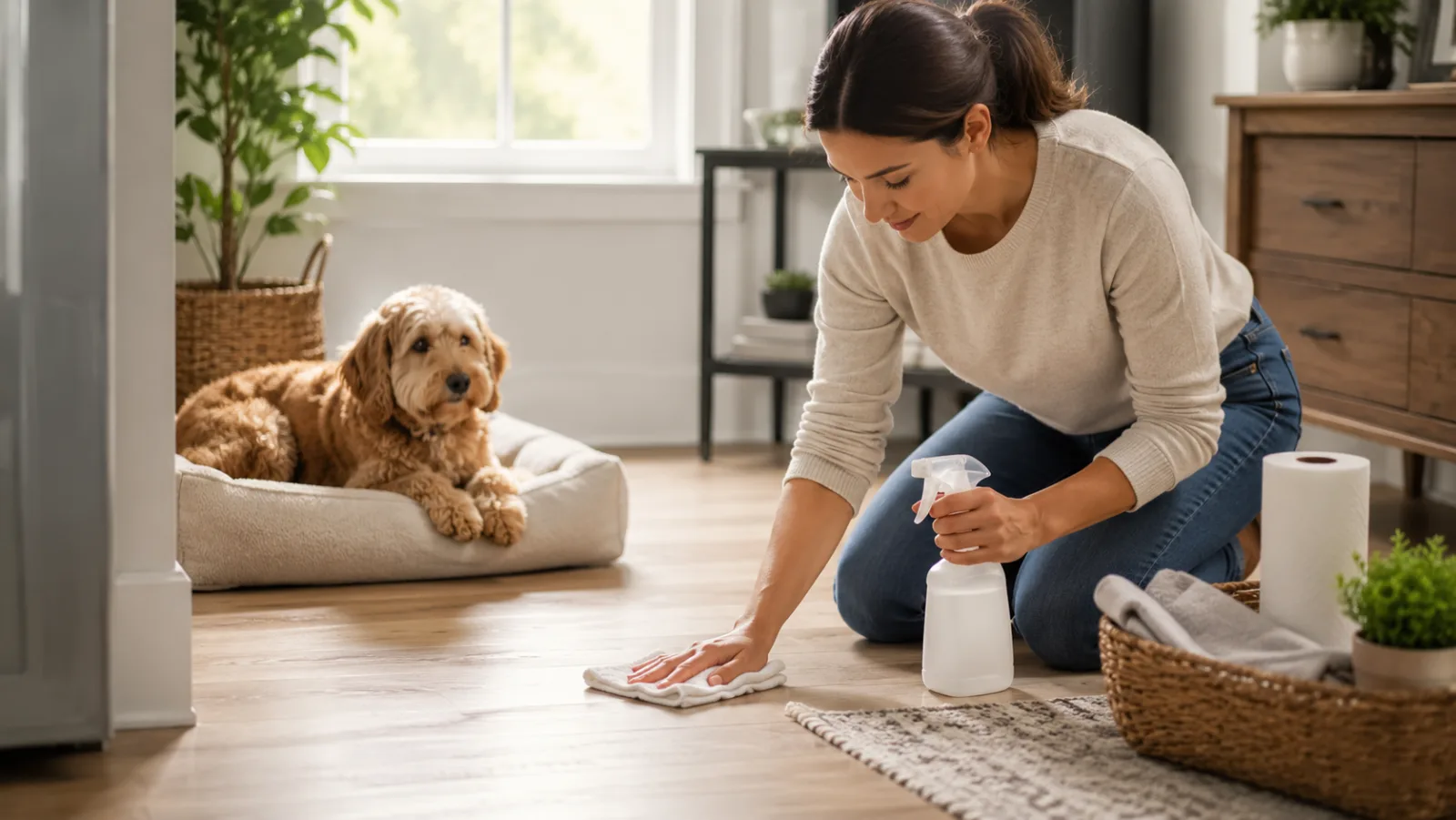
Best Pet Odor Removers and Enzyme Cleaners (2026)
Cats & Dogs
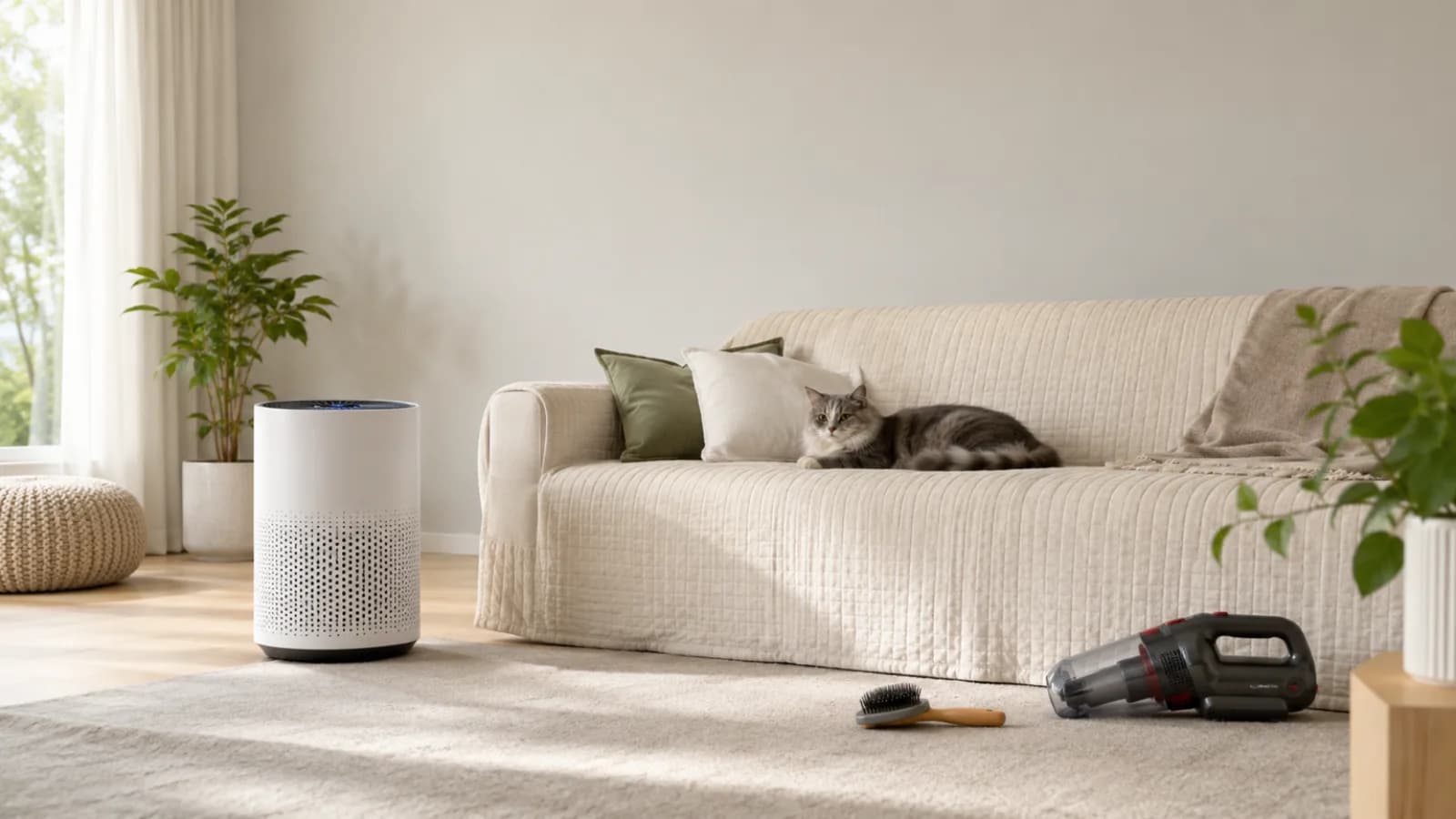
Reducing Pet Allergies and Dander at Home (2026)
Cats & Dogs
Best Vacuums for Pet Hair in a Real Shedding Household (2026)
Cats & Dogs
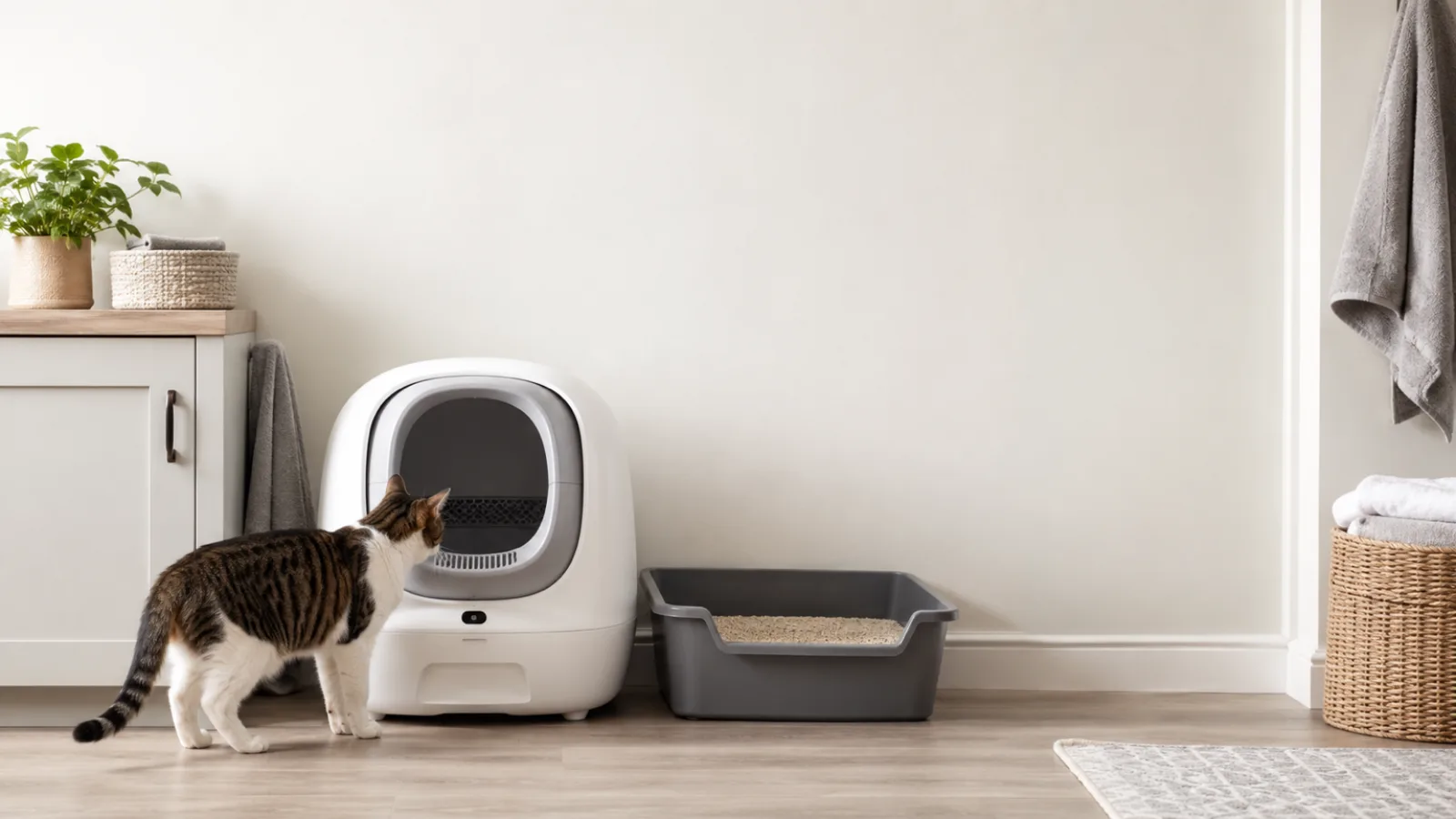
How to Transition a Cat to an Automatic Litter Box (2026)
Cats & Dogs
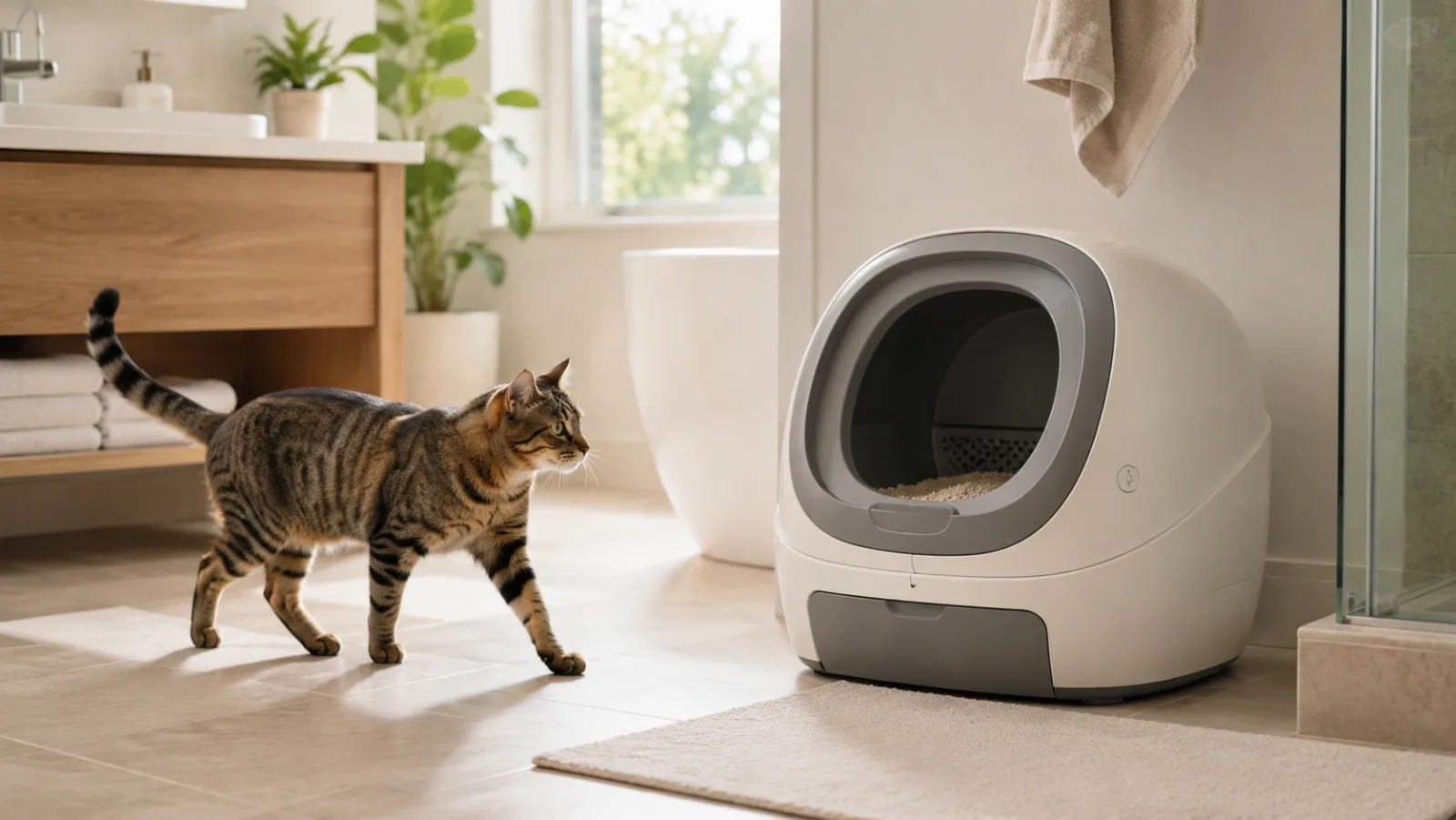
Best Self-Cleaning Litter Boxes With No Subscription (2026)
Cats & Dogs