Aquarium
Best Aquarium CO2 Systems 2026: Pressurized Kits & Regulators for Planted Tanks
For most planted tanks, a dual-stage regulator on a refillable cylinder is the right CO2 system — the FZONE Pro Series leads on injection stability, the Mini V3.0 wins the under-$100 path, and generator kits earn a narrow specialist slot.
By Nick Miles · Updated June 10, 2026 · 12 min
PetPalHQ is reader-supported. We may earn a commission from qualifying Amazon purchases at no extra cost to you.
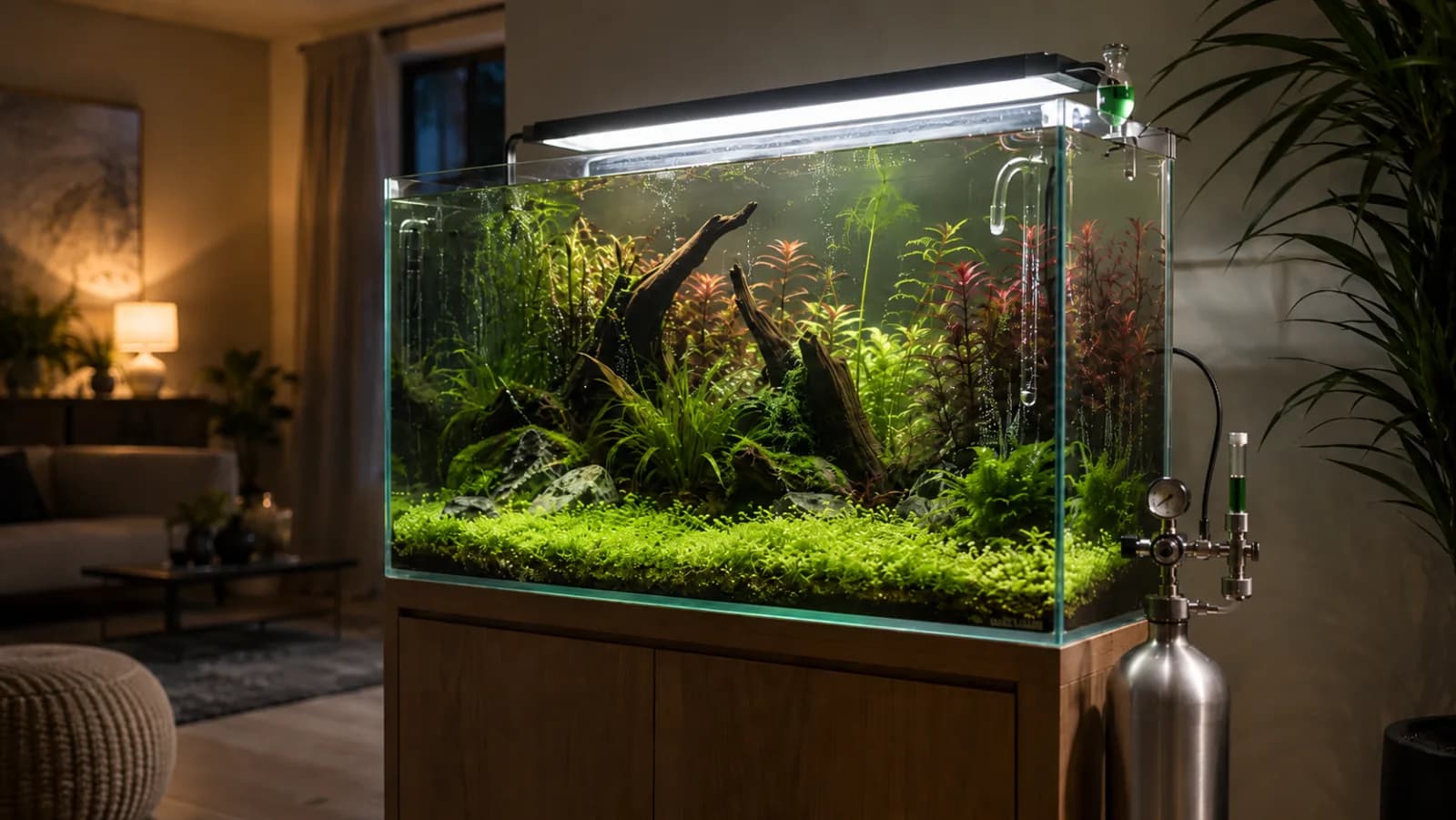
Evidence at a Glance
FZONE Pro Series Dual Stage CO2 Regulator
True dual-stage regulation engineered to prevent end-of-tank-dump pressure spikes, with adjustable output pressure, an integrated high-precision needle valve, and a quiet 12V DC solenoid for night shutoff. Ships with two bubble counters with check valves, so one cylinder can split across two aquariums.
Sources: AquAnswers, Aquarium Store Depot, The Planted Tank Forum, r/PlantedTank multi-year owner reports
Verified Jun 10, 2026
FZONE Mini Series V3.0 Dual Stage CO2 Regulator
Dual-stage pressure regulation in a compact body at under $100 — rare at this price. Three source fittings in the box: CGA-320 for standard CO2 cylinders, a paintball-tank adapter, and 5/8-inch UNF for disposable cartridges. The budget dual-stage that planted-tank forums treat as the one to beat.
Sources: Love Fish Tank, AquAnswers, Epic Aquarium, The Planted Tank Forum
Verified Jun 10, 2026
Hygger Motorized-Valve CO2 Regulator with Timer
Replaces the solenoid with a motorized valve that draws power only while opening or closing, so it never heat-soaks during the photoperiod. The built-in programmable timer handles automatic CO2 on/off without an external smart plug, and the dual-stage body expands to run two tanks with two included bubble counters.
Sources: hygger manufacturer documentation, Owner reviews, Facebook planted-tank groups
Verified Jun 10, 2026
Our Picks
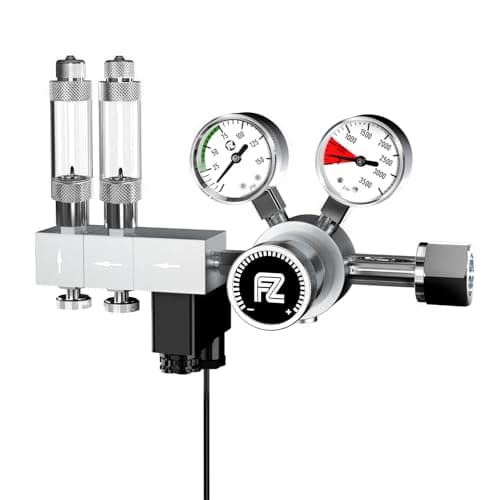
FZONE
FZONE Pro Series Aquarium Dual Stage CO2 Regulator with DC Solenoid, Integrated Needle Valve and Bubble Counter
8.7 / 10
- True dual-stage regulation engineered to prevent end-of-tank-dump pressure spikes
- Adjustable output pressure with integrated high-precision needle valve
- 12V DC solenoid runs quiet and cool for timer-controlled night shutoff
- Two bubble counters with check valves — one cylinder can split across two aquariums
$135.99
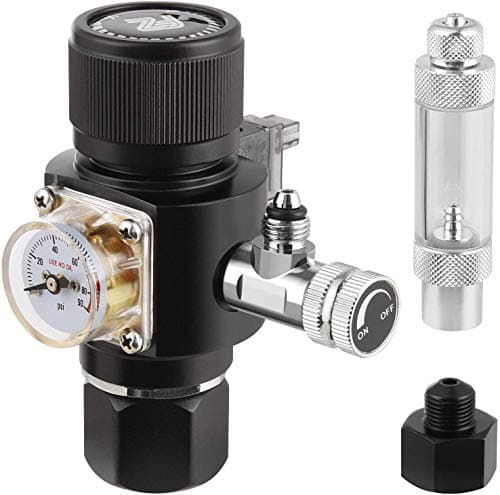
FZONE
FZONE Mini Series V3.0 Dual Stage CO2 Regulator with DC Solenoid and Bubble Counter, Paintball and CGA320 Compatible
8.4 / 10
- Dual-stage pressure regulation in a compact mini body — rare at under $100
- Three source fittings: CGA-320 cylinder, paintball-tank adapter, and 5/8-inch UNF for disposable cartridges
- 12V DC solenoid for timer-controlled night shutoff
- Included bubble counter with check valve
$94.99
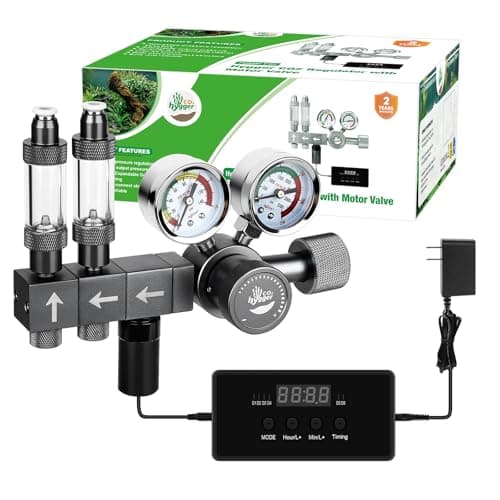
hygger
Hygger Aquarium CO2 Regulator with Motorized Valve, Dual Stage Adjustable Pressure, Built-In Timer and Two Bubble Counters
8.1 / 10
- Motorized valve draws power only while opening or closing — no heat-soak during the photoperiod
- Built-in programmable timer schedules CO2 on/off without an external smart plug
- Dual-stage adjustable pressure structure for stable output
- Expandable to run two tanks, with two included bubble counters
$139.99
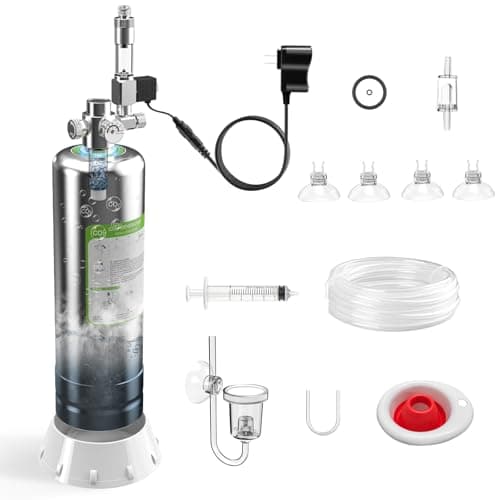
FZONE
FZONE 5L Aquarium CO2 Generator System with Integrated Solenoid, Bubble Counter, Safety Valve and Complete Accessories
7.8 / 10
- 5-liter reaction cylinder generates pressurized CO2 from citric acid and baking soda — no cylinder exchanges required
- Integrated solenoid enables timer-controlled night shutoff — the safety feature most generator kits omit
- Safety pressure-relief valve plus a main shutoff switch
- Complete kit: regulator, bubble counter with check valve, diffuser, and tubing in the box
$125.90
The Short Answer
Pressurized CO2 injection is a freshwater planted-tank upgrade — not a reef or fish-only product — and the regulator is the component that decides whether your livestock stay safe. The FZONE Pro Series at $135.99 is the pick for most planted tanks: true dual-stage regulation prevents the end-of-tank-dump pressure spike that gasses fish. It also ships with two bubble counters, so one cylinder can feed two aquariums. The FZONE Mini V3.0 at $94.99 delivers the same dual-stage architecture under $100, with fittings for standard cylinders, paintball tanks, and disposable cartridges. The Hygger motorized regulator at $125.99 builds the scheduling timer into the valve itself, and the FZONE 5L generator kit at $125.90 serves keepers with no cylinder-refill station nearby. Whatever you buy, run a drop checker. Hold dissolved CO2 near 30 ppm, the consensus safety threshold Practical Fishkeeping cites for most fish.
Every product on this list has been scored against the PetPal Gear Score, a weighted composite of expert consensus, observed effectiveness, animal safety, long-term durability, and value. Review method: Editorial synthesis of Practical Fishkeeping's CO2 balance guidance, The 2Hr Aquarist's injection material, and the Green Leaf Aquariums installation and monitoring guide. Regulator-specific evidence comes from AquAnswers, Aquarium Store Depot, Epic Aquarium, ModestFish, and the Aquarium Co-Op Forum. Manufacturer documentation from FZONE and hygger was reviewed for valve architecture and fitting claims. Owner reliability data comes from r/PlantedTank, r/Aquariums, The Planted Tank Forum, and ScapeCrunch hardware-failure threads. PetPalHQ does not run a CO2 equipment testing lab.. Synthesized from 8+ expert sources.
Pressurized CO2 is the dividing line between a tank with plants in it and a planted tank. Once light climbs past the low-tech range, carbon becomes the growth bottleneck, and injection is how serious freshwater keepers remove it. It is also the one upgrade where the hardware can kill the livestock it serves — which is why this guide spends as much time on failure modes as on features.
PetPalHQ.com earns affiliate commissions from qualifying purchases; commission rates never influence our picks. We read 8 expert sources for this guide, from Practical Fishkeeping's CO2 balance guidance to Green Leaf Aquariums' installation and monitoring material, and cross-checked every regulator against owner reliability threads on r/PlantedTank, The Planted Tank Forum, and ScapeCrunch. We do not test gas equipment ourselves — every claim below traces to a named source.
The 2026 field sorts into three architectures. Cylinder regulators dominate, and the FZONE Pro Series is the current consensus workhorse: true dual-stage regulation, a quiet DC solenoid, and two bubble counters for splitting one cylinder across two tanks. The FZONE Mini V3.0 compresses the same dual-stage idea into a sub-$100 body with paintball-tank compatibility for keepers without a welding supplier nearby. The Hygger motorized regulator swaps the solenoid for a motorized valve with a built-in timer, betting that automation matters more to buyers than pedigree.
The third architecture skips the cylinder entirely. The FZONE 5L generator kit brews its own pressurized CO2 from citric acid and baking soda, trading refill logistics for a recurring chemistry chore. It is the only generator we found that includes the solenoid night-shutoff this category's safety math requires, which is why it takes the specialist slot while better-known generator kits sit in the passed-on list below. If you are still building out the rest of a high-tech setup, our planted aquarium lights guide covers the other half of the light-plus-carbon equation.
Dual-Stage or Single-Stage: The End-of-Tank-Dump Question
One spec separates the picks in this guide from the sea of $40 regulators on Amazon: the number of pressure-reduction stages. A single-stage regulator drops cylinder pressure to working pressure in one step, and that single step goes unstable precisely when the cylinder runs low.
As liquid CO2 in the cylinder depletes, tank pressure falls fast, and a single-stage design responds by letting output pressure climb — the end-of-tank dump. Your needle valve, set for one bubble per second, suddenly passes several times that rate, usually overnight, usually discovered as gasping fish at dawn. A dual-stage regulator chains two reduction steps so the second stage always sees a stable input, holding output flat until the cylinder is functionally empty. That is the design logic behind both FZONE regulators here, and it is why the four-year r/PlantedTank report on the Pro Series — three to four refills, zero dumps — is the single most persuasive data point in our research.
The same logic explains the generator-kit penalty in our scoring. The 5L generator's reaction pressure tapers as each charge depletes, so the late-cycle drift that dual-stage hardware eliminates is built into the chemistry. The kit's solenoid and relief valve keep that drift safe; they cannot make it stable.
CO2 and Livestock Safety: The 30 ppm Line
This is a chemical-dosing category, so the safety section is not optional reading. Everything here applies to freshwater planted tanks only, and the numbers come from the expert consensus in our source list.
Practical Fishkeeping's threshold is the anchor: roughly 30 ppm of dissolved CO2 is safe for most fish and invertebrates. Tolerance varies by species and by dissolved oxygen — discus show distress as CO2 approaches 40 ppm, while cardinal tetras tolerate 60 ppm or more — so set your ceiling by the most sensitive animal in the tank. Overdose has a recognizable progression: sluggishness and appetite loss first, then surface gasping, then unconsciousness. The emergency response is an immediate large water change with temperature-matched, dechlorinated water; if you are unsure what your tap water needs, our water conditioner guide covers dechlorination basics.
Three hardware protections do most of the safety work. Dual-stage regulation prevents the end-of-tank dump described above. A solenoid or motorized valve on a timer shuts gas off at night, when plants stop consuming CO2 but an unswitched system keeps injecting into a tank that no longer needs it. And a drop checker filled with 4 dKH reference solution is the cheap, always-on monitor: green means roughly 30 ppm, yellow means too much, blue means too little. Keep surface agitation healthy as well — good gas exchange raises the safety margin at any injection rate, and it costs nothing.
The generator kit adds one more rule set. Store citric acid and baking soda away from pets and children, never exceed the bottle's charge measurements, and verify the pressure-relief valve is seated before each recharge. None of it is difficult; all of it is mandatory.
What We Passed On
Two well-known names missed the cut, and the reasons matter more than the names.
The NilocG Aquatics mini regulator with solenoid was a longtime favorite for paintball setups, with quality all-aluminum construction. We passed because its Amazon listing no longer resolves — the product API returns Not Found as of June 10, 2026, with NilocG now selling direct — and because owner complaints describe poor needle-valve precision on tanks under 10 gallons. We cannot recommend a product readers cannot actually buy at the link.
The ZRDR 4L generator system was the obvious head-to-head rival for our specialist pick at $119.99, and its listing is live. We passed on safety grounds: the base design has no solenoid valve, so CO2 runs around the clock with no night shutoff. After lights-off, plants stop consuming CO2 while the generator keeps injecting — exactly the unattended-accumulation scenario that gasses livestock. The FZONE 5L generator kit includes an integrated solenoid for about $6 more, and side-by-side reviews measured its solenoid drawing half the current (0.5A versus 1A). When the safer design costs six dollars extra, the cheaper one does not belong in a recommendation.
FZONE FZONE Pro Series Aquarium Dual Stage CO2 Regulator with DC Solenoid, Integrated Needle Valve and Bubble Counter
$135.99
- True dual-stage regulation engineered to prevent end-of-tank-dump pressure spikes
- Adjustable output pressure with integrated high-precision needle valve
- 12V DC solenoid runs quiet and cool for timer-controlled night shutoff
- Two bubble counters with check valves — one cylinder can split across two aquariums
- CGA-320 fitting matches standard US CO2 cylinders
The FZONE Pro Series is the editorial pick for most planted tanks because it solves the failure mode that actually kills fish. Single-stage regulators drop pressure in one step, and as a cylinder empties, the output can spike — the end-of-tank dump that multiplies injection rates overnight. The Pro Series uses true dual-stage regulation, stepping pressure down twice so output stays constant from a full cylinder to an empty one. One r/PlantedTank owner ran the unit four years across three to four cylinder refills with zero dumps. The same owner reported the bubble rate holds steady for years without adjustment.
The expert consensus is unusually aligned for this price tier. AquAnswers calls it probably the best dual-stage regulator you could get for a planted aquarium, given the price and included features. Aquarium Store Depot rates the build quality as surprising for the money. The Planted Tank Forum's hardware threads add the practical details: the gauges read easily, the solenoid runs quiet, and the metering block is less twitchy than rivals, which makes the initial dial-in faster.
The two included bubble counters with check valves are the underrated feature. Most regulators ship with one; the Pro Series can split a single cylinder across two aquariums out of the box, which halves hardware cost for multi-tank keepers.
Here's the honest trade-off: reliability is good for the price, not flawless. ScapeCrunch documents at least one owner needle-valve failure, and some users who later upgraded to Green Leaf Aquariums gear said their FZONE needed recurring fiddling. FZONE also has no US-based rebuild or service network the way GLA does, so a failed unit is a replacement, not a repair. The dual-gauge body is bulky inside nano cabinets, and the cylinder is a separate purchase — budget for a 5 lb CGA-320 tank plus refills before you celebrate the price.
What We Love
- True dual-stage architecture prevents end-of-tank-dump pressure spikes
- Multi-year owner data shows the bubble rate holding steady across cylinder refills
- Two bubble counters with check valves support a two-tank split from one cylinder
- Quiet, cool-running 12V DC solenoid for timer-controlled night shutoff
- Readable gauges and a forgiving metering block speed up initial dial-in
What Could Be Better
- Documented needle-valve failure on ScapeCrunch — QC is good for the price, not GLA-tier
- No US-based rebuild or service network; a failed unit means replacement
- Dual-gauge dual-stage body is bulky for nano cabinets
- Cylinder not included — add a 5 lb CGA-320 tank and refill costs to the real price
The Verdict
If you want one regulator that holds a stable rate from full cylinder to empty, the FZONE Pro Series is the default. Budget separately for the cylinder, and accept brand-level QC that trails the premium American shops.
Sources
- AquAnswers: given the price and included features, the FZone Pro Series is probably the best dual-stage CO2 regulator you could get for your planted aquarium
- Aquarium Store Depot: a comprehensive regulator at a reasonable price that is surprisingly high quality given its price point
- r/PlantedTank user report (via search of community threads): ran the FZone Pro 4 years across 3-4 cylinder refills with zero end-of-tank dumps; rate holds rock solid for years without adjustment
- The Planted Tank Forum: gauges are easily read, the solenoid is quiet, dials are responsive; the needle valve/metering block is less sensitive than rivals and easy to dial in
- ScapeCrunch ('FZone Regulator Fail' thread): at least one documented owner failure involving the needle valve — reliability is good but not GLA-tier
FZONE FZONE Mini Series V3.0 Dual Stage CO2 Regulator with DC Solenoid and Bubble Counter, Paintball and CGA320 Compatible
$94.99
- Dual-stage pressure regulation in a compact mini body — rare at under $100
- Three source fittings: CGA-320 cylinder, paintball-tank adapter, and 5/8-inch UNF for disposable cartridges
- 12V DC solenoid for timer-controlled night shutoff
- Included bubble counter with check valve
- Compact footprint sized for nano and rimless planted tanks
The Mini Series V3 exists for one reason: dual-stage regulation under $100 barely exists anywhere else. Most budget regulators cut the second stage to hit their price, which reintroduces end-of-tank-dump risk. The Mini V3 keeps the multi-stage design — Love Fish Tank confirms it maintains constant pressure and avoids the dump — and pairs it with the most flexible fitting set in this guide. The box includes three distinct adapters: CGA-320 for standard cylinders, a paintball-tank fitting, and 5/8-inch UNF for disposable cartridges. That flexibility matters for apartment keepers. A 20 oz paintball tank is easier to fill at a sporting-goods counter than a 5 lb cylinder is to exchange at a welding supplier.
The expert record backs the value claim. AquAnswers ranks FZONE first overall in its five-best roundup for stable planted-aquarium CO2, and Epic Aquarium lists the brand among its top 2026 picks for planted tanks. The Planted Tank Forum runs an active thread vetting this exact model, and the consensus treats it as the budget dual-stage to beat.
Here's the honest trade-off: the compact build cuts corners you will notice. The needle-valve resolution is coarse at very low bubble rates, so holding under roughly one bubble per second on a sub-10-gallon tank takes patience — nano keepers chasing precision should look at the Pro Series instead. The mini gauges are small and harder to read at a glance. The paintball path also carries a recurring chore: small tanks need refills far more often than a 5 lb cylinder, so the cheap entry route costs you counter trips all year. And the brand-level QC caveats from the Pro Series apply here too, with community reports of occasional units that need adjustment fiddling before they settle.
What We Love
- Dual-stage regulation at under $100 — the cheapest end-of-tank-dump protection in the category
- Three fitting options cover standard cylinders, paintball tanks, and disposable cartridges
- Compact footprint fits nano and rimless tank cabinets
- DC solenoid supports timer-controlled night shutoff like the premium picks
What Could Be Better
- Needle-valve resolution is coarse below ~1 bubble/sec — hard to hold on sub-10-gallon tanks
- Paintball tanks need frequent refills, so the cheap entry path carries a recurring chore
- Mini gauges are small and harder to read at a glance
- Same brand-level QC caveats as the Pro Series — occasional units need fiddling to settle
The Verdict
If you want dual-stage safety on a budget or you need paintball-tank flexibility, the Mini V3 is the value pick. Nano keepers who need ultra-fine bubble control should pay up for the Pro Series.
Sources
- Love Fish Tank: the multi-stage design maintains constant pressure and avoids end-of-tank dump; ships with three distinct fitting adapters (disposable cartridge, CGA320, paintball)
- Epic Aquarium (Best CO2 Regulators for Planted Aquarium, 2026): lists FZONE among its top picks for planted tanks
- AquAnswers: ranks FZONE first overall in its 5-best roundup for stable planted-aquarium CO2
- The Planted Tank Forum ('FZONE Mini Series V3.0 quality?' thread): owners actively vet this model; consensus treats it as the budget dual-stage to beat
hygger Hygger Aquarium CO2 Regulator with Motorized Valve, Dual Stage Adjustable Pressure, Built-In Timer and Two Bubble Counters
$139.99
- Motorized valve draws power only while opening or closing — no heat-soak during the photoperiod
- Built-in programmable timer schedules CO2 on/off without an external smart plug
- Dual-stage adjustable pressure structure for stable output
- Expandable to run two tanks, with two included bubble counters
- Dual-gauge display tracks cylinder and working pressure
The Hygger motorized regulator rethinks the one component every other pick shares: the solenoid. A conventional solenoid holds an electromagnetic coil energized for the entire photoperiod, and per hygger's documentation, those coils heat up during continuous operation. The motorized valve here activates only while opening or closing, so it draws power for seconds per day instead of hours and never heat-soaks. Paired with the built-in programmable timer, the result is full scheduling automation with nothing else to buy. Most competing setups make you supply a wall timer or smart plug separately.
Owner reviews surfaced in our research describe a setup that is simple to assemble with all hardware included, holds pressure consistently without frequent adjustment, and treats the bundled timer as the differentiator it is. The product also has real community adoption: Facebook planted-tank groups run active owner discussion threads on this exact unit, which is more field data than most new regulators accumulate.
Here's the honest trade-off: this is a new design with a thin long-term record next to FZONE, which has years of community reliability data, or Green Leaf Aquariums. A motorized valve plus integrated timer adds electronics that can fail in ways a dumb solenoid cannot, and the schedule should be re-checked after any power outage. A silent reset that leaves CO2 running overnight is exactly the failure a planted-tank keeper cannot afford. Hygger built its reputation on budget aquarium gear, not precision gas equipment, so the regulation pedigree you get from FZONE is unproven here. The manual is sparse translated English, a recurring complaint across the brand's catalog, so plan on community threads filling the documentation gap.
What We Love
- Motorized valve eliminates solenoid heat-soak — power draw only at open and close
- Built-in programmable timer replaces the external smart plug every rival requires
- Dual-stage pressure structure with two bubble counters for two-tank expansion
- Active owner communities on Facebook provide real-world setup help
What Could Be Better
- Thin long-term reliability record next to FZONE's years of community data
- More electronics means more failure modes — re-check the schedule after every power outage
- Hygger's pedigree is budget aquarium gear, not precision gas equipment
- Sparse translated-English manual, a recurring complaint across the brand
The Verdict
If hands-off scheduling is the priority and you accept a shorter track record, the Hygger is the automation pick. Keepers who want maximum proven reliability should stay with the FZONE Pro Series.
Sources
- hygger (manufacturer documentation): unlike old solenoid valves that heat up during continuous operation, the motorized valve only activates during opening and closing, preventing overheating
- hygger (manufacturer documentation): the motorized valve paired with the timer enables fully automatic CO2 control on a set schedule
- Owner reviews surfaced in search: simple to set up with all hardware included, holds pressure consistently without frequent adjustments, and the bundled timer is something most competing setups make you supply separately
- Facebook planted-tank groups: active owner discussion threads on the Hygger CO2 regulator — the product has real community adoption, though a shorter track record than FZone
FZONE FZONE 5L Aquarium CO2 Generator System with Integrated Solenoid, Bubble Counter, Safety Valve and Complete Accessories
$125.90
- 5-liter reaction cylinder generates pressurized CO2 from citric acid and baking soda — no cylinder exchanges required
- Integrated solenoid enables timer-controlled night shutoff — the safety feature most generator kits omit
- Safety pressure-relief valve plus a main shutoff switch
- Complete kit: regulator, bubble counter with check valve, diffuser, and tubing in the box
- Predecessor 2.5L bottle held stable output for over 10 days on a 55-gallon planted tank in Revain's review
The 5L generator kit is the specialist pick for keepers who cannot or will not deal with gas cylinders — no welding supplier nearby, no car to haul exchanges, or a landlord who balks at pressurized bottles. Instead of refilling, you charge the 5-liter reaction cylinder with citric acid and baking soda and the kit generates its own pressurized CO2. An Aquarium Co-Op Forum thread on the smaller predecessor confirms the kit ships genuinely complete: cylinder, measuring cup, funnel, powered solenoid with wall adapter, diffuser, glass U-piece, hose, regulator, bubble counter, and manual.
The safety hardware is what separates this from the generator-kit crowd. The integrated solenoid enables timer-controlled night shutoff — the protection most generator kits omit — and Revain's review of the 2.5L predecessor documents a dual safety architecture, pairing a manual shut-off valve with an automatic pressure-relief mechanism, in food-grade 304 stainless steel with 50 percent thicker walls. That predecessor held stable CO2 output for over 10 days on a 55-gallon planted tank; the 5L bottle extends that runtime.
Here's the honest trade-off: a generator is a chemistry chore on a schedule. Every recharge means measuring and handling citric acid and baking soda, something cylinder owners never do. Output pressure gradually tapers as the reaction wanes, so injection is inherently less stable than bottled gas late in each charge. That is the exact opposite of what a dual-stage regulator buys you. Reagent costs also compound: on large tanks with heavy injection, a $20 to $25 cylinder refill works out cheaper per month than acid-and-soda charges. Community consensus reserves generator kits for small-to-mid planted setups, and Revain's reviewers steer larger, high-demand tanks toward cylinder systems.
What We Love
- No cylinder exchanges or fill stations — generates CO2 from citric acid and baking soda
- Integrated solenoid supports night shutoff, which most competing generator kits omit
- Dual safety architecture: pressure-relief valve plus manual main shutoff
- Genuinely complete kit — diffuser, bubble counter, tubing, and regulator in the box
What Could Be Better
- Every recharge is a chemical-handling chore that cylinder owners never face
- Output tapers as the reaction wanes — less stable than bottled gas late in each charge
- Reagent costs exceed $20–25 cylinder refills on large, heavily injected tanks
- Community consensus limits generator kits to small-to-mid setups, not high-light showpieces
The Verdict
If cylinder logistics are the blocker, the FZONE 5L generator kit is the safest generator path thanks to its solenoid and relief valve. Keepers with refill access should choose a cylinder regulator instead.
Sources
- Aquarium Co-Op Forum (FZone 2.5L canister DIY CO2 kit thread): kit ships genuinely complete — cylinder, measuring cup, funnel, powered solenoid with wall adapter, diffuser, glass U-piece, hose, regulator, bubble counter, and manual
- Revain review of the FZONE 2.5L predecessor: dual safety architecture — manual shut-off valve paired with an automatic pressure-relief mechanism — and food-grade 304 stainless steel with 50% thicker walls
- Revain review of the FZONE 2.5L predecessor: maintained stable CO₂ output for over 10 days on a 55-gallon planted tank, but reviewers steer larger high-demand tanks toward cylinder systems
- Fzone Studio (manufacturer page): current generator kits integrate the solenoid and safety valve into the bottle cap assembly
How We Score
Formula
Planted Stability Score = (Injection Stability × 0.30) + (Livestock Safety × 0.25) + (Dial-In Precision × 0.25) + (Ongoing Cost & Supply × 0.20)
Score Factors
- Injection Stability · 30%
- How consistently the system delivers its set CO2 rate across the life of a gas source. Dual-stage regulators score highest because two pressure-reduction steps prevent end-of-tank dump — the spike near an empty cylinder that can multiply injection rates without warning. Multi-year owner reports carry heavy weight here: the FZONE Pro Series logged four years and several refills with a steady bubble rate. Generator kits score lowest because reaction pressure tapers as each citric-acid charge depletes, drifting the rate late in the cycle.
- Livestock Safety · 25%
- Hardware protections that keep dissolved CO2 below dangerous concentrations when something goes wrong. A solenoid or motorized valve on a timer earns the largest share, because shutting gas off at night prevents accumulation while plants are not consuming it. Check valves on bubble counters, pressure-relief valves, and manual shutoff switches add credit. Practical Fishkeeping's roughly 30 ppm consensus threshold anchors this factor — equipment that makes holding that line easier scores higher, and gear lacking night shutoff is penalized hard.
- Dial-In Precision · 25%
- How finely and repeatably the needle valve resolves low bubble rates, plus how readable the gauges are during adjustment. Nano tanks under 10 gallons need stable rates below one bubble per second, a regime where coarse valves hunt and overshoot. The Pro Series metering block earns top marks from forum reviewers for responsive, forgiving adjustment; the Mini V3 trades resolution for size. Bundled bubble counters matter here too, since counting bubbles is how keepers actually verify a setting.
- Ongoing Cost & Supply · 20%
- What the system costs to run after purchase, and how demanding the supply chain is. Standard 5 lb CGA-320 cylinders refill for roughly $20 to $25 and last months on moderate injection, making them the cheapest path per gram of gas. Paintball tanks cost less up front but demand frequent counter trips. Generator kits replace refills with recurring citric-acid and baking-soda purchases that cost more per month on heavily injected tanks. Included accessories — diffusers, counters, timers — offset startup spend and earn credit.
| Rank | Product | Score |
|---|---|---|
| #1 | FZONE FZONE Pro Series Aquarium Dual Stage CO2 Regulator with DC Solenoid, Integrated Needle Valve and Bubble Counter | 8.7 |
| #2 | FZONE FZONE Mini Series V3.0 Dual Stage CO2 Regulator with DC Solenoid and Bubble Counter, Paintball and CGA320 Compatible | 8.4 |
| #3 | hygger Hygger Aquarium CO2 Regulator with Motorized Valve, Dual Stage Adjustable Pressure, Built-In Timer and Two Bubble Counters | 8.1 |
| #4 | FZONE FZONE 5L Aquarium CO2 Generator System with Integrated Solenoid, Bubble Counter, Safety Valve and Complete Accessories | 7.8 |
When NOT to Buy
Skip this category if you keep a reef or fish-only aquarium. Pressurized CO2 injection exists to feed demanding freshwater plants under strong light; it has no role in marine systems, and every safety margin in this guide assumes a planted freshwater tank.
Skip injection if your tank runs low light and easy plants. Slow-growing species manage on the CO2 your fish and filter already produce, and adding pressurized gas to that setup buys risk without visible growth. Injection earns its complexity in medium-to-high-light planted tanks where growth stalls without it.
Skip the whole category until you own a drop checker and a timer, and plan to use both. CO2 is the one piece of aquarium gear where an unmonitored failure kills livestock directly. Fish gasping at the surface at dawn is the classic sign of overnight accumulation. If you are not willing to watch a drop checker daily during the first weeks of dial-in, you are not ready for pressurized gas.
Skip generator kits if you run a large or heavily planted high-light tank. Community consensus reserves citric-acid systems for small-to-mid setups; on big tanks the reagent cost passes a $20 to $25 cylinder refill, and the pressure taper late in each charge undermines the stability the plants need.
Skip aggressive injection if you keep sensitive species. Discus show distress as dissolved CO2 approaches 40 ppm, while hardier cardinal tetras tolerate 60 ppm or more. The safe ceiling is set by your most sensitive animal, not the average. Hold near 30 ppm, keep surface agitation healthy, and let the plants adapt to less gas rather than forcing the fish to tolerate more.
Frequently Asked Questions
- How much CO2 is safe for fish in a planted tank?
- The consensus threshold from Practical Fishkeeping is roughly 30 ppm of dissolved CO2 for most fish and invertebrates, with real tolerance depending on dissolved oxygen and species. Discus show distress as concentrations approach 40 ppm, while cardinal tetras tolerate 60 ppm or more. The most sensitive species in your tank sets the ceiling. Watch for the overdose progression — sluggishness, lost appetite, surface gasping — and respond with an immediate large water change using temperature-matched, dechlorinated water. Healthy surface agitation widens your safety margin at any injection rate.
- Do I really need a dual-stage CO2 regulator, or is single-stage fine?
- Single-stage regulators work until the cylinder runs low, which is exactly when they fail. Falling tank pressure lets output pressure climb — the end-of-tank dump. Your carefully set bubble rate multiplies without warning, typically overnight. Dual-stage designs chain two pressure-reduction steps so output stays flat until the cylinder is functionally empty. Both FZONE regulators in this guide are true dual-stage units, and one documented r/PlantedTank owner ran the Pro Series four years across multiple refills with zero dumps. On a tank with livestock, we consider dual-stage the floor, not a luxury.
- Can I use a paintball CO2 tank with an aquarium regulator?
- Yes, if the regulator ships with the right fitting. The FZONE Mini V3.0 includes three source adapters — standard CGA-320 cylinder, paintball tank, and 5/8-inch UNF disposable cartridge — so a 20 oz paintball bottle filled at a sporting-goods counter works fine. The trade-off is capacity: paintball tanks hold far less gas than a 5 lb cylinder, so expect refill trips several times more often. For keepers near a welding or gas supplier, the standard cylinder is cheaper per gram of gas and far less frequent.
- Should CO2 run at night, and do I need a solenoid?
- No, and yes. Plants only consume CO2 while the lights are on; after lights-off, continued injection accumulates gas in water that nothing is drawing it from, which is the classic overnight kill scenario. A solenoid valve on a timer — or the Hygger's motorized valve with its built-in timer — shuts injection down automatically at night and restarts it before the photoperiod. Every pick in this guide includes night-shutoff hardware, and we passed on the ZRDR generator specifically because its base design omits it.
- What is a drop checker and what color should it be?
- A drop checker is a small glass or plastic reservoir of pH-indicator fluid that hangs inside the tank and reads dissolved CO2 continuously. Filled with 4 dKH reference solution, it shows green at roughly 30 ppm — the target zone — blue when CO2 is too low for good plant growth, and yellow when concentrations have climbed into dangerous territory. It lags about an hour behind real conditions, so treat it as a trend monitor rather than an alarm. It is the cheapest piece of safety equipment in the entire CO2 category, and no injected tank should run without one.
- Are DIY citric-acid CO2 generator kits safe for aquariums?
- They can be, if the kit includes real safety hardware — which most omit. The FZONE 5L generator kit earns its slot because it pairs an integrated solenoid for night shutoff with a pressure-relief valve and a manual main switch, and Revain's review of its predecessor documented food-grade 304 stainless construction with 50 percent thicker walls. Handle the chemistry with respect: store citric acid and baking soda away from pets and children, never exceed the charge measurements, and confirm the relief valve is seated before each recharge. Keep generators on small-to-mid tanks; large high-demand setups belong on cylinders.
Bottom Line
Buy the FZONE Pro Series if you want the most stable injection in the guide. Its dual-stage body holds a set rate from full cylinder to empty, and multi-year owner logs back the claim. Budget for a 5 lb cylinder separately.
Buy the FZONE Mini V3.0 if you want dual-stage protection under $100 or you need paintball and disposable-cartridge flexibility. Accept coarser low-rate control than the Pro Series delivers.
Buy the Hygger motorized regulator if built-in scheduling matters more to you than a long track record. Re-check its timer after every power outage.
Buy the FZONE 5L generator kit only if cylinder exchanges are genuinely unworkable where you live. It is the rare generator with a solenoid and relief valve, but recharges are a recurring chemistry chore.
Skip pressurized CO2 entirely for reef tanks, fish-only setups, or low-light tanks running undemanding plants — injection is a planted-tank tool, and every system here assumes a drop checker and night shutoff are part of the plan.
Sources & Methodology
Methodology
Planted Stability Score = (Injection Stability × 0.30) + (Livestock Safety × 0.25) + (Dial-In Precision × 0.25) + (Ongoing Cost & Supply × 0.20)
Expert review sources
- Practical Fishkeeping — CO2: Striking the Balance
- The 2Hr Aquarist — CO2 injection and drop-checker guidance
- Green Leaf Aquariums — Aquarium CO2 Installation & Monitoring Guide
- AquAnswers — dual-stage CO2 regulator roundups for planted aquariums
- Aquarium Store Depot — CO2 regulator reviews
- Aquarium Co-Op Forum — generator-kit owner documentation threads
- Epic Aquarium — Best CO2 Regulators for Planted Aquarium (2026)
- ModestFish — planted-tank CO2 equipment coverage
Community sources
- r/PlantedTank and r/Aquariums owner reliability reports, including a four-year FZONE Pro Series log across three to four cylinder refills with zero end-of-tank dumps
- The Planted Tank Forum and ScapeCrunch hardware threads, including a documented FZONE needle-valve failure report
- Facebook planted-tank group discussion threads on the Hygger motorized regulator
- Revain owner review of the FZONE 2.5L generator predecessor (safety architecture and 10-day runtime data)
Prices and specs verified June 10, 2026.
About the author
Nick Miles is the chief editor of PetPalHQ. The picks above are editorial synthesis of expert aquarium publications, manufacturer specifications, and verified community sentiment. PetPalHQ does not run a CO2 equipment testing lab. The Planted Stability Score is a composite of expert opinion and documented design factors, not a measurement.
PetPalHQ is a participant in the Amazon Services LLC Associates Program. We may earn commissions from qualifying purchases — at no extra cost to you.
More Guides
Aquarium
Best Planted Aquarium Lights 2026: Fluval Plant 3.0, Chihiros WRGB & Budget Picks
Aquarium
Best Aquarium Water Test Kits for Freshwater Fish Tanks (2026)
Aquarium
Best Aquarium Filters and Filter Media for Clear, Healthy Water (2026)
Aquarium