Birds
Raising Backyard Chicks: A Brooder-to-Coop Timeline (2026)
This is not a ranking of chick gadgets — it is a timeline. Raising chicks is an arc from a warm brooder on day one to a coop at about six weeks, and the gear is sequenced by the chick's age, not thrown in a cart at once. The picks below are that kit in order: the heat plate whose legs you raise week by week to step the warmth down, the guarded brooder pen, a drowning-safe waterer, the right starter feed, a no-waste feeder that follows the flock, dry pine bedding, and a thermometer to check your work. The coop, nesting boxes, and run are the destination you graduate into, not part of the brooder — read the caveats before you buy a single chick.
By Nick Miles · Updated July 12, 2026 · 12 min read
PetPalHQ is reader-supported. We may earn a commission from qualifying Amazon purchases at no extra cost to you.
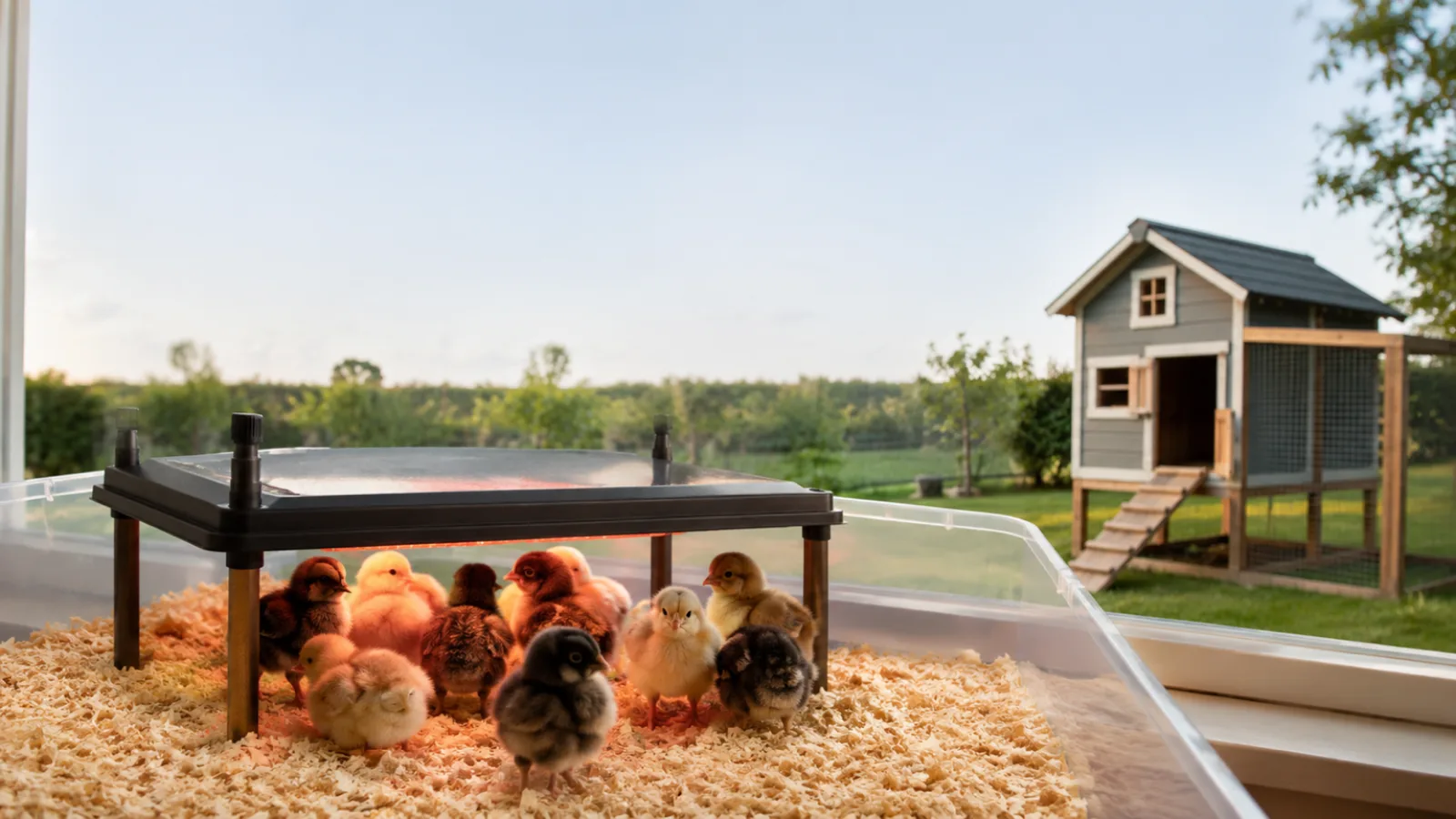
Evidence at a Glance
ZenxyHoC Brooder Plate for Chicks
The day-one warmth and the tool that runs the whole timeline — a 10 by 10 inch low-wattage radiant heat plate on four adjustable-height legs, per ZenxyHoC; you start it low over week-old chicks near 95°F and raise it a little each week to drop the temperature about 5°F until the chicks are feathered.
Sources: ZenxyHoC manufacturer documentation, University poultry-extension brooding guidance, Backyard-poultry welfare consensus
Verified Jul 12, 2026
ComfyKit Pop-Up Chicken Brooder Playpen
The guarded first home — a tool-free pop-up brooder kit with two perches, a top cover, a waterproof mat, pegs, and a storage bag, with room for up to 15 chicks and dual mesh doors per ComfyKit; the top cover is what matters once chicks begin to flutter around two weeks.
Sources: ComfyKit manufacturer documentation, Backyard-poultry welfare consensus, Hatchery chick-care guidance
Verified Jul 12, 2026
ZenxyHoC Baby Chick Waterers
Clean water without the drowning risk — a set of two drinkers, a versatile one for chicks 1 to 3 weeks and a horizontal nipple drinker for chicks 7 weeks and up, with a flip-top refill lid and a translucent body per ZenxyHoC; closed and nipple drinkers are how you keep an open dish from becoming a hazard.
Sources: ZenxyHoC manufacturer documentation, Hatchery chick-care guidance, Backyard-poultry welfare consensus
Verified Jul 12, 2026
Our Picks
ZenxyHoC
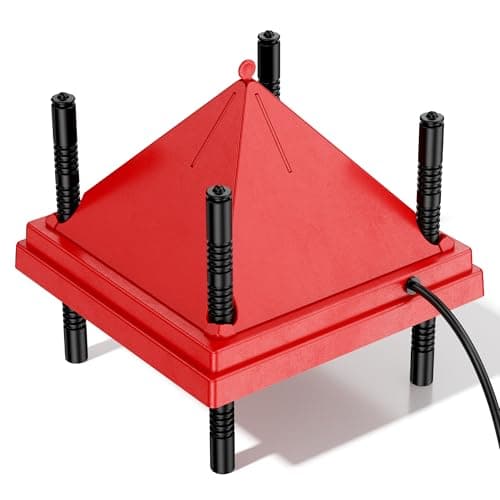
ZenxyHoC Brooder Plate for Chicks
8.7 / 10
- Low-wattage radiant heat instead of a heat lamp — the maker positions it as energy-saving
- No glowing element, so lower fire and burn risk than a hanging lamp
- 10 by 10 inch surface warms up to 15-20 chicks per ZenxyHoC
- Four legs with adjustable height — you raise the plate weekly as the chicks grow
$29.99
Current price · checked Sep 8, 2026
ComfyKit
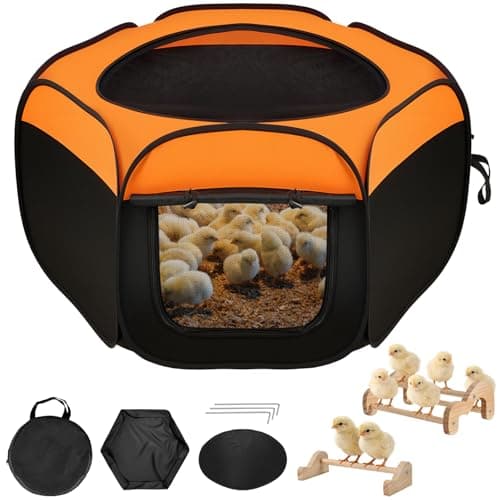
ComfyKit Pop-Up Chicken Brooder Playpen
8.5 / 10
- Pop-up kit: playpen plus two perches, a top cover, a waterproof mat, pegs, and a storage bag
- Room for up to 15 chicks per ComfyKit
- Dual mesh doors — one for warm airflow, one fabric door that blocks drafts
- Quick-dry 420D Oxford with a removable, rinse-clean mat
$29.99
Current price · checked Sep 8, 2026
ZenxyHoC
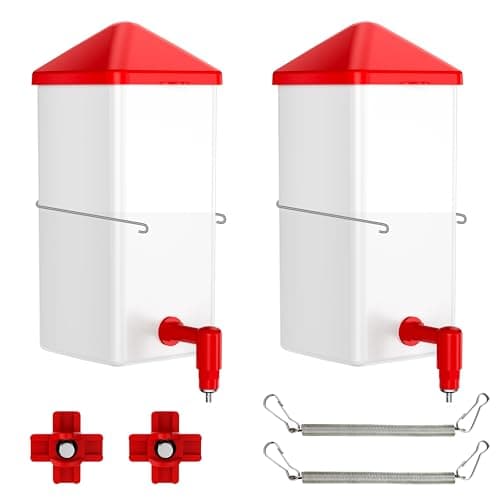
ZenxyHoC Baby Chick Waterers
8.4 / 10
- Two drinkers — a versatile one for chicks 1-3 weeks and a nipple drinker for chicks 7+ weeks
- Flip-top lid lets you refill without taking the drinker apart
- Translucent body so you can see the water level at a glance
- Red trigger draws chicks to peck and learn to drink
$19.99
Current price · checked Sep 8, 2026
Manna Pro
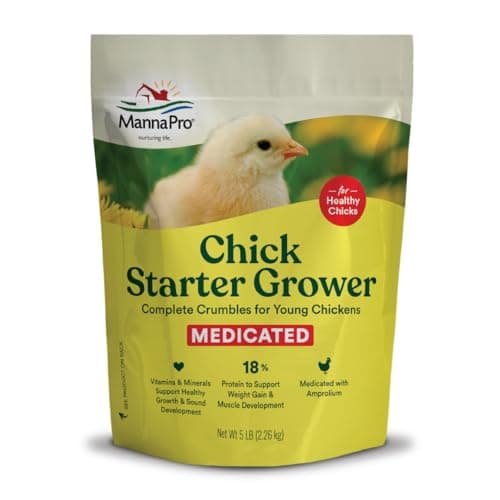
Manna Pro Medicated Chick Starter Grower
8.2 / 10
- Complete starter-grower feed with added Amprolium to aid prevention of coccidiosis
- 18 percent protein for early growth and muscle development
- Fortified with vitamins and minerals per Manna Pro
- Crumble form sized for chicks, which reduces waste
$7.49
Current price · checked Sep 8, 2026
RentACoop
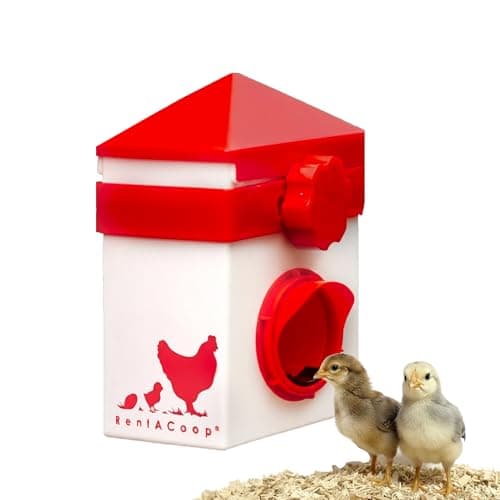
RentACoop Chick2Chicken No-Waste Feeder
8.0 / 10
- Holds 2.5 lb of crumble or pellet feed
- Single medium port safe for chicks from 3 days old through adults
- Hooded design with a slider cover cuts scatter and keeps pests out
- Anti-roost lid so birds cannot perch and foul the feed
$24.95
Current price · checked Sep 8, 2026
BobbleT
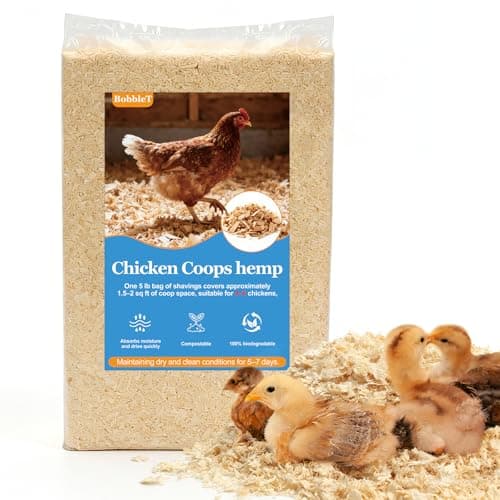
BobbleT Premium Pine Shavings
7.9 / 10
- 100 percent natural radiata pine shavings
- Absorbs more than three times its weight, per BobbleT
- Low dust from triple sifting, with natural odor control
- Compostable and vacuum-packed — it expands when opened
$26.99
Current price · checked Sep 8, 2026
MEGGSI
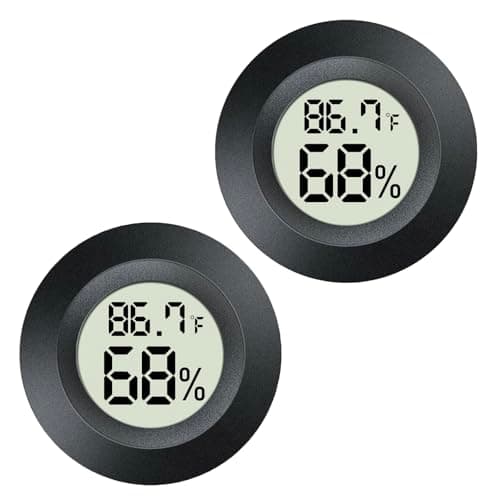
MEGGSI Mini Digital Thermometer/Hygrometer (2 Pack)
7.7 / 10
- Two-pack of digital LCD thermometer-hygrometers that read in °F or °C
- Updates the reading about every 10 seconds
- Temperature range 0-70°C (32-158°F) and humidity 10-99 percent
- Accuracy around ±1.8°F and ±3-5 percent relative humidity per MEGGSI
$5.87
Current price · checked Sep 8, 2026
The Short Answer
Raising chicks is a timeline, not a shopping list — the gear is sequenced by the chick's age, and the spine of it is temperature. Start warm and safe: the ZenxyHoC Brooder Plate gives low-wattage radiant heat under a 10-inch plate, and its adjustable legs are the tool you use to step the heat down each week. House the chicks in a guarded pen like the ComfyKit Pop-Up Brooder, give clean water in the ZenxyHoC Baby Chick Waterers so no chick drowns in an open dish, and feed a proper Manna Pro Medicated Chick Starter at 18 percent protein — not layer feed. The RentACoop no-waste feeder carries them from brooder to coop, BobbleT pine shavings (pine, never cedar) keep the floor dry, and a MEGGSI thermometer tells you whether the step-down is right. One rule governs the whole arc: chicks start near 95°F in week one, drop about 5°F a week, and move to the coop only when they are fully feathered around six weeks and the outdoor weather allows — not by a date on the calendar.
Every product on this list has been scored against the PetPal Gear Score, a weighted composite of expert consensus, observed effectiveness, animal safety, long-term durability, and value. Review method: Editorial synthesis of chick-rearing guidance — university poultry-extension brooding standards on temperature and feeding, backyard-poultry welfare consensus on brooder safety, and hatchery chick-care guidance on water and bedding. Manufacturer documentation from ZenxyHoC, ComfyKit, Manna Pro, RentACoop, BobbleT, and MEGGSI was reviewed. Community consensus from r/BackYardChickens and r/backyardchickens was included as consensus, not quotation. No first-hand product testing — PetPalHQ does not run a testing lab.. Synthesized from 3+ expert sources.
Raising backyard chicks goes wrong, in this guide's editorial judgment, for one reason more than any other: people treat it as a pile of gear bought all at once instead of a timeline walked one week at a time. Chicks are not tiny hens. They arrive unable to hold their own body heat, they double in size in a hurry, and what they need on day one is not what they need at week five. This guide is not a ranking of chick gadgets. It is the arc from a warm brooder to the coop, with each pick placed at the stage it belongs to.
The spine of that arc is temperature, and it is the one thing you actively manage from the first day to the last. A chick needs warmth close to 95°F under the heat source in week one. Then, week by week, you step it down — raising the heat plate a little each time to drop the warmth the chicks feel by about 5°F — until they are fully feathered and no longer crowd the heat around six weeks. The plate's adjustable legs are how you do it, and the chicks themselves confirm it: piled tight means cold, pressed to the walls means too hot, spread out and busy means right. Everything else in the brooder supports that one moving target.
Around the heat, the rest of the kit falls into age order. A guarded, draft-free brooder pen is home base from day one, with a top cover that matters once chicks start to flutter near two weeks. Clean water in a closed or nipple drinker keeps chicks from chilling or drowning in an open dish. A proper starter feed — never layer feed — carries the growth, with one important rule about medicated versus vaccinated chicks. A no-waste feeder bridges from brooder to coop, dry pine bedding keeps the floor healthy, and a thermometer or two makes the step-down visible. The coop itself, its nesting boxes, and its run are the destination you graduate into, a separate project this guide funnels toward rather than covers.
One welfare rule sits above the whole timeline and does not bend. Chicks move outdoors only when they are fully feathered and the weather allows — feathers and forecast, not a date on the calendar. Feed matched to the chicks' vaccination status, pine and never cedar, closed water against drowning, paper towels before shavings, and a daily check for pasty butt are the small disciplines that keep young birds alive. Treat chick-raising as the sequenced, hands-on arc it is, and the brooder becomes what it should be — a safe, warm start that ends with healthy birds walking into a coop.
Head-to-Head Comparison
| Feature | ZenxyHoC Brooder Plate for Chicks | ComfyKit Pop-Up Chicken Brooder Playpen | ZenxyHoC Baby Chick Waterers | Manna Pro Medicated Chick Starter Grower | RentACoop Chick2Chicken No-Waste Feeder | BobbleT Premium Pine Shavings | MEGGSI Mini Digital Thermometer/Hygrometer (2 Pack) |
|---|---|---|---|---|---|---|---|
| Role in the timeline | Day-one warmth and the step-down tool | The guarded first home | Drowning-safe water | Everyday starter feed | Bridge feeder to the coop | Dry brooder floor | Watching the temperature |
| Where it goes | Inside the brooder, legs raised weekly | The indoor brooder space | Clipped inside the pen | In the feeder | Mounted off the brooder floor | Across the brooder floor | One at the warm end, one at the cool end |
| Stage (chick age) | Week 1 to feathered (~6 weeks) | Day 1 to move-out | Weeks 1-3, then 7+ weeks | Day 1 to 16 weeks | 3 days old through adult | After the first few days | Every day, week 1 on |
| Outgrown or kept? | Retired at move-out | Outgrown in weeks | Outgrown — chick-sized | Switch feed by 16-18 weeks | Kept — follows to the coop | Ongoing consumable | Kept — reusable |
| Check price | Amazon | Amazon | Amazon | Amazon | Amazon | Amazon | Amazon |
$29.99
Current price · checked Sep 8, 2026
- Low-wattage radiant heat instead of a heat lamp — the maker positions it as energy-saving
- No glowing element, so lower fire and burn risk than a hanging lamp
- 10 by 10 inch surface warms up to 15-20 chicks per ZenxyHoC
- Four legs with adjustable height — you raise the plate weekly as the chicks grow
- Tip-resistant four-leg base and an anti-roost cone that keeps chicks off the top
A newly hatched chick cannot hold its own body heat, so warmth is the first thing you provide and the thing you manage all the way to move-out. The ZenxyHoC Brooder Plate is that warmth, and it is the single tool that runs the timeline this guide is built on. ZenxyHoC documents a 10 by 10 inch radiant heat plate that warms up to 15 to 20 chicks with low-wattage radiant heat rather than a heat lamp, on a tip-resistant four-leg base, with an anti-roost cone so chicks stay off the top and constant even heat with no hot or cold spots.
Here is how the plate teaches the whole arc. A radiant plate warms the chick, not the air, so the chicks tuck under it like they would under a hen and step away when they are warm enough. In week one you set the plate low, so a chick's back touches it and the space beneath sits near 95°F. Then you use the adjustable legs the way the timeline asks: raise the plate a little each week, which drops the temperature the chicks feel by about 5°F, until they are feathered and no longer crowd under it around six weeks. The birds themselves tell you if you have it right — chicks piled tight under the plate are cold, chicks pushed to the far corners are too warm. For a deeper look at plate sizing and wattage across flock sizes, the best chicken brooder heat plates compares the field.
The honest caveats are about placement and habit. A radiant plate is safer than a lamp, but it is still a warm surface near dry bedding, so it needs a level, stable setup and a check that the legs are locked before chicks go under it. It warms by contact and closeness, so a plate set too high in a cold room may not keep chicks warm enough — read the huddle, not just the thermometer. And the plate is the heat source, not the whole climate; a drafty garage or a cold snap can still chill chicks that stray from it. Confirm current price and availability before buying. Used as the day-one warmth whose height you step down week by week, it is the backbone of a healthy brooder.
What We Love
- Radiant heat lets chicks self-regulate — they tuck under and step away as needed
- Adjustable legs are exactly how you run the weekly temperature step-down
- Lower fire and burn risk than a hanging heat lamp
- Anti-roost cone keeps the top clean and stops chicks perching on it
What Could Be Better
- Warms by closeness, so a plate set too high in a cold room may under-heat chicks
- Still a warm surface near dry bedding — needs a level, locked-leg setup
- It heats the chicks, not the room; a real cold snap still needs a warm space
The Verdict
The foundation of the whole timeline: day-one warmth whose height you raise week by week to step the temperature down. Set it low for new chicks near 95°F, read the huddle as much as the number, and raise it about a level each week until the birds are feathered.
Sources
- ZenxyHoC (Amazon product listing, Brooder Plate for Chicks): a 10 by 10 inch radiant heat plate on four adjustable-height legs that warms up to 15-20 chicks with low-wattage radiant heat instead of a heat lamp, with an anti-roost cone on top
- University poultry-extension brooding consensus: chicks need about 95°F under the heat source in week one, dropped roughly 5°F each week until they are fully feathered, and a radiant plate carries less fire and burn risk than a heat lamp
$29.99
Current price · checked Sep 8, 2026
- Pop-up kit: playpen plus two perches, a top cover, a waterproof mat, pegs, and a storage bag
- Room for up to 15 chicks per ComfyKit
- Dual mesh doors — one for warm airflow, one fabric door that blocks drafts
- Quick-dry 420D Oxford with a removable, rinse-clean mat
- Tool-free pop-up that folds flat; also suits ducklings and quail
The brooder is the guarded pen the chicks live in from day one until they graduate, and it does three jobs: it keeps them contained, it keeps drafts off them, and it stays clean and dry. The ComfyKit Pop-Up Brooder covers all three without a build. ComfyKit documents a tool-free pop-up kit — a playpen with two perches, a top cover, a waterproof mat, pegs, and a storage bag — with room for up to 15 chicks, dual mesh doors, and quick-dry 420D Oxford fabric over a removable mat you can rinse clean.
Where it fits the timeline: this is home base for the heat plate, the waterer, and the feeder, so its value is in how well it holds the setup together. The two mesh doors matter more than they look — one gives warm airflow, and the fabric door blocks the drafts that chill chicks fastest. The removable, wipe-clean mat is the daily-hygiene win, because a brooder gets messy quickly and a dirty, damp floor is where chick illness starts. The top cover is the safety piece to respect: chicks are ground-bound for the first days, but around two weeks they start to flutter and jump, and an open-topped pen is how they get out and get chilled or hurt. Keep the cover on once they begin testing their wings.
The honest caveats are about size and lifespan. A pop-up pen is a brooder, not a coop — it is sized for young chicks, and a flock outgrows it in weeks, which is the whole reason the coop is the destination and not an afterthought. Fabric and mesh clean up well but will not survive being a permanent outdoor home. And any brooder is only as safe as its placement: out of drafts, away from other pets, and on a surface you do not mind getting messy. Confirm current price and availability before buying. As the first home in the arc, it is a clean, contained, draft-guarded start that packs away when the chicks move on.
What We Love
- Tool-free pop-up gives a clean, contained brooder without a build
- Dual doors balance warm airflow against draft protection
- Removable rinse-clean mat makes daily hygiene fast
- Top cover contains chicks once they start to flutter around two weeks
What Could Be Better
- A brooder for young chicks — the flock outgrows it in weeks
- Fabric and mesh are not a permanent or outdoor home
- Safety depends on placement: out of drafts and away from other pets
The Verdict
A clean, draft-guarded first home that holds the heat plate, waterer, and feeder in one contained space. Keep the top cover on once chicks start to flutter around two weeks, wipe the mat daily, and plan the coop move before they outgrow it.
Sources
- ComfyKit (Amazon product listing, Pop-Up Chicken Brooder Playpen): a tool-free pop-up brooder kit with a playpen, two perches, a top cover, a waterproof mat, pegs, and a storage bag, with room for up to 15 chicks, dual mesh doors, and quick-dry 420D Oxford fabric with a removable rinse-clean mat
- Backyard-poultry welfare consensus: a brooder is a guarded, draft-free indoor pen kept clean and dry, and it needs a secure top once chicks begin to flutter and jump at around two weeks
$19.99
Current price · checked Sep 8, 2026
- Two drinkers — a versatile one for chicks 1-3 weeks and a nipple drinker for chicks 7+ weeks
- Flip-top lid lets you refill without taking the drinker apart
- Translucent body so you can see the water level at a glance
- Red trigger draws chicks to peck and learn to drink
- U-clip and spring clip mount inside or outside the cage; sized for chicks, not hens
Water is where a brooder quietly goes wrong. A chick can chill in a wet open dish, foul the water with bedding in minutes, or in the worst case drown in a container it can climb into. The ZenxyHoC Baby Chick Waterers are built to close that gap. ZenxyHoC documents a set of two drinkers — a versatile drinker for chicks 1 to 3 weeks and a horizontal nipple drinker for chicks 7 weeks and older — with a flip-top refill lid, a translucent body so you can read the level, a red trigger that attracts chicks to peck and learn, and clips to mount it inside or outside the pen.
Where it fits the timeline: the two drinkers map to two stages of the arc, which is why the set earns its place over a single open font. In the first weeks, chicks need water they cannot wade into, and a closed or trigger drinker keeps them dry and the water clean. As they grow toward the coop, the horizontal nipple drinker teaches the habit they will use as adults, so the move-out is less of a shock. The flip-top refill and the see-through body are small things that keep you actually changing the water often, which matters because warm brooder water grows bacteria fast. For the full range of feeders and drinkers that carry a flock from brooder to coop, the best chicken feeders and waterers covers the options in depth.
The honest caveats are about sizing and upkeep. ZenxyHoC notes these are for chicks, not full-grown hens, so treat them as a stage tool you outgrow, not a coop drinker. Nipple and trigger drinkers still need daily checks — a clogged nipple or an empty font is invisible until a chick is thirsty, so the see-through body is there to be looked at. And a drinker only prevents drowning if you use it instead of an open bowl; the whole safety point is defeated by leaving a dish of water in the pen alongside it. Confirm current price and availability before buying. As the water stage of the timeline, it removes one of the brooder's real hazards while teaching a coop-ready habit.
What We Love
- Two drinkers cover the early-chick and near-adult stages of the arc
- Closed and nipple designs keep chicks out of open water — the drowning-safety point
- Flip-top refill and translucent body make frequent water changes easy
- Red trigger helps chicks learn to drink quickly
What Could Be Better
- Sized for chicks, not hens — a stage tool you outgrow
- Nipples and triggers need daily checks for clogs and empty fonts
- Only prevents drowning if you skip the open dish entirely
The Verdict
The water stage done safely: two drinkers that keep chicks out of open water early and teach a nipple-drinking habit for the coop later. Change the water daily, read the see-through body, and never leave an open dish in the pen beside it.
Sources
- ZenxyHoC (Amazon product listing, Baby Chick Waterers): a set of two drinkers — a versatile drinker for chicks 1 to 3 weeks and a horizontal nipple drinker for chicks 7 weeks and older — with a flip-top refill lid, a translucent body to see the water level, and a red trigger that draws chicks to peck and learn to drink
- Hatchery chick-care consensus: closed and nipple-style drinkers keep chicks from wading into an open dish, which reduces the real risks of chilling, drowning, and fouled water in the brooder
$7.49
Current price · checked Sep 8, 2026
- Complete starter-grower feed with added Amprolium to aid prevention of coccidiosis
- 18 percent protein for early growth and muscle development
- Fortified with vitamins and minerals per Manna Pro
- Crumble form sized for chicks, which reduces waste
- Feeds chicks up to 16 weeks — a full brooding-to-grow-out window
Chicks need a feed built for chicks, and getting this one thing wrong is a common beginner mistake. The Manna Pro Medicated Chick Starter Grower is a complete starter feed made for the job. Manna Pro documents an 18 percent protein crumble fortified with vitamins and minerals, with added Amprolium to aid the prevention of coccidiosis, sized as a crumble to reduce waste, and rated to feed chicks up to 16 weeks.
Where it fits the timeline: this is the everyday feed from the first days in the brooder through the grow-out weeks. The 18 percent protein supports the fast early growth chicks are doing, and the crumble texture suits small beaks and cuts down on scatter. The word to understand is "medicated." Here it means the feed carries Amprolium, which helps chicks resist coccidiosis — a common and dangerous intestinal illness in young birds — while their immune systems mature. That is a genuine benefit for most backyard chicks raised on the ground.
The honest caveat is real and specific, so read it before you buy. Medicated feed with Amprolium is not meant to be paired with chicks that were vaccinated against coccidiosis at the hatchery, because the medication can work against the vaccine. If your chicks came vaccinated for coccidiosis, choose an unmedicated starter instead; if they did not, medicated feed is the common, sensible choice. Either way, chicks need a starter or starter-grower feed — never layer feed, which carries calcium levels that are wrong for growing birds. Confirm current price and availability before buying. As the feed stage of the arc, it is a correct, complete diet for the brooder-to-grow-out weeks, with one compatibility rule you must not skip.
What We Love
- Complete 18 percent protein diet built for chick growth, not adult hens
- Amprolium helps chicks resist coccidiosis as their immunity develops
- Crumble form suits small beaks and reduces feed waste
- Covers a long feeding window up to 16 weeks
What Could Be Better
- Medicated feed conflicts with chicks vaccinated for coccidiosis — pick one, not both
- Never a substitute for the rule that chicks eat starter, not layer feed
- A small 5 lb bag is a starter size, not a season's supply for a full flock
The Verdict
The correct feed for the brooding weeks: a complete 18 percent starter that helps chicks fend off coccidiosis. Match it to your chicks — medicated for unvaccinated birds, unmedicated for vaccinated ones — and never reach for layer feed while they are growing.
$24.95
Current price · checked Sep 8, 2026
- Holds 2.5 lb of crumble or pellet feed
- Single medium port safe for chicks from 3 days old through adults
- Hooded design with a slider cover cuts scatter and keeps pests out
- Anti-roost lid so birds cannot perch and foul the feed
- BPA-free, with a Coop Clip that mounts to wire, wood, or hardware cloth
Feed is cheap until it is on the floor, and a brooder full of scattered, soiled crumble wastes money and draws pests. The RentACoop Chick2Chicken No-Waste Feeder is built to carry the flock from the brooder into the coop without changing feeders. RentACoop documents a 2.5 lb feeder with a single medium port safe for chicks from 3 days old through adulthood, a hooded design and slider cover that reduce scatter and keep pests out, an anti-roost lid, BPA-free construction, and a Coop Clip that mounts to wire, wood, or hardware cloth.
Where it fits the timeline: this is the bridge item, the one piece of daily gear that does not get outgrown. A port feeder makes chicks reach in for feed rather than billing it onto the ground, so less is wasted and less is fouled, and the same feeder that serves three-day-old chicks still serves them as pullets and hens. Mounting it up off the floor on the Coop Clip keeps bedding and droppings out of the feed, which is both a hygiene and a waste win. Because it travels from brooder to coop unchanged, it is one less thing to relearn at move-out, and larger-capacity options for a fully grown flock are covered in the feeders-and-waterers roundup linked in the waterer pick above.
The honest caveats are about capacity and training. At 2.5 lb it is a small-flock or brooder-scale feeder, so a large adult flock will want more capacity or a second unit. Port feeders also take a short learning period — a few chicks need a day or two to find the feed through the port, so watch that every bird is eating in the first days. And no feeder replaces the daily check that feed is dry, clean, and topped up. Confirm current price and availability before buying. As the feeder stage of the arc, it is the rare piece you buy once and keep all the way to the coop.
What We Love
- One feeder serves chicks from 3 days old through adulthood — buy it once
- Hooded port and slider cover cut scatter, waste, and pests
- Anti-roost lid keeps birds from perching and fouling the feed
- Coop Clip mounts it off the floor to keep bedding out
What Could Be Better
- 2.5 lb capacity is brooder or small-flock scale, not big-flock
- A few chicks need a day or two to learn the port — watch that all are eating
- Still needs a daily check that feed is dry and topped up
The Verdict
The bridge feeder that carries the flock from brooder to coop unchanged. Mount it off the floor, confirm every chick finds the port in the first days, and add capacity later if the adult flock outgrows its 2.5 lb hold.
$26.99
Current price · checked Sep 8, 2026
- 100 percent natural radiata pine shavings
- Absorbs more than three times its weight, per BobbleT
- Low dust from triple sifting, with natural odor control
- Compostable and vacuum-packed — it expands when opened
- For coops, brooders, and nesting boxes
A dry floor is quiet infrastructure, but it is where chick health is won or lost. Damp, dirty bedding breeds the bacteria and ammonia that make young birds sick. BobbleT Premium Pine Shavings are the bedding layer for the brooder floor. BobbleT documents 100 percent natural radiata pine that absorbs more than three times its weight, triple-sifted to keep dust low, with natural odor control, compostable and vacuum-packed so it expands when opened.
Where it fits the timeline: bedding is a daily job, not a one-time buy, and the material matters for chick lungs. Pine is the right choice here, and the reason is a genuine safety point — cedar shavings give off aromatic oils that can irritate and harm a chick's delicate respiratory system, so the guidance is pine, never cedar. Low dust matters for the same reason, since fine dust is hard on small lungs in a closed brooder. Absorbent bedding keeps the floor dry between cleanings, which controls the ammonia smell that signals a brooder is getting unhealthy.
The honest caveat is about the very first days. Newly hatched chicks can mistake loose shavings for food and eat them, so many keepers line the brooder with paper towels for the first several days until the chicks reliably know their feed, then switch to pine. Slick newspaper is the wrong first surface because it can cause leg problems; paper towels give grip. After the switch, keep the pine dry and spot-clean often, and do a daily check for pasty butt — droppings stuck to a chick's vent that need gentle cleaning. Confirm current price and availability before buying. As the bedding stage of the arc, dry pine is a small cost that prevents a large share of brooder illness.
What We Love
- Absorbent pine keeps the brooder floor dry and controls ammonia
- Pine, not cedar — the respiratory-safe choice for chicks
- Triple-sifted for low dust, which is gentler on small lungs
- Compostable and vacuum-packed, so it stores small and expands
What Could Be Better
- Not for the first few days — chicks may eat loose shavings, so start on paper towels
- Bedding is a recurring cost and a daily spot-clean, not a one-time buy
- Must stay dry; damp bedding undoes the health benefit fast
The Verdict
The dry floor that prevents a lot of brooder illness. Start new chicks on paper towels for a few days so they do not eat shavings, switch to pine — never cedar — once they know their feed, and spot-clean daily while checking for pasty butt.
$5.87
Current price · checked Sep 8, 2026
- Two-pack of digital LCD thermometer-hygrometers that read in °F or °C
- Updates the reading about every 10 seconds
- Temperature range 0-70°C (32-158°F) and humidity 10-99 percent
- Accuracy around ±1.8°F and ±3-5 percent relative humidity per MEGGSI
- Runs on an LR44 battery for roughly 10 months
The temperature step-down is the spine of this whole guide, and you cannot manage what you cannot see. The MEGGSI Mini Digital Thermometer is how you put a number on the warmth. MEGGSI documents a two-pack of digital LCD thermometer-hygrometers that read in Fahrenheit or Celsius, update about every 10 seconds, cover 32 to 158°F and 10 to 99 percent humidity, hold accuracy around ±1.8°F, and run for roughly 10 months on an LR44 battery.
Where it fits the timeline: two units are the point, because a brooder should have a warm end and a cool end. Put one thermometer at floor level under the heat plate and the other at the far, cooler corner. That gives you the two readings that tell you if the step-down is on track — near 95°F under the plate in week one, dropping about 5°F a week as you raise the plate, with a genuinely cooler zone the chicks can move to when they are too warm. The second sensor is what proves the chicks actually have somewhere to cool off, which a single reading hides.
The honest caveat is that the number is a guide, not the whole truth. Chick behavior is the real thermometer: chicks piled tight under the plate are cold, chicks pressed to the walls and panting are too hot, and chicks spread evenly and active are just right. Use the readout to check your setup and catch a cold snap early, but trust the huddle when the two disagree. A cheap sensor also has real tolerance, so treat it as a close estimate, not a lab instrument. Confirm current price and availability before buying. As the measurement stage of the arc, a two-pack for a few dollars turns the temperature step-down from a guess into something you can actually watch.
What We Love
- Two units let you read a warm end and a cool end at once
- Confirms the weekly step-down is landing near the right temperature
- Fast updates and a clear LCD make daily checks quick
- Very low cost for a real gain in brooder control
What Could Be Better
- A cheap sensor has real tolerance — treat readings as close estimates
- The number never overrides chick behavior when the two disagree
- Small LR44 battery will need replacing over a long brooding season
The Verdict
The cheapest way to make the temperature step-down visible instead of guessed. Put one sensor under the plate and one at the cool end, aim for about 95°F in week one falling roughly 5°F a week, and trust the chicks' huddle whenever it disagrees with the display.
How We Score
Formula
PetPal Chick-Raising Score = (Expert Consensus × 0.35) + (Timeline Fit × 0.25) + (Safety / Welfare Design × 0.20) + (Value × 0.20)
Score Factors
- Expert Consensus · 35%
- Synthesized from university poultry-extension brooding guidance on temperature and feeding, backyard-poultry welfare consensus on brooder safety, hatchery chick-care guidance on water and bedding, and manufacturer documentation. The PetPal Chick-Raising Score is a composite of expert opinion — PetPalHQ does not run a testing lab.
- Timeline Fit · 25%
- How directly the item serves a specific stage of the brooder-to-coop arc — day-one warmth and the weekly step-down, the guarded home, safe water, correct feed, a feeder that bridges to the coop, dry bedding, and temperature monitoring — rather than how it ranks as a standalone product.
- Safety / Welfare Design · 20%
- Alignment with chick-welfare basics — the temperature step-down done right, lower fire risk than a heat lamp, a secure top once chicks flutter, closed water to prevent drowning, pine not cedar bedding, and feed matched to a chick's vaccination status.
- Value · 20%
- Cost relative to the item's role and how long it lasts in the arc — whether it is a reusable tool kept to the coop, a stage item outgrown in weeks, or an ongoing consumable — and how much of a healthy brooder outcome it is responsible for.
| Rank | Product | Score |
|---|---|---|
| #1 | ZenxyHoC ZenxyHoC Brooder Plate for Chicks | 8.7 |
| #2 | ComfyKit ComfyKit Pop-Up Chicken Brooder Playpen | 8.5 |
| #3 | ZenxyHoC ZenxyHoC Baby Chick Waterers | 8.4 |
| #4 | Manna Pro Manna Pro Medicated Chick Starter Grower | 8.2 |
| #5 | RentACoop RentACoop Chick2Chicken No-Waste Feeder | 8.0 |
| #6 | BobbleT BobbleT Premium Pine Shavings | 7.9 |
| #7 | MEGGSI MEGGSI Mini Digital Thermometer/Hygrometer (2 Pack) | 7.7 |
When NOT to Buy
Do not start chicks without a coop plan already in place. This is the single most important warning in the guide: chicks grow fast, they outgrow a brooder in a matter of weeks, and they are ready for the coop when they are fully feathered around six weeks — not on a fixed date, but when their feathers and the outdoor weather both allow. If you buy chicks with no plan for where they graduate to, you will be scrambling to build housing while young birds crowd a brooder they have outgrown. Sort the destination first. The coop, its nesting boxes, and its run are their own project — start with the best backyard chicken coops, then read how to set up a backyard chicken coop for the assembly, sizing, and predator-proofing this brooder guide does not cover.
Do not skip the local-rules check, and do not assume every chick is a hen. Many cities and HOAs restrict or ban backyard chickens, cap the number of hens, or prohibit roosters outright — and straight-run chicks are a coin flip on sex, so some may crow. Confirm what your area allows before you buy a single chick, because rehoming a rooster you cannot keep is far harder than checking the ordinance first. And once the flock is outdoors, the real budget arrives: the coop, the run, and the predator-proofing around it dwarf the cost of the cheap brooder consumables here, so plan for electric poultry netting and fencing and a secure run as part of the true cost.
Skip chicks entirely if you cannot commit to daily, hands-on care during the brooding weeks. Young chicks need the temperature checked, the water refreshed, the bedding kept dry, and a daily look for pasty butt and for chicks that are not eating or drinking. This is a several-times-a-day job for the first weeks, not a set-and-forget one. If travel, schedule, or interest will not support that level of attention, this is not the season to start. Confirm current prices and availability on every item before buying — small-listing prices move.
Frequently Asked Questions
- How warm do chicks need to be, and how do I lower the heat over time?
- Start warm and step down slowly. In the first week, chicks need it close to 95°F right under the heat source, whether that is a radiant plate or a lamp. Each week after that, lower the temperature they feel by about 5°F, which with an adjustable heat plate simply means raising the plate a little at a time so the chicks have to reach up less and cool off more. By around six weeks they should be comfortable near room temperature and fully feathered. The most reliable gauge is not the thermometer but the chicks: if they pile tightly under the heat they are cold, if they press to the far walls and pant they are too hot, and if they spread out evenly and stay active the temperature is about right. Keep a genuinely cooler zone in the brooder so a warm chick always has somewhere to move.
- When can chicks move out to the coop?
- When they are fully feathered and the outdoor weather allows, which is usually around six weeks but is not a fixed date. The two conditions both have to be met. Feathers are what let a bird hold its own body heat without a brooder plate, so a chick still showing a lot of fluff is not ready no matter its age. And the weather has to cooperate: moving feathered chicks out during a cold snap still asks too much of young birds. Watch for the flock ignoring the heat plate and roosting instead, which signals they have outgrown the need for supplemental warmth. Have the coop built, cleaned, and predator-proofed before that day arrives, because chicks reach readiness faster than most first-time keepers expect, and a rushed coop is where mistakes happen.
- Should I feed medicated or unmedicated chick starter?
- It depends entirely on whether your chicks were vaccinated for coccidiosis. Medicated chick starter contains Amprolium, which helps chicks fight off coccidiosis while their immune systems mature — a real benefit for most chicks raised on the ground and not vaccinated. But if your chicks came vaccinated for coccidiosis from the hatchery, medicated feed can work against that vaccine, so those chicks should get an unmedicated starter instead. Pick one path based on your chicks' status; do not combine a coccidiosis vaccine with medicated feed. Whichever you choose, it must be a chick starter or starter-grower, not layer feed. Layer feed carries calcium levels meant for laying hens that are wrong and potentially harmful for growing chicks. Ask your hatchery or feed store whether your chicks were vaccinated if you are not sure.
- Pine or cedar shavings for the brooder floor?
- Pine, never cedar. Cedar shavings release aromatic oils that can irritate and harm a chick's delicate respiratory system, so they are not safe bedding for young birds. Pine shavings are the standard safe choice — absorbent, low in dust when sifted, and good at controlling the ammonia odor that signals a brooder is getting dirty. One extra step matters for the very first days: newly hatched chicks sometimes eat loose shavings, mistaking them for food, so many keepers line the brooder with paper towels for the first several days until the chicks clearly know their feed, then switch to pine. Avoid slick newspaper as a first surface, because the lack of grip can cause leg problems. Keep whatever bedding you use dry, and spot-clean often, since damp bedding is where illness starts.
- How do I keep chicks safe around their water?
- Use a closed, chick-sized drinker and change the water often. Open dishes are a real hazard for young chicks — a chick can chill in spilled water, foul the water with bedding within minutes, or in the worst case drown in a container it can climb into. A nipple drinker or a closed trigger font keeps chicks out of the water while still letting them drink, which removes the drowning and chilling risk while keeping the water cleaner. Place the drinker so chicks can reach it easily but cannot tip or roost over it, and refresh the water at least once a day, because warm brooder water grows bacteria quickly. Check daily that the drinker is actually flowing and not clogged or empty, since a thirsty chick will not always make it obvious. Do not leave an open bowl in the pen alongside a safe drinker, or you undo the whole point.
Bottom Line
Raise chicks on a timeline, not a shopping list. The gear is sequenced by the chick's age — warmth first, then a guarded home, safe water, the right feed, a bridge feeder, dry bedding, and a thermometer to check your work.
The temperature step-down is the spine. Start near 95°F under the ZenxyHoC heat plate in week one, and raise the plate's adjustable legs a little each week to drop the warmth about 5°F, reading the chicks' huddle as much as the MEGGSI thermometer.
Get the chick-specific safety points right: pine bedding, never cedar; medicated Manna Pro starter only for chicks that were not vaccinated for coccidiosis; closed ZenxyHoC waterers so no chick drowns; paper towels before shavings; and a daily pasty-butt check.
Move chicks to the coop only when they are fully feathered around six weeks and the outdoor weather allows — not by a date. The RentACoop feeder is the one piece that travels with them; an automatic opener like the best automatic chicken coop doors is the upgrade that makes the coop easy to run once they arrive.
Plan the destination before you buy the chicks. The brooder consumables are cheap; the coop, run, and predator-proofing they graduate into are the real budget and the real commitment — chicks are living animals for years, not a set-and-forget purchase.
Sources & Methodology
Methodology
PetPal Chick-Raising Score = (Expert Consensus × 0.35) + (Timeline Fit × 0.25) + (Safety / Welfare Design × 0.20) + (Value × 0.20)
Expert review sources
- University poultry-extension brooding guidance — chick temperature step-down and starter feeding
- Backyard-poultry welfare consensus — brooder safety, draft protection, and move-out readiness
- Hatchery chick-care guidance — safe watering, bedding choice, and pasty-butt monitoring
- ZenxyHoC — Brooder Plate and Baby Chick Waterers product documentation
- ComfyKit — Pop-Up Chicken Brooder Playpen product documentation
- Manna Pro — Medicated Chick Starter Grower product documentation
- RentACoop — Chick2Chicken No-Waste Feeder product documentation
- BobbleT — Premium Pine Shavings product documentation
- MEGGSI — Mini Digital Thermometer/Hygrometer product documentation
Community sources
- r/BackYardChickens — brooder setup, temperature step-down, and pasty-butt consensus
- r/backyardchickens — chick feeding, bedding, and move-out-timing consensus
Prices and specs verified July 12, 2026.
About the author
Nick Miles is the chief editor of PetPalHQ. This brooder-to-coop timeline and its kit are editorial synthesis of university poultry-extension brooding guidance, backyard-poultry welfare consensus, hatchery chick-care guidance, and manufacturer documentation — PetPalHQ does not run a testing lab. The PetPal Chick-Raising Score is a composite of expert opinion, not a measurement. Sources are cited by name throughout.
PetPalHQ is a participant in the Amazon Services LLC Associates Program. We may earn commissions from qualifying purchases — at no extra cost to you.