Birds
Best Chicken Feeders & Waterers 2026
No-waste feeders and clean waterers ranked on spill control, capacity, freeze resistance, and value — with the honest trade-offs between port, gravity, and treadle feeding.
By Nick Miles · Updated September 25, 2026 · 13 min
PetPalHQ is reader-supported. We may earn a commission from qualifying Amazon purchases at no extra cost to you.
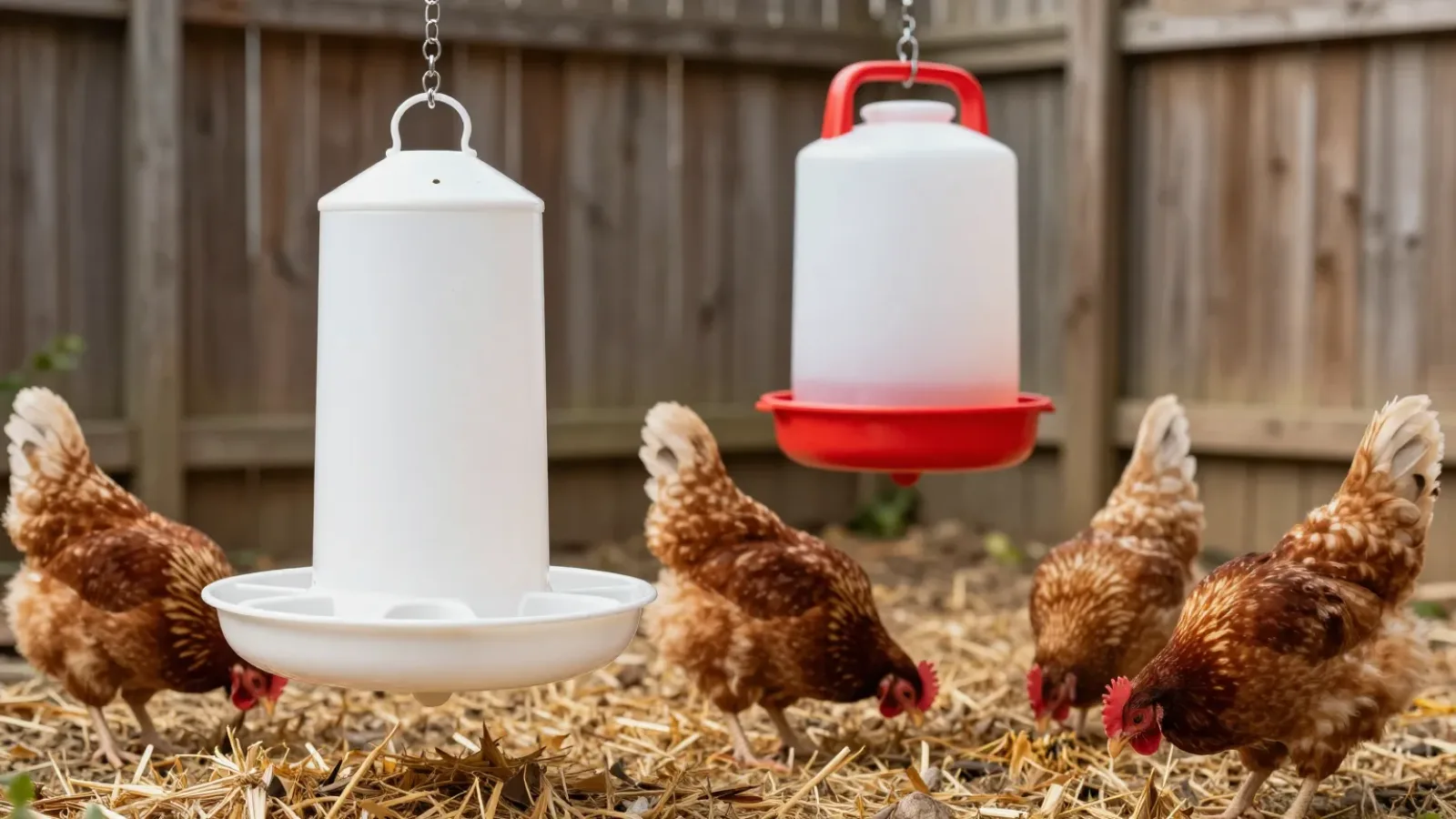
Evidence at a Glance
HAYOHRT Automatic Chicken Feeder No Waste 25lb 4-Port
The best overall feeder: a 25-pound-capacity no-waste design with four feeding ports, so hens eat with their heads inside the ports instead of billing feed onto the ground. That cuts the scratch-and-scatter waste that costs money and draws rodents, while the large capacity means days between refills.
Sources: HAYOHRT manufacturer/Amazon listing specifications, Purina Poultry — feeding guidance, Grubbly Farms — feeder guidance
Verified Jul 6, 2026
FARM-TUFF Premium 5-Gallon Hanging Chicken Waterer
The best waterer: a 5-gallon hanging fount that holds enough water for a small flock and hangs off the ground, which keeps litter, droppings, and dirt out of the water far better than a floor-standing tub. Large capacity means fewer refills and a cleaner drink.
Sources: FARM-TUFF manufacturer/Amazon listing specifications, Chewy — chicken water guidance
Verified Jul 6, 2026
RentACoop Chick2Chicken 4-Port Feeder Kit
The value DIY pick: a 4-port no-waste feeder kit from a known poultry brand that converts a standard bucket into a rodent-resistant, spill-controlling feeder. The cheapest way to get real no-waste feeding if you already have a bucket to mount it on.
Sources: RentACoop manufacturer/Amazon listing specifications, Meyer Hatchery — reducing feed waste
Verified Jul 6, 2026
Our Picks
HAYOHRT
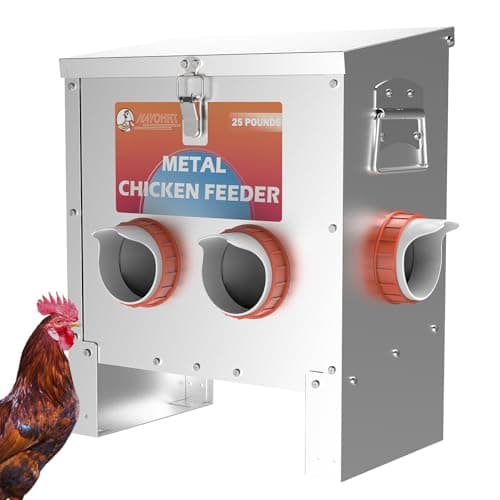
HAYOHRT Automatic Chicken Feeder No Waste 25lb 4-Port
8.6 / 10
- 25-pound feed capacity — days of feed between refills for a small flock
- Four feeding ports so hens eat inside the port, not from an open trough
- No-waste design cuts the billing-and-scatter loss of open feeders
- Enclosed feed keeps rain, rodents, and wild birds out better than a trough
FARM-TUFF
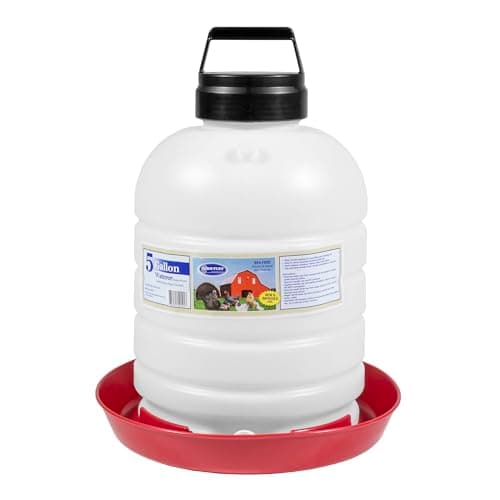
FARM-TUFF Premium 5-Gallon Hanging Chicken Waterer
8.4 / 10
- 5-gallon capacity — enough water for a small flock across several days
- Hanging design keeps the fount off the litter and out of the dirt
- Elevated water stays cleaner than a floor-standing tub
- Large reservoir means fewer refills in hot weather
$57.99
Current price · checked Sep 8, 2026
RentACoop
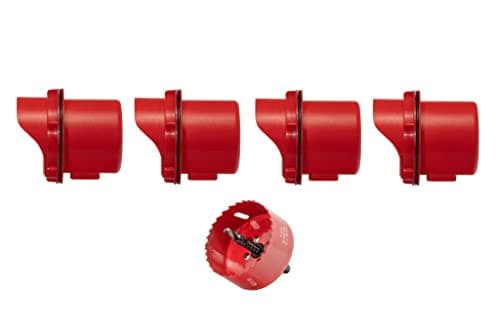
RentACoop Chick2Chicken 4-Port Feeder Kit
8.1 / 10
- Four no-waste feeding ports from a known poultry brand
- Converts a standard bucket into a rodent-resistant no-waste feeder
- The cheapest route to real no-waste feeding if you have a bucket
- Enclosed-bucket feed stays dry and out of reach of pests
$19.95
Current price · checked Sep 8, 2026
Little Giant
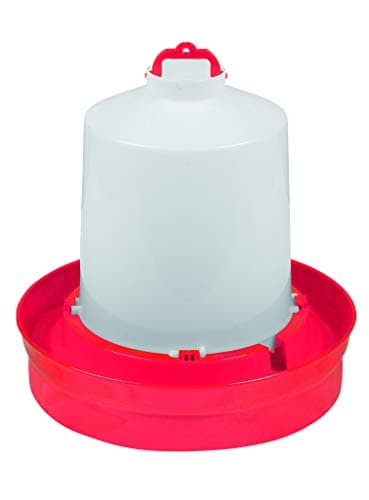
Little Giant Deep Base Poultry Waterer (2 Gallon)
7.9 / 10
- 2-gallon (8-litre) gravity fount from Little Giant / Miller Manufacturing
- Deep base sized by the maker for adult birds rather than chicks
- Fills from the bottom with the base left on the jug
- Plastic stopper with an O-ring to prevent leaks
$36.99
Current price · checked Sep 25, 2026
Harris Farms
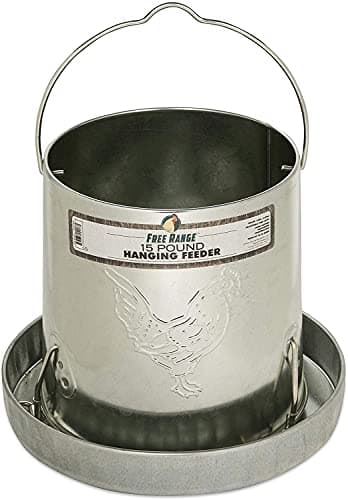
Harris Farms Galvanized Hanging Poultry Feeder (15 lb)
7.7 / 10
- 15 lb capacity in heavy-duty galvanized steel
- Rolled edges for safety and a combined hanger and carry handle
- Spring-loaded clips for setup and height adjustment
- Described by the maker as designed to minimize waste
$51.21
Current price · checked Sep 25, 2026
The Short Answer
The best chicken feeder is a no-waste port feeder, because a hen bills feed onto the ground from an open trough — and that spilled feed both costs you money and draws rats and wild birds. The RentACoop Chick2Chicken 4-Port Feeder Kit (about $19.95) is the feeder to buy here, turning a bucket you already own into a no-waste port feeder for the lowest price on this page. For water, the FARM-TUFF Premium 5-Gallon Hanging Waterer (about $57.99) is the best waterer, holding enough for a small flock while hanging clean off the ground. The core rule: choose no-waste feeding, keep water clean and off the ground, and plan for winter freeze if you use plastic.
Every product on this list has been scored against the PetPal Gear Score, a weighted composite of expert consensus, observed effectiveness, animal safety, long-term durability, and value. Review method: Editorial synthesis of manufacturer and Amazon product listings for each feeder and waterer plus established poultry-husbandry guidance from Grubbly Farms, Chewy's chicken-care education, Purina Poultry, and Meyer Hatchery on feed waste, water sanitation, and freeze management. No independent lab or outlet has published a hands-on review of these specific generic-marketplace feeders and waterers, so we do not attribute any award or verdict to an outlet, and we reason about no-waste design and pest resistance from the listing specs plus published standards rather than inventing flow rates, exact port counts, or capacity figures beyond the product name. PetPalHQ does not run a poultry-equipment testing lab; the PetPal Feeder-Waterer Score below is a transparent synthesis of documented listing specifications and published standards, not a measurement. Prices were captured on 2026-07-06 and should be treated as list/listing figures that will move.. Synthesized from 5+ expert sources.
Chicken feeders and waterers look like an afterthought next to the coop, but the wrong ones quietly cost you money and invite pests every single day. An open trough lets a hen bill feed onto the ground, where it spoils and feeds rats and wild birds instead of your flock, and an open water tub becomes a fouled soup within hours. So before any single pick, here is the rule that should govern your purchase: choose no-waste feeding so the ration stays in the feeder, keep water clean and up off the ground, and plan for winter freeze if you use plastic. Every feeder and waterer below is judged on how well it controls waste, holds capacity, and stays clean, not on how cheap it looks.
We read 6 sources for this guide: the manufacturer and Amazon listings for each feeder and waterer, plus established poultry guidance from Grubbly Farms, Chewy's chicken-care education, Purina Poultry, and Meyer Hatchery on feed waste, water sanitation, and freeze management. We want to be upfront about our method. These are generic-marketplace products, and no independent lab or major outlet has published a hands-on review of any of them — so we do not claim anyone "named" a pick best. We reason about no-waste design and pest resistance from the listing specs and general husbandry knowledge, and we do not invent flow rates, exact port counts, or capacity figures beyond what the product name states. The specs come from the listings; the reasoning comes from published standards; the PetPal Feeder-Waterer Score is our transparent synthesis of the two.
PetPalHQ.com earns affiliate commissions from qualifying purchases. Our recommendations are based on expert consensus — we synthesize professional guidance and manufacturer documentation, plus general husbandry knowledge, to find pet gear that is worth your investment. Commission rates never influence our editorial recommendations.
Feeding gear is one piece of a working flock setup, so this guide is built to sit alongside the rest. If you are still choosing housing, our backyard chicken coop guide covers where the feeder and waterer live, and once you are set up, a reliable automatic chicken coop door handles the dawn and dusk security your fed, watered flock still needs. If perimeter predators are a worry, our electric poultry netting guide covers the fence. Start with the no-waste math below, then pick the gear that fits your flock and your climate.
Why No-Waste Feeding Pays for Itself
The hidden cost of keeping chickens is not the feed you buy — it is the feed you lose. A hen at an open trough bills instinctively, sweeping her beak side to side and flinging pellets and crumble onto the ground, where it is scratched into the litter, spoils, and is eaten by rats and wild birds rather than your flock. Over a season, that scattered feed adds up to real money and a growing pest problem, because a reliable spill of feed on the ground is exactly what draws and sustains rodents. A no-waste feeder attacks both at once: hens eat with their heads inside a port, so the feed they do not swallow stays in the feeder, and an enclosed reservoir keeps the ration dry and out of a rat's reach overnight.
That is why no-waste spill control is the heaviest factor in our score. The RentACoop bucket kit puts the feed where only a hen's head can reach it, which is the single most effective thing you can do to cut feed cost and pest pressure. A conventional ring feeder from a trusted brand reduces spill compared with an open pan, but a port design controls it more tightly. If rats or wild birds are already a problem in your run, the port feeders are the answer, and pairing them with a secure coop and a reliable automatic chicken coop door keeps the whole setup from becoming a nightly buffet.
Height and capacity finish the job. Hang or mount a feeder so the ports sit at about the birds' back height, which both limits billing and keeps litter out of the feed, and choose a capacity that gives you days between refills without leaving so much feed sitting that it spoils. Get the design, the height, and the capacity right and a feeder pays for itself in saved feed within a season.
Water: Keep It Clean, Keep It From Freezing
Water is where more flocks get quietly shortchanged than feed. Chickens drink a surprising amount, especially in heat, and running dry even briefly stresses laying hens and cuts egg production — so capacity matters, and a 5-gallon fount like the FARM-TUFF buys you days of margin. But capacity is only half of it; cleanliness is the other half. A tub of water on the ground becomes a soup of litter, droppings, and scratched-in debris within hours, and dirty water spreads disease, so keeping the drinking level up off the ground is a genuine health measure. A hanging fount, or any waterer elevated on a block, stays far cleaner than a floor tub.
The honest limitation to plan around is winter. Every plastic waterer here can freeze solid in a hard freeze, cutting your flock off from water at the coldest, most dangerous time — and chickens need liquid water every day. In a freezing climate, that means budgeting for a heated base, a heated waterer, or a routine of swapping in fresh unfrozen water several times a day. We will not pretend a standard plastic fount solves winter on its own, because it does not. You can browse heated options and bases alongside any chicken waterer listing when you shop for cold weather.
Cleaning ties it together. Even an elevated fount grows algae and biofilm if it sits too long, so match the capacity to what your flock drinks before it goes stale, and scrub feeders and waterers on a regular schedule. Clean, always-available water in a design you can keep sanitary is worth more to a flock's health than any premium feature.
Port, Gravity, or Treadle: Which Feeder Type Fits You?
Three feeder formats solve different problems. A port feeder, like the RentACoop kit, has hens eat through openings into an enclosed reservoir, which controls waste most tightly and keeps out rain and pests — the best all-round choice for cutting cost and rodents. A gravity feeder, the classic ring or tube design every farm-supply shelf carries, drops feed into an open feeding area as birds eat; it is simple and familiar and reduces spill versus a pan when hung correctly, but hens can still bill some feed out. A treadle feeder, which opens a lid only when a bird steps on a platform, is the most rodent-proof of all because it stays sealed to anything lighter than a hen — but it costs more, needs birds to learn it, and can be finicky.
Match the format to your priorities. If cutting feed waste and deterring rats is the goal and budget matters, a port feeder is the sweet spot, which is why they lead this guide. If you want maximum rodent-proofing and will pay for it, research a treadle feeder separately. And if you simply want a cheap, familiar feeder from a known brand and will hang it at the right height, a gravity ring feeder is fine. There is no single best format, only the one that fits your pest pressure, your budget, and how much DIY you are willing to do.
Whatever you choose, the two non-negotiables are keeping feed dry and keeping it off the ground. A wet feeder molds and can sicken birds, and spilled feed feeds pests, so pick a design you can keep covered and clean, mount it at bird height, and pick up any spillage at dusk. Get those basics right and the feeder does its job for years.
Head-to-Head Comparison
| Product | Type | Capacity | PetPal Feeder-Waterer Score |
|---|---|---|---|
| HAYOHRT Automatic Chicken Feeder No Waste 25lb 4-Port | Port feeder | 25 lb | 8.6 |
| FARM-TUFF Premium 5-Gallon Hanging Chicken Waterer | Hanging waterer | 5 gal | 8.4 |
| RentACoop Chick2Chicken 4-Port Feeder Kit | DIY port feeder | Bucket-varies | 8.1 |
| Little Giant Deep Base Poultry Waterer (2 Gallon) | Gravity waterer | 2 gal | 7.9 |
| Harris Farms Galvanized Hanging Poultry Feeder (15 lb) | Hanging ring feeder | 15 lb | 7.7 |
- 25-pound feed capacity — days of feed between refills for a small flock
- Four feeding ports so hens eat inside the port, not from an open trough
- No-waste design cuts the billing-and-scatter loss of open feeders
- Enclosed feed keeps rain, rodents, and wild birds out better than a trough
- Gravity-fed, so feed drops into the ports as the flock eats
The HAYOHRT is the feeder we would put most flocks on, because it attacks the single biggest hidden cost of keeping chickens: wasted feed. A hen at an open trough instinctively bills — sweeping her beak side to side and flinging feed onto the ground, where it is scratched into the litter, spoils, and feeds rats and wild birds instead of your flock. The HAYOHRT no-waste feeder solves that with four ports a hen puts her head into to eat, so the feed she does not swallow stays in the feeder rather than on the floor. Over a season, that saved feed adds up to real money.
Capacity is the other half of its appeal. At 25 pounds, this feeder holds days of feed for a small flock, so you are not topping up a small trough twice a day — you fill it and walk away. The enclosed, gravity-fed design also keeps the feed drier and cleaner than an open pan, because rain runs off the lid instead of into the ration, and the ports are far harder for rodents and wild birds to raid than an exposed trough. For a keeper who wants to cut both waste and chores, the combination of 25-pound capacity and four no-waste ports is why the HAYOHRT earns best overall.
Here is the honesty this guide runs on. From the name we can confirm this is a 25-pound, 4-port, no-waste automatic (gravity) feeder at about $36.99 list, and we can explain from general knowledge why port feeders cut waste and deter pests — that is established husbandry, not a lab result. What we will not do is invent a feed-savings percentage, an exact port diameter, or a "feeds X hens for Y days" figure, since consumption depends on flock size and breed. Mount it at the right height for your birds, keep the ports clear, and the HAYOHRT is the most cost-effective feeder here.
What We Love
- Four no-waste ports stop the billing-and-scatter loss of open troughs
- 25-pound capacity means days between refills for a small flock
- Enclosed, gravity-fed design keeps feed drier than an open pan
- Ports are far harder for rats and wild birds to raid than a trough
- Strong value for a large-capacity no-waste feeder
What Could Be Better
- Hens may need a few days to learn to eat from the ports
- Full 25-pound capacity is heavy and best mounted or hung securely
- Ports need occasional clearing so feed flows freely to the birds
The Verdict
For most flocks, the HAYOHRT is the editorial default: a large-capacity, four-port no-waste feeder that cuts feed loss and deters pests for about the price of a bag or two of the feed it will save. Mount it at bird height and give hens a few days to learn the ports.
Sources
- HAYOHRT (manufacturer/Amazon listing): a 25-pound-capacity no-waste automatic chicken feeder with four feeding ports, listed at about $36.99
- Purina Poultry (Reducing Feed Waste): notes that open feeders let hens bill and scatter feed, and that enclosed or port feeders reduce that loss
$57.99
Current price · checked Sep 8, 2026
- 5-gallon capacity — enough water for a small flock across several days
- Hanging design keeps the fount off the litter and out of the dirt
- Elevated water stays cleaner than a floor-standing tub
- Large reservoir means fewer refills in hot weather
- Built for durable, everyday outdoor use
The FARM-TUFF is the best waterer here because it gets the two things that matter most right: capacity and cleanliness. At 5 gallons, it holds enough water for a small flock across several days, which matters more than keepers expect — chickens drink a surprising amount, especially in heat, and running dry even briefly stresses laying hens. A large reservoir means you refill less often and worry less on a hot afternoon. That capacity is the first reason the FARM-TUFF waterer earns the water slot.
The second reason is how it hangs. A floor-standing tub of water in a run becomes a soup of litter, droppings, dirt, and scratched-in debris within hours, because hens perch on it, kick bedding into it, and foul it. A hanging fount held at the right height keeps the drinking level up off the ground and out of the scratch zone, so the water stays cleaner and the birds drink less contamination. Clean water is not a luxury for chickens — dirty water spreads disease and cuts laying — so an elevated, high-capacity fount like this is a genuine health upgrade over an open pan.
The honesty is consistent with the rest of the roster. The name confirms it is a 5-gallon hanging chicken waterer at about $57.99 list, and we can explain from general knowledge why elevated, high-capacity water stays cleaner. We will not invent the exact drinker count, the material grade, or a freeze rating. And here is the real limitation to plan around: like any water container, a plastic fount can freeze solid in winter, so in a cold climate you will need a heated base or a cold-weather plan, which we cover below. For clean water in the warmer three seasons, the FARM-TUFF is the pick.
What We Love
- 5-gallon capacity covers a small flock for several days between refills
- Hanging design keeps water off the litter and out of the scratch zone
- Elevated drinking level keeps the water markedly cleaner than a floor tub
- Durable build suited to everyday outdoor use
What Could Be Better
- Like any plastic fount, it can freeze solid in hard winters without a heated base
- Full 5 gallons is heavy — hang it from a secure point
- Needs regular cleaning to prevent algae and biofilm despite hanging
The Verdict
If you want clean water for a small flock with fewer refills, the FARM-TUFF 5-gallon hanging fount is the best waterer here. Plan for a heated base or a cold-weather routine in freezing climates, and clean it regularly to keep the water safe.
Sources
- FARM-TUFF (manufacturer/Amazon listing): a 5-gallon hanging chicken waterer built for durable outdoor use, listed at about $57.99
- Chewy (Caring for Backyard Chickens: Water): advises keeping fresh, clean water available at all times and off the ground to prevent contamination
$19.95
Current price · checked Sep 8, 2026
- Four no-waste feeding ports from a known poultry brand
- Converts a standard bucket into a rodent-resistant no-waste feeder
- The cheapest route to real no-waste feeding if you have a bucket
- Enclosed-bucket feed stays dry and out of reach of pests
- Scales capacity to whatever bucket size you mount it on
The RentACoop Chick2Chicken kit is the value pick, and a clever one: instead of buying a whole feeder, you buy four no-waste ports and mount them on a bucket you already have. From RentACoop, a well-known backyard-poultry brand, the kit turns any standard bucket into a no-waste, rodent-resistant feeder for under twenty dollars — the cheapest way into port feeding on the market. If you have an empty five- or six-gallon bucket sitting around, this is the frugal path to the waste-cutting benefit a moulded port feeder gives you, at a fraction of the price.
The design logic is identical to a moulded port feeder. Hens eat with their heads inside the ports rather than billing feed out of an open trough, so the scatter waste that feeds rodents and wild birds largely disappears, and an enclosed bucket keeps the feed dry and out of a rat's reach far better than a pan. Because you choose the bucket, you also choose the capacity — mount it on a bigger bucket and you get more days between refills. It is the most flexible and lowest-cost no-waste option here, which is exactly why it earns the value slot.
The honest framing holds. The name confirms it is a 4-port feeder kit from RentACoop at about $19.95 list, and we can explain the no-waste and pest benefits from general knowledge. We will not invent a bucket size it fits, a port diameter, or a feed-savings figure — you supply the bucket, and you should confirm the recommended bucket size on the live listing. The one catch is assembly: you have to cut the port holes and mount them yourself, so it takes some DIY. For a keeper happy to drill a bucket, the RentACoop kit is unbeatable value.
What We Love
- Under twenty dollars for real four-port no-waste feeding
- Converts a bucket you already own — you pick the capacity
- Enclosed-bucket feed stays dry and out of rodents' reach
- From RentACoop, a recognized backyard-poultry brand
What Could Be Better
- Requires DIY — you cut the holes and mount the ports yourself
- You must supply a suitable bucket, so it is not fully complete out of the box
- Recommended bucket size varies; confirm on the listing before buying
The Verdict
If you want no-waste feeding for the lowest possible price and do not mind drilling a bucket, the RentACoop Chick2Chicken kit is the value pick. Confirm the bucket size on the listing, and you get the same waste-cutting benefit as a full feeder for a fraction of the cost.
Sources
- RentACoop (manufacturer/Amazon listing): a four-port no-waste feeder kit that mounts on a standard bucket, from RentACoop, listed at about $19.95
- Meyer Hatchery (Reducing Chicken Feed Waste): recommends port or enclosed feeders to cut the billing waste and rodent attraction of open troughs
$36.99
Current price · checked Sep 25, 2026
- 2-gallon (8-litre) gravity fount from Little Giant / Miller Manufacturing
- Deep base sized by the maker for adult birds rather than chicks
- Fills from the bottom with the base left on the jug
- Plastic stopper with an O-ring to prevent leaks
- Carrying handle for moving it full
The Little Giant fount is our name-brand waterer pick for keepers who want a simple, proven design from a familiar farm brand. Little Giant, made by Miller Manufacturing, is a farm-store staple, and this is the classic backyard waterer: a 2-gallon reservoir sits over a shallow drinking trough, and water flows down to keep the trough filled as birds drink. Miller sizes this one specifically for adult birds — the deep base is the difference between this and the brooder-scale founts in the same line, so if you are watering chicks, buy the small one instead.
Two details make it easier to live with than a generic fount. It fills from the bottom with the base left attached to the jug, which spares you the usual routine of separating a wet base, filling, inverting, and racing the leak. And the stopper carries an O-ring, which is the part that decides whether a plastic fount seeps onto the coop floor all week or stays sealed. A carry handle means you can move two gallons — about 17 pounds of water — without wearing it.
Two limits are worth planning around. A gravity fount stands on the ground, so it collects litter and droppings unless you raise it on a block, a paver, or a purpose-made stand; Chewy's backyard-flock guidance is explicit that water should be kept clean and off the ground. And it is unheated plastic, so it will freeze solid in a real winter — plan on a heated base or a second fount you swap out on cold mornings. For a keeper who wants a simple, cheap, proven waterer from a known brand, or a spare to rotate, the Little Giant does the job at about $36.99.
What We Love
- From Little Giant / Miller, a long-standing farm-supply brand
- Bottom-fill with the base attached avoids the usual wet-base juggling
- O-ring stopper addresses the leak point that plagues cheap plastic founts
- 2 gallons is a sensible day's water for a small adult flock
What Could Be Better
- Ground-standing design collects litter unless you elevate it
- Unheated plastic will freeze in winter — budget for a heated base
- Deep base is for adult birds; chicks need the smaller fount in the line
The Verdict
If you want a simple, proven fount from a known farm brand, the Little Giant 2-gallon deep base at about $36.99 is a solid name-brand waterer. Elevate it to keep the water cleaner and plan for winter freeze.
Sources
- Little Giant / Miller Manufacturing (manufacturer Amazon listing): DEEP BASE DESIGN - This 2-gallon deep base waterer is best for adult birds; the handy design allows the base to remain on the jug while filling from the bottom; includes a plastic stopper with o-ring to prevent leaks; comes with a strong carrying handle; holds up to 2 gallon (8 liters)
- Chewy (Caring for Backyard Chickens: Water): advises keeping water clean and off the ground to reduce contamination
$51.21
Current price · checked Sep 25, 2026
- 15 lb capacity in heavy-duty galvanized steel
- Rolled edges for safety and a combined hanger and carry handle
- Spring-loaded clips for setup and height adjustment
- Described by the maker as designed to minimize waste
- The conventional hanging alternative to the port-feeder picks
The Harris Farms galvanized hanging feeder is our name-brand alternative for keepers who prefer a conventional hanging feeder from an established brand. Harris Farms is a farm-store staple, and this is the classic design generations of keepers have used: a 15-pound reservoir over a ring of feeding stations, hung from the coop ceiling so hens reach in rather than sweep feed out. Hung at the right height — roughly the birds' back height, which is what Grubbly Farms recommends — it spills far less than an open pan.
Galvanized steel is the reason to pick this over a plastic feeder in the same shape. It does not go brittle in UV, it does not crack when a hen knocks it, and rodents cannot chew into it, which matters more than most keepers expect: a plastic feeder with a gnawed corner feeds mice all winter. The rolled edges are a small safety detail that stops a raw steel lip catching a bird or your hand, and the spring-loaded clips mean you can raise the feeder as birds grow rather than rehanging the whole thing.
Be clear about the trade-off, because it is the reason this ranks fifth rather than first. A classic ring feeder does not control waste as tightly as the port design of the HAYOHRT or the RentACoop kit — hens can still bill feed out over the lip, and the tray is open to rain and to rodents at night unless you bring it in. If cutting waste and deterring vermin is your priority, the port feeders above are the better buy. If you want a simple, familiar, near-indestructible feeder and will hang it correctly, this is a sound choice at about $51.21.
What We Love
- Galvanized steel shrugs off UV, knocks, and rodent teeth
- 15 lb capacity covers several days for a small flock
- Spring clips make height adjustment easy as birds grow
- Rolled edges and an integrated hanger/carry handle
What Could Be Better
- Conventional ring design controls waste less tightly than port feeders
- Open tray takes rain and feeds rodents overnight unless brought in
- About $51.21
The Verdict
If you want a conventional feeder from a trusted farm brand, the Harris Farms 15 lb galvanized hanging feeder at about $51.21 is a near-indestructible name-brand alternative. For tighter waste and rodent control, the port feeders above are still better.
Sources
- Harris Farms (manufacturer Amazon listing): Harris Farms Galvanized Hanging Poultry Feeder, 15 lbs; heavy-duty galvanized steel construction; rolled edges for safety and a convenient hanger/carry handle; spring loaded clips for easy set-up and adjustment; designed to minimize waste
- Grubbly Farms (How to Feed Backyard Chickens): recommends hanging feeders at back height and choosing designs that limit billing to reduce waste
How We Score
Formula
PetPal Feeder-Waterer Score = (No-Waste / Spill Control × 0.30) + (Capacity vs Refill Frequency × 0.25) + (Weather & Freeze Resistance × 0.20) + (Cleaning & Pest Resistance × 0.15) + (Value × 0.10)
Score Factors
- No-Waste / Spill Control · 30%
- How well a feeder keeps feed in the feeder and out of the litter, and how well a waterer keeps water off the ground. This is the heaviest factor because spilled feed is the biggest hidden cost of keeping chickens and the main thing that draws rats and wild birds. Port feeders where hens eat inside the port score highest; open troughs and pans that let hens bill feed onto the ground score lowest. For waterers, hanging or elevated designs that keep the drinking level up score higher than floor tubs.
- Capacity vs Refill Frequency · 25%
- How much feed or water the unit holds against how often you must refill it. Larger reservoirs mean fewer chores and less risk of the flock running dry or hungry, which matters most in heat when birds drink heavily. We score the capacity stated in the product name — 25 pounds of feed, 5 gallons of water — and do not invent a 'feeds X hens for Y days' figure, since consumption depends on flock size and breed. Bigger honest capacity for the flock size scores higher.
- Weather & Freeze Resistance · 20%
- How well the unit handles rain, sun, and especially winter freeze. Enclosed feeders that keep rain off the ration score well; the real limitation is water, because any plastic waterer can freeze solid in a hard winter and needs a heated base or a cold-weather plan. We treat freeze as a genuine, honestly-stated limitation of plastic founts rather than pretending it away, and score higher the units that keep feed dry and water usable across seasons.
- Cleaning & Pest Resistance · 15%
- How easily the unit cleans and how well it keeps out rodents, wild birds, and contamination. Enclosed feeders and ports deny rats and sparrows the open feed they raid; elevated waterers stay cleaner than fouled floor tubs; wipe-clean plastic and metal beat porous materials. A feeder that becomes a rodent buffet or a waterer that grows algae is a health and cost liability, so cleanability and pest resistance are scored together.
- Value · 10%
- Price relative to capacity, waste control, and durability — not the lowest sticker. The DIY port kit scores highest on raw value for delivering no-waste feeding cheaply; the large-capacity feeder and waterer score well for what they save in feed and chores. Value is measured against the feed and effort the unit actually saves, since a cheap feeder that wastes feed is not a bargain.
| Rank | Product | Score |
|---|---|---|
| #1 | HAYOHRT HAYOHRT Automatic Chicken Feeder No Waste 25lb 4-Port | 8.6 |
| #2 | FARM-TUFF FARM-TUFF Premium 5-Gallon Hanging Chicken Waterer | 8.4 |
| #3 | RentACoop RentACoop Chick2Chicken 4-Port Feeder Kit | 8.1 |
| #4 | Little Giant Little Giant Deep Base Poultry Waterer (2 Gallon) | 7.9 |
| #5 | Harris Farms Harris Farms Galvanized Hanging Poultry Feeder (15 lb) | 7.7 |
When NOT to Buy
Do not buy an open trough or pan feeder if rodents or wild birds are already a problem. An open feeder lets hens bill feed onto the ground and leaves the ration exposed overnight, which is exactly what draws and sustains rats, mice, and flocks of sparrows. If you are fighting pests, buy a port or enclosed feeder that keeps the feed off the ground and out of reach, and pick up any spilled feed at dusk. A cheap open feeder that feeds the local rat population is not a saving.
Skip a plastic waterer as your only water source in a hard-freeze climate without a heat plan. Every plastic fount here can freeze solid in winter, cutting your flock off from water at the coldest, most dangerous time. Chickens need liquid water daily, so in a freezing climate budget for a heated base, a heated waterer, or a routine of swapping in fresh unfrozen water several times a day. Do not assume a standard plastic fount will get you through winter unaided, because it will not.
Do not oversize a feeder or waterer beyond what your flock uses before it spoils. A huge feed reservoir left half-full for weeks can grow mold or attract pests, and water sitting too long grows algae and biofilm. Match the capacity to how fast your flock actually eats and drinks, so feed and water turn over regularly and stay fresh. Bigger is only better up to the point where the contents are consumed before they go bad.
Skip a feeder you cannot keep clean and dry. Feed that gets wet in an open or poorly covered feeder cakes, molds, and can make birds sick, and a feeder that is hard to empty and scrub simply does not get cleaned. Choose a design you can wipe out and keep dry, mount it under cover or use an enclosed feeder that sheds rain, and clean feeders and waterers on a regular schedule rather than assuming they stay sanitary on their own.
Do not buy feeding gear before you have sorted the basics of the coop and run. A feeder and waterer are only useful once your flock has a secure, right-sized home, and money is better spent first on housing, predator-proofing, and a reliable water plan than on a premium feeder for a coop that is not yet safe. Get the flock housed and protected, then optimize feeding and watering with the picks here.
Frequently Asked Questions
- How do no-waste feeders reduce feed loss?
- A no-waste feeder has hens eat through ports or openings into an enclosed reservoir, so their heads go inside the feeder to eat rather than sweeping feed out of an open trough. Chickens bill instinctively — flinging feed side to side — and at an open pan that scattered feed lands on the ground, spoils, and feeds rodents and wild birds. A port design keeps the feed they do not swallow in the feeder, and an enclosed reservoir keeps rain out and rats from raiding it overnight. Over a season, that saved feed adds up to real money and a much smaller pest problem.
- How much feed and water does a chicken need each day?
- It varies by breed, size, and season, so match capacity to your flock rather than a fixed number. As a general guide, a standard laying hen eats a modest daily ration of feed and drinks a surprising amount of water, especially in hot weather when water intake climbs sharply. The practical takeaway is to provide feed and clean water free-choice and always available, size your feeder and waterer so the flock never runs out between refills, and watch consumption in heat, when birds drink far more. We do not print an exact per-hen figure because it depends too much on your specific birds and climate.
- How do I keep chicken water from freezing in winter?
- You need a heat source or a routine, because any plastic waterer will freeze solid in a hard freeze and chickens need liquid water daily. The common solutions are a heated waterer base that sits under a metal fount, a purpose-built heated waterer, or, if you have no power at the coop, swapping in fresh unfrozen water several times a day. Placing the waterer in the most sheltered spot and using a larger volume that freezes more slowly helps at the margins, but in a genuinely cold climate a heated base is the reliable answer. Do not count on an unheated plastic fount to get you through winter.
- How do I keep rodents and wild birds out of the feed?
- Deny them the open feed they raid. Use a port or enclosed feeder so the ration is not sitting exposed, and a treadle feeder that only opens when a hen steps on it is the most rodent-proof option of all. Pick up any spilled feed at dusk, since a reliable spill on the ground is what draws and sustains rats and sparrows, and store your feed bags in sealed metal containers rather than open sacks. Combining an enclosed feeder with tidy feeding habits and a secure coop is far more effective than trying to trap your way out of a rodent problem after it starts.
- What is the difference between treadle, port, and gravity feeders?
- A gravity feeder is the classic tube or ring design that drops feed into an open feeding area as birds eat — simple and cheap, but hens can still bill some feed out. A port feeder has birds eat through openings into an enclosed reservoir, which controls waste more tightly and keeps out rain and pests. A treadle feeder opens a lid only when a bird steps on a platform, so it stays sealed against rodents and wild birds but costs more and needs birds to learn it. For most keepers, a port feeder is the best balance of waste control, pest resistance, and price, which is why they top this guide.
Bottom Line
Buy the FARM-TUFF 5-gallon hanging waterer if you want clean water with fewer refills for a small flock. Hang it to keep the water off the litter, and plan a heated base or cold-weather routine in freezing climates.
Buy the RentACoop Chick2Chicken kit if you want no-waste feeding for the lowest price and do not mind drilling a bucket. Confirm the recommended bucket size on the listing, and you get full port-feeder benefits for under twenty dollars.
Skip open pans and troughs entirely if rats or wild birds are already a problem, because scattered feed on the ground is what draws and sustains them. A port design is the fix, not a bigger open feeder.
Sources & Methodology
Methodology
PetPal Feeder-Waterer Score = (No-Waste / Spill Control × 0.30) + (Capacity vs Refill Frequency × 0.25) + (Weather & Freeze Resistance × 0.20) + (Cleaning & Pest Resistance × 0.15) + (Value × 0.10)
Expert review sources
- Grubbly Farms — How to Feed Backyard Chickens (feeder height, billing, waste reduction)
- Chewy — Caring for Backyard Chickens (clean water, off-the-ground founts)
- Purina Poultry — Reducing Feed Waste (open vs enclosed and port feeders)
- Meyer Hatchery — Reducing Chicken Feed Waste (port feeders, rodent control)
- HAYOHRT, FARM-TUFF, and RentACoop — manufacturer/Amazon listing specifications (no-waste feeders and hanging waterer)
Community sources
- BackyardChickens.com forum — owner discussion on no-waste feeders, rodent control, and keeping water from freezing
Prices and specs verified July 6, 2026.
About the author
Nick Miles is the chief editor of PetPalHQ. The picks above are an editorial synthesis of manufacturer and Amazon listing specifications cross-checked against established poultry-husbandry guidance from Grubbly Farms, Chewy, Purina Poultry, and Meyer Hatchery. PetPalHQ does not run a poultry-equipment testing lab, and no independent outlet has published a hands-on review of these specific generic-marketplace feeders and waterers. We reason about no-waste design, water sanitation, and freeze management from the listing specs and published standards rather than inventing flow rates, port counts, or capacity figures beyond the product name. The PetPal Feeder-Waterer Score is a transparent composite of documented specifications and published standards, not a measurement.
PetPalHQ is a participant in the Amazon Services LLC Associates Program. We may earn commissions from qualifying purchases — at no extra cost to you.