Birds
Best Automatic Chicken Coop Doors (2026)
Automatic coop doors ranked on predator-timing reliability, trigger flexibility, and weather resilience — with the honest trade-offs between light-sensor, timer, and remote opening.
By Nick Miles · Updated September 26, 2026 · 12 min
PetPalHQ is reader-supported. We may earn a commission from qualifying Amazon purchases at no extra cost to you.
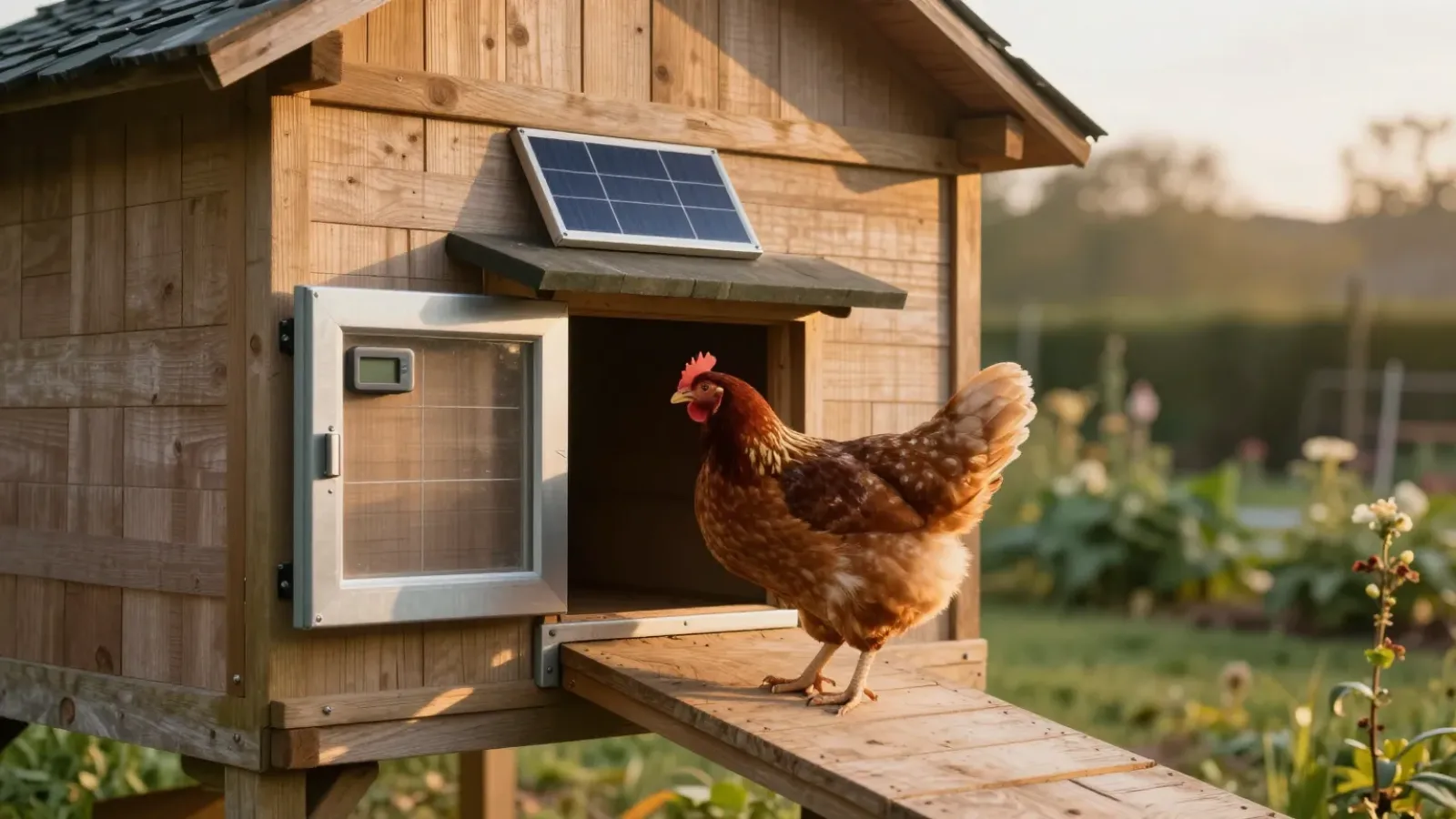
Evidence at a Glance
NyPots Automatic Chicken Coop Door, Solar + Timer + Light Sensor
The best overall: the only door here that ships with all three trigger modes — solar power, a programmable timer, and a light sensor — so you can open and close on time of day, on ambient light, or a combination, without mains wiring. That flexibility is what makes it adapt to any coop and season.
Sources: NyPots manufacturer/Amazon listing specifications, Grubbly Farms — predator-protection guidance, Meyer Hatchery — coop-door basics
Verified Jul 6, 2026
nolonly Automatic Chicken Coop Door, Solar LCD
The readable-setup pick: solar power with an LCD screen that shows the schedule and settings outright, instead of programming by counting button presses. A no-wiring door for keepers who want the least fiddly first setup, and who will pay a little more than the top pick to get it.
Sources: nolonly manufacturer/Amazon listing specifications, Chewy — chicken-care education
Verified Jul 6, 2026
ZenxyHoC Solar Automatic Chicken Coop Door, Remote
The remote-control runner-up: solar-powered with a remote so you can open or close the pop door from a distance, useful for override on odd-schedule days. A budget entry into automatic dawn/dusk protection with hands-on control when you want it.
Sources: ZenxyHoC manufacturer/Amazon listing specifications, Grubbly Farms — predator-protection guidance
Verified Jul 6, 2026
Our Picks
NyPots
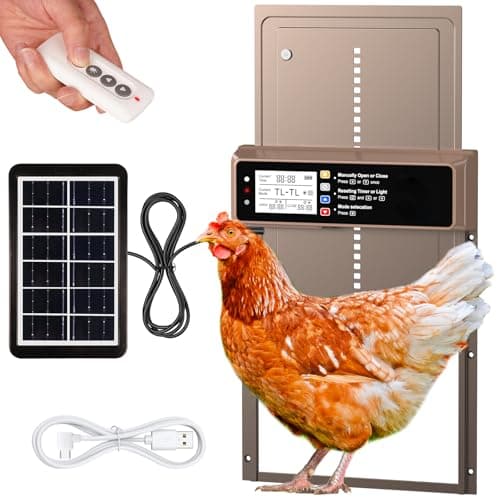
NyPots Automatic Chicken Coop Door, Solar + Timer + Light Sensor
8.6 / 10
- Three trigger modes — solar, programmable timer, and light sensor — in one door
- Solar power means no mains wiring to the coop
- Automates the two riskiest windows: closing at dusk and opening at dawn
- Light-sensor mode tracks the changing seasons automatically
$59.99
Current price · checked Sep 8, 2026
nolonly
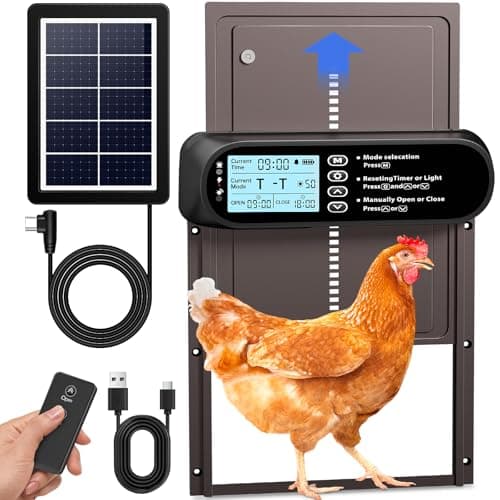
nolonly Automatic Chicken Coop Door, Solar LCD
8.3 / 10
- Solar-powered with an LCD screen for clear, readable programming
- No mains wiring — the solar panel keeps it charged
- Automates dawn/dusk open and close to cover predator windows
- LCD display makes setup and schedule changes straightforward
$79.99
Current price · checked Sep 8, 2026
ZenxyHoC
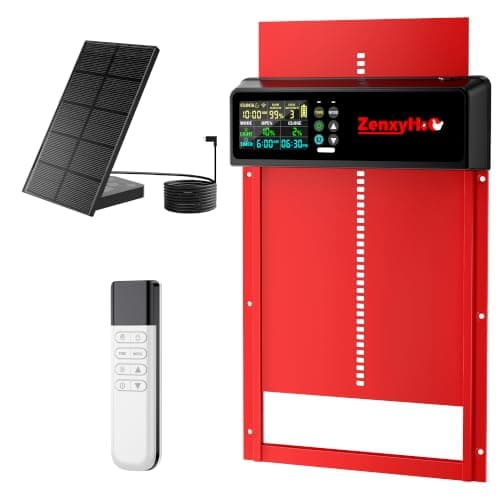
ZenxyHoC Solar Automatic Chicken Coop Door, Remote
8.1 / 10
- Solar-powered with a handheld remote for manual override
- Open or close the pop door from a distance without opening the run
- No mains wiring — solar keeps it charged
- The cheapest door here
$47.99
Current price · checked Sep 8, 2026
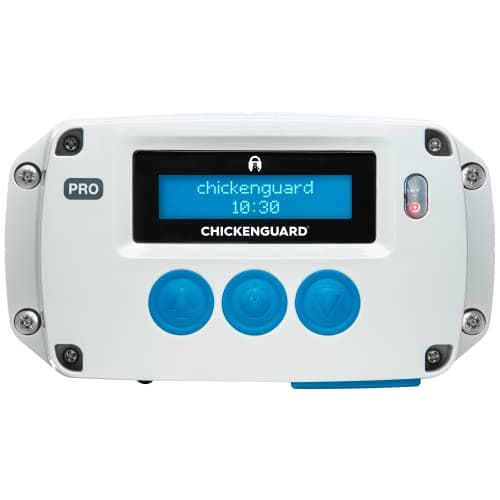
ChickenGuard
ChickenGuard PRO Automatic Coop Door Opener (Battery Kit)
8.0 / 10
- Motor rated to lift a coop door weighing up to 2 kg (4 lb)
- Four operating modes: timer, light sensor, dual-safe, and manual
- Dual-safe mode closes on whichever comes first — preset time or sunset
- LCD screen with a setup wizard and gloves-on buttons
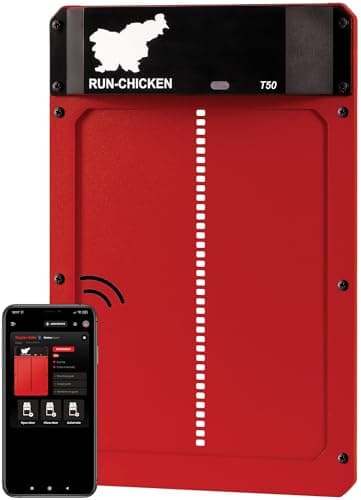
Run-Chicken
RUN-CHICKEN Door T50 Automatic Coop Door Opener
7.8 / 10
- Self-contained weatherproof aluminium door — no solar panel and no cables
- Rechargeable battery rated by the maker for season-long operation
- App and timer control, or light-sensor mode that tracks sunrise and sunset
- Anti-pinch safety sensor stops the door closing on an obstruction
$129.99
Current price · checked Sep 25, 2026
The Short Answer
The best automatic chicken coop door is the one that reliably closes before dusk and opens after dawn — the two windows when predators do the most damage — and gives you flexible ways to trigger it. The NyPots Automatic Chicken Coop Door (about $59.99) is the best overall because it combines all three trigger modes: solar power, a timer, and a light sensor, so you are not locked into one method. The nolonly Solar LCD door (about $79.99) is the LCD pick, trading trigger modes for a screen that makes programming legible. The ZenxyHoC Solar Automatic Door (about $47.99) is the cheapest here and the only one with a handheld remote, so you can shut the flock in early without walking out to the run. The core rule: buy a door that automates dawn and dusk, prefer light-sensor plus timer flexibility, and remember an open coop door at night is a predator's invitation.
Every product on this list has been scored against the PetPal Gear Score, a weighted composite of expert consensus, observed effectiveness, animal safety, long-term durability, and value. Review method: Editorial synthesis of manufacturer and Amazon product listings for each automatic door plus established poultry-husbandry guidance from Grubbly Farms, Chewy's chicken-care education, and Meyer Hatchery on predator timing and dawn/dusk risk. No independent lab or outlet has published a hands-on review of these specific generic-marketplace doors, so we do not attribute any award or verdict to an outlet, and we reason about trigger modes and predator protection from the listing specs plus published standards rather than inventing runtime, range, or reliability numbers. PetPalHQ does not run a poultry-equipment testing lab; the PetPal Coop-Door Score below is a transparent synthesis of documented listing specifications and published standards, not a measurement. Prices were captured on 2026-07-06 and should be treated as list/listing figures that will move.. Synthesized from 4+ expert sources.
An automatic chicken coop door is sold on convenience, but its real job is life and death: it closes the flock in before dusk and opens it after dawn, the two windows when predators do the most damage. A keeper who lets birds out by hand every morning and shuts them in every night does the same job — until the one evening they are late, or away, or forget, and a raccoon or fox is waiting. So before any single pick, here is the rule that should govern your purchase: buy a door that reliably automates dawn and dusk, prefer the flexibility of light-sensor plus timer triggering, and remember that the door is one layer of predator defense, not the whole wall. Every door below is judged on how dependably it protects the flock at those two windows, not on a feature list.
We read four sources for this guide: the manufacturer and Amazon listings for each door, plus established poultry guidance from Grubbly Farms, Chewy's chicken-care education, and Meyer Hatchery on predator timing and dawn/dusk risk. We want to be upfront about our method. These are generic-marketplace doors, and no independent lab or major outlet has published a hands-on review of any of them — so we do not claim anyone "named" a pick best. We reason about trigger modes and predator protection from the listing specs and general husbandry knowledge, and we do not invent range, runtime, motor strength, or opening sizes. The specs come from the listings; the reasoning comes from published standards; the PetPal Coop-Door Score is our transparent synthesis of the two.
PetPalHQ.com earns affiliate commissions from qualifying purchases. Our recommendations are based on expert consensus — we synthesize professional guidance and manufacturer documentation, plus general husbandry knowledge, to find pet gear that is worth your investment. Commission rates never influence our editorial recommendations.
An automatic door is one part of a secure coop, so this guide is built to work with the rest of your setup. If you are still choosing housing, our backyard chicken coop guide covers the henhouse the door bolts onto, and our electric poultry netting guide covers the perimeter fence that keeps ground predators away from the coop in the first place. A door plus a fence plus a predator-proofed base is the real security package. Start with the timing math below, then pick the door that fits your coop and your schedule.
Why Dawn and Dusk Are the Windows That Matter
Predators run on a schedule, and it lines up almost exactly with when your flock moves. Just after dusk, raccoons, foxes, opossums, and owls become active — often before a keeper who closes up by hand has gotten home from work — and just before dawn is the second surge, when hungry night hunters make a last pass. A flock left with an open pop-door during either window is exposed at the worst possible time. An automatic door's entire value is that it closes and opens on time every single day, removing the human error that gets birds killed: the late night, the forgotten latch, the weekend away.
That is why predator-timing reliability is the heaviest factor in our score. A door with every trigger mode and a solar panel is worthless if it occasionally fails to close, because one miss can end a flock. Light-sensor triggering, which the NyPots offers, is especially good for this, since it tracks the natural dawn and dusk as they shift through the year without you reprogramming a clock. But the door is only one layer — it must sit on a coop that is already predator-proofed at the base, the same way your electric poultry netting keeps ground predators from ever reaching the walls. Pair the two and you have covered both the pop-hole and the perimeter.
Reliability also means power. A solar door needs its panel to catch real daylight, and short winter days are exactly when you most need a dependable close. Check that any solar model has battery backup or a manual charge option before you rely on it through a dark, overcast week, and keep confirming the door is shut each night until it has earned your trust.
Light Sensor vs. Timer vs. Remote: Which Trigger Do You Want?
The three trigger modes solve different problems, and the best doors combine them. A light sensor opens and closes based on ambient light, so it tracks the seasons automatically — the flock goes out a little earlier in summer and comes in a little earlier in winter without you touching a setting. A timer opens and closes on a fixed clock you program, which gives predictable control but needs occasional adjustment as daylight shifts through the year. A remote adds manual override, letting you open or close the pop door from a distance on an odd-schedule day. The NyPots offers all three, which is why it leads; single-mode doors force one method on you.
For most keepers, light-sensor plus a timer backup is the ideal combination: the sensor handles the seasonal drift while the timer sets sensible earliest and latest limits so the door never opens before you want the flock out. A remote is a nice extra rather than a necessity, useful if your routine is irregular or you like confirming the door is shut from indoors on a stormy night. You can compare the trigger modes quickly on any automatic chicken coop door listing by reading which modes it actually states, rather than assuming.
Whatever mode you choose, confirm the door fits your coop's pop-hole opening before buying — opening size varies by product and a mismatch is the most common install headache. Measure your existing hole, check the door's dimensions on the listing, and only then decide. Match the trigger to your schedule and the size to your coop, and the door will run unattended for years.
What We Passed On
Automatic doors are a focused category, but a few things we left off the main list are worth explaining.
We passed on mains-wired, 120-volt door systems for the typical backyard reader. Hardwired doors can be very reliable, but they require running power to the coop, which many keepers cannot easily do and which adds cost and complexity for a structure often sited away from the house. Solar and battery doors deliver the same dawn/dusk automation without wiring, which is why the whole roster here is solar or battery — but if you already have power at the coop and want maximum reliability, a wired system is worth researching separately.
We also kept our spec claims narrow on purpose. Listings for these doors often state a battery life in days, a motor pull weight, or a remote range in feet, and we did not repeat figures we could not confirm from the product name. Instead we told you which trigger modes and power source each door states, and pointed you to confirm the rest on the listing. If that makes our descriptions lighter on numbers than the marketing, that is the honest read of a category no outlet has bench-tested.
Head-to-Head Comparison
| Product | Trigger Modes | Power | PetPal Coop-Door Score |
|---|---|---|---|
| NyPots Automatic Chicken Coop Door, Solar + Timer + Light Sensor | Solar + timer + light | Solar | 8.6 |
| nolonly Automatic Chicken Coop Door, Solar LCD | Timer / light (LCD) | Solar | 8.3 |
| ZenxyHoC Solar Automatic Chicken Coop Door, Remote | Timer + remote | Solar | 8.1 |
| ChickenGuard PRO Automatic Coop Door Opener (Battery Kit) | Timer / light / dual-safe | Batteries (solar optional) | 8.0 |
| RUN-CHICKEN Door T50 Automatic Coop Door Opener | App / timer / light sensor | Rechargeable battery | 7.8 |
$59.99
Current price · checked Sep 8, 2026
- Three trigger modes — solar, programmable timer, and light sensor — in one door
- Solar power means no mains wiring to the coop
- Automates the two riskiest windows: closing at dusk and opening at dawn
- Light-sensor mode tracks the changing seasons automatically
- Timer mode gives a fixed, predictable open/close schedule when you want it
The NyPots is the automatic door we would put most keepers on, because it does not force you to pick a single way of triggering it. As the name confirms, it combines solar power, a programmable timer, and a light sensor, which means you can run it on ambient light so it tracks the seasons on its own, on a fixed clock if you prefer predictability, or on a combination. That flexibility is exactly why the NyPots coop door earns best overall: a door that adapts to your coop and your climate is a door you will actually trust to run unattended.
The core job of any automatic door is timing, and this is where automation pays for itself. Predators are most active at the two transition windows — just after dusk, before a keeper who lets birds in manually has gotten home, and around dawn — and a door that reliably closes the flock in at night and opens it in the morning removes the human error that gets birds killed. Being solar-powered, the NyPots needs no wiring run to the coop, so you can site it anywhere the panel catches light. Light-sensor triggering is the standout mode here, because it shifts the open and close times gradually as daylight changes through the year without you reprogramming anything.
Now the honesty this guide runs on. From the name and listing we can confirm this is a solar-powered door with timer and light-sensor modes at about $59.99 list, and we can explain from general knowledge why dawn/dusk automation protects against predators — that is established husbandry, not a test result. What we will not do is invent a specific range, a battery runtime in days, a motor pull weight, or an opening size. Confirm your coop's pop-door opening fits the door on the live listing, and the NyPots is the most flexible, most future-proof pick here.
What We Love
- All three trigger modes — solar, timer, and light sensor — in one door
- Solar power means no mains wiring run to the coop
- Light-sensor mode adjusts open/close times as the seasons change
- Automates the dawn and dusk windows when predators strike
- Timer mode available when you want a fixed, predictable schedule
What Could Be Better
- Costs more than the ZenxyHoC ranked below it
- Solar charging depends on the panel getting real daylight in winter
- Opening size and mounting vary — confirm your pop-door fits before buying
The Verdict
For most keepers, the NyPots is the editorial default: the only door here that ships with solar power, a timer, and a light sensor together, rather than selling the solar kit separately. Pay a little more for the flexibility, and confirm your coop's opening fits it before buying.
Sources
- NyPots (manufacturer/Amazon listing): a solar-powered automatic chicken coop door with programmable timer and light-sensor trigger modes, listed at about $59.99
- Grubbly Farms (Protecting Chickens From Predators): notes predators are most active around dusk and dawn, when the flock moves in and out of the coop
$79.99
Current price · checked Sep 8, 2026
- Solar-powered with an LCD screen for clear, readable programming
- No mains wiring — the solar panel keeps it charged
- Automates dawn/dusk open and close to cover predator windows
- LCD display makes setup and schedule changes straightforward
- Lower price than the top three-mode pick
The nolonly is the pick for keepers who want the least fiddly setup and do not need every trigger mode. It is not the cheap option — at about $79.99 it is the most expensive of the three budget solar doors here and costs more than the NyPots ranked above it — so it earns its place on the screen, not the price. It is solar-powered with an LCD screen, and that screen is the point: programming an automatic door is far less fiddly when you can see the schedule and settings clearly rather than counting button presses. For someone setting up their first automatic door, the nolonly solar door lowers the frustration of getting the timing right.
It does the essential job well. Solar power means no wiring to run out to the coop, and the door automates the dawn and dusk transitions that matter most for predator safety — closing the flock in before the night hunters are active and letting them out in the morning. It gives up the NyPots' third trigger mode while still delivering reliable, hands-off open and close. For a keeper whose schedule is fairly consistent and who wants clear, no-nonsense setup, the readable screen is what it is worth paying the extra for.
The honest framing holds here too. The name and listing let us state it is a solar-powered door with an LCD display at about $79.99, and we can explain why dawn/dusk automation matters from general knowledge. We will not invent a specific screen size, battery capacity, or opening dimension. Check that the door's opening matches your coop's pop-hole on the live listing, and confirm which trigger modes the current version offers, since solar-LCD doors vary. As a clear, readable, reliable automatic door, the nolonly is the one to pick when setup fiddliness is what you most want to avoid.
What We Love
- LCD screen makes programming and schedule changes easy to read
- Solar power means no mains wiring run to the coop
- Automates the dawn and dusk predator windows reliably
- LCD readout removes the guesswork from the first setup
What Could Be Better
- Fewer trigger modes than the NyPots, and about $20 dearer — confirm what the current version offers
- Solar charging depends on real daylight reaching the panel in winter
- Opening size varies; verify your pop-door fits before buying
The Verdict
If a readable setup screen is worth paying a little above the top pick for, the nolonly solar-LCD door is the one to buy. Confirm the trigger modes and opening size on the listing, and it covers the dawn and dusk predator windows reliably.
Sources
- nolonly (manufacturer/Amazon listing): a solar-powered automatic chicken coop door with an LCD programming screen, listed at about $79.99
- Chewy (Keeping Backyard Chickens Safe): recommends securing the coop at night against predators, since dusk and dawn are the highest-risk periods
$47.99
Current price · checked Sep 8, 2026
- Solar-powered with a handheld remote for manual override
- Open or close the pop door from a distance without opening the run
- No mains wiring — solar keeps it charged
- The cheapest door here
- Automates dawn/dusk while keeping hands-on control when you want it
The ZenxyHoC is the budget entry into automatic doors, and its remote is the feature that sets it apart at this price. Solar-powered with a handheld remote, the ZenxyHoC door lets you open or close the pop door from a distance — handy on a day when the flock is running late coming in, or when you want to shut them in early without walking into the run. For under fifty dollars, getting both automation and manual override is a genuine value.
It covers the fundamentals. Solar power means no wiring to the coop, and the door handles the dawn and dusk transitions that keep predators from picking off birds at the vulnerable windows. The remote adds a layer of control that timer-only doors lack: if your schedule is irregular, or you simply want to confirm the door is shut on a stormy night without going outside, you press a button. As the cheapest door here, it is the easiest way to try automatic-door keeping.
The honesty is consistent with the rest. From the name and listing we can state it is a solar-powered door with a remote at about $47.99 list, and we can explain why remote override and dawn/dusk automation are useful from general knowledge. We will not invent the remote's range in feet, the battery life, or the opening size. Confirm the pop-door opening and the remote range on the live listing before buying, since these vary. For a keeper who wants budget automation with hands-on control, the ZenxyHoC is the pick.
What We Love
- Handheld remote lets you open or close the door from a distance
- The cheapest door here
- Solar power means no mains wiring run to the coop
- Automates dawn and dusk while keeping manual override available
What Could Be Better
- Remote range and battery life vary — confirm on the listing
- Fewer automatic trigger modes than the NyPots
- Solar charging depends on daylight reaching the panel in winter
The Verdict
If you want the cheapest way into automatic doors with hands-on control, the ZenxyHoC remote door is the budget pick. Confirm the opening size and remote range on the listing, and it delivers dawn/dusk protection plus override for under fifty dollars.
Sources
- ZenxyHoC (manufacturer/Amazon listing): a solar-powered automatic chicken coop door with a handheld remote control, listed at about $47.99
- Grubbly Farms (Protecting Chickens From Predators): recommends closing the coop reliably at dusk, when predators begin hunting
- Motor rated to lift a coop door weighing up to 2 kg (4 lb)
- Four operating modes: timer, light sensor, dual-safe, and manual
- Dual-safe mode closes on whichever comes first — preset time or sunset
- LCD screen with a setup wizard and gloves-on buttons
- Runs on AA alkalines, a solar kit, or a 9-12V DC supply
- Door-closed safety light visible up to 100 m; three-year manufacturer warranty
ChickenGuard is the name most experienced keepers reach for when they want an automatic door, and this PRO unit is the one to buy if you already have a pop door and want to automate it. The motor is rated to lift a door up to 2 kg, which covers a plywood or light aluminium pop door without straining in cold weather, and the unit is sold as a motor on its own for exactly that retrofit case. ChickenGuard has been designing these in the UK since 2013 and backs them with a three-year manufacturer warranty — unusual in a category full of anonymous marketplace hardware.
The four operating modes are what separate it from the roster above. Timer opens and closes at a time you set; light sensor tracks sunrise and sunset through the seasons; manual gives you up and down buttons; and dual-safe closes the door on whichever comes first, the preset time or nightfall, so a cloudy dusk or a mis-set clock still ends with the flock shut in. An LCD screen with a setup wizard walks you through it, the buttons are large enough to work with gloves on, and a door-closed safety light is visible from up to 100 m, so you can confirm the coop is shut from the back porch instead of walking out in the rain. Self-diagnostics keep an alert on screen until you deal with whatever tripped it.
Two things to check before you order. First, this listing is a motor-unit-and-power-source configuration — ChickenGuard also sells PRO + Door combinations that include its self-locking predator door, so if you need the door as well as the opener, confirm you have selected that option rather than the motor alone. Second, power: this configuration ships with AA alkaline batteries, while the solar-panel kit is a different SKU, and a 9-12V DC supply is sold separately. Pick the power source that matches where your coop sits before you buy, not after.
What We Love
- Dual-safe mode closes on time or sunset, whichever comes first — the mode that actually protects a flock
- Three-year manufacturer warranty from a brand established in 2013
- LCD setup wizard and gloves-friendly buttons make configuration painless
- Door-closed light visible from up to 100 m saves a walk out to check
What Could Be Better
- This configuration is the motor plus batteries — the self-locking door is a separate option
- Solar kit and 9-12V DC supply are sold separately
The Verdict
If you are automating an existing pop door, the ChickenGuard PRO is the category's most-trusted opener — dual-safe closing, an LCD wizard, and a three-year warranty. Confirm whether you need the PRO + Door option and which power source you are ordering.
Sources
- ChickenGuard (manufacturer Amazon listing): ChickenGuard PRO Lifts coop doors weighing up to 2kg (4lb); 4 operating modes; Timer, Light-sensor, Dual-safe mode ensures the coop door is closed no matter which comes first, pre-set time/sunset; Manually; Door Closed safety light is visible from up to 100m away; Full 3-year manufacturer warranty; UK Brand established in 2013
- Meyer Hatchery (Automatic Coop Doors): notes automatic doors let keepers protect the flock at dawn and dusk even when they cannot be present
$129.99
Current price · checked Sep 25, 2026
- Self-contained weatherproof aluminium door — no solar panel and no cables
- Rechargeable battery rated by the maker for season-long operation
- App and timer control, or light-sensor mode that tracks sunrise and sunset
- Anti-pinch safety sensor stops the door closing on an obstruction
- Six-screw mount with no wiring; rated by the maker from -15°F to 140°F
Run-Chicken is the other name that comes up constantly when keepers discuss automatic doors, and the RUN-CHICKEN T50 is the model that earned the following. It is a single self-contained aluminium unit — door and opener in one weatherproof housing — which is why it installs with six screws and no wiring at all. There is no solar panel to aim and no cable to run to the coop, because the whole thing lives on an internal rechargeable battery that Run-Chicken rates for season-long service. For a coop with no power nearby and no good south-facing wall, that self-containment is the entire argument.
Control is where it differs from the ChickenGuard above. The T50 pairs with Run-Chicken's phone app, so you set open and close times or switch to light-sensor mode from indoors rather than through buttons on a rain-soaked LCD. An anti-pinch safety sensor stops the door if it meets an obstruction on the way down, which matters in a flock that dawdles at the pop hole, and the aluminium housing is what the predator-proof claim rests on: a rigid metal door in a metal frame is a different proposition to a plastic flap. Run-Chicken rates it from -15°F to 140°F, so it is built for a real winter rather than a mild one.
Check two things before ordering. The T50 is a fixed-size door unit, so measure your pop hole and confirm the opening suits your birds before you buy — this is a replacement door, not an opener for the door you already have, which is the opposite of the ChickenGuard PRO's retrofit approach. And the battery is rechargeable rather than replaceable AAs, so plan on bringing it in to charge between seasons. The warranty is one year, shorter than ChickenGuard's three.
What We Love
- Fully self-contained: no solar panel, no cables, six screws and done
- App and timer control means setting it from indoors, not at the coop
- Anti-pinch sensor stops the door on an obstruction
- Weatherproof aluminium construction rated by the maker from -15°F to 140°F
What Could Be Better
- About $129.99 — well above the $47.99-$79.99 budget solar doors ranked above it
- Replaces your pop door rather than automating it, so the opening size must fit
- One-year warranty, against ChickenGuard's three
The Verdict
If you want a design-forward premium door with nothing to wire and nothing to aim at the sun, the T50 at about $129.99 is the self-contained pick. Measure your pop hole first — this replaces the door rather than automating the one you have.
Sources
- Run-Chicken (manufacturer Amazon listing): opens and closes automatically at sunrise and sunset; Smart App & Timer Control using timer or light-sensor mode; No solar panels or cables needed; intelligent safety sensor that prevents closing when an obstruction is detected; Mount in minutes with just six screws - no wiring required; Tested to work from -15F to 140F; Includes a 1-year warranty
- Grubbly Farms (Protecting Chickens From Predators): recommends a reliable automatic or manual close every night, since an open coop after dark invites predators
How We Score
Formula
PetPal Coop-Door Score = (Predator-Timing Reliability × 0.30) + (Trigger Flexibility × 0.25) + (Weather & Power Resilience × 0.20) + (Install & Retrofit Ease × 0.15) + (Value × 0.10)
Score Factors
- Predator-Timing Reliability · 30%
- How dependably the door closes the flock in at dusk and opens it at dawn — the two windows when predators do the most damage. This is the heaviest factor because a door that fails to close even occasionally can cost you the whole flock; the entire point of automation is to remove the human error of a late or forgotten close. Any door is downgraded if its closing dependability is in question, since a door you cannot trust at night is worse than no door at all.
- Trigger Flexibility · 25%
- How many ways the door can be triggered — light sensor, programmable timer, remote — and whether you can combine them. A light sensor tracks the seasons automatically, a timer gives predictable control, and a remote adds manual override; a door offering all three, like the NyPots, adapts to any schedule and climate. Single-mode doors score lower because they force one method on you. We score the modes the listing states, not ones we assume are present.
- Weather & Power Resilience · 20%
- How well the door keeps running through rain, cold, and short winter days, and whether its power source is dependable. Solar power earns points for needing no wiring, but it depends on the panel getting real daylight, which is a genuine winter limitation; battery backup and weather-sealed motors help. A door that stalls in the cold or runs flat in a dark week defeats its own purpose, so resilience is weighted heavily behind timing and flexibility.
- Install & Retrofit Ease · 15%
- How easily the door mounts to an existing coop and fits the pop-door opening. Self-contained solar units that need no wiring install fastest; openers that must pair with a separate door, or that require a specific opening size, take more work. We flag that opening size varies by product and tell you to confirm your coop's pop-hole fits, rather than assuming a universal size, because a door that does not fit your opening is the most common install problem.
- Value · 10%
- Price relative to reliability, trigger flexibility, and build — not the lowest sticker. A door that costs more has to earn it in trigger modes or resilience, which is why the three-mode NyPots holds its score at the top of the range while the cheaper doors earn theirs by delivering real dawn/dusk automation for under fifty-five dollars. Value is measured against how much dependable protection the door actually buys.
| Rank | Product | Score |
|---|---|---|
| #1 | NyPots NyPots Automatic Chicken Coop Door, Solar + Timer + Light Sensor | 8.6 |
| #2 | nolonly nolonly Automatic Chicken Coop Door, Solar LCD | 8.3 |
| #3 | ZenxyHoC ZenxyHoC Solar Automatic Chicken Coop Door, Remote | 8.1 |
| #4 | ChickenGuard ChickenGuard PRO Automatic Coop Door Opener (Battery Kit) | 8.0 |
| #5 | Run-Chicken RUN-CHICKEN Door T50 Automatic Coop Door Opener | 7.8 |
When NOT to Buy
Do not rely on an automatic door as your only predator defense. A coop door closes the pop-hole at night, but it does nothing against a raccoon that reaches through coarse run wire or a fox that digs under an unanchored coop. The door is one layer; a buried or skirted mesh apron, tight wall mesh, and secure latches are the others. If your coop is not already predator-proofed at the base, fix that first, then add the door — do not buy a door and assume the flock is now safe.
Skip a solar-only door if your coop sits in deep shade or a dark-winter climate without confirming it holds a charge. Solar power is the great convenience of these doors, but the panel needs real daylight to keep the battery up, and short, overcast winter days are exactly when reliability matters most. If your coop is shaded or you are far north, check that the model has battery backup or a way to charge it manually, or a door that runs flat on the darkest night will fail when you most need it closed.
Do not buy a door that does not fit your pop-hole opening. Opening size varies by product, and the most common install failure is a door that is too small or too large for the existing hole in your coop. Measure your pop-door opening and confirm the door's dimensions on the live listing before buying, rather than assuming a universal fit, or you will be cutting or patching your coop to make it work.
Skip automation if you are home reliably at dawn and dusk and enjoy the routine. An automatic door earns its keep by covering the times you cannot be there, but if your schedule already has you letting the flock out in the morning and shutting them in at night without fail, a manual pop-door works and costs nothing. Buy automation to solve an actual problem — early mornings, late nights, travel — not just for the gadget.
Do not hand a flock you cannot afford to lose to a door that has not earned your trust yet. A door that occasionally fails to close is worse than a manual door you close yourself, because it lulls you into not checking. None of these doors comes with a published reliability record, so treat the first few weeks as the test: walk out after dark and confirm the door is actually shut, every night, until it has proven it closes without you.
Frequently Asked Questions
- What is the difference between a light sensor and a timer coop door?
- A light-sensor door opens and closes based on how bright it is outside, so it tracks the natural dawn and dusk and adjusts automatically as the seasons change — the flock goes out and comes in on nature's clock without you reprogramming anything. A timer door opens and closes on a fixed schedule you set, which gives predictable control but needs occasional adjustment as daylight shifts through the year. Many keepers prefer a door that offers both, using the light sensor for seasonal tracking and the timer to set earliest and latest limits so the door never opens too early.
- Can predators still get into a coop with an automatic door?
- Yes, if the rest of the coop is not secured. An automatic door only closes the pop-hole; it does nothing against a raccoon reaching through coarse run wire, a fox digging under an unanchored coop, or a snake slipping through a gap. The door is one layer of defense, and it needs to sit on a coop that is predator-proofed at the base with a buried or skirted mesh apron, tight wall mesh, and secure latches. Add the door for the nightly close, but never treat it as a substitute for a properly secured coop and run.
- Do solar automatic doors work reliably in winter?
- They can, but you have to check. A solar door depends on its panel catching real daylight to keep the battery charged, and short, overcast winter days are exactly when you most need the door to close on time. Look for a model with battery backup or a manual charging option, site the panel where it gets the most light, and in a deeply shaded or far-northern location, confirm the door holds a charge through a dark week before you rely on it. A solar door that runs flat on the longest night fails when it matters most.
- Can I retrofit an automatic door to my existing coop?
- Usually yes, but fit is everything. Most self-contained solar and battery doors are designed to mount over or into an existing pop-hole, so no wiring is needed, but opening size varies by product and a door that does not match your hole is the most common problem. Measure your coop's pop-door opening, compare it to the door's stated dimensions on the listing, and confirm the mounting style before buying. If your opening is an unusual size, look for a model with an adjustable or larger frame rather than assuming a universal fit.
- What size pop-door opening do chickens need?
- A standard pop-door opening is generally tall and wide enough for a hen to pass through comfortably without crouching, and most automatic doors are sized around that. Rather than trust a single universal number, match the door to your birds and your coop: standard breeds need a taller opening than bantams, and the door you buy states its own opening dimensions on the listing. The key is that every bird can pass through easily so none get caught in the closing door — confirm the door's opening size on the listing against your flock before buying, and never force birds through a too-small hole.
Bottom Line
Buy the NyPots if you want the best overall door — solar power plus timer and light-sensor modes together, so it adapts to any coop and season. Confirm your pop-door opening fits it, and it is the most flexible, future-proof pick.
Buy the nolonly Solar LCD if a readable setup screen is what you want most. It covers the dawn/dusk predator windows reliably, but at about $79.99 it costs more than the NyPots ranked above it.
Buy the ZenxyHoC remote door if you want the cheapest way in with hands-on override — solar automation plus a remote for under fifty dollars. Confirm the remote range on the listing.
Skip automatic doors entirely if your coop is not already predator-proofed at the base, because a door does nothing against a predator that digs under the walls. Fix the base first, then automate the pop-hole.
Sources & Methodology
Methodology
PetPal Coop-Door Score = (Predator-Timing Reliability × 0.30) + (Trigger Flexibility × 0.25) + (Weather & Power Resilience × 0.20) + (Install & Retrofit Ease × 0.15) + (Value × 0.10)
Expert review sources
- Grubbly Farms — How to Protect Chickens From Predators (dawn/dusk risk, nightly close)
- Chewy — Keeping Backyard Chickens Safe (predator windows, securing the coop)
- Meyer Hatchery — Automatic Coop Doors (value of hands-off dawn/dusk operation)
- NyPots, nolonly, and ZenxyHoC — manufacturer/Amazon listing specifications (solar automatic doors)
Community sources
- BackyardChickens.com forum — owner discussion on door reliability, solar performance in winter, and retrofit fit
Prices and specs verified July 6, 2026.
About the author
Nick Miles is the chief editor of PetPalHQ. The picks above are an editorial synthesis of manufacturer and Amazon listing specifications cross-checked against established poultry-husbandry guidance from Grubbly Farms, Chewy, and Meyer Hatchery. PetPalHQ does not run a poultry-equipment testing lab, and no independent outlet has published a hands-on review of these specific generic-marketplace doors. We reason about trigger modes and predator protection from the listing specs and published standards rather than inventing runtime, range, or reliability numbers. The PetPal Coop-Door Score is a transparent composite of documented specifications and published standards, not a measurement.
PetPalHQ is a participant in the Amazon Services LLC Associates Program. We may earn commissions from qualifying purchases — at no extra cost to you.