Birds
Best Chicken Brooder Heat Plates 2026: Radiant Plates That Replace the Heat Lamp
Radiant brooder plates warm chicks from above like a hen — a fraction of a heat lamp's wattage, and far less fire risk. Five picks sized by flock, scored on the PetPal Brooder Safety Score.
By Nick Miles · Updated July 8, 2026 · 12 min
PetPalHQ is reader-supported. We may earn a commission from qualifying Amazon purchases at no extra cost to you.
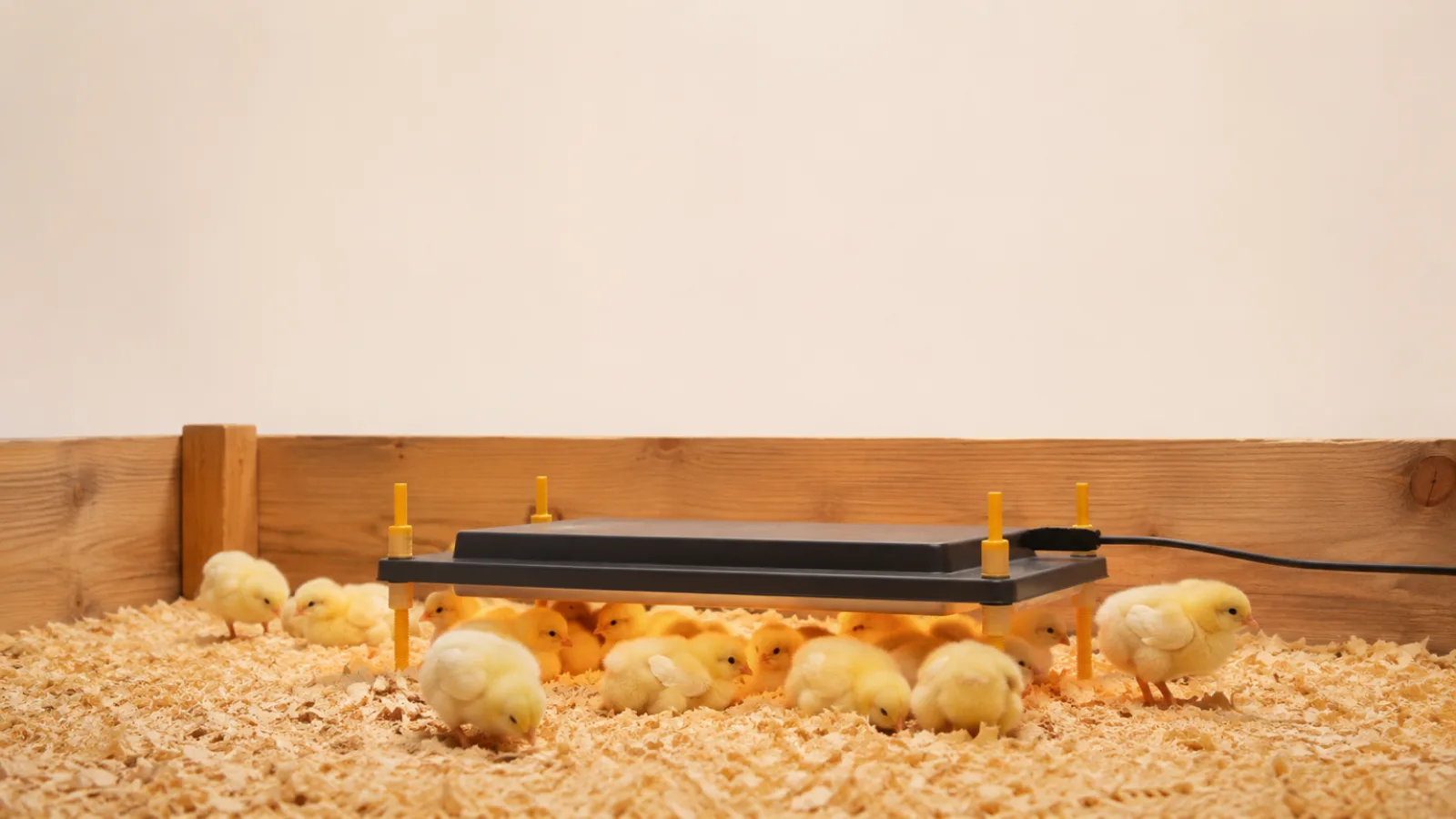
Evidence at a Glance
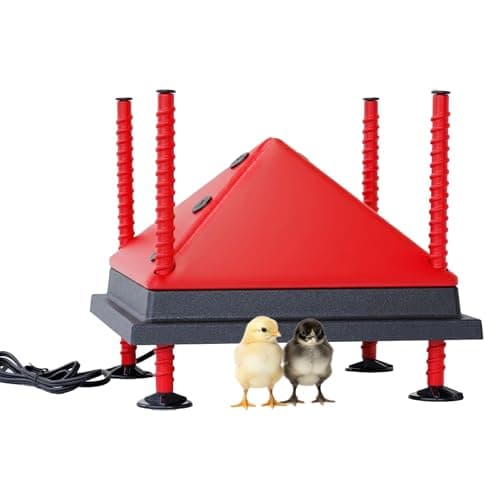
RentACoop 12" x 12" Adjustable Heating Plate with Anti-Roost Cone
The sensible default for most backyard keepers: a 12x12 surface the listing rates for up to 20 chicks, from an established backyard-poultry brand, drawing 22 watts against roughly 250 for a heat lamp. A foldable anti-roost cone keeps chicks from perching and fouling the top, and there is no thermostat to program — you manage warmth by plate height.
Sources: Amazon listing, RentACoop (established backyard-poultry brand)
Verified Jul 8, 2026
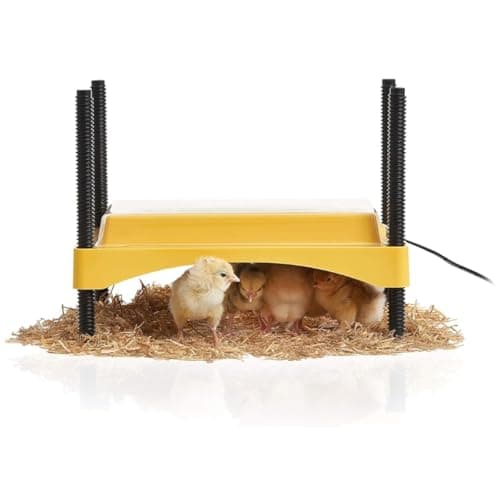
Brinsea EcoGlow Safety 600 Brooder Plate
The safety leader and top PetPal Brooder Safety Score. At 12 watts on a low-voltage design, it is the lowest-draw plate here and the safest electrical setup, from a long-standing incubation and brooding brand. The listing rates it for up to 20 newly hatched or 12 older chicks, with screw-on adjustable legs and a clear cover for fast cleaning.
Sources: Amazon listing, Brinsea (established incubation and brooding brand)
Verified Jul 8, 2026
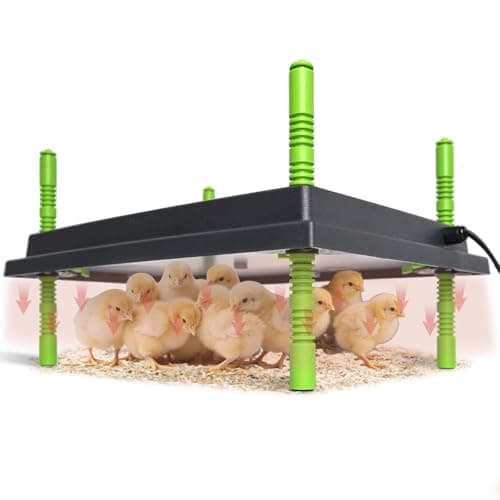
Shaledig 12" x 16" 30W Brooder Heater Plate
The most surface for the money: a 12x16 plate the listing rates for up to 40 chicks, with constant-temperature control that holds the panel around 122-149°F when the room sits between 50 and 86°F. No emitted light, and a wide 2.56-to-7.09-inch height range carries a flock from hatch to feathering.
Sources: Amazon listing
Verified Jul 8, 2026
Our Picks
Brinsea
Brinsea EcoGlow Safety 600 Brooder Plate
9.2 / 10
- Just 12 watts of draw — the lowest-wattage plate in this guide
- Low-voltage design, safer than mains-voltage plates or a heat lamp
- Listing rates it for up to 20 newly hatched or 12 older chicks
- Indicator light, 10-foot cord, and screw-on adjustable legs
$79.99
Current price · checked Sep 8, 2026
RentACoop
RentACoop 12" x 12" Adjustable Heating Plate with Anti-Roost Cone
9.0 / 10
- 12 x 12 in plate the listing rates for up to 20 chicks
- 22 watts versus roughly 250 watts for a heat lamp
- Radiant heat that teaches chicks to self-regulate body temperature
- No thermostat required; foldable anti-roost cone included
$59.95
Current price · checked Sep 8, 2026
Shaledig
Shaledig 12" x 16" 30W Brooder Heater Plate
8.4 / 10
- 12 x 16 in plate the listing rates for up to 40 chicks
- 30 watts with constant-temperature control
- Holds the panel around 122-149°F when the room is 50-86°F (per listing)
- No disruptive light, so it doesn't affect chicks' night rest
$39.89
Current price · checked Sep 8, 2026
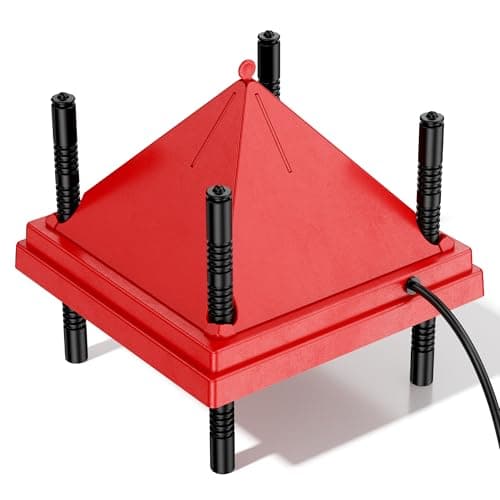
ZenxyHoC
ZenxyHoC 10" x 10" Brooder Plate with Anti-Roost Cone
8.0 / 10
- 10 x 10 in heating surface, listing-rated for up to 15-20 chicks by size
- Radiant heat, no glowing element — lower fire risk than a heat lamp
- Four sturdy legs with adjustable height as chicks grow
- Tip-resistant 4-leg base
$29.99
Current price · checked Sep 8, 2026
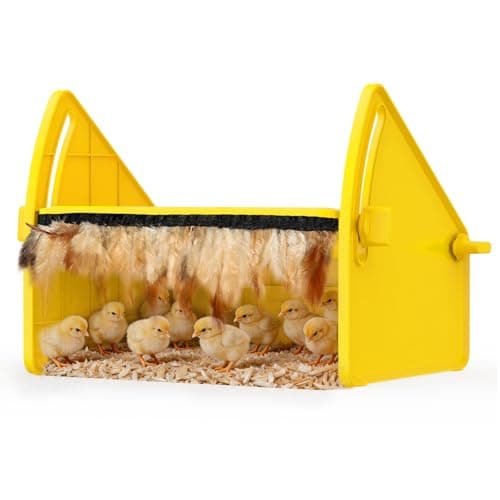
Sindarhor
Sindarhor Adjustable 3-Level Heating Brooder Plate
7.6 / 10
- Three temperature settings — 131°F / 149°F / 167°F
- Enclosed-house structure with an elevated plate (never for standing on)
- Grow-with-me height adjustment for different chick ages
- Wipe-clean waterproof ABS plastic
$25.51
Current price · checked Sep 8, 2026
The Short Answer
A brooder heat plate is the safer modern replacement for a heat lamp: it warms chicks by radiant heat from above, the way a hen does, with no glowing bulb to start a fire and a small fraction of the energy draw. The right plate is decided less by brand than by size relative to your flock. For most backyard keepers, the RentACoop 12x12 plate is the sensible default — an established brand, listing-rated for up to 20 chicks, at a price most people can justify. If safety margin matters more than money, the Brinsea EcoGlow Safety 600 runs the lowest wattage here on a low-voltage design and takes the top score. Brooding a large hatch of up to 40 chicks? The Shaledig 12x16 plate offers the most surface with constant-temperature control. For a small first flock, the ZenxyHoC 10x10 plate is right-sized and affordable, and the Sindarhor 3-level plate is the cheapest way off a heat lamp if you like choosing between set temperatures. The white-label plates carry manufacturer-stated specs rather than independent testing, so buy from a returnable listing. Whatever you choose, size the plate to your flock with headroom to grow, and never treat a chick brooder plate as a winter coop heater for adult birds.
Every product on this list has been scored against the PetPal Gear Score, a weighted composite of expert consensus, observed effectiveness, animal safety, long-term durability, and value. Review method: Editorial synthesis of each product's Amazon manufacturer listing (specifications and feature bullets), cross-checked against the well-documented poultry-keeping consensus that radiant brooder plates are the safer replacement for heat lamps. Brinsea and RentACoop are treated as established brooding brands with honest reputations; ZenxyHoC, Shaledig, and Sindarhor are white-label Amazon brands whose specifications are manufacturer-stated. PetPalHQ does not run a testing lab; the PetPal Brooder Safety Score is a transparent synthesis of documented design factors — wattage, plate area, adjustability, and cleanability — not a measurement.. Synthesized from 5+ expert sources.
A brooder heat plate does one job a heat lamp cannot: it mimics a mother hen. Chicks in the wild do not bask under a glowing bulb — they duck under a warm hen, take the heat they need, then scoot back out to eat and explore. A radiant plate recreates that warmth from above, and it does so at a fraction of a heat lamp's wattage. That efficiency is nice, but it is not the real reason to switch. The real reason is safety: a plate has no glowing element, no shatter-prone bulb, and a far lower fire risk than the heat lamps that burn down coops every spring. Once you accept that, the decision narrows to the one spec that actually matters — the size of the plate relative to how many chicks you are brooding.
The five plates below span the honest range of the category, from a budget three-setting panel to a low-voltage premium plate, and they sort by one question: how many chicks, in what kind of space? Prices move constantly and every figure here was captured during a summer sale window, so verify the current price before buying — the ranking is built on size, wattage, and safety design, not on today's number. Where a plate is a white-label Amazon brand, its specifications are the manufacturer's own; where it comes from an established brooding name, we say so.
PetPalHQ.com earns affiliate commissions from qualifying purchases. Our recommendations are based on expert consensus — we synthesize professional reviews and manufacturer documentation, plus multi-year owner durability data, to find pet gear that is worth your investment. Commission rates never influence our editorial recommendations.
The specifications in this guide are grounded in each product's manufacturer listing, cross-checked against the well-documented poultry-keeping consensus that radiant plates are the safer replacement for heat lamps. PetPalHQ does not run a testing lab; the PetPal Brooder Safety Score below is a transparent synthesis of documented design factors — wattage, plate area, adjustability, and cleanability — not a measurement.
Why a Heat Plate Beats a Heat Lamp
The case against the heat lamp is not subtle. A lamp heats a chick by pouring infrared light and heat into a whole zone of the brooder, from a bulb running hundreds of degrees behind thin glass. Knock it loose over dry pine shavings, or let a bulb shatter, and you have the classic barn fire. A radiant plate removes the ignition source entirely: there is no glowing element and no exposed bulb, just a warm underside the chicks press up against. That is why nearly every experienced keeper eventually makes the switch, and it is the single thread running through all five chicken brooder heat plates below.
The efficiency gap is real too, even if it is the secondary benefit. A radiant plate like the RentACoop plate draws roughly 22 watts, against the 250 watts a typical heat lamp pulls — a plate sips power where a lamp gulps it. But the more important behavioral difference is that a plate teaches chicks to self-regulate. Under a lamp, the whole brooder is warm and chicks never learn to seek and leave heat; under a plate, they duck under when cold and wander out when warm, exactly as they would with a hen. The Brinsea EcoGlow leans furthest into safety with a low-voltage design, while the ZenxyHoC plate delivers the same no-glow principle at an entry price.
Matching Plate Size to Your Flock
Once you have decided on a plate, brand matters far less than fit. The governing question is how many chicks will shelter under it at once, because a plate too small forces the birds to pile — and piling, not cold, is what kills chicks in a crowded brooder. Read the listing's rated chick count as a warm-room maximum, not a promise, and give yourself headroom.
The rough map is simple. A 10x10 plate like the ZenxyHoC 10x10 suits a small starter flock of a dozen or so and little more. A 12x12 like the RentACoop 12x12 covers the typical backyard order of up to twenty. When you are brooding a serious hatch, the Shaledig 12x16 is the large-surface answer, rated for up to forty chicks with room to keep them from crowding. And because chicks feather out fast, a plate that fit twenty fluffy day-olds gets tight as they grow — so if you plan to scale up, buy the bigger plate now rather than replacing a small one in a month. If you are still deciding, comparing brooder plate sizes side by side is the fastest way to match surface to flock.
How We Score: The PetPal Brooder Safety Score
The PetPal Brooder Safety Score weights the five things that actually decide whether a plate keeps a flock warm and safe, rather than which brand shouts loudest. Warmth Reliability carries the most weight at 30 percent, rewarding plates that hold heat steadily — which is why the constant-temperature Shaledig edges out the stepped-setting Sindarhor. Energy and Fire Safety follows at 25 percent, crediting low wattage and no-glow design against the heat lamp this whole category replaces, where the Brinsea and the RentACoop set the safety pace.
The remaining weight covers fit and upkeep. Flock-Size Fit at 20 percent measures plate area against the listing-rated chick count, with credit for growth headroom. Adjustability at 15 percent rewards a wide, easy height range, since a plate that cannot rise with the flock stops working within weeks. Cleanability rounds it out at 10 percent, because brooder plates foul quickly and a wipe-clean surface with a cover is worth real points. The Sindarhor plate lands at the bottom of the score not because it is a bad plate, but because stepped settings and unverified white-label specs cost it on the two heaviest factors.
What We Passed On
We kept the roster to five distinct plates that each own a clear slot, and a couple of deliberate exclusions are worth naming.
We passed on heat-lamp kits entirely, even the "safer" clamp-and-guard versions. The whole premise of this guide is that a radiant plate removes the fire-risk problem a lamp creates, so recommending a lamp alongside would undercut the point. If your setup genuinely requires a lamp — a large group in a very cold space, for instance — that is a different tool for a different problem, and it belongs under close supervision, not on a best-of list about safer alternatives.
We also declined to pad the list with near-duplicate white-label plates. Amazon is thick with 10x10 and 12x12 panels that look identical to the ZenxyHoC plate and the Sindarhor plate under different brand names, and several search results resolve to the same underlying product. Listing three interchangeable clones as three "picks" would be padding that sends buyers in circles. We kept one plate per meaningful size-and-price tier instead, and named the white-label caveat plainly so you can judge any look-alike you find against the same standard.
Head-to-Head Comparison
| Product | Best for | Standout spec | PetPal Brooder Safety Score |
|---|---|---|---|
| Brinsea EcoGlow Safety 600 Brooder Plate | Lowest wattage & safety margin | 12 W low-voltage; up to 20 chicks | 9.2 |
| RentACoop 12" x 12" Adjustable Heating Plate with Anti-Roost Cone | Most backyard keepers | 22 W; 12x12; up to 20 chicks | 9.0 |
| Shaledig 12" x 16" 30W Brooder Heater Plate | Large flocks | 12x16; up to 40 chicks; constant-temp | 8.4 |
| ZenxyHoC 10" x 10" Brooder Plate with Anti-Roost Cone | Small starter flocks | 10x10; 15-20 chicks; anti-roost cone | 8.0 |
| Sindarhor Adjustable 3-Level Heating Brooder Plate | Budget, stepped temps | 3 settings: 131/149/167°F | 7.6 |
$79.99
Current price · checked Sep 8, 2026
- Just 12 watts of draw — the lowest-wattage plate in this guide
- Low-voltage design, safer than mains-voltage plates or a heat lamp
- Listing rates it for up to 20 newly hatched or 12 older chicks
- Indicator light, 10-foot cord, and screw-on adjustable legs
- ABS build with a clear plastic cover for faster cleaning
At 12 watts, the Brinsea EcoGlow draws less power than a household night light, and that single number explains why it sits at the top of this guide. A radiant plate does not try to heat the air the way a lamp does; it warms the chicks that gather under it, mimicking the way a broody hen radiates warmth from above. Because the EcoGlow Safety 600 runs on a low-voltage design rather than mains voltage, it carries the safest electrical setup in this roundup — there is no glowing element to ignite bedding and no hot bulb to shatter into a dry brooder. For keepers who lie awake worrying about the coop fires that make the local news every spring, that is the whole pitch.
The listing rates the plate for up to 20 newly hatched chicks, dropping to about 12 as they grow and need more room beneath it. That is a realistic small-to-mid backyard batch, and the screw-on adjustable legs let you raise the plate cleanly as the chicks feather out and stand taller. An indicator light confirms it is drawing power, the cord runs a generous ten feet to the nearest outlet, and the ABS body wears a clear plastic cover that wipes down in seconds — brooder plates get fouled fast, and cleanability is not a luxury.
The honest catch is price: the Brinsea plate is the most expensive option here by a wide margin, and you are paying for the brand's brooding pedigree and the low-voltage engineering rather than for more surface area. A bigger panel costs less. There is also the physics limit every plate shares — because it warms by proximity, a brooder set up in a frigid garage or an early-spring barn still asks a lot of any radiant plate, and the edges of the flock can chill if the room is cold enough. Match the plate to a reasonably sheltered space and it rewards you.
If the lowest possible wattage and a genuine low-voltage safety margin matter more than the number on the price tag, the Brinsea EcoGlow is the plate to buy.
What We Love
- Lowest wattage here at 12 W — minimal energy draw and heat output to manage
- Low-voltage design is the safest electrical setup in this roundup
- Clear cover and ABS body wipe clean quickly
- Screw-on adjustable legs raise cleanly as chicks grow
- Backed by Brinsea, a long-standing incubation and brooding brand
What Could Be Better
- The most expensive plate in this guide by a wide margin
- Rated flock drops to 12 chicks once they are older, so a big batch outgrows it
- Radiant plates warm from proximity, so a frigid brooding space still challenges it
The Verdict
If the lowest possible wattage and a low-voltage safety margin matter more than price, the Brinsea EcoGlow is the plate to buy.
Sources
- Amazon listing: listing rates the Brinsea EcoGlow Safety 600 at 12 watts for up to 20 newly hatched or 12 older chicks, with a low-voltage design, indicator light, 10-foot cord, screw-on adjustable legs, and a clear plastic cover
$59.95
Current price · checked Sep 8, 2026
- 12 x 12 in plate the listing rates for up to 20 chicks
- 22 watts versus roughly 250 watts for a heat lamp
- Radiant heat that teaches chicks to self-regulate body temperature
- No thermostat required; foldable anti-roost cone included
- Ships with four legs and a 6-foot cord
If one plate defines the mainstream of this category, it is the RentACoop plate. It is the product most first-time chicken keepers land on, and the reasons are easy to see. The 12x12 surface is listing-rated for up to 20 chicks — the size of a typical backyard spring order — and it draws 22 watts against the roughly 250 watts a heat lamp pulls. That gap is the governing argument for the whole category made concrete: a fraction of the energy, and none of the open filament that turns a heat lamp into a fire risk.
What sets the RentACoop 12x12 apart from the cheaper plates is the detail work. A foldable anti-roost cone snaps onto the top so chicks cannot perch there and cake it in droppings, which is exactly where the smaller no-name plates get grimy by week two. There is no thermostat to program; the radiant warmth works the way a hen does, and chicks learn to duck under when they are cold and wander out when they are not, teaching them to self-regulate their own body temperature. The plate ships with four legs and a six-foot cord, and the whole thing goes together in minutes.
The trade-offs are modest but real. There is no stepped temperature control — you manage warmth entirely by raising or lowering the plate on its legs, which is simple but gives you less to dial in than a multi-setting panel. The square footprint, generous as it is, is smaller than the Shaledig's oversized panel if you are brooding a very large hatch, and unlike the Brinsea it runs at mains voltage rather than a low-voltage supply.
None of that dents the core recommendation. For the keeper ordering a dozen to twenty chicks from the feed store this spring — wanting a plate from a name they can look up, sized for the batch they actually have, and priced where most people can justify it — the RentACoop is the one to put in the brooder first.
What We Love
- 12x12 surface covers up to 20 chicks — enough for most backyard batches
- 22 W draw is a fraction of a heat lamp's
- Foldable anti-roost cone keeps chicks from perching and fouling the top
- No thermostat to fuss with; radiant warmth chicks self-regulate against
- From RentACoop, an established backyard-poultry brand
What Could Be Better
- No stepped temperature control — you manage warmth by plate height alone
- Square 12x12 footprint is smaller than the Shaledig for oversized batches
- Mains-voltage rather than the Brinsea's low-voltage design
The Verdict
For most backyard keepers raising up to twenty chicks, the RentACoop plate is the sensible default — proven brand, right size, honest price.
Sources
- Amazon listing: listing specifies a 12 x 12 in plate that warms up to 20 chicks at 22 watts versus roughly 250 watts for a heat lamp, with no thermostat required and a foldable anti-roost cone, four legs, and a 6-foot cord
$39.89
Current price · checked Sep 8, 2026
- 12 x 16 in plate the listing rates for up to 40 chicks
- 30 watts with constant-temperature control
- Holds the panel around 122-149°F when the room is 50-86°F (per listing)
- No disruptive light, so it doesn't affect chicks' night rest
- Height adjustable from 2.56 to 7.09 in
Bigger flocks change the math, and the Shaledig plate is the answer when the batch outgrows a 12x12. Its 12x16 panel is the largest surface in this guide, listing-rated for up to 40 chicks — double what the mid-size plates handle — which makes it the obvious pick for a keeper hatching a serious spring flock or brooding two orders at once. The extra real estate is the entire point: more chicks can tuck under it at the same time without piling, and piling is what causes the smothering that kills chicks in an undersized brooder.
Where the smaller plates rely on you to manage warmth by height alone, the Shaledig 12x16 adds constant-temperature control. The listing states the panel holds roughly 122 to 149°F when the surrounding room sits between 50 and 86°F, so within that ambient band the plate does the thermostatic work for you. Like the others it emits no light, which matters more than new keepers expect — chicks brooded under a glaring lamp never get true darkness, while a plate lets them rest at night on a natural cycle. The height adjusts across a wide range, so one plate carries a flock from hatch to feathering.
The caveats are the ones that attach to any white-label brand. Shaledig is an Amazon marque, so its specifications are manufacturer-stated rather than independently lab-verified; buy from a returnable listing and confirm the plate actually holds heat before you trust a full hatch to it. Its 30-watt draw is the highest in this guide, though that is still far below a heat lamp and a rounding error on a power bill. And the 40-chick rating, like every rating here, assumes a warm room — brood in a cold outbuilding and the effective capacity falls.
Set beside the RentACoop, the Shaledig trades a proven brand name for roughly twice the surface at a lower price, and for a large flock that trade is worth making.
What We Love
- Largest surface here — 12x16 rated for up to 40 chicks
- Constant-temperature control holds a steady panel temp
- Wide height range from 2.56 to 7.09 inches
- No light emitted, so it won't disturb night rest
- Strong value for the plate area you get
What Could Be Better
- White-label brand — specs are manufacturer-stated, not independently verified
- 30 W is the highest draw here, though still far below a heat lamp
- Rated flock assumes a warm room (50-86°F); a cold space cuts effective capacity
The Verdict
When the flock is large, the Shaledig's 12x16 surface does the job the smaller plates can't.
Sources
- Amazon listing: listing specifies a 12 x 16 in, 30-watt plate rated for up to 40 chicks with constant-temperature control holding roughly 122-149°F when the room is 50-86°F, no emitted light, and height adjustable from 2.56 to 7.09 in
$29.99
Current price · checked Sep 8, 2026
- 10 x 10 in heating surface, listing-rated for up to 15-20 chicks by size
- Radiant heat, no glowing element — lower fire risk than a heat lamp
- Four sturdy legs with adjustable height as chicks grow
- Tip-resistant 4-leg base
- Anti-roost cone to discourage perching on top
For a first spring batch of a dozen chicks, the ZenxyHoC plate is the right size and little more — which is exactly what a starter flock needs. Its 10x10 heating surface is the smallest here, listing-rated for 15 to 20 chicks depending on their size, and for the household raising its first eight or ten birds that headroom is plenty. Spending up for a 40-chick panel to warm a handful of chicks is money wasted; the ZenxyHoC 10x10 is scaled to the job.
The fundamentals are all present. It is a radiant plate with no glowing element, so it carries the same lower fire risk that makes the whole category safer than a heat lamp — the reason most keepers switch in the first place. Four sturdy legs adjust the height as chicks grow, a tip-resistant base keeps a rambunctious chick from knocking it over, and an anti-roost cone discourages perching on top. For an entry-level plate, that is a sensible feature list rather than a stripped one.
The limitations are the honest flip side of buying small and cheap. This is a white-label listing, so the specs are the manufacturer's own numbers with no independent verification behind them — the same caveat that applies to the Shaledig plate and the Sindarhor plate. The surface that suits a starter flock becomes a liability the moment the flock grows: chicks feather out fast, and a plate that fit twenty fluffy day-olds gets crowded as they turn into pullets, so a keeper planning to scale up will buy a bigger plate sooner than they expect. And the listing's chick count, like the others, presumes small birds in a warm brooder.
The ZenxyHoC asks you to accept a short useful window and unverified specs in exchange for the lowest realistic entry into radiant brooding — a fair trade for a small, one-time batch, a poor one if you plan to grow.
What We Love
- Right-sized 10x10 plate for small starter flocks of a dozen or so
- Radiant, no-glow design with lower fire risk than a lamp
- Adjustable-height legs and a tip-resistant base
- Anti-roost cone discourages perching
- Affordable entry into radiant brooding
What Could Be Better
- White-label listing — no independent third-party spec verification
- 10x10 surface is the smallest here; a growing flock outgrows it fast
- Listing chick count (15-20) assumes small chicks in a warm space
The Verdict
For a first spring batch of a dozen chicks, the ZenxyHoC plate covers the basics without overspending.
Sources
- Amazon listing: listing specifies a 10 x 10 in radiant plate with no glowing element, rated for up to 15-20 chicks by size, on four adjustable-height legs with a tip-resistant base and anti-roost cone
$25.51
Current price · checked Sep 8, 2026
- Three temperature settings — 131°F / 149°F / 167°F
- Enclosed-house structure with an elevated plate (never for standing on)
- Grow-with-me height adjustment for different chick ages
- Wipe-clean waterproof ABS plastic
- The most affordable plate in this guide
Not every keeper wants a plate that decides the temperature for them, and the Sindarhor plate is built for the ones who would rather choose. Where the constant-temperature plates hold a single band, the Sindarhor 3-level plate offers three set points — 131, 149, and 167°F — so a keeper can step the warmth down as chicks age and need less of it. For a beginner who likes a clear dial to follow rather than trusting a plate to self-manage, that stepped simplicity is reassuring, and it comes at the lowest price in the guide.
The design leans practical. It uses an enclosed-house structure with an elevated plate, and the listing is blunt that the plate is never meant for chicks to stand on — it warms them from above as they shelter beneath. Grow-with-me height adjustment raises the plate for different chick ages, and the waterproof ABS plastic wipes clean, which any brooder plate has to survive. As a first radiant plate for a keeper trading up from a heat lamp on a tight budget, it clears the bar.
The compromises track the price. Stepped settings are not the same as true constant-temperature control — you get three fixed choices rather than a plate that holds one temperature as the room shifts, so on a cold night the lowest chicks may want the next step up. Like the ZenxyHoC and Shaledig, the Sindarhor is a white-label listing whose specifications come from the manufacturer alone. And the elevated plate rewards a quick look now and then, since a determined chick will try to scramble where it should not.
For the keeper who wants the cheapest honest way off a heat lamp and likes the idea of picking a number rather than trusting a panel, the Sindarhor plate is the budget entry — go in knowing you are choosing between three temperatures, not fine-tuning one.
What We Love
- Three set temperatures (131/149/167°F) for different chick ages
- Lowest price in the guide
- Enclosed-house structure with grow-with-me height adjustment
- Wipe-clean waterproof ABS
- Stepped settings give beginners a simple dial to follow
What Could Be Better
- Stepped settings, not true constant-temperature control
- White-label brand with manufacturer-only spec claims
- Elevated plate is never for standing on — supervise curious chicks
The Verdict
If you want a set-it dial and the lowest price, the Sindarhor plate is the budget entry — just know it steps between temperatures rather than holding one.
Sources
- Amazon listing: listing specifies three temperature settings (131 / 149 / 167°F), an enclosed-house structure with an elevated plate not meant for standing on, grow-with-me height adjustment, and wipe-clean waterproof ABS plastic
How We Score
Formula
PetPal Brooder Safety Score = Warmth Reliability × 30% + Energy & Fire Safety × 25% + Flock-Size Fit × 20% + Adjustability × 15% + Cleanability × 10%
Score Factors
- Warmth Reliability · 30%
- How steadily the plate holds heat for its rated flock. Constant-temperature panels like the Shaledig plate score above stepped-setting plates like the Sindarhor plate, because a plate that self-manages one temperature as the room shifts is more forgiving than one that jumps between fixed set points.
- Energy & Fire Safety · 25%
- Wattage draw and electrical design against the heat lamp this category replaces. The Brinsea EcoGlow's 12-watt low-voltage design leads here; every radiant plate scores well simply for having no glowing element to ignite bedding, which is the safety upgrade that justifies switching away from a lamp.
- Flock-Size Fit · 20%
- Plate area against the listing-rated chick count, with credit for headroom as chicks feather out. The Shaledig 12x16 rates highest on raw capacity; the ZenxyHoC 10x10 fits a small flock but loses points for a short useful window before the birds outgrow it.
- Adjustability · 15%
- Height range and the ease of raising the plate as chicks grow. Wide-range legs and clean, tool-light adjustment score highest, since a plate left too low crowds feathering chicks.
- Cleanability · 10%
- Wipe-clean ABS surfaces, droppings resistance, and whether a cover is included. Brooder plates foul fast, so easy cleaning earns its weight in the score.
| Rank | Product | Score |
|---|---|---|
| #1 | Brinsea Brinsea EcoGlow Safety 600 Brooder Plate | 9.2 |
| #2 | RentACoop RentACoop 12" x 12" Adjustable Heating Plate with Anti-Roost Cone | 9.0 |
| #3 | Shaledig Shaledig 12" x 16" 30W Brooder Heater Plate | 8.4 |
| #4 | ZenxyHoC ZenxyHoC 10" x 10" Brooder Plate with Anti-Roost Cone | 8.0 |
| #5 | Sindarhor Sindarhor Adjustable 3-Level Heating Brooder Plate | 7.6 |
When NOT to Buy
Do not count on a brooder plate to heat a frigid space beyond what it is rated for. Radiant plates warm the chicks that shelter under them; they do not heat the air the way a lamp does. In an unheated garage or an early-spring barn where the ambient temperature drops below a plate's stated range, chicks on the edge of the group can chill even while the ones directly under the plate stay warm. Brood in a reasonably sheltered space, or add a second heat zone, rather than asking one plate to do more than its rating promises.
Do not buy a plate that is too small for your flock. An undersized plate forces chicks to pile up competing for warmth, and piling is what leads to smothering — the most common preventable loss in a brooder. Size the plate to your full expected flock with headroom to spare, and when in doubt, go one size up.
Do not try to brood a large batch under a single plate. Every plate here caps at its listing-rated chick count, and a big hatch simply needs more surface than one panel offers — either the largest plate available or two plates in separate warm zones. Crowding a large group under one plate is a false economy.
Do not use any of these as a coop heater for adult birds. These are chick brooder plates. Feathered adult chickens generate their own warmth and do not need supplemental heat in most climates, and heating an adult coop is a separate fire-safety question entirely. Buying a brooder plate for that job is the wrong tool.
Treat white-label listings with appropriate caution. The ZenxyHoC, Shaledig, and Sindarhor plates carry manufacturer-stated specifications with no independent lab verification behind them. Buy from a returnable listing, confirm the plate actually holds heat before a full hatch depends on it, and do not assume a stated temperature range is guaranteed.
Skip a plate if you will not raise it as the chicks grow. A brooder plate works because chicks can just reach the warm underside; left too low, it crushes their headroom as they feather out, and left too high, it stops warming them. If you cannot commit to adjusting the height every week or so, the plate cannot do its job.
Frequently Asked Questions
- Are brooder heat plates really safer than heat lamps, or is that overblown?
- The fire-risk reduction is real — no exposed bulb and no glowing element means nothing to ignite bedding if the fixture is knocked loose, and a low-voltage plate like the Brinsea EcoGlow trims the electrical risk further still. But "safer" is not "foolproof." Even the Brinsea plate has to be set at the right height and placed so every chick can reach the warm underside, and a plate running in a space colder than its rated range can leave edge chicks too cold. The safety upgrade is genuine; correct setup is still on you.
- What size plate do I need for my number of chicks?
- Use the listing's rated count as a warm-room maximum and leave yourself headroom. Roughly, a 10x10 plate suits about a dozen chicks, a 12x12 covers up to twenty, and a 12x16 handles a large hatch of up to forty. The catch the ratings do not mention is growth: chicks that fit easily as fluffy day-olds crowd the same plate within weeks as they feather out, so if you are near a plate's limit, size up rather than betting on the maximum.
- Will a heat plate work in a cold garage or an unheated barn?
- Only within its rated ambient range. A radiant plate warms chicks by proximity rather than heating the surrounding air, so in a space colder than the listing's stated range — the Shaledig plate, for example, cites a 50-to-86°F room — the plate can struggle to keep the outer chicks warm even while those directly beneath it are fine. In a genuinely cold outbuilding, either move the brooder somewhere more sheltered or add a second warm zone rather than trusting one plate to overperform.
- How do I know the chicks are warm enough under a plate?
- Read the chicks, not a thermometer. Unlike a heat lamp, where you set a target air temperature and lower it weekly, a plate like the RentACoop lets the chicks self-select — so watch their behavior. Chicks that huddle and cheep loudly under the plate are cold and want it lowered or warmer; chicks that stay as far from it as possible are too hot; chicks that move freely in and out and sleep in a loose group are comfortable. That behavioral read is more reliable than any single temperature number, and it is why brands like Brinsea and RentACoop skip a fussy thermostat entirely.
- How long do chicks need a brooder plate before they can go without heat?
- Until they are fully feathered and the weather allows, which happens gradually over the first several weeks rather than on a fixed date. Raise the plate as they grow so they always have to reach up slightly for warmth, and watch for them using it less and less. The exact timing depends on your climate and how quickly the birds feather, so let the chicks' behavior and the outdoor temperature — not the calendar — tell you when the heat can come off.
Bottom Line
Buy the Brinsea EcoGlow Safety 600 if the lowest wattage and a low-voltage safety margin matter more than price. It takes the top PetPal Brooder Safety Score, but you pay a clear premium over larger plates.
Buy the RentACoop plate if you want the sensible default: an established backyard-poultry brand, a 12x12 surface for up to 20 chicks, and a price most keepers can justify.
Buy the Shaledig plate if you are brooding a large hatch. Its 12x16 surface and up-to-40-chick rating give you room the smaller plates cannot, with constant-temperature control — just accept the white-label caveat.
Buy the ZenxyHoC plate for a small first flock of a dozen or so chicks. It is right-sized and affordable, provided you accept a short useful window before the flock outgrows it.
Buy the Sindarhor plate if you want the cheapest honest way off a heat lamp and prefer picking between three set temperatures to trusting a panel to self-manage.
Skip the whole category — and any single plate — if you are trying to heat a frigid outbuilding beyond a plate's rated ambient range, warm a flock larger than one plate covers, or heat adult birds in a winter coop. A brooder plate is a chick tool, not a space heater.
Sources & Methodology
Methodology
PetPal Brooder Safety Score = Warmth Reliability × 30% + Energy & Fire Safety × 25% + Flock-Size Fit × 20% + Adjustability × 15% + Cleanability × 10%
Expert review sources
- Amazon manufacturer listing — Brinsea EcoGlow Safety 600 Brooder Plate (specifications and feature bullets)
- Amazon manufacturer listing — RentACoop 12x12 Adjustable Heating Plate (specifications and feature bullets)
- Amazon manufacturer listing — Shaledig 12x16 30W Brooder Heater Plate (specifications and feature bullets)
- Amazon manufacturer listing — ZenxyHoC 10x10 Brooder Plate (specifications and feature bullets)
- Amazon manufacturer listing — Sindarhor Adjustable 3-Level Heating Brooder Plate (specifications and feature bullets)
Community sources
- Brinsea — established incubation and brooding equipment manufacturer (brand reputation)
- RentACoop — established backyard-poultry equipment brand (brand reputation)
- General backyard-poultry keeping consensus that radiant heat plates are the safer replacement for heat lamps in a chick brooder
Prices and specs verified July 8, 2026.
About the author
Nick Miles is the chief editor of PetPalHQ. The picks above are an editorial synthesis of each product's manufacturer listing and the documented poultry-keeping consensus that radiant brooder plates are the safer alternative to heat lamps, with honest brand-reputation context for Brinsea and RentACoop. PetPalHQ does not run a brooding testing lab. The PetPal Brooder Safety Score is a transparent composite of documented design factors — wattage, plate area, adjustability, and cleanability — not a measurement.
PetPalHQ is a participant in the Amazon Services LLC Associates Program. We may earn commissions from qualifying purchases — at no extra cost to you.