Aquarium
How to Set Up a Planted Aquarium: An Aquascaping Build Sequence (2026)
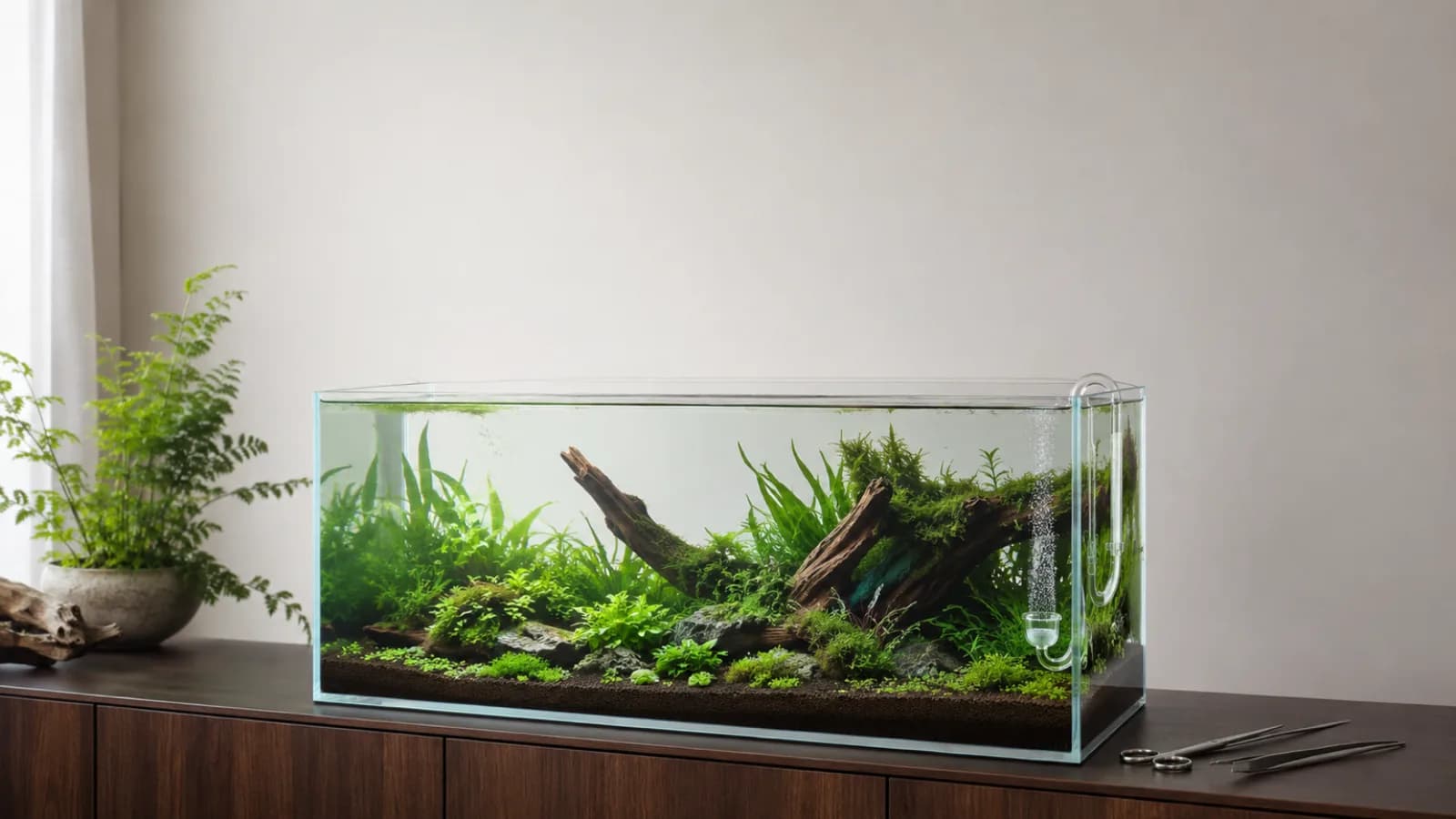
This is not a head-to-head aquascaping-gear ranking — it is a build order. A planted tank is a garden you grow underwater, and the plants go in long before the fish. The picks below are the setup kit in sequence — the aquasoil the plants root in, root tabs that feed that bed, a canister filter to move and clean the water, a conditioner to make tap water safe, a bacteria starter to build the nitrogen cycle, a plant light, a CO2 system, and liquid fertilizers — not eight products ranked against each other. If you will not dose ferts, trim plants, or wait weeks for the tank to cycle and grow in, read the caveats before you buy anything, because a planted tank rewards patience and punishes shortcuts.
By Nick Miles · Updated September 25, 2026 · 12 min read
PetPalHQ is reader-supported. We may earn a commission from qualifying Amazon purchases at no extra cost to you.
Evidence at a Glance
Fluval Plant & Shrimp Stratum
The foundation — a lightweight volcanic aquasoil substrate that plant roots penetrate and draw nutrients from per Fluval, formulated to support a neutral to slightly acidic pH that most aquarium plants and shrimp prefer, so the bed your whole aquascape grows out of starts as a nutrient base rather than inert gravel.
Sources: Fluval manufacturer documentation, Planted-tank education consensus (2Hr Aquarist, aquascaping community), Published freshwater aquarium water-quality standards
Verified Jul 12, 2026
Fluval 407 Performance Canister Filter
The engine — an external canister filter rated for aquariums up to 100 gallons per Fluval, with large media baskets for mechanical, chemical, and biological filtration and the gentle, distributed flow a planted tank wants, doing the job a hang-on-back filter cannot do at planted-tank scale.
Sources: Fluval manufacturer documentation, Planted-tank education consensus (2Hr Aquarist, aquascaping community), Published freshwater aquarium water-quality standards
Verified Jul 12, 2026
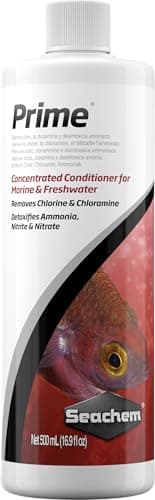
Seachem Prime
The water-safety step — a concentrated conditioner that removes chlorine and chloramine and detoxifies ammonia and nitrite per Seachem, used on the first fill and at every water change, because a planted tank is only as safe as the water you put into it.
Sources: Seachem manufacturer documentation, Published freshwater aquarium water-quality standards, Planted-tank education consensus (2Hr Aquarist, aquascaping community)
Verified Jul 12, 2026
Our Picks
Fluval
Fluval Plant & Shrimp Stratum (8.8 lb)
8.6 / 10
- Lightweight volcanic aquasoil that roots penetrate easily per Fluval
- Supports a neutral to slightly acidic pH suited to plants and shrimp
- Porous structure hosts beneficial nitrifying bacteria
- A nutrient base for root-feeders, not inert decoration gravel
$16.99
Current price · checked Sep 8, 2026
API
API Root Tabs (10-count box, 2-pack)
8.5 / 10
- Tablets pushed midway into the gravel bed near plant roots per API
- Supply iron, potassium and carbon to the root zone
- API's dose rate is one tablet per 30 square inches of gravel surface
- Re-applied monthly, so the two-box pack matches the re-dosing cadence
$17.64
Current price · checked Sep 25, 2026
Fluval
Fluval 407 Performance Canister Filter
8.4 / 10
- External canister rated up to 100 gallons per Fluval
- Stacked baskets for mechanical, chemical, and biological media
- Self-priming pump; sits in the cabinet below the tank
- Distributed flow via spray bar suits planted layouts
$256.99
Current price · checked Sep 8, 2026
Seachem
Seachem Prime (500 ml)
8.3 / 10
- Removes chlorine and chloramine from tap water per Seachem
- Detoxifies ammonia and nitrite as a short-term safety net
- Highly concentrated — a small dose treats many gallons
- Used on the first fill and at every water change
$16.62
Current price · checked Sep 8, 2026
Seachem
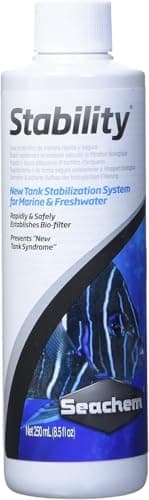
Seachem Stability (250 ml)
8.2 / 10
- Blend of beneficial bacteria to seed the biofilter per Seachem
- Dosed daily through the first week of a new tank
- Helps establish the ammonia-to-nitrite-to-nitrate cycle
- Supports a fishless cycle before any livestock goes in
$8.99
Current price · checked Sep 8, 2026

NICREW
NICREW ClassicLED Plus Planted Aquarium Light (with Timer)
8.1 / 10
- Full-spectrum LED aimed at plant growth per NICREW
- Built-in timer runs a consistent daily photoperiod
- Extendable brackets fit a range of tank widths
- Drives the photosynthesis a planted tank runs on
$37.99
Current price · checked Sep 8, 2026
FZONE
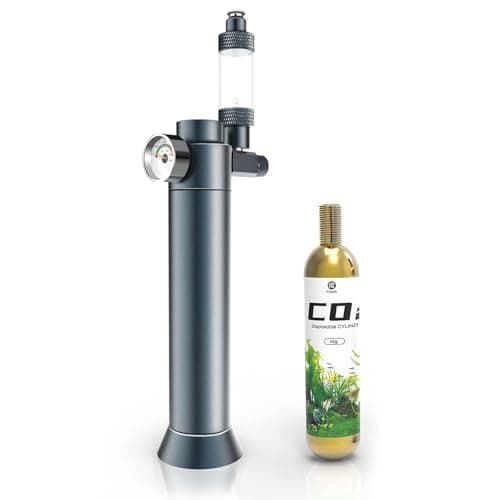
FZONE Desktop Aquarium CO2 System (45 g)
8.0 / 10
- Compact regulator with a 45 g disposable CO2 cartridge per FZONE
- Sized for small and nano planted aquariums
- Delivers the carbon most planted tanks are short of
- The main lever for carpeting and fast-growing plants
$47.99
Current price · checked Sep 8, 2026
Seachem
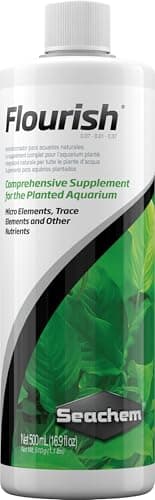
Seachem Flourish (500 ml)
7.9 / 10
- Comprehensive trace and minor nutrient supplement per Seachem
- Dosed into the water column on a regular schedule
- Feeds stem plants and epiphytes not rooted in soil
- Complements root tabs, which feed root-feeders
$10.52
Current price · checked Sep 8, 2026
The Short Answer
Build a planted tank as a garden, not a fish tank, and set it up in stages. Start with the bed the plants live in: the Fluval Plant & Shrimp Stratum is an aquasoil that roots grip and draw nutrients from, and you push API Root Tabs into it to feed heavy root-feeders like swords and crypts. Move and clean the water with the Fluval 407 Canister Filter — external filtration, not a hang-on-back unit — then make tap water safe with Seachem Prime and build the nitrogen cycle with Seachem Stability before any fish. Only then do you grow: the NICREW ClassicLED Plus on a timer gives plants a steady photoperiod, the FZONE Desktop CO2 System accelerates demanding and carpeting plants, and Seachem Flourish doses the trace nutrients the water column needs. The core truth never changes: grow the plants first and add fish last, dose and trim on a schedule, and let the tank cycle for weeks before you stock it.
Every product on this list has been scored against the PetPal Gear Score, a weighted composite of expert consensus, observed effectiveness, animal safety, long-term durability, and value. Review method: Editorial synthesis of planted-aquarium guidance — planted-tank education consensus (the 2Hr Aquarist and the aquascaping community), published freshwater water-quality standards, and aquatic-plant husbandry consensus. Manufacturer documentation from Fluval, API, NICREW, FZONE, and Seachem was reviewed. Community consensus from r/PlantedTank and r/Aquariums was included as consensus, not quotation. No first-hand product testing — PetPalHQ does not run a testing lab.. Synthesized from 6+ expert sources.
A planted aquarium goes wrong, in this guide's editorial judgment, for one reason more than any other: it is treated as a fish tank with plants dropped in, instead of a garden that happens to be underwater. A beginner buys a tank, adds gravel, water, and fish in a weekend, wedges a few plants into the substrate, and watches the plants melt and the glass turn green within a month. The plants were never decoration. They are living things with roots, a light budget, and a nutrient bill, and the gear below exists to grow them — which, done right, is also what keeps the water clear and the fish healthy long before the fish arrive.
Start with the bed, because everything in a planted tank grows out of the substrate. An active aquasoil gives roots something to grip and something to eat, and root tabs top up the heavy feeders as that soil ages. From there the sequence is about water: a canister filter to move and biologically clean it, a conditioner to strip the chlorine out of tap water, and a bacteria starter to build the nitrogen cycle that makes the tank safe. None of that is glamorous, and all of it comes before the first fish and most of it before the plants have grown an inch.
Then, and only then, does the tank become a garden that grows. A plant-spectrum light on a timer drives photosynthesis, an optional CO2 system accelerates the demanding plants, and liquid fertilizer feeds the stems and epiphytes that eat from the water. The picks below are that kit, in build order, not eight products ranked against each other. Each earns its place by doing one job the next stage depends on, and where a claim rests on a maker's documentation or planted-tank consensus, that is named rather than asserted, because PetPalHQ does not run a testing lab.
One principle sits above the whole build and never bends. Grow the plants first and add the fish last, balance light against CO2 and nutrients rather than maxing any one of them, and let the tank cycle for weeks before you stock it. The CO2 system and the fertilizers are growth tools, not shortcuts around the slow work of cycling, trimming, and weekly water changes. A planted tank rewards the keeper who builds the bed, makes the water safe, cycles it, and adds light and carbon in balance — and it punishes the one who reverses that order and expects a finished aquascape in a weekend.
Head-to-Head Comparison
| Feature | Fluval Plant & Shrimp Stratum (8.8 lb) | API Root Tabs (10-count box, 2-pack) | Fluval 407 Performance Canister Filter | Seachem Prime (500 ml) | Seachem Stability (250 ml) | NICREW ClassicLED Plus Planted Aquarium Light (with Timer) | FZONE Desktop Aquarium CO2 System (45 g) | Seachem Flourish (500 ml) |
|---|---|---|---|---|---|---|---|---|
| Stage in the setup | Lay the bed | Feed the roots | Move and clean water | Make water safe | Build the cycle | Light the plants | Accelerate growth | Dose the water |
| When it comes into play | Before anything else | At setup, then ongoing | Before water goes in | On the first fill | First week, then done | From planting on | Once basics balance | Ongoing, weekly |
| What it does | Roots and buffers | Feeds root-feeders | Filters and circulates | Removes chlorine | Seeds the biofilter | Drives photosynthesis | Adds carbon | Feeds the water column |
| PetPal Planted-Readiness Score | 8.6 | 8.5 | 8.4 | 8.3 | 8.2 | 8.1 | 8.0 | 7.9 |
| Ongoing cost after purchase | More bags to plant deep | Re-dosed every months | Media and electricity | Used every water change | Perishable, buy fresh | Electricity | Cartridge refills | Dosed continually |
| Check price | Amazon | Amazon | Amazon | Amazon | Amazon | Amazon | Amazon | Amazon |
$16.99
Current price · checked Sep 8, 2026
- Lightweight volcanic aquasoil that roots penetrate easily per Fluval
- Supports a neutral to slightly acidic pH suited to plants and shrimp
- Porous structure hosts beneficial nitrifying bacteria
- A nutrient base for root-feeders, not inert decoration gravel
- Note: active soils can leach ammonia early, which suits a fishless cycle
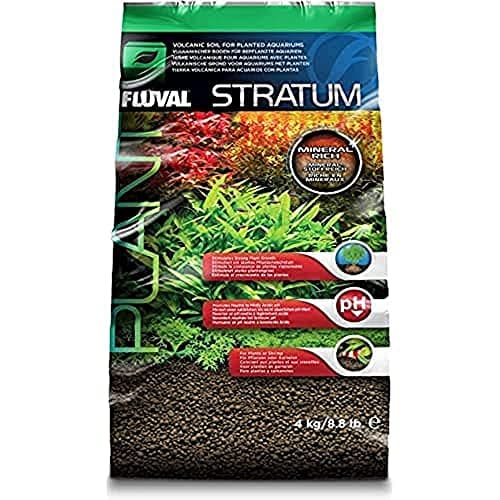
A planted tank is a garden grown underwater, and a garden begins with the soil. The Fluval Plant & Shrimp Stratum earns the first slot because every plant in the scape roots into it and draws nutrition from it. Fluval documents a lightweight substrate made from mineral-rich volcanic soil that plant roots penetrate and establish in easily, formulated to support a neutral to slightly acidic pH that plants and shrimp prefer, with a porous structure that helps beneficial nitrifying bacteria colonize. It ships as an 8.8-pound bag, and you slope it deeper at the back to give the aquascape depth.
Where it fits the setup: this is the bed, and it is the reason a planted tank uses active soil instead of the plain gravel a fish-only tank gets by with. Root-feeding plants like Amazon swords and cryptocorynes pull most of their nutrients from the substrate rather than the water, so the soil is doing real work, not just holding plants down. If you are weighing capacities, grain sizes, or whether to cap a soil with sand, read the substrate section of a broader planted build before you commit, because the bed is the one layer you cannot change without tearing the tank down. One honest planning note: active aquasoils can leach ammonia in the first weeks, which is a problem if you add fish immediately but an advantage if you cycle the tank fishless first.
The honest caveats are about depth and lifespan. You need enough of it — a single 8.8-pound bag suits a small tank, and larger aquascapes take several bags to reach a planting depth of two inches or more, so buy for your footprint rather than guessing. Active soils also mature and slowly lose their buffering and nutrient capacity over a couple of years, which is why root tabs and water-column dosing come into the plan later. And soil clouds the water if you disturb it, so you fill the tank slowly onto a plate or bag rather than pouring straight in. Confirm current price and availability before buying. Bought as the foundation rather than an afterthought, it sets up everything that grows above it.
What We Love
- Active aquasoil that root-feeding plants establish in quickly
- Buffers toward the soft, slightly acidic water most plants prefer
- Porous grains host the nitrifying bacteria a new tank needs
- An accessible entry price for a real planted substrate
What Could Be Better
- Can leach ammonia early — best paired with a fishless cycle
- Buffering and nutrient capacity fade over a couple of years
- Clouds the water if disturbed, so fill and plant gently
The Verdict
Start here, before water or plants. It is the nutrient bed a planted tank is built on, and the one layer you cannot swap later without tearing the scape down. Buy enough bags to reach a two-inch planting depth for your tank's footprint.
Sources
- Fluval (Amazon product listing, Plant & Shrimp Stratum): a lightweight substrate made from mineral-rich volcanic soil that lets plant roots penetrate and establish easily, supports a neutral to slightly acidic pH suited to plants and shrimp, and encourages the colonization of beneficial nitrifying bacteria; 8.8 lb bag
- Planted-tank education consensus (2Hr Aquarist, aquascaping community): aquascapers build on an active aquasoil rather than inert gravel because the substrate is where root-feeding plants get most of their nutrition, and it buffers water chemistry toward the soft, slightly acidic range most aquarium plants prefer
$17.64
Current price · checked Sep 25, 2026
- Tablets pushed midway into the gravel bed near plant roots per API
- Supply iron, potassium and carbon to the root zone
- API's dose rate is one tablet per 30 square inches of gravel surface
- Re-applied monthly, so the two-box pack matches the re-dosing cadence
- Supplement an aquasoil bed as it ages; the main feed in inert gravel
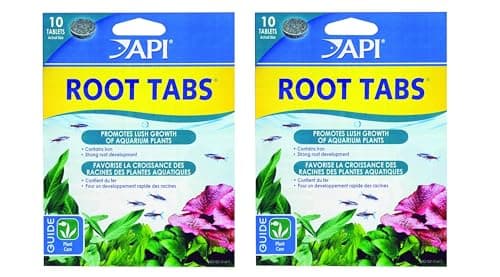
The second stage feeds the bed you just laid. API Root Tabs go into the substrate near the roots of heavy feeders, and they matter most as an aquasoil matures or in a tank capped with inert sand. API documents fertilizer tablets that supply iron, potassium and carbon to promote strong root development, dosed at one tablet for each 30 square inches of gravel surface and pushed midway into the gravel bed. You press them in under and around plants like Amazon swords and cryptocorynes that pull their nutrition from below rather than from the water.
Where it fits the setup: this is targeted feeding, and it works alongside the aquasoil rather than replacing it. A fresh active soil carries plenty of nutrition on its own, so root tabs earn their place a few months in, when that soil begins to deplete, and immediately in a tank built on plain gravel. Water-column dosing feeds the stem plants and epiphytes; root tabs feed the plants that eat through their roots, and a healthy planted tank usually wants both. Think of them as the slow-release layer under the scape.
Buy the two-box pack rather than a single box, because API's own directions make this a subscription rather than a purchase: one tablet per 30 square inches of gravel, re-applied monthly. On API's worked example a 10-gallon tank takes six tablets, so a single 10-count box is gone in under two months of correct dosing. The honest caveats are about dosing discipline and disturbance. More is not better — over-fertilizing the substrate can feed algae as much as plants, so you follow API's spacing rather than burying the whole tank in tablets. Pushing tabs into an established scape stirs up soil and can cloud the water briefly, so you place them slowly and near the roots that need them. Confirm current price and availability before buying. As the root-zone feed, they keep the heavy feeders growing long after the initial soil has given its best.
What We Love
- Delivers iron, potassium and carbon straight to the roots of heavy feeders
- Supplements an aquasoil as it depletes over months
- The primary feed for plants in an inert-gravel tank
- Two boxes cover several months of API's monthly re-dosing schedule
What Could Be Better
- Over-dosing can feed algae as readily as plants
- Placing tabs disturbs the substrate and can cloud water briefly
- A recurring consumable, not a one-time purchase
The Verdict
Add these to feed root-hungry plants — a few months after an aquasoil bed matures, or right away over inert gravel. Follow API's one-tablet-per-30-square-inches spacing rather than over-dosing, and re-apply monthly, which is what the two-box pack is sized for.
Sources
- API Fishcare (apifishcare.com, API Root Tabs): root fertilizer tablets that supply iron, potassium and carbon to promote strong root development in freshwater aquarium plants, dosed at one tablet for each 30 square inches of gravel surface and pushed midway into the gravel bed, re-applied monthly; sold in a 10 CT box
- Planted-tank education consensus (2Hr Aquarist, aquascaping community): heavy root-feeders such as swords, crypts, and many stem plants respond to nutrients delivered at the roots, so substrate tabs supplement an aquasoil bed as it matures and a plain-gravel tank relies on them entirely
$256.99
Current price · checked Sep 8, 2026
- External canister rated up to 100 gallons per Fluval
- Stacked baskets for mechanical, chemical, and biological media
- Self-priming pump; sits in the cabinet below the tank
- Distributed flow via spray bar suits planted layouts
- Large biological capacity for a stable nitrogen cycle
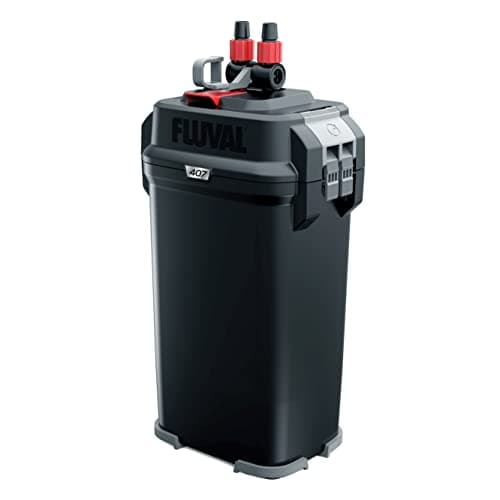
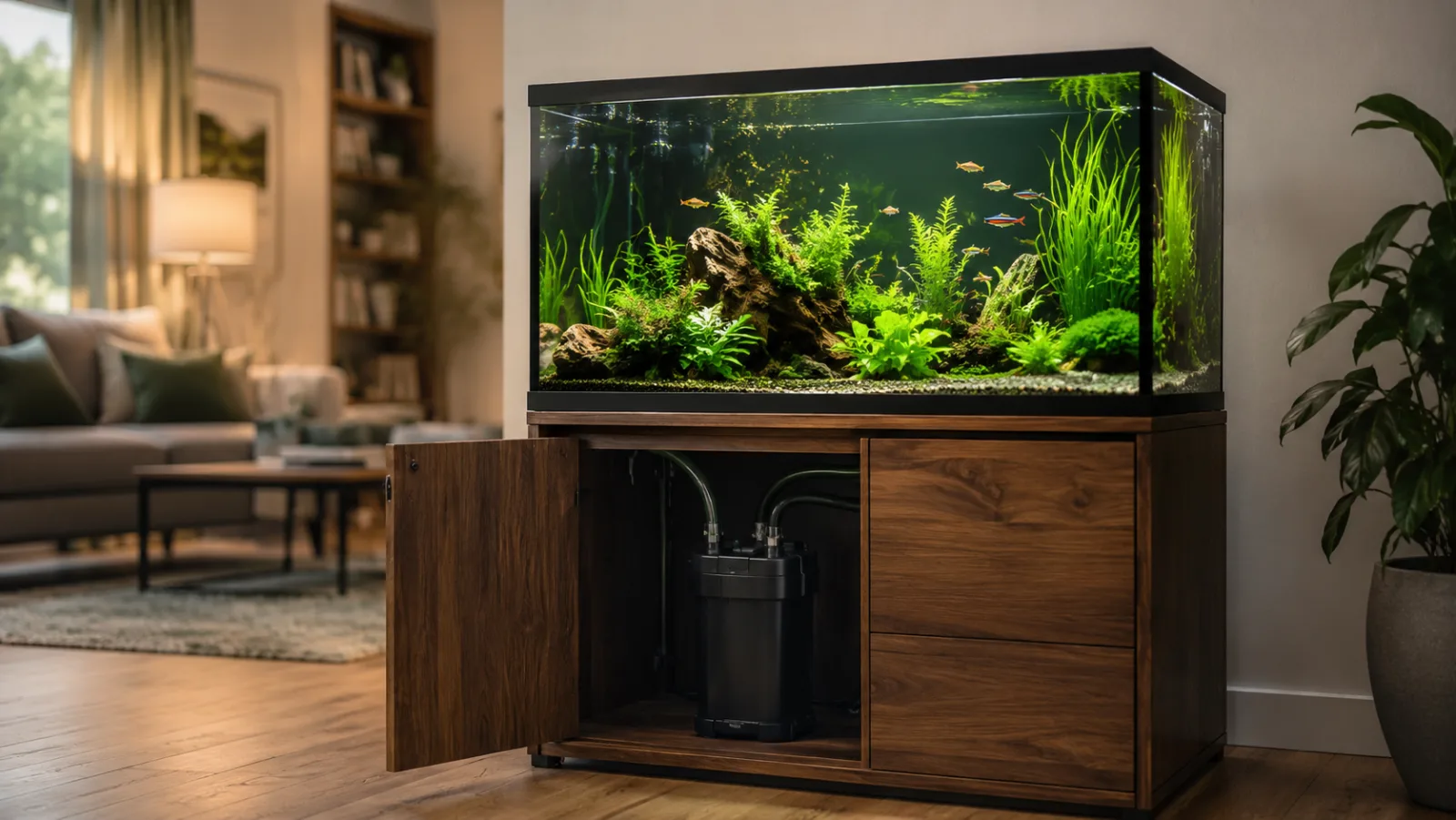
The third stage is the tank's engine. The Fluval 407 Performance Canister Filter moves the whole water volume, holds the bacteria that run the nitrogen cycle, and distributes the gentle, even flow a planted tank wants. Fluval documents an external canister rated for aquariums up to 100 gallons, with stacked media baskets for mechanical, chemical, and biological filtration and a self-priming pump, sitting in the cabinet below the tank and returning water through a spray bar or nozzle. That large media volume is the point — it is where a stable colony of nitrifying bacteria lives.
Where it fits the setup: a planted tank is deliberately filtered by a canister rather than a hang-on-back unit, because the canister carries far more biological media and lets you aim a soft, distributed current that spreads CO2 and nutrients to every leaf without blasting the plants. If a full canister is more than a small first tank needs, the honest lower-cost path is a sponge filter, which is gentle, shrimp-safe, and cheap, and many nano aquascapes run on one alone. What a planted tank does not lean on is a hang-on-back filter as its centerpiece, because the surface agitation it creates drives off the CO2 you are paying to add.
The honest caveats are about cost, maintenance, and flow. A canister is the most expensive single item in this kit, and it earns that only if you actually keep it — the media needs rinsing in tank water every few weeks, and a neglected canister becomes a nitrate factory. Priming, hoses, and seals are a bit more involved than hanging a filter on the rim, so plan a little setup time. And flow is a dial, not a maximum: you want enough turnover to distribute nutrients without uprooting plants or stressing fish. Confirm current price and availability before buying. As the engine, it is what keeps the water clear, moving, and biologically stable while the garden grows in.
What We Love
- Large biological capacity for a stable, mature cycle
- Distributed, adjustable flow spreads CO2 and nutrients
- Hidden in the cabinet — nothing hanging on the rim
- Rated well beyond a typical first planted tank's size
What Could Be Better
- The most expensive item in the kit by a wide margin
- Media needs regular rinsing or it raises nitrate
- Priming and hoses take more setup than a hang-on filter
The Verdict
Filter a planted tank with a canister for its biological capacity and gentle, distributed flow. On a small or nano scape, a sponge filter is the honest budget alternative — but a hang-on-back filter is the wrong centerpiece, because its surface churn drives off CO2.
Sources
- Fluval (Amazon product listing, 407 Performance Canister Filter): an external canister filter rated for aquariums up to 100 gallons with stacked media baskets for mechanical, chemical, and biological filtration and a self-priming pump; the canister sits below the tank and returns water through a spray bar or nozzle
- Published freshwater aquarium water-quality standards: a filter's biological media house the nitrifying bacteria that convert ammonia to nitrite to nitrate, and a canister's large media volume and adjustable, distributed flow suit a planted tank better than a small hang-on-back unit
$16.62
Current price · checked Sep 8, 2026
- Removes chlorine and chloramine from tap water per Seachem
- Detoxifies ammonia and nitrite as a short-term safety net
- Highly concentrated — a small dose treats many gallons
- Used on the first fill and at every water change
- A 500 ml bottle lasts a small tank a long time
The fourth stage makes the water itself safe. Seachem Prime conditions tap water before it ever touches plants, bacteria, or fish. Seachem documents a concentrated conditioner that removes chlorine and chloramine and detoxifies ammonia and nitrite, dosed in small amounts per gallon so a 500-milliliter bottle treats a large volume, used on the initial fill and at every water change afterward. It is the one product here you will reach for on a routine forever, because every water change reintroduces tap water that needs treating.
Where it fits the setup: chlorine and chloramine are added to municipal water precisely because they kill microorganisms, which means untreated tap water damages the nitrifying bacteria a tank runs on as surely as it harms fish. Conditioning the water is not optional, and it comes before the bacteria starter and long before livestock. Prime's ability to temporarily detoxify ammonia and nitrite is a genuine convenience during cycling and after, but it is a safety net, not a substitute for a finished cycle or for water changes — the fix for high ammonia is still the cycle and a change, not more conditioner.
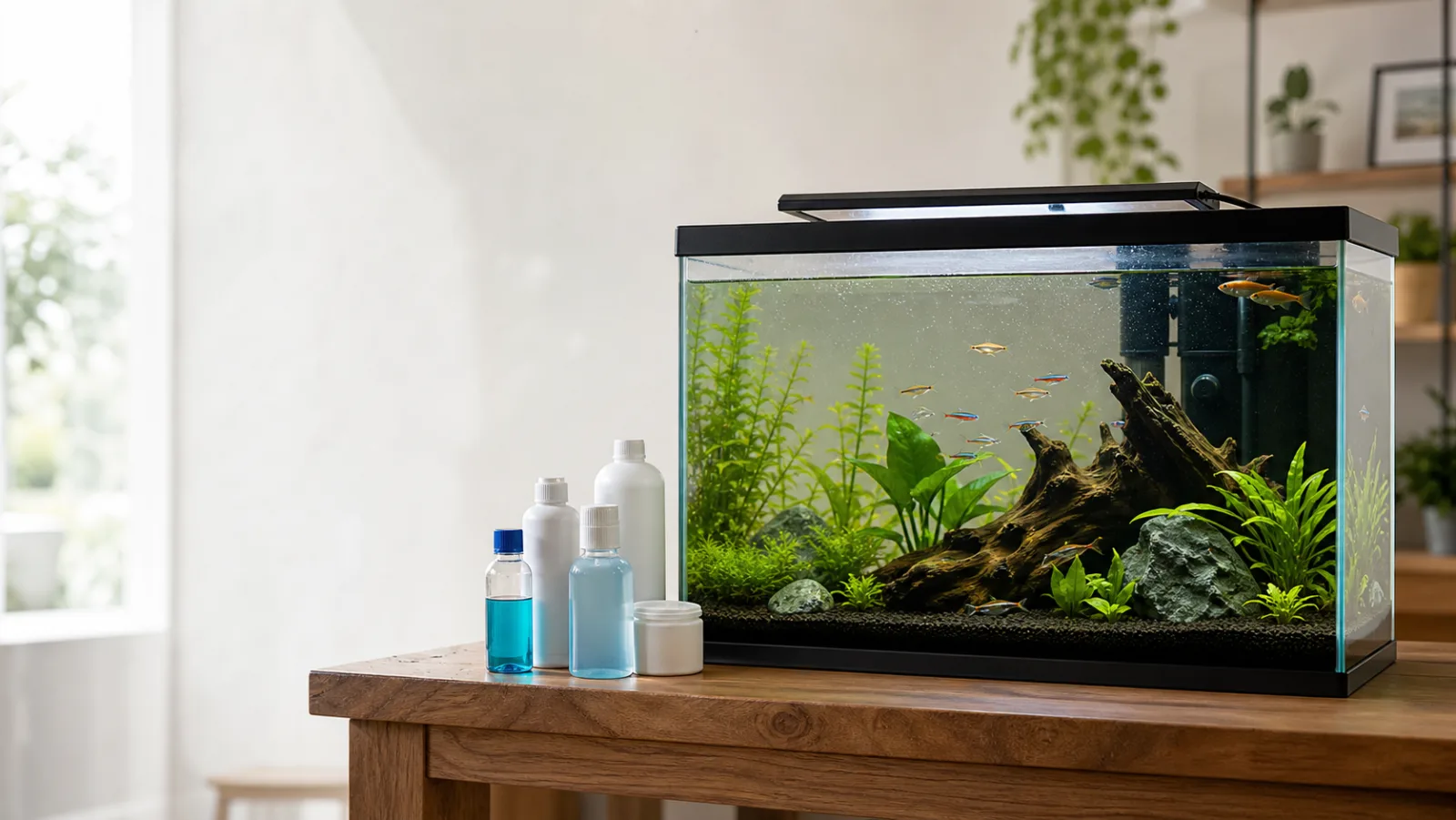
The honest caveats are about dosing and expectations. It is concentrated, so you measure it rather than pour it — overdosing wastes product and is unnecessary, and the cap is a rough measure at best, so a small syringe helps on a nano tank. It also has a distinct sulfur smell that is normal and not a sign the bottle has gone off. And it treats water; it does not cycle a tank, clear green water, or replace maintenance. Confirm current price and availability before buying. As the water-safety step, it is cheap insurance you use for the life of the tank, which is why a small bottle is a false economy if you run a larger aquarium. For the full picture of dechlorinators and conditioners, see our roundup of the best aquarium water conditioners.
What We Love
- Neutralizes chlorine and chloramine before water goes in
- Detoxifies ammonia and nitrite as a short-term safety net
- Very concentrated, so cost per gallon is low
- One bottle serves a small tank for a long time
What Could Be Better
- Must be measured — the cap is an imprecise dose on nano tanks
- Has a normal sulfur smell some keepers dislike
- Conditions water only; it does not cycle or clean the tank
The Verdict
Treat every drop of tap water with this, on the first fill and at every water change, for the life of the tank. Measure the small dose rather than pouring, and treat its ammonia-detox ability as a safety net, not a replacement for cycling and water changes.
Sources
- Seachem (Amazon product listing, Prime): a concentrated conditioner that removes chlorine and chloramine and detoxifies ammonia and nitrite, dosed at a small volume per gallon so a 500 ml bottle treats a large amount of water; used on setup and at every water change
- Published freshwater aquarium water-quality standards: municipal tap water carries chlorine or chloramine that is toxic to fish and to the beneficial bacteria a tank depends on, so a dechlorinating conditioner is a standard requirement before tap water goes into any aquarium
$8.99
Current price · checked Sep 8, 2026
- Blend of beneficial bacteria to seed the biofilter per Seachem
- Dosed daily through the first week of a new tank
- Helps establish the ammonia-to-nitrite-to-nitrate cycle
- Supports a fishless cycle before any livestock goes in
- A 250 ml bottle covers a starter tank's cycling window
The fifth stage brings the tank to life biologically. Seachem Stability seeds the beneficial bacteria that make a tank safe for fish. Seachem documents a blend of bacteria dosed daily during a new aquarium's first week to help establish the biofilter that converts ammonia to nitrite and then to nitrate, in a 250-milliliter bottle. You add it after the water is conditioned and the filter is running, as part of getting the nitrogen cycle going before anything lives in the tank.
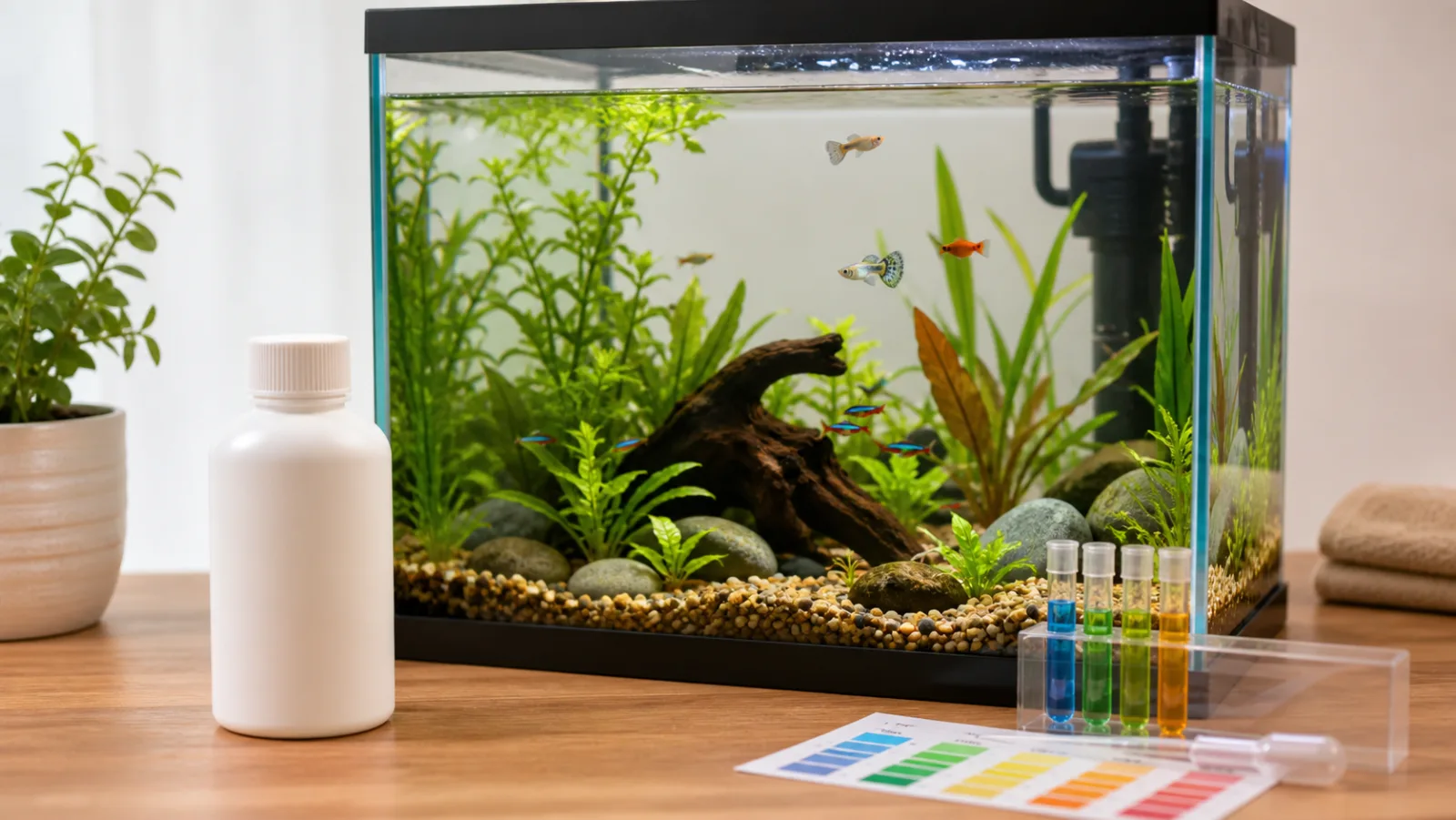
Where it fits the setup: a bacteria starter does not replace cycling, it accelerates and steadies it. The nitrogen cycle is the whole reason a new tank cannot be stocked on day one — the bacteria that neutralize fish waste have to grow first, and until they do, ammonia climbs to toxic levels. Dosing a bottled culture gives those colonies a head start on the substrate and in the filter media, which is especially useful in a planted tank you are cycling fishless with an ammonia source. You still confirm the cycle with a test kit rather than a calendar, and the deeper mechanics are worth reading in our beginner's explainer on aquarium water quality and cycling.
The honest caveats are about patience and proof. Bottled bacteria shorten the wait but do not make it disappear — a tank still needs weeks and still needs testing to show ammonia and nitrite rising and then falling to zero before it is safe. Skipping the test and trusting the bottle is how beginners lose their first fish. The product is also a consumable with a shelf life, so a bottle stored warm for a year may be far less effective than a fresh one. Confirm current price and availability before buying. As the cycle-builder, it is the biological on-ramp — real, but not a shortcut around the weeks of waiting and testing every new tank owes. For alternatives and how bottled cultures compare, see our roundup of the best aquarium bacteria starters.
What We Love
- Seeds the biofilter that makes a tank safe for fish
- Speeds and steadies a fishless cycle in a new planted tank
- Inexpensive for the cycling window it covers
- Works in the filter media and substrate where bacteria live
What Could Be Better
- Accelerates cycling but does not remove the weeks of waiting
- Still requires a test kit to confirm the cycle is complete
- A perishable culture — old, warm-stored bottles fade
The Verdict
Dose this to give a new tank's nitrogen cycle a head start after the water is conditioned and the filter is running. It shortens the wait, but it does not remove it — confirm the cycle with a test kit before you add a single fish.
Sources
- Seachem (Amazon product listing, Stability): a blend of beneficial bacteria dosed daily during the first week of a new aquarium to help establish the biofilter that converts ammonia to nitrite to nitrate; 250 ml bottle
- Published freshwater aquarium water-quality standards: a new tank must establish the nitrogen cycle — the bacteria that convert toxic ammonia into nitrite and then into far less harmful nitrate — before it can safely hold fish, a process that takes weeks and is tracked with a test kit
$37.99
Current price · checked Sep 8, 2026
- Full-spectrum LED aimed at plant growth per NICREW
- Built-in timer runs a consistent daily photoperiod
- Extendable brackets fit a range of tank widths
- Drives the photosynthesis a planted tank runs on
- Photoperiod length is the lever against algae
The sixth stage is light, because plants are solar-powered and nothing grows without it. The NICREW ClassicLED Plus gives a planted tank a plant-spectrum fixture and, importantly, a timer to run it on a fixed schedule. NICREW documents an LED light with a full-spectrum diode mix and a built-in timer for a consistent daily photoperiod, mounted on extendable brackets that fit a range of tank widths. The timer is not a luxury here — a steady photoperiod is one of the main tools you have for growing plants while starving algae.
Where it fits the setup: light is the accelerator, and it is balanced against nutrients and CO2 rather than simply maxed out. Too much light over too little CO2 or too few nutrients is the classic recipe for an algae outbreak, so beginners start with a modest photoperiod of six to eight hours and raise it slowly as the plants establish. This fixture suits low-to-moderate-light plants comfortably, and pairing it with the CO2 stage below is what opens the door to more demanding carpeting plants. If you want to compare intensity, spectrum, and coverage across fixtures, our roundup of the best planted-aquarium lights lays out the trade-offs.
The honest caveats are about intensity and expectations. An affordable LED will grow a wide range of plants beautifully, but the most light-hungry carpets and red stem plants may want a stronger, more tunable fixture, so match the plants to the light rather than fighting the light with fertilizer. Running the light too long or too bright feeds algae faster than plants, which is why the timer and a conservative schedule matter more than raw output. And a light grows plants; it does not fix a tank starved of CO2 or nutrients. Confirm current price and availability before buying. As the plant driver, it turns the bed, the water, and the cycle into actual growth.
What We Love
- Full-spectrum output grows a wide range of plants
- Built-in timer holds a consistent, algae-limiting photoperiod
- Extendable brackets fit many tank widths
- Strong value for a plant-capable fixture
What Could Be Better
- The hungriest carpets and red plants may want more light
- Too long a photoperiod feeds algae faster than plants
- Grows plants only — it cannot compensate for missing CO2
The Verdict
Light a planted tank with a plant-spectrum LED on a timer, and treat the photoperiod as a dial you raise slowly. It grows low-to-moderate-light plants well and, paired with CO2, opens up demanding carpets — but balance light against nutrients or you grow algae.
Sources
- NICREW (Amazon product listing, ClassicLED Plus): an LED aquarium light for planted tanks with a full-spectrum diode mix and a built-in timer to run a consistent daily photoperiod, mounted with extendable brackets to fit a range of tank widths
- Planted-tank education consensus (2Hr Aquarist, aquascaping community): plants photosynthesize on light, so a planted tank needs a plant-spectrum fixture run on a steady photoperiod, and matching light intensity to nutrient and CO2 availability is central to growing plants without feeding algae
$47.99
Current price · checked Sep 8, 2026
- Compact regulator with a 45 g disposable CO2 cartridge per FZONE
- Sized for small and nano planted aquariums
- Delivers the carbon most planted tanks are short of
- The main lever for carpeting and fast-growing plants
- Optional — a low-tech tank grows without it, more slowly
The seventh stage is the one that separates a slow low-tech tank from a lush aquascape: carbon. The FZONE Desktop CO2 System injects carbon dioxide, the nutrient most planted tanks are actually short of. FZONE documents a compact system built around a regulator and a 45-gram disposable CO2 cartridge, sized for small and nano planted aquariums, delivering CO2 into the water to support demanding plant growth. Adding CO2 is the biggest single change you can make to how fast and how densely plants grow.
Where it fits the setup: CO2 is powerful and optional, and it is where the hobby forks. A low-tech planted tank with good light, a fed substrate, and a modest plant list grows slowly and reliably without any CO2 at all — a genuinely valid way to start. Injecting CO2 unlocks carpeting plants, fast stems, and vivid reds, but it also raises the stakes, because CO2 balances against light and ferts and, dosed carelessly, can stress or suffocate fish. Beginners who want it start conservatively, watch the fish, and use a drop checker to gauge levels. When you outgrow a disposable-cartridge system, our roundup of the best aquarium CO2 systems covers pressurized regulators and larger cylinders.
The honest caveats are about safety, cost, and pace. Disposable cartridges are the convenient entry point but the expensive way to run CO2 over time, so heavy planted keepers move to refillable cylinders. More important, CO2 affects the fish, not just the plants — too much lowers the water's pH and oxygen and can be fatal, so it is dosed carefully, turned down at night when plants stop consuming it, and never treated as a set-and-forget. And it is an accelerant, not a rescue: it will not save plants that lack light or nutrients. Confirm current price and availability before buying. As the growth stage, it is optional power that rewards a keeper who already has the basics balanced.
What We Love
- The single biggest lever for fast, dense plant growth
- Unlocks carpeting plants and vivid red stems
- Compact and beginner-approachable at nano scale
- Skippable — a low-tech tank still grows without it
What Could Be Better
- Disposable cartridges are costly to run over time
- Overdosing lowers pH and oxygen and can harm fish
- An accelerant, not a fix for missing light or nutrients
The Verdict
Add CO2 only once the bed, light, and cycle are balanced, and dose it carefully with an eye on the fish. It transforms growth and unlocks carpets, but a low-tech tank without it is a perfectly valid start — and careless CO2 harms fish, so respect it.
Sources
- FZONE (Amazon product listing, Desktop CO2 System): a compact CO2 system for small planted aquariums built around a regulator and a 45 g disposable CO2 cartridge, delivering carbon dioxide into the water to support demanding plant growth on a nano-tank scale
- Planted-tank education consensus (2Hr Aquarist, aquascaping community): carbon dioxide is the nutrient most planted tanks are short of, so injecting CO2 is the single biggest lever for fast, dense growth and carpeting plants, while a low-tech tank without it grows a smaller, hardier plant list slowly
$10.52
Current price · checked Sep 8, 2026
- Comprehensive trace and minor nutrient supplement per Seachem
- Dosed into the water column on a regular schedule
- Feeds stem plants and epiphytes not rooted in soil
- Complements root tabs, which feed root-feeders
- Adjusted to plant mass, light, and CO2, not guessed
The final stage is ongoing feeding from the water side. Seachem Flourish doses the trace nutrients that stem plants and epiphytes draw from the water rather than the substrate. Seachem documents a comprehensive liquid supplement providing a broad range of trace and minor nutrients including iron, dosed into the water column on a regular schedule, in a 500-milliliter bottle. Where the root tabs fed the soil, this feeds the water, and together they cover the two ways plants eat.
Where it fits the setup: water-column dosing is what keeps floating and non-rooted plants healthy — anubias, java fern, mosses, and fast stem plants pull nutrients from the water, and a tank running light and CO2 without matching nutrients will stall or grow algae. Dosing is matched to the tank's demand, which rises with more light, more CO2, and more plant mass, so a low-tech tank needs little and a bright, injected aquascape needs more. You start light, watch the plants, and adjust rather than pouring in a fixed amount. This is the routine that, alongside trimming and water changes, keeps a scape looking deliberate rather than overgrown.
The honest caveats are about balance and scope. Fertilizer is not a cure for a struggling plant — the usual culprit is light or CO2, not a missing trace element, so you diagnose before you dose more. Over-dosing the water column can feed algae just as substrate over-dosing does, so the label rate and a light hand beat enthusiasm. And this comprehensive supplement leans toward micronutrients; a heavily planted, high-light tank may also want a macronutrient dosing routine that this one bottle does not cover on its own. Confirm current price and availability before buying. As the water-column feed, it completes the nutrient picture the substrate started, and it is the stage you will keep doing for as long as the tank grows.
What We Love
- Feeds stem plants and epiphytes that eat from the water
- Comprehensive trace and micronutrient coverage including iron
- Complements root tabs for full substrate-and-water feeding
- Inexpensive and easy to fold into a weekly routine
What Could Be Better
- Over-dosing can feed algae as easily as plants
- Leans on micronutrients — high-light tanks may want macros too
- Not a fix for problems actually caused by light or CO2
The Verdict
Dose the water column to feed non-rooted and stem plants, matched to your tank's light and CO2 rather than a fixed pour. Pair it with root tabs for full coverage, and remember a struggling plant usually needs light or CO2, not more fertilizer.
Sources
- Seachem (Amazon product listing, Flourish): a comprehensive liquid supplement for the planted aquarium providing a broad range of trace and minor nutrients including iron, dosed into the water column on a regular schedule; 500 ml bottle
- Planted-tank education consensus (2Hr Aquarist, aquascaping community): plants take nutrients from both the substrate and the water, so water-column dosing feeds stem plants and epiphytes like anubias and java fern that are not rooted in soil, complementing the root tabs that feed heavy root-feeders
How We Score
Formula
PetPal Planted-Readiness Score = (Expert Consensus × 0.35) + (Setup-Sequence Fit × 0.25) + (Plant-Health / Water-Quality Design × 0.20) + (Value × 0.20)
Score Factors
- Expert Consensus · 35%
- Synthesized from planted-tank education consensus (the 2Hr Aquarist and the aquascaping community), published freshwater aquarium water-quality standards, aquatic-plant husbandry consensus, and manufacturer documentation. The PetPal Planted-Readiness Score is a composite of expert opinion — PetPalHQ does not run a testing lab.
- Setup-Sequence Fit · 25%
- How directly the item advances a correct planted-tank build in order — laying the substrate, feeding the roots, filtering and circulating, conditioning the water, cycling, lighting, adding CO2, and dosing the water column — rather than how it performs as a standalone product ranked against rivals.
- Plant-Health / Water-Quality Design · 20%
- Alignment with planted-aquarium principles — an active nutrient bed, a cycled biofilter, safe conditioned water, a balanced photoperiod, and nutrients matched to light and CO2 so plants grow instead of algae. Nothing is stocked until the tank is cycled.
- Value · 20%
- Cost relative to the item's role in the sequence, including ongoing consumables like ferts, media, and CO2 cartridges, and how much of the healthy-plant outcome the item is responsible for. This kit is the equipment cost, not the ongoing cost of running a planted tank.
| Rank | Product | Score |
|---|---|---|
| #1 | Fluval Fluval Plant & Shrimp Stratum (8.8 lb) | 8.6 |
| #2 | API API Root Tabs (10-count box, 2-pack) | 8.5 |
| #3 | Fluval Fluval 407 Performance Canister Filter | 8.4 |
| #4 | Seachem Seachem Prime (500 ml) | 8.3 |
| #5 | Seachem Seachem Stability (250 ml) | 8.2 |
| #6 | NICREW NICREW ClassicLED Plus Planted Aquarium Light (with Timer) | 8.1 |
| #7 | FZONE FZONE Desktop Aquarium CO2 System (45 g) | 8.0 |
| #8 | Seachem Seachem Flourish (500 ml) | 7.9 |
When NOT to Buy
A planted aquarium is a slower, more hands-on project than a plastic-plant fish tank, and it is the wrong setup for someone who wants a finished, hands-off display in a weekend. Plants need dosing, trimming, and pruning, the tank needs weekly water changes, and the scape takes weeks to months to grow in and look the way the photos do. If you will not maintain it, the tank will not fail dramatically — it will just slowly fill with algae and leggy, melting plants, which is a quieter kind of disappointment. And nothing should be stocked with fish until the tank has cycled, meaning the nitrogen cycle is established and a test kit shows ammonia and nitrite rising and then falling to zero over a period of weeks.
Sequence and restraint rule out the usual shortcuts. The most common beginner mistake in a planted tank is too much light too soon over too little CO2 and too few nutrients, which grows a green film of algae instead of plants — so light starts modest and rises slowly, and CO2 is added carefully with an eye on the fish, never maxed out to force growth. CO2 in particular is optional power that raises the stakes: a low-tech tank with good light and a fed substrate is a completely valid, lower-risk way to begin, and carpeting plants can wait until you have the basics balanced. If your instinct is to buy the strongest light and the most CO2 first to skip the learning, that instinct is the warning sign.
Finally, the honest budget note: this kit is the equipment, not the cost of running a planted tank. Fertilizers, replacement filter media, CO2 cartridge refills, more substrate for a deeper scape, the plants themselves, and electricity are the ongoing bill, and it does not stop. There is also gear this kit assumes but does not include — a liquid test kit to track the cycle and a pair of aquascaping scissors and tweezers are things you will want early. As a tank matures, the next infrastructure step is usually a sturdier stand and cabinet to hide the canister and support the weight of a full glass tank; our roundup of the best aquarium stands and cabinets is the honest place to look there. Confirm current price and availability on every item before buying, since prices and sellers move over time.
Frequently Asked Questions
- Do I really need CO2 to keep a planted tank?
- No, and treating CO2 as mandatory is one of the most common ways beginners overspend and overcomplicate a first tank. A low-tech planted tank — good plant-spectrum light on a sensible photoperiod, an active substrate, root tabs, and modest water-column dosing — grows a wide and beautiful range of hardy plants such as anubias, java fern, cryptocorynes, and many stems slowly and reliably with no injected carbon at all. What CO2 changes is speed and reach: it unlocks fast growth, dense carpets, and vivid red stem plants that struggle without it, and it makes a bright tank far easier to keep balanced against algae. But it also raises the stakes, because too much CO2 lowers the water's pH and oxygen and can harm or kill fish. The honest path for most beginners is to start low-tech, learn how plants and algae respond to light and nutrients, and add CO2 later once the basics are balanced and you want the plants only CO2 can grow well.
- Why a canister filter instead of a hang-on-back filter for plants?
- It comes down to biological capacity and the way each filter moves water. A canister filter holds a large volume of biological media, which houses the nitrifying bacteria that keep the tank cycled and stable, and it returns water through a spray bar or nozzle you can aim to create a soft, even current that carries CO2 and nutrients to every plant. A hang-on-back filter carries far less media and, more importantly, churns the water surface as it returns it, and that surface agitation actively drives dissolved CO2 out of the water — which is the opposite of what a planted tank, especially one running injected CO2, is trying to do. For a small or nano planted tank, a gentle sponge filter is a genuinely good and inexpensive alternative that is also safe for shrimp fry. The one setup a planted tank generally avoids as its main filter is a hang-on-back unit, precisely because it fights the CO2 and carries less of the biological media the tank depends on.
- How long before I can add fish to a new planted tank?
- Plan on weeks, not days, because the tank has to cycle first. Cycling means establishing the nitrogen cycle — growing the beneficial bacteria that convert toxic ammonia into nitrite and then into far less harmful nitrate — and that process typically takes several weeks and is confirmed with a liquid test kit rather than guessed by the calendar. A planted tank has an advantage here: an active aquasoil often leaches ammonia in its first weeks, which can feed a fishless cycle, and a bacteria starter gives the biofilter a head start. But none of that removes the wait or the need to test. Nothing should be stocked with fish until testing shows ammonia and nitrite have risen and then fallen back to zero, and even then fish go in slowly, a few at a time, so the biological load never outruns the tank's ability to process waste. Rushing fish into an uncycled tank is the most common and most fatal beginner mistake, so patience is genuinely part of the setup.
- What is the difference between root tabs and liquid fertilizer, and do I need both?
- They feed plants in the two different ways plants eat, and a well-planted tank usually wants both. Root tabs are fertilizer tablets you push into the substrate near the roots, and they feed heavy root-feeders — plants like Amazon swords and cryptocorynes that draw most of their nutrition from the soil rather than the water. Liquid fertilizer is dosed into the water column, and it feeds the plants that eat from the water: stem plants, floating plants, and epiphytes like anubias, java fern, and mosses that are attached to wood or rock rather than rooted in soil. A tank that is all epiphytes and stems leans on liquid dosing; a tank full of rooted swords and crypts leans on root tabs; most planted tanks are a mix and benefit from both. The one rule that applies to either is restraint — over-dosing the substrate or the water feeds algae as readily as plants, so you follow the label rate and a light hand rather than pouring in extra.
- My new plants are melting and dying — did I do something wrong?
- Often not — some early melt is normal, and the fix is usually patience rather than more product. Many aquarium plants are grown emersed, meaning grown out of water at the farm, and when they are submerged in your tank they shed those emersed-grown leaves and regrow submersed ones, which looks alarming but is the plant adapting rather than failing. Give it a few weeks and watch the roots and the new growth from the center rather than the old leaves. Beyond that, the usual real causes of struggling plants are a light-and-nutrient mismatch — too little light, or plenty of light with too little CO2 and fertilizer to use it — not a missing trace element you can dose your way out of. So the diagnostic order is to check that the plant suits your light level, that the photoperiod is not so long it is feeding algae, and that CO2 and nutrients are balanced to the light, before assuming the plant itself is defective. Trim off the melted leaves, keep the routine steady, and most healthy plants recover and grow in.
Bottom Line
Grow the plants first and add fish last, and build in order. Lay an active aquasoil bed with the Fluval Plant & Shrimp Stratum and feed heavy root-feeders with API Root Tabs, because a planted tank eats through its roots as well as the water.
Move and clean the water with a canister, not a hang-on-back filter. The Fluval 407 carries the biological media and distributes the gentle flow a planted tank wants, and on a nano scape a sponge filter is the honest budget alternative — but a hang-on filter's surface churn drives off CO2.
Make the water safe, then cycle it, before any life. Seachem Prime removes chlorine and chloramine on every fill, and Seachem Stability seeds the biofilter — but a test kit, not the calendar or the bottle, is what confirms the cycle is done.
Light and carbon are the growth levers, balanced not maxed. The NICREW LED on a timer holds a steady photoperiod, and the FZONE CO2 system unlocks demanding plants — but too much light over too little CO2 grows algae, and CO2 dosed carelessly harms fish.
Feed the water column and keep up the routine. Seachem Flourish doses the trace nutrients stem plants and epiphytes need, matched to light and CO2 — and the real work is the weekly trimming, dosing, and water changes this kit only equips, never replaces.
Sources & Methodology
Methodology
PetPal Planted-Readiness Score = (Expert Consensus × 0.35) + (Setup-Sequence Fit × 0.25) + (Plant-Health / Water-Quality Design × 0.20) + (Value × 0.20)
Expert review sources
- Planted-tank education consensus — the 2Hr Aquarist and the aquascaping community
- Published freshwater aquarium water-quality standards for the nitrogen cycle and dechlorination
- Aquatic-plant husbandry consensus on light, CO2, and nutrient balance
- Fluval — Plant & Shrimp Stratum and 407 Canister Filter product documentation
- API — Root Tabs product documentation
- NICREW — ClassicLED Plus planted aquarium light product documentation
- FZONE — Desktop CO2 System product documentation
- Seachem — Prime, Stability, and Flourish product documentation
Community sources
- r/PlantedTank — beginner aquascaping, cycling, and CO2 consensus
- r/Aquariums — general freshwater setup and equipment consensus
Prices and specs verified July 12, 2026.
About the author
Nick Miles is the chief editor of PetPalHQ. This beginner planted-tank setup sequence and its kit are editorial synthesis of planted-tank education consensus (the 2Hr Aquarist and the aquascaping community), published freshwater aquarium water-quality standards, aquatic-plant husbandry consensus, and manufacturer documentation — PetPalHQ does not run a testing lab. The PetPal Planted-Readiness Score is a composite of expert opinion, not a measurement. Sources are cited by name throughout.
PetPalHQ is a participant in the Amazon Services LLC Associates Program. We may earn commissions from qualifying purchases — at no extra cost to you.
More Guides
Aquarium
Best Planted Aquarium Lights 2026: Fluval Plant 3.0, Chihiros WRGB & Budget Picks
Aquarium
Best Aquarium CO2 Systems 2026: Pressurized Kits & Regulators for Planted Tanks
Aquarium
Best Aquarium Canister Filters (2026)
Aquarium
Best Aquarium Bacteria Starters for New Freshwater Tanks (2026)
Aquarium
Best Aquarium Water Conditioner for Freshwater Tanks (2026)
Aquarium