Cats & Dogs
How to Keep Your Dog Cool and Prevent Heatstroke (2026)
Heatstroke in dogs is preventable, and the prevention is mostly free: shade, water, timing, and never a parked car. We read the veterinary guidance on what overheating does to a dog's body, then matched cooling tools to the prevention levers they actually serve — and the honest limits of each.
By Nick Miles · Updated August 12, 2026 · 14 min read
PetPalHQ is reader-supported. We may earn a commission from qualifying Amazon purchases at no extra cost to you.
Evidence at a Glance
The Green Pet Shop Cool Pet Pad
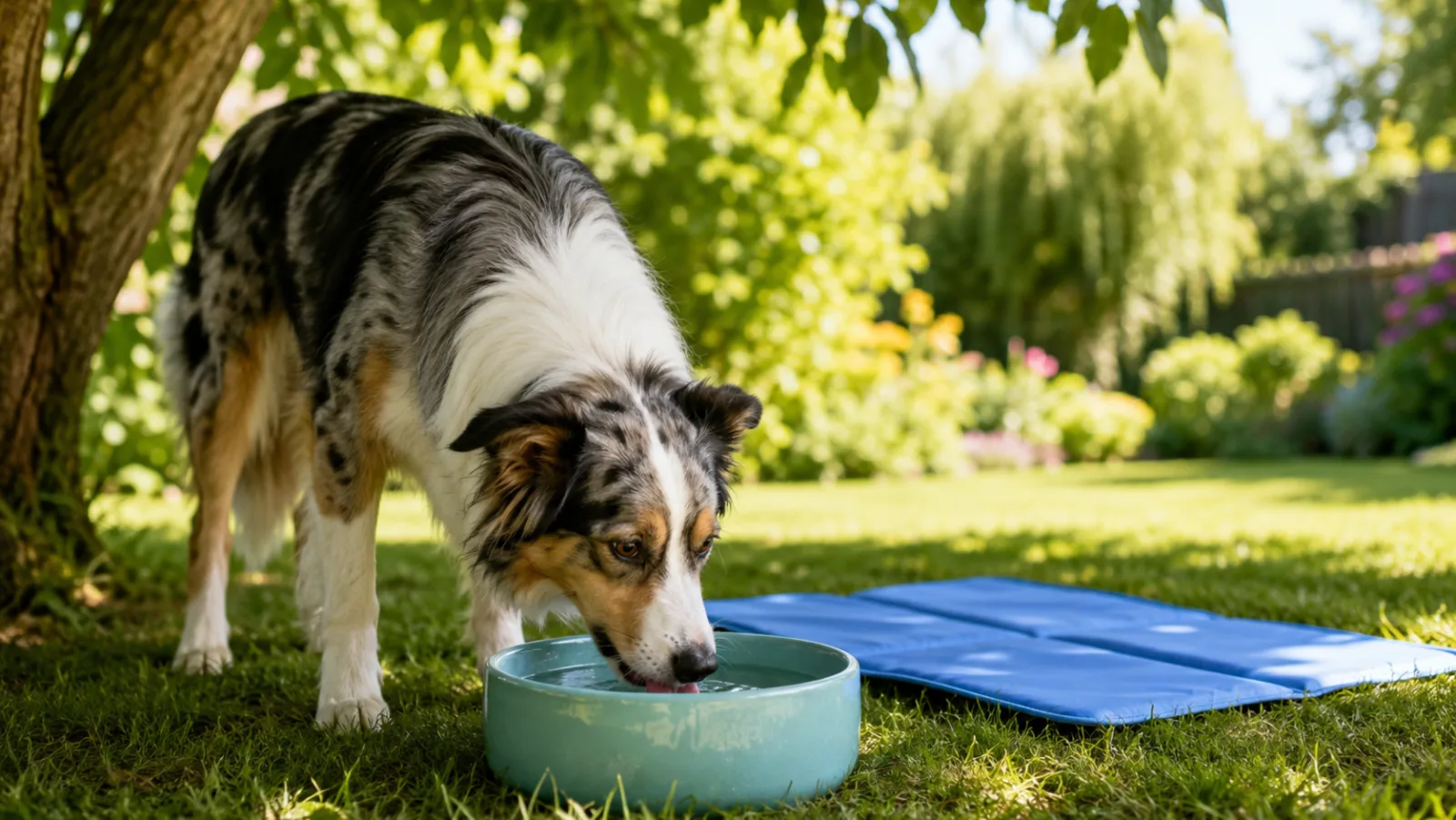
Pressure-activated non-toxic gel mat — no water, electricity, or refrigeration. The American Kennel Club explains the mechanism: the gel absorbs the dog's body heat and the energy of stepping on it. The lowest-friction way to give a resting dog a cool surface indoors.
Sources: American Kennel Club cooling-mat mechanism explainer, Amazon listing — pressure-activated gel, Medium 21-45 lb
Verified Jun 19, 2026
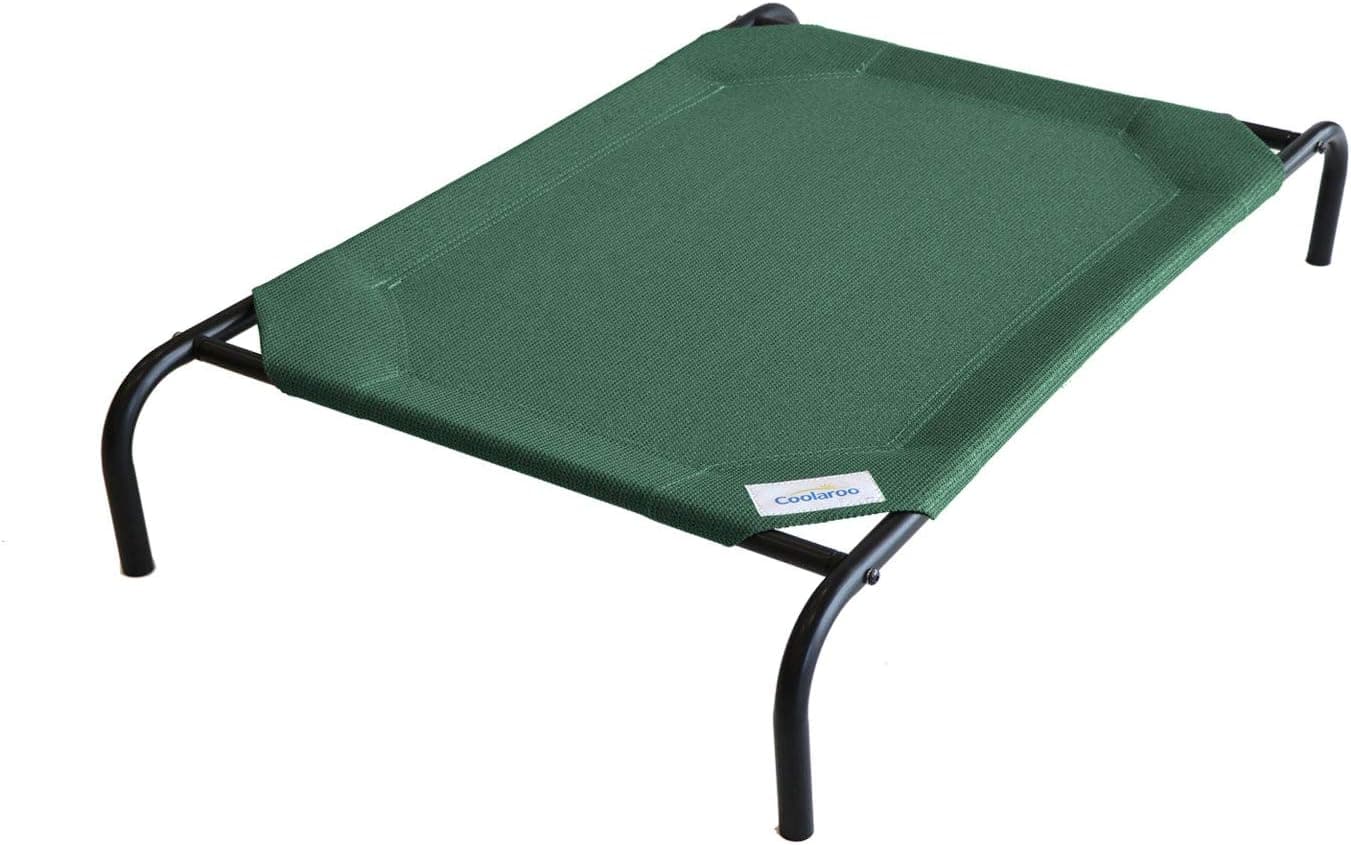
Coolaroo The Original Elevated Dog Bed
Breathable fabric on a steel frame that lifts the dog off the ground so air circulates underneath. NBC News Select's vet sources name raised beds the best outdoor option for exactly this airflow. 4.5 stars across more than 80,000 ratings.
Sources: NBC News Select vet-sourced outdoor-bed reporting, American Kennel Club shade-and-water guidance
Verified Jun 19, 2026
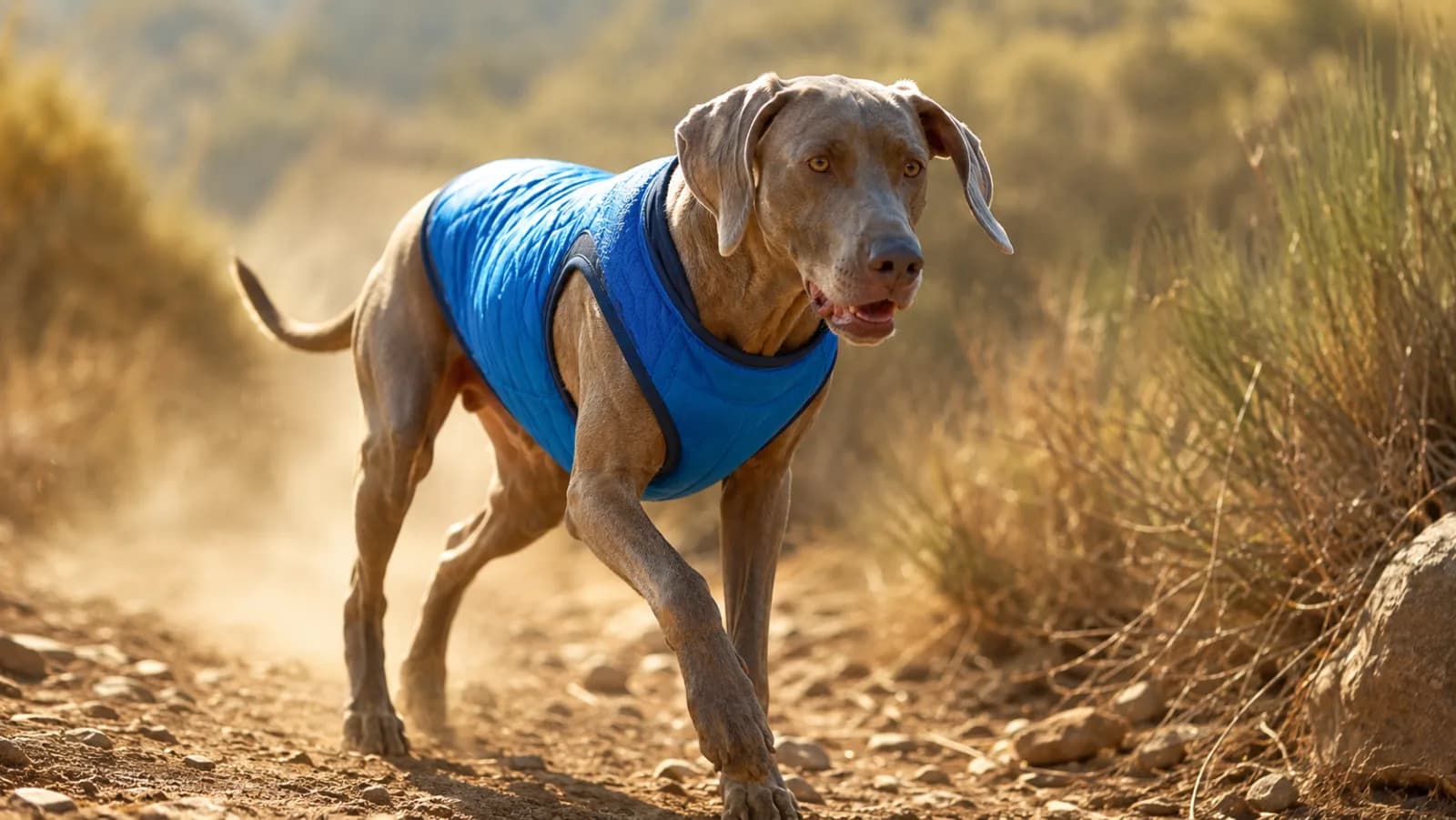
Ruffwear Swamp Cooler Zip Dog Vest
Three-layer evaporative vest with a UPF 50+ outer fabric that blocks about 98% of UV. Cools a moving dog as water evaporates — but Ruffwear's own data shows it does far less in humid air, the honest limit of the mechanism.
Sources: Ruffwear evaporative-cooling technical documentation, Amazon listing — Swamp Cooler Zip, in stock
Verified Jun 19, 2026
Our Picks

The Green Pet Shop
The Green Pet Shop Cool Pet Pad (Pressure-Activated Gel, Medium 21-45 lb)
8.6 / 10
- Pressure-, weight-, and motion-activated non-toxic cooling gel — no water, electricity, or refrigeration to manage
- Manufacturer rates cooling at up to about 4 hours of constant use, then recharges after roughly 15 to 20 minutes off
- Medium size suits dogs 21 to 45 lb; the line runs XS through XL for other body sizes
- Folds flat for crates, car back seats, sofas, or a shaded spot outdoors
$39.99
Amazon's price may vary; check the current price.
Last Amazon read 2026-08-07
Coolaroo
Coolaroo The Original Elevated Dog Bed (Large)
8.4 / 10
- Breathable HDPE fabric on a powder-coated steel frame that raises the dog off the ground for airflow on all sides
- Large size measures 51.0 x 31.5 x 8.0 inches
- Moisture-resistant — hose it off or wipe it clean; the fabric is 100% recyclable
- Indoor or outdoor use in shade; no electricity, gel, or water needed
$24.60
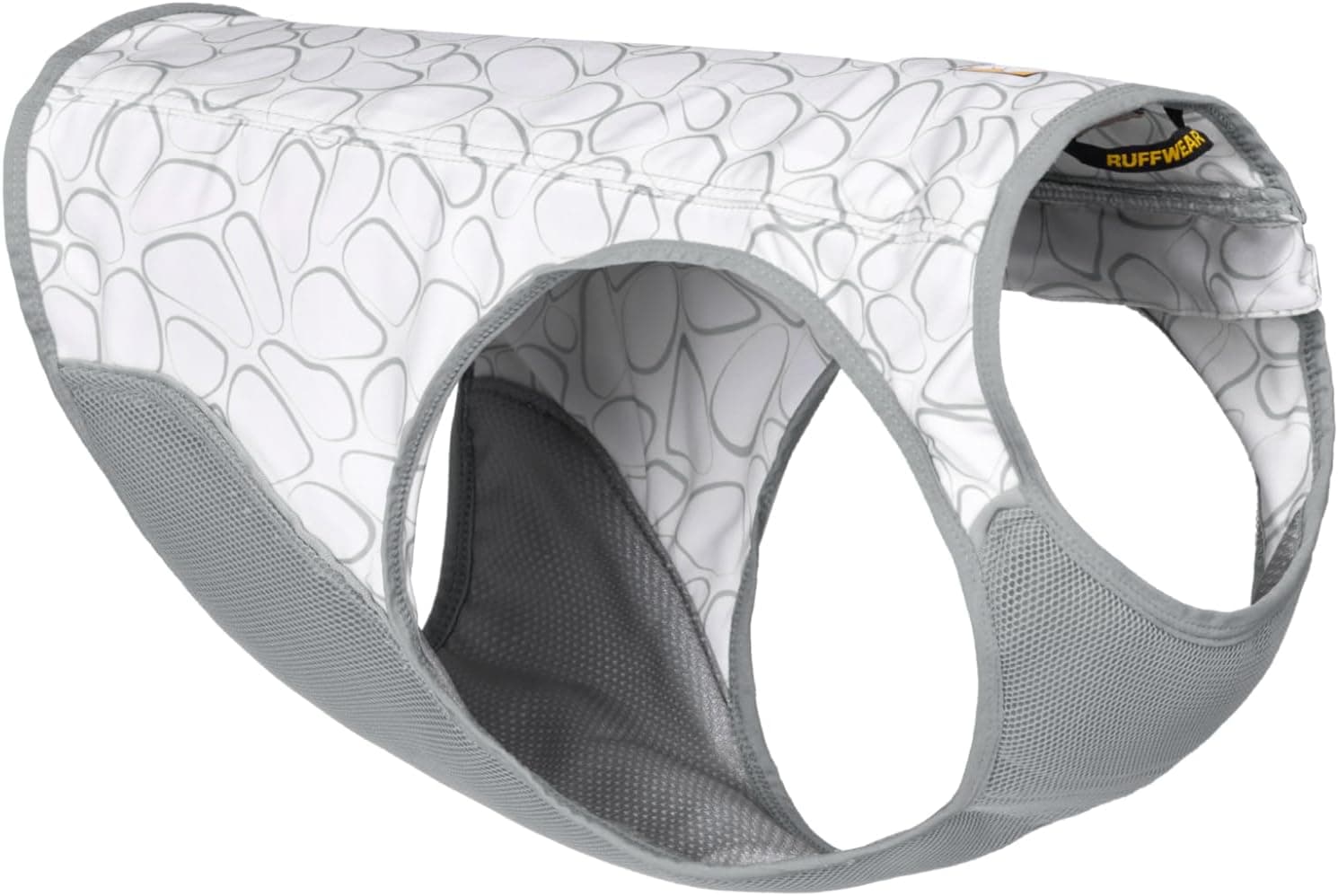
Ruffwear
Ruffwear Swamp Cooler Zip Dog Vest (Large)
8.3 / 10
- Three-layer evaporative build: a wicking outer layer, a water-reservoir middle layer, and a dry-keeping liner that pulls surface heat off the dog
- Outer layer rated UPF 50+, blocking roughly 98% of the sun's UV rays
- Activated by soaking, wringing out, and putting it on; re-wet when it dries
- Harness-compatible through a leash portal; side-release buckles for on and off
$59.99
Last Amazon read 2026-09-08

Highwave
Highwave AutoDogMug Portable Dog Water Bottle (20 oz)
8.1 / 10
- 20 oz BPA-free polypropylene squeeze bottle with a built-in bowl — squeeze to fill, release to draw unused water back in
- One-handed operation for hydration on walks, hikes, and car trips
- Twist-lock center for a leak-tight storage seal
- Top-rack dishwasher safe; fits most standard cup holders
$20.00
The Short Answer
Keeping a dog cool is mostly about behavior, not gear. The American Kennel Club is direct that the core of heat safety is shade, fresh water, and avoiding peak-heat activity — and that the single most dangerous mistake is leaving a dog in a parked car, where the interior can reach about 130 degrees in minutes. A dog's normal temperature runs up to about 102 degrees, and only a few degrees above that is already overheating; over roughly 106 degrees the body begins to fail. Cooling tools help around the edges of that, and they split into four levers. For a dog that needs to lie down and cool off, a pressure-activated gel mat like the Green Pet Shop Cool Pet Pad cools with no water or power. For a dog resting outdoors in shade, an elevated bed like the Coolaroo raises it off hot ground so air moves underneath. For a moving dog on a hot outing, a damp evaporative vest pulls heat off as water evaporates, though it does far less in humid air. And for hydration on the go, a squeeze bottle like the Highwave AutoDogMug keeps water available on walks. None of these replaces shade, water, and timing; they extend the margin, not the safe limit.
Every product on this list has been scored against the PetPal Gear Score, a weighted composite of expert consensus, observed effectiveness, animal safety, long-term durability, and value. Review method: Editorial synthesis of veterinary heat-safety guidance plus vet-sourced product recommendations from independent outlets. Sources include the American Kennel Club's overheating and cooling-mat articles, the Washington State University College of Veterinary Medicine on pavement and paw burns, NBC News Select's vet-sourced outdoor-bed reporting, PetMD on canine hydration, and Ruffwear's evaporative-cooling technical documentation. PetPalHQ does not run a cooling-gear testing lab — the tools below are representative of the prevention levers gear can serve, scored as a composite of expert consensus and documented evidence, not our own measurement. Two of four picks carry a live Amazon price as of 2026-08-07; the others show their last read or list price — check current prices.. Synthesized from 5+ expert sources.
Heatstroke is one of the most dangerous things that can happen to a dog in summer, and it is also one of the most preventable. The hard part is that almost none of the prevention is glamorous: it is shade, fresh water, careful timing of walks, and the absolute rule of never leaving a dog in a parked car. Cooling products help around the edges of that foundation, but they are exactly that — edges. This guide is built to put the prevention science first and the gear second, because that is the order that keeps dogs safe. We will walk through what overheating actually does to a dog's body, the warning signs that turn a hot afternoon into an emergency, the pavement and parked-car dangers owners underestimate, and then four cooling tools that each cover a different prevention lever.
We read five expert sources for this guide. On the veterinary side, the American Kennel Club's overheating and cooling-mat articles frame what heatstroke is, which dogs are most at risk, and the critical cool-not-cold-water rule; Washington State University College of Veterinary Medicine supplies the pavement and paw-burn numbers; and PetMD grounds the hydration math. NBC News Select's vet-sourced reporting on outdoor beds and Ruffwear's evaporative-cooling documentation cover the gear side. The consensus running through all of them is the same: cooling tools buy margin on a hot day, but they are never a substitute for shade, water, and good judgment about when not to go outside.
This is a prevention guide for dog owners managing normal summer heat — hot walks, hot yards, a sidewalk that bakes in the afternoon sun. It is not a heatstroke-treatment guide. If your dog is showing emergency signs right now, the product decision is the wrong decision to be making, and the "When NOT to Buy" section below points to what to do instead. It is also dog-specific. Cats overheat too, but their behavior, sizing, and risk profile differ enough that cooling for cats deserves separate treatment.
PetPalHQ earns affiliate commissions from qualifying purchases. Our recommendations are based on expert consensus — we synthesize professional reviews from veterinarians and independent outlets, plus multi-year owner durability data, to find pet gear that's worth your investment. Commission rates never influence our editorial recommendations.
What heatstroke actually is, and why a few degrees matter so much
A dog's normal body temperature runs up to about 102 degrees Fahrenheit — already warmer than a person's. That narrow headroom is the whole problem. According to the American Kennel Club, only a few degrees above 102 means a dog is overheating, and once the core climbs over roughly 106 degrees, the body begins to suffer metabolic failure: proteins denature, the gut lining breaks down, and the clotting system can spiral. That is why heatstroke moves so fast in dogs and why a "he just seems a little warm" assessment is dangerous. The gap between comfortable and critical is small.
Dogs also cool themselves differently than people do. They barely sweat — a little through the paw pads — and rely overwhelmingly on panting, which works by evaporating moisture off the tongue, mouth, and airways. Panting is efficient until it isn't: in very hot or very humid air, or when a dog's airway is compromised, it stops being able to dump heat fast enough, and the core temperature climbs. This is the mechanism behind every cooling tool in this guide. A gel mat or elevated bed gives the body another way to shed heat by conduction or airflow; an evaporative vest borrows the same evaporation principle panting uses; and water keeps panting itself possible. None of them replaces panting, shade, or rest — they support a system that is already working hard.
The warning signs that turn hot into emergency
Knowing the signs of heatstroke is more protective than any product, because catching it early is the difference between a scare and a tragedy. The American Kennel Club lists a progression worth memorizing: it starts with frantic, heavy panting and extreme drooling, then the gums shift from bright red toward a grayish or purple color as oxygen delivery falters, breathing becomes labored, and the dog may vomit. From there it escalates to an inability to stand, a wobbly or disoriented gait, and at the severe end seizures, collapse, or coma. The color of the gums is one of the most useful early tells — a healthy pink shifting to brick red and then to gray is the body sounding an alarm.
The response to these signs is specific, and getting it wrong matters. Move the dog out of the heat into shade or air conditioning, offer cool water to drink, and begin cooling the body with cool — not cold — water while heading to a veterinarian. The single most important "do not" comes straight from the AKC: do not use ice or ice-cold water. Counterintuitively, cold water constricts the blood vessels at the skin's surface, which reduces the body's ability to release heat, and the shock can make things worse. Cool water plus a fan to speed evaporation is the right approach, paired with an immediate trip to the vet. The gear on this page exists to make this moment far less likely, never to handle it.
The dangers owners underestimate: pavement and parked cars
Two heat hazards do more damage than their reputation suggests, and both are easy to avoid once you know the numbers. The first is hot pavement. Washington State University's veterinary guidance reports that asphalt can reach about 135 degrees when the air temperature is only 86 — the surface absorbs and holds far more heat than the air around it. Black pavement around 125 degrees can damage a dog's skin in roughly 60 seconds, and second-degree paw burns can occur in as little as 35 seconds of contact. The simple field test is the back of your hand: if you cannot comfortably hold it against the pavement for seven seconds, it is too hot for your dog's paws. Walk in the early morning or the evening when surfaces have cooled, stick to grass where you can, and remember that a dog cannot tell you its feet are burning until the damage is done.
The second is the parked car, and it is the one absolute in dog heat safety. The American Kennel Club documents that the interior of a parked car can reach about 130 degrees in minutes, even on a day that does not feel dangerously hot to a person standing in the breeze outside. Cracking the windows does almost nothing. There is no safe duration, no cool-enough day, and no cooling product that changes this math — a dog left in a hot car can reach a lethal core temperature before a quick errand is finished. If keeping a dog cool came down to one rule, it would be this one.
Which dogs are most at risk
Not every dog carries the same heat risk, and the dogs most in danger are not always the ones that look the most uncomfortable. The American Kennel Club identifies several high-risk groups. Brachycephalic, or short-snouted, breeds — Bulldogs, Pugs, French Bulldogs, Boxers — sit at the top, because their compressed airways make panting far less efficient, throttling their primary cooling mechanism. Double-coated and thick-coated breeds trap heat against the body, and senior dogs lose some of their ability to regulate temperature as they age. Overweight dogs carry an insulating layer and a higher metabolic load, and dogs with heart or respiratory disease have less reserve to cope when the body is stressed.
For these dogs, prevention has to be more conservative and the tools matter more. A flat-faced or senior dog benefits from a passive cooling surface to rest on and an off-ground bed in the shade far more than from a vest on a walk it should not be taking in peak heat anyway. The decision is less "should I buy cooling gear" in the abstract and more "which dog do I have, and what does its heat exposure look like." A young, fit, long-muzzled dog in moderate heat may need almost none of this; a senior Bulldog in a humid July needs the whole prevention plan and the gear that fits its real risk profile.
The four levers — and what we left out
The tools below are not a ranked competition. This is a hub about prevention, so each one represents a distinct prevention lever rather than a head-to-head winner: a passive surface for a resting dog, an elevated bed for airflow outdoors, and a water bottle for hydration on the go. Evaporative cooling is the fourth lever, and it is the one you manage with technique more than with a purchase — a damp vest or a wet towel across the shoulders on a hot outing, re-wetted at every water stop, and never left to dry out on the dog. The labels describe the role each fills, not a best-overall ladder — a gel mat and a vest do completely different jobs and it would be meaningless to crown one over the other. Read the label, match it to how your dog spends its hot hours, and ignore the rank order. Every product here is checked against a live Amazon read at our last product check; where Amazon is not showing a price today, the card prints its last read or the maker’s list price and says which.
We kept the list to four representative tools rather than padding it with near-duplicates. The cooling-gear market is full of overlapping products that cover the same lever, and naming three gel mats would dilute the guide without adding information.
What We Passed On
Arf Pets Dog Self Cooling Mat (gel) — This is a strong alternative pressure-activated gel mat, and for a buyer who simply wants a cooling pad it is a perfectly reasonable choice. We passed because it occupies the exact same passive-cooling lever as the Green Pet Shop Cool Pet Pad, and a hub built around four distinct prevention levers gains nothing by listing two near-identical gel mats. If the Green Pet Shop pad is out of stock or the wrong size for your dog, the Arf Pets mat is a fair substitute in the same category.
CoolerDog Hydro Cooling Mat and FlexiFreeze ice-sheet pads — These triple-layer waterbed-plus-ice pads cool harder and colder than a gel mat, and for a serious heat problem they have a real place. We passed because they require freezing ice sheets ahead of time and are heavier and pricier, which puts them past the simple, no-prep tools this prevention hub is built around. The whole argument of this guide is that the cooling gear people actually use is the gear that asks nothing of them — and a pad that needs freezer planning is the kind of tool that gets skipped on the hot afternoon it was bought for. For a household willing to manage the prep, an ice-sheet pad is a legitimate step up in cooling power.
We also left out cooling bandanas and ice-pack insert vests. Bandanas cool a few square inches of neck and dry out within minutes; ice-pack vests cool hard but briefly and require freezer access that makes them awkward field gear. Both are supplementary at best, and neither cleared the bar as a representative tool for a prevention lever.
Animal safety: what no cooling product can replace
Every product on this page is a supplement to heat safety, not a substitute for it, and a few product-specific cautions are worth stating plainly. A cooling-mat's gel is marketed as non-toxic, but a heavy chewer that gets through the cover can swallow the internal gel and end up with GI upset — supervise determined chewers and choose a different lever for a dog that destroys bedding. An evaporative vest carries a subtler hazard: once it dries out completely it stops cooling and becomes an insulating layer that traps heat against the dog, so keeping it damp is a safety requirement, not just a performance one. And no tool here — not the mat, the bed, or the bottle — makes peak-heat exercise, hot pavement, or a parked car acceptable.
The levers that do the real work are the unglamorous ones. Walk at dawn or dusk when the air and the pavement are coolest. Carry water and offer it often. Find shade and use it. Watch the dog rather than the thermometer — a dog that slows down, lags behind, or seeks out shade is telling you something no gear can. For high-risk dogs especially — the flat-faced, the senior, the overweight, the thick-coated — combine a cool resting surface, a climate-controlled space, very short walks at the coolest hours, and constant supervision. The cooling tools extend the margin on a hot day; they never move the line of what is actually safe.
Head-to-Head Comparison
| Feature | The Green Pet Shop Cool Pet Pad (Pressure-Activated Gel, Medium 21-45 lb) | Coolaroo The Original Elevated Dog Bed (Large) | Ruffwear Swamp Cooler Zip Dog Vest (Large) | Highwave AutoDogMug Portable Dog Water Bottle (20 oz) |
|---|---|---|---|---|
| Prevention lever | Passive cooling (lie-on surface) | Airflow (off-ground) | Evaporative cooling (moving dog) | Hydration (water access) |
| Best for | A dog resting indoors | A dog resting outdoors in shade | A dog moving on a hot outing | Any dog on a walk or hike |
| Needs water/power/freezer | None | None | Water (soak & re-wet) | Water (refill) |
| Humidity dependence | None — cools by conduction | Some — needs air movement | High — much weaker in humid air | None — it is water itself |
| Main limitation | Recharge window; chewer risk | Needs shade and breeze; not portable | Stalls in humidity; must stay damp | 20 oz; doesn't cool directly |
| Check price | Amazon | Amazon | Amazon | Amazon |
$39.99
Amazon's price may vary; check the current price.
Last Amazon read 2026-08-07
- Pressure-, weight-, and motion-activated non-toxic cooling gel — no water, electricity, or refrigeration to manage
- Manufacturer rates cooling at up to about 4 hours of constant use, then recharges after roughly 15 to 20 minutes off
- Medium size suits dogs 21 to 45 lb; the line runs XS through XL for other body sizes
- Folds flat for crates, car back seats, sofas, or a shaded spot outdoors
- Patented gel formula marketed as safe for pets and people
The Green Pet Shop Cool Pet Pad is the first prevention lever in physical form: give a dog a cooler surface than the floor to lie on, and it sheds heat by conduction. It does that with the least possible setup. There is no water to add, no freezer to plan around, and nothing to plug in. The American Kennel Club describes the mechanism plainly — the gel absorbs both the dog's body heat and the energy transferred from stepping on it, and that pressure triggers a chemical reaction that produces a cooling sensation. The dog lies down, the mat cools, and it works the same in dry Phoenix or humid Atlanta because conduction does not care about the moisture in the air.
For a hub about prevention, that low friction is the point. The most common reason cooling gear fails is that owners stop using it — a tool that needs freezing or re-wetting gets skipped on the busy hot afternoon when it matters most. A gel mat asks nothing. You unfold it onto the dog's usual resting spot and the dog uses it on its own. The Green Pet Shop Cool Pet Pad is a long-established version of this category, which is why it is the representative pick here rather than a novelty: the mechanism is well understood and the format is the simplest in the cooling lineup.
Here's the honest trade-off: this is lie-on relief, not active cooling, and it has a duration ceiling. The manufacturer rates up to about four hours of constant use, after which the gel saturates with body heat and needs roughly 15 to 20 minutes off to recharge. For a dog that lies down, gets up, and comes back, that cycle is invisible; for a large dog that wants to sprawl on it for hours without moving, the back half of that stretch does less. A gel mat also does nothing for a dog on a walk — it is the resting-dog tool, full stop. Match the size honestly, too: the Medium fits dogs 21 to 45 lb, and a dog that overhangs the pad only cools the part of itself that is on it.
One safety note the American Kennel Club raises directly: the gel should be non-toxic, but heavy chewers need more durable materials to avoid reaching the internal components. Supervise a determined chewer the first several uses, and if your dog reliably destroys bedding, this is not the cooling product for it — an elevated bed is the safer choice for that dog.
What We Love
- No water, electricity, or refrigeration — the lowest-friction cooling tool in this guide
- Works identically in dry and humid climates because it cools by conduction, not evaporation
- Folds flat for crates, car seats, sofas, and travel
- Self-recharges in about 15 to 20 minutes of non-use — no maintenance step
- Multiple sizes (XS through XL) so the pad can match the dog's body
What Could Be Better
- Lie-on relief only — does nothing for a dog on the move
- Cooling tapers after the rated window and needs a recharge once the gel saturates
- Heavy chewers can reach the internal gel without supervision
- A dog that overhangs the Medium only cools the part of itself on the pad
The Verdict
The representative passive-cooling tool, and the one most households will actually use because it asks for nothing. Give a resting dog a cool surface with zero setup — just size it to the dog and supervise heavy chewers.
Sources
- American Kennel Club: the gel absorbs both your dog's body heat and the energy transferred from stepping on it, causing a chemical reaction that causes a cooling sensation
- American Kennel Club: the gel should be nontoxic, but heavy chewers need more durable materials like nylon to avoid exposure to internal components
- Amazon listing: $39.99 — pressure-activated gel, Medium 21-45 lb, no water or refrigeration
$24.60
- Breathable HDPE fabric on a powder-coated steel frame that raises the dog off the ground for airflow on all sides
- Large size measures 51.0 x 31.5 x 8.0 inches
- Moisture-resistant — hose it off or wipe it clean; the fabric is 100% recyclable
- Indoor or outdoor use in shade; no electricity, gel, or water needed
- 4.5-star average across 80,919 Amazon ratings as of 2026-06-19
The Coolaroo elevated bed addresses a prevention lever the gel mat cannot: a dog resting on hot ground is being heated from below. Ground in direct sun, concrete on a patio, and even shaded earth on a humid day all hold heat and press it into a dog lying flat on them. The Coolaroo lifts the dog several inches up on a taut, breathable fabric so air circulates underneath and around the whole body, carrying heat away instead of trapping it. NBC News Select's reporting, sourced to veterinarians, is direct on this point: the best outdoor options are those raised above the ground so air can circulate underneath and keep dogs cool.
This is the tool for the dog that spends hot hours outdoors in a shaded yard, on a porch, or at a campsite. It pairs naturally with the American Kennel Club's foundational advice — ensure a dog always has plenty of fresh water and shade — by giving the shaded resting spot an actual cooling surface rather than baked ground. The taut fabric also keeps the dog out of dirt and away from the radiant heat coming off a sun-warmed deck. With 4.5 stars across more than 80,000 ratings, it is the category reference for off-ground cooling, which is why it represents the airflow lever here.
Here's the honest trade-off: an elevated bed cools by airflow, so it only works where there is air movement and shade to work with. In dead-still, brutally hot air with no shade, raising a dog off the ground helps less — the air moving underneath is still hot. This is a shade-and-breeze tool, not a substitute for either. It is also a fixed piece of furniture, not travel gear: the Large is over four feet long, so it lives in a yard or on a porch rather than folding into a day pack. And it does nothing for a dog on the move — like the gel mat, it is a resting-dog tool, just one built for outdoors rather than the living-room floor.
A practical durability note from owner reports: the fabric is the wear point, and a determined chewer or digger can damage the bed surface over time. Coolaroo sells replacement covers, but a dog that destroys fabric beds will go through them. For most dogs, the breathable surface holds up across seasons and hoses clean in seconds.
What We Love
- Raises the dog off hot ground so air circulates underneath — the airflow lever in physical form
- Vet-sourced reporting names raised beds the best outdoor cooling option
- No power, gel, or water; hoses off and the fabric is recyclable
- 4.5 stars across more than 80,000 ratings — the category reference
- Works indoors or outdoors wherever there is shade
What Could Be Better
- Cools by airflow, so it needs shade and some air movement to do its job
- A large, fixed piece of furniture — not travel or day-pack gear
- Does nothing for a dog in motion; it is a resting surface only
- The fabric surface is the wear point for chewers and diggers
The Verdict
The representative airflow tool — the right surface for a dog resting outdoors in shade, lifting it off heat-holding ground. Just remember it works with shade and breeze, not instead of them.
Sources
- NBC News Select: experts say the best options are those raised above the ground so air can circulate underneath and keep dogs cool
- American Kennel Club: ensure that your dog always has plenty of fresh water and shade
- Amazon listing: $28.34 — 4.5 stars across 80,919 ratings, breathable HDPE on a steel frame
$59.99
Last Amazon read 2026-09-08
- Three-layer evaporative build: a wicking outer layer, a water-reservoir middle layer, and a dry-keeping liner that pulls surface heat off the dog
- Outer layer rated UPF 50+, blocking roughly 98% of the sun's UV rays
- Activated by soaking, wringing out, and putting it on; re-wet when it dries
- Harness-compatible through a leash portal; side-release buckles for on and off
- Current Swamp Cooler Zip generation; 4.3 stars across 183 ratings as of 2026-06-19
The Ruffwear Swamp Cooler Zip is the tool for the only prevention lever the surfaces cannot cover: a dog that is moving and generating its own heat load on a hot outing. A gel mat and an elevated bed are useless to a dog on a trail; an evaporative vest travels with the dog. The mechanism is evaporative cooling, and Ruffwear documents the build clearly — a wicking outer layer facilitates evaporation while providing shading and thermal protection rated at UPF 50+, blocking approximately 98% of the sun's UV rays, over a middle layer that holds a water reservoir and a liner that keeps the dog's coat from soaking through. As water evaporates off the outer layer, it pulls heat from the surface underneath it, which is the dog.
Within this guide it represents the active-dog lever, and the UPF 50+ outer fabric is a quiet second job most cooling vests skip. For a light- or thin-coated dog out in direct sun, sun protection layered on top of cooling is a real benefit. The vest is also harness-compatible through a leash portal, so it does not force a vest-over-harness stack for a leashed walk. You wet it, wring it to damp rather than dripping, put it on, and re-wet at the next water source rather than waiting until it has dried out.
Here's the honest trade-off, and Ruffwear is refreshingly direct about it: evaporative cooling works best in hot, dry climates, and it does much less in humid air. By their own figures, at 70% humidity and 85 degrees the vest cools only about 6 degrees, versus roughly 15 degrees at 30% humidity. That is the entire mechanism showing its limit — evaporation stalls when the surrounding air is already near-saturated. In the muggy Southeast, this vest helps a moving dog but is not the centerpiece it can be in Arizona. There is also a hidden hazard owners miss: a vest left to dry out fully stops cooling and becomes an insulating layer that can trap heat, so the discipline of keeping it damp is not optional.
This is the current Swamp Cooler Zip generation, chosen because older Swamp Cooler variants showed stock problems at research time. At $59.99 it is the priciest tool here, and it is the most maintenance-intensive — it only earns its keep for a dog that genuinely moves in the heat. For a dog that mostly lounges, the gel mat or elevated bed is the better spend.
What We Love
- Travels with the dog — the only tool here that cools a dog in motion
- UPF 50+ outer fabric adds sun protection most cooling vests omit
- Harness-compatible via a leash portal, so no vest-over-harness stack
- Manufacturer is transparent about the humidity limit rather than overselling it
What Could Be Better
- Loses most of its effect in humid air — about 6 degrees of cooling at 70% humidity versus 15 at 30%
- Must be kept damp; a dried-out vest becomes an insulating layer that traps heat
- The priciest and most maintenance-intensive tool in this guide at $59.99
- Does nothing for a resting dog — overkill for a dog that mostly lounges
The Verdict
The representative evaporative tool for an active dog on a hot outing, with UPF 50+ as a bonus. Worth it for a dog that genuinely moves in dry heat — but in humid climates lean on shade and timing, and never let it dry out on the dog.
Sources
- Ruffwear: the wicking outer layer facilitates evaporation and provides shading and thermal protection rated at UPF 50+ (blocking approximately 98% of the sun's UV rays)
- Ruffwear: evaporative cooling works best in hot, dry climates; at 70% humidity and 85F it cools only ~6F versus ~15F at 30% humidity
- Amazon listing: $59.99 — in stock, Swamp Cooler Zip, 4.3 stars across 183 ratings
$20.00
- 20 oz BPA-free polypropylene squeeze bottle with a built-in bowl — squeeze to fill, release to draw unused water back in
- One-handed operation for hydration on walks, hikes, and car trips
- Twist-lock center for a leak-tight storage seal
- Top-rack dishwasher safe; fits most standard cup holders
- 4.4-star average across 9,067 Amazon ratings as of 2026-06-19
The Highwave AutoDogMug covers the prevention lever that underlies all the others: water. The American Kennel Club's frontline heat advice is to ensure a dog always has plenty of fresh water and shade, and PetMD notes that a dog generally needs about one ounce of water per pound of body weight per day — with more required in heat or with activity. On a hot walk or hike, that need rises exactly when a water bowl at home is useless. The AutoDogMug solves the access problem: squeeze the bottle to push water into the built-in bowl, let the dog drink, then release to draw the unused water back into the bottle so nothing is wasted.
It earns the hydration slot in this hub because dehydration is part of how overheating spirals. A dog that cannot replace the water it loses panting loses its primary cooling tool, since panting depends on moisture evaporating off the tongue and airways. Carrying water and offering it often is not a gadget convenience — it is part of the prevention chain, and a one-handed bottle removes the friction of doing it while also holding a leash. The 20 oz capacity covers a typical walk for a mid-size dog, the twist-lock keeps it from leaking in a bag, and it is dishwasher safe between uses.
Here's the honest trade-off: 20 ounces is enough for a walk, not a long desert hike for a large dog. PetMD's rough figure — about an ounce per pound per day, more in heat — means a 70-pound dog working hard on a hot trail can drain a single bottle quickly, so multi-hour outings need a refill plan or a second bottle. The squeeze-and-release design also takes a few uses for some dogs to figure out, and a dog that gulps may need several squeeze cycles rather than one. None of that changes the core value, which is that it makes offering water on the move effortless enough that owners actually do it.
One thing this tool explicitly does not do is cool a dog directly — it is hydration support, not a cooling device. That is the right framing for a prevention hub: the cheapest, most effective heat protection is water and timing, and a bottle that makes hydration easy on the trail does more real-world good than any single cooling gadget.
What We Love
- One-handed squeeze-and-release design makes offering water on the move effortless
- Returns unused water to the bottle so nothing is wasted on a walk
- Twist-lock storage seal and dishwasher-safe cleanup
- Widely owned and well-reviewed — 4.4 stars across more than 9,000 ratings
- Lowest price here at $20.00
What Could Be Better
- 20 oz is enough for a walk but not a long hike for a large, hard-working dog
- Supports hydration but does not cool a dog directly
- The squeeze mechanism takes some dogs a few uses to learn
The Verdict
The representative hydration tool, and a reminder that water is the cheapest heat protection there is. The right buy for making on-the-go hydration effortless — just carry a refill plan for long outings.
Sources
- American Kennel Club: ensure that your dog always has plenty of fresh water and shade
- PetMD: dogs generally need about 1 ounce of water per pound of body weight per day, and more in heat or with activity
- Amazon listing: $20.00 — in stock, 20 oz, 4.4 stars across 9,067 ratings
How We Score
Formula
PetPal Gear Score = (Expert Consensus × 0.30) + (Effectiveness × 0.25) + (Animal Safety × 0.20) + (Durability × 0.15) + (Value × 0.10)
Score Factors
- Expert Consensus · 30%
- How strongly veterinary guidance and vet-sourced reporting back the tool's role. We weight the American Kennel Club for its overheating and cooling-mat articles, Washington State University's veterinary guidance on pavement burns, NBC News Select's vet-sourced outdoor-bed reporting, and PetMD on hydration. The Green Pet Shop mat scores highest because the AKC explicitly describes its mechanism and safety profile; the Coolaroo scores well because vet sources name raised beds the best outdoor cooling option. A manufacturer's own claim, like Ruffwear's humidity figures, is credited but treated as manufacturer data rather than independent confirmation.
- Effectiveness · 25%
- How much real cooling the tool delivers in the conditions it is built for. Each is scored within its own lever, not against the others — a gel mat does nothing for a moving dog and a vest does nothing for a resting one, so it would be meaningless to rank them head to head. The gel mat and elevated bed are judged on cooling depth and how long it lasts; the water bottle is judged on whether it removes enough friction that owners actually hydrate on the move.
- Animal Safety · 20%
- Whether the tool is safe in normal use and whether it risks dangerous overreliance. Non-toxic materials, chew resistance, and the absence of heat-trapping failure modes all count — the AKC flags chewer access to gel, and a dried-out evaporative vest can become an insulating layer that traps heat. The larger safety variable is framing: every tool here is scored down if it is treated as a substitute for shade, water, and timing. None of them makes a parked car or peak-heat exercise safe, and the guide is explicit about that.
- Durability · 15%
- How well the tool holds up across seasons of real summer use. For the gel mat and water bottle, that means resisting puncture, leaks, and the wear of repeated handling. For the elevated bed, the fabric surface is the wear point and the steel frame is the durable part. Owner-reported longevity across multi-season use informs this factor, which is why the high-rating-count picks carry more confidence here.
- Value · 10%
- Cooling or hydration delivered per dollar, judged within each lever rather than across them. The water bottle and elevated bed clear a low price bar for the job they do. Value is weighted lightly and never overrides safety or effectiveness — a cheap tool that fails in the conditions you bought it for is the worst value, and the most valuable heat protection of all, shade and timing, costs nothing.
| Rank | Product | Score |
|---|---|---|
| #1 | The Green Pet Shop The Green Pet Shop Cool Pet Pad (Pressure-Activated Gel, Medium 21-45 lb) | 8.6 |
| #2 | Coolaroo Coolaroo The Original Elevated Dog Bed (Large) | 8.4 |
| #3 | Ruffwear Ruffwear Swamp Cooler Zip Dog Vest (Large) | 8.3 |
| #4 | Highwave Highwave AutoDogMug Portable Dog Water Bottle (20 oz) | 8.1 |
When NOT to Buy
Skip every product here as a response to a dog that is overheating right now. Heatstroke is an emergency, and the signs are specific: frantic panting, heavy drooling, gums that turn from bright red to a grayish or purple cast, labored breathing, vomiting, an inability to stand, and at the severe end seizures or collapse. A dog's normal temperature runs up to about 102 degrees; only a few degrees above that is already overheating, and over roughly 106 degrees the body begins to fail. If you see these signs, move the dog to shade or air conditioning, start offering cool water, and get to a veterinarian immediately. A cooling mat or vest is a preventive tool, never a treatment.
Do not use ice or ice-cold water to cool an overheating dog, and skip any advice that tells you to. The American Kennel Club is explicit that cold water constricts the surface blood vessels and actually reduces heat loss, and the shock of icy water carries its own risk. Use cool — not cold — water on the body, add a fan to help evaporation, and move toward a vet. The instinct to cool as fast as possible with the coldest thing available is the wrong one, and it can make the emergency worse.
Skip an evaporative cooling vest as your main cooling method if you live in a hot, humid climate. Ruffwear's published figures for its own vests show about 6 degrees of cooling at 70% humidity versus roughly 15 degrees at 30%, because evaporation stalls in saturated air. In the muggy Southeast, a vest helps a moving dog at the margins, but shade, air conditioning, and walk timing carry far more of the load. Buying a vest as your humid-climate centerpiece is buying the wrong tool for your weather.
Skip the gel mat specifically if your dog is a determined chewer you cannot supervise. The American Kennel Club flags that the gel should be non-toxic but that heavy chewers need more durable materials so they cannot reach the internal components, and a chewed-open mat is a mess and a GI-upset risk, not a feature. For a dog that destroys bedding, the elevated Coolaroo bed is the safer pick.
Skip all of it as a reason to take a dog out in peak heat or onto hot pavement. Washington State University's veterinary guidance is stark: asphalt can reach about 135 degrees when the air is only 86 degrees, black pavement around 125 degrees can damage skin in roughly 60 seconds, and second-degree paw burns can occur in as little as 35 seconds. Use the back-of-hand test — if you cannot hold your hand on the pavement for seven seconds, it is too hot for paws — and walk in the early morning or evening, or on grass. No cooling product offsets a surface that burns.
Skip every product on this page as a reason to leave a dog in a parked car, even briefly. The American Kennel Club documents that a parked car's interior can reach about 130 degrees in minutes. There is no version of cooling gear that makes this safe, no acceptable amount of time, and no weather mild enough to make it a gamble worth taking.
Frequently Asked Questions
- What body temperature counts as heatstroke in a dog, and what are the early warning signs?
- A dog's normal temperature runs up to about 102 degrees Fahrenheit, and the American Kennel Club notes that only a few degrees above that means a dog is overheating, with metabolic failure beginning over roughly 106 degrees. The early warning signs, in rough order, are frantic heavy panting and extreme drooling, gums shifting from bright red toward a grayish or purple color, labored breathing, and vomiting — escalating to an inability to stand, a wobbly gait, and at the severe end seizures or collapse. The gum color is one of the most useful early tells. If you see this progression, treat it as the emergency it is: move the dog to shade or air conditioning, offer cool water, begin cooling with cool water, and get to a veterinarian right away.
- Should I use ice or cold water to cool down an overheating dog?
- No — and this is one of the most common dangerous mistakes. The American Kennel Club is explicit that ice or ice-cold water constricts the blood vessels at the skin's surface, which actually reduces the body's ability to release heat, and the shock of icy water carries its own risk. The correct approach is cool, not cold, water on the body, ideally with a fan to speed evaporation, while you head to a veterinarian. The instinct to cool as fast as possible with the coldest thing on hand is the wrong one. Cool water plus airflow plus an immediate vet visit is the guidance to follow.
- Do cooling mats and cooling vests actually work, or are they gimmicks?
- They work, but only within their specific job, and understanding the mechanism keeps expectations honest. A pressure-activated gel mat genuinely cools a resting dog by conduction, with no water or power needed, and the American Kennel Club describes exactly how the gel reaction produces the cooling. An evaporative vest genuinely cools a moving dog as water evaporates off it — but Ruffwear's own data shows it cools far less in humid air, only about 6 degrees at 70% humidity versus roughly 15 at 30%. The gimmick territory is treating any of these as a heat solution on their own. They are real tools for specific situations, and useless outside those situations — a mat does nothing for a dog on a walk, and a vest does nothing for a dog asleep on the floor.
- How hot is too hot to walk my dog on pavement?
- Hotter than most owners think, because pavement holds far more heat than the air. Washington State University's veterinary guidance reports asphalt reaching about 135 degrees when the air is only 86, and black pavement around 125 degrees can damage skin in roughly 60 seconds, with second-degree paw burns possible in as little as 35 seconds. The reliable field test is the back of your hand: press it to the pavement, and if you cannot hold it there comfortably for seven seconds, it is too hot for your dog's paws. The fix is timing and surface choice — walk in the early morning or evening when pavement has cooled, and stick to grass when you can.
- Which dogs are most at risk of heatstroke?
- The American Kennel Club identifies several high-risk groups. Brachycephalic or short-snouted breeds — Bulldogs, Pugs, French Bulldogs, Boxers — top the list because their compressed airways make panting much less efficient. Double-coated and thick-coated breeds trap heat against the body, senior dogs lose some temperature-regulation ability with age, overweight dogs carry both insulation and a higher metabolic load, and dogs with heart or respiratory disease have less reserve when stressed. For these dogs, prevention has to be more conservative: shorter walks at the coolest hours, more shade, a cool resting surface, and climate control. A young, fit, long-muzzled dog in moderate heat carries far less risk than a senior flat-faced dog in a humid July.
- How much water does my dog need in hot weather, and how do I prevent dehydration on outings?
- PetMD's rough guideline is about one ounce of water per pound of body weight per day, with more required in heat or with activity — so a hot, active day pushes that number up meaningfully. The American Kennel Club's frontline advice is simply to ensure a dog always has plenty of fresh water and shade. On outings, the practical move is to carry water and offer it often rather than waiting for the dog to seem thirsty, because a dog that falls behind on water loses panting efficiency, which is its main cooling tool. A one-handed travel bottle like the Highwave AutoDogMug removes the friction of doing this on the move, and for a large dog on a long hot hike, plan a refill rather than relying on a single 20-ounce bottle.
Bottom Line
Start with behavior, not gear. The American Kennel Club is clear that shade, fresh water, and avoiding peak-heat activity are the core of heat safety — and that the deadliest mistake is a parked car, where the interior can reach about 130 degrees in minutes. No product on this page changes that.
Buy the Green Pet Shop Cool Pet Pad for a dog that needs a cool surface to lie on indoors. No water, no power, and it works the same in any climate because it cools by conduction — just size it to the dog and supervise heavy chewers.
Buy the Coolaroo Elevated Dog Bed for a dog resting outdoors in shade. Lifting the dog off heat-holding ground lets air circulate underneath, which vet sources name the best outdoor cooling approach. It needs shade and a breeze to do its job.
Buy the Highwave AutoDogMug to make hydration on walks effortless — the cheapest, most effective heat protection there is. Carry a refill plan for a large dog on a long, hot outing.
Sources & Methodology
Methodology
PetPal Gear Score = (Expert Consensus × 0.30) + (Effectiveness × 0.25) + (Animal Safety × 0.20) + (Durability × 0.15) + (Value × 0.10)
Expert review sources
- American Kennel Club — Heatstroke and Overheating in Dogs (warning signs, at-risk breeds, cool-not-cold-water rule, parked-car danger)
- American Kennel Club — Cooling Mats for Dogs (gel-mat mechanism and chewer-safety guidance)
- Washington State University College of Veterinary Medicine — pavement and paw-burn temperatures and the seven-second test
- NBC News Select — vet-sourced reporting on the best outdoor dog beds and elevated-bed airflow
- PetMD — The Importance of Water for dogs (daily hydration needs and heat/activity adjustments)
Community sources
- Ruffwear — Evaporative Cooling 101 manufacturer documentation (humidity-dependence figures for evaporative cooling)
- r/dogs and r/DOG — owner discussion of real-world cooling-gear use across hot and humid climates
- Owner durability reports across multi-season summer use of gel mats, elevated beds, and evaporative apparel
Prices and specs verified June 19, 2026.
About the author
Nick Miles is the chief editor of PetPalHQ. The guidance above is editorial synthesis of veterinary heat-safety advice from the American Kennel Club, Washington State University College of Veterinary Medicine, NBC News Select's vet-sourced reporting, and PetMD, alongside manufacturer documentation from Ruffwear. PetPalHQ does not run a cooling-gear testing lab and has not personally tested these products on our own animals. The PetPal Gear Score is a composite of expert consensus and documented evidence, not a measurement.
PetPalHQ is a participant in the Amazon Services LLC Associates Program. We may earn commissions from qualifying purchases — at no extra cost to you.