Aquarium
How to Build a Backyard Koi Pond (Planning, Liner, Filtration, Stocking)
This is not a koi-pond gear ranking — it is a build order. A backyard koi pond is closer to a small construction project than a fish tank: you plan and dig the hole, protect and line it, plumb and prove the water system, and only then add fish. The picks below are the build kit in sequence — underlayment to guard the liner, an EPDM liner to hold the water, an external pump to move it, a pressure filter with UV to clean and clarify it, an aeration kit to oxygenate it, a conditioner to make tap water safe, and a net to handle the fish — not eight products ranked against each other. If you want a stocked pond in a weekend, read the caveats before you buy anything, because koi keeping rewards patience and punishes shortcuts.
By Nick Miles · Updated September 30, 2026 · 13 min read
PetPalHQ is reader-supported. We may earn a commission from qualifying Amazon purchases at no extra cost to you.
Evidence at a Glance
Firestone 45-mil EPDM Pond Liner
The pond itself — a flexible 45-mil EPDM rubber sheet, pre-cut and boxed at 15 by 20 feet per Firestone, that conforms to a curved, shelved excavation and turns a lined hole into water that holds for decades, sized by the community rule of pond length plus twice the depth plus overlap on each side.
Sources: Firestone manufacturer documentation, Koi-keeping community consensus on liner sizing, Pond-building cost guides
Verified Jul 16, 2026
PerformancePro Cascade 1/4 HP External Pump
The heart — a low-RPM external pond pump rated to 4,400 GPH per PerformancePro, sited out of the water where it runs cooler and more efficiently than a submersible, and sized to turn a mid-size koi pond's full volume over roughly once an hour, the flow rate the koi-keeping community treats as the floor.
Sources: PerformancePro manufacturer documentation, Pond-building cost guides and the koi-keeping community, Published pond water-quality guidance
Verified Jul 16, 2026
Aquascape UltraKlean 2000 Pressure Filter with UV
The water treatment — a biological pressure filter rated to 2,000 gallons with an integrated 14-watt UV clarifier per Aquascape, housing the bacteria that process fish waste while the UV clears the suspended algae that turns pond water green.
Sources: Aquascape manufacturer documentation, Published pond water-quality guidance, Pond-building cost guides and the koi-keeping community
Verified Jul 16, 2026
Our Picks
REKVEN
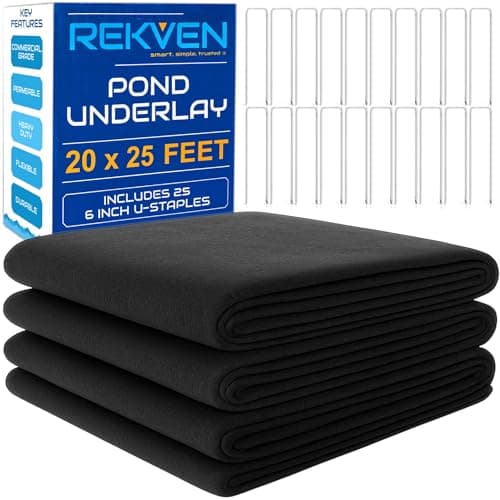
REKVEN Pond Underlayment Fabric, Nonwoven Geotextile (20×25 ft)
8.6 / 10
- 4.5 oz nonwoven geotextile that cushions the liner against rocks, roots, and stones per REKVEN
- Compatible with EPDM, HDPE, LLDPE, RPE, LDPE, and PVC liners
- Sits under the liner as a protective layer, not a water barrier
- A 20 by 25 ft sheet, sized to underlap a mid-size pond liner with trim to spare
$119.99
Current price · checked Sep 8, 2026
Firestone
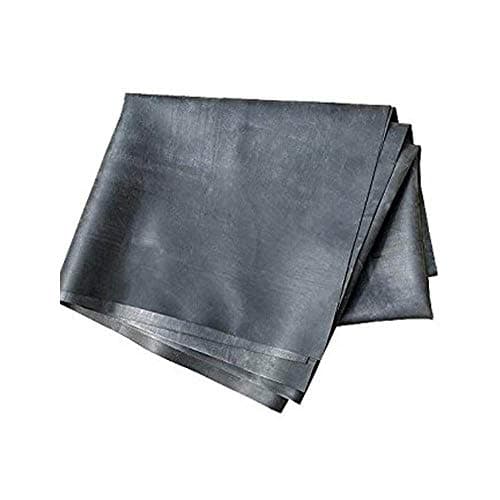
Firestone 45-mil EPDM Rubber Pond Liner (15 ft × 20 ft)
8.5 / 10
- 45-mil EPDM rubber, pre-cut and boxed at 15 by 20 ft per Firestone
- Flexible sheet that conforms to curved, multi-depth excavations
- Fish-friendly membrane made for ornamental ponds
- 0.045 inch thick for puncture and long-service-life resistance
$315.00
Current price · checked Sep 8, 2026
PerformancePro
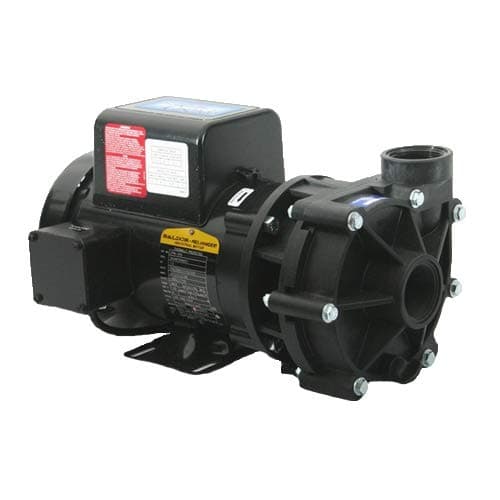
PerformancePro Cascade 1/4 HP 4400 GPH Low RPM External Pond Pump
8.4 / 10
- 1/4 HP low-RPM external pump rated to 4,400 GPH per PerformancePro
- Sited out of the water, where it runs cooler than a submersible
- Low-RPM design moves high volume at a modest continuous draw
- Sized to turn a mid-size koi pond's full volume over about once an hour
$723.90
Current price · checked Sep 8, 2026
Aquascape
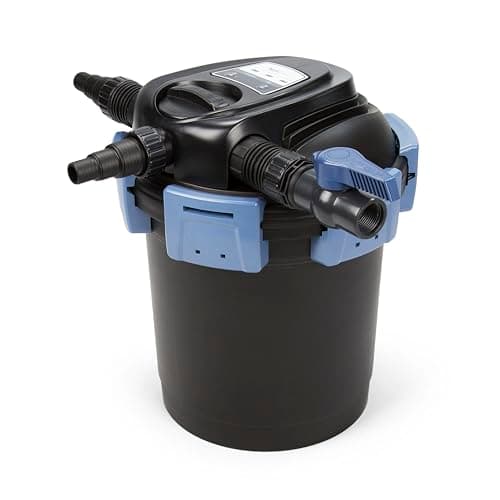
Aquascape UltraKlean 2000 Biological Pressure Filter with 14W UV Clarifier
8.3 / 10
- Biological pressure filter rated to 2,000 gallons per Aquascape
- Integrated 14-watt UV clarifier for green-water control
- Handles up to 2,700 GPH maximum flow
- Sealed pressurized housing plumbs inline after the pump
$345.91
Current price · checked Sep 8, 2026
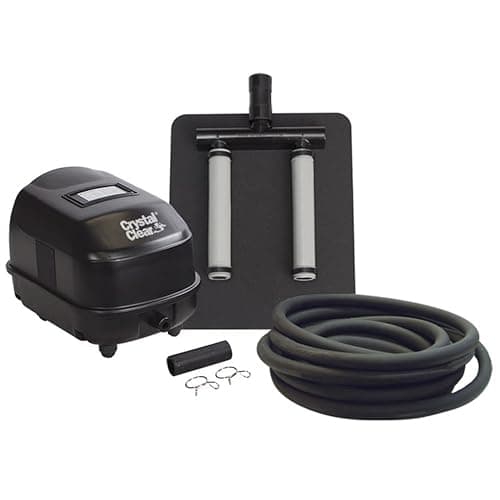
CrystalClear
CrystalClear KoiAir 1 Complete Pond Aeration Kit
8.2 / 10
- Bottom-diffused aeration for ponds up to 8,000 gallons and 4 ft deep per CrystalClear
- Dual diffuser sticks release fine bubbles from the pond floor
- Aeration feeds the beneficial bacteria that clear water and reduce muck
- Rated well beyond a mid-size koi build's volume
$299.99
Current price · checked Sep 8, 2026
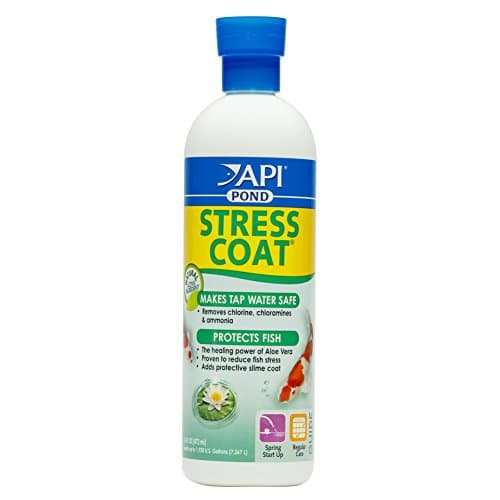
API
API Pond Stress Coat (16 fl oz)
8.1 / 10
- Removes chlorine from tap water instantly per API
- Aloe vera formula helps protect the fish slime coat
- One 16 fl oz bottle treats up to 1,920 gallons
- Used at the first fill, at water changes, and when adding fish
$12.48
Current price · checked Sep 8, 2026
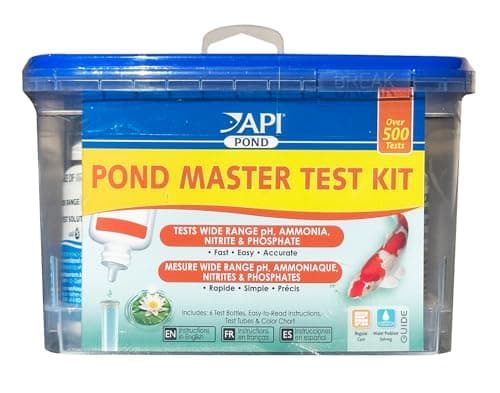
API
API Pond Master Test Kit
8.0 / 10
- Liquid kit for pond pH, ammonia, nitrite, and phosphate per API
- Includes 6 reagent bottles, 3 color cards, and 4 test tubes
- Rated for over 500 tests per kit
- Liquid reagents read more precisely than dip strips
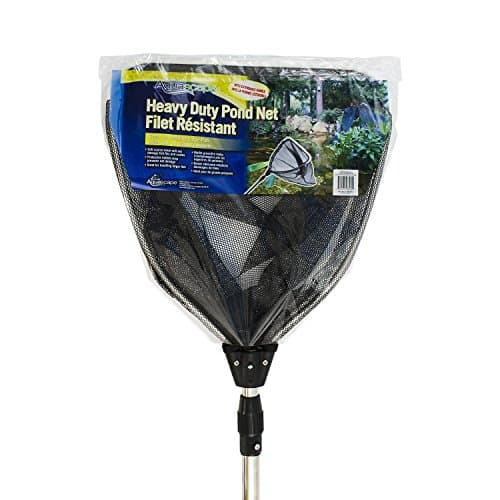
Aquascape
Aquascape Heavy-Duty Pond Net with Extendable Handle
7.9 / 10
- Soft, fine mesh sized to cradle large fish including koi per Aquascape
- Handle extends from 36 to 69 inches for pond reach
- Fine mesh protects fins and scales during handling
- Doubles as a surface debris-skimming tool
$36.46
Current price · checked Sep 8, 2026
The Short Answer
Dig deep, cycle first, stock last. The piece you cannot cheap out on is the liner: a Firestone 45-mil EPDM sheet, sized as the pond's length plus twice its depth plus overlap on every side, over underlayment that protects it from roots and rock. Prove the nitrogen cycle before a single koi.
Every product on this list has been scored against the PetPal Gear Score, a weighted composite of expert consensus, observed effectiveness, animal safety, long-term durability, and value. Review method: Editorial synthesis of pond-building guidance — pond-building cost guides and the koi-keeping community on siting, depth, liner sizing, and stocking, plus published pond water-quality guidance on the nitrogen cycle and dechlorination. Manufacturer documentation from REKVEN, Firestone, PerformancePro, Aquascape, CrystalClear, and API was reviewed. Community consensus on volume and stocking density was included as consensus, not quotation. No first-hand product testing — PetPalHQ does not run a testing lab.. Synthesized from 6+ expert sources.
A backyard koi pond goes wrong, in this guide's editorial judgment, for one reason more than any other: it is built like a fish tank when it is really closer to a small construction project. A beginner scrapes out a shallow hole, drops in a liner, fills it from the hose, and adds a bucket of koi the same afternoon — and within weeks the water is green, the fish are gasping, and a heron has found the shallow edge. The pond was never just a container for fish. It is a dug, lined, plumbed system with a living filter, and the gear below exists to build that system in the right order, which is also the order that keeps the fish alive.
Start below ground, because everything depends on the excavation. Siting and digging come first, and in the United States that means calling 811 to locate buried utilities before a spade goes in. The hole wants real depth — koi need volume and cool, stable water, and depth is also the honest defense against wading predators — and it wants protecting: an underlayment cushions the liner against the rocks and roots that puncture a dig, and the liner itself, sized by a simple formula, turns the shaped hole into water that holds. None of that is glamorous, and all of it happens before there is a fish in sight.
From the ground up, the pond becomes a water system. An external pump moves the whole volume through a pressure filter, where bacteria process waste and a UV clarifier keeps the water from going green; an aeration kit oxygenates the depth the surface cannot reach; and a conditioner strips the chlorine out of tap water before anything lives in the pond. The picks below are that kit, in build order, not eight products ranked against each other. Each earns its place by doing one job the next stage depends on, and where a claim rests on a maker's documentation or the koi-keeping community's consensus, that is named rather than asserted, because PetPalHQ does not run a testing lab.
One principle sits above the whole build and never bends. Dig deep, cycle the water for weeks and prove it with a test kit, and stock the koi last and slowly — a few fish at a time into a pond that is never crowded, because koi grow past two feet and live for decades. The pump, the filter, and the UV are the water system, not shortcuts around the slow work of cycling and stocking with restraint. A koi pond rewards the keeper who builds the hole, protects and lines it, proves the water, and adds fish last — and it punishes the one who reverses that order and expects a stocked, finished pond in a weekend.
Head-to-Head Comparison
| Feature | REKVEN Pond Underlayment Fabric, Nonwoven Geotextile (20×25 ft) | Firestone 45-mil EPDM Rubber Pond Liner (15 ft × 20 ft) | PerformancePro Cascade 1/4 HP 4400 GPH Low RPM External Pond Pump | Aquascape UltraKlean 2000 Biological Pressure Filter with 14W UV Clarifier | CrystalClear KoiAir 1 Complete Pond Aeration Kit | API Pond Stress Coat (16 fl oz) | API Pond Master Test Kit | Aquascape Heavy-Duty Pond Net with Extendable Handle |
|---|---|---|---|---|---|---|---|---|
| Stage in the build | Protect the dig | Hold the water | Move the water | Clean and clarify | Oxygenate | Make water safe | Prove the cycle | Handle the fish |
| When it comes into play | Before the liner | After the dig | As plumbing goes in | With the plumbing | As stocking climbs | On the first fill | Weeks before stocking | At stocking, then ongoing |
| What it does | Cushions the liner | Holds the water | Circulates the volume | Filters and clears | Adds oxygen | Removes chlorine | Proves the cycle | Cradles the fish |
| PetPal Pond-Build Score | 8.6 | 8.5 | 8.4 | 8.3 | 8.2 | 8.1 | 8.0 | 7.9 |
| Ongoing cost after the build | One-time under-layer | Decades of service | Electricity, always on | UV bulb and media | Electricity | Re-dosed per fill | Reagents deplete | One-time tool |
| Check price | Amazon | Amazon | Amazon | Amazon | Amazon | Amazon | Amazon | Amazon |
$119.99
Current price · checked Sep 8, 2026
- 4.5 oz nonwoven geotextile that cushions the liner against rocks, roots, and stones per REKVEN
- Compatible with EPDM, HDPE, LLDPE, RPE, LDPE, and PVC liners
- Sits under the liner as a protective layer, not a water barrier
- A 20 by 25 ft sheet, sized to underlap a mid-size pond liner with trim to spare
- Listed at $129.99, captured a little lower at the time of writing
Every dig starts with protecting what goes into it, and the underlayment is that protection. The REKVEN Pond Underlayment earns the first slot because it guards the layer everything else depends on. REKVEN documents a 4.5-ounce nonwoven geotextile that cushions a pond liner against punctures from rocks, roots, and stones, works beneath EPDM, HDPE, LLDPE, RPE, LDPE, and PVC liners, and lays underneath the liner as a protective layer rather than a water barrier, sold as a sheet that measures 20 by 25 feet. It does no sealing itself; it exists so the sheet above it never has to argue with the ground below.
Over rocky or rooty ground, this layer is where a build quietly succeeds or fails. A koi pond holds a lot of water and a lot of pressure, and that weight drives the liner down onto every stone and severed root in the excavation. The fabric spreads that load and takes the abrasion, which is why pond-building guides treat it as standard rather than optional on anything but soft, screened fill. A leak that starts here is the worst kind, because it is buried under the liner, the water, and eventually the fish.
The honest caveats are about scope and fit. It is not a substitute for a liner and holds no water on its own, so it is always a paired purchase. It adds a round of cutting and fitting to the dig, laid into the hole and up the sides before the liner goes over it. And on smooth, sand-bedded ground it is closer to cheap insurance than a strict necessity — though at this price, insuring the pond's most expensive layer is easy to justify. As the first material into the hole, it decides whether the liner above it lives a decade or springs a leak in a season.
What We Love
- Cushions the liner against the punctures that sink a dig over rocky ground
- Works under every common liner material
- A large sheet covers a mid-size excavation with room to trim
- An inexpensive layer that protects the pond's most expensive one
What Could Be Better
- Not a water barrier on its own — it does nothing without a liner over it
- Adds a layer of cutting and fitting to the dig
- Closer to optional on smooth, sand-bedded ground
The Verdict
Lay this into the hole before the liner, especially over anything rocky or rooty. It seals nothing itself, but it takes the abrasion that would otherwise puncture the layer holding your whole pond — cheap insurance on the most expensive thing in the ground.
Sources
- REKVEN (Amazon product listing, Pond Underlayment Fabric): a 4.5 oz nonwoven geotextile underlayment that cushions a pond liner against punctures from rocks, roots, and stones, compatible with EPDM, HDPE, LLDPE, RPE, LDPE, and PVC liners, laid underneath the liner as a protective layer rather than a water barrier; 20 by 25 ft sheet
- Pond-building cost guides and the koi-keeping community: over rocky or rooty ground, an underlayment beneath the liner is treated as standard rather than optional, because a single root or sharp stone that works through an unprotected liner drains the pond and undoes the whole dig
$315.00
Current price · checked Sep 8, 2026
- 45-mil EPDM rubber, pre-cut and boxed at 15 by 20 ft per Firestone
- Flexible sheet that conforms to curved, multi-depth excavations
- Fish-friendly membrane made for ornamental ponds
- 0.045 inch thick for puncture and long-service-life resistance
- Sizing math: pond length plus twice the depth plus overlap on each side
The liner is the pond — the single layer that turns a shaped hole into water that holds. The Firestone 45-mil EPDM Rubber Pond Liner goes in over the underlayment and becomes the actual vessel. Firestone documents an EPDM rubber liner, pre-cut and boxed, flexible enough for creative designs and described as fish friendly, measuring 15 feet by 20 feet by 0.045 inch thick. That flexibility is the point at koi scale: a rubber sheet drapes into a curved, shelved excavation with deep and shallow zones the way a rigid shell never can.
Sizing the sheet is where most first builds go wrong, so the rule is worth stating plainly. A liner has to reach across the pond's length, down and up both walls, and lap over the edge, which the koi-keeping community reduces to a formula: pond length plus twice the maximum depth plus about a foot of overlap on each side, and the same for width. Run this Firestone sheet through it and a 15-by-20 liner builds a pond of roughly 8 by 13 feet at two-and-a-half feet deep — a genuinely koi-scale body of water rather than a water garden. Measure the hole first, then buy the sheet the hole demands, never the reverse.
The honest caveats are about weight, size, and setting. A liner this size is heavy and awkward, best positioned on a warm day when the rubber is supple and with a second pair of hands. A fixed sheet also caps the pond it can build; a larger pond means a bigger roll or a seamed liner, not stretching this one. And it wants the underlayment beneath it over anything but soft fill, because EPDM is tough but not invincible against a determined root. Set well over a protected base, this is the layer that quietly holds the water for decades.
What We Love
- Flexible enough for the curved, shelved shapes a koi pond wants
- Fish-safe EPDM is the long-service-life standard for lined ponds
- Pre-cut and boxed, so there is no seaming at this size
- One sheet builds a genuinely koi-scale pond
What Could Be Better
- Heavy and awkward to position — realistically a two-person job
- A fixed sheet size caps pond dimensions; bigger needs a larger roll or a seam
- Wants underlayment beneath it over anything but soft, screened fill
The Verdict
Size this by the formula — pond length plus twice the depth plus overlap each side — before you buy, and set it over the underlayment on a warm day with help. It is the layer that is the pond, and a 15-by-20 sheet builds a real koi-scale body of water rather than a water garden.
Sources
- Firestone (Amazon product listing, 45-mil EPDM Pond Liner): an EPDM rubber pond liner, pre-cut and boxed, described as flexible for creative designs and fish friendly, measuring 15 feet in length by 20 feet in width by 0.045 inch thick
- Koi-keeping community consensus on liner sizing: the community sizing rule is that a liner must span the pond's length plus twice its maximum depth plus about a foot of overlap on each side, and the same for width — so a 15 by 20 ft sheet builds a pond of about 8 by 13 ft at two-and-a-half feet deep
$723.90
Current price · checked Sep 8, 2026
- 1/4 HP low-RPM external pump rated to 4,400 GPH per PerformancePro
- Sited out of the water, where it runs cooler than a submersible
- Low-RPM design moves high volume at a modest continuous draw
- Sized to turn a mid-size koi pond's full volume over about once an hour
- Serviceable outside the water without draining the pond
Water that does not move becomes a problem, and in a stocked koi pond it becomes one fast. The PerformancePro Cascade external pump is the heart of the system, pushing the whole volume through the filter and back continuously. PerformancePro documents a 1/4 HP low-RPM external pond pump rated to 4,400 GPH, built to sit outside the water and move high volume around the clock at a modest energy draw. Running at low RPM is what lets it move that much water efficiently enough to leave on permanently, which is how a koi pond is meant to run.
The rule that governs pump choice is turnover: the community floor is moving the pond's entire volume at least once every hour, so the water is filtered and oxygenated rather than sitting stagnant under a heavy fish load. An external pump earns its place here because, sited out of the water, it runs cooler and more efficiently than a submersible and can be serviced without wading in or draining down. One honesty check belongs in the plan — head height, meaning the lift to the filter and the length of the pipe run, drops real-world flow below the rated number, so you size up rather than to the exact figure. For how the pump pairs with the rest of the plumbing and filtration as a matched set, see our roundup of the best backyard koi pond systems.
The honest caveats are about cost and setup. This is the most expensive single item in the build by a wide margin, which is fair for the part that runs 24 hours a day for years, but it is real money. And an external pump asks for more plumbing than dropping a submersible into the deep end — a pad, priming, and hard pipe. As the heart of the system, it is what keeps the water filtered, oxygenated, and alive under a load of large fish.
What We Love
- External pumps run more efficiently than submersibles at koi-pond scale
- Low-RPM, high-flow design suits continuous, around-the-clock running
- Rated flow turns a mid-size pond's full volume over roughly hourly
- Serviced outside the water without draining the pond
What Could Be Better
- The most expensive single item in the build by a wide margin
- External plumbing takes more setup than dropping in a submersible
The Verdict
Move the water with an external pump sized to turn the pond over at least once an hour, and buy up rather than to the exact rating because head height steals flow. It is the costliest and hardest-working part of the build.
Sources
- PerformancePro (Amazon product listing, Cascade External Pond Pump): a 1/4 HP low-RPM external pond pump rated to 4,400 GPH, designed to sit outside the water and move high volume continuously at a modest energy draw
- Pond-building cost guides and the koi-keeping community: the community turnover rule is that a pond pump should move the full water volume at least once per hour, and external pumps are widely preferred over submersibles at koi-pond scale because they run more efficiently and are serviced without draining the pond — though head height from lift and pipe runs reduces real-world flow below the rated figure
$345.91
Current price · checked Sep 8, 2026
- Biological pressure filter rated to 2,000 gallons per Aquascape
- Integrated 14-watt UV clarifier for green-water control
- Handles up to 2,700 GPH maximum flow
- Sealed pressurized housing plumbs inline after the pump
- One unit combines biological filtration and UV clarifying
Clear water is not clean water, and a koi pond needs both. The Aquascape UltraKlean 2000 handles the two jobs in one sealed housing: biological filtration that processes fish waste and a UV clarifier that keeps the water from going green. Aquascape documents a biological pressure filter rated for ponds up to 2,000 gallons, with a built-in 14-watt UV clarifier and a maximum flow of 2,700 GPH. The biological media is where the bacteria live; the UV is the polish that makes the water look as healthy as it is.
The honest scope of UV is worth setting straight, because it is often oversold. A clarifier zaps the free-floating single-celled algae that turns pond water pea-green, and on that job it is genuinely effective — but it does nothing to the stringy algae that clings to rocks and waterfall walls, which is a manual-removal and balance problem, not a UV one. Its clearing power also depends on flow: water has to pass the bulb slowly enough to be dosed, so the pump and the filter are matched, not just connected. For standalone clarifiers and how UV wattage scales with pond volume and flow, see our roundup of the best aquarium UV sterilizers.
The honest caveats are about consumables and capacity. The UV bulb loses output over a season and is a scheduled replacement, and the filter media needs periodic rinsing in pond water so it cleans rather than clogs. The 2,000-gallon rating leaves comfortable headroom on a mid-size pond but is undersized for a large, heavily stocked build, where a bigger filter or a second stage is the honest answer. As the water-treatment stage, it is what turns a moving pond into a clear, biologically stable one.
What We Love
- Combines biological filtration and UV clarifying in one sealed unit
- The 14 W UV clears the suspended algae that turns pond water green
- Pressurized design allows flexible siting around the pond
- Rated capacity leaves headroom on a mid-size build
What Could Be Better
- UV clears green water only — it does nothing for string algae on rocks
- The UV bulb and filter media are periodic replacement costs
- Undersized for a large, heavily stocked pond
The Verdict
Filter and clarify in one unit here, and match the flow past the bulb to the pump so the UV can actually dose the water. It clears green water reliably — but it will not touch string algae, and on a large stocked pond a single 2,000-gallon unit is the floor, not the ceiling.
Sources
- Aquascape (Amazon product listing, UltraKlean 2000 Pressure Filter): a biological pressure filter rated for ponds up to 2,000 gallons with an integrated 14-watt UV clarifier and a maximum flow of 2,700 GPH
- Published pond water-quality guidance: a UV clarifier kills the free-floating single-celled algae that turns pond water pea-green, but it does nothing to string algae clinging to rocks and walls, and its clearing power depends on the flow rate passing the bulb being matched to the unit's rating
$299.99
Current price · checked Sep 8, 2026
- Bottom-diffused aeration for ponds up to 8,000 gallons and 4 ft deep per CrystalClear
- Dual diffuser sticks release fine bubbles from the pond floor
- Aeration feeds the beneficial bacteria that clear water and reduce muck
- Rated well beyond a mid-size koi build's volume
- Runs independently of the main pump
Koi are large, active fish, and large active fish burn oxygen — which makes aeration a build stage, not an accessory. The CrystalClear KoiAir 1 pushes air into the pond from the bottom up, oxygenating water the surface alone cannot reach. CrystalClear documents a kit for ponds up to 8,000 gallons and 4 feet deep, moving air through dual diffuser sticks so that aeration supports the beneficial bacteria that clear the water and eliminate muck. An air pump on the bank feeds diffusers on the pond floor, and the rising column of fine bubbles carries oxygen down where the fish and the bacteria both need it.
Bottom-diffused aeration does more than keep fish breathing, though on hot nights that alone justifies it — warmer water holds less dissolved oxygen exactly when the fish want more. The same rising bubbles keep the whole water column circulating and feed the aerobic bacteria that break down the muck settling on the bottom, so the pond stays cleaner between filter cleanings. Sized to 8,000 gallons and 4 feet of depth, this kit sits comfortably above what a mid-size koi build asks of it, which is the right direction to err: oxygen is cheap insurance against a summer fish kill.
The honest caveats are about clutter and need. It is another powered device with an air line to run and hide, and the diffusers rest on the pond floor where they collect debris and want occasional cleaning. On a lightly stocked small pond it is more aeration than the fish strictly demand. But as stocking climbs and summer nights get warm, it stops being optional — as the oxygen stage, it is the difference between a pond that coasts through a heat wave and one that gasps.
What We Love
- Bottom-up aeration oxygenates the whole column, not just the surface
- Feeds the beneficial bacteria that break down muck
- Rated headroom well beyond a mid-size build
- Runs independently of the pump, so oxygen holds if flow stops
What Could Be Better
- Another powered device and air line to run and conceal
- Floor diffusers collect debris and need occasional cleaning
- More aeration than a lightly stocked small pond strictly needs
The Verdict
Add bottom-diffused aeration so oxygen reaches the whole depth, not just the surface, and treat it as insurance against warm summer nights when water holds the least oxygen. It is more than a lightly stocked pond needs on day one — but as the fish grow, it earns its place.
Sources
- CrystalClear (Amazon product listing, KoiAir 1 Aeration Kit): a bottom-diffused aeration kit for ponds up to 8,000 gallons and 4 feet deep, pushing air through dual diffuser sticks so aeration supports the beneficial bacteria that clear water and eliminate pond muck; brand Airmax
- Koi-keeping community consensus on aeration: koi are large, active fish with high oxygen demand, so dissolved oxygen is a limiting factor especially on warm nights when warmer water holds less of it, and bottom-up diffusion oxygenates the whole water column rather than just the surface the way a fountain does
$12.48
Current price · checked Sep 8, 2026
- Removes chlorine from tap water instantly per API
- Aloe vera formula helps protect the fish slime coat
- One 16 fl oz bottle treats up to 1,920 gallons
- Used at the first fill, at water changes, and when adding fish
- An inexpensive, recurring safety step
The water that fills a pond comes from a tap, and tap water is treated to kill microbes — which is exactly why it cannot go straight to fish. API Pond Stress Coat conditions it first. API documents a conditioner with aloe vera that helps protect a fish's skin and instantly removes chlorine, treating up to 1,920 gallons per 16-ounce bottle, used when setting up a pond, adding new fish, or changing pond water. The chlorine that keeps drinking water safe is toxic to koi and to the nitrifying bacteria the pond runs on, so neutralizing it is not a refinement — it is a precondition.
It comes into play at three predictable moments: the first fill before the pond is ever stocked, every partial water change afterward, and any time new fish arrive stressed from a bag or a move. The aloe component is aimed at that last case, helping the fish's protective slime coat recover from handling. Conditioning is the step that sits between the garden hose and living animals, and it belongs before the bacteria starter and long before the koi. Treat the volume you are adding, not the whole pond, at each change.
The honest caveats are about what it is and is not. It is a consumable, re-bought for the life of the pond, so the small bottle is a false economy on a large water volume. It conditions water only — it does not filter, cycle, clarify, or fix an ammonia spike, which are jobs for the filter, the cycle, and a water change. And while it removes chlorine instantly, ponds on chloramine-treated supplies should confirm the product handles that too. As the water-safety step, it is cheap, routine, and non-negotiable every time tap water enters the pond.
What We Love
- Makes tap water safe the moment the pond is filled or topped up
- The aloe coat helps fish recover from handling and transport stress
- Inexpensive and treats a large volume per bottle
- A simple, repeatable step for every water change
What Could Be Better
- A consumable — it runs out and is re-bought for the pond's life
- Conditions water only; it does not filter, cycle, or clarify
- Chlorine removal is instant, but confirm chloramine handling for your supply
The Verdict
Condition every drop of tap water before it meets fish — on the first fill and at every water change, treating the volume you add. It is cheap and routine, but it is the line between a garden hose and living koi, so it is never the step to skip.
Sources
- API (Amazon product listing, Pond Stress Coat): a pond conditioner containing aloe vera that helps protect a fish's skin and instantly removes chlorine, treating up to 1,920 gallons per 16 fl oz bottle, used when setting up a pond, adding new fish, or changing pond water
- Published pond water-quality guidance: municipal tap water carries chlorine that is toxic to fish and to the beneficial bacteria a pond depends on, so a conditioner that neutralizes it is a standard requirement before tap water goes into a stocked pond, on the first fill and at every water change
- Liquid kit for pond pH, ammonia, nitrite, and phosphate per API
- Includes 6 reagent bottles, 3 color cards, and 4 test tubes
- Rated for over 500 tests per kit
- Liquid reagents read more precisely than dip strips
- Tracks the readings that prove a pond is cycled
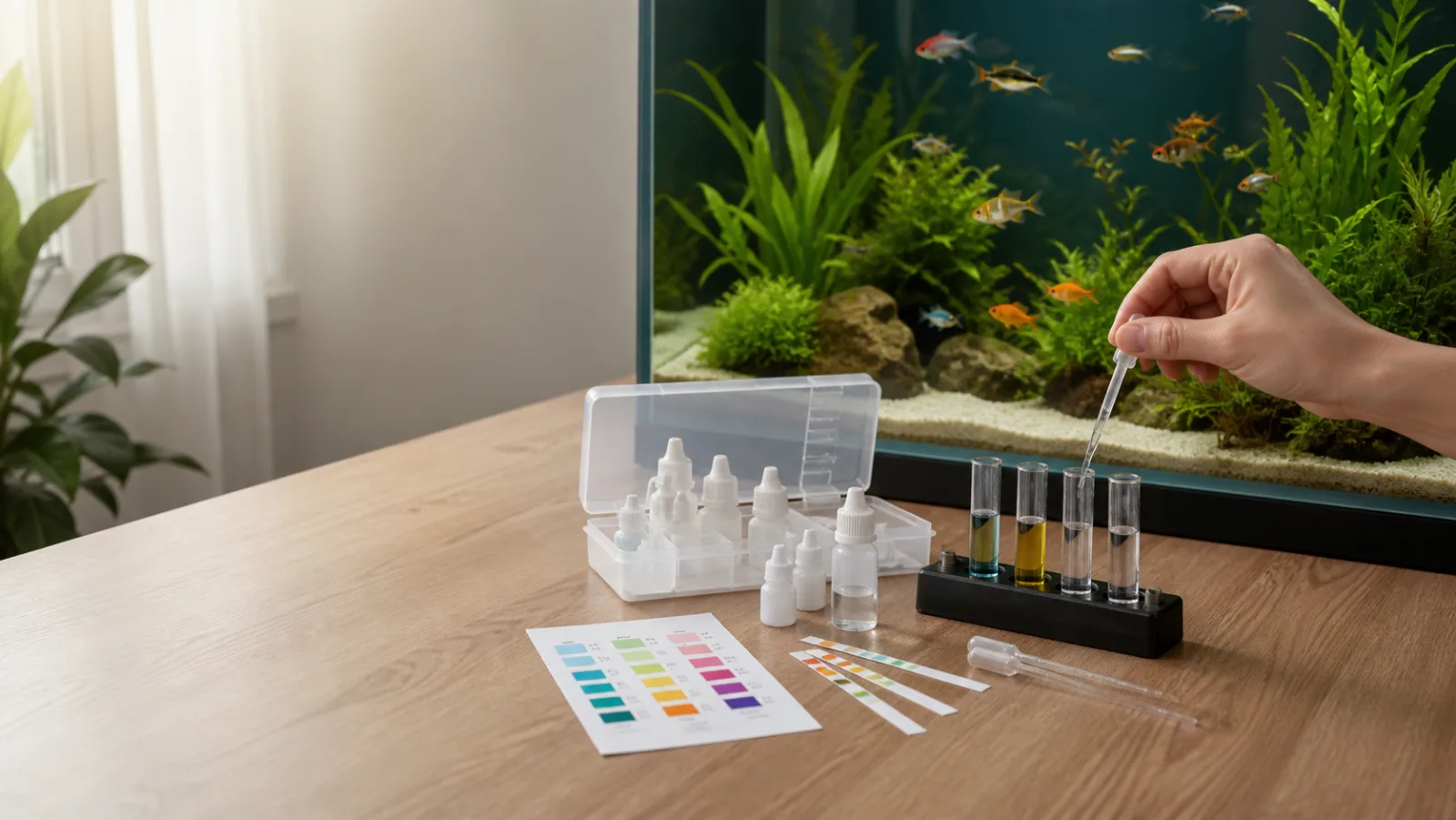
A new pond looks finished long before it is safe, and the test kit is what tells the difference. The API Pond Master Test Kit proves the pond has cycled before any koi go in. API documents a liquid kit with 6 bottles of testing solution, 3 color cards, and 4 test tubes that measures pond pH, ammonia, nitrite, and phosphate and is rated for over 500 tests. Those readings are the only honest evidence that the pond can process fish waste — a full pond of clear water proves nothing on its own.
The nitrogen cycle at pond scale is the same one an aquarium runs, just larger and slower. Beneficial bacteria have to grow until they can convert the ammonia from fish waste into nitrite and then into far less harmful nitrate, and until they do, ammonia climbs to lethal levels. Cycling takes weeks, and it is confirmed by the test kit rather than the calendar: you watch ammonia rise and fall, then nitrite rise and fall, until both sit at zero. Only then do the first koi go in, a few at a time so the young bacterial colony is never overwhelmed. For the indoor-tank companion kit and how the same readings apply to aquariums, see our roundup of the best aquarium water test kits.
The honest caveats are about practice and shelf life. Reading a reagent color against a card takes a few tries to trust, especially in bright outdoor light, and the liquid tests reward a patient eye over a quick glance. The reagents also age and are eventually re-bought, and the kit measures water chemistry without fixing anything — a bad reading is a prompt for a water change or more patience, not a cure in itself. As the proof stage, it is the cheapest insurance in the build against the most common and most fatal mistake: stocking a pond that only looks ready.
What We Love
- Proves the cycle with ammonia and nitrite readings, not a calendar
- Over 500 tests covers cycling and long-term monitoring
- Liquid reagents are more accurate than dip strips
- Tracks the four readings that matter most in a new pond
What Could Be Better
- Reading color against a card takes practice in outdoor light
- Reagents have a shelf life and are eventually re-bought
- Measures water chemistry only — it fixes nothing on its own
The Verdict
Prove the pond is cycled with this before a single koi goes in, watching ammonia and nitrite rise and then fall to zero over weeks. It fixes nothing itself, but it is the cheapest guard against the most fatal beginner mistake — stocking a pond that only looks ready.
Sources
- API (Amazon product listing, Pond Master Test Kit): a liquid pond test kit with 6 bottles of testing solution, 3 color cards, and 4 test tubes that measures ornamental-pond pH, ammonia, nitrite, and phosphate, rated for over 500 tests
- Published pond water-quality guidance on the nitrogen cycle: a new pond must establish the nitrogen cycle — the bacteria that convert toxic ammonia to nitrite and then to far less harmful nitrate — before it can safely hold koi, a process of weeks confirmed when a test kit shows ammonia and nitrite rise and then fall back to zero, after which fish are added a few at a time
$36.46
Current price · checked Sep 8, 2026
- Soft, fine mesh sized to cradle large fish including koi per Aquascape
- Handle extends from 36 to 69 inches for pond reach
- Fine mesh protects fins and scales during handling
- Doubles as a surface debris-skimming tool
- A one-time buy that lasts the life of the pond
The last piece of the build is the one for handling the fish themselves. The Aquascape Heavy-Duty Pond Net moves koi without hurting them. Aquascape documents a net designed to cradle larger pond fish including koi, with a soft, fine mesh that will not damage fins and scales, on a handle that extends from 36 to 69 inches. Koi grow large and heavy, and a cheap, coarse net is how a beginner tears fins or strips the slime coat that protects a fish from infection — so the net is health equipment, not just a tool.
A net also earns a place in the pond's defenses, which is where depth comes back into the plan. A koi pond's first guards against wading herons are steep sides and real depth that a bird cannot stand in, and a fish that can dive to three feet of open water is a hard target. The net is the human end of that same care: it lifts a fish for a health check, relocates it during pond work, and gently guides one away from a shallow edge. The extending handle is what makes that possible from the bank of an eight-by-thirteen pond rather than from in the water.
The honest caveats are modest. A net this large is awkward to store off-season and wants a dry hook rather than a damp shed. It is not a substitute for a proper holding tub when a fish has to travel any real distance. And the telescoping handle is the part most likely to loosen with age, so it is worth a check before a big lift. As the handling stage, it is the inexpensive final piece that keeps the fish safe every time you have to touch the pond's living contents.
What We Love
- Fine, soft mesh cradles koi without tearing fins or scales
- The extending handle reaches across a wide pond from the bank
- Also skims leaves and debris off the surface
- A one-time buy that lasts the life of the pond
What Could Be Better
- A large net is awkward to store off-season
- Not a substitute for a holding tub when moving fish any distance
- The telescoping handle is the part most likely to loosen with age
The Verdict
Handle koi with a soft, fine-mesh net long enough to reach across the pond from the bank, and treat it as health equipment that protects the slime coat. It is the cheap final piece — and a reminder that depth and steep sides, not the net alone, are what keep herons out.
Sources
- Aquascape (Amazon product listing, Heavy-Duty Pond Net): a heavy-duty pond net designed to handle and cradle larger pond fish including koi, with a soft, fine mesh that will not damage fins and scales, on a handle that extends from 36 inches to 69 inches
- Koi-keeping community consensus on fish handling: depth and steep sides are a koi pond's first defenses against wading predators like herons, and a soft net rounds out that plan — it moves fish for health checks and pond work without stripping the protective slime coat a rough mesh tears
How We Score
Formula
PetPal Pond-Build Score = (Expert Consensus × 0.35) + (Build-Sequence Fit × 0.25) + (Fish-Health / Water-Quality Design × 0.20) + (Value × 0.20)
Score Factors
- Expert Consensus · 35%
- Synthesized from pond-building cost guides and the koi-keeping community on siting, depth, liner sizing, and stocking, published pond water-quality guidance on the nitrogen cycle and dechlorination, and manufacturer documentation. The PetPal Pond-Build Score is a composite of expert opinion — PetPalHQ does not run a testing lab.
- Build-Sequence Fit · 25%
- How directly the item advances a correct koi-pond build in order — protecting the dig, lining, plumbing and moving the water, filtering and clarifying, aerating, conditioning, cycling, and handling fish — rather than how it performs as a standalone product ranked against rivals.
- Fish-Health / Water-Quality Design · 20%
- Alignment with koi husbandry principles — enough depth and volume, a cycled biofilter, oxygenated and dechlorinated water, and honest predator and handling care so nothing is stocked until the pond is cycled and the fish are never crowded.
- Value · 20%
- Cost relative to the item's role in the build, including ongoing consumables like UV bulbs, conditioner, reagents, and electricity, and how much of the healthy-pond outcome the item is responsible for. This kit is the equipment cost, not the ongoing cost of running a pond.
| Rank | Product | Score |
|---|---|---|
| #1 | REKVEN REKVEN Pond Underlayment Fabric, Nonwoven Geotextile (20×25 ft) | 8.6 |
| #2 | Firestone Firestone 45-mil EPDM Rubber Pond Liner (15 ft × 20 ft) | 8.5 |
| #3 | PerformancePro PerformancePro Cascade 1/4 HP 4400 GPH Low RPM External Pond Pump | 8.4 |
| #4 | Aquascape Aquascape UltraKlean 2000 Biological Pressure Filter with 14W UV Clarifier | 8.3 |
| #5 | CrystalClear CrystalClear KoiAir 1 Complete Pond Aeration Kit | 8.2 |
| #6 | API API Pond Stress Coat (16 fl oz) | 8.1 |
| #7 | API API Pond Master Test Kit | 8.0 |
| #8 | Aquascape Aquascape Heavy-Duty Pond Net with Extendable Handle | 7.9 |
When NOT to Buy
A backyard koi pond is a real dig, a real plumbing job, and a months-long commitment, not a weekend water feature — and it is the wrong project for someone who wants stocked, finished water in a weekend. Before any excavation, the first honest step is to call 811 in the United States so buried utilities are located, because a pond dug into a gas or power line is a genuine hazard, and local codes may set fencing or permit rules for a water feature that are worth checking early. Once the hole is dug, the pond has to cycle for weeks and be proven with a test kit before a single koi goes in, and the fish are added a few at a time after that — koi grow past two feet and live for decades, so overstocking is the single most common long-term failure, with roughly 250 gallons per adult koi a widely repeated community rule of thumb rather than a hard limit.
Sequence and restraint rule out the usual shortcuts. Building a pond too shallow to skip the extra digging invites both wild summer temperature swings and wading herons, so depth is protection, not luxury. And a pond is never done: once it is running, summer is the season that tests it, and the heat, algae, and oxygen problems of a hot July are their own subject in our guide to koi pond summer care and the algae and oxygen fix. On the budget, this kit runs to roughly $1,900 before rock, plants, the koi themselves, and the electrical work to power the pump — and published 2026 pond-cost guides put a full DIY koi-pond build anywhere from about $500 to $2,800 all in. Confirm current price and availability on every item before buying, since prices and sellers all move over time.
Frequently Asked Questions
- How deep should a backyard koi pond be?
- Aim for at least three feet, and go to four feet or more in cold-winter or heavy-predator areas. Depth does three jobs at once that a shallow pond cannot. It buffers water temperature, so the pond warms and cools slowly instead of swinging with the air and cooking the fish on a hot afternoon; in cold climates it keeps a zone of water below the ice where koi can overwinter. It also holds more volume in the same footprint, and volume is what dilutes waste and stabilizes water chemistry under a heavy fish load. And it is the pond's first line of defense against herons and raccoons, which wade and reach into shallow water but cannot stand in a pond with steep sides and a deep central basin. A koi pond that skimps on depth to save digging tends to pay for it later in temperature crashes, algae, and lost fish, so the extra excavation is one of the highest-return decisions in the whole build.
- How many koi can my pond actually hold?
- Fewer than a new keeper expects, because the fish you buy are nothing like the fish they become. A common community rule of thumb is roughly 250 gallons of water per adult koi, which sounds enormous next to the six-inch fish in the bag — but koi routinely grow past two feet and live for decades, and they keep producing waste the whole time. Overstocking is the single most common long-term failure in the hobby: a pond that looks understocked with young fish becomes dangerously crowded as they mature, and crowding drives the ammonia, oxygen, and disease problems that follow. The honest move is to stock for the adults the koi will become, not the juveniles they are now, and to resist the urge to fill an empty-looking pond. It is far easier to add a fish to an understocked pond than to rehome one from an overstocked one.
- Can I use a preformed pond shell instead of a flexible liner?
- For a small water garden, a rigid preformed shell is genuinely fine — but for koi, a flexible liner is almost always the better call. The issue is scale and shape. Preformed shells top out at modest volumes and shallow depths, and koi need both more water and more depth than most shells provide, for the temperature stability, waste dilution, and predator protection covered above. A flexible EPDM liner also drapes into whatever shape you dig, including the deep central basin and the planted shelves a koi pond wants, where a shell locks you into the manufacturer's outline. Shells win on speed and simplicity for a decorative pond with a few small fish or none at all; a liner wins on the volume, depth, and design freedom a koi pond actually needs. If the plan is real koi rather than goldfish in a garden feature, size the dig properly and line it.
- How long before I can add koi to a new pond?
- Plan on weeks, not days, because the pond has to cycle first — and the wait is confirmed with a test kit, never with the calendar. Cycling means growing the beneficial bacteria that convert the ammonia from fish waste into nitrite and then into far less harmful nitrate, and until that bacterial colony is established, ammonia climbs to levels that burn gills and kill fish. You track the process with a pond test kit: ammonia rises and then falls, nitrite rises and then falls, and only when both readings sit at zero is the pond biologically ready. Even then, koi go in a few at a time rather than all at once, so the young colony of bacteria is never asked to process more waste than it can handle. Rushing fish into an uncycled pond is the most common and most fatal beginner mistake, and no amount of clear-looking water substitutes for the test readings that prove the cycle is done.
- Do koi ponds need a UV clarifier?
- For green water, yes; for string algae, no — and the distinction matters before you buy. A UV clarifier kills the free-floating, single-celled algae that turns pond water the color of pea soup, and on that specific problem it is the most reliable tool there is, clearing a green pond that no amount of filtration alone will fix. What it does not do is touch the stringy, hair-like algae that clings to rocks, walls, and waterfalls, which is a manual-removal and nutrient-balance issue rather than something UV reaches. Sizing also matters: a UV's clearing power depends on the water passing the bulb slowly enough to be dosed, so the unit's wattage has to match the pond's volume and the pump's flow rather than just being plumbed in anywhere. A clarifier is worth it for most koi ponds because green water is such a common frustration — just buy it understanding it solves one kind of algae, not all of them.
Bottom Line
Build the pond before you stock it, in order. Call before you dig, protect the excavation with REKVEN underlayment, and hold the water with a Firestone 45-mil EPDM liner sized by the formula — pond length plus twice the depth plus overlap on each side.
Move and treat the water as a matched system. The PerformancePro external pump turns the full volume over about once an hour, and the Aquascape UltraKlean 2000 filters it while its 14-watt UV clears green water — but UV does nothing for string algae, and head height steals pump flow, so size up.
Oxygenate deep and condition every fill. The CrystalClear KoiAir kit aerates the whole water column from the bottom, and API Pond Stress Coat neutralizes the chlorine in tap water on the first fill and at every change, before any fish.
Prove the cycle, then stock slowly. Test readings are the only honest evidence the pond can process waste — watch ammonia and nitrite rise and fall to zero over weeks, then add koi a few at a time, never all at once. The calendar proves nothing.
Respect depth and space for the life of the pond. Depth and steep sides are the real defense against herons and heat, a soft Aquascape net handles fish without stripping their slime coat, and roughly 250 gallons per adult koi keeps a pond from being crowded as the fish grow past two feet.
Sources & Methodology
Methodology
PetPal Pond-Build Score = (Expert Consensus × 0.35) + (Build-Sequence Fit × 0.25) + (Fish-Health / Water-Quality Design × 0.20) + (Value × 0.20)
Expert review sources
- Pond-building cost guides and the koi-keeping community on siting, depth, liner sizing, and stocking
- Published 2026 pond-cost guides documenting DIY koi-pond builds at roughly $500 to $2,800
- Published pond water-quality guidance on the nitrogen cycle and dechlorination
- REKVEN and Firestone — pond underlayment and EPDM liner product documentation
- PerformancePro and Aquascape — external pump, pressure filter, and pond net product documentation
- CrystalClear and API — aeration kit, conditioner, and test kit product documentation
Community sources
- Koi-keeping community consensus on pond volume, depth, and stocking density
- Backyard pond forums on external-pump plumbing, cycling, and predator defense
Prices and specs verified July 16, 2026.
About the author
Nick Miles is the chief editor of PetPalHQ. This backyard koi-pond build sequence and its kit are editorial synthesis of pond-building cost guides and the koi-keeping community, published pond water-quality guidance, and manufacturer documentation — PetPalHQ does not run a testing lab. The PetPal Pond-Build Score is a composite of expert opinion, not a measurement. Sources are cited by name throughout, and prices should be confirmed before buying.
PetPalHQ is a participant in the Amazon Services LLC Associates Program. We may earn commissions from qualifying purchases — at no extra cost to you.