Cats & Dogs
Best Elevated & Raised Dog Feeders 2026
Raised feeders ranked on correct height, non-tip stability, bowl hygiene, and storage — with an honest note that the bloat debate for large, deep-chested breeds is unsettled, so ask your vet before raising the bowl.
By Nick Miles · Updated September 26, 2026 · 12 min
PetPalHQ is reader-supported. We may earn a commission from qualifying Amazon purchases at no extra cost to you.
Evidence at a Glance
PawHut Elevated Dog Bowls with Storage Cabinet, 44L
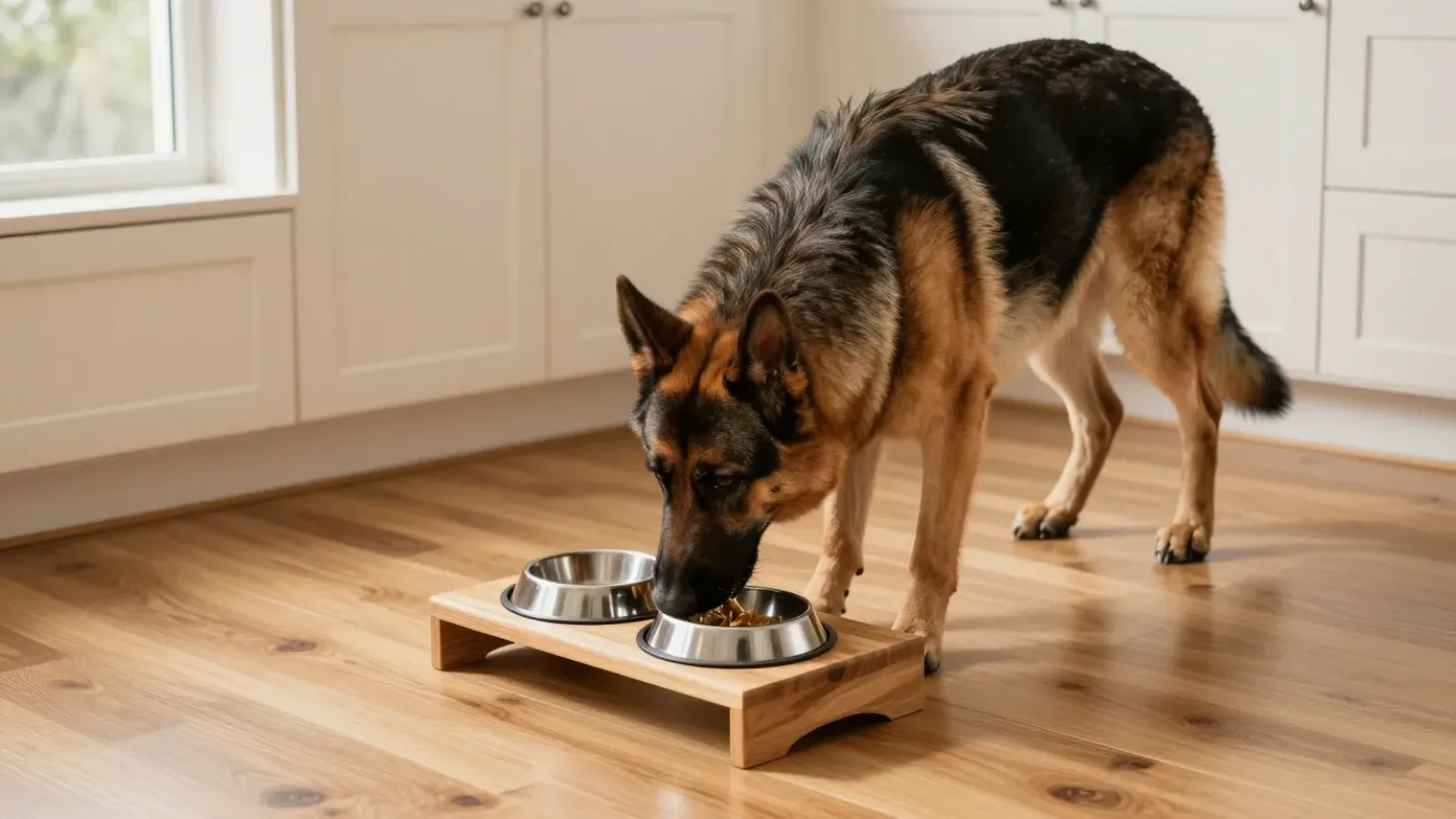
The best overall: a raised stand combining two stainless bowls at a comfortable height with a 44-liter storage cabinet for food and supplies, tidying the feeding area into one unit. A comfort-and-tidiness product — ask your vet before raising a large, deep-chested dog's bowls, given the debated bloat link.
Sources: PawHut manufacturer/Amazon listing specifications, VCA Animal Hospitals — bloat and feeding, American Kennel Club — feeding your dog
Verified Jul 6, 2026
XiaZ Elevated Dog Bowls, Large-Breed Stand
The value large-breed pick: a tall elevated stand that lifts the bowls to a comfortable height for a big dog, at a low price. Raises the bowls for posture and tidiness — discuss the bloat debate with your vet for a large, deep-chested breed.
Sources: XiaZ manufacturer/Amazon listing specifications, American Kennel Club — feeding your dog
Verified Jul 6, 2026
PTOBER Raised Ceramic Dog Bowl Set
The hygiene pick: a raised set with ceramic bowls, which resist scratching and odor better than plastic and are easy to keep clean. Ceramic-and-height comfort and hygiene, with the same vet-first caveat for large breeds.
Sources: PTOBER manufacturer/Amazon listing specifications, ASPCA — general dog care and feeding
Verified Jul 6, 2026
Our Picks
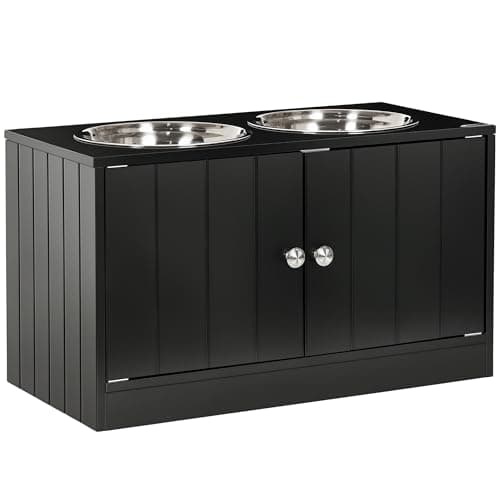
PawHut
PawHut Elevated Dog Bowls with Storage Cabinet, 44L Capacity
8.6 / 10
- Raised stand holding two removable stainless-steel bowls (67.6 oz each) at a comfortable standing height
- 44-liter storage cabinet below with magnetic-closure doors for food, scoops, and supplies
- Bowls lift out for easy filling and dishwasher-safe washing
- Combines feeding and storage into one tidy furniture-style unit (23.5" L x 11.75" W x 14" H)
$61.70
Current price · checked Sep 27, 2026
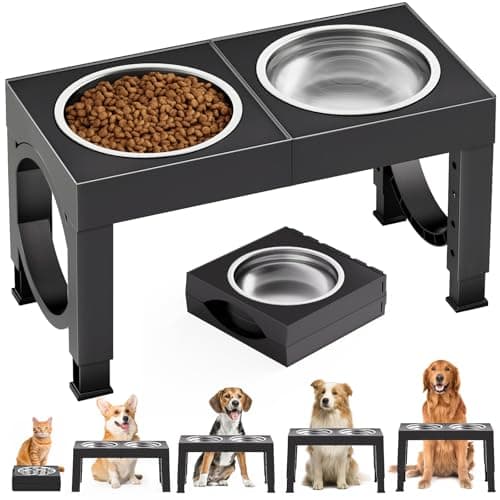
XiaZ
XiaZ Elevated Dog Bowls, Large-Breed Stand with 2 Stainless Bowls
8.4 / 10
- Tall elevated stand sized to lift bowls to a comfortable height for a big dog
- Two stainless-steel bowls that resist odor and wash easily
- Simple, sturdy frame at a low price
- Removable bowls for quick filling and cleaning
$19.99
Current price · checked Sep 8, 2026
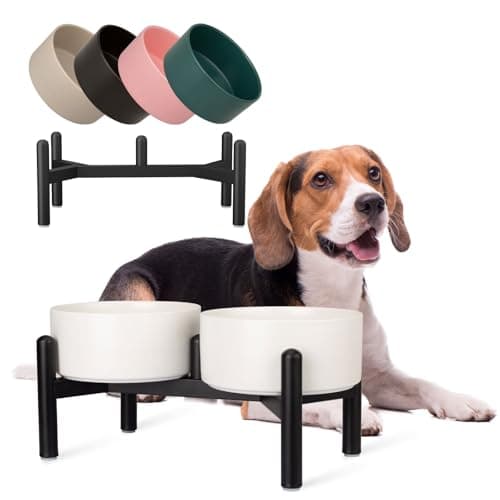
PTOBER
PTOBER Raised Ceramic Dog Bowl Set with Wooden-Style Stand
8.2 / 10
- Raised set with ceramic bowls that resist scratching, odor, and staining
- Ceramic is dishwasher-friendly and easy to keep hygienic
- Stand lifts the bowls to a comfortable feeding height
- Heavier ceramic bowls resist sliding as a dog eats
$34.99
Current price · checked Sep 8, 2026
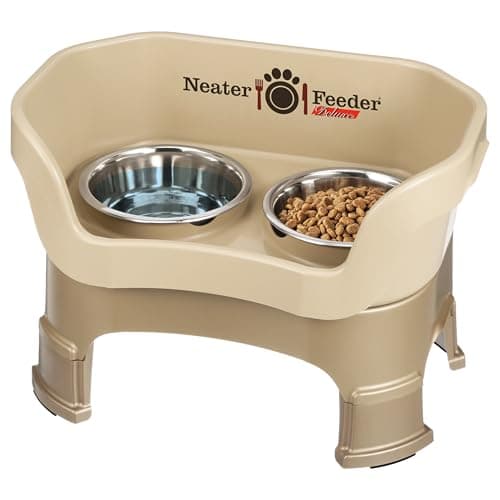
Neater Feeder
Neater Feeder Deluxe for Medium Dogs (19-40 lb), 2 Height Adjustable
8.0 / 10
- Spilled food is separated on top; spilled water drains into a lower basin
- Two feeding heights, 10 inches and 12.5 inches
- Sized for 19-40 lb dogs with a 9-14 inch shoulder height
- 18 x 11 x 12.5 inches overall, with a 7.5-inch feeding height
$59.99
Current price · checked Sep 25, 2026
Amazon Basics
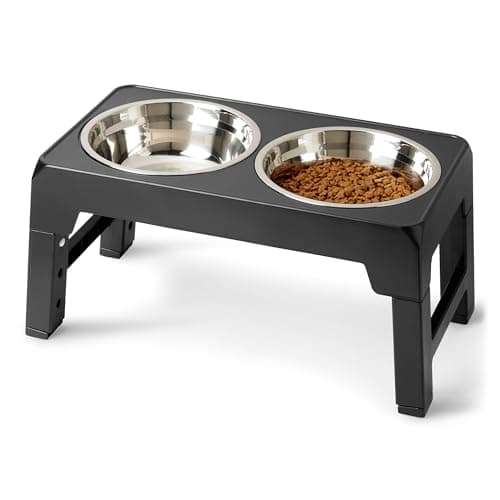
Amazon Basics Elevated Dog Bowls Stand, 5-Height Adjustable
7.8 / 10
- Five-height adjustment from 8.4 cm to 33 cm (about 3.3 to 13 inches)
- Two stainless-steel bowls, dishwasher safe
- Folds flat when not in use; assembles with no tools
- Anti-slip base with rubber rims to protect floors and stop wobble
$22.93
Current price · checked Sep 25, 2026
The Short Answer
The best elevated dog feeder is the one at the right height for your dog and stable enough not to tip — but before you buy, know the honest caveat this whole category carries: raised feeders can ease neck and joint strain for some dogs, yet their link to bloat (a life-threatening stomach twist) in large, deep-chested breeds is genuinely debated, so ask your vet before switching a big dog to one. With that in mind, the XiaZ Large-Breed Elevated Stand (about $19.99) is the pick to start with — a tall, sturdy stainless stand that lifts a big dog's bowls to chest height for under twenty dollars — and the PTOBER Raised Ceramic Bowl Set (about $34.99) is the hygiene pick for owners who prefer ceramic to metal. Those are the two we can stand behind: a cheap sturdy stand for a big dog, or ceramic bowls for the easiest surface to keep clean. A raised feeder is about comfort and tidiness, not a proven health cure — and it is different from a slow-feeder bowl, which exists to slow gulping.
Every product on this list has been scored against the PetPal Gear Score, a weighted composite of expert consensus, observed effectiveness, animal safety, long-term durability, and value. Review method: Editorial synthesis of manufacturer and Amazon product listings for each feeder plus published veterinary and canine-care guidance from VCA Animal Hospitals, the American Kennel Club, and the ASPCA on feeding posture and the debated link between raised feeders and bloat (gastric dilatation-volvulus). No independent lab or outlet has bench-tested the stability or bowl composition of these specific generic-marketplace feeders, so we do not attribute any precise measurement, award, or verdict to any of them beyond what the listing states. PetPalHQ does not run a veterinary lab; the PetPal Raised-Feeder Score below is a transparent synthesis of documented listing specifications and published care standards, not a measurement, and it is not medical advice. Prices were captured on 2026-07-06 and should be treated as list/listing figures that will move.. Synthesized from 5+ expert sources.
Elevated dog feeders are sold on a health promise that deserves an honest second look. The pitch is that raising your dog's bowls is better for it — easier on the neck and joints, better for digestion, healthier all around. Part of that is a fair comfort claim, and part of it runs ahead of the evidence. Raising the bowls genuinely can ease strain for a tall or older dog and cut the mess of a floor dish. But the broader "it's healthier" story is not settled, and for large, deep-chested breeds there is a real veterinary debate about whether elevated feeding raises the risk of bloat, a life-threatening emergency. So before any pick, the rule that should govern this purchase: a raised feeder is a comfort-and-tidiness product, not a proven health cure, and for a big deep-chested dog you should ask your vet first.
We read 5 sources for this guide: the manufacturer and Amazon listings for each feeder, plus published veterinary and canine-care guidance from VCA Animal Hospitals, the American Kennel Club, and the ASPCA on feeding posture and the debated bloat link. We want to be upfront about two things. These are generic-marketplace feeders, and no independent lab has bench-tested their stability or bowl composition, so we do not quote precise measurements beyond what a listing states. And we will not oversell the health angle — every spec comes from the listings, the health framing comes from the veterinary sources, and the PetPal Raised-Feeder Score is our transparent synthesis of the two, scoring comfort, stability, and hygiene, not a health benefit. Nothing here is medical advice.
PetPalHQ.com earns affiliate commissions from qualifying purchases. Our recommendations are based on expert consensus — we synthesize professional reviews and manufacturer documentation, plus multi-year owner durability data, to find pet gear that is worth your investment. Commission rates never influence our editorial recommendations.
The Honest Health Picture: Comfort, Yes — Cure, No
Start with what a raised feeder actually does, because the marketing blurs it. Lifting the bowls toward a dog's chest means it can eat without splaying its front legs and craning down to the floor, which many owners find eases strain for a tall dog, a senior dog, or one with neck or joint pain — and it keeps food and water off the floor, cutting mess. Those are real, everyday benefits, and for the right dog they are reason enough to buy one. That is the comfort-and-tidiness case, and it is solid.
Now the part the listings skip. The claim that raised feeders are healthier for digestion, or safer, is not established — and for large, deep-chested breeds it may cut the other way. Bloat, or gastric dilatation-volvulus, is a sudden, life-threatening twisting of the stomach that strikes big, deep-chested dogs like Great Danes, setters, and standard poodles, and some research has examined raised feeding as a possible risk factor for it. The evidence is debated and not conclusive, which is exactly why the responsible move is to ask your vet rather than assume. For a small or medium dog the stakes are lower, but for a large, deep-chested breed, a conversation with your veterinarian before you switch to a raised feeder is genuinely worth having. Treat this guide as help choosing a good product, not as medical advice about whether your particular dog should eat from height.
Raised Feeder vs. Slow Feeder vs. Automatic Feeder
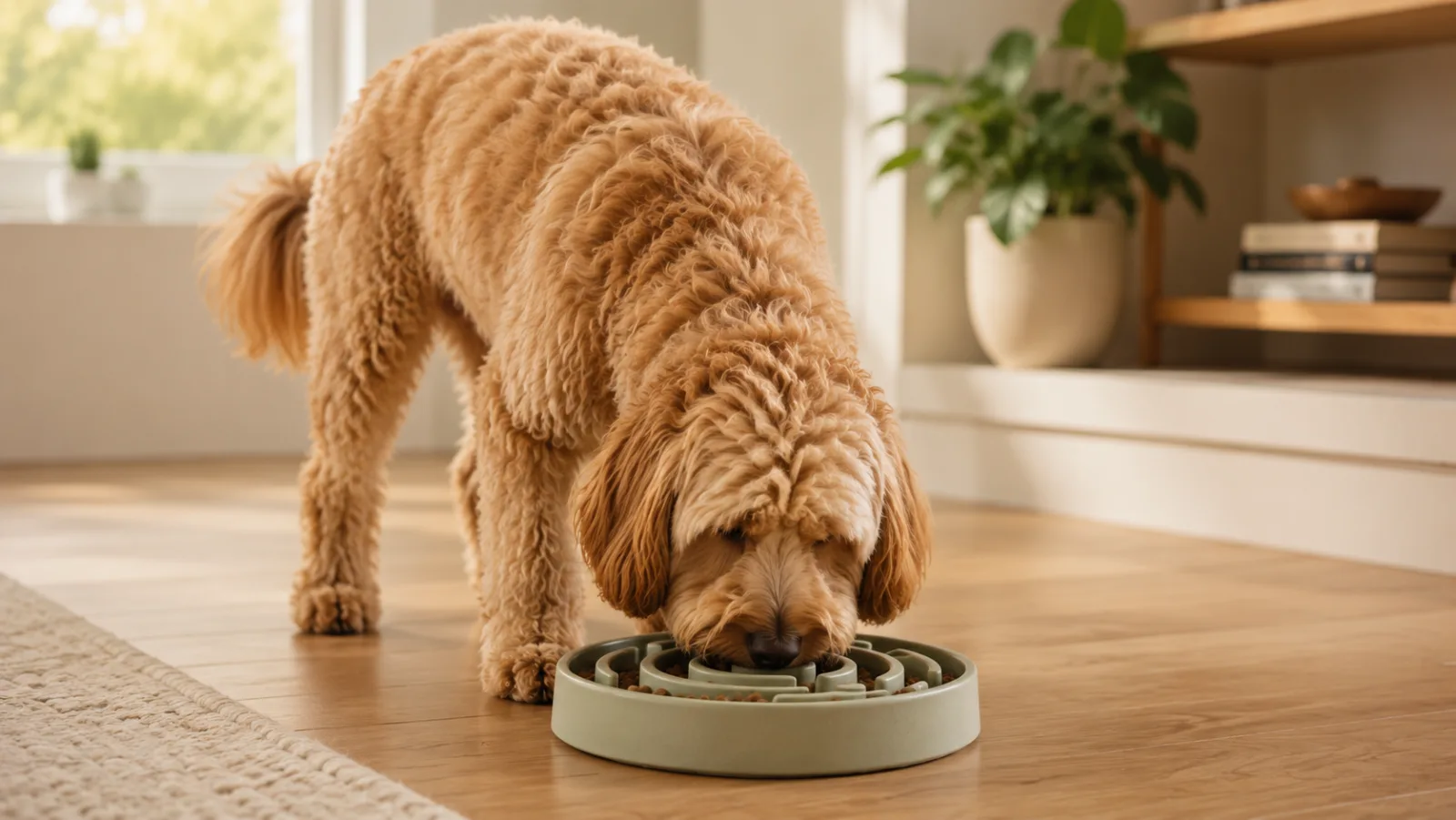
These three get confused constantly, and buying the wrong one wastes money and solves nothing. A raised feeder lifts the bowls for posture and tidiness — that is its entire job. A slow-feeder bowl is a different tool entirely: it has ridges or a maze molded into the bowl that force a fast eater to work the food out slowly, which reduces the gulping, gas, and occasional vomiting that come from a dog inhaling its meal. If your real problem is a dog that bolts its food, a slow-feeder anti-gulp bowl is what you want, and raising a fast eater's bowl does nothing to slow it down.
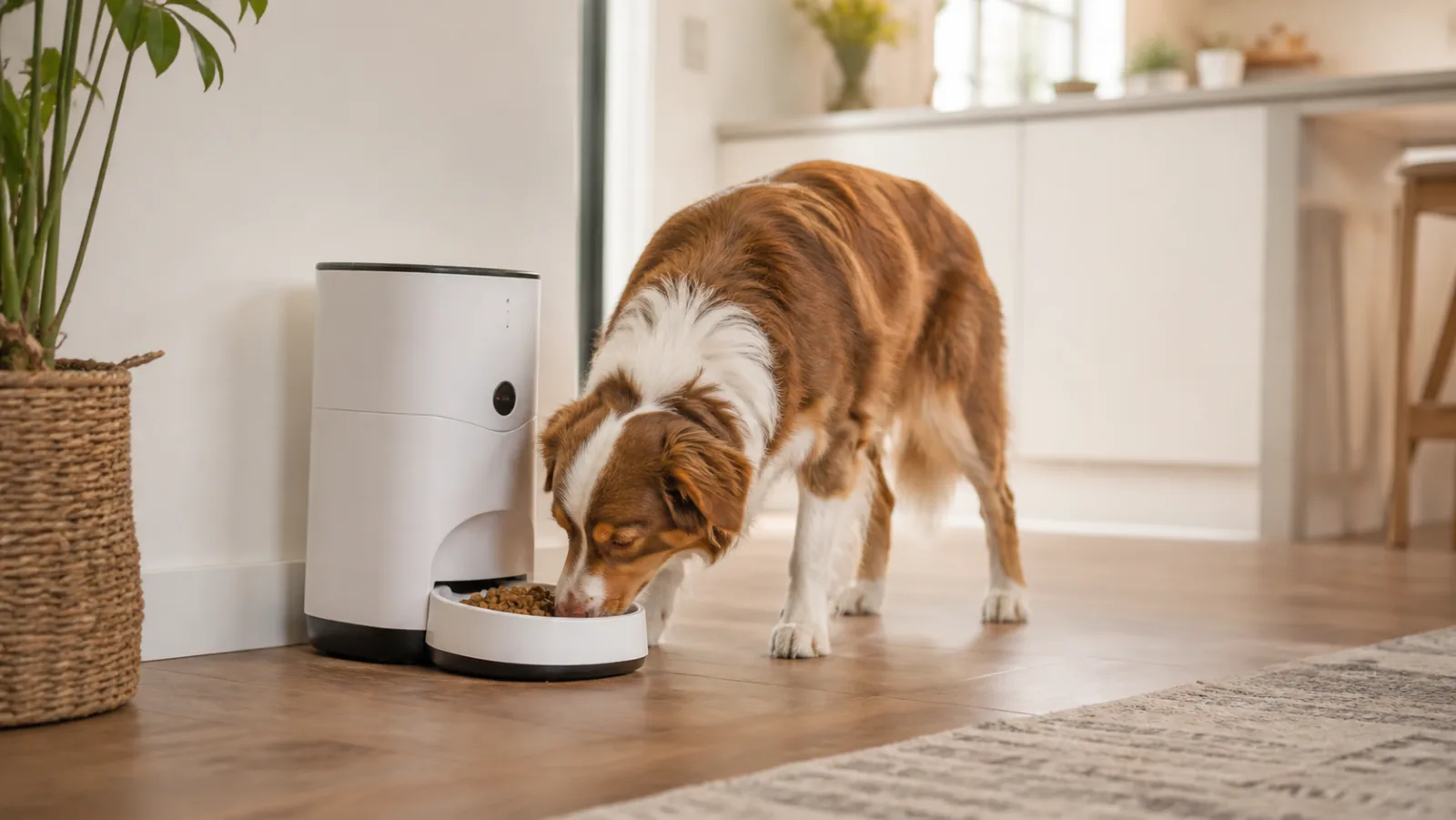
An automatic feeder solves a third problem: timing and portions. It dispenses measured meals on a schedule, which helps with weight management and feeding a dog while you are out, and some combine with elevated designs. If your concern is portion control or a missed midday meal rather than posture, an automatic pet feeder is the right category. The takeaway is simple: decide whether your problem is posture and mess (raised feeder), gulping (slow feeder), or timing and portions (automatic feeder), and buy that tool. Trying to make one product do another's job is the most common mistake in this corner of the market.
What We Passed On
Raised feeders are a category where honesty about the health claim matters more than a long roster, so a few exclusions are worth explaining.
We passed on any feeder marketed with a confident health claim — "improves digestion," "reduces bloat," "vet recommended for all dogs" — presented as settled fact. The evidence does not support treating raised feeding as a proven health upgrade, and for deep-chested breeds it may be a risk, so echoing those claims would be exactly the kind of overselling that gets a dog hurt. We described the benefits as comfort and tidiness and put the vet-first caveat front and center instead.
We passed on plastic-bowl feeders as a primary recommendation. Plastic scratches and pits, trapping bacteria and holding odor, and is linked to chin acne in some dogs. Stainless and ceramic are the more hygienic surfaces, so we built the roster around those and left thin plastic sets off, even though they are cheap — cleanability is worth the small step up in price.
We also passed, for now, on the priciest designer feeding furniture and fully-integrated smart feeding stations at the top of the market. Some are genuinely nice, but they sit above the price band most raised-feeder buyers shop, and smart automatic feeding is a separate category we cover on its own. Padding this list with a flagship bought for different reasons would not serve the reader looking for a good raised feeder at a fair price.
Head-to-Head Comparison
| Product | Bowls | Best for | PetPal Raised-Feeder Score |
|---|---|---|---|
| PawHut Elevated Dog Bowls with Storage Cabinet, 44L Capacity | 2 stainless + 44L storage | Best overall / tidy setup | 8.6 |
| XiaZ Elevated Dog Bowls, Large-Breed Stand with 2 Stainless Bowls | 2 stainless | Value / tall dogs | 8.4 |
| PTOBER Raised Ceramic Dog Bowl Set with Wooden-Style Stand | 2 ceramic | Hygiene / looks | 8.2 |
| Neater Feeder Deluxe for Medium Dogs (19-40 lb), 2 Height Adjustable | 2 stainless + reservoir | Messy eaters/drinkers | 8.0 |
| Amazon Basics Elevated Dog Bowls Stand, 5-Height Adjustable | 2 stainless, 5 heights | Widest availability | 7.8 |
$61.70
Current price · checked Sep 27, 2026
- Raised stand holding two removable stainless-steel bowls (67.6 oz each) at a comfortable standing height
- 44-liter storage cabinet below with magnetic-closure doors for food, scoops, and supplies
- Bowls lift out for easy filling and dishwasher-safe washing
- Combines feeding and storage into one tidy furniture-style unit (23.5" L x 11.75" W x 14" H)
- A comfort-and-tidiness product — ask your vet before raising a large, deep-chested dog's bowls
The PawHut is the pick we would put most owners in first, because it does more than lift the bowls — it tidies the whole feeding corner into one furniture-style unit. Two bowls sit at a comfortable raised height, and underneath is built-in storage for food, scoops, and supplies, so the bag of kibble, the measuring cup, and the bowls all live in one place instead of scattered across the kitchen. For anyone whose feeding area is a cluttered mess of bags and dishes, that consolidation is the real draw, and it is why the PawHut earns best overall.
The practical details are right. The two bowls are removable, so filling and washing is a lift-and-rinse rather than a wrestle with a fixed dish, and the raised height keeps a dog from stooping to the floor to eat, which many owners find eases strain for a tall or older dog. The storage below is genuinely useful daily — keeping food sealed and close cuts the trek to the pantry at every meal. Built as a small piece of furniture, it looks intentional in a kitchen or mudroom rather than like a plastic afterthought.
Here is the honest caveat this whole category requires, and it matters most on a station bought for a big dog. Raising a dog's bowls can ease neck and joint strain and reduce mess, and many owners and some vets favor it for tall, senior, or arthritic dogs — but the popular claim that raised feeders are healthier is not settled. There is a real, ongoing veterinary debate about whether elevated feeding raises the risk of bloat, or gastric dilatation-volvulus, a life-threatening stomach twist, in large and deep-chested breeds like Great Danes and setters. Some studies have linked the two; the evidence is not conclusive. So buy the PawHut for the comfort and the tidiness it genuinely delivers, and if your dog is large or deep-chested, ask your vet before switching to a raised feeder rather than treating the height as a guaranteed health upgrade. And note a raised feeder is not a slow-feeder anti-gulp bowl — those exist to slow a fast eater, a different job.
What We Love
- Combines two bowls and built-in storage into one tidy, furniture-style unit
- Removable bowls make filling and washing quick and easy
- Raised height can ease stooping for tall or older dogs
- Keeps food, scoops, and supplies sealed and in one place
- Looks intentional in a kitchen or mudroom rather than makeshift
What Could Be Better
- The 'raised feeders are healthier' claim is not proven — ask your vet for a large, deep-chested breed
- Priciest pick here for the added storage furniture
- A fixed-height station suits one dog size; not adjustable as a puppy grows
The Verdict
For owners who want to tidy the whole feeding area and lift the bowls, the PawHut station is the best overall — two bowls plus real storage in one unit. Just treat the height as comfort and tidiness, and ask your vet before raising a large, deep-chested dog's bowls.
Sources
- PawHut (manufacturer/Amazon listing): raised stand with two removable stainless-steel bowls at a comfortable height plus a 44-liter storage cabinet with magnetic-closure doors for food and supplies in a furniture-style unit
- VCA Animal Hospitals (Bloat / Gastric Dilatation-Volvulus in Dogs): notes that raised feeding has been examined as a possible risk factor for bloat in large, deep-chested breeds and that the evidence is debated, advising owners to consult their veterinarian
$19.99
Current price · checked Sep 8, 2026
- Tall elevated stand sized to lift bowls to a comfortable height for a big dog
- Two stainless-steel bowls that resist odor and wash easily
- Simple, sturdy frame at a low price
- Removable bowls for quick filling and cleaning
- Lifts bowls for posture and tidiness — discuss the bloat debate with your vet for a large breed
The XiaZ stand is the value pick and the one aimed squarely at big dogs. Its whole reason for being is height: a tall stand that lifts the bowls up toward a large dog's chest so it does not have to splay down to a floor dish, at a price under twenty dollars that makes it the easy first buy for a large-breed owner. If your Lab, shepherd, or other tall dog eats off the floor now and you want to try raising the bowls without spending much, this is the straightforward way to do it.
It keeps things simple and sturdy. Two stainless-steel bowls sit in the frame — stainless being the easy-clean, odor-resistant, durable default for dog dishes — and they lift out for filling and washing. The frame is basic but solid, doing the one job of holding the bowls steady at height without the storage, ceramic, or furniture styling that raises the price of the other picks. For an owner who just wants the bowls up off the floor for a big dog, cheaply, the XiaZ is exactly that and nothing more.
The honest caveat is the same and, on a large-breed stand specifically, especially important. Lifting a big dog's bowls can genuinely ease neck and joint strain and cut the mess of a floor dish — but the large, deep-chested breeds this stand is made for are precisely the ones at the center of the bloat debate. The veterinary evidence on whether raised feeding raises or lowers bloat risk is unsettled, and bloat is a fast, life-threatening emergency in exactly these dogs. So buy the XiaZ for the comfort and tidiness it plainly provides, but if your dog is a large, deep-chested breed, ask your vet whether a raised feeder is right for it before you make the switch — do not assume the height is automatically healthier. Watch, too, that the bowls sit securely in the frame so an eager big dog cannot knock one loose.
What We Love
- Cheapest way to lift a big dog's bowls to a comfortable height
- Stainless bowls resist odor and scratches and wash easily
- Simple, sturdy frame does the one job well
- Removable bowls for quick filling and cleaning
What Could Be Better
- Aimed at the very breeds central to the debated bloat risk — ask your vet first
- Basic build with no storage, ceramic, or adjustability
- Bowls must seat securely or an eager big dog can knock one loose
The Verdict
If you want the cheapest way to raise a big dog's bowls, the XiaZ large-breed stand is the value pick — simple, sturdy, stainless. Because it targets deep-chested breeds, ask your vet about the bloat debate before switching.
Sources
- XiaZ (manufacturer/Amazon listing): tall elevated large-breed dog bowl stand with two removable stainless-steel bowls, sized to lift the bowls to a comfortable height for a big dog
- American Kennel Club (Feeding Your Dog): advises owners of large and deep-chested breeds to discuss feeding setup and bloat risk with their veterinarian rather than assuming raised bowls are safer
$34.99
Current price · checked Sep 8, 2026
- Raised set with ceramic bowls that resist scratching, odor, and staining
- Ceramic is dishwasher-friendly and easy to keep hygienic
- Stand lifts the bowls to a comfortable feeding height
- Heavier ceramic bowls resist sliding as a dog eats
- Comfort, height, and hygiene — with the same vet-first caveat for large breeds
The PTOBER is the pick for owners who care most about bowl hygiene and prefer ceramic to plastic or metal. Ceramic is the reason to choose it: a glazed ceramic bowl does not scratch and pit the way plastic does, so it holds no bacteria-harboring nicks, resists odor and staining, and wipes or washes clean easily, often dishwasher-safe. For dogs with chin acne or plastic sensitivities, or owners who just want the most hygienic, easy-to-sanitize surface, ceramic is the material of choice, and the PTOBER sets it in a raised stand.
The set is designed around that material advantage. The ceramic bowls are heavier than plastic or thin steel, so they resist sliding and skidding as an enthusiastic dog eats, and they sit in a stand that raises them to a comfortable height. The look tends to be warmer and more finished than a bare metal stand, which suits owners who want the feeding station to look nice in a kitchen. It is the hygiene-and-aesthetics pick: a cleaner, better-looking surface for a modest step up in price.
The honest caveat carries through unchanged. Raising the bowls can ease a dog's posture and the ceramic is genuinely the more hygienic surface — both real benefits — but the height itself is still not a proven health upgrade, and the bloat debate applies here as everywhere. If your dog is a large, deep-chested breed, ask your vet before switching to a raised feeder rather than assuming it is safer. Two practical notes specific to ceramic: it is more hygienic but also breakable, so a bowl that gets knocked to a hard floor can crack or chip, and a chipped ceramic bowl should be retired because the sharp edge and exposed unglazed clay are a hazard. Buy the PTOBER for the hygiene and looks, mind the breakability, and keep the vet conversation in mind for a big dog.
What We Love
- Ceramic resists scratches, odor, and staining and is easy to sanitize
- Heavier bowls resist sliding as a dog eats
- Raised height eases stooping while looking finished in a kitchen
- Often dishwasher-safe for genuinely easy cleaning
- A good choice for dogs with chin acne or plastic sensitivities
What Could Be Better
- Raised height is still not a proven health upgrade — ask your vet for a large, deep-chested breed
- Ceramic is breakable — a knocked bowl can crack or chip and must be retired
- Heavier and pricier than a simple stainless stand
The Verdict
If bowl hygiene and looks matter most, the PTOBER ceramic set is the pick — a scratch-resistant, easy-to-sanitize surface at a comfortable height. Handle the ceramic carefully, and ask your vet about the bloat debate for a large breed.
Sources
- PTOBER (manufacturer/Amazon listing): raised ceramic dog bowl set with heavier glazed bowls that resist scratching and sliding, set in a stand that lifts them to a comfortable feeding height
- ASPCA (General Dog Care): recommends easy-to-clean food and water bowls washed regularly, since scratched or dirty bowls harbor bacteria
$59.99
Current price · checked Sep 25, 2026
- Spilled food is separated on top; spilled water drains into a lower basin
- Two feeding heights, 10 inches and 12.5 inches
- Sized for 19-40 lb dogs with a 9-14 inch shoulder height
- 18 x 11 x 12.5 inches overall, with a 7.5-inch feeding height
- Splash-proof walls and non-skid rubber feet
- Bowl holder and stainless bowls are all top-rack dishwasher safe
The Neater Feeder is the pick for owners whose main problem is mess, from a brand that specializes in exactly that. The design catches spills in two directions at once: dropped kibble is separated and held on the upper tray, while slung water drains through into a lower basin instead of onto your floor and baseboards. For a dog that splashes, drops food, or eats like it is a competition — and for owners tired of mopping under the bowls — that containment is the whole reason to choose it over a plain stand.
The specifics matter more than the concept here, because this is a sized product rather than a one-size stand. This is the medium version: Neater Feeder builds it for dogs between 19 and 40 pounds with a shoulder height of 9 to 14 inches — beagles, corgis, bulldogs — and it measures 18 by 11 by 12.5 inches with a 7.5-inch feeding height. It adjusts between two heights, 10 and 12.5 inches, so it can follow a growing dog or suit two animals of different sizes. Buy the large version instead if your dog is over 40 pounds; the sizes are separate listings.
Two practical notes. Everything — the bowl holder as well as the stainless bowls — is top-rack dishwasher safe, which matters because a spill-catching basin is only hygienic if you actually empty and wash it, and a design you have to hand-scrub is a design you will neglect. And the category caveat is unchanged: the mess control is real and the height can ease posture, but raising bowls is not a proven health upgrade, and the bloat debate applies to large, deep-chested breeds — ask your vet before switching a big dog to a raised feeder.
What We Love
- Two-way spill containment: food held on top, water drained to a lower basin
- Two feeding heights (10 in and 12.5 in) rather than a single fixed stand
- Every part is top-rack dishwasher safe, so the basin actually stays clean
- Non-skid rubber feet and splash-proof walls keep it put
What Could Be Better
- Raised height is not a proven health upgrade — ask your vet for a large, deep-chested breed
- About $59.99 — near the top of this roster, and the large size costs more
- The reservoir basin needs its own regular cleaning to stay hygienic
The Verdict
If mess is your actual problem, the Neater Feeder Deluxe medium at about $59.99 is the pick — two-way spill containment, two heights, and every part dishwasher safe. Sized for 19-40 lb dogs; buy the large if yours is bigger.
Sources
- Neater Pet Brands (manufacturer Amazon listing): spilled food is separated and contained on top, while spilled water drains into the bottom basin; the Neater Feeder Medium Dog measures 18 L x 11 W x 12.5 H (with a 7.5 feeding height), recommended for dogs between 19-40 pounds with a shoulder height between 9 and 14 inches; 2 height adjustable (10 and 12.5); non-skid rubber feet; all parts, both the bowl holder and the stainless steel dog bowl set, are top-rack dishwasher safe
- American Kennel Club (Elevated Dog Bowls and Bloat): reports that research has not established raised bowls as a health benefit and that studies have linked them to increased bloat risk in large, deep-chested breeds
$22.93
Current price · checked Sep 25, 2026
- Five-height adjustment from 8.4 cm to 33 cm (about 3.3 to 13 inches)
- Two stainless-steel bowls, dishwasher safe
- Folds flat when not in use; assembles with no tools
- Anti-slip base with rubber rims to protect floors and stop wobble
- 17.3 x 9.4 x 12 inches; frame made from GRS-certified recycled materials
The Amazon Basics elevated stand is the pick for buyers who want a familiar house brand at a budget price. It is the standard template done cheaply: a simple frame holding two removable stainless-steel bowls, lifting them to a comfortable height. For an owner who wants a straightforward raised feeder without paying for storage bins, ceramic, or a specialist mess-catching design, and who values easy availability and replacement, this is the sensible, no-frills choice at about $22.93.
The five-height range is what earns it the slot over a fixed stand. It adjusts from roughly 3.3 to 13 inches, which covers a puppy growing into an adult dog and lets one stand serve two animals of different sizes — more flexibility than most single-height frames in this price band. Stainless bowls are the easy-clean, odor-resistant, dishwasher-safe default and lift out for filling and washing. An anti-slip base with rubber rims keeps the frame from wobbling or sliding across a hard floor, which is the failure mode of cheap stands, and the whole thing folds flat for storage and needs no tools to set up.
The category caveat holds here as it does for every feeder in this guide. The raised height offers comfort and tidiness but is not a proven health upgrade — the AKC reports that research has not established a benefit, and that studies have linked raised bowls to increased bloat risk in large, deep-chested breeds, so ask your vet before raising a big dog's bowls. And note what this stand does not do: unlike the Neater Feeder above there is no reservoir, so a sloppy drinker still wets your floor. If your real goal is to slow a fast eater rather than raise the bowls, the right tool is an automatic pet feeder for portion timing or a slow-feeder bowl, not an elevated stand.
What We Love
- Five heights from about 3.3 to 13 inches — grows with a puppy or serves two dogs
- About $22.93, the cheapest adjustable stand in this roster
- Dishwasher-safe stainless bowls and an anti-slip, rubber-rimmed base
- Folds flat and assembles without tools
What Could Be Better
- Raised height is not a proven health upgrade — ask your vet for a large, deep-chested breed
- No reservoir or spill catch, so a sloppy drinker still wets the floor
- Basic frame with no storage or ceramic option
The Verdict
If you want a cheap raised feeder with real height flexibility, the Amazon Basics stand at about $22.93 is a practical pick — five heights and dishwasher-safe bowls. Ask your vet about the bloat debate for a big dog.
Sources
- Amazon Basics (manufacturer listing): ADJUSTABLE HEIGHT: 5-height adjustment system (8.4 to 33 cm); includes two premium stainless steel dishwasher-safe dog bowls; advanced anti-slip base with whisper-quiet rubber rims ensures zero wobble and floor protection; EASY ASSEMBLY: No tools required, sets up instantly, frame containing 100% GRS certified recycled materials; 17.3 x 9.4 x 12 in
- American Kennel Club (Elevated Dog Bowls and Bloat): reports that research has not established raised bowls as a health benefit and that studies have linked them to increased bloat risk in large, deep-chested breeds
How We Score
Formula
PetPal Raised-Feeder Score = (Correct Height / Ergonomics × 0.30) + (Stability & Non-Tip × 0.25) + (Bowl Quality & Hygiene × 0.20) + (Storage/Extras × 0.15) + (Value × 0.10)
Score Factors
- Correct Height / Ergonomics · 30%
- How well the feeder lifts the bowls toward the dog's chest so it eats without splaying down to the floor, and whether the height suits the dog's size — with height adjustment a plus for matching the individual. This factor scores posture comfort, not a proven health benefit: raising bowls is a comfort-and-tidiness choice, and the debated bloat risk for large, deep-chested breeds means the highest ergonomic score still comes with a vet-first caveat, never a health claim.
- Stability & Non-Tip · 25%
- How securely the feeder and bowls stay put as an eager dog eats — frame stability, whether bowls seat firmly in the stand, and resistance to tipping or sliding. Heavier ceramic bowls, secure bowl seats, and wide, sturdy frames score well; a light stand a big dog can knock loose or a bowl that lifts out too easily is downgraded, since a tipped feeder is both a mess and a stress for the dog.
- Bowl Quality & Hygiene · 20%
- The material and cleanability of the bowls — non-porous, scratch-resistant, easy-to-sanitize surfaces that do not harbor bacteria. Stainless and glazed ceramic rate highest because they resist odor, staining, and the scratches that trap bacteria in plastic; dishwasher-safe bowls score better still. Ceramic gains for hygiene but is flagged for breakability, and a chipped ceramic bowl is treated as a retire-it hazard, not a durability quibble.
- Storage/Extras · 15%
- Genuinely useful additions beyond a plain stand — built-in food and supply storage, spill-catching reservoirs, height adjustment, and finished furniture styling. Neither feeder here offers storage or a spill basin, so this factor separates finish and everyday usability: the PTOBER's stand looks more finished in a kitchen, while the XiaZ is a bare frame that does the one job. Extras are weighted modestly, since the core job is holding the bowls steady at height.
- Value · 10%
- Price relative to build, bowl quality, and useful extras — not just the lowest sticker. The XiaZ scores highest on raw value as a sub-$20 sturdy large-breed stand, while the PTOBER earns its higher price through ceramic hygiene. Value is judged against what a feeder actually delivers for the dog and owner, because paying for extras you will not use is not a bargain and a stand too flimsy for a big dog is a false economy.
| Rank | Product | Score |
|---|---|---|
| #1 | PawHut PawHut Elevated Dog Bowls with Storage Cabinet, 44L Capacity | 8.6 |
| #2 | XiaZ XiaZ Elevated Dog Bowls, Large-Breed Stand with 2 Stainless Bowls | 8.4 |
| #3 | PTOBER PTOBER Raised Ceramic Dog Bowl Set with Wooden-Style Stand | 8.2 |
| #4 | Neater Feeder Neater Feeder Deluxe for Medium Dogs (19-40 lb), 2 Height Adjustable | 8.0 |
| #5 | Amazon Basics Amazon Basics Elevated Dog Bowls Stand, 5-Height Adjustable | 7.8 |
When NOT to Buy
Do not buy a raised feeder as a proven health upgrade for a large, deep-chested dog without asking your vet first. This is the most important caveat in the guide. Raising a dog's bowls can ease neck and joint strain and cut mess — genuine comforts — but the popular claim that elevated feeding is healthier is not settled. There is a real, ongoing veterinary debate about whether raised feeders increase the risk of bloat, or gastric dilatation-volvulus, a life-threatening stomach twist, in large and deep-chested breeds like Great Danes, setters, and standard poodles. Some studies have linked the two and the evidence is not conclusive. For these breeds especially, talk to your veterinarian before switching, and treat the feeder as a comfort-and-tidiness choice, not medical advice. This guide is not a substitute for your vet.
Do not confuse a raised feeder with a slow-feeder bowl. They solve completely different problems. A raised feeder lifts the bowls for posture and tidiness; a slow-feeder bowl has ridges or a maze that forces a fast eater to eat slowly, which reduces gulping, gas, and the vomiting some dogs get from bolting food. If your actual concern is a dog that inhales its meal, the right tool is a slow feeder, and pairing a fast eater with a raised bowl does nothing for the gulping. Buy for the problem you have.
Skip the wrong height. A feeder set too high or too low for your dog defeats the ergonomic point and can make eating awkward. Match the height to your dog's size — the bowls should sit around the dog's lower chest, not force it to reach up or stoop down — and favor an adjustable model if you are unsure or the dog is still growing. A fixed-height stand bought for the wrong size dog is a comfort downgrade, not an upgrade.
Do not buy a flimsy stand for a big, eager dog. A light or unstable feeder that a large dog can knock loose or tip turns every meal into a spill and can startle a nervous dog off its food. For a big dog, choose a wide, sturdy frame with bowls that seat securely, and check that an enthusiastic eater cannot flip a bowl out. Stability matters more the bigger and more eager the dog.
Skip a scratched or chipped bowl regardless of the stand. Deep scratches in plastic and chips in ceramic harbor bacteria and, in ceramic, expose sharp edges and unglazed clay. Wash bowls regularly, and retire any bowl that is badly scratched or chipped rather than keeping it in service. A hygienic feeding setup is about the bowls as much as the height, and a dirty or damaged bowl undoes the benefit of a nice stand.
Frequently Asked Questions
- Do raised feeders cause bloat?
- The honest answer is that it is debated, not settled. Bloat, or gastric dilatation-volvulus, is a life-threatening stomach twist that mainly strikes large, deep-chested breeds, and some studies have examined raised feeding as a possible risk factor while the overall evidence remains inconclusive. Because the stakes are so high for these breeds, the responsible approach is to ask your veterinarian before switching a large, deep-chested dog to a raised feeder rather than assuming it is either safe or dangerous. For small and medium dogs the concern is lower. Treat a raised feeder as a comfort choice and let your vet weigh in on the health question.
- What height should a raised dog feeder be?
- The bowls should sit around your dog's lower chest so it can eat with its head and neck level rather than reaching up or stooping down — roughly wrist-to-elbow height for you on a big dog, lower for a small one. Match the feeder's height to your dog's size, and choose an adjustable model if you are unsure or the dog is still growing. A feeder set too high or too low defeats the ergonomic purpose, so measure your dog and check the listing's height before buying rather than guessing.
- Which dogs actually benefit from a raised feeder?
- Mainly tall dogs, senior dogs, and dogs with neck, back, or joint pain or mobility issues that make stooping to a floor bowl uncomfortable — for them, eating at chest height is genuinely easier. Owners who want to cut mess also benefit. But "benefit" here means comfort and tidiness, not a guaranteed health gain, and for large, deep-chested breeds the bloat debate means the comfort benefit should be weighed with your vet against the possible risk. A young, healthy small or medium dog does fine either way.
- Are ceramic or stainless bowls better for a raised feeder?
- Both are good, hygienic choices, and better than plastic. Stainless steel is durable, odor-resistant, dishwasher-safe, and nearly unbreakable, which makes it the practical default. Ceramic is non-porous and resists scratching and staining even better, is easy to sanitize, and is heavier so it slides less — but it can crack or chip if knocked to a hard floor, and a chipped ceramic bowl should be retired because of the sharp edge and exposed clay. Choose stainless for toughness and ceramic for maximum hygiene and looks, and wash either regularly.
- What is the difference between a raised feeder and a slow feeder?
- A raised feeder lifts the bowls to a comfortable height for posture and tidiness; a slow feeder has ridges or a maze inside the bowl that forces a fast eater to eat slowly. They solve different problems, and one does not do the other's job. If your dog gulps its food and gets gassy or vomits from eating too fast, you want a slow feeder, not a raised one — raising a gulper's bowl does nothing for the gulping. If your concern is a tall or older dog stooping to eat, the raised feeder is the right tool.
Bottom Line
Buy the XiaZ if you want the cheapest way to lift a big dog's bowls — a simple, sturdy, stainless large-breed stand. Because it targets deep-chested breeds, have the bloat conversation with your vet first.
Buy the PTOBER if bowl hygiene and looks matter most — scratch-resistant, easy-to-sanitize ceramic at a comfortable height. Handle the ceramic carefully, since it can crack, and keep the vet caveat in mind.
Skip a raised feeder as a health cure — and reach for a different tool when the real problem is different: a slow-feeder bowl for a gulper, an automatic feeder for portion timing. For any large, deep-chested breed, ask your vet about the bloat debate before you raise the bowls at all.
Sources & Methodology
Methodology
PetPal Raised-Feeder Score = (Correct Height / Ergonomics × 0.30) + (Stability & Non-Tip × 0.25) + (Bowl Quality & Hygiene × 0.20) + (Storage/Extras × 0.15) + (Value × 0.10)
Expert review sources
- VCA Animal Hospitals — Bloat / Gastric Dilatation-Volvulus in Dogs (raised feeding as a debated risk factor; consult your vet)
- American Kennel Club — Feeding Your Dog (matching feeder setup to the dog; vet input for deep-chested breeds)
- ASPCA — General Dog Care (bowl hygiene and regular washing)
- XiaZ — manufacturer/Amazon listing specifications (large-breed elevated stand)
- PTOBER — manufacturer/Amazon listing specifications (raised ceramic bowl set)
Community sources
- Reddit r/dogs and r/DogAdvice — owner discussion of raised feeders, the bloat debate for large breeds, and ceramic versus stainless bowls
Prices and specs verified July 6, 2026.
About the author
Nick Miles is the chief editor of PetPalHQ. The picks above are an editorial synthesis of manufacturer and Amazon listing specifications cross-checked against published veterinary and canine-care guidance from VCA Animal Hospitals, the American Kennel Club, and the ASPCA. PetPalHQ does not run a veterinary lab, and no independent outlet has bench-tested these specific generic-marketplace feeders. We present the raised-feeder bloat question honestly as a debated risk for large, deep-chested breeds and urge readers to consult their own veterinarian; nothing here is medical advice. The PetPal Raised-Feeder Score is a transparent composite of documented specifications and published care standards, not a measurement.
PetPalHQ is a participant in the Amazon Services LLC Associates Program. We may earn commissions from qualifying purchases — at no extra cost to you.