Cats & Dogs
New Puppy Checklist: The First Supplies You Actually Need in 2026
A new puppy needs a handful of things in the first months, not a cart full of gadgets: a crate, a playpen, a no-pull harness, a teething chew, and a carrier. One starting product per stage.
By Nick Miles · Updated August 12, 2026 · 13 min
PetPalHQ is reader-supported. We may earn a commission from qualifying Amazon purchases at no extra cost to you.

Evidence at a Glance
MidWest iCrate 36-Inch Double-Door Folding Dog Crate with Divider Panel
The anchor of house-training: a 36-inch double-door crate sized for medium-large breeds that reach 41 to 70 lb as adults, with a divider panel that shrinks the den to puppy size now and opens up as the dog grows, plus a leak-proof slide-out pan.
Sources: MidWest Homes for Pets (manufacturer/Amazon listing), American Kennel Club — crate training benefits
Verified Jul 8, 2026
MidWest Folding Metal Puppy Exercise Pen (16 sq ft, 30 in tall)
The daytime half of the system: a 30-inch-tall folding metal pen enclosing about 16 square feet of play space for indoor or outdoor use — supervised freedom that is the middle step between the crate and the run of the house.
Sources: MidWest Homes for Pets (manufacturer/Amazon listing), ASPCA — general dog care
Verified Jul 8, 2026
PureDiey Stainless Steel Slow Feeder Dog Bowl with Lick Mat
The cheapest impulse fix: a food-grade stainless steel bowl with a removable silicone slow-feeder insert that forces smaller bites from a gulping puppy, a non-slip base, and an included lick mat for calm crate-time enrichment.
Sources: PureDiey (manufacturer/Amazon listing), American Kennel Club — slow-feeder guidance
Verified Jul 8, 2026
Our Picks
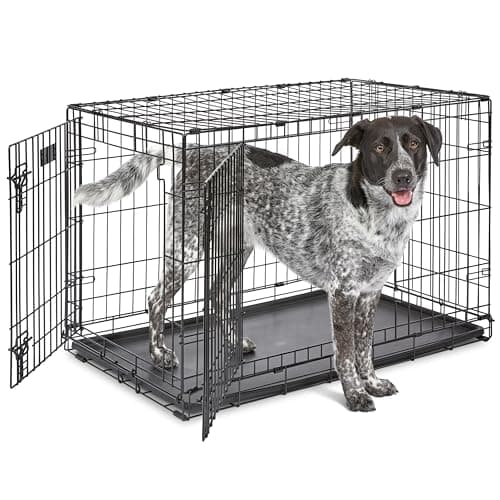
MidWest Homes for Pets
MidWest iCrate 36-Inch Double-Door Folding Dog Crate with Divider Panel
8.6 / 10
- 36-inch length sized for medium-large breeds in the 41-70 lb adult range
- Double doors (front and side) for flexible placement against a wall or in a corner
- Included divider panel shrinks the crate to puppy size, then expands as the dog grows
- Leak-proof plastic pan slides out for fast cleanup after accidents
$61.93
Current price · checked Sep 8, 2026
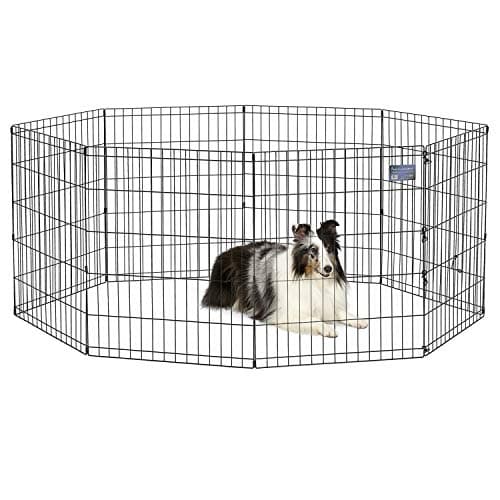
MidWest Homes for Pets
MidWest Folding Metal Puppy Exercise Pen (16 sq ft, 30 in tall)
8.4 / 10
- 30-inch-tall folding metal panels enclosing about 16 square feet of play space
- Sets up and folds down in seconds with no tools
- Works indoors on a floor or outdoors on grass
- Reconfigures into different shapes to fit a room or a corner
$46.99
Current price · checked Sep 8, 2026

PureDiey
PureDiey Stainless Steel Slow Feeder Dog Bowl with Lick Mat
8.1 / 10
- Food-grade stainless steel bowl that resists rust, odor, and chew damage
- Removable silicone slow-feeder insert forces smaller bites to slow a fast eater
- Non-slip base keeps the bowl from sliding across the floor
- Included lick mat adds a calm, slow food puzzle
$19.99
Current price · checked Sep 8, 2026
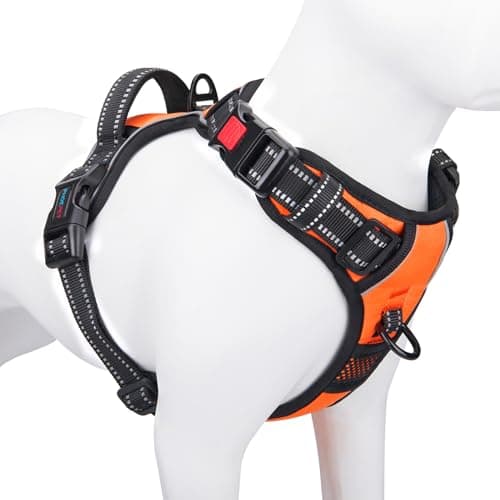
PHOEPET
PHOEPET No-Pull Front-Clip Dog Harness with Handle
8.0 / 10
- Front clip redirects pulling instead of loading the throat like a collar
- Padded top handle for close guidance during early leash lessons
- Reflective trim for visibility on low-light walks
- Two metal leash rings (front and back) and three adjustable buckles
$13.93
Current price · checked Sep 8, 2026

Pupstages
Pupstages Cool Teething Stick for 0-6 Month Puppies
7.7 / 10
- Freezable stick that chills to soothe sore teething gums
- Marketed for puppies from 0 to 6 months old
- Textured surface gives a mouthy puppy something safe to chew
- Light and easy for small jaws to hold and carry
$4.99
Current price · checked Sep 8, 2026
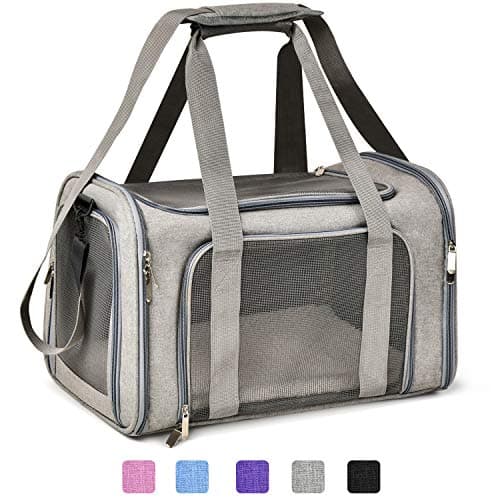
Henkelion
Henkelion Soft-Sided TSA Airline-Approved Pet Carrier (up to 15 lb)
7.9 / 10
- Soft-sided, collapsible build rated for pets up to 15 lb
- Marketed as TSA airline-approved for in-cabin travel
- Mesh panels for airflow and visibility during vet trips
- Waterproof bottom for accidents on the road
$23.48
Current price · checked Sep 8, 2026
The Short Answer
The supplies a new puppy actually needs are about managing space and impulses in the first months, not filling a cart with gadgets. Six items cover it: a crate for house-training and a safe den, a playpen for supervised freedom, a front-clip harness that spares a growing throat, a teething chew to redirect mouthiness, and a carrier for the early vet visits. This checklist names one sensible starting point for each — the MidWest iCrate at about $62 list and the MidWest exercise pen at about $44, plus a no-pull harness, a teething stick, and a soft-sided carrier. Each links to the full category roundup.
Every product on this list has been scored against the PetPal Gear Score, a weighted composite of expert consensus, observed effectiveness, animal safety, long-term durability, and value. Review method: Editorial synthesis of the manufacturer and Amazon listings for each product plus published puppy-rearing guidance from the American Kennel Club, the ASPCA, the American Veterinary Medical Association, and the Merck Veterinary Manual. MidWest Homes for Pets is treated as an established crate-and-pen brand with an honest reputation; PHOEPET, Pupstages, and Henkelion are white-label Amazon brands whose specifications are manufacturer-stated. No independent lab or outlet has published a hands-on review of these particular marketplace listings, so no award or verdict is attributed to any outlet. PetPalHQ does not run a pet-gear testing lab; the PetPal First-Weeks Puppy Score below is a transparent synthesis of documented listing specifications and published puppy-care standards, not a measurement. Prices were captured on 2026-07-08 in the post-July-4 window and should be treated as list figures that will move — verify the current price before buying.. Synthesized from 5+ expert sources.
The mistake new puppy owners make is not buying the wrong thing — it is buying too much. A pet store will happily sell you a cart full of gear before the puppy is even home, and most of it can wait. What a puppy actually needs in the first months comes down to managing two things: space and impulses. Where the puppy is allowed to be, and what it is allowed to chew, pull on, or gulp. Get those under control and the early weeks stay calm. Miss them and no gadget will save you.
This is a checklist hub, not a head-to-head roundup. Each of the six products below is one sensible starting point for a spot on the list, chosen by editorial synthesis of the manufacturer and Amazon listings and published puppy-care guidance from the American Kennel Club, the ASPCA, and the American Veterinary Medical Association — not from a testing lab, which PetPalHQ does not run. MidWest Homes for Pets is an established crate-and-pen brand and is described as one; PHOEPET, Pupstages, and Henkelion are white-label marketplace brands described in listing terms. Where you want to compare a category in depth, each pick links to its full roundup, and the PetPal First-Weeks Puppy Score is a transparent synthesis of listing specs and published standards, not a measurement.
PetPalHQ.com earns affiliate commissions from qualifying purchases. Our recommendations are based on expert consensus — we synthesize professional reviews and manufacturer documentation, plus multi-year owner durability data, to find pet gear that is worth your investment. Commission rates never influence our editorial recommendations.
Read start to finish, this list walks the first months in order. The full six-item checklist runs about $150 at the prices we last saw, and you do not need all of it on day one. If a kitten is joining the home at the same time, the new kitten checklist covers the parallel set of first supplies for multi-pet households.
Space and Impulses, Not Gadgets
The whole checklist rests on one idea: a new puppy is a project in managing space and impulses, not a shopping list of gadgets. In the first months a puppy cannot yet be trusted with a whole house or with its own urges. It will pee where it stands, chew what it finds, and pull toward whatever smells interesting. The right supplies do not train the puppy for you. They set up the situation so good habits are easy and bad ones are hard.
That is why the picks split into two groups. Three of them manage space: a crate for a safe den at night, a playpen for supervised freedom by day, and a carrier for the trips to the vet. The other two manage impulses: a harness for a puppy that pulls, and a teething chew for a puppy that mouths everything. Buy along those two lines and you have covered what the first months actually demand. Almost everything else in the pet-store aisle is an extra you can add later, once you know this particular puppy.
The Crate-and-Playpen System
Space starts at home, and the crate is the anchor. A crate gives a puppy a den to sleep in and does the heavy lifting of house-training, since a puppy avoids soiling where it rests. The trick is size: too big and the puppy just uses a far corner as a toilet. A crate with a divider solves that, and the sizing math for different breeds is worth reading in the full heavy-duty dog crate roundup before you buy.
The playpen is the daytime half of the same system. It gives a puppy room to move without handing over the whole house, which is where cords get chewed and rugs get stained. Penned in a safe square, a puppy can play and nap while you cook or work nearby. If you want to compare pen heights and footprints, the exercise pen and playpen guide lays out the options. Together the crate and pen give a puppy exactly as much space as it can handle at each stage, and not an inch more.
Mealtime and Leash-Training Safety
Two daily routines carry a real safety angle in the first months: eating and walking. Puppies gulp food fast enough to choke or bring it back up, and a slow feeder is the plain fix — a removable insert in the bowl forces smaller bites, and a stainless bowl survives teething better than plastic. You can weigh bowl shapes and insert designs in the anti-gulp slow feeder roundup before committing to one.
If you just want to solve the gulping today, a basic stainless steel slow feeder bowl costs little and starts working the moment it hits the floor, no training required.
Walking is the other one. A puppy that pulls on a flat collar puts all that force on a soft, still-growing throat. A front-clip harness moves the pressure to the chest and turns the puppy back toward you instead. It does not teach loose-leash walking on its own, but it makes practicing safe. The trade-offs between clip positions and fit are covered in the no-pull harness guide.
Teething and the First Vet-Visit Run
The last two picks cover the messiest and the most nerve-wracking parts of the first months. Teething runs from roughly the day you bring the puppy home to about six months, and a teething puppy chews to soothe sore gums. A frozen chew gives that urge somewhere safe to go instead of your furniture. A wider set of chew options for different chewers and anxiety levels sits in the dog chew toy roundup.
Keeping a cheap freezable puppy teething toy in the freezer means there is always a cold chew ready the moment a puppy starts gnawing on a table leg.
The vet visits are the other early reality. The first months bring a vaccination series and a checkup or two, and a squirming puppy needs a safe way to travel. A soft-sided carrier keeps the puppy secure in the car and calm in the waiting room. Sizes and airline rules vary, so the airline-approved carrier guide is worth a look if you expect to fly. For most owners, though, the carrier is simply the safest way to get a small puppy to its shots and back.
Head-to-Head Comparison
| Checklist stage | Product | Role in the first months | PetPal First-Weeks Puppy Score |
|---|---|---|---|
| 1. The crate | MidWest iCrate 36-Inch Double-Door Folding Dog Crate with Divider Panel | House-training den that grows with the dog | 8.6 |
| 2. The playpen | MidWest Folding Metal Puppy Exercise Pen (16 sq ft, 30 in tall) | Supervised daytime containment | 8.4 |
| 3. Slow feeder | PureDiey Stainless Steel Slow Feeder Dog Bowl with Lick Mat | Slows a gulping puppy at mealtime | 8.1 |
| 4. The harness | PHOEPET No-Pull Front-Clip Dog Harness with Handle | Leash training without neck strain | 8.0 |
| 5. Teething chew | Pupstages Cool Teething Stick for 0-6 Month Puppies | Redirects mouthy chewing | 7.7 |
| 6. The carrier | Henkelion Soft-Sided TSA Airline-Approved Pet Carrier (up to 15 lb) | Safe transport for vet visits | 7.9 |
$61.93
Current price · checked Sep 8, 2026
- 36-inch length sized for medium-large breeds in the 41-70 lb adult range
- Double doors (front and side) for flexible placement against a wall or in a corner
- Included divider panel shrinks the crate to puppy size, then expands as the dog grows
- Leak-proof plastic pan slides out for fast cleanup after accidents
- Folds flat with secure slide-bolt latches for travel or storage
A puppy needs a den before it needs anything else, and the MidWest iCrate is the pick to build the whole checklist around. A crate is not a cage when it is sized right. It gives a puppy a small, safe place to settle, and it is the backbone of house-training, because most puppies will not soil the spot where they sleep. The listing sizes this 36-inch model for medium-large breeds that reach 41 to 70 pounds as adults.
The divider panel is what makes the iCrate one purchase instead of two. A crate sized for a full-grown dog is too big for an eight-week-old puppy. Give a puppy that much room and it will pick a corner to use as a bathroom. The divider blocks off the extra space so the den stays just big enough to turn around in, and you move the panel back as the dog grows. Two doors let you place the MidWest crate against a wall or in a corner, and the slide-out pan wipes clean after the accidents the early weeks bring.
MidWest Homes for Pets is an established crate-and-pen brand with a real following among owners, so the reputation here is earned rather than invented. The dimensions are still manufacturer-stated, as with any listing. Buy it once, sized to the adult dog, set the divider to puppy size on day one, and the crate grows with the dog instead of landing in a closet in three months.
What We Love
- A right-sized den does the heavy lifting of house-training from week one
- Divider panel scales the space from puppy to adult — one crate, not two
- Two doors give you flexible placement in a small home
- Leak-proof slide-out pan makes cleanup after accidents quick
- Established MidWest brand with a real owner following, not an anonymous marketplace listing
What Could Be Better
- Assembly and the folded weight make it a two-person job to move
- The 41-70 lb sizing is wrong for toy breeds or giant breeds — check the fit first
- Manufacturer-stated dimensions; measure your space before ordering
The Verdict
Sized to the adult dog and set to puppy size with its divider on day one, the MidWest iCrate is the one purchase that anchors house-training for the whole first year.
Sources
- MidWest Homes for Pets (manufacturer/Amazon listing): 36-inch double-door folding crate sized for medium-large breeds (41-70 lb), with an included divider panel, a leak-proof slide-out pan, and secure slide-bolt latches
- American Kennel Club (crate training benefits): AKC training guidance describes the crate as a den-like tool that supports house-training and gives a dog a safe, calm space of its own when it is sized so the dog can stand, turn, and lie down
$46.99
Current price · checked Sep 8, 2026
- 30-inch-tall folding metal panels enclosing about 16 square feet of play space
- Sets up and folds down in seconds with no tools
- Works indoors on a floor or outdoors on grass
- Reconfigures into different shapes to fit a room or a corner
- Pairs with the crate as the middle step before free roaming
A crate handles the night; a playpen handles the day. The MidWest exercise pen is the middle step between a locked crate and the full run of the house. It gives a puppy room to move, play, and settle while someone keeps half an eye on it. The listing puts this folding metal pen at 30 inches tall with about 16 square feet of play space, for indoor or outdoor use.
The point of the playpen is supervised freedom. A puppy loose in a whole house is a puppy chewing a cord or piddling behind the couch the moment you look away. Penned into 16 square feet, that same puppy can stretch out, chew a toy, and nap without getting into trouble. The metal panels fold flat in seconds and stand back up with no tools, so the pen can move from the kitchen to the yard and back as the day goes.
There is one honest gap: this MidWest exercise pen has no built-in door, so you lift the puppy in and out until it is big enough to step over a lowered panel. Like the crate, it is a MidWest product with manufacturer-stated dimensions, and a determined climber can scale a 30-inch wall, so watch a bold puppy. Set next to the crate, the exercise pen is the difference between a puppy that is confined and a puppy that is simply contained.
What We Love
- About 16 sq ft of supervised space bridges crate time and free roaming
- No-tool setup folds flat and moves room to room or outdoors
- Reconfigures to fit a kitchen, a corner, or a patch of grass
- Keeps a puppy out of trouble without shutting it in a crate all day
What Could Be Better
- No built-in door — you lift the puppy in and out at first
- A bold climber can scale the 30-inch panels, so supervision still matters
- Manufacturer-stated specs on a folding metal pen; check panel height for your breed
The Verdict
As the daytime companion to the crate, the MidWest exercise pen gives a puppy room to be a puppy while you stay within arm's reach.
Sources
- MidWest Homes for Pets (manufacturer/Amazon listing): folding metal exercise pen, 30 inches tall, enclosing about 16 square feet of play space, for indoor or outdoor use, that folds flat without tools
- ASPCA (general dog care): ASPCA care guidance recommends confining a young puppy to a safe, puppy-proofed space when it cannot be directly supervised, to keep it out of trouble while it learns house rules
$19.99
Current price · checked Sep 8, 2026
- Food-grade stainless steel bowl that resists rust, odor, and chew damage
- Removable silicone slow-feeder insert forces smaller bites to slow a fast eater
- Non-slip base keeps the bowl from sliding across the floor
- Included lick mat adds a calm, slow food puzzle
- Stainless wipes clean and holds up better than chewed plastic
Puppies gulp. A hungry puppy will empty a bowl in seconds, swallow air with the food, and sometimes bring the whole meal back up. The PureDiey slow feeder is the cheap fix. A removable silicone insert set into the bowl breaks the food into small pockets, so the puppy has to eat around the ridges a bite at a time instead of inhaling the lot.
The build is simple and sensible. The bowl is food-grade stainless steel, which resists rust and odor and shrugs off a teething puppy far better than plastic that gets chewed to bits. A non-slip base keeps the PureDiey bowl from sliding across the floor as the puppy pushes at it. The set also includes a lick mat, which spreads a little wet food or peanut butter into a slow, calming puzzle for crate time or nail trims.
PureDiey is a white-label Amazon brand, so the details here come from the listing rather than any outlet test. That is fine for what this is: a stainless bowl with a slow-feed insert in it does one clear job. For a puppy that treats every meal like a race, the slow feeder turns a 20-second gulp into a few minutes of steady eating, which is easier on a small stomach.
What We Love
- Removable insert slows a gulping puppy without any training on your part
- Food-grade stainless resists chewing far better than plastic
- Non-slip base stops the bowl skating across the floor at dinnertime
- Bundled lick mat doubles as calm crate-time enrichment
What Could Be Better
- A very determined eater may still nose food out quickly at first
- A very hard chewer could eventually work the silicone insert loose
- White-label listing — specifications are manufacturer-stated, not independently verified
The Verdict
For a puppy that inhales its food, the PureDiey slow feeder is the few-dollar move that paces every meal and settles a small stomach.
Sources
- PureDiey (manufacturer/Amazon listing): food-grade stainless steel slow-feeder bowl with a removable silicone slow-feeder insert, a non-slip base, and an included lick mat
- American Kennel Club (slow-feeder guidance): AKC nutrition guidance notes that dogs which eat too fast can gulp air and are more prone to vomiting, and that slow-feeder bowls pace eating to reduce it
$13.93
Current price · checked Sep 8, 2026
- Front clip redirects pulling instead of loading the throat like a collar
- Padded top handle for close guidance during early leash lessons
- Reflective trim for visibility on low-light walks
- Two metal leash rings (front and back) and three adjustable buckles
- Adjustable fit that tightens as a puppy fills out through its first year
A flat collar is fine for holding an ID tag. It is the wrong tool for a puppy that pulls. A young dog throws its whole weight into the leash, and a collar puts that force straight onto a small, still-forming throat. The PHOEPET no-pull harness moves the pressure to the chest instead. A front clip turns a lunging puppy back toward you rather than letting it drag ahead, which makes early leash lessons calmer for both ends of the line.
The details fit a training harness. A padded top handle lets you steer or lift a puppy in a tight spot, near traffic or on stairs. Reflective trim helps drivers see a small dog on an evening walk. The listing gives it two metal leash rings, front and back, and three adjustable buckles, so the front-clip harness can tighten or loosen as a puppy grows into it.
The PHOEPET harness is a white-label product, and its sizing is manufacturer-stated, so measure the puppy and check the size chart before ordering. The trade-off is honest: a harness is not a magic anti-pull button, and it does not replace teaching a loose leash. What it buys you is a way to practice that skill without leaning on a puppy's neck while it learns.
What We Love
- Front clip keeps pull force off a puppy's still-growing throat
- Padded handle gives close control near traffic or on stairs
- Reflective trim makes a small dog visible on evening walks
- Two leash rings and three buckles adjust as the puppy grows
What Could Be Better
- Not a substitute for teaching loose-leash walking — it only makes practice safe
- Fabric straps are chewable, so do not leave it on an unsupervised puppy
- White-label sizing is manufacturer-stated; measure and check the chart first
The Verdict
Fitted before leash training begins, the PHOEPET no-pull harness lets a puppy learn to walk without a collar's force on its neck — as long as you still put in the training.
Sources
- PHOEPET (manufacturer/Amazon listing): front-clip no-pull harness with a padded top handle, reflective trim, two metal leash rings, and three adjustable buckles
- American Kennel Club (harness and leash guidance): AKC training guidance notes that a front-clip harness spreads leash pressure across the chest and helps discourage pulling, unlike a collar that concentrates force on the neck
$4.99
Current price · checked Sep 8, 2026
- Freezable stick that chills to soothe sore teething gums
- Marketed for puppies from 0 to 6 months old
- Textured surface gives a mouthy puppy something safe to chew
- Light and easy for small jaws to hold and carry
- Redirects chewing away from furniture, shoes, and hands
Between roughly zero and six months, a puppy explores the world with its mouth. Teething makes it worse: sore gums drive a puppy to chew on anything it can reach, which is how table legs and shoes get destroyed. The Pupstages teething stick gives that urge a target. It is built to be frozen, and the cold takes the edge off aching gums while the textured surface gives new teeth something to work on.
The design is meant for small puppy jaws. The teething stick is light and easy to hold, and the listing markets it for puppies 0 to 6 months old — the window when mouthing peaks. Keeping one in the freezer means there is always a cool chew ready when the puppy starts gnawing on the wrong thing. The move is simple: when teeth find a shoe, swap in the Pupstages stick and praise the trade.
Pupstages is a white-label brand, so the claims come from the listing, and at a few dollars this is a low-stakes buy. Supervise chewing and replace the stick when it wears, as with any chew toy. Through the mouthy months, a dedicated teething stick is the difference between a puppy that chews its own toy and one that chews the couch.
What We Love
- Freezing turns it into cold relief for sore teething gums
- Sized and textured for small puppy jaws in the 0-6 month window
- A few dollars makes it a low-stakes, keep-a-spare buy
- Gives a clear target to redirect a mouthy puppy toward
What Could Be Better
- A chew is a consumable — inspect and replace it as it wears
- Needs freezer space and supervision, not a set-and-forget toy
- White-label listing — the 0-6 month framing is manufacturer-stated
The Verdict
In the mouthy months, the Pupstages teething stick is the cheap, freezable target that keeps a teething puppy off the furniture.
Sources
- Pupstages (manufacturer/Amazon listing): freezable teething stick marketed for puppies 0 to 6 months old, with a textured chewing surface
- American Kennel Club (puppy teething guidance): AKC guidance describes puppy teething as a months-long stage in which puppies chew to relieve gum discomfort, and recommends redirecting that chewing to appropriate toys
$23.48
Current price · checked Sep 8, 2026
- Soft-sided, collapsible build rated for pets up to 15 lb
- Marketed as TSA airline-approved for in-cabin travel
- Mesh panels for airflow and visibility during vet trips
- Waterproof bottom for accidents on the road
- Shoulder strap and top handle for hands-free carrying
The first months bring a run of vet visits — the vaccination series, a wellness check or two, maybe a spay or neuter booking. A loose puppy in a car is a hazard, and a squirming one in your arms in a crowded waiting room is worse. The Henkelion carrier is the simple answer for those trips. It is a soft-sided, collapsible bag rated for pets up to 15 pounds, which covers most puppies through their early months.
The features suit short, frequent trips. Mesh panels on the sides let air move through and let the puppy see out, which keeps a nervous first-timer calmer. A waterproof bottom handles the accidents that stress brings. A shoulder strap and a top handle mean you can carry the Henkelion carrier and still hold a leash, a folder of vet paperwork, or a car door.
The Henkelion pet carrier is a white-label product, and the TSA airline-approved claim is the manufacturer's; confirm the current rules with your airline before flying, since carrier policies differ. Many puppies will outgrow the 15-pound limit, which is the honest catch here. Even so, a soft-sided carrier earns its keep in the exact window it is for: the early weeks of vet visits, when safe, low-stress transport matters most and the dog is still small enough to fit.
What We Love
- Keeps a puppy secure in the car and calm in the waiting room
- Mesh panels give airflow and a view that settles a nervous puppy
- Waterproof bottom copes with stress accidents on the road
- Strap and handle free a hand for the leash and paperwork
What Could Be Better
- Many puppies outgrow the 15 lb limit within a few months
- The TSA-approved claim is the manufacturer's — verify with your airline before flying
- White-label listing — capacity and materials are manufacturer-stated
The Verdict
For the string of early vet visits, the Henkelion carrier is the low-cost way to move a small puppy safely — just know that a fast-growing dog will pass its 15 lb limit.
Sources
- Henkelion (manufacturer/Amazon listing): soft-sided, collapsible, waterproof pet carrier marketed as TSA airline-approved and rated for pets up to 15 lb, with mesh panels, a shoulder strap, and a top handle
- American Veterinary Medical Association (pet travel and wellness guidance): AVMA owner guidance recommends transporting pets in a secure, well-ventilated carrier and keeping a veterinarian's early puppy vaccination and wellness schedule
How We Score
Formula
PetPal First-Weeks Puppy Score = (House-Training Support × 0.30) + (Safety × 0.25) + (Durability × 0.20) + (Ease of Use × 0.15) + (Value × 0.10)
Score Factors
- House-Training Support · 30%
- How directly the item supports crate training, containment, or good early habits. A crate that sets up a clean den and a pen that teaches boundaries score highest; an item that only helps at mealtime or on a walk earns less of this factor, since house-training is the single hardest job of the first months.
- Safety · 25%
- Physical safety for a growing puppy — trachea strain, choking, and escape risk. A front-clip harness that spares the throat, a crate sized so the puppy cannot slip a limb through the bars, and a chew built to be gnawed rather than swallowed all raise this factor; a chewable strap left on an unsupervised puppy or a pen a bold climber can scale lowers it.
- Durability · 20%
- Whether the item survives puppy teething, chewing, and daily handling. Food-grade stainless and folding metal rate above fabric and plastic that a puppy can chew through — a first-months purchase should not become landfill by month three.
- Ease of Use · 15%
- How simple the item is for a first-time owner to set up and use correctly. No-tool setup and a bowl that works the moment it hits the floor score well; anything that needs careful sizing, fitting, or supervision to be safe loses a little here.
- Value · 10%
- List price against what the item delivers for the first months — not the lowest sticker. A $4.99 teething stick that saves a couch and a $13.93 harness that spares a growing throat both rate highly, while a larger buy like the crate is judged on how much of a stage it actually completes.
| Rank | Product | Score |
|---|---|---|
| #1 | MidWest Homes for Pets MidWest iCrate 36-Inch Double-Door Folding Dog Crate with Divider Panel | 8.6 |
| #2 | MidWest Homes for Pets MidWest Folding Metal Puppy Exercise Pen (16 sq ft, 30 in tall) | 8.4 |
| #3 | PureDiey PureDiey Stainless Steel Slow Feeder Dog Bowl with Lick Mat | 8.1 |
| #4 | PHOEPET PHOEPET No-Pull Front-Clip Dog Harness with Handle | 8.0 |
| #5 | Henkelion Henkelion Soft-Sided TSA Airline-Approved Pet Carrier (up to 15 lb) | 7.9 |
| #6 | Pupstages Pupstages Cool Teething Stick for 0-6 Month Puppies | 7.7 |
When NOT to Buy
Do not buy all six on day one. The list stages to the puppy: the crate and the pen earn their place in the first week, the harness comes in as leash training starts, the teething stick lands as the gums get sore, and the carrier is ready for the first vet run. Spreading the spend also lets you confirm the commitment suits your home before you fill a closet with gear.
Do not buy a puppy-sized crate you will replace in three months. The whole reason the MidWest iCrate uses a divider is to avoid buying twice — size it to the grown dog and set the panel small now. If you already own an adult crate that fits the breed, add a divider to that one and skip this purchase entirely.
Do not treat the carrier as essential if you will never fly and expect a large-breed dog. A puppy that races past 15 pounds outgrows the Henkelion bag fast, and for a big dog a crash-tested car crate or a seatbelt harness may serve the vet-visit years better. Buy the soft-sided carrier for the small-and-early window it is built for, not as a lifetime piece.
Skip the whole checklist if you are not ready for the commitment behind it. Even with a crate, a pen, and the right gear, a puppy needs house-training, daily walks, feeding on a schedule, vet visits, and years of attention. No supply on this list does that work for you. If your schedule or living situation will not support it yet, the honest move is to wait rather than to shop.
Frequently Asked Questions
- What size crate should I buy for a puppy that will grow?
- Buy for the adult dog, then use a divider to shrink the space to puppy size now. A crate sized for a full-grown dog is too big for a young puppy, which will just use the spare corner as a bathroom and undo your house-training. If the puppy is a mixed breed and the adult size is a guess, estimate from the parents or the paws and err on the larger side — a divider lets you dial a too-big crate down, but you cannot stretch a too-small one.
- When should a puppy start wearing a harness instead of a collar?
- Keep a flat collar with an ID tag on from day one, but bring in the harness for any actual leash walking, once your vet clears the puppy to be out. The collar is for identification; the harness is for control without neck strain. One edge case worth stating: do not leave the harness on around the clock, because the straps can chafe a puppy and a bored puppy will chew them — take it off in the crate and between walks.
- How long does puppy teething last?
- Roughly until six or seven months, when the adult teeth have finished coming in. The heaviest chewing tends to cluster in that window, which is why the Pupstages stick is marketed for the 0-6 month stage. If a puppy is still destroying things well past that point, the cause is usually boredom or habit rather than teething, so the fix shifts from a cold chew to more exercise, training, and mental work.
- Should I introduce the playpen or the crate first?
- Both go in early, because they do different jobs — the crate is for sleep and nighttime from day one, and the pen is for supervised daytime hours. The mistake is using the crate as an all-day holding pen. Over-crating a puppy that cannot yet hold its bladder for long stretches backfires on house-training and on the puppy's view of the crate, so let the pen carry the daytime containment the crate should not.
- What puppy supplies can I skip buying for now?
- Hold off on the extras that get chewed or outgrown — a plush designer bed, a wardrobe of clothes, an expensive leather collar, giant toy hauls, and automated feeders. A puppy will destroy or grow out of most of them before they earn their price. Buy a cheap, washable, chew-tolerant bed for now, add the nicer things once the teething stage passes, and let the six essentials here prove what this particular puppy actually needs first.
Bottom Line
Start with the MidWest iCrate if you want the one purchase that anchors house-training — a 36-inch den with a divider that shrinks to puppy size now and opens up as the dog grows into a 41-to-70-pound adult.
Add the MidWest exercise pen for supervised daytime freedom — the middle step between the crate and full run of the house, so a puppy is contained without being confined.
Fit the PHOEPET front-clip harness before leash training starts, so pulling loads the chest rather than a still-forming throat; keep the Pupstages teething stick in the freezer for the mouthy months and the Henkelion carrier ready for the run of early vet visits.
Skip the rest for now — buy these six first, size them to the adult dog, and add the pet-store extras only once you know what this particular puppy actually needs.
Sources & Methodology
Methodology
PetPal First-Weeks Puppy Score = (House-Training Support × 0.30) + (Safety × 0.25) + (Durability × 0.20) + (Ease of Use × 0.15) + (Value × 0.10)
Expert review sources
- Manufacturer/Amazon listings for every product on the checklist (MidWest iCrate, MidWest exercise pen, PHOEPET harness, Pupstages teething stick, Henkelion carrier) — specifications and feature bullets
- American Kennel Club — crate training benefits, front-clip harness guidance, and puppy teething (house-training, feeding, leash-training, and teething guidance)
- ASPCA — general dog care (confining and supervising a new puppy)
- American Veterinary Medical Association — traveling with your pet and early puppy wellness/vaccination guidance
- Merck Veterinary Manual — routine health care and management of dogs (general puppy-development context)
Community sources
- r/puppy101 (Reddit) — owner discussion on crate sizing with a divider, when to start a harness, and teething-stage chewing
- The Puppy Academy — established puppy-training publication (first-supplies and early-routine guidance)
Prices and specs verified July 8, 2026.
About the author
Nick Miles is the chief editor of PetPalHQ. This checklist is an editorial synthesis of the manufacturer and Amazon listings for each product cross-checked against published puppy-rearing guidance from the American Kennel Club, the ASPCA, the American Veterinary Medical Association, and the Merck Veterinary Manual, with honest brand-reputation context for MidWest Homes for Pets. PetPalHQ does not run a pet-gear testing lab, and no independent outlet has published a hands-on review of these particular marketplace listings. The PetPal First-Weeks Puppy Score is a transparent composite of documented listing specifications and published puppy-care standards, not a measurement.
PetPalHQ is a participant in the Amazon Services LLC Associates Program. We may earn commissions from qualifying purchases — at no extra cost to you.
More Guides
Cats & Dogs
New Kitten Checklist: The First Supplies You Actually Need in 2026
Cats & Dogs
Best Heavy-Duty and Escape-Proof Dog Crates for Powerful Dogs (2026)
Cats & Dogs
Best Heavy-Duty Dog Exercise Pens & Playpens 2026: Portable Panel Pens That Actually Hold Your Dog

Cats & Dogs
Best No-Pull Harnesses and Leash Manners Tools for Dogs (2026)

Cats & Dogs
Best Dog Chew Toys for Anxiety, Decompression, and Boredom (2026)

Cats & Dogs