Cats & Dogs
Best Airline-Approved Pet Carriers for In-Cabin Travel (2026)
There is no universally airline-approved bag — FAA defers to airlines, TSA controls the checkpoint, and IATA sets ventilation and movement standards. The Sleepypod Air is the top-scoring pick as the only CPS-certified dual-use carrier, the Sherpa Original Deluxe is the value default with its Guaranteed On Board program, and the Petmate Sky Kennel handles IATA-compliant cargo travel.
By Nick Miles · Updated August 23, 2026 · 14 min read
PetPalHQ is reader-supported. We may earn a commission from qualifying Amazon purchases at no extra cost to you.
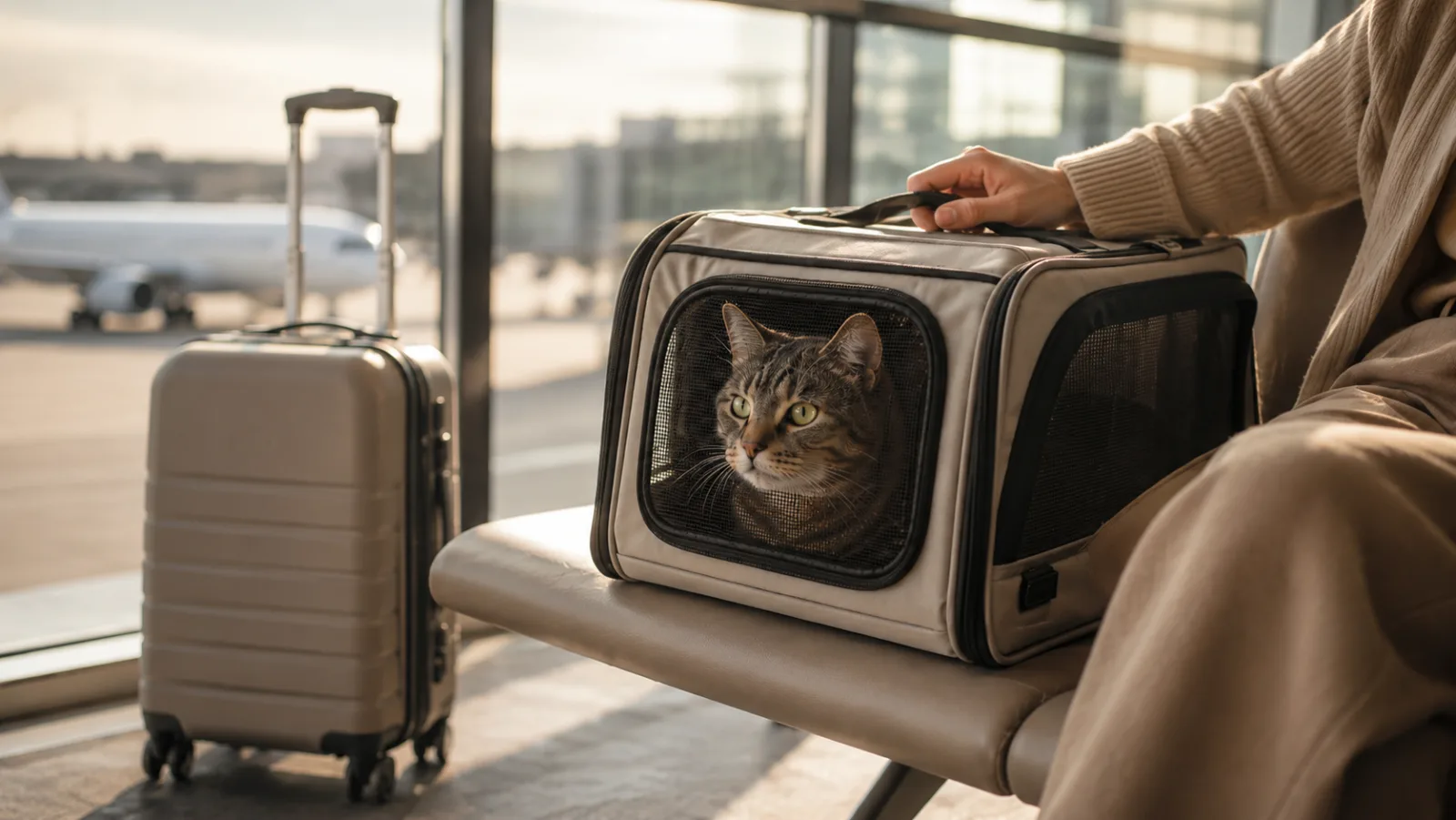
Evidence at a Glance
Sleepypod Air
Top-scoring pick — the only in-cabin carrier that doubles as a Center for Pet Safety-certified in-car restraint and uses four-sided mesh for IATA-style ventilation.
Sources: Sleepypod manufacturer documentation, Center for Pet Safety records, IATA ventilation guidance
Verified Jul 10, 2026
Sherpa Original Deluxe
Value default with Sherpa's Guaranteed On Board program and a spring-wire frame designed to compress under most seats.
Sources: Sherpa manufacturer documentation, FAA Flying with Pets guidance, IATA Traveler's Pet Corner
Verified Jul 10, 2026
SturdiBag Pro 2.0
Flex-height design that compresses under tighter aircraft seats — useful when under-seat dimensions vary between connecting flights.
Sources: Sturdi Products manufacturer documentation, FAA cabin stowage guidance
Verified Jul 10, 2026
Our Picks
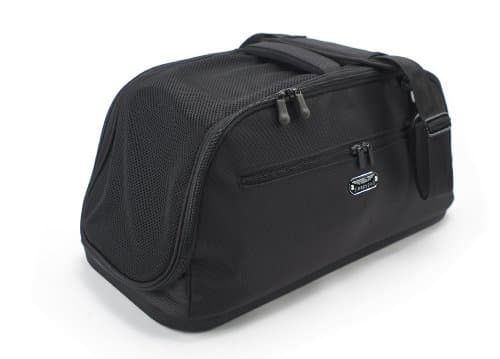
Sleepypod
Sleepypod Air
9.4 / 10
- Compresses for under-seat restrictions while maintaining four-sided mesh ventilation
- Sleepypod's PPRS Handilock system makes it Center for Pet Safety-certified for in-car use
- Hard-shell base resists deformation under typical seat compression
- Designed by a specialist pet-travel brand rather than a generic luggage company
$199.99
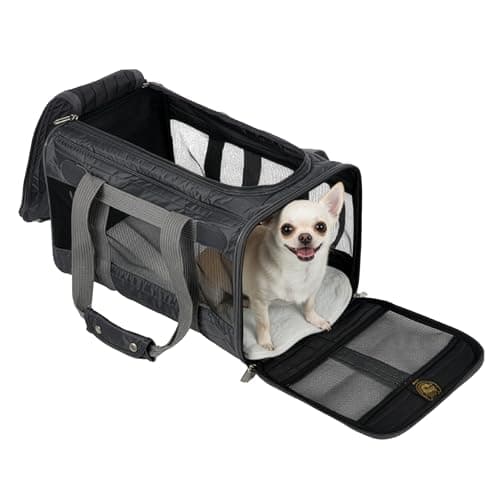
Sherpa
Sherpa Original Deluxe Travel Pet Carrier
9.2 / 10
- Spring-wire frame compresses to fit most under-seat spaces
- Sherpa's Guaranteed On Board program covers ticket cost if a customer is denied boarding due to carrier size on a participating airline
- Mesh on multiple sides for IATA-style ventilation
- Mass-market price point relative to premium alternatives
$67.92
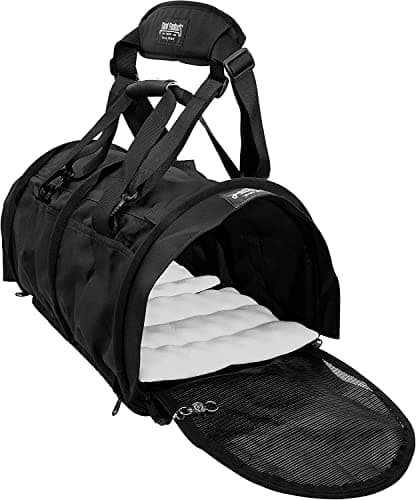
Sturdi Products
SturdiBag Pro 2.0 (Divided XL)
8.8 / 10
- Flex-height design compresses without crushing the pet
- Sturdi says Pro 2.0 is compliant on most major airlines except XL and XXL sizes
- Mesh panels and seat-belt straps integrated into the carrier body
- Divided variant available for two small pets in one bag
$143.99
Last Amazon read 2026-09-08
Petmate
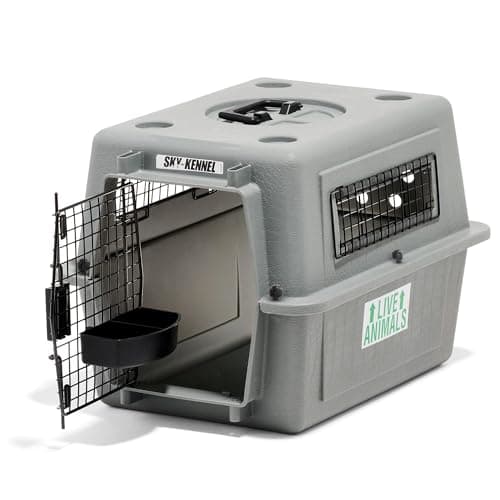
Petmate Sky Kennel (Small)
8.6 / 10
- Hard-sided kennel for IATA-compliant cargo travel
- Plastic shell with metal-door construction
- Ventilation slots on multiple sides
- Long-running airline-cargo default for small-breed dogs and cats
$40.06
Mr. Peanut's
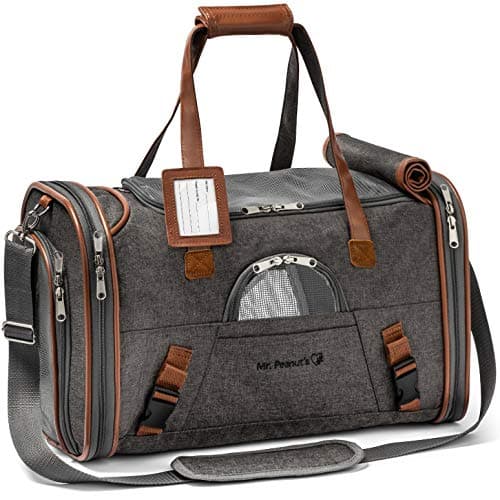
Mr. Peanut's Airline Approved Soft Sided Pet Carrier
7.8 / 10
- Soft-sided construction with under-seat-focused dimensions
- Self-locking zippers — a real anti-escape feature on under-seat carriers
- Plywood reinforced base resists sagging when wedged under seats
- Plush fleece bedding included
$109.00
The Short Answer
There is no carrier that is universally 'airline approved' — the FAA defers to each airline, TSA controls the checkpoint, and IATA sets the international ventilation, movement, and leak-proof standards layered on top. The Sleepypod Air is the top-scoring pick on the PetPal Gear Score because it is the only carrier in the category that doubles as a Center for Pet Safety-certified in-car restraint between the home and the airport while maintaining four-sided mesh ventilation under seat compression. The Sherpa Original Deluxe is the value default — it ships with Sherpa's Guaranteed On Board program, the only manufacturer-backed denied-boarding fallback in the category, and a spring-wire frame designed to compress under most seats, which is also what makes it the safer bet on a connecting itinerary where the under-seat dimension changes between aircraft. For IATA-compliant cargo travel, the Petmate Sky Kennel is the long-running default. Always check the specific airline's pet policy and the specific flight's aircraft before flying.
Every product on this list has been scored against the PetPal Gear Score, a weighted composite of expert consensus, observed effectiveness, animal safety, long-term durability, and value. Review method: Editorial synthesis of FAA Flying with Pets guidance, TSA Small Pets screening procedures, IATA Live Animals Regulations and Traveler's Pet Corner, AAFP cat-friendly handling guidelines, Fear Free acclimation principles, AAHA and AVMA travel brochures, Center for Pet Safety carrier certification records, and manufacturer documentation — no first-hand carrier testing or airline travel testing.. Synthesized from 11+ expert sources.
For most U.S. travelers, "airline approved" is shorthand for a much messier reality. The Federal Aviation Administration's Flying with Pets guidance is explicit: airlines decide whether pets can travel in-cabin, and any accepted carrier must fit under the seat and remain properly stowed during taxi, takeoff, and landing. The Transportation Security Administration controls the checkpoint, and TSA's Small Pets procedure requires the owner to remove the pet from the carrier — the pet itself does not go through the x-ray. The International Air Transport Association sets container standards layered on top: enough room for the animal to stand, turn, and lie down naturally, adequate ventilation, leak-proof construction, and an explicit caution that soft-sided carriers can lose ventilation if compressed under the seat. IATA also explicitly advises against routine sedation, a position the FDA, AVMA, and Merck Veterinary Manual all share.
What that means for buying is simple. No carrier is universally approved. Sherpa's Guaranteed On Board program is the only manufacturer-backed denied-boarding fallback PetPalHQ has been able to verify in this category. The Sleepypod Air carries a third-party in-car restraint certification from the Center for Pet Safety. Everything else — including marketing copy that says "airline approved" — is a starting point, not a guarantee.
The picks below are editorial synthesis. PetPalHQ does not run a carrier-testing lab and does not test airline acceptance directly — every product on this page was selected by reviewing FAA, TSA, and IATA guidance, AAFP cat-friendly handling guidelines, Fear Free acclimation principles, AAHA and AVMA travel brochures, Center for Pet Safety records, manufacturer documentation, and hobbyist consensus on r/CatAdvice and r/dogs.
This guide is the buying-side companion to the Pet Home Systems, Cleanup, and Travel hub. The hub explains the regulatory and welfare context for pet travel; this article covers what to buy.
What does the pre-trip checklist cover for cat-friendly handling and Fear Free acclimation?
The AAFP cat-friendly handling guidelines and Fear Free acclimation principles converge on the same posture: the carrier should be a familiar object long before travel day, not a once-a-year stress trigger. The checklist below walks through the five-stage acclimation window — from leaving the carrier out weeks before travel to confirming TSA's checkpoint procedure on the day of the flight.
- Two to three weeks before travel: Leave the carrier out at home with the door open. Add familiar bedding, treats inside the bag, and the cat or small dog's regular toys. AAFP guidance frames the carrier as part of the home environment, not a vet-trip object.
- One to two weeks before travel: Practice short loaded trips — the cat or dog goes in the carrier, you carry it around the house or yard, you put it back down, and the pet exits on its own. Fear Free's carrier acclimation guidance treats this as repeated low-stress exposure.
- One week before travel: Confirm the airline's specific pet policy for your aircraft (not just the route — different aircraft on the same route can have different under-seat dimensions). Confirm TSA's Small Pets checkpoint procedure: the pet comes out at security, the carrier goes through the x-ray, the pet does not.
- 48 hours before travel: Verify the cat or dog is healthy enough to fly. AVMA and AAHA both recommend a pre-trip vet visit if there is any doubt; Merck's Traveling by Air With Pets entry adds that respiratory issues, recent surgery, or stress-related conditions can be contraindications.
- Day of travel: Do not sedate without explicit veterinary guidance. IATA, the FDA, and AVMA all advise against routine pre-trip sedation. Withhold food two to three hours before the flight per Cornell College of Veterinary Medicine's travel guidance, but provide water access until shortly before checkpoint.
What is the road-safety upgrade past an airline carrier?
This guide's ceiling is the $199.99 Sleepypod Air, and its Center for Pet Safety certification is the bridge to the next tier: in-cabin gear is compression-first, in-car gear is restraint-first, and a household that drives more than it flies eventually needs equipment built for the second job. The entry point is a certified harness. The Sleepypod Clickit Sport Plus ($120.74 at our latest check) states its job in the listing title itself — "Crash-Tested and Safety Certified Car Seat Belt Harness" — and it holds the top CPS-certified slot in our crash-tested dog car harnesses guide, which is where the ad-hoc seat-belt-routing problem the CPS advisory flags gets a real answer.
For larger dogs and frequent highway miles, the tier above is a vehicle crate. The Rock Creek Crates Collapsible Aluminum Crate ($690.00 at our latest check) is the best-overall pick in our crash-tested travel dog crates roundup — welded aircraft-grade aluminum at about 33 pounds in the 30-inch size, a 10-year warranty, and a listing that rates it for indoor and vehicle use. Carry the roundup's own caveat with the recommendation, because it is load-bearing: Rock Creek states plainly that the collapsible model has not been crash tested — the brand's CPS 5-Star credential belongs to its non-folding stationary line — so it earns its rank on travel practicality, and buyers who specifically need an independent crash certificate should follow the roundup to its certified alternatives.
Price the tier honestly before committing. The certified-harness entry runs near $121, and the roundup's aluminum vehicle crates reach $690.00 for the Rock Creek at our latest check — more than triple this guide's most expensive carrier. The Impact Collapsible we previously priced alongside it came back out of stock on Amazon when we re-checked on August 21, 2026, so we are not pricing or linking it here until it returns. That gap buys a different job, not a better carrier — none of it replaces the acclimation work above, and the certification question is answered model by model, never brand by brand.
The Rest of the Travel Kit
A carrier is one piece of a travelling household's setup, and the drive to the airport is the part that carries the crash risk. Our travel setup guide for dog owners orders the whole kit — restraints, carriers, and crates — by how much checkable crash evidence stands behind each one, and it names which products sit on the Center for Pet Safety's published certified register and which do not.
Head-to-Head Comparison
| Feature | Sleepypod Air | Sherpa Original Deluxe Travel Pet Carrier | SturdiBag Pro 2.0 (Divided XL) | Petmate Sky Kennel (Small) | Mr. Peanut's Airline Approved Soft Sided Pet Carrier |
|---|---|---|---|---|---|
| Travel mode | In-cabin + in-car | In-cabin | In-cabin (flex height) | Cargo (IATA) | In-cabin |
| Independent certification | CPS-certified for in-car use | Sherpa Guaranteed On Board program | Manufacturer airline-compliance claim | IATA-style cargo standards | Manufacturer airline-compliance claim |
| Best for | Frequent travelers, dual-use | First-time fliers | Connecting flights | Cargo-only travel | Budget in-cabin |
| Pet weight rating | Up to ~17.5 lb | Up to ~16 lb | Up to ~22 lb (XL) | Up to ~15 lb (small) | Up to ~15 lb |
| Check price | Amazon | Amazon | Amazon | Amazon | Amazon |
$199.99
- Compresses for under-seat restrictions while maintaining four-sided mesh ventilation
- Sleepypod's PPRS Handilock system makes it Center for Pet Safety-certified for in-car use
- Hard-shell base resists deformation under typical seat compression
- Designed by a specialist pet-travel brand rather than a generic luggage company
The Sleepypod Air is the top-scoring carrier in this guide because it solves a tension the rest of this category ignores: the carrier has to survive the drive to the airport, the airport itself, the under-seat compression of the flight, and the drive from the destination airport. Most "airline approved" carriers cover only the middle two and treat the in-car portion as someone else's problem.
Sleepypod says the Air compresses for under-seat restrictions and maintains four-sided mesh ventilation through the compression, which addresses the IATA Live Animals Regulations standard for ventilation and the IATA caution that soft-sided carriers can lose airflow when wedged under a seat. Separately, Sleepypod's PPRS Handilock seat-belt restraint system makes the Air a Center for Pet Safety-certified in-car restraint — the same certification logic discussed in the crash-tested harness guide.
What the spec sheet does not tell you: even the Sleepypod Air is not universally airline-approved. FAA defers to airlines, TSA controls the checkpoint, and IATA's container standards apply differently in different jurisdictions. The Sleepypod Air's external dimensions are not magic — they still must fit under the specific aircraft's seat, and reduced-fit aircraft on regional connectors have rejected carriers that worked fine on mainline aircraft. r/CatAdvice's plane-approved carrier threads include accounts of premium bags being rejected on regional turboprops where the under-seat dimension is smaller than published.
Where the Sleepypod Air is the right answer: traveling cats and small dogs, owners who already drive to and from the airport with the same animal regularly, and households that do not want to maintain separate "for the car" and "for the plane" carriers. The premium price reflects the dual-use engineering, not Sherpa-style program coverage.
What We Love
- Center for Pet Safety-certified for in-car use via PPRS Handilock
- Four-sided mesh maintains ventilation during seat compression
- Hard-shell base resists deformation more than fabric-only alternatives
- Specialist pet-travel construction rather than repurposed luggage
What Could Be Better
- Premium price relative to mainstream carriers
- No manufacturer-backed denied-boarding program like Sherpa's Guaranteed On Board
- External dimensions still must fit the specific aircraft's under-seat space
The Verdict
Buy this if you want a single carrier that handles in-car restraint, airport handling, and in-cabin compression. The CPS certification is the differentiator that separates it from every other premium soft-sided carrier on Amazon — and the reason it carries the highest PetPal Gear Score in this guide.
$67.92
- Spring-wire frame compresses to fit most under-seat spaces
- Sherpa's Guaranteed On Board program covers ticket cost if a customer is denied boarding due to carrier size on a participating airline
- Mesh on multiple sides for IATA-style ventilation
- Mass-market price point relative to premium alternatives
The Sherpa Original Deluxe is the value default for in-cabin pet travel because it does the unglamorous job no other carrier in this category does as cleanly: it provides the buyer a real fallback if the bag is rejected at the gate. Sherpa's Guaranteed On Board program is the public commitment — Sherpa says it will reimburse a participating customer's ticket if the carrier causes a denied boarding on a participating airline. That does not mean the carrier is universally accepted, because no carrier is, but it changes the risk model relative to a generic "airline approved" bag from a faceless Amazon brand.
The construction matters too. The spring-wire frame is designed to compress when the bag is wedged under a seat. That addresses the IATA caution that soft-sided carriers can lose ventilation when the structure flexes too much. Multiple mesh panels keep airflow up while the bag is compressed. That is the same standard IATA's Live Animals Regulations describe in container-ventilation language.
What the spec sheet does not tell you: "airline approved" is shorthand, not a universal stamp. The FAA's Flying with Pets page explicitly defers to each airline, and the airline's pet policy can change between booking and travel. TSA further requires the pet to come out of the carrier at the checkpoint, and the pet itself must not go through the x-ray. Hobbyist threads on r/CatAdvice repeatedly surface this gap. Owners who buy a bag tagged "airline approved" sometimes discover the under-seat dimension on their specific aircraft is smaller than the bag's external footprint. Check the airline's published under-seat dimensions for the actual aircraft, not the route.
The Sherpa Original Deluxe earns inclusion because it is the cheapest carrier on this list with a real manufacturer-backed denied-boarding fallback, and the spring-wire frame plus multi-side mesh design actually addresses the IATA-cited compression and ventilation problems instead of ignoring them.
What We Love
- Sherpa's Guaranteed On Board program is the only manufacturer-backed denied-boarding fallback in this category
- Spring-wire frame compresses without collapsing ventilation
- Multi-side mesh aligns with IATA's ventilation expectations
- Most accessible price point on this list
What Could Be Better
- Guaranteed On Board only applies to participating airlines and participating customers — read the program terms
- Sizing must still be matched to the specific aircraft's under-seat dimension
- Soft-sided construction is not a crash-rated in-car restraint — pair with a separate harness or carrier for the drive to the airport
The Verdict
If the Sleepypod Air's premium price is out of reach, this is the value default. The Guaranteed On Board program is the only manufacturer-backed denied-boarding fallback in the category, and the frame and ventilation choices align with what IATA actually says about compression and airflow.
$143.99
Last Amazon read 2026-09-08
- Flex-height design compresses without crushing the pet
- Sturdi says Pro 2.0 is compliant on most major airlines except XL and XXL sizes
- Mesh panels and seat-belt straps integrated into the carrier body
- Divided variant available for two small pets in one bag
The SturdiBag Pro 2.0 is the editorial answer for the connecting-flight problem: under-seat dimensions vary between aircraft on the same airline, and a rigid-frame bag that fits one leg of an itinerary can be rejected on the next. Sturdi's flex-height construction is the design response — the top of the bag compresses without collapsing the structure or losing the pet's ability to stand, turn, and lie down, which is the IATA Live Animals Regulations container-movement standard.
Sturdi says the Pro 2.0 is compliant on most major airlines, with the explicit caveat that the XL and XXL sizes are not universally approved. That caveat matters more than the marketing claim — the standard sizes are where the airline-acceptance density is, and the larger sizes drift into territory where airline-by-airline rules diverge.
What the spec sheet does not tell you: the divided XL variant linked here is the two-pet configuration, sized at 20" x 16" x 12". That is on the upper edge of in-cabin acceptance for many airlines, and it is the sort of bag that needs to be matched to the specific aircraft, not just the airline. For a single-pet itinerary, the standard SturdiBag Large (around 18" x 12" x 12") is closer to the universal under-seat dimension, and the smaller sizes scale down from there. r/CatAdvice's airline-carrier threads consistently note that owners flying connecting routes — especially routes with regional connectors — get the most value from flex-height bags because rigid frames are the most likely to be rejected on aircraft with smaller under-seat clearance.
The seat-belt straps integrated into the carrier body are the bonus feature: they let the carrier function as a basic in-car restraint between airport and home, even though SturdiBag does not claim CPS certification.
What We Love
- Flex-height design adapts to varying under-seat dimensions
- Compliant on most major airlines in standard sizes
- Integrated seat-belt straps support basic in-car use
- Divided variant available for two small pets in one bag
What Could Be Better
- XL and XXL sizes are not universally airline-approved
- No CPS certification for in-car restraint
- Divided XL is on the upper edge of in-cabin acceptance — match to the aircraft
The Verdict
Buy this for connecting flights or itineraries where the aircraft varies between legs. Flex-height construction is the right design for variable under-seat dimensions; the trade-off is that XL and XXL sizes need extra airline-acceptance research.
$40.06
- Hard-sided kennel for IATA-compliant cargo travel
- Plastic shell with metal-door construction
- Ventilation slots on multiple sides
- Long-running airline-cargo default for small-breed dogs and cats
The Petmate Sky Kennel is the long-running default for IATA-compliant cargo travel. It is not an in-cabin carrier — it is a hard-sided airline kennel for pets traveling as checked baggage or air cargo, and it is included on this list because the FAA, TSA, and IATA framework draws a sharp line between in-cabin and cargo travel that mainstream guides routinely blur.
IATA's Live Animals Regulations define container standards for ventilation, leak-proof construction, and minimum movement space — the pet must be able to stand, turn, and lie down naturally. Hard-sided kennels like the Sky Kennel are the most common containers airlines actually accept for cargo travel. Petmate's documentation aligns the Sky Kennel with these standards, and the small size is appropriate for dogs and cats up to roughly 15 lb.
What the spec sheet does not tell you: cargo travel for pets is increasingly restricted on U.S. carriers. The AVMA, AAHA, Merck Veterinary Manual, and Cornell University College of Veterinary Medicine all caution that cargo travel introduces stress and temperature-exposure risks that in-cabin travel avoids. CDC and USDA APHIS rules apply on top of airline policy for international and interstate travel. The Sky Kennel earns inclusion not because cargo travel is the recommendation — it is rarely the first choice. But when cargo is the only option, an IATA-compliant kennel is the right tool. Generic plastic crates marketed as "airline approved" sometimes fail at the cargo counter for missing live-animal labels or door-locking specifications.
The Sky Kennel is also the right answer for very-small-dog domestic cargo travel on airlines that no longer accept in-cabin pets at all, and for any traveler whose pet exceeds the in-cabin weight or size limit. Always book the cargo travel through the airline's pet-travel desk, not the standard reservations line, and verify the kennel size against the airline's published cargo specifications before the day of travel.
One thing to check before you order, because it changes what you are actually buying: at our August 23, 2026 check, the only offer on this listing was a used unit sold by Amazon Resale at $37.66 — there was no new-condition offer on the page. A returned or open-box kennel is not automatically unfit for cargo, but a cargo kennel is a containment device, and the parts that matter are the ones handling damages first. Inspect the door latch and its interlocks, the perimeter bolts, and the shell for cracks the moment it arrives, and confirm the live-animal stickers and water cup are still in the box — airlines turn kennels away at the cargo counter for exactly those missing pieces. If the listing has no new-condition offer when you look and the flight is close, buying the same Sky Kennel size new from a pet retailer is the lower-risk path.
What We Love
- Long-running IATA-style cargo kennel with broad airline acceptance
- Hard-sided construction prevents crushing during cargo handling
- Affordable price point for a category that costs hundreds at higher tiers
- Multiple ventilation slots align with IATA airflow standards
What Could Be Better
- Cargo travel is the wrong choice for most pets when in-cabin is available
- AVMA, AAHA, and Merck caution about cargo stress and temperature risk
- Airline cargo policies vary widely — confirm with the pet-travel desk
- Listed used-only at our August 23, 2026 check — inspect latch, bolts, and shell on arrival
The Verdict
Buy this only if cargo travel is unavoidable — the pet exceeds in-cabin limits, or the only flight option is on a carrier that no longer accepts in-cabin pets. For most travelers, the in-cabin picks above are the safer and lower-stress answer.
$109.00
- Soft-sided construction with under-seat-focused dimensions
- Self-locking zippers — a real anti-escape feature on under-seat carriers
- Plywood reinforced base resists sagging when wedged under seats
- Plush fleece bedding included
The Mr. Peanut's Airline Approved Soft Sided Pet Carrier is the budget-conscious in-cabin option for owners who do not need Sherpa's Guaranteed On Board program or Sleepypod's CPS certification but do want construction that addresses real under-seat compression. The under-seat-focused dimensions and reinforced plywood base are the key differentiators from generic Amazon carriers — without a stiff base, soft-sided bags compress in ways that can pin the pet, exactly the IATA-cited concern about ventilation loss under seats.
The self-locking zipper claim is meaningful here. Cat owners on r/CatAdvice's airline-carrier threads consistently warn that zipper-escape incidents at airports are surprisingly common, and the AAFP cat-friendly handling guidelines treat carrier security as a basic welfare issue. A locking zipper does not replace owner attention, but it removes one of the more common failure modes.
What the spec sheet does not tell you: "airline approved" on the product title is the marketing claim, not the universal stamp. Like the rest of this category, Mr. Peanut's carrier acceptance is airline-specific and aircraft-specific. The carrier does not have a Sherpa-style denied-boarding program, and it does not have CPS certification for in-car use. Where it earns inclusion: shoppers who specifically want under-seat-focused construction at a sub-$120 price, who are willing to do the airline-policy homework themselves, and who do not need a dual-use car-and-cabin carrier.
The plush bedding is genuinely useful for cat owners following Fear Free acclimation principles, where the carrier should be associated with rest and safety long before the day of travel.
What We Love
- Reinforced base resists under-seat compression
- Self-locking zippers reduce airport escape risk
- Lower price than premium options
- Bedding supports Fear Free acclimation
What Could Be Better
- No Sherpa-style denied-boarding program
- No CPS certification for in-car use
- Airline acceptance is generic-marketing-claim level, not program-backed
The Verdict
Buy this if you want under-seat-focused construction at a budget-tier price and you are comfortable doing the airline-policy research yourself. For travelers who want a manufacturer-backed fallback, step up to the Sherpa Original Deluxe.
How We Score
Formula
PetPal Gear Score = (Regulatory and Airline Compliance Evidence × 0.30) + (Airline Construction Compliance × 0.25) + (Maker's Compliance Backing × 0.20) + (Carrier Sizing for Cabin Fit × 0.15) + (Welfare and Acclimation Fit × 0.10)
Score Factors
- Regulatory and Airline Compliance Evidence · 30%
- How well the carrier aligns with FAA Flying with Pets guidance, TSA Small Pets screening procedures, and IATA Live Animals Regulations container standards. The PetPal Gear Score is a composite of regulatory frameworks, manufacturer documentation, and welfare guidance — PetPalHQ does not run a carrier-testing lab and does not test airline acceptance directly.
- Airline Construction Compliance · 25%
- Whether the carrier's frame, ventilation, and leak-proof construction align with IATA's container standards on stand-turn-lie movement space and ventilation under compression.
- Maker's Compliance Backing · 20%
- Whether the manufacturer offers a denied-boarding program (Sherpa) or independent certification (Sleepypod via CPS) that gives the buyer a real fallback if the carrier is rejected at the gate or recall in-car safety.
- Carrier Sizing for Cabin Fit · 15%
- How clearly the manufacturer publishes sizing guidance and how well the buying guide can match a specific bag size to a specific aircraft's under-seat dimension.
- Welfare and Acclimation Fit · 10%
- Whether the carrier supports AAFP cat-friendly handling guidelines and Fear Free acclimation principles — features like top-loading, soft bedding, and stress-reducing design.
| Rank | Product | Score |
|---|---|---|
| #1 | Sleepypod Sleepypod Air | 9.4 |
| #2 | Sherpa Sherpa Original Deluxe Travel Pet Carrier | 9.2 |
| #3 | Sturdi Products SturdiBag Pro 2.0 (Divided XL) | 8.8 |
| #4 | Petmate Petmate Sky Kennel (Small) | 8.6 |
| #5 | Mr. Peanut's Mr. Peanut's Airline Approved Soft Sided Pet Carrier | 7.8 |
When NOT to Buy
Skip any carrier marketed as "universally airline approved" without a manufacturer-backed program or independent certification. There is no such thing. FAA defers to each airline, TSA controls the checkpoint, and IATA standards apply differently across jurisdictions. "Airline approved" is shorthand at best and marketing copy at worst.
Skip soft-sided carriers without a frame or reinforced base if you are flying on aircraft with tight under-seat clearance. IATA cautions that soft-sided bags can lose ventilation when compressed, and a frameless bag is the most likely to fail that test.
Skip cargo travel entirely if in-cabin is an option. AVMA, AAHA, Merck Veterinary Manual, and Cornell College of Veterinary Medicine all flag cargo stress and temperature exposure as real welfare risks. Skip the Petmate Sky Kennel if you do not specifically need cargo travel. It is the right tool for the wrong situation if you have any in-cabin option.
Skip the temptation to sedate a pet for travel without explicit veterinary guidance. IATA explicitly advises against routine sedation. The FDA and AVMA agree. The Merck Veterinary Manual frames any pre-trip medication as a veterinarian-guided decision.
For dogs
For dogs, in-cabin pet travel is functionally a small-dog phenomenon. The FAA's Flying with Pets guidance defers to each airline. U.S. carriers consistently restrict in-cabin pet travel to dogs whose carrier — pet plus bag — fits under the seat in front of the passenger. The AKC's air-travel resources put the practical ceiling around 15 to 20 lb depending on aircraft. The under-seat dimension is the real constraint. The Sherpa Original Deluxe Travel Pet Carrier is the value default because Sherpa's Guaranteed On Board program is the only manufacturer-backed denied-boarding fallback in the category. The spring-wire frame compresses under tighter seats without collapsing ventilation, which also makes it the more forgiving choice on a connecting itinerary where the under-seat dimension changes between aircraft.
For dogs that exceed in-cabin limits, the travel mode changes from cabin to cargo — and the welfare risk profile changes with it. The AVMA's Traveling With Your Pet brochure, AAHA's travel guidance, the Merck Veterinary Manual, and Cornell University College of Veterinary Medicine all flag cargo travel as a higher-stress, higher-risk option than in-cabin. Temperature exposure and handling stress are the load-bearing concerns. The Petmate Sky Kennel (Small) is the long-running IATA-style cargo default for small-breed dogs whose owners cannot avoid checked-baggage transport. The editorial recommendation is to pursue ground travel, in-cabin booking on a different airline, or a different itinerary before booking cargo.
The Center for Pet Safety's crash-test certification program is the relevant frame for the drive to and from the airport. The Sleepypod Air, secured by Sleepypod's PPRS Handilock seat-belt system, holds documented CPS certification: CPS crash-tested it in January 2025 with an 18 lb test dog and it passed with a four-star rating. That is a meaningful differentiator for dogs whose owners drive the same animal regularly between home and airport. Sedation is the other dog-specific landmine. IATA, the FDA, and the AVMA all advise against routine pre-trip sedation. The Merck Veterinary Manual frames any pre-trip medication as a veterinarian-guided decision. Sedation can affect a dog's ability to maintain body temperature and regulate breathing in pressurized cabins.
For cats
For cats, the carrier is fundamentally a welfare object before it is a travel object. The AAFP and the International Society of Feline Medicine's Cat-Friendly Handling Guidelines treat the carrier as part of the home environment — a familiar resting place left out year-round, scented with the cat's bedding, and associated with rest and treats rather than vet visits. AAFP/ISFM transport-stress framing notes that cats experience significantly elevated cortisol and behavioral stress when loaded into an unfamiliar carrier on travel day. That is why the pre-trip checklist weights acclimation as heavily as carrier choice.
The product implications differ from the dog section in three ways. First, the Sleepypod Air earns particular weight for cats. The same carrier handles the drive to the airport, the airport itself, and the in-cabin compression. That minimizes the number of carrier transitions a cat experiences in a single trip. Second, IATA's Live Animals Regulations and Traveler's Pet Corner emphasize stand-turn-lie movement space and ventilation. Cats are more likely to attempt to reposition under stress than similarly-sized dogs. They are also more likely to overheat or hyperventilate when ventilation is compromised. The four-sided mesh of the Sleepypod Air and the multi-side mesh of the Sherpa Original Deluxe are both editorial fits for those reasons.
Third, the TSA Small Pets checkpoint procedure is the riskiest single moment for cat travel. TSA requires the owner to remove the pet from the carrier. The empty carrier goes through the x-ray, and the cat does not. AAFP cat-friendly handling guidelines emphasize harness or leash training before travel day for exactly this moment. A frightened cat released into a busy security checkpoint is a real escape risk. The escape-proof locking zippers on the Sherpa Original Deluxe are a meaningful welfare feature for the same reason. Zipper-escape incidents at airports are surprisingly common, and a locking zipper removes one of the more common failure modes.
For cargo travel, the editorial line for cats is even firmer than for dogs. AAFP/ISFM transport-stress documentation, AAHA's travel guidance, and the Merck Veterinary Manual all treat cargo as a last-resort option for cats. Temperature exposure plus prolonged owner separation creates a stress profile most cats handle poorly. For almost every feline traveler, in-cabin booking on a cat-friendly airline is the right call.
Frequently Asked Questions
- What does "airline approved" actually mean?
- It is shorthand, not a universal stamp. The FAA's Flying with Pets page explicitly defers to each airline. TSA's Small Pets procedure controls the checkpoint. IATA's Live Animals Regulations apply differently across jurisdictions. A carrier marketed as "airline approved" may be accepted on most U.S. mainline carriers and rejected on regional connectors with smaller under-seat dimensions. It may also be accepted in the U.S. and rejected on international flights with stricter IATA enforcement. Always verify the specific airline's pet policy and the specific aircraft's under-seat dimension.
- Does my pet go through the TSA x-ray?
- No. TSA's Small Pets procedure requires the owner to remove the pet from the carrier and walk the pet through the metal detector or to be screened by a TSA officer. The pet itself does not go through the x-ray machine. The empty carrier goes through the x-ray. This is the moment most likely to produce a runaway pet at the airport, which is why AAFP cat-friendly handling and Fear Free acclimation principles emphasize harness or leash training before the trip.
- Should I sedate my pet for the flight?
- Not without explicit veterinary guidance. IATA's pet-travel guidance explicitly advises against routine sedation. The FDA's Travel Training for You and Your Pets material agrees. The AVMA travel brochure and Merck Veterinary Manual frame any pre-trip medication as a veterinarian-guided decision. Sedation can affect the pet's ability to maintain body temperature and regulate breathing in pressurized aircraft conditions. That is exactly why the regulatory consensus is against it.
- Can I use one carrier for both the car and the cabin?
- Sometimes, with one specific product. The Sleepypod Air is designed for in-cabin compression and is Center for Pet Safety-certified for in-car restraint via Sleepypod's PPRS Handilock seat-belt system. Other soft-sided carriers can be wedged onto a back seat with a routed seat belt. That is not the same thing as an independently certified restraint. The Center for Pet Safety's published advisory on extension tethers makes the case that ad-hoc seat-belt routing through a soft carrier is not a real crash-protection plan. The companion guide on crash-tested dog car harnesses and travel crates covers in-car safety in detail.
- What if my dog is too big for in-cabin travel?
- The travel mode changes from in-cabin to cargo, and the rules change with it. Most U.S. airlines have tightened cargo pet travel substantially. AVMA, AAHA, Merck Veterinary Manual, and Cornell College of Veterinary Medicine all flag cargo travel as a higher-stress, higher-risk option than in-cabin. If cargo is unavoidable, the Petmate Sky Kennel is the long-running IATA-style default. The booking should go through the airline's pet-travel desk rather than the standard reservations line. Verify the kennel size against the airline's published cargo specifications. Confirm CDC and USDA APHIS requirements for any interstate or international travel. Double-check temperature embargoes — many airlines refuse to load pets in cargo when ground temperatures exceed published thresholds.
- Do I need a crash-tested crate if I already have an airline carrier?
- If the dog rides in your car regularly, treat them as two different purchases for two different jobs. A soft under-seat carrier is engineered to compress and fit — it is not an in-car restraint, and routing a seat belt through one is exactly the ad-hoc arrangement the Center for Pet Safety advisory warns against. The certified in-car options are a CPS-certified harness, which starts around $121, or a dedicated vehicle crate, where the aluminum models in our roundup — the Impact Collapsible and the Rock Creek — run $648 and $690 respectively. One warning transfers across all of it: certification attaches to a specific model, not a brand — a manufacturer can hold a 5-Star rating on one kennel while a different model in the same catalog, sometimes the more popular one, has never been crash tested. Check the certificate for the exact model and size before paying the premium.
- Is the SturdiBag Pro 2.0 still the current model, and are the other picks still in production?
- One of the three has moved. Checking the makers' own stores on August 17, 2026: Sturdi Products now leads with the SturdiBag Pro 3.0 at $170.00 and the Pro 3.0 Divided at $156.00, while the Pro 2.0 Divided is listed at $129.00 and marked sold out on Sturdi's own site. So the Pro 2.0 is a superseded generation being sold down rather than the current flagship, and if you are buying new from Sturdi directly, the 3.0 is what you will actually be offered. That does not retroactively break a Pro 2.0 you already own or find in stock elsewhere — the flex-height design that earns it a slot in this guide is the same idea the 3.0 carries forward — but it does mean a "Pro 2.0" listing at full price deserves a look at what the 3.0 costs before you commit. Sleepypod, by contrast, has not moved: the Sleepypod Air is still in production, and its product page states that it "has been independently crash-tested and certified with a top safety rating for pets weighing up to 18 pounds by the Center for Pet Safety," with the testing described as dynamic crash-testing against the U.S. child-restraint standards FMVSS 213 and 213b. Sleepypod does not publish a test speed alongside that certification, so treat any specific mph figure you see quoted elsewhere as marketing rather than a specification. Sherpa we could not settle: sherpapet.com would not serve its catalogue to us on August 17, 2026, so the current status of the Original Deluxe and of the Guaranteed On Board program is unconfirmed here rather than confirmed either way. As always, model status is the manufacturer's to change without notice, so the maker's own store is the address that settles it — not a marketplace listing, which can keep showing a discontinued generation for a long time after the maker has moved on.
Bottom Line
Get the Sleepypod Air if you want a single carrier that handles in-car restraint and in-cabin travel. The CPS certification is the differentiator — no other premium soft-sided carrier on Amazon has it, and it carries the highest PetPal Gear Score in this guide.
Get the Sherpa Original Deluxe if you want an in-cabin carrier with a manufacturer-backed denied-boarding fallback at a value price. The Guaranteed On Board program is the only such fallback in the category, and the spring-wire frame plus multi-side mesh align with IATA's compression and ventilation guidance.
Get the Petmate Sky Kennel only when cargo travel is unavoidable. It is the long-running IATA-style cargo default, but cargo travel is the wrong choice when in-cabin is available.
Sources & Methodology
Methodology
PetPal Gear Score = (Regulatory and Airline Compliance Evidence × 0.30) + (Airline Construction Compliance × 0.25) + (Maker's Compliance Backing × 0.20) + (Carrier Sizing for Cabin Fit × 0.15) + (Welfare and Acclimation Fit × 0.10)
Expert review sources
- Federal Aviation Administration — Flying with Pets; Cabin Safety – Pets FAQ (updated September 6, 2024)
- Transportation Security Administration — Small Pets screening procedures
- International Air Transport Association — Traveler's Pet Corner; Live Animals Regulations container requirements
- American Association of Feline Practitioners and International Society of Feline Medicine — Cat-Friendly Handling Guidelines
- Fear Free Pets — Carrier acclimation guidance
- Sturdi Products (manufacturer store, read 2026-08-17) — SturdiBag Pro 3.0 and Pro 3.0 Divided listed as current; Pro 2.0 Divided marked sold out
- Sleepypod (manufacturer product page, read 2026-08-17) — Sleepypod Air in production; independently crash-tested and certified with a top safety rating for pets up to 18 pounds by the Center for Pet Safety, tested against FMVSS 213 and 213b; no test speed published
- American Animal Hospital Association — Traveling Safely With Your Pet (updated November 2025)
- American Veterinary Medical Association — Traveling With Your Pet (2023 brochure)
- Merck Veterinary Manual — Traveling by Air With Pets
- Cornell University College of Veterinary Medicine — Travel With Your Dog guidance
- Center for Pet Safety — Crash-test certification program records (Sleepypod Air, Diggs Passenger)
- Sherpa — Original Deluxe product documentation and Guaranteed On Board program terms
- Sleepypod — Air product documentation and PPRS Handilock methodology
- Petmate — Sky Kennel airline cargo specifications
Community sources
- r/CatAdvice — plane-approved pet carrier discussions
- r/dogs — in-cabin and cargo travel threads
- Center for Pet Safety community advisories
Prices and specs verified May 5, 2026.
About the author
Nick Miles is the chief editor of PetPalHQ. The picks above are editorial synthesis of FAA, TSA, and IATA guidance, AAFP cat-friendly handling principles, Fear Free acclimation guidance, AAHA and AVMA travel brochures, Center for Pet Safety records, and manufacturer documentation — PetPalHQ does not run a carrier-testing lab and does not test airline acceptance directly. The PetPal Gear Score is a composite of regulatory and manufacturer evidence, not a measurement. Sources are cited by name throughout.
PetPalHQ is a participant in the Amazon Services LLC Associates Program. We may earn commissions from qualifying purchases — at no extra cost to you.
More Guides
Cats & Dogs
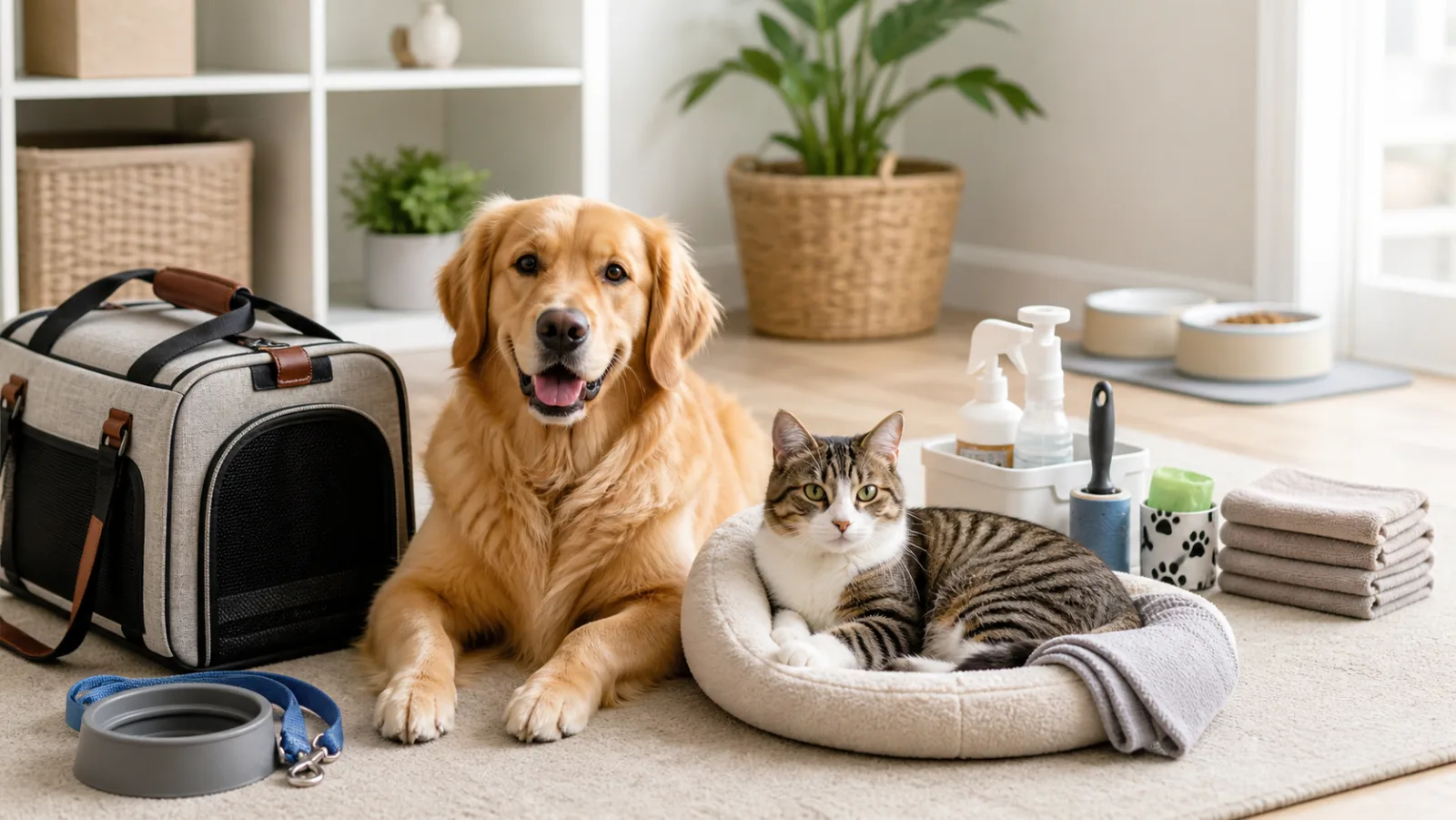
Pet Home Systems, Cleanup, and Travel Gear for Cats and Dogs (2026 Guide)
Cats & Dogs
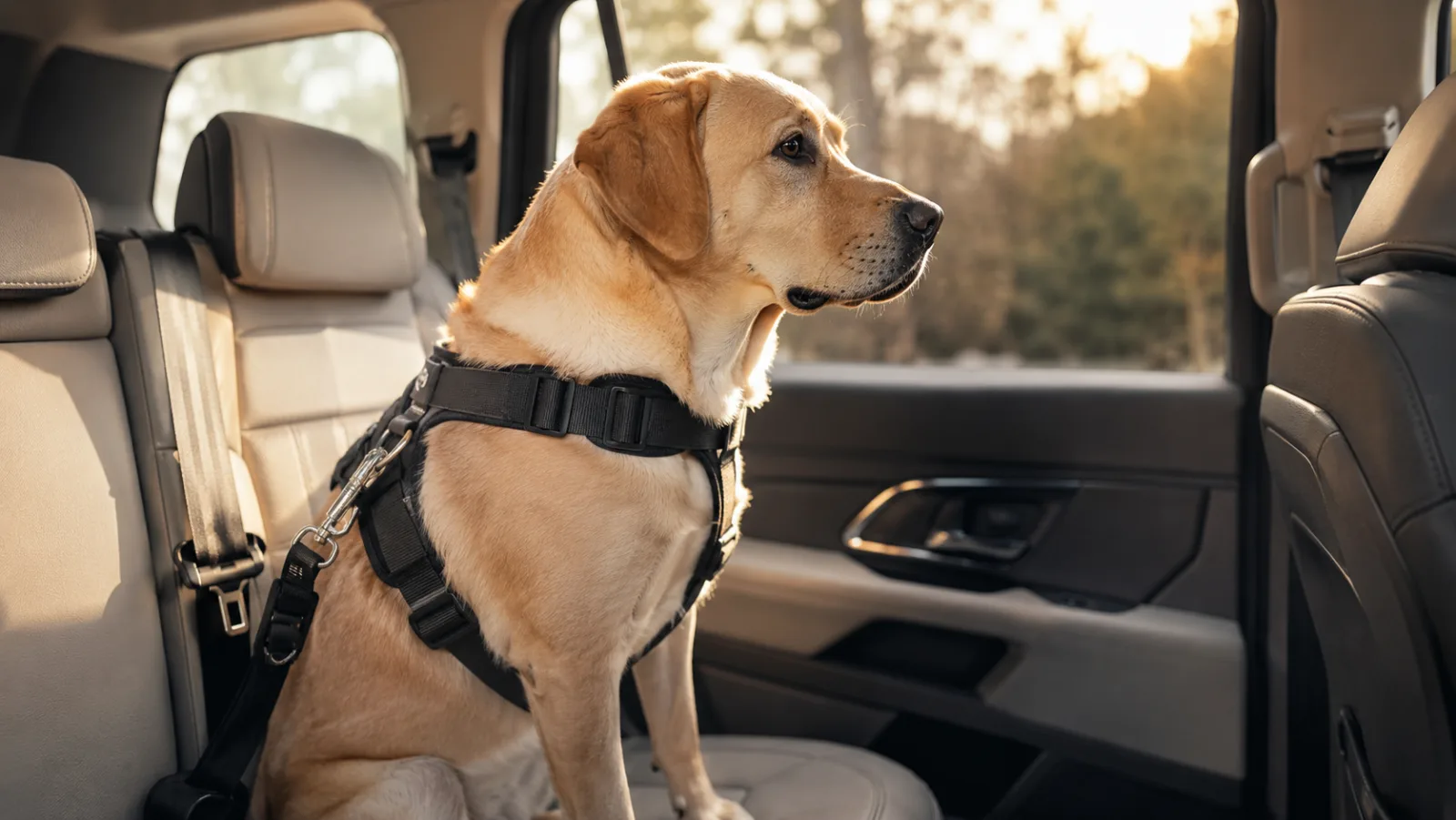
Best Crash-Tested Dog Car Harnesses and Carriers (2026)
Cats & Dogs
Best Crash-Tested Travel Dog Crates (2026)
Cats & Dogs
Best Father's Day Gifts for Pet Dads (2026)
Cats & Dogs
At-Home Pet Health Monitoring Tools (2026): Smart Scales, Activity Trackers, and Smart Litter for Senior Pets
Cats & Dogs
Best Automatic Pet Feeders for Busy Families (2026)
Cats & Dogs