Birds
How to Set Up an Outdoor Backyard Aviary: A Build Sequence for a Walk-In Flight (2026)
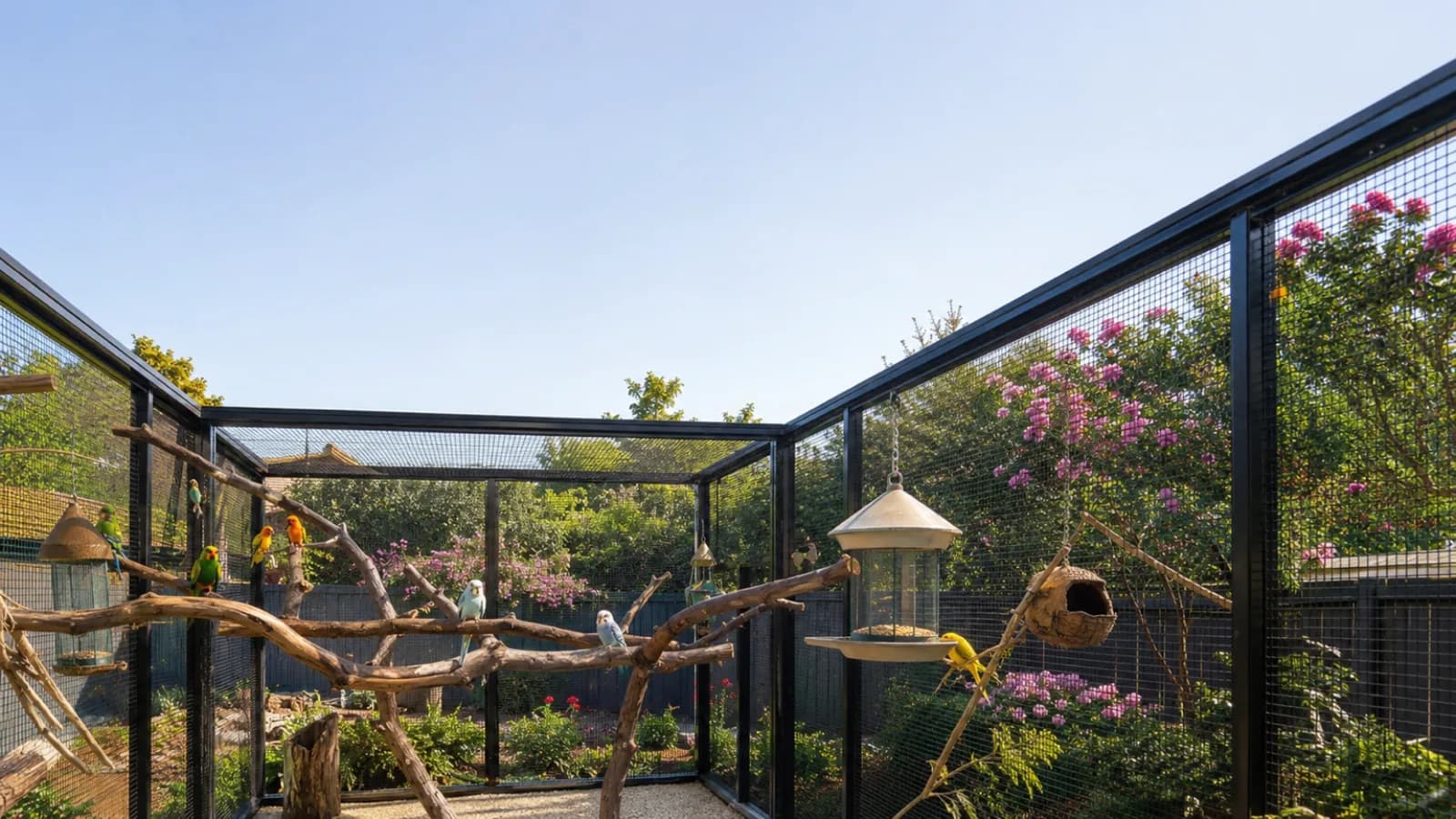
This is not a head-to-head aviary-gear ranking — it is a build order for a walk-in flight you can stand up in. An outdoor aviary is a small building for birds, and the birds go in last, after the structure is predator-proof and weatherproof. The picks below are the setup kit in sequence — the walk-in frame, the hardware cloth that stops a raccoon's reach and a digging fox, a weatherproof roost box, natural perches that lay out the flight path, a sheltered feeding station, a water and bathing source, and a heated perch for winter — not seven products ranked against each other. If you will not predator-proof the mesh, bury an apron, and check the aviary daily, read the caveats before you buy anything, because an outdoor aviary is only as safe as its weakest seam.
By Nick Miles · Updated July 12, 2026 · 12 min read
PetPalHQ is reader-supported. We may earn a commission from qualifying Amazon purchases at no extra cost to you.
Evidence at a Glance
Walnest 87-Inch Heavy-Duty Walk-In Bird Cage
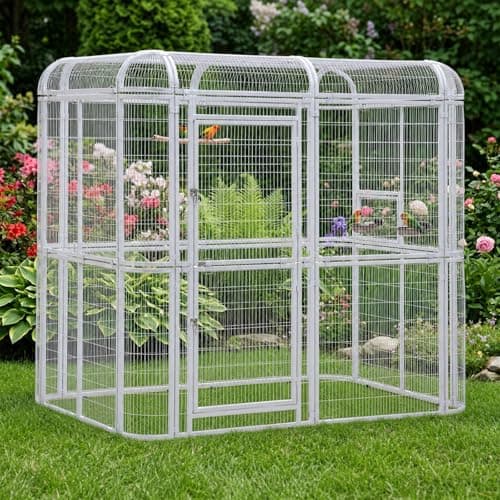
The shell — a walk-in outdoor aviary frame tall enough to stand inside and service, giving your birds real horizontal flight room rather than the vertical box of an indoor cage, and giving you a door you can walk through to clean, feed, and catch up a bird without dismantling anything.
Sources: Walnest manufacturer documentation, Aviary-keeping community consensus, Published avian-welfare guidance on flight space
Verified Jul 12, 2026
SEBOSS Hardware Cloth (1/2 inch, 48 in x 100 ft)
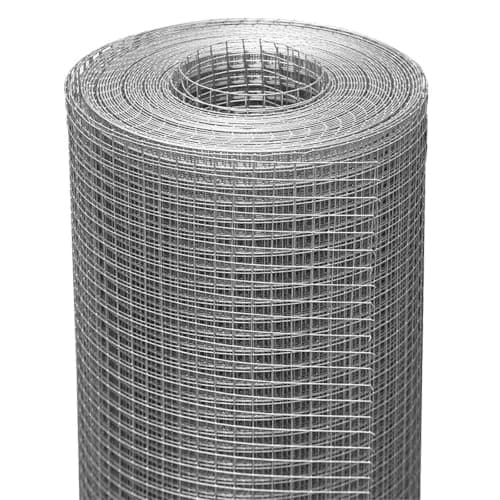
The safety layer — hot-dipped galvanized half-inch mesh that lines the aviary walls and buries as a dig apron, closing the two gaps that kill outdoor birds: a predator reaching a paw through wide bars, and a fox, rat, or snake digging under the base.
Sources: SEBOSS manufacturer documentation, Aviary-keeping community consensus on predator-proofing, Published guidance on outdoor small-animal enclosure safety
Verified Jul 12, 2026
Novabright 12-Inch Carbonized Weatherproof Wooden Roost Box
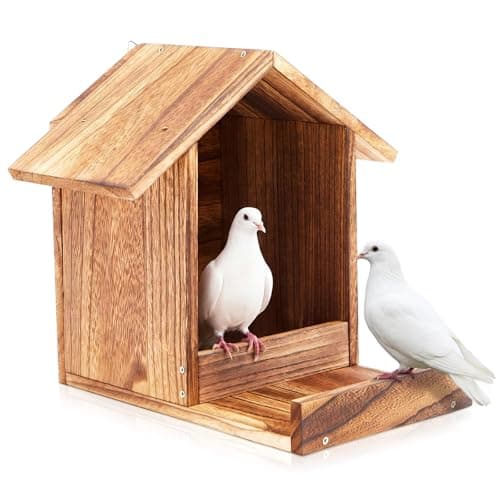
The shelter — a carbonized, weatherproof timber box mounted high in a sheltered corner that gives birds somewhere dry and wind-broken to roost and, for some species, to nest, so the aviary has a refuge from weather rather than only open flight space.
Sources: Novabright manufacturer documentation, Aviculture consensus on shelter and roosting, Published avian-welfare guidance on weather protection
Verified Jul 12, 2026
Our Picks
Walnest
Walnest 87-Inch Heavy-Duty Walk-In Bird Cage
8.6 / 10
- Walk-in frame 87 inches tall — service it standing up per Walnest
- Horizontal footprint gives real cross-aviary flight room
- Metal mesh panels form the structural shell
- A single walk-through door rather than a reach-in hatch
$539.00
Current price · checked Sep 8, 2026
SEBOSS
SEBOSS Hardware Cloth (1/2 inch, 48 in x 100 ft, 19-Gauge)
8.5 / 10
- Half-inch openings block a reaching paw and a squeezing rat per SEBOSS
- Hot-dipped galvanized 19-gauge wire resists outdoor corrosion
- 48-inch by 100-foot roll lines walls and forms a dig apron
- Doubles the shipped panel mesh into a true predator barrier
$77.39
Current price · checked Sep 8, 2026
Novabright
Novabright 12-Inch Carbonized Weatherproof Wooden Roost Box
8.3 / 10
- Carbonized weatherproof timber built for outdoor exposure per Novabright
- Twelve-inch box gives roosting and, for some species, nesting room
- Mounts high in a sheltered corner of the aviary
- A dry, wind-broken refuge from the open flight space
CZWESTC
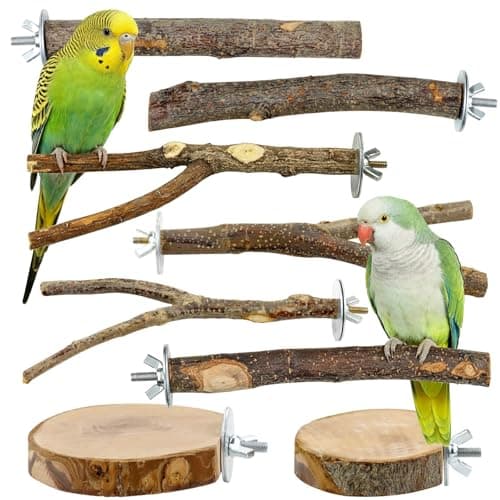
CZWESTC 8-Piece Natural Apple-Wood Bird Perch Set
8.2 / 10
- Eight natural apple-wood perches in varied diameters per CZWESTC
- Irregular thicknesses exercise feet and reduce pressure sores
- Untreated branch wood birds can grip and gnaw
- Set at varied heights to lay out flight lanes and landings
$12.99
Current price · checked Sep 8, 2026
MIXXIDEA
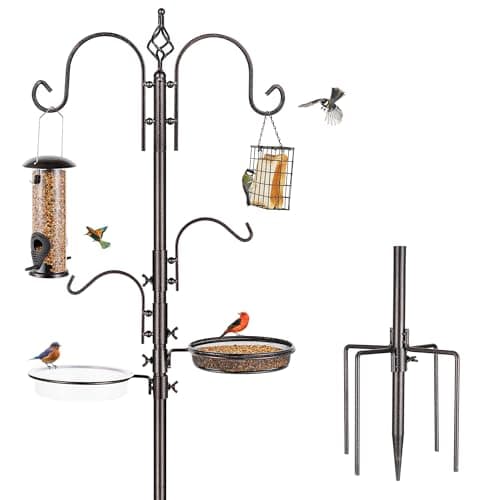
MIXXIDEA Deluxe Bird Feeding Station Kit
8.1 / 10
- Multi-feeder metal pole holds several feeders and a dish per MIXXIDEA
- Raises food and water off the aviary floor
- Free-standing stand positions feeding under cover
- Keeps feed dry, cleaner, and easier to monitor
$30.63
Current price · checked Sep 8, 2026
Mademax
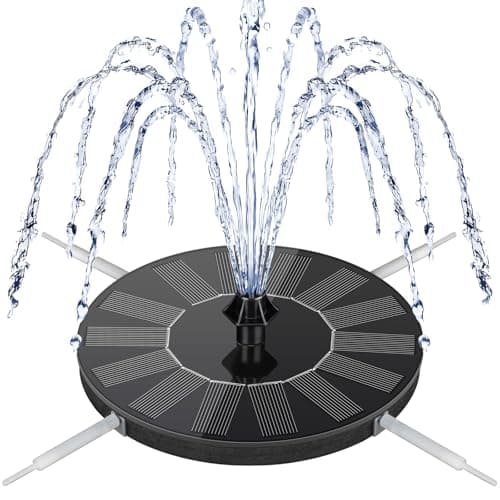
Mademax Solar Bird Bath Fountain (1.4W)
8.0 / 10
- 1.4W solar pump circulates water with no wiring per Mademax
- Floats in a shallow basin birds can drink and bathe from
- Moving water stays fresher and more appealing than a still dish
- No external power needed in an outdoor aviary
$16.79
Current price · checked Sep 8, 2026
WEIYOONS
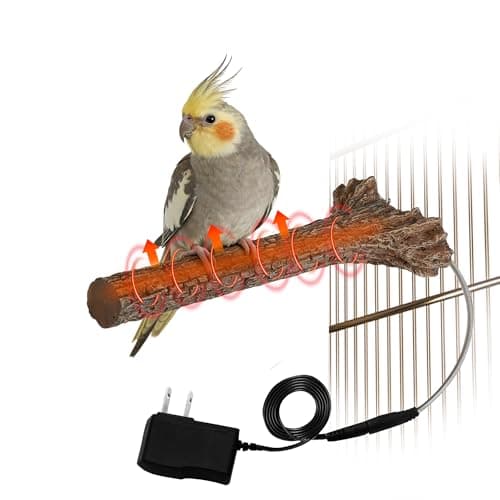
WEIYOONS Heated Bird Perch / Cage Warmer
7.9 / 10
- Warmed perch surface for cold conditions per WEIYOONS
- Mounts in the sheltered roosting corner of the aviary
- Takes the edge off freezing nights for hardy species
- Works alongside wind-breaks, roofing, and dry shelter
$32.99
Current price · checked Sep 8, 2026
The Short Answer
Build an outdoor aviary as a small predator-proof building and add the birds last. Start with the shell: the Walnest 87-inch walk-in bird cage gives you a frame tall enough to stand in and service, and you make it safe before anything lives in it. Line and skirt the structure with SEBOSS half-inch hardware cloth, because standard aviary bar spacing lets a raccoon reach through and a fox or rat dig under — half-inch mesh on the walls and a buried apron close both gaps. Then make it livable: a Novabright weatherproof roost box gives shelter from wind and rain, a CZWESTC natural-wood perch set lays out the flight path at varied heights, a MIXXIDEA feeding station keeps food dry and off the ground, and a Mademax solar bird bath supplies drinking and bathing water. For cold regions, a WEIYOONS heated perch takes the edge off freezing nights. The core truth never changes: predator-proof and weatherproof the empty structure first, add a safety-porch double door, and check the whole aviary daily, because an outdoor flight is only as safe as its weakest seam.
Every product on this list has been scored against the PetPal Gear Score, a weighted composite of expert consensus, observed effectiveness, animal safety, long-term durability, and value. Review method: Editorial synthesis of outdoor-aviary guidance — aviculture and aviary-keeping community consensus, published avian-welfare and husbandry guidance on space, shelter, and predator safety, and manufacturer documentation from Walnest, SEBOSS, Novabright, CZWESTC, MIXXIDEA, Mademax, and WEIYOONS. Community consensus from aviary and bird-keeping forums was included as consensus, not quotation. No first-hand product testing — PetPalHQ does not run a testing lab.. Synthesized from 6+ expert sources.
An outdoor aviary goes wrong, in this guide's editorial judgment, for one reason more than any other: it is treated as a cage that happens to be outside, instead of a small predator-proof building the birds move into last. A beginner buys a walk-in frame, stands it on the lawn, furnishes it, and adds the birds the same weekend — and then loses a bird to a raccoon reaching through the bars at night, or to a fox that dug under a base that was never skirted. The structure was never the safe part. It is a frame with gaps, and the work of an aviary build is closing those gaps before anything lives inside.
Start with the shell, because everything else attaches to it. A walk-in frame sets the footprint, the standing height that lets you service the flight, and the door you will build a safety porch around. But a shipped aviary panel is structural, not predator-proof — it keeps the bird in without keeping a predator out — so the very next stage lines it with half-inch hardware cloth and buries an outward apron, closing the reach-through gap and the dig-under gap that kill outdoor birds most often. None of that is visible when the aviary looks finished, which is exactly why beginners skip it.
Then, and only then, does the aviary become a place birds can live well. A weatherproof roost box gives dry, wind-broken shelter, natural perches of varied thickness lay out flight lanes and keep feet healthy, a raised sheltered feeding station keeps feed dry and away from pests, and a shallow solar bath covers drinking and bathing. In cold regions, a heated perch takes the edge off freezing nights as one piece of a wider winter plan. The picks below are that kit, in build order, not seven products ranked against each other, and where a claim rests on a maker's documentation or aviculture consensus, that is named rather than asserted, because PetPalHQ does not run a testing lab.
One principle sits above the whole build and never bends. Predator-proof and weatherproof the empty structure first, add a double-door porch, match the birds to your climate, and check the aviary every single day. The heated perch, the solar fountain, and the roost box are comforts within a safe enclosure, not substitutes for one. An outdoor aviary rewards the keeper who closes every seam, buries the apron, roofs the shelter, and only then adds birds suited to the weather — and it punishes the one who stocks first and finishes the enclosure around living birds.
Head-to-Head Comparison
| Feature | Walnest 87-Inch Heavy-Duty Walk-In Bird Cage | SEBOSS Hardware Cloth (1/2 inch, 48 in x 100 ft, 19-Gauge) | Novabright 12-Inch Carbonized Weatherproof Wooden Roost Box | CZWESTC 8-Piece Natural Apple-Wood Bird Perch Set | MIXXIDEA Deluxe Bird Feeding Station Kit | Mademax Solar Bird Bath Fountain (1.4W) | WEIYOONS Heated Bird Perch / Cage Warmer |
|---|---|---|---|---|---|---|---|
| Stage in the setup | Raise the structure | Predator-proof the mesh | Give shelter | Build the flight zone | Set the feeding station | Water and bathing | Cold-weather readiness |
| When it comes into play | Before anything else | Before any bird goes in | Before the birds move in | Before stocking | Before stocking | Daily from day one | Seasonal, cold regions |
| What it does | Sets the frame and door | Blocks reaching and digging | Dry, wind-broken roost | Lays out flight and landings | Clean, dry, raised feeding | Drinking and bathing | Warms a roost on freezing nights |
| PetPal Aviary-Readiness Score | 8.6 | 8.5 | 8.3 | 8.2 | 8.1 | 8.0 | 7.9 |
| Ongoing cost after purchase | Anchoring and repairs | Extra mesh for seams | Seasonal cleaning | Cleaning and replacement | Feed and cleaning | Daily water and scrubbing | Electricity in winter |
| Check price | Amazon | Amazon | Amazon | Amazon | Amazon | Amazon | Amazon |
$539.00
Current price · checked Sep 8, 2026
- Walk-in frame 87 inches tall — service it standing up per Walnest
- Horizontal footprint gives real cross-aviary flight room
- Metal mesh panels form the structural shell
- A single walk-through door rather than a reach-in hatch
- The frame the whole predator-proof, weatherproof build hangs on
An outdoor aviary is a small building for birds, and a building starts with its structure. The Walnest 87-inch walk-in bird cage earns the first slot because it sets the footprint, the height, and the door every later stage attaches to. Walnest documents a large walk-in outdoor aviary that stands about 87 inches tall with a metal mesh frame and a walk-in door, sized so you can stand inside to feed, clean, and catch a bird. That standing height is not a luxury — it is what lets you service the aviary without crawling, and it is why aviculture keeps steering beginners toward walk-in flights over the vertical indoor cages that birds cannot truly fly across.
Where it fits the setup: this is the shell, and everything else in the build is fitted to it. The mesh panels give you the structure to line with finer predator mesh, the base gives you the perimeter to skirt with a buried apron, and the interior volume is what you fill with perches, a roost box, feeding, and water. Because it is horizontal rather than tall, it suits the birds an outdoor aviary is usually built for — finches, canaries, budgies, and doves that cross the space in flight. If you are still choosing a footprint, or comparing walk-in models and panel systems, weigh the options in a dedicated roundup before you commit, because the frame is the one decision the rest of the aviary cannot outrun; our roundup of the best large outdoor aviaries is the honest place to size that up.
The honest caveats are about siting and the work the frame does not do on its own. An outdoor aviary needs a level, well-drained spot with morning sun and afternoon shade, sheltered from the prevailing wind, and it needs a safety-porch double door so no bird escapes when you enter — the single door alone is a gap you close with layout, not hardware. As shipped, the panel mesh is structural, not predator-proof: it stops the bird leaving but not a raccoon reaching in or a rat squeezing through, which is the entire reason the next stage exists. Assembly takes time and a helper, and the base must be anchored so wind cannot lift it. Confirm current price and availability before buying. Bought as the structure rather than the finished aviary, it is the frame a safe flight is built onto.
What We Love
- Walk-in height lets you service the aviary standing up
- Horizontal footprint gives birds genuine flight distance
- Structural mesh frame accepts a finer predator-proof lining
- A single high-AOV purchase that anchors the whole build
What Could Be Better
- Panel mesh is structural, not predator-proof, as shipped
- Needs a safety-porch double-door layout to prevent escapes
- Assembly and secure anchoring take time and a second person
The Verdict
Start here, before any bird. It sets the footprint, the standing height, and the door the rest of the aviary is fitted to. Site it on level, well-drained ground with wind shelter, and plan a double-door porch — then treat the shipped mesh as structure to be predator-proofed, not as a finished barrier.
Sources
- Walnest (Amazon product listing, 87-Inch Walk-In Bird Cage): a large walk-in outdoor aviary standing 87 inches tall with a metal mesh frame and a walk-in door, sized so a keeper can stand inside to feed, clean, and service the enclosure
- Aviary-keeping community consensus: aviculture guidance favors horizontal flight length over height and a walk-in door over a small hatch, because birds fly across an aviary rather than up it, and a door you can walk through makes daily servicing and catching a bird far safer than reaching through a panel
$77.39
Current price · checked Sep 8, 2026
- Half-inch openings block a reaching paw and a squeezing rat per SEBOSS
- Hot-dipped galvanized 19-gauge wire resists outdoor corrosion
- 48-inch by 100-foot roll lines walls and forms a dig apron
- Doubles the shipped panel mesh into a true predator barrier
- Buried outward as an apron, it defeats digging predators
The second stage is the one that keeps the birds alive, and it is the stage beginners skip. The SEBOSS hardware cloth lines the aviary's structural mesh and buries as a dig apron around its base. SEBOSS documents a hot-dipped galvanized welded mesh with half-inch openings in 19-gauge wire, 48 inches wide and 100 feet long, made to enclose and predator-proof outdoor structures. Those half-inch openings are the point: they are too small for a raccoon to push a paw through and too small for a rat or a snake to squeeze into, which the wider spacing of a shipped aviary panel is not.
Where it fits the setup: this is the safety retrofit, applied to the empty frame before a single bird goes in. You line the lower walls — at minimum to the height a standing predator can reach — with the half-inch mesh over the structural panels, and you run a skirt outward along the ground and bury it, or fold it into an L-shaped apron, so a digging fox hits wire instead of soil. The two failures it closes are the two that kill outdoor birds most often: a predator reaching through the bars at a roosting bird at night, and a predator tunneling under an unsecured base. Neither is visible when the aviary looks finished, which is exactly why both are so commonly missed.
The honest caveats are about coverage and edges. Predator-proofing is only as good as its least-covered seam, so gaps at the door frame, the roofline, and every panel join have to be closed too, not just the flat walls — a raccoon works the weakest joint, not the strongest panel. Cut galvanized mesh leaves sharp ends that must be folded under or capped so birds and hands are not injured, and the roll is heavy to handle and needs sturdy shears or snips. Burying an apron is real digging, and it is easiest done before the aviary is fully planted or furnished. Confirm current price and availability before buying. Treated as the non-negotiable safety layer rather than an upgrade, it is what turns a bird enclosure into a bird refuge.
What We Love
- Half-inch mesh blocks a reaching paw and a squeezing rodent
- Galvanized wire stands up to weather and ground moisture
- One 100-foot roll lines walls and forms the buried apron
- Closes the two predator gaps a shipped panel leaves open
What Could Be Better
- Only as strong as the least-covered door, roof, and panel seam
- Cut edges are sharp and must be folded under or capped
- Burying an apron is heavy labor, best done before furnishing
The Verdict
Do not run an outdoor aviary without this step. Line the walls to reach-height and bury an outward apron so predators meet wire, not a bird. Then close every door, roof, and panel seam — predator-proofing is judged by its weakest join, not its strongest wall.
Sources
- SEBOSS (Amazon product listing, 1/2 inch Hardware Cloth): a hot-dipped galvanized hardware cloth with half-inch openings in 19-gauge wire, 48 inches wide and 100 feet long, a corrosion-resistant welded mesh used to enclose and predator-proof outdoor animal structures
- Aviary-keeping community consensus on predator-proofing: keepers line aviary walls with half-inch or smaller mesh and bury an outward-facing apron because standard cage bar spacing lets a raccoon reach a paw through and grab a bird at the mesh, while an unburied base lets foxes, rats, and snakes dig or push under
- Carbonized weatherproof timber built for outdoor exposure per Novabright
- Twelve-inch box gives roosting and, for some species, nesting room
- Mounts high in a sheltered corner of the aviary
- A dry, wind-broken refuge from the open flight space
- Sited under cover, away from the prevailing weather
The third stage gives the birds somewhere to get out of the weather. The Novabright roost box is a carbonized, weatherproof wooden shelter you mount high in a protected corner. Novabright documents a 12-inch carbonized and weatherproof timber nesting box built to withstand outdoor exposure, mounted to a wall or post. An open flight is only half an aviary — birds also need a dry, wind-broken place to roost at night and shelter during rain, and for some species that same box becomes a nesting site in season.
Where it fits the setup: this is shelter, added once the structure is safe and before the birds move in, so the refuge is waiting for them rather than improvised later. You site it high, in the corner most sheltered from the prevailing wind and rain, with a clear flight path to the entrance and a perch just outside it. In a mixed or planted aviary the box works alongside dense cover and a partial roof to give layered shelter, so a bird always has somewhere to retreat whatever the weather does. If you are keeping a species that will breed, or you want covered shelter beyond a single box, a dedicated roundup lays out the options; our roundup of the best bird houses and nesting boxes is the place to compare sizes and entrance holes to your birds.
The honest caveats are about siting, cleaning, and breeding. A box in full afternoon sun bakes and a box in the wind's path defeats its own purpose, so placement matters as much as the box itself. Wooden boxes need seasonal cleaning and drying to stay healthy, and they weather over years and eventually need replacing. And a nesting box is a breeding decision, not only a shelter one — if you do not intend to breed, you may want a roost-only shelter or to manage the box to discourage nesting, because eggs and chicks change everything about how the aviary is run. Confirm current price and availability before buying. Placed as considered shelter rather than decoration, it gives the flock a refuge the open aviary cannot.
What We Love
- Weatherproof carbonized timber made for outdoor mounting
- Gives a dry, wind-broken roost the open flight lacks
- Doubles as a nesting site for species that will breed
- Inexpensive shelter relative to its welfare payoff
What Could Be Better
- Wrong siting — full sun or windward — undoes its purpose
- Wooden boxes need seasonal cleaning and eventual replacement
- A nesting box invites breeding you may not intend to manage
The Verdict
Add shelter once the structure is safe. Mount it high in the corner most sheltered from wind and rain, with a perch at the entrance. Decide up front whether you want roosting only or nesting too, because a box that invites breeding changes how the whole aviary is run.
Sources
- Novabright (Amazon product listing, Weatherproof Wooden Nesting Box): a 12-inch carbonized, weatherproof wooden nesting and roosting box for birds, with a treated timber shell built to withstand outdoor exposure and mounted to a wall or post
- Aviculture consensus on shelter and roosting: an outdoor aviary needs a dry, wind-broken refuge as well as open flight space, so keepers mount a weatherproof box or covered shelter high in a protected corner where birds can roost out of rain and wind and, for some species, raise young
$12.99
Current price · checked Sep 8, 2026
- Eight natural apple-wood perches in varied diameters per CZWESTC
- Irregular thicknesses exercise feet and reduce pressure sores
- Untreated branch wood birds can grip and gnaw
- Set at varied heights to lay out flight lanes and landings
- Placed clear of food and water to keep them clean
The fourth stage turns empty air into a flight space birds can use. The CZWESTC perch set gives you eight natural apple-wood branches and platforms in varied diameters to arrange across the aviary. CZWESTC documents an eight-piece set of natural apple-wood perches in varied thicknesses made from untreated branch wood for birds to grip. Varied diameter is the welfare point: a bird that grips the same dowel all day develops foot pressure sores, while branches of different thicknesses work the foot through its full range and keep it healthy.
Where it fits the setup: this is the furniture that defines how birds move through the flight. You set perches at varied heights and across the aviary's length so there are real flight lanes and landing points — a low perch near the water, higher perches for roosting and vantage, and clear runs of open air between them for wing-stretching flight rather than short hops. Placement is deliberate: perches go clear of the feeding station and water so droppings do not foul them, and the highest, most sheltered perches sit near the roost box where birds want to settle at night. Natural branch also gives birds something to gnaw, which many species need to do.
The honest caveats are about hygiene, wear, and safety. Natural wood absorbs droppings and moisture and needs regular cleaning and periodic replacement, more so outdoors than in. Perches must be mounted securely so they cannot spin or drop under a landing bird, and any perch directly over food or water will foul it and has to be moved. Untreated wood is the safe choice here — perches should never be treated with paint, stain, or preservative a bird could ingest while gnawing. Confirm current price and availability before buying. Arranged as a considered flight layout rather than a few sticks, they are what makes the aviary a place birds actually fly.
What We Love
- Varied diameters exercise feet and cut pressure-sore risk
- Natural branch wood birds can grip and safely gnaw
- Eight pieces lay out flight lanes and landing points
- Inexpensive and easy to rearrange as you refine the layout
What Could Be Better
- Natural wood absorbs droppings and needs regular cleaning
- Perches over food or water foul it and must be repositioned
- Weathers outdoors and needs periodic replacement
The Verdict
Lay these out to build the flight, not just to fill it. Mix diameters and heights so birds fly between landings and work their feet, keep perches clear of food and water, and site the highest ones near the roost box. Use untreated wood only, and mount each perch so it cannot spin.
Sources
- CZWESTC (Amazon product listing, 8 PCS Natural Apple Wood Bird Perch Set): an eight-piece set of natural apple-wood perches and platforms in varied diameters, made from untreated branch wood for birds to grip, mounted across a cage or aviary
- Avian-welfare consensus on perching and foot health: varied perch diameters exercise a bird's feet and help prevent the pressure sores that uniform dowel perches cause, so keepers use natural branch perches of several thicknesses set at different heights to lay out flight lanes and landing points across an aviary
$30.63
Current price · checked Sep 8, 2026
- Multi-feeder metal pole holds several feeders and a dish per MIXXIDEA
- Raises food and water off the aviary floor
- Free-standing stand positions feeding under cover
- Keeps feed dry, cleaner, and easier to monitor
- Sited away from perches so droppings do not foul it
The fifth stage is where and how the birds eat, which matters more outdoors than most beginners expect. The MIXXIDEA feeding station raises food and water off the ground on a single stand. MIXXIDEA documents a deluxe feeding station kit with a metal multi-feeder pole and hanging hooks that holds several feeders and a water dish off the ground. Getting food off the floor is the hygiene point: ground-level feed in an outdoor aviary spoils in weather, mixes with droppings, and draws in the rodents and wild birds that predator-proofing is meant to keep out.
Where it fits the setup: this is the daily-care hub, positioned so feeding is clean, dry, and easy to check. You place the station under the aviary's covered section so rain does not spoil the feed, away from and not directly under perches so droppings do not fall into the food, and where you can reach it quickly for the daily fill and check. Multiple feeders let you separate seed, grit, and fresh food, and a raised layout makes it obvious at a glance whether the birds are eating — which is often the first sign of a health problem. Keeping the station and the water source a little apart also stops birds fouling their drinking water with dropped food.
The honest caveats are about weather, pests, and cleaning. Even a sheltered station needs feed kept dry, because damp seed grows mold that harms birds, so covered placement and regular refreshing both matter. Any outdoor food draws interest — rodents, ants, and wild birds — so the station has to be inside the predator-proofed structure and cleaned often to stay unattractive to pests. Metal stands can be tipped by weather or a large bird, so the base needs to sit stable and sheltered. Confirm current price and availability before buying. Set up as a clean, sheltered, raised hub rather than a bowl on the floor, it keeps feeding safe and makes daily monitoring simple.
What We Love
- Raises feed and water off the floor, away from spoilage
- Multiple feeders separate seed, grit, and fresh food
- Sheltered placement keeps feed dry and pest-resistant
- Raised layout makes daily intake easy to monitor
What Could Be Better
- Damp feed molds — covered placement and refreshing are essential
- Any outdoor food draws rodents, ants, and wild birds
- A free-standing pole must sit stable so weather cannot tip it
The Verdict
Site feeding as a raised, sheltered hub, not a floor bowl. Place it under cover, clear of perches, where you can reach it for the daily fill and health check. Keep feed dry and the station clean, because in an outdoor aviary spoiled ground feed is what draws the pests you predator-proofed against.
Sources
- MIXXIDEA (Amazon product listing, Deluxe Bird Feeding Station Kit): a deluxe bird feeding station kit with a metal multi-feeder pole and hanging hooks that holds several feeders and a water dish off the ground on a single free-standing stand
- Aviary-keeping consensus on feeding hygiene: keepers raise food and water off the aviary floor and, ideally, under cover, because ground-level food spoils, draws rodents and wild birds, and mixes with droppings, while a raised, sheltered station keeps feed dry and easier to monitor and clean
$16.79
Current price · checked Sep 8, 2026
- 1.4W solar pump circulates water with no wiring per Mademax
- Floats in a shallow basin birds can drink and bathe from
- Moving water stays fresher and more appealing than a still dish
- No external power needed in an outdoor aviary
- Sited in a shallow, easily cleaned, easily refilled spot
The sixth stage supplies the water birds drink and bathe in. The Mademax solar fountain circulates water in a shallow basin using sunlight alone. Mademax documents an upgraded 1.4-watt solar-powered fountain pump that floats in a bird bath and moves water using the sun, with no external power or wiring. Water is a daily need on two fronts — drinking and bathing — and gently moving water tends to stay fresher and draws birds better than a stagnant dish, which is what a small solar fountain adds without running a cable into the aviary.
Where it fits the setup: this is the water source, placed low and in the open where birds can reach it easily and you can refill and scrub it daily. You set it a little apart from the feeding station so dropped food does not foul the water, in a shallow basin a small bird can stand in to bathe without risk, and where some sun reaches the panel so the fountain runs. Bathing is not optional enrichment for most birds — it is how they keep their feathers in condition — so a shallow, clean, moving-water source does real welfare work while also being the thing birds visibly enjoy. In a larger aviary you might run a drinking source and a separate bathing basin.
The honest caveats are about the solar limits, cleaning, and safety. A solar fountain only runs when the sun hits the panel, so it stops in shade, cloud, and at night, which means it aerates and refreshes the water but is not a filter and never replaces daily cleaning. Standing water in warm weather grows algae and harbors bacteria fast, so the basin is scrubbed and refilled daily regardless of the pump. Water depth must stay shallow so small birds cannot get into difficulty, and in freezing weather the basin ices over and needs a heated or manually refreshed alternative. Confirm current price and availability before buying. Provided as a shallow, clean, daily-tended source rather than a set-and-forget feature, it covers drinking and bathing at once.
What We Love
- Moving water stays fresher and draws birds to drink and bathe
- Solar pump needs no wiring run into the aviary
- Shallow basin supports safe bathing for small birds
- Inexpensive and simple to add to the build
What Could Be Better
- Runs only in direct sun — it aerates but does not filter
- Standing water grows algae fast and needs daily scrubbing
- Freezes in winter and needs a heated or refreshed backup
The Verdict
Give birds clean water for drinking and bathing, sited apart from food and kept shallow. The solar fountain keeps it moving and appealing, but treat it as aeration, not filtration — scrub and refill the basin daily, and plan a freeze-proof alternative for winter.
Sources
- Mademax (Amazon product listing, Solar Bird Bath Fountain): an upgraded 1.4-watt solar-powered fountain pump that floats in a bird bath or shallow basin and circulates water using sunlight, with no external power or wiring required
- Avian-welfare consensus on water and bathing: birds need constant access to clean drinking water and most also bathe to keep plumage healthy, and moving or freshly changed water stays cleaner and more appealing than a stagnant dish, so keepers provide a shallow, easily cleaned bathing and drinking source
$32.99
Current price · checked Sep 8, 2026
- Warmed perch surface for cold conditions per WEIYOONS
- Mounts in the sheltered roosting corner of the aviary
- Takes the edge off freezing nights for hardy species
- Works alongside wind-breaks, roofing, and dry shelter
- One part of a cold-weather plan, not a substitute for shelter
The final stage readies the aviary for winter in cold regions. The WEIYOONS heated perch gives birds a warmed surface to stand on when temperatures drop. WEIYOONS documents a heated bird perch and cage warmer that provides a warmed standing surface in cold conditions, mounted inside the enclosure. For keepers where winters freeze, a warmed perch in the sheltered roosting area takes the edge off the coldest nights, which for many hardy outdoor species is the difference between merely cold and genuinely stressed.
Where it fits the setup: this is a seasonal, region-dependent add-on, fitted in the most sheltered corner near the roost box where birds settle for the night. It is the last piece precisely because it is conditional — a mild-climate aviary of hardy species kept dry and out of the wind may never need it, while a freezing-climate aviary needs it as part of a wider winter plan. That plan is the real work: wind-breaking the exposed sides, roofing part of the flight so rain and snow cannot reach the roost, and keeping water from freezing. The heated perch is one comfort within that plan, not the whole answer to cold.
The honest caveats are about electrical safety, dependence, and species. Any powered device in an outdoor, wet enclosure has to be rated and installed for that use, with cords protected from weather and from a bird's beak, on a suitable protected circuit — this is not a place to improvise. A heated perch warms a surface; it does not warm the aviary, so it cannot rescue birds from an enclosure that is wet, drafty, or unroofed, and leaning on it instead of fixing shelter is a mistake. And the right answer to a hard winter is often to keep species suited to your climate in the first place rather than to heat a flight into supporting birds it should not. Confirm current price and availability before buying. Added as one considered piece of a real winter plan, it takes the edge off the cold nights hardy birds still have to sit through.
What We Love
- Gives a warmed roosting surface on freezing nights
- Sited in the sheltered corner where birds settle to roost
- A modest comfort within a wider cold-weather plan
- Useful where winters are genuinely hard
What Could Be Better
- Powered gear in a wet aviary demands rated, protected wiring
- Warms a perch, not the aviary — no fix for poor shelter
- Often the real answer is climate-suited species, not heat
The Verdict
Add this only as part of a real winter plan, and only where winters freeze. Fit it in the sheltered roosting corner with weather-rated wiring, after you have wind-broken, roofed, and freeze-proofed the flight. It takes the edge off cold nights — it does not rescue a wet or drafty aviary, and it is no substitute for keeping climate-suited birds.
Sources
- WEIYOONS (Amazon product listing, Heated Bird Perch): a heated perch and cage warmer for birds that provides a warmed surface to stand on in cold conditions, mounted inside the enclosure and powered to take the chill off freezing weather
- Aviculture consensus on cold-weather care: hardy outdoor species tolerate cold if kept dry and out of wind, but keepers in freezing regions add a warmed perch or gentle heat source in the sheltered roosting area to take the edge off the coldest nights, alongside wind-breaking, roofing, and a freeze-proof water plan
How We Score
Formula
PetPal Aviary-Readiness Score = (Expert Consensus × 0.35) + (Setup-Sequence Fit × 0.25) + (Bird-Safety / Welfare Design × 0.20) + (Value × 0.20)
Score Factors
- Expert Consensus · 35%
- Synthesized from aviculture and aviary-keeping community consensus, published avian-welfare and husbandry guidance on flight space, shelter, predator safety, and cold-weather care, and manufacturer documentation. The PetPal Aviary-Readiness Score is a composite of expert opinion — PetPalHQ does not run a testing lab.
- Setup-Sequence Fit · 25%
- How directly the item advances a correct outdoor-aviary build in order — raising the structure, predator-proofing the mesh and burying a dig apron, adding shelter, laying out perches, setting feeding and water, and readying for winter — rather than how it performs as a standalone product ranked against rivals.
- Bird-Safety / Welfare Design · 20%
- Alignment with outdoor-aviary welfare principles — a predator-proof and weatherproof enclosure, a safety-porch double door, horizontal flight room, dry roosting shelter, varied perching for foot health, clean raised feeding, and safe shallow water. Birds are added only after the empty structure is safe.
- Value · 20%
- Cost relative to the item's role in the sequence, including ongoing costs like extra mesh, feed, cleaning, and winter electricity, and how much of the safe-aviary outcome the item is responsible for. This kit is the equipment cost, not the ongoing cost of running an outdoor aviary.
| Rank | Product | Score |
|---|---|---|
| #1 | Walnest Walnest 87-Inch Heavy-Duty Walk-In Bird Cage | 8.6 |
| #2 | SEBOSS SEBOSS Hardware Cloth (1/2 inch, 48 in x 100 ft, 19-Gauge) | 8.5 |
| #3 | Novabright Novabright 12-Inch Carbonized Weatherproof Wooden Roost Box | 8.3 |
| #4 | CZWESTC CZWESTC 8-Piece Natural Apple-Wood Bird Perch Set | 8.2 |
| #5 | MIXXIDEA MIXXIDEA Deluxe Bird Feeding Station Kit | 8.1 |
| #6 | Mademax Mademax Solar Bird Bath Fountain (1.4W) | 8.0 |
| #7 | WEIYOONS WEIYOONS Heated Bird Perch / Cage Warmer | 7.9 |
When NOT to Buy
An outdoor aviary is a bigger, more exposed commitment than an indoor cage, and it is the wrong setup for someone who wants a low-effort, low-risk way to keep birds. It sits outside in all weather, it is exposed to every predator in your area, and it needs daily checking — food, water, the birds themselves, and the integrity of the mesh and every seam. If you cannot predator-proof it properly and check it every day, an outdoor aviary is not safer for being bigger; it is more dangerous, because a single unclosed seam or a skipped check is all a determined predator needs. Birds go in last, only after the empty structure is predator-proof, weatherproof, and fitted with a safety-porch double door.
Species and climate rule out the usual shortcuts. An outdoor aviary suits hardy species matched to your climate, kept dry and out of the wind — it is not the place for delicate tropical birds in a cold region, and no heated perch turns a freezing, wet flight into suitable housing for a bird that should not be out in it. The most common beginner mistakes are stocking before the predator-proofing is finished, leaving a nesting box in without intending to manage breeding, and siting the aviary in wind or full sun with no roofed shelter. If your instinct is to buy the birds first and finish the enclosure around them, that instinct is the warning sign. If you are keeping smaller birds and are unsure an outdoor flight is right for them, sizing a suitable cage is the safer first step; our roundup of the best parakeet, budgie, and cockatiel cages is the honest place to weigh that.
Finally, the honest budget note: this kit is the equipment, not the cost of running an outdoor aviary. Feed, extra mesh to close seams, replacement perches and boxes as they weather, winter electricity, veterinary care, and the birds themselves are the ongoing bill, and it does not stop. There is also work this kit assumes but does not supply — burying the dig apron, roofing part of the flight, wind-breaking the exposed sides, and building the double-door porch are labor, not purchases. If you want a covered outdoor water source birds will use year-round, our roundup of the best bird baths and solar fountains compares options beyond the basin here. Confirm current price and availability on every item before buying, since prices and sellers move over time.
Frequently Asked Questions
- Isn't the mesh that comes with a walk-in aviary already predator-proof?
- Usually not, and assuming it is a costly mistake. The panel mesh a walk-in aviary ships with is structural — it is there to hold the shape and keep the bird from leaving — but its spacing is typically wide enough for a raccoon to reach a paw through and grab a bird at the mesh, and its base is rarely secured against digging. That is why the standard aviary build lines the walls, at least to the height a standing predator can reach, with half-inch hardware cloth, and buries an outward-facing apron or an L-shaped skirt so a digging fox or rat meets wire instead of soil. The two failures that kill outdoor birds most often are a predator reaching through at night and a predator tunneling under, and both are invisible when the aviary looks finished. Treat the shipped panels as the frame and the half-inch mesh as the actual barrier, and judge the result by its weakest seam — the door frame, the roofline, and every panel join — rather than by the strongest panel.
- Why do I need a double door on an outdoor aviary?
- Because a single door is an open escape route every time you enter, and an escaped bird outdoors is usually a lost bird. A safety porch — a small vestibule with an outer and an inner door, only one of which is open at a time — means that when you step in and close the outer door behind you, any bird that slips past the inner door is still contained in the porch rather than gone into the sky. In a walk-in flight where you enter daily to feed, water, and clean, the odds of a bird making a break for the gap add up fast, and the porch is what turns those daily entries from a risk into a routine. It is layout and a bit of framing rather than a product, but it is not optional on a walk-in aviary, and it is one of the first things to build once the structure is up and predator-proofed.
- Do I need to bring the birds indoors for winter?
- It depends entirely on the species and your climate, and the honest answer is to keep birds suited to where you live. Hardy outdoor species tolerate cold well if they are kept dry and out of the wind, with a roofed, wind-broken shelter, a dry roost, and water that does not freeze — and for the coldest nights a heated perch in the sheltered corner takes the edge off. Delicate tropical species are a different matter and are simply not suited to a freezing outdoor flight; no amount of added heat makes a cold, exposed aviary appropriate for a bird that should not be out in it, and for those birds an indoor setup or a heated bird room is the right answer. So the winter plan is really two decisions: choose species matched to your climate in the first place, and then wind-break, roof, and freeze-proof the flight so the hardy birds you do keep stay dry and sheltered. Heat is a comfort within that plan, never a substitute for suitable species and proper shelter.
- Where should I put an outdoor aviary in my yard?
- Side the aviary for weather, drainage, and your own access, and decide it before you build rather than after. The best spots are level and well-drained so the base does not sit in water, sheltered from the prevailing wind, and oriented to catch gentle morning sun while offering afternoon shade so birds are neither chilled nor baked. You want part of the flight roofed or shaded so there is always somewhere out of rain and direct sun, and you want the whole structure close enough to a path and, ideally, to power and a water source that daily servicing is easy — an aviary that is a chore to reach gets checked less often, which is a safety problem. Keep it away from spots where wild-bird droppings from overhanging trees can fall in, and give yourself room to work all the way around the outside for the buried apron and for maintenance. Getting the site right is part of the build, because the frame, the shelter, and the winter plan all depend on it.
- How many birds can an outdoor walk-in aviary hold?
- Fewer than the space might suggest, because stocking density is about compatibility and flight room, not just floor area. An aviary needs enough open flight length for its birds to actually fly rather than flit, enough perching and feeding stations that dominant birds cannot guard them all, and species that get along — mixing the wrong species, or crowding even compatible ones, leads to stress, feather-plucking, and fighting. The right number depends on the species' size, temperament, and whether any will breed, and breeding changes everything because a pair defending a nest needs far more space and separation than the same birds do outside the season. The safest approach is to research the specific species you want, plan for the lower end of any stocking guidance, provide more perches, feeders, and water stations than the minimum, and watch how the birds actually use the space once they are in. An under-stocked aviary of compatible birds is a calm one; an over-stocked or badly matched one is a source of constant, avoidable stress.
Bottom Line
Build the enclosure before the birds, and predator-proof it before anything else. Raise the Walnest walk-in frame, then line the walls with SEBOSS half-inch hardware cloth and bury an outward apron, because an outdoor aviary is only as safe as its weakest reaching or digging gap.
Predator-proofing is judged by its seams, not its panels. Close the door frame, the roofline, and every panel join with mesh, add a safety-porch double door so no bird escapes when you enter, and check the whole structure daily — a predator works the weakest joint.
Make the flight livable, not just safe. A Novabright weatherproof roost box gives dry, wind-broken shelter, and a CZWESTC natural-perch set of varied diameters lays out real flight lanes while keeping birds' feet healthy — sited clear of food and water.
Keep feeding and water clean, raised, and sheltered. The MIXXIDEA station holds feed dry and off the ground away from pests, and the Mademax solar bath supplies shallow drinking and bathing water — but both need daily cleaning, and spoiled ground feed is what draws predators back.
Match birds and gear to your climate, and treat winter as a plan. A WEIYOONS heated perch takes the edge off freezing nights, but only alongside roofing, wind-breaks, and freeze-proof water — and the real answer to a hard winter is keeping species suited to it.
Sources & Methodology
Methodology
PetPal Aviary-Readiness Score = (Expert Consensus × 0.35) + (Setup-Sequence Fit × 0.25) + (Bird-Safety / Welfare Design × 0.20) + (Value × 0.20)
Expert review sources
- Aviculture and aviary-keeping community consensus on walk-in flights and layout
- Published avian-welfare guidance on flight space, shelter, and enclosure safety
- Predator-proofing consensus on half-inch mesh and buried dig aprons
- Walnest — 87-Inch Walk-In Bird Cage product documentation
- SEBOSS — 1/2 inch Hardware Cloth product documentation
- Novabright, CZWESTC, MIXXIDEA, Mademax, and WEIYOONS product documentation
Community sources
- Aviary and bird-keeping forums — outdoor setup, predator-proofing, and cold-weather consensus
- Aviculture community consensus on perching, feeding hygiene, and winter care
Prices and specs verified July 12, 2026.
About the author
Nick Miles is the chief editor of PetPalHQ. This beginner outdoor-aviary setup sequence and its kit are editorial synthesis of aviculture and aviary-keeping community consensus, published avian-welfare and husbandry guidance, and manufacturer documentation — PetPalHQ does not run a testing lab. The PetPal Aviary-Readiness Score is a composite of expert opinion, not a measurement. Sources are cited by name throughout.
PetPalHQ is a participant in the Amazon Services LLC Associates Program. We may earn commissions from qualifying purchases — at no extra cost to you.