Cats & Dogs
How to Introduce a Puppy to an Older Dog (2026)
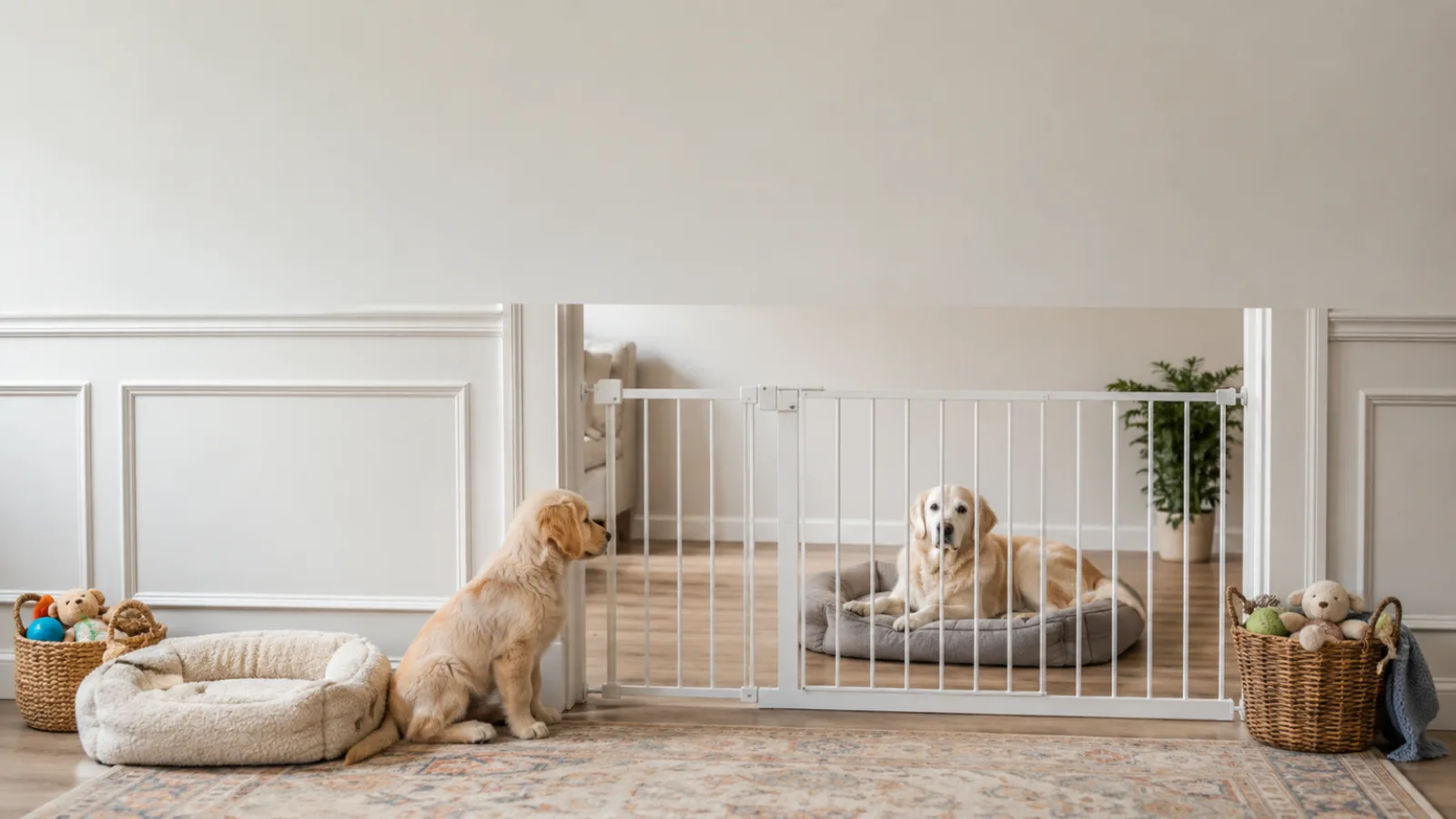
This is not a head-to-head gear ranking — it is an introduction plan. Bringing a puppy home to an older dog is a relationship you build in stages, not a moment you engineer, and the equipment below is the scaffolding for those stages. The picks are a freestanding boundary gate, a puppy exercise pen, a calming diffuser, separate feeding stations for each dog, a slow feeder for the puppy, and calming chews — not six products ranked against each other. If your older dog has a bite history or serious resource guarding, read the caveats first: some homes need a professional before a puppy, not a gate.
By Nick Miles · Updated July 12, 2026 · 12 min read
PetPalHQ is reader-supported. We may earn a commission from qualifying Amazon purchases at no extra cost to you.
Evidence at a Glance
PETMAKER 4-Panel Freestanding Pet Gate
The boundary that starts gated coexistence — a 72-inch, freestanding wood gate with an accordion design that needs no drilling, per PETMAKER, letting the older dog and the puppy see and smell each other through a barrier before they ever share floor space.
Sources: PETMAKER product documentation, Veterinary-behavior introduction consensus (AVSAB), Positive-reinforcement training consensus
Verified Jul 12, 2026
BestPet 40" 8-Panel Heavy-Duty Playpen
The puppy's own zone — a heavy-duty 8-panel metal pen with tool-free setup that shapes into a square, rectangle, or octagon per BestPet, giving the puppy a safe base and, just as importantly, giving the older dog puppy-free rest.
Sources: BestPet product documentation, Positive-reinforcement training consensus, Veterinary-behavior introduction consensus (AVSAB)
Verified Jul 12, 2026
TheraPetMD 60-Day Dog Calming Diffuser Kit
The whole-home tension-lowerer — a plug-in pheromone diffuser covering about 700 square feet with a 60-day refill per TheraPetMD, framed honestly as an adjunct to a good introduction, not a substitute for one, since the evidence for calming products is mixed.
Sources: TheraPetMD product documentation, Veterinary-behavior consensus on calming aids
Verified Jul 12, 2026
Our Picks
PETMAKER
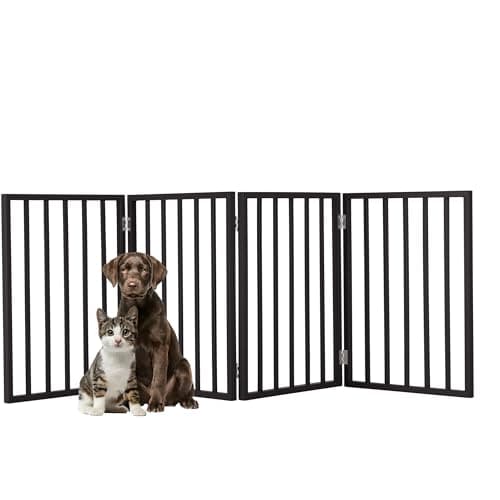
PETMAKER 4-Panel Freestanding Pet Gate
8.6 / 10
- 72-inch, four-panel freestanding gate that needs no drilling, per PETMAKER
- Accordion design folds flat for storage and travel
- Fits doorways, hallways, and stair openings 45 to 60 inches wide
- See-through panels let the dogs watch each other through the barrier
$52.99
Current price · checked Sep 8, 2026
BestPet
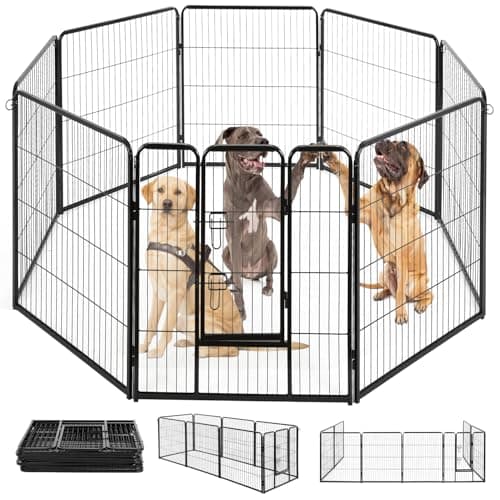
BestPet 40" 8-Panel Heavy-Duty Playpen
8.4 / 10
- Eight heavy-duty metal panels, 40 inches tall, per BestPet
- Tool-free setup that shapes into a square, rectangle, or octagon
- Rust-resistant finish for indoor or outdoor use
- Expandable — connect panels to enlarge the pen or replace a section
$59.99
Current price · checked Sep 8, 2026
TheraPetMD
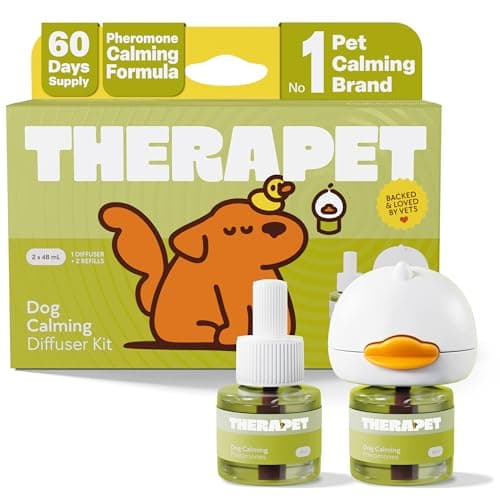
TheraPetMD 60-Day Dog Calming Diffuser Kit
8.0 / 10
- Plug-in pheromone diffuser covering about 700 square feet, per TheraPetMD
- 60-day refill included; plug-and-play, no training needed
- Low-glow indicator light, dim by design
- Maker positions it for stress, barking, and anxiety behaviors
$35.99
Current price · checked Sep 8, 2026
XiaZ
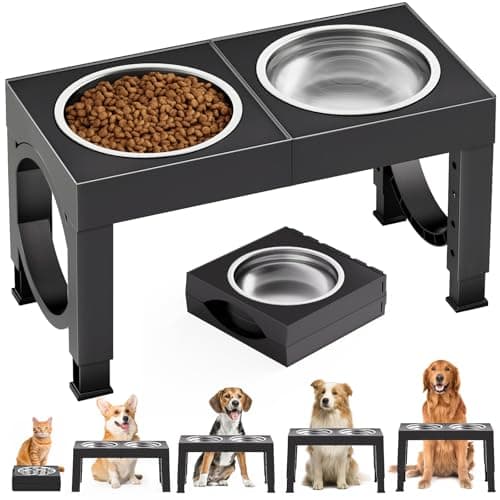
XIAZ Elevated Dog Bowls
7.9 / 10
- Raised stainless steel bowls on an adjustable stand, per XiaZ
- Multiple height settings the maker positions for senior and large dogs
- Two detachable, dishwasher-safe stainless bowls for food and water
- Non-slip pads and a silent strip resist tipping during eager eating
$19.99
Current price · checked Sep 8, 2026
AXEFUN
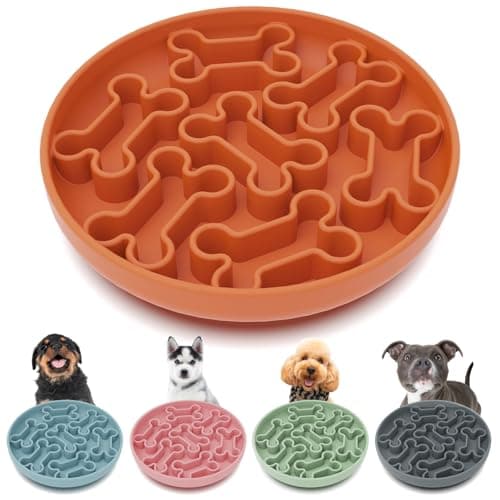
AXEFUN Silicone Slow Feeder Bowl
7.7 / 10
- Bone-shaped maze that slows a fast eater, per AXEFUN
- Food-grade, BPA-free silicone that is flexible and durable
- Non-slip base to resist sliding and spills during meals
- 7.5 inches across and 1.5 inches tall, suiting small to large dogs
$8.99
Current price · checked Sep 8, 2026

Pawzitive Pets
Pawzitive Pets Hemp Calming Chews
7.6 / 10
- 120 soft chews the maker positions for stress and anxiety relief
- Hemp seed oil, chamomile, melatonin, and L-tryptophan, per Pawzitive Pets
- Marketed for vet visits, travel, storms, and time alone
- Made in the USA and, per the listing, developed by veterinarians
$23.97
Current price · checked Sep 8, 2026
The Short Answer
Treat the first meeting as a protocol, not a moment. Start on neutral ground — a quiet street or a friend's yard, not the older dog's living room — and take a parallel walk before anyone goes home. Then set up gated coexistence so the two dogs share the house without being forced together: a PETMAKER 4-Panel Freestanding Pet Gate creates a see-through boundary that needs no drilling, and a BestPet 40" 8-Panel Heavy-Duty Playpen gives the puppy a safe zone of its own while the older dog gets puppy-free rest. Lower the whole home's tension with a TheraPetMD 60-Day Calming Diffuser, understanding it is an adjunct with mixed evidence, not a fix. Separate every meal from day one to head off resource guarding: XIAZ Elevated Dog Bowls give a senior a comfortable raised station in one room, and an AXEFUN Silicone Slow Feeder slows a gulping puppy in another. Pawzitive Pets Hemp Calming Chews are a second optional calming adjunct, hedged the same way. The safety core never changes: never leave a puppy and an older dog together unsupervised in the early weeks, feed them apart always, and read a growl as information rather than misbehavior. A dog with a bite history or serious guarding needs a professional before a puppy, not a gate.
Every product on this list has been scored against the PetPal Gear Score, a weighted composite of expert consensus, observed effectiveness, animal safety, long-term durability, and value. Review method: Editorial synthesis of behavior and welfare guidance — veterinary-behavior consensus reflected in the American Veterinary Society of Animal Behavior (AVSAB) position on humane, reward-based introductions, and positive-reinforcement training consensus on gated coexistence and resource separation. Manufacturer documentation from PETMAKER, BestPet, TheraPetMD, XiaZ, AXEFUN, and Pawzitive Pets was reviewed. Community consensus from r/Dogtraining and r/puppy101 was included as consensus, not quotation. No first-hand product testing — PetPalHQ does not run a testing lab.. Synthesized from 3+ expert sources.
Bringing a puppy home to an older dog goes wrong, in this guide's editorial judgment, for one reason more than any other: it is treated as a moment instead of a process. An owner carries the puppy through the front door, sets it down in the older dog's living room, and hopes the two will sort it out. Sometimes they do. Often the older dog feels ambushed on its own turf, the puppy learns fear or pushiness, and a relationship that could have been easy starts in a hole. The first meeting is not the hard part to buy your way out of — it is the part to plan.
Start on neutral ground, because a resident dog defends its home and a first impression is hard to redo. The strongest first meeting happens somewhere neither dog owns: a quiet street, a friend's fenced yard, a calm patch of park. Take a parallel walk a few feet apart before anyone goes inside, so the dogs move together and read each other in motion rather than nose-to-nose over the older dog's threshold. Keep it short, calm, and on loose leashes. None of that is a product — it is the free, load-bearing first step, and no amount of gear substitutes for getting it right.
Then build coexistence in stages, and let the equipment scaffold each one. Gated coexistence lets the dogs share a house through a barrier before they share the floor. Resource separation — separate feeding stations, separate high-value items — heads off the guarding that is far easier to prevent than to cure. Supervised integration comes only after the earlier stages are calm, and freedom comes last of all. The picks below are the kit for those stages, in protocol order, not six products ranked against each other. Each earns its place by doing a job the introduction needs done — and where a claim rests on a maker's documentation, that is named rather than asserted, because PetPalHQ does not run a testing lab.
One principle sits above the whole protocol and never bends. Never leave a puppy and an older dog together unsupervised in the early weeks, feed them apart at every meal, and treat a growl as information rather than misbehavior — an older dog telling a puppy to back off is communicating, and punishing that warning teaches it to skip straight to a snap. Watch body language for stiffness, hard stares, and hovering over resources. And know the hard limit: a dog with a bite history or serious guarding needs a professional before a puppy, not a gate. Run the protocol as the slow, staged thing it is, and two dogs who might have clashed become a household that works.
Head-to-Head Comparison
| Feature | PETMAKER 4-Panel Freestanding Pet Gate | BestPet 40" 8-Panel Heavy-Duty Playpen | TheraPetMD 60-Day Dog Calming Diffuser Kit | XIAZ Elevated Dog Bowls | AXEFUN Silicone Slow Feeder Bowl | Pawzitive Pets Hemp Calming Chews |
|---|---|---|---|---|---|---|
| Role in the protocol | Gated boundary | Puppy's safe zone | Whole-home calm | Older dog's station | Puppy's station | Extra calming adjunct |
| Where it goes | Across a doorway or hall | The puppy's home base | Plugged into the shared room | The older dog's own room | The puppy's pen or room | Given to the older dog |
| Protocol stage | Gated coexistence | Gated coexistence | Background, all stages | Resource separation | Resource separation | Background, all stages |
| For which dog | Both, through the barrier | Mainly the puppy | Both dogs | The older / senior dog | The puppy | Mainly the older dog |
| Check price | Amazon | Amazon | Amazon | Amazon | Amazon | Amazon |
$52.99
Current price · checked Sep 8, 2026
- 72-inch, four-panel freestanding gate that needs no drilling, per PETMAKER
- Accordion design folds flat for storage and travel
- Fits doorways, hallways, and stair openings 45 to 60 inches wide
- See-through panels let the dogs watch each other through the barrier
- Wood and metal build with a black finish; 24 inches tall
A puppy introduction goes wrong most often for one reason: the dogs are put nose-to-nose too soon, on the older dog's home turf. The fix is a barrier that lets them share air and sight before they share floor space, and the PETMAKER 4-Panel Freestanding Pet Gate is that barrier. PETMAKER documents a 72-inch, four-panel wood gate with an accordion design that stands on its own, needs no drilling, and folds flat to store. It fits openings 45 to 60 inches wide and stands 24 inches tall, with a black finish meant to suit a home rather than shout at it.
Where it fits the protocol: after the neutral-ground first meeting, this gate is how the two dogs live together before they are trusted together. Set across a doorway, it splits the house into the puppy's side and the older dog's side while letting them see, smell, and get used to each other through the panels. Because it is freestanding, you can move it to wherever the day's routine needs a line — a hallway, the kitchen entrance, the top of a run of stairs. Households comparing standing gates on height, footprint, and stability should read our full ranking of freestanding pet gates before buying, because a gate the older dog can knock over or the puppy can squeeze past is not a boundary at all.
The honest caveats are about scale and security. At 24 inches tall it is a real barrier for a puppy and a small or calm adult, but a large, determined, or athletic dog can clear or topple a freestanding gate, so it is a management tool for a supervised home, not a wall you trust unattended. The 45-to-60-inch opening range means it will not fit every doorway, so measure first. And a freestanding gate holds by its own weight and footing, so a hard shove can move it — check the placement each time you set it. Confirm current price and availability before buying. Used as the visible line between two dogs learning each other's presence, though, it is the first piece of hardware the protocol needs.
What We Love
- No drilling means it works in a rental and moves room to room
- See-through panels let the dogs habituate to each other safely
- Folds flat for storage, travel, or putting away once trust builds
- Freestanding footprint sets a boundary anywhere without hardware
What Could Be Better
- A large or determined dog can topple or clear a 24-inch freestanding gate
- Fixed 45-to-60-inch opening range will not fit every doorway
- Holds by weight and footing, so a hard shove can move it
- A supervised management tool, not an unattended barrier
The Verdict
The right first purchase for gated coexistence: a see-through, no-drill boundary that lets two dogs get used to each other before they share the floor. Just match it to your dogs — a big, athletic adult needs a taller mounted barrier, and no freestanding gate is a substitute for supervision.
Sources
- PETMAKER (Amazon product listing, 4-Panel Pet Gate): freestanding 72-inch wood pet gate with an accordion design that barricades a puppy without drilling, sized for openings 45 to 60 inches wide
- Veterinary-behavior introduction consensus (AVSAB): a first meeting on neutral ground followed by gated separation at home lets a resident dog and a new puppy adjust at their own pace, lowering the odds of a bad first impression that is hard to undo
$59.99
Current price · checked Sep 8, 2026
- Eight heavy-duty metal panels, 40 inches tall, per BestPet
- Tool-free setup that shapes into a square, rectangle, or octagon
- Rust-resistant finish for indoor or outdoor use
- Expandable — connect panels to enlarge the pen or replace a section
- Folds down for storage and travels between rooms or the yard
Gated coexistence needs two things: a line between the dogs, and a place the puppy belongs. The gate draws the line; the BestPet 40" 8-Panel Heavy-Duty Playpen makes the place. BestPet documents an eight-panel metal pen, 40 inches tall, with a rust-resistant finish and a tool-free setup that shapes into a square, rectangle, or octagon and connects to more panels to grow or shrink. It works indoors or out and folds down when the day is done.
Where it fits the protocol: this is the puppy's home base inside the shared house — a spot to nap, settle, and be visible to the older dog without being underfoot. Its quieter job is protecting the older dog. A resident dog worn out by a bouncing puppy needs uninterrupted rest, and a pen gives the adult a puppy-free house while the puppy stays safe and contained. That two-way relief is what keeps early tension from curdling into real dislike. Because it reconfigures without tools, you can open it into a wider play yard for supervised time and close it back to a snug den for downtime. Readers weighing pens on panel strength, height, and footprint should compare heavy-duty dog exercise pens and playpens before buying, since a pen a puppy can flip or climb defeats its own purpose.
The honest caveats are about containment and use. A 40-inch pen holds most puppies, but a climber, a jumper, or a fast-growing large breed can outgrow or defeat it, so watch how your puppy tests the walls. A pen is for short, supervised confinement and rest, not all-day isolation — a puppy left penned for hours is a welfare problem, not a training win. On slick floors an unanchored pen can slide when a puppy throws itself at a panel, so place it thoughtfully and check the footing. Confirm current price and availability before buying. As the puppy's safe base and the older dog's rest guarantee, though, it is the second half of gated coexistence.
What We Love
- Gives the puppy a safe base and the older dog real puppy-free rest
- Tool-free panels reconfigure from a den to a wider play yard
- Expandable and foldable — grows, shrinks, and stores easily
- Rust-resistant metal works indoors or in the yard
What Could Be Better
- A climber or large fast-growing breed can outgrow or defeat 40 inches
- For short supervised confinement, not all-day isolation
- Can slide on slick floors when a puppy hits a panel hard
- Takes real floor space in a small home
The Verdict
Buy this as the puppy's home base and the older dog's rest guarantee — the two-way relief that keeps early tension from hardening. Just treat it as supervised, short-session containment, size it to a growing puppy, and steady it on slick floors.
Sources
- BestPet (Amazon product listing, 40" 8-Panel Playpen): heavy-duty 8-panel metal exercise pen with a rust-resistant finish and tool-free setup that shapes into a square, rectangle, or octagon for indoor or outdoor use
- Positive-reinforcement training consensus: a new puppy needs a safe, confined zone of its own so the resident dog gets genuine puppy-free rest, and neither animal is forced into constant, tiring contact during the first weeks
$35.99
Current price · checked Sep 8, 2026
- Plug-in pheromone diffuser covering about 700 square feet, per TheraPetMD
- 60-day refill included; plug-and-play, no training needed
- Low-glow indicator light, dim by design
- Maker positions it for stress, barking, and anxiety behaviors
- Listing notes it is not recommended for dogs with seizure history
A calmer house is a fairer place to run an introduction, and a diffuser is a low-effort way to nudge the whole environment down a notch. The TheraPetMD 60-Day Dog Calming Diffuser Kit fills that role — with the honesty its category demands. TheraPetMD documents a plug-in pheromone diffuser that covers about 700 square feet, ships with a 60-day refill, and runs plug-and-play with a low-glow indicator light. The listing itself notes it is not recommended for dogs with a seizure history or neurological conditions, which is a caution worth repeating rather than burying.
Where it fits the protocol: this is background support during the tense first weeks, not a step in the sequence. Plugged into the shared living area, it aims to take a fraction of the edge off both dogs while the real work — neutral meetings, gated coexistence, separate meals, supervised time — does the heavy lifting. The load-bearing honesty here is that a diffuser is an adjunct. Evidence for calming pheromones is mixed and, where positive, modest, and no plug-in fixes a bad match or replaces a paced introduction. Readers who want to compare pheromones, chews, and other calming products, and understand what the evidence does and does not support, should read our roundup of the best pet calming aids for anxiety before spending on this category.
The honest caveats are the point of this pick. Treat any calming aid as a maybe-helpful extra, not a solution — if it helps, it helps at the margin. Follow the listing's own caution about dogs with seizure or neurological histories, and raise a calming plan with a veterinarian before leaning on products for a genuinely anxious dog. A diffuser also does nothing on its own: unplug the management and the meals and the supervision, and the pheromone is just scent in the air. Confirm current price and availability before buying. Framed as a modest, hedged adjunct to a well-run introduction, it can earn its place — just never the credit for the work.
What We Love
- Plug-and-play whole-room support that needs no training
- 60-day refill covers the tense early stretch in one purchase
- Dim indicator light won't disrupt a room at night
- A low-effort way to nudge the shared environment calmer
What Could Be Better
- Evidence for calming pheromones is mixed and, at best, modest
- An adjunct only — it does not fix a bad match or replace the protocol
- Listing says not recommended for dogs with seizure histories
- Does nothing without the management and supervision doing the real work
The Verdict
A hedged, optional extra rather than a step in the sequence: it may take a little edge off the house, but the meetings, gating, separate meals, and supervision are what actually work. Mind the seizure-history caution and ask a vet before relying on any calming product.
Sources
- TheraPetMD (Amazon product listing, 60-Day Calming Diffuser Kit): plug-in dog pheromone diffuser that covers about 700 square feet with a 60-day refill included, which the listing states is not recommended for dogs with a seizure history or neurological conditions
- Veterinary-behavior consensus on calming aids: pheromone products are an adjunct to behavior and management, with mixed and generally modest evidence, and are not a substitute for a proper, paced introduction
$19.99
Current price · checked Sep 8, 2026
- Raised stainless steel bowls on an adjustable stand, per XiaZ
- Multiple height settings the maker positions for senior and large dogs
- Two detachable, dishwasher-safe stainless bowls for food and water
- Non-slip pads and a silent strip resist tipping during eager eating
- Collapsible legs fold down for storage; the maker notes puppies under 15" body height won't fit
Resource guarding between two dogs is far easier to prevent than to cure, and prevention starts at the food bowl. Feed the dogs apart from day one, and give each a station that suits it. The XIAZ Elevated Dog Bowls are the older dog's station. XiaZ documents raised stainless steel bowls on an adjustable stand with several height settings, two detachable dishwasher-safe bowls, and non-slip pads that steady it during eager eating. The maker positions the raised height for senior and large dogs, easing the neck and joints as an older dog stoops to eat — and notes plainly that puppies under about 15 inches of body height will not fit, which is exactly why this is the adult's bowl and not the puppy's.
Where it fits the protocol: this is one half of resource separation. Set the older dog's raised station in its own room, out of sight of the puppy's bowl, and feed both dogs behind a closed door or the gate. That physical separation removes the single most common flashpoint between a resident dog and a newcomer before it can start. The raised design does a second job for a senior specifically — a comfortable eating posture for a stiff neck and older joints — so the adult associates the puppy's arrival with a nicer meal, not a rival at the dish. Households comparing raised feeders on height range, stability, and bowl size should read our roundup of the best elevated and raised dog feeders before choosing the older dog's station.
The honest caveats are about fit and evidence. Raised feeders suit many seniors and large dogs, but the health case is comfort and posture, not a proven cure for any condition, so match the height to the individual dog rather than assuming benefit. Deep-chested breeds should have a raised-feeding question run past a veterinarian, since bloat risk is debated. And elevated or not, the bowl only prevents guarding if the meals are genuinely separated — a raised dish in the same room as the puppy's is still a flashpoint. Confirm current price and availability before buying. As the older dog's dedicated, comfortable station in a separate room, it does the preventive job the protocol asks of it.
What We Love
- Raised posture eases a senior dog's neck and joints at mealtime
- Adjustable height fits the individual older or large dog
- Two stainless bowls and non-slip pads make a stable, cleanable station
- Gives the adult its own dedicated spot away from the puppy
What Could Be Better
- Won't fit small puppies — the maker notes an under-15-inch limit
- Comfort benefit, not a proven cure for any medical condition
- Deep-chested breeds should clear raised feeding with a vet
- Prevents guarding only if the meals are actually separated by room
The Verdict
The older dog's own comfortable station, and half of resource separation done right: feed the senior here, in its own room, out of the puppy's sight. Match the height to the individual dog, and ask a vet about raised feeding for a deep-chested breed.
$8.99
Current price · checked Sep 8, 2026
- Bone-shaped maze that slows a fast eater, per AXEFUN
- Food-grade, BPA-free silicone that is flexible and durable
- Non-slip base to resist sliding and spills during meals
- 7.5 inches across and 1.5 inches tall, suiting small to large dogs
- Dishwasher safe and light enough to pack for travel
The puppy's meal is the other half of resource separation, and a bouncy young dog that inhales food brings its own problems to a two-dog home. The AXEFUN Silicone Slow Feeder Bowl is the puppy's station. AXEFUN documents a food-grade, BPA-free silicone bowl with a bone-shaped maze that makes a dog work the kibble out slowly, a non-slip base to stop it sliding, and a 7.5-inch size that suits small through large dogs. It is dishwasher safe and flexible enough to pack away.
Where it fits the protocol: feed the puppy here, in its pen or a separate room, while the older dog eats at its own station elsewhere. Two dogs, two rooms, two bowls — that is the whole rule, and this is the puppy's bowl in it. The maze does a second useful thing during a stressful transition: it turns a ten-second gulp into a few minutes of calm, focused work, which is gentle enrichment and a small brake on a puppy wound up by a new home and a new housemate. Slowing the eating also eases the gulping-related discomfort a fast eater brings. Readers comparing anti-gulp designs on maze depth, material, and cleaning should read our roundup of the best slow feeders and anti-gulp bowls before choosing the puppy's dish.
The honest caveats are modest but real. A slow feeder reduces gulping and adds a little mental work; it is not a medical device, and a dog with genuine digestive symptoms is a veterinary question, not a bowl question. Some determined puppies learn to flip a light silicone bowl, so the non-slip base helps but a very busy eater may still need it wedged in place or set inside a heavier tray. And any maze bowl needs real cleaning, since food lodges in the channels. Confirm current price and availability before buying. As the puppy's own separated, calming station, it does exactly the job the protocol needs at the lowest price on this page.
What We Love
- Slows a gulping puppy and adds a few minutes of calm mental work
- Gives the puppy its own separated station for every meal
- Non-slip, flexible, dishwasher-safe silicone at a very low price
- One size suits the puppy now and as it grows
What Could Be Better
- A determined puppy can still flip a light silicone bowl
- Maze channels need thorough cleaning to stay hygienic
- Reduces gulping but is not a treatment for digestive problems
- Effect on eating speed varies from dog to dog
The Verdict
The puppy's own station and the cheapest lever on the page: it separates the puppy's meal from the older dog's and turns a gulp into calm, focused work. Wedge it steady for a busy eater, and keep the maze clean.
$23.97
Current price · checked Sep 8, 2026
- 120 soft chews the maker positions for stress and anxiety relief
- Hemp seed oil, chamomile, melatonin, and L-tryptophan, per Pawzitive Pets
- Marketed for vet visits, travel, storms, and time alone
- Made in the USA and, per the listing, developed by veterinarians
- A treat-based adjunct, not a step in the introduction sequence
Some dogs — often the resident older one — carry more stress into a household change than a diffuser alone touches, and a calming chew is a second optional adjunct for those days. The Pawzitive Pets Hemp Calming Chews fill that slot with the same honesty the diffuser demands. Pawzitive Pets documents 120 soft chews built around hemp seed oil, chamomile, melatonin, and L-tryptophan, marketed for stress from travel, storms, vet visits, and time alone, made in the USA and, per the listing, developed by veterinarians.
Where it fits the protocol: this is background support, not a stage. Given to the older dog on the harder early days — the first week of a puppy underfoot, or before a session where the two spend supervised time close — a chew may take a small edge off. The honesty is identical to the diffuser's: calming supplements are adjuncts with mixed and modest evidence, and none of them substitutes for the neutral meeting, the gating, the separate meals, or the supervision that actually build the relationship. A treat is easy to over-trust precisely because it feels like doing something.
The honest caveats are important enough to lead with. Melatonin and other actives interact with medications and are not right for every dog, so clear any supplement with a veterinarian first — especially for a senior on medication, and especially if the older dog's stress is severe rather than mild. Watch that chews are counted as treats within the day's food, not handed out freely. And a calming chew is never a reason to push two dogs together faster; if a dog needs medicating to tolerate the other, the introduction is moving too fast. Confirm current price and availability before buying. As a hedged, vet-cleared extra for the harder days, it can help at the margin — and only at the margin.
What We Love
- A convenient, treat-based way to support a stressed older dog
- Familiar calming ingredients like chamomile and L-tryptophan
- 120 chews cover the extended early transition
- Easy to give before a known stressor like a close session
What Could Be Better
- Evidence for calming supplements is mixed and modest
- Melatonin and actives can interact with medications — vet first
- Counts as treats in the daily calorie budget
- Never a reason to speed up an introduction the dogs aren't ready for
The Verdict
A second optional, hedged adjunct for the harder days, aimed mainly at a stressed older dog — helpful at the margin, if at all. Clear it with a vet before use, especially for a senior on medication, and never let a chew become the reason to rush the dogs together.
How We Score
Formula
PetPal Multi-Dog Intro Score = (Expert Consensus × 0.35) + (Protocol Fit × 0.25) + (Safety / Welfare Design × 0.20) + (Value × 0.20)
Score Factors
- Expert Consensus · 35%
- Synthesized from veterinary-behavior consensus reflected in the AVSAB position on humane, reward-based introductions, positive-reinforcement training consensus on gated coexistence and resource separation, and manufacturer documentation. The PetPal Multi-Dog Intro Score is a composite of expert opinion — PetPalHQ does not run a testing lab.
- Protocol Fit · 25%
- How directly the item advances a staged introduction — neutral-territory meeting, gated coexistence, resource separation, and supervised integration — rather than how it performs as a standalone product ranked against rivals.
- Safety / Welfare Design · 20%
- Alignment with introduction-safety principles — never leaving a puppy and older dog together unsupervised early, separate feeding always, letting the older dog correct appropriately, and reading body language rather than forcing contact.
- Value · 20%
- Cost relative to the item's role in the protocol, including durability and how much of the calm, guarding-free outcome the item is responsible for. Calming adjuncts are scored as hedged extras, not solutions.
| Rank | Product | Score |
|---|---|---|
| #1 | PETMAKER PETMAKER 4-Panel Freestanding Pet Gate | 8.6 |
| #2 | BestPet BestPet 40" 8-Panel Heavy-Duty Playpen | 8.4 |
| #3 | TheraPetMD TheraPetMD 60-Day Dog Calming Diffuser Kit | 8.0 |
| #4 | XiaZ XIAZ Elevated Dog Bowls | 7.9 |
| #5 | AXEFUN AXEFUN Silicone Slow Feeder Bowl | 7.7 |
| #6 | Pawzitive Pets Pawzitive Pets Hemp Calming Chews | 7.6 |
When NOT to Buy
Gear does not fix a bad match, and some homes need a professional before they need a gate. A resident dog with a bite history, a serious resource-guarding problem, or a pattern of real aggression toward other dogs should be assessed by a certified applied animal behaviorist (CAAB) or a veterinary behaviorist before a puppy ever arrives — not after a fight. No freestanding gate, pen, diffuser, or chew makes an unsafe adult safe around a vulnerable puppy, and a rushed introduction into that situation can injure the puppy and deepen the older dog's behavior. If that describes your dog, the first purchase is a professional's time.
Some older dogs argue against a puppy at all, and honesty about that is a welfare position, not a failure. A frail senior in pain, a dog with a low tolerance for disruption, or one whose distress around change runs deep may simply be better off without a bouncing housemate — and forcing the arrangement serves the human's wish, not the dog's welfare. If an older dog's stress does not settle as the weeks pass, and instead builds into persistent pacing, hiding, or distress when routines shift, that is a behavior question rather than a gear question; our guide to structured separation-anxiety routines covers the management side, and a veterinarian should rule out pain first.
Finally, the honest expectations caveat. This is a slow protocol measured in weeks, not a weekend of shopping. Growling is information, not misbehavior — an older dog telling a puppy to back off is communicating, and punishing that growl teaches the dog to skip the warning and go straight to a snap. Never leave a puppy and an older dog together unsupervised in the early weeks, feed them apart every single meal, and watch for stiffness, hard stares, and hovering over resources. If you cannot commit to that supervision and pace, the problem is not which gate to buy. Confirm current price and availability on every item before buying, since listings and sellers move over time.
Frequently Asked Questions
- Where should the puppy and older dog meet for the first time?
- On neutral ground, not inside the home. A resident dog naturally defends its own space, so a first meeting in the living room or yard the older dog already owns stacks the odds against a calm start. Pick somewhere neither dog controls — a quiet street, a friend's fenced yard, a low-traffic corner of a park — and begin with a parallel walk a few feet apart rather than a face-to-face greeting. Walking together in the same direction lets the dogs take in each other's movement and scent without the pressure of a head-on meeting, and it gives both handlers a clear read on body language. Keep the first session short, calm, and on loose leashes, and end it while it is still going well. Only after neutral-ground meetings feel relaxed should the dogs move to the home, and even then through a barrier at first rather than loose together.
- How long does introducing a puppy to an older dog actually take?
- Think in weeks, not days, and let the dogs set the pace rather than a calendar. Some easygoing pairs relax within a week or two; others need a month or more of gated coexistence and separate routines before they are trustworthy loose together. Rushing is the most common mistake and the hardest to walk back, because a scary or overwhelming early experience can leave a lasting wariness that slow, positive exposure would have avoided. The honest markers of progress are calm body language through the gate, relaxed parallel time, and an older dog that chooses to be near the puppy rather than tolerating it. Until you see those consistently, keep the stages in place. If weeks pass and tension is building rather than easing, that is a signal to slow down further or bring in a professional, not to push the dogs together and hope.
- Why do the two dogs need separate feeding stations?
- Because the food bowl is the single most common flashpoint between a resident dog and a newcomer, and resource guarding is far easier to prevent than to cure. Feeding both dogs in the same space — even a few feet apart — asks a young puppy and an established older dog to trust each other around the highest-value resource in the house before they have any relationship at all. Feeding them apart from day one, ideally in separate rooms or behind a closed gate, removes that pressure entirely. The older dog eats in peace at its own station; the puppy eats at its own, learning that mealtime is calm and uncontested. Keep the separation for every meal, not just the first week, and do the same with chews, long-lasting treats, and favorite toys. Prevention here costs nothing but a little logistics, while a guarding problem that takes hold can take a professional to unwind.
- My older dog growled at the puppy — should I punish that?
- No. A growl is information, and punishing it is one of the more damaging things an owner can do. When an older dog growls at a bouncy puppy, it is communicating a clear, appropriate message — give me space, that is too much — and that warning is exactly what keeps interactions from escalating. A dog that is corrected for growling often learns not to stop growling, but to skip the warning and go straight to a snap or a bite, which is far more dangerous and much harder to read coming. The right response is to calmly increase the distance, give the older dog the puppy-free rest it is asking for, and let appropriate corrections stand. Let the older dog set boundaries; a well-socialized adult teaching a puppy manners with a growl or a brief air-snap is normal communication, not aggression. Step in to prevent overwhelm and give both dogs breaks, but do not silence the very signal that keeps everyone safe.
- Do calming diffusers and chews actually help two dogs get along?
- They may help a little, at the margin, and they are best understood as adjuncts rather than solutions. Calming pheromone diffusers and supplement chews have mixed and generally modest evidence behind them, so the honest framing is that they might take a small edge off a stressed household while the real work is done by the neutral meetings, the gated coexistence, the separate meals, and the patient supervision. None of them fixes a bad match or replaces a paced introduction, and treating a product as the plan is how introductions go wrong. There are also real cautions: some diffusers are not recommended for dogs with a seizure history, and supplement ingredients like melatonin can interact with medications, so clear any calming aid with a veterinarian first — especially for a senior on medication or a dog whose stress is severe. If a dog needs medicating just to tolerate the other, the introduction is moving too fast, and that is the signal to slow down, not to add another product.
Bottom Line
Start on neutral ground, not the living room. The first meeting belongs on a quiet street or a borrowed yard with a parallel walk before anyone goes home — the older dog's turf is the worst place for a first impression, and no product undoes a bad one.
Build gated coexistence before shared freedom. The PETMAKER freestanding gate is the see-through boundary that lets the dogs habituate safely; the BestPet pen gives the puppy a safe base and, just as importantly, gives the older dog puppy-free rest.
Separate every meal from day one. The XIAZ raised bowls are the older dog's comfortable station in its own room; the AXEFUN slow feeder is the puppy's station elsewhere. Two dogs, two rooms, two bowls prevents the guarding it is far harder to cure.
Treat calming aids as hedged extras, never fixes. The TheraPetMD diffuser and Pawzitive Pets chews are adjuncts with mixed, modest evidence — clear supplements with a vet, mind the seizure-history caution, and never let a calming product become a reason to rush the dogs together.
The safety core never changes: never leave a puppy and an older dog unsupervised in the early weeks, feed them apart always, and read a growl as information rather than misbehavior. A dog with a bite history or serious guarding needs a professional before a puppy — gear is scaffolding for a good match, not a fix for a bad one.
Sources & Methodology
Methodology
PetPal Multi-Dog Intro Score = (Expert Consensus × 0.35) + (Protocol Fit × 0.25) + (Safety / Welfare Design × 0.20) + (Value × 0.20)
Expert review sources
- American Veterinary Society of Animal Behavior (AVSAB) — position on humane, reward-based introductions and behavior
- Positive-reinforcement training consensus — gated coexistence, resource separation, and reading canine body language
- Veterinary-behavior consensus on calming aids — pheromones and supplements as modest adjuncts, not treatments
- PETMAKER — 4-Panel Pet Gate product documentation
- BestPet — 40" 8-Panel Playpen product documentation
- TheraPetMD — 60-Day Calming Diffuser Kit product documentation
- XiaZ — Elevated Dog Bowls product documentation
- AXEFUN — Silicone Slow Feeder Bowl product documentation
- Pawzitive Pets — Hemp Calming Chews product documentation
Community sources
- r/Dogtraining — multi-dog introduction, gating, and resource-separation consensus
- r/puppy101 — bringing a puppy home to a resident dog consensus
Prices and specs verified July 12, 2026.
About the author
Nick Miles is the chief editor of PetPalHQ. This puppy-introduction protocol and its kit are editorial synthesis of veterinary-behavior consensus reflected in the AVSAB position on humane, reward-based introductions, positive-reinforcement training consensus, and manufacturer documentation — PetPalHQ does not run a testing lab. The PetPal Multi-Dog Intro Score is a composite of expert opinion, not a measurement. Sources are cited by name throughout.
PetPalHQ is a participant in the Amazon Services LLC Associates Program. We may earn commissions from qualifying purchases — at no extra cost to you.
More Guides
Cats & Dogs
Best Freestanding Pet Gates 2026: No-Drill Barriers Ranked for Stability and Real Containment
Cats & Dogs
Best Heavy-Duty Dog Exercise Pens & Playpens 2026: Portable Panel Pens That Actually Hold Your Dog
Cats & Dogs
Best Pet Calming Aids for Anxiety in 2026
Cats & Dogs
Best Elevated & Raised Dog Feeders 2026
Cats & Dogs
Best Slow Feeders and Anti-Gulp Bowls for Dogs and Cats (2026)
Cats & Dogs