Birds
First Budgie Starter Checklist: A Provisioning Kit for Your First Parakeet (2026)
This is not a head-to-head cage ranking — it is a provisioning checklist for bringing home your first budgie, in the order you actually need it. A parakeet is a small, social, intelligent flock bird, and setting it up well means a cage with room to fly across, varied perches for healthy feet, a proper diet, things to chew and forage, a way to bathe, and dark quiet sleep. The picks below are that starter kit as a checklist — the flight cage, a perch-and-ladder playground, a seed diet, a cuttlebone, foraging toys, a clip-on bath, and a cage cover — not seven products ranked against each other. If you are picturing a single budgie alone in a tiny cage, read the caveats first, because budgies are flock birds, and the two biggest first-time mistakes are a cage too small and a bird too alone.
By Nick Miles · Updated July 12, 2026 · 12 min read
PetPalHQ is reader-supported. We may earn a commission from qualifying Amazon purchases at no extra cost to you.
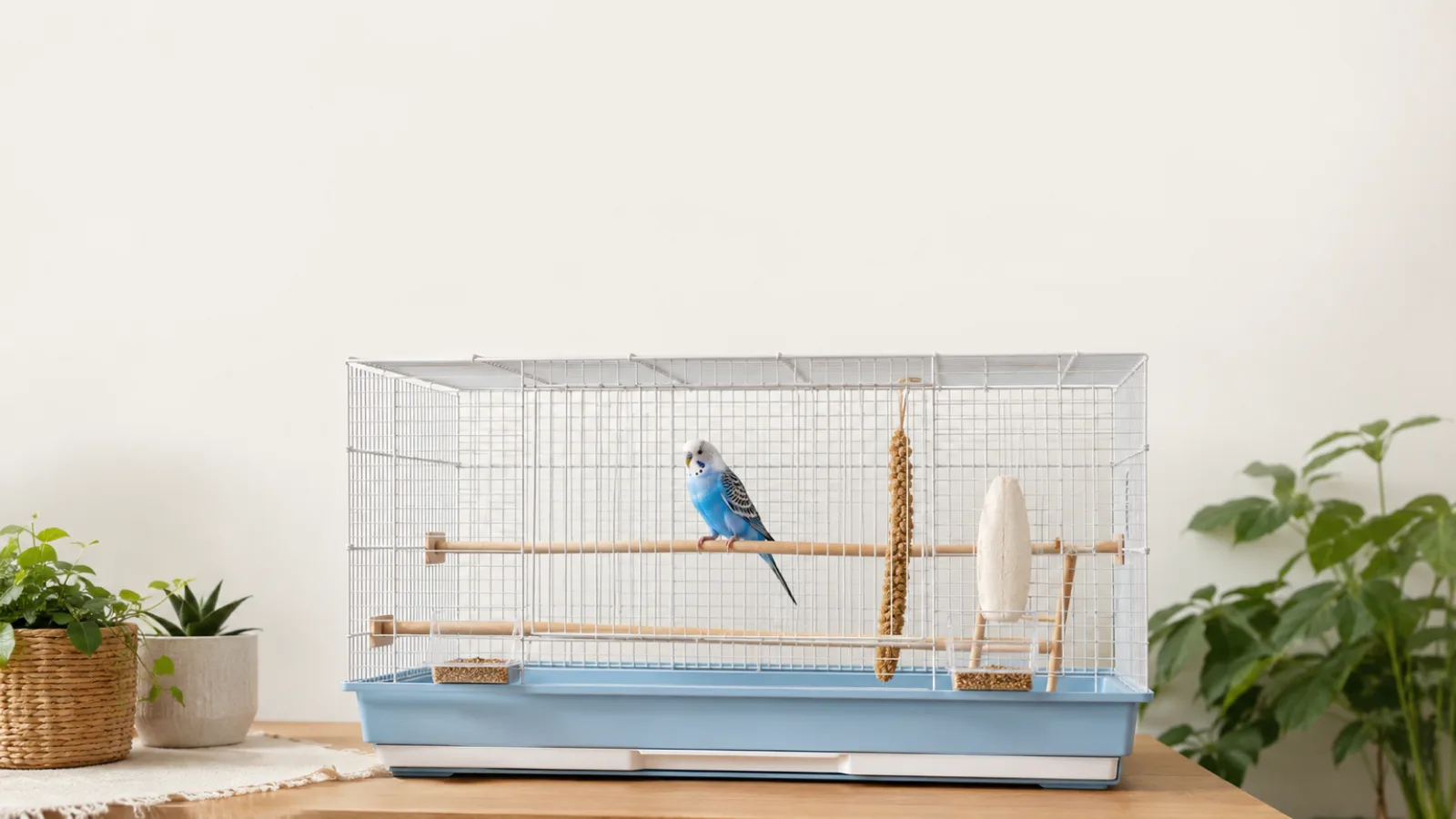
Evidence at a Glance
VEVOR 30-Inch Flight Cage
The home — a 30-inch flight cage measuring 29.9 by 18.1 by 17.9 inches with a 0.4-inch bar spacing, giving a budgie the horizontal room to actually fly across rather than the cramped vertical box small birds are too often sold in, with spacing narrow enough that a parakeet cannot get its head stuck.
Sources: VEVOR manufacturer documentation, Budgie keeper community consensus on cage size, Published avian-welfare guidance on flight space and bar spacing
Verified Jul 12, 2026
KATUMO Natural Perch and Ladder Playground
The furniture — a natural-wood perch, ladder, and swing playground that gives a budgie varied perch diameters for foot health, plus places to climb and chew, replacing the uniform smooth dowels a cage ships with that cause foot problems over time.
Sources: KATUMO manufacturer documentation, Budgie keeper consensus on perches and foot health, Published avian-welfare guidance on perching variety
Verified Jul 12, 2026
Wild Harvest Parakeet Seed Blend
The base diet — a seed blend formulated for parakeets, canaries, and finches as the everyday food, and the starting point of a varied diet that a first-time keeper builds out over time toward pellets and fresh vegetables for full nutrition.
Sources: Wild Harvest manufacturer documentation, Budgie keeper consensus on diet variety, Published avian-welfare guidance on parakeet nutrition
Verified Jul 12, 2026
Our Picks
VEVOR
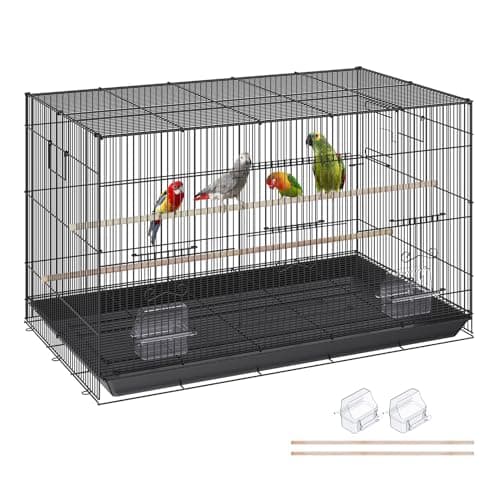
VEVOR 30-Inch Flight Bird Cage
8.6 / 10
- 29.9 by 18.1 by 17.9 inches with 0.4-inch bar spacing per VEVOR
- Horizontal flight cage shape suits a side-to-side flier
- Narrow spacing keeps a small budgie's head safe
- Slide-out tray makes daily cleaning simple
$42.90
Current price · checked Sep 8, 2026
KATUMO
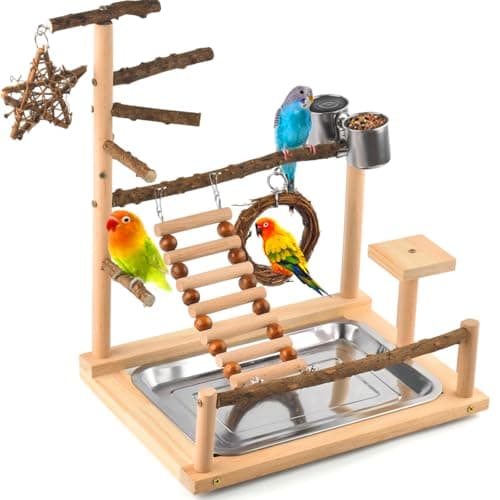
KATUMO Natural Wooden Perch and Ladder Bird Playground
8.3 / 10
- Natural-wood perches of varied thickness per KATUMO
- Ladder and swing add climbing and movement
- Rattan chew toy and two feeding cups included
- Replaces the foot-damaging smooth dowels a cage ships with
$25.59
Current price · checked Sep 8, 2026
Wild Harvest
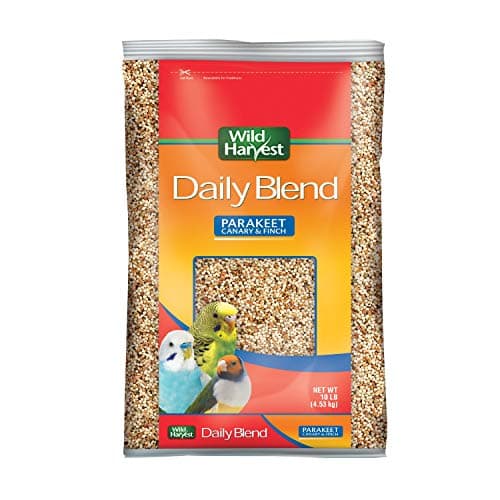
Wild Harvest Daily Blend for Parakeets, Canaries and Finches
8.1 / 10
- Seed blend for parakeets, canaries, and finches per Wild Harvest
- Millet and canary grass seed as the everyday base
- The starting point of a varied diet, not the whole diet
- Filled fresh in the seed cup each day
$10.94
Current price · checked Sep 8, 2026
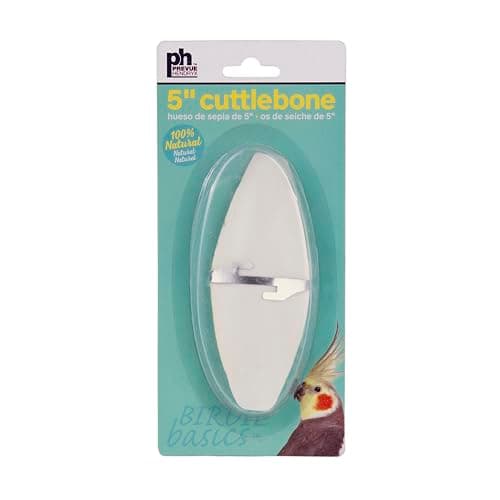
Prevue Pet Products
Prevue Pet Products 5-Inch Bird Cuttlebone
8.0 / 10
- Provides calcium, iron, and trace minerals per Prevue
- Hard surface helps keep the beak worn and tidy
- Clips to the cage bars within reach of a perch
- Covers minerals a seed diet does not supply
$1.97
Current price · checked Sep 8, 2026
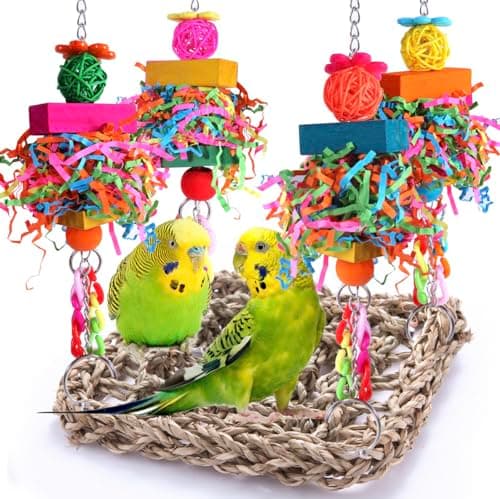
BBjinronjy
Seagrass Woven Foraging Swing Mat for Small Birds
8.2 / 10
- Hand-woven seagrass with wood, beads, and paper per maker
- Gives a budgie something to climb, chew, and shred
- Foraging and destruction occupy an active mind
- About 6.7 inches, sized for a small bird
$7.99
Current price · checked Sep 8, 2026
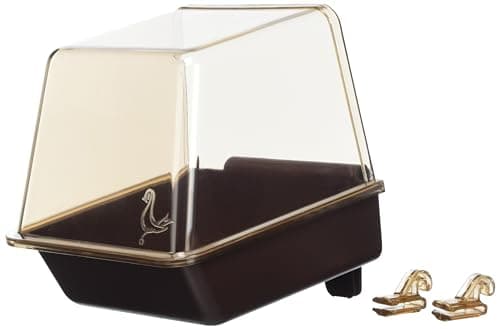
Penn-Plax
Penn-Plax Clip-On Bird Bath
7.9 / 10
- Universal clips attach to most birdcages per Penn-Plax
- Sized and shaped for a small parakeet to bathe in
- Non-toxic plastic, easy to assemble and clean
- Contains the splashing to keep the cage drier
$6.28
Current price · checked Sep 8, 2026
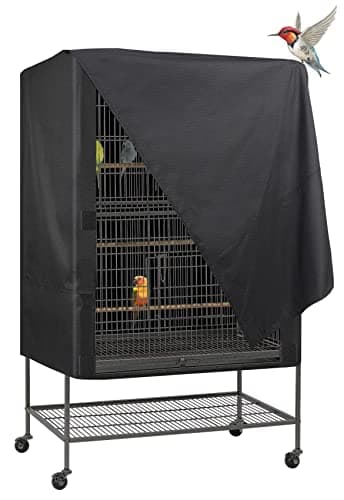
Explore Land
Explore Land Universal Bird Cage Cover
7.8 / 10
- Fits most cages with an adjustable front panel per Explore Land
- Blocks light for the long dark sleep a budgie needs
- Front panel opens for visibility and ventilation
- Reduces disturbance in a busy, lit room
$25.99
Current price · checked Sep 8, 2026
The Short Answer
Set up a first parakeet as a small, social flock bird, and provision the cage before the budgie comes home. Start with the biggest cage you can — a VEVOR 30-inch flight cage gives a budgie horizontal room to fly across, which matters far more than height, and its narrow bar spacing keeps a small bird safe. Furnish it with a KATUMO natural perch and ladder playground so the bird has varied perch diameters for healthy feet and things to climb, rather than the smooth dowels a cage ships with. Feed a proper diet — a Wild Harvest parakeet seed blend as the base, worked toward pellets and fresh vegetables over time — and add a Prevue cuttlebone for calcium and beak wear. A budgie is intelligent and easily bored, so a foraging toy like the seagrass swing mat gives it something to shred and work at, a Penn-Plax clip-on bath lets it keep its feathers in condition, and an Explore Land cage cover gives the dark, quiet sleep a bird needs. The core truth never changes: budgies are flock birds that need space, a varied diet, enrichment, and company — so buy the big cage, plan for real daily interaction or a second bird, and provision it all before you bring the parakeet home.
Every product on this list has been scored against the PetPal Gear Score, a weighted composite of expert consensus, observed effectiveness, animal safety, long-term durability, and value. Review method: Editorial synthesis of first-budgie provisioning guidance — budgie and parakeet keeper community consensus, published avian-welfare and husbandry guidance on cage size, diet, enrichment, and social needs, and manufacturer documentation from VEVOR, KATUMO, Wild Harvest, Prevue Pet Products, Penn-Plax, and Explore Land. Community consensus from budgie-keeping forums was included as consensus, not quotation. No first-hand product testing — PetPalHQ does not run a testing lab.. Synthesized from 6+ expert sources.
Provisioning a first parakeet goes wrong, in this guide's editorial judgment, for two reasons more than any others: the cage is too small, and the bird is too alone. A first-time owner pictures a single budgie in a compact cage as a low-maintenance, cheerful ornament — and gets a bird with no room to fly, nothing to do, and no company, which is a recipe for a stressed, unhappy parakeet. A budgie is a small, intelligent, intensely social flock bird, and provisioning it well means setting up for flight, a varied diet, a busy mind, feather care, real sleep, and company before it ever comes home.
Start with the home, because it is the foundation and the item people most often under-buy. The honest rule is the largest appropriate cage you can, prioritizing horizontal width so a budgie can fly side to side, with bar spacing narrow enough that a small head cannot get stuck. Then furnish it for a body that climbs and grips — varied natural perches rather than the smooth dowels a cage ships with — so the bird's feet stay healthy. Those two decisions, cage and furniture, set up the physical space a budgie lives its whole life in.
Then provision the rest of the bird's needs in turn. A seed blend is only the base of a diet that has to grow toward pellets and vegetables, with a cuttlebone covering the calcium seed lacks. Foraging toys keep an intelligent mind busy, because a bored budgie plucks its feathers and screams; a clip-on bath lets it care for its plumage; and a cage cover gives the long, dark, quiet sleep a bird needs in a busy household. The picks below are that starter kit as a checklist, in the order you need it, not seven products ranked against each other, and where a claim rests on a maker's documentation or keeper consensus, that is named rather than asserted, because PetPalHQ does not run a testing lab.
One truth sits above the whole checklist and never bends. A budgie is a flock bird, not an ornament, and it needs space, a varied diet, enrichment, feather care, real sleep, and company — either many hours of daily human interaction or, often more kindly, a second budgie. The gear is the small part; the daily care and the company are the real commitment. Provisioning rewards the owner who buys the big cage, builds the diet beyond seed, keeps the mind busy, and plans honestly for the bird's social life — and it disappoints the one who buys a small cage and a bag of seed and expects a quiet, hands-off pet, because that is not what a parakeet is.
Head-to-Head Comparison
| Feature | VEVOR 30-Inch Flight Bird Cage | KATUMO Natural Wooden Perch and Ladder Bird Playground | Wild Harvest Daily Blend for Parakeets, Canaries and Finches | Prevue Pet Products 5-Inch Bird Cuttlebone | Seagrass Woven Foraging Swing Mat for Small Birds | Penn-Plax Clip-On Bird Bath | Explore Land Universal Bird Cage Cover |
|---|---|---|---|---|---|---|---|
| Item on the checklist | Flight cage | Perch playground | Seed diet | Cuttlebone | Foraging toys | Clip-on bath | Cage cover |
| What it provides | Horizontal flight room | Foot health and climbing | The base of a varied diet | Calcium and beak wear | Mental enrichment | Feather care | Dark, quiet sleep |
| Set up when | First, before the bird | Before the bird | Before the bird | From day one | From day one | Offered early | Nightly routine |
| PetPal Budgie-Readiness Score | 8.6 | 8.3 | 8.1 | 8.0 | 8.2 | 7.9 | 7.8 |
| Ongoing cost after purchase | A bigger cage for a pair | Replacing chewed perches | Fresh food and variety | Replaced when worn | Rotating new toys | Fresh water, cleaning | None after purchase |
| Check price | Amazon | Amazon | Amazon | Amazon | Amazon | Amazon | Amazon |
$42.90
Current price · checked Sep 8, 2026
- 29.9 by 18.1 by 17.9 inches with 0.4-inch bar spacing per VEVOR
- Horizontal flight cage shape suits a side-to-side flier
- Narrow spacing keeps a small budgie's head safe
- Slide-out tray makes daily cleaning simple
- The largest single item and the foundation of the setup
A first budgie's home is the decision everything else hangs on, and the honest rule is to buy the biggest appropriate cage you can. The VEVOR 30-inch flight cage earns the first slot because it prioritizes the one dimension that matters most for a budgie: horizontal length. VEVOR documents a 30-inch flight cage measuring 29.9 by 18.1 by 17.9 inches with a 0.4-inch grid spacing and a slide-out tray. That width lets a budgie fly side to side the way it naturally does, and the narrow 0.4-inch spacing is the small-bird safety feature — wide bars let a parakeet push its head through and get stuck.
Where it fits the checklist: this is the foundation, bought and set up before the bird comes home so its home is ready and calm on arrival. Budgies are active fliers, so floor-to-ceiling height matters far less than the horizontal room to cross the cage in flight, which is why a wide flight cage beats a tall narrow one for a small bird. The slide-out tray matters for the daily hygiene a bird's health depends on. If your space allows a bigger cage, or you want to compare flight cages and multi-bird sizes for a pair of budgies, a dedicated roundup is the place to size up; our roundup of the best parakeet, budgie, and cockatiel cages lays out the options by bird and by room.
The honest caveats are about size, placement, and bar spacing. Bigger is genuinely better for a budgie, so treat this as a sensible minimum rather than a target — and if you plan for two budgies, which is often the kinder choice, size up accordingly. The cage needs a spot that is bright but out of direct sun and draughts, away from the kitchen where cooking fumes can harm birds, and in a room where the family spends time, because a social bird tucked away in a quiet corner is a lonely one. And bar spacing must always suit the bird — narrow enough that a budgie cannot get its head through. Confirm current price and availability before buying. Bought as the largest home you can manage and placed thoughtfully, it is the foundation a happy budgie is provisioned into.
What We Love
- Horizontal flight room suits a side-to-side flying budgie
- 0.4-inch bar spacing is safe for a small bird's head
- Slide-out tray makes daily cleaning easy
- A sensible minimum size at an accessible price
What Could Be Better
- Bigger is better — treat this as a minimum, not a target
- A pair of budgies needs a larger cage than one
- Placement out of sun, draughts, and kitchen fumes matters
The Verdict
Buy the biggest appropriate cage you can and prioritize horizontal width for a flier. Treat 30 inches as a minimum, size up for a pair, confirm the bar spacing is narrow enough for a small head, and place the cage in a bright, draught-free, sociable room — never a quiet forgotten corner.
Sources
- VEVOR (Amazon product listing, 30-Inch Flight Bird Cage): a 30-inch flight cage measuring 29.9 by 18.1 by 17.9 inches with a 0.4-inch grid spacing, carbon-steel construction, a slide-out tray, and a stackable design for small parrots and parakeets
- Budgie keeper community consensus on cage size: keepers advise the largest cage that fits the space for a budgie and prioritize horizontal width over height, because budgies fly side to side rather than hover, and they stress narrow bar spacing so a small bird cannot get its head caught between the bars
$25.59
Current price · checked Sep 8, 2026
- Natural-wood perches of varied thickness per KATUMO
- Ladder and swing add climbing and movement
- Rattan chew toy and two feeding cups included
- Replaces the foot-damaging smooth dowels a cage ships with
- Removable tray under the play area for cleaning
The second item furnishes the cage so the budgie has somewhere healthy to stand and something to do. The KATUMO playground gives it varied perches, a ladder, and a swing. KATUMO documents a natural-wood and rattan playground with perches of varied thickness, a ladder, a hanging swing, a rattan chew toy, two feeding cups, and a removable tray. The varied diameter is the welfare point: a budgie that grips the same smooth dowel all day develops sore feet, while natural branches of different thicknesses work the foot through its range and keep it healthy.
Where it fits the checklist: this is the cage's furniture, set up before the bird arrives so it steps straight into a rich environment. The perches are arranged at different heights to create places to sit, climb, and move, with the highest one left as a favored roosting spot and none placed directly over food or water where droppings would foul it. The ladder and swing add the movement and play a curious budgie needs, and the two feeding cups it comes with cover food and water. A budgie is an active, climbing bird, and a cage furnished only with the bare dowels it ships with is an under-furnished one.
The honest caveats are about placement, wear, and chewing. Perches over food or water foul it and have to be moved, and natural wood absorbs droppings and needs regular cleaning and eventual replacement. Budgies chew, which is healthy and expected, so wooden parts wear and are replaced over time — a feature of natural furniture, not a fault. And a playground fills the cage, so in a smaller cage it is arranged to leave clear flight lanes rather than cramming every gap, because the bird still needs room to fly. Confirm current price and availability before buying. Arranged with varied heights and clear flight space, it turns a bare cage into a place a budgie can use its whole body.
What We Love
- Varied perch diameters keep a budgie's feet healthy
- Ladder and swing add climbing, movement, and play
- Natural wood gives safe material to chew
- Includes feeding cups and a cleanable tray
What Could Be Better
- Perches over food or water foul it and must be moved
- Natural wood needs cleaning and periodic replacement
- In a small cage, arrange it to keep clear flight lanes
The Verdict
Furnish the cage with varied natural perches, not the smooth dowels it ships with, to keep a budgie's feet healthy. Set perches at different heights clear of food and water, leave open flight lanes, and treat chew-wear as expected — replace natural wood as the bird works it down.
Sources
- KATUMO (Amazon product listing, Natural Wooden Bird Playground): a natural-wood and rattan bird playground with perches of varied thickness, a ladder, a hanging swing, a rattan chew toy, two feeding cups, and a removable tray, made for parakeets and small parrots
- Budgie keeper consensus on perches and foot health: keepers replace the uniform smooth dowels a cage ships with using natural branch perches of varied diameters, because a bird gripping the same thickness all day develops foot pressure sores, while varied and textured perches exercise the foot and keep it healthy
$10.94
Current price · checked Sep 8, 2026
- Seed blend for parakeets, canaries, and finches per Wild Harvest
- Millet and canary grass seed as the everyday base
- The starting point of a varied diet, not the whole diet
- Filled fresh in the seed cup each day
- Built out over time toward pellets and fresh vegetables
The third item is the everyday food, and it comes with the single most important diet caveat a new budgie owner can hear. The Wild Harvest blend is a parakeet seed food. Wild Harvest documents a seed blend for parakeets, canaries, and finches with millet and canary grass seed, filled fresh in the cup daily. Seed is the base a first-time keeper usually starts with, and this covers that base — but the honest guidance from budgie keepers is that seed alone is not a complete diet, and the goal from day one is to build variety.
Where it fits the checklist: this is the daily diet, set up so fresh food is ready the day the bird arrives, then developed over the weeks that follow. An all-seed diet is one of the most common causes of obesity and health problems in pet budgies, so keepers work toward a mix — introducing formulated pellets and offering fresh vegetables like leafy greens alongside the seed — at the bird's pace, since budgies can be stubborn about new foods. The cuttlebone in the next item covers minerals and calcium that seed lacks. Starting with a familiar seed blend and expanding from there is the realistic path for a first budgie.
The honest caveats are all about not stopping at seed. Fresh seed is filled daily and old husks are not mistaken for full cups — budgies de-husk seed and leave the shells, so a cup that looks full may be empty underneath. Seed is stored cool and dry and replaced before it goes stale or dusty. And the real work is the gradual move toward a varied diet, because the biggest diet mistake with budgies is treating a seed blend as the finished job rather than the starting point. Confirm current price and availability before buying. Used as the base of a diet you build outward, it feeds a budgie today while you work toward the variety it needs.
What We Love
- A familiar seed base a first budgie will readily eat
- Millet and grass seed suit a small parakeet
- An accessible starting point for a varied diet
- Large bag lasts and stores easily
What Could Be Better
- Seed alone is not a complete diet — variety is the goal
- De-husked cups look full but may be empty underneath
- All-seed feeding is a common cause of obesity in budgies
The Verdict
Start with a seed blend but never stop there. Fill it fresh daily, check that de-husked cups are not empty underneath, and work steadily toward a varied diet of pellets and fresh vegetables — the biggest budgie diet mistake is treating seed as the whole job rather than the base.
Sources
- Wild Harvest (Amazon product listing, Daily Blend for Parakeets): a 10-pound seed blend for parakeets, canaries, and finches containing red and white millet and canary grass seed, formulated as a daily food to fill the seed cup fresh each day
- Budgie keeper consensus on diet variety: keepers treat a seed blend as the base of a budgie's diet, not the whole of it, and work toward variety over time — adding formulated pellets and fresh vegetables — because an all-seed diet alone is a common cause of obesity and nutritional problems in pet budgies
$1.97
Current price · checked Sep 8, 2026
- Provides calcium, iron, and trace minerals per Prevue
- Hard surface helps keep the beak worn and tidy
- Clips to the cage bars within reach of a perch
- Covers minerals a seed diet does not supply
- Inexpensive and lasts a long time
The fourth item covers what seed leaves out. The Prevue cuttlebone supplies minerals and gives the beak something to work on. Prevue documents a 5-inch cuttlebone providing calcium, iron, and trace minerals while helping keep the beak trimmed. A seed diet is low in the calcium and minerals a budgie needs, and a cuttlebone is the simple, standard way keepers fill that gap while also giving the bird a hard surface to grind its beak against.
Where it fits the checklist: this clips into the cage from the start, mounted within easy reach of a perch so the budgie can use it whenever it wants. It works alongside the diet — the seed and, over time, pellets and vegetables feed the bird, while the cuttlebone quietly supplies the calcium and minerals seed is short on, which matters especially for a female bird. The beak-wear benefit is a bonus: a budgie that grinds its beak on a cuttlebone helps keep it at a healthy length. It is one of the cheapest items on the checklist and one of the easiest to get right.
The honest caveats are minor but worth noting. A cuttlebone is a supplement to a good diet, not a replacement for calcium-rich foods and a varied diet, and it does not fix the problems of an all-seed diet on its own. It is mounted so droppings do not foul it and replaced when it is worn down or soiled. And while grinding helps beak wear, a beak that overgrows or looks abnormal is a sign to see an avian vet rather than to rely on a cuttlebone alone. Confirm current price and availability before buying. Clipped in from day one within reach of a perch, it is the small, cheap item that covers the minerals a budgie's diet needs.
What We Love
- Supplies calcium and minerals a seed diet lacks
- Gives the beak a healthy surface to grind on
- Clips in easily within reach of a perch
- Very inexpensive and long-lasting
What Could Be Better
- A supplement, not a replacement for a varied diet
- Must be mounted clear of droppings and replaced when worn
- An abnormal beak needs an avian vet, not just a cuttlebone
The Verdict
Clip in a cuttlebone from day one within reach of a perch to cover the calcium and minerals seed lacks and to help beak wear. Treat it as a supplement to a varied diet rather than a fix for all-seed feeding, keep it clear of droppings, and see an avian vet for any abnormal beak.
Sources
- Prevue Pet Products (Amazon product listing, 5-Inch Cuttlebone): a 5-inch medium bird cuttlebone that provides calcium, iron, and other trace minerals while helping to keep a bird's beak trimmed and tidy
- Budgie keeper consensus on minerals and beak wear: keepers clip a cuttlebone or mineral block in the cage as a calcium and mineral source that seed diets lack, and as a hard surface that gives a budgie something to grind its beak on, helping keep the beak worn to a healthy length
$7.99
Current price · checked Sep 8, 2026
- Hand-woven seagrass with wood, beads, and paper per maker
- Gives a budgie something to climb, chew, and shred
- Foraging and destruction occupy an active mind
- About 6.7 inches, sized for a small bird
- Rotated with other toys to keep interest fresh
The fifth item feeds the budgie's mind, which is as real a need as feeding its body. The seagrass foraging swing mat gives it something to work at and destroy. The maker documents a hand-woven seagrass mat about 6.7 inches with wooden blocks, beads, rattan balls, and crinkly paper for small birds to climb, chew, and shred. Budgies are intelligent and get bored fast, and a bored budgie develops real problems — feather-plucking, screaming, and other stress behaviors — so enrichment is not a luxury but a health requirement.
Where it fits the checklist: this is the mental-health item, hung in the cage from the start and rotated as the bird's interest shifts. Foraging and shredding are natural budgie behaviors, and a toy the bird can take apart satisfies the urge to chew, manipulate, and problem-solve that an empty cage frustrates. Keepers keep a small rotation of toys and swap them every so often so novelty keeps the bird engaged, rather than leaving the same items until they are ignored. If you want more foraging and shredding options to rotate through, our roundup of the best bird foraging and enrichment toys has small-bird-appropriate picks alongside the larger ones.
The honest caveats are about safety, supervision, and size. Bird toys are checked for hazards — frayed rope or thread a bird can tangle a foot in, small parts a budgie could swallow, and any unsafe metal — and worn toys are replaced before they become a risk. Toys are sized to a small bird so a budgie is not overwhelmed or endangered by something built for a big parrot. And enrichment is ongoing, not one-and-done: a single toy left forever stops being enriching, so the real practice is rotation and refreshment. Confirm current price and availability before buying. Hung from day one and rotated to stay novel, it gives an intelligent bird the busy work that keeps it mentally well.
What We Love
- Foraging and shredding occupy an intelligent, active mind
- Natural materials safe for a budgie to chew and destroy
- Sized for a small bird, not a large parrot
- Cheap enough to keep a rotation going
What Could Be Better
- Toys need checking for frayed rope and swallowable parts
- Must be sized to a small bird for safety
- One toy left forever stops being enriching — rotate
The Verdict
Give a budgie real foraging and shredding from day one, because boredom in an intelligent bird turns into feather-plucking and screaming. Check toys for hazards, size them to a small bird, and keep a rotation going — enrichment is an ongoing practice, not a single purchase.
Sources
- BBjinronjy (Amazon product listing, Seagrass Foraging Swing Mat): a hand-woven seagrass foraging swing mat about 6.7 by 6.7 inches with wooden blocks, beads, rattan balls, and crinkly paper for small to medium birds to climb, chew, and shred
- Budgie keeper consensus on enrichment: keepers stress that budgies are intelligent and easily bored, so they provide foraging and shredding toys the bird can work at and destroy, because a bird with nothing to do develops boredom behaviors like feather-plucking and screaming
$6.28
Current price · checked Sep 8, 2026
- Universal clips attach to most birdcages per Penn-Plax
- Sized and shaped for a small parakeet to bathe in
- Non-toxic plastic, easy to assemble and clean
- Contains the splashing to keep the cage drier
- Offered with shallow water for safe bathing
The sixth item lets the budgie keep its own feathers in condition. The Penn-Plax clip-on bath gives it a place to splash. Penn-Plax documents a clip-on bath with universal clips that attaches to most cages, made of non-toxic plastic and sized for parakeets, assembling and cleaning in seconds. Bathing is how a budgie maintains its plumage, and most budgies enjoy it once they get the idea — a bath is both a welfare item and one of the things a budgie visibly takes pleasure in.
Where it fits the checklist: this attaches to the cage door or side and is offered with shallow water so the bird can bathe when it wants. Its enclosed shape is the practical point — it contains the splashing so the whole cage does not get soaked, which keeps bedding and food dry. Not every budgie takes to a bath dish immediately, and keepers also offer a gentle light misting as an alternative, so the bird has a way to bathe whichever it prefers. Bathing supports the same feather health that a good diet and enrichment do, from a different angle.
The honest caveats are about depth, hygiene, and timing. Water is kept shallow so a small bird is never at risk, and the bath is offered rather than forced — a budgie bathes on its own terms. The bath is cleaned and the water changed regularly because standing water fouls quickly, and it is best offered earlier in the day so the bird dries fully before the cool of night. And a clip-on bath is a convenience, not a necessity every budgie will use — some prefer misting — so it is offered and observed rather than assumed. Confirm current price and availability before buying. Clipped on with fresh shallow water and kept clean, it gives a budgie a simple, pleasurable way to care for its feathers.
What We Love
- Gives a budgie a place to bathe and maintain feathers
- Enclosed shape contains splashing to keep the cage dry
- Clips to most cages and cleans in seconds
- Inexpensive feather-care that budgies often enjoy
What Could Be Better
- Not every budgie takes to a bath — some prefer misting
- Water must stay shallow and be changed regularly
- Best offered early so the bird dries before night
The Verdict
Offer a shallow clip-on bath so a budgie can keep its feathers in condition, and let the bird use it on its own terms. Keep the water shallow and fresh, offer it earlier in the day so the bird dries before night, and fall back on gentle misting for a budgie that prefers it.
Sources
- Penn-Plax (Amazon product listing, Clip-On Bird Bath): a clip-on bird bath with universal clips that attaches to most birdcages, made of non-toxic plastic and sized for parakeets and other small birds, assembling and cleaning in seconds
- Budgie keeper consensus on bathing: budgies bathe to keep their feathers in condition and most enjoy it, so keepers offer a shallow bath or a light misting, providing an enclosed or clip-on bath that gives the bird a place to splash without soaking the whole cage
$25.99
Current price · checked Sep 8, 2026
- Fits most cages with an adjustable front panel per Explore Land
- Blocks light for the long dark sleep a budgie needs
- Front panel opens for visibility and ventilation
- Reduces disturbance in a busy, lit room
- Water-repellent polyester outer for durability
The final item gives the budgie the long, dark, quiet sleep it needs. The Explore Land cover blocks light at night. Explore Land documents a universal polyester cover with a water-repellent outer and an adjustable front panel that fits most cages and opens for ventilation. Budgies need roughly ten to twelve hours of undisturbed dark sleep, and a bird kept in a family room with evening lights and activity will not get that without a cover — a covered cage at night is how keepers give a social, well-placed bird proper rest.
Where it fits the checklist: this comes out each evening to signal night and block the light and activity of a lived-in room. The point is a consistent sleep routine — covered at a regular time each night, uncovered in the morning — because irregular or too-short sleep leaves a budgie tired, stressed, and prone to behavior problems, especially in the busy, sociable room a budgie should live in. The adjustable front lets you leave a panel open for airflow and a little visibility so the cover calms the bird rather than alarming it. Good placement during the day and a good cover at night are the two halves of a budgie's daily rhythm.
The honest caveats are about airflow, routine, and fit. A cover must not seal the cage airtight — ventilation matters, which is why an openable panel and breathable placement are part of using it safely. The cover works only as part of a consistent routine; thrown on erratically it does little. And it needs to fit the cage reasonably, so cover size is matched to the cage rather than assumed. A cover is also not a fix for a badly placed cage — a bird in a draughty or fume-filled spot needs moving, not covering. Confirm current price and availability before buying. Used on a consistent nightly routine with airflow kept open, it gives a budgie the dark, quiet rest a busy household otherwise denies it.
What We Love
- Blocks light for the long dark sleep a budgie needs
- Openable front keeps airflow and gentle visibility
- Supports a consistent, calming night routine
- Fits most cages and stands up to daily use
What Could Be Better
- Must never seal the cage airtight — airflow matters
- Only works as part of a consistent sleep routine
- No substitute for moving a badly placed cage
The Verdict
Cover the cage on a consistent nightly routine so a budgie gets its ten to twelve hours of dark, quiet sleep in a busy household. Keep a panel open for airflow, match the cover to the cage, and remember it supports good placement rather than replacing it — a badly sited cage needs moving, not covering.
Sources
- Explore Land (Amazon product listing, Universal Bird Cage Cover): a universal bird cage cover in polyester with a water-repellent outer layer and adjustable hook-and-loop front panel that fits most cages and can be opened for visibility and ventilation
- Budgie keeper consensus on sleep: budgies need roughly ten to twelve hours of dark, quiet sleep, so keepers cover the cage at night to block light and reduce disturbance, giving a bird kept in a busy, brightly lit room the uninterrupted rest it needs
How We Score
Formula
PetPal Budgie-Readiness Score = (Expert Consensus × 0.35) + (Checklist Fit × 0.25) + (Bird Welfare / Social Needs × 0.20) + (Value × 0.20)
Score Factors
- Expert Consensus · 35%
- Synthesized from budgie and parakeet keeper community consensus, published avian-welfare and husbandry guidance on cage size, diet, enrichment, bathing, sleep, and social needs, and manufacturer documentation. The PetPal Budgie-Readiness Score is a composite of expert opinion — PetPalHQ does not run a testing lab.
- Checklist Fit · 25%
- How directly the item provisions a first budgie's needs in a sensible order — home, furniture, diet, minerals, enrichment, bathing, and sleep — rather than how it performs as a standalone product ranked against rivals.
- Bird Welfare / Social Needs · 20%
- Alignment with budgie welfare principles — the largest appropriate cage with horizontal flight room and safe bar spacing, varied perches, a diet built beyond seed, enrichment for an intelligent mind, bathing, dark sleep, and the company a flock bird needs. Budgies are social and often kept better in pairs.
- Value · 20%
- Cost relative to the item's role on the checklist, including ongoing costs like a larger cage for a pair, fresh and varied food, replacement perches and toys, and bath cleaning, and how much of a well-provisioned budgie the item is responsible for. This kit is the equipment cost, not the daily care and company a budgie needs.
| Rank | Product | Score |
|---|---|---|
| #1 | VEVOR VEVOR 30-Inch Flight Bird Cage | 8.6 |
| #2 | KATUMO KATUMO Natural Wooden Perch and Ladder Bird Playground | 8.3 |
| #3 | BBjinronjy Seagrass Woven Foraging Swing Mat for Small Birds | 8.2 |
| #4 | Wild Harvest Wild Harvest Daily Blend for Parakeets, Canaries and Finches | 8.1 |
| #5 | Prevue Pet Products Prevue Pet Products 5-Inch Bird Cuttlebone | 8.0 |
| #6 | Penn-Plax Penn-Plax Clip-On Bird Bath | 7.9 |
| #7 | Explore Land Explore Land Universal Bird Cage Cover | 7.8 |
When NOT to Buy
A parakeet is a small, social, intelligent flock bird with a long life ahead of it, and the two biggest first-time mistakes are treating it as a low-maintenance ornament and keeping it alone in a cage that is too small. Budgies are not decorations that live quietly in a tiny cage — they need horizontal flight room, a varied diet, daily enrichment, and real company, whether that is many hours of human interaction or, often more kindly, a second budgie. If your picture of budgie keeping is a single bird alone in a small cage in a quiet room, this checklist is a chance to reset that picture before the bird comes home, because a lonely, under-stimulated, cramped budgie is a stressed one.
It is also the wrong pet for some situations. Budgies are sensitive to airborne hazards — cooking fumes, aerosols, smoke, and the fumes from overheated non-stick cookware can be fatal to birds — so a home where those cannot be controlled is not a safe one for a budgie. They are messy, they are loud enough to be heard, they live for years, and they need daily fresh food and water, cage cleaning, and interaction, which is a real ongoing commitment rather than an occasional one. And a budgie kept alone must get its social needs met by people every day; if no one is home to provide that, a single bird is the wrong choice and a pair is the honest answer. If your instinct is that a budgie is an easy, hands-off first pet, that instinct is the warning sign.
Finally, the honest budget and effort note: the gear is the small part, and the bird's daily and lifelong needs are the real commitment. There are ongoing costs — fresh and varied food, replacement perches and toys, vet care with an avian vet, and a bigger cage if you add a second bird — but the biggest investment is daily time and attention. If your space allows more than this checklist's minimum, or you are provisioning for a pair, our roundup of the best parakeet, budgie, and cockatiel cages is the honest place to size up the single most important item. Confirm current price and availability on every item before buying, since prices and sellers move over time.
Frequently Asked Questions
- How big should a first budgie's cage be?
- As big as you can reasonably fit, and wider rather than taller, because budgies fly side to side rather than hovering up and down. The common keeper guidance is to treat any stated minimum as a floor, not a target, and to buy the largest horizontal flight cage the space allows — a bird spends its whole life in that cage, and cramped quarters are one of the most common welfare problems for pet budgies. Bar spacing matters as much as size for a small bird: the gaps between bars must be narrow enough that a budgie cannot push its head through and get stuck, which rules out cages built for larger birds. And if you are keeping two budgies, which is often the kinder choice, size up accordingly rather than assuming one cage size fits both situations. Placement is part of the decision too — a bright spot out of direct sun, draughts, and kitchen fumes, in a room where the family actually spends time, because a social bird tucked away in a quiet corner misses the company it needs.
- Can I keep just one budgie, or do I need two?
- You can keep one, but only if you can honestly provide the company a flock bird needs, and for many households two is the kinder answer. Budgies are intensely social — in the wild they live in flocks — so a single budgie needs its social needs met by people, which means genuine, interactive time every day, not just sharing a room. If someone is home a lot and will interact with the bird daily, a single well-socialized budgie can thrive and often bonds closely with its people. But if the bird will be alone for long stretches, a single budgie is prone to loneliness, boredom, and the stress behaviors that follow, and a second budgie for company is usually the more humane choice. The honest way to decide is to look at your actual daily availability rather than your intentions: if you cannot reliably give a single bird hours of interaction, plan and budget for a pair and a larger cage from the start.
- What should I feed a budgie beyond the seed blend?
- Seed is the base, not the whole diet, and building variety is the single most important thing you do for a budgie's long-term health. An all-seed diet is a leading cause of obesity and nutritional problems in pet budgies, so keepers work toward a varied diet over time: formulated pellets for balanced nutrition, and fresh vegetables such as leafy greens and other budgie-safe produce offered regularly. The transition takes patience because budgies can be stubborn about unfamiliar food, so new items are introduced gradually and repeatedly rather than swapped in overnight. A cuttlebone or mineral block covers the calcium and minerals seed is short on. It is also worth knowing which foods are dangerous — avocado, chocolate, caffeine, and a few others are toxic to birds — so checking a budgie-safe food list before offering anything new is part of feeding well. Fresh water daily, fresh food, and steady progress toward variety are what a good budgie diet looks like.
- How do I keep a budgie from getting bored?
- Give it things to do and change them up, because a budgie is intelligent and an under-stimulated one develops real problems like feather-plucking, screaming, and repetitive behaviors. The core of enrichment is foraging and shredding toys the bird can climb on, chew, and take apart, which satisfy natural budgie urges that an empty cage frustrates. The key practice is rotation: keep a small collection of toys and swap them every so often so novelty keeps the bird interested, rather than leaving the same items in until they are ignored. Out-of-cage time in a safe, bird-proofed room adds exercise and stimulation for a bonded bird, and interaction — talking, training simple behaviors, or simply spending time near the cage — is enrichment in itself for a social bird. And of course the company of a second budgie is its own enrichment. Toys should be checked regularly for hazards like frayed rope or swallowable parts and replaced as they wear, and sized to a small bird rather than a large parrot.
- Do budgies need to sleep with the cage covered?
- Most benefit from it, because budgies need roughly ten to twelve hours of dark, quiet sleep, and few family rooms are dark and quiet enough in the evening to provide that on their own. Covering the cage at night blocks the light and cuts the disturbance of a lived-in room, helping the bird get the uninterrupted rest it needs — and a budgie that is chronically short on sleep becomes tired, stressed, and more prone to behavior problems. The important part is consistency: cover the cage at a regular time each night and uncover it in the morning, so the bird has a predictable day-night rhythm. Two cautions matter. The cover must not seal the cage airtight, so leaving a panel open for ventilation is part of using it safely, and a cover is not a substitute for good placement — a cage in a draughty or fume-prone spot needs moving, not just covering. Used consistently and with airflow kept open, a cover is a simple way to give a social, well-placed budgie the real sleep a busy household would otherwise deny it.
Bottom Line
Buy the biggest appropriate cage and set it up before the bird. A VEVOR 30-inch flight cage gives horizontal flight room with safe 0.4-inch bar spacing, but treat it as a minimum — a pair of budgies, often the kinder choice, needs more, and placement in a bright, draught-free, sociable room matters as much as size.
Furnish for feet and feed beyond seed. A KATUMO perch playground replaces foot-damaging smooth dowels with varied natural perches, and a Wild Harvest seed blend is only the base of the diet — the goal from day one is to build toward pellets and fresh vegetables, with a Prevue cuttlebone covering the calcium seed lacks.
Enrich an intelligent mind and let the bird bathe. A seagrass foraging toy gives a budgie something to shred and work at, because boredom turns into feather-plucking and screaming, and a Penn-Plax clip-on bath lets it keep its feathers in condition — both rotated and refreshed rather than set-and-forget.
Give real dark sleep in a busy home. An Explore Land cover on a consistent nightly routine provides the ten to twelve hours of quiet dark a budgie needs, with a panel left open for airflow — it supports good cage placement rather than replacing it.
Remember a budgie is a flock bird, not an ornament. The gear is the small part; the real commitment is daily fresh food, cleaning, enrichment, a hazard-free home, and genuine company — provision it all, and plan honestly for either lots of daily interaction or a second bird.
Sources & Methodology
Methodology
PetPal Budgie-Readiness Score = (Expert Consensus × 0.35) + (Checklist Fit × 0.25) + (Bird Welfare / Social Needs × 0.20) + (Value × 0.20)
Expert review sources
- Budgie and parakeet keeper community consensus on cage size, diet, and social needs
- Published avian-welfare guidance on flight space, enrichment, bathing, and sleep
- Husbandry consensus on building a budgie's diet beyond seed
- VEVOR — 30-Inch Flight Cage product documentation
- Wild Harvest — Daily Blend for Parakeets product documentation
- KATUMO, Prevue Pet Products, Penn-Plax, and Explore Land product documentation
Community sources
- Budgie-keeping forums — cage sizing, diet variety, and enrichment consensus
- Parakeet community consensus on pairs, bathing, and sleep routines
Prices and specs verified July 12, 2026.
About the author
Nick Miles is the chief editor of PetPalHQ. This first-budgie provisioning checklist and its kit are editorial synthesis of budgie and parakeet keeper community consensus, published avian-welfare and husbandry guidance, and manufacturer documentation — PetPalHQ does not run a testing lab. The PetPal Budgie-Readiness Score is a composite of expert opinion, not a measurement. Sources are cited by name throughout.
PetPalHQ is a participant in the Amazon Services LLC Associates Program. We may earn commissions from qualifying purchases — at no extra cost to you.