Reptile
Best Tortoise Outdoor Enclosures & Pens (2026): Weatherproof, Predator-Aware Housing
Weatherproof, predator-aware outdoor tortoise housing — ranked on usable floor space, weather protection, honest predator exclusion, and natural grazing access, with a hard reality-check on the open pens that call themselves predator-proof.
By Nick Miles · Updated September 7, 2026 · 13 min
PetPalHQ is reader-supported. We may earn a commission from qualifying Amazon purchases at no extra cost to you.
Evidence at a Glance
Xilishpp Large Wooden Tortoise Habitat House (Indoor/Outdoor)
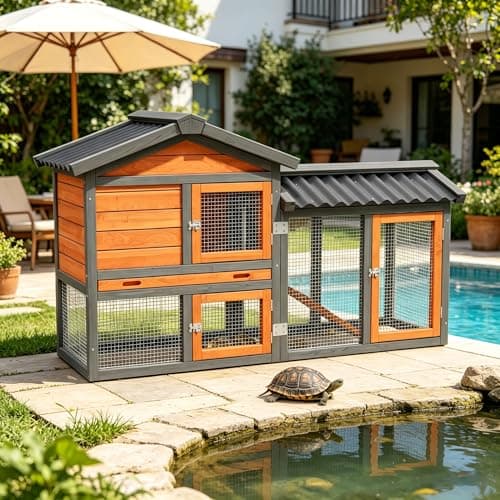
The best overall weatherproof house: 57.5 by 20.9 by 34.7 inches of wooden enclosure with a weatherproof roof, a ventilating metal wire fence, three doors for feeding and cleaning, a non-slip ramp, and a removable tray. The listing's 3-to-7-turtle claim is optimistic against real tortoise floor-space needs, so treat it as housing for one or two tortoises depending on species and size.
Sources: Xilishpp manufacturer/Amazon listing specifications, General tortoise husbandry — outdoor floor space and predator safety
Verified Jul 5, 2026
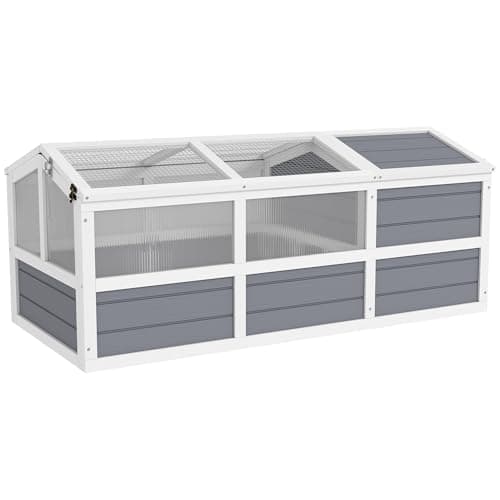
PawHut Bottomless Wooden Outdoor Tortoise Enclosure
The best for natural grazing: a 47 by 22 by 20 inch fir-wood enclosure with a bottomless design so the tortoise walks on real grass and mud, L-type hardware to anchor it to the ground, latched doors, and PC sun-panel windows. The open floor is its strength and its caveat — set it on hard ground or a buried barrier so nothing tunnels under.
Sources: PawHut manufacturer/Amazon listing specifications, General tortoise husbandry — substrate access and digging
Verified Jul 5, 2026
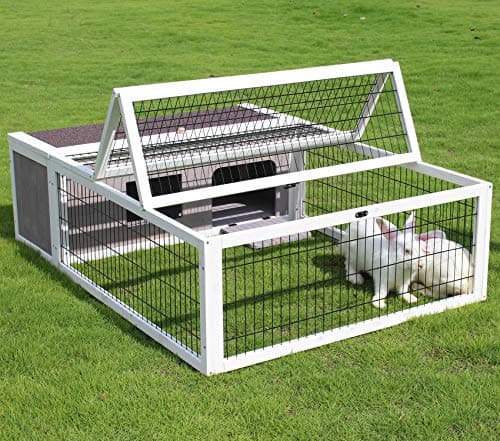
Rockever Wooden Tortoise House with Wire Run
The best house-plus-run: about 49 by 36 by 14 inches pairing a solid-wood shelter with a plated-iron wire run, a removable floor in the hut, and an open bottom in the run for ground access. A low-profile design best suited to smaller or juvenile tortoises rather than large adults.
Sources: Rockever manufacturer/Amazon listing specifications, General tortoise husbandry — shelter plus run design
Verified Jul 5, 2026
Our Picks
XilishppEcxEco
Xilishpp Large Tortoise Habitat House Indoor/Outdoor Wooden Enclosure with Ventilating Wire Fence
8.1 / 10
- 57.5 x 20.9 x 34.7 inches, the largest enclosed house in this guide
- Weatherproof roof and sturdy structure for year-round indoor or outdoor use
- Ventilating metal wire fence that keeps air moving while enclosing the tortoise
- Three doors for feeding, pet transfer, and cleaning; a non-slip ramp
$132.99
Current price · checked Sep 8, 2026
PawHut
PawHut Wooden Outdoor Tortoise Enclosure with Doors and PC Sun-Panel Windows (Bottomless)
8.0 / 10
- 47 x 22 x 20 inches in solid fir wood strengthened with galvanized steel
- Bottomless design so the tortoise contacts natural grass and mud
- L-type hardware to anchor the enclosure securely to the ground
- PC sun-panel windows for natural light and viewing
Rockever
Rockever Wooden Tortoise House Habitat with Wire Run, Indoor/Outdoor
7.5 / 10
- About 49 x 36 x 14 inches, pairing a wood shelter with a wire run
- Solid wood construction with a strong plated-iron wire enclosure
- Removable bottom floor in the hut; open bottom in the run for ground access
- Durable grate and latch for security
$135.99
Current price · checked Sep 8, 2026
Aivituvin
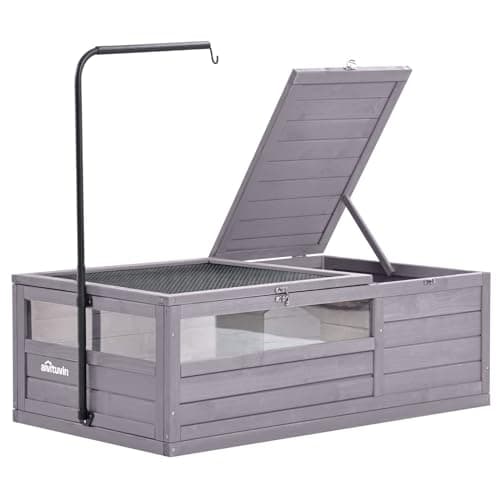
Aivituvin Wooden Tortoise House, Upgraded Weatherproof Bottom
6.8 / 10
- Solid wood, not plywood, with an upgraded fully-surrounded waterproof bottom
- Adjustable lamp holder to set UVB or heat-lamp distance
- A private sleeping area plus a public viewing area with acrylic sides
- Dense, strong top wire lid for security and ventilation
$89.99
Current price · checked Sep 8, 2026
Ipetboom
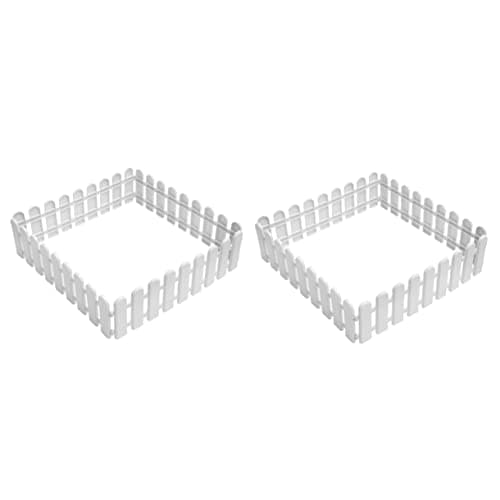
Ipetboom 8-Piece Outdoor Modular Tortoise Fence Playpen
5.7 / 10
- Set of 8 modular fence panels, each about 19.68 x 5.90 x 0.78 inches
- Tool-free assembly into any size open ground pen
- Lightweight at about 2.37 pounds per panel and easy to reposition
- Sits directly on grass for full natural grazing
$35.49
Current price · checked Sep 8, 2026
The Short Answer
The best outdoor tortoise enclosure is a fully-enclosed, weatherproof, anchored house with a wire top and shade — and the biggest mistake buyers make is trusting a low, open pen that calls itself predator-proof, because an uncovered fence stops nothing that flies, climbs, or digs. Measured honestly, the Xilishpp large tortoise house (about $132.99 list) is the best overall at 57.5 inches wide with a weatherproof roof, three doors, and a ventilating wire fence. The Rockever house-with-run (about $129.99) pairs a shelter with a wire run and an open floor for grazing, the Aivituvin house (about $89.99) is the value starter for a smaller or indoor-leaning setup, and the Ipetboom fence panels (about $38.19) are a cheap daytime grazing pen — but not a predator barrier. Buy for enclosed weather and predator protection first, treat every marketed tortoise count as optimistic, and never leave a tortoise in an open pen unsupervised.
Every product on this list has been scored against the PetPal Gear Score, a weighted composite of expert consensus, observed effectiveness, animal safety, long-term durability, and value. Review method: Editorial synthesis of manufacturer and Amazon product listings for each enclosure cross-checked against established tortoise-husbandry standards on outdoor floor space, weather protection, and predator safety. No independent lab or outlet has published a hands-on review of these specific marketplace enclosures, so we do not attribute any award or verdict to an outlet, and we reality-check every capacity and predator claim against what an outdoor tortoise actually needs. PetPalHQ does not run a reptile-housing testing lab; the PetPal Outdoor Tortoise Score below is a transparent synthesis of documented listing specifications and published husbandry standards, not a measurement. Prices were captured on 2026-07-05 during the July-4 sale window and should be treated as list figures that will move.. Synthesized from 5+ expert sources.
Outdoor tortoise enclosures are sold on two promises that often do not survive contact with reality: that they are predator-proof, and that they hold a whole group of tortoises. Both deserve scrutiny before you spend a cent. A low, open, topless pen is not a predator barrier — anything that flies, climbs, or digs defeats it — and a small wooden house marketed for "3 to 7 turtles" is really sized for one or two, because tortoises need far more floor space per animal than a listing implies. Get those two honesty checks right and the rest of the decision is straightforward. Every pick below is judged first on whether it truly shelters and protects a tortoise, and on the honest number it can house.
We read 5 sources for this guide: the manufacturer and Amazon listings for each enclosure, plus established tortoise-husbandry standards on outdoor floor space, weather protection, predator safety, and substrate. We want to be upfront about two things. These are marketplace enclosures, and no independent lab or major outlet has published a hands-on review of any of them — so we do not claim anyone "named" a pick best. And rather than repeat each maker's predator-proof or multi-tortoise claims, we check them against what an outdoor tortoise actually needs and tell you where a claim does not hold. The specs come from the listings; the safety standards come from tortoise husbandry; the PetPal Outdoor Tortoise Score is our transparent synthesis of the two.
PetPalHQ.com earns affiliate commissions from qualifying purchases. Our recommendations are based on expert consensus — we synthesize professional reviews and manufacturer documentation, plus multi-year owner durability data, to find pet gear that is worth your investment. Commission rates never influence our editorial recommendations.
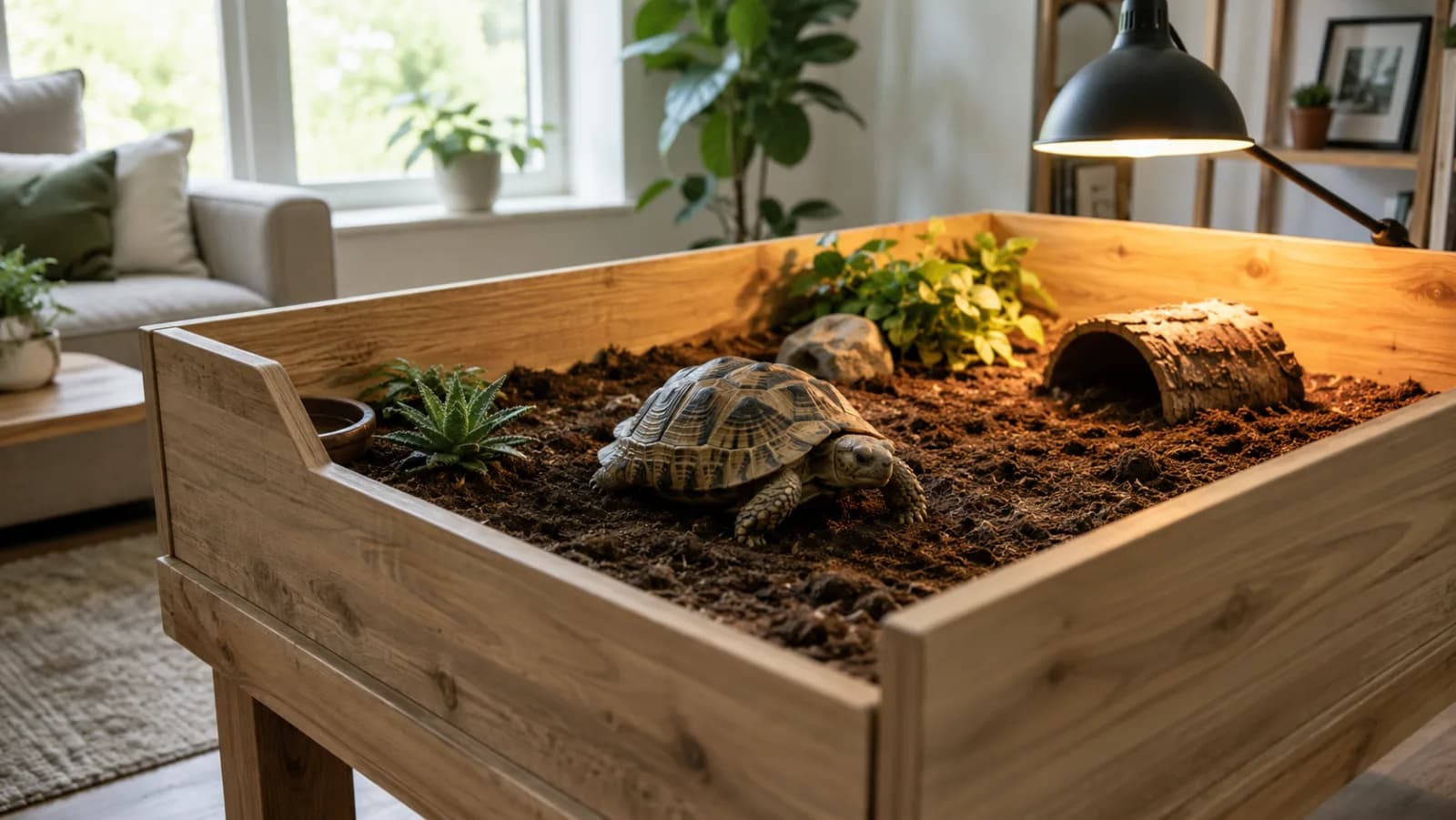
One framing that runs through the whole guide: an outdoor enclosure is a different animal from an indoor tortoise table. An indoor tortoise table is an open-topped tray in a climate-controlled room, where predators and weather are not a concern; an outdoor enclosure has to survive rain, sun, and everything that hunts. Start with the shelter-and-security rule below, then choose the enclosure that fits your climate, your species, and your yard.
Why an Open Pen Is Not a Predator Barrier
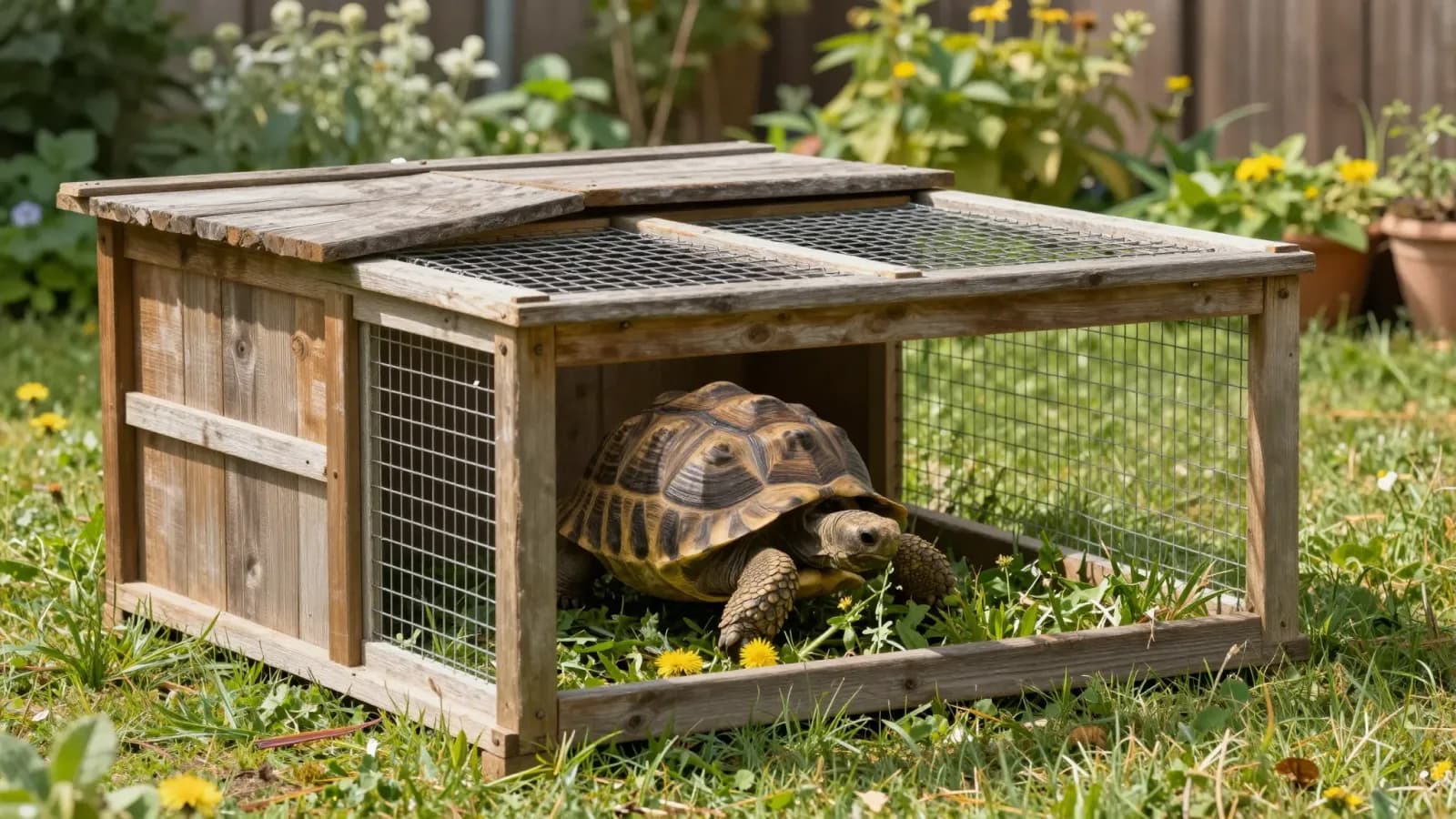
The most dangerous misconception in outdoor tortoise keeping is that a fence around a tortoise keeps it safe. It does not, unless that fence is part of a fully-enclosed structure. Tortoises are slow, defenseless, and preyed on from every direction: hawks and owls take them from above, raccoons, foxes, and dogs go over or through a low fence, and rats and diggers come from below. An open, topless pen like the Ipetboom fence panels — about six inches tall with nothing overhead — does nothing against any of that, which is why the honest use for it is supervised daytime grazing while you are present, not unattended housing. If you want a secure outdoor enclosure, it has to have a wire top, secure latches, and a base a predator cannot dig under.
Real predator exclusion means thinking in three dimensions. Overhead, you need a wire or solid top, because the sky is where the fastest attacks come from. At ground level, you need latches and mesh a raccoon cannot pry or reach through. And beneath the enclosure, you need a solid floor, a paver base, or a buried wire skirt, because a bottomless design like the PawHut bottomless house that lets a tortoise graze on grass also lets a predator tunnel in and the tortoise tunnel out. None of this is exotic — an enclosed, anchored wooden house handles most of it — but it has to be deliberate. Do not assume a wooden tortoise house is secure out of the box; check the top, the latches, and the base before you trust it overnight.
Enclosed House, Bottomless Grazer, or Table: Which Format Fits?
The formats here solve different problems, and matching the format to your situation matters more than chasing the highest score. A fully-enclosed weatherproof house like the Xilishpp habitat is the most protective option: a solid roof, ventilating wire sides, and doors give a tortoise real shelter and, once anchored, real predator security, which is why it is the format to choose for a permanent outdoor home. A bottomless grazing enclosure trades some weather shelter for direct access to grass and mud, which is a genuine welfare benefit for a foraging, digging species — as long as you secure the open base. And a low shelter-plus-run like the Rockever hutch splits the difference for a smaller tortoise, pairing a covered hide with an exposed run.
The format that is not on this list, but worth naming, is the indoor tortoise table, because choosing an outdoor enclosure should be a deliberate decision rather than a default. Many tortoise species cannot safely live outdoors year-round in cold or wet climates, and for those keepers an indoor table in a warm room, with UVB lighting, is the correct primary home — the Aivituvin habitat, with its waterproof floor and lamp holder, leans in that indoor-hybrid direction for exactly that reason. Decide honestly whether your species and climate support outdoor keeping at all before you buy, then pick the outdoor format that matches: a protective enclosed house for permanent outdoor life, a bottomless grazer for supervised natural foraging, or a small house-and-run for a smaller tortoise's yard time. The right format follows from your climate and your tortoise, not from the sticker price.
What We Passed On
Outdoor tortoise housing is full of products that look protective but are not, so a few things we deliberately left off are worth explaining.
We passed on the many low, open, topless "tortoise pens" beyond the one budget pick we included, precisely because so many of them are marketed as predator-proof when they are nothing of the kind. We kept the Ipetboom as an honest, clearly-labeled supervised-grazing tool, but we did not pad the list with more open pens dressed up as secure enclosures, because recommending them as unattended housing would put tortoises in danger. If a pen has no top and no way to stop digging, it is a daytime tool at best, not an outdoor home.
We passed on repeating any maker's predator-proof or multi-tortoise claims at face value, which is the theme of the whole guide. It would have been easier to write "holds up to seven turtles, predator-proof" and move on. But those claims are wrong often enough that echoing them would set up readers to overcrowd and to under-protect, so we reality-checked each one against real space and predator needs instead. If that makes these enclosures sound smaller and less secure than the listings promise, good — that is the truth of the category.
We also passed, for now, on the large custom-built and masonry outdoor tortoise habitats that serious keepers construct for big adult tortoises in warm climates. They are genuinely the gold standard for a large, long-lived tortoise, but they are builds rather than products, well beyond the price and effort most readers shopping a ready-made enclosure want. This guide is aimed at that ready-made, entry-to-mid tier, and pointing you toward a custom build you would have to design yourself would not have served the buyer this guide is for.
Head-to-Head Comparison
| Product | Footprint / height | Type | PetPal Outdoor Tortoise Score |
|---|---|---|---|
| Xilishpp Large Tortoise Habitat House Indoor/Outdoor Wooden Enclosure with Ventilating Wire Fence | 57.5 × 20.9 × 34.7 in | Enclosed weatherproof house | 8.1 |
| Rockever Wooden Tortoise House Habitat with Wire Run, Indoor/Outdoor | 49 × 36 × 14 in | Shelter plus wire run | 7.5 |
| Aivituvin Wooden Tortoise House, Upgraded Weatherproof Bottom | Compact, sealed floor | Indoor-leaning hybrid house | 6.8 |
| Ipetboom 8-Piece Outdoor Modular Tortoise Fence Playpen | ~6 in tall, open top | Daytime grazing pen (not secure) | 5.7 |
XilishppEcxEco Xilishpp Large Tortoise Habitat House Indoor/Outdoor Wooden Enclosure with Ventilating Wire Fence
$132.99
Current price · checked Sep 8, 2026
- 57.5 x 20.9 x 34.7 inches, the largest enclosed house in this guide
- Weatherproof roof and sturdy structure for year-round indoor or outdoor use
- Ventilating metal wire fence that keeps air moving while enclosing the tortoise
- Three doors for feeding, pet transfer, and cleaning; a non-slip ramp
- Removable tray for quick cleaning
The Xilishpp tortoise house is the best overall because it does the one thing an open pen cannot: it fully encloses a tortoise under a weatherproof roof while still ventilating. At 57.5 by 20.9 by 34.7 inches, the Xilishpp habitat is the largest enclosed house here, and its combination of a solid roof and a metal wire fence gives your tortoise both shelter from rain and sun and the airflow it needs to stay healthy. That enclosed-but-ventilated design is the core of real outdoor tortoise housing, and it is why this pick leads.
The daily-care features are practical. Three doors let you reach in to feed, lift the tortoise out, or clean without wrestling the whole structure, a non-slip ramp helps the tortoise move between levels safely, and a removable tray makes cleaning a quick job rather than a chore. The weatherproof roof and sturdy build are rated for year-round use indoors or out, so it works as a permanent outdoor home in mild climates or a large indoor house in harsh ones — and if your climate pushes the whole setup indoors, the indoor tortoise enclosures and tables guide covers purpose-built indoor housing. For a single tortoise or a carefully-matched pair, it covers the essentials well.
Here is the honesty this guide is built on, applied to the Xilishpp. The listing claims it fits three to seven turtles, and that number is optimistic — tortoises need far more floor space per animal than a small enclosure suggests, and crowding them causes stress, aggression, and disease. Run it honestly and this is housing for one tortoise, or two smaller ones of a compatible species with room to spare, not a seven-animal barn. And like any outdoor enclosure, it is only as predator-safe as its placement: anchor it, and if you leave it outdoors overnight, confirm nothing can pry the doors or dig beneath the base. Buy the Xilishpp for the enclosed, weatherproof, ventilated design, size it to one or two tortoises, and secure it against diggers.
What We Love
- Largest enclosed house here with a weatherproof roof and good ventilation
- Three doors and a removable tray make feeding and cleaning easy
- Non-slip ramp helps the tortoise move safely within the enclosure
- Rated for year-round indoor or outdoor use in mild climates
- Fully enclosed design offers real shelter an open pen cannot
What Could Be Better
- Advertised 3-7 turtles is optimistic — honestly one or two tortoises
- Needs anchoring and dig-proofing at the base for overnight outdoor safety
- Wooden build requires periodic sealing and upkeep against rot
The Verdict
For most outdoor tortoise keepers, the Xilishpp tortoise house is the editorial default: the largest enclosed, weatherproof, ventilated house here. Size it to one or two tortoises rather than the advertised seven, and anchor and dig-proof the base before leaving it out overnight.
Sources
- Xilishpp (manufacturer/Amazon listing): 57.5 x 20.9 x 34.7 inch wooden tortoise house with a weatherproof roof, a ventilating metal wire fence, three doors for feeding and cleaning, a non-slip ramp, and a removable tray; listed for indoor/outdoor use and marketed as fitting 3-7 turtles
- General tortoise husbandry (floor space and predator safety): tortoises need large floor space per animal, so marketed multi-tortoise capacities are usually optimistic, and outdoor enclosures must be anchored against diggers
- 47 x 22 x 20 inches in solid fir wood strengthened with galvanized steel
- Bottomless design so the tortoise contacts natural grass and mud
- L-type hardware to anchor the enclosure securely to the ground
- PC sun-panel windows for natural light and viewing
- Latched doors for easy access and maintenance
The PawHut tortoise enclosure is the pick when getting your tortoise onto real ground matters most. Its defining feature is a bottomless design: instead of a solid floor, the PawHut bottomless house sits open to the earth so the tortoise walks, grazes, and digs on natural grass and mud the way it would in the wild. For a species that benefits from foraging and natural substrate, that open floor is a genuine welfare upgrade over a sealed tray, and it is the reason this enclosure earns the grazing label.
The build supports outdoor use thoughtfully. The PawHut is made of solid fir wood strengthened with galvanized steel, with L-type hardware specifically to anchor it firmly to the ground against wind and active pets, latched doors for easy access, and PC sun-panel windows that let sunlight in while you keep an eye on the tortoise. At 47 by 22 by 20 inches it is a sensible single-tortoise footprint, and the anchoring hardware shows the maker expects it to live outdoors rather than on a patio.
The honest caveat is the flip side of its best feature. A bottomless enclosure is only as secure as the ground under it: on soft soil, a digging tortoise can tunnel out and a digging predator can tunnel in, so you must set it on hard ground, a paver base, or a buried wire barrier to close that gap. It is also shorter at 20 inches than the taller Xilishpp, giving less overhead room, and the open floor means it offers less weather shelter than a fully-enclosed house unless you add a covered hide inside. Buy the PawHut for natural grazing and anchor it properly, and it is an excellent outdoor home; set it on loose soil and walk away, and the open floor becomes a liability.
What We Love
- Bottomless design gives real grass-and-mud grazing and digging
- Solid fir wood with galvanized steel and dedicated ground anchors
- PC sun-panel windows for natural light and easy viewing
- Sensible single-tortoise footprint built for outdoor placement
What Could Be Better
- Open floor lets a tortoise dig out or a predator dig in on soft soil
- Shorter 20-inch height and less enclosed weather shelter than a full house
- Needs a hard base or buried barrier to be secure — not set-and-forget
The Verdict
If natural grazing on real ground is your priority, the PawHut tortoise enclosure is the pick: a bottomless, anchored fir-wood home. Set it on hard ground or a buried barrier and add a covered hide, and it gives a tortoise the substrate access a sealed enclosure cannot.
Sources
- PawHut (manufacturer/Amazon listing): 47 x 22 x 20 inch solid fir wood enclosure strengthened with galvanized steel, a bottomless design for natural grass and mud contact, L-type hardware to anchor it to the ground, latched doors, and PC sun-panel windows
- General tortoise husbandry (substrate access and digging): tortoises graze and dig, so an open floor needs a hard base or buried barrier to prevent escape and predator tunneling
$135.99
Current price · checked Sep 8, 2026
- About 49 x 36 x 14 inches, pairing a wood shelter with a wire run
- Solid wood construction with a strong plated-iron wire enclosure
- Removable bottom floor in the hut; open bottom in the run for ground access
- Durable grate and latch for security
- Wire-style run ventilates and lets you view the tortoise while it grazes
The Rockever tortoise house is the pick for the buyer who wants both a covered shelter and an open run in one low-profile unit. The design pairs a solid-wood hut, where the tortoise can retreat and rest out of the weather, with an attached plated-iron wire run for daytime basking and grazing. That two-zone layout — a private shelter plus an exposed run — is exactly how many keepers set up a small outdoor tortoise space, and the Rockever hutch delivers it in a single purchase at about 49 by 36 by 14 inches.
The practical details work for a small setup. The Rockever has a removable bottom floor in the hut for easy cleaning and an open bottom in the run so the tortoise contacts real ground while it is outside, a durable grate and latch for security, and a wire-style enclosure that ventilates well while letting you watch the tortoise. It assembles with a screwdriver from pre-drilled holes, and the mixed shelter-and-run format gives a tortoise more behavioral variety than a single sealed box.
The honest limitations are height and scale. At only 14 inches tall, the Rockever is a low-profile enclosure, which makes it best suited to smaller or juvenile tortoises rather than large adults that need more headroom and floor area. Like every enclosure here it is multi-use — the listing names rabbits, guinea pigs, and chicks alongside tortoises — so it is a general small-animal hutch adapted to tortoise use rather than a purpose-built tortoise home, and the open run bottom carries the usual dig-in, dig-out caveat of any floorless design. Buy the Rockever for a compact shelter-plus-run for a smaller tortoise, secure the run's base, and do not expect it to house a large adult.
What We Love
- Combines a covered shelter and an open wire run in one unit
- Removable hut floor for cleaning; open run bottom for ground grazing
- Durable grate and latch with good ventilation through the wire
- Compact footprint that suits a small outdoor tortoise space
What Could Be Better
- Only 14 inches tall — best for smaller or juvenile tortoises, not large adults
- A general small-animal hutch adapted to tortoises, not purpose-built
- Open run bottom needs a secured base against digging
The Verdict
If you want a covered shelter and an open run together for a smaller tortoise, the Rockever tortoise house is the house-plus-run pick. Secure the run base against digging, and choose a taller enclosure instead if you keep a large adult that needs more headroom.
Sources
- Rockever (manufacturer/Amazon listing): about 49 x 36 x 14 inch wooden house with a plated-iron wire run, a removable bottom floor in the hut, an open bottom in the run for ground access, and a durable grate and latch; listed as multi-use for tortoises, rabbits, guinea pigs, and chicks
- General tortoise husbandry (shelter plus run and sizing): a shelter-plus-run layout suits smaller tortoises, while large adults need more height and floor area than a low hutch provides
$89.99
Current price · checked Sep 8, 2026
- Solid wood, not plywood, with an upgraded fully-surrounded waterproof bottom
- Adjustable lamp holder to set UVB or heat-lamp distance
- A private sleeping area plus a public viewing area with acrylic sides
- Dense, strong top wire lid for security and ventilation
- Marketed for tortoises, lizards, geckos, and snakes
The Aivituvin tortoise house is the value pick and the natural starting point for a first-time keeper who wants a covered, manageable enclosure at the lowest house price here. At about $89.99, the Aivituvin habitat is built from solid wood rather than cheap plywood, with a private sleeping area where the tortoise can hide and a public viewing area with acrylic sides so you can watch it — a sensible two-zone layout that gives a tortoise both cover and light in a compact footprint.
The features lean toward a controlled, partly-indoor setup. An adjustable lamp holder lets you set the right distance for a UVB or heat lamp, which matters for a tortoise's shell and bone health, and the fully-surrounded upgraded waterproof bottom keeps moisture from soaking the floor beneath it — a real plus if you keep it indoors or on a patio. A dense, strong top wire lid ventilates while keeping the tortoise secure, and the whole enclosure assembles from pre-drilled holes.
The honest trade-offs place it below the larger outdoor houses. That waterproof bottom, useful indoors, means the tortoise has no natural grass or mud to graze and dig on, so this is really an indoor-leaning hybrid rather than a true outdoor grazing enclosure. It is also the smallest house here, best for a single smaller or juvenile tortoise, and as a wooden enclosure with acrylic panels it needs the same weather upkeep and, outdoors, the same predator awareness as any other. Buy the Aivituvin as an affordable, covered starter or an indoor-leaning home with a lamp holder, and step up to a larger outdoor house as your tortoise grows.
What We Love
- Lowest house price here in genuine solid wood, not plywood
- Adjustable lamp holder makes UVB and heat-lamp placement easy
- Two-zone sleeping and viewing layout with acrylic sides
- Waterproof bottom protects floors for indoor or patio use
What Could Be Better
- Waterproof bottom means no natural grazing or digging substrate
- Smallest house here — best for a single smaller or juvenile tortoise
- Indoor-leaning hybrid rather than a true outdoor grazing enclosure
The Verdict
If you want an affordable, covered starter or an indoor-leaning home with a lamp holder, the Aivituvin tortoise house is the value pick. Know that its waterproof floor rules out natural grazing, and plan to move up to a larger outdoor house as the tortoise grows.
Sources
- Aivituvin (manufacturer/Amazon listing): solid-wood tortoise house with an upgraded fully-surrounded waterproof bottom, an adjustable lamp holder for UVB/heat-lamp distance, a private sleeping area plus a public viewing area with acrylic sides, and a dense strong top wire lid
- General tortoise husbandry (substrate and UVB): a waterproof floor removes natural grazing substrate, and tortoises need UVB for shell and bone health
$35.49
Current price · checked Sep 8, 2026
- Set of 8 modular fence panels, each about 19.68 x 5.90 x 0.78 inches
- Tool-free assembly into any size open ground pen
- Lightweight at about 2.37 pounds per panel and easy to reposition
- Sits directly on grass for full natural grazing
- Marketed as a predator-proof outdoor turtle enclosure
The Ipetboom fence panels are the cheapest way to give a tortoise time on open grass, and used honestly, that is exactly what they are for. The set of eight modular panels, each about 19.68 by 5.90 inches, snaps together tool-free into any shape you like, so you can fence off a patch of lawn for daytime grazing and move it to fresh grass when the first patch is worn. Each panel weighs only about 2.37 pounds, so the Ipetboom playpen is genuinely easy to reconfigure and carry, and sitting directly on the ground it gives full natural grazing.
For its purpose — supervised outdoor time on real grass — it is a useful, inexpensive tool. It costs a fraction of the wooden houses, it stores flat, and it lets a tortoise soak up natural sunlight and forage on a warm afternoon while you are outside with it. As a portable daytime playpen, the Ipetboom fence panels do their job.
Now the critical honesty, because the listing oversells it and a tortoise's safety depends on getting this right. Ipetboom markets these panels as a "predator-proof" enclosure, and that claim does not hold up: at only about six inches tall with no top, the pen does nothing to stop a hawk from above, a raccoon or dog from climbing over, or a determined digger from going under. It is not a secure enclosure and must never be treated as one. Use the Ipetboom playpen only for supervised daytime grazing while you are present, and move the tortoise into a real enclosed house — like the Xilishpp — for any time it is unattended or overnight. Buy it as the cheap supervised-grazing tool it is, not the predator barrier the box claims.
What We Love
- Cheapest way here to give a tortoise supervised time on open grass
- Tool-free modular panels configure into any shape and store flat
- Very light and easy to move to fresh grass or reposition
- Full natural grazing since it sits directly on the ground
What Could Be Better
- Not predator-proof despite the claim — open top, only about six inches tall
- No shelter, shade, or weather protection of any kind
- Safe only for supervised daytime use while you are present
The Verdict
If you want a cheap way to give a tortoise supervised grazing on real grass, the Ipetboom fence panels do that well. But ignore the predator-proof claim entirely — it is an open daytime playpen only, and your tortoise needs a real enclosed house for any unattended or overnight time.
Sources
- Ipetboom (manufacturer/Amazon listing): a set of 8 modular fence panels, each about 19.68 x 5.90 x 0.78 inches and about 2.37 pounds, that assemble tool-free into an open ground pen; marketed as a predator-proof outdoor turtle enclosure
- General tortoise husbandry (predator safety): an open, low, topless pen does not stop overhead, climbing, or digging predators, so it is safe only for supervised daytime use
How We Score
Formula
PetPal Outdoor Tortoise Score = (Usable Floor Space × 0.25) + (Weather Protection × 0.25) + (Predator Exclusion × 0.25) + (Natural Substrate Access × 0.15) + (Value × 0.10)
Score Factors
- Usable Floor Space · 25%
- How much genuine floor area the enclosure gives a tortoise, judged against real per-tortoise space needs rather than the marketed animal count. The large Xilishpp and the Rockever's combined house-and-run footprint rate highest; the compact Aivituvin lowest. Every listing that advertises multiple tortoises is scored on the honest number — usually one or two — because crowding tortoises causes stress, aggression, and disease.
- Weather Protection · 25%
- How well the enclosure shelters a tortoise from rain, sun, and cold with a solid roof, shade, and a sturdy weatherproof build. Fully-enclosed houses with weatherproof roofs, like the Xilishpp, score highest. Open pens and low runs score lowest, and the Ipetboom scores near zero here because it offers no shelter at all. A hide or shaded retreat inside any enclosure is expected.
- Predator Exclusion · 25%
- How well the enclosure actually keeps out predators that fly, climb, or dig — a wire top, secure latches, a solid or anchored base, and enough height to matter. Enclosed wire-topped houses rate highest; open, low, or topless pens rate lowest regardless of marketing. A 'predator-proof' claim on an uncovered six-inch pen is scored on reality, not the label, because overhead and digging predators defeat it easily.
- Natural Substrate Access · 15%
- Whether the tortoise can walk, graze, and dig on real ground rather than a sealed tray. Bottomless and open-run designs like the Rockever score highest; sealed waterproof floors like the Aivituvin score lowest. This is weighed against predator exclusion, since an open floor that allows grazing also allows digging in and out unless the base is secured.
- Value · 10%
- Price relative to honest usable space, real weather and predator protection, and build quality — not the lowest sticker. The Ipetboom is cheapest but scores low overall because it is not a secure enclosure, while the mid-priced enclosed houses deliver far more protection per dollar. Value is judged against what an outdoor tortoise actually needs to be safe, so a cheap open pen sold as predator-proof is not scored as a bargain.
| Rank | Product | Score |
|---|---|---|
| #1 | XilishppEcxEco Xilishpp Large Tortoise Habitat House Indoor/Outdoor Wooden Enclosure with Ventilating Wire Fence | 8.1 |
| #2 | PawHut PawHut Wooden Outdoor Tortoise Enclosure with Doors and PC Sun-Panel Windows (Bottomless) | 8.0 |
| #3 | Rockever Rockever Wooden Tortoise House Habitat with Wire Run, Indoor/Outdoor | 7.5 |
| #4 | Aivituvin Aivituvin Wooden Tortoise House, Upgraded Weatherproof Bottom | 6.8 |
| #5 | Ipetboom Ipetboom 8-Piece Outdoor Modular Tortoise Fence Playpen | 5.7 |
When NOT to Buy
Do not trust a pen that calls itself predator-proof unless it truly encloses the tortoise. This is the single most important warning in the guide: an open, low, topless pen like the Ipetboom fence panels stops nothing that flies, climbs, or digs, no matter what the listing says. Hawks and owls hunt from above, raccoons and dogs go over or under, and a determined digger tunnels in. Only a fully-enclosed, wire-topped, anchored house is a real predator barrier, and an open pen is safe only while you are standing right there.
Do not buy any enclosure to the tortoise count on the box. Nearly every wooden habitat here is marketed for more animals than it should hold, and the Xilishpp's 3-to-7-turtle claim is a clear example. Tortoises need far more floor space per animal than a small enclosure suggests, and crowding them causes stress, aggression, and disease. Buy for one tortoise, or at most two compatible smaller ones with room to spare, and always size to the honest number rather than the advertised one.
Do not leave an outdoor tortoise without shade, a hide, and a dig barrier. A tortoise can overheat fatally in direct sun with no shade, and a bottomless or open-run enclosure like the Rockever lets the tortoise dig out and predators dig in unless you set it on hard ground, a paver base, or buried wire. Always provide a shaded retreat and a hide, and secure the base of any open-floored enclosure before the tortoise goes in.
Skip outdoor housing if your climate or species does not suit it. Many tortoise species need warm temperatures and cannot live outdoors year-round in a cold or wet climate, and leaving a tortoise out through cold nights or damp weather causes respiratory illness and worse. Confirm that your species and your local climate support outdoor keeping, and be ready to bring the tortoise indoors — the Aivituvin's indoor-leaning design exists for exactly that reason — when the weather turns.
Do not buy a wooden enclosure expecting zero upkeep. Every wooden house here needs periodic sealing, hardware checks, and cleaning to prevent rot, mold, and drafts, and outdoor exposure accelerates all of it. If you want a maintenance-free structure, budget for a sealed or plastic system rather than assuming a wooden enclosure will hold up untended outdoors, because it will not.
Skip a tortoise entirely if you cannot commit to decades of care. Many tortoise species live 50 years or far longer, need daily food and fresh water, UVB light, correct temperatures, and secure housing, and they are a genuine multi-decade commitment that often outlives the owner's initial plans. If travel, housing, or long-term stability will not support that, no enclosure on this list makes a tortoise the right pet, and rehoming a long-lived tortoise is difficult.
Frequently Asked Questions
- Are any of these enclosures truly predator-proof?
- Only the fully-enclosed, wire-topped houses come close, and only once you anchor them and dig-proof the base. An enclosed house like the Xilishpp tortoise house, with a solid roof, ventilating wire sides, and secure doors, can genuinely exclude predators when it is anchored and its base is protected against digging. An open or low pen like the Ipetboom fence panels is not predator-proof no matter what the listing says — it has no top and stops nothing that flies, climbs, or digs. Treat "predator-proof" as a claim to verify against the top, latches, and base, not a feature to take on faith.
- How many tortoises can one enclosure hold?
- Far fewer than the listings claim — usually one, or two compatible smaller ones with room to spare. Tortoises need a lot of floor space per animal, and marketed counts like the Xilishpp's "3 to 7 turtles" are optimistic. Crowding tortoises causes stress, aggression, and disease, and some species should not be housed together at all. Buy for a single tortoise unless you have specifically researched cohabitation for your species, and always size to the honest number rather than the advertised one.
- Do I need a bottom on an outdoor tortoise enclosure?
- It depends on the trade-off you want. A bottomless enclosure lets a tortoise graze and dig on real grass and mud, which is great for the animal, but it also lets the tortoise dig out and predators dig in unless you set it on hard ground, a paver base, or a buried wire barrier. A solid or waterproof floor, like the Aivituvin's, blocks digging but removes natural grazing. Many keepers choose a bottomless design and secure the base with buried wire — that gets you natural substrate and dig protection together.
- Can my tortoise live outside all year?
- Only if your species and climate allow it. Many tortoise species need consistently warm temperatures and cannot survive cold or wet weather outdoors, so year-round outdoor life is safe only in mild climates and for suitable species. In colder regions, an outdoor enclosure is a warm-season option and you will need to bring the tortoise indoors — which is why an indoor-leaning house like the Aivituvin, or a proper indoor tortoise table, matters. Confirm your species' temperature needs and your local climate before committing to outdoor housing.
- What else does an outdoor tortoise enclosure need besides the enclosure?
- At minimum, shade and a hide, a secure dig-proof base, and access to fresh water, plus UVB if the setup does not get enough direct unfiltered sunlight. A tortoise can overheat fatally in full sun with no shade, so a shaded retreat is essential, and a hide gives it security. If you use a bottomless or open-run enclosure, add buried wire or a hard base against digging. Think of the enclosure as the shell of the setup — the shade, hide, water, and dig protection are what make it a safe home, not just a box in the yard.
Bottom Line
Buy the Xilishpp tortoise house if you want the best overall outdoor home — the largest enclosed, weatherproof, ventilated house here. Size it to one or two tortoises rather than the advertised seven, and anchor and dig-proof the base for overnight outdoor use.
Buy the Rockever house-plus-run if you want a covered shelter and an open run together for a smaller tortoise. Secure the run base against digging, and choose a taller enclosure if you keep a large adult.
Buy the Aivituvin house if you want an affordable, covered starter or an indoor-leaning home with a lamp holder. Know its waterproof floor rules out natural grazing, and plan to upgrade to a larger outdoor house as the tortoise grows.
Buy the Ipetboom fence panels only as a cheap supervised daytime grazing pen — never as the predator-proof enclosure the box claims. Skip outdoor keeping entirely if you cannot provide a real enclosed house, shade, and dig-proofing, because an unprotected tortoise outdoors is a target for predators and weather.
Sources & Methodology
Methodology
PetPal Outdoor Tortoise Score = (Usable Floor Space × 0.25) + (Weather Protection × 0.25) + (Predator Exclusion × 0.25) + (Natural Substrate Access × 0.15) + (Value × 0.10)
Expert review sources
- Xilishpp — manufacturer/Amazon listing specifications (large wooden tortoise house)
- PawHut — manufacturer/Amazon listing specifications (bottomless outdoor tortoise enclosure)
- Rockever — manufacturer/Amazon listing specifications (wooden house with wire run)
- Aivituvin and Ipetboom — manufacturer/Amazon listing specifications (waterproof-bottom house; modular fence panels)
- General tortoise husbandry standards — outdoor floor space, weather protection, predator safety, and substrate needs
Community sources
- Tortoise owner communities — real-world discussion on outdoor predator-proofing, dig barriers, shade, and honest per-tortoise space
Prices and specs verified July 5, 2026.
About the author
Nick Miles is the chief editor of PetPalHQ. The picks above are an editorial synthesis of manufacturer and Amazon listing specifications cross-checked against established tortoise-husbandry standards on outdoor floor space, weather protection, and predator safety. PetPalHQ does not run a reptile-housing testing lab, and no independent outlet has published a hands-on review of these specific marketplace enclosures. We reality-check every capacity and predator claim against what an outdoor tortoise actually needs rather than repeating it. The PetPal Outdoor Tortoise Score is a transparent composite of documented specifications and published husbandry standards, not a measurement.
PetPalHQ is a participant in the Amazon Services LLC Associates Program. We may earn commissions from qualifying purchases — at no extra cost to you.