Cats & Dogs
Introducing a Second Cat: The Multi-Cat Home Setup That Makes It Work (2026)
Most second-cat introductions fail from rushing and resource competition, not from a personality clash. The fix is a slow, scent-first introduction onto a completely duplicated set of resources, so neither cat is ever forced to compete for food, water, litter, or a high place to retreat. The picks below are the toolkit that carries that protocol — a pheromone diffuser to lower the tension, vertical territory and escape routes, separate water, an extra litter box, a see-through barrier for controlled contact, separate feeding stations, and a defensible retreat for the newcomer. If the resident cat is elderly, ill, or strongly solitary, or if the introduction turns into real aggression, this is a behavioral and medical question first — and some cats never fully cohabit.
By Nick Miles · Updated September 26, 2026 · 12 min read
PetPalHQ is reader-supported. We may earn a commission from qualifying Amazon purchases at no extra cost to you.
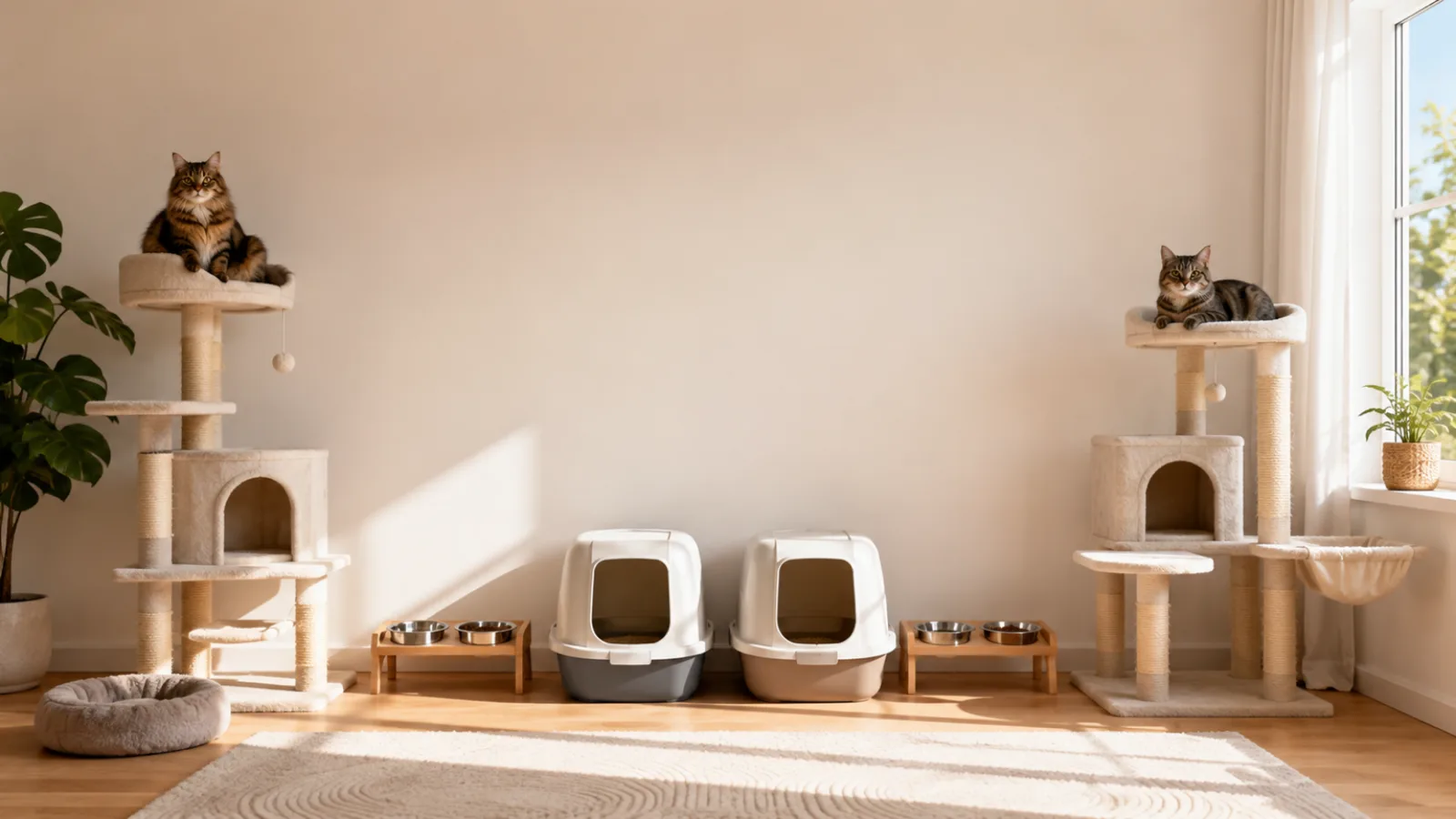
Evidence at a Glance
FELIWAY MultiCat 30-Day Diffuser Starter Kit
The environmental layer under the whole introduction — a drug-free multi-cat pheromone the maker documents as covering up to 700 sq ft to help reduce conflict, chasing, and blocking during the sensitive intro window.
Sources: FELIWAY manufacturer documentation, ASPCA multi-cat introduction guidance, AAHA/AAFP feline behavior guidelines
Verified Jul 11, 2026
TEVILA Stainless Steel XL High-Sided Litter Box
The resource rule made physical — a large, odor-resistant stainless box the maker documents for multi-cat households, added so two cats have at least three boxes in separate locations and litter is never contested.
Sources: TEVILA manufacturer documentation, AAHA/AAFP feline behavior guidelines, ASPCA multi-cat introduction guidance
Verified Jul 11, 2026
Full Metal Freestanding Gate with Cat Door
The controlled-introduction tool — a see-through freestanding barrier with an independent 7.9-by-7.1-inch cat door per Klarana, so the cats can see and smell each other safely before they ever share space.
Sources: Klarana manufacturer documentation, ASPCA feline aggression guidance, Cornell Feline Health Center
Verified Jul 11, 2026
Our Picks
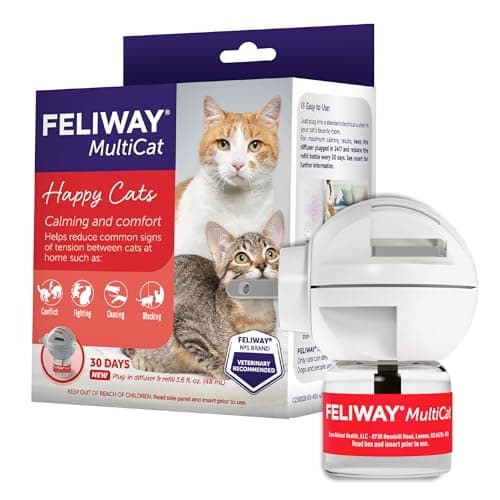
FELIWAY
FELIWAY MultiCat 30-Day Calming Diffuser Starter Kit
8.2 / 10
- Drug-free, non-sedating pheromone diffuser per FELIWAY
- Documented to help reduce conflict, chasing, and blocking between cats
- Provides up to 30 days of continuous support per refill
- Covers a room-scale area up to 700 sq ft per the listing
$24.99
Current price · checked Sep 8, 2026
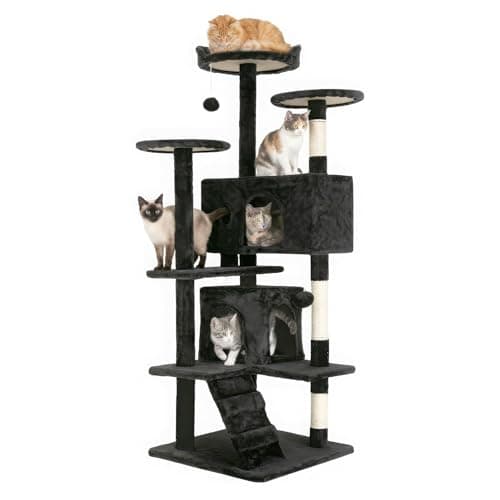
FDW
FDW 54" Cat Tree Tower (multi-level)
8.0 / 10
- Multi-level tower with perches, ladders, and a condo per FDW
- Natural sisal scratching posts for claw maintenance
- Soft beds and enclosed cat houses for retreat
- Height and escape routes so a cornered cat can go up
$39.49
Current price · checked Sep 9, 2026

GIOTOHUN
Cat Water Fountain Stainless Steel 74oz
7.9 / 10
- 74 oz / 2.2 L capacity — several days of water per the listing
- SUS 304 stainless steel, rust-resistant per GIOTOHUN
- Faucet and fountain running-water modes to encourage drinking
- Quiet pump rated under 25 dB per the listing
$19.99
Current price · checked Sep 8, 2026

TEVILA
TEVILA Stainless Steel XL High-Sided Litter Box
8.3 / 10
- 22.8 x 15 x 10.2 in XL pan, holds up to 20 L of litter per TEVILA
- Non-porous stainless steel that won't absorb odor
- 5.7-inch high sides with a splash guard for diggers
- Open top for easy scooping; scoop and non-slip pads included
$35.99
Current price · checked Sep 8, 2026
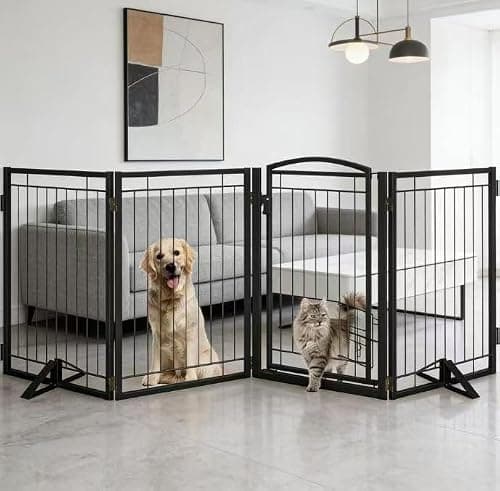
Klarana
Full Metal Freestanding Gate with Cat Door
8.1 / 10
- See-through full-metal barrier, 32 in tall and up to 80 in wide
- Independent 7.9 x 7.1 in cat door for controlled passage per Klarana
- Freestanding or wall-fixed configurations
- 4 mm steel wire built to resist scratching and biting
$81.69
Current price · checked Sep 8, 2026
Meowgod
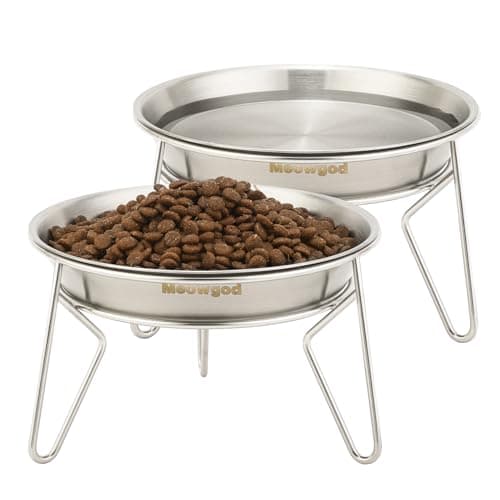
Elevated Cat Bowls (raised stainless, set of 2)
7.8 / 10
- Set of two raised stainless bowls — one station per cat
- 6.7-inch wide whisker-friendly dishes per Meowgod
- 15 oz capacity per bowl
- Food-grade SUS304 steel on a non-slip stand
$19.99
Current price · checked Sep 8, 2026
PETMAKER
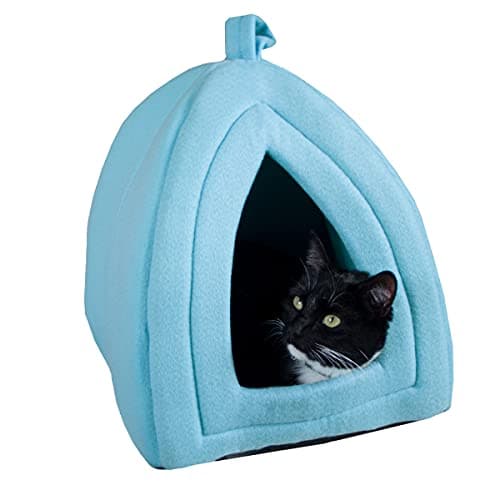
Cat House Indoor Bed/Tent with Foam Cushion
7.7 / 10
- Covered cave-style bed for privacy and security per PETMAKER
- Removable foam cushion for joint support in older cats
- Plush enclosed design that many cats seek out to hide
- 13 x 13 x 15.75 in — a compact defensible base
$18.95
Current price · checked Sep 8, 2026
The Short Answer
Introduce the second cat slowly and scent-first, onto a completely duplicated set of resources. Most introductions that go wrong do so from rushing and from resource competition, not from a genuine personality clash. So the whole plan is built to remove both. Separate the newcomer in its own room first, with its own food, water, litter, and a place to hide. Swap scent before any sight. Trade bedding, or rub a cloth on one cat and leave it for the other, so each learns the other's smell as a normal part of the home. Feed both cats on opposite sides of the closed door so good things happen near each other's scent. Move to brief supervised visual contact through a barrier only when both are relaxed. Then go to short supervised together-time that you end before anyone stiffens or stares. Never remove the barrier or merge the resources until both cats are consistently calm. The toolkit on this page is what carries that protocol, not a ranking. It is a FELIWAY MultiCat diffuser to lower the ambient tension, an FDW cat tree so neither cat is ever trapped on the floor, a separate stainless water fountain, a TEVILA XL litter box to satisfy the one-box-per-cat-plus-one rule, a full-metal freestanding gate with a cat door for controlled contact, a set of elevated separate feeding bowls, and a covered retreat for the newcomer. The resident cat may be elderly, ill, or strongly solitary. The pairing may turn into real aggression. Either way, that is a behavioral and medical question first, and a small minority of cats never fully cohabit.
Every product on this list has been scored against the PetPal Gear Score, a weighted composite of expert consensus, observed effectiveness, animal safety, long-term durability, and value. Review method: Editorial synthesis of veterinary and welfare guidance. The sources are ASPCA multi-cat introduction and feline aggression guidance, the AAHA/AAFP feline behavior and life-stage guidelines, the Cornell Feline Health Center, and the Merck Veterinary Manual. Manufacturer documentation from FELIWAY, TEVILA, FDW, Klarana, and the other listed makers was reviewed. Community consensus on r/CatAdvice and r/cats was included as consensus, not quotation. There was no first-hand product testing. PetPalHQ does not run a testing lab.. Synthesized from 4+ expert sources.
Bringing home a second cat fails, in this guide's editorial judgment, for a reason most owners never see coming: not because the two cats have clashing personalities, but because the introduction gets rushed and the household forces them to compete for the things that matter most. A cat does not experience a new arrival the way a person does. Where the owner pictures a companion, the resident cat perceives an intruder in the territory it has already claimed — and if that intruder also stands between it and its food, water, litter, or a safe high perch, the tension has somewhere to catch and hold. The whole setup below exists to remove both problems at once: it slows the introduction down to the cat's pace, and it duplicates the resources so completely that neither cat is ever put in a position to fight over them.
The introduction itself moves in a deliberate order. The newcomer starts in its own room, with its own food, water, litter, and a place to hide, so the two cats never meet before they are ready. Scent comes before sight: you trade bedding or rub a cloth from one cat onto the other, so each learns the other's smell as an ordinary part of the home. Then good things happen near that scent — both cats fed on opposite sides of the closed door — before you ever progress to seeing each other through a barrier. Only after brief, calm visual contact do you allow short supervised together-time, always ended before anyone stiffens or stares, and the barrier and the separate resources stay in place until both cats are consistently relaxed. Nothing is merged early. The pace is set by the more cautious cat, not the calendar.
The picks on this page are the toolkit that carries that plan, not a ranking of furniture against each other. Each one earns its slot by doing a specific job in the introduction: lowering the ambient tension, adding vertical escape routes, giving the newcomer its own water and feeding station, satisfying the litter-box resource rule, staging safe visual contact, and providing a retreat the new cat can defend. Everything here is editorial synthesis of veterinary and welfare guidance and manufacturer documentation — PetPalHQ does not run a testing lab, and where the sources point one way, that direction is named rather than asserted.
One judgment sits above the whole process. A slow, resourced introduction makes most pairings workable, but it does not guarantee every pairing, and it cannot override a cat's health or temperament. A resident cat that is elderly, ill, or genuinely solitary may be happiest as an only cat, and an introduction that turns into real aggression or leaves a cat unable to eat or use the box is a behavioral and medical question first. Some cats need weeks to months; a few never fully cohabit. Planning honestly for that is part of doing this well.
Multi-cat infrastructure that scales past the introduction
Everything above this line is the introduction toolkit — a budget starter tower, a basic gate, a two-bowl feeding set — sized for the first weeks of getting two cats to tolerate sharing a home. Once that introduction succeeds and the household settles into a genuine multi-cat home, the resource-duplication rule this guide is built around doesn't disappear; it just needs infrastructure built to scale rather than starter-tier gear.
Three guides on this site cover that scaled-up version of the same three resource categories this page introduces. For litter, once the household has moved past the introduction's separated third box, our Best Self-Cleaning Litter Boxes for Large Multi-Cat Homes guide covers automated capacity built for the ongoing, multi-cat volume this page's TEVILA pick only starts to address. For vertical territory, our Best Cat Trees for Large Cats guide is the step up from this page's budget FDW tower, and our Best Luxury & Modern Cat Furniture Systems guide covers the tier above that — multi-condo towers and modular wall corridors built specifically for households where multiple cats need genuinely separated resting spaces, not just one starter perch. For outdoor access once cats are getting along, our Best Catios: Outdoor Cat Enclosures guide covers shared, low-competition outdoor territory that adds space without adding competition.
This basket is additive, not a replacement for the introduction toolkit above — a household still runs the slow, scent-first introduction on the starter gear first, and only builds out the scaled infrastructure once the cats are established housemates and the household's real, ongoing multi-cat resource needs are clear.
Head-to-Head Comparison
| Feature | FELIWAY MultiCat 30-Day Calming Diffuser Starter Kit | FDW 54" Cat Tree Tower (multi-level) | Cat Water Fountain Stainless Steel 74oz | TEVILA Stainless Steel XL High-Sided Litter Box | Full Metal Freestanding Gate with Cat Door | Elevated Cat Bowls (raised stainless, set of 2) | Cat House Indoor Bed/Tent with Foam Cushion |
|---|---|---|---|---|---|---|---|
| Role in the introduction | Lowers ambient tension | Vertical escape territory | Separate water source | The separated extra litter box | Controlled visual contact | Separate feeding stations | The newcomer's retreat |
| When to introduce it | A few days ahead | Before shared space begins | Isolation day one | Isolation day one, then count to 3+ | The visual-contact phase | From day one, both apart | Isolation, first hour |
| Duplicated resource? | No — environmental layer | Yes — more than one route | Yes — a second source | Yes — one per cat plus one | No — a boundary tool | Yes — one station per cat | Yes — the newcomer's own |
| Helps most with | A stress-prone resident cat | A cat that feels cornered | A guarded shared bowl | Box-blocking and marking | Staged, supervised meetings | Mealtime competition | A shy, overwhelmed newcomer |
| Check price | Amazon | Amazon | Amazon | Amazon | Amazon | Amazon | Amazon |
$24.99
Current price · checked Sep 8, 2026
- Drug-free, non-sedating pheromone diffuser per FELIWAY
- Documented to help reduce conflict, chasing, and blocking between cats
- Provides up to 30 days of continuous support per refill
- Covers a room-scale area up to 700 sq ft per the listing
Start the environmental layer before the newcomer ever arrives. FELIWAY MultiCat is a synthetic feline pheromone delivered by a plug-in diffuser, and the maker documents it as drug-free, non-sedating, and built to help reduce the common signs of inter-cat tension it names directly: conflict, fighting, chasing, and blocking. The listing states that 84% of cat owners saw significant improvement in conflict when using it — a manufacturer figure, not an independent trial, and worth reading as a supportive signal rather than a promise. What it is meant to do in an introduction is narrow and useful: soften the ambient tension so the resident cat experiences the arrival as one manageable change instead of a threat.
Where it fits the protocol: plug it in near the shared living area a few days ahead, so the calming baseline is already established when the two cats first trade scent through a closed door. A resident cat carrying a lower stress load is more likely to eat calmly beside the newcomer's smell, tolerate the first sight through a barrier, and settle without the guarding or spraying that tension can trigger. The listing documents up to 30 days of coverage per refill across an area up to 700 sq ft, which lines up with the length and scale of a careful first-few-weeks introduction. Owners who want the wider landscape of calming options can compare cat pheromone diffusers for calming before committing to a format.
The honest caveats keep this in proportion. Pheromone response is individual — some cats visibly relax, some show nothing — and no household should treat a diffuser as the thing that makes the introduction work; the slow, scent-first process does that, and this only lowers the noise around it. Coverage is room-scale, so a large or multi-floor home may need more than one unit, and refills are an ongoing cost. Most important, a diffuser cannot calm a cat out of a genuinely bad pairing or a medical problem: if the resident cat stops eating or hides constantly once the newcomer is home, that is a welfare flag the pheromone does not address. As a low-risk layer under an already-careful plan, though, it earns the first slot.
What We Love
- Targets the exact tension signs an introduction risks triggering
- Drug-free and non-sedating per FELIWAY — low-risk to try
- Hands-off, room-scale support for the whole intro window
- Refillable, so it carries across a weeks-long process
What Could Be Better
- Pheromone response is individual — some cats show no effect
- Room-scale coverage means large homes may need two units
- Ongoing refill cost across a long introduction
- Cannot fix a bad pairing or mask a medical stress response
The Verdict
Use case: the resident cat whose settled routine is about to be disrupted, where lowering the baseline tension a few days ahead smooths every step that follows. It is the supporting layer, not the lever — the slow scent-first process is still what does the real work, and a diffuser only makes the room quieter while it happens.
Sources
- FELIWAY (Amazon product listing, MultiCat Starter Kit): helps reduce common signs of tension between cats such as conflict, fighting, chasing, and blocking; drug-free and non-sedating; each diffuser covers an area up to 700 sq ft
- ASPCA (multi-cat introduction and feline welfare consensus): cat introductions should be gradual, and lowering ambient stress supports a smoother pairing — a diffuser is a supportive layer, not a substitute for the slow process
$39.49
Current price · checked Sep 9, 2026
- Multi-level tower with perches, ladders, and a condo per FDW
- Natural sisal scratching posts for claw maintenance
- Soft beds and enclosed cat houses for retreat
- Height and escape routes so a cornered cat can go up
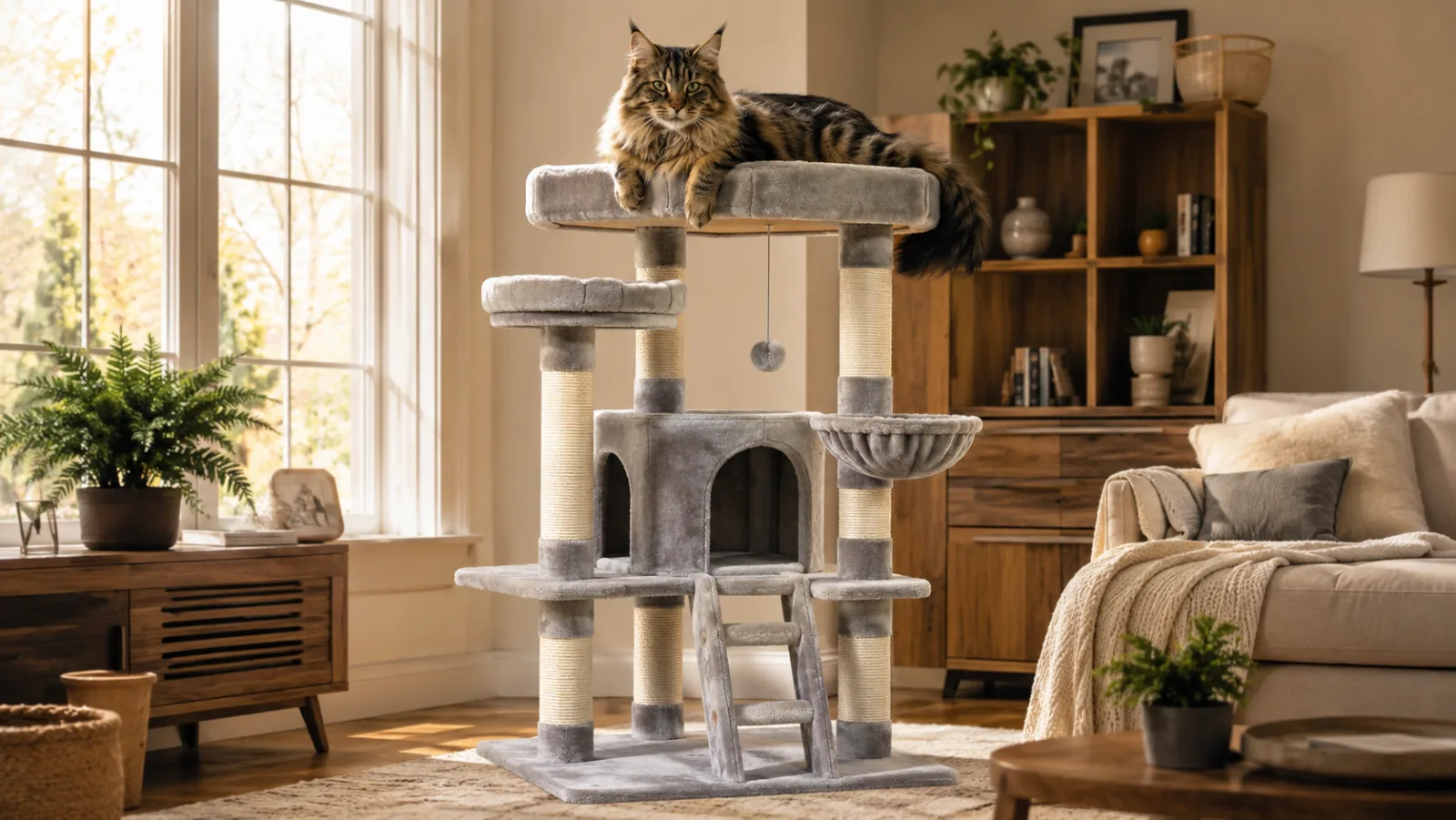
A cat that can go up does not have to fight. Vertical space and multiple escape routes are among the most reliable ways to defuse conflict between cats, because so much inter-cat tension is really about being cornered on a shared plane with no way out. The FDW 54" tower is a straightforward, well-priced way to add that height: FDW documents a multi-level design with perches, ladders, and a cozy condo, natural sisal scratching posts, and soft beds and enclosed houses that double as hideaways. During an introduction, that geometry gives a nervous cat somewhere to retreat upward instead of standing its ground.
Where it fits the protocol: add height to the shared space before the two cats begin sharing it. Once you progress from barrier contact to short supervised together-time, a tall perch lets either cat break off and watch from above rather than freeze or lunge — de-escalation built into the furniture. Because it also carries sisal posts and enclosed condos, it lets each cat claim its own level, which matters when the whole point of the setup is that neither has to compete for a good spot. This is a resource you deliberately do not merge into one contested piece — ideally the home has more than one climbing option so a cornered cat is never forced past the other to reach safety. To keep this pick honest about its own scope: it funnels only to its own product page, and it is a starter tower, not a heavy-duty centerpiece.
The honest caveats are structural and practical. This is a budget tower, so a very large or boisterous cat may find it less stable than a heavier post — anchor or place it against a wall, and watch the first climbs. Assembly quality on inexpensive trees varies unit to unit, so check every joint before a cat trusts the top perch. And height helps most when there is enough of it: a single tower in a multi-cat home is a start, not a complete vertical plan, and a truly tense pairing benefits from several elevated routes rather than one. Confirm current price and availability before buying, since budget furniture listings and sellers move over time.
What We Love
- Adds the escape-upward routes that defuse cornered-cat conflict
- Perches, condo, and sisal posts let each cat claim a level
- Enclosed houses double as a retreat during the intro
- Low price makes a second climbing option affordable
What Could Be Better
- Budget build may feel less stable for a large or rowdy cat
- Assembly quality varies unit to unit — check every joint
- One tower is a start, not a full vertical plan for a tense pair
- Not a heavy-duty long-term centerpiece
The Verdict
The trade-off is plain: you give up the heft and polish of a premium tower and get, cheaply, the one thing an introduction actually needs — height and escape routes so neither cat is ever trapped on the floor. Buy it to add a second climbing option, anchor it well, and treat a single tower as the first piece of a vertical plan rather than the whole of it.
Sources
- FDW (Amazon product listing, 54" Cat Tree Tower): multi-level cat tree with perches, ladders, a cozy condo, natural sisal scratching posts, and soft cat beds and enclosed houses
- Feline welfare consensus on vertical territory: vertical space and multiple elevated escape routes help defuse conflict between cats sharing a home
$19.99
Current price · checked Sep 8, 2026
- 74 oz / 2.2 L capacity — several days of water per the listing
- SUS 304 stainless steel, rust-resistant per GIOTOHUN
- Faucet and fountain running-water modes to encourage drinking
- Quiet pump rated under 25 dB per the listing
Water is the resource owners most often forget to duplicate, and it is one of the easiest to get wrong. A single shared bowl can quietly become a spot the newcomer learns to avoid because the resident cat treats it as theirs — and a cat that is drinking less to dodge a tense bowl is a welfare problem hiding inside a furniture problem. The GIOTOHUN stainless fountain is a clean way to add a genuinely separate second source: the listing documents a 74 oz (2.2 L) reservoir, SUS 304 rust-resistant stainless construction, and a pump rated under 25 dB, with both faucet-style and gentler fountain running-water modes.
Where it fits the protocol: place a full water source in the newcomer's isolation room from day one, and keep a separate one in the resident cat's territory, so neither cat has to approach the other's station to drink. That separation is the whole point during the early phases, and running water carries a bonus — the movement and sound encourage many cats to drink more than they would from a still bowl, which matters for feline urinary health generally. The listing notes a four-stage filtration setup and recommends replacing the filter roughly every two weeks; treat that as ordinary upkeep, not a selling point. Households running multiple drinking stations across a multi-cat home can compare cat water fountains for multi-cat households to match capacity and pump noise to their layout.
The honest caveats are about maintenance and fit. A fountain is a pump with a filter, which means real recurring care — the listing itself flags cleaning the pump every couple of weeks to keep cat hair from clogging it, and a neglected fountain is worse than a clean bowl. The under-25 dB rating is the maker's; some cats are still wary of moving water at first, so introduce it alongside a familiar still bowl rather than replacing that bowl outright. And a fountain solves separation and freshness, not the underlying pairing: if a cat is avoiding water because it is being guarded elsewhere, fix the layout, not just the bowl. As the duplicated water source, though, a quiet running fountain does its narrow job well.
What We Love
- Adds a genuinely separate second water source per the resource rule
- Running-water modes encourage drinking, useful for urinary health
- SUS 304 stainless resists rust and is easy to keep clean
- Quiet pump rated under 25 dB suits a bedroom retreat
What Could Be Better
- A pump-and-filter fountain needs real recurring maintenance
- Filter replacement roughly every two weeks is an ongoing cost
- Some cats are initially wary of moving water
- Solves separation, not an underlying guarding problem
The Verdict
Against a plain second bowl, the fountain costs a little more and asks for regular pump cleaning, but it buys two things the introduction wants: a truly separate drinking station and running water that nudges a stressed cat to keep drinking. Add it as the newcomer's own source, keep a familiar still bowl nearby at first, and commit to the biweekly cleaning the pump needs.
Sources
- GIOTOHUN (Amazon product listing, Stainless Steel Cat Water Fountain): 74 oz (2.2 L) SUS 304 stainless steel cat water fountain with faucet and fountain running-water modes and a pump rated under 25 dB
- Feline health consensus on hydration: running water encourages many cats to drink more, supporting urinary-tract health
$35.99
Current price · checked Sep 8, 2026
- 22.8 x 15 x 10.2 in XL pan, holds up to 20 L of litter per TEVILA
- Non-porous stainless steel that won't absorb odor
- 5.7-inch high sides with a splash guard for diggers
- Open top for easy scooping; scoop and non-slip pads included
This is the resource rule made physical. The widely cited guideline for multi-cat homes is one litter box per cat plus one extra, in separate locations — so two cats means at least three boxes, spread out, so that litter is never a resource one cat can guard against the other. Adding the third box is not optional polish; it is the single most concrete thing a household does to prevent the box-blocking and out-of-box marking that turn a tense introduction into a lasting problem. The TEVILA XL is a strong candidate for that added box: the listing documents a 22.8 x 15 x 10.2-inch stainless pan holding up to 20 L of litter, non-porous stainless that won't absorb odor, 5.7-inch sides with a splash guard, and an open top for easy scooping, with a scoop and non-slip pads in the box.
Where it fits the protocol: give the newcomer its own box in the isolation room from the start, and once the cats begin sharing space, make sure the total count reaches at least three boxes in genuinely separate spots — not three boxes lined up in one room, which a cat reads as one station. Separation is what stops one cat from controlling access. The open, large geometry matters too: an easily entered box in a quiet location is the kind cats accept most readily, and the stainless build resists the odor absorption that makes a shared plastic box a flashpoint. Owners weighing an automated approach for a busy multi-cat home can compare large self-cleaning litter boxes built for multi-cat homes, but the count-and-separation rule matters more than the mechanism.
The honest caveats are practical. High 5.7-inch sides contain scatter well but are harder for a kitten or an arthritic senior to climb into — for those cats, a lower entry point beats containment, and this is the wrong box for them. Stainless is heavier and pricier than a basic plastic pan, and it stays a manual-scooping box, which is more daily work across three boxes than some households expect. And the best box in the world does not fix a placement mistake: three boxes crowded together do not satisfy the rule, and a cat that stops using a box during the introduction is telling you something the hardware cannot answer. Used as the separated third station, though, it is exactly the resource insurance the plan calls for.
What We Love
- Adds the separated third box the multi-cat resource rule requires
- Non-porous stainless won't absorb odor like plastic does
- Large, open, easily entered — the geometry cats accept most
- High sides and splash guard contain scatter from diggers
What Could Be Better
- High sides are hard for kittens and arthritic seniors to enter
- Heavier and costlier than a basic plastic box
- Stays a manual-scooping box — more daily work across three
- Placement matters more than the box: boxes must be separated
The Verdict
The resource rule is not a suggestion — one box per cat plus one, in separate locations, is the concrete step that keeps litter from becoming contested ground during an introduction. This box earns its place as the separated third station: large, odor-resistant, and easy to enter. Choose a lower-entry box instead for a kitten or a stiff senior.
Sources
- TEVILA (Amazon product listing, Stainless XL High-Sided): 22.8 x 15 x 10.2 in stainless steel litter box, holds up to 20 L of litter, non-porous surface that won't absorb odor, ideal for multi-cat households; scoop included
- AAHA/AAFP (feline behavior and welfare consensus): the general resource guideline for multi-cat homes is one litter box per cat plus one extra, placed in separate locations
$81.69
Current price · checked Sep 8, 2026
- See-through full-metal barrier, 32 in tall and up to 80 in wide
- Independent 7.9 x 7.1 in cat door for controlled passage per Klarana
- Freestanding or wall-fixed configurations
- 4 mm steel wire built to resist scratching and biting
The barrier is the tool that turns "let them work it out" into a controlled step you can actually manage. Cats should see and smell each other through something safe before they ever share open space, and a supervised session should end before anyone stiffens or stares — a see-through gate makes both of those possible. Klarana's full-metal freestanding gate is built for it: the listing documents a 32-inch-tall, up-to-80-inch-wide barrier of 4 mm steel wire, freestanding or wall-fixed, with an independent cat door measuring 7.9 by 7.1 inches. The open wire construction is the point — the cats get full visual and scent contact with a solid boundary between them.
Where it fits the protocol: bring this in for the visual-contact phase, after scent-swapping and feeding on opposite sides of a closed door have gone smoothly. With the gate up, you can feed both cats in sight of each other at a distance that keeps them relaxed, then shorten that distance across days. The independent cat door earns its keep here: sized for a cat but not a larger dog, it lets the resident keep moving through its territory, or lets you allow brief chosen contact while retaining a boundary you can close. Because it is freestanding, you can reposition it as the cats progress rather than committing to one doorway. Keep the sessions short and end each one while both cats are still calm — the barrier lets you stop on a good note instead of a bad one.
The honest caveats are about the hardware and the method. At 32 inches the gate will not stop a determined cat that decides to climb or jump it, so it is a supervised-contact tool, not an unattended containment wall — never use it to leave two unproven cats alone together. It is metal and freestanding, so it can be tipped or squeezed past on a slick floor; the wall-fixed option is steadier when you need it. And a gate manages contact, it does not create compatibility: if every barrier session ends in hissing and lunging after weeks, the answer is to slow down and consult a behaviorist, not to remove the barrier and hope. Used for staged, supervised sessions, it is the cleanest way to run the visual phase.
What We Love
- See-through wire gives full sight-and-scent contact safely
- Independent cat door allows controlled passage per Klarana
- Freestanding and repositionable as the cats progress
- Lets you end supervised sessions on a calm note
What Could Be Better
- At 32 in it won't stop a determined climber or jumper
- Supervised-contact tool only — not unattended containment
- Freestanding metal can tip on slick floors without fixing
- Manages contact but cannot manufacture compatibility
The Verdict
Use case: the visual-contact phase, once scent-swapping and door-feeding have gone smoothly and both cats need to see each other before sharing space. The see-through gate lets you run short, distance-controlled sessions and stop each one while everyone is still calm. Supervise every session, use the wall-fixed option on slick floors, and slow down if the sessions keep ending badly.
Sources
- Klarana (Amazon product listing, Full Metal Freestanding Gate): 32 in tall, 80 in extra-wide freestanding full-metal gate with an independent cat door 7.9 in high by 7.1 in wide for separation between animals; freestanding or wall-fixed
- ASPCA / Cornell Feline Health Center (feline aggression and introduction consensus): cats should be allowed to see and smell each other through a barrier before sharing space, and supervised sessions should end before conflict escalates
$19.99
Current price · checked Sep 8, 2026
- Set of two raised stainless bowls — one station per cat
- 6.7-inch wide whisker-friendly dishes per Meowgod
- 15 oz capacity per bowl
- Food-grade SUS304 steel on a non-slip stand
Shared feeding is where competition starts, so the feeding setup is where the resource rule shows up three times a day. If two cats eat from one dish, or from bowls pushed together, the more confident cat learns to control the food and the other learns to eat fast, hover, or wait — none of which you want to teach during an introduction. This Meowgod set solves that plainly: the listing documents two raised, whisker-friendly 6.7-inch stainless bowls, each 15 oz, on non-slip stands in food-grade SUS304. Two bowls means two stations, which is exactly what the plan wants.
Where it fits the protocol: use the pair to feed both cats apart from the very first day — the newcomer in its isolation room, the resident in its territory — and then, during the closed-door phase, place one bowl on each side of the door so both cats come to associate the other's nearby scent with the good thing that is dinner. As you progress to the barrier, keep feeding them on opposite sides of the gate at a distance that keeps them relaxed, shortening it gradually. The elevated, whisker-friendly design is a comfort bonus rather than the reason to buy — the reason is simply that two separated stations remove the single most reliable trigger for early conflict. Keep the stations physically apart even after the cats are getting along; permanently merged feeding is how competition creeps back in.
The honest caveats are modest but real. A raised bowl suits many cats, but a few — and some flat-faced breeds — do fine or better with a low dish, so the elevation is a preference, not a universal upgrade. Stainless on a stand is easy to clean but can slide or tip if a cat is a determined pusher despite the non-slip base, so check placement. And separate bowls manage the mechanics of feeding, not the relationship: if one cat still bolts its food or guards a station across the room, that is a signal to add distance and slow the introduction, not to buy a fancier bowl. As the duplicated feeding stations, though, a simple two-bowl set does precisely what the resource rule asks.
What We Love
- Two bowls give each cat its own separated feeding station
- Whisker-friendly width reduces mealtime discomfort
- Food-grade SUS304 stainless is durable and easy to clean
- Non-slip stand keeps stations stable during feeding
What Could Be Better
- Raised height suits many cats but not every cat
- Can still slide or tip for a determined pusher
- Manages feeding mechanics, not an underlying guarding habit
- Elevation is a comfort feature, not the reason it belongs here
The Verdict
The trade-off here is almost nonexistent — for the price of one modest two-bowl set you remove the most reliable early trigger by giving each cat its own station. Feed them apart from day one, use the pair on opposite sides of the door and then the gate, and keep the stations separated for good rather than merging them once things calm down.
$18.95
Current price · checked Sep 8, 2026
- Covered cave-style bed for privacy and security per PETMAKER
- Removable foam cushion for joint support in older cats
- Plush enclosed design that many cats seek out to hide
- 13 x 13 x 15.75 in — a compact defensible base
A newcomer needs a base it can defend and choose to leave on its own terms. Cats instinctively wedge into small, covered spaces to feel safe, and giving the new cat a dedicated hideaway is how you let it decompress instead of forcing constant exposure. The PETMAKER covered bed is a simple, inexpensive way to provide that: the listing describes an enclosed cave-style tent built for privacy and soothing security, with plush fabric and a removable foam cushion that adds joint support for aging pets, in a compact 13 x 13 x 15.75-inch footprint. It is small on purpose — the enclosure, not the size, is the feature.
Where it fits the protocol: put the retreat in the newcomer's isolation room from the first hour, so the cat has a defensible spot before it has to process anything else. A cat that can withdraw into a covered base is a cat that can regulate its own exposure — coming out to investigate scent-swapped bedding or watch through the gate when it feels ready, and retreating when it has had enough, rather than being cornered into a corner it did not choose. That element of choice is what actually lowers stress; a cat that controls its own hiding is far calmer than one that is hidden because it is trapped. Keep the retreat available even after the cats are sharing space, so the newcomer always has a fallback that is unmistakably its own.
The honest caveats are about scope. This is a soft covered bed, not a barrier and not a substitute for the real separation of a closed door during the early phases — it gives the cat somewhere to feel safe within its space, not a way to keep the cats apart. The compact size fits smaller cats and kittens best; a large adult may find it snug and prefer an open perch or a bigger box-style hideaway, so watch whether the cat actually uses it. And a retreat cannot fix a pairing that keeps going wrong: a cat that never comes out, or that stops eating and hides constantly once the introduction begins, is showing a welfare flag that needs a slower plan or professional help, not just a cozier tent. As the newcomer's decompression base, though, a covered bed is quiet, cheap, and genuinely useful.
What We Love
- Gives the newcomer a defensible base to decompress in
- Enclosed design matches cats' instinct to hide when unsure
- Removable foam cushion adds comfort for older joints
- Cheap and easy to place in the isolation room from hour one
What Could Be Better
- A soft bed, not a barrier — no substitute for real separation
- Compact size suits smaller cats and kittens best
- Some cats ignore covered beds and prefer an open perch
- Cannot fix a pairing where the cat never comes out
The Verdict
Keep one in the newcomer's room from the first hour, because a cat that controls its own hiding is far calmer than one that is cornered. It is a decompression base, not a divider — the closed door and the gate do the separating, and this simply gives the new cat somewhere that is unmistakably its own to retreat to and choose when to engage.
How We Score
Formula
PetPal Gear Score = (Expert Consensus × 0.35) + (Introduction Fit × 0.25) + (Safety / Welfare Design × 0.20) + (Value × 0.20)
Score Factors
- Expert Consensus · 35%
- Synthesized from several expert sources. These are ASPCA multi-cat introduction and feline aggression guidance, the AAHA/AAFP feline behavior and life-stage guidelines, the Cornell Feline Health Center, the Merck Veterinary Manual, and manufacturer documentation. The PetPal Gear Score is a composite of expert opinion. PetPalHQ does not run a testing lab.
- Introduction Fit · 25%
- How directly the item advances a slow, scent-first introduction on duplicated resources. That could mean lowering tension, adding escape routes, or giving each cat its own food, water, litter, and retreat. What matters is that job, not how it performs as a standalone product.
- Safety / Welfare Design · 20%
- Alignment with documented welfare guidance. That means the one-box-per-cat-plus-one resource rule and large, easily entered box geometry. It also means safe barriers for supervised contact, vertical escape routes, and defensible hiding places.
- Value · 20%
- Cost relative to the item's role in the introduction. Consumables such as diffuser refills and fountain filters are weighed against how much conflict risk the item removes.
| Rank | Product | Score |
|---|---|---|
| #1 | TEVILA TEVILA Stainless Steel XL High-Sided Litter Box | 8.3 |
| #2 | FELIWAY FELIWAY MultiCat 30-Day Calming Diffuser Starter Kit | 8.2 |
| #3 | Klarana Full Metal Freestanding Gate with Cat Door | 8.1 |
| #4 | FDW FDW 54" Cat Tree Tower (multi-level) | 8.0 |
| #5 | GIOTOHUN Cat Water Fountain Stainless Steel 74oz | 7.9 |
| #6 | Meowgod Elevated Cat Bowls (raised stainless, set of 2) | 7.8 |
| #7 | PETMAKER Cat House Indoor Bed/Tent with Foam Cushion | 7.7 |
When NOT to Buy
Before you buy anything on this page, ask whether a second cat is the right decision at all. A resident cat that is elderly, ill, or strongly and clearly solitary is not an automatic candidate for a companion, and no toolkit changes that. Some cats genuinely prefer to be the only cat, and forcing a housemate onto a settled solitary animal — or onto a senior managing pain or chronic illness — can lower the welfare of the cat you already have. If your resident cat is content alone, the kindest setup may be no second cat.
If an introduction is already under way and it turns into real aggression, stop escalating and get help. Watch for a few behavioral and medical flags. These include sudden inter-cat aggression, redirected aggression where a startled cat attacks whatever is nearest, or a resident cat that stops eating or stops using the litter box once the newcomer arrives. If you see them, consult a veterinarian or a certified behaviorist rather than pushing the cats together faster. Some pairings need weeks to months of patient, staged introduction. It is honest to say that a small minority of cats never fully cohabit. They can end up needing permanent separation within the home or, in the hardest cases, rehoming. That is not a failure of the setup. It is the reality of feline social behavior, and planning for it is part of doing this responsibly. Confirm current price and availability before buying any item here, since listings, bundle contents, and sellers move over time.
Frequently Asked Questions
- How long should introducing a second cat actually take?
- Longer than most owners hope, and there is no fixed number — the more cautious cat sets the pace. A confident, socially easygoing pair might be sharing space calmly within a week or two, while a wary resident cat or a shy newcomer can need several weeks to a couple of months before the barrier comes down for good. The mistake to avoid is treating a smooth early day as permission to skip ahead. Move to the next step only when the current one is boring — calm eating on both sides of the door, relaxed watching through the gate, together-time that ends without tension. If a stage goes badly, drop back to the previous one and give it more time. Rushing to hit a deadline is the single most common way a workable introduction turns into a lasting standoff.
- What do I do if they fight or hiss through the barrier?
- A little hissing or a swat early on is information, not disaster — it usually means you have moved a step too fast or too close, so increase the distance and slow down. Feed both cats farther apart, shorten the sessions, and end each one while they are still calm rather than pushing until someone reacts. What is not normal is sustained, escalating aggression: flattened ears with locked stares, screaming, lunging that does not settle across repeated sessions, or a cat so wound up it redirects onto you or another pet. That pattern is a reason to stop escalating entirely and consult a veterinarian or a certified behaviorist, because forcing frightened cats together tends to cement the aggression rather than resolve it. Progress in an introduction looks like boredom, not bravery.
- I have one confident resident cat and a shy newcomer — does that change anything?
- It changes the emphasis, not the plan. A mismatch in confidence is common and manageable, but it means guarding the shy cat's sense of safety carefully. Give the newcomer the more secure base — its own quiet room, a covered retreat it can defend, and plenty of vertical escape routes so it can get up and away rather than freeze. Go slower on the confident cat's terms of access: a bold resident may seem ready to charge ahead while the newcomer is still overwhelmed, and the newcomer's comfort governs the pace. Watch for the confident cat blocking resources — hovering over the shared areas or controlling a doorway — and use the separate stations and the extra litter box specifically to make sure the shy cat never has to pass the bold one to eat, drink, or eliminate.
- Do I really need a third litter box for two cats?
- Yes, and the reason is competition, not cleanliness. The widely used guideline is one litter box per cat plus one extra, placed in separate locations — so two cats means at least three boxes, spread around the home rather than lined up in one spot. The extra box removes the possibility that one cat guards the only station and leaves the other with nowhere acceptable to go, which is a frequent hidden cause of out-of-box marking during introductions. Three boxes crowded together do not count; a cat reads a cluster as a single station. Separation is the active ingredient. If floor space is tight, prioritize spreading the boxes across different rooms or levels over having them all be large — placement does more work than size.
- Is introducing a kitten different from introducing an adult cat?
- Somewhat, though the scent-first, duplicated-resource spine stays the same. A kitten is often less territorially threatening to a resident adult and may be accepted faster, but a young kitten also has less impulse control and can pester a settled adult relentlessly, so the resident needs reliable escape routes and high perches to get away from the pestering. Match the equipment to size, too: a very high-sided box or a tall tower step can be hard for a small kitten, and a compact retreat suits it better than a large adult. With two adults, expect territory to matter more and the timeline to run longer. In both cases, let the more cautious animal set the pace, keep the resources fully separated, and do not leave a kitten and an adult unsupervised together until the adult is clearly relaxed.
- The introduction worked — now what infrastructure do we actually need long-term?
- The same three resource categories this page introduces, scaled up rather than replaced. For litter, once the household is past the introduction's starter third box, Best Self-Cleaning Litter Boxes for Large Multi-Cat Homes covers ongoing multi-cat capacity. For vertical territory, Best Cat Trees for Large Cats and Best Luxury & Modern Cat Furniture Systems cover the step up from this page's starter tower, including multi-condo towers built for households where cats need genuinely separated resting spaces. For shared outdoor time once cats are getting along, Best Catios: Outdoor Cat Enclosures adds low-competition territory. Run the introduction on the starter gear first — this infrastructure is for the established multi-cat home that follows.
Bottom Line
Go slow and scent-first. Most second-cat introductions fail from rushing and resource competition, not a personality clash — separate the newcomer, swap scent before sight, feed on opposite sides of a closed door, then move to barrier contact and short supervised together-time only once both cats are relaxed.
Duplicate the resources completely, so neither cat is ever forced to compete. That means the one-box-per-cat-plus-one rule made real with a separated third box like the TEVILA XL, a separate water source, separate feeding stations, and enough vertical territory that a cornered cat can always go up instead of fighting.
Lower the tension and stage the contact with tools, not force. A FELIWAY MultiCat diffuser softens the ambient stress a few days ahead, the see-through freestanding gate lets the cats see and smell each other safely, and a covered retreat gives the newcomer a base it can decompress in and leave on its own terms.
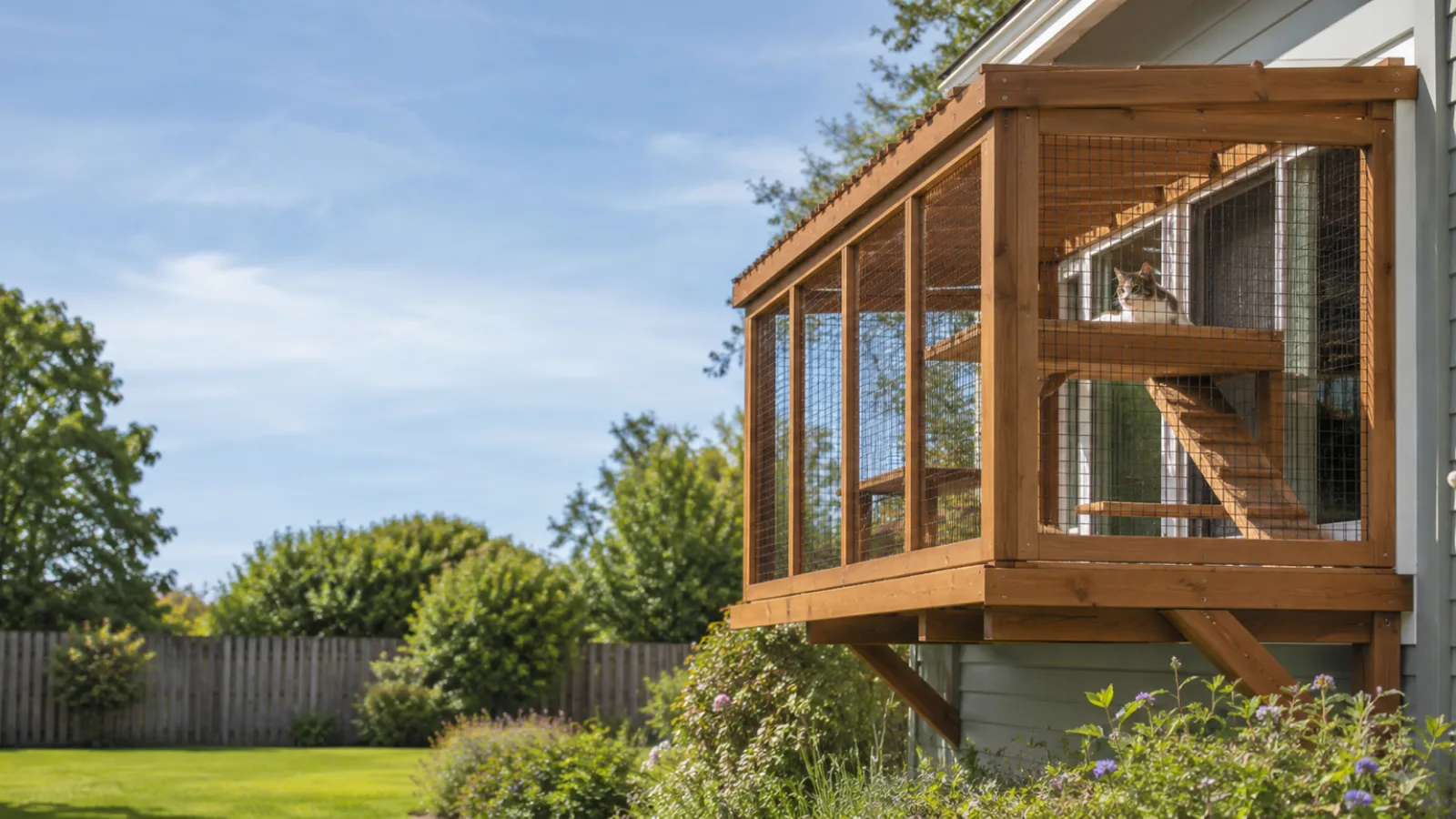
Keep the world bigger than the conflict. Vertical space and multiple escape routes defuse most tension, and for households with the space, setting up a catio so both cats get safe outdoor time adds shared, low-competition territory once the cats are getting along.
Know when to stop and call for help. Real aggression, a resident cat that stops eating or using the box, or a pairing that never settles is a behavioral and medical question first — some cats need a behaviorist, and a small minority never fully cohabit. Confirm price and availability before buying, and treat the honest caveats as part of the plan.
Sources & Methodology
Methodology
PetPal Gear Score = (Expert Consensus × 0.35) + (Introduction Fit × 0.25) + (Safety / Welfare Design × 0.20) + (Value × 0.20)
Expert review sources
- ASPCA — Introducing a New Cat and Aggression Between Cats guidance
- American Animal Hospital Association and American Association of Feline Practitioners — Feline behavior and life-stage guidelines
- Cornell Feline Health Center — Feline Behavior Problems: Aggression and Social Behavior
- Merck Veterinary Manual — Behavior Problems of Cats
- FELIWAY — MultiCat diffuser product documentation
- TEVILA — Stainless XL high-sided litter box product documentation
- Klarana — Full-metal freestanding gate with cat door product documentation
- FDW, GIOTOHUN, Meowgod, and PETMAKER — product documentation for the tower, fountain, bowls, and covered bed
Community sources
- r/CatAdvice — introducing a second cat and slow-introduction consensus
- r/cats — multi-cat resource-setup and conflict-troubleshooting consensus
Prices and specs verified July 11, 2026.
About the author
Nick Miles is the chief editor of PetPalHQ. This introduction protocol and its toolkit are editorial synthesis of ASPCA multi-cat introduction and feline aggression guidance, the AAHA/AAFP feline behavior and life-stage guidelines, the Cornell Feline Health Center, the Merck Veterinary Manual, and manufacturer documentation — PetPalHQ does not run a testing lab. The PetPal Gear Score is a composite of expert opinion, not a measurement. Sources are cited by name throughout, and product specs are drawn from current manufacturer listings.
PetPalHQ is a participant in the Amazon Services LLC Associates Program. We may earn commissions from qualifying purchases — at no extra cost to you.
More Guides
Cats & Dogs
Best Cat Pheromone Diffusers and Calming Products: Multi-Cat Tension, Vet Visits, Moving (2026)

Cats & Dogs
Best Cat Water Fountains for Multi-Cat Households (2026)
Cats & Dogs
Best Self-Cleaning Litter Boxes for Large and Multi-Cat Homes (2026)
Cats & Dogs
Best Cat Scratching Posts and Furniture Alternatives (2026)
Cats & Dogs
Best Microchip Cat Doors for Chip-Selective Entry (2026)
Cats & Dogs
How to Set Up a Catio (Outdoor Cat Enclosure) in 2026
Playground
Best Cat Trees for Large Cats and Multi-Cat Homes (2026)
Cats & Dogs
Best Catios & Outdoor Cat Enclosures of 2026

Playground