Dog
How to Stop Your Dog Pulling on the Leash: A Training Method (2026)
This is a training method, not a gadget that walks the dog for you. Dogs pull because pulling works and because forward pressure triggers a reflex to lean into it — so the fix is a protocol: stop when the leash goes tight, reward when it goes slack, and pay heavily for staying at your side. The picks below are the tools that make that method easier — a front-clip no-pull harness, a head halter, a long line, a treat pouch, a clicker, a plain leash, and high-value treats — but the technique does the work. If you are hoping a piece of equipment replaces the training, read the method section first.
By Nick Miles · Updated August 7, 2026 · 11 min read
PetPalHQ is reader-supported. We may earn a commission from qualifying Amazon purchases at no extra cost to you.
Evidence at a Glance
PHOEPET No-Pull Front-Clip Dog Harness
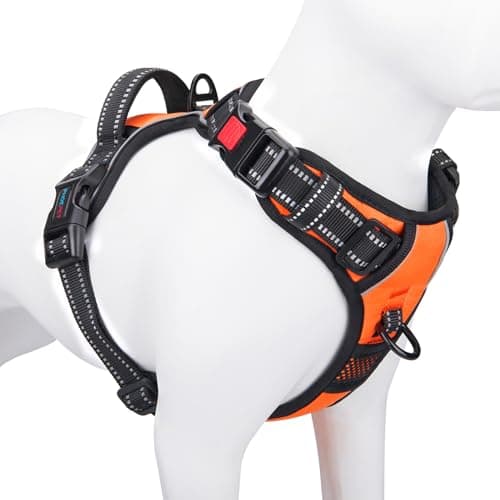
The training harness — a front-clip no-pull harness per PHOEPET, where the leash attaches at the chest so a dog's forward pull turns its body sideways toward you instead of letting it dig in, making the loose-leash method easier to teach without pain or force.
Sources: PHOEPET manufacturer documentation, Humane dog-training consensus on no-pull equipment, Published canine-behavior sources on the opposition reflex
Verified Jul 12, 2026
PetSafe Gentle Leader Head Halter
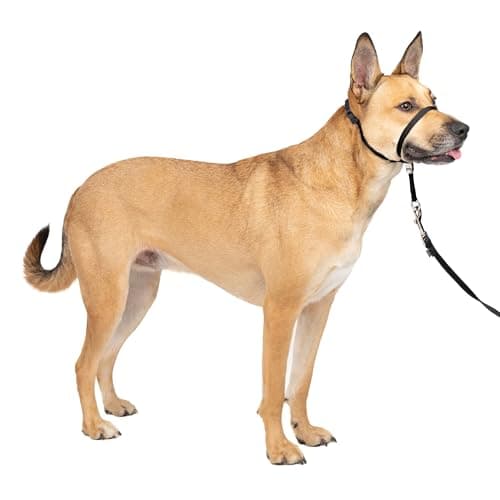
The head-control option — a head halter that sits over the muzzle and behind the ears per PetSafe, gently turning a strong puller's head toward the handler so the dog cannot use its full body weight to pull, used with positive introduction rather than force.
Sources: PetSafe manufacturer documentation, Humane dog-training consensus on no-pull equipment, Published canine-behavior sources on the opposition reflex
Verified Jul 12, 2026
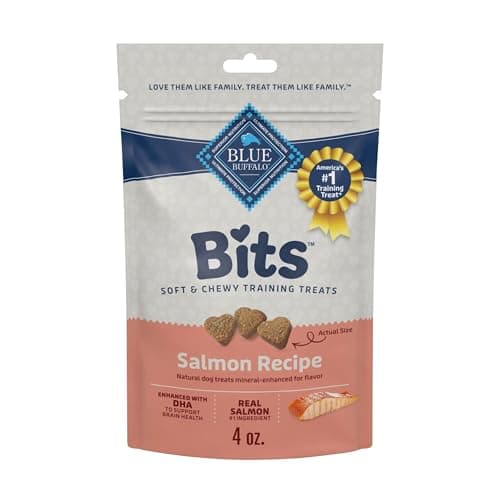
Blue Buffalo Bits Soft Training Treats
The paycheck — small, soft, high-value training treats per Blue Buffalo, the reinforcement that makes a loose leash worth more to the dog than pulling ahead, delivered at a high rate at the start of training.
Sources: Blue Buffalo manufacturer documentation, Humane dog-training consensus on reward-based training, Published canine-behavior sources on reinforcement
Verified Jul 12, 2026
Our Picks
PHOEPET
PHOEPET No-Pull Front-Clip Dog Harness
8.5 / 10
- Front chest attachment redirects a forward pull sideways per PHOEPET
- Reflective and adjustable for fit and visibility
- A force-free management tool, not a correction device
- Makes the loose-leash method easier to teach
$13.93
Current price · checked Sep 8, 2026
PetSafe
PetSafe Gentle Leader Head Halter
8.4 / 10
- Fits over the muzzle and behind the ears per PetSafe
- Gently turns a pulling dog's head back toward you
- Head control gives leverage on a strong dog
- Requires gradual, positive introduction
$14.49
Current price · checked Sep 8, 2026
Hi Kiss
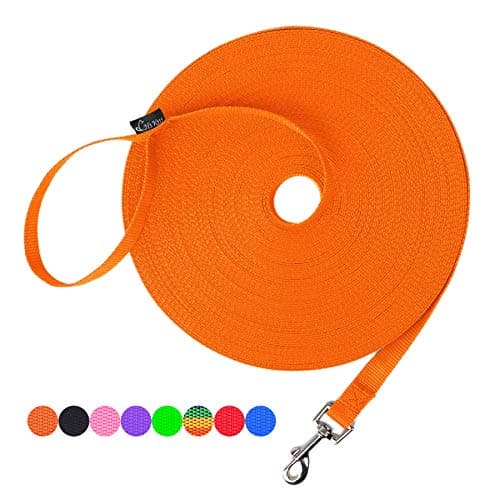
Hi Kiss Dog Training Long Line (20 ft)
8.3 / 10
- 20 ft training long line per Hi Kiss
- Room to move while keeping a physical connection
- For generalizing skills in more open spaces
- A safety net while proofing loose-leash walking
$7.21
Current price · checked Sep 8, 2026
Gobeigo
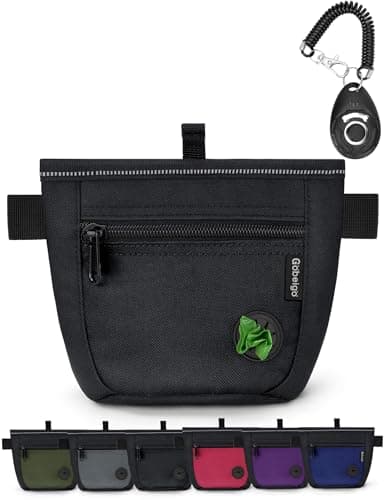
Gobeigo Dog Treat Pouch (with Clicker)
8.2 / 10
- Wearable quick-access pouch with a clip or belt per Gobeigo
- Bundled with a training clicker
- Keeps rewards instantly accessible on a walk
- Makes a high rate of reinforcement practical
$15.99
Current price · checked Sep 8, 2026
HoAoOo
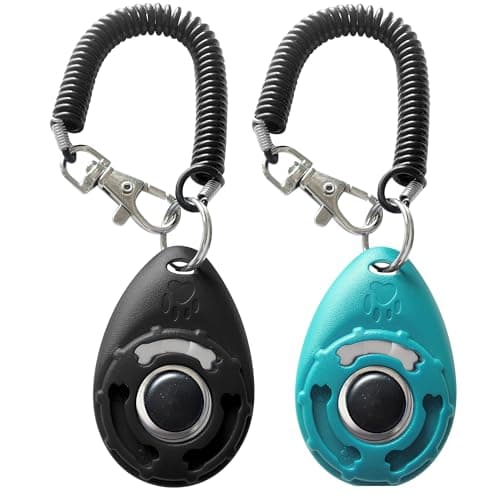
HoAoOo Dog Training Clicker
8.1 / 10
- Consistent click marker with a wrist strap per HoAoOo
- Pinpoints the exact instant of the good behavior
- Paired with a treat as a bridge to the reward
- Speeds learning by removing ambiguity
$4.99
Current price · checked Sep 8, 2026
TAIDA
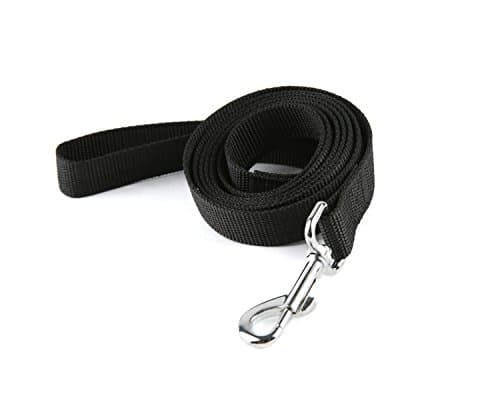
TAIDA Nylon Dog Training Leash (6 ft)
8.0 / 10
- Fixed 6 ft nylon leash per TAIDA
- Consistent, non-extending connection
- Preferred over retractable leads for training
- A retractable leash teaches pulling extends the lead
$5.99
Current price · checked Sep 8, 2026
Blue Buffalo
Blue Buffalo Bits Soft Training Treats
7.9 / 10
- Small, soft, moist training treats per Blue Buffalo
- Sized to eat fast and keep working
- High enough value to compete with distractions
- The reinforcement the whole method runs on
$4.98
Current price · checked Sep 8, 2026
The Short Answer
Dogs pull because it works — pulling gets them where they want to go — and because steady forward pressure triggers an opposition reflex to lean into it. The fix is a method, not a device: stop moving the instant the leash goes tight, move forward again only when it slackens, and reward heavily whenever the dog is at your side, so a loose leash becomes the thing that pays. Equipment makes this easier but does not replace it: a front-clip no-pull harness like the PHOEPET turns a dog's forward pull sideways so it self-corrects, and a PetSafe Gentle Leader head halter gives gentle head control for a strong puller. A Hi Kiss long line, a Gobeigo treat pouch, a HoAoOo clicker, a plain TAIDA leash, and high-value Blue Buffalo training treats support the protocol. The rule never changes: the training does the work, and the gear only makes the training easier.
Every product on this list has been scored against the PetPal Gear Score, a weighted composite of expert consensus, observed effectiveness, animal safety, long-term durability, and value. Review method: Editorial synthesis of humane dog-training consensus — force-free, reward-based training guidance from professional training organizations and published canine-behavior sources on the opposition reflex and reinforcement. Manufacturer documentation from PHOEPET, PetSafe, Hi Kiss, Gobeigo, HoAoOo, TAIDA, and Blue Buffalo was reviewed. Community consensus from r/Dogtraining and r/OpenDogTraining was included as consensus, not quotation. No first-hand product testing — PetPalHQ does not run a testing lab.. Synthesized from 6+ expert sources.
A dog keeps pulling on the leash, in this guide's editorial judgment, for one reason more than any owner realizes: pulling works. Every time a dog leans into the leash and the walk continues in the direction it wanted, pulling has just been rewarded, and a behavior that gets rewarded gets repeated. There is a physical layer on top of that — the opposition reflex, a dog's instinct to push back against steady pressure — so a tight leash literally makes a dog want to pull harder. Put those together and you have a habit that a stronger arm or a fancier collar does not fix, because the dog has simply learned that pulling is how walks work.
The fix is a method, and it is almost boringly simple to describe: make a loose leash the thing that works, and make pulling the thing that does not. When the leash goes tight, the walk stops — you become a tree, and forward progress, the thing the dog wants, ends. When the leash goes slack and the dog is near your side, the walk continues and, at the start, a reward appears fast. Repeated consistently, this teaches the dog that the way to get where it is going is to keep the leash loose. That is the whole engine, and everything else is in service of doing it well and often.
The equipment exists to make that method easier, not to replace it. A front-clip harness turns a pull sideways so the dog self-corrects, a head halter gives gentle control of a strong dog, a treat pouch and clicker let you reward with the split-second timing the method needs, a fixed leash avoids teaching the dog that pulling pays, and a long line carries the trained behavior into harder places. The picks below are that supporting kit, not seven products ranked against each other. Each earns its place by making the training easier or safer, and where a claim rests on a maker's documentation or training consensus, that is named rather than asserted, because PetPalHQ does not run a testing lab.
One principle sits above the whole approach and never bends. The training does the work, the gear only makes it easier, and the method is management plus reward rather than pain — no prong, choke, or shock collars are needed to build a dog that walks nicely. A loose leash is earned over weeks of short, consistent, well-timed sessions, and it holds up because the dog has genuinely learned that a slack leash is what moves the walk forward. Buy the tools if they help, but spend on the reps, because a squirrel will always beat a gadget, and only training beats the squirrel.
Head-to-Head Comparison
| Feature | PHOEPET No-Pull Front-Clip Dog Harness | PetSafe Gentle Leader Head Halter | Hi Kiss Dog Training Long Line (20 ft) | Gobeigo Dog Treat Pouch (with Clicker) | HoAoOo Dog Training Clicker | TAIDA Nylon Dog Training Leash (6 ft) | Blue Buffalo Bits Soft Training Treats |
|---|---|---|---|---|---|---|---|
| Role in the method | Manage the pull | Head control | Train at distance | Deliver rewards | Mark the moment | Everyday leash | Reinforcement |
| Type | Front-clip harness | Head halter | Long line | Treat pouch | Clicker | Fixed leash | Treats |
| Trains or supports | Supports (management) | Supports (management) | Generalizes skill | Enables timing | Sharpens timing | The training leash | Powers the method |
| PetPal Loose-Leash Score | 8.5 | 8.4 | 8.3 | 8.2 | 8.1 | 8.0 | 7.9 |
| Check price | Amazon | Amazon | Amazon | Amazon | Amazon | Amazon | Amazon |
$13.93
Current price · checked Sep 8, 2026
- Front chest attachment redirects a forward pull sideways per PHOEPET
- Reflective and adjustable for fit and visibility
- A force-free management tool, not a correction device
- Makes the loose-leash method easier to teach
- Manages pulling; it does not train the dog on its own
The first tool changes the physics of pulling. The PHOEPET No-Pull Front-Clip Harness attaches the leash at the chest, so a dog that surges forward turns sideways toward you instead of digging in. PHOEPET documents a no-pull harness with a front attachment point and a reflective, adjustable body, built to redirect a forward-pulling dog rather than let it lean into the leash. That redirection is the whole point — it makes pulling less rewarding and self-correcting, which buys you the calm you need to actually train.
Where it fits the method: a front-clip harness is management, not magic. It works with the opposition reflex — a dog's instinct to push against steady pressure — by removing the straight-ahead pressure a back-clip harness or flat collar provides, so the dog has nothing to lean into. That makes the stop-and-reward training below far easier, because the dog is not getting the strong forward feedback that makes pulling feel productive. But it is a tool that supports training, not a substitute for it: a dog in a front-clip harness with no training still pulls, just less effectively. For the full range of no-pull harnesses and how the designs differ, see our roundup of the best no-pull harnesses for leash manners.
The honest caveats are about fit and expectations. A front-clip harness must fit well — too loose and it rotates or chafes, too tight and it restricts the shoulders — so measure and adjust carefully, and check for rubbing behind the legs. Some strong or determined dogs still pull in one, which is where the head halter below comes in. And, most importantly, no harness teaches loose-leash walking by itself; it manages the behavior while you train the replacement. Confirm current price and availability before buying. As the training harness, it makes the method easier by taking the reward out of pulling, without pain or force.
What We Love
- Front clip redirects pulling sideways, self-correcting the dog
- Force-free management with no pain or aversive correction
- Reflective and adjustable for fit and night visibility
- Makes the stop-and-reward method far easier to teach
What Could Be Better
- Must fit well or it rotates, chafes, or restricts shoulders
- Some very strong dogs still pull in a front-clip harness
- Manages pulling — it does not train the dog by itself
The Verdict
Start with a well-fitted front-clip harness to take the reward out of pulling and make the training below easier. It is management, not magic — a dog with no training still pulls in one — so pair it with the stop-and-reward method, and consider the head halter for a strong puller.
Sources
- PHOEPET (Amazon product listing, No-Pull Front-Clip Harness): a no-pull dog harness with a front chest attachment point and a reflective, adjustable body, designed so a forward-pulling dog is redirected sideways rather than able to lean straight into the leash
- Humane dog-training consensus on no-pull equipment: a front-clip harness reduces pulling by changing the mechanics — the chest attachment turns the dog toward the handler when it pulls — and it is a force-free management tool that makes loose-leash training easier without the risks of aversive collars
$14.49
Current price · checked Sep 8, 2026
- Fits over the muzzle and behind the ears per PetSafe
- Gently turns a pulling dog's head back toward you
- Head control gives leverage on a strong dog
- Requires gradual, positive introduction
- A steering tool, not a muzzle or a correction device
The second tool gives leverage on a dog too strong to manage with a chest clip alone. The PetSafe Gentle Leader Head Halter works from the head. PetSafe documents a halter that sits over the muzzle and behind the ears so that when the dog pulls, its head turns gently back toward the handler, controlling the dog through the head rather than force on the neck. For a large, powerful, or determined puller, head control is the difference between a walk you can manage and one that manages you.
Where it fits the method: where a dog's body follows its head, steering the head steers the dog. A head halter makes it physically easy to redirect a strong dog's attention back to you, which supports the reward-based training by keeping the dog in a position where good choices can be reinforced. It is a management tool for the strongest pullers or for handlers who cannot physically hold a big dog, buying control while the loose-leash behavior is trained. It is emphatically not a muzzle — a dog can eat, drink, and pant in one — and it is not an aversive correction device.
The honest caveats are about acceptance and technique. Most dogs dislike a head halter at first and will paw at it, so it requires a slow, positive introduction over days, pairing it with treats, rather than being strapped on and used immediately. It must never be yanked, because a hard jerk on the head can hurt a dog's neck — it is used with gentle, steady guidance. And, like every tool here, it manages pulling while you train; a dog that only ever walks nicely in a head halter has not learned loose-leash walking, it has been steered. Confirm current price and availability before buying. As the head-control option, it gives gentle leverage on a strong puller so the training can happen at all.
What We Love
- Gentle head control gives leverage on a strong puller
- Lets a smaller handler manage a large, powerful dog
- Not a muzzle — the dog can eat, drink, and pant
- Keeps the dog positioned for reward-based training
What Could Be Better
- Most dogs need days of positive introduction to accept it
- Must never be yanked — steady guidance only, not corrections
- Steers the dog; it does not teach loose-leash walking alone
The Verdict
Reach for a head halter when a dog is too strong to manage on a front-clip harness, and introduce it slowly and positively over days. It gives gentle head control for training, never a correction — and like every tool here, it manages the pull while the method teaches the walk.
Sources
- PetSafe (Amazon product listing, Gentle Leader Head Halter): a head halter that fits over the muzzle and behind the ears so that when the dog pulls, its head is gently turned back toward the handler; a no-pull tool that works on head control rather than force on the neck
- Humane dog-training consensus on no-pull equipment: a head halter gives a handler gentle control of a strong dog by guiding the head, and it must be introduced gradually and positively so the dog accepts wearing it, never yanked, since it is a steering tool rather than a correction device
$7.21
Current price · checked Sep 8, 2026
- 20 ft training long line per Hi Kiss
- Room to move while keeping a physical connection
- For generalizing skills in more open spaces
- A safety net while proofing loose-leash walking
- Held or lightly managed, not clipped and left
The third tool extends the training into open space. The Hi Kiss 20 ft Long Line gives a dog room while you keep a physical connection. Hi Kiss documents a long lead offered in lengths including 20 feet, used to practice loose-leash and recall work at distance. Once a dog walks nicely on a short leash in quiet places, a long line is how you bridge to bigger, more distracting environments without either crowding the dog or losing control.
Where it fits the method: training generalizes from easy to hard, and a long line is the tool for the middle of that progression. You teach loose-leash walking first in low-distraction settings like a hallway or a quiet yard, then a long line lets you add space and mild distraction — a park path, an open field — while retaining a safety net, so the dog can practice staying connected to you at distance before you ask for it on a six-foot leash in a busy street. It also doubles for recall practice, which supports leash manners by keeping the dog oriented to you. For structured distance and recall training systems, see our roundup of the best GPS and e-collar dog training systems.
The honest caveats are about handling and setting. A long line is held or lightly managed by the handler, not clipped to something and left, because a dog hitting the end of twenty feet at speed can jolt hard and a loose line can tangle. It attaches to a harness or flat collar, never a slip collar, and it needs open, uncluttered space to avoid snagging. And it is a training aid for a stage, not a permanent walking leash. Confirm current price and availability before buying. As the distance-training tool, it is how loose-leash walking travels from the living room to the real world.
What We Love
- Bridges training from quiet spaces to open, distracting ones
- Keeps a safety net while proofing loose-leash walking
- Doubles for recall practice that supports leash manners
- Inexpensive and simple to add to the training kit
What Could Be Better
- Held and managed under supervision — not clipped and left
- Needs open space and a harness to avoid jolts and tangles
- A training-stage aid, not a permanent walking leash
The Verdict
Add a long line to generalize loose-leash walking from quiet spaces to open, distracting ones with a safety net. Hold and manage it on a harness in open space, and treat it as a stage in the progression, not a permanent leash.
Sources
- Hi Kiss (Amazon product listing, Training Long Line): a long training lead offered in lengths including 20 feet, giving a dog room to move while the handler keeps a physical connection for practicing loose-leash and recall work at distance
- Humane dog-training consensus on reward-based training: loose-leash skills are built in low-distraction settings first and then generalized, and a long line lets a handler practice at greater distance and in more open spaces with a safety net before trusting the dog on a short leash in busy places
$15.99
Current price · checked Sep 8, 2026
- Wearable quick-access pouch with a clip or belt per Gobeigo
- Bundled with a training clicker
- Keeps rewards instantly accessible on a walk
- Makes a high rate of reinforcement practical
- Timing of the reward is what teaches the dog
The fourth tool solves the timing problem that sinks most home training. The Gobeigo Treat Pouch keeps rewards instantly to hand. Gobeigo documents a wearable pouch with a quick-access opening and a clip or belt, bundled with a clicker, so a handler can reward the instant the dog does the right thing. Reward-based training lives or dies on timing, and a treat delivered a second or two after the good behavior is what actually teaches it — fumbling in a pocket loses that window.
Where it fits the method: loose-leash walking is taught by rewarding the dog heavily and quickly whenever the leash is slack and the dog is near your side, and at the start that means a high rate of reinforcement — many small rewards, delivered fast. A hands-free pouch worn at the hip is what makes that practical, because you cannot pay the dog quickly enough digging treats out of a jacket. The bundled clicker is a bonus for marking the exact moment of the good behavior. This is the piece of gear that most directly enables the training, because without fast reward delivery, the timing collapses and the dog never learns what earned the treat.
The honest caveats are about habit and cleaning. A pouch only helps if you actually wear it and load it before every walk — an empty pouch trains nothing. Treat residue builds up, so a washable or wipeable liner matters over time. And the pouch enables the method; it is not the method, so a handler who wears a pouch but rewards with poor timing still will not make progress. Confirm current price and availability before buying. As the reward-delivery tool, it is the quiet enabler that makes fast, well-timed reinforcement possible on a real walk.
What We Love
- Keeps rewards instantly accessible for split-second timing
- Hands-free wear makes a high reinforcement rate practical
- Bundled clicker marks the exact good moment
- The gear that most directly enables the training
What Could Be Better
- Only helps if worn and loaded before every walk
- Treat residue means it needs regular cleaning
- Enables good timing; it cannot supply it for you
The Verdict
Wear a loaded treat pouch on every training walk so you can reward the instant the leash goes slack — timing is what teaches the dog, and a pouch is what makes fast timing possible. It enables the method; it does not replace good reward timing.
Sources
- Gobeigo (Amazon product listing, Dog Treat Pouch and Clicker): a wearable dog treat pouch with a quick-access opening and a belt or clip attachment, bundled with a training clicker, so a handler can deliver rewards instantly during a walk
- Humane dog-training consensus on reward-based training: timing is everything in reward-based training, so a treat delivered within a second or two of the desired behavior is what teaches the dog, and a hands-free pouch that keeps rewards instantly accessible is what makes a high rate of reinforcement practical on a walk
$4.99
Current price · checked Sep 8, 2026
- Consistent click marker with a wrist strap per HoAoOo
- Pinpoints the exact instant of the good behavior
- Paired with a treat as a bridge to the reward
- Speeds learning by removing ambiguity
- Optional — a marker word can do the same job
The fifth tool sharpens the communication. The HoAoOo Clicker marks the exact instant a dog does the right thing. HoAoOo documents a simple clicker with a wrist strap that makes a consistent sound used as a marker, paired with a treat so the click tells the dog precisely what earned the reward. In loose-leash training, being able to mark the split-second the leash goes slack — before you can even reach the treat — removes the guesswork about what you are paying for.
Where it fits the method: a marker signal is the bridge between the moment of good behavior and the reward that follows a beat later. When the dog is walking and the leash softens, a click at that instant, followed by a treat, tells the dog exactly which choice worked, far more precisely than a treat handed over a second or two later. This is especially useful for capturing the fleeting moments of a loose leash in early training. The clicker is genuinely optional — a consistent marker word like "yes" does the same job — but many handlers find the distinct, identical click clearer than their own varying voice.
The honest caveats are about mechanics and redundancy. A clicker only works once it is "charged" — the dog has learned, through repetition, that a click reliably predicts a treat — so it is not a shortcut that skips building that association. It is also one more thing to hold along with the leash and the pouch, which is why some handlers prefer a marker word to keep their hands free, and why the treat pouch above bundles a clicker for those who want one. And a click without a treat behind it soon means nothing. Confirm current price and availability before buying. As the marker tool, it makes reward timing precise for handlers who want it, though a marker word serves just as well.
What We Love
- Marks the exact instant of the good behavior
- Removes ambiguity about what is being rewarded
- Very cheap and simple to add to the kit
- Useful for capturing fleeting loose-leash moments
What Could Be Better
- Only works once 'charged' with treat associations
- One more thing to hold with the leash and pouch
- Optional — a consistent marker word does the same job
The Verdict
Use a clicker to mark the exact instant the leash goes slack if you want precise timing — but know it is optional, since a consistent marker word works just as well. Charge it with treats first, and never click without a reward behind it.
Sources
- HoAoOo (Amazon product listing, Dog Training Clicker): a simple training clicker with a wrist strap that makes a consistent click sound used as a marker signal, paired with a treat so the click tells the dog the exact behavior that earned the reward
- Humane dog-training consensus on reward-based training: a marker signal such as a clicker bridges the gap between a behavior and the reward, pinpointing the exact instant the dog did the right thing, which speeds learning by removing ambiguity about what is being rewarded
$5.99
Current price · checked Sep 8, 2026
- Fixed 6 ft nylon leash per TAIDA
- Consistent, non-extending connection
- Preferred over retractable leads for training
- A retractable leash teaches pulling extends the lead
- The everyday leash for the trained walk
The sixth tool is the leash itself, and the choice matters more than it looks. The TAIDA 6 ft Nylon Leash is a plain, fixed-length lead. TAIDA documents a fixed-length nylon leash offered in lengths including six feet, a consistent connection for walking and training. A standard six-foot leash gives enough room for the dog to walk comfortably at your side while keeping you connected, and its fixed length is exactly what loose-leash training needs.
Where it fits the method: a fixed leash is a quiet but important part of the training, because a retractable leash actively undermines it. A retractable lead keeps constant light tension on the dog and pays out more line whenever the dog pulls, which teaches precisely the wrong lesson — that pulling extends the leash and gets the dog farther forward. A fixed six-foot leash, by contrast, has a clear, consistent boundary: the dog learns that staying within it and keeping it slack is what keeps the walk moving. It is the everyday leash you use once the harness or halter has done its management job and the training is taking hold.
The honest caveats are about material and hardware. A cheap leash is fine, but check the clip and stitching, since the hardware is the failure point on any leash and a snapped clip on a busy street is dangerous. Nylon can be abrasive on the hands if a dog does lunge, so a padded handle is a comfort upgrade for a strong dog. And a leash is a connection, not a training method — it holds the dog while the technique does the teaching. Confirm current price and availability before buying. As the everyday lead, a simple fixed leash is the right tool precisely because it does not teach the dog that pulling pays.
What We Love
- Fixed length gives a clear, consistent boundary
- Avoids the retractable leash's 'pulling extends the lead' lesson
- Comfortable room to walk at your side
- Cheap, simple, and the right everyday training leash
What Could Be Better
- Check the clip and stitching — hardware is the failure point
- Bare nylon can be abrasive on the hands during a lunge
- A connection, not a training method in itself
The Verdict
Use a plain fixed-length leash, not a retractable one, for loose-leash training — a retractable lead teaches the exact opposite lesson by rewarding pulling with more line. Check the clip and stitching, and let the leash hold the dog while the method does the teaching.
Sources
- TAIDA (Amazon product listing, Nylon Training Leash): a fixed-length nylon dog leash offered in lengths including 6 feet, providing a consistent, non-extending connection for everyday walking and training
- Humane dog-training consensus on reward-based training: a fixed-length leash is preferred for loose-leash training over a retractable one, because a retractable leash keeps constant tension on the dog and teaches it that pulling extends the lead, which is the opposite of the lesson being taught
$4.98
Current price · checked Sep 8, 2026
- Small, soft, moist training treats per Blue Buffalo
- Sized to eat fast and keep working
- High enough value to compete with distractions
- The reinforcement the whole method runs on
- Portioned into the daily food to avoid overfeeding
The final piece is the reward that makes the whole method work. Blue Buffalo Bits are small, soft training treats. Blue Buffalo documents moist treats made for reward-based training, sized so a dog eats one quickly and keeps working. Loose-leash training runs on reinforcement, and the treat is the paycheck — if staying at your side pays better than pulling toward the interesting thing ahead, the dog chooses your side.
Where it fits the method: reward value and size are not details, they are the mechanism. Treats need to be small and soft so the dog can eat many in a session without filling up or slowing down, and high-value enough to compete with the smells, dogs, and squirrels that make pulling tempting. A dry biscuit the dog is lukewarm about will lose to a squirrel every time; a treat the dog finds genuinely exciting can win. At the start of training you pay heavily and often, then gradually thin the rewards as the loose-leash habit becomes the dog's default. This is the reinforcement the harness, the pouch, and the clicker all exist to deliver.
The honest caveats are about calories and fading. Training treats are calories, so they come out of the dog's daily food allowance to avoid overfeeding, especially during heavy early training. Very high-value treats work best saved for hard environments so they keep their power. And the goal is to fade the treats over time — a dog that only walks nicely when it sees food in your hand has been bribed, not trained, so rewards become intermittent and unpredictable as the behavior solidifies. Confirm current price and availability before buying. As the paycheck, these are what make a loose leash worth more to the dog than the pull, which is the entire point of the method.
What We Love
- Small and soft — many rewards per session, eaten fast
- High value competes with real-world distractions
- The reinforcement the entire method depends on
- Inexpensive for the training payoff
What Could Be Better
- Treats are calories — portion from the daily food
- Save the highest value for genuinely hard environments
- Fade them over time or the dog learns to expect a bribe
The Verdict
Pay the dog with small, soft, high-value treats — heavily at first, then fading as the habit sets — because a loose leash only beats pulling if it pays better. Portion them from the daily food, save the best for hard places, and thin the rewards so you train rather than bribe.
Sources
- Blue Buffalo (Amazon product listing, Bits Soft Training Treats): small, soft, moist training treats made for reward-based training, sized so a dog can eat one quickly and keep working without filling up during a session
- Humane dog-training consensus on reward-based training: effective training rewards are small, soft, and high-value so they can be delivered frequently and eaten fast, and using a treat the dog finds genuinely exciting is what makes staying at the handler's side more rewarding than pulling toward a distraction
How We Score
Formula
PetPal Loose-Leash Score = (Expert Consensus × 0.35) + (Training-Method Fit × 0.25) + (Safety / Humane Design × 0.20) + (Value × 0.20)
Score Factors
- Expert Consensus · 35%
- Synthesized from humane, reward-based dog-training consensus, published canine-behavior sources on the opposition reflex and reinforcement, and manufacturer documentation. The PetPal Loose-Leash Score is a composite of expert opinion — PetPalHQ does not run a testing lab.
- Training-Method Fit · 25%
- How directly the item supports the loose-leash method — managing the pull, enabling well-timed rewards, and generalizing the skill — rather than how it performs as a standalone product ranked against rivals. No tool here trains the dog on its own.
- Safety / Humane Design · 20%
- Alignment with force-free training principles — management and reward rather than pain or aversive correction, proper fit and positive introduction of head halters, supervised long-line use, and fixed rather than retractable leashes, so training is humane and physically safe.
- Value · 20%
- Cost relative to the item's role in the method, including ongoing needs like treats, and how much of the loose-leash outcome the item is responsible for. This kit is inexpensive because the training, not the gear, does the work.
| Rank | Product | Score |
|---|---|---|
| #1 | PHOEPET PHOEPET No-Pull Front-Clip Dog Harness | 8.5 |
| #2 | PetSafe PetSafe Gentle Leader Head Halter | 8.4 |
| #3 | Hi Kiss Hi Kiss Dog Training Long Line (20 ft) | 8.3 |
| #4 | Gobeigo Gobeigo Dog Treat Pouch (with Clicker) | 8.2 |
| #5 | HoAoOo HoAoOo Dog Training Clicker | 8.1 |
| #6 | TAIDA TAIDA Nylon Dog Training Leash (6 ft) | 8.0 |
| #7 | Blue Buffalo Blue Buffalo Bits Soft Training Treats | 7.9 |
When NOT to Buy
Before buying anything, understand the honest premise of this guide: the training is the product, and the equipment only makes it easier. If you are hoping a harness, a halter, or any device will walk the dog for you while you skip the work, none of these will, and a dog managed by gear alone still pulls the moment the gear comes off. Loose-leash walking is a taught behavior, built over many short, consistent sessions, and it takes weeks of practice, not a purchase. A handler unwilling to do the daily reward-based reps will not get a loose leash from any tool on this list.
Method and humane handling rule out the tempting shortcuts. The whole approach here is management plus reward — a front-clip harness or head halter to reduce the mechanical advantage of pulling, and heavy, well-timed reinforcement for walking on a slack leash. It is not built around pain: this guide does not use or recommend prong, choke, or shock collars for pulling, because reward-based methods build a reliable, willing walker without the fallout and risks of aversive correction. A head halter in particular must be introduced slowly and never yanked, and a long line must be supervised — used harshly or carelessly, even humane tools cause harm.
Finally, the honest scope note: this kit is the leash-manners equipment, not a fix for every walking problem. A dog that lunges, barks, or freezes at other dogs or people is showing reactivity or fear, which is a behavior issue that needs its own approach and often a qualified trainer, not just a no-pull harness — and severe cases warrant professional help. Recall, the behavior that lets a dog earn off-leash freedom, is trained separately and is worth building alongside leash manners. If pulling is tangled up with anxiety, that underlying emotion needs addressing too. Confirm current price and availability on every item before buying, since prices and sellers move over time.
Frequently Asked Questions
- Will a no-pull harness stop my dog from pulling on its own?
- It will usually reduce pulling right away, but it will not, by itself, teach your dog to walk nicely — and expecting it to is the most common disappointment with these products. A front-clip harness works by mechanics: because the leash attaches at the chest, a dog that surges forward gets turned sideways toward you instead of being able to lean straight into the leash, so pulling becomes less effective and less rewarding. That is genuinely helpful, and for some dogs it is enough to make walks manageable. But it is management, not training — a dog wearing a front-clip harness with no training still tries to pull, just with less leverage, and the moment you switch back to a flat collar or back-clip harness, the pulling returns because the underlying behavior was never changed. The right way to use one is as a tool that makes training easier: the reduced pulling buys you the calm and the opportunity to reward loose-leash walking heavily, so the dog actually learns the new habit. Think of the harness as removing the reward from pulling while your training builds the reward for not pulling.
- What is the actual method for teaching loose-leash walking?
- At its core it is stop-and-reward, applied consistently. The foundation is that forward progress — the thing the dog wants — only happens when the leash is loose, and it stops the instant the leash goes tight. So when the dog pulls, you stop moving entirely and stand still, becoming a "tree," and you only start walking again when the dog releases the tension, even slightly. On the other side of it, you reward heavily and quickly whenever the dog is walking near your side with a slack leash — at the beginning this means a high rate of small treats, delivered with good timing, so the dog clearly connects "staying by you on a loose leash" with "good things happen." Many people also use a marker, a click or a word like "yes," to pinpoint the exact instant the leash softens before delivering the treat. You start in a boring, low-distraction place like a hallway or quiet yard where success is easy, then gradually add distraction and distance as the dog gets reliable, using a long line to bridge into busier environments. Over weeks, you thin out the treats as the loose leash becomes the dog's default. It is simple to describe and takes consistency and repetition to build, which is why the training, not the gear, is the real work.
- Should I use a head halter or a front-clip harness?
- For most dogs, start with a front-clip harness, and reach for a head halter when a dog is strong enough or determined enough that the harness alone does not give you sufficient control. A front-clip harness is the gentler, more widely tolerated option — most dogs accept it immediately, and it provides enough redirection for the average puller while you train. A head halter, which sits over the muzzle and turns the dog's head back toward you when it pulls, offers much more leverage and is often the difference-maker for a large, powerful dog or a handler who physically cannot hold their dog on a harness. The trade-off is acceptance: most dogs dislike a head halter at first and paw at it, so it requires a patient, positive introduction over several days, pairing it with treats until the dog is comfortable, and it must never be yanked because a hard jerk on the head can hurt the dog's neck. It is also not a muzzle — the dog can eat, drink, and pant normally. Both are humane management tools that support training rather than replace it, so the choice comes down to how much control you need and how much introduction time you are willing to invest.
- Are prong, choke, or shock collars a faster way to stop pulling?
- This guide's approach does not use or recommend prong, choke, or shock collars for pulling, and the reason is both effectiveness and welfare. These tools work by applying discomfort or pain when the dog pulls, and while that can suppress the behavior quickly, it comes with well-documented risks: physical harm to the neck, and behavioral fallout where the dog associates the pain not with pulling but with whatever it was looking at — another dog, a person, a bike — which can create or worsen fear and reactivity. A dog can also learn to tolerate or "push through" an aversive, leading to escalating correction. Reward-based training takes more patience up front, but it builds a dog that chooses to walk nicely because doing so is genuinely rewarding, without the risk of teaching fear or aggression in the process, and the result tends to be more reliable and less fragile. If a dog's pulling is severe or tangled up with lunging and reactivity, the right answer is a qualified force-free trainer, not a harsher collar. The honest position is that there is no shortcut that skips the training; there are only shortcuts that add risk.
- My dog walks fine at home but pulls like crazy outside — what am I doing wrong?
- Probably nothing wrong — you are running into the fact that trained behaviors do not automatically generalize from easy environments to hard ones, and the fix is to bridge that gap deliberately rather than to assume the training failed. A dog that walks beautifully in a quiet hallway is not being defiant when it pulls on a busy street; the street is simply a completely different context, packed with smells, dogs, and movement that are far more rewarding to pull toward than anything at home. The solution is to train through a progression of increasing difficulty: nail the behavior somewhere boring first, then practice in slightly more distracting places, then busier ones, raising the challenge only as fast as the dog can succeed. A long line is the useful tool here, letting you practice in more open, distracting spaces with a safety net before you ask for loose-leash walking on a short leash in a crowd. Higher-value treats matter more in hard environments, because your reward has to compete with the distraction. And keep sessions short and set the dog up to win, because a dog that is over-threshold — too excited or overwhelmed to think — cannot learn, so sometimes the answer is more distance from the distraction, not more correction.
Bottom Line
The training is the product — pulling is a taught-out behavior, not a hardware problem. Stop when the leash goes tight, move again when it slackens, and pay heavily for the dog staying at your side, so a loose leash becomes the thing that works.
Equipment manages, it does not train. A PHOEPET front-clip harness turns a forward pull sideways and a PetSafe Gentle Leader gives head control on a strong puller — both make the method easier, but a dog with no training still pulls once the gear is off.
Timing is everything, so set up to reward fast. A loaded Gobeigo pouch and a HoAoOo clicker let you mark and pay the exact instant the leash softens, and high-value Blue Buffalo treats make your side pay better than the squirrel ahead.
Use the right leash and generalize the skill. A fixed TAIDA leash avoids the retractable-leash trap of teaching that pulling extends the lead, and a Hi Kiss long line carries the trained behavior from the quiet hallway to the busy street.
Stay humane and know the limits. This method is management plus reward, not prong, choke, or shock collars — and a dog that lunges or barks at others is showing reactivity or fear that needs its own approach, often a qualified trainer, not just a no-pull harness.
Sources & Methodology
Methodology
PetPal Loose-Leash Score = (Expert Consensus × 0.35) + (Training-Method Fit × 0.25) + (Safety / Humane Design × 0.20) + (Value × 0.20)
Expert review sources
- Humane dog-training consensus — force-free, reward-based leash-training guidance from professional training organizations
- Published canine-behavior sources on the opposition reflex and why dogs pull
- Published sources on reinforcement, marker signals, and reward timing
- PHOEPET — No-Pull Front-Clip Harness product documentation
- PetSafe — Gentle Leader Head Halter product documentation
- Hi Kiss, Gobeigo, HoAoOo, TAIDA, and Blue Buffalo product documentation
Community sources
- r/Dogtraining — loose-leash walking and reward-based training consensus
- r/OpenDogTraining — general leash-manners consensus
Prices and specs verified July 12, 2026.
About the author
Nick Miles is the chief editor of PetPalHQ. This loose-leash training method and its supporting kit are editorial synthesis of humane, reward-based dog-training consensus, published canine-behavior sources on the opposition reflex and reinforcement, and manufacturer documentation — PetPalHQ does not run a testing lab. The PetPal Loose-Leash Score is a composite of expert opinion, not a measurement. Sources are cited by name throughout.
PetPalHQ is a participant in the Amazon Services LLC Associates Program. We may earn commissions from qualifying purchases — at no extra cost to you.