Cats & Dogs
Back-to-School Dog Separation Anxiety: A School-Calendar Countdown Routine (2026)
This is not a year-round product ranking — it is a dated ramp keyed to the first day of school. Start three to four weeks out, teach 'alone' in short sub-threshold departures, provision the empty house so it is rewarding, and watch the first real absences to prove the ramp is working. The picks below are the toolkit that carries that countdown, not gadgets ranked against each other. Products are supportive tools, never cures: clinical separation anxiety is a panic disorder that needs a veterinarian, and no cart on this page changes that.
By Nick Miles · Updated August 12, 2026 · 12 min read
PetPalHQ is reader-supported. We may earn a commission from qualifying Amazon purchases at no extra cost to you.
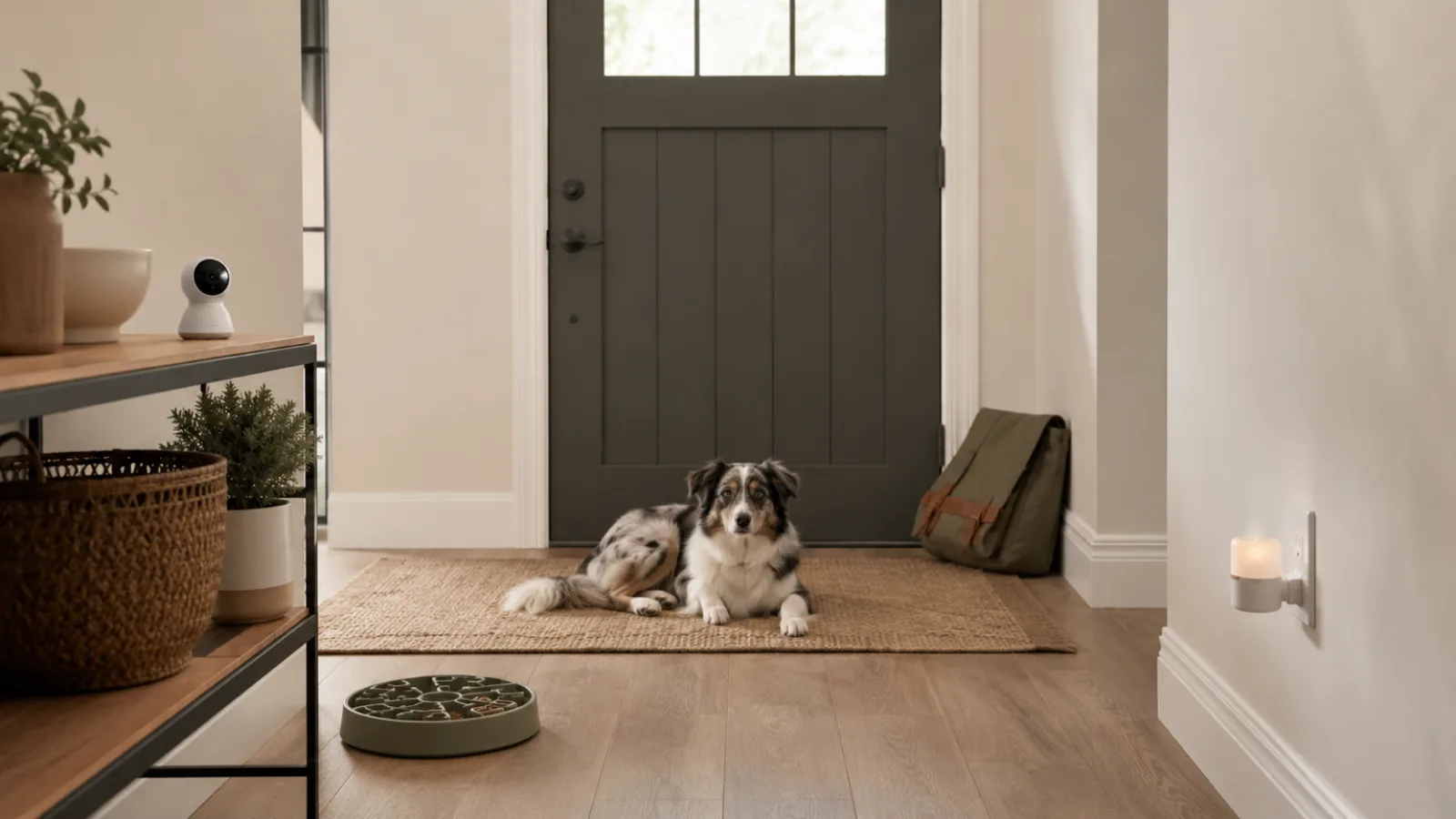
Evidence at a Glance
Petcube Bites 2 Lite Interactive Wi-Fi Pet Camera
The ramp's evidence layer — 1080p video with night vision and two-way audio lets you watch whether the dog actually settles once alone, which the Merck Veterinary Manual names as the way absent-owner behavior problems are diagnosed.
Sources: Petcube manufacturer documentation, Merck Veterinary Manual on diagnosis of behavior problems, ASPCA separation-anxiety guidance
Verified Jul 11, 2026
LUKITO Licking Mat for Dogs (2-pack)
The first-departure tool — a suction-mounted lick mat you freeze so that a short, sub-threshold absence pairs your leaving with a slow, calming reward from the very start of the ramp.
Sources: LUKITO manufacturer documentation, AVSAB humane-training and desensitization consensus, AKC counter-conditioning material
Verified Jul 11, 2026
Zesty Paws Calming Chews for Dogs
The daily baseline through the ramp weeks — a palatable calming supplement for normal transition stress, offered as a support layer and never as a sedative or a cure.
Sources: Zesty Paws manufacturer documentation, Merck Veterinary Manual on calming-aid evidence, ASPCA separation-anxiety guidance
Verified Jul 11, 2026
Our Picks
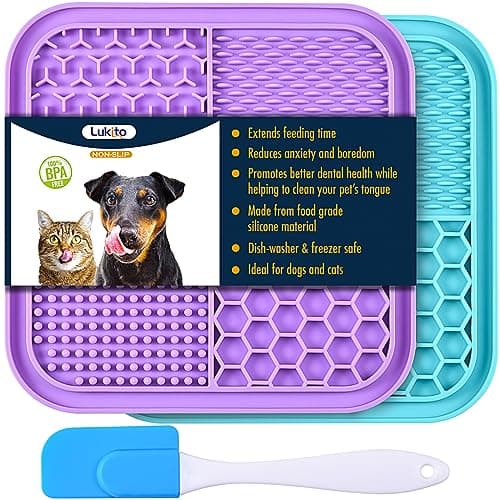
LUKITO
LUKITO Licking Mat for Dogs (2-pack, suction)
8.1 / 10
- 49 suction cups anchor the mat to a wall, glass, or the fridge per LUKITO
- Four textured surfaces hold spreadable treats like yogurt or xylitol-free peanut butter
- Freezer-safe, so a frozen smear stretches the first practice departures
- Two mats per pack — one loading while the other is in the freezer
$7.99
Current price · checked Sep 8, 2026
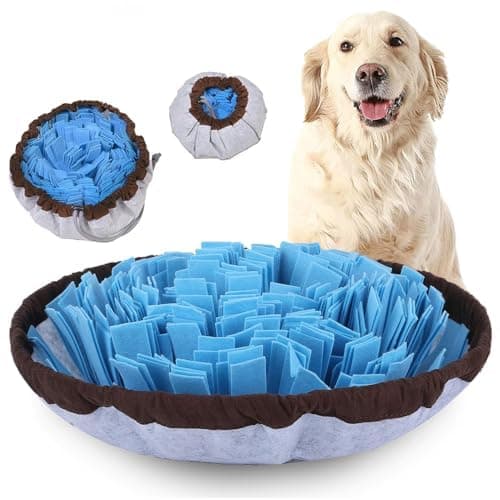
PET ARENA
PET ARENA Snuffle Mat for Dogs
8.0 / 10
- Fleece foraging mat that hides treats in fabric strips for nose-work
- Slows eating and encourages natural foraging per PET ARENA
- Doubles as a slow-feeder bowl with a size-adjustable belt
- Anti-pilling polar fleece, machine or hand washable
$11.89
Current price · checked Sep 8, 2026
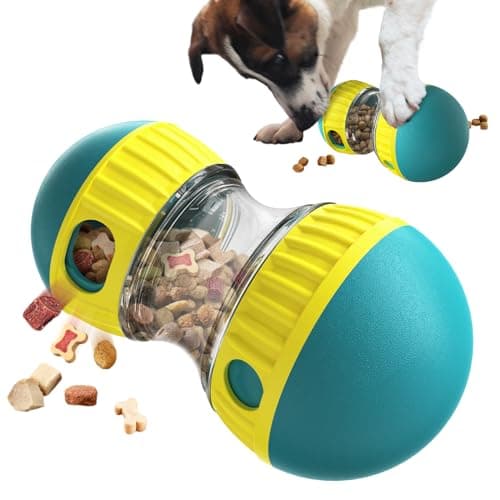
BSISUERM
BSISUERM Dog Puzzle Toy (adjustable treat-dispensing)
7.9 / 10
- Barbell-shaped ball with treat-dispensing spheres at both ends
- Adjustable switch controls how much food dispenses and how slowly
- Rolls within a fixed area so the dog chases and works for food
- Sturdy ABS with a curved, quieter-rolling surface per BSISUERM
$9.99
Current price · checked Sep 8, 2026
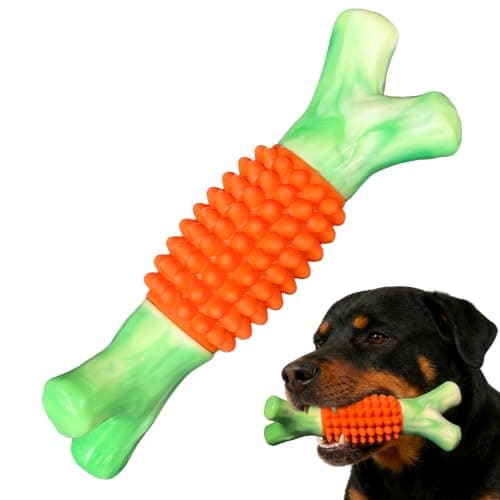
Trazoro
Trazoro Dog Chew Toy for Aggressive Chewers
7.8 / 10
- Heavy-duty nylon and flexible rubber built for aggressive chewers
- Textured surface acts as a natural toothbrush on plaque and tartar
- Beef flavor to hold interest through a longer chew session
- Bright marbled orange is easy to spot indoors or out
$10.99
Current price · checked Sep 8, 2026
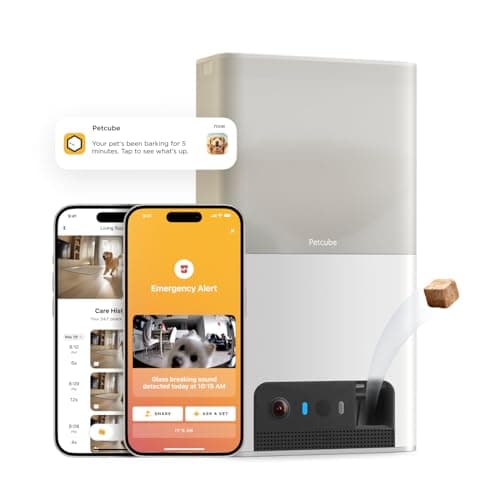
Petcube
Petcube Bites 2 Lite Interactive Wi-Fi Pet Camera
8.4 / 10
- 1080p HD video with a 110° wide angle and 30-foot night vision
- Two-way audio to hear and speak to the dog per Petcube
- Sound and motion alerts flag activity during an absence
- Treat dispenser tosses short, medium, or long, or on a schedule
$79.99
Current price · checked Sep 26, 2026
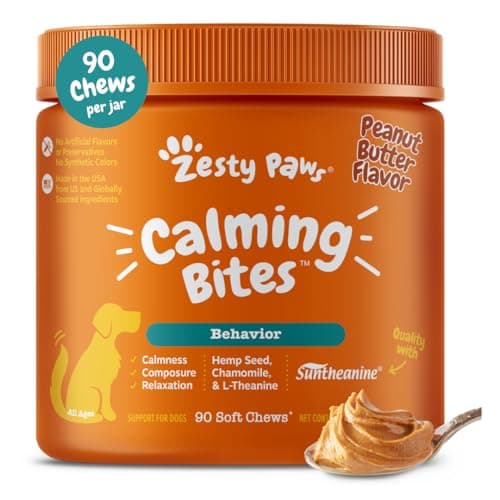
Zesty Paws
Zesty Paws Calming Chews for Dogs
7.9 / 10
- Soft chews positioned for normal stress, nervousness, and hyperactivity
- Contains Suntheanine, a studied form of L-Theanine, per Zesty Paws
- Ashwagandha, Valerian Root, and Passionflower in the panel
- Peanut-butter flavor for reliable daily dosing
$34.97
Current price · checked Sep 8, 2026
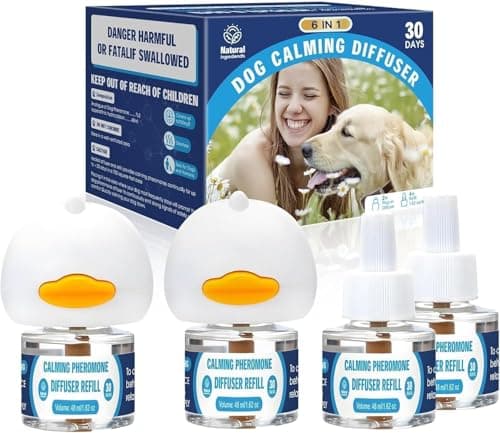
SHIUMORE
SHIUMORE Dog Calming Pheromone Diffuser (6-in-1 kit)
7.8 / 10
- Plug-in dog-appeasing pheromone kit with multiple refills per SHIUMORE
- Positioned to mimic a mother dog's appeasing pheromone
- Manufacturer states coverage up to roughly 700 sq ft per unit
- Marketed for home-alone, travel, and noise-related stress
The Short Answer
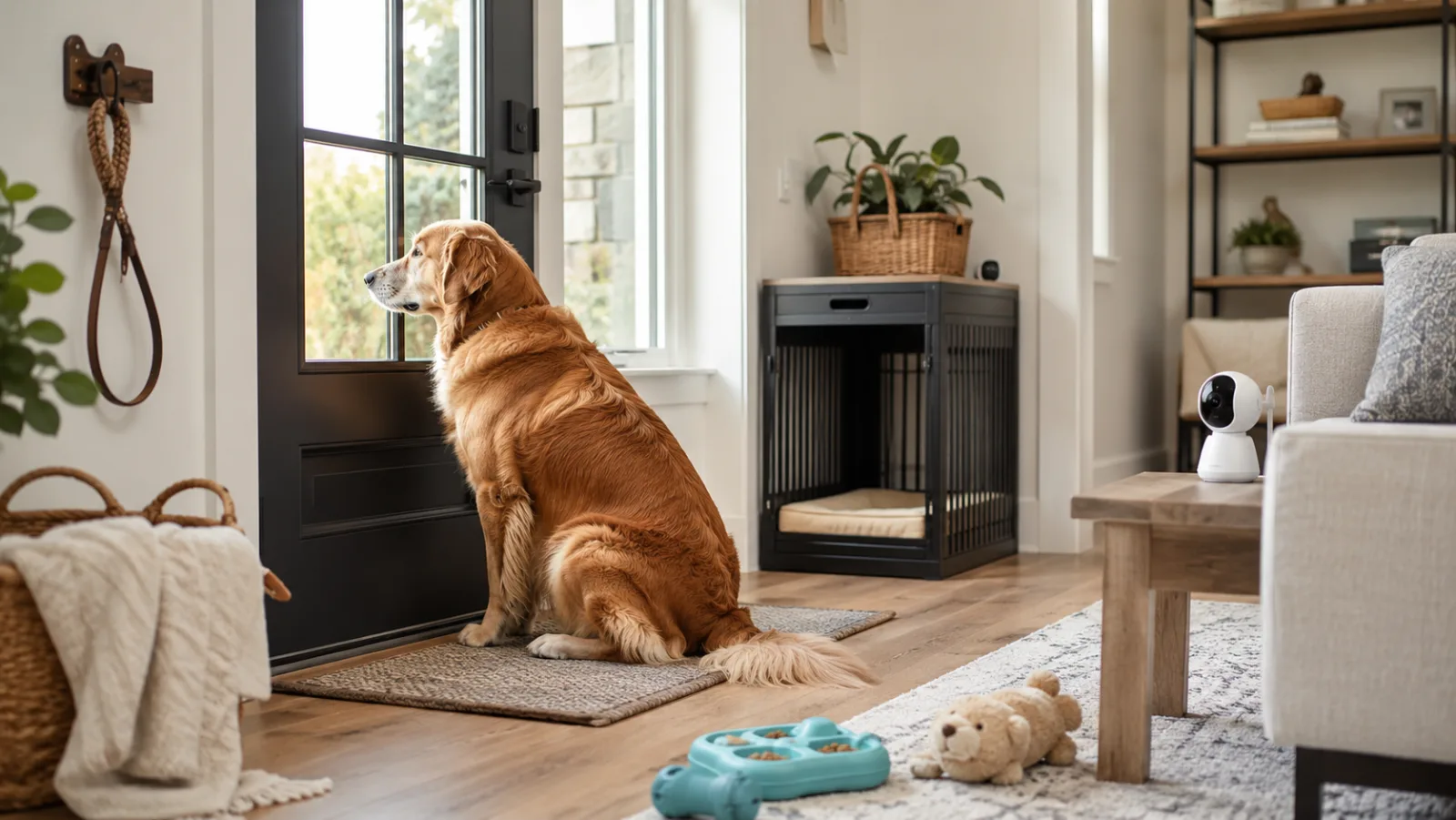
Do not wait for the first day of school and hope. Start a two-to-four-week countdown while the house is still full. Begin with rehearsal absences and the LUKITO lick mat: smear it, freeze it, hand it over, step out of sight for sixty seconds, and come back before worry starts, so 'you left' predicts something good. In the same early window, start Zesty Paws calming chews as a modest daily baseline. Over the next two weeks, stretch the alone-window with the PET ARENA snuffle mat and the BSISUERM adjustable puzzle feeder, which make foraging, not door-watching, the default. In the final week and the first week of school, hand the Trazoro chew over at the real departure, then watch what actually happens once the dog is truly alone. Watching is evidence, not comfort — if you see pacing, drooling, or panic instead of settling, you stop and call a veterinarian. Every product below is a supportive tool inside that ramp, not a cure. Clinical separation anxiety is a panic-related behavior disorder that the Merck Veterinary Manual and ASPCA treat as a veterinary problem, sometimes needing behavior modification and prescription medication. The countdown supports a dog with normal transition stress; a dog in genuine panic needs a vet, not a cart.
Every product on this list has been scored against the PetPal Gear Score, a weighted composite of expert consensus, observed effectiveness, animal safety, long-term durability, and value. Review method: Editorial synthesis of AVSAB position statements on humane training and gradual desensitization, the Merck Veterinary Manual on canine behavior problems and their diagnosis, ASPCA separation-anxiety guidance, and AKC anxiety and counter-conditioning material. Manufacturer documentation from LUKITO, PET ARENA, BSISUERM, Trazoro, and Zesty Paws was reviewed. There was no first-hand product testing. PetPalHQ does not run a testing lab. The desensitization ramp here is established behavioral practice, not a proprietary method.. Synthesized from 4+ expert sources.
The hardest day of a dog's year is often the first Monday of the school year. All summer the house was full — someone was home, someone was moving through the rooms, and being alone was a rare event rather than a daily one. Then the calendar turns, the backpacks go out the door, and a dog that was almost never by itself is suddenly by itself for hours. That abrupt swing from constant company to an empty house is a shock, and the fix for it is not a gadget. It is a school-calendar countdown: a two-to-four-week desensitization ramp, started while the house is still full, that teaches a dog "alone" is safe — provisioned with enrichment that makes the empty house rewarding, and checked by watching what the dog actually does once the door closes.
The countdown is the spine of everything below, and it runs in a fixed order. Start early, while the house is still full: begin rehearsal absences — hand over a frozen lick mat, step out of sight for a minute, and come back before worry begins, so that leaving predicts something good — and start a daily calming baseline in the same window. Over the following two weeks, stretch the alone-window with foraging enrichment and an adjustable puzzle feeder that make searching for food, not watching the door, the thing the dog does when you go. Then, in the final week and the first real week of school, hand over a durable chew at the true departure and watch what happens once the dog is genuinely alone — however you manage that, it is the rung you supply yourself, and it is the one that tells you whether the rest worked. The products on this page each map to a rung of that ladder; none of them is the ladder.
The picks are that toolkit, not a ranking of anxiety gadgets against each other. Each earns its place by carrying one part of the countdown — the first rewarded absence, the lengthening solo stretch, the departure ritual, the daily baseline. Everything here is editorial synthesis of veterinary and welfare guidance and manufacturer documentation, and where the sources counsel caution — on supplements, on hard chews, on food-based enrichment — that caution is named rather than smoothed over. PetPalHQ does not run a testing lab, and the PetPal Gear Score is a composite of expert opinion, not a measurement.
One rule sits above the whole countdown. This routine is built for a dog with ordinary transition stress — the dog that is a little unsettled by the sudden quiet, not the dog in panic. Clinical separation anxiety is a panic-related behavior disorder, and the Merck Veterinary Manual and ASPCA both treat it as a veterinary matter that can need behavior modification and sometimes prescription medication. A dog that injures itself, destroys exits, refuses food when alone, or comes apart the instant you reach for the door is past what any lick mat or puzzle feeder can reach. For that dog, what you see during the first real absences should send you to a veterinarian, and the products' job is to wait. Start the countdown early, watch honestly, and believe what you see.
Head-to-Head Comparison
| Feature | LUKITO Licking Mat for Dogs (2-pack, suction) | PET ARENA Snuffle Mat for Dogs | BSISUERM Dog Puzzle Toy (adjustable treat-dispensing) | Trazoro Dog Chew Toy for Aggressive Chewers | Petcube Bites 2 Lite Interactive Wi-Fi Pet Camera | Zesty Paws Calming Chews for Dogs | SHIUMORE Dog Calming Pheromone Diffuser (6-in-1 kit) |
|---|---|---|---|---|---|---|---|
| When in the countdown to introduce it | Week 1 — first rehearsal absences | Weeks 1–2 — early alone stretches | Weeks 2–3 — lengthening absences | First school morning — real departure | First week of school — real absences | Throughout, daily from week 1 | 1–2 weeks ahead of hard departures |
| Its role in the ramp | Reward the shortest departures | Calming foraging during solo time | Scale up occupied alone-time | The departure-ritual chew | Evidence the ramp is working | Background calming baseline | Lower the ambient baseline |
| Used while supervised or alone | Supervised, then briefly alone | Supervised, then briefly alone | Supervised first, then alone | Alone, at real departure | Alone (you watch remotely) | Given daily, any time | Passive — always on |
| What it is NOT a substitute for | The staged ramp itself | True alone-tolerance | Teaching that alone is safe | The weeks of ramp before it | Veterinary treatment of panic | Prescription anxiolytics / a vet | A behavior plan or a vet |
| Check price | Amazon | Amazon | Amazon | Amazon | Amazon | Amazon | Amazon |
$7.99
Current price · checked Sep 8, 2026
- 49 suction cups anchor the mat to a wall, glass, or the fridge per LUKITO
- Four textured surfaces hold spreadable treats like yogurt or xylitol-free peanut butter
- Freezer-safe, so a frozen smear stretches the first practice departures
- Two mats per pack — one loading while the other is in the freezer
- Food-grade silicone, dishwasher safe for daily reuse
The first move in the countdown is the smallest absence you can engineer, and the lick mat is the tool built for it. Three to four weeks before school, you are not leaving the dog alone for the day — you are stepping out of sight for sixty seconds while something good happens, then returning before the dog has time to worry. LUKITO's mat suits that job because its 49 suction cups fix it to a wall, a glass door, or the refrigerator, so a frozen smear stays put instead of skidding across the floor and turning a calm minute into a chase. The four textured surfaces are made to hold spreadable food, and because the mat is freezer-safe, a thin layer of dog-safe yogurt or xylitol-free peanut butter turns a thirty-second exercise into a five-minute one as the ramp lengthens.
The behavioral logic is the whole point, and it is not the manufacturer's to claim. Gradual, sub-threshold desensitization — the practice AVSAB and AKC both describe — works by keeping the dog under the threshold where panic starts and pairing the mild version of the trigger with a reward. A departure that lasts a minute and comes with a frozen mat is that mild version. Do it while the house is still full and summer routines are intact, so the very first time your dog notices "the person left," the association being built is licking, not dread. Freezing the food is what buys the duration; the harder the dog has to work, the longer the calm lasts.
For households that want the wider decompression case for these mats — bath time, grooming, nail trims, thunderstorms — our roundup of lick mats for canine decompression covers the category beyond this one seasonal use. Here, the mat earns its spot for a single reason: it makes the rehearsal absence rewarding, and the rehearsal absence is the first rung of the ramp.
What We Love
- Turns the earliest, shortest departures into a rewarding event
- Suction mounting keeps the mat still so it does not become a chase toy
- Frozen contents extend engagement as absences lengthen
- Two-pack and low price make daily rotation painless
What Could Be Better
- Contents count toward daily calories — a thin smear, not a meal
- Suction can fail on textured or dusty walls, dropping the mat
- A determined chewer may bite the silicone rather than lick it
- It occupies a dog; it does not teach a panicking dog to be calm alone
The Verdict
Start here, in week one of the countdown. The trade-off is honest: a lick mat makes a short absence pleasant, but it cannot manufacture calm in a dog that is already over threshold the moment you reach for the door. If your dog cannot tolerate even a sixty-second, mat-in-hand departure, that is not a sign to buy a better mat — it is the ramp telling you to shorten the absence further, or to call a professional before going on.
Sources
- LUKITO (Amazon product listing, 2PCS Licking Mat for Dogs): back equipped with 49 high-strength suction cups that fix to walls, glass, or the refrigerator; four textured surfaces for spreadable treats; food-grade silicone; dishwasher and freezer safe
- AVSAB / veterinary behavior consensus on gradual desensitization: sub-threshold desensitization pairs a mild version of a trigger — a very short absence — with something rewarding, so the departure predicts good things rather than panic
$11.89
Current price · checked Sep 8, 2026
- Fleece foraging mat that hides treats in fabric strips for nose-work
- Slows eating and encourages natural foraging per PET ARENA
- Doubles as a slow-feeder bowl with a size-adjustable belt
- Anti-pilling polar fleece, machine or hand washable
- Non-slip base and a portable, shrinkable design
Where the lick mat handles the very first seconds of an absence, the snuffle mat handles the stretch just after — the two-week mark, when a departure is starting to run several minutes and you want the dog occupied by something calming rather than by the front door. PET ARENA's mat is a bed of fleece strips you scatter kibble or small treats into, and the dog works nose-first to find them. That matters because foraging is a self-soothing behavior for dogs: the searching itself lowers arousal, which is why the manufacturer positions the mat for mental stimulation and stress relief, and why it doubles as a slow-feeder that stretches a meal into a project.
Fit it into the countdown as the "settle while I'm gone" layer. Scatter part of the morning ration into the mat right before a practice departure, so the dog's attention is on the grass-like fabric instead of your exit. Because the fleece is machine washable and the base is non-slip, it holds up to daily use in the same spot without sliding, and its shrinkable design means it packs down if the transition ramp travels — a weekend away, a relative's house during the first school week. The behavioral aim is unchanged from the lick mat: make the empty-house minutes rewarding, so "alone" gradually reads as a foraging opportunity rather than a loss.
The honest limits are the same too, and worth stating plainly. A snuffle mat extends an occupied window; it does not create tolerance for absence on its own. A dog that hoovers the mat in ninety seconds and then returns to pacing has told you the enrichment is working and the duration is still too long — shorten the departure, do not add a second mat. And foraging enrichment is a supportive layer, not a treatment: it belongs inside the staged ramp, alongside the daily calming baseline, not in place of either.
What We Love
- Nose-work foraging is inherently calming and settles a dog during a solo stretch
- Slows fast eaters and turns a meal into an occupying task
- Washable, non-slip, and packs down for travel during the transition
- Inexpensive enough to keep one loaded for every practice departure
What Could Be Better
- A fast dog empties it quickly, so it buys minutes, not hours
- Fleece traps crumbs and needs regular washing to stay hygienic
- Some dogs tug and shred the strips rather than snuffle them
- Occupation is not the same as tolerance — it will not fix true panic
The Verdict
Reach for the snuffle mat when the ramp lengthens past the lick mat's short window and you need a calming way to fill the middle of an absence. Its best use is the medically-cleared dog with ordinary transition jitters, not the dog that cannot be left at all — for that dog, the mat is beside the point and the plan needs a professional.
$9.99
Current price · checked Sep 8, 2026
- Barbell-shaped ball with treat-dispensing spheres at both ends
- Adjustable switch controls how much food dispenses and how slowly
- Rolls within a fixed area so the dog chases and works for food
- Sturdy ABS with a curved, quieter-rolling surface per BSISUERM
- Sized for small, medium, and large dogs; not a chew toy
By the second and third weeks of the countdown, the goal shifts from "make the first minute pleasant" to "make independent occupied time longer" — and an adjustable puzzle feeder is the tool that scales with the ramp. BSISUERM's dispenser has two treat spheres joined in a barbell, and as the dog pushes it, kibble falls from the holes a little at a time. The feature that earns its place is the adjustable switch: you can open it wide so an early-ramp dog gets food quickly and stays motivated, then narrow it week over week so the same handful of kibble takes longer to extract. That knob is, in effect, a difficulty dial for the alone-window.
Used in sequence, the puzzle picks up where the snuffle mat leaves off. Load it just before a longer practice departure, set the difficulty to match where the dog is in the ramp, and let the rolling-and-dispensing cycle carry the occupied stretch further than a mat can. The manufacturer is explicit that this is an interactive food toy, not a chew — an important distinction, because it means the puzzle belongs to the "keep the dog busy and foraging" job, while the durable chew (next in the countdown) handles the different job of something to gnaw at the real departure. Households that want to compare the wider category will find our roundup of treat-dispensing dog puzzle toys useful for matching a feeder to a specific dog's size and drive.
The caveats are practical and behavioral. As an ABS toy it is built to be pushed, not crushed, so a power-chewer who decides to bite it instead of roll it can damage it, and pieces of a broken plastic toy are a hazard — supervise the first few sessions to learn which kind of player you have. The dispensed food is still food, so it comes out of the daily ration. And like every enrichment item here, it lengthens occupied time; it does not by itself teach a dog that being alone is safe. That lesson is the ramp's, and the puzzle only provisions it.
What We Love
- Adjustable difficulty scales the occupied window as the ramp lengthens
- Rolling, dispensing action keeps a food-motivated dog working
- Curved ABS is designed to roll more quietly than a hard ball
- Fits small through large dogs, so one toy grows with the plan
What Could Be Better
- Not a chew toy — a determined chewer can crack the plastic
- Dispensed kibble must be counted into the daily calorie total
- Needs early supervision to confirm the dog rolls rather than bites it
- Extends occupied time but does not build true alone-tolerance
The Verdict
Compared with the mats earlier in the ramp, the puzzle's advantage is its adjustable difficulty — it is the one enrichment item that deliberately gets harder as your dog's alone-window grows. Set it easy at first and tighten the switch weekly; if your dog gives up or gets frustrated, you have dialed it too far ahead of where the ramp actually is.
$10.99
Current price · checked Sep 8, 2026
- Heavy-duty nylon and flexible rubber built for aggressive chewers
- Textured surface acts as a natural toothbrush on plaque and tartar
- Beef flavor to hold interest through a longer chew session
- Bright marbled orange is easy to spot indoors or out
- Manufacturer advises caution for puppies and dogs with sensitive teeth
The real first day of school arrives whether or not the dog is fully ready, and the departure ritual for that morning is a durable chew — something to hand over as you actually leave, that outlasts the door closing. Trazoro's chew is made of heavy-duty nylon and flexible rubber and is positioned for aggressive chewers, which is exactly the point at the real departure: a lick mat is licked clean and a puzzle is emptied, but a tough chew keeps working through the anxious first minutes after you are gone. The beef flavor is there to hold interest, and the textured surface doubles as a plaque-and-tartar scrubber, so the item earns its keep on ordinary days too, not only on school mornings.
In the countdown, the chew has a specific handoff role. Through the early weeks you build the association that departures bring good things; on the actual school morning you cash that in by presenting the chew as the last thing before you leave, so the sound of the door is tied to the best object of the day. Because chewing is itself a decompressing behavior for dogs, a good gnaw in the first stretch of a real absence can take the edge off the transition — provided the dog is already close to ready from the ramp. The chew is the ritual, not the cure; it works because the three weeks before it taught the dog that alone is survivable.
The honest cautions are non-negotiable with any durable chew. The manufacturer itself flags caution for puppies and dogs with sensitive teeth, and hard nylon chews are not appropriate for every mouth — aggressive gnawing on a very hard toy can chip a tooth, so match the chew to the dog and inspect it for cracks or bitten-off pieces, replacing it when worn. It is also a solo object, not a substitute for the plan: a dog handed a chew and left in genuine panic will abandon it, and that refusal is information to bring to a vet, not a reason to buy a tougher toy.
What We Love
- Durable enough to outlast the anxious first minutes of a real departure
- Doubles as a dental chew, scrubbing plaque on ordinary days
- Beef flavor and bright color keep it findable and engaging
- Gives the school-morning goodbye a consistent, positive ritual
What Could Be Better
- Hard nylon is not suitable for puppies or dogs with sensitive teeth
- Aggressive chewing on a rigid toy carries a tooth-fracture risk
- Must be inspected and replaced as it wears — not indestructible
- A dog in real panic will drop it; the chew cannot substitute for the ramp
The Verdict
Hand this over at the actual departure once the ramp has done its work — it is the ritual object for the school morning, not a shortcut past the weeks before it. Skip it for puppies and sensitive-toothed dogs, and if your dog leaves it untouched and distressed when you go, treat that as a signal to escalate, not to chew-shop.
$79.99
Current price · checked Sep 26, 2026
- 1080p HD video with a 110° wide angle and 30-foot night vision
- Two-way audio to hear and speak to the dog per Petcube
- Sound and motion alerts flag activity during an absence
- Treat dispenser tosses short, medium, or long, or on a schedule
- Connects on a 2.4 GHz network; a paid plan adds AI alerts
Every other item on this page is something the dog does. The camera is the one thing you do — it is how you find out whether the ramp actually worked once the departures became real and full-length in the first week of school. The Merck Veterinary Manual is direct that absent-owner behavior problems are best assessed by watching the dog when it is genuinely alone, and that is the Petcube's core job here: 1080p video, a wide 110-degree view, and 30-foot night vision let you see the whole room, and the sound and motion alerts flag the moments worth reviewing. Two-way audio and a treat dispenser round it out, but the diagnostic value is in the watching.
Frame it as evidence, not comfort — that distinction governs how you use it. In the first week, record the opening thirty to sixty minutes of each real absence and look for the specific signs behavioral references flag: pacing, drooling, panting at rest, vocalizing, scratching at doors, or refusing the chew and enrichment you left. A dog that forages, chews, and then settles is a dog for whom the ramp is holding. A dog that paces and pants the moment the door shuts is a dog whose ramp is not holding, and the camera's job at that point is to send you to a veterinarian with footage — not to let you toss treats until it looks calmer. Our wider roundup of pet cameras with alerts and two-way audio compares the category if you want a different feature set.
Two honest cautions. First, the interactive features cut both ways: behavior references warn that a sudden voice from a speaker or a treat launched across the floor can raise arousal in some dogs, so condition those features while you are home and switch them off if they wind the dog up rather than settle it. Second, the camera runs on 2.4 GHz Wi-Fi and leans on a stable connection; some alert features sit behind a paid plan, and a dropout mid-absence is exactly when you least want to lose the feed. Confirm your network reaches the room before the first day of school.
What We Love
- Turns the first real absences into reviewable evidence, as Merck advises
- Wide angle plus night vision captures the whole room, lit or dark
- Alerts let you jump to the moments that actually matter
- Optional treat toss and two-way audio add reassurance when conditioned
What Could Be Better
- Treat toss and remote voice can over-arouse some dogs if misused
- 2.4 GHz-only Wi-Fi and dropouts can interrupt an alone-time log
- The most useful AI alerts sit behind a paid subscription
- A camera diagnoses distress; it does not treat it
The Verdict
If you buy one thing on this page, make it the camera — it is the only item that tells you whether the other six worked. Merck points to video as the way absent-owner problems are diagnosed, so use the footage to calibrate the ramp honestly: settle means proceed, panic means stop and call a vet with the clip in hand.
Sources
- Petcube (Amazon product listing, Bites 2 Lite): 1080p HD live video with 110° wide angle, 30-foot night vision, two-way audio, sound and motion alerts, and a treat dispenser; connects on 2.4 GHz Wi-Fi
- Merck Veterinary Manual — diagnosis of behavior problems in animals: behavior problems that occur during owner absence are often best assessed with video monitoring of the dog when alone
$34.97
Current price · checked Sep 8, 2026
- Soft chews positioned for normal stress, nervousness, and hyperactivity
- Contains Suntheanine, a studied form of L-Theanine, per Zesty Paws
- Ashwagandha, Valerian Root, and Passionflower in the panel
- Peanut-butter flavor for reliable daily dosing
- 90-count jar covers the full multi-week ramp
A ramp is a stretch of weeks, and a calming chew is the one item on this list meant to run in the background across all of them rather than at a single moment. Zesty Paws positions these peanut-butter chews for dogs with normal, everyday stress, and the ingredient panel is the reason they sit in the baseline slot: Suntheanine — a studied form of L-Theanine — plus Ashwagandha, Valerian Root, Passionflower, Magnesium Citrate, and L-Tryptophan. The 90-count jar is sized to cover a two-to-four-week countdown with room to spare, and the flavor exists so that daily dosing is a non-event rather than a wrestling match.
The honest register matters more here than for any hardware on the page. The Merck Veterinary Manual frames the evidence for over-the-counter calming aids as ingredient-specific, dose-specific, and uneven — some products may help some dogs in some low-grade situations, and none of them is equivalent to a prescription anxiolytic like fluoxetine or clomipramine. So the claim for these chews is deliberately modest: they may take a little edge off ordinary transition stress across the ramp weeks, and that is all. They are a support, never a sedative and never a cure. Our broader roundup of calming aids for canine anxiety sets this category in its wider context, including where supplements sit relative to veterinary options.
Use them conservatively and with a vet in the loop. Dose by the label's weight chart, start a few days before the ramp's harder departures so you can watch for tolerance, and confirm with your veterinarian before use if your dog takes any medication, is pregnant, is very young or senior, or has a medical history — the botanicals and amino acids here can interact with prescription drugs. Stop if you see GI upset, unusual lethargy, or any behavioral oddness. Most importantly, a chew is not the thing that makes the countdown work; the staged departures are. The supplement is a quiet floor under them, and if a dog needs more than a floor, that is a conversation for a veterinarian.
What We Love
- Designed as a daily baseline rather than a single-moment fix
- Transparent ingredient panel with a studied L-Theanine form
- Palatable enough that daily dosing stays easy across weeks
- Jar size matches the length of a full countdown
What Could Be Better
- Over-the-counter calming-aid evidence is uneven and ingredient-specific
- Botanicals and amino acids can interact with prescription medication
- Not a sedative or a treatment for clinical separation anxiety
- Individual response varies — some dogs show no visible change
The Verdict
Run these as the background layer through the ramp, not as the lever that carries it — the departures do that. Their best case is the dog with ordinary back-to-school jitters whose vet has cleared a supplement; for a dog in real distress, a calming chew is the smallest tool on the page, and the honest move is to pick up the phone, not the jar.
Sources
- Zesty Paws (Amazon product listing, Calming Chews 90 Count): peanut-butter soft chews with Suntheanine L-Theanine, Ashwagandha, Valerian Root, Organic Passionflower, Magnesium Citrate, and L-Tryptophan, positioned to support dogs with normal stress
- Merck Veterinary Manual — calming-aid evidence for behavior problems: evidence for over-the-counter calming aids is ingredient- and dose-specific and uneven across products; they are not equivalent to prescription anxiolytics
- Plug-in dog-appeasing pheromone kit with multiple refills per SHIUMORE
- Positioned to mimic a mother dog's appeasing pheromone
- Manufacturer states coverage up to roughly 700 sq ft per unit
- Marketed for home-alone, travel, and noise-related stress
- Placement guidance: use in a well-ventilated, high-traffic room
The ambient floor goes down first — a dog-appeasing pheromone diffuser you plug in one to two weeks ahead of the ramp's harder departures, so the room where your dog will be left already carries a low-tension signal before the real absences begin. SHIUMORE's kit is a plug-in that the manufacturer positions to mimic the appeasing pheromone a mother dog produces, with kit refills and a stated coverage of up to roughly 700 square feet per unit. It is the most passive item on the page: nothing for the dog to do, no session to run, just a steady environmental cue in the background of the transition weeks.
Its role in the countdown is to lower the baseline, not to do the teaching. Plug it into the departure room a week or two before you start lengthening absences, following the manufacturer's guidance to place it in a well-ventilated, high-traffic spot rather than tucked behind furniture or under a shelf where dispersion is blocked. With a slightly calmer baseline, a dog is more likely to engage the lick mat, forage the snuffle mat, and settle after you leave — the pheromone makes the rest of the toolkit's job a little easier. It is a floor beneath the ramp, laid early so the harder rungs land on softer ground.
Keep the expectation modest and consistent with the calming chew. Pheromone response is individual: some dogs settle visibly, others show nothing, and the evidence is a supportive signal rather than a guarantee, so no household should treat a diffuser as the thing that makes the countdown succeed. It is also an ongoing consumable with refills, and its coverage is room-scale, so a large or multi-room home may need more than one. And a calming ambient cue does nothing for a dog whose distress is genuine panic — that dog needs a veterinarian, and the diffuser is beside the point.
What We Love
- Fully passive — a background calming cue with nothing to manage
- Laid early, it softens the baseline before the ramp's hard departures
- Broad stated coverage suits a typical departure room
- Drug-free and compatible with every other layer in the plan
What Could Be Better
- Pheromone response is individual — some dogs show no effect
- Refills are an ongoing cost and easy to forget to replace
- Room-scale coverage may not reach a multi-room home
- Cannot calm genuine panic — that is a veterinary matter
The Verdict
Lay this floor first, a week or two ahead, and hold the expectation loose: a diffuser lowers the baseline for some dogs and does nothing for others, and either way it is the softest support on the page, not the plan. If the room stays calm it helped; if your dog panics anyway, believe the panic and call a professional.
How We Score
Formula
PetPal Gear Score = (Expert Consensus × 0.35) + (Routine Fit × 0.25) + (Safety / Welfare × 0.20) + (Value × 0.20)
Score Factors
- Expert Consensus · 35%
- Synthesized from several expert sources. These are AVSAB position statements on humane training and gradual desensitization, the Merck Veterinary Manual on canine behavior problems and their diagnosis, ASPCA separation-anxiety guidance, AKC counter-conditioning material, and manufacturer documentation. The PetPal Gear Score is a composite of expert opinion. PetPalHQ does not run a testing lab.
- Routine Fit · 25%
- How precisely the item advances a specific rung of the school-calendar countdown. That could mean rewarding the first short absence, extending occupied alone-time, ritualizing the real departure, or holding a daily calming baseline. What matters is the rung it fills, not how it performs as a standalone gadget.
- Safety / Welfare · 20%
- Alignment with welfare guidance and manufacturer cautions. That means appropriate chew hardness for the dog, supervised introduction, and calorie accounting for food-based enrichment. It also means conservative use of supplements, and treating what you observe during an absence as evidence rather than as treatment.
- Value · 20%
- Cost relative to the item's role in the countdown. Consumables like refills, treats, and chews are weighed against how much of the ramp the item actually carries.
| Rank | Product | Score |
|---|---|---|
| #1 | Petcube Petcube Bites 2 Lite Interactive Wi-Fi Pet Camera | 8.4 |
| #2 | LUKITO LUKITO Licking Mat for Dogs (2-pack, suction) | 8.1 |
| #3 | PET ARENA PET ARENA Snuffle Mat for Dogs | 8.0 |
| #4 | BSISUERM BSISUERM Dog Puzzle Toy (adjustable treat-dispensing) | 7.9 |
| #5 | Zesty Paws Zesty Paws Calming Chews for Dogs | 7.9 |
| #6 | Trazoro Trazoro Dog Chew Toy for Aggressive Chewers | 7.8 |
| #7 | SHIUMORE SHIUMORE Dog Calming Pheromone Diffuser (6-in-1 kit) | 7.8 |
When NOT to Buy
Before any of this, be honest about what you are looking at. Clinical separation anxiety is a panic-related behavior disorder, not a back-to-school scheduling problem. No cart on this page treats it. The Merck Veterinary Manual and ASPCA both describe it as a disorder that often needs veterinary behavior modification and reward-based desensitization. It can also need prescription medication such as fluoxetine or clomipramine. Some signs are a stop sign. Your dog may panic the second you reach for the door, injure itself trying to escape, destroy exits, howl or bark for the length of an absence, refuse food when alone, drool heavily, or eliminate from distress. If you see any of these, stop shopping and call a veterinarian or a board-certified veterinary behaviorist. This countdown is for a dog with normal transition stress. A dog in genuine panic needs a professional, not a gadget cart. For the year-round and clinical side of this topic — the treatment-first framing, the veterinary options, and the products chosen for chronic cases — see our year-round guide to dog separation-anxiety products; this page is its seasonal complement, keyed to the school calendar, and it defers every clinical question to that guide and to your vet.
The ramp also cannot be crammed into the last weekend before school. Desensitization works because it is gradual and sub-threshold. You go a minute, then a few, then longer, over two to four weeks. Cramming that into two days does the opposite of what it is meant to do. It floods the dog. It can sensitize it to being alone rather than teach it that alone is safe. If school starts in three days, the honest move is not to buy faster. Keep the dog with a person or a sitter for the first stretch, and start the ramp properly when you can give it real weeks.
Newly-adopted dogs and puppies need different pacing entirely. A dog that has been in the home for a week has no baseline routine to ramp against, and a puppy's tolerance for being alone builds on a developmental timeline this seasonal countdown is not written for. Both need a slower, individualized plan, and often professional guidance. Finally, confirm current price and availability before buying anything here — listings, bundle contents, and sellers move over time.
Frequently Asked Questions
- How many weeks before school should I start the ramp?
- Two to four weeks is the working range, and earlier is better than later. The whole method depends on being gradual: you begin with absences measured in seconds while the house is still full and summer routines are intact, then lengthen them a little at a time so the dog is never pushed past the point where calm turns into worry. A confident, adaptable dog might be ready near the two-week mark; a more sensitive dog benefits from the full four. What you cannot do is start the weekend before — compressing the ramp into a couple of days floods the dog instead of desensitizing it, which can make the problem worse rather than better. If school is only days away, keep the dog with a person or a sitter for the first stretch and run the ramp properly when you can give it real weeks.
- What if my dog panics, destroys things, or howls the whole time I'm gone?
- Treat that as a stop sign, not a reason to buy more products. Panic the moment you leave, destruction of doors or windows, nonstop howling or barking for the length of an absence, refusing food when alone, heavy drooling, or eliminating from distress are signs of something past what a seasonal countdown is built for. This is where you escalate to a veterinarian or a board-certified veterinary behaviorist. Watching an absence earns its keep precisely here: a clear account of what actually happens when you are gone — better still, a recording — is what a vet needs to tell distress from boredom and to decide whether behavior modification, and possibly medication, is warranted. Adding another gadget to a plan that is not working only delays the help the dog needs.
- Is back-to-school stress the same as clinical separation anxiety?
- Usually not, and the difference matters. Many dogs feel some unease when a full summer house suddenly empties — that is normal transition stress, and a gradual countdown is a reasonable way to help. Clinical separation anxiety is a different thing: a panic-related behavior disorder that the Merck Veterinary Manual and ASPCA describe as needing veterinary behavior modification and sometimes prescription medication. The tell is severity and timing — genuine panic, self-injury, or distress that begins before you even leave points to the clinical end, not the seasonal one. This guide is deliberately the seasonal side of the topic. The year-round, treatment-first side belongs to your veterinarian and to our standing separation-anxiety reference, and any question about diagnosis or medication should go there, not to a product page.
- Does the ramp work the same for a single dog as for a multi-dog household?
- The method is the same, but multi-dog homes have to watch each dog on its own terms. Dogs do not share an anxiety timeline: one may settle into alone-time within a week while another is still uneasy, and having a companion in the house does not reliably fix separation distress — a dog anxious about the person leaving can be just as distressed with another dog present. Run the countdown so it works for the least-ready dog, and watch how each one actually behaves rather than assuming they cope together. If one dog is clearly panicking while the other is fine, that dog needs its own attention, and possibly a professional, regardless of what the housemate does.
- Do calming chews actually do anything?
- The honest answer is "sometimes, modestly, and not the way the marketing implies." The Merck Veterinary Manual frames the evidence for over-the-counter calming aids as ingredient-specific and dose-specific and uneven across products — some may help some dogs in low-grade, situational stress, and none of them is equivalent to a prescription anxiolytic like fluoxetine or clomipramine. So a calming chew is reasonable as a small daily baseline for a dog with ordinary back-to-school jitters, provided your vet has cleared it, and it is not a fix for a dog in real distress. Individual response varies, the botanicals can interact with medications, and it is the smallest lever on this page. Use it as a quiet floor under the ramp, not as the thing you expect to carry the dog through.
Bottom Line
Treat the first day of school as a deadline you ramp toward, not a switch you flip. Start two to four weeks out while the house is still full, and teach 'alone' in short, sub-threshold departures — the countdown is the method, and the products only provision it.
Provision the empty house so it is rewarding. The LUKITO lick mat makes the earliest sixty-second absences good; the PET ARENA snuffle mat and the BSISUERM adjustable puzzle stretch occupied alone-time as the ramp lengthens; the Trazoro chew is the ritual you hand over at the real school-morning departure.
Lay the calming baseline early and keep it modest. Run Zesty Paws calming chews daily from the start of the ramp — a support that may take a little edge off ordinary transition stress, and nothing more. It is not a sedative and not a cure.
Prove it by watching, not by guessing. The Merck Veterinary Manual is direct that absent-owner behavior problems are assessed by observing the dog when it is genuinely alone, so however you watch the first real full-length departures, watch them: if you see pacing, drooling, or panic instead of settling, stop the ramp and take what you saw to a veterinarian.
Know when this page is the wrong page. Clinical separation anxiety is a veterinary problem that may need medication — the honest, treatment-first reference for that is our year-round separation-anxiety guide and your vet, not a seasonal cart.
Sources & Methodology
Methodology
PetPal Gear Score = (Expert Consensus × 0.35) + (Routine Fit × 0.25) + (Safety / Welfare × 0.20) + (Value × 0.20)
Expert review sources
- AVSAB — Position Statement on Humane Dog Training (2021)
- AVSAB — guidance on gradual, sub-threshold desensitization and counter-conditioning
- Merck Veterinary Manual — Behavior Problems of Dogs
- Merck Veterinary Manual — Diagnosis of Behavior Problems in Animals
- ASPCA — Separation Anxiety
- AKC — Separation Anxiety in Dogs
- AKC — Desensitization and Counter-Conditioning
- LUKITO — Licking Mat for Dogs product documentation
- PET ARENA — Snuffle Mat product documentation
- BSISUERM — Dog Puzzle Toy product documentation
- Trazoro — Dog Chew Toy product documentation
- Zesty Paws — Calming Chews product documentation
Community sources
- r/dogs and r/dogtraining — back-to-school and alone-time transition threads used to identify owner failure modes, not as authority on medical claims
- r/puppy101 — alone-time and decompression discussions
Prices and specs verified July 11, 2026.
About the author
Nick Miles is the chief editor of PetPalHQ. This seasonal countdown and its toolkit are editorial synthesis of AVSAB humane-training and desensitization guidance, the Merck Veterinary Manual on canine behavior problems and their diagnosis, ASPCA separation-anxiety guidance, AKC counter-conditioning material, and manufacturer documentation — PetPalHQ does not run a testing lab. The PetPal Gear Score is a composite of expert opinion, not a measurement. Sources are cited by name throughout, and every clinical question is deferred to a veterinarian.
PetPalHQ is a participant in the Amazon Services LLC Associates Program. We may earn commissions from qualifying purchases — at no extra cost to you.
More Guides
Cats & Dogs
Best Lick Mats for Dogs and Cats: Decompression, Baths, and Training (2026)
Cats & Dogs
Best Dog Puzzle Toys and Treat-Dispensing Toys (2026)
Cats & Dogs
Best Pet Cameras for Dogs and Cats: Monitoring, Treat-Toss, and Subscription-Free Picks (2026)
Cats & Dogs
Best Pet Calming Aids for Anxiety in 2026
Cats & Dogs
Best Dog Chew Toys for Anxiety, Decompression, and Boredom (2026)
Cats & Dogs