Cats & Dogs
How to Safely Secure Your Dog in the Car (2026)
This is not a head-to-head restraint ranking — it is a decision-and-install plan. An unrestrained dog is a crash projectile and a driver distraction, and there is no single answer: the right restraint depends on the dog's size and the vehicle. The picks below walk the decision in order — the highest-protection crash-tested travel crate, a secured booster for small dogs, an interior-protecting cover, a seat-belt tether, and a distraction-blocking back-seat barrier — with an honest line drawn between the genuinely protective options and the comfort or distraction-control ones. If your dog rides in the front seat, or you plan to clip a tether to a collar, read the caveats before you buy anything.
By Nick Miles · Updated September 26, 2026 · 12 min read
PetPalHQ is reader-supported. We may earn a commission from qualifying Amazon purchases at no extra cost to you.
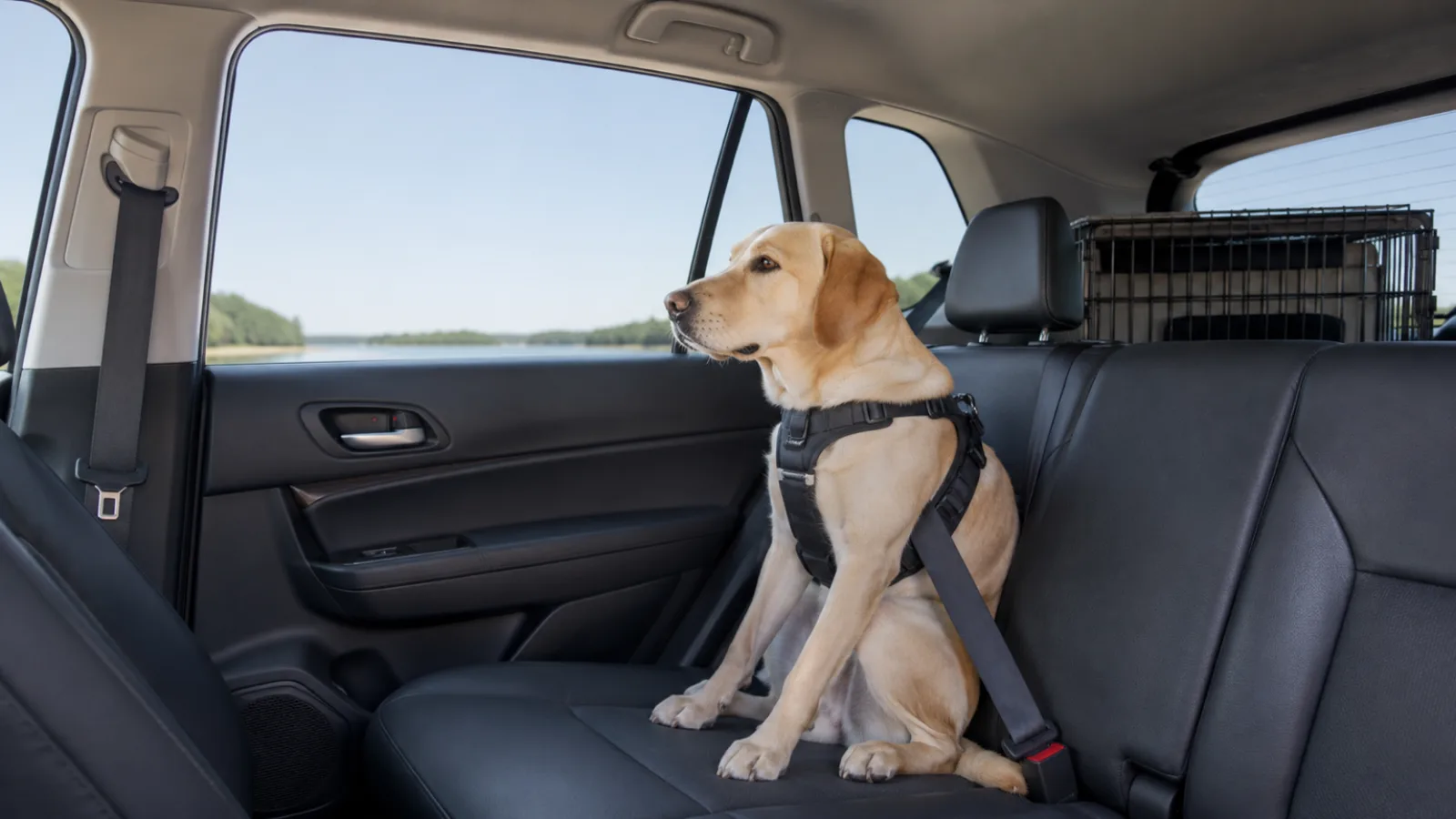
Evidence at a Glance
EzyDog Drive Dog Car Harness (Crash-Tested, Medium)
The everyday restraint for most dogs — a crash-tested harness that conforms to the US FMVSS 213 standard per EzyDog, with aluminum-alloy Tri-Glides, vehicle-tested seat-belt webbing, and a Dual SR Buckle closure that works with the car's existing seat belt, so it secures the dog on the back seat without a bolted-in install.
Sources: EzyDog manufacturer documentation, Center for Pet Safety crash-test consensus, Veterinary travel-safety consensus (AVMA / AAHA)
Verified Jul 12, 2026
Lucky Dog Crash Tested Portable Dog Crate (Large)
The highest-protection option — a 5-star crash-test-rated travel crate fitting dogs up to 110 lb per Lucky Duck, with integrated tie-downs, a reversible one-hand door, and a pitched drain floor; the top of the safety hierarchy when the vehicle has a cargo area to anchor it.
Sources: Lucky Duck manufacturer documentation, Center for Pet Safety crash-test consensus, FMVSS 213 / vehicle-restraint standards
Verified Jul 12, 2026
JOEJOY Deluxe Dog Booster Seat (up to 20 lb)
The small-dog case — a strapped-down booster that elevates a dog under 20 lb for a window view and may reduce car sickness per JOEJOY, held by two adjustable seat-belt straps with a clip-on safety leash; containment and a view for a small dog, not a crash-rated restraint.
Sources: JOEJOY manufacturer documentation, Veterinary travel-safety consensus (AVMA / AAHA), Center for Pet Safety crash-test consensus
Verified Jul 12, 2026
Our Picks
EzyDog
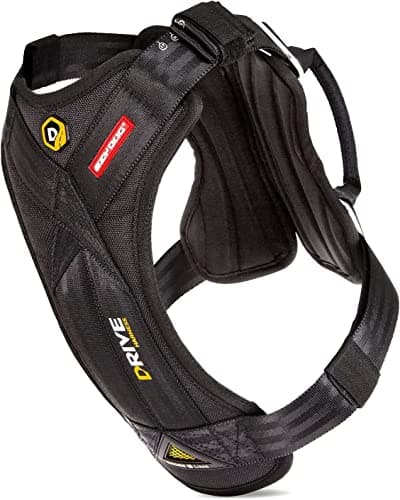
EzyDog Drive Dog Car Harness (Crash-Tested, US-FMVSS 213), Medium
8.7 / 10
- Conforms to USA FMVSS 213 safety standards for sudden stops and accidents, per EzyDog
- Aluminum-alloy Tri-Glides, vehicle-tested seat-belt webbing, and Crosslink Technology
- Dual SR Buckle closure with dual D-ring leash points
- Works with the car's existing seat belt — feed the belt through the webbing handles and click into the buckle
$125.00
Current price · checked Sep 8, 2026
Lucky Duck
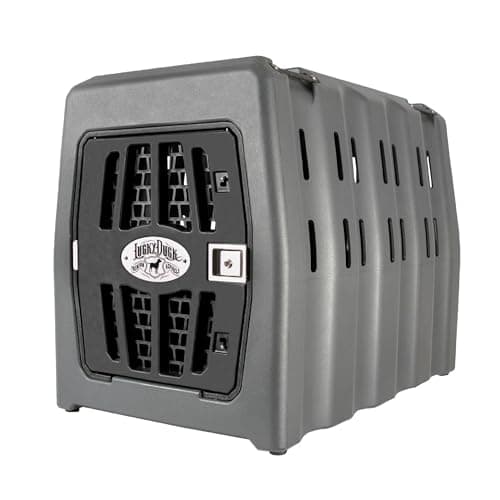
Lucky Dog Crash Tested Portable Dog Crate (Large)
8.5 / 10
- 5-star crash-test rating per Lucky Duck
- Large size fits dogs up to 110 lb; interior 35.75"L x 22"W x 26.5"H (a travel size — size up for a home crate)
- Made in USA with a lifetime warranty
- Injection-molded, reversible quick-flip one-hand door
JOEJOY
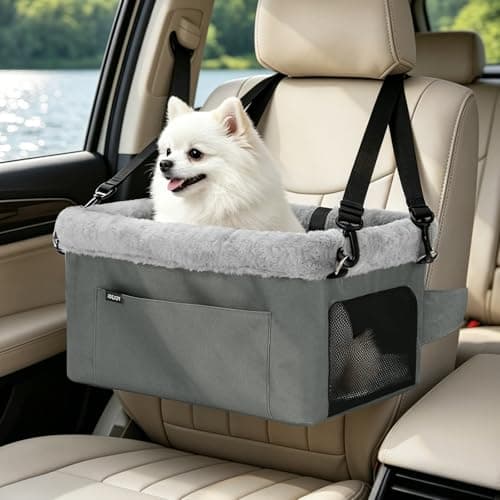
JOEJOY Deluxe Dog Booster Seat (up to 20 lb)
8.0 / 10
- Elevates a small dog for a window view, which the listing says may reduce car sickness
- Internal collapsible metal frame plus two adjustable seat-belt straps hold it in place
- Clip-on safety leash tethers the dog inside the booster
- Water-resistant Oxford cloth, mesh sides, and a thick cushion; wipeable
$27.99
Current price · checked Sep 8, 2026
Mancro
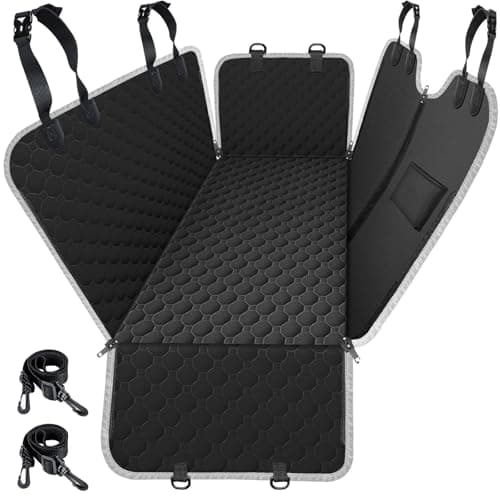
Mancro Dog Car Seat Cover / Hammock (600D)
7.9 / 10
- 600D waterproof, scratch-resistant fabric per Mancro
- Two side flaps guard the doors from paws and hair
- 54"W x 55"L covers most back seats (size up for a large SUV or truck)
- PVE non-slip underside, side-flap buckles, a seal zipper, seat anchors, and velcro belt openings
$24.99
Current price · checked Sep 8, 2026
Mighty Paw
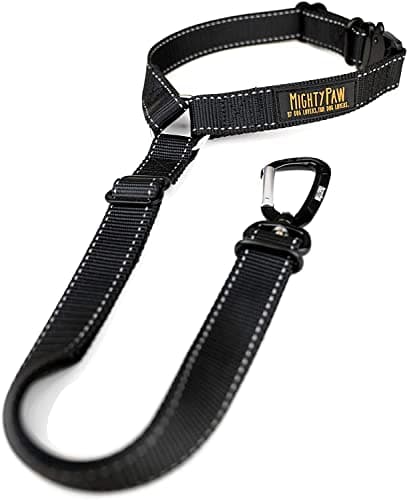
Mighty Paw Dog Seat Belt for Car Headrest
7.8 / 10
- Buckles into any standard seatbelt outlet
- Aviation-grade aluminum carabiner rated over 850 lb of force per Mighty Paw
- Tangle-free swivel to keep the strap from twisting
- Adjustable 16–26 in nylon strap
$15.99
Current price · checked Sep 8, 2026
DYKESON
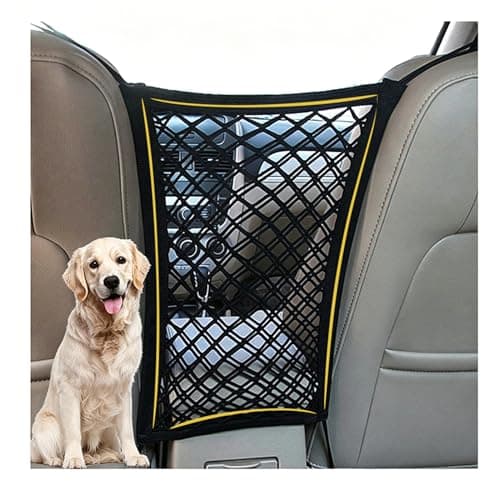
DYKESON Dog Car Net Barrier
7.6 / 10
- Mesh barrier keeps pets and kids in the back-seat area to prevent driver distraction
- Four-sided elastic dual mesh, 11.7 x 11.7 in, fits most cars and SUVs
- Four safety hooks clip to the headrests and under the seat
- About a 1-minute install with no drilling; includes a storage pouch
$11.17
Current price · checked Sep 8, 2026
The Short Answer
Buy tested, not just labeled. A crash-tested restraint is the only thing in this guide that actually protects a dog in a collision — covers, tethers, boosters, and barriers are containment or comfort. If your vehicle has a cargo area, the Lucky Dog crash-tested crate sits at the top of that hierarchy. In a sedan or crossover, the equivalent core is a seat-belt harness that names a real standard such as FMVSS 213 and fits the dog snugly — everything else on this page is a support piece that goes around it.
Every product on this list has been scored against the PetPal Gear Score, a weighted composite of expert consensus, observed effectiveness, animal safety, long-term durability, and value. Review method: Editorial synthesis of safety and welfare guidance — Center for Pet Safety crash-test findings on pet travel products, the FMVSS 213 vehicle child-restraint standard that tested harnesses reference, and veterinary travel-safety consensus from the American Veterinary Medical Association and the American Animal Hospital Association. Manufacturer documentation from Lucky Duck, JOEJOY, Mancro, Mighty Paw, and DYKESON was reviewed. Community consensus from r/dogs and r/Dogtraining was included as consensus, not quotation. Prices, condition, and the seller on the listing were re-verified for all six picks by live Amazon product-page reads on September 7, 2026. No first-hand product testing — PetPalHQ does not run a testing lab.. Synthesized from 3+ expert sources.
Car safety for a dog goes wrong, in this guide's editorial judgment, for one reason more than any other: an owner looks for the product instead of making the decision. There is no single "best" way to secure a dog in a car, because the right answer changes with the dog's size and the vehicle it rides in. A crash-tested harness on the seat belt is the everyday choice for most dogs. A crash-tested crate in a cargo area is the highest protection, but only if the vehicle can hold and anchor one. A booster is for a small dog and nothing bigger. The mistake is buying one of these because it was on the shelf, rather than choosing the one that matches the dog in front of you.
Start with the physics, because it is the part that no accessory changes. An unrestrained dog in a moving car is two hazards at once: a distraction that pulls the driver's eyes and hands off the road, and, in a crash, a projectile that keeps moving at the speed the car was traveling. A loose ten-pound dog in a modest collision strikes with force many times its weight. That is the problem every pick here exists to reduce — and it is why the guide keeps drawing a hard line between the equipment that genuinely restrains a dog in a crash and the equipment that only makes the ride calmer or cleaner.
Then work through the decision in order. Choose the core restraint first — a crash-tested harness for most dogs, a crash-tested crate when protection is the priority and the vehicle allows it, or a booster for a truly small dog. Add the support pieces around that core: a cover to protect the seat, a tether to limit movement, a barrier to block the front. The picks below are that plan, in decision order, not six restraints ranked as equals. Each one is labeled for the job it actually does — and where a claim rests on a maker's documentation or a testing body, that is named rather than asserted, because PetPalHQ does not run a testing lab.
One principle sits above the whole plan and never bends. A dog rides on the back seat, away from the airbag; a genuine restraint sits under every comfort accessory; a tether clips to a harness, never a collar; and no dog rides loose, in an open truck bed, or with its head out the window. Buy tested rather than just labeled, install it correctly, and acclimate the dog with short, calm trips first. Treat car safety as the small system it is, and every trip gets safer — for the dog, the driver, and everyone else on the road.
Head-to-Head Comparison
| Feature | EzyDog Drive Dog Car Harness (Crash-Tested, US-FMVSS 213), Medium | Lucky Dog Crash Tested Portable Dog Crate (Large) | JOEJOY Deluxe Dog Booster Seat (up to 20 lb) | Mancro Dog Car Seat Cover / Hammock (600D) | Mighty Paw Dog Seat Belt for Car Headrest | DYKESON Dog Car Net Barrier |
|---|---|---|---|---|---|---|
| Role in the setup | Everyday restraint | Highest-protection restraint | Small-dog containment | Interior protection | Movement / distraction control | Front-seat block |
| Where it goes | Back seat, on the seat belt | Cargo area, tied down | Back seat, strapped to the headrest | Over the back seat or cargo floor | Back seat, clipped to a harness | Between front and back seats |
| Genuinely protective in a crash? | Yes — crash-tested harness | Yes — highest protection | No — containment, not crash-rated | No — comfort and cleanup | No — only via the harness it clips to | No — distraction control only |
| Best for which dog / vehicle | Most dogs, most cars | Large dogs with an SUV or truck | Dogs up to 20 lb | Any dog, any seat | A harnessed dog on the back seat | Any dog, cars with headrest bars |
| Check price | Amazon | Amazon | Amazon | Amazon | Amazon | Amazon |
$125.00
Current price · checked Sep 8, 2026
- Conforms to USA FMVSS 213 safety standards for sudden stops and accidents, per EzyDog
- Aluminum-alloy Tri-Glides, vehicle-tested seat-belt webbing, and Crosslink Technology
- Dual SR Buckle closure with dual D-ring leash points
- Works with the car's existing seat belt — feed the belt through the webbing handles and click into the buckle
- Padded contoured chest plate to spread force across the chest, not the neck
The restraint decision starts here because a crash-tested seat-belt harness is the everyday answer for most dogs — the option that works on a normal back seat, in a normal car, without buying a bigger vehicle. The EzyDog Drive Dog Car Harness is that pick. EzyDog documents a harness that conforms to the US FMVSS 213 safety standard for sudden stops and accidents, built with aluminum-alloy Tri-Glides, vehicle-tested seat-belt webbing, a Dual SR Buckle closure, dual D-ring leash points, and a padded contoured chest plate that spreads force across the chest rather than the throat.
Where it fits the setup: this is the restraint that uses what the car already has. The dog wears the harness, you feed the seat belt through the webbing handles and click it into the buckle, and the belt does the restraining — no drilling, no cargo area required. That makes it the default for a dog that rides on the back seat of a sedan or crossover, which is most dogs and most cars. The design goal is the one that matters in a crash: keep the dog on the seat and off the driver, and spread the load across the chest plate instead of a single neck point. A tether or a booster cannot make that claim, which is why the harness leads the decision rather than sitting beside it.
The honest caveats are about fit and about the word "tested." A harness only protects if it fits — measure the dog and match the size, because a loose harness in a crash is closer to no harness at all. Attach it through the actual seat belt and keep the connection short enough that the dog cannot reach the driver. And the single most important buying rule in this whole category: Center for Pet Safety has found that many harnesses labeled "safety" or "crash-tested" fail independent crash testing, so buy one that documents a real standard, not just a reassuring label. To weigh other tested harnesses, look for independent crash-test results and a stated standard rather than marketing language — that comparison is the buyer's own homework, not a claim this guide can make for a product it has not tested. As the everyday restraint, though, a documented, well-fitted seat-belt harness is the option most dogs should ride in most of the time.
What We Love
- Conforms to a real vehicle-restraint standard (FMVSS 213) per EzyDog, not just a 'crash-tested' label
- Uses the car's own seat belt — no cargo area, no permanent install
- Contoured chest plate spreads crash force across the chest, not the neck
- Doubles as a walking harness with dual D-ring leash points
What Could Be Better
- Protects only if sized and fitted correctly — a loose harness undercuts the point
- Restrains movement but a large dog can still shift within belt slack
- Higher cost than an uncertified 'safety' harness that may not pass real testing
- Needs the right seat-belt geometry to sit the dog securely on the seat
The Verdict
The everyday restraint most dogs should ride in: a harness that documents a real standard and works with the seat belt the car already has. Size it carefully, buy tested rather than just labeled, and keep the belt connection short so the dog cannot reach the driver.
Sources
- EzyDog (Amazon product listing, Drive Dog Car Harness, Medium): crash-tested dog car harness that conforms to USA FMVSS 213 safety standards for sudden stops and accidents, with aluminum-alloy Tri-Glides, vehicle-tested seat-belt webbing, a Dual SR Buckle closure, and dual D-ring leash points that work with the car's existing seat belt
- Center for Pet Safety and veterinary travel-safety consensus: a crash-tested harness that threads through the vehicle's own seat belt is one of two genuinely protective ways to restrain a dog in a car, keeping it off the driver and out of the footwell in a sudden stop
- 5-star crash-test rating per Lucky Duck
- Large size fits dogs up to 110 lb; interior 35.75"L x 22"W x 26.5"H (a travel size — size up for a home crate)
- Made in USA with a lifetime warranty
- Injection-molded, reversible quick-flip one-hand door
- Ventilation holes, pitched drain floor, integrated tie-downs, non-slip feet, and lift handles
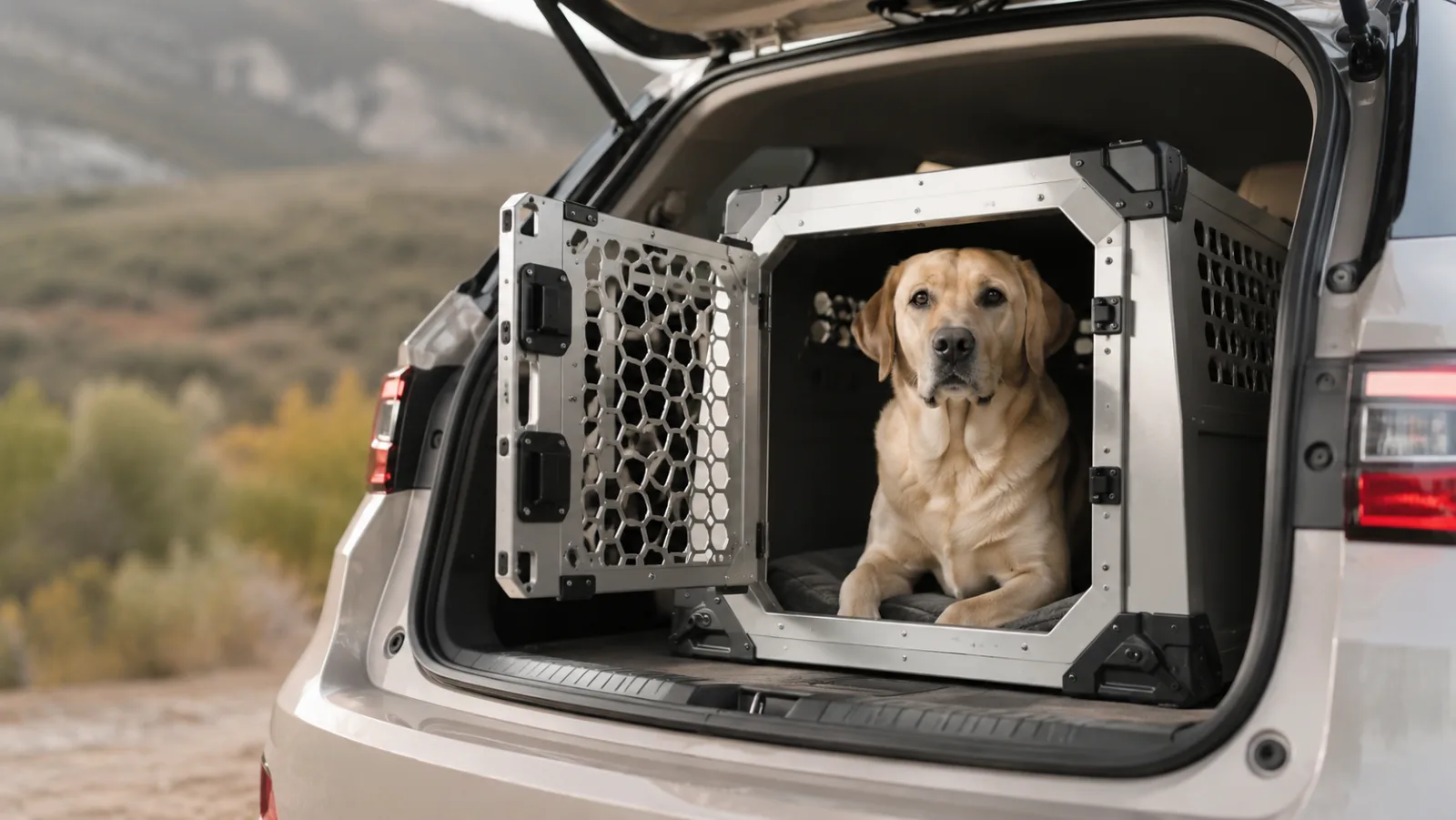
When the priority is the most protection a dog can have in a vehicle, the answer is not a harness at all — it is a crash-tested crate anchored in a cargo area. The Lucky Dog Crash Tested Portable Dog Crate is that option. Lucky Duck documents a 5-star crash-test-rated crate that fits dogs up to 110 pounds, with a hard injection-molded shell, a reversible one-hand door, integrated tie-downs, ventilation holes, a pitched drain floor, non-slip feet, lift handles, and a lifetime warranty. Its listed interior is 35.75 by 22 by 26.5 inches — a travel size, and the maker notes to size up for a home crate.
Where it fits the setup: this sits at the top of the safety hierarchy, above the seat-belt harness, because full containment does what a belt cannot — it keeps the dog inside a rigid shell that will not fold, and the integrated tie-downs let you strap that shell to the vehicle so it does not move either. That combination is why crash-tested crates rank first for protection. But the trade-off is blunt and worth stating up front: this needs an SUV, wagon, or truck with a real cargo area and a way to anchor it. It is not a sedan back-seat solution. Households deciding whether their vehicle and their dog fit this route should read our guide to crash-tested travel dog crates before spending, because crate protection depends entirely on the crate being tested, correctly sized, and actually tied down.
The honest caveats are about vehicle, size, and install. A crate only protects if it is anchored — an untethered crate is a heavy object that moves in a crash, so the integrated tie-downs are not optional. Size matters in both directions: too small is cruel, too large lets the dog slide inside during a stop, so match the crate to the dog and the cargo space. It should be a deliberate choice for the owner who wants maximum protection and has the vehicle for it, not a default. As the highest-protection option, though, a tested, anchored crate is the safest way a dog can ride.
What We Love
- 5-star crash-test rating per Lucky Duck — the top of the protection hierarchy
- Rigid shell plus integrated tie-downs fully contain and secure the dog
- Fits large dogs up to 110 lb; made in USA with a lifetime warranty
- Ventilation, drain floor, and one-hand door are built for real travel use
What Could Be Better
- Needs an SUV, wagon, or truck cargo area — not a sedan back seat
- Protects only when actually anchored with the tie-downs
- Travel-sized interior means matching crate to dog carefully, sizing up for home use
The Verdict
The highest protection a dog can travel in — a tested, rigid, anchored crate — for the owner who has the cargo vehicle for it. Anchor it every time with the tie-downs and match the size to the dog; an unstrapped or oversized crate gives back much of what the crash rating earns.
Sources
- Lucky Duck (Amazon product listing, Crash Tested Portable Dog Crate, Large): 5-star crash-test-rated portable dog crate fitting dogs up to 110 lb, with an interior of 35.75"L x 22"W x 26.5"H, an injection-molded reversible one-hand door, integrated tie-downs, ventilation holes, a pitched drain floor, and non-slip feet
- Center for Pet Safety and vehicle-restraint consensus: a crash-tested crate anchored in a cargo area is the highest-protection way to travel a dog, fully containing the animal so it cannot become a projectile or a distraction
$27.99
Current price · checked Sep 8, 2026
- Elevates a small dog for a window view, which the listing says may reduce car sickness
- Internal collapsible metal frame plus two adjustable seat-belt straps hold it in place
- Clip-on safety leash tethers the dog inside the booster
- Water-resistant Oxford cloth, mesh sides, and a thick cushion; wipeable
- Straps around the headrest, front or back seat; 16 x 13 x 9 in, for dogs and cats up to 20 lb
Very small dogs are the one case where a harness on the seat belt is not the obvious fit, and a booster earns a place. The JOEJOY Deluxe Dog Booster Seat is that option. JOEJOY documents a booster for dogs and cats up to 20 pounds, with an internal collapsible metal frame, two adjustable seat-belt straps that hold the booster in place, a clip-on safety leash to tether the dog, and a water-resistant Oxford-cloth shell with a thick cushion. It measures 16 by 13 by 9 inches and straps around a headrest on the front or back seat — though the back seat is the only safe choice for a dog.
Where it fits the setup: a small dog on a flat seat often cannot see out and may slide around, which feeds both anxiety and car sickness. The booster raises the dog to window height, contains it in a defined space, and gives the internal leash something to clip to. For a five- or ten-pound dog, that combination of containment and a view is a genuine comfort upgrade, and the strapped-down frame keeps the booster itself from tumbling off the seat. Owners comparing raised seats, console boosters, and center-seat designs for a small dog will find the fuller field in our roundup of dog car booster seats, where fit to the dog's weight and the seat shape is the deciding factor.
The honest caveat is the important one, and it is about what a booster is not. The built-in tether is containment and distraction control for a light dog — it is not a crash-rated harness, and it should never be sold to yourself as one. Clip that internal leash to a well-fitted harness on the dog, not to a collar, so a sudden stop pulls on the chest and not the neck. The 20-pound ceiling is real: a booster does nothing safe for a medium or large dog, which belongs in a documented crash-tested seat-belt harness or the crate above. And the booster must ride on the back seat, away from the front airbag. Judged honestly as small-dog containment paired with a proper harness clip, it is the right answer for a dog the seat-belt harness fits poorly.
What We Love
- Raises a small dog to window height, which the listing links to less car sickness
- Two seat-belt straps and an internal frame keep the booster from sliding or tipping
- Contains a small dog in a defined space with a clip point for a tether
- Inexpensive, washable, and easy to move between seats
What Could Be Better
- The built-in tether is containment, not a crash-rated restraint
- Hard cap at 20 lb — no use for a medium or large dog
- Clip the internal leash to a harness, never a collar, to avoid neck injury
- Must ride on the back seat, away from the front airbag
The Verdict
The small-dog answer: containment and a calming window view for a dog the seat-belt harness fits poorly. Treat the built-in tether as containment, not crash protection — clip it to a proper harness, keep it on the back seat, and step up to the harness or crate for any bigger dog.
Sources
- JOEJOY (Amazon product listing, Deluxe Dog Booster Seat): booster seat for dogs and cats up to 20 lb with an internal collapsible metal frame, two adjustable seat-belt straps that hold it in place, a clip-on safety leash, and water-resistant Oxford cloth, measuring 16 x 13 x 9 inches
- Veterinary travel-safety consensus (AVMA / AAHA): for a small dog, a strapped-down booster provides containment and a calmer view but its built-in tether is not a substitute for a crash-rated restraint
$24.99
Current price · checked Sep 8, 2026
- 600D waterproof, scratch-resistant fabric per Mancro
- Two side flaps guard the doors from paws and hair
- 54"W x 55"L covers most back seats (size up for a large SUV or truck)
- PVE non-slip underside, side-flap buckles, a seal zipper, seat anchors, and velcro belt openings
- 4-in-1 use: hammock, bench cover, cargo liner, or camping mat; wipe or vacuum clean
Once the restraint decision is made, the supporting pieces make the whole thing livable — and the first is protecting the seat the dog rides on. The Mancro Dog Car Seat Cover is that piece. Mancro documents a 600D waterproof, scratch-resistant cover measuring 54 by 55 inches that fits most back seats, with two side flaps that guard the doors, a PVE non-slip underside, side-flap buckles, a seal zipper, seat anchors, velcro openings for the seat belts, and a 4-in-1 design that works as a hammock, a bench cover, a cargo liner, or a camping mat.
Where it fits the setup: the cover does two jobs, and it is worth being precise about both. It protects the upholstery from hair, mud, scratches, and accidents, which is comfort and cleanup, not safety. And in its hammock shape — stretched from the back headrests to the front seat backs — it closes off the footwell, which can help keep a tethered dog from sliding down into the floor space. The velcro openings let the seat belts pass through, so the cover and the restraint work together rather than fighting each other. For the fuller field of covers, hammocks, and hard cargo liners matched to different vehicles, see our guide to dog car seat covers and cargo liners.
The honest caveat is the load-bearing one for this guide: a seat cover is not a restraint. The hammock shape can keep a dog off the floor, but it does not secure the dog in a crash — that is entirely the harness's or crate's job, and the cover only ever complements them. Use it under a harnessed dog, not instead of one. Check that the seat-belt openings still let you buckle the harness through cleanly, and confirm the size against a large SUV or truck bench, where the standard cut may fall short. As interior protection that plays nicely with a real restraint, it earns its place — as long as no one mistakes it for the restraint itself.
What We Love
- 600D waterproof, scratch-resistant fabric guards seats from hair, mud, and accidents
- Hammock shape closes off the footwell so a tethered dog stays off the floor
- Velcro seat-belt openings let the restraint pass through and buckle cleanly
- 4-in-1 versatility and easy wipe-or-vacuum cleanup
What Could Be Better
- Not a restraint — it protects the seat, it does not secure the dog
- Standard 54 x 55 in cut may be short for a large SUV or truck bench
- Non-slip underside still needs the anchors set to stay put under an active dog
- Can obscure seat-belt access if not fitted with the openings lined up
The Verdict
Comfort and interior protection that complements a real restraint rather than replacing it. Use it under a harnessed dog, line up the seat-belt openings so the harness still buckles through, and never mistake the hammock shape for crash protection.
$15.99
Current price · checked Sep 8, 2026
- Buckles into any standard seatbelt outlet
- Aviation-grade aluminum carabiner rated over 850 lb of force per Mighty Paw
- Tangle-free swivel to keep the strap from twisting
- Adjustable 16–26 in nylon strap
- The maker explicitly says to pair it with an approved vehicle harness — never clip it to a collar
A tether is the piece that restrains movement and cuts distraction, and it is only ever as safe as what it clips to. The Mighty Paw Dog Seat Belt is a clean example. Mighty Paw documents a strap that buckles into any standard seatbelt outlet, with an aviation-grade aluminum carabiner rated over 850 pounds of force, a tangle-free swivel, and an adjustable 16-to-26-inch nylon strap. Crucially, the maker itself states that it should be paired with an approved vehicle harness and never clipped to a collar.
Where it fits the setup: a tether keeps a dog from roaming the cabin, climbing into the front, or reaching the driver — real distraction control that makes a calmer, safer drive. Clipped to the back ring of a well-fitted harness, it lets a dog sit or lie on the back seat while limiting how far it can move. Set the strap short enough that the dog cannot reach the driver or the front seats, but long enough to lie down comfortably. That short, harness-anchored connection is the correct install, and it pairs naturally with a documented crash-tested seat-belt harness.
The honest caveat is the one the maker prints and this guide will not soften: never clip a tether to a collar. In a crash or even a hard stop, a collar concentrates all the force on the dog's neck, which can cause serious injury — the whole reason a harness spreads that load across the chest. A tether is distraction control and movement limiting, not crash protection on its own; its safety is entirely borrowed from the harness it attaches to. Keep it short, keep it on a harness back ring, and treat it as a companion to a real restraint rather than a restraint by itself. Used that way, it is the small piece that keeps a harnessed dog settled and the driver's eyes on the road.
What We Love
- Buckles into any seat-belt outlet — universal and instant to fit
- Strong aluminum carabiner and a tangle-free swivel per Mighty Paw
- Adjustable length sets a short, safe reach that keeps the dog off the driver
- The maker's own guidance points users to a harness, not a collar
What Could Be Better
- Only as safe as what it clips to — dangerous on a collar
- Not crash protection by itself; it limits movement, the harness restrains
- Set too long, it lets the dog reach the driver or the footwell
- Requires a separate, well-fitted harness to be used correctly
The Verdict
Distraction control that keeps a harnessed dog settled and off the driver — as long as it clips to a harness back ring and never a collar. Keep it short, pair it with a real restraint, and take the maker's own no-collar rule as non-negotiable.
$11.17
Current price · checked Sep 8, 2026
- Mesh barrier keeps pets and kids in the back-seat area to prevent driver distraction
- Four-sided elastic dual mesh, 11.7 x 11.7 in, fits most cars and SUVs
- Four safety hooks clip to the headrests and under the seat
- About a 1-minute install with no drilling; includes a storage pouch
- Note: won't work on cars without exposed headrest bars or seat loops
The last supporting piece addresses distraction directly by keeping the dog out of the front. The DYKESON Dog Car Net Barrier is that piece. DYKESON documents a four-sided elastic dual-mesh barrier, 11.7 by 11.7 inches, that four safety hooks clip to the headrests and under the seat in about a minute with no drilling, keeping pets and children in the back-seat area. It fits most cars and SUVs and folds into an included storage pouch — with the maker's own note that it needs exposed headrest bars or seat loops to attach to.
Where it fits the setup: a barrier is distraction control. It stops a dog from climbing into the front seat, tangling with the driver's feet, or blocking the gearshift, which keeps the driver's attention on the road. Paired with a restraint on the back seat, it adds a second layer against the dog wandering forward. For the in-home or SUV-cargo version of the same "keep the dog on this side of the line" idea, our roundup of freestanding pet gates covers the sturdier boundaries that do a related job off the road.
The honest caveat is the same one that runs through the back half of this guide: a barrier is not crash protection. It reduces distraction, but it does not restrain the dog in a collision — an unrestrained dog behind a net is still a projectile in a crash, just one aimed at the mesh instead of the windshield. Use the barrier to cut distraction on top of a harness or crate, never as the dog's only restraint. And check the maker's fitment note first: without exposed headrest bars or seat loops, the hooks have nothing to grab. As a cheap, fast layer of distraction control behind a real restraint, it does a useful job — as long as it is not asked to do the restraint's job.
What We Love
- Cuts driver distraction by keeping the dog out of the front seat
- One-minute, no-drill install that folds away when not needed
- Fits most cars and SUVs and costs very little
- Adds a second layer against a dog wandering forward, on top of a restraint
What Could Be Better
- Not crash protection — it does not restrain the dog in a collision
- Needs exposed headrest bars or seat loops, or the hooks have nothing to grip
- Small mesh panel suits distraction control, not full separation
- Useless as a standalone safety measure without a harness or crate
The Verdict
Cheap, fast distraction control that keeps a dog out of the driver's space — a layer behind a real restraint, never a substitute for one. Confirm your seats have the bars or loops it hooks to, and keep the dog harnessed or crated regardless.
How We Score
Formula
PetPal Car-Safety Setup Score = (Expert Consensus × 0.35) + (Setup Fit × 0.25) + (Safety / Crash Protection × 0.20) + (Value × 0.20)
Score Factors
- Expert Consensus · 35%
- Synthesized from Center for Pet Safety crash-test findings on pet travel products, the FMVSS 213 vehicle-restraint standard that tested harnesses reference, and veterinary travel-safety consensus from the AVMA and AAHA, plus manufacturer documentation. The PetPal Car-Safety Setup Score is a composite of expert opinion — PetPalHQ does not run a testing lab.
- Setup Fit · 25%
- How directly the item advances a complete, honest car-safety plan for a specific dog and vehicle — the everyday restraint, the highest-protection option, small-dog containment, interior protection, movement control, and a front-seat block — rather than how it performs as a standalone product ranked against rivals.
- Safety / Crash Protection · 20%
- How much genuine crash protection the item provides, drawing an explicit line between the crash-tested crate that protects a dog in a collision and the booster, cover, tether, and barrier that provide containment, comfort, or distraction control instead.
- Value · 20%
- Cost relative to the item's role in the plan, including durability, the vehicle it requires, and how much of the safe-travel outcome the item is responsible for.
| Rank | Product | Score |
|---|---|---|
| #1 | EzyDog EzyDog Drive Dog Car Harness (Crash-Tested, US-FMVSS 213), Medium | 8.7 |
| #2 | Lucky Duck Lucky Dog Crash Tested Portable Dog Crate (Large) | 8.5 |
| #3 | JOEJOY JOEJOY Deluxe Dog Booster Seat (up to 20 lb) | 8.0 |
| #4 | Mancro Mancro Dog Car Seat Cover / Hammock (600D) | 7.9 |
| #5 | Mighty Paw Mighty Paw Dog Seat Belt for Car Headrest | 7.8 |
| #6 | DYKESON DYKESON Dog Car Net Barrier | 7.6 |
When NOT to Buy
No car accessory makes an unsafe seat safe, and the first rule outranks every product on this page: a dog belongs on the back seat, never the front. A front passenger airbag deploys with enough force to injure or kill a dog, and it is designed around an adult human's size and position, not a pet's. If the only place to put the dog is a front seat with an active airbag, the honest answer is not a different restraint — it is to travel the dog on the back seat or not travel it loose at all. The same logic rules out an open truck bed and a head out an open window, both of which expose a dog to being thrown, struck, or injured.
Be honest, too, about matching the restraint to the dog and the job. A booster's built-in strap is containment for a small dog, not a crash-rated restraint for a big one — do not stretch it past its 20-pound design or treat its tether as protection it was never built to give. A tether clipped to a collar is a neck-injury risk in a crash, so it only ever belongs on a harness back ring. A seat cover and a barrier are comfort and distraction control; neither restrains the dog in a collision, and neither should be the dog's only equipment. If a product's real job is cleanup or keeping the dog out of the front seat, buy it for that job and keep a genuine restraint underneath it.
Finally, the honest budget and legal caveat: car safety for a dog is a small system, not a single purchase, and the pieces do different jobs. The restraint that actually protects — a documented crash-tested harness or an anchored crash-tested crate — is the non-negotiable core; the cover, tether, and barrier are support around it. Center for Pet Safety has found many harnesses labeled "crash-tested" fail independent testing, so buy tested, not just labeled. And an unrestrained dog is not only a crash risk but, in a growing number of places, a distracted-driving and insurance question. Confirm current price and sizing on every item before buying — listings, bundle contents, and sellers change over time.
Frequently Asked Questions
- What is the safest way to secure a dog in the car?
- There is no single answer, because the safest option depends on the dog's size and the vehicle. For most dogs in most cars, a crash-tested harness that threads through the car's own seat belt is the everyday choice, keeping the dog on the back seat and off the driver. When maximum protection is the goal and the vehicle has a cargo area, a crash-tested crate that is anchored with tie-downs sits at the top of the safety hierarchy, because it fully contains the dog in a rigid shell. A booster seat is safe only as containment for a small dog under about twenty pounds, not as crash protection. The key is to match the restraint to the dog and the car, put the dog on the back seat away from the airbag, and choose a product that documents real crash testing rather than one that only carries a reassuring label.
- Is a "crash-tested" label enough to trust a harness?
- Not by itself. Center for Pet Safety, which runs independent crash tests on pet travel products, has found that many harnesses marketed as "safety" or "crash-tested" fail when tested to a real standard. The label is easy to print; the performance is not. Look for a product that names an actual standard, such as the FMVSS 213 vehicle-restraint standard that some tested harnesses reference, and that documents how it was tested rather than just asserting that it was. Fit matters just as much as testing: even a genuinely tested harness only protects if it is sized to the dog and attached correctly through the seat belt. The short version is to buy tested, not just labeled, and then fit it carefully.
- Can I clip my dog's seat-belt tether to its collar?
- No, and this is one of the firmest rules in car safety for dogs. A tether clipped to a collar concentrates all the force of a crash or hard stop on the dog's neck, which can cause serious or fatal injury. That is exactly why a proper harness spreads that load across the chest instead. A tether should only ever clip to the back ring of a well-fitted harness, and makers of quality tethers say so directly in their own instructions. A tether is also not crash protection on its own — it limits how far the dog can move and helps stop the dog from reaching the driver, but its safety is borrowed entirely from the harness it attaches to. Keep it short, keep it on a harness, and never on a collar.
- Where should the dog ride, and why not the front seat?
- A dog should ride on the back seat, never the front. A front passenger airbag is built to deploy with enough force to protect an adult human, and that same force can injure or kill a dog sitting or standing in front of it. The back seat keeps the dog away from the airbag and, with a barrier or a tether, out of the driver's space. Open truck beds and open windows are unsafe for the same underlying reason: they expose the dog to being thrown, struck, or injured. No restraint changes these limits — they are about where the dog is, not what it is wearing. If the only available spot is a front seat with an active airbag, the honest choice is to move the dog to the back or not travel it loose.
- How do I get my dog comfortable riding restrained?
- Go slowly and make the car a good place to be. Introduce the harness, crate, or booster at home first, with treats and calm praise, so the equipment is familiar before it is ever paired with motion. Start with very short trips — even just sitting in a parked car, then a drive around the block — and build up gradually as the dog stays relaxed, rewarding calm behavior along the way. Keep the dog restrained the whole time, because a loose dog that has learned it can roam will resist being secured later. Never let the dog ride unrestrained "just this once," never leave it in an open truck bed, and never let it hang its head out an open window. Patience early pays off in a dog that settles quickly and rides safely for years.
Bottom Line
Decide by size and vehicle before you buy anything. Most dogs in most cars are safest in a crash-tested seat-belt harness; a large dog with an SUV or truck cargo area can have the higher protection of a crash-tested, anchored crate; a dog under twenty pounds is the one case a booster fits.
Know which pieces actually protect. A crash-tested harness on the seat belt and a crash-tested crate in a cargo area are the two genuinely protective options — the booster, cover, tether, and barrier are containment, comfort, or distraction control, and this guide keeps that line sharp.
Buy tested, not just labeled. Center for Pet Safety has found many 'safety' or 'crash-tested' harnesses fail independent testing, so choose a product that documents a real standard and fits the dog correctly — a loose or unproven restraint gives back the protection it promises.
Install it right, every time. Thread the harness through the actual seat belt and keep the connection short; tie the crate down with its anchors; clip a tether to a harness back ring, never a collar; and set the reach so the dog cannot touch the driver.
The safety core never changes: back seat only, away from the airbag; a genuine restraint under every comfort accessory; no open truck beds or heads out windows; and short, treat-led trips first so the dog rides calm. Car safety is a system, not a single purchase, and that is exactly why it works.
Sources & Methodology
Methodology
PetPal Car-Safety Setup Score = (Expert Consensus × 0.35) + (Setup Fit × 0.25) + (Safety / Crash Protection × 0.20) + (Value × 0.20)
Expert review sources
- Center for Pet Safety — crash-test findings and ratings for pet travel products
- FMVSS 213 — U.S. vehicle child-restraint standard referenced by tested pet harnesses
- American Veterinary Medical Association (AVMA) and American Animal Hospital Association (AAHA) — pet travel-safety guidance
- Lucky Duck — Crash Tested Portable Dog Crate product documentation
- JOEJOY — Deluxe Dog Booster Seat product documentation
- Mancro — Dog Car Seat Cover / Hammock product documentation
- Mighty Paw — Dog Seat Belt for Car Headrest product documentation
- DYKESON — Dog Car Net Barrier product documentation
Community sources
- r/dogs — car-travel restraint and safe-transport consensus
- r/Dogtraining — acclimating a dog to car rides and restraints, as consensus, not quotation
Prices and specs verified July 12, 2026.
About the author
Nick Miles is the chief editor of PetPalHQ. This car-safety method guide and its picks are editorial synthesis of Center for Pet Safety crash-test findings, the FMVSS 213 vehicle-restraint standard, veterinary travel-safety consensus from the AVMA and AAHA, and manufacturer documentation — PetPalHQ does not run a testing lab. The PetPal Car-Safety Setup Score is a composite of expert opinion, not a measurement. Sources are cited by name throughout.
PetPalHQ is a participant in the Amazon Services LLC Associates Program. We may earn commissions from qualifying purchases — at no extra cost to you.
More Guides
Cats & Dogs
Best Crash-Tested Travel Dog Crates (2026)
Cats & Dogs
Best Dog Car Booster Seats (Small & Medium Dogs) 2026
Cats & Dogs
Best Dog Car Seat Covers & Cargo Liners 2026: Interior Protection That Survives a Muddy Dog
Cats & Dogs